Year: 2020

27 Oct 2020

Instagram extends time limits on live streams to 4 hours, will soon support archiving

Instagram is adapting to the way creators have been using its service during the coronavirus pandemic. With individuals and businesses now limited from hosting in-person events — like concerts, classes, meetups, and more — users have turned to Instagram to live stream instead. Today, the company says it’s significantly expanding the time limit for these streams, from 1 hour to now 4 hours for all users worldwide.

The change, the company explains, is meant to help those who’ve had to pivot to virtual events, like yoga and fitness instructors, teachers, musicians, artists and activists, among others. During the height of government lockdowns in the U.S., Instagram Live became a place for people to gather as DJ’s hosted live sets, artists played their music for fans, celebs hosted live talk shows, workout enthusiasts joined live classes, and more. Live usage had then jumped 70% over pre-coronavirus numbers in the U.S. as people connected online.

Many of these Instagram Live creators had wanted to extend their sessions beyond the 60 minute time limit without an interruption.

The change puts Instagram on par with the time limits offered by Facebook for live streams from mobile devices, which is also 4 hours. (If live streaming from a desktop computer or via an API, the Facebook time limit expands to 8 hours.)

While the longer time limit is opening up to all creators worldwide starting today, Instagram says the creator’s account has to be “good standing” in order to take advantage. That means the account can’t have a history of either intellectual property or policy violations.

Related to this change, Instagram will also update the “Live Now” section in IGTV and at the end of live streams to help direct users to more live content.

Instagram also today pre-announced another feature which has yet to arrive.

It says that it will “soon” add an option that will allow creators to archive their live streams for up to 30 days.
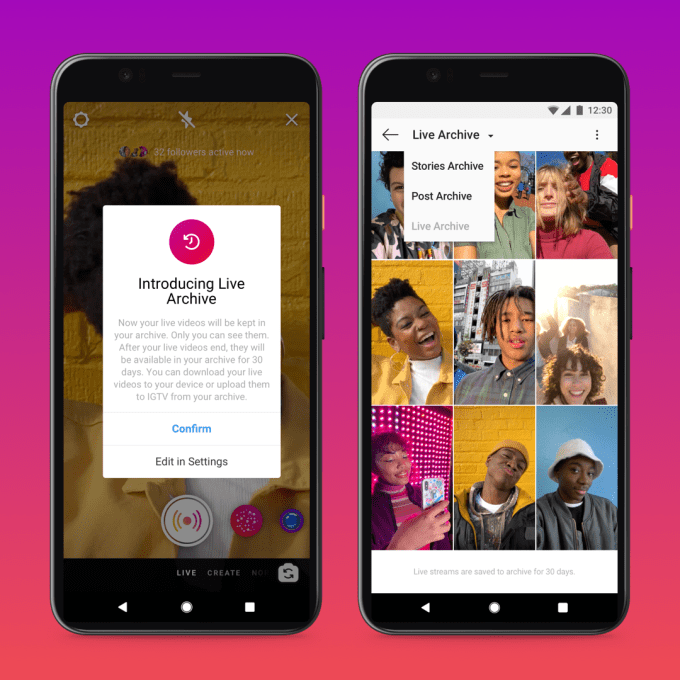
Image Credits: Instagram

Before, users could archive their Feed posts or their Stories to a private archive, but the only way to save a live stream was to publish it to IGTV immediately after the stream, through a feature introduced in May. 

The company says the new option to archive live broadcasts will mirror the existing archive experience for Stories and Feed Posts.

The difference is that archived live videos will be permanently deleted after 30 days.

But up until that time, the creator has the option to return to the video to save it or download it. This would allow the creator to publish the video on other social platforms, like Facebook or YouTube, or even trim out key parts for short-form video platforms, like TikTok. The Archive feature also means if a creator’s Live stream crashes for some reason — or if the creator forgot to download it in the moment — it can still be downloaded later on.

The news follows another recent Instagram update which introduced a new way for creators to monetize their Live streams.

The company earlier this month began rolling out badges in Instagram Live to an initial group of over 50,000 creators who will test the feature by selling badges at price points of $0.99, $1.99, or $4.99. These badges help fans’ comments stand out in busy streams, allow fans to support a favorite creator, and places the fan’s name on the creator’s list of badge holders.


27 Oct 2020

Let’s move beyond 2020 and start thinking about the 2020s

Seasonality is critical for the media. End-of-year wrap-ups, best books for the summer, things to do this weekend — they’re all methods to note not only the passage of time, but also to begin to set the tone for what is about to come.

Everyone covered the end of the 2010s with aplomb, a decade that, at least in tech, was filled with huge milestones, including some of the largest startup IPOs of all time and also some of the worst lows we’ve ever seen — frauds and product snafus that were larger and grander than ever before.

Those retrospectives though were supposed to be complemented with the prospectives — what’s about to happen in the 2020s? What’s next? Where is progress and innovation going to come from this decade? We barely got this decade going of course before the pandemic hit, the U.S. elections got into full swing, and it has been non-stop debates about school openings, stump speeches, and whether a vaccine will arrive soon, shortly, distantly, or I guess never at all.

Our collective long-term vision has been terrorized by the short-term news that constantly rolls through our feeds. It’s time to change that.

Regardless of the outcome next week (or maybe next month?) in the U.S. or the final vaccine timeline for COVID-19, we still need to define what this next decade is about, particularly in technology, where the list of issues is widening and the number of sectors that have the potential for innovation expands. We need to think beyond the mundane daily operational challenges of startups and fundraises and consider the values we want to empower and inform in the years ahead.

Many of these questions go beyond mere “apps” to encompass areas of law, culture, societies, and ultimately, what we want to leave for the next generations coming behind all of us.

Over on EC, I’ve written a deep dive into five broad “clusters” of change that have the potential to transform our world in the 2020s, in areas like “wellness,” “climate,” “data society,” “creativity,” and “fundamentals” that each hold so many startups ideas that I truly am excited about what’s about to be unleashed this decade.

Yet, whether you like my amorphous groupings or not, I encourage everyone in the startup ecosystem to begin thinking about how to connect the dots between different startups, different sectors, and how our society is organized. The next generation of startup ideas are not going to come from the proverbial whiteboard and some Swift engineering in Xcode. They’re going to come from much more methodical and deeper introspection about what our society and all of us need going forward.

The 2010s were all about executing on the dreams of mobile, cloud, and basic data. Those ideas had historical antecedents going back in some cases decades or more (Vannevar Bush’s description of the internet dates to the 1940s, for instance). But for the first time, we had the infrastructure and the users to actually build these products and make them useful. It was quite possibly the most extensive greenfield opportunity in the history of technology.

Yet, that greenfield is increasingly fallow. Business has cycles and seasonality as much as media reporting does. The easy stuff has been done. Building an app to text people has been done by dozens before. There are a multitude of analytics packages, and payroll providers, and credit card issuers, and more. What’s required this decade is to start to encroach on the harder questions, topics like how we build a better society, make people more empowered to do deep and creative work, and how we can build a more resilient and sustainable planet for all.

None of these topics have pure point solutions — but that is what is going to make this coming decade so damn interesting. It’s going to take intense collaboration, multiple inventions and products, as well as legal and cultural changes, to realize these next improvements. If you have grown sick (as I have) of the latest apps and SaaS products du jour, this decade is going to be an amazing one to experience and build.

It’s a new season to lift our heads up a little and look around. The world, yes, is filled with problems — terrible, horrible, and stultifying problems that can at times feel all but insurmountable. But human ingenuity has always found a way, and we have never had such an extensive toolbox to confront all of them simultaneously. If the 2010s were all about humans learning technology, the 2020s is all about technology learning about humans.

27 Oct 2020

5 startup theses that will transform the 2020s

I wrote a call to action for the tech community to dive deeper into the future of innovation this coming decade. Where are some of the hot spots going to come from though? Below, I have assembled a very loose set of five clusters broadly categorized into “wellness,” “climate,” “data society,” “creativity,” and “fundamentals” that offer some scaffolding for understanding what’s about to come this decade and how and any entrepreneur — really, any citizen — can start to build progress.

Take these ideas as inspirational — they aren’t limits, nor should the borders of these categories be seen as anything but liminal. I know in the daily cavalcade of news, it can be hard to fell inspired by the future. But do be! There is so much more coming this decade, that we may look back at the 2010s as the dark ages of innovation.

“Wellness”

Photo by Ian Forsyth/Getty Images

First, there is a cluster around “wellness.” That sometimes gets elided to just “mental health” and reduced to a prescription bottle, but this area really encompasses so much more than that. How do we build humanistic societies with strong social fabrics that enliven, enrich, and build meaning for our lives?

Yes, we’ve seen strong demand for wellness apps like Calm and Headspace. Exercise hardware like Peloton, Mirror and others along with platforms particularly around group classes have been a huge mainstay during this pandemic era. Mental health treatment itself is getting a makeover as startups reinvigorate the in-person therapist and psychiatrist visit as well as think about new models of delivering mental health services virtually. Even LSD is starting to make headways as a potentially useful tool, and psychedelics are going to be an interesting area to watch in the coming years.

All those areas still are ripe for innovation, yet, how do we go deeper and start to address the root causes of anguish and despair?

Take work, for instance. How do we make workers feel more secure and meaningful in a remote world where gig work makes up an increasing fraction of all employment? The precariousness of labor has a direct effect on wellness, and it’s going to take a much greater leap than a reclassification battle like in California this election cycle to make work “work” for all people. What can we do around stability of pay whether from employment or maybe programs like universal basic income to give people a sense of ownership over their destinies?

How do we start to create the bonds of neighborhoods and communities that hold people together and offer solace in times of despair? Part of this is improving the average town and making it more human-centric (that’s like 20 startups right there), but it also includes constructing more vibrant and expressive virtual worlds where we can find online neighborhoods that are safer than the dumpster fires we find on the web today.

Then there’s the health system in general. While America deservedly receives huge criticism for its overpriced and under-insured system, health systems worldwide face incredible pressures to improve efficiency. How do we make care better, more personalized, and more open? How do we reduce costs while ensuring that care is accurate and delivered expeditiously? There is huge work to be done to make health a key component.

To increase wellness for individuals, we need to increase wellness for our societies, building systems that are designed for the humans that inhabit them. Flexibility with security, engagement with individuality, expression with support. Our existing systems are already antiquated — and we haven’t come up with anything better.

This cluster is about asking “How does the world make us feel?”

“Climate”

The second cluster has to do broadly with the Earth, climate, crisis, and resilience. Climate change is real and not going away, and quite literally billions of people are going to feel its effects in the coming decades. Rising tides, massive hurricanes, power outages, wildfires, droughts and more are going to become part of our daily news vernacular.

Resiliency is not something that any one technology can offer, but innovation has huge potential to allow more of our systems to adapt to the changing nature of our world today.

27 Oct 2020

Stark raises $1.5M for a toolkit that helps developers and others create more inclusive design

Diversity and inclusion are slowly, slowly moving away from being an afterthought (or worse, a no-thought) in the tech world. And to underscore the new attention the area is getting — in every aspect of the concept — today a startup that’s building tools to help designers and developers make their end products more accessible to people with visual impairments is announcing some funding.

Stark, a New York-based startup that lets designers others building with design software run their files through an integrated tool that checks it and provides color edits and other suggestions to help them meet guidelines for people who see less well, has picked up $1.5 million.

Stark plans to use the funding to continue building integrations into commonly-used design apps and create integrations for developers (where it will read and provide guidance on code: next up is a Github integration), and continue building out its business with expanded pricing and usage tiers.

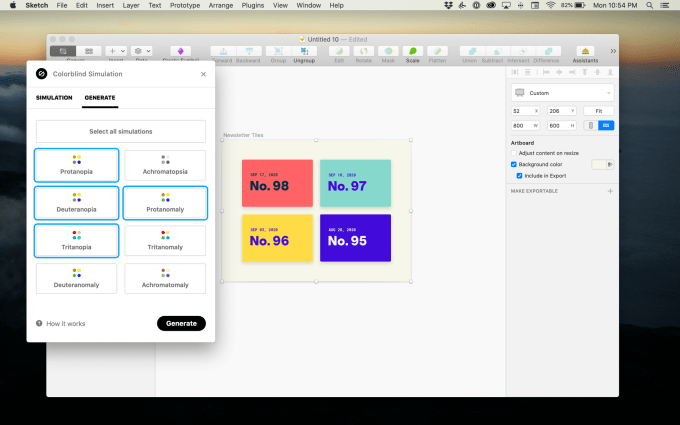
Currently, users can use plugins of Stark on Figma, Sketch & Adobe XD that let them access a Contrast Checker, Smart Color Suggestions, 8 Colorblind Simulations, a Colorblind Generator, and Rapid Contrast Checking (on Adobe XD).

Longer term, the plan is to build and end-to-end platform and to address inclusivity for other kinds of needs beyond visual impairments, and, since accessibility can come in physical forms, too, to consider more than just software, and to create more ways to automatically correct details.

As Cat Noone — the now-European-based CEO who co-founded the company with Michael Fouquet (the team is working remotely, she said) — describes it, the ambition is to “become the Grammarly for accessibility in software.”

The funding, a pre-seed round, is coming from a wide and interesting group of backers. It was led by Daniel Darling and Pascal Unger from Darling Ventures, with participation also from Jason Warner, the CTO of Github; Indicator Ventures; Kleiner Perkins’ Scout Fund; and Basecamp Ventures. Individual backers include the product lead for accessibility at Atlassian, the director of equitable design & impact at Culture Amp, a director of design at DuckDuckGo, a former VP of software development at Oracle, and more.

Part of the reason that Stark has gotten attention from all of these investors is because of its traction.

Early versions of the software have been out for eight months now, in the form of the plugins for Sketch, Adobe XD and Figma, and in that time it’s clocked up 300,000 users, mostly designers, engineers, and product managers across those three design platforms, with current customers including people from Microsoft, Oscar Health, US Bank, Instagram, Pfizer, Volkswagen, Dropbox and more.

It also has 10,000 people in its “community”, which includes people engaging with Stark more directly (rather than just using its plugins), on platforms like Slack, getting its newsletter and more.

Diversity and inclusion have been in the headlines this year, which is good news, even if the reason for it has been not so good — the sorry state of how minorities are treated by law enforcement. Partly because of the profile of those incidents and the subsequent protests, much of the world has associated the concept of D&I very closely with racial inclusion. While that story continues to unfold (and we hopefully continue see more positive and sustained efforts to address it), the kind of diversity and inclusion Stark is addressing is of a different sort.

It’s a logical, if often overlooked area: The Centers for Disease Control and Prevention estimate that (as of 2018) around one in every four adults in the U.S. alone live with some form of disability (a figure that doesn’t count children), with the biggest of these being cognitive disabilities. This essentially means that while a lot of design (and tech in general) is not really built to address this wider group, it’s a very sizable market.

At a time when technology is regularly made out to be the bad guy — and the reasons are many, touching on mental health; physical health; and economic, environmental, civil and legal impacts — designing software and hardware that is more inclusive could go a very long way in bridging some of those gaps that tech has created with (and within) society.

“We’re talking about the largest minority group in the U.S.,” Noone said. “You wouldn’t build a building today without a wheelchair ramp, so why aren’t we accounting for those individuals in our software design?”

Noone said that she and Fouquet originally landed on the idea of Stark when they were doing some work for another firm, building an emergency services app that would get used by the elderly. They built a very early version of the tool for themselves to use in that work. Showing it to others, they found people asking if they could use it, too. “And then it just kind of snowballed,” she said.

She then said that she found herself going down a “rabbit hole into the world of design and accessibility” and realised that not only were there no tools really built to address this out there, but that there was “so much more to the problem than colors.” (Colors was where Stark started, hence the great name.)

There is an interesting stick and carrot in the bigger market with things like inclusive design: for some it might be an issue of having to comply, others simply believe it’s the right thing to do, while yet others may not care but (rather cynically) believe being inclusive is a good look. Whatever the motivation is, the trick with Stark is that it’s making it easy to be inclusive for more people, and lowering the barrier at the end of the day can only be a good thing.

“No software product should exclude a disadvantaged minority of their users. It’s bad for business and bad for society,” said Darling in a statement. “We’re seeing dramatic increasing awareness amongst software designers, developers and executives to ship products that are universally accessible. Stark has quickly earned the trust of the industry and is on a path to become an important part of software infrastructure. We’re thrilled to partner with such a mission driven company that is already improving how software is produced around the world.”​


27 Oct 2020

Wyze launches version 3 of its $20 security camera

Wyze first made a name for itself when it launched its $20 indoor security camera a few years ago. Since then, the company branched out into other smart home products, ranging from doorbells to scales. Today, it’s going back to its origins with the launch of the Wyze Cam V3, the third generation of its flagship camera.


The new version is still $20 (though that’s without shipping unless there’s a free shipping promotion in the Wyze store), but the company redesigned both the outside and a lot of the hardware inside the camera, which is now also IP65 rated, so you can now use it outdoors, too.

Image Credits: Wyze

The Cam V3 now also features new sensors that enable color night vision, thanks to an F1.6 aperture lens that captures 40 percent more light than the previous version. That lens now also covers a 130-degree field of view (up from 110 degrees in V2) and the company pushed up the frames per second from 15 during the day and 10 at night to 20 and 15 respectively.

The company also enhanced the classic black and white night vision mode — which you’ll still need when it’s really dark outside or in the room you are monitoring — by adding a second set of infrared lights to the camera.

Other new features are an 80dB siren to deter unwanted visitors. This feature is triggered by Wyze’s AI-powered person-detection capability, but that’s a feature the company recently moved behind its $2/month CamPlus paywall, after originally offering it for free. That’s not going to break the bank (and you get a generous free trial period), but it’d be nice if the company could’ve kept this relatively standard feature free and instead only charged for extra cloud storage or more advanced features (though you do get free 14-day rolling cloud storage for 12-second clips).

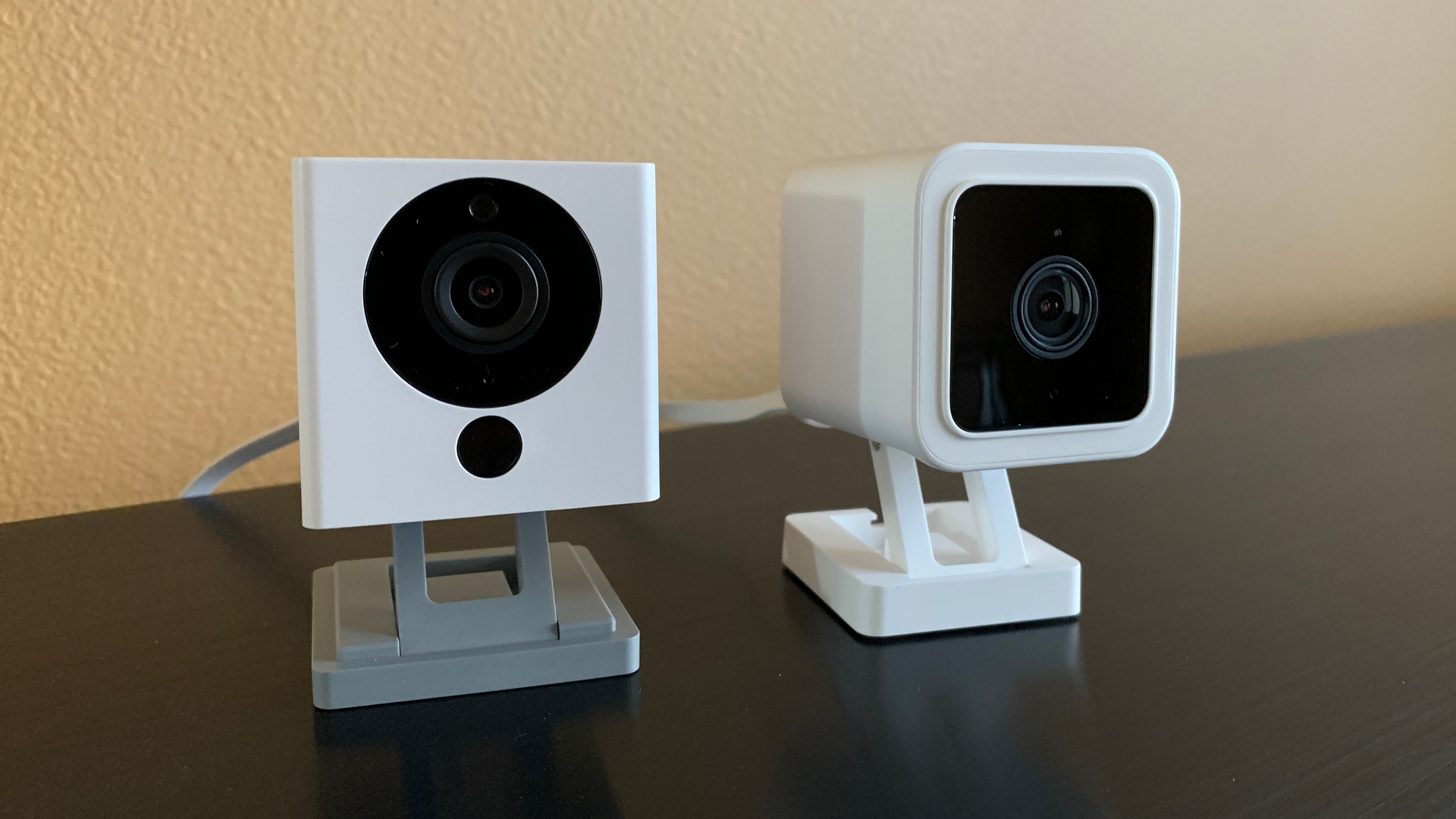
Wyze Cam V2 (left) and V3 (right).

Wyze provided me with a review unit ahead of today’s launch (and a Cam V2 to compare them). The image quality of the new camera is clearly better and the larger field of view makes a difference, even though the distortion at the edges is a bit more noticeable now (but given the use case, that’s not an issue). The new night color vision mode works as promised and I like that you can set the camera to automatically switch between them based on the lighting conditions.

The person detection has been close to 100% accurate — and unlike some competing cameras that don’t feature this capability, I didn’t get any false alarms during rain or when the wind started blowing leaves across the ground.

If you already have a Wyze Cam V2, you don’t need to upgrade to this new one — the core features haven’t changed all that much, after all. But if you’re in the market for this kind of camera and aren’t locked into a particular security system, it’s hard to beat the new Wyze Cam.

27 Oct 2020

Next-gen skincare, silk without spiders and pollution for lunch: Meet the biotech startups pitching at IndieBio’s Demo Day

Biotech can often, and sometimes literally, fly over our heads. However, the pandemic has shown an increased need for investment and focus on solutions that work on human and planetary health. For IndieBio, a science and biotech accelerator run by VC firm SOSV, this unprecedented year offered high stakes and new challenges.

Today and tomorrow, the biotech accelerator is hosting its twice-annual demo day.

Starting in 2015, IndieBio has provided resources to founders solving complex challenges with biotech, from fake meat to sustainability. Over the years, the accelerator has created a portfolio of biotech companies valued at over $3.2 billion, including companies like Memphis Meats, which develops cultured meat from animal cells; NotCo, a plant-based food brand; and Catalog, which uses organisms for data storage.

As part of the accelerator, each participating company receives $250,000 in capital, numerous other services and access to lab space. In July, the founder and head of IndieBio, Arvind Gupta, left his position to pursue a role at Mayfield. While Gupta remains an adviser, Po Bronson took the role as the new managing director.

Bronson was immediately put to the test. This year, the program expanded from operating solely in San Francisco to also create a cohort based in New York. It also doubled the amount of companies it invested in, bringing this cohort to 20 companies.

As you can imagine, lockdowns ultimately forced founders to delay key lab work in the beginning of the pandemic. Eventually, founders were able to partner with universities, contract research organizations or other biotech accelerators to begin their research, says Maya Lockwood, the head of investor relations at SOSV. The NYC class received a “golden ticket” for free lab space come November.

And these dynamics make this cohort all the more fascinating to dive into.

Watch the New York Stream here, which will happen on Tuesday October 27 from 1:00-3:00pm ET.

Watch the San Francisco stream here, which will happen on Wednesday October 28 from 10:00-12:00pm PT.

For those who can’t tune in, here’s a list of all the companies presenting in New York and San Francisco over the next two days.

San Francisco cohort

Reazent: Founded by Sumit Verma, Reazent has discovered and patented a way to manipulate soil bacteria into triggering crops to grow more. It works with 116 strains, from kale to potatoes, and wants to dig into the market of organic agricultural land.

seedlings sprouts plants

Image Credits: Witthaya Prasongsin / Getty Images

Kraken Sense: Founded by Nisha Sarveswaran, Kraken Sense has created an in-line autonomous device to measure the concentration of pathogens in large-scale food and water systems. The product can be deployed in farms and kitchens and uses refillable single-use cartridges.

Advanced Microbubbles: The startup, led by Jameel Feshitan, has created a platform that helps practitioners deliver drugs to complex and difficult tumors. The company collaborated with NIH NIDA and uses proprietary bubbles to deliver chemotherapeutics. Currently, Microbubbles is working to solve two types of cancers: neuroblastoma and pancreatic cancer.

Cybele Microbiome: CEO Nicole Scott has created a direct-to-consumer skincare line with a focus on prebiotics. The line uses ingredients that work in tandem with the skin microbiome, even triggering it to express natural scents.

Ivy Natal: Ivy Natal is developing a process to harvest healthy human egg cells from skin cells. CEO Colin Bortner is working on a treatment for infertility and plans to enable families to have genetic children who can’t otherwise with current solutions.

Microgenesis: Led by Gabriela Gutierrez, Microgenesis has created a proprietary test and nutraceutical regiment (including probiotics) to help women who struggle with infertility get pregnant. The company worked with a cohort of 287 mothers, and with its product over 75% of patients became pregnant.

Image Credits: Westend61 / Getty Images

AsimicA: Led by Nikolai Mushnikov, Asmicia has created a new way to bring stem cells to microbes. The company could lengthen and grow the yields of bio-manufacturing, and is currently working to select the right fermentation partner.

Liberum: CEO Aiden Tinafar is working to disrupt what they think could be a $400 billion market opportunity: recombinant proteins. Liberum has created a protein printer that could cut down the creation of custom recombinant proteins from weeks to a few hours.

Khepra: Led by Julie Kring, Khepra is leveraging fuel production as a way to store extra renewable energy. The company is building a series of reactors that could take your old plastic bottles and cardboard boxes, extract chemicals and fuels, and sell that fuel to refineries.

Carbix: Carbix, led by Quincy Sammy, takes enriched CO2 and converts it into raw material that can then be repurposed into industrial products.

Spintext: CEO Alex Greenhalgh is creating a new, scalable way of making silk. The company mimics spider spinning and uses a natural protein, with an end product that they see as better than premium silk.

New York cohort

Biomage: CEO Adam Kurkiewicz wants to make single-cell sequencing data more accessible for research biologistics. The technology could help scientists explore human cells to enhance medicine and drug discovery.

Diptera.ai: Vic Levitin is creating a scalable, affordable and sustainable way to fight mosquitoes and their diseases.

Cayuga Biotech: Damien Kudela, CEO of Cayuga Biotech, has created a drug that could induce clots and stop severe bleeding situations.

Brightcure: Chiara Heide, CEO of Brightcure, has created a bioactive cream that uses natural bacterium to restore a woman’s natural microbiome.

Multus Media: CEO Cai Linton is producing an ingredient that hopes to make cultivated meat production affordable and accessible.

Image Credits: Getty Images

BioFeyn: The company uses nanotechnologies based on human medicine to deliver nutrients and disease prevention to fish. CEO Timothy Bouley is working to make eating healthy fish a sustainable practice.

Halomine: Ted Eveleth, CEO, wants to turn every surface into an antimicrobial surface. Halomine’s product, Halofilm, can be used in tandem with any household bleach cleaner to enhance disinfection techniques.

Allied Microbiota: Lauralynn Kourtz, CEO of Allied Microbiota, wants to use natural microbes to eliminate toxic waste. The company uses bacteria to clean contaminated soils.

Scindo: Scindo, led by Gustaf Hemberg, uses enzymes to make plastic biodegradable.

27 Oct 2020

Ubisoft’s subscription service comes to Stadia and Luna

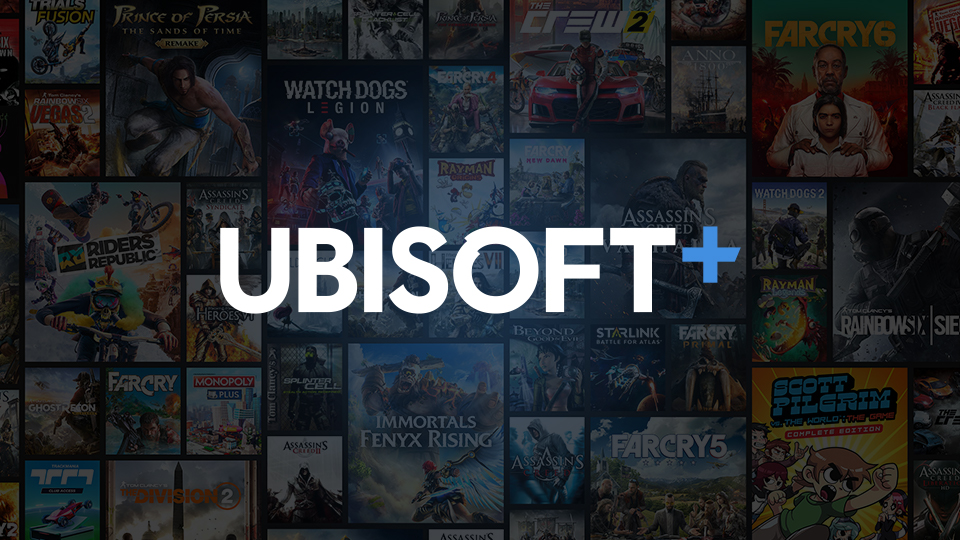
Ubisoft originally announced its subscription service back in June. Today, the company is rebranding the service from UPlay+ to Ubisoft+. The service is also on its way to Amazon’s Luna and Google’s Stadia. Ubisoft is betting on a multi-platform subscription, which means that you’ll be able to subscribe once and play Ubisoft+ games on PC, Amazon Luna and Stadia.

Ubisoft+ is already available on PC. For $14.99 a month, you can download and play more than 100 games — the service includes both classics and newly released titles, such as games in the Splinter Cell and Prince of Persia franchises as well as the company’s upcoming releases. Assassin’s Creed Valhalla, Watch Dogs Legion and Immortals Fenyx Rising will be available in the Ubisoft+ library on their respective launch days.

Ubisoft is trying to include premium editions of the games so that you don’t have to pay for game passes to access additional content. For instance, you can play the ultimate editions of Rainbow Six Siege, The Division 2, Assassin’s Creed Odyssey, etc.

On November 10, you’ll be able to access Ubisoft+ games on Amazon Luna is you’re beta testing Amazon’s cloud gaming service. And Google will also let you connect your Ubisoft+ account with Stadia by the end of the year. Interestingly, you don’t need to pay for Stadia Pro to access Ubisoft+ titles.

Ubisoft is working on cross-platform progression, starting with upcoming titles. It’s a subscription focused on content, not platforms.

As you can see, Microsoft and Sony don’t support Ubisoft+. It means that you won’t be able to subscribe and play on your Xbox or PlayStation. Console manufacturers take a cut on game purchases. That’s why negotiations between third-party game studios and console manufacturers are more complicated.

Image Credits: Ubisoft

27 Oct 2020

Hands-on: Sony’s DualSense PS5 controller could be a game changer

After spending a few hours with the PlayStation 5 and its completely redesigned DualSense controller, I can say with confidence that the new haptics and audio features certainly work — and could become integral to the gaming experience. But only if — and it’s a big if — developers truly embrace the tech.

The DualSense controller replaces the extremely familiar and beloved design of the DualShock, which has remained largely the same shape since the first one shipped for the original PlayStation 25 years ago.

While the general layout is the same, the feel of the new controller is significantly different and the appearance is aligned with the PS5’s distinctive but questionable hyper-futuristic look. I’m not entirely sold on the new shape but I’ve also had a long time to get used to the old one, so I’m withholding judgment while I work on the full review.

Shipping with every PS5 is Astro’s Playroom, which like Nintendoland and Wii Sports is intended to provide a reference experience for all the controller’s new features. It may not be quite as original or persistently enjoyable as Nintendo’s pack-ins (which still number among the best games for their platforms), but it’s a fun little playroom that does a good job showing off the DualSense.

A Sony DualSense controller seen from above.

Image Credits: Sony

The first and perhaps most immediately compelling feature is the haptic feedback on the trigger buttons, L2 and R2. It’s one of those things that when you feel it working, you immediately start thinking about how it could be used.

What it does is allow not just precision vibration but actual resistance to be added to the triggers, something that sounds vague in theory but is very easy to grasp, so to speak, in practice.

For instance, in the setup process for Astro’s Playroom the feature is introduced by simply asking you to pull the triggers and feel it. You’ll certainly have pulled them before that, so you know that they’re nearly frictionless normally. But suddenly they’re pushing back against your finger — then a click, and the resistance is gone.

“What is this sorcery?” I recall saying out loud at the time, or something like it but more profane. It really is that immediately compelling.

Image Credits: Sony

Later, in the first stage I tried of the game, your little robot jumps into a sort of spring suit (a metal spring, not a linen two-piece) and you have to pull the trigger to make it jump. The haptics in this case truly give a feel of compressing something (though, having played with springs before, I know they don’t feel like this), and importantly give you a non-visual, intuitive indicator of how far you’ve depressed the trigger. My brain was quicker to register how far I’d pulled it with the combination of sound, haptics and graphics than graphics alone. And because the feeling is localized to the trigger you’re using, there’s no confusion with the greater vibrations of the all-purpose rumble system.

The Switch’s Joy-Cons have a sort of precision haptics in them, and while the demo of that feature was interesting — feeling little objects rattle around “inside” the controller — it’s actually quite hard to think of ways it could be used in gameplay. And indeed few games have done so, though to be fair rumble in general is probably better because of it.

In the DualSense’s case, I was immediately thinking, “this would be great for…” and wishing I’d had it in this or that game in the past. It opens up possibilities I’ve never liked the idea of, like “pull the trigger halfway to do one thing, all the way to do another. It’s also potentially a great accessibility feature.

Having a speaker and microphone in the controller is nothing new, though they appear to have been upgraded for the DualSense. Few games have been able to use these features properly, and Astro’s Playroom resorts to the old “blow on the controller to make a propeller go” thing. I can’t imagine anyone wanting to do that in any real game — but why can’t I yell “Go, cyberdog! Attack the monster on the right” to direct my (sadly fictitious) companion, or something like that?

Unfortunately that gets to the heart of what makes even the excellent haptic feature a potentially lost cause. Developers need to design for them in a big way, and that’s difficult when you can’t guarantee that people will want or be able to use them. Not only that, but if you want to release on Xbox and PC too, you have to remove them. So they become optional features… and since they’re optional, they can’t be integrated into the game as deeply to begin with, making them less compelling overall. It’s happened over and over with various innovations gaming companies have come up with over the years, and it may happen with this generation’s gimmicks as well.

Sony’s best bet is to make integration painless and highly incentivized, though it’s hard to imagine how multi-platform developers like Ubisoft can do much more than the minimum. Serious use will likely be limited to a handful of top-shelf Sony-funded PS5 exclusives that players will marvel at.

It’s an interesting new gameplay feature, but hardly one that screams “next-generation.” Indeed little about the next consoles from Sony or Microsoft screams that except the specs. That doesn’t mean they aren’t worth buying — but don’t expect anything transformative.

27 Oct 2020

SpaceX launches Starlink app and provides pricing and service info to early beta testers

SpaceX has debuted an official app for its Starlink satellite broadband internet service, for both iOS and Android devices. The Starlink app allows users to manage their connection – but to take part you’ll have to be part of the official beta program, and the initial public rollout of that is only just about to begin, according to emails SpaceX sent to potential beta testers this week.

The Starlink app provides guidance on how to install the Starlink receiver dish, as well as connection status (including signal quality), a device overview for seeing what’s connected to your network, and a speed test tool. It’s similar to other mobile apps for managing home wifi connections and routers. Meanwhile, the emails to potential testers that CNBC obtained detail what users can expect in terms of pricing, speeds and latency.

The initial Starlink public beta test is called the “Better than Nothing Beta Program,” SpaceX confirms in their app description, and will be rolled out across the U.S. and Canada before the end of the year – which matches up with earlier stated timelines. As per the name, SpaceX is hoping to set expectations for early customers, with speeds users can expect ranging from between 50Mb/s to 150Mb/s, and latency of 20ms to 40ms according to the customer emails, with some periods including no connectivity at all. Even with expectations set low, if those values prove accurate, it should be a big improvement for users in some hard-to-reach areas where service is currently costly, unreliable and operating at roughly dial-up equivalent speeds.

Image Credits: SpaceX

In terms of pricing, SpaceX says in the emails that the cost for participants in this beta program will be $99 per moth, plus a one-time cost of $499 initially to pay for the hardware, which includes the mounting kit and receiver dish, as well as a router with wifi networking capabilities.

The goal eventually is offer reliably, low-latency broadband that provides consistent connection by handing off connectivity between a large constellation of small satellites circling the globe in low Earth orbit. Already, SpaceX has nearly 1,000 of those launched, but it hopes to launch many thousands more before it reaches global coverage and offers general availability of its services.

SpaceX has already announced some initial commercial partnerships and pilot programs for Starlink, too, including a team-up with Microsoft to connect that company’s mobile Azure data centers, and a project with an East Texas school board to connect the local community.

27 Oct 2020

Netflix is developing a live action ‘Assassin’s Creed’ show

Netflix announced this morning that it’s partnering with Ubisoft to adapt the game publisher’s “Assassin’s Creed” franchise into a live action series.

The franchise jumps around in history, telling the story of a secret society of assassins with “genetic memory” and their centuries-long battle the knights templar. It has sold 155 million games worldwide and was also turned into a nearly incomprehensible 2016 film starring Michael Fassbender and Marion Cotillard, which underperformed at the box office.

The companies say that they’re currently looking for a showrunner. Jason Altman and Danielle Kreinik of Ubisoft’s film and television division will serve as executive producers. (In addition to working on adaptations of Ubisoft’s intellectual property, the publisher is also involved in the Apple TV+ industry comedy “Mythic Quest.”)

“We’re excited to partner with Ubisoft and bring to life the rich, multilayered storytelling that Assassin’s Creed is beloved for,” said Netflix’s vice president of original series Peter Friedlander in a statement. “From its breathtaking historical worlds and massive global appeal as one of the best selling video game franchises of all time, we are committed to carefully crafting epic and thrilling entertainment based on this distinct IP and provide a deeper dive for fans and our members around the world to enjoy.”

It sounds like there could be follow-up shows as well, with the announcement saying that Netflix and Ubisoft will “tap into the iconic video game’s trove of dynamic stories with global mass appeal for adaptations of live action, animated, and anime series.”

Netflix recently placed an eight-episode order for “Resident Evil,” another video game franchise that was previously adapted for the big screen. And it also had a big hit with its adaptation of “The Witcher,” which is based on a fantasy book series that was popularized via video games.