Year: 2020

27 Oct 2020

Facetune maker’s new app Filtertune let anyone create and share personalized photo filters

Facetune maker Lightricks is out today with a new app, Filtertune, designed to create a community around custom photo filters. With the app, creators can make their own personalized preset photos filters, then share them across social media as photos that have a special QR code attached. When others see a filter they like, they can screenshot it to import it back into the Filtertune app for their own use.

While it would be easier to create some sort of in-app system for sharing filters — similar to Instagram’s “Effect Gallery,” for example — Lightricks’ user base isn’t concentrated in one single app.

Instead, it offers an ever-expanding suite of mobile photo and video editing apps, including its flagship Facetune and sequel, Facetune2, as well as Facetune Video, Enlight Quickshot, Photofox, Videoleap, Pixaloop, Boosted, Seen, PosterBoost, Artleap, and Beatleap.

Image Credits: Lightricks

Combined, its collection of apps have seen over 400 million downloads to date, but its active user numbers are much smaller. Lightricks this summer said its collection of apps had 200 million registered users. Paid subscribers had reached 3 million as of last year.

While these numbers and the apps’ growth helped to turn Lightricks into a unicorn, Instagram offers access to a much larger photo sharing community. That’s why it makes sense for Filtertune to provide tools that allow users to tap into existing social media platforms to share their filters and discover new ones.

In fact, Lightricks says the idea for the app was actually prompted by social media trends where online influencers were posting “How I Edit My Photos,” and offering their own presets for fans to download or purchase.

Filtertune, however, isn’t a marketplace for filters. It’s just a tool for creation, editing and sharing.

Using the app, you can either edit an existing filter or create one of your own from scratch.

The app focuses on realistic photo editing, not using overlays of digital assets to create new styles — like apps that swap out the background, for example, or those that use AR.

When your filter is complete, you tap the sharing button which adds a banner to your photo that reads: “Get this filter,” and offers download instructions along with a QR code. You then save this image to your iPhone Camera Roll, then post it anywhere you want — like Facebook, Instagram, Twitter, Snapchat, in an email, in a messaging app, or on your own website.

When others see the shared image, they save it to their own Camera Roll by taking a screenshot.

The next time those users open the Filtertune app, it will scan for new filters by looking for images with a QR code. When it finds them, the new filters will be added to the in-app collection.

Image Credits: Lightricks

Users can then use Filtertune to edit photos with any of the custom filters discovered from across social media.

It is interesting to see how much Filtertune leans on Instagram to drive discovery here. Even the “Discover” button in the app, when tapped, takes you directly to the #filtertune hashtag on Instagram, instead of a dedicated section within its own app where users could find new filters to try.

“Filtertune represents a natural evolution of our growing product experiences, and with it, Lightricks will continue fostering a culture of online community, sharing, and collaboration that is necessary for young artists, creators, and anyone who enjoys social media,” said Zeev Farbman, co-founder and CEO at Lightricks, in a statement about the new app’s launch.

Farbman also noted that Lightricks’ Facetune2 and Quickshot apps have seen a 30% increase and a 35% increase in users in 2020, respectively. The company also told TechCrunch that Ligthtricks, overall, has seen a 45% increase in monthly active users this year.

The new app is a free download on iOS. 

27 Oct 2020

Backed by Mr. Beast and Nadeshot, Backbone One could finally crack mobile gaming

I get to play with a lot of new hardware from startups and it runs the gamut from super polished to barely working, neither of which is a value judgement! But every once in a while I get to mess with a new piece of kit that is just so fully realized that I am literally shocked. 

The Backbone One controller is one of those situations. It’s a game controller for iPhones that has slick ergonomics, solid button feel, sensitive analog triggers and great build quality. But what makes Backbone One special is the companion app and service that ships with it and enables a truly clever software layer enabling cross-app multiplayer, game recording, highlight editing and quick swap. 

Designers from Ideo and Astro Studios helped realize Backbone and the pedigree of people who have crafted devices like the Xbox 360 controller really show here. Wide L1/R1 buttons make it easy to tap on mobile. Analog L2/R2 triggers feel deep but tight. The latest Lightning connector standard means extremely low latency for control signals. 

The controller is around 7” long in its compact state and uses a clever sliding mechanism to expand outwards to up to 10” in size. It easily fits Apple’s “Plus” sized phones and when you’re using one of those it feels like a full on game console for the first time I can remember.

There are acoustic tunneling scoops at the inside edges that direct sound forward from the phone speakers and there is work being done behind the scenes to cancel out the specific sounds the Backbone One’s buttons make so that you don’t hear those while you’re playing. 

But it’s the software that makes Backbone One really special.

To co-opt a biblical phrase, hardware without software is dead. And the Backbone One is really, really alive.

Behind the Backbone One is Backbone itself, which is a ‘companion app’ but is really a live gaming service. It has integrated cross-game voice chat, game switching, parties and a friends list. It lets you get push notifications when your friends are on and slide right into a game with them with a single tap. It’s remarkably slick and feels as first-party as you could make something that is literally not first-party feel.

Backbone was founded by Maneet Khaira in the summer of 2018 while interning at YouTube and wrapping up at Columbia. 

Khaira notes that one of the biggest issues in mobile gaming is that there is a ton of activation energy when it comes to jumping in and playing with friends. The major games are there: Call of Duty, Fortnite (eventually, again), PUBG — but the last mile issue is major. 

Khaira points out that while there are plenty of examples of top-tier gaming titles on iPhone, there is just a desert of content created on these platforms available to watch on Twitch or YouTube. He likens it to a hysteresis — a lagging behind of an effect from its cause. There are so many mobile gamers that there should be a ton of mobile content shared, but because the mechanisms to do so have been so poor and so under-crafted, we have next to nothing. 

Backbone changes that completely. 

Here are the basic pillars of Backbone:

  1. Gameplay has to feel good. The Backbone controller had to be best-in-class hardware.
  2. Content creation. It had to be easy and seamless to capture highlights, clips and footage and share them to your preferred platform. 
  3. Playing with friends has to be instantaneous. Backbone uses notifications about when friends start playing across any game and you can do so from one central friends list. 

Because Backbone is a support app, it gets a bunch of special privileges that would normally not be granted to a ‘regular’ class of app. Backbone One is always on while it’s attached, which means that the app can do whatever it needs to do no matter what app you’re in or for how long. This is huge because it enables the Backbone button on the controller to add games to your dashboard, swap easily between them and lets you get at your friends list contained in Backbone.

The stopwatch time for attaching the Backbone One to your phone and beginning to play a game in multiplayer is measured in seconds, not minutes. It’s exactly what you need in the mobile context.

[gallery ids="2066280,2066277,2066262,2066265,2066258,2066259"]

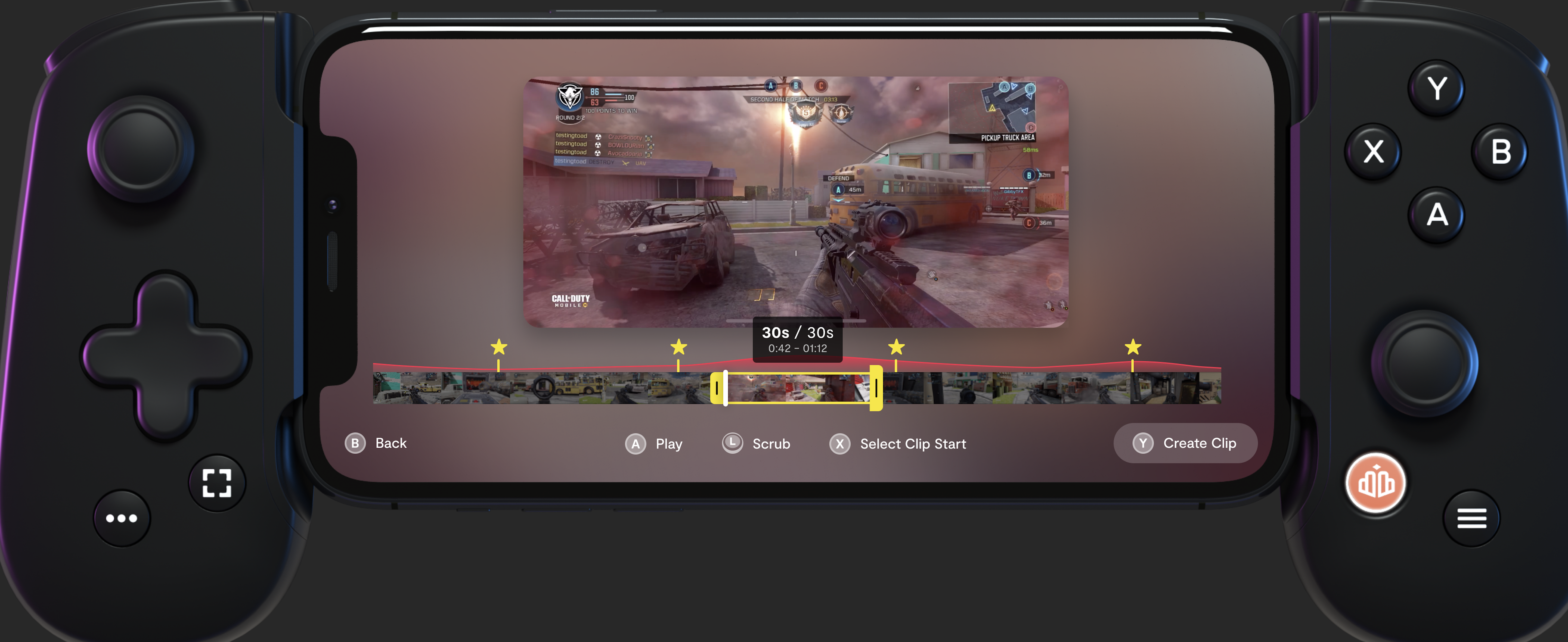
It also enables any-time recording of clips and highlights that store locally on your device but can be uploaded anywhere at 1080p/30fps HEVC. When you’re in game you can just smash the Capture button to start recording and tap it to screenshot. The Backbone app also has some ML work going on to identify highlight-worthy clips and mark them automatically. You can also tag them yourself while you play.

And Backbone One does this on less power than the crap earbuds that (used to) come in an iPhone box. You won’t notice any major power drain from the accessory itself. 

If Backbone can manage to get a partnership with one or two majors to have a built-in control scheme that takes advantage of the proper dead zones and timing it could be a real watershed moment for mobile gaming. 

But right now it works with most games that have controller support right out of the box. No game needs to do anything special to take advantage of the majority of Backbone features. This basically adds on a layer of inter-game social and clip sharing. 

It’s all of the basic features of Game Center, Twitch, PSN and Xbox Live rolled into one — but on iPhone. And, of course, the BackBone one works just fine with Xbox and PlayStation remote play apps.
Sometimes a list of investors can tell you a lot about how serious a company is about getting the right kind of money. For a company building a gaming service and peripheral hardware, Backbone couldn’t have a more solid column. Backbone is backed by MrBeast, Preston, Kwebbelkop, Typical Gamer, Night Media, Nadeshot, and Ludlow Ventures, as well as Ashton Kutcher and Guy Oseary’s Sound Ventures. Pretty much exactly the profile I would want to see for a company serious about social and mobile gaming. 

In many ways, Backbone feels like a spiritual successor to OpenFeint. If you’re not familiar, OpenFeint was the first modern mobile gaming network. It launched the year after the iPhone App Store and was part of a game called Aurora Feint. It enabled multiplayer, scoreboards and messaging. The founder of OpenFeint? Jason Citron. Jason’s current startup, that also shares a lot of spiritual luggage with OpenFeint? Discord.

It’s hard to overstate how important OpenFeint was at the time. As the app ecosystem was emerging it was clear that games would be a big part of what made the iPhone successful and this was the first cross-game network that allowed people to take advantage of one of the first phones to have a persistent, high-quality (ish) internet connection. Apple launched Game Center as a basic response to this need but it has never put any real investment behind it since. Backbone is so good that I could actually see Apple hauling out the repo and assigning engineering talent to get it working well again. The time has come for this idea and Backbone’s execution is so top notch here that it makes the case open and shut.
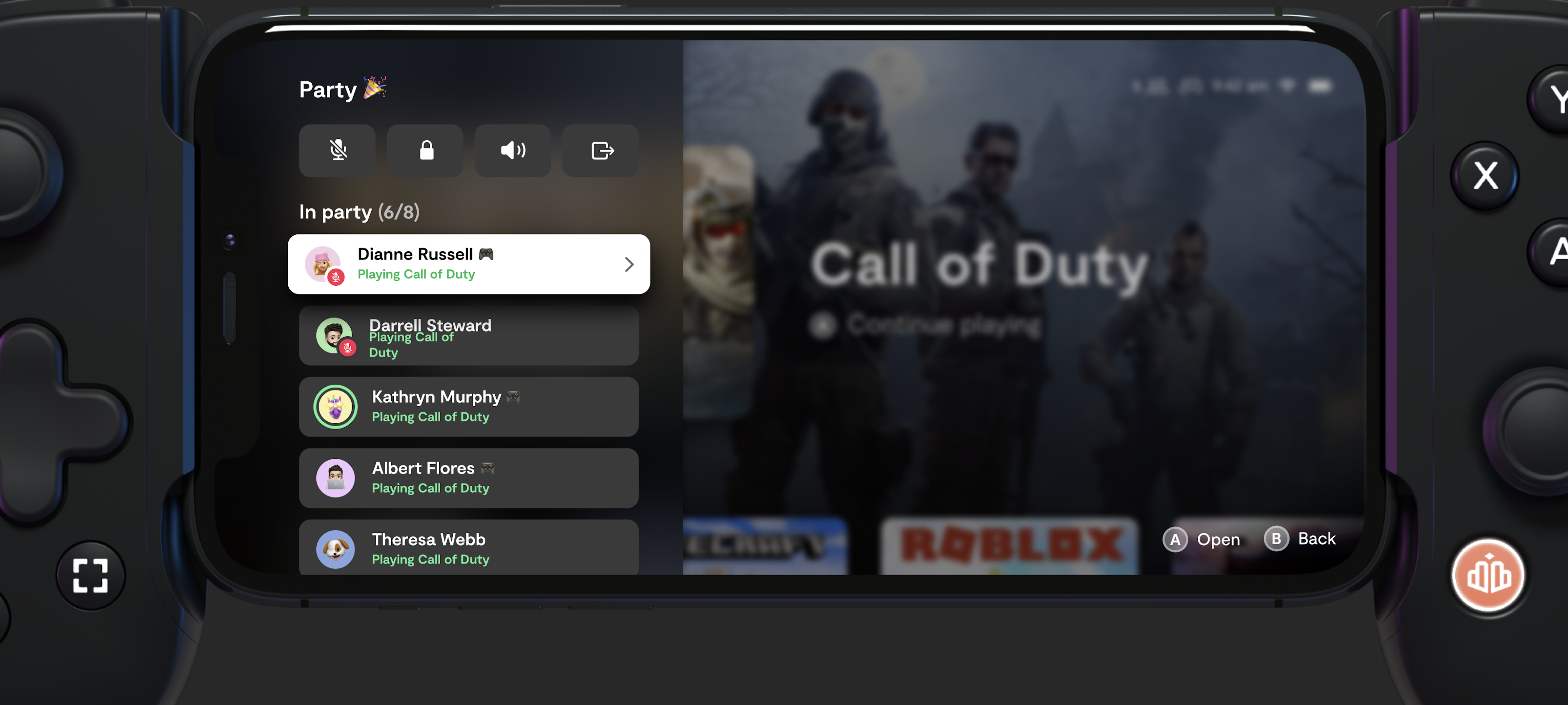
I’ve been testing the controller for a few weeks now with a variety of games. I played a quick match of Call of Duty Warzone with Khaira and even though we didn’t secure the dub it was massively more playable than running with touch controls. My very first session of CoD I had a 28 kill game in cod mobile and, even though I was put into a lobby that prioritizes controller users the other players had like 5 kills each. Though you can now pair console controllers to iPhone, the Backbone is so much better than any of the other integrated controllers on the market that it will quickly become a must have for any mobile player that actually wants to be competitive. I have spent as much time with Apple mobile hardware and the people that have created it as probably anyone on the planet so please understand that I don’t say this lightly but this really feels like the game controller and network Apple would have made if it understood competitive games.

The Backbone One controller runs $99 and can be purchased via the free Backbone app today.

27 Oct 2020

LA’s Replicated looks to increase R&D and hiring for its operations management software after raising $25 million

The Los Angeles-based operations and security management software service, Replicated has raised $25 million to ramp up its staffing and scale its sales and marketing efforts.

The funding, which was led by Two Sigma Ventures and included existing investors like Plexo Capital, Amplify, and BoldStart values the company at over $100 million.

Replicated began as a developer of software security and management services for Docker containerized development tools, but as the market shifted to Kubernetes, the company shifted to service those applications.

Last year, the company unveiled its tools for managing Kubernetes deployments and immediately saw sales increase.

“That new offering changed the direction of the company and added velocity and customers and the market responded so well to it,” said Replicated chief executive, Grant Miller. “Once we started building on that success.. We brought on UIPath, Puppet, who created the software automation stuff, TripWire, and then these cool emerging software companies like FlatFile and Fishtown Analytics.”

Replicated now counts 85 customers who pay for access to the platform and for every on-premise deployment that customers develop through the platform. “If you are a company like Puppet, you have hundreds of on-premise customers.”

The company has already been staffing up with key c-suite hires including a chief product officer, a chief revenue officer and vice presidents of marketing and sales. Some of the money will support Replicated’s continued hiring push, while another chunk will go into product development.

“We’re automating as much of the manual software processes that require IT admins to put their hands on keyboards to adjust and optimize things,” said Miller. “With Replicated, half of the services are for tooling for the software vendor to manage release and licensing and the other half is for the IT admin. It’s about how they automate the integration of the applications.” 

The company, which currently has 28 employees expects to grow to 75 staff members by the end of 2021, Miller said.

“The on-prem software market is four times larger than the SaaS market,” Miller said in a statement. “Replicated lets software vendors unlock the opportunity of the on-prem software category with lower engineering overhead and faster time to market. This is a market change made possible by the convergence of cloud native computing and Kubernetes.”

27 Oct 2020

Rockset announces $40M Series B as data analytics solution gains momentum

Rockset, a cloud-native analytics company, announced a $40 million Series B investment today led by Sequoia with help from Greylock, the same two firms that financed its Series A. The startup has now raised a total of $61.5 million, according to the company.

As co-founder and CEO Venkat Venkataramani told me at the time of the Series A in 2018, there is a lot of manual work involved in getting data ready to use and it acts as a roadblock to getting to real insight. He hoped to change that with Rockset.

“We’re building out our service with innovative architecture and unique capabilities that allows full-featured fast SQL directly on raw data. And we’re offering this as a service. So developers and data scientists can go from useful data in any shape, any form to useful applications in a matter of minutes. And it would take months today,” he told me in 2018.

In fact, “Rockset automatically builds a converged index on any data — including structured, semi-structured, geographical and time series data — for high-performance search and analytics at scale,” the company explained.

It seems to be resonating with investors and customers alike as the company raised a healthy B round and business is booming. Rockset supplied a few metrics to illustrate this. For starters, revenue grew 290% in the last quarter. While they didn’t provide any foundational numbers for that percentage growth, it is obviously substantial.

In addition, the startup reports adding hundreds of new users, again not nailing down any specific numbers, and queries on the platform are up 313%. Without specifics, it’s hard to know what that means, but that seems like healthy growth for an early stage startup, especially in this economy.

Mike Vernal, a partner at Sequoia, sees a company helping to get data to work faster than other solutions, which require a lot of handling first. “Rockset, with its innovative new approach to indexing data, has quickly emerged as a true leader for real-time analytics in the cloud. I’m thrilled to partner with the company through its next phase of growth,” Vernal said in a statement.

The company was founded in 2016 by the creators of RocksDB. The startup had previously raised a $3 million seed round when they launched the company and the $18.5 million A round in 2018.

27 Oct 2020

Amazon adds device dashboard in bid to make Fire tablets a smart home control center

It’s been a busy few weeks for the smart home race. Amazon, Google and Apple have all announced new smart speakers aimed at — among other things — cementing their respective positions at the center of users’ connected households.

Adding onto the introduction of a whole bunch of new Echo devices, Amazon is also improving what its famously inexpensive Fire Tablets can do. Today the company will be rolling out a free software update to select slates that brings a smart home device dashboard. The system essentially serves as a one-stop shop for connected devices that work with Alexa.

It’s similar to the sorts of control centers Google and Apple offer with their respective Home apps, with access to things like smart lights, plugs, cameras, thermostats, you name it. Similar functionality can also be found on the Echo Show devices. Fire tablets offer a pretty cheap way in to that functionality (so, too, might Fire TVs, going forward). And, of course, Amazon has also made efforts to improve Alexa functionality on the devices, essentially letting them double as inexpensive smart displays.

Perhaps the biggest piece of the puzzle, however, is the addition of smart home hub functionality on the new Echo. The fact was a bit under reported (Amazon, after all, started adding this functionality with previous Echo Plus models), but adding zigbee functionality for the $99 device should go a ways toward lowering that barrier of entry.


27 Oct 2020

Upstream aims to be the new home for your professional social life

Last fall, social analytics startup SocialRank sold its product and business to Trufan, allowing the team to focus on something new: a professional social network. Today, they’re officially unveiling Upstream to the public.

To be clear, CEO Alex Taub told me that he’s not trying to replace LinkedIn — he acknowledged that thanks to network effects,”If you want to go and try to take down LinkedIn, you’re not going to be able to take them down.”

Instead, the goal is to create something that fulfills a different need. Where LinkedIn works primarily as an online résumé and rolodex, Upstream aims to help users build the connections and relationships that are important to their careers — something that’s sorely needed at a time when large-scale meetups and conferences aren’t really possible (though we’re certainly trying to create the virtual equivalent at TechCrunch).

“This is the place for your professional social life,” Taub said.

Upstream’s first product focused on professional groups and communities, allowing users to post what the company called Professional Asks, like if they’re looking to hire someone for a certain position or need an introduction at another company.

Taub suggested that things really took off with Upstream’s next product, Upstream Events, where Upstream would host a guest speaker, then attendees were matched up for five-minute, one-on-one video chats with the other people at the event.

Upstream

Image Credits: Upstream

Upstream says it’s already hosted more than 100 events, with 72% of people who who attend one event subsequently attending another.

While the team has built multiple products, today is the first time it’s talking publicly about the product and vision. And it’s launching some new features at the same time.

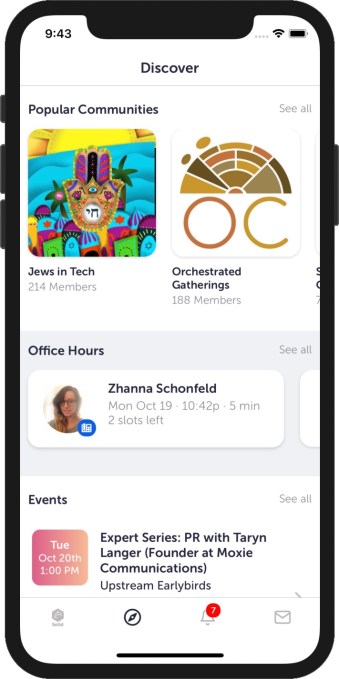
For one thing, while communities were previously shared via a private, unlisted link, you can now browse all the different communities in a Discovery section. At the same time, community organizers will be still be able to control who joins by approving or rejecting new members.

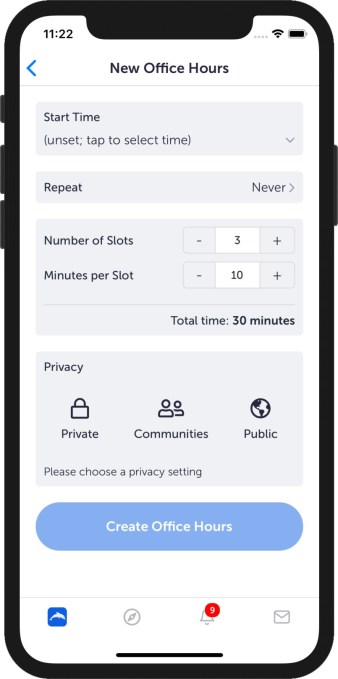
There’s also a new spin on Events called Office Hours, allowing users to set aside structured time for virtual one-on-one sessions with anyone who’s interested in speaking to them. These sessions can be listed publicly, or they can be unlisted, so that you only share them via email or within a certain community.

Upstream screenshot

Image Credits: Upstream

In a blog post, Taub noted that he met his SocialRank/Upstream co-founder and CTO Michael Schonfeld via Ohours.org, and they’re trying to replicate that experience here:

Let’s say you are the CMO of a large company and you want to give your people the opportunity to meet 1:1. The thought of coordinating the individual scheduling of ten minute blocks using your Outlook calendar and email is not attractive. But with Upstream, you are able to choose the 30min block you want to offer and how long you want the sessions to be. You decide you want to run your office hours every other Friday at 2pm ET for the rest of the year. The event is built and able to be shared seamlessly to whoever you choose to offer the Office Hours to.

In fact, Taub’s post lists more than 30 different people who are already offering office hours on Upstream, including New York Times reporter Taylor Lorenz, Foursquare co-founder/Expa partner Naveen Selvadurai and Amazon Photo Head of Product Nate Westheiemer.

Upstream is also announcing that it has raised an undisclosed amount of pre-seed funding from 8-Bit Capital, Human Ventures, Basement Fund, NYVP and various angel investors.

Looking ahead, Taub said that the next big priority is launching a web version of Upstream (which is currently available via mobile app), and to continue building live experiences, asynchronous experiences and features that provide real utility.

“We imagine a future when professionals come to Upstream for an event or Ask, and stay for the compelling opportunities that make Upstream an energizing and beneficial experience for them,” he wrote.

27 Oct 2020

Panoply raises $10M for its cloud data platform

Panoply, a platform that makes it easier for businesses to set up a data warehouse and analyze that data with standard SQL queries, today announced that it has raised an additional $10 million in funding from Ibex Investors and C5 Capital. This brings the total funding in the San Francisco- and Tel Aviv-based company to $24 million.

The company, which launched back in 2015, has mostly stuck to its original vision, which was always about democratizing access to data warehousing and the analytics capabilities that go hand-in-hand with that. Over the last few years, it also built more code-free data integrations into the platform that make it easier for businesses to pull in data from a wide variety of sources, including the likes of Salesforce, HubSpot, NetSuite, Xero, Quickbooks, Freshworks and others. It also integrates with other data warehousing services like Google’s BigQuery and Amazon’s Redshift and all of the major BI and analytics tools.

The company says it will use the new funding to expand its sales and marketing efforts.

“We aspire to make analysts’ lives simpler and more productive by making it easier for them to sync, store, and access their data, and this funding will go a long way toward that mission,” says CEO and co-founder Yaniv Leven in today’s announcement.

In some ways, Panoply was maybe just a bit early to the market. Today, though, there can be little doubt that we’re in a booming market for data warehousing and analytics services. There’s nary a business left, after all, that isn’t looking to gain more insights from the copious amounts of data they gather every single day now. That market is now more competitive than ever, too, with incumbents like Snowflake, Databricks and others (including all of the hyper clouds) all aiming for their slice of the market. Panoply and its investors clearly believe that the company’s all-in-one platform gives it a competitive edge, though.

27 Oct 2020

Anima’s latest update draws on the popularity of design and no-code tools

Anima, the company that turns design prototypes into code, has today announced the launch of Anima 4.0, which will allow designers to create prototypes in Figma that are translated into components in React with the click of a button.

The company was founded by Or Arbel (cofounder of Yo!), Avishay Cohen (who led R&D at Mobli) and Michal Cohen. It launched three years ago with a platform that allowed designers in Figma, Sketch and Adobe XD to translate their designs into HTML code. With today’s launch, those designs (in Figma only, for the moment) can be turned into React components, giving developers the ability to tweak and polish individual components in a coding language that they’re already using.

Enterprise design tools have absolutely blown up over the past several years. As opposed to a time where designers really only had the option to work in Photoshop and developers then had to spend time turning those static images into code, it’s fair to call the design landscape of 2020 crowded.

Platforms like Sketch, InVision, and Figma have aimed to close the gap between designers and developers, and in the lattermost case, designers and other designers, as well. Adobe has also answered the call of growing competition with the launch of Adobe XD.

Anima 4.0 represents yet another shift. The company is riding the wave of enterprise design tool growth, while simultaneously positioning itself in the realm of no-code, another high-growth vertical.

Arbel told TechCrunch that, around the time that Yo was shuttering, he knew that his next venture would be a product that charges money from day one. He also said that he and his cofounders had been frustrated for a long time by the disconnect between designers and developers.

Thus, Anima was born. It costs $40/month to use Anima, or approximately $370 annually. Arbel confirmed to TechCrunch that pricing wouldn’t change with the launch of Anima 4.0 but that it may in the future. The reason for that is that Anima originally took developers out of the picture, allowing designers to build out their designs and translate it automatically into running HTML code.

With this launch, Anima is looking to bring developers back into the fold, speaking to them in React (their native tongue, if you will). That opens the door to charging more per seat or introducing new revenue streams.

Arbel said that Anima was profitable before it ever received its first funding, which came in the form of a $120K check from Y Combinator in the summer of 2018. This year, the company raised $2.5 million in seed funding led by Hetz Ventures, Zohar Gilon, and Ed Lando.

Today, Anima is used by 300,000 designers, developers and product managers from companies like Google, Amazon, Starbucks, and Walmart, among others. Each week, the Anima community converts more than 4,000 designs into code.

The Anima team has grown from four at the onset of the pandemic to 17 now, with a 70/30 split between men and women.

“The greatest challenge is making developer-friendly code,” said Arbel. “Developers are not an easy audience — I know because I’m a developer myself. We’ve been hearing about code generation and. the like since the beginning of the internet, and endless amounts of products have tried and none of them have managed to produce developer-friendly code. They product huge amounts of code that is bloated and hard to understand. Now, there is finally technology can actually make that happen.”

27 Oct 2020

Thanks to COVID-19 emissions and coal use may have peaked in 2019

If analysts from BloombergNEF are right, then all of the world’s most greenhouse gas polluting days are behind it, thanks to the COVID-19 pandemic.

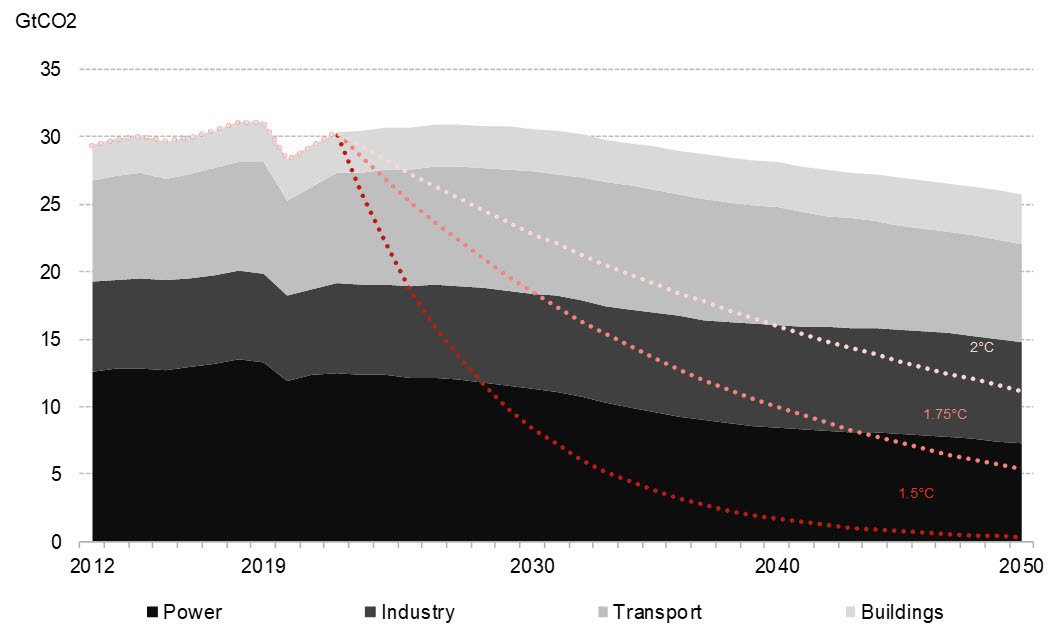
A sharp drop in energy demand caused by the global response to the coronavirus pandemic will remove 2.5 years of energy sector emissions between now and 2050, according to the latest New Energy Outlook from BloombergNEF.

The latest models from the analysis firm tracking the evolution of the global energy system show that emissions from fuel combustion will likely have peaked in 2019.

The company’s models show that global emissions declined roughly 20% as a result of the international response to the COVID-19 pandemic, and while those emissions will rise again with economic recoveries, BloombergNEF’s models never see emissions reaching 2019 levels. And from 2027 emissions are projected to fall at a rate of 0.7% per year to 2050.

Bloomberg New Energy Finance chart predicting declines in global emissions. Image Credit: BloombergNEF

These rosy projections are based on the assumption of a massive construction boom for wind and solar power, the adoption of electric vehicles, and improved energy efficiency across industries.

Together, wind and solar are projected to account for 56% of global electricity generation by mid-century, and along with batteries will gobble up $15.1 trillion invested in new power generation over the next 30 years. The firm also expects another $14 trillion to be invested in the energy grid by 2050.

The rain on this new energy parade could come from India and China, which have long been reliant on coal power to keep their national economies humming. But even in these colossal coal consumers the Bloomberg report sees good news for people who like good news.

They expect coal-fired power to peak in China in 2027 and in India in 2030. By 2050, coal is projected to account for only 12% of global electricity consumption. But even with the surge in renewables gas-fired power ain’t dead. It remains the only fossil-fuel to continue to grow until 2050, albeit at an anemic 0.5% per-year.

No one should break out the champagne based on these projections, though, because the current trajectory still sees the globe on a course to hit a 3.3 degrees Celsius rise in temperature by 2100.

“The next ten years will be crucial for the energy transition,” said Bloomberg New Energy Finance chief executive, Jon Moore. “There are three key things that we will need to see: accelerated deployment of wind and PV; faster consumer uptake in electric vehicles, small-scale renewables, and low-carbon heating technology, such as heat pumps; and scaled-up development and deployment of zero-carbon fuels.”

And a three degree rise in temperature is bad. At that temperature huge swaths of the world would be unlivable because of widespread drought, rainfall in Mexico and Central America would decline by about half, Southern Africa could be exposed to a water crisis and large portions of nations would be covered by sand dunes (including chunks of Botswana and a large portion of the Western U.S.). The Rocky Mountains would be snowless and the Colorado River could be reduce to a stream, according to this description in Climate Code Red.

“To stay well below two degrees of global temperature rise, we would need to reduce emissions by 6% every year starting now, and to limit the warming to 1.5 degrees C, emissions would have to fall by 10% per year,” Matthias Kimmel, a senior analyst and co-author of the latest report, said in a statement.


27 Oct 2020

SpaceX and LeoLabs partner up for tracking of Starlink satellite deployments

SpaceX and orbital object tracking startup LeoLabs have announced a new commercial partnership that will see LeoLab track SpaceX’s Starlink satellites during their initial deployment and orbital travel. The arrangement means that LeoLabs will immediately start tracking new Starlink satellites once they’re released in space following a launch, giving SpaceX immediate info in terms of placement and trajectory during the crucial initial few days of any new batch launch.

LeoLabs’ provides an advantage vs. any other options out there in terms of how fast it can acquire signal from a whole batch of newly orbital Starlink satellites, which SpaceX has been sending up in batches of 60. Here’s a brief synopsis of what exactly LeoLabs is doing for SpaceX through this arrangement, straight from the company itself:

LeoLabs tracks all Starlink satellites (up to 60 per launch) and rapidly generates data products on the front and back of the cluster to provide a bounding box on the train of satellites. This begins within the first few hours following launch and deployment. We continue to monitor the satellites in the following hours and days as they disperse and begin their orbit raising sequences.

The actual operational partnership has been active since March of this year, which means that LeoLabs has been tracking these deployments for a number of missions thus far. It’s also going to continue to do this for future launches going forward. Through their platform, SpaceX gets timely data on Starlink satellites and their orbits just a few hours post-launch, and the startup says it can typically deliver data within one hour of a Starlink satellite passing over one of its radar stations.

Image Credits: LeoLabs

LeoLabs has made headlines recently tracking potential collisions among objects in low Earth orbit, including most recently a near-collision with an 11-meter miss of two objects earlier this month. As low Earth orbit becomes more crowded – in no small part due to SpaceX’s planned massive increase in its Starlink fleet size – the company’s services are likely to only grow in demand in order to help with effective space traffic control.