Year: 2020

25 Aug 2020

Facebook News to expand internationally to the U.K., Germany, France, India, and Brazil

Facebook News, the social network’s dedicated news section launched to U.S. audiences in June, is soon expanding to international markets. The company announced today it plans to accelerate its plans to bring the product to non-U.S. markets, including the U.K., Germany, France, India, and Brazil, within the timeframe of six months to a year.

As in the U.S., Facebook says it’s committed to paying news publishers in the new markets for the content made available in the Facebook News product. However, it notes that the experience may not be exactly the same as it is in the U.S., in other ways.

“Consumer habits and news inventory vary by country, so we’ll work closely with news partners in each country to tailor the experience and test ways to deliver a valuable experience for people while also honoring publishers’ business models,” explained Campbell Brown, Facebook VP of Global News Partnerships, in an announcement detailing Facebook’s plans.

As the product expands in these international markets and beyond, the company will face various new laws and regulations that require tech firms like Facebook to pay for news. In Australia, which was not listed as one of the new destinations, Facebook and Google will both have to pay for news content under a recently launched system. Similar laws are being enacted in the E.U, as well. France, for example, was the first of the European Union Member States to push Google to pay for reuse of news snippets in Search and Google News, as part of a law that requires tech companies pay publishers.

Facebook News’ planned launch in that country seems to indicate the company has managed to successfully negotiate with regulators.

The product itself is still too new to pass judgement on at this time. But Facebook has had a rocky history with news distribution on its platform before its launch of Facebook News. Years ago, it had offered a short list of trending stories across the network. But when it fired the editors who curated that section, Facebook’s algorithms began posting fake news to the list. Facebook finally removed the feature in June 2018.

The company has also tried to serve publishers over the years with mixed results. It once pitched the concept of “Instant Articles” that loaded quickly in Facebook, but restricted advertising, subscriptions and the recirculation modules publishers relied on, leading many to abandon the feature. It also once pushed the “shift to video,” but had inflated its video metrics. When Facebook pulled back on paying publishers, some news businesses were wiped out. Also in 2018, Facebook announced it would deprioritize the distribution of news posts in its News Feed in favor of personal updates from friends and family, shrinking referrals to news outlets.

In more recent years, Facebook’s role in the spread of fake news, propaganda, disinformation, and other un-fact checked content has been brought to light. Unfortunately, any changes Facebook makes at this point may be too late to address the underlying issues. For example, by the time it decided to ban some QAnon groups and accounts earlier this month, the conspiracy movement had become a part of the mainstream consciousness. Last May, the FBI had even flagged conspiracy theory-driven extremists, including those who believe in QAnon, were now a domestic terrorism threat.

Facebook News is the company’s latest response to the growing misinformation problem.

The section, programmed by journalists, requires that publishers qualify for inclusion by having a significantly large audience and abide by integrity standards. It claims to look for negative signals like if the content gets flagged by fact-checkers or if it includes clickbait, engagement bait or use of scraped content. But elsewhere on the social network, Facebook was at the same time relaxing its rules around misinformation for several high-profile conservative pages.

At launch, Facebook News had over 200 general news publishers and thousands of local and regional publications.

Today, the company says its plans are to also grow Facebook News in the U.S., in addition to bringing the product to new markets. It will focus more specifically on growing engagement with Facebook News in the U.S.

Facebook also claims that over 95% of the traffic Facebook News delivers to publishers is incremental to the traffic they already get from News Feed.


25 Aug 2020

Unity, JFrog, Asana, Snowflake and Sumo Logic file for IPOs in rapid-fire fashion

After far too few startups appeared ready to take advantage of warm public market conditions and ecstatic IPO receptions, a deluge of private companies filed to go public yesterday.

There was Sumo Logic in the morning and JFrog a bit later on. Unity filed in there as well. Snowflake also dropped, along with Asana later in the day. If you were dog-tired just reading Twitter, we understand. This morning, we’re going to catch you up on the key facts from each offering.


The Exchange explores startups, markets and money. You can read it every morning on Extra Crunch, or get The Exchange newsletter every Saturday.


But we’re not going to discuss every recent IPO filing. We’re not including X-Peng, a Chinese electric vehicle company that feels a bit afield from the largely-SaaS cohort that just went public (more on it here, if you’d like). Or AmWell, which does health stuff. And we’re going to leave Corsair, a gaming hardware company that’s going public, alone as well.

We have to focus, so we’re niching down to the most traditional venture capital and startup fare on offer. It’s not like we’ll lack for things to say. What follows is a digest of basic facts and IPO details just for you.

Five IPOs and Alex’s funeral

For each company, we’ll discuss what they do, how much they have raised, their initial IPO raise expectations and their financial performance. We’ll wrap with valuation notes as we can.

In alphabetical order, then:

Asana

  • Asana provides a team-focused task-management service. In competition with startups like Monday.com, Asana has raised $213.5 million, according to PitchBook data, along with around $210 million in debt most recently. The company is pursuing a direct listing, so it does not have a traditional IPO raise target. You can read its filing here.
25 Aug 2020

Chinese commercial launch startup iSpace raises $172 million

The private launch industry isn’t showing any signs of slowing down, and a new $172 million Series B round of funding for China commercial launch startup iSpace indicates it could be heating up internationally. The new funding was led by Beijing Financial Street Capital Operation Center, CICC Alpha, Taizhonghe Capital and includes participation from existing shareholders.

The funding will primarily go towards development of iSpace’s planned ‘Hyperbola’ space launch vehicle. The first of these sent satellites into space last July, making iSpace the first private Chinese launch company to mark that achievement. A larger rocket, called Hyperbola-2, is currently in development, and iSpace intends for the first-stage booster of that vehicle to be fully reusable, with vertical landing capabilities similar to those of SpaceX’s Falcon 9.

iSpace is developing reusable rocket engine technology to match, which is another use of the new injection of funding – as well as technical talent hiring to support all of the above. The goal is to perform a first test flight just to the Kalman line that defines the edge of space sometime early next year, using the first-stage booster of the Hyperbola-2 and including a powered landing. After that, it hopes to fly its first fully orbital mission before the end of next year.

Founded in 2016, iSpace previously raised $104.5 million, bringing its total funding to date to $276.5 million.

25 Aug 2020

Meet the Disrupt 2020 “TC10”

If 2020 hasn’t been wild enough, there’s an extra special twist going down at Disrupt 2020 beyond the fact that, for the first time ever, the conference will be fully virtual.

It also happens to be the show’s 10th anniversary. Time flies when you’re changing the world, eh?

As part of Disrupt’s 10th anniversary celebration, we’re doing something brand new. So it is with great pleasure that I introduce the TC10.

The TC10 is a group of entrepreneurs, investors, etc. that have been a staple of the Disrupt conference over the past decade. They’ve spoken at the show — either for a fireside chat or on a panel or as a Startup Battlefield judge — at least three times. (Some them have been there more times in the past 10 years than they haven’t.)

The TC10 will all be featured in various ways throughout the show, from fireside chats to Startup Battlefield judges to the Pitch Deck Teardown! This is the piece I’m personally the most excited about.

The Pitch Deck Teardown takes a look at real startup pitch decks submitted by attendees of the show. These world-class investors and entrepreneurs will walk through each deck, slide by slide, and give feedback on what they like, what they don’t, and how they would change it. Not only will this give entrepreneurs a crystal clear look at what investors are looking for in a pitch deck, but it will also show how many investors and entrepreneurs have different opinions on what makes a great deck, giving founders the insight they need to tailor their decks appropriately based on the intended audience.

You can apply to the Pitch Deck Teardown right here.

So without any further ado, I’m proud to announce the Disrupt 2020 TC10:

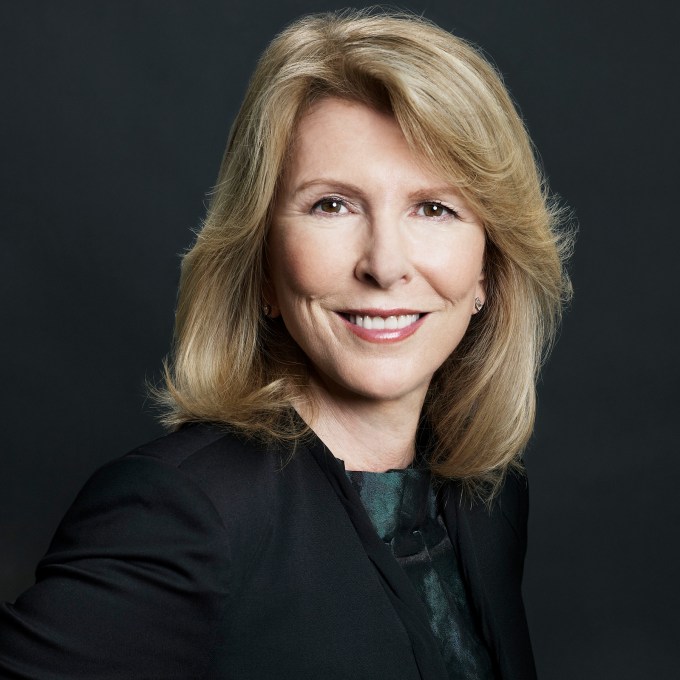
Aileen Lee

Aileen is the founder of Cowboy Ventures, a seed-stage focused fund. They seek to back exceptional teams building technology that re-imagines work and personal life in large and growing markets – what they call “Life 2.0”. She was formerly a partner with Kleiner Perkins Caufield & Byers, and the CEO of RMG Networks.
A graduate of MIT, Aileen has an MBA from Harvard Business School and is a Henry Crown Fellow of the Aspen Institute.

# of Disrupt Appearances: 9

Image Credits: Cowboy Ventures

Charles Hudson

Charles Hudson is the Managing Partner and Founder of Precursor Ventures, an early-stage venture capital firm focused on investing in the first institutional round of investment for the most promising software and hardware companies. Prior to founding Precursor Ventures, Charles was a Partner at SoftTech VC. In this role, he focused on identifying investment opportunities in mobile infrastructure.

# of Disrupt Appearances: 3

Image Credits: Kathleen Dylan Studios

Cyan Banister

Cyan is addicted to early stage angel investing. She spends a lot of her time dreaming about what the future could look like and invest in people who do the same but are creating it. Most recently she was at Founders Fund, a top tier fund in SF. Most of her successful investments have a common theme around job creation and flexibility, but I’ve invested in everything from rocket ships to sandwich delivery. She’s currently a partner at Long Journey Ventures.

# of Disrupt Appearances: 6

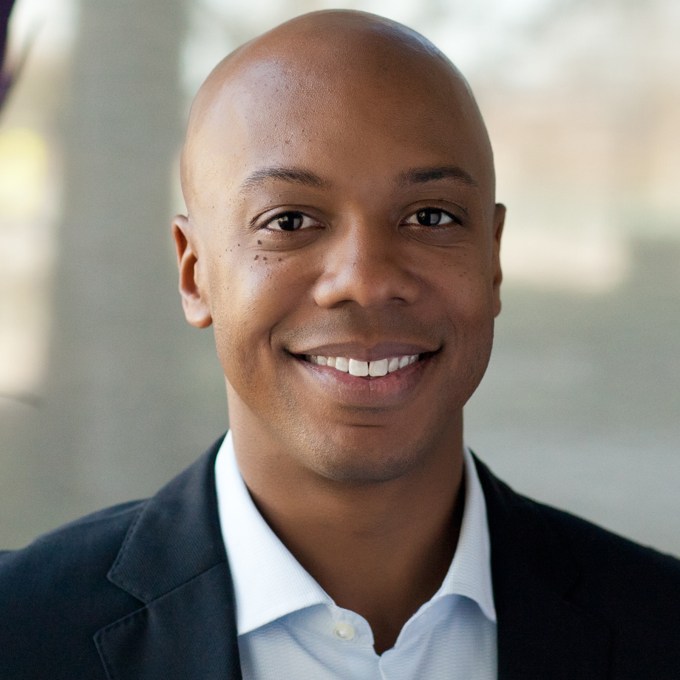
Drew Houston

Drew Houston is co-founder and CEO of Dropbox. Since founding the company in 2007 with Arash Ferdowsi, Drew has led the company’s growth from a simple idea to a service used by over 600 million people around the world. Drew received his bachelor’s degree in Electrical Engineering and Computer Science from MIT in 2006. After graduating, he turned his frustration with carrying USB drives and emailing files to himself into a demo for what became Dropbox. Today, Dropbox is one of the world’s leading business collaboration platforms, with 15 million paying subscribers and nearly 3000 employees across 12 global offices.

# of Disrupt Appearances: 3

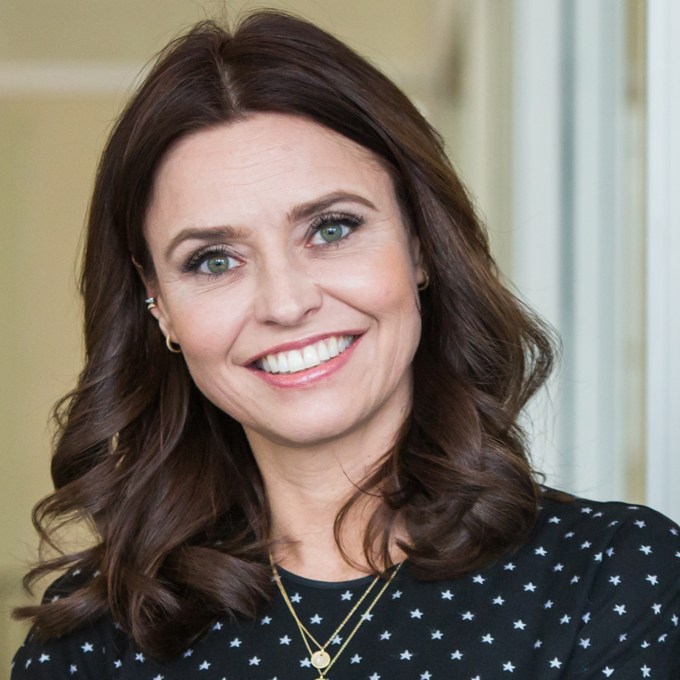
Kirsten Green

Combining a unique and unconventional blend of professional history and acquired investment experience, Kirsten formed San Francisco-based Forerunner Ventures in 2010, where she serves as Founder and Managing Partner. Noticing that emerging purchasing processes were linear and ripe for improvement, Kirsten developed a pacesetter mentality and analytical eye to remain ahead of experience-driven retail trends and identify compelling brand platforms and visionary entrepreneurs.

# of Disrupt Appearances: 3

Image Credits: Forerunner Ventures

Megan Quinn

Megan Quinn is the chief operating officer of Niantic where she oversees business operations and international development across the company. In 2015, Megan was a general partner at Spark Capital where she focused on growth stage investments, including Glossier, Handshake, Pendo, Rover, and InVision. During this period, she also led Spark Capital’s investment in Niantic during the company’s Series B funding round where she joined the company’s board. She’s held product leadership positions at Google and Square prior to getting into venture.

# of Disrupt Appearances: 3

Image Credits: Megan Quinn

Michelle Zatlyn

Michelle Zatlyn is co-founder and COO of Cloudflare, a leading Internet security, performance, and reliability company that was named to CNBC’s Disruptor 50 List, selected by the Wall Street Journal as the Most Innovative Internet Technology Company for two successive years, and named a Technology Pioneer by the World Economic Forum. Before co-founding Cloudflare, Michelle held positions at Google and Toshiba and launched two successful startups. She holds a BS degree, with distinction, from McGill University, and an MBA from Harvard Business School, where she was awarded the Dubliner Prize for Entrepreneurship.

# of Disrupt Appearances: 3

Niko Bonatsos

Niko Bonatsos is a managing director at General Catalyst, a venture capital firm with approximately $5 billion in total capital raised. Working from the firm’s San Francisco Bay Area offices, Niko focuses his investment strategy on finding first-time technology founders with strong product instincts, a robust appetite for learning, and a desire to create innovations with the potential to benefit millions. In his nine years with GC, Niko has been instrumental in the firm’s investments in Atrium, Audius, Cover, Hive, HubHaus, ClassDojo, Paribus (acquired by CapitalOne), Sleeper, and Snap (NYSE: SNAP) among others.

# of Disrupt Appearances: 4

Image Credits: General Catalyst

Roelof Botha

Roelof F. Botha has spent over 15 years building companies in Silicon Valley. He began within the walls of nascent PayPal, where he joined in March 2000 while completing his MBA at Stanford. He became CFO in 2001 and led the company through both its IPO in early 2002 and the subsequent acquisition by eBay. Roelof joined Sequoia Capital in 2003 to help founders build enduring businesses. In addition to leading the US office and serving as one of three Stewards of the global Sequoia Partnership, Roelof focuses on internet, services and software investments.

# of Disrupt Appearances: 8


Susan Lyne

Susan Lyne is co-founder and General Partner of BBG Ventures, an NYC-based, early-stage fund leading investments in companies built by underestimated founders that are transforming our collective and lived experiences. Since 2014, the fund has invested in 60 companies including Zola, The Wing, Modsy, Lola, KiwiCo, Glamsquad, HopSkipDrive, Spring Health, and Blueland. Before founding BBG Ventures Susan held leadership positions at media, technology, and entertainment companies of all sizes and stages, from startups to public companies.

# of Disrupt Appearances: 6

Join us and the TC10 at Disrupt 2020 from September 14-18 by getting your Digital Pro Pass today! Prices are discounted for just 72 hours during our flash sale so if you’ve been on the fence, now’s the time to act!

25 Aug 2020

COVID-19 blamed as smartphone sales plummet 20% in Q2

The last couple of years have been tough on the smartphone industry, as sales plateaued and eventually eroded. But nothing could have prepared manufacturers for 2020. This was supposed to be the year numbers began bouncing back, courtesy of 5G and some radical new designs. But the real figures have been utterly dismal.

According to new numbers out of Gartner, worldwide sales dropped 20.4% for the second quarter. The numbers are in keeping with the drops seen in Q1. The culprit is, of course, COVID-19. Global lockdowns and slowed economies have led to a further decreasing interest in smartphones. As many users have shifted disposable income to upgrading their home offices, they’ve understandably deprioritized mobile device, accelerating recent trends.

Samsung was the hardest hit of the top five, dropping a massive 27.1% year-over-year. “Demand for its flagship S Series smartphones did little to revive its smartphone sales globally,” Gartner Senior Research Director Anshul Gupta said in a release tied to the news. The company is no doubt banking on the recent Galaxy Note 20 launch to help reverse course.

Samsung’s decline puts it in a virtual tie with Huawei for first place, with the two companies accounting for 18.6 and 18.4% of the overall market, respectively. While Huawei sales actually decided 6.8% overall, its figures were still strong enough to see an increase in the overall marketshare for the quarter. The company also saw a rise in sales of 27.4% between Q1 and Q2. Apple, meanwhile, experienced a slight y-o-y dip of 0.4% — a relatively strong showing, all things considered.

In terms of markets, China dipped 7% for the quarter. India, meanwhile, saw the largest drop — down 46%, courtesy of lockdown protocols.

25 Aug 2020

MIT CSAIL grad launches machine learning platform with $10M Series A

Manasi Vartak, founder and CEO of Verta, conceived of the idea of the open source project ModelDB database as a way to track versions of machine models while she was still in grad school at MIT. After she graduated, she decided to expand on that vision to build a product that could not only track model versions, but provide a way to operationalize them and Verta was born.

Today, that company emerged from stealth with a $10 million Series A led by Intel Capital with participation from General Catalyst, who also led the company’s $1.7 million seed round.

Beyond providing a place to track model versioning, which ModelDB gave users, Vartak wanted to build a platform for data scientists to deploy those models into production, which has been difficult to do for many companies. She also wanted to make sure that once in production, they were still accurately reflecting the current data and not working with yesterday’s playbook.

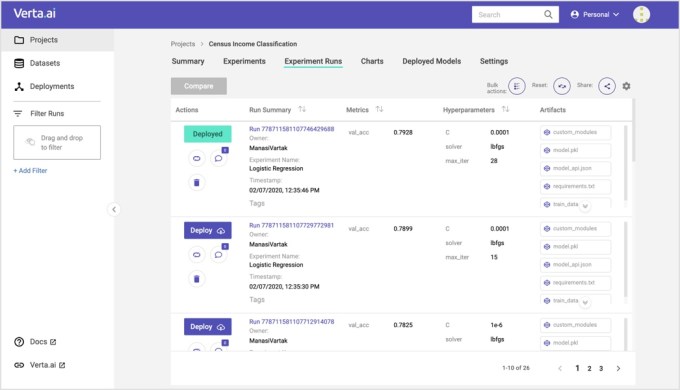
“Verta can track if models are still valid and send out alarms when model performance changes unexpectedly,” the company explained

Verta interface

Image Credits: Verta

Vartak says having that open source project helped sell the company to investors early on, and acts as a way to attract possible customers now. “So for our seed round, it was definitely different because I was raising as a solo founder, a first time founder right out of school, and that’s where having the open source project was a huge win,” she said.

Certainly Mark Rostick, VP and senior managing director at lead investor Intel Capital recognized that Verta was trying to solve a fundamental problem around machine learning model production. “Verta is addressing one of the key challenges companies face when adopting AI — bridging the gap between data scientists and developers to accelerate the deployment of machine learning models,” Rostick said.

While Vartak wasn’t ready to talk about how many customers she has just yet at this early stage of the company, she did say there were companies using the platform and getting models into production much faster.

Today, the company has 9 employees, and even at this early stage, she is taking diversity very seriously. In fact, her current employee makeup includes 4 Indian, 3 Caucasian, 1 Latino and 1 Asian for a highly diverse mix. Her goal is to continue on this path as she builds the company. She is looking at getting to 15 employees this year, then doubling that by next year.

One thing Vartak also wants to do is have a 50/50 gender split, something she was able to achieve while at MIT in her various projects, and she wants to carry on with her company. She is also working with a third party, Sweat Equity Ventures, to help with recruiting diverse candidates.

She says that she likes to work iteratively to build the platform, while experimenting with new features, even with her small team. Right now, that involves interoperability with different machine learning tools out there like Amazon SageMaker or Kubeflow, the open source machine learning pipeline tool.

“We realized that we need to meet customers where they are at their level of maturity. So we focused a lot the last couple of quarters on building a system that was interoperable so you can pick and choose the components kind of like Lego blocks and have a system that works end to end seamlessly.”

25 Aug 2020

Rideshare and taxi ad startup Firefly acquires Strong Outdoor’s out-of-home ad business

Firefly is expanding its ad business in New York City by acquiring the out-of-home business of Strong Outdoor, as well as by becoming the advertising partner for fleet operator Sally.

Firefly launched in 2018 by offering Uber and Lyft drivers a digital display that they could place at the top of their vehicles, making extra money by running ads that can be targeted based on geography, time of day, demographics and more. It expanded into advertising on regular cabs last year, an expansion accelerated by the acquisition of Strong’s digital business.

Firefly co-founder and CEO Kaan Gunay explained that with this new deal, the startup is also taking control of Strong’s non-digtal taxi-top advertising.

The plan is to eventually transition those ad units to digital, but he suggested that the timing will depend on how quickly the ad business returns. After all, out-of-home advertising is a lot less appealing when everyone’s stuck at home. In the meantime, Gunay said he’s happy to selling traditional ad inventory as well.

He also said that even though Firefly’s business slowed with the pandemic, he’s confident that the company’s more targeted digital approach can bring new customers to taxi-top advertising (brands advertising with Firefly in New York have included Puma, Dunkin’, Truly, Colgate, Stella Artois, 7-Eleven, Papa Johns and Postmates). And Firefly is still expanding and investing, as shown by this acquisition.

Asked whether these moves into traditional advertising put Firefly at risk of becoming just another taxi landscape, Gunay said, “Absolutely not.” He said Firefly is still very much a technology company, while also pointing to the appeal of traditional taxi-top ads, which he described as “New York institution.” He added that these deals give Firefly 42% marketshare in New York.


25 Aug 2020

Kymeta raises $85.2 million led by Bill Gates to speed growth of its satellite-cellular antenna tech

Global communications startup Kymeta has raised a new $85.2 million funding round, led by Bill Gates . The Redmond-based company has developed a new type of smart, powered flat panel antenna that can be used to to vastly improve satellite and cellular connection signal strength.

Kymeta’s new funding is intended to help it continue with new product development efforts, and also to speed the commercialization of its technology. Since its debut in 2015, Kymeta has productized its technology and added a significant number of customers, particularly in industries like defense, mobility and public safety.

The company’s tech is electronically steered and requires no moving parts to operate, which is a huge advantage over traditional satellite reception dishes – particularly in applications like on aircraft, on ships and in other transportation methods where having a satellite dish attached to the outside of your vehicle doesn’t make any sense or is impossible.

Kymeta’s tech also has significant potential advantages when it comes to working with the new generation of low Earth orbit communications satellite constellations the are coming online today and in the near future. Because of the dynamic nature of its flat panel antennas, it can track and adjust position when maintaining connection with these satellites as they move across the sky – a task that requires more flexibility when compared to maintaining connections with the large, fixed-position geostationary communications satellites that form the backbone of legacy satellites internet networks.

25 Aug 2020

Fitbit launches a $330 Apple Watch competitor

Fitbit would be the first to admit it was late to the smartwatch game. When it did finally launch a proper smartwatch with the Ionic, it was something of a misfire. But the Versa helped the wearable pioneer make up for some lost ground, courtesy of a solid, Android-compatible device at a good price.

In fact — recent years have seen both Apple and Samsung exploring lower-cost alternatives to their own flagships, as these device become increasingly mainstream. Not to mention the fact that consumers have grown a bit weary of ever-increasing device costs. In spite of that, however, Fitbit is taking a swing at the premium end of the market with the new Sense smartwatch.

The device isn’t designed to replace the popular Versa line. In fact, today also sees the release of the Versa 3. Instead, the Sense is designed to be a premium alternative to the Versa line — the “company’s most advanced health smartwatch,” according to Fitbit. It’s an interesting new dimension for the company, though it comes as Fitbit has already proven that it can make a solid smartwatch, so perhaps asking people to pay a bit more isn’t entirely out of the realm of possibility, especially when the brand continues to have some cache among wearable users.

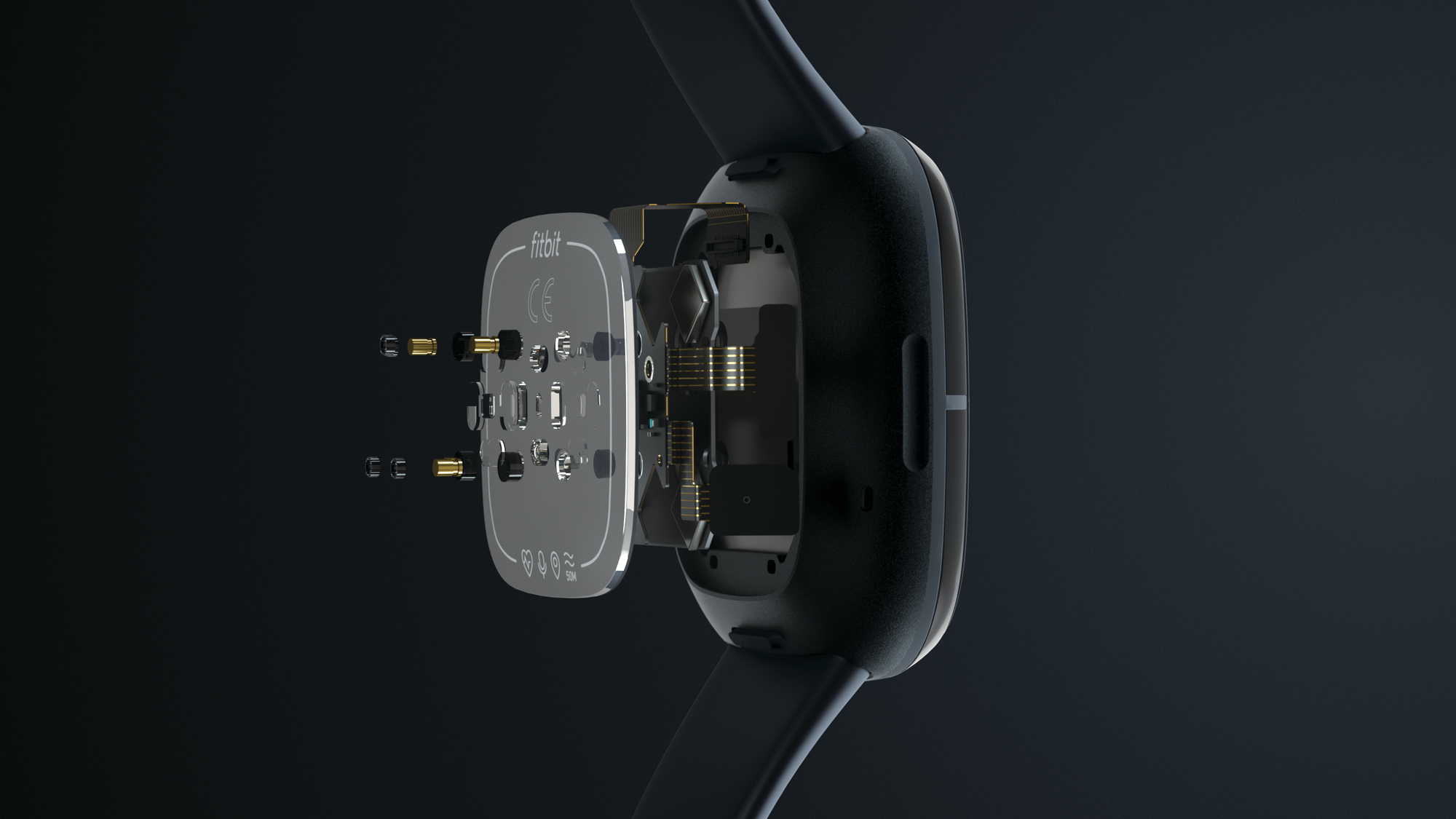
Lifestyle photo of Fitbit Sense.

Those new features largely revolve around additional sensors, including ECG and skin temperature detection. Fitbit is strongly invested in the notion of stress detection as the next big milestone for wearable health. Certainly there’s a lot to be said for the feature in what’s already proven to the most stressful year on record for many. And plenty of wearable and app designers have already invested a good deal in the notion of reducing stress through technology, as evidenced by the popularity of meditation apps and breathing reminders.

The feature is built around the inclusion of an EDA (electrodermal activity) sensor. It’s a pretty new concept for this class of device. To use it, the wearer places the palm of their hand over the watch’s face. The system then scans for electric changes in skin sweat levels. In all, stress levels are measured by a combination of 10 biometric inputs that also include sleep quality, heart rate and exercise level.

I can’t really say much about the efficacy of these measurements at this point. I suspect stress is significantly more difficult to quantify, though it certainly does have physical manifestations. At the very least, such a system may go a ways toward detecting changes over time worth observing.

Here’s a quote from UCSF Assistant Professor Dr. Helen Weng, “Meditation is exercise for your mind. Just like physical exercise, you need a consistent practice to cultivate your mental capacity for it. Finding a meditation practice that works for you is important for building long-term health and wellness benefits. Fitbit can help you achieve this through its mindfulness and measurement tools, including the new Stress Management Score and EDA Scan app, so that you can see your progress and build a personalized meditation practice that is impactful and sustainable.”

Product laydown photography for Fitbit Sense.

As a generally high-stress person living through an extremely high-stress time, I’m interested in checking this out as part of our review. The feature makes extensive use of Fitbit’s software offerings, as well. The company clearly sees its premium content play as a big part of its future (either as part of Google or not). As with other devices, this will come with a free year of Fitbit Premium. That subscription service also includes meditation content from third parties, including Aaptic, Aura, Breeth and Ten Percent Happier.

The device features ECG detection (pending FDA approval), putting it more in line with premium Apple and Samsung models, for detection of things like AFib. There’s also on-board GPS (previously the realm of the Ionic), and the company will begin to surface SpO2 blood oxygen levels.

The new watch starts shipping in late September.

25 Aug 2020

Fitbit intros the Versa 3 and Inspire 2

Fitbit’s big news for today was the launch of the Sense, a new, more premium smartwatch line designed to compete directly against the likes of Apple and Samsung. But Fitbit has never been one for solitary product launches. As such, two of its biggest lines are also getting key updates.

First off is the Versa. The popular low-cost smartwatch played a key part in helping bring the company back from the edge. Almost a year to the day after the launch of the Versa 2, Fitbit’s back with a followup that’s taking a bit of a back seat to the launch of the higher-end model. The price discrepancy means the Versa is lacking some of the key Sense features, including ECH and EDA detection. It does, however, join its younger sibling in adding GPS to the mix.

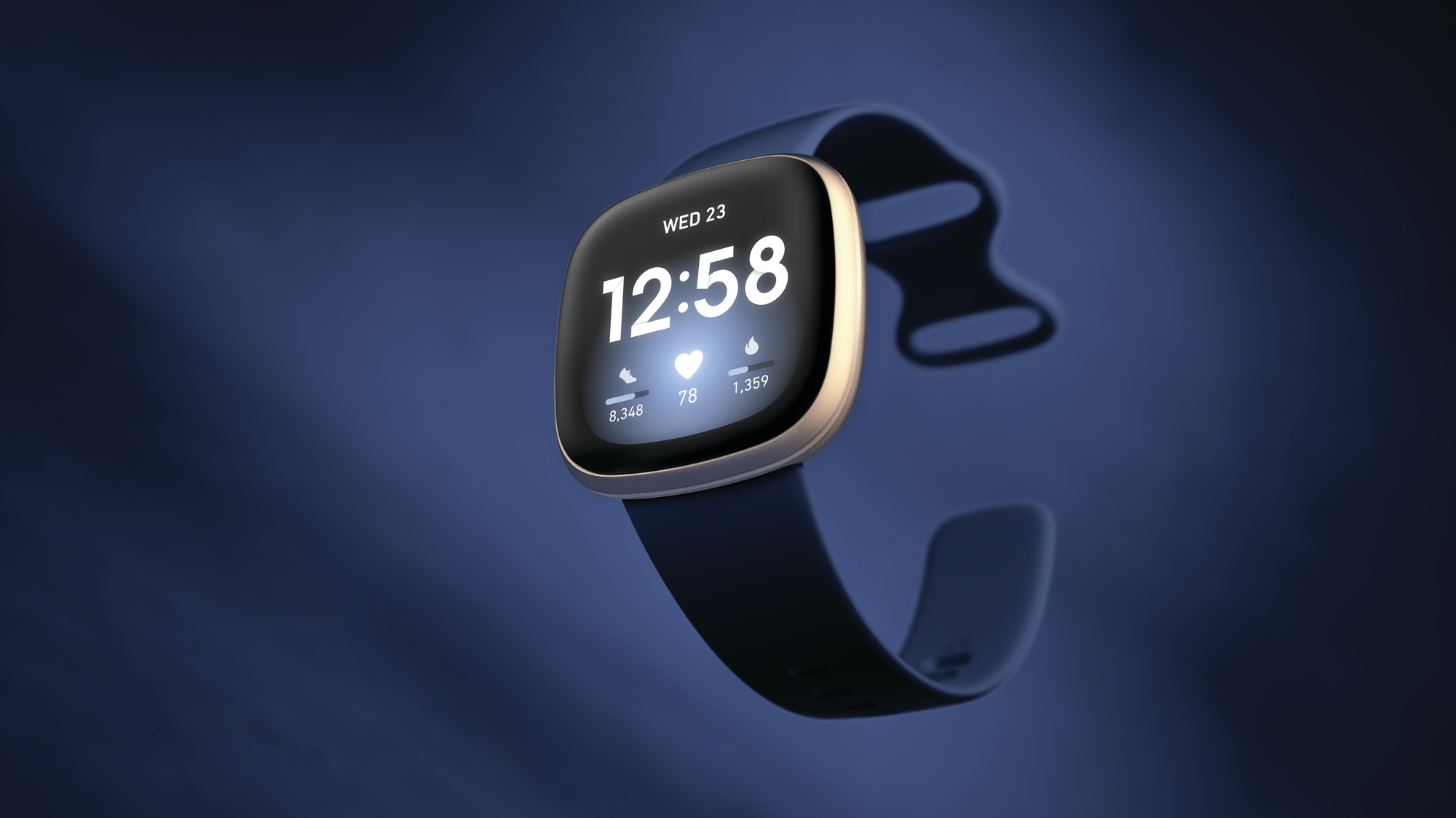
Product laydown photography for Fitbit Versa 3.

The watch also features built-in Alexa and Google Assistant (introduced in an earlier version), along with the ability to answer calls. Active Zone Minutes is coming to both watches, offering a more in-depth take on fitness tracking than the standard step count. The squircle design has been updated a bit too, with smoother edges that put it more in line with the new Sense. And like the Sense, it promises a hearty six+ days of battery life on a single charge.

Image Credits: Fitbit

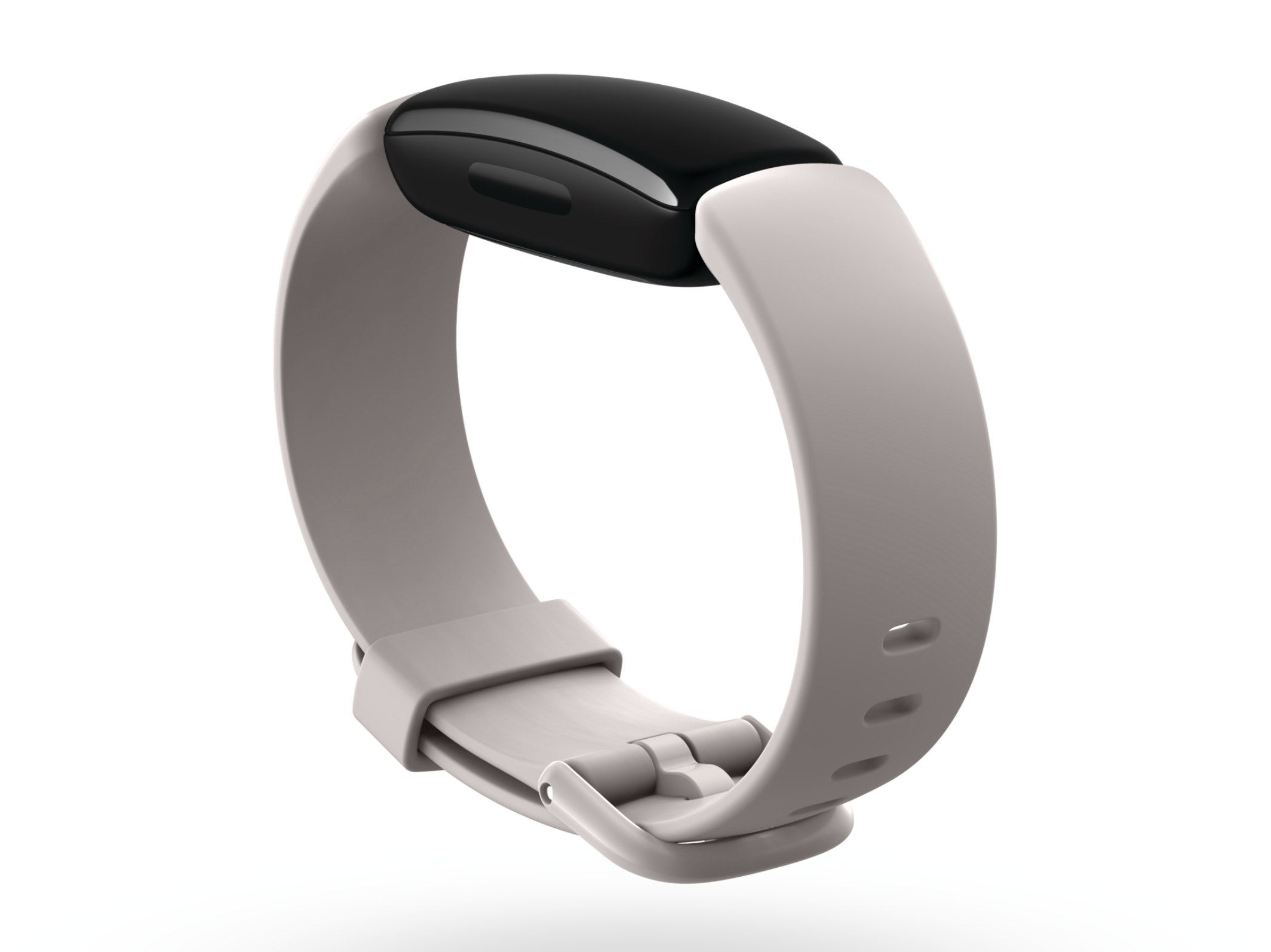
The Inspire 2 is also getting Active Zone Minutes, while offering an even more impressive 10 days of life on a charge — the longest of any Fitbit product. The tracker features a more streamlined design, coupled with a brighter screen. It can do a whole bunch of different tracking, per Fitbit:

20+ goal-based exercise modes, advanced sleep tools, 24/7 heart rate tracking, menstrual health tracking, and see your food and hydration intake, along with your weight, all with daily encouragement right on your wrist

All of the new trackers come with a free year of Fitbit premium. The Versa 3 runs $230 and the Inspire 2 is $100. They’re up for pre-order starting today and will be available globally in late September.