Year: 2020

10 Aug 2020

Polestar 1 Review: A hybrid grand tourer worthy of its $155,000 price

The Polestar 1 is stunning inside and out. But it drives even better than it looks.

This is a driver’s car. The Polestar 1 is an electric hybrid sports car, and yet it doesn’t feel like a hybrid. The power plant in the Polestar 1 is fascinating and delivers power in a way that’s different from any other electric or hybrid sports car I’ve driven. It feels like a proper gas-powered grand tourer that can keep up with the best from BMW, Mercedes, and Audi .

You’ll swear there’s a V8 in the Polestar 1. And that’s a good thing. Put your foot down, and the car plows forward with the confidence of internal combustion. The power delivery is not digital with an on-or-off feeling familiar in electric vehicles, but rather, it’s organic and fluid. Hit 45, and the torque seemingly increases, mimicking the soul of a balanced gas engine. The Polestar 1 feels more like a Corvette than a Tesla Roadster. And to me, for the first time, I have hope that the future of motoring can be efficient and enjoyable.

The Polestar 1 is a fantastic vehicle full of dumb flaws, but it gets one thing right: The hybrid powertrain in the Polestar 1 is genius. It’s spectacular and foreshadows a future where cars can change their identities to match a driver’s tastes better.

[gallery ids="2029288,2029294,2029291,2029290,2029289,2029287"]

Review

The Polestar 1 is surprising ways. During my time with the vehicle, I found myself lost in its balanced power. It’s smooth off the line and confident at speed. The 600 hp power plant is bottomless and yet restrained where needed. This car won’t beat a Tesla Model S to 60 mph, and to me, that’s ideal. As I learned from Polestar, the engineers used clever software to restrain the 737 ft-lb of torque and allow the powertrain to deliver the power pleasingly.

But first, some context: Polestar is an off-shoot of Volvo designed to explore the possibilities of electric vehicles. The company’s first car is the Polestar 1 featured here. The company’s second vehicle, Polestar 2, is a pure electric sedan that will compete with the Tesla Model 3. The Polestar 2 will be available in the coming months and has an electric range of 275 miles with a starting price of $59,900. The Polestar 1 is a hybrid vehicle and starts at $155,000.

Polestar is following a similar strategy used by Tesla. Like Polestar, Tesla’s first vehicle was a limited-run sports car, the Roadster. From the Roadster, Tesla expanded its line to more accessible vehicles like the Model S, Model X, and finally, the Model 3. Essentially, Tesla (and now Polestar) built the sexy sports car for attention, and an affordable car people need.

And much like the Tesla Roadster, the Polestar 1 has a bunch of quirky shortcomings. In the Polestar 1, the sun visor only tilts down — it cannot pull out and twist to the side. The Polestar 1’s door handles pop-out when the driver approaches the vehicle — sometimes, other times, they do not, and occasionally, they remained popped out from the car after I closed the door.

I experienced a random assortment of error messages from the Polestar 1. Sometimes, the car would beep to have the passenger buckle their seat belt, even though the passenger seat was empty. Other times, the check engine light flashed. And when one of the tires lost air, the vehicle flashed a warning, but I was unable to see the exact tire pressure to help gauge the urgency of the notice.

One more complaint: The trunk is tiny, and I don’t think it can hold more than one set of golf clubs.

And even with these shortcomings, the Polestar 1 is fantastic. It feels alive in a way that’s missing from most hybrid or electric cars. It’s balanced and controlled and has endless potential.

The Polestar 1 is a tourer. It’s designed to be comfortable and controlled on endless road trips. Tourers like the Polestar 1 are among my favorite types of cars. Most are broad and sweeping. In the best, the driver feels like a part of the massive machine, working in tandem with engines, motors, and gears, to achieve a common goal. This is often achieved through a competent chassis and potent powertrain, which is the same formula used in the Polestar 1.

The Polestar 1 powers off the start line with the torque pushing the riders into their seats. As speed increases, the torque increases, much like a small-block V8. At speed, the Polestar 1 settles into a grove, seemingly able to maintain any cruising speed. It carves through curves, with balanced steering and capable corning.

The hybrid powertrain comes alive on open stretches of roads. It’s not rowdy or boisterous, but understated and robust. It’s not jerky, but sublime. It’s intoxicating.

Representatives from Polestar explained to me that engineers used several techniques to deliver an enjoyable driving experience. For one, the software is used to restrain the instantaneous torque generally produced by electric motors. Second, the car’s gearbox utilizes gearing designed for long hauling, not drag racing. Because of this design, the Polestar 1 is slightly slower to 60 mph than some competitors, and yet, it’s fast enough with a 0-60 time of 4.2 seconds.

Like most cars, the Polestar 1 has several different driving modes. In pure electric, the vehicle has a range of 60 miles — the longest such range of any gas-electric hybrid on the market. In this mode, the Polestar 1 is silent and effortless. In hybrid mode, the power is plentiful but not overflowing. In Power mode, the Polestar 1 transforms into its true self as one of the best grand tourers available.

Car bros often lament about the coming age of the electric vehicle. I understand the pessimism. Electric cars often feel digital, and for most people, driving is an analog experience. Electric motors provide a thrilling experience but often lack a sporty enjoyment. The Polestar 1 achieves both.

Polestar knows the Polestar 1 will not sell in large numbers. With a starting price of $155,000, it’s selling against the best from Porsche, BMW, and Mercedes. For one, I wouldn’t get a Polestar 1 over a fully-equipped Porsche 911 or BMW 8 Series. That said, Polestar is only making 1,500 of this initial vehicle.

The Polestar 1 is beautiful and looks like nothing on the road. The hood is long and wide with the back-end stout and robust. The design is clean and straightforward. Hints of Volvo’s involvement are evident throughout the expansive front-end to the sweeping taillights to the infotainment system.

The future of motoring is electric, but that’s miles down the road. That’s okay with me. Cars like the Polestar 1 prove that gas engines still have a place in a world striving to be more energy efficient. Automotive development is evolutionary rather than revolutionary and in the case of the Polestar 1, it’s a big step in the right direction. The software used to tune the hybrid powertrain foretells a future that’s as pleasing as what’s currently available from Europe’s best.

The Polestar 1 sits in an odd spot. It’s not a mass market vehicle thanks to it very high price, and it’s hardly competitive against vehicles in its price range, too. That doesn’t stop it from standing tall as a fantastic vehicle regardless of its price. It’s exciting as a technical marvel more so than an obtainable commodity and in the world of motoring, it’s cars like this that stand the test of time. The Polestar 1 is a future classic.

10 Aug 2020

Nikola stock surges on order for 2,500 electric garbage trucks

Electric truck maker Nikola announced an order for 2,500 garbage trucks, which sent the startup’s stock soaring today. The order is expected to begin construction in 2023, with on-road testing scheduled for 2022.

Republic Services placed the order, which is expandable up to 5,000 trucks. The company is said to be the second-largest recycling and waste service provider in the United States.

News of the order caused Nikola’s stock to surge 22% on open and is currently trading at 14%, as of writing. Nikola hit the market earlier this year and became a darling as it popped from its initial public offering of 10.16 to 93.99 in a few weeks.

According to a press release, the electric trucks are expected to use Nikola’s Tre powertrain system and offer 150 miles on a charge in this implementation. The battery pack is said to carry up to 720kWh of energy storage, while the powertrain will be software limited to 1,000 HP. Nikola is tasked with building and assembling the truck chassis and body.

“This is a game changer,” said Nikola CEO Mark Russell, in a released statement. “Refuse truck customers have always ordered chassis from truck OEMs and bodies from other suppliers. Nikola has fully integrated the chassis and body, covering both with a single factory warranty. Trucks will include both automated side loaders and front-end loaders — all of which will be zero-emission.”

Industrial markets such as the garbage trucks offer electric vehicle makers a large area of opportunity where companies can implement technology with less stringent design requirements. Garbage companies care more about ability than form factor.

Along with the industrial Tre powertrain, Nikola has plans for a consumer pickup named the Nikola Badger. This vehicle is currently available for pre-order and available in two flavors, the battery version with a purported 300 mile range, and the fuel cell version with a range said to be up 600 miles.

10 Aug 2020

The Station: Uber eats rides, the next micromobility trend, Levandowksi’s day in court

The Station is a weekly newsletter dedicated to all things transportation. Sign up here — just click The Station — to receive it every Saturday in your inbox.

Hello and welcome back to The Station, a newsletter dedicated to all the present and future ways people and packages move from Point A to Point B.

A series of recent and upcoming vehicle reveals have provided yet another reminder of how automakers are doubling down on tech. This isn’t just about the shift away from knobs and buttons and towards giant touchscreens. I’m talking about advanced driver assistance systems and more specifically, ADA or active driving assistance. ADA is considered a part of ADAS, but it’s worth understanding what it is and is not. ADA systems combine steering, acceleration and braking. It’s technology that actively assists the driver.

Tesla’s Autopilot and GM’s Super Cruise, both of which combine adaptive cruise control and lane keeping assistance, are examples of ADA.

AAA automotive researchers recently conducted tests of these ADA systems. (A photo of a test vehicle colliding with a fake simulated vehicle is below) They found that over the course of 4,000 miles of real-world driving tests, vehicles equipped with active driving assistance systems experienced some type of issue every 8 miles, on average. Other problems included disengaging with little notice and “almost instantly” handing control back to the driver.

Based on the study, AAA is recommending automakers “increase the scope of testing for active driving assistance systems and limit their rollout until functionality is improved to provide a more consistent and safer driver experience.”

I’ll add my own two cents in here. It’s not just about ensuring the systems work as intended. It’s also important that these systems have protections, like driver monitoring systems, so that if control is suddenly handed back to the driver, you can be sure that they will be ready.

Friendly reminder that you can reach out and email me anytime at kirsten.korosec@techcrunch.com to share thoughts, criticisms, offer up opinions or tips. You can also send a direct message to me at Twitter — @kirstenkorosec.

Micromobbin’

the station scooter1a

There’s a hot trend brewing the micromobility world: hardware-as-a-service.

Unagi, the company that sells sleek, portable electric scooters, has launched a subscription service. The service, called Unagi All-Access, will be offered in New York City and Los Angeles. The company said it plans to expand to additional markets as it gathers customer feedback and refines the service.

For a flat monthly fee of $39 (or $34 if a customer signs up for a year), Unagi will cover maintenance and insurance for scooter theft or damage.

Unagi isn’t alone in this scooter subscription pivot, or what I like to call hardware-as-a-service. Others are also pursuing this business model, including Dance and Voi.

How many more will move to this model?

Other micromobility news this week …
JUMP Bikes 000

Image Credits: Uber

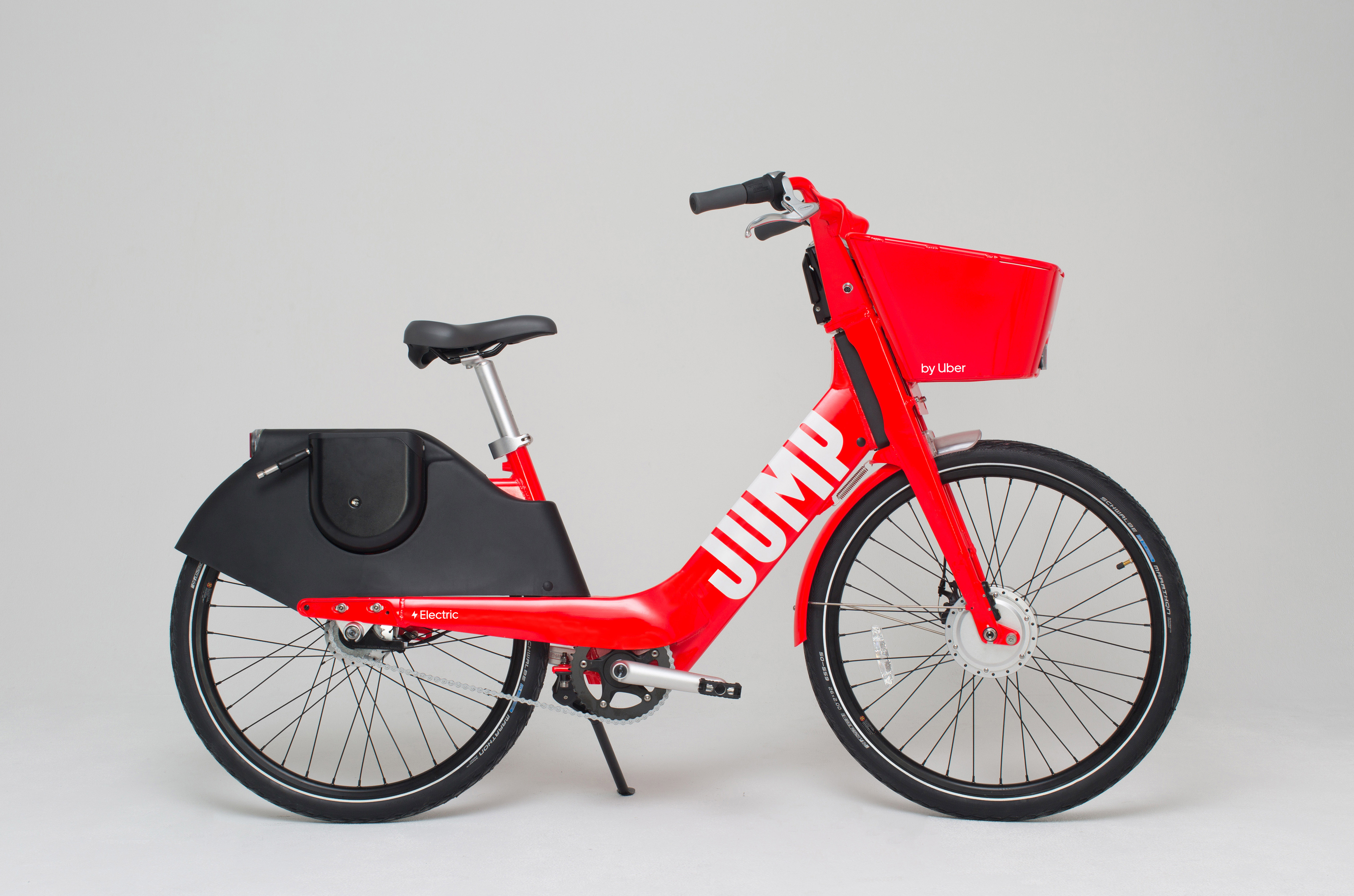
Those iconic bright red Jump bikes have been integrated into the Lime app. Why this matters?

Three months ago, Jump’s bikes and scooters disappeared from city streets after Uber unloaded the micromobility company to Lime as part of a complex $170 million fundraising round. When the Jump bikes were finally spotted it was in a recycling yard, where more than 20,000 of them laid in piles, awaiting their demise.

New, unused Jump bikes were tucked away in storage. Lime has started to add those Jump bikes to cities like Denver, London, Paris, Seattle and Washington, D.C. But they were only available through the Uber app. Now, the Jump bikes will show up on the Lime app — as red, not green bike icons. This is the first time since Lime acquired Jump’s assets that the bikes have been integrated into its app.

Deal of the week

money the station

The Summer of the SPAC continues with yet another electric automaker turning to a blank check company to go public.

This time it’s Lordstown Motors, the one-year-old Ohio electric automaker that revealed a pickup truck prototype in June. The company said it reached a deal to merge with special-purpose acquisition company DiamondPeak Holdings Corp., with a market value of $1.6 billion.

Electric automakers Nikola Motor and Fisker Inc. have also become public companies through a SPAC over the past two months. Shift Technologies, an online used car marketplace and sensor company Velodyne Lidar, also went public via a SPAC, sidestepping the traditional IPO path.

Axios’ Dan Primack predicted recently that more SPACs are coming. He noted that SPACs have raised $24 billion so far in 2020. What company is next?


Speaking of publicly traded companies, Chinese electric automaker Xpeng filed its F-1 on Friday with the U.S. Securities and Exchange Commission. An F-1 is a required filing for foreign companies that want to be listed on an American stock exchange.

To get up to speed, Xpeng recently raised around $500 million in a Series C+ round. That announcement followed its Series C round of $400 million closed last November.

I haven’t read EVERY SINGLE LINE of the F-1 (I promise more of a deep dive next week). But here’s one highly unusual item. The company has negative gross margins. It brought in revenue, but its cost of sales surpassed revenue. So, negative. This isn’t including other costs like operating expenses or R&D.

Other deals that got my attention this week …

Buckle, a financial services company that insures gig economy workers, including ride-hailing drivers, raised $31 million in Series A funding co-led by Eos Venture Partners and HSCM Bermuda.

ChargePoint, the electric vehicle charging network, raised $127 million in funding in a bid to expand its platform for businesses and fleets in North America and Europe. A mix of existing investors from the oil and gas, utilities and venture industries added to the round, including American Electric Power, Chevron Technology Ventures, Clearvision and Quantum Energy Partners.

Grab raised $200 million from South Korean private equity firm Stic, bringing its total funding so far to more than $10 billion at a valuation of about $14.3 billion, per Bloomberg, which cited unnamed sources. Grab wouldn’t comment about the raise to TechCrunch. Grab did reveal this week that its financial unit is launching a slew of consumer products, including micro-investments, loans, health insurance and a pay-later program.

Streetlight Data Inc., a transportation analytics company, raised $15 million in a Series D round that included Macquarie Capital and Activate Capital as well as existing investors Osage University Partners and Ajax Investment Strategies.

StreetLight Data CEO Laura Schewel told TechCrunch that use of the company’s mobility metrics doubled in just the first month of the pandemic. New volatility of travel — led by a steep COVID-driven decline, then a less-than-gradual return to a ‘new normal,’ and significant mode switching from transit to bikes — has propelled government transportation agencies to turn to StreetLight, according to Schewel.

“We’ve also seen a massive surge in new customers within the thousands of small transportation engineering firms supporting the DOTs, who have been forced by COVID-19 to accelerate their transition to digital data collection (as opposed to going out and doing manual counts or installing devices),” she said. “We’re of course adjusting where we put our resources to be able to serve these growing segments.”

Uber acquired U.K.-based Autocab, which sells SaaS to the taxi and private hire vehicle industry.

Notable reads and other tidbits

Remember when August was the slow news month? Not anymore.

Autonomous cars

the station autonomous vehicles1

Anthony Levandowski, the former Google engineer and serial entrepreneur who was at the center of a lawsuit between Uber and Waymo, has been sentenced to 18 months in prison on one count of stealing trade secrets. Levandowski also agreed to pay $756,499.22 in restitution to Waymo and a fine of $95,000.

He will not have to report to prison until the COVID-19 pandemic is under control.

Levandowski was pushing for home confinement. Judge William Alsup, who also presided over the Uber v. Waymo trial, disagreed. He said home confinement would “[give] a green light to every future brilliant engineer to steal trade secrets. Prison time is the answer to that.”

But as Mark Harris and I discovered, Levandowski is not skulking away. Levandowski recently filed a lawsuit making explosive claims against Waymo and Uber that, if proven, could turn his fortunes around with a multi-billion-dollar payout. Whether this is a last-ditch effort by a desperate man whose career has been upended by his own poor choices or a viable claim against a double-dealing tech titan will be up to the courts to decide.

This new lawsuit, filed as part of Levandowski’s bankruptcy proceedings, mostly focuses on Uber’s agreement to indemnify Levandowski against legal action when it bought his self-driving trucking company, Otto Trucking. It also includes new allegations concerning the settlement that Waymo and Uber reached over trade secret theft claims.

The end goal: Levandowski believes and claims in the lawsuit that he should be awarded earn outs associated with the profits of Uber Freight  — the new name of Otto Trucking  — an amount that “should be at least $4.128 billion.” He also wants Uber to pay the $179 million sum that was awarded to Google in arbitration.

Connected cars

The Black Hat security conference is that annual event that reminds me of how vulnerable connected cars can be. This year, security researchers at the Sky-Go Team, the car hacking unit at Qihoo 360, found more than a dozen vulnerabilities in a Mercedes-Benz E-Class car that allowed them to remotely open its doors and start the engine.

As our cybersecurity editor Zack Whittaker noted, vehicle security has gotten better over the past half-decade. But Sky-Go’s researchers showed that not even one of the most recent Mercedes-Benz models are impervious to attacks.

Delivery

 

Uber Eats App Merge

Amazon’s plan to take a 16% stake in on-demand food delivery app Deliveroo was approved by the U.K.’s competition regulator.

DoorDash launched a digital storefront to sell household goods and other items you might find at a convenience store. The storefront, called DashMart, is available in eight cities throughout the United States. These are essentially micro-fulfillment centers that carry around 2,000 items. Warehouse employees pick and pack the orders, and then delivery workers, known as Dashers, come to collect the order and deliver to the customer.

Uber seems to be popping up all over the place in this week’s newsletter. And delivery is one area I couldn’t ignore. The company reported its second-quarter earnings and buried in the blizzard of numbers (really this earnings report was a 100-year storm of figures) was a nugget that stood out.

Uber’s delivery business — better known as Uber Eats — is now bigger than its original and core ride-hailing division, based on adjusted net revenue. Now, adjusted net revenue tells only a piece of this evolving Uber story. Income, or losses in the case of Uber’s delivery business, are also important.

Still, looking at the change of the past year, and specifically in the past two quarters, it’s clear that Uber’s strategy has shifted. Here are some Q2 numbers to chew one.

  • Delivery gross bookings: $6.96 billion
  • Mobility gross bookings: $3.05 billion

Here’s how those gross bookings results turned into adjusted net revenue:

  • Delivery adjusted net revenue: $885 million
  • Mobility adjusted net revenue: $793 million

And how those revenue results turned into adjusted profit, and adjusted losses:

  • Delivery adjusted EBITDA: -$232 million
  • Mobility adjusted EBITDA: $50 million

Uber CEO Dara Khosrowshahi provided the upshot during the Q2 earnings call. “It’s become clear that we have a hugely valuable hedge across our two core businesses that is a critical advantage in any recovery scenario. When travel restrictions lift we know the mobility trips rebound. If restrictions continue or need to be re-imposed our delivery business will compensate.”

Ride-hailing

Uber and Lyft are facing separate lawsuits from the office of the California Labor Commissioner alleging wage theft. The lawsuits filed this week argue Uber and Lyft are misclassifying their drivers as independent contractors. The end goal: enforce labor practices set forth by California law AB 5 and claw back money allegedly owed to these drivers.

In a separate — yet related matter — Uber and Lyft are fighting to prevent a preliminary injunction that would force the companies to immediately reclassify their drivers as employees. California Superior Court Judge Ethan P. Schulman heard arguments from Uber and Lyft, as well as lawyers representing the people of California, regarding the request for a preliminary injunction.

Car bits
cadillac-lyriq-ev-2

Image Credits: Cadillac

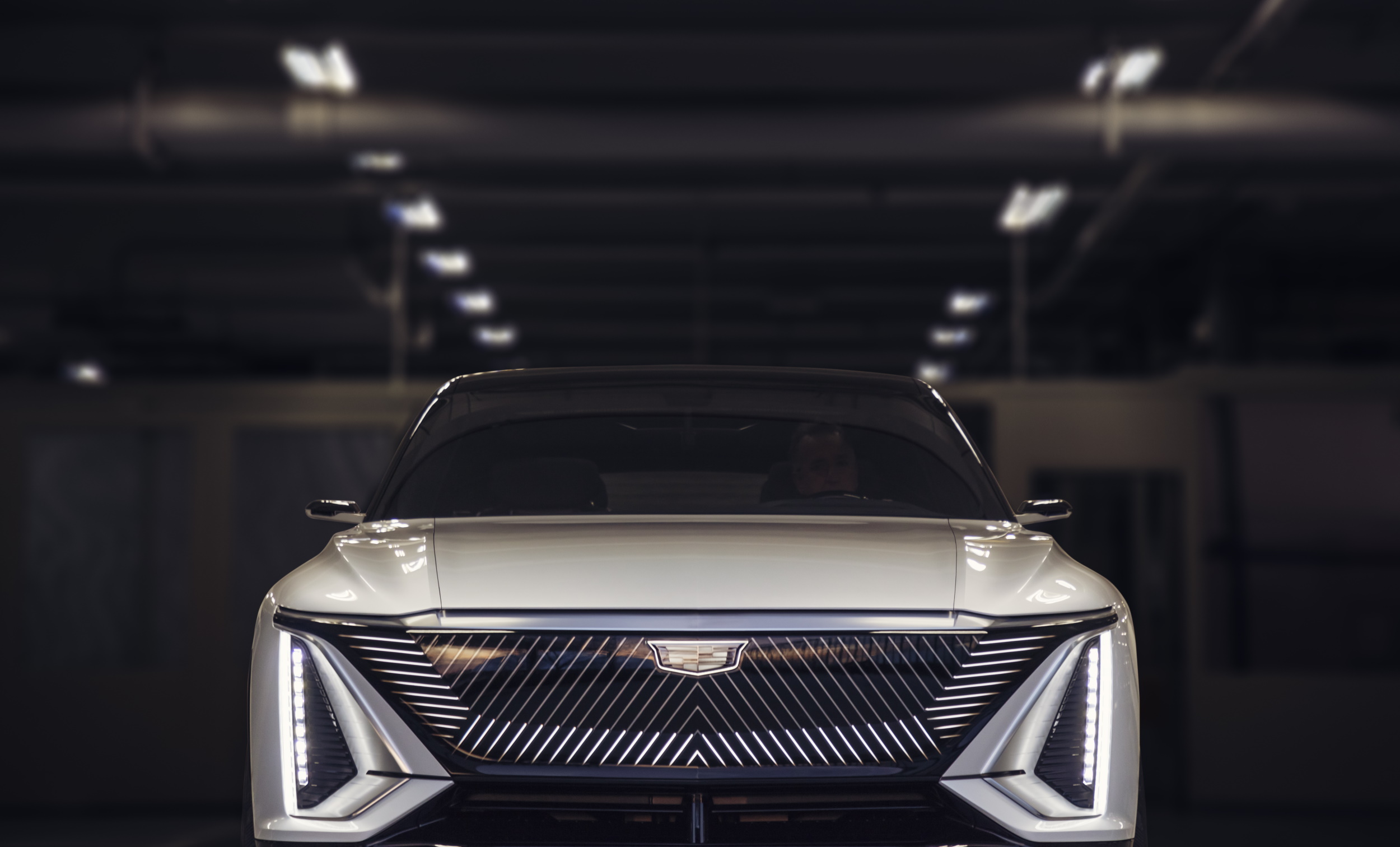
GM revealed the Cadillac Lyriq, an all-electric crossover that aims to set the benchmark for future Cadillacs and propel the brand into a new electrified era.

That new era for Cadillac will have to wait though. The Lyriq will go into production in the U.S. in late 2022, more than two years after its reveal date. The Cadillac Lyriq will be a global product, meaning it will be headed to China as well. Production in China will begin ahead of the U.S., according to Cadillac.

The Lyriq is just one in a roster of 20 electric vehicles that GM plans to bring to market by 2023. The cornerstone of GM’s electric strategy isn’t a specific electric car or truck. It’s a new scalable electric architecture called Ultium that will support a wide range of products across all of its brands, including Buick, Cadillac, Chevrolet and GMC.


Ford is changing up its leadership. The company announced that CEO Jim Hackett is retiring effective October 1, although he’ll stay on as a special advisor until March 2021. Jim Farley, who many believed was being groomed for the position, has been named president and CEO.

Hackett will be leaving Ford three years after being tapped to transform the automaker into a leaner, more competitive and profitable company while investing in technology and shifting toward electrification, automation and connectivity.

Hackett’s turnaround plan was aimed at modernizing the company while making it fitter and included $14 billion in cost reductions over five years. While Hackett accomplished some of those goals, he fell short in others, particularly around the day-to-day toil of making and shipping vehicles.

Speaking of Ford, this column by John Stoll at the WSJ is thought provoking. Ford has struggled to appease shareholders. Stoll argues that the company’s lofty ambition to “lap Tesla” might require extraordinary measures. “Sometimes, the answer is to take back control,” he writes. And that means taking Ford private.

One fun thing

Jason Stinson, the CTO and co-founder of Renovo, a Silicon Valley company that has created a data management platform for self-driving vehicles, has taken his virtual Zoom meetings with employees to a whole new level.

He dresses up for every meeting. And by “dress up,” I’m not talking about the traditional suit and tie. Instead, Gene Simmons from KISS might show up. Or a shark, gondolier, a roller derby Christmas elf, The Greatest American Hero, Pickle Rick from “Rick and Morty” or even The Dude from “The Big Lebowski” may also attend a company meeting.

We would never know about these amazing costumes, if it weren’t for his wife, Aileen Lee, the founder and managing partner of Cowboy Ventures. Thankfully, Lee has been posting photos of Stinson on Twitter. (SF Gate also wrote about Stinson’s meetings.)

Aileen, thank you for your service. Lee is a force within the venture community; you can and should follow her @aileenlee.

Image Credits: Alieen Lee


10 Aug 2020

Unpacking Duck Creek Technologies’ IPO and hoped-for $2.7B valuation

Tech stocks retain their highs as the second quarter’s earnings season begins to fade into the rearview mirror, and there are still a number of companies looking to go public while the times are good. It looks like a smart move, as public investors are hungry for growth-oriented shares — which is just what tech and venture-backed companies have in spades.

The companies currently looking to go public are diverse. China-based real-estate giant KE Holdings — a hybrid listings company and digital transaction portal for housing — is looking to raise as much as $2.3 billion in a U.S. listing. Xpeng, another China-based company that builds electric vehicles, is looking to list in the U.S as well. Xpeng has the distinction of being gross-margin negative in every key time period detailed in its S-1 filing.


The Exchange explores startups, markets and money. You can read it every morning on Extra Crunch, or get The Exchange newsletter every Saturday.


And then there’s Duck Creek Technologies, a domestic tech company looking to go public on the back of growing SaaS revenues. This morning let’s quickly spin through Duck Creek’s history, peek at its financial results, calculate its expected valuation and see how its pricing fits compared to current norms.

Duck Creek is a Boston-based software company that serves the property and casualty (P&C) insurance market. Its customers include names like AIG, Geico and Progressive, along with smaller players that aren’t as well known to the American mass market.

The KE IPO will be a big affair because the company is huge and profitable with $3.86 billion in H1 2020 revenue leading to $227.5 million in net income. The Xpeng IPO will be interesting because Tesla’s strong share price has given float to a great many EV boats. But Duck Creek is a company slowly letting go of perpetual license software sales and scaling its SaaS incomes while still generating nearly half its revenues from services. It’s a company we can understand, in other words.

So let’s get under the skin of the Boston-based company that also claims low-code functionality. This will be fun.

Duck Creek by the numbers

10 Aug 2020

Mux raises $37M Series C as its API-based video-streaming service scales

This morning, Mux, a startup that provides API-based video-streaming tooling and analytics, announced that it has closed a $37 million Series C round of capital.

Andreessen Horowitz led the round, which included participation from Accel and Cobalt. Prior to this funding round, Mux most recently raised a roughly $20 million round in mid-2019. In total, the company had raised a hair under $32 million before its Series C, according to PitchBook data.

The Mux round lands amidst a number of trends that we’re tracking here at TechCrunch, namely API-based startups, which are hot as a group at the moment, and startups that are serving an accelerating digital transformation.

Let’s explore a bit of Mux’s history, and then dig into how the startup’s current pace of revenue growth explains its fresh infusion of capital.

From exits to analytics to APIs

TechCrunch spoke with Mux’s founder Jon Dahl about the round, curious about how the company came to be. Dahl was a co-founder of Zencoder back in the early 2010s, which sold to Brightcove. When Zencoder launched, TechCrunch said that it wanted “to be the Amazon Web Services of video encoding.” It wound up selling for $30 million, a figure that stood a bit taller in 2012, when the transaction was announced.

Dahl stuck around Brightcove for a few years while angel investing. Then in late 2015 he founded Mux. The new startup first built an analytics tool called Mux Data. Dahl said the analytics product was needed because more conventional tooling like Google Analytics don’t work well with online video.

Mux Data is a SaaS product. But what made Mux even more interesting is its on-demand infra play, namely Mux Video.

Mux Video is delivered via an API, supporting both live and on-demand video for other companies. The startup likes to argue that it’s doing for video what Stripe has done for payments, namely take a bundle of complexity and headache, wrestle it into shape, then offer it via a developer-friendly hook.

Delivering video, we’ve seen via the bootstrapped growth of Cloudinary and recent Daily.co round, is growing work in 2020.

That fact shows up in Mux’s numbers, which are somewhat bonkers. The company’s aggregate revenue numbers are growing at a pace that Dahl described as 4x, while Mux Video’s revenues are growing at a pace of 8x, he said. Dahl shared a few other metrics — startups: if you want folks to care about your funding round, follow this example — including that Mux Video’s LTV/CAC ratio is somewhere around 5-6x, and that its net retention is around 160%.

The collected performance data that Mux shared explain why a16z wanted to put its capital into the company.

But to better understand that all the same, I caught up with Kristina Shen, a general partner at the venture firm. Shen stressed that Mux was heading in the right direction before the pandemic, but that COVID has accelerated the importance of video in how humans interact with one another — an accelerating secular shift for Mux to surf, in other words.

COVID has bolstered Mux, with a release regarding its new investment, noting that its “social media customers [have seen] an increase of 118% in video streaming since mid-February while fitness and health streaming surged by 162%, e-learning grew by 230% and religious streams jumped nearly 3 orders of magnitude.”

Shen said during our call that Mux is one of the fastest-growing enterprise SaaS companies that her firm has seen.

And, finally, when asked about Mux’s gross margins, Shen said the company would eventually look similarly to other companies in the infra space, like Twilio and Stripe. This matches what Dahl told this publication, though the founder included a fun wrinkle. Remember Mux Data, the analytics product? Its margins more closely resembles SaaS economics, while Mux Video is more similar to other API, infra plays. So Mux has a bit of SaaS and a bit of infra in it, which should give it a super interesting blended gross margin profile.

Fun. The next time we talk to the firm we’ll be curious to see how far into the double-digit millions it can stretch its run rate.

10 Aug 2020

Google Maps comes to Apple’s watchOS and CarPlay dashboard

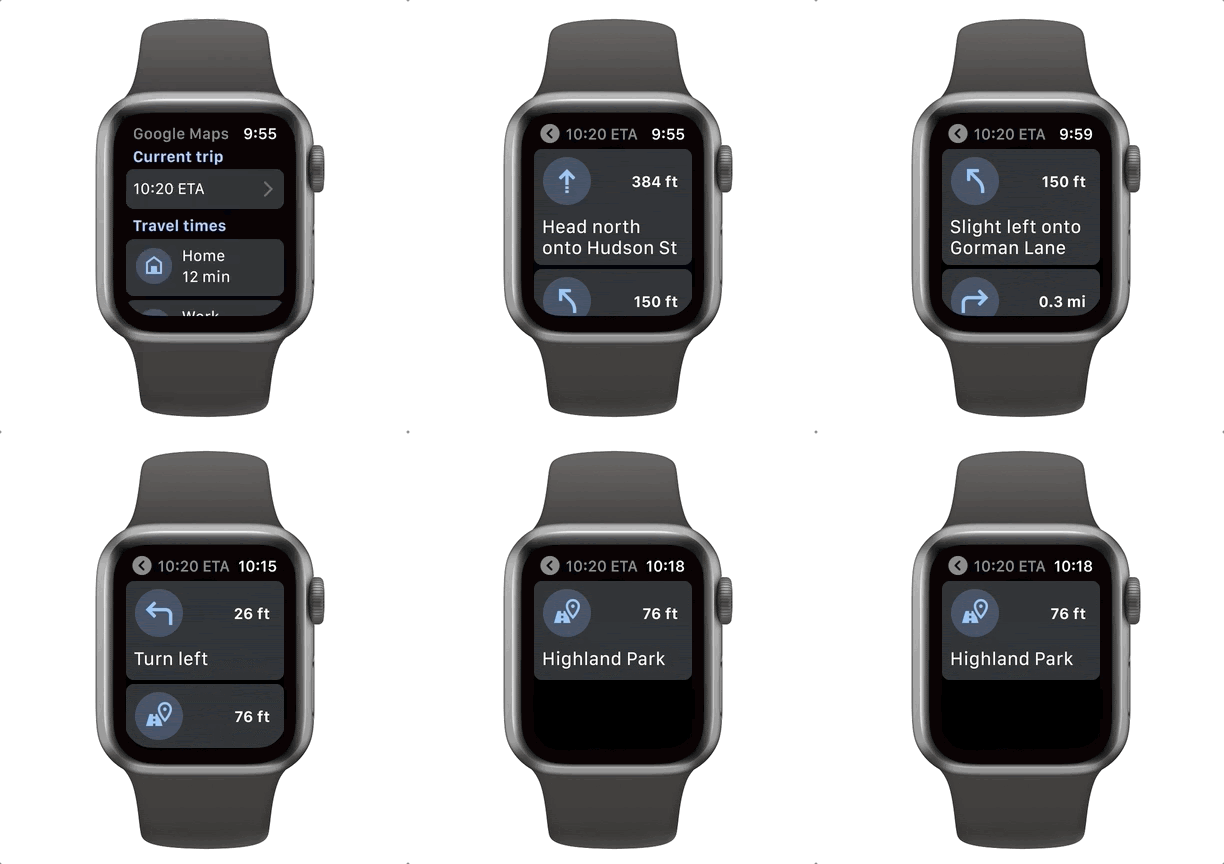
Google Maps is now also available on the Apple Watch so you can get your walking, biking and driving directions right on your wrist.

Don’t expect to get a full-blown Maps app on your wrist, though. The new app is mostly focused on giving you directions to know places (think home, work, etc.). To start navigating to other destinations, you still have to start on your phone and then “pick up where you left off on your watch,” Google explains.

A few years ago, Google already offered a version of Maps for Apple’s watch but then dropped support in 2017. The Google Maps app for watchOS will roll out worldwide in the coming weeks.

Image Credits: Google

In addition to the new Maps app on watchOS, Google Maps now features slightly deeper integration with Apple’s CarPlay, thanks to iOS 13.4 now supporting third-party apps on the dashboard. If you’re a regular Google Maps user on CarPlay, you may know the frustration of using the CarPlay dashboard, only to be kicked back to seeing Apple Maps.

Apple originally launched support for third-party navigation apps in CarPlay with the launch of iOS 12. At the time, though, those apps were restricted to full-screen mode. With this update, you can now continue to see your Google Maps directions and still see your media controls or calendar at the same time.

10 Aug 2020

Amazon relaunches Twitch Prime as Prime Gaming

Amazon Prime is highlighting its offerings for gamers today with the launch of a service called Prime Gaming.

This is a new version of Twitch Prime, a service that Amazon launched four years ago tied to the popular game streaming service that it acquired in 2014.

In both its old and new incarnations, Twitch Prime/Prime Gaming offers free games, game content like weapons and skins, and a free Twitch channel subscription, all as part of a standard Prime membership. In today’s announcement, the company said Prime Gaming includes “more new content for more games than ever before, plus more free games, and a monthly Twitch channel subscription.”

Esports expert Rod Breslau tweeted earlier today that this rebrandign was in the works.

Prime Gaming currently offers in-game content for Grand Theft Auto Online, Red Dead Online, Apex Legends, EA Sports FIFA 20, League of Legends and more than 20 other PC, console and mobile games. It also includes a free collection of PC games every month — this month the collection of 20-plus free games features SNK 40th Anniversary Collection, Metal Slug 2 and Treachery in Teatdown City.

“Prime members already get the best of TV, movies, and music, and now we’re expanding our entertainment offerings to include the best of gaming,” said Prime Gaming GM Larry Plotnick in a statement. “We’re giving customers new content that makes playing their favorite games on every platform even better. So no matter what kind of games you love, and no matter where you play them, they’ll be even better with Prime Gaming.”

10 Aug 2020

Three growth marketing experts share their best tools and strategies for 2020

At last month’s Early Stage virtual event, channel growth experts joined TechCrunch reporters and editors for a series of conversations covering the best tools and strategies for building startups in 2020. For this post, I’ve recapped highlights of talks with:

  • Ethan Smith, founder and CEO, Graphite
  • Susan Su, startup growth advisor, executive-in-residence, Sound Ventures
  • Asher King-Abramson, founder, Got Users

If you’d like to hear or watch these conversations in their entirety, we’ve embedded the videos below.


Ethan Smith: How to build a high-performance SEO engine

Relying on internet searches to learn about growth topics like search engine optimization leads to a rabbit hole of LinkedIn thinkfluencer musings and decade-old Quora posts. Insights are few and far between, because SEO has changed dramatically as Google has squashed spammy techniques “specialists” have pushed for years.

Ethan Smith, owner of growth agency Graphite, says Google didn’t kill SEO, but the channel has evolved. “SEO has built a negative reputation over time of being spammy,” Smith says. “The typical flow of an SEO historically has been: I need to find every single keyword I possibly can find and auto-generate a mediocre page for each of those keywords, the user experience doesn’t really matter, content can be automated and spun, the key is fooling the bot.”

Artificial intelligence has disrupted this flow as algorithms have abandoned hard-coded rules for more flexible designs that are less vulnerable to being gamed. What SEO looks like today, Smith says, is all about trying to “figure out what the algorithm is trying to accomplish and try to accomplish the same thing.” Google’s algorithms aren’t looking for buckets of keywords, they’re looking to distill a user’s intent.

The key to building a strategy around SEO as a company breaks down into six steps surrounding intent, says Smith:

  1. Target by intent
10 Aug 2020

ByteDance valuation under huge pressure as TikTok sale nears

As it reached an estimated valuation of $100 billion this year, TikTok’s parent company ByteDance solidified its status as the most valuable startup in private markets. Its success outside China has also become a source of envy and inspiration among its local peers.

Now, the company’s price tag is under tremendous pressure as it’s set to shed its priced asset TikTok, several investors told TechCrunch.

ByteDance last year generated 120 billion yuan ($17.2 billion) in revenue, said an investor with knowledge of the matter. Around 67% was derived from ads sold on its domestic apps Douyin, TikTok’s Chinese version, and popular news aggregator Toutiao. Livestreaming targeted at users of Douyin and another app in the family made up about 17%. Nascent businesses including games, e-commerce and TikTok accounted for 20 billion yuan or roughly another 17%.

The company projected its 2020 revenue at 200 billion yuan ($28.7 billion), with TikTok and other emerging businesses contributing 30 billion yuan or 15%, according to the investor. Previous reports by Reuters and Bloomberg cited similar revenue figures.

Although TikTok continues to account for only a fraction of ByteDance’s income, the addressable market is enormous. “It went from having a potential overseas market of 6 billion users to just China, where Douyin and Toutiao are reaching saturation,” the investor said.

Moreover, TikTok has only begun to monetize its enormous user base. The app experienced exponential growth and surpassed 2 billion downloads this year as COVID-19 lockdowns kept people indoors, but it’s unclear how much eyeball time it will retain when social life returns to normal. The app already lost its largest market India, which accounted for about one-third of its user base according to the investor, though app spending in the country is relatively low.

ByteDance did not respond to a request for comment.

What’s left

Back home, the eight-year-old company faces a crammed market. Tencent-backed Kuaishou claimed that 300 million people used its short video platform daily at the beginning this year, while Douyin said it reached 400 million DAU around the same time. Toutiao is coping with challengers from various fronts, from microblogging veteran Weibo to WeChat’s in-app news feature.

Like all other tech giants, ByteDance keeps a pipeline of projects alongside its cash cows. It’s known for its ability to churn out new products, thanks to an organizational structure that divides the firm by functions, primarily technology (development), user growth and monetization, earning it the nickname of an ‘app factory.’

The company’s more high-profile gestures are in mobile games, a lucrative internet business where it competes head-on with Tencent; education, which could allow it to ride the wave of online education in China; and enterprise software, represented by its work collaboration platform Lark.

So far, none of these new efforts are remotely close to the success of TikTok, Douyin and Toutiao in user acquisition and monetization. It remains to be seen how the poster child for Chinese apps’ globalization strives to hold onto its domination. One thing is for sure: ByteDance’s founder and CEO Zhang Yiming will not let his company shrink from its global ambitions even as it stumbles overseas.

10 Aug 2020

Beware bankers talking TikTok

The next few weeks is going to be a critical time for ByteDance-owned TikTok. The company is weeks away from a ban signed by President Trump, and while the company is expected to sue the U.S. federal government this week to block it, clearly the company’s future has at least storm clouds on the horizon.

That has led to massive speculation about who might purchase TikTok and save it from its precarious situation. The leading contender so far in media reporting has been Microsoft, with multiple press reports indicating that Microsoft CEO Satya Nadella has talked with President Trump about an outline of how a deal could be consummated. Trump has indicated he wants the buyer to pay some sort of tithe to the federal government, an argument that might even make sense for a suitor like Microsoft in the right circumstances.

Over the past week and weekend though, we are starting to get more and more names outside of Microsoft who are supposedly interested. We’ve heard Apple mentioned, and Twitter has been discussed heavily. SoftBank (which owns part of ByteDance in the Vision Fund) has been rumored to be a contender. Google has formerly been in talks about potentially buying the app late last year, and presumably could stay in the mix. And private equity firms are also supposedly sniffing around the opportunity.

Here’s the deal though: all of this — outside of Microsoft’s potential deal — seems completely like smoke.

Apple has actively denied any interest in buying the company, which shouldn’t be surprising as it makes no strategic sense whatsoever. Other supposed suitors have been more lukewarm with the typical PR blandishments that their companies “consider all strategic opportunities.”

What’s going on is that TikTok is an extremely valuable property, potentially worth tens of billions of dollars. But it is only worth that value if the company can find a number of deep-pocketed buyers who are willing to bid the price up. If Microsoft is the only suitor, then TikTok’s price may well be shockingly low.

So what do the investment bankers at the heart of the deal do? They run the deal around to every corporate development department in the country, and they leak the information to reporters to try to drum up FOMO in other departments all in the hope that a board member somewhere starts asking, “Hey, why aren’t we taking a deep look at this?” Heck, I’m sure even Oracle is taking a look — they have data centers and “synergy” potential, and its CEO Safra Catz is a major Trump supporter as well and could navigate the coming policy shenanigans.

Yet, the reality of the deal is the same: there just aren’t that many companies that can even consider an acquisition. Facebook is out on antitrust, Japan-headquartered Softbank is out on foreign company concerns (the very reason why TikTok is in this position in the first place). Apple isn’t interested, and even companies like Twitter, popular and strategic as they are, don’t have the cash. Twitter is worth less than $30 billion in market cap today — can they really afford to spend, say, half the company on an acquisition? How much of a writedown would ByteDance have to take to make Twitter a logical fit?

Most of this smoke about interest is designed to push Microsoft to make a fair deal. It’s designed to encourage them to sweeten their offer, lest one of these other “suitors” potentially becomes interested. Yet, the timing of a deal (it needs to be done in a matter of weeks right now) and the scope of the price effectively precludes all but one buyer today.

So, beware bankers talking TikTok. We’re going to get a bunch of names of potential acquirers. Unless there is hard evidence of deep interest, I am going to remain skeptical of all the rumors.