Year: 2020

05 Aug 2020

Hear Cloudflare and PlanGrid’s amazing journey from founding to exit at Disrupt 2020

How and when should startup founders think about the “exit”? It’s the perennial question in tech entrepreneurialism, but the how’s and when’s are questions to which there are a multitude of answers. For one thing, new founders often forget that the terms of the exit may not eventually be entirely in their control. There’s the board to think of, the strategic direction of the company, the first-in investors, the last-in. You name it. We’ll be chatting about this at Disrupt 2020.

Exits normally happen in only one of two ways: Either the startup gets acquired for enough money to give the investors a return or it grows big enough to list on the public markets. And it just so happens we have two perfect founders who will be able to unpack their own journeys on those two roads.

When Cloudflare went public last year it certainly wasn’t the end of its 10-year journey, and nor was it PlanGrid’s when it was acquired by Autodesk in 2018.

Cloudflare’s Michelle Zatlyn saw every nook and cranny of the company’s journey towards its IPO, which received a warm reception, even if there were a few bumps along the road leading up to it. What comes after an IPO and how to do you even get there in the first place? Zatlyn will be laying it all out for us.

PlanGrid’s journey to acquisition by Autodesk was equally fascinating, and Tracy Young – who, as CEO and co-founder, shepherded the company to an $875 Million exit – will be able to give us an insight into what it’s like to dance with a potential acquirer, go through that (often fraught) process, and come out the other side.

We’re excited to host this conversation at Disrupt 2020 and expect it to fill up quickly. Grab your pass before this Friday to save up to $300 on this session and more.

05 Aug 2020

Datafold is solving the chaos of data engineering

It seemed so simple. A small schema issue in a database was wrecking a feature in the app, increasing latency and degrading the user experience. The resident data engineer pops in a fix to amend the schema, and everything seems fine — for now. Unbeknownst to them, that small fix completely clobbered all the dashboards used by the company’s leadership. Finance is down, ops is pissed, and the CEO — well, they don’t even know whether the company is online.

For data engineers, it’s not just a recurring nightmare — it’s a day-to-day reality. A decade plus into that whole “data is the new oil” claptrap, and we’re still managing data piecemeal and without proper systems and controls. Data lakes have become data oceans and data warehouses have become … well, whatever the massive version of a warehouse is called (a waremansion I guess). Data engineers bridge the gap between the messy world of real life and the precise nature of code, and they need much better tools to do their jobs.

As TechCrunch’s unofficial data engineer, I’ve personally struggled with many of these same problems. And so that’s what drew me into Datafold.

Datafold is a brand-new platform for managing the quality assurance of data. Much in the way that a software platform has QA and continuous integration tools to ensure that code functions as expected, Datafold integrates across data sources to ensure that changes in the schema of one table doesn’t knock out functionality somewhere else.

Founder Gleb Mezhanskiy knows these problems firsthand. He’s informed from his time at Lyft, where he was a data scientist and data engineer, and later transformed into a product manager “focused on the productivity of data professionals.” The idea was that as Lyft expanded, it needed much better pipelines and tooling around its data to remain competitive with Uber and others in its space.

His lessons from Lyft inform Datafold’s current focus. Mezhanskiy explained that the platform sits in the connections between all data sources and their outlets. There are two challenges to solve here. First, “data is changing, every day you get new data, and the shape of it can be very different either for business reasons or because your data sources can be broken.” And second, “the old code that is used by companies to transform this data is also changing very rapidly because companies are building new products, they are refactoring their features … a lot of errors can happen.”

In equation form: messy reality + chaos in data engineering = unhappy data end users.

With Datafold, changes made by data engineers in their extractions and transformations can be compared for unintentional changes. For instance, maybe a function that formerly returned an integer now returns a text string, an accidental mistake introduced by the engineer. Rather than wait until BI tools flop and a bunch of alerts come in from managers, Datafold will indicate that there is likely some sort of problem, and identify what happened.

The key efficiency here is that Datafold aggregates changes in datasets — even datasets with billions of entries — into summaries so that data engineers can understand even subtle flaws. The goal is that even if an error transpires in 0.1% of cases, Datafold will be able to identify that issue and also bring a summary of it to the data engineer for response.

Datafold is entering a market that is, quite frankly, as chaotic as the data being processed. It sits in the key middle layer of the data stack — it’s not the data lake or data warehouse for storing data, and it isn’t the end user BI tools like a Looker, Tableau or many others. Instead, it’s part of a number of tools available for data engineers to manage and monitor their data flows to ensure consistency and quality.

The startup is targeting companies with at least 20 people on their data team — that’s the sweet spot where a data team has enough scale and resources that they are going to be concerned with data quality.

Today Datafold is three people, and will be debuting officially at YC’s Demo Day later this month. Its ultimate dream is a world where data engineers never again have to get an overnight page to fix a data quality issue. If you’ve been there, you know precisely why such a product is valuable.

05 Aug 2020

PandaDoc announces second Series B extension worth $30M

PandaDoc, the startup that provides a fully digital sales document workflow from proposal to electronic signature to collecting payment, announced a $30 million Series B extension today, making it the the second such extension the company has taken since taking its original $15 million Series B in 2017. The total for the three B investments is $50 million.

Company co-founder and CEO Mikita Mikado says that he took this approach, taking the original money in 2017, then $5 million last year along with the money announced today because it made more sense financially for the company than taking a huge chunk of money all at once.

“Basically when we do little chunks of cash frequently, [we found that] you dilute yourself less,” Mikado told TechCrunch. He said that they’ve grown comfortable with this approach because the business became more predictable once it passed 10,000 customers. In fact today it has 20,000.

“With a high velocity in-bound sales model, you can predict what’s going to happen next month or [say] six months out. So you kind of have this luxury of raising as much money as you need when you need it, minimizing dilution just like public companies do,” he said.

While he wouldn’t discuss specifics in terms of valuations he did say that the B1 had 2x the valuation of the original B round and the B2 had double the valuation of the B1.

For this round, One Peak led the investment with participation from Microsoft’s Venture Fund (M12), Savano Capital Partners, Rembrandt Venture Partners and EBRD Venture Capital Investment Programme.

Part of the company’s growth strategy is using their eSignature tool to move people to the platform. They made that tool free in March just as the pandemic was hitting hard in the U.S., and it has proven to be what Mikado called “a lead magnet” to get more people familiar with the company.

Once they do that he says, they start to look at the broader set of tools and they can become paying customers. “This launch helped us validate that businesses need a broader workflow solution. Businesses used to think of the eSignature as the holy grail in getting a deal done. Now they are realizing that eSignature is just a moment in time. The full value is what happens before, during and after the eSignature in order to get deals done,” Mikado said.

The company currently has 334 employees with plans to hit 380 by year’s end and is aiming for 470 by next year. With the office in San Francisco, Belarus and Manila, it has geographic diversity built in, but Mikado says it’s something they are still working at and includes anti-bias programs and training and leadership programs to give more people a chance to be hired or promoted into management.

When it came to shutting down offices and working from home, Mikado admits it was a challenge, especially since some of the geographies they operate in might not have access to a good internet connection at home or face other challenges, but overall he says it has worked out in terms of maintaining productivity across the company. And he points out being geographically diverse, they have had to deal with online communications for some time.

05 Aug 2020

Jump bikes are now on the Lime app and heading to more cities

Three months ago, Jump’s bright red bikes and scooters had disappeared from city streets after Uber unloaded the micromobility company to Lime as part of a complex $170 million fundraising round. When the Jump bikes were finally spotted it was in a recycling yard, where more than 20,000 of them laid in piles, awaiting their demise.

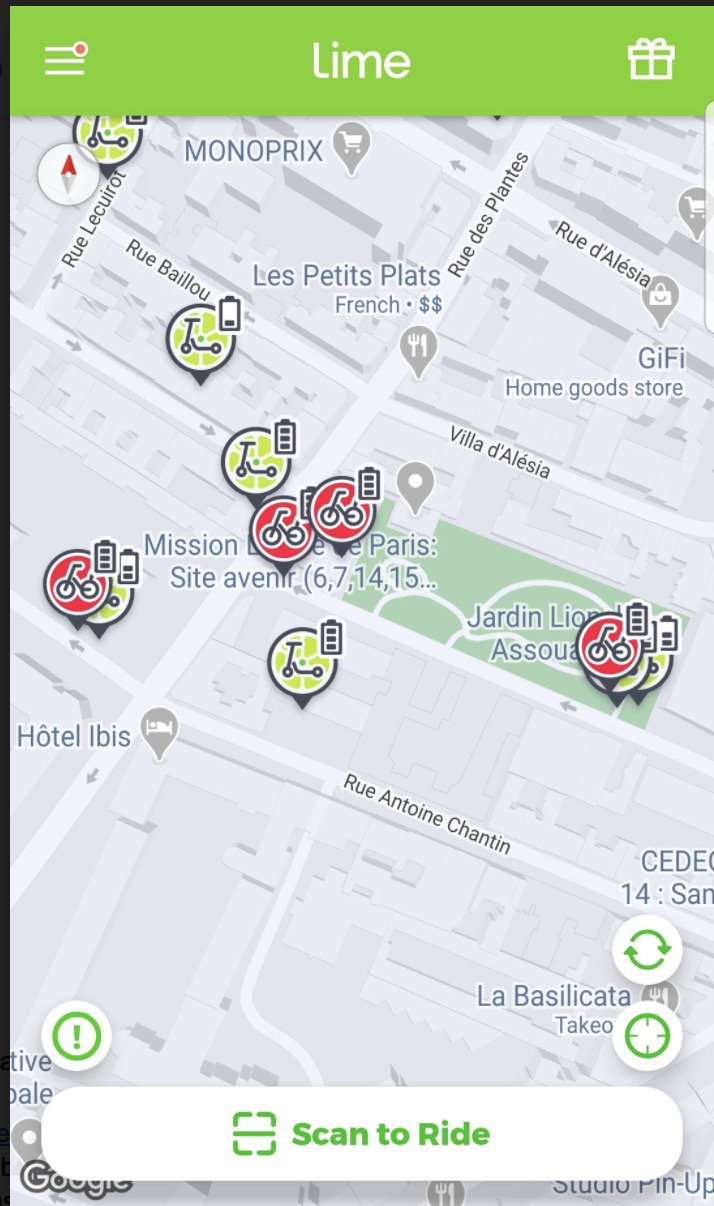
The Jump brand wasn’t erased completely. New, unused Lime bikes were tucked away in storage. Lime has started to add those Jump bikes to cities like Denver, London, Paris, Seattle and Washington D.C. But they were only available through the Uber app. Now, the Jump bikes will show up on the Lime app — as red, not green bike icons. This is the first time since Lime acquired Jump’s assets that the bikes have been integrated into its app.

Lime app Jump bikes

Image Credits: Lime

Lime said Wednesday that Jump  bikes will now be available exclusively through the Lime app for the next few weeks. Once it has integrated Jump’s software, the bikes will be available through both the Uber and Lime apps.

Lime plans to add Jump bikes to more cities, starting with Rochester, Minnesota. More will follow in the coming weeks.

The addition of Jump bikes to Lime’s app has cleared up some speculation of what would happen to the brand post acquisition. But it hasn’t answered every question.

Jump engineers had been working on and ready to scale its newest version of Jump bikes, called the 5.8, when the acquisition occurred and they all lost their jobs. Numerous former Jump employees who have spoken to TechCrunch said the new tech-forward 5.8 versions were weeks away from heading to cities. However, they have yet to appear on city streets.

05 Aug 2020

In a sign of digital health’s rise, Livongo and Teladoc Health agree to $18.5 billion merger

In a sign of the growing importance and value of digital healthcare in the world of medicine, two of the industry’s publicly traded companies have agreed to a whopping $18.5 billion merger.

The union of Teladoc Health, a provider of virtual care services, and Livongo, which has made a name for itself by integrating hardware and software to monitor and manage chronic conditions like diabetes, will create a giant in the emerging field of telemedicine and virtual care.

“By expanding the reach of Livongo’s pioneering Applied Health Signals platform and building on Teladoc Health’s end-to-end virtual care platform, we’ll empower more people to live better and healthier lives,” said Glen Tullman, Livongo Founder and Executive Chairman. “This transaction recognizes Livongo’s significant progress and will enable Livongo shareholders to benefit from long-term upside as the combined company is positioned to serve an even larger addressable market with a truly unmatched offering.”

Under the terms of the agreement, each share of Livongo will be exchanged for 0.5920 shares of Teladoc health plus a cash payment of $11.33 for each share. The deal, based on Teladoc’s closing price on August 4, 2020, is roughly $18.5 billion. It’s an eye-popping figure for a company that was, at one point, trading below $16 per-share.

But the new reality of healthcare delivery in the era of COVID-19 rapidly accelerated the adoption of digital and remote care services like those Livongo was selling to its customers — and investor came calling as a result.

The combined company is expected to have pro forma revenue of $1.3 billion representing 85 percent year on year growth, on a pro forma basis. For 2020, the combined company expects adjusted EBITDA to reach $120 million.

“This merger firmly establishes Teladoc Health at the forefront of the next-generation of healthcare,” said Jason Gorevic, the chief executive officer of Teladoc Health, in a statement. “Livongo is a world-class innovator we deeply admire and has demonstrated success improving the lives of people living with chronic conditions. Together, we will further transform the healthcare experience from preventive care to the most complex cases, bringing ‘whole person’ health to consumers and greater value to our clients and shareholders as a result.”

The companies emphasized their combined ability to engage with patients and monitor and manage their conditions using technology. Teladoc Health’s flywheel approach to continued member engagement combined with Livongo’s proven track record of using data science to build consumer trust will accelerate the combined company’s development of longitudinal consumer and provider relationships, the companies said in a statement.

Teladoc currently counts 70 million customers in the United States with an access to Medicare and Medicaid patients that Livongo’s services could reach. The combined company also pitched the operational efficiencies that could be created through the merger. Teladoc estimated that there would be “revenue synergies” of $100 million two years from the close of the deal, reaching $500 million on a run rate basis by 2025, according to a statement. 

Gorevic will run the combined company and David Snow will serve as the chair of the new board — which will be comprised of eight current Teladoc board members and five members of the Livongo board.

The company expects the deal to close by the end of the fourth quarter, subject to regulatory approvals. Lazard advised Teladoc on the transaction while Morgan Stanley served as the financial advisor to Livongo. 

05 Aug 2020

Here’s the Samsung Galaxy Z Fold 2

Samsung promised five “power devices” for its virtually-only Unpacked event. We already know about the Note 20, Galaxy Watch 3, Tab S7 and Buds Live — so what’s left? We speculated based on an earlier news that the company would debuting a new foldable — the biggest question, however, is whether it would be a rehash of the recently announced Galaxy Z Flip 5G or something else entirely.

Turns out the company is releasing the sequel to its first foldable, the…troubled Galaxy Fold. After a false start or two, the company says it sold one million units of the innovative but overly fragile handset. Announced earlier this year, however, the clamshell-styled Flip was better received, and frankly the foldable Samsung ought to have released in the first place.

With all of that in mind, what lessons has the company applied to the new version of the Fold? For starters, the front displays seemed like something of an afterthought on the original Fold. For the Galaxy Z Fold 2, it expands significantly to 6.2 inches, in addition to the main (foldable) 7.6-inch screen.

Details are still forthcoming, including how reinforced this version is. The company notes in the press material, “After releasing two foldable devices and listening to user feedback on the most requested upgrades and new features, Samsung unveils the Galaxy Z Fold 2 with meaningful innovations that offer users enhanced refinements and unique foldable user experiences.”

Developing…

05 Aug 2020

Dear Sophie: Can I bypass H-1B and sponsor a grad for a green card?

Here’s another edition of “Dear Sophie,” the advice column that answers immigration-related questions about working at technology companies.

“Your questions are vital to the spread of knowledge that allows people all over the world to rise above borders and pursue their dreams,” says Sophie Alcorn, a Silicon Valley immigration attorney. “Whether you’re in people ops, a founder or seeking a job in Silicon Valley, I would love to answer your questions in my next column.”

“Dear Sophie” columns are accessible for Extra Crunch subscribers; use promo code ALCORN to purchase a one- or two-year subscription for 50% off.


Dear Sophie:

A very bright and promising foreign national who graduated from a U.S. university has been working for our firm and just received a STEM OPT extension. We would like to keep her on after her STEM OPT ends. We registered her in this year’s H-1B lottery, but unfortunately, she wasn’t selected.

Given the challenges of getting an H-1B through the lottery and the #h1bvisaban, how can we bypass the H-1B and potentially sponsor her for a green card?

— Eager in Emeryville

Dear Eager,

Happy to hear you’re willing to sponsor a promising graduate from an American university for a green card. Sounds like you’re interested in exploring the EB-2 or EB-3 green card with the PERM process. For additional resources, feel free to check out my recent podcast on PERM.

Just because U.S. immigration policy often runs counter to retaining the best and the brightest college graduates in the U.S. doesn’t mean there isn’t hope. Some options exist for these talented folks and the companies that want to hire them, even though many employment-based green cards require candidates who are outstanding in their field. Recent graduates often haven’t yet built up their work experience and credentials, but there can be paths forward.

Although it may present some immigration risks to the candidate that should be weighed carefully in collaboration with an experienced business immigration attorney, many employers have been doing as you suggested: sidestepping the H-1B visa and directly pursuing a green card. This is often due to the extremely competitive H-1B lottery and high denial rates for initial H-1B petitions and extensions. Also, a moratorium on all green cards, H-1B, H-2B, J and L visas for individuals currently outside the U.S. is in effect until the end of this year. This now makes it nearly impossible for most employers to sponsor individuals to come to the U.S. unless their work is in the national interest or essential to the U.S. food supply chain.

So, many people are seeking solutions. First, the basics: Because your STEM OPT employee is already in the U.S., and the H-1B lottery now only costs $10 to register a candidate, I suggest that your company continue to enter her in the lottery as a backup option in case her F-1 STEM OPT status ends before you can secure her a green card.

The green cards for which most recent graduates would be eligible require the sponsoring employer to go through the PERM labor certification process before filing a green card petition. Separately there are other green cards for extraordinary ability which I’ve also written about.

PERM, which stands for Program Electronic Review Management, is the system used for applying for labor certification from the U.S. Department of Labor . Please speak with an attorney about the timing of this process and consider any risks to your employee’s personal immigration situation given her current F-1 nonimmigrant status.

Labor certification must be submitted to U.S. Citizenship and Immigration Services (USCIS) with EB-2 and EB-3 green card petitions. Labor certification confirms that no U.S. workers are qualified and available to accept the job offered to the green card candidate and employing the green card candidate won’t adversely affect the wages and working conditions of American workers.

Without knowing more about your STEM OPT employee’s background and qualifications, I would surmise that she might be able to qualify for one of these employment-based green cards:

Both of these green card categories require the employer sponsor to go through the PERM labor certification process. Because PERM is a complex process and will determine if you can proceed with sponsoring your employee for a green card, I recommend that you work with an experienced immigration attorney.

In general, PERM requires employers to take these steps:

  • Determine in detail the duties and minimum requirements of the position
  • File a prevailing wage request
  • Go through an extensive recruitment process
  • Get a certification

The duties and requirements of the position should be detailed and typical for your company — not tailored to the green card candidate. These duties and requirements will be used for job posting during the recruitment process.

In more detail, employers must file a prevailing wage request to the National Prevailing Wage Center of the Labor Department. The prevailing wage is determined based on the position, the geographical location of the position and economic conditions. The employer must pay the prevailing wage or higher for the position to ensure that hiring a foreign national would not adversely affect the wages of U.S. workers in similar positions. This process can take a few months.

The most time-consuming of these steps is the recruitment process to determine whether qualified U.S. workers are available for the position. To do that, an employer must advertise the job in two Sunday editions of a local newspaper, submit a job order with the state workforce agency (CalJOBS in California) and file an internal company notice of the filing. Plan ahead with your legal team to consider running some things in parallel to decrease the overall time.

For professional positions, employers need to use three additional recruitment methods, such as using a job recruiting website, an employment firm, a job fair, a posting at a career placement center at a local university or college, or incentives for employee referrals.

The job order with the state workforce agency must run for at least 30 consecutive days. The internal job posting must be up for 10 consecutive business days. Employers must allow 30 days for candidates to apply and interview U.S. workers who apply.

Generally, if there are no qualified applicants, employers then file ETA Form 9089 to the Labor Department. No supporting documents need to be submitted with the form, but the documents must be maintained for five years, especially as there could be an audit. The Labor Department will send a verification email to the employer along with a sponsorship questionnaire, which the employer should fill out within a week of receiving it. It’s important to not miss this email!

The PERM process can take anywhere from three to eight months as long as the Labor Department does not audit your case. The Labor Department conducts two types of audit: random audits and targeted audits. Random audits are done to make sure employers are following the PERM procedure.

Some common reasons for targeted audits could include:

  • The employer recently laid-off employees
  • The candidate appears unqualified for the position
  • The job does not require a bachelor’s degree
  • A company executive is related to the candidate

The Labor Department usually issues an audit notice within six months of receiving the labor certification application, and the employer must respond within 30 days. An audit does not mean an employer’s PERM will not be approved. However, it can add nine to 18 months to the process. If an employer does not respond to the audit notice, the Labor Department will deem the case abandoned, and for any future PERM applications, the employer may be required to conduct supervised recruitment.

Once the Labor Department approves the PERM Labor Certification for that position, you must file the green card petition to USCIS within 180 days. If your employee was born in any country other than China or India and you are sponsoring her for an EB-2 green card, you can file the I-140 green card petition and the I-485 adjustment of status from F-1 STEM OPT to EB-2 at the same time, assuming the “priority date” is still current.

If eligible, your STEM OPT employee could also enter the diversity green card lottery in the fall to increase her chances of getting a green card. Each year, 50,000 green cards are reserved for individuals born in countries that have low rates of immigration to the U.S.

Let me know if you have any other questions. Good luck!

— Sophie


Have a question? Ask it here. We reserve the right to edit your submission for clarity and/or space. The information provided in “Dear Sophie” is general information and not legal advice. For more information on the limitations of “Dear Sophie,” please view our full disclaimer here. You can contact Sophie directly at Alcorn Immigration Law.

Sophie’s podcast, Immigration Law for Tech Startups, is available on all major podcast platforms. If you’d like to be a guest, she’s accepting applications!


05 Aug 2020

Extra Crunch Live: Join Wealthfront CEO Andy Rachleff August 11 at 1pm EDT / 10am PDT about the future of investing and fintech

Wealthfront was one of the earliest and remains one of the most formidable companies in the so-called robo-advisor space — algorithmic apps that manage and optimize your savings and investments. Since its debut, the platform has skyrocketed in popularity, taking in more than $200 million in venture capital according to Crunchbase, including a recent $75 million round led by Tiger Global in 2018 when the company had just shy of $10 billion in assets under management. Since then, it’s added additional banking services such as high-interest checking accounts and other products.

Wealthfront’s product expansion mirrors the broader landscape of fintech, which has seen massive growth in investor enthusiasm over the past decade. From managing student loans and investment products, to lowering barriers to trading stocks, to creating new APIs to extend financial services across more businesses, fintech has been one of the hottest sectors for founders and investors.

That’s why we’re thrilled to bring Andy Rachleff, CEO and co-founder of Wealthfront, on to Extra Crunch Live this coming August 11th at 1pm EDT / 10am PDT / 5pm GMT. Login details are below for Extra Crunch members.

Before he started and built up Wealthfront, Rachleff spent nearly a decade as a general partner at early-stage VC firm Benchmark, where he invested in a myriad of industries.

We’re excited for him to bring both the investor and operator hats to bear on some of the most pressing questions going on in fintech and wealth management today. As banks increasingly reposition themselves as digital-native, how can startups compete with such large incumbents? Saving rates have jumped the past few months — what does that portend for the future of wealth management and banking? And will greater concerns about ESG in finance change the way financial apps approach the market going forward?

This is an open conversation, and we will be taking questions from the audience as well. So come prepared with some interesting ones covering the gamut of what’s going on in finance today.

Join us August 11th — we look forward to seeing you there.

Details:

05 Aug 2020

Google Play Music to shut down starting in September, will disappear by December

Google’s plans to wind down its Google Play Music service in favor of the company’s newer YouTube Music have been known for some time. But Google this week has given users a deadline on making the switch. The company says YouTube Music will fully replace Google Play Music in December 2020, at which point Google Play Music users will no longer be able to stream from or otherwise use the Google Play Music app.

Though December is the final deadline for being able to export from the Google Play Music app, your ability to stream from the Google Play Music app will end before then.

In September 2020, users in New Zealand and South Africa will be the first to lose access to stream or use the Google Play Music app. The rest of the world will lose their access in October.

However, Google will continue to make your content available for export through December. Through the transfer tool released in May, Google Play Music users will be able to export their playlists, uploads, purchases, likes and more to YouTube Music. Alternately, users can use the Google Takeout service to export their data and download their purchased and uploaded music.

For those considering making a switch to a rival streaming service, like Spotify, there aren’t official tools available, but there are third-party options, like Soundiiz, TuneMyMusic, MusConv, and others.

Google says it will also be making changes to the Google Play store and Music Manager.

Starting this month, users will no longer be able to make purchases or pre-order music from Google Play Music through Music Manager, nor will they be able to upload and download music.

The company has been preparing YouTube Music in advance of this shift to address complaints Google Play Music users had with earlier versions of the service. This year, Google increased playlist length from 1,000 to 5,000 songs and added support for uploads (up to 100K tracks — 50K more than on Google Play Music). It has also rolled out offline listening, lyrics, and Explore tab for discovery, and a tool for transferring podcast subscriptions and episode progress to Google Podcasts.

YouTube Music offers a variety of playlist options now, too, including collaborative playlists built with friends and new programmed playlists built by editors. Assistive technology now also make personalized suggestions of what to add when you’re building a YouTube Music playlist.

YouTube Music service has expanded its reach across platforms, as well, with support for Android TV, Google Maps (for music while navigating), and via Google Assistant in recent days.

For any user who doesn’t opt to move to YouTube Music, Google says subscriptions will be automatically canceled.

Google’s strategy with music has been overly complicated for some time (not unlike its strategy with messaging and communication apps). When users signed up for YouTube Premium (previously YouTube Red), they’d automatically receive access to Google Play Music, and vice versa. And Google continued to sell YouTube Music as a separate subscription. In other words, Google created a world where it wasn’t only competing against big streaming services like Apple Music, Spotify and Pandora, it was also competing against itself.

Now it’s hoping to shift its streamers to YouTube Music. The idea came about because YouTube for a long time has been a way to access free music, thanks to a deep catalog of officially licensed music videos, live performances and other music content. So why not upsell YouTube’s freeloading music fans on an ad-free, upgraded music experience? That strategy may have worked to some extent, but it’s more recently being challenged. Last week, Facebook announced deals with record labels to make music videos free on its platform, as well. If user behavior shifts as a result, YouTube’s ability to funnel free music fans into a premium product could be impacted, too.


05 Aug 2020

As e-commerce accelerates, fintech startups raised record $100M rounds in Q2

Reading headlines here and there, one might assume that venture capital interest in fintech startups is setting records every quarter.

After all: didn’t Robinhood raise $280 million and $320 million more this year? Stripe raised $600 million just a few minutes ago, and wasn’t it Monzo that raised £60 million a few weeks back? Oh, and Hippo raised $150 million the other day.

And what about that huge Plaid exit earlier in the year and Chime’s jillion dollars that came right before 2019 ended?

That’s how it has felt to me, at least. And with good reason: new data from CB Insights indicates that fintech startups raised a record number of so-called “mega-rounds,” financings worth $100 million and more, in the second quarter of 2020.


The Exchange explores startups, markets and money. You can read it every morning on Extra Crunch, or get The Exchange newsletter every Saturday.


So the vibe in fintech that huge rounds have been landing quite often is correct. But underneath the big deals, there was early-stage weakness in the market that makes for a surprising contrast.

The same CB Insights report details a key “tailwind” factor for many fintech startups, namely that e-commerce is booming in the COVID-19 era, rising from about 16% of total U.S. commerce to around 27% through Q2 of this year.

So, let’s start by taking a quick look at Square’s earnings that leaked yesterday, and some notes from Shopify’s recent results to decipher just how fast the economy is heading online before examining what happened in Q2 VC for fintech startups as a cohort.

We’ll keep this as numbers-light as we can, and fun as we can — I promise. Let’s go!

Digital commerce is growing like a weed

You might think that Square, a company most famous for its IRL payment terminals and ability to turn any person into a micro-company would suffer while COVID-19 slowed in-person business. But, despite slowing gross payment volume (GPV), as expected, Square’s revenue exploded in Q2, growing from $1.17 billion in Q2 2019 to $1.92 billion in the most recent period.