Year: 2020

05 Aug 2020

London-based Weezy raises seed funding for its 15-minute grocery delivery app

First there was same-day delivery. Then came one-hour delivery. Now a new London startup wants to make 15 minute delivery a thing.

Putting the hyper hyper-local into online grocery shopping, Weezy combines its own strategically located fulfilment centres with a fleet of electric moped and bicycle couriers, ready to accept orders via the Weezy app. Its founders, Kristof Van Beveren and Alec Dent, think they’ve spotted a gap in the market for an online grocery service that targets “time-poor professionals and parents” who want the speed of an on-demand service but without it being prohibitively expensive.

Investors appear to agree, with Weezy launching out of stealth off the back of £1 million in pre-seed funding from Heartcore Capital, in addition to various individual backers made up of former executives of Ocado, Tesco, Sainsbury’s Chop Chop and Deliveroo.

Starting in London’s affluent Fulham and Chelsea districts, customers use Weezy’s app to select items on their shopping lists -– spanning fresh fruits, vegetables, bread and cupboard fillers, to over-the-counter medicines, cleaning products and alcoholic drinks — and pay. The order is then picked and packed at Weezy’s own fulfilment centre, before being delivered on electric scooters or bicycles within 15 minutes. The service runs between 10am and 10pm every day, charging £2.95 for delivery.

Notably, groceries are sourced not only from selected wholesalers, but also from local independent bakers, butchers and markets, seeing Weezy talk up its support for local businesses. The startup plans to open up to 15 more fulfilment centres in the U.K. capital city by the end of next year, before setting its sights on broader U.K. expansion.

“No other service delivers as quickly,” says Weezy CEO and co-founder Van Beveren. “Our hyperlocal fulfilment centre model works since we are able to optimise the space for fast picking and packing while having low property and fit-out costs, thereby keeping prices in check. This, coupled with our in-house team of riders, allows us to offer the fastest and friendliest grocery delivery service. And, compared to convenience stores, Weezy has better pricing and a broader and more premium range of products”.

In comparison, Van Beveren notes that Sainsbury’s Chop Chop takes up to 60 minutes to deliver (and outsources delivery to courier company Stuart). Amazon Prime Now promises 1-2 hours delivery via Morrisons and its own warehouses, while Amazon Fresh in London offers same or next day delivery.

“Next to speed, we have a full range of carefully curated products and pricing in line with recommended retail prices,” adds Weezy co-founder and COO Dent. “We also only use electric vehicles or bicycles for deliveries. We are committed to creating a supportive culture and the best working conditions for our team of riders, who are also trained to work in the fulfilment centre, and offered opportunities for career progression. Happy staff make happy customers”.

05 Aug 2020

Jakarta-based Wahyoo gets $5 million Series A to help small eateries digitize their operations

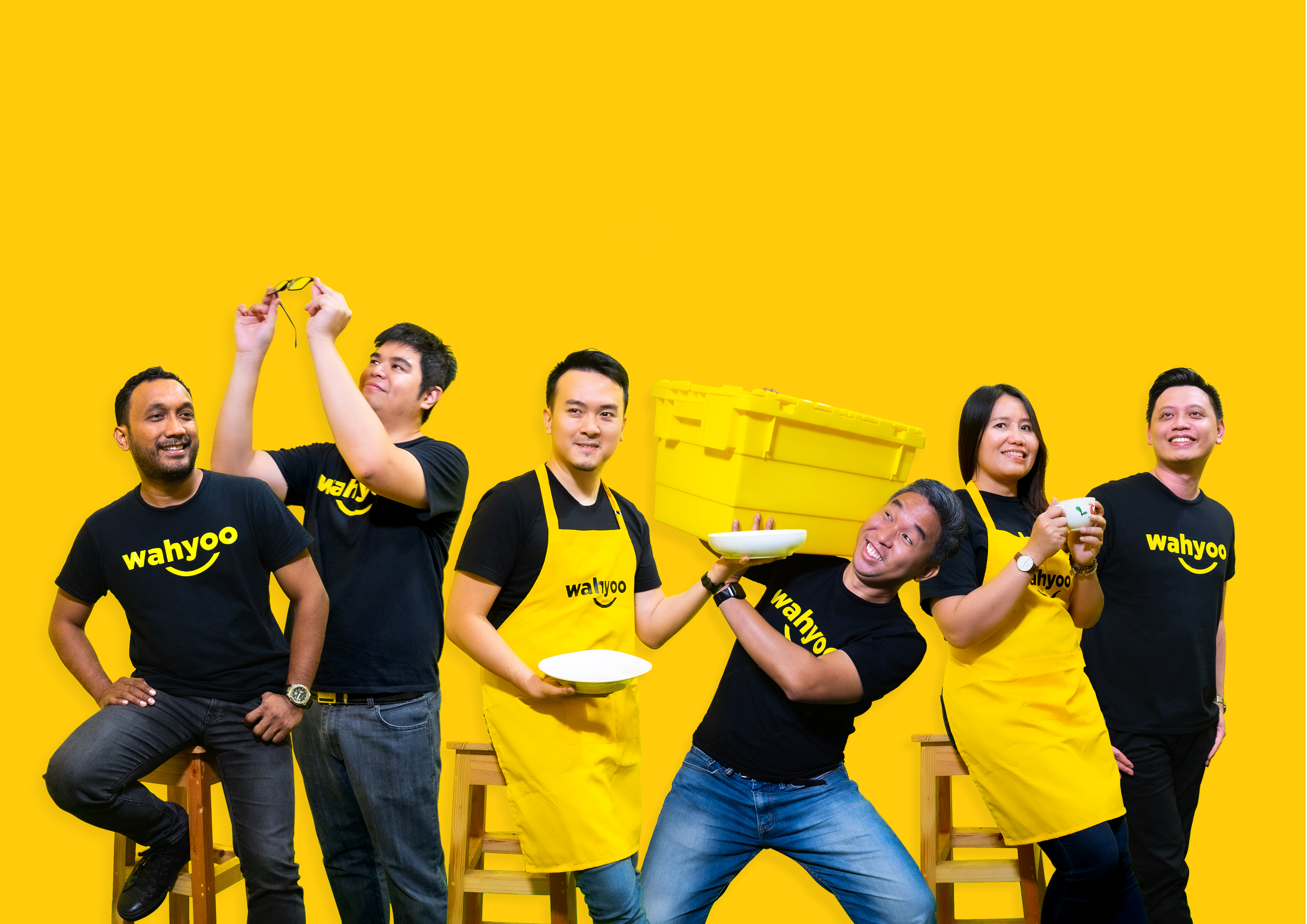
Wahyoo’s team, including CEO Peter Shearer (third from left)

While growing up, Peter Shearer watched his mother get up every day at 2AM or 3AM to prepare for her catering business. For many people who own small food businesses in Indonesia, “everything is handled on their own, so I really, really wanted to create a system so they can have better operations and get more quality of life,” Shearer told TechCrunch.

His startup, Wahyoo, was founded in 2017 to help small eateries, called warung makan, digitize and automate more tasks, from ordering supplies to managing finances. Today, Wahyoo announced that it has raised $5 million in Series A funding led by Intudo Ventures, a venture capital firm focused on Indonesia.

Other investors in the round included Kinesys Group, Amatil X (the corporate venture program of Coca-Cola Amatil, one of the world’ five largest Coca-Cola bottlers), Arkblu Capital, Indogen Capital, Selera Kapital, Gratyo Universal Indonesia and Isenta Hioe. The capital will be used on hiring, developing Wahyoo’s tech platform and expanding beyond the Greater Jakarta area.

In a press statement about the investment, Intudo Ventures founding partner Patrick Yip said, “Small-and medium enterprises represent one of the major engines of economic growth in Indonesia and are being transformed through new innovative businesses like Wahyoo, bringing greater economic prosperity to small business owners throughout the country. Through the company’s digitization efforts, Wahyoo’s highly targeted support for warung makan businesses is creating positive economic and social impact for Indonesia’s working class.”

Wahyoo launched its app almost exactly a year ago and has onboarded about 13,800 warung makan so far. The company’s co-founders are Shearer, the chief executive officer; chief operating officer Daniel Cahyadi; and chief technology officer Michael Dihardja.

With about 268 million people, Indonesia is Southeast Asia’s largest markets, and there are already startups, like Warung Pintar and BakuWarung, that focus on helping warung, or small corner stores, digitize more of their operations.

Shearer said he wanted to focus on Indonesian eateries in particular because “my background is in the food industry and I love anything related to food. Second, the potential is very big because no one has tapped into this type of warung before. Everyone focuses on retail, but no one taps into the culinary business.”

Wahyoo currently employs about 170 people, including on-the-ground teams who meet with warung makan owners. The eateries are “usually run by a family, from generation to generation,” with almost all tasks performed manually, including bookkeeping and going to markets early in the morning to buy ingredients, Shearer said.

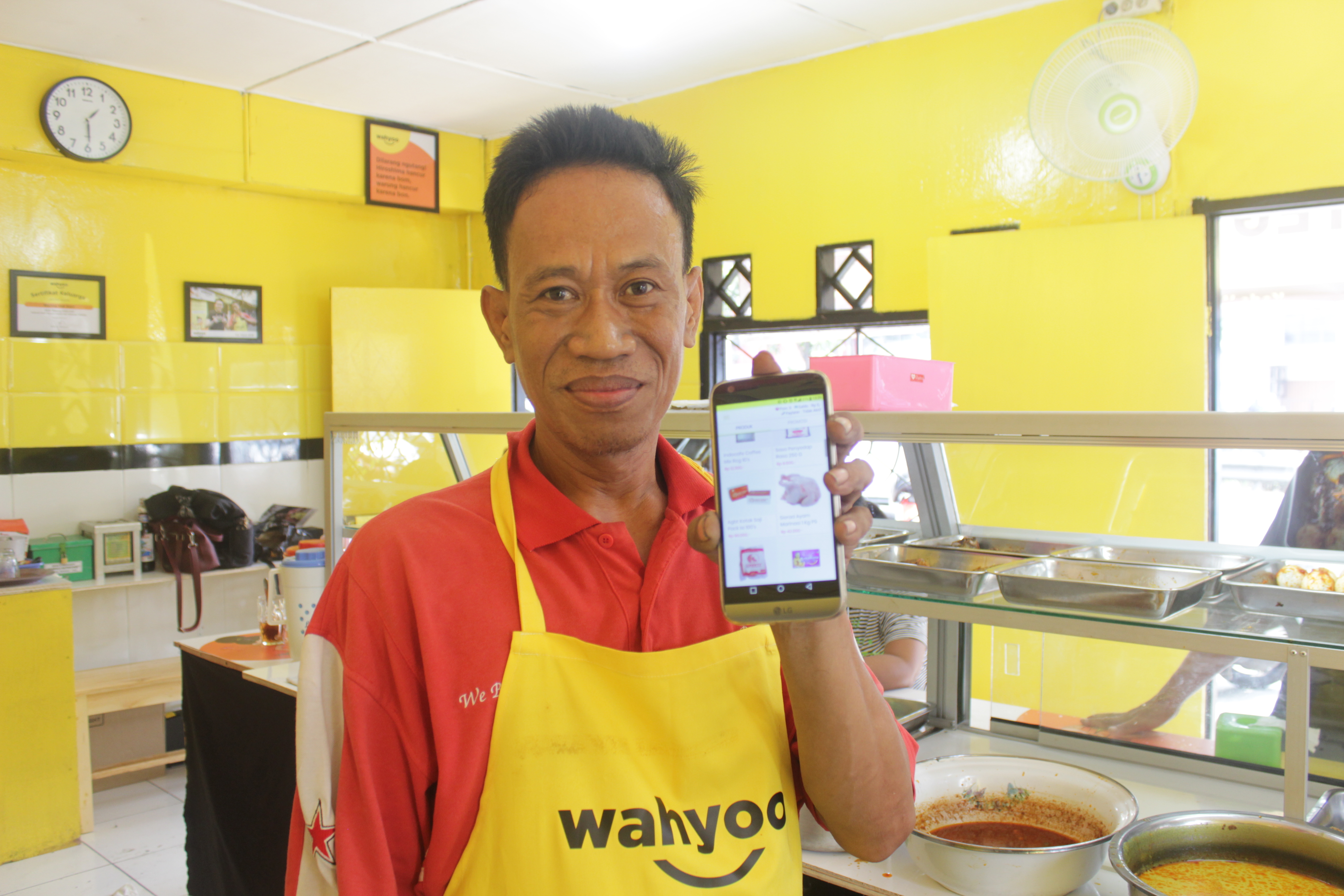
A warung makan owner on Wahyoo’s platform

Wahyoo’s features include a next-day grocery delivery service from its own warehouses and integration with Go Food, a popular delivery app. The startup also runs an education program called Wahyoo Academy, with financial courses to help warung makan owners increase customer traffic and revenue, and offers advertising and brand partnerships.

For example, a restaurant on Wahyoo’s platform can earn money by placing ad banners or brochures in their stores. That is one of the way Wahyoo monetizes. It is free to use for restaurant owners, and makes revenue by taking a percentage of brand commissions.

Another revenue stream is Wahyoo’s fried chicken franchise, which gives warung makan owners the option of opening a small stall in front of their stores. It currently has about 350 stalls and keeps costs low by partnering with one of Indonesia’s largest poultry suppliers. Shearer said the company’s goal is to increase the number of stalls to 1,000 by the end of this year.

While eateries on Wahyoo saw a drop in their business in April and May because of the COVID-19 pandemic, Shearer said that it began to recover in June and July, and is now back to normal, partly because of the platform’s Go Food integration.

In the future, Wahyoo may face competition from other warung-focused startups if they decided to expand their services to restaurants as well, and new startups that want to tap into the business opportunity offered by the 59.3 million small- to medium-sized businesses in Indonesia, many of which haven’t digitized their operations yet.

Shearer said Wahyoo’s value proposition is its portfolio of complementary services. “We are basically creating an ecosystem,” he added. “We are not only focusing on the supply chain, but also our own brand. We have the fried chicken brand and in the future we will tap into financial technology and the catering business as well.”

05 Aug 2020

Jakarta-based Wahyoo gets $5 million Series A to help small eateries digitize their operations

Wahyoo’s team, including CEO Peter Shearer (third from left)

While growing up, Peter Shearer watched his mother get up every day at 2AM or 3AM to prepare for her catering business. For many people who own small food businesses in Indonesia, “everything is handled on their own, so I really, really wanted to create a system so they can have better operations and get more quality of life,” Shearer told TechCrunch.

His startup, Wahyoo, was founded in 2017 to help small eateries, called warung makan, digitize and automate more tasks, from ordering supplies to managing finances. Today, Wahyoo announced that it has raised $5 million in Series A funding led by Intudo Ventures, a venture capital firm focused on Indonesia.

Other investors in the round included Kinesys Group, Amatil X (the corporate venture program of Coca-Cola Amatil, one of the world’ five largest Coca-Cola bottlers), Arkblu Capital, Indogen Capital, Selera Kapital, Gratyo Universal Indonesia and Isenta Hioe. The capital will be used on hiring, developing Wahyoo’s tech platform and expanding beyond the Greater Jakarta area.

In a press statement about the investment, Intudo Ventures founding partner Patrick Yip said, “Small-and medium enterprises represent one of the major engines of economic growth in Indonesia and are being transformed through new innovative businesses like Wahyoo, bringing greater economic prosperity to small business owners throughout the country. Through the company’s digitization efforts, Wahyoo’s highly targeted support for warung makan businesses is creating positive economic and social impact for Indonesia’s working class.”

Wahyoo launched its app almost exactly a year ago and has onboarded about 13,800 warung makan so far. The company’s co-founders are Shearer, the chief executive officer; chief operating officer Daniel Cahyadi; and chief technology officer Michael Dihardja.

With about 268 million people, Indonesia is Southeast Asia’s largest markets, and there are already startups, like Warung Pintar and BakuWarung, that focus on helping warung, or small corner stores, digitize more of their operations.

Shearer said he wanted to focus on Indonesian eateries in particular because “my background is in the food industry and I love anything related to food. Second, the potential is very big because no one has tapped into this type of warung before. Everyone focuses on retail, but no one taps into the culinary business.”

Wahyoo currently employs about 170 people, including on-the-ground teams who meet with warung makan owners. The eateries are “usually run by a family, from generation to generation,” with almost all tasks performed manually, including bookkeeping and going to markets early in the morning to buy ingredients, Shearer said.

A warung makan owner on Wahyoo’s platform

Wahyoo’s features include a next-day grocery delivery service from its own warehouses and integration with Go Food, a popular delivery app. The startup also runs an education program called Wahyoo Academy, with financial courses to help warung makan owners increase customer traffic and revenue, and offers advertising and brand partnerships.

For example, a restaurant on Wahyoo’s platform can earn money by placing ad banners or brochures in their stores. That is one of the way Wahyoo monetizes. It is free to use for restaurant owners, and makes revenue by taking a percentage of brand commissions.

Another revenue stream is Wahyoo’s fried chicken franchise, which gives warung makan owners the option of opening a small stall in front of their stores. It currently has about 350 stalls and keeps costs low by partnering with one of Indonesia’s largest poultry suppliers. Shearer said the company’s goal is to increase the number of stalls to 1,000 by the end of this year.

While eateries on Wahyoo saw a drop in their business in April and May because of the COVID-19 pandemic, Shearer said that it began to recover in June and July, and is now back to normal, partly because of the platform’s Go Food integration.

In the future, Wahyoo may face competition from other warung-focused startups if they decided to expand their services to restaurants as well, and new startups that want to tap into the business opportunity offered by the 59.3 million small- to medium-sized businesses in Indonesia, many of which haven’t digitized their operations yet.

Shearer said Wahyoo’s value proposition is its portfolio of complementary services. “We are basically creating an ecosystem,” he added. “We are not only focusing on the supply chain, but also our own brand. We have the fried chicken brand and in the future we will tap into financial technology and the catering business as well.”

05 Aug 2020

Hollywood’s Triller sets its own rhythm even as it gains from TikTok troubles

Triller, the short video app backed by a Hollywood mogul and music celebrities, is rapidly ballooning in both user size and valuation. It’s now seeking a new funding round of $250 million that will push its valuation to over $1 billion, according to a source with knowledge of the matter.

That’s a leap from its $130 million valuation reported last October. Triller’s founder and CEO Mike Lu declined to comment, although another executive confirmed the funding with Dot.la.

The app has emerged as what many see as a TikTok replacement, but it has been around since 2015, two years before TikTok’s debut, and has its own “identity and ecosystem,” the founder insisted.

According to Lu, Triller was already recording “significant growth” even before the Trump administration began mulling a ban or a forced sale of TikTok, although he also admitted the app is getting a boost from the TikTok backlash. 35 million new active users joined Triller just within the last few days. The app has so far collected 250 million downloads worldwide.

The Los Angeles-based startup still has a long way to catch up with TikTok, which crossed 2 billion downloads in April. The rivals both tout their capability to let users match videos with music, a defining feature for their success. In fact, Triller recently filed a lawsuit accusing its Chinese rival for infringing its patent for “creating music videos synchronized with an audio track.”

Triller attributed part of its achievement to majority investor Proxima Media, the Hollywood studio founded by Ryan Kavanaugh. Lu said his company has spent zero in marketing to reach its size, something that “has never happened in technology history.” But Ryan, the film producer and financier behind hits like The Fast and the Furious and The Social Network, has no doubt brought unmatched media exposure, celebrity connections, and naturally, their fans who convert to Triller users.

Triller has also secured deals with major record labels, clearing the way for users to make music-centered videos. Its roster of angel investors include Snoop Dogg, The Weekend, Marshmellow, Lil Wayne, among other big names.

“Ryan is second to none in Hollywood, entertainment and media,” said Lu. “I give [Proxima Media] a ton of credit for helping us get to this stage, this massive growth. I don’t think we could have done it without them.”

Celebrity-quality content is one thing that sets Triller apart from TikTok, said Anis Uzzaman, general partner of Pegasus Tech Ventures, which invested in Triller in a strategic round.

“TikTok tries to grow its own celebrities. Triller already has all the big celebrities,” the investor said, refering to videos shared by Alicia Keys, Cardi B, Marshmellow, and Eminem via Triller, which is now a popular place for releasing songs. TikTok has also become a testing ground for artists to test new works.

Meanwhile, the app strives to keep its ordinary users engaged, one thing TikTok has done very well. For example, it boasts of AI-powered editing features that enable users to make professionally looking music videos. It’s also lanched a Billboard chart that ranks the biggest Triller songs, leveling the playing field between emerging creators and celebrities.

“It gives the young people a feeling that they are close to celebrities,” observed Uzzaman.

The investor also believes there’s room for multiple players in the short video space, akin to how Uber and Lyft co-exist. Indeed, China has seen TikTok’s Chinese version Douyin going head to head with Kuaishou in recent years.

For Lu, Triller’s identity is anchored in music, especially hip hop music in the early days, with a demographic of 18-25.

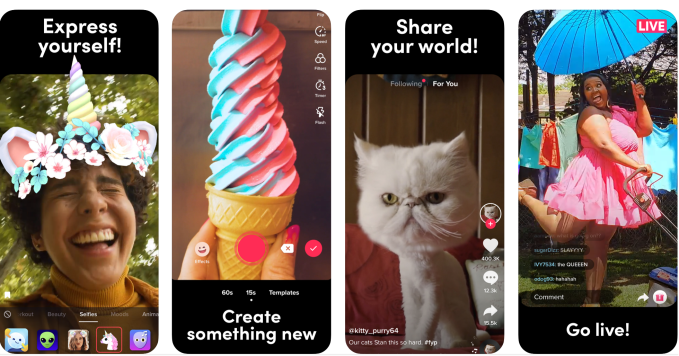
Triller’s App Store images.

TikTok, in comparison, can be everything from light-hearted dance videos to goofy skits. One gets a hint of their differences from the visuals they picked for their App Store pages.

TikTok’s App Store images.

The TikTok alts

The fate of TikTok could still change dramatically in the coming weeks, although so far, there’s a decent chance that Microsoft may scoop up the Chinese-owned app. Some startups are betting that their US identity will help them win over users from TikTok, but a survey done by California-based Creative Digital Agency suggests that may not be the case.

65% of the hundreds of TikTok users it asked said they won’t feel more comfortable with their data policies even if TikTok were an American company, and 84.6% believe the proposed ban is motivated by political concerns.

“The vast majority believe that all American social media platforms are doing exactly the same thing in mining personal data, which is the big privacy concern,” the agency’s managing director Kevin Almeida suggested.

That said, TikTok’s growth has slowed down recently, as some creators hedge the risk of losing followers in the case of a ban. The app’s installs in the US last week were down 7% compared to the four-week average, shows data from analytics firm Sensor Tower. Its total downloads in the US are close to 190 million.

Triller is hardly the only US startup thriving against the backdrop of TikTok’s uncertain future. At least three other micro-video apps have seen new downloads in the hundreds of thousands in the US over the past week, according to Sensor Tower, and two are rooted in China.

They are Byte, Dom Hofmann’s new app after Vine was shuttered by Twitter; Zynn, which is run by Kuaishou, TikTok’s Chinese homegrown rival; and Likee, operated by Bigo, a Singapore-based company acquired by China’s YY. These apps totaled downloads of 2.9 million, 6.4 million, and 16.3 million in the US, respectively.

Growth of TikTok’s old rival Dubsmash isn’t as remarkable but the app has the most US installs among the competitors, reaching 41.6 million recently.

In comparison, Triller has accumulated 23.8 million downloads in the US. The app has seen a surge in downloads in India following the country’s TikTok ban, but it has also ranked among the top photo and video apps across multiple European and African countries where TikTok remains accessible.

The company operates a global team of 350 employees, most of whom are in the US and work on content operation and engineering.

05 Aug 2020

YC-backed Statiq wants to bootstrap India’s EV charging network

Electric vehicles (EVs) are spreading throughout the world. While Tesla has drawn the most attention in the United States with its luxurious and cutting-edge cars, EVs are becoming a mainstay in markets far away from the environs of California.

Take India for instance. In the local mobility market, two- and three-wheel vehicles are starting to emerge as a popular option for a rapidly expanding middle class looking for more affordable options. EV versions are popular thanks to their reduced maintenance costs and higher reliability compared to gasoline alternatives.

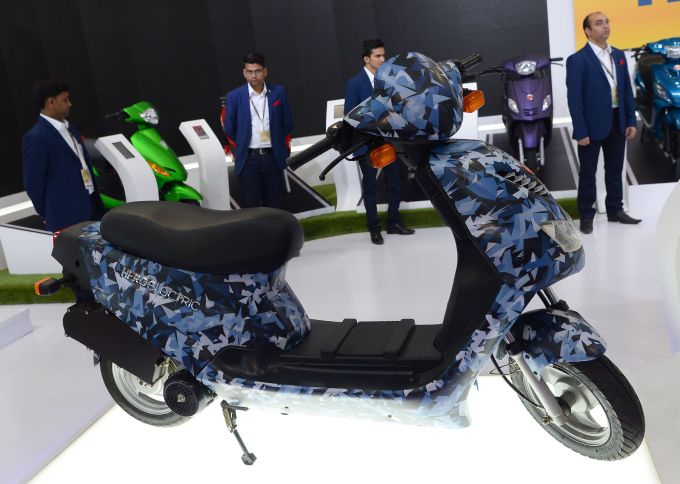
Two-wheeled electric scooters are a fast-growing segment of India’s mobility market.

There’s just one problem, and it’s the same one faced by every country which has attempted to convert from gasoline to electric: how do you build out the charging station network to make these vehicles usable outside a small range from their garage?

It’s the classic chicken-and-egg problem. You need EVs in order to make money on charging stations, but you can’t afford to build charging stations until EVs are popular. Some startups have attempted to build out these networks themselves first. Perhaps the most famous example was Better Place, an Israeli startup that raised $800 million in venture capital before dying from negative cash flow back in 2013. Tesla has attempted to solve the problem by being both the chicken and egg by creating a network of Superchargers.

That’s what makes Statiq so interesting. The company, based in the New Delhi suburb of Gurugram, is bootstrapping an EV charging network using a multi-revenue model that it hopes will allow it to avoid the financial challenges that other charging networks have faced. It’s in the current Y Combinator batch and will be presenting at Demo Day later this month.

Akshit Bansal and Raghav Arora, the company’s co-founders, worked together previously as consultants and built a company for buying photos online, eventually reaching 50,000 monthly actives. They decided to make a pivot — a hard pivot really — into EVs and specifically charging equipment.

Statiq founders Raghav Arora and Akshit Bansal. Photos via Statiq

“We felt the need to do something about the climate because we were living in Delhi and Delhi is one of the most polluted cities in the world, and India is home to a lot of the polluted cities in the world. So we wanted to do something about it,” Bansal said. As they researched the causes of pollution, they learned that automobile exhaust represented a large part of the problem locally. They looked at alternatives, but EV charging stations remain basically non-existent across the country.

Thus, they founded Statiq in October 2019 and officially launched this past May. They have installed more than 150 charging stations in Delhi, Bangalore, and Mumbai and the surrounding environs.

Let’s get to the economics though, since that to me is the most fascinating part of their story. Statiq as I noted has a multi-revenue model. First, end users buy a subscription from Statiq to use the network, and then users pay a fee per charging session. That session fee is split between Statiq and the property owner, giving landlords who install the stations an incremental revenue boost.

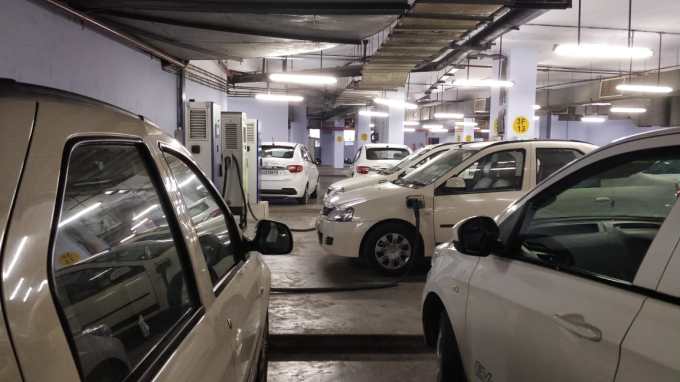
A Statiq charging station. Photo via Statiq

When it comes to installation, Statiq has a couple of tricks up its sleeves. First, the company’s charging equipment — according to Bansal — costs roughly a third of the equivalent cost of U.S. equipment. That makes the base technology cheaper to acquire. From there, the company negotiates installations with landlords where the landlords will pay the fixed costs of installation in exchange for that continuing session charge fee.

On top of all that, the charging stations have advertising on them, offering another income stream particularly in high-visibility locations like shopping malls which are critical for a successful EV charging network.

In short, Statiq hasn’t had to outlay capital in order to put in place their charging equipment — and they were able to bootstrap before applying to YC earlier this year. Bansal said the company had dozens of charging stations and thousands of paid sessions on its platform before joining their YC batch, and “we are now growing 20% week-over-week.”

What’s next? It’s all about deliberate scaling. The EV market is turning on in India, and Statiq wants to be where those cars are. Bansal and his co-founder are hoping to ride the wave, continuing to build out critical infrastructure along the way. India’s government will likely continue to help: its approved billions of dollars in incentives for EVs and for charging stations, tipping the economics even further in the direction of a clean car future.

05 Aug 2020

SpaceX successfully flies its Starship prototype to a height of around 500 feet

SpaceX has been developing Starship, its next-generation spacecraft, at its site in Boca Chica, Texas. The company has built a number of different Starship prototypes to date, include one prior version called the Starhopper that was essentially just the bottom portion of the rocket. Today, the company flew its first full-scale prototype (minus the domed cap that will appear on the final version, and without the control fins that will appear lower down on its sides), achieving an initial flight of around 150 m (just under 500 feet).

This is the furthest along one of these prototypes has come in the testing process. It’s designated Starship SN5, which is the fifth serialized test article. SpaceX actually built a first full-scale demonstration craft called the Starship Mk1 prior to switching to this new naming scheme, so that makes this the sixth one this size they’ve built – with the prior versions suffering failures at various points during preparations, including pressure testing and following a static engine test fire.

SN5 is now the first of these larger test vehicles to actually take off and fly. This prototype underwent a successful static test fire earlier this week, paving the way for this short flight test today. It’s equipped with just one Raptor engine, whereas the final Starship will have six Raptors on board for much greater thrust. It managed to fly and land upright, which means that by all external indications everything went to plan.

Starhopper previously completed a similar hop in August of 2019. SpaceX has an aggressive prototype development program to attempt to get Starship in working order, with the ambitious goal of flying payloads using the functional orbital vehicle as early as next year. Ultimately, Starship is designed to pair with a future Falcon Heavy booster to carry large payloads to orbit around Earth, as well as to the Moon and eventually to Mars.

04 Aug 2020

Anthony Levandowski sentenced to 18 months in prison, as new $4B lawsuit against Uber is filed

Anthony Levandowski, the former Google engineer and serial entrepreneur who was at the center of a lawsuit between Uber and Waymo, has been sentenced to 18 months on one count of stealing trade secrets. 

Levandowski won’t be heading straight to prison, however. Judge William Alsup postponed his incarceration due to the COVID-19 pandemic. He will report to prison at a future date yet to be determined.

Judge Alsup said that home confinement would “[give] a green light to every future brilliant engineer to steal trade secrets. Prison time is the answer to that.”

During court proceedings today, Levandowski also agreed to pay $756,499.22 in restitution to Google and a fine of $90,000.

The U.S. District Attorney’s office had recommended a 27-month sentence arguing in court today that Levandowski had committed the crime for ego or greed, and that he remained a wealthy man. 

“It was wrong for him to take all of these files, and it erases the contributions of many, many other people that have also put their blood, sweat and tears into this project that makes a safer self-driving car,” prosecutor Katherine Wawrzyniak said in her closing statement. “When someone as brilliant as Mr Levandowski and as focused on his mission to create self driving cars to make the world safer and better, and that somehow excuses his actions, that’s wrong.”

Levandowski had sought a fine, 12 months home confinement and 200 hours of community service. 

Levandowski spoke briefly on his behalf: “The last three and a half years have forced me to come to terms with what I did. I want to take this time to apologize to my colleagues at Google for betraying their trust, and to my entire family for the price they have paid and will continue to pay for my actions.”

The sentencing is the latest in a series of legal blows that have seen Levandowski vilified as a thieving tech bro, unceremoniously ejected from Uber, and forced into bankruptcy by a $179 million award against him.

And yet, Levandowski is not skulking away. Even as he faced more than two years in prison, the maverick engineer was plotting a comeback that could see him netting upwards of $4 billion from Uber. 

TechCrunch has learned that Levandowski recently filed a lawsuit making explosive claims against Waymo and Uber that, if proven, could turn his fortunes around with a multi-billion dollar payout. [Whether this is a last-ditch effort by a desperate man whose career has been upended by his own poor choices or a viable claim against a double-dealing tech titan, will be up to the courts to decide.

This new lawsuit, filed as part of Levandowski’s bankruptcy proceedings, mostly focuses on Uber’s agreement to indemnify Levandowski against legal action when it bought his self-trucking company, Otto Trucking. It also includes new allegations concerning the settlement that Waymo and Uber reached over trade secret theft claims. 

“No new comment on this most recent desperate filing,” an Uber spokesperson said in an email.

The quick backstory 

The criminal case that led to Levandowski’s sentencing Tuesday, as well as related civil proceedings and this new lawsuit, are part of a multi-year legal saga that has entangled Levandowksi, Uber and Waymo, the former Google self-driving project that is now a business under Alphabet.

Levandowski was an engineer and one of the founding members in 2009 of the Google self-driving project, which was internally called Project Chauffeur. Levandowski was paid about $127 million by Google for his work on Project Chauffeur, according to the court documents.

In 2016, Levandowski left Google and started Otto with three other Google veterans: Lior Ron, Claire Delaunay and Don Burnette. Uber acquired Otto less than eight months later.

Two months after the acquisition, Google made two arbitration demands against Levandowski and Ron. Uber wasn’t a party to either arbitration. However, under the indemnification agreement between Uber and Levandowski, the company was compelled to defend him.

While the arbitrations played out, Waymo separately filed a lawsuit against Uber in February 2017 for trade secret theft and patent infringement. Waymo alleged in the suit, which went to trial but ended in a settlement in 2018, that Levandowski stole trade secrets, which were then used by Uber.

Under the settlement, Uber agreed to not incorporate Waymo’s confidential information into their hardware and software. Uber also agreed to pay a financial settlement that included 0.34% of Uber equity, per its Series G-1 round $72 billion valuation. That calculated at the time to about $244.8 million in Uber equity.

Startling allegations in new lawsuit

This history matters because it is at the center of this new lawsuit that Levandowski filed in July.

He claims that the terms of the Uber-Waymo settlement – which have never been made public – included an agreement that Uber would never hire or work with him again. Levandowski says that resulted in Uber also reneging on its promises to support his trucking business. 

At closing of the Otto acquisition, an earnout plan would have given its owners “a percent interest of billions in profit for Uber’s new trucking business,” the lawsuit alleges. Levandowski would be made a non-executive chairman and control the new trucking business. Alternatively, Uber could decline to close on the transaction but instead grant Levandowski an exclusive license to Otto’s and Uber’s self-driving technology.

The lawsuit says that neither occurred, and that Uber “threatened to leave the transaction in limbo and force Mr. Levandowski to engage in protracted litigation to enforce his rights under the Otto Trucking Merger Agreement.” Uber then “coerced Mr. Levandowski to resign from Otto Trucking and to sell his interest in the company at a significant discount,” the lawsuit alleges.

The upshot: Levandowski believes and claims in the lawsuit that he should be awarded earnouts associated with the profits of Uber Freight  — the new name of Otto Trucking  — an amount that “should be at least $4.128 billion.” Uber made Uber Freight a separate business unit in August 2018. It has since set up a headquarters in Chicago and pursued an aggressive expansion even as it suffers losses. Bloomberg recently reported Uber Freight was seeking investment at a valuation of $4BN. In short, Levandowski wants the whole company. 

In addition, Levandowski hopes to force Uber to pay the $179 million sum that was awarded to Google in arbitration. (Google, for its part, is keen for Levandowski to prevail. A filing it made in the new lawsuit states: “[Levandowski] cannot come close to fully repaying Google (or his other creditors) in this bankruptcy without recovering on his indemnification claim against Uber.”)

The lawsuit also contains the remarkable accusation that Levandowski may not have been the only Google employee to take the company’s self-driving car secrets with them when they left. It notes an independent expert found that Uber’s self-driving software contained problematic functions that might require it to enter into a license agreement for use of Waymo’s intellectual property. 

The lawsuit claims that Levandowski did not work on software at Google or Uber, and thus “those trade secrets did not come from Mr. Levandowski, but rather a different former Google employee.” It goes on to claim that Waymo and Uber “settled issues relating to theft of trade secrets by individuals who are not Levandowski.” It does not identify any such person. 

“No new comment on this most recent desperate filing,” an Uber spokesperson said in an email. 

Crime and punishment

In August 2019, the U.S. District Attorney charged Levandowski alone with 33 counts of theft and attempted theft of trade secrets while working at Google. The charges disrupted Levandowski’s most recent project and prompted him to step down as CEO from a startup he co-founded called Pronto.ai that is developing an advanced driver assistance system product for trucks.

Levandowski and the U.S. District Attorney reached a plea deal in March 2020 that allowed him to avoid a protracted legal fight and a potentially lengthy prison sentence. Under the plea agreement, Levandowski admitted to downloading thousands of files related to Project Chauffeur. Specifically, he pleaded guilty to count 33 of the indictment, which is related to taking what was known as the Chauffeur Weekly Update, a spreadsheet that contained a variety of details including quarterly goals and weekly metrics, the team’s objectives and key results as well as summaries of 15 technical challenges faced by the program and notes related to previous challenges that had been overcome, according to the filing.

Levandowski said in the plea agreement that he downloaded the Chauffeur Weekly Update to his personal laptop on or about January 17, 2016, and accessed the document after his resignation from Google, which occurred about 10 days later.

In a victim impact statement, Waymo wrote that Levandowski’s “misconduct was enormously disruptive and harmful to Waymo, constituted a betrayal,” and requested that his sentence include “a substantial period of incarceration.” 

With no end to the COVID, it is possible that Levandowski’s latest lawsuit will be resolved before he even reports to jail. He may have been sentenced as a bankrupt, but he could enter prison a billionaire. 

04 Aug 2020

‘Mulan’ is coming to Disney+ on September 4, for an additional price of $29.99

Those wondering whether The Walt Disney Company would eventually give up on a traditional theatrical release for “Mulan” now have their answer.

Until now, Disney had repeatedly delayed “Mulan”‘s release due to theatrical closures in the U.S. and around the world, with “Mulan and Christopher Nolan’s “Tenet” expected to be the first big movie releases whenever theaters reopened.

However, with the pandemic showing no real signs of subsiding in the United States, and no clear date for theatrical reopenings in markets like New York and California, Warner Bros. recently announced that “Tenet” will not follow a traditional theatrical release schedule, and instead will open internationally this month before coming to select North American cities on September 3.

And during today’s earnings call, Disney CEO Bob Chapek said that “Mulan” will launch on Disney+ on September 4 as a “premiere access” release in “most Disney+ markets” including the United States and Canada, while also being released theatrically in “certain markets.” It sounds like subscribers will have to pay an additional $29.99 for the film, although Chapek didn’t offer any details about how this will work.

During the call, Chapek also said that as of yesterday, Disney+ has grown to more than 60.5 million paid subscribers.

04 Aug 2020

Disney+ grows to more than 60.5M subscribers

Disney+ had more than 60.5 million paying subscribers as of yesterday, according to The Walt Disney Company’s CEO Bob Chapek.

Chapek shared the number during a call to discuss the company’s latest earnings report, which covered the company’s most recent quarter ending on June 27. He was essentially offering an update on the 57.5 million paid subscriber figure included in the report, and he said the growth is “far exceeding our initial projections for the service.”

Disney+ launched in November of last year. The company previously announced in April that the service had passed 50 million subscribers. (Those numbers include subscribers acquired through bundling with Hotstar in India, as well as free subscribers through a promotion with TechCrunch’s parent company Verizon.)

The coronavirus pandemic has accelerated growth for some streaming services. Most notably, Netflix added more than 10 million new subscribers in its most recent quarter, bringing its global total to nearly 193 million. As for Disney’s other streaming services, ESPN+ has grown more than 100% year-over-year to 8.5 million subscribers (as of June 26), while Hulu grew 27% to 35.5 million subscribers (3.4 million of them are paying for both video on demand and live TV).

And Disney+ may have gotten an additional bump, thanks to the release of “Hamilton” over the July 4 weekend.

Overall, Disney said revenue for its direct-to-consumer and international division increased 2% year-over-year, to $4.0 billion, while the unit’s operating loss grew from $562 million to $706 million.

Still, streaming likely counts as a relative bright spot compared to many of Disney’s other businesses that have either slowed or paused entirely due to the pandemic. (Parks are gradually reopening, for example.) The company’s total revenue fell 42% YOY to $11.8 billion, and earnings per share for the quarter showed a loss of $2.61.

04 Aug 2020

Software stocks set new records despite earnings, pandemic

You might have missed it, but amidst the current political-M&A-pandemic-election-disinformation news cycle we find ourselves in this week, SaaS and cloud companies reached new public market records.

Yesterday, the Bessemer-Nasdaq cloud index closed at 2,035.54, a new record finish for the basket of software companies. And, today, the index broached the 2,040 mark before ceding some ground.


The Exchange explores startups, markets and money. You can read it every morning on Extra Crunch, or get The Exchange newsletter every Saturday.


What matters for our purposes is that with a good chunk of the Q2 earnings cycle behind us, software companies are not only holding onto their gains from earlier in the year, they are managing to add to them, albeit modestly. Of course, valuation expansion during earnings season could still lead to gently falling multiples; as companies grow, if their shares gain value at a slower pace, their price/sales ratio can lose ground.

Regardless, for our purposes it’s notable that recent public market gains are not dissipating. Tech valuation boosts have helped major American indices regain ground lost early in the year, and Q2 earnings were a possible threat to prior progress. So far earnings-related dents are thin on the ground.

So, what’s going on? Why are SaaS and cloud stocks doing so well? Leaning on notes from two VCs — Jamin Ball from Redpoint and Mary D’Onofrio from Bessemer — we can unspool recent valuation highs.