Year: 2020

05 Aug 2020

Genki’s Covert Dock is the perfect dock for the Nintendo Switch – and other gadgets, too

The Nintendo Switch’s ability to quickly transition from portable to home console is definitely one of its major selling points, but Nintendo’s official dock never really made much sense with the portable nature of the Switch itself. Luckily, third-party accessory maker Genki created the Covert Dock, a device no larger than a smartphone USB charger that easily connects your Switch to any TV. Plus, it actually is a USB charger for all your devices, too.

The basics

The Covert Dock includes a USB Type-C port that’s rated for the Power Delivery 3.0 standard, which means it can charge not only the Switch, but also an iPhone, Android smartphones, the iPad Pro and even a MacBook (though its max output is 30w, so you won’t get full-speed charging for any power-hungry large devices). It also includes a USB-A port, which you can use not only for charging, but also for connecting controllers, microphones, mice, Ethernet adapters, and more to devices connected via USB-C. Finally, there’s an HDMI port, which you can use to connect your Switch (or other devices that support USB-C video out) to your TV or display.

The HDMI port supports a maximum resolution of 1080p at up to 60hz, so it can easily handle the 720p output of the Switch. The Genki Covert Dock also features folding power prongs for maximum portability – and it’s extremely compact, coming in smaller than a MacBook Air charger despite all of its capabilities.

Image Credits: Genki

Genki also provides a set of global power adapters that slide on to the folded prongs for easy travel compatibility, adding to its versatility. There’s also a six-foot USB-C 3.1 charging cable included in the box, so you have everything you need to begin using it right away. When you don’t have an HDMI cable plugged in, it can also power your Switch while you play just like with any other standard USB-C charger.

At $74.99, the Genki Covert Dock actually comes in under the retail price of Nintendo’s official dock set for Switch – and it’s a much more versatile device thanks to its ability to act as a hub for a wide range of devices that support display output over USB-C. Combine that with the travel adapter set, and the Covert Dock is really replacing two or three devices in your bag, rather than just a Switch dock.

Performance

Genki’s Covert Dock feels very sturdy and well-built, not at all like many of the third-party dock alternatives that you can find on Amazon. Inside, it uses Gallium Nitride technology to enable its small size while still making sure it can provide good power output without overheating.

It worked flawlessly both for charging my Switch (and other devices) and for connecting the Switch to my TV. As soon as you plug in an HDMI cable, the Switch behaves just as it would when using the official dock, switching off the built-in display and outputting to the television in HD resolution.

Image Credits: Genki

Ditto with plugging in an iPad Pro, and a MacBook Pro. Both automatically detect the HDMI connection and behave just like they would using any other display adapter.

Users of other third-party Switch display docking solutions might be hesitant to trust another one, given how frequently third-party hardware has led to issues including console bricking. But Genki has a great and thorough explanation of why their dock shouldn’t encounter such issues, and it mostly relates to their proper implementation of the PD 3.0 specification. Over the course of testing on an up-to-date Switch console over a couple of weeks, I definitely haven’t encountered any issues.

Bottom line

If you own a Switch (not the Switch Lite, sadly, since it doesn’t support video out), then there’s no question that you should also own a Genki Covert Dock. It’s the dock that the console should’ve shipped with, since it respects the Switch’s portability and offers a way to connect to a TV that takes up no more space than the Switch USB charger itself.

Even if you don’t own a Switch, the Genki Covert Dock might be something you need – it’s a great way to power an iPad while presenting during a meeting, for instance, and also a fantastic travel charger even when you’re not using the display features. Genki has done a tremendous job of packing a whole lot of versatility into a unique and well-built device, and at a price that’s very reasonable when you consider how many other potential gadgets and dongles it’s replacing.
05 Aug 2020

Harness makes first acquisition, snagging open source CI company Drone.io

Harness has made a name for itself creating tools like continuous delivery (CD) for software engineers to give them the kind of power that has been traditionally reserved for companies with large engineering teams like Google, Facebook and Netflix. Today, the company announced it has acquired Drone.io, an open source continuous integration (CI) company, marking the company’s first steps into open source, as well as its first acquisition.

The companies did not share the purchase price.

“Drone is a continuous integration software. It helps developers to continuously build, test and deploy their code. The project was started in 2012, and it was the first cloud native, container native continuous integration solution on the market, and we open sourced it,” company co- founder Brad Rydzewski told TechCrunch.

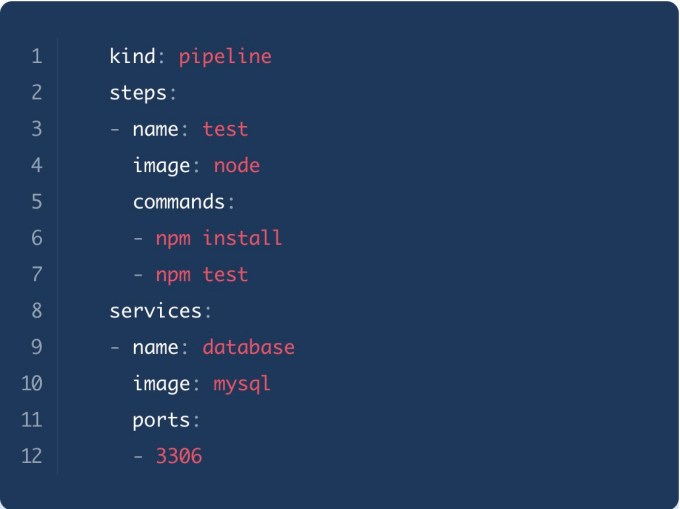
Drone delivers pipeline configuration information as code in a Docker container. Image: Drone.io

While Harness had previously lacked a CI tool to go with its continuous delivery tooling, founder and CEO Jyoti Bansal said this was less about filling in a hole than expanding the current platform.

“I would call it an expansion of our vision and where we were going. As you and I have talked in the past, the mission of Harness is to be a next generation software delivery platform for everyone,” he said. He added that buying Drone had a lot of upside.”It’s all of those things — the size of the open source community, the simplicity of the product — and it [made sense], for Harness and Drone to come together and bring this integrated CI/CD to the market.”

While this is Harness’ first foray into open source, Bansal says it’s just the starting point and they want to embrace open source as a company moving forward. “We are committed togetting more and more involved in open source and actually making even more parts of Harness, our original products, open source over time as well,” he said.

For Drone community members who might be concerned about the acquisition, Bansal said he was “100% committed” to continuing to support the open source Drone product. In fact, Rydzewski said he wanted to team with Harness because he felt he could do so much more with them than he could have done continuing as a stand-alone company.

“Drone was a growing community, a growing project and a growing business. It really came down to I think the timing being right and wanting to partner with a company like Harness to build the future. Drone laid a lot of the groundwork, but it’s a matter of taking it to the next level,” he said.

Bansal says that Harness intends to also offer a commercial version of Drone with some enterprise features on the Harness platform, even while continuing to support the open source side of it.

Drone was founded in 2012. The only money it raised was $28,000 when it participated in the Alchemist Accelerator in 2013, according to Crunchbase data. The deal has closed and Rydzewski has joined the Harness team,

05 Aug 2020

Sight Diagnostics raises $71M Series D for its blood analyzer

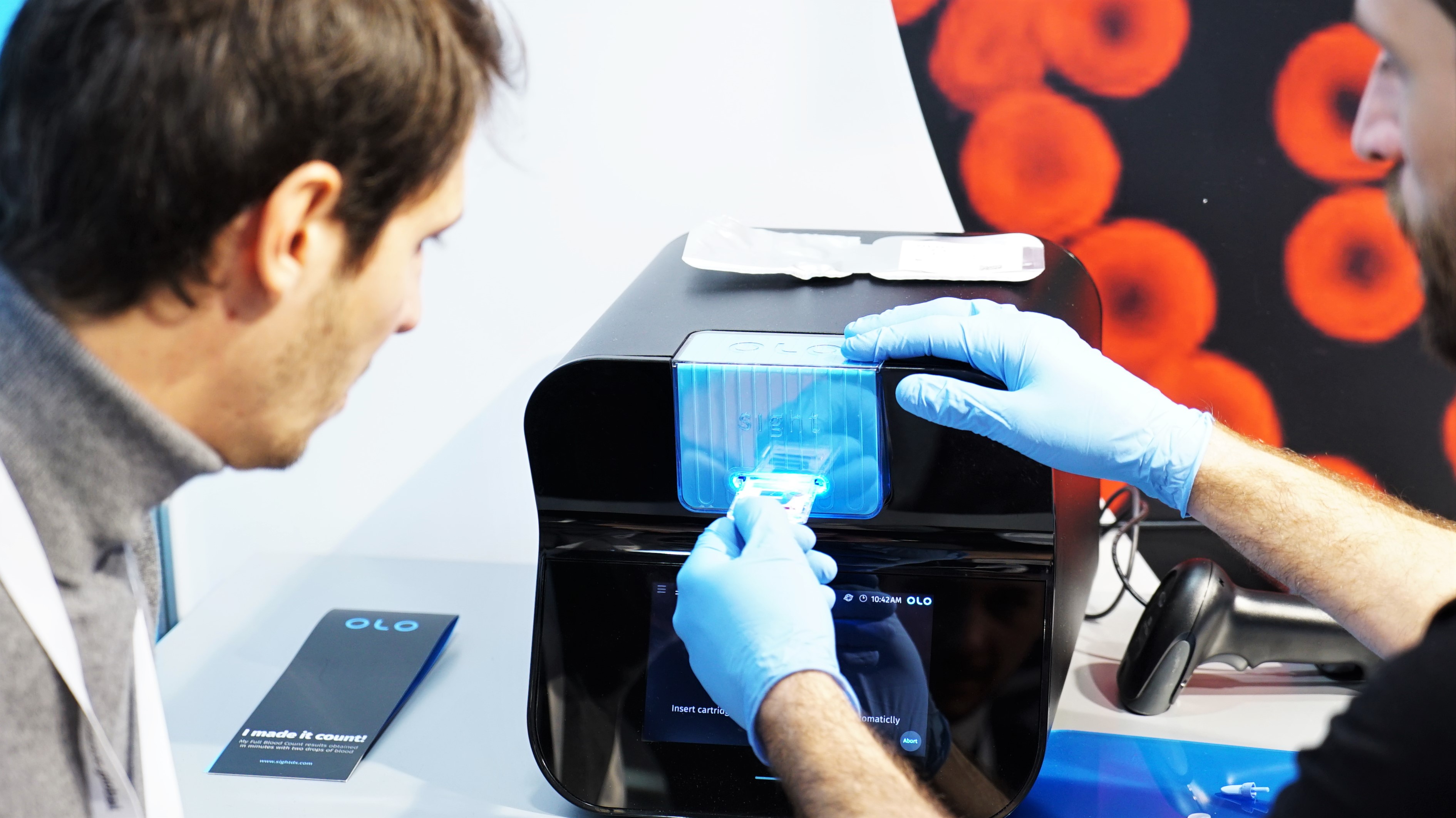
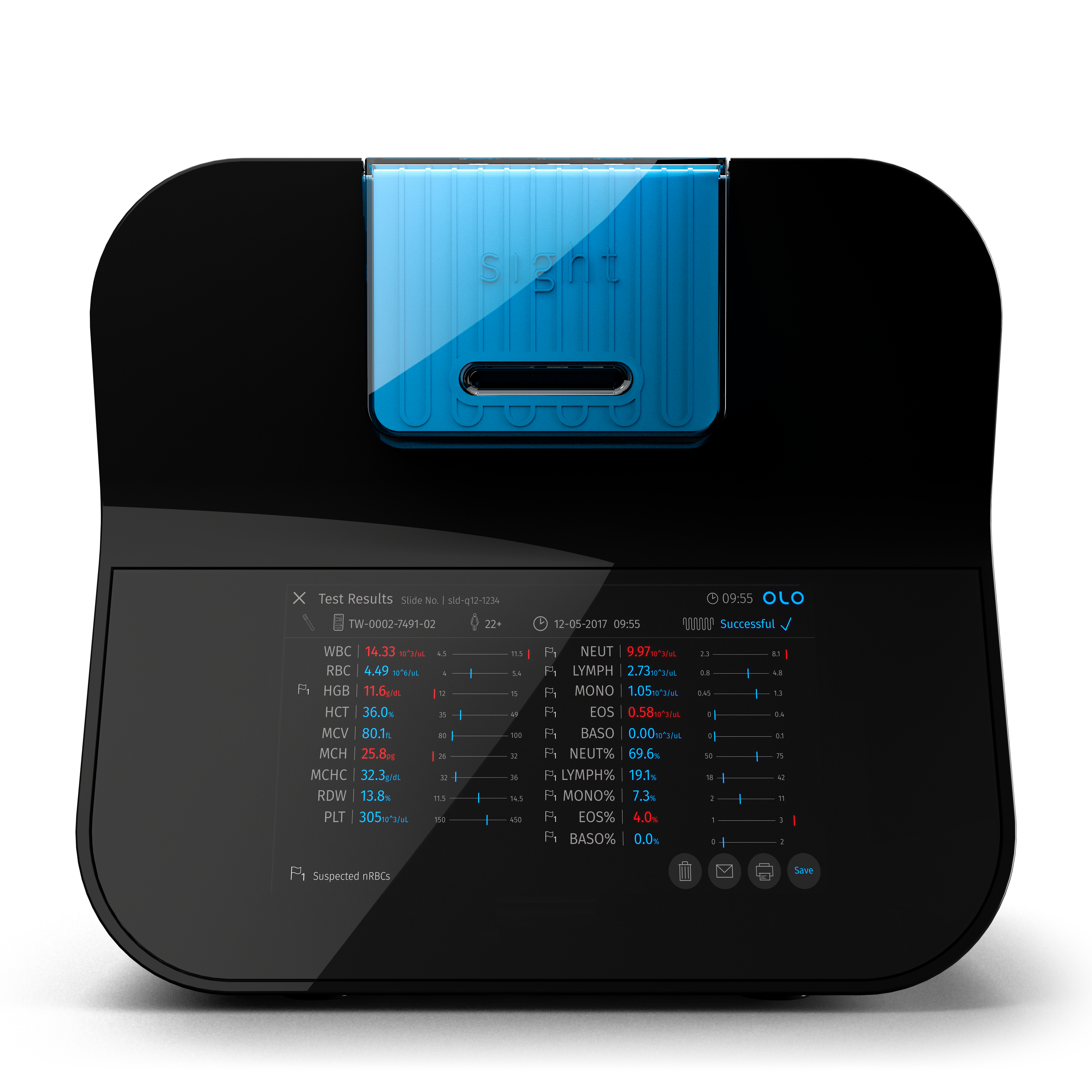
Sight Diagnostics, the Israel-based health-tech company behind the FDA-cleared OLO blood analyzer, today announced that it has raised a $71 million Series D round with participation from Koch Disruptive Technologies, Longliv Ventures (which led its Series C round)and crowd-funding platform OurCrowd. With this, the company has now raised a total of $124 million, though the company declined to share its current valuation.

With a founding team that used to work at Mobileye, among other companies, Sight made an early bet on using machine vision to analyze blood samples and provide a full blood count comparable to existing lab tests within minutes. The company received FDA clearance late last year, something that surely helped clear the way for this additional round of funding.

Image Credits: Sight Diagnostics

“Historically, blood tests were done by humans observing blood under a microscope. That was the case for maybe 200 years,” Sight CEO and co-founder Yossi Pollak told me. “About 60 years ago, a new technology called FCM — or flow cytometry — started to be used on large volume of blood from venous samples to do it automatically. In a sense, we are going back to the first approach, we just replaced the human eye behind the microscope with machine vision.”

Pollak noted that the tests generate about 60 gigabytes of information (a lot of that is the images, of course) and that he believes that the complete blood count is only a first step. One of the diseases it is looking to diagnose is COVID-19. To do so, the company has placed devices in hospitals around the world to see if it can gather the data to detect anomalies that may indicate the severity of some of the aspects of the disease.

“We just kind of scratched the surface of the ability of AI to help with with a wish with blood diagnostics,” said Pollak. “Specifically now, there’s so much value around COVID in decentralizing diagnostics and blood tests. Think keeping people — COVID-negative or -positive —  outside of hospitals to reduce the busyness of hospitals and reduce the risk for contamination for cancer patients and a lot of other populations that require constant complete blood counts. I think there’s a lot of potential and a lot of a value that we can bring specifically now to different markets and we are definitely looking into additional applications beyond [complate blood count] and also perfecting our product.”

So far, Sight Diagnostics has applied for 20 patents and eight have been issued so far. And while machine learning is obviously at the core of what the company does — with the models running on the OLO machine and not in the cloud — Pollak also stressed that the team has made breakthroughs around the sample preparation to allow it to automatically prepare the sample for analysis.

Image Credits: Sight Diagnostics

Pollok stressed that the company focused on the U.S. market with this funding round, which makes sense, given that it was still looking for its FDA clearance. He also noted that this marks Koch Disrupt Technologies’ third investment in Israel, with the other two also being healthcare startups.

“KDT’s investment in Sight is a testament to the company’s disruptive technology that we believe will fundamentally change the way blood diagnostic work is done,’ said Chase Koch, President of Koch Disruptive Technologies . “We’re proud to partner with the Sight team, which has done incredible work innovating this technology to transform modern healthcare and provide greater efficiency and safety for patients, healthcare workers, and hospitals worldwide.”

The company now has about 100 employees, mostly in R&D, with offices in London and New York.

05 Aug 2020

Instagram Reels launches globally in over 50 countries, including US

Instagram Reels, the company’s significant effort in challenging TikTok on short-form creative content, is launching globally, starting today. The feature is being made available across 50 countries, including the U.S., as TechCrunch had previously reported. The expansion means Reels will now be available in key international markets, such as India, Brazil, France, Germany, the U.K., Japan, Australia, Spain, Mexico, Argentina and several others.

The timing is fortuitous, given TikTok’s uncertain future in the U.S. as the Trump administration weighs either banning the Chinese-owned app entirely or forcing it to sell off its U.S. operations.

However, Facebook’s plans to respond to the TikTok threat were underway well before now.

In late 2018, Facebook launched a TikTok clone called Lasso. The app didn’t take off and was shuttered this year. Though unsuccessful as a standalone product, Lasso represents Facebook’s ability to run what are essentially large-scale beta tests that don’t have to generate revenue. This allows Facebook to collect a sizable amount of user behavioral data that can then be put to use when building new features for flagship apps, like it’s doing with Instagram Reels.

Following Lasso’s tests, Instagram released Reels in Brazil in November 2019, where it was called Cenas, to see how Instagram users would respond to a different sort of mobile video experience.

Those tests steadily expanded outside the U.S. to markets like India and parts of Europe in 2020.

With Reels, Instagram’s goal is not just to capture the now potentially up-for-grabs TikTok audience in the U.S. — it’s to steal them away even if TikTok remains.

Image Credits: Instagram

Today, Instagram caters to a certain kind of creator community that doesn’t always overlap with the younger, Gen Z (and up) user base that’s found a home on TikTok. (And Gen Alpha, if we’re being honest.) Instead, Instagram users either share polished, curated photos to their Feed; publish personal and casual videos in Stories; or share almost YouTube-like creator content to IGTV. Meanwhile, Instagram’s browsing experience hasn’t offered a way to quickly swipe through videos like on TikTok.

Image Credits: Instagram

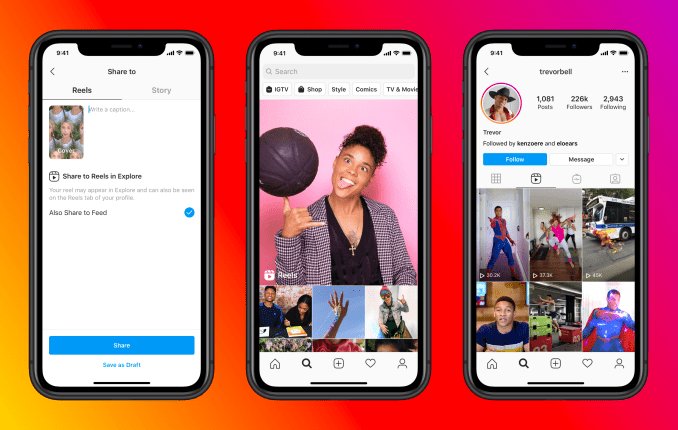
Reels aims to change that. The feature lets users create and publish 15-second videos using a new set of editing tools that include options like AR effects, a countdown timer, a new align tool to line up different takes and, of course, music. Instagram’s deals with major record labels mean users won’t have to wonder if their sound will later be removed due to a rights issue and will offer a variety of musical content right out of the gate.

A comprehensive audio catalog could be a competitive advantage for Reels — not to mention a feature that’s difficult for smaller apps to acquire due to the complicated nature of record label negotiations.

When TikTok users recently descended on rival apps upon news of a potential TikTok ban in the U.S., one of their chief complaints was the lack of good music or popular sounds. Some even republished their favorites under hashtags like #sounds or #TikToksounds in an effort to rebuild TikTok’s catalog via user-generated uploads.

Instagram understood the importance of music — not just editing tools, workflow and discovery — in helping its TikTok competitor thrive. TikTok, after all, has its own record label contracts — though the extent of those deals haven’t been widely published.

“We think it’s really important to honor the rights of the music labels — and that’s one we’ve been working on for years now,” said Instagram head of Product, Vishal Shah. “We’re launching Reels now in countries where we have rights. We think that the catalog is quite deep and it has some unique content that you can’t really find, at that depth, in other platforms. At the same time, we wanted to make sure that all the restrictions that we needed to put in place — whether that was on the country basis or what could people download and use and remix etc. — were all built into the product from from day one. That’s something we’ve been working with the labels on and was an important consideration in the launch,” he added.

What he didn’t mention is that Instagram’s music industry relationships aren’t only with the record labels. The company has deals with other publishers and independents as well, which have been part of the company’s ongoing partnership efforts and strategic negotiations that are helping fuel other Facebook products, like the recent launch of Music Videos. 

Image Credits: Instagram

Using Reels is easy because it’s built into the Instagram Camera that people already know how to use. To create a new Reel, you’ll select the option at the bottom of the Instagram Camera, next to Story. The editing tools then pop up on the left side of the screen, which is where you’ll find the AR effects and other options, like the timer, speed and align features.

Like other Instagram posts, Reels can be saved to Drafts while they’re a work in progress. When ready to go live, Reels can be pushed out across key surfaces in the app — including Stories, Stories with Close Friends only or as a DM. If you have a public Instagram account, you also can publish Reels to the wider Instagram audience, which will discover them within a new space in Explore.

Image Credits: Instagram

Reels can also be captioned and hashtagged, and friends can be tagged — allowing Instagram to leverage the size and scale of its user base to help the new feature go viral. If Reels are published to Stories, they’ll disappear in 24 hours. Otherwise, Reels will continue to live on in a new tab on users’ profiles.

To watch Reels from Explore, users are presented in a vertical feed personalized to your interests, similar to TikTok. “Featured” Reels are those chosen by Instagram to guide users to original content and will be labeled accordingly.

Overall, what Instagram has built isn’t all that differentiated from TikTok. But nor is it a direct clone.

Instead, Instagram has turned the entirety of the TikTok experience into a single feature among many others within its own app. That’s been a formula for success in the past — Instagram Stories is now bigger than all of Snapchat, for instance.

But TikTok has built something that may not be as easily replicated: a community of users who started their social media lives with underage accounts on Musical.ly. They grew up with the app, lived through the TikTok rebranding and now may see no need to switch — unless TikTok actually does disappear.

Or, as my tween put it when a friend told her TikTok wasn’t really going to be banned: “So Instagram built Reels for nothing?”

05 Aug 2020

Watch SpaceX’s stunning Starship prototype ‘hop’ test flight and landing

SpaceX achieved a big win in their Starship spacecraft development program on Tuesday evening, flying the SN5 prototype of that future vehicle to a height of around 500 feet, propelled by a single Raptor engine. The test, which took place at SpaceX’s rocket development and testing facility in Boca Chica, Texas, marks the first time that a full-scale Starship prototype has left the ground.

The company released a video of the whole test, including footage captured both from a drone’s-eye-view, as well as from a camera mounted on board Starship SN5, inside the fuselage and offering a look at the Raptor engine in action, as well as the landing legs activating in preparation for landing.

Following the successful test, SpaceX CEO and founder Elon Musk outlined next steps for the Starship development process, which includes “several” more short hops, followed by high altitude testing. The landing legs will also go through some changes, first extending in length and then becoming much wider and taller, with the ability to land on more uneven terrain, according to Musk.

05 Aug 2020

US tech needs a pivot to survive

Last month, American tech companies were dealt two of the most consequential legal decisions they have ever faced. Both of these decisions came from thousands of miles away, in Europe. While companies are spending time and money scrambling to understand how to comply with a single decision, they shouldn’t miss the broader ramification: Europe has different operating principles from the U.S., and is no longer passively accepting American rules of engagement on tech.

In the first decision, Apple objected to and was spared a $15 billion tax bill the EU said was due to Ireland, while the European Commission’s most vocal anti-tech crusader Margrethe Vestager was dealt a stinging defeat. In the second, and much more far-reaching decision, Europe’s courts struck a blow at a central tenet of American tech’s business model: data storage and flows.

American companies have spent decades bundling stores of user data and convincing investors of its worth as an asset. In Schrems, Europe’s highest court ruled that masses of free-flowing user data is, instead, an enormous liability, and sows doubt about the future of the main method that companies use to transfer data across the Atlantic.

On the surface, this decision appears to be about data protection. But there is a choppier undertow of sentiment swirling in legislative and regulatory circles across Europe. Namely that American companies have amassed significant fortunes from Europeans and their data, and governments want their share of the revenue.

What’s more, the fact that European courts handed victory to an individual citizen while also handing defeat to one of the commission’s senior leaders shows European institutions are even more interested in protecting individual rights than they are in propping up commission positions. This particular dynamic bodes poorly for the lobbying and influence strategies that many American companies have pursued in their European expansion.

After the Schrems ruling, companies will scramble to build legal teams and data centers that can comply with the court’s decision. They will spend large sums of money on pre-built solutions or cloud providers that can deliver a quick and seamless transition to the new legal reality. What companies should be doing, however, is building a comprehensive understanding of the political, judicial and social realities of the European countries where they do business — because this is just the tip of the iceberg.

American companies need to show Europeans — regularly and seriously — that they do not take their business for granted.

Europe is an afterthought no more

For many years, American tech companies have treated Europe as a market that required minimal, if any, meaningful adaptations for success. If an early-stage company wanted to gain market share in Germany, it would translate its website, add a notice about cookies and find a convenient way to transact in euros. Larger companies wouldn’t add many more layers of complexity to this strategy; perhaps it would establish a local sales office with a European from HQ, hire a German with experience in U.S. companies or sign a local partnership that could help it distribute or deliver its product. Europe, for many small and medium-sized tech firms, was little more than a bigger Canada in a tougher time zone.

Only the largest companies would go to the effort of setting up public policy offices in Brussels, or meaningfully try to understand the noncommercial issues that could affect their license to operate in Europe. The Schrems ruling shows how this strategy isn’t feasible anymore.

American tech must invest in understanding European political realities the same way they do in emerging markets like India, Russia or China, where U.S. tech companies go to great lengths to adapt products to local laws or pull out where they cannot comply. Europe is not just the European Commission, but rather 27 different countries that vote and act on different interests at home and in Brussels.

Governments in Beijing or Moscow refused to accept a reality of U.S. companies setting conditions for them from the outset. After underestimating Europe for years, American companies now need to dedicate headspace to considering how business is materially affected by Europe’s different views on data protection, commerce, taxation and other issues.

This is not to say that American and European values on the internet differ as dramatically as they do with China’s values, for instance. But Europe, from national governments to the EU and to courts, is making it clear that it will not accept a reality where U.S. companies assume that they have license to operate the same way they do at home. Where U.S. companies expect light taxation, European governments expect revenue for economic activity. Where U.S. companies expect a clear line between state and federal legislation, Europe offers a messy patchwork of national and international regulation. Where U.S. companies expect that their popularity alone is proof that consumers consent to looser privacy or data protection, Europe reminds them that (across the pond) the state has the last word on the matter.

Many American tech companies understand their commercial risks inside and out but are not prepared for managing the risks that are out of their control. From reputation risk to regulatory risk, they can no longer treat Europe as a like-for-like market with the U.S., and the winners will be those companies that can navigate the legal and political changes afoot. Having a Brussels strategy isn’t enough. Instead American companies will need to build deeper influence in the member states where they operate. Specifically, they will need to communicate their side of the argument early and often to a wider range of potential allies, from local and national governments in markets where they operate, to civil society activists like Max Schrems .

The world’s offline differences are obvious, and the time when we could pretend that the internet erased them rather than magnified them is quickly ending.

05 Aug 2020

Springboard raises $31 million to expand its mentor-guided education platform to more geographies

Springboard, an online education platform that provides upskilling and reskilling training courses to people looking to learn in-demand roles, has raised $31 million in a new financing round as it looks to expand to more geographies.

The Series B financing round for the San Francisco-headquartered startup was led by investment firm Telstra Ventures . Vulcan Capital and SJF Ventures, as well as existing investors Costanoa Ventures, Pearson Ventures, Reach Capital, International Finance Corporation (IFC), 500 Startups, Blue Fog Capital, and Learn Capital also participated in the round, said the seven-year-old startup, which has raised more than $50 million to date.

Springboard offers a range of six-month and nine-month courses on data-science, design, coding, analytics and other upskilling subjects to help students and those who are already employed somewhere land better jobs.

The startup, which expanded to India last year, also connects students with mentors — people who are working at Fortune 500 companies — to guide them better navigate professional decisions, Vivek Kumar, Managing Director at Springboard, told TechCrunch in an interview.

Springboard offers these courses at customized price points to students based on where they live. For instance, a nine-month course that sells for around $7,500 in the U.S., is priced at $3,300 in India, explained Kumar.

“Technology used to be a niche area but that’s no longer the case. As more and more companies are built on tech, the need to understand concepts like Data Science, AI, ML, UI/UX has become more homogenous. For learning to be meaningful, it needs to encompass state-of-the-art curriculum with real-world projects as well as mentorship and that is what Springboard stands for. With this funding we are in a good position to build on our strengths to provide in-demand job skills and holistic support at every step,” he said.

This is a developing story. More to follow…

05 Aug 2020

ChargePoint raises $127M as electric vehicle adoption grows among fleet operators

Electric vehicle charging network ChargePoint raised $127 million in funding in a bid to expand its platform for businesses and fleets in North America and Europe.

A mix of existing investors from the oil and gas, utilities and venture industries added to the round, including American Electric Power, Chevron Technology Ventures, Clearvision and Quantum Energy Partners.

This latest addition, which was an extension of its Series H round, pushes ChargePoint’s total funding to $660 million. The company didn’t provide a valuation.

An increasing number of businesses and municipalities are turning to electric vehicles as governments enact stricter emissions regulations. Meanwhile, an increasing number of new electric passenger cars, SUVs and soon pickup trucks are coming to market. In the next 18 months, GM, Ford, Nissan, Volvo along with startups Polestar and Rivian will have electric vehicles in production. Then there’s Tesla, which has continued to scale its existing portfolio while preparing to add new vehicles, including its Cybertruck.

The upshot: ChargePoint is aiming to keep up with the pace of electric vehicle adoption. But it’s not all about expanding the network for privately owned passenger vehicles.

ChargePoint designs, develops and manufactures hardware, and accompanying software as well as a cloud subscription platform, for electric vehicles. The company might be best known for its branded public and semi-public charging spots that consumers use to charge their personal electric cars and SUVs as well as its home chargers. However, ChargePoint also has a commercial-focused business that provides hardware and software to help fleet operators manage their delivery vans, buses and cars. In all, the company has more than 114,000 charging spots globally. 

ChargePoint President and CEO Pasquale Romano said the shift towards electrification is intensifying for mainstream businesses and fleet operators. The new capital will help the company’s expansion plans keep on pace with the market, he added. Specifically, the funds will be used to commercial and fleet portfolio in North America and Europe and continue to scale policy, marketing and sales efforts.

05 Aug 2020

Censys, a search engine for internet devices, raises $15.5M Series A

Internet device search engine Censys is one of the biggest search engines you’ve probably never heard of.

If Google is the search engine for finding information sitting on the web, Censys is the search engine for finding internet devices, like computers, servers, and smart devices, that hosts the data to begin with. By continually mapping the internet looking for connected devices, it’s possible to identify devices that are accessible outside a company’s firewall. The aim is to help companies keep track of which systems can be accessed from the web and know which devices have exploitable security vulnerabilities.

Now, Censys has raised $15.5 million in a Series A fundraise, led by GV and Decibel with participation from Greylock Partners.

David Corcoran, chief executive and co-founder of the Ann Arbor, Mich.-based internet security startup, said the company plans to “aggressively” invest in top security talent and plans to double its headcount from about 50 to 100 in the next year, including expanding its sales, engineering, and leadership teams.

“We’re thrilled to have the support of world-class investors as we keep the momentum building and continue to revolutionize how businesses manage their security posture in an ever-changing environment,” said Corcoran.

The fundraise couldn’t come at a more critical time for the company. Censys is not the only internet device search engine, rivaling Binary Edge and Shodan. But Censys says it has spent two years on bettering its internet mapping technology, helping it see more of the internet than it did before.

The new scan engine, built by the same team that developed and maintains its original open-source ZMap scanner, claims to see 44% more devices on the internet than other security companies. That helps companies see new vulnerable systems as soon as the come online, said Censys’ chief scientist Zakir Durumeric.

Censys is one of a number of growing security companies in the Ann Arbor area, alongside NextHop Technologies, Interlink Networks, and Duo Security, co-founded by Dug Song, who also sits on Censys’ board.

“You can’t protect what you can’t see — but in today’s dynamic IT environment, many organizations struggle to find, much less keep track of, every system and application at risk before the attackers do,” said Song. “Censys empowers defenders with the automated visibility they need to truly understand and to get ahead of these risks, enabling even small security teams to have an outsized impact.”

05 Aug 2020

Amazon inks cloud deal with Airtel in India

Amazon has found a new partner to expand the reach of its cloud services business AWS in India, the world’s second largest internet market.

On Wednesday, the e-commerce giant announced it has partnered with Bharti Airtel, the third-largest telecom operator in India with more than 300 million subscribers, to sell a wide-range of AWS offerings under Airtel Cloud brand to small, medium, and large-sized businesses in the country.

The deal could help AWS, which leads the cloud market in India, further expand its dominance in the country. The move follows a similar deal Reliance Jio, India’s largest telecom operator, struck with Microsoft last year to sell cloud services to small businesses. The two announced a 10-year partnership to “serve millions of customers.”

Airtel, which serves over 2,500 large enterprises and more than a million emerging businesses, itself signed a similar cloud deal with Google in January this year. That partnership is still in place.

“AWS brings over 175 services. We pretty much support any workload on the cloud. We have the largest and the most vibrant community of customers,” said Puneet Chandok, President of AWS in India and South Asia, said on a call with reporters.

The two companies, which had a similar partnership in 2015, will also collaborate on building new services and help existing customers migrate to Airtel Cloud, they said.

Today’s deal illustrates Airtel’s push to build businesses beyond its telecom venture, said Harmeen Mehta, Global CIO and Head of Cloud and Security Business at Airtel, said on the call.

Deals with carriers were very common a decade ago in India as tech giants looked to acquire new users in the country. Replicating a similar strategy now illustrates the phase of the cloud adoption in the nation.

Nearly half a billion people in India came online last decade. And slowly, small businesses and merchants are also beginning to use digital tools, storage services, and accept online payments.

India has emerged as one of the emerging leading grounds for cloud services. The public cloud services market of the country is estimated to reach $7.1 billion by 2024, according to research firm IDC.

This is a developing story. More to follow…