Year: 2020

30 Jul 2020

Google is making autofill on Chrome for mobile more secure

Google today announced a new autofill experience for Chrome on mobile that will use biometric authentication for credit card transactions, as well as an updated built-in password manager that will make signing in to a site a bit more straightforward.

Image Credits: Google

Chrome already uses the W3C WebAuthn standard for biometric authentication on Windows and Mac. With this update, this feature is now also coming to Android .

If you’ve ever bought something through the browser on your Android phone, you know that Chrome always asks you to enter the CVC code from your credit card to ensure that it’s really you — even if you have the credit card number stored on your phone. That was always a bit of a hassle, especially when your credit card wasn’t close to you.

Now, you can use your phone’s biometric authentication to buy those new sneakers with just your fingerprint — no CVC needed. Or you can opt out, too, since you’re not required to enroll in this new system.

As for the password manager, the update here is the new touch-to-fill feature that shows you your saved accounts for a given site through a standard Android dialog. That’s something you’re probably used to from your desktop-based password manager already, but it’s definitely a major new built-in convenience feature for Chrome — and the more people opt to use password managers, the safer the web will be. This new feature is coming to Chrome on Android in the next few weeks, but Google says that “is only the start.”

Image Credits: Google


30 Jul 2020

Magnetis raises $11 million for its automated wealth management and brokerage service for Brazil

Magnetis, an automated wealth management solution for Brazilian investors, has raised $11 million in a new round of funding as it transforms itself into a full service brokerage for the nation’s investor class.

Investors in the round included Redpoint eventures and Vostok Emerging Finance, the company said.

“We’re quite happy with this vote of confidence from our investors. It only reinforces the credibility of our service and business model, which uses technology for goal-based investment management, without creating a conflict of interest,” said Luciano Tavares, founder and CEO of Magnetis. “The new funding will be used to launch our own brokerage and to develop new functionalities that improve customer experience and provide a complete and curated journey through goal-based investments.”

First launched five years ago, the company has set up 350,000 investment plans and has more than 430 million reals under management, according to a statement from the company.

The company said it planned to hit more than 1 billion reals by the end of 2021.

“Today, the Brazilian market is more sophisticated, with a sharp drop in a dependence on fixed income and a rise in more financial assets, including funds, shares, commodities and fixed-income securities. Defining a personal investment portfolio is a science, not a game or lottery,” said Anderson Thees, founder and managing partner of Redpoint eventures, in a statement. “Magnetis’ great differentiator is its ability to set up a personalized investment plan, with first-rate assets and its use of AI to manage all the variables in a sophisticated way. Magnetis is well-positioned for accelerated growth and our team at Redpoint is excited about guiding them during this new phase of our partnership as the fintech sector continues to boom in Brazil and beyond.”

Fintech in Latin America is a booming investment category, with companies like Nubank skyrocketing to multi-billion dollar valuations, and accounting for 22 percent of all Latin American fintech startups.

As the company closes on the new financing, it’s also launching a brokerage, which will enable the company to do more for its customers, according to Tavares. It may also allow the company to keep more money for itself since it doesn’t have to work with outside parties to execute trades.

“Our model for digital assets management and wealth creation is much more complete and sophisticated. The vision is to be a financial guide for our clients; making their investment experience simpler,” Tavares said in a statement. “A total integration with the broker makes the client’s journey simpler, more consolidated and complete.”

Tavares and Magnetis is also making a commitment to transparency around fees.

“We do not receive commissions on the products we recommend to customers,” said Tavares, in a statement. “The asset selection process is done in a transparent and automated way, and customers pay us an annual consulting fee based only on the amount they invest, and not according to the recommended investments. The end result is the selection of high quality products that are more aligned with the clients’ objectives.”


30 Jul 2020

Extra Crunch Live: Join Y Combinator’s Geoff Ralston for a live chat today at 12pm PT/3pm ET

How has Y Combinator adapted its accelerator program to work through a pandemic? What does YC look for in a company in a year as rocky and unpredictable as this one?

Y Combinator President Geoff Ralston will join us on Extra Crunch Live later today to talk about all this and more, starting at 12 p.m PT/3 p.m ET.

Want to tune in? EC Members can find details for the live Zoom Q&A down below — and if you’re watching along live, you’ll be able to submit questions of your own.

30 Jul 2020

The Great TechCrunch Survey of Europe’s VCs — Be featured in our survey

TechCrunch is embarking on a major new project to survey the venture capital investors of Europe.


Over the next few weeks, we will be ‘zeroing-in’ on Europe’s major cities, from A-Z, Amsterdam to Zurich, and many points in-between.

It’s part of a broader series of surveys we’re doing to help founders find the right investors. 

Our survey will capture how each European startup is fairing, and what changes are being wrought amongst investors by the Coronavirus pandemic.

We’d like to know how your city’s startup scene is evolving, how the tech sector is being impacted by COVID-19, and generally how you things will evolve from here. 

Our survey will only be about investors, and will only be sent to investors.

The shortlist of questions will require only brief responses, but the more you want to add, the better.

The deadline for entries is the end of next week, August 7th and you can fill it out here.

Obviously, investors who contribute will be published in the final surveys.

What kinds of things do we want to know?

Questions will include trends are you most excited? What startup do you wish someone would create?

Where are the overlooked opportunities? What are you looking for in your next investment, in general?

 How is your local ecosystem going? And how has COVID-19 impacted your investment strategy? 

The survey will cover almost every European country, on the continent of Europe (not just EU members, btw), so just look for your country in the menu on the survey and please participate (if you’re a venture capital investor).

Thank you for participating. If you have questions you can email mike@techcrunch.com

30 Jul 2020

Boom Supersonic enlists Rolls-Royce to help build the engines for world’s fastest commercial aircraft

Boom Supersonic, the Colorado -based startup working on creating a supersonic passenger jet to continue and dramatically advance the legacy of the original Concorde, has signed on Rolls-Royce to build the propulsion system for its Overture commercial aircraft. Boom is getting very close to actually beginning to fly its XB-1, a subscale demonstrator aircraft that will test and prove out many of the technologies that will be used to bring Overture to life.

This isn’t the first time Boom and Rolls-Royce have worked together: The two companies have had a number of different collaborations on aspects of their development process to date, Boom notes. Rolls-Royce has a history of developing engines for civil aircraft applications dating all the way back to World War II and is the second-largest maker of aircraft engines in the world.

Boom’s relative newcomer status should benefit greatly from the long tradition Rolls-Royce has in creating aircraft propulsion systems — and it doesn’t hurt that Rolls-Royce had a hand in creating the Olympus 593 turbojet that powered the original Concorde.

The Overture aims to be the world’s fastest passenger aircraft, with flights taking half the time they do on conventional commercial jets (New York to London in just three-and-a-half hours, for instance). The company aims to provide essentially dedicated business class service to a frequent business traveler clientele, and to do so sometime in the next five to 10 years.

The XB-1 demonstrator jet has a set reveal date of October 7 this year, which is the first time we’ll get a first-hand look at a fully functional aircraft that Boom really intends to fly.

30 Jul 2020

Just 48 hours left on early bird passes to Disrupt 2020

You have a mere 48 hours left to join the first global Disrupt at the lowest possible price. Disrupt 2020 runs September 14-18 — five days packed with opportunity for founders, investors, entrepreneurs and every other role across the startup universe.

Your first opportunity — saving up to $300 on your Disrupt 2020 pass — expires on July 31 at 11:59 p.m. (PT). Don’t put off saving when every dollar counts. Purchase your pass today, and then get ready to grab the keys to success and drive your business forward.

You can always count on Disrupt to deliver an outstanding lineup of speakers, and this year is no different in that respect. Leading industry movers and shakers will grace our virtual stages to share their hard-won insight, discuss trends and share their specific path to startup success.

Here’s just a taste of the Disrupt speaker lineup.

  • Millions of people around the world have welcomed Alexa, the reigning queen of smart assistants, into their homes. Hear how Alexa came to be such a dominating force from the two people who know her best — Toni Reid, vice president of Alexa Experience & Echo Devices at Amazon, and Rohit Prasad, vice president and head scientist of Alexa Artificial Intelligence.
  • Airtable co-founder and CEO Howie Liu has amassed quite a resume in collaborative enterprise software. TC editors will talk with Liu about the challenges that come with building a very complex product — and teaching the customer base how to use it. We’ll ask him to weigh in on the state of enterprise software sales, no- and low-code software and hyper-growth.

Celebrity speakers at Disrupt are nothing new, but they’re never there simply because they’re famous. Case in point, Kerry Washington will join us to talk about her recent move toward tech investment and operations. Plus, we’ll discuss the rapid shift toward streaming platforms like Netflix, Hulu, Quibi, Disney+ and HBO and ways networks are trying to evolve.

You’ll also find plenty of content focused on helping early-stage startup founders build a stronger business. Head to the Extra Crunch Stage for sessions designed to provide actionable tips and tactics you can adapt and apply to your own business. Each session will be helmed by a leading expert — think marketing, investment and business development.

We’re talking topics that every early-stage founder needs to master — or at least understand well enough to hire or partner with the right people. Need to craft a more compelling pitch deck? Do you need a sales team and how do you build one? This is the place for you.

Disrupt 2020 offers so much more: Startup Battlefield, Digital Startup Alley, world-class networking with thousands of global attendees — and CrunchMatch to make finding and connecting with them fast, easy and organized.

Early-bird pricing — and up to $300 in savings — disappears in just 48 hours on July 31 when the clock strikes 11:59 p.m. (PT). Don’t miss out on the lowest possible price. Buy your Disrupt 2020 pass now. Grab the keys and drive your business forward.

Is your company interested in sponsoring or exhibiting at Disrupt 2020? Contact our sponsorship sales team by filling out this form.

30 Jul 2020

We’ve updated The TechCrunch List with 116 new VCs ready to write first and lead checks into startups

We asked, and you have delivered.

We first launched The TechCrunch List two weeks ago to help founders find VCs who are ready to write first and lead checks into 22 specific market verticals like enterprise applications or digital biotech. We based that initial list of 391 investors on direct recommendations from more than 1,200 founders, who often supplied a great level of detail about the investors who helped them on their journeys to build their startups.

I’m pleased to report that since that initial launch, we have had an avalanche of recommendations and emails flow into TechCrunch, and we are ready to unveil a full update to The TechCrunch List.

Now using more than 2,600 founder recommendations — more than double our original dataset — we have underscored a number of the existing investors on our list as well as added 116 new investors who have been endorsed by founders as investors willing to cut against the grain and write those critical first checks and lead venture rounds.

I’m pleased to report that we are starting to get a trickle of investors flowing in from outside the United States, particularly in Europe. That said, we still need more founder recommendations from Europe, LatAm, Africa, and Asia to round out the list. If you are a founder from these regions, you are particularly encouraged to help us identify the intrepid investors that are leading these ecosystems.

If you are a founder and haven’t submitted your recommendation yet, please fill out our very brief survey.

If you have questions about The TechCrunch List, we have put together a Frequently Asked Questions page that describes the qualifications and logistics, some of the logic behind the List, and how to get in touch with us.

Thank you to every founder who has helped us — our hope is that The TechCrunch List will be an up-to-date compendium of the best and most ambitious investors worldwide and a key tool in the chest for founders launching their fundraises.

30 Jul 2020

Talking virtual events and Disrupt with Hopin founder Johnny Boufarhat

Register now to attend the event on 8/6 at 10 AM PT. Registered attendees will have the opportunity to ask questions via Slido.

Next in our series of talks with virtual event masterminds, we’ll be meeting with Johnny Boufarhat, founder of virtual events platform, Hopin, about the virtual venue we’re developing together for Disrupt

Hopin was founded in 2007 with the aim to help organizers recreate the in-person event experience virtually. So far, it’s hosted events with partners including the UN and Dell. In June of this year, Hopin announced that it had raised a $40 million Series A led by IVP. 

In our discussion with Johnny, we will cover topics including: how COVID-19 has accelerated the demand for virtual events,  his perspective on virtual venues, the Disrupt virtual venue, the attendee experience, the partner experience, how sponsors can leverage the event, and what the future of events might look like. If you’re interested in attending, becoming a sponsor, or learning more about Disrupt, this is for you.

Register now!

Next up:

7/30 at 10 AM PT: Grip CEO, Co-founder Tim Groot on Virtual Event networking

In addition to our talk with Johnny next week, we’re hosting a session today at 10 AM PT with Tim Groot, the founder of the AI driven event networking solution, Grip, that we will use to power Disrupt (register here).

8/13 at 10 AM PT: Slido CEO, co-founder Peter Komorník

Join us for a conversation with the founder of Slido, the company we will use to power engagement at Disrupt. More on this soon!

30 Jul 2020

Four keys to building your startup

At last week’s Early Stage virtual event, founders and investors shared some of their best insights about startup building and what they’re looking for in their next investments. We’ve assembled a compilation of insights covering different elements of entrepreneurship from a handful of founders and VCs:

  • Jess Lee, partner at Sequoia Capital on identifying your customer
  • Garry Tan, managing partner at Initialized Capital on finding the right problem
  • Ann Miura-Ko, co-founding partner at Floodgate on product-market fit
  • Ali Partovi, Neo founder and CEO on hiring

Jess Lee, partner, Sequoia Capital: Start with your customers

Jess Lee has a whole framework for describing customers as if they were characters in a film.

“The way to think about it is as a fictional character who represents a particular user type that might use your product or company or your brand in a particular way,” she said. “And many companies have multiple personas.”

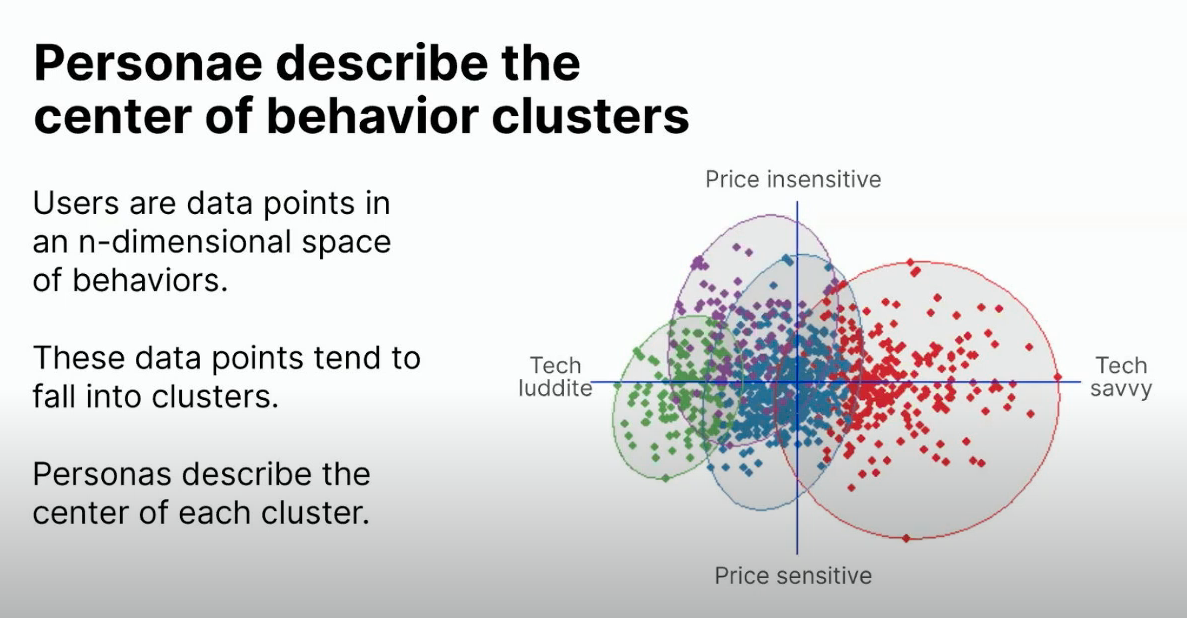
A more scientific way is thinking of your customers as a cluster of data points. The persona that emerges is at the center of that cluster.

Image Credits: TC Early Stage

“So if you map out all of the possible customers, you tend to see these clusters and then you describe who the person is at the center of that cluster,” Lee said.

What makes a good persona is someone who feels useful for product design but also memorable. That means creating a persona that has a clear story with real pain points, she said.

“And that’s the most important thing,” she said. “What do they care about and what problems are you trying to solve?”

30 Jul 2020

Point wants to provide credit card rewards with debit cards

Point, a new challenger bank in the U.S., is launching publicly today with an invite system. While Point is technically providing a bank account, the company focuses on rewards associated with a debit card.

“I started Point as a solution about everything that is frustrating and complicated about credit cards. The incentives between credit card companies and cardholders are misaligned,” Point co-founder and CEO Patrick Mrozowski told me.

When Mrozowski first got a credit card, he was spending a ton of money to reach a certain level of spending and unlock the sign-up bonus. At the end of the month, he ended up with credit card debt for no valid reason.

“What would American Express would look like today?” he says to sum up Point’s vision. It comes down to two important principles — being in charge of your budget so that you don’t end up with debt and unlocking rewards from brands that you actually interact with.

Many challenger banks want to provide a simple banking experience for the underbanked. Point doesn’t have the same positioning. Creating a Point account is more like joining a membership program.

When you sign up, you get a debit card with some level of insurance as it’s a Mastercard World Debit card. You can expect some trip cancellation insurance, rental car insurance, purchase insurance, etc.

As the name of the startup suggests, you earn points with each purchase. You get 5x points on subscriptions, such as Spotify and Netflix, 3x points on food, grocery deliveries and ride sharing, and 1x points on everything else. Points can be redeemed for dollars — each point is worth $0.01. In addition to that, Point is going to create a feed of offers with discounts, content, events and more.

Due to its premium positioning, Point isn’t free. You have to pay $6.99 per month or $60 per year to join Point. Point doesn’t charge any foreign transaction fees.

You can connect your Point account with another bank account using Plaid. It lets you top up your account using ACH transfers. Behind the scene, Point works with Radius Bank for the banking infrastructure, an FDIC-insured bank.

The company announced earlier this month that it has raised a $10.5 million Series A led by Valar Ventures with Y Combinator, Kindred Ventures, Finventure Studio and business angels also participating.

Image Credits: Point