Year: 2020

29 Jul 2020

China now accounts for nearly one-quarter of Tesla revenue

Tesla has been counting on China to maintain its sales momentum, and it seems to be on track with the plan.

In the three months ended June 30, the automaker’s revenue in China climbed 102.9% year-over-year to $1.4 billion, according to its latest SEC filing. That means China now makes up 23.3% of Tesla’s total revenues of $6 billion in the quarter, compared to just about 11% in the same period a year before.

To increase affordability for Chinese consumers, Tesla inked a 50-year lease from the Shanghai government to build a Gigafactory there, which keeps production costs down and allows it to reap local tax benefits and avoid tariffs. Under the terms of the agreement, the electric vehicle giant needs to pay 2.23 billion yuan ($320 million) in tax to China every year starting at the end of 2023. It must also sink 14.08 billion yuan in capital expenditure into the facility.

Tesla began shipping China-made Model 3 at the end of last year and is on course to add its Model Y, a mid-size electric SUV, to its production in the world’s biggest auto market, the filing shows. Earlier this month, it also started taking reservations in China for its futuristic Cybertruck, which won’t go into production until late 2022.

While shipment in China jumped in the second quarter, Tesla delivered 4.8% fewer vehicles overall in the period due to challenges prompted by COVID-19, including suspended production. The period marked the fourth straight quarter of profitability for the automaker.

29 Jul 2020

How to watch big tech’s CEOs tangle with Congress on antitrust issues and more

Jeff Bezos, Tim Cook, Sundar Pichai and Mark Zuckerberg will defend their companies before the House Antitrust Subcommittee Wednesday in a hearing that will make tech industry history, no matter what happens.

Given that the tech giants are accustomed to answering to no one in particular, collecting four of them on a substantive topic is notable in its own right. Remarkably, Wednesday will mark the first time Amazon’s CEO has faced lawmakers in a public hearing — and they’re bound to have plenty of questions for the take-no-prisoners online retail behemoth.

For Apple and Cook, who prefer to stay above the public-facing political fray, it’s the first time before Congress in years. Facebook and Google have both been called to Congress more recently, but lawmakers have still barely scratched the surface of two companies that have completely reshaped modern life.

If you’re just catching up, read our explainer about why this whole thing is happening at all and what to expect. You can also read the opening statements from Apple, Amazon, Facebook and Google and skip them tomorrow so you can spend more time with your Nespresso or whatever it is we’re all doing to get by these days. The statements provide a good idea of how the companies will play defense against regulators keen to install some safety features before we barrel into a fresh decade of unchecked growth.

There are a lot of unknowns heading into the hearing. Will lawmakers extract any useful revelations or will it be five hours of “let us get back to you on that?” Could tech executives manage to be even more evasive now that they’re appearing remotely via video chat? Will some subcommittee members lead the hearing so far into off-topic territory that we learn nothing about the business practices that scaled an industry of market-owning giants? And most importantly: On a scale of one to supervillain, what kind of vibes will Bezos give off?

We hope to know the answers to all of these questions and more — possibly even a question from a lawmaker or two — as we cover Wednesday’s events closely. If you’re interested in watching it go down yourself, you can tune into the livestream right here (well, up there) on Wednesday July 29 at 12PM ET.

29 Jul 2020

After India and US, Japan looks to ban TikTok and other Chinese apps

A group of Japanese lawmakers is seeking to restrict the use of TikTok and other apps developed by Chinese firms, following the footstep of India, which has already blocked dozens of Chinese apps, and the U.S., which is floating the idea of a ban.

The decision was first reported by the Japanese national broadcaster NHK. The lawyers shared the same concern as officials in the U.S. and India that their domestic user data could end up in the hand of Beijing, and planned to submit the proposal to the Japanese government as early as September.

Japan was one of TikTok’s first overseas success cases despite being considered a tough nut for foreign internet firms to crack. The nascent localization team went all out to attract celebrity users and made its breakthrough with Kinoshita Yukina, a TV personality, after holding “six or seven rounds of discussions” with her studio. Kinoshita’s participation ushered in other stars, who brought with them flocks of fans to the platform.

In the Japanese iOS store, TikTok has consistently ranked at the top among entertainment apps and is the fifth-most downloaded app across all categories in the country as of this writing, according to research firm App Annie.

In response to scrutiny coming from Japan, a TikTok spokesperson reiterated the app’s distance from Chinese control in a statement to TechCrunch:

“There’s a lot of misinformation about TikTok out there. TikTok has an American CEO, a Chief Information Security Officer with decades of industry, U.S. military and law enforcement experience, and a U.S. team that works diligently to develop a best-in-class security infrastructure. Four of our parent company’s five board seats are controlled by some of the world’s best-respected global investors. TikTok U.S/ user data is stored in the U.S. and Singapore, with strict controls on employee access.”

Other Chinese tech giants have their eyes locked on Japan for years. Baidu, for instance, operates Simeji, one of the most popular input methods among Japanese. Line is the main chat app in the country, but WeChat is essential to Japanese businesses with Chinese ties. While the Indian ban is certainly a debacle for Chinese developers coveting the fastest-growing internet market, the country’s ARPU, or average revenue per user, also remains low compared to numbers in the West. Japan, on the other hand, is a much more lucrative market.

29 Jul 2020

Read how Apple, Amazon, Facebook and Google plan to defend themselves to Congress

With their big day before lawmakers just around the corner, previews of Google (well, Alphabet), Facebook, Amazon and Apple’s opening statements are now available on the House Judiciary Committee’s site. On Wednesday, the CEOs of each company will appear in an unusually executive-packed Congressional hearing focused on antitrust concerns over the business practices.

While the opening statements are just a glimpse of the hearing’s potential topics, they do provide a useful outline for the strategy each company will use to fend off accusations that their businesses have grown on such an enormous scale due to anticompetitive behavior. In recent hearings, tech executives have mostly managed to stick to safe, well-rehearsed lines, so if any moments deviate from these scripts those will likely be the most interesting or useful bits of testimony.

In their opening statements, the chief executives of each company make some similar arguments–for example, all four claim that their companies still face intense competition, especially in global markets. Amazon and Apple also say that their ecosystems have created millions of job for third-party businesses that use their platforms.

But the CEOs also take slightly different approaches to how they present their opening statements. For example, Jeff Bezos, Amazon’s chief executive officer, and Sundar Pichai, the CEO of Alphabet and Google, go into their personal backgrounds in detail. Meanwhile, Apple CEO Tim Cook and Facebook CEO Mark Zuckerberg focus on the fact that their companies are based in the United States: Cook calls Apple an “uniquely American company,” and Zuckerberg says that Facebook is a “proudly American company.”

Though Amazon is the largest online retailer in America, Bezos will argue in his opening statement that it is a small player in the global retail market, with Amazon accounting for “less than 1% of the $25 trillion global retail market and less than 4% of retail in the U.S.” Among domestic competitors, Bezos focuses on Walmart, stating that it is “a company more than twice Amazon’s size,” and also names newer competitors like Shopify and Instacart.

Bezos’ opening statement also dwells on the small- and medium-sized retailers that sell products on Amazon’s platform, estimating that third-party businesses on Amazon have created over 2.2 million new jobs around the world.

Cook says that the “smartphone market is fiercely competitive,” with rivals like Samsung, LG, Huawei and Google, and that all of Apple’s product categories, including the iPhone, do not have a dominant market share in any of the markets where it does business.

Like Bezos, Cook’s statement also argues that Apple’s ecosystem has helped create jobs. He says that the App Store now hosting more than 1.7 million apps, only 60 of which were developed by Apple, and “more than 1.9 million American jobs in all 50 states are attributable to Apple.”

Even though Google Search is the dominant search engine in the U.S., Pichai will claim that is facing down a large roster of rivals, including services that aren’t specifically search engines. For example, he cites Amazon’s Alexa, Twitter, WhatsApp, SnapChat, and Pinterest as alternative sources of information and says most people turn to e-commerce sites like Amazon, eBay and Walmart for information about products.

Google’s ad business is also expected to be in the spotlight during the hearings. Pichai’s opening statement argues that advertisers have “an enormous amount of choice” for platforms, including Twitter, Instagram, Pinterest, Comcast and others, that means advertising costs have lowered by 40% over the last decade.

Zuckerberg also argues that Facebook still faces intense competition, especially in other countries. Though Zuckerberg doesn’t reference any specific company or app, he highlights competition from the Chinese tech industry, telling lawmakers that “China is building its own version of the internet focused on on very different ideas, and they are exporiting their vision to other countries.”

While Facebook has been criticized for acquiring companies like Instagram and WhatsApp, Zuckerberg argues that those services improved under his company’s ownership.

The big tech hearing with the House Judiciary’s Antitrust Subcommittee will begin Wednesday at 12PM ET and we’ll be following along over the course of the day so check back for coverage of the most noteworthy moments. For reference, the full opening statements can be found below.

– Apple
– Amazon
– Google
– Facebook

29 Jul 2020

Toppr raises $46 million to scale its online learning platform in India

Toppr, one of the largest online learning startups in India, has secured $46 million in a new financing round as it looks to scale its platform including a new product.

Dubai-headquartered investment firm Foundation Holdings led the Mumbai-based seven-year-old startup’s Series D round. Kaizen Private Equity, an existing investor, also participated in the new round, which brings Toppr’s to-date raise to over $92 million.

Toppr operates four products and services that are aimed at K-12 students. Learning app, Toppr’s marquee service, offers students live classes and sessions to clear doubts, pre-recorded lessons and tests. Toppr’s catalog covers 17 subjects and prepares students for five dozen competitive exams, explained Toppr founder and chief executive Zishaan Hayath in an interview with TechCrunch.

A portion of Toppr’s library is available to students at no charge on Learning app, but full access requires a membership. The subscription starts at 1,000 Indian rupee ($13.35) and goes as high as 3,000 Indian rupee ($40).

The startup launched Codr, a product aimed at helping all school-age children learn computer programming, last month. A Codr session costs about $9.35. Toppr also maintains a free problem solving app that enables a student to take a picture of a question and get its solution instantly, explained Hayath.

Toppr’s Learning app has amassed over 13 million users, more than 150,000 of whom are paying subscribers, he said. In recent months, the startup has also worked on a new product called School OS, which enables a school to digitize their learning experience. Through School OS, a teacher can assign and collect homework digitally, and students can attend live classes.

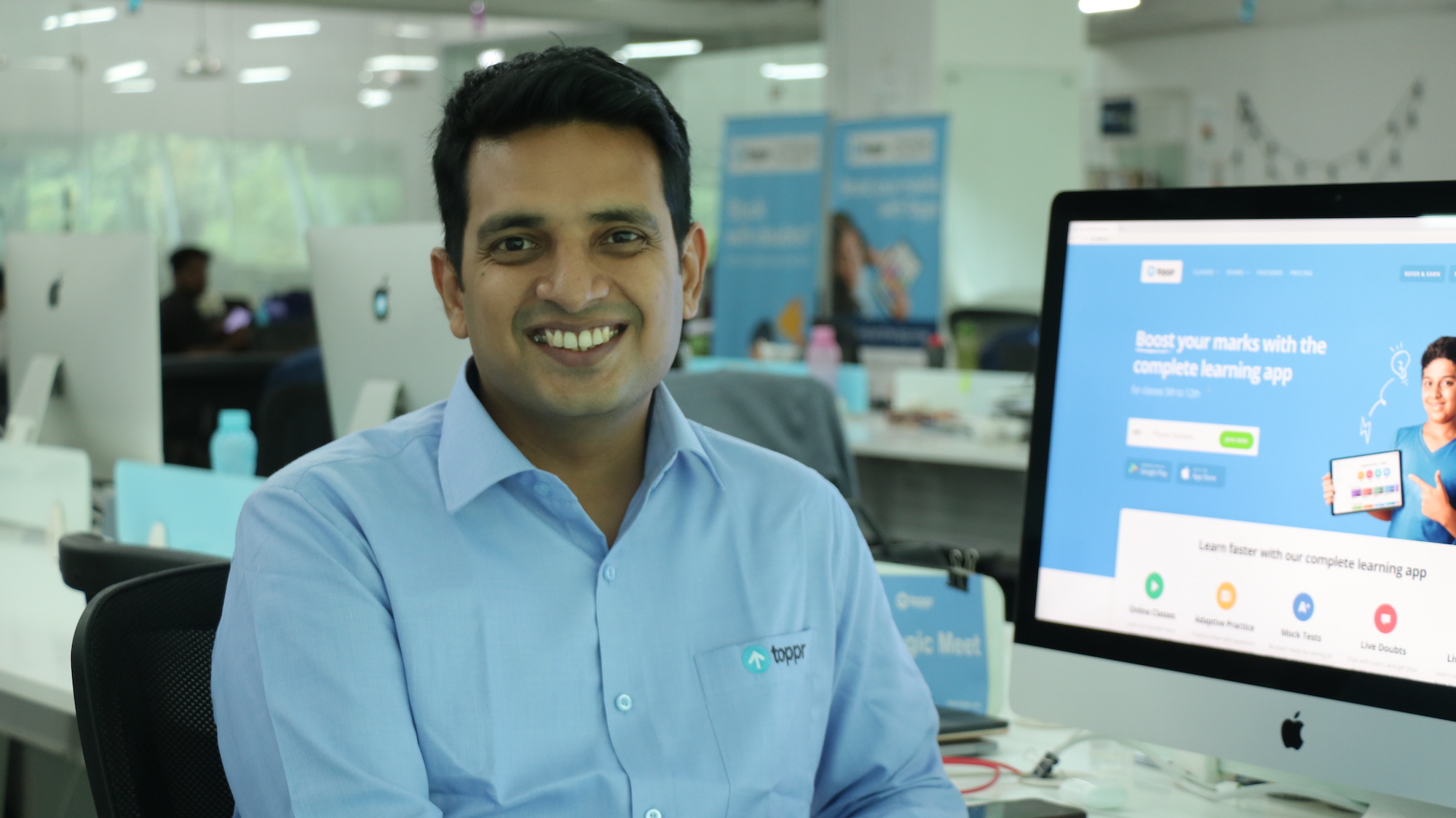
Zishaan Hayath, the founder and chief executive of Toppr, a Mumbai-headquartered edtech startup (Photo: Toppr)

“They can also attend classes from previous years, or of grades ahead of them. Our schooling system is built in a way that keeps you locked in the current year’s curriculum. On digital, one of the benefits is that you don’t have to follow such rules. So for instance, if a student in tenth grade needs to brush up some concept from grade nine, they can do so at any moment,” said Hayath.

More than 40 schools have deployed School OS for their 60,000 students, he said. The startup plans to have 300,000 students enrolled to School OS in the next few months.


More to follow…

29 Jul 2020

Thanks to COVID-19, everybody wants Density’s technology tracking building occupancy and use

Before the COVID-19 epidemic, Density was being used by companies like TechCrunch’s parent company, Verizon, to see how it could better use office space after the Yahoo!/Aol merger. Now, thanks to the COVID-19 epidemic everyone wants the company’s technology to track building and room occupancy and use.

It’s one reason why the company managed to raise $51 million in a new round of funding led by Kleiner Perkins with participation from previous investors like Dick Costolo’s 01 Advisors and the Los Angeles-based investment firm, Upfront Ventures.

“The primary driver [for demand] has been being able to reopen buildings safely and to do so without invading privacy,” says Density chief executive Andrew Farah.

And while the company started out as a service for data-loving tech companies, retail stores and coffee chains, it’s now become a ubiquitous technology for needed for every business with shared space, said Farah. That means fulfillment centers, grocery stores, warehouses, meat processing plants, in addition to something like TechCrunch headquarters.

What will the company do with all that money? Spend it on sales, marketing, and actually getting the tech into customers’ buildings, according to Farah.

“A lot of what we’re going to invest in is customer success, core infrastructure and growing our product and sales,” said Farah. “The first time our customers hear about us is when they get on a demo for a sales call.”

New orders for the company’s hardware and software service are pouring in, he said. And these order range from $20,000 to $50,000 pilot projects to seven-figure, thousand-unit initial deployments. “All of our customers end up tripling in size from their initial land,” he said. Density charges a one-time fee of $895 for installation of its sensors and another $800 per-sensor per-year for access to the data. 

Density works through both channel partners and direct sales, according to Farah, and the urgency of its potential customers has led to the massive uptick in funding.

“A lot of customers are trying to solve a problem that they had last week. There’s a sense of urgency from real estate and safety teams that we haven’t seen before,” said Farah.

Behind all of this is the demand from employees for safe, socially distanced public workspaces as the country continues to battle the COVID-19 epidemic that continues to ravage the U.S.

And while COVID-19 may be today’s main selling point, investors like Upfront Ventures’ Mark Suster saw the value in Density’s technology much earlier. “The investment thesis for me combines my belief in computer vision as a next-gen I/O (3) along with my thesis that The Innovator’s Dilemma or Deflationary Economics drive all of the largest success on the Internet (4). Today’s people tracking solutions are hugely expensive and mostly used in retail environments,” Suster wrote in a blog post announcing Upfront’s initial investment in the company, back in 2016. “The costs have greatly limited adoption and we think that’s about to change in a massive way.”

A 2016 animation of Density’s tracking capabilities via GIPHY

At Kleiner Perkins, the latest firm to back Density’s computer vision-based technology, the investment was a year-long process.

“I had heard through the grapevine that they were going to talk to investors,” said Ilya Fushman, a new director at the company and one of Kleiner Perkins’ partners, who had first begun speaking with Farah about a year ago.

Fushman said that Kleiner was interested in the real estate market and its commitment to Density falls in line with another recent investment in Proxy, a startup providing cardless and fobless building access controls.

“If you look for market sizing, which we do, there are few markets that are as big as real estate,” Fushman said. “It’s also a market that’s historically been under-penetrated by technology. A lot of building management is done on pen and paper when it comes to space utilization.”

Both access control and utilization have been areas that more companies need to get a handle on thanks to the COVID-19 epidemic, which made backing a company like Density a natural fit, he said.


29 Jul 2020

Hevo draws in $8 million Series A for its no-code data pipeline service

Hevo founders Manish Jethani and Sourabh Agarwal

According to data pipeline startup Hevo, many small- to medium-sized companies juggle more than 40 different applications to manage sales, marketing, finance, customer support and other operations. All of these applications are important sources of data that can be analyzed to improve a company’s performance. That data often remains separate, however, making it difficult for different teams to collaborate.

Hevo enables its clients’ employees to integrate data from more than 150 different sources, including enterprise software from Salesforce and Oracle, even if they don’t have any technical experience. The company announced today that it has raised an $8 million Series A round led by Singapore-based venture capital firm Qualgro and Lachy Groom, a former executive at payments company Stripe.

The round, which brings Hevo’s total raised so far to $12 million, also included participation from returning investors Chiratae Ventures and Sequoia Capital India’s early-stage startup program Surge. The company was first covered by TechCrunch when it raised seed funding in 2017.

Hevo’s Series A will be used to increase the number of integrations available on its platform, and hire sales and marketing teams in more countries, including the United States and Singapore. The company currently has clients in 16 markets, including the U.S., India, France, Australia and Hong Kong, and counts payments company Marqeta among its customers.

In a statement, Puneet Bysani, tech lead manager at Marqeta, said, “Hevo saved us many engineering hours, and our data teams could focus on creating meaningful KPIs that add value to Marqeta’s business. With Hevo’s pre-built connectors, we were able to get data from many sources into Redshift and Snowflake very quickly.”

Based in Bangalore and San Francisco, Hevo was founded in 2017 by chief executive officer Manish Jethani and chief technology officer Sourabh Agarwal. The two previously launched SpoonJoy, a food delivery startup that was acquired by Grofers, one of India’s largest online grocery delivery services, in 2015. Jethani and Agarwal spent a year working at Grofers before leaving to start Hevo.

Hevo originated in the challenges Jethani and Agarwal faced while developing tech for SpoonJoy’s order and delivery system.

“All of our team members would come to us and say, ‘hey, we want to look at these metrics,’ or we would ask our teams questions if something wasn’t working. Oftentimes, they would not have the data available to answer those questions,” Jethani told TechCrunch.

Then at Grofers, Jethani and Agarwal realized that even large companies face the same challenges. They decided to work on a solution to allow companies to quickly integrate data sources.

For example, a marketing team at a e-commerce company might have data about its advertising on social media platforms, and how much traffic campaigns bring to their website or app. But they might not have access to data about how many of those visitors actually make purchases, or if they become repeat customers. By building a data pipeline with Hevo, they can bring all that information together.

Hevo is designed to serve all sectors, including e-commerce, healthcare and finance. In order to use it, companies sign up for Hevo’s services on its website and employees enter their credentials for software supported by the platform. Then Hevo automatically extracts and organizes the data from those sources and prepares it for cloud-based data warehouses, such as Amazon Redshift and Snowflake. A user dashboard allows companies to customize integrations or hide sensitive data.

Hevo is among a roster of “no code, low code” startups that have recently raised venture capital funding for building tools that enable non-developers to add features to their existing software. The founders say its most direct competitor is Fivetran, an Oakland, California-based company that also builds pipelines to move data to warehouses and prepare it for analysis.

Jethani said Hevo differentiates by “optimizing our product for non-technical users.”

“The number of companies who need to use data is very high and there is not enough talent available in the market. Even if it is available, it is very competitive and expensive to hire that engineering talent because big companies like Google and Amazon are also competing for the same talent,” he added. “So we felt that there has to be some democratization of who can use this technology.”

Hevo also focuses on integrating data in real-time, which is especially important for companies that provide on-demand deliveries or services. During the COVID-19 pandemic, Jethani says e-commerce clients have used Hevo to manage an influx in orders as people under stay-at-home orders purchase more items online. Companies are also relying on Hevo to help organize and manage data as their employees continue to work remotely.

In a statement about the funding, Qualgro managing partner Heang Chhor said, “Hevo provides a truly innovative solution for extracting and transforming data across multiple data sources–in real time with full automation. This helps enterprises to fully capture the benefit of data flowing though the many databases and software they currently use. Hevo’s founders are the type of globally-minded entrepreneurs that we like to support.”

28 Jul 2020

TransferWise confirms new $5B valuation following $319M secondary share sale

TransferWise, the London-headquartered international money transfer service, is disclosing that it is now valued at $5 billion by private investors, confirming an earlier Sky News report. The new valuation represents an increase of 43% since May 2019, and has been triggered by a further $319 million in secondary share sales.

Leading the “secondary” share round — which sees existing shareholders, including employees, permitted to sell a portion of their holdings to other new and existing investors, and therefore means no money has entered TransferWise’s balance sheet — is new investor D1 Capital Partners and existing shareholder Lone Pine Capital.

Vulcan Capital also came on board as a new investor, with Baillie Gifford, Fidelity Investments and LocalGlobe adding to their existing holdings.

Noteworthy, the new $5 billion valuation doesn’t quite make TransferWise the most valued privately-owned fintech in Europe. Klarna was first out the gate in August last year with a disclosed $5.5 billion valuation, and Revolut followed in February this year, right before the coronavirus crisis took hold.

Each instance also seemingly represents contrasting ways to value and grow a fintech company, with each scale-up balancing equity-financed growth versus profitability differently.

Both Klarna and Revolut reached their latest valuation via significant new primary funding — $460 million and $500 million, respectively. TransferWise achieved this latest uplift off the back of secondary private markets only, and did the same in May 2019 after a $292 million secondary round that saw investors value the company at $3.5 billion. That was more than double the valuation TransferWise achieved in late 2017 at the time of its $280 million Series E round.

In addition, 2010-founded TransferWise has been profitable since sometime in 2017, and 2005-founded Klarna has been profitable pretty much from day one but posted its first loss last year as it invested into global expansion. The much younger Revolut continues to be loss-making, prioritising growth above all else — but is reportedly aiming for profitability by the end of this year.

Meanwhile, TransferWise now serves 8 million customers worldwide, processing around £4 billion in cross-border payments each month, across 2,500 currency routes and 54 currencies. The company also recently announced new regulator permissions to offer savings and investments options in the U.K. via the TransferWise borderless account, with the new product set to launch “in the next 12 months”.

“We’ve been funded exclusively by our customers for the last few years and we didn’t need to raise external funding for the company,” says co-founder and current CEO Kristo Käärmann in a statement. “This secondary round provides an opportunity for new investors to come in, alongside rewarding the investors and employees who’ve helped us succeed so far”.

Of course, a significant new funding round — secondary or primary — always invites the hackneyed question of if or when TransferWise plans to go public. On one hand, it’s a moot question, since early and long-standing investors continue to be able to get liquidity on the private markets. On the other hand, large late-stage secondary investors typically have an IPO in mind sooner or (perhaps) later.

“For us, it’s a decision that really depends on what the benefit is? Is it a useful time for the company, and that time hasn’t come yet,” Käärmann told me on a call late last month, adding that it will only happen when it’s useful for the company and for its customers.

However, for anyone who has been keeping up, you wouldn’t expect the TransferWise CEO to say otherwise.

28 Jul 2020

Six things venture capitalists are looking for in your pitch

Founders pitch venture capitalists at every available chance, which is why most of them quickly develop the skills required to identify whether someone is offering them an opportunity or wasting their time.

At TechCrunch Early Stage, I chatted with NFX Managing Partner James Currier about how founders can find the right investors and what they need to show to win an investment. Currier has been on both sides of the deal table and founded several startups before devoting himself to early-stage investing, where he has backed companies like Lyft, Houzz and Houseparty .

“One of the ways that investors are similar is that whenever they look at all the companies coming to them, most of them get into a quick ‘no’ situation, some of them get into the ‘maybe’ and very few get into the quick ‘yes,’ ” Currier says.

He shared six reasons investors might give a founder the rare and highly coveted “quick yes,” an effort to lock down a deal that’s either perfect for them or too enticing to pass up. Realizing what exactly investors are seeking can help founders understand how to pitch at the first meeting and what they should leave for follow-ups. For those who couldn’t virtually attend TechCrunch Early Stage, check out the link below.

This interview has been lightly edited for clarity. 

1. Traction

“So the first thing that they’re looking for is traction. Look, even if they don’t like you, if they don’t like the market, but you’re making a ton of money, what are they going to say? Like if it’s growing really quickly and you’re profitable, you’ve got high margins and everyone wants to work for you, and there’s this buzz around you. What are they going to say? They’re gonna have to invest because you’ve got traction.”

28 Jul 2020

The hype, haplessness and hope of haptics in the COVID-19 era

In March, Brooklynite Jeremy Cohen achieved minor internet fame when he launched an elaborate scheme to court Tori Cignarella, a cute stranger living in a nearby building.

After spotting Cignarella across an air shaft, Cohen used drones, Venmo, texting and FaceTime to interact with his socially distanced crush. But it was on their second date when Cohen pulled out all the stops. He purchased a gigantic plastic bubble, sealed himself inside and invited his new friend to go on a touchless walk. As Cohen wrote on Instagram, “just because we have to social distance doesn’t mean we have to be socially distant.”

Cohen’s quirky, DIY approach made for fun clickbait for a few days. But it’s also a somewhat unflattering metaphor for the kinds of touch-centric entrepreneurialism that has proliferated in the age of COVID-19. From dating to banking, education to retail, the virus has pushed everyone to rethink how touch and proximity factor into daily interactions. Businesses besieged by the uncertainty of shutdown orders, partial re-openings, remote work, disease spikes and changing consumer behavior have been forced to test-drive solutions on the fly.

Amid that confusion, a few common approaches have emerged. Some are rushing to return to normalcy, adopting quick fixes at the expense of more broad-based solutions. Others are using the pandemic as an excuse to accelerate technological shifts, even those that may be unwelcome, impractical or both. Still others are enforcing guidelines selectively or not at all, tempting consumers back, in part, through the promise of “normal” (read: non-distanced and non-regulated) interactions.

Enter haptics. Investment in touch technologies had been on the rise before COVID-19, with virtual reality fueling fresh interest in haptic gloves and full-body suits, and haptics for mobile devices like wearables and smartwatches infusing the field with new resources. While it is difficult to capture the health and growth of the haptics industry with a single number, one estimate puts the global haptics market at US$12.9 billion in 2020, projected to grow to US$40.9 billion by 2027.

In addition to established players like Immersion Corporation, founded in 1993 and active working on haptics applications ranging from gaming and automotive to medical, mobile and industrial, Sony, Apple, Microsoft, Disney and Facebook each have dedicated teams working on new haptics products. Scores of startups, too, are currently bringing new hardware and software solutions to market: Ultraleap (formerly Ultrahaptics), a Bristol-based company that develops midair haptics, has secured $85 million in funding; HaptX, which makes exoskeleton force feedback gloves for use in VR and remote manipulation, has raised $19 million in funding; and Neosensory, focused on routing sound through the skin with a wrist-based wearable Buzz, has received $16 million in funds. A recent industry-wide initiative intended to make it easier to embed haptics in multimedia content suggests that we could soon see growth in this area accelerate even further.

Despite these trends, the business of touch isn’t heading in one clear direction. And with such variety in business responses, customers have responded with confusion, frustration, anxiety and defiance. More than disgruntlement, though, COVID-19 shines a light on a longstanding debate over whether the future will have more touch or less. Tensions around touch were already high, but rapid changes, Band-Aid solutions and short-term thinking are making the problems worse.

What’s needed now is a longer view: serious, systematic thinking about where we — as consumers, citizens, humans — want and need touch, and where we don’t. To get there, we need greater investment not just in technologies that sound good, but ones that will deliver on real needs for connection and safety in the days ahead.

Plexiglass is the new mask

While the mask may be the most conspicuous symbol of the COVID-19 pandemic in much of the world, the new normal has another, clearer symbol: plexiglass.

Plexiglass leads the way as our environments are retrofitted to protect against the virus. In the U.S., demand began rising sharply in March, driven first by hospitals and essential retailers like grocery stores. Traditional sectors like automotive are using much less of the stuff, but that difference is more than made up for by the boom among restaurants, retail, office buildings, airports and schools. Plexiglass is even popping up in temples of bodily experience, surrounding dancers at strip clubsclients at massage parlors and gymgoers in fitness centers.

Like plexiglass itself, the implications for touch are stark, if invisible. Plexiglass may communicate sterility and protection — though, truth be told, it dirties often and it’s easy to get around. More to the point, it puts up a literal barrier between us.

The story of plexiglass — like that of single-use plastic, ventilation systems, hand sanitizer and ultraviolet light — underscores how mundane interventions often win the day, at least initially. It is much easier for a grocery store to install an acrylic sneezeguard between cashiers and customers than it is to adopt contactless shopping or curbside pickup. At their best, interventions like plexiglass are low-cost, effective and don’t require huge behavior changes on the part of customers. They are also largely reversible, should our post-pandemic lifestyles revert back to something more closely resembling our previous behaviors.

Besides their obvious environmental consequences, plasticized approaches can erode our relationship to touch and thereby to each other. In Brazil, for example, some nursing homes have installed “hug tunnels” to allow residents to embrace family members through a plastic barrier. Given that “when will I be able to hug my loved ones again?” is a common and heart-wrenching question these days, the reunions hug tunnels facilitate are, well, touching. But as a shadow of the real thing, they amplify our desperate need for real connection.

The same with circles on the floor in elevators or directional arrows down store aisles: In expecting us to be our best, most rational and most orderly selves, they work against cultural inclinations toward closeness. They indicate not so much a brave new future as a reluctant present. And without proper messaging about their importance as well as their temporariness, they are bound to fail.

Touch tech to the rescue

To feed our skin hunger, futurists are pushing haptic solutions — digital technologies that can replicate and simulate physical sensations. Haptics applications range from simple notification buzzes to complex whole-body systems that combine vibration, electricity and force feedback to re-create the tactile materiality of the physical world. But although the resurgence of VR has rapidly advanced the state of the art, very few of these new devices are consumer-ready (one notable exception is CuteCircuit’s Hug Shirt — released for sale earlier this year after 15+ years in development).

Haptics are typically packaged as part of other digital techs like smartphones, video game controllers, fitness trackers and smartwatches. Dedicated haptic devices remain rare and relatively expensive, though their imminent arrival is widely promoted in popular media and the popular technology press. Effective haptic devices, specially designed to communicate social and emotional touch such as stroking, would seem particularly useful to re-integrate touch into Zoom-heavy communication.

Even with well-resourced companies like FacebookMicrosoft and Disney buying in, these applications will not be hitting home offices or teleconferencing setups anytime soon. Though it would be easy to imagine, for example, a desktop-mounted system for facilitating remote handshakes, mass producing such devices would prove expensive, due in part to the pricey motors necessary to accurately synthesize touch. Using cheaper components compromises haptic fidelity, and at this point, what counts as an acceptable quality of haptic simulation remains ill-defined. We don’t have a tried and tested compression standard for haptics the way we do with audio, for instance; as Immersion Corporation’s Yeshwant Muthusamy recently argued, haptics has been held back by a problematic lack of standards.

Getting haptics right remains challenging despite more than 30 years’ worth of dedicated research in the field. There is no evidence that COVID is accelerating the development of projects already in the pipeline. The fantasy of virtual touch remains seductive, but striking the golden mean between fidelity, ergonomics and cost will continue to be a challenge that can only be met through a protracted process of marketplace trial-and-error. And while haptics retains immense potential, it isn’t a magic bullet for mending the psychological effects of physical distancing.

Curiously, one promising exception is in the replacement of touchscreens using a combination of hand-tracking and midair haptic holograms, which function as button replacements. This product from Bristol-based company Ultraleap uses an array of speakers to project tangible soundwaves into the air, which provide resistance when pressed on, effectively replicating the feeling of clicking a button.

Ultraleap recently announced that it would partner with the cinema advertising company CEN to equip lobby advertising displays found in movie theaters around the U.S. with touchless haptics aimed at allowing interaction with the screen without the risks of touching one. These displays, according to Ultraleap, “will limit the spread of germs and provide safe and natural interaction with content.”

A recent study carried out by the company found that more than 80% of respondents expressed concerns over touchscreen hygiene, prompting Ultraleap to speculate that we are reaching “the end of the [public] touchscreen era.” Rather than initiate a technological change, the pandemic has provided an opportunity to push ahead on the deployment of existing technology. Touchscreens are no longer sites of naturalistic, creative interaction, but are now spaces of contagion to be avoided. Ultraleap’s version of the future would have us touching air instead of contaminated glass.

Touch/less

The notion that touch is in crisis has been a recurring theme in psychology, backed by scores of studies that demonstrate the negative neurophysiological consequences of not getting enough touch. Babies who receive insufficient touch show higher levels of the stress hormone cortisol, which can have all kinds of negative effects on their development. In prisons, for example, being deprived of touch through restraint or solitary confinement is a punishment tantamount to torture. As technology continues to make inroads into our lives, interactions that once required proximity or touch have become mediated instead, prompting ongoing speculation about the consequences of communicating by technology rather than by touch.

The coronavirus pandemic intensifies this crisis by demanding a sudden, collective withdrawal from physical contact. The virus lays a cruel trap: the longer we’re apart, the more we crave togetherness and are willing to take dangerous risks. But giving in to the desire to touch not only exposes us and those we care about to a potentially mortal danger, it also extends the amount of time before we can resume widespread touching.

The pandemic has already revealed important lessons about touch, haptics and humanity. First is that while circumstances can change quickly, true social and behavioral change takes longer. The many examples of Americans acting as though there is no pandemic going on should give pause to anyone thinking touch-free futures are just around the corner. Atop this, there is plain-old inertia and malaise, which suggests some pandemic-era interventions will stick around while others will disappear or slacken over time. Consider 9/11 — nearly two decades later, though we still can’t greet our loved ones at their gate, most airports don’t strictly monitor our liquids and gels.

By the same token, one can imagine unfilled hand sanitizer stations as the ultimate hangover from these times. We may begin to like the plexiglass barriers between ourselves and our fellow subway passengers, but hate them at restaurants and sporting events. We may encounter more motion-detecting sliding doors and hand-tracking options, but when they falter we may revert to revolving doors, handles and push-buttons.

A second and equally important insight is that the past and the future exist side by side. Technological development takes even longer than behavioral change, and can be bedeviled by momentary trends, expense and technological limitations. For example, there are a lot of pressures right now to transform stores and restaurants into “last-mile” fulfillment centers, to embrace AR and VR and to reimagine space as contact-free. In these scenarios, objects could be touched and handled in virtual showrooms using high-fidelity digital touch technologies. But some of this pressure is based on promises that haptics have yet to fulfill. For instance, being able to touch clothing through a mobile phone may be possible in theory, but would be difficult in practice and would mean other trade-offs for mobile phones’ functionality, size, weight and speed.

Touch/more?

But just as the coronavirus pandemic did not create making us miss touching, it also did not create all the problems with touching. Some of the touch we were used to — like the forced closeness of a crowded subway car or the cramped quarters of airline seats — is dehumanizing. Social movements like #MeToo and Black Lives Matter have drawn attention to how unwanted touch can have traumatic consequences and exacerbate power imbalances. We must think broadly about the meaning of touch and its benefits and drawbacks for varying types of people, and not rush toward a one-size-fits-all solution. Although touch may seem like a fundamentally biological sense, its meaning is continually renegotiated in response to shifting cultural conditions and new technologies. COVID-19 is the most rapid upheaval in global practices of touching that we’ve seen in at least a generation, and it would be surprising not to see a corresponding adoption of technologies that could allow us to gain back some of the tactility, even from a distance, that the disease has caused us to give up.

Too often, however, touch technologies prompt a “gee whiz” curiosity without being attentive to the on-the-ground needs for users in their daily lives. Businesses looking to adopt haptic tech must see through the sales pitch and far-flung fantasies to develop a long-term plan for where touch and touch-free make the most sense. And haptic designers must move from a narrow focus on solving the complex engineering problem touch presents to addressing the sorts of technologies users might comfortably incorporate into their daily communication habits.

A useful exercise going forward is to consider how would we do haptic design differently knowing we’d be facing another COVID-19-style pandemic in 2030? What touch technologies could be advanced to satisfy some of the desires for human contact? How can firms be proactive, rather than reactive, about haptic solutions? As much as those working in the field of haptics may have been motivated by the noble intention of restoring touch to human communication, this mission has often lacked a sense of urgency. Now that COVID-19 has distanced us, the need for haptics to bridge that physical gap, however incompletely, becomes more obvious and demanding.

Businesses feel it too, as they attempt to restore “humanity” and “connection” to their customer interactions. Yet as ironic as it might feel, now is the time not to just stumble through this crisis — it’s time to prepare for the next one. Now is the time to build in resilience, flexibility and excess capacity. To do so requires asking hard questions, like: do we need VR to replicate the sensory world in high fidelity, even if it’s costly? Or would lower-cost and lower-fidelity devices suffice? Will people accept a technologized hug as a meaningful proxy for the real thing? Or, when touch is involved, is there simply no substitute for physical presence? Might the future have both more touch and less?

These are difficult questions, but the hardship, trauma and loss of COVID-19 proves they demand our best and most careful thinking. We owe it to ourselves now and in the future to be deliberate, realistic and hopeful about what touch and technology can do, and what they can’t.