Year: 2020

21 Jul 2020

OnePlus’s fully wireless earbuds are unexceptional, but at least they’re pretty cheap

OnePlus’s first fully wireless earbuds just aren’t very good. It doesn’t give me joy to say that. OnePlus is a fascinating company that has produced some really great handsets at prices that don’t break the bank — and that’s precisely what gave me high hopes for the Buds. But they’re just not good.

They don’t look good, they sound bad and they’re not particularly comfortable. What they are, however, is pretty affordable, at $79 here in the States. Such a price point would have been a tremendous selling point only a few years ago, but the fully wireless earbud category has made some great strides of late, in addition to being downright flooded by cheap brands.

There are a handful of features it’s fairly easy to forgive for not being present at the sub-$100 price point. Active noise canceling for one, and wireless charging for another. And there are some good points here, as well: primarily the stated battery life of seven hours on the Buds and up to 30 hours with the case included. There’s fast charging through USB-C, with up to 10 hours in 10 minutes. I was also pleasantly surprised by the Bluetooth range.

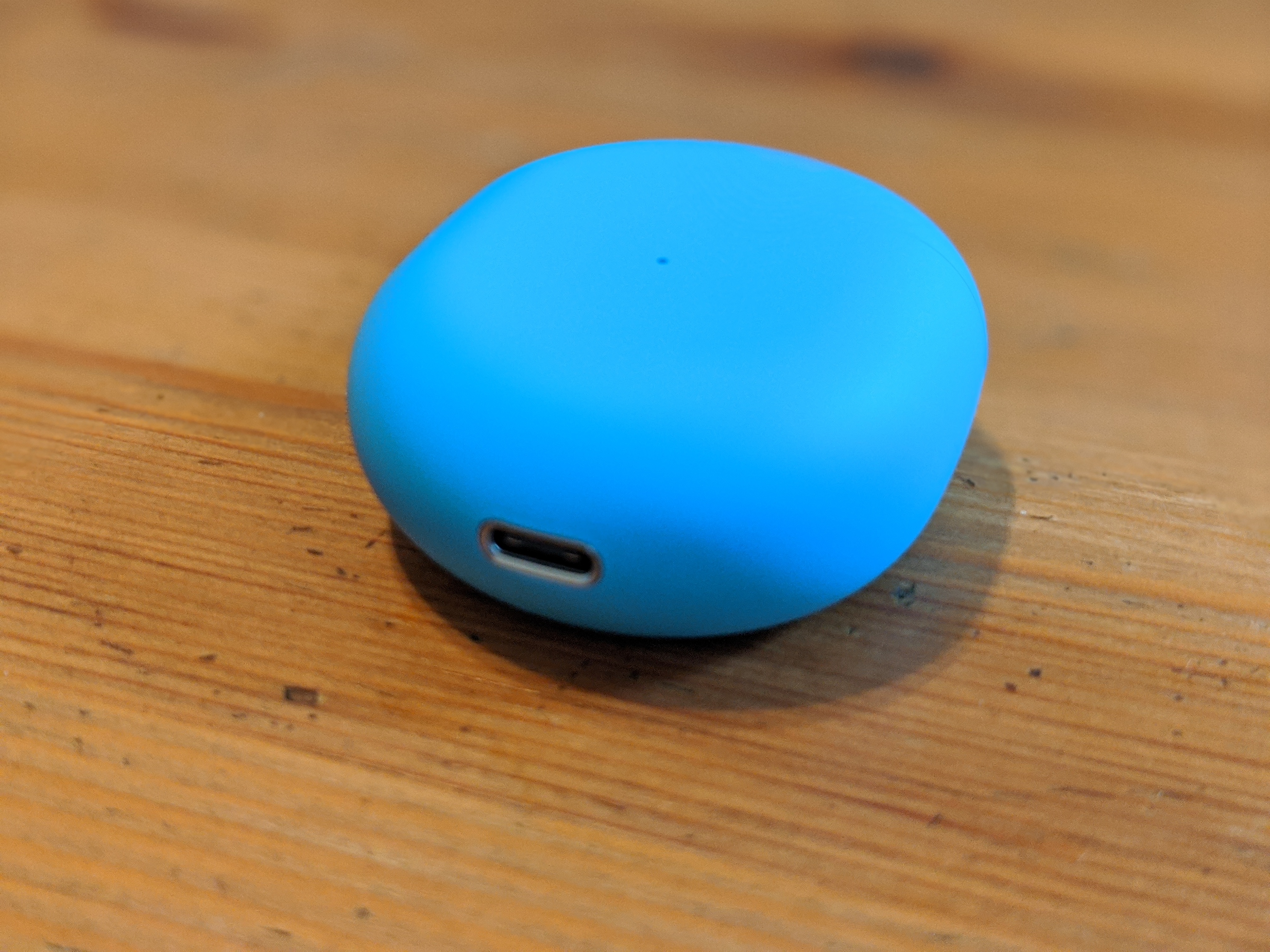
Beyond that, there aren’t a whole hell of a lot of reasons to recommend the Buds, beyond sheer brand loyalty. If you do, for some reason, feel the need to go along with OnePlus here, don’t by the Nord Blue. Seriously. I don’t care if it matches your new budget phone, the color scheme is atrocious. Kind of an electric sky blue accented with a sickly greenish-yellow. I’m not sure I’ve seen that exact color scheme outside of a 1980s boogie board.

The product feels cheap and plasticky throughout. The case has a matte finish and the Buds themselves have a kind of high gloss that seems like it ought to belong to an altogether different product. According to the press material, the product “Looks as good as it sounds.” Which, fair enough, I guess.

As for the sound itself, the company says it’s “Un-BEAT-able,” a not so subtle reference to the extreme reliance on a pumped-up bass to seemingly compensate for other aspects of the listening experience. I suspect, too, that a lot of the less-bassy musical nuance is lost with the inability to get a tight seal. OnePlus really ought to consider silicone tips for a future iteration.

It’s worth mentioning here, however, that a future software update should make the Buds better in a few ways, including additional touch gestures and Dolby Atmos Support — though the latter will only work with the OnePlus 7 and 8 handsets, again limiting the Buds’ appeal. 

There’s a lot OnePlus ought to consider for the next generation. Meantime, there are plenty of better alternatives to recommend before these Buds.

21 Jul 2020

Nord is OnePlus’s sub-$500 5G handset

While other premium smartphone makers were exploring mid-tier devices amid slowing sales, OnePlus’s prices were slowly creeping up. It’s true that the company never cracked the $1,000 price point (beyond a few limited-edition models), but for those following the company’s story, it felt like it was straying a bit from its biggest appeal: flagship-quality devices at highly competitive prices.

Today’s introduction of the Nord allows the company to continue to explore a more premium path for its flagship devices, while focusing on additional markets with something more affordable. In that sense, it’s not dissimilar to the tack being taken by Apple, Google and Samsung, all of whom have offered “budget flagships” in recent years as a response to market forces.

Something that warrants mentioning right off the bat, however, is that the Nord is not coming to North America. Instead, the product is — for now, at least — limited to India and certain parts of Europe, where it will start at 27999 INR and 399 Euros, respectively, putting it firmly under the $500 price point. The other important bit of information here is that, in spite of its low price, the handset sports 5G, realizing the promise of low-cost next-gen wireless courtesy of Qualcomm’s Snapdragon 765G.

Image Credits: Brian Heater

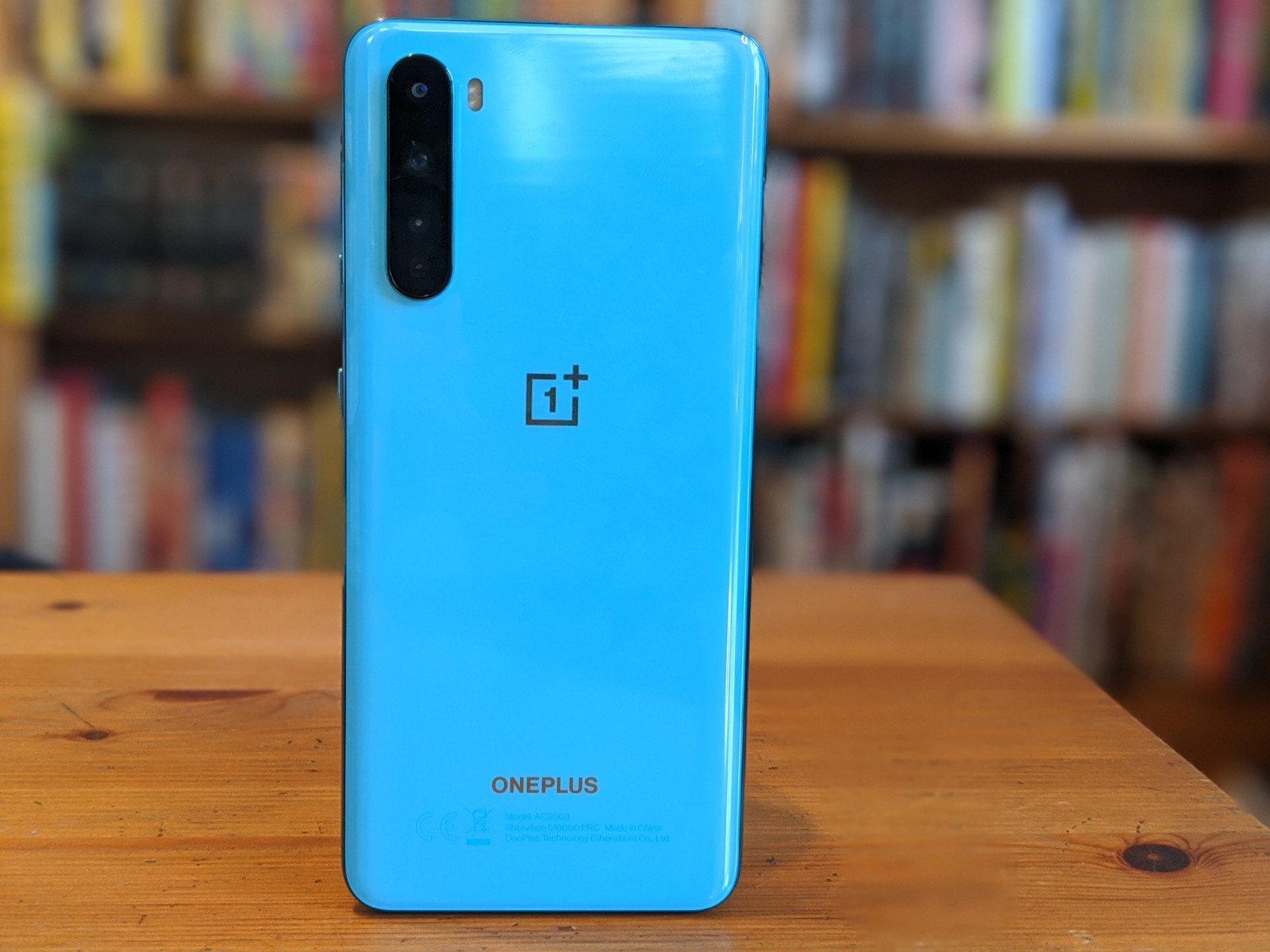
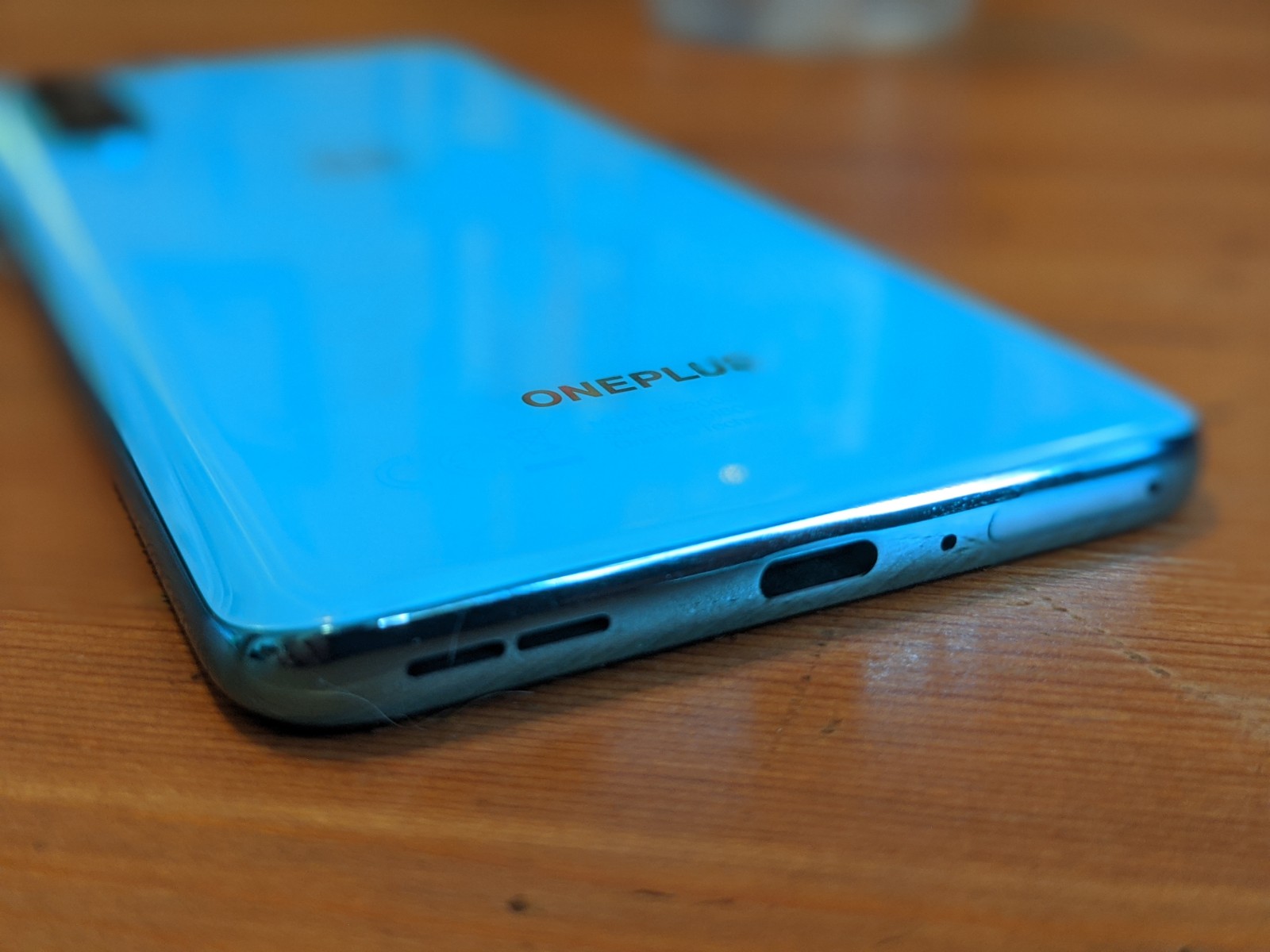
It is, of course, not Qualcomm’s flagship — the 865 is reserved for the OnePlus 8, which runs a couple hundred bucks more than the Nord. But while the company skimped on certain aspects of the handset, others seem to go above and beyond the price point. OnePlus has experience offering premium design at low prices, and that’s the case here. The Nord doesn’t feel like a budget device. It’s a bit on the thick side, but the build quality is excellent, down to the glass back.

The screen is a 6.44-inch AMOLED with that 90 Hz refresh rate OnePlus has been pushing for a while. It sports the same 49-megapixel main sensor as the 8, coupled with an eight-megapixel wide angle and a depth sensor for improved bokeh effects. Interestingly, it’s actually the first OnePlus device to sport dual-selfie cameras. There’s a 32-megapixel main (the highest res front-facing camera on any of its products), coupled with an 8-megapixel wide-angle, similar to the rear.

The battery is a healthy 4,115mAh. I haven’t had the phone long enough to perform battery tests, but it will be interesting to see how it holds up to the added strain of a 5G connection. That’s coupled with OnePlus’s Warp Charge, which claims to refill it from zero to 70% in 30 minutes.

Image Credits: Brian Heater

There’s a new Blue Marble color; honestly, I’m not a fan. It’s not quite as hideous as the color scheme on the new Buds, but I’m going to strongly recommend going with the Gray Onyx here. But you do you, friend.

It goes on sale in Europe and India on August 4. There’s also an extremely limited (50-person) North America “beta program.” If you’re reading this, you’re probably not going to be on it, however. But good luck. All said, it seems to be a pretty excellent deal for the price.

21 Jul 2020

Ford takes cues from Tesla’s playbook with 1,400 HP electric Mustang Mach-E

Speed sells. When Tesla launches a new vehicle or updates an existing vehicle, the car company often leads with 0-60mph time. These numbers often outclass those from gasoline cars thanks to how electric motors deliver power. These 0-60 times are often irrelevant to daily driving, and yet, Tesla, like most automakers, sees them as a critical marketable statistic.

Ford today unveiled a special edition of its forthcoming four-door electric Mustang. It’s fast because, as mentioned above, speed sells. Seven electric motors produce a total of 1,400 HP, which to put into layman’s terms, is a shit-ton of power.

Ford doesn’t intend to sell this example. The car company says this vehicle was built to explore the limits of electric vehicle technology — and, clearly, to show it off to the public.

The upcoming Ford Mustang Mach-E will come in a performance trim called the GT. While it will only have two electric motors instead of seven, it won’t be a slouch. The two motors will produce 459 HP, which is plenty of power to thrill.

This is Ford’s second special edition Mustang Mach-E. The Mustang Cobra Jet was unveiled earlier this year, and sports 1,400 HP, but does so in a different configuration that’s primarily designed to go fast in a straight line.

These concept Mustangs build excitement from key demographics, much like how Tesla’s Insane and Ludicrous modes make excitement around its vehicles. Ford is in a tight spot with the Mustang Mach-E, and it needs to show buyers that this four-door electric vehicle is worth of the Mustang nameplate. And what are Mustangs known for? Affordable excitement.

The Mustang Mach-E is set to be Ford’s first modern electric vehicle, and so far, Ford is following a different path than General Motors when it launched its first electric vehicle, the Chevy Bolt. By all accounts, the Chevy Bolt is an excellent electric vehicle with a low price tag, decent range, and quick speed. But Chevy positioned it as a boring people mover. The Mustang Mach-E has similar people moving capacity, but Ford upped the excitement with the Mustang name and marketing the performance.

There’s an old automative adage that says says winning in races produces sales. “Win on Sunday, sell on Monday” spoke of a time when NASCAR vehicles were similar to their road-worthy counterparts. That’s no longer the case. NASCAR vehicles rarely share any parts with what’s available on a dealer’s lot, but the adage is still relevant. Instead of NASCAR, automakers are looking at winning in the world of YouTube, where views are as critical as a checkered flag.

Tesla’s first vehicle was a reworked Lotus coupe. At the time, most electric cars were designed for moving people and goods. They were utilitarian. The Tesla Roadster had little utility but had a lot of excitement. From there, Tesla moved onto the Model S and quickly built out its performance capability by adding duel motors and tuning them to beat a Porsche to 60 miles per hour. When launching Tesla’s Model X SUV, the automaker often showed it beating supercars in drag races, because, once again, speed sells even if owners rarely use the power.

21 Jul 2020

Spotify launches video podcasts worldwide, starting with select creators

Spotify today announced the global launch of video podcasts. The new feature at launch will allow users, including both free users and paid subscribers, to watch the video content from a select group of creator podcasts. But unlike on YouTube, where only paid subscribers can listen to YouTube video content in the background while they do other things on their device, Spotify says its users will be able to seamlessly move between the video version and the audio. When multitasking, audio content will continue to play in the background, as you use other apps or even if you lock your phone.

The video podcasts are supported on both the desktop and mobile app — and video will serve as an additional component, not a replacement for the audio. That means you’ll still be able to stream the audio or download the podcast for offline listening, if need be.

For creators, the launch of video podcasts represents an opportunity to grow their audience, says Spotify. Often, podcasts already have a video option — but until now, Spotify offered no way to for creators to share it on its platform. That meant podcast creators would distribute their audio podcast on Spotify and other podcast distribution services, but would publish their videos to YouTube. They may continue to do, of course — especially if they’ve built a YouTube fan base for their work and no deal prevents it.

But being able to publish directly on Spotify means creators will be able to connect more directly with podcast listeners, rather than having to compete on a broader platform which pits their shows against a wide variety of other content. Video also gives Spotify a new place to sell advertising.

Only a handful of podcasts are offered starting today, including Book of Basketball 2.0, Fantasy Footballers, The Misfits Podcast, H3 PodcastThe Morning ToastHigher Learning with Van Lathan & Rachel Lindsay, and The Rooster Teeth Podcast. These are only available in the markets were podcasts are already supported, Spotify says.

The company’s move into video was almost inevitable. In February, Spotify acquired The Ringer to boost its podcast sports content. The deal came with a YouTube-based video operation which signaled an interest in an expanded media footprint.

Spotify has since inked high-profile podcast deals that could also easily translate to video, too, including one with Warner Bros. focused on DC superheros, which Spotify said in June could later include “new programming from original intellectual property.” It also landed an exclusive deal with Kim Kardashian West, The WSJ reported last month. It brought The Joe Rogan Experience in-house, in yet another exclusive. And just yesterday, Spotify booked a podcast deal with TikTok star Addison Rae. Spotify didn’t announce video plans in these areas today, but it definitely has access to talent — and offering video could allow it to better negotiate future deals, as well.

Spotify was spotted testing video podcasts earlier this year, but it was with YouTube stars Zane Hijazi and Heath Hussar, of Zane and Heath: Unfiltered, who weren’t mentioned in today’s news announcement.

Video podcasts will begin rolling out today in supported markets. So you may not see the addition immediately, but should soon.

21 Jul 2020

Tracking the growth of low-code, no-code startups

Startup buzz comes in waves, with a particular thesis or focus coming into vogue at certain times. Remember the short-lived boom in chat bots? That was good fun. And there was the ICO craze, which lead every startup you’ve heard to consider the financing option for at least a weekend.

We’ve also endured the early-AI bubble, the blockchain rush and a cannabis-driven wave as well. Even sub-theses can see spikes, such as the neo-banking industry, say, or robo-advising. Hell, we saw mini-crazes in insurtech marketplaces and OKR software this year alone.

Fads in startups are not new. Today, as venture investment tilts towards enterprise software, we’re in something of a SaaS craze. Inside of today’s SaaS surge, however, is a smaller trend that I want to explore more: no-code and low-code startups.

Largely, low-code and no-code refer to tools that allow non-developers to either employ little (low-code) to no code while either building logic inside of software, or full applications. Low-code, and no-code development often feature drag-and-drop interfaces (Techopedia, TechTarget), but not all low-code and no-code tools are used to build apps.

Defining the sector and its focus is difficult. PitchBook says low, and no-code development platforms “expedite the creation of new applications with minimal coding requirements and offer tools for non-programmers.” And a recent TechCrunch article by a couple of venture capitalists argued that low and no-code work is “not a category itself, but rather a shift in how users interface with software tools.”

A bit like how AI and fintech are squishy categories, low-code and no-code have wide remit.

After talking to a number of entrepreneurs lately who built these capabilities into their startups’ applications, it appears that today founders expect the capabilities to more help non-developers re-order logic inside apps for their own need, instead of building whole-cloth applications.

21 Jul 2020

Now you can watch Netflix on Google’s Nest smart screens

Google has long had a leg up on Amazon as far as smart screen video playback is concerned. YouTube is really the ideal service for these kinds of devices. Amazon, on the other hand, has a solid option for watching movies and TV on the Echo Show, in the form of its own Prime video service.

The Nest line upped the ante late last year with the addition of Hulu, and today it adds the biggest premium streaming service to the mix. Starting this week, Google is rolling out support for Netflix for the Nest Hub and Nest Hub Max. Users  can connect the smart home devices to their account and watch shows via voice command or touch. The app can also be controlled via gestures, picking up a previously played show where it left off.

It’s worth mentioning, of course, that these kinds of devices aren’t the ideal set up for watching a long movie or TV show. But there’s a definite appeal in the idea of being able to continue a movie or show where you left off when you’re, say, making dinner. And the addition of a service like Netflix is definitely a pretty big win for Google in the smart screen battle.

The feature is rolling out “globally wherever the service and Nest devices are currently available.” No word yet on if and when support is coming for third-party Google smart screen manufacturers like Lenovo.

21 Jul 2020

Kiwibot delivery robots head to San Jose with new partners Shopify and Ordermark

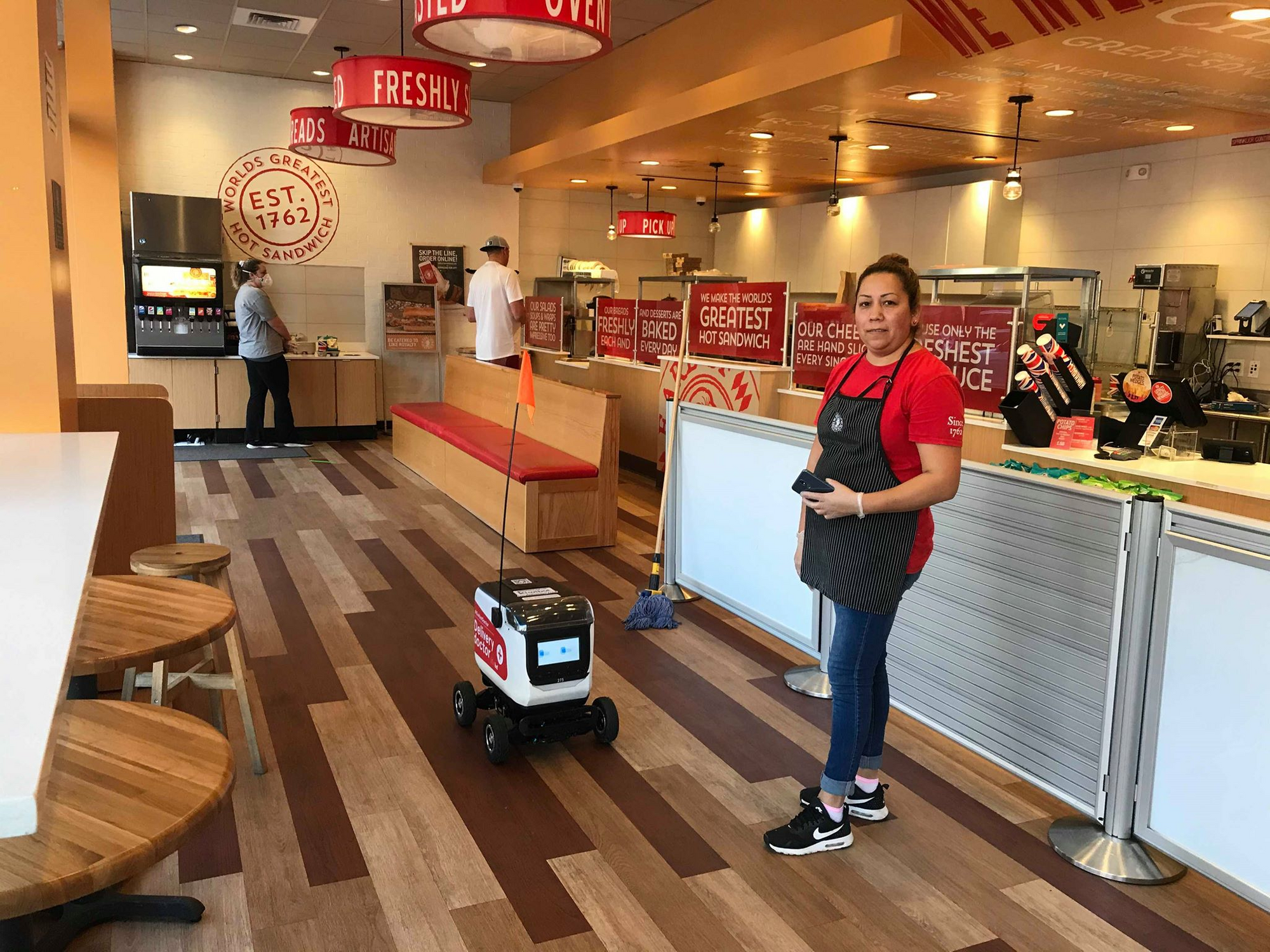
Kiwibot, the delivery robot startup that got its start shuttling burritos and snacks to students on the University of California-Berkeley campus, is expanding to San Jose with a new business model and partners Shopify and Ordermark.

About 25 Kiwibots will begin today delivering food and goods to customers in downtown San Jose and Buena Vista, a predominantly Latino neighborhood located southwest of the city center. Kiwibot will charge $3.99 per delivery, a fee that restaurants and other businesses can choose to absorb or pass onto consumers.

The launch in San Jose isn’t just about a geographic expansion. The announcement also marks the public launch of Kiwibot’s new B2B strategy.

“We started thinking instead of building the robot infrastructure and the marketplace, let’s focus on just building the robot infrastructure and partner with companies that already have that in mind,” said co-founder and CEO Felipe Chavez.

Kiwibot made the transition in January and started to build out a business-to-business API so that any business could connect to its platform. Shopify and Ordermark are the first partners for Kiwibot under this new direction.

What this means is that any business using the Shopfiy platform to manage their online stores can add the Kiwibot API so that their products and be delivered directly to customers. Meanwhile, Ordermark, which sells an online ordering platform to businesses, has integrated the Kiwibot API into its product. Now Kiwibot shows up, alongside a variety of other services, on the Ordermark dashboard.

Kiwibot is also working closely with the city of San Jose, according to Chavez.  The city’s transit agency will be able to locate and monitor each robot in real-time via the Mobility Data Specification (MDS). A growing number of cities are using the MDS tool to track shared mobility vehicles such as scooters. But Chavez contends that San Jose is the first city to be integrated with a robotic company API. The data is anonymized to keep customer’s personal information private, Chavez added.

kiwibot-restaurant

Image Credits: Kiwibot

Kiwibots are not fully autonomous. At least not quite yet. Chavez uses the term “semi autonomous” to describe the bots. Here’s what that actually means. The delivery bots are equipped with a camera and are capable of detecting objects and navigating around them. However, the bots are also supported and controlled remotely in certain scenarios by humans, who can monitor up to three robots remotely. These teleoperators, or supervisors as Kiwibot calls them, provide path planning, a method of setting and adjusting way points along a route. They can also step in and take direct control of the bot when problems arise. The supervisors, many of which are located in Colombia where Chavez and his co-founder Sergio Pachón originally hail, also control the bot on all traffic crossings, according to the company.

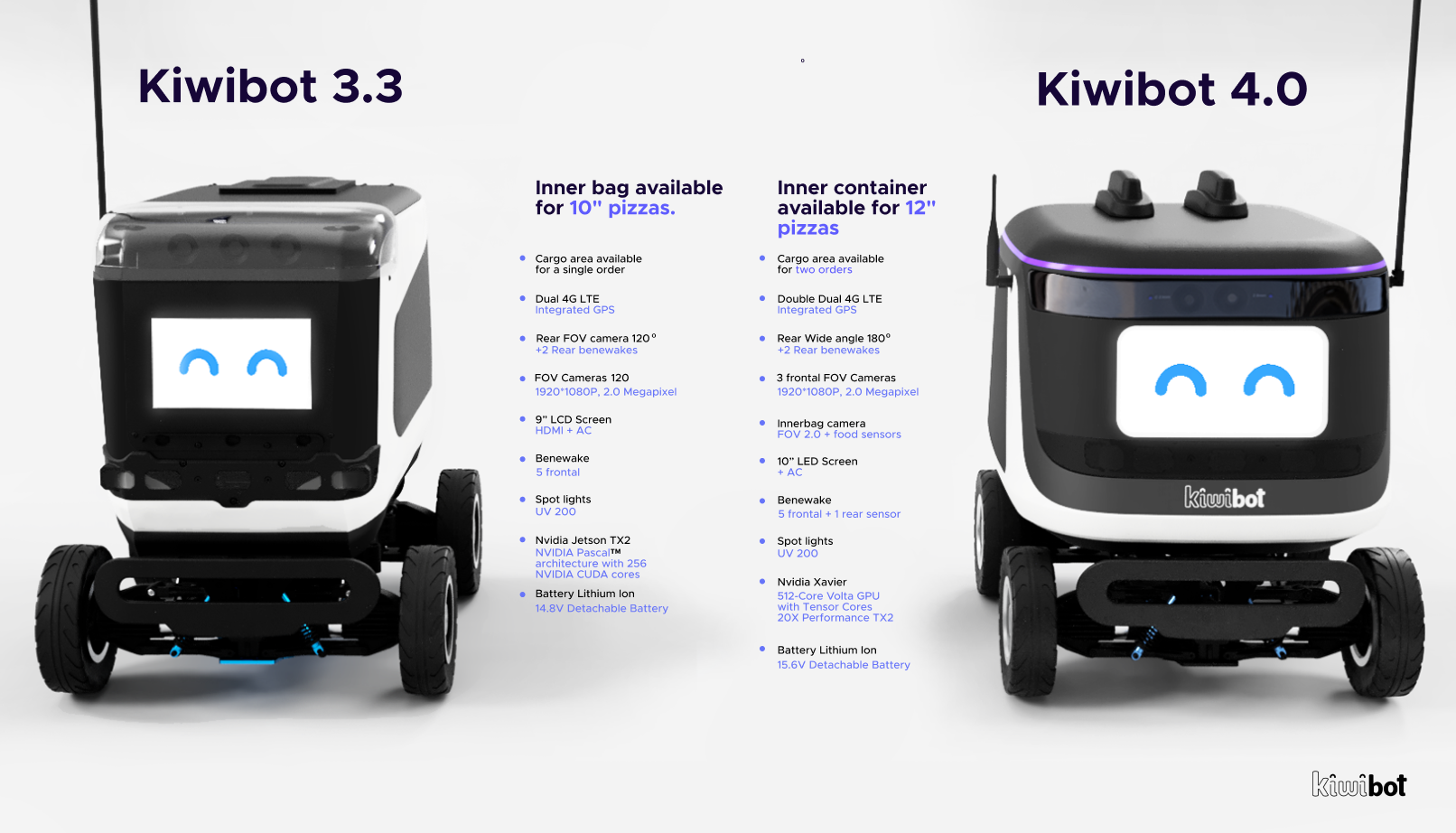
The aim is for these bots to become less reliant on humans over time. Kiwi’s next generation, known as Kiwibot 4.0 will be noticeably larger. What the public might not notice is the additional sensors, including more cameras and even lidar. The Kiwibot 4.0 is expected to come out at the end of the year.

kiwibot 3.3 vs 4.0

Image Credits: Kiwibot

21 Jul 2020

Kiwibot delivery robots head to San Jose with new partners Shopify and Ordermark

Kiwibot, the delivery robot startup that got its start shuttling burritos and snacks to students on the University of California-Berkeley campus, is expanding to San Jose with a new business model and partners Shopify and Ordermark.

About 25 Kiwibots will begin today delivering food and goods to customers in downtown San Jose and Buena Vista, a predominantly Latino neighborhood located southwest of the city center. Kiwibot will charge $3.99 per delivery, a fee that restaurants and other businesses can choose to absorb or pass onto consumers.

The launch in San Jose isn’t just about a geographic expansion. The announcement also marks the public launch of Kiwibot’s new B2B strategy.

“We started thinking instead of building the robot infrastructure and the marketplace, let’s focus on just building the robot infrastructure and partner with companies that already have that in mind,” said co-founder and CEO Felipe Chavez.

Kiwibot made the transition in January and started to build out a business-to-business API so that any business could connect to its platform. Shopify and Ordermark are the first partners for Kiwibot under this new direction.

What this means is that any business using the Shopfiy platform to manage their online stores can add the Kiwibot API so that their products and be delivered directly to customers. Meanwhile, Ordermark, which sells an online ordering platform to businesses, has integrated the Kiwibot API into its product. Now Kiwibot shows up, alongside a variety of other services, on the Ordermark dashboard.

Kiwibot is also working closely with the city of San Jose, according to Chavez.  The city’s transit agency will be able to locate and monitor each robot in real-time via the Mobility Data Specification (MDS). A growing number of cities are using the MDS tool to track shared mobility vehicles such as scooters. But Chavez contends that San Jose is the first city to be integrated with a robotic company API. The data is anonymized to keep customer’s personal information private, Chavez added.

kiwibot-restaurant

Image Credits: Kiwibot

Kiwibots are not fully autonomous. At least not quite yet. Chavez uses the term “semi autonomous” to describe the bots. Here’s what that actually means. The delivery bots are equipped with a camera and are capable of detecting objects and navigating around them. However, the bots are also supported and controlled remotely in certain scenarios by humans, who can monitor up to three robots remotely. These teleoperators, or supervisors as Kiwibot calls them, provide path planning, a method of setting and adjusting way points along a route. They can also step in and take direct control of the bot when problems arise. The supervisors, many of which are located in Colombia where Chavez and his co-founder Sergio Pachón originally hail, also control the bot on all traffic crossings, according to the company.

The aim is for these bots to become less reliant on humans over time. Kiwi’s next generation, known as Kiwibot 4.0 will be noticeably larger. What the public might not notice is the additional sensors, including more cameras and even lidar. The Kiwibot 4.0 is expected to come out at the end of the year.

kiwibot 3.3 vs 4.0

Image Credits: Kiwibot

21 Jul 2020

Amazon’s Scout robot deliveries expand to additional cities in Georgia and Tennessee

One thing’s for certain about Amazon’s Scout robot: it’s as much of a brand ambassador as it is an experiment in the future of last mile delivery. After debuting early last year, the company has limited to Scout to select markets — namely Irvine, California and Snohomish County, which neighbors King County, home of Amazon’s corporate HQ. Among other things, the robot is a kind of six-wheeled rolling billboard for Amazon’s services.

It also, according to Amazon, has been a useful tool as the company’s essential worker status has allowed it to maintain operations during the COVID-19 shutdown. Accompanied by human “Scout Ambassadors,” the cooler-sized robots have also continued to work throughout the pandemic.

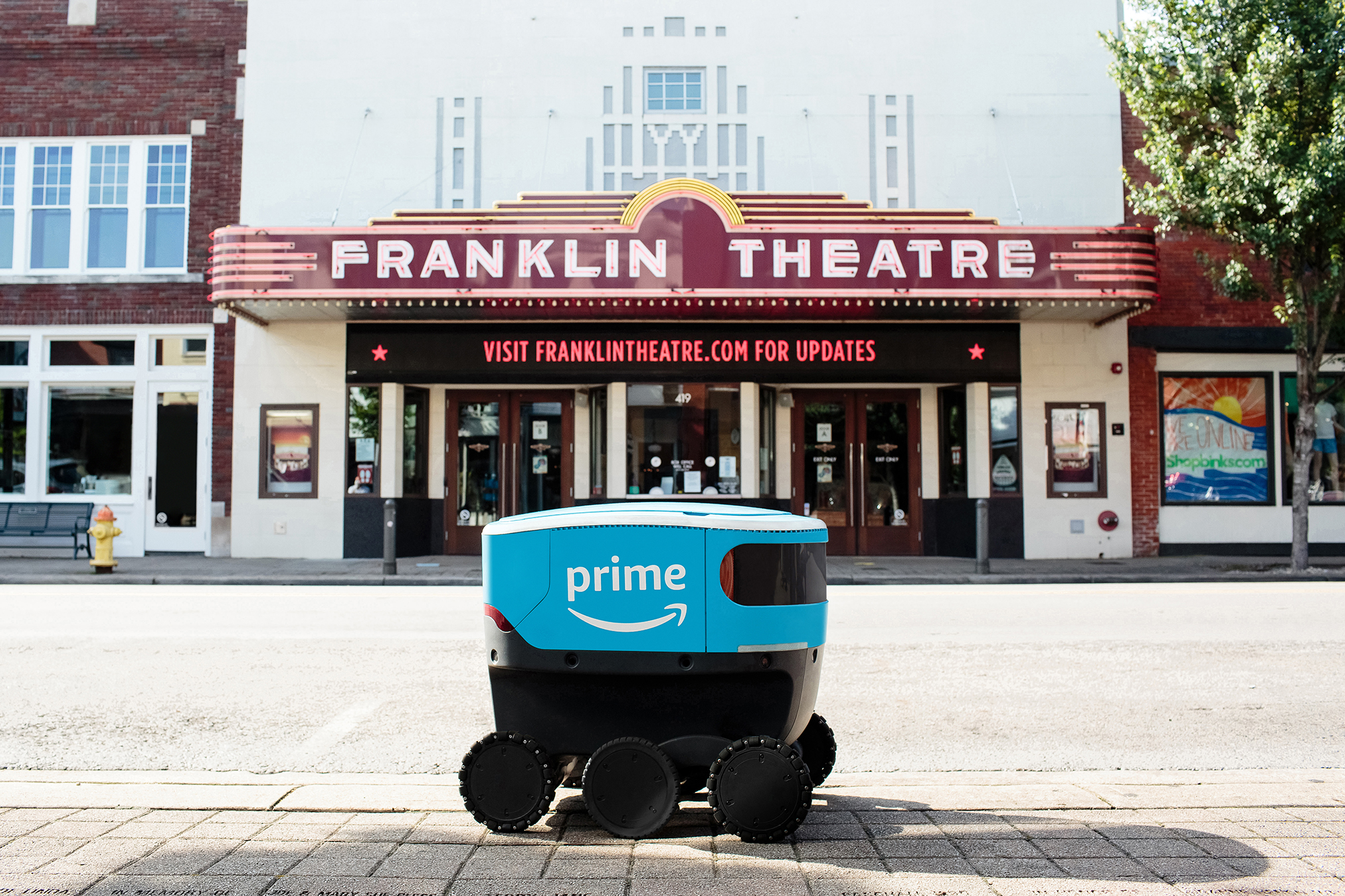
And starting this week, Scout will expand operations to two cities in the American Southeast: Atlanta, Georgia and Franklin, Tennessee. The first you no doubt know. The second is significantly smaller, with a population of around 80,000, situated directly south of Nashville. In both cases, Scout’s deliveries will continue to be fairly modest, targeting “select customers” in those cities.

www.erinleeallender.com

Amazon — like all companies in the robotic delivery game — need to be deliberate in their expansion plans. Some larger cities, including New York and San Francisco, have been less than welcoming to the concept, owing to already-crowded urban sidewalks. Amazon’s expansion has largely been targeted on more residential communities, though Atlanta is certainly an exception as the company determines how Scout manages different terrain.

The company is also quick to allay safety concerns in the announcement, noting, “Amazon Scout delivery devices are built to be inherently safe. They’re the size of a small cooler and move at a walking pace. Each delivery device can navigate around pets, pedestrians, and other objects (including surfboards!) in its path.” Likely many councils in cities with higher populations will continue to approach the topic with caution

Amazon is also using Scout to help push additional community outreach including plans to support robotics and STEM activities in the new cities.

21 Jul 2020

VCs, celebrities, and athletes are writing a new LA story to bring women’s soccer to the city

When Upfront Ventures partner Kara Nortman first met Natalie Portman a few years ago to talk about ways their non-profit organizations All Raise and Time’s Up could collaborate, she never realized they’d eventually be partners on a sports franchise.

Now the two women are co-founders of Angel City, leading a gaggle of venture capital, sports, and celebrity investors, alongside Angel City co-founder and President Julie Uhrman, in bringing a National Women’s Soccer League team to Los Angeles by the Spring of 2022.

Backing the team is Alexis Ohanian, the co-founder of Reddit and a slew of investors including his wife, tennis superstar Serena Williams (and their daughter Alexis Olympia Ohanian Jr.); the actors Uzo Aduba, America Ferrera, Jennifer Garner, Eva Longoria, and Lily Singh and former US Women’s National Team players including Julie Foudy, Mia Hamm, Rachel Buehler, Shannon Boxx, Amanda Cromwell, Abby Wambach, Lauren Cheney Holiday; social media stuntman Casey Neistat, and more.

While it might seem strange to launch a new sports league with an epidemic still raging in the United States, Nortman said that the decision to invest and bring the team to Los Angeles was simple.

“We’re venture capitalists. We’re optimists,” Nortman said.

For Nortman, the story of Angel City begins with a lifetime love of sports. Growing up in a fanatical sports family in Los Angeles, Nortman was a fan of all of the local teams: the Dodgers, the Kings, the Lakers, were constantly on television and the family evne attended the 99 Women’s World Cup game at the Rose Bowl. But it was in 2015 when she took her family to see the Women’s World Cup in Vancouver that Nortman’s private passion for soccer began to turn into a more public search to bring more attention to the sport — and the women who play it.

“I was like… ‘Hey! Why won’t you take my money?” Nortman said. Four years ago, the wildly successful women’s national team had a hard time making a living as full-time professional athletes in their chosen sport, Nortman said.

Image Credits: Angel City

The pay equity fights that the women’s team has led are still ongoing (and suffered a setback earlier this year), but Nortman and Portman saw an opportunity to chart a new course for the league with the combination of both of their support.

After a meeting to discuss Time’s Up and All Raise, the two bonded over soccer. “She said, ‘Why don’t I bring a bunch of my friends to a game and we can do for them what Jack Nicholson did for the Lakers and ‘Showtime’?” Nortman said.

So the two women started bringing their networks to soccer games and gathering momentum and support for the women’s soccer league and the sport broadly.

Those conversations and trips to watch the National team play a series of friendly games ahead of the 2019 World Cup led to talk of bringing an expansion team to Los Angeles, according to Nortman.

“Around that time Natalie started saying to me ‘Let’s go find a team’,” said Nortman. So that’s what the two women did. They held discussions with the league on buying into the franchise and began putting their investot group together.

“What we’re excited about is building the brand and building the best athletes in the world in the city with the biggest soccer audience in the country,” said Nortman. “And can we do it in a way that we could have a female led group.”

The financial terms of the deal to bring the franchise to Los Angeles, aren’t being disclosed, but they definitely run in the tens of millions of dollars. That’s still small potatoes compared to the current valuation of some of the men’s teams like the Los Angeles Football Club that are worth upwards of half a billion dollars, according to some estimates.

For Nortman, running a franchise like Angel City was a full time job — something that she already had. So she tapped her circle of business connections to bring in a President for the group and found Julie Uhrman.

An LA native like Nortman, Uhrman had founded a gaming console business, Ouya, that was backed by Kleiner Perkins and gone on to media roles at Lion’s Gate Entertainment and Playboy Enterprises. Equally as important, Uhrman was part of a casual pick-up basketball game among women investors, entrepreneurs and their friends in Los Angeles that Nortman had helped set up.

Over the course of a few games, Nortman brought Uhrman on board to lead the Angel City efforts and the combination of three women propelled the Angel City launch.

For each of the founders, activism and community engagement is as important as the business of setting up a new sports business in Los Angeles.

So the group has partnered with the LA84 Foundation, which brings sports to underserved communities. That non-profit is also a partner with Angel City.

“In 2014, we established the Play Equity Fund, the only nonprofit focused on Play Equity as a social justice issue,” said Renata Simril, President & CEO of the LA84 Foundation. “The Play Equity Fund is committed to driving access to sports for underserved communities, including communities of color, girls, the physically challenged and developmentally disabled. We couldn’t be more excited to partner with this incredible group of women upon the launch of their new undertaking. They are dedicated to making a positive impact for those who need it most.”

The enthusiasm for owning a sports franchise is interesting given some of the longer term trends in consumer behavior and an overall decline in interest in live sports. Over the past few years interest in all of the major American sports has waned — audiences for championship events like the NBA Finals, the World Series, the Super Bowl and the Indy 500 are all declining as demographics shift and many people would rather watch Twitch streams than tournaments.

Nortman and Ohanian think they can tap into their tech savvy and come up with ways to help counteract these trends.

Our brains want to be set up to say that there’s real sport versus esports,” said Nortman. “[But] the way we think about it is brands. If you think about Manchester United and their brand it’s about more than sports… We view soccer and the physical soccer game as one expression of our brand but it may not be the first expression of our brand.”

Still, first and foremost is the Los Angeles community and getting the city to embrace the franchise and its broader mission.

“Today we take an exciting step by announcing the first women majority-owned and led ownership group. I am thrilled by the opportunity to partner with this incredible group of people to bring a professional women’s soccer team to Los Angeles. Together, we aim to build not only a winning team on the field, but also to develop a passionately loyal fan base,” said Portman in a statement. “We also hope to make a substantive impact on our community, committing to extending access to sports for young people in Los Angeles through our relationship with the LA84 Foundation. Sports are such a joyful way to bring people together, and this has the power to make tangible change for female athletes both in our community and in the professional sphere.”