Month: March 2021

02 Mar 2021

Volvo to sell only all-electric vehicles by 2030

Volvo Cars said it will only make and sell all-electric vehicles by 2030, as part of a broader transformation of the automaker that will include shifting sales online.

“The key to sustainability is electrification, said Volvo Cars CEO Håkan Samuelsson during a presentation Tuesday. “Together with investments in charging infrastructure that is the right way to go and the course we have chosen at Volvo.”

The announcement was tied to the launch of the C40 Recharge, a low slung crossover based on the company’s CMA vehicle platform. While the C40 is the second vehicle under Volvo’s EV-focused Recharge brand, it is the first designed as pure electric only. All Volvo vehicles with fully electric and plug-in hybrid powertrains are housed under the Recharge brand. Like the XC40 Recharge, it will have an infotainment system powered by Google’s Android operating system as well as have the ability to make over-the-air software updates.

“It’s a car of firsts and it’s a car of the future,” CTO Henrik Green said, adding that the C40 will have two motors, a 78 kilowatt-hour battery and an estimated range of 420 km (260 miles) that will improve over time via software updates.

The company is well on its way to its electrification goal, according to Samuelsson, noting that last year one car out of three sold in Europe was a Recharge model, a chargeable plug-in hybrid.

Volvo, which is owned by China’s Geely Holdings, aims for 50% of its global sales to consist of fully electric cars, with the rest hybrids. By 2030, every car it sells should be fully electric, the company said.

Volvo’s evolution isn’t just pinned to the powertrain.

“The future customer offer cannot just consist of an electric car,” Samuelsson said. “We also need to listen to our consumers, and they expect transparency and a seamless experience getting and having a car.”

Volvo will only sell its all-electric vehicles online and at preset prices. Customers will be able to subscribe or buy the vehicles, which will comes with a customer care package. The vehicles will also have pre-selected configurations to shorten the time between ordering and receiving a vehicle.


 

02 Mar 2021

Flipboard expands its local coverage to more than 1,000 cities and towns

News aggregator Flipboard‘s local coverage is making what product lead Brian Gottesman described as a “quantum leap,” expanding from 60 topics (a.k.a. cities, towns and communities that you can follow) to more than 1,000.

While Flipboard has allowed users to follow stories focused on major cities like New York for years, it launched a broader initiative around local news at the beginning of last year. The company says it’s now bringing together news coverage in locations across the United States and Canada, including all 210 Designated Market Areas tracked by Nielsen.

This comes as local newspapers continue to struggle and shut down, creating what are known as news deserts. But Flipboard’s data quality analyst Marty Rose said that its local news sections don’t just rely on traditional newspapers — they can aggregate stories from travel blogs, publications aimed at diverse audiences, TV stations, regional/national publications that do stories of local interest and more.

“Our aggregation could create a local paper where in communities they don’t exist,” Gottesman added.

Flipboard is now tying these local topics to GPS locations, as well. Users will be asked to share their location with the app (Gottesman noted that to protect user privacy, Flipboard is only using “coarse precision” and doesn’t retain user location data), then presented with a list of nearby cities and local topics of interest that they can follow. This will allow them to keep up on everything from local political news to COVID-19 updates, weather forecasts and dining recommendations.

“This is such a key part of informing our users,” Gottesman said. “They need to know if there’s a natural disaster in their area … they need to know if there’s a new place to go and get vaccines. Their community is more important than ever.”

Conversely, Rose said that by building relationships with local news organizations, Flipboard could also “elevate” their coverage to non-local sections when it might be relevant to a broader audience.

Asked how publishers’ subscription strategies and paywalls might affect the stories that appear in these local topics, Rose acknowledged, “Some local publications do have paywalls. It’s entirely up to them, we have no problem with that whatsoever … We provide the headlines and if the user clicks through and they’re presented with some kind of paywall, it’s unfortunate for them, but it’s not really our call.”

At the same time, he said that local TV coverage isn’t paywalled, and that a growing number of local blogs and digital publications are relying on more of a donation or membership model: “I really hope that they stick around and we can push those a bit more.”

02 Mar 2021

Attend TechCrunch’s free virtual Miami meetup on March 11

Silicon Valley is novel, but not unique. Throughout the United States and abroad, there are communities of technology entrepreneurs leveraging local assets to build great companies. TechCrunch has long told these stories, and throughout the first half of 2021, our editorial staff is dedicated to shining a spotlight on exciting startups and notable investors in key cities and regions.

We’re looking at you Miami, Detroit, Austin, Pittsburgh and perhaps wherever you’re reading this from. TechCrunch wants to tell your story.

Join us on our first (virtual) field trip to Miami. Even though we can’t be there physically right now, it’ll sure feel like we are. All lights will be shining on the Magic City. The area is quickly transforming thanks to active investors, interesting companies, a Twitter-proficient Mayor and beautifully scenic living.

If you’re interested in what’s happening in Miami in general, seeking out a new, up-and-coming city to live in, looking for cool companies and talented founders to invest in, then you’ll want to register and drop March 11 on your calendar. This is a virtual event, but space is still limited so register early.

Here’s just some of what you can expect:

  • Networking – It’s what you can always count on us for. Companies are started and deals get done at TechCrunch events (yes, even the virtual ones!)
  • Pitch-off – We’re going to tap into the local tech scene in Miami and bring on some VCs to take a look at a  your pitches. They’ll give you feedback live from the stage. Sign up to pitch by filling out this form.
  • Panels – Meet the movers and shakers up close and personal. Hear about their journey, ask them questions, and find out what’s special to them about Miami.

All along the way we’ll be asking for your feedback by way of polls, Q&A’s and surveys. We want to hear from everyone who lives in the birthplace of sunscreen and we’re looking to you for suggestions on folks who should be getting all of the attention we can throw at them on March 11. Drop suggestions in the comments below.

It’s going to be one to remember and it’s the perfect setup for when we can safely crash the city in person again!

Join us on our first (virtual) field trip to Miami.

02 Mar 2021

EBay and Adevinta to sell UK sites Gumtree, Motors.co.uk and Shpock to get their $9.2B deal past regulators

After inking a $9.2 billion deal to merge their classifieds businesses last year, eBay and Norway’s Adevinta have announced a deal to sell off three popular web properties in the UK to get the deal cleared by local regulators, the Competition Markets Authority. The companies plan to sell off Adevina-owned Shpock, and eBay-owned Gumtree and Motors.co.uk — three UK sites that let individuals sell used goods and find/offer services — with the transactions expected to be completed in time for eBay and Adevinta to complete their bigger deal in Q2 2021, pending final regulatory approvals.

“EBay and Adevinta remain excited about the proposed combination of Adevinta and eBay Classifieds Group and now target closing the transaction in Q2 2021, subject to final ratification of the remedies execution plan by the CMA and receipt of outstanding regulatory approval in Austria,” the companies said in a joint statement.

The companies have not yet said whether they plan to sell them in a single package or to independent buyers, but a spokesperson for Adevinta said that it’s likely that there will be another update in 4-6 weeks. She declined to give a price range for the properties.

But in the statement from the companies, eBay said that Gumtree and Motors, which form its UK classifieds business, account for less than 10% of its consolidated revenues ($10.3 billion last year); and Adevinta said that Shpock revenues make up less than 1% of its consolidated revenues (which were about $80 million in the last 12 months). Adevinta is the majority owner of Norwegian publisher Schibsted, among other businesses.

The CMA provisionally has said that it would support the deal if the sale of the three properties gets completed.

“The CMA considers that there are reasonable grounds for believing that the undertakings offered by Adevinta and eBay, or a modified version of them, might be accepted by the CMA under the Enterprise Act 2002,” it noted in a brief update (which was dated 2 March, 2020, although I think that was a typo).

The divestment decision comes as a result of the CMA last month announcing that the deal raised competition concerns as is.

“It is important that people have choice when it comes to selling items they no longer require or searching for a bargain online, and that they can enjoy competitive fees and services,” said CMA’s Joel Bamford, Senior Director of Mergers, in a statement. “There is a realistic chance that without this deal Gumtree and Shpock would have been direct competitors to eBay, which is by far the biggest player in this market. This is the latest in a series of merger probes by the CMA involving large digital companies, where we are thoroughly examining deals to ensure that competition is not restricted, and consumers’ interests are protected.”

Interestingly, one of those other deals also involves eBay, indirectly. Another asset that eBay sold off as part of its wider divestment efforts aiming to streamline its business was selling secondary ticket market company Stubhub to Viagogo in a $4 billion deal. That acquisition closed last year, but then the merger was investigated by the CMA, which last month ordered Viagogo to divest the company’s business outside of North America. It’s a crushing blow when you consider that events have fallen off a virtual cliff (literally and figuratively).

Turning back to Gumtree, Shpock and Motors.co.uk, even if those sites are a relatively small part of eBay and Adevinta’s wider business revenue-wise, collectively they form a very popular option for people looking to buy or sell used goods or hire people for service jobs in the UK. I’ve been a regular user of both in my time, to sell and buy items, and to advertise for/discover several excellent au pairs. Coincidentally, people also use them to resell tickets.

It’s notable that the CMA didn’t consider Facebook, or any others, big enough yet to be seen as viable competitors in that market. It will be worth watching to see how and if that changes though. With deals like last week’s $191 million fundraise for Wallapop, and Facebook’s persistent Marketplace efforts, it is clear that there is still business to be found in classified listings, both as a standalone enterprise, or as something that creates stickiness for users to hang around for other services and advertising alongside them.

02 Mar 2021

Microsoft’s Power Automate Desktop is now free for all Windows 10 users

Microsoft today announced that it is making Power Automate Desktop, its enterprise-level tool for creating automated desktop-centric workflows, available to all Windows 10 users for free. Power Automate Desktop is what Microsoft calls its “attended Robotic Process Automation” solution, but you can think of it as a macro recorder on steroids. It comes with 370 prebuilt actions that help you build flows across different applications, but its real power is in letting you build your own scripts to automate repetitive and time-consuming tasks.

Power Automate Desktop originally launched last September. It’s based on Microsoft’s acquisition of Softomotive in early 2020, but Microsoft has since extended Softomotive’s technology and integrated it deeper into its own stack.

Users who want to give Power Automate Desktop a try can now download it from Microsoft, but in the coming weeks, it’ll become part of Microsoft’s Insider Builds for Windows 10 and then eventually become a built-in part of Windows 10, all the way down to the standard Windows Home version. Until now, a per-user license for Power Automate Desktop would set you back at least $15 per month.

“We’ve had this mission of wanting to go democratize development for everybody with the Power Platform,” Charles Lamanna, the CVP of Power Platform engineering at Microsoft, told me. “And that means, of course, making products which are accessible to anybody — and that’s what no-code/low-code is all about, whether it’s building applications with Power Apps or automating with Power Automate. But another big part of that is just, how do you also expand the imagination of a typical PC user to make them believe they can be a developer?”

This move, Lamanna believes, reduces the licensing friction and sends a message to Windows users that they can build bots and automate tasks, too. “The way we’ve designed it — and the experience we have, particularly around the recording abilities like a macro recorder — makes it so you don’t have to think about for loops or what is this app I’m clicking on or this text box — you can just record it and run it,” he said.

02 Mar 2021

Microsoft brings tighter integration to Dynamics 365 and Teams

As the pandemic drags on and we learn about the requirements of working from home with distributed teams, users could be craving more integration across their tools to help reduce the clicks required to complete a set of tasks. Today at the Ignite Conference, Microsoft announced tighter integration between its business suite Dynamics 365 and its collaboration tool Teams to help with that issue.

Alysa Taylor, corporate VP for business applications and global industry at Microsoft, pointed out that one of the advantages of this native integration approach is that it helps reduce context switching across different applications. “We are committed to really bringing together the collaboration platform and the business process layer to enable salespeople, service representatives, operations managers [and other similar roles] to really have a unified platform in which they both collaborate and have their everyday business functions,” Taylor explained.

This could manifest itself in a number of different ways across marketing, sales and service. For instance, a marketer can create a webinar, which they set up and track in Dynamics 365 Marketing tools and run in Teams as a streaming event with the Teams streaming setup integrated directly into the Dynamics 365 console.

In a sales example Taylor says, “We’re enabling sellers to be able to track the career movements of their contacts using the LinkedIn Sales Navigator, as well as connect very specific sales records within Microsoft Teams without ever having to leave Dynamics 365 Sales. So you can be in the Sales application and you have the ability to deeply understand a contact and any contact changes that occur in Teams, and that’s automatically updated in Sales.”

If your company is not an all-Microsoft shop and wants to use different tools as part of these workflows, Taylor says that you can use Microsoft cross-cloud connectors to connect to another service, and this is true regardless of the tasks involved (so long as the connector to the desired application is available).

Salesforce, a primary rival of Microsoft in the business software space, spent over $27 billion to buy Slack at the end of last year to bring this kind of integration to its platform. Taylor sees the acquisition as a reaction to the integration Microsoft already has and continues to build.

“I think that Salesforce had to acquire Slack to be able to have that collaboration [we have], so we are years ahead of what they’re going to be able to provide because they will not have these native integrations. So I actually see the Salesforce acquisition as a response to what we’re doing with Dynamics 365 and Teams,” Taylor told me.

It’s worth pointing out that Salesforce is far ahead of Microsoft when it comes market share in the CRM space with over 19% versus under 3% for Microsoft, according to Gartner numbers from 2019. While it’s possible these numbers have shifted some since then, probably not significantly.

02 Mar 2021

Piano acquires analytics company AT Internet

Piano is expanding its platform for digital publishers with the acquisition of AT Internet, a 25-year-old analytics company based in France.

Even if you don’t recognize Piano as a company, TechCrunch readers will probably be familiar with the product, since we use it to manage the reader experience of our Extra Crunch membership program.

Other customers include CNBC, The Wall Street Journal and the Associated Press, and Piano describes itself more broadly as a “digital business platform” with products around personalization, advertising and analytics, as well as subscriptions.

“Fundamentally, our job is to help big websites make more money,” said CEO Trevor Kaufman. “We view that not as a billing problem, but as a marketing problem.”

Kaufman described a “pretty siloed system” used by most publishers and other digital businesses, where data around ad revenue, subscriptions, content engagement and customer profiles is all stored separately. By integrating with AT Internet’s “user-centric, event-based data store,” he said Piano can provide a more comprehensive picture of “the full customer journey,” allowing businesses to personalize their marketing and messaging accordingly.

He also praised AT Internet for its focus on “data quality and privacy,” with the company helping clients comply with GDPR and CCPA regulations.

New York-based Piano says AT Internet’s chief executive Mathieu Llorens will continue in that role while becoming a “significant shareholder” in the combined organization. The acquisition price was not disclosed, but the transaction involves both cash and equity and was funded by Updata Partners, Rittenhouse Ventures and Sixth Street Partners.

“The merger of our two organizations is an exciting chapter in our company’s history and prominence in the web analytics industry,” Llorens said in a statement. “This next chapter with Piano will enable AT Internet to invest more resources in and drive expansion of our current products, as well as help more organizations leverage analytics values and segments to deliver personalized customer experiences.”

Kaufman added that Piano and AT Internet will both work to integrate their platforms while continuing offer standalone products, but “the line becomes blurrier and blurrier as we use the backend of AT Internet to power more and more stuff for Piano.”

02 Mar 2021

DJI launches an all-in-one FPV drone system

DJI has flirted with FPV goggles before, of course. The company got on the burgeoning FPV movement with the launch of its DJI Goggles back in 2016. It was a logical extension for the company that controls around 70% of the drone market, at last count, and a push toward a more mainstream experience for what has largely been the realm of hobbyists.

Today, it takes another important step toward conquering that market with the launch of DJI FPV. The simply named new drone model is aimed at offering a similar off-the-shelf solution for those looking to add a head-mounted display to their flying experience.

The DJI FPV occupies a strange space, both in the DJI ecosystem and the overall drone market. While FPV drones have largely been the realm of more advanced hobbyists and racers, the new model is aimed at beginning and intermediate drone users. In that, it essentially works out of the box. Though unlike racing models, this device isn’t particularly modular or customizable, so you can’t really tweak it for speed.

Image Credits: Brian Heater

There are beginner modes and a new optional motion controller to help ease the learning curve. The drone builds on several generations of DJI consumer hardware and software, both in terms of imaging and controller. There’s even a flight simulator baked in to the app, to help get you acquainted with flying the device virtually before accidently slamming the pricey hardware into a tree.

That’s the other thing that warrants mention up top: This is a $1,299 system. That price gets you the drone, the second-gen FPV goggles, a controller and a battery. The motion controller runs another $199 and additional batteries can be purchased with the Fly More bundle. Of course, drone pricing is a pretty wide spectrum, and racing models tend to be be fairly expensive. The price puts it between the $799 Mavic Air 2 and the $1,599 Mavic 2 Pro, which sports a Hasselblad camera. Given that the FPV goggles retail for $570 on their own, the asking price certainly isn’t outlandish.

Image Credits: Brian Heater

Here’s how DJI’s European Creative Director describes the new system in a release:

Right out of the box, DJI FPV combines the best available technology for a hybrid drone like no other. It can fly like a racer, hover like a traditional drone, accelerate like a homebuilt project and stop faster than any of them. DJI FPV lets the world experience the absolute thrill of immersive drone flight without being intimidated by the technology or spending hours building a system from scratch.

That’s a pretty good assessment of the category here. It’s a way to dip one’s toes into this growing category, but backed with the peace of mind that comes with purchasing a more off-the-shelf solution from a company that knows how to build a good and fairly reliable drone (you’re not going to buy a product in this category that doesn’t give you some problems from time to time).

Image Credits: Brian Heater

It’s not a racing drone, really, but it’s designed to offer a closer version of that experience than the company’s popular Mavic line. In fact, in one mode, it’s capable of speeds up to 87 MPH, with a 0-62 MPH acceleration in two seconds. Obviously, less experienced fliers are going to want to work up to that and familiarize themselves with the intricacies of the first-person view footage. When you flip over from Normal to Manual mode, you lose the hovering and obstacle sensors in the process, making it a lot easier to do some serious damage to the $1,300 drone.

The goggles themselves feature three different modes. Low-latency HD does 1440 x 810p at 60 fps or an increased field of view at 50 fps. Smooth mode increases the frame rate to up to 120 fps. Audience mode connects up to eight additional googles to the single view. The footage is shot with the on-board 4K/60fps 120 Mbps single-axis, image stabilized camera. Footage can be shot in up to 4x slow motion, as well.

[gallery ids="2118665,2118664,2118663,2118662,2118661,2118660,2118659,2118658,2118657,2118656"]

The DJI FPV is available to purchase starting today.

02 Mar 2021

Microsoft launches Azure Percept, its new hardware and software platform to bring AI to the edge

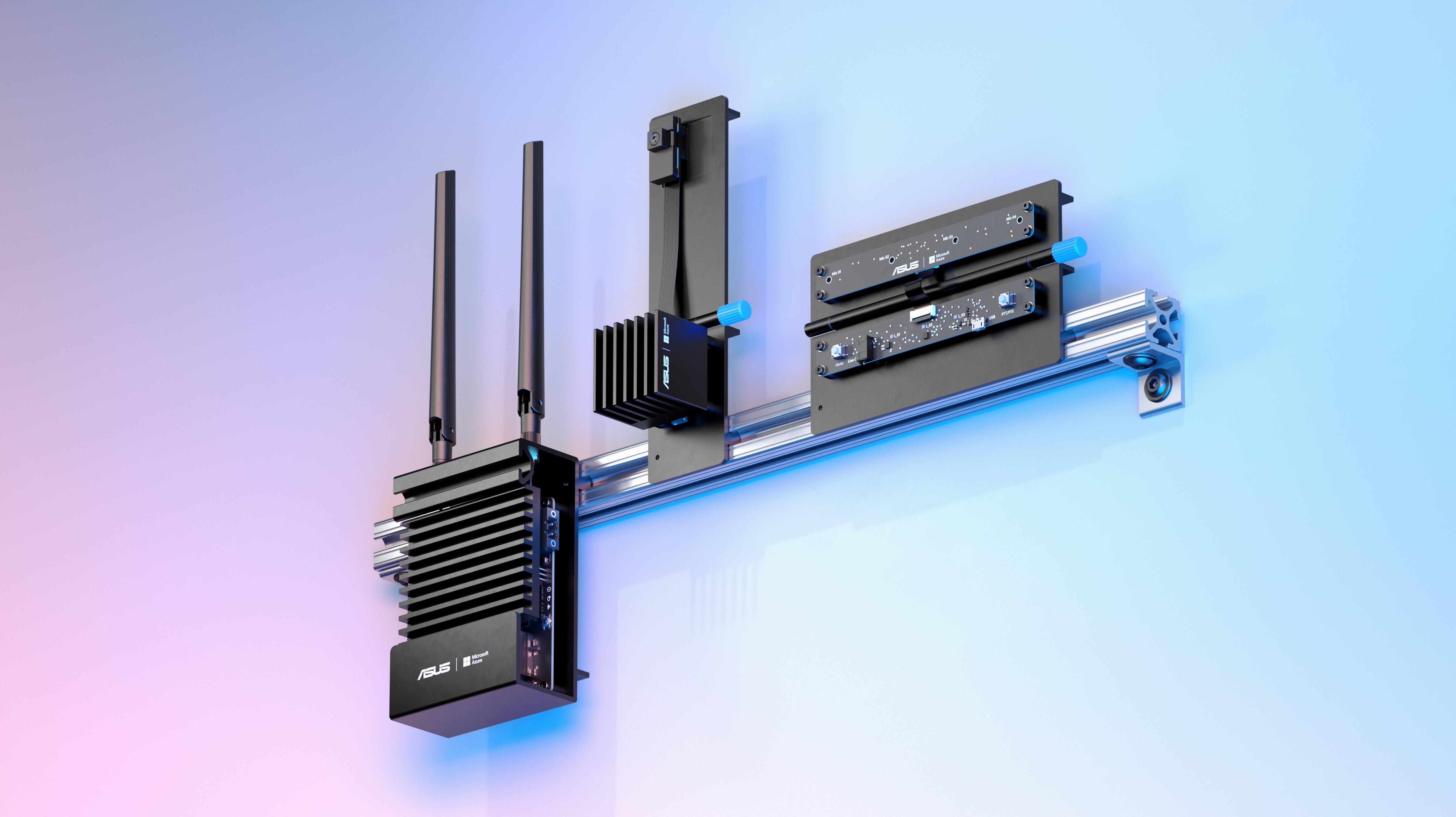
Microsoft today announced Azure Percept, its new hardware and software platform for bringing more of its Azure AI services to the edge. Percept combines Microsoft’s Azure cloud tools for managing devices and creating AI models with hardware from Microsoft’s device partners. The general idea here is to make it far easier for all kinds of businesses to build and implement AI for things like object detection, anomaly detections, shelf analytics and keyword spotting at the edge by providing them with an end-to-end solution that takes them from building AI models to deploying them on compatible hardware.

To kickstart this, Microsoft also today launches a hardware development kit with an intelligent camera for vision use cases (dubbed Azure Percept Vision). The kit features hardware-enabled AI modules for running models at the edge, but it can also be connected to the cloud. Users will also be able to trial their proofs-of-concept in the real world because the development kit conforms to the widely used 80/20 T-slot framing architecture.

In addition to Percept Vision, Microsoft is also launching Azure Percept Audio for audio-centric use cases.

Azure Percept devices, including Trust Platform Module, Azure Percept Vision and Azure Percept Audio

Azure Percept devices, including Trust Platform Module, Azure Percept Vision and Azure Percept Audio

“We’ve started with the two most common AI workloads, vision and voice, sight and sound, and we’ve given out that blueprint so that manufacturers can take the basics of what we’ve started,” said Roanne Sones, the corporate vice president of Microsoft’s edge and platform group, said. “But they can envision it in any kind of responsible form factor to cover a pattern of the world.”

Percept customers will have access to Azure’s cognitive service and machine learning models and Percept devices will automatically connect to Azure’s IoT hub.

Microsoft says it is working with silicon and equipment manufacturers to build an ecosystem of “intelligent edge devices that are certified to run on the Azure Percept platform.” Over the course of the next few months, Microsoft plans to certify third-party devices for inclusion in this program, which will ideally allow its customers to take their proofs-of-concept and easily deploy them to any certified devices.

“Anybody who builds a prototype using one of our development kits, if they buy a certified device, they don’t have to do any additional work,” said Christa St. Pierre, a product manager in Microsoft’s Azure edge and platform group.

St. Pierre also noted that all of the components of the platform will have to conform to Microsoft’s responsible AI principles — and go through extensive security testing.

02 Mar 2021

Microsoft’s Azure Arc multi-cloud platform now supports machine learning workloads

With Azure Arc, Microsoft offers a service that allows its customers to run Azure in any Kubernetes environment, no matter where that container cluster is hosted. From Day One, Arc supported a wide range of use cases, but one feature that was sorely missing when it first launched was support for machine learning (ML). But one of the advantages of a tool like Arc is that it allows enterprises to run their workloads close to their data and today, that often means using that data to train ML models.

At its Ignite conference, Microsoft today announced that it bringing exactly this capability to Azure Arc with the addition of Azure Machine Learning to the set of Arc-enabled data services.

“By extending machine learning capabilities to hybrid and multicloud environments, customers can run training models where the data lives while leveraging existing infrastructure investments. This reduces data movement and network latency, while meeting security and compliance requirements,” Azure GM Arpan Shah writes in today’s announcement.

This new capability is now available to Arc customers.

In addition to bringing this new machine learning capability to Arc, Microsoft also today announced that Azure Arc enabled Kubernetes, which allows users to deploy standard Kubernetes configurations to their clusters anywhere, is now generally available.

Also new in this world of hybrid Azure services is support for Azure Kubernetes Service on Azure Stack HCI. That’s a mouthful, but Azure Stack HCI is Microsoft’s platform for running Azure on a set of standardized, hyperconverged hardware inside a customer’s datacenter. The idea pre-dates Azure Arc, but it remains a plausible alternative for enterprises who want to run Azure in their own data center and has continued support from vendors like Dell, Lenovo, HPE, Fujitsu and DataOn.

On the open-source side of Arc, Microsoft also today stressed that Arc is built to work with any Kubernetes distribution that is conformant to the standard of the Cloud Native Computing Foundation (CNCF) and that it has worked with RedHat, Canonical, Rancher and now Nutanix to test and validate their Kubernetes implementations on Azure Arc.