Month: March 2021

30 Mar 2021

IoT satellite network startup Hiber secures €26M in funding round led by EU’s innovation agency

European satellite and communications startup, Hiber BV has secured €26 million in EU and private investment to expand its IoT satellite network.  The funding comes from the European Innovation Council Fund (EIC Fund), the EU’s innovation agency, which has a €278 million Innovation Fund. The EIC co-invested with an innovation credit provided by the Dutch government and existing shareholders. Other investors include Finch Capital, Netherlands Enterprise Agency and Hartenlust Group. Hiber’s satellite constellation tracks and monitors machines and devices in harder-to-reach places.

At the same time co-founder of Hiber, Laurens Groenendijk, is to step aside as managing director to turn his attention to “other investment initiatives” the company said in a statement. Steven Kroonsberg joins as CFO. Roel Jansen joins as CCO. Groenendijk has been Co-founder and Chief Executive Officer at Treatwell as well as a serial investor.

Coen Janssen, Chief Strategy Officer and co-founder of Hiber, commented: “The €26 million funding is fantastic validation for Hiber’s success and a major boost for the European ‘New Space’ sector. It is a key step in realizing our aim of making the Internet of Things really simple and available for everyone in remote and developing regions of the world.”

In particular, because it can reach out-of-the-way areas, Hiber’s network may be able to reduce losses in food production and leakages from oil wells.

Nicklas Bergman, European Innovation Council Fund Committee Member, commented: “I am glad to announce the EIC Fund support to this highly innovative company aiming at creating a European champion in the satellite Internet of Things sector. This equity financing will help Hiber to enable affordable and ubiquitous connectivity for the IoT solutions.”

Elia Montanari, Head of Management and Control at the European Space Agency, commented: “This major success has been supported at European level by collaboration of major EU bodies (EIC, EIB, ESA) fostering the Space Value Chain”.

30 Mar 2021

Singapore-based Nimbly gets $4.6M to help businesses automate their standard operating procedures

Many work teams, especially stores and restaurants, rely on manual spreadsheets to ensure their operations are running smoothly. Based in Singapore, Nimbly develops software that automates more of that process. Its features include digital checklists, inventory management and field audits that can be accessed through a mobile app. The startup announced today it has raised $4.6 million in pre-Series A funding, led by Insignia Ventures Partners, with participation from Sovereign’s Capital and Saison Capital.

Founded in 2018 by Daniel Hazman and Jonathan Keith, Nimbly is currently used by more than one hundred organizations in seven countries, including Indonesia, Singapore, Malaysia and the United States. Most of Nimbly’s users are in the retail or food and beverage industries, and include KFC, Kopi Kenangan, 7-Eleven and Under Armour. Some clients also come from the fast-moving consumer goods and agriculture sectors, like Cargill and Wilmar.

The new funding brings its total raised to $5.7 million and will be used for Nimbly’s Southeast Asia expansion, including a new partnership with restaurant operator Express Food Group, and adding products like more analytics, mystery shopper and employee training.

Nimbly is designed to replace spreadsheets, emails and messaging apps by combining their functionalities into one app. This includes checklists, audits and live video to ensure that standard operating procedures are followed across all locations. For example, restaurants may use Nimbly to see if food safety and hygiene standards are being followed. FMCG companies can use it to track inventory at stores and share information about how their sales and promotions compare to competitors, while use cases for agriculture include verifying that suppliers are following sustainability measure at their farms.

In a statement, Insignia Venture Partners founding managing partner Yinglan Tan said, “SaaS enterprise is an emerging vertical in Southeast Asia with more businesses of all sizes and across industries seeking to transition and even upgrade their capabilities to software tools. That makes us very excited to have partnered with Daniel, Jonathan and their team at Nimbly as they lead this space in building software stack capable of serving the operational needs of companies first in Southeast Asia, and then globally.”

30 Mar 2021

Tutor marketplace GoStudent raises €70M Series B round led by new US investor Coatue

Vienna-based GoStudent, which connects students to tutors on a virtual learning platform, has raised a €70M Series B funding round led by new US investor Coatue. Coatue has been making ‘raids’ into the European startup scene for the past year or so. It was joined by existing investors Left Lane Capital and DN Capital. This brings the total amount raised to €83.3M.

GoStudent competes with offline players like Schülerhilfe in Germany and Acadomia in France, which focus on small-classes in learning centers. By doing it online, GoStudent can introduce cost savings for users. It also competes where tutors advertise in traditional marketplaces like classified ads. The offering is similar to Chinese players like Zhangmen, VIPKid, TAL Education.

The investment will be used for growth and expansion into international markets such as Turkey and Greece. GoStudent is aiming for 15 countries across Europe and to grow its team to +800 employees and +10,000 tutors. It claims that over 250,000 tutoring sessions are booked every month on its platforms.

Felix Ohswald, co-founder and CEO of GoStudent said in a statement: “The series B investment makes us the best-funded consumer K12 education start-up in Europe! We are thrilled to receive such high confidence from existing and new investors on our way to revolutionize education worldwide. Our growth targets this year are enormous – the investment of 70 million euros will enable us to position GoStudent as the top player in Europe for making high-quality education widely accessible.”

Harley Miller, Managing Partner at Left Lane Capital said: “It’s been an exciting journey as an investor to see GoStudent expand so elegantly across Europe, offering affordable yet high-quality education to the masses.”

Nenad Marovac, Managing Partner & CEO at DN Capital: “We believe that GoStudent can be the dominant winner in online tutoring in Europe, by leveraging technology GoStudent democratizes quality education to all.”

30 Mar 2021

Finch Capital acquires Wirecard Turkey

Finch Capital, the early-stage fintech VC with a presence in London and Amsterdam, is acquiring Wirecard Turkey, a subsidiary of Wirecard, the disgraced fintech out of Germany. The acquisition, for which terms remain undisclosed and is still subject to regulatory approval, sees Finch create a new Ireland-registered entity called Nomu Pay.

After facing a huge accounting scandal and failing to make payments on its own loans, Wirecard went into insolvency last year. Since then, various parts of its business have been bought, including one of its largest assets, Wirecard Solutions, which was acquired by the U.K.’s Railsbank.

Finch’s managing partner Radboud Vlaar tells me Noma Pay’s larger plan is to invest in payments infrastructure in Turkey and the Middle East region. He says that more details will be provided on the new entity’s strategy and branding once the deal has formally closed.

Explains Vlaar: “We see tremendous growth opportunities to further enhance payments for Turkey’s 80 million inhabitants. We are excited to team up with Wirecard Turkey under the leadership of its CEO Serkan Yasin and we continue to actively look for further M&A opportunities in the region to accelerate its growth and development”.

Wirecard Turkey (Wirecard Ödeme ve Elektronik Para Hizmetleri A.Ş.) was established in Turkey in July 2008 and started its operations the following year as the country’s first “direct carrier billing” service provider. In 2014, it was wholly acquired by Wirecard Issuing & Acquiring Gmbh, which is a subsidiary of Wirecard AG.

Today, the Turkish company provides various payment services, namely: direct carrier billing, credit card acquiring, and e-money. It has contracts with all three GSM operators and the majority of banks in Turkey, and more than 1,200 merchants.

“There is great talent in Turkey to build a leading next generation payments company,” adds Vlaar.

30 Mar 2021

Men’s health startup Manual raises $30M Series A from US and European investors

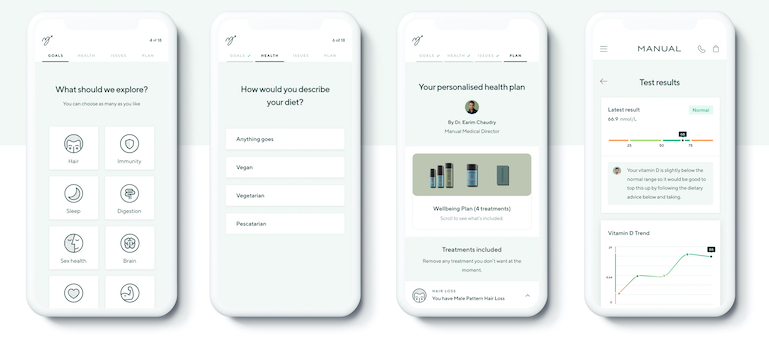
Men’s health and wellbeing startup Manual has raised a $30m Series A round from US-based Sonoma Brands and Waldencast, and Manual’s existing European investors Felix Capital and Cherry Ventures. FJ Labs and the GISEV Family Office also participated in the round. The cash will be used for product development and international expansion. Manual provides diagnostics, treatments and ongoing care and plans to expand across Europe, Asia and Latin America. The company has already expanded to Brazil.

Manual is competing with Numan (raised $13M), also from the UK (Manual launched a month earlier than them). In the US it is competing with Ro (raised $876.1M) and Hims (listed). All these brands tend to focus on issues like vitamins and erectile dysfunction, with the, often common refrain of, ‘normalizing’ the idea that men should look after themselves better, across a number of fronts and removing stigma’s around sexual health. It performs blood tests and other tests to analyze heart health, gut health, testosterone, sleep, energy, and immunity. They are pushing at a large market, as men historically avoid doctors.

Manual app

Manual app

George Pallis, CEO and Founder, previously led marketing at Wise and Deliveroo. In a statement he said: “We’ve been encouraged to see men of all ages increasingly turning to Manual to solve multiple health problems, with almost half of our customers seeking help for more than one issue. It’s clear that a health concern may have more than one cause, and we can provide customers with the ability to treat their health in a more holistic way. Using different treatments to understand and improve their wellbeing.”

Speaking to during an interview Pallis added: “We built our own teleconsultation product and have different applications for the blood test offering. When you get your results we will offer a clinician, we’ll walk you through all the data and the learnings. We offer tools where people can monitor their progress and have regular check-ins with our medical team.”

Antoine Nussenbaum, co-Founder and partner of Felix Capital, commented: “There is still much work to be done to remove the taboo when it comes to men looking after their wellbeing and talking openly about health concerns. But we’re starting to see a shift happen amongst consumers.”

Kevin Murphy, Managing Director of Sonoma Brands, commented: “Manual exists to empower men to take better care of themselves and to live fuller lives by doing so. George and his team have the clarity of vision and the skill to make Manual a leader in this exciting and important area.”

30 Mar 2021

African talent recruitment company TalentQL joins Techstars to further global ambition

African-focused talent recruitment and outsourcing company TalentQL today announced that it has been accepted into Techstars Toronto.

The company will join nine other startups in the accelerator’s class of 2021. This comes two weeks after Nigerian bus-booking platform Plentywaka announced its participation in the program as well.

TalentQL was launched last November by serial entrepreneurs Adewale Yusuf, Opeyemi Awoyemi and Akintunde Sultan. Before TalentQL, Yusuf co-founded Nigeria-based tech media publication Techpoint Africa; Awoyemi co-founded online recruitment site Jobberman; and Sultan founded nonprofit tech accelerator DevCareer.

The company has a “talent pool” developers join before passing through different assessments. Once the engineers pass the assessments, they can join the company’s “talent network” to access opportunities.  

The pandemic accelerated the need for international companies to seek cheaper and remote talent around the world. TalentQL is hoping to tap into what it thinks is a gold mine. According to Yusuf, the company, which is also U.S.-based, wants to decentralize access and democratize opportunity for Africa’s top tech talents. 

For most of its local clients, TalentQL mainly assists with recruitment. The other model entails hiring vetted engineers for international companies, managing them, and providing tax and health insurance services.

“We’re coming to the market to support the talent with health insurance, some tools to work with and a community to be part of. These are some of the offerings I think sets us apart from other companies,” Yusuf said.

But despite that, the company has faced the same challenge that has plagued the space — the lack of senior engineering talent. When most engineers reach that level of expertise, they tend to leave the country to the U.S. and Europe for better opportunities or, better still, launch their own startups. It’s a problem Andela faced in the past, resulting in the layoff of 400 junior developers “due to market demand for more senior engineering talent.”

Yusuf says this is why the company is pursuing a Pan-African and diasporan play (Africans in the U.S. and Europe), hoping to fill in the gap with senior talent from these places. And to further consolidate its Pan-African ambitions, it is planning to open an office in Kenya in the coming months.

Although TalentQL is fully remote, Yusuf says this has to happen to establish the right kind of understanding between on-the-ground recruiters and the engineers.

“We want a situation where when we’re recruiting from other countries, our technical recruiters are from those countries. We want them to be able to speak the language of these engineers and understand the culture of their countries,” he said.

TalentQL currently has over 100 tech experts available with more than 2,000 developers on its platform. These developers cater to clients from the U.S., Europe, Nigeria and Kenya. The CEO says the company is also in talks with some Fortune 500 companies to execute placements for their African expansion

In addition to the $300,000 pre-seed secured last year, the 6-month-old company will receive a $120,000 investment from Techstars. But besides the funding, Techstars’ backing will be crucial in two ways, according to Yusuf. First is how it operates going forward in a crowded tech talent marketplace with the likes of Ethiopia’s Gebeya and Nigeria’s Decagon and Semicolon. The other would be helping the company to be a global company, not just an African one.

For Sunil Sharma, the managing director of Techstars Toronto and an investor in five Nigerian startups, Techstars’ investment in TalentQL gives the accelerator a chance to participate in the burgeoning tech talent space. 

“The rise of Nigeria is more widely appreciated now in terms of technology sectors like finance, mobility and e-commerce, where talented Nigerians are not only bringing innovation and disruption but are doing so rapidly and at scale. Equally as intriguing is the opportunity relating to talent itself as Nigerians and Africans across the continent are contributing more to supporting tech companies across the world, and we think this is just the start.”

30 Mar 2021

African talent recruitment company TalentQL joins Techstars to further global ambition

African-focused talent recruitment and outsourcing company TalentQL today announced that it has been accepted into Techstars Toronto.

The company will join nine other startups in the accelerator’s class of 2021. This comes two weeks after Nigerian bus-booking platform Plentywaka announced its participation in the program as well.

TalentQL was launched last November by serial entrepreneurs Adewale Yusuf, Opeyemi Awoyemi and Akintunde Sultan. Before TalentQL, Yusuf co-founded Nigeria-based tech media publication Techpoint Africa; Awoyemi co-founded online recruitment site Jobberman; and Sultan founded nonprofit tech accelerator DevCareer.

The company has a “talent pool” developers join before passing through different assessments. Once the engineers pass the assessments, they can join the company’s “talent network” to access opportunities.  

The pandemic accelerated the need for international companies to seek cheaper and remote talent around the world. TalentQL is hoping to tap into what it thinks is a gold mine. According to Yusuf, the company, which is also U.S.-based, wants to decentralize access and democratize opportunity for Africa’s top tech talents. 

For most of its local clients, TalentQL mainly assists with recruitment. The other model entails hiring vetted engineers for international companies, managing them, and providing tax and health insurance services.

“We’re coming to the market to support the talent with health insurance, some tools to work with and a community to be part of. These are some of the offerings I think sets us apart from other companies,” Yusuf said.

But despite that, the company has faced the same challenge that has plagued the space — the lack of senior engineering talent. When most engineers reach that level of expertise, they tend to leave the country to the U.S. and Europe for better opportunities or, better still, launch their own startups. It’s a problem Andela faced in the past, resulting in the layoff of 400 junior developers “due to market demand for more senior engineering talent.”

Yusuf says this is why the company is pursuing a Pan-African and diasporan play (Africans in the U.S. and Europe), hoping to fill in the gap with senior talent from these places. And to further consolidate its Pan-African ambitions, it is planning to open an office in Kenya in the coming months.

Although TalentQL is fully remote, Yusuf says this has to happen to establish the right kind of understanding between on-the-ground recruiters and the engineers.

“We want a situation where when we’re recruiting from other countries, our technical recruiters are from those countries. We want them to be able to speak the language of these engineers and understand the culture of their countries,” he said.

TalentQL currently has over 100 tech experts available with more than 2,000 developers on its platform. These developers cater to clients from the U.S., Europe, Nigeria and Kenya. The CEO says the company is also in talks with some Fortune 500 companies to execute placements for their African expansion

In addition to the $300,000 pre-seed secured last year, the 6-month-old company will receive a $120,000 investment from Techstars. But besides the funding, Techstars’ backing will be crucial in two ways, according to Yusuf. First is how it operates going forward in a crowded tech talent marketplace with the likes of Ethiopia’s Gebeya and Nigeria’s Decagon and Semicolon. The other would be helping the company to be a global company, not just an African one.

For Sunil Sharma, the managing director of Techstars Toronto and an investor in five Nigerian startups, Techstars’ investment in TalentQL gives the accelerator a chance to participate in the burgeoning tech talent space. 

“The rise of Nigeria is more widely appreciated now in terms of technology sectors like finance, mobility and e-commerce, where talented Nigerians are not only bringing innovation and disruption but are doing so rapidly and at scale. Equally as intriguing is the opportunity relating to talent itself as Nigerians and Africans across the continent are contributing more to supporting tech companies across the world, and we think this is just the start.”

30 Mar 2021

Everli, the European marketplace for online grocery shopping, bags $100M Series C

Everli, the European marketplace for online grocery shopping that started in Italy but now also operates in Poland, Czech Republic and France, has raised a $100 million in Series C funding.

The round is led by Verlinvest, with participation from new investors Luxor, DN Capital, C4 Ventures, and Convivialité Ventures. FITEC (part of Fondo Italiano d’Investimento), 360 Capital, Innogest, and DIP also followed on.

Everli, formerly called Supermercato24, says it will use the injection of capital to accelerate growth and further expand its international footprint.

Founded in 2014, Everli lets customers order from local supermarkets for delivery. The company uses gig economy-styled personal shoppers who go into the store and ‘pick’ the products ordered and then deliver them same-day, or for an added cost within an hour. The company charges a delivery fee to consumers, but also generates revenue from fees charged to partnering merchants, and, notably, through advertising.

It has become the delivery partner of some of Europe’s largest grocery brands, offering access to over 300,000 products across the 70 cities it operates in. And, like other online grocery offerings, Everli has benefited from a boost in e-commerce and a reliance on delivery services prompted by the pandemic and country lockdowns.

“Everli is focused specifically on the grocery space,” says Federico Sargenti, CEO at Everli. “Rather than small baskets, or picking up just the basic essentials, Everli is focused on delivering whatever you need right up to your full weekly shop, with same-day delivery and a one-hour delivery window of your choice.”

He says that what further differentiates Everli is its strong relationships with retailers, and the use of their existing infrastructure. “Instead of being tethered and restricted to a radius around our own expensive central warehouses, we are able to operate across a much wider geographical footprint, entering small-to-medium density areas and offering many customers their first opportunity to receive same day groceries, [all] while retaining sustainable unit economics”.

Sargenti describes Everli as more similar to Instacart than many other European delivery firms, including the new crop of dark stores or those that offer groceries as a secondary service to takeouts. “[This is] why we’re leading the grocery space in Europe and securing brands like Lidl, Kaufland, and Carrefour,” adds Sargenti.

In 2020, Everli sales almost quadrupled to $130 million. That growth is happening more and more outside Italy, with its international expansion now responsible for over 20% of orders.

“We are proud to have played a role in helping many people during these difficult times, but we are only getting started, as this industry will never be the same again,” says Sargenti in a statement. “The shift to online delivery is not reversing, and expectations on all sides are only increasing. We have built a model which we believe offers unparalleled value to consumers, through wide access to the retailers and products they love, even in less urban areas, and to retailers, who are now able to affordably compete online and reach a whole new consumer base”.

Adds Simone Sallustio, Executive Director at Verlinvest: “Everli combines its tech & data excellence with the grocery retail experience of its partners and this combination provides it with the perfect position to cement itself as the European e-grocery market leader, delivering the best experience to consumers, value to retail partners, and digital activation to brands”.

30 Mar 2021

Testing platform Tricentis acquires performance testing service Neotys

If you develop software for a large enterprise company, chances are you’ve heard of Tricentis. If you don’t develop software for a large enterprise company, chances are you haven’t. The software testing company with a focus on modern cloud and enterprise applications was founded in Austria in 2007 and grew from a small consulting firm to a major player in this field, with customers like Allianz, BMW, Starbucks, Deutsche Bank, Toyota and UBS. In 2017, the company raised a $165 million Series B round led by Insight Venture Partners.

Today, Tricentis announced that it has acquired Neotys, a popular performance testing service with a focus on modern enterprise applications and a tests-as-code philosophy. The two companies did not disclose the price of the acquisition. France-based Neotys launched in 2005 and raised about €3 million before the acquisition. Today, it has about 600 customers for its NeoLoad platform. These include BNP Paribas, Dell, Lufthansa, McKesson and TechCrunch’s own corporate parent, Verizon.

As Tricentis CEO Sandeep Johri noted, testing tools were traditionally script-based, which also meant they were very fragile whenever an application changed. Early on, Tricentis introduced a low-code tool that made the automation process both easier and resilient. Now, as even traditional enterprises move to DevOps and release code at a faster speed than ever before, testing is becoming both more important and harder for these companies to implement.

“You have to have automation and you cannot have it be fragile, where it breaks, because then you spend as much time fixing the automation as you do testing the software,” Johri said. “Our core differentiator was the fact that we were a low-code, model-based automation engine. That’s what allowed us to go from $6 million in recurring revenue eight years ago to $200 million this year.”

Tricentis, he added, wants to be the testing platform of choice for large enterprises. “We want to make sure we do everything that a customer would need, from a testing perspective, end to end. Automation, test management, test data, test case design,” he said.

The acquisition of Neotys allows the company to expand this portfolio by adding load and performance testing as well. It’s one thing to do the standard kind of functional testing that Tricentis already did before launching an update, but once an application goes into production, load and performance testing becomes critical as well.

“Before you put it into production — or before you deploy it — you need to make sure that your application not only works as you expect it, you need to make sure that it can handle the workload and that it has acceptable performance,” Johri noted. “That’s where load and performance testing comes in and that’s why we acquired Neotys. We have some capability there, but that was primarily focused on the developers. But we needed something that would allow us to do end-to-end performance testing and load testing.”

The two companies already had an existing partnership and had integrated their tools before the acquisition — and many of its customers were already using both tools, too.

“We are looking forward to joining Tricentis, the industry leader in continuous testing,” said Thibaud Bussière, president and co-founder at Neotys. “Today’s Agile and DevOps teams are looking for ways to be more strategic and eliminate manual tasks and implement automated solutions to work more efficiently and effectively. As part of Tricentis, we’ll be able to eliminate laborious testing tasks to allow teams to focus on high-value analysis and performance engineering.”

NeoLoad will continue to exist as a stand-alone product, but users will likely see deeper integrations with Tricentis’ existing tools over time, include Tricentis Analytics, for example.

Johri tells me that he considers Tricentis one of the “best kept secrets in Silicon Valley” because the company not only started out in Europe (even though its headquarters is now in Silicon Valley) but also because it hasn’t raised a lot of venture rounds over the years. But that’s very much in line with Johri’s philosophy of building a company.

“A lot of Silicon Valley tends to pay attention only when you raise money,” he told me. “I actually think every time you raise money, you’re diluting yourself and everybody else. So if you can succeed without raising too much money, that’s the best thing. We feel pretty good that we have been very capital efficient and now we’re recognized as a leader in the category — which is a huge category with $30 billion spend in the category. So we’re feeling pretty good about it.”

29 Mar 2021

Jake Paul looks to knock out the venture capital world with Anti Fund

During every economic boom, there are startup investors who appear on the scene from new corners. Some churn out; others earn the respect of the old guard over time.

Jake Paul would be happy to be in the latter camp. Then again, the 24-year-old didn’t become a YouTube star by being conventional. Little wonder that Paul is now jumping into venture capital with a venture outfit called the Anti-Fund. Newly formed with serial entrepreneur Geoffrey Woo, the endeavor is traditional in some ways but has a decidedly different point of view, say the two.

Some of the basics: Anti Fund is not a discrete pool of capital but is instead using AngelList’s Rolling Funds platform, which enables investors to raise money through a quarterly subscription from interested backers. Among its earliest backers are Marc Andreessen and Chris Dixon of Andreessen Horowitz.

Why choose a rolling fund instead of a traditional fund? For one thing, they were drawn to its Rule 506(c) structure, which enables issuers to broadly solicit and generally advertise an offering. Because Anti Fund plans to focus largely on consumer-focused brands and next-generation creator platforms in particular, “we want to be able to promote and advertise our fund,” says Woo, who most recently founded a nutrition-based food and beverage company and earlier in his career sold a company to Groupon.

Paul also wants to ensure his fans can get involved in they want. “I have followers are different reasons, and they want to be involved in what I’m doing. If they’re involved in our fund, then that’s more people rooting for us and our portfolio companies to win. We almost create this army that’s pushing all of these companies forward.”

Anti Fund plans to write checks of between $100,000 and $1 million to one to two startups every quarter. The goal, says Paul, is to be the “biggest rolling fund on AngelList” investing “around $10 million to $20 million a year.”

Anti Fund is just the newest effort to come from the world of social media influencers. As we reported earlier this month, the management company of another YouTube star, MrBeast, has dived into the world of venture capital with a $20 million fund it assembled with commitments from social media creators. Dispo, a photo-sharing app cofounded by YouTube star David Dobrik also attracted widespread attention and funding earlier this year.

“I think a lot of creators with newfound wealth — a lot of YouTubers or Instagram models — don’t necessarily know what to do with their money,” says Paul, who has already diversified into boxing, making his professional boxing debut last year. “I’m trying to lead the way.”

Neither Paul nor Woo is new to startup investing. Woo has been invested in roughy 20 startups on his own, including Paribus, an email widget that saved consumers money and that was acquired by Capital One. Paul, meanwhile, previously cofounded another small venture outfit called TGZ Capital that he says participated in the funding rounds of 15 startups.

One of these was Quip, a seven-year-old oral care company that has raised $62 million in funding, according to Crunchbase. Another company backed by Paul is Triller, the social video app that briefly became the most-downloaded free app in Apple’s App Store last summer when its much bigger rival TikTok was facing an uncertain future in the U.S.

Triller has since lost enough of that momentum that talk of going public via a special purpose acquisition vehicle has yet to lead to a tie-up, six months after the company reportedly began exploring the possibility. Still, as a stakeholder, Paul is keeping it in the headlines, including by providing it with exclusive rights to stream (for $50 a pop) an upcoming boxing match with former MMA wrestler Ben Asken that Triller will air on April 17.

As luck would have it, it’s because Paul moved from L.A. to Miami to train for the fight that he met Woo, a Californian who visited Miami this past January for what was supposed to be a weekend trip and wound up staying. The two say they hit it off at a tech event and, after establishing they had mutual friends, connected over their interest in performance nutrition, with Paul investing in Woo’s newest company, HVMN. Last month, they decided to partner on Anti Fund, too.

Whether the two succeed as business partners will take time to learn. Certainly, they have a strong work ethic. Woo has started three companies since graduating from Stanford with a computer science degree. Though Paul makes what what seems an inordinate amount of money for creating YouTube videos, he has created thousands of them in order to amass his more than 20 million followers.

It’s also clear that, as with his social media career, Paul is taking boxing seriously. During his most recent fight, in November, he knocked out former NBA player Nate Robinson in the second round. His first boxing match, against fellow YouTuber AnEsonGib in January of last year, also ended in a knockout just 2 minutes and 18 seconds into the fight.

Many professional athletes see the fights as mere stunts, given Paul’s famous made-for-video antics, from a short-lived marriage, to disregarding the concerns of neighbors in West Hollywood, to being charged by police last June for criminal trespass and unlawful assembly connected with the looting of an Arizona mall.

An obvious risk is that the best deal-makers in the world will see Anti Fund as a stunt, too, or else that something that Paul says or does will ruffle feathers. As industry watchers know, investors’ excitement over Dobrik’s Dispo dissipated quickly after Business Insider first detailed various accusations of misconduct against members of the Dobrik’s online squad, including an accusation of rape against one of Dobrik’s friends that allegedly took place during a video shoot.

Paul, who dropped out of high school as a senior to pursue a career as an influencer, is well-aware of the Dobrik scandal. It’s because he has grown up online, in fact, that he’s not concerned about something from his past threatening his future.

“It’s definitely [risky to be in my position]. Your life is put on display when you choose to be a celebrity and specifically a vlogger. But because I’ve lived online, everyone’s seen everything already,” he says.

He also thinks that “VCs and people in the business world understand more and more how to work” with influencers and other celebrities who have enormous followings and are bringing them along as their careers evolve. “At the end of the day,” he says of business partners, “if someone is a good person and you have a relationship established with them, that’s what really matters.”