Month: March 2021

25 Mar 2021

Automakers, suppliers and startups see growing market for in-vehicle AR/VR applications

Augmented and virtual reality have been used for years in gaming, design and shopping. Now, a new battle for market share is emerging — inside vehicles.

Safety-glass windshields offer a new opportunity for suppliers, manufacturers and startups that are starting to adapt this technology: AR overlays digital information or images on what a user sees in the real world, while VR creates a seemingly real experience that changes as they move through it.

The potential for monetizing AR/VR is hamstrung by a number of factors: The long, expensive timelines required to develop, tool and test an automotive-grade product has constrained development to a small subset of startups and several large suppliers.

And despite all of the pomp and promises about the technology’s potential, there isn’t a clear understanding of market demand for bringing AR and VR to cars, trucks and passenger vans. Estimates of the global market range from $14 billion by 2027 to as much as $673 billion by 2025. That wide range shows just how nascent the market currently is and how much opportunity is present.

“At the vehicle manufacturer level, companies are witnessing a complete shift of emphasis of what their product offering is, to the user. Because of that change of emphasis, there’s a whole new paradigm of what the car is,” said Andy Travers, the CEO of Ceres, a Scottish company that specializes in creating holographic glass for AR applications. “There is a huge interest in AR and transparent displays because a car is no longer really differentiated by its engine size, especially as we get into electric vehicles. They are going to be identical skateboards. The question then becomes, how do you differentiate an electric car? You push it toward the user experience.”

It’s no surprise that the implementation of automotive AR (and in limited situations, VR) has been and will continue to be slow. It will largely lag the wider AR and VR market for a number of reasons. Vehicle systems — especially those using computing power and technology needed for AR and VR — must be robust enough to handle tremendous temperature swings, rough jostling and impacts over anywhere from three to 10 years, even if Tesla says that “it is economically, if not technologically, infeasible to expect that such components can or should be designed to last the vehicle’s entire useful life.”

These systems have to be nearly indestructible in extreme conditions for a very long period of time. They must also be compact and power-efficient, especially as electric vehicles become more prevalent. You don’t want your AR or VR system draining your battery and leaving you stranded.

As an example of just how much the automotive technology landscape differs from the consumer realm, consider how long it took for touchscreens to show up in vehicle cockpits. While Buick offered a rudimentary touchscreen in its 1986 Riviera, it was not the easy-to-use interface we’re used to today thanks to the advent of the iPhone.

This is partially due to the three- to seven-year iteration cycles most vehicle makers are on and because the technology simply wasn’t familiar enough to the consumer market to make widespread adoption profitable. In their current form, AR and VR have seen a far more successful uptake rate in industrial usage and application, in part because the technology is still so pricey.

It would be a mistake to exclude a discussion about the development of autonomous driving in this AR and VR conversation, too. The technology is instrumental in the development of fully autonomous vehicles, and while there are no full -autonomous vehicles on the road today, automakers are pushing to make them more than just vaporware.

The players

Many well-established brands like Audi, Mercedes-Benz and Volkswagen already offer a suite of AR features in their top-end vehicles. Automotive suppliers like Continental, Denso, Visteon, ZF, Nvidia, Bosch, Panasonic and others are the biggest players in the AR and VR automotive space, supplying and making head-up displays (HUDs) and related components for a variety of established automakers.

Most of the AR features in these vehicles are focused on overlaying directional guides over camera images to help drivers navigate in unfamiliar territories or identify a particular building or landmark. Virtual reality, thus far, has been largely applied to the design, sales, demonstration and education of consumers about new technology and features in vehicles, although companies like Audi spinoff Holoride are working to offer passengers VR experiences that can help cut down on in-car motion sickness while simultaneously offering gaming, entertainment or business applications. Even ride-hailing companies are getting in on the AR and VR game, with Lyft and Uber exploring AR and VR options for riders.


25 Mar 2021

Automakers, suppliers and startups see growing market for in-vehicle AR/VR applications

Augmented and virtual reality have been used for years in gaming, design and shopping. Now, a new battle for market share is emerging — inside vehicles.

Safety-glass windshields offer a new opportunity for suppliers, manufacturers and startups that are starting to adapt this technology: AR overlays digital information or images on what a user sees in the real world, while VR creates a seemingly real experience that changes as they move through it.

The potential for monetizing AR/VR is hamstrung by a number of factors: The long, expensive timelines required to develop, tool and test an automotive-grade product has constrained development to a small subset of startups and several large suppliers.

And despite all of the pomp and promises about the technology’s potential, there isn’t a clear understanding of market demand for bringing AR and VR to cars, trucks and passenger vans. Estimates of the global market range from $14 billion by 2027 to as much as $673 billion by 2025. That wide range shows just how nascent the market currently is and how much opportunity is present.

“At the vehicle manufacturer level, companies are witnessing a complete shift of emphasis of what their product offering is, to the user. Because of that change of emphasis, there’s a whole new paradigm of what the car is,” said Andy Travers, the CEO of Ceres, a Scottish company that specializes in creating holographic glass for AR applications. “There is a huge interest in AR and transparent displays because a car is no longer really differentiated by its engine size, especially as we get into electric vehicles. They are going to be identical skateboards. The question then becomes, how do you differentiate an electric car? You push it toward the user experience.”

It’s no surprise that the implementation of automotive AR (and in limited situations, VR) has been and will continue to be slow. It will largely lag the wider AR and VR market for a number of reasons. Vehicle systems — especially those using computing power and technology needed for AR and VR — must be robust enough to handle tremendous temperature swings, rough jostling and impacts over anywhere from three to 10 years, even if Tesla says that “it is economically, if not technologically, infeasible to expect that such components can or should be designed to last the vehicle’s entire useful life.”

These systems have to be nearly indestructible in extreme conditions for a very long period of time. They must also be compact and power-efficient, especially as electric vehicles become more prevalent. You don’t want your AR or VR system draining your battery and leaving you stranded.

As an example of just how much the automotive technology landscape differs from the consumer realm, consider how long it took for touchscreens to show up in vehicle cockpits. While Buick offered a rudimentary touchscreen in its 1986 Riviera, it was not the easy-to-use interface we’re used to today thanks to the advent of the iPhone.

This is partially due to the three- to seven-year iteration cycles most vehicle makers are on and because the technology simply wasn’t familiar enough to the consumer market to make widespread adoption profitable. In their current form, AR and VR have seen a far more successful uptake rate in industrial usage and application, in part because the technology is still so pricey.

It would be a mistake to exclude a discussion about the development of autonomous driving in this AR and VR conversation, too. The technology is instrumental in the development of fully autonomous vehicles, and while there are no full -autonomous vehicles on the road today, automakers are pushing to make them more than just vaporware.

The players

Many well-established brands like Audi, Mercedes-Benz and Volkswagen already offer a suite of AR features in their top-end vehicles. Automotive suppliers like Continental, Denso, Visteon, ZF, Nvidia, Bosch, Panasonic and others are the biggest players in the AR and VR automotive space, supplying and making head-up displays (HUDs) and related components for a variety of established automakers.

Most of the AR features in these vehicles are focused on overlaying directional guides over camera images to help drivers navigate in unfamiliar territories or identify a particular building or landmark. Virtual reality, thus far, has been largely applied to the design, sales, demonstration and education of consumers about new technology and features in vehicles, although companies like Audi spinoff Holoride are working to offer passengers VR experiences that can help cut down on in-car motion sickness while simultaneously offering gaming, entertainment or business applications. Even ride-hailing companies are getting in on the AR and VR game, with Lyft and Uber exploring AR and VR options for riders.

25 Mar 2021

Snapchat is developing its own take on TikTok Duets with a new ‘Remix’ feature

One of the challenges that some would-be TikTok rivals have faced is that they often lack the same robust set of content creation tools, like filters, effects, and tools for repurposing others’ content — like TikTok’s Stitch and Duet, for example. It now appears that Snapchat is working to correct that latter problem, however, as it’s been spotted working on a TikTok Duets-like feature called “Remix,” designed for replying to Snaps. This feature will allow users to create new content using their friends’ Snaps — a “remix,” that is.

Initially, the feature will allow users to reply a friend’s story with a remixed Snap. To do so, you can record your own Snap alongside the original as it plays — much like a TikTok Duet.

The feature, which Snap confirms has launched into external testing, follows Instagram’s public test of a similarly named “Remix” feature focused on Reels content. (It had also tested a version for Stories as a first step.)

In Instagram’s case, the company explains that Remix lets anyone create an Instagram Reel where your video and theirs play side-by-side. This is, essentially, Instagram’s own version of TikTok Duets, a tool that’s often used to interact with other TikTok users’ content. In Duets, TikTok users can sing, dance, joke or act alongside another user’s video; cook someone else’s recipe; record reaction videos; boost videos from lesser-known creators; and more. It’s a core part of what makes TikTok feel like a social network, rather than just a platform for more passive video viewing.

Last fall, TikTok announced it was introducing several new layout options for Duets in addition to the left-right layout, including a new top-bottom layout, a special “react” layout, and a three-screen layout.

Some of those same Duet formats and others now appear to be under consideration by Snap, as well.

In its Remix feature, Snapchat users are presented with a screen where they can choose from a variety of options for combining Snaps — including the side-by-side and top-and-bottom formats, as well as others like where content is overlaid or where you could react to a Snap.

Image Credits: Photo of Snapchat’s Remix feature via @alex193a on Twitter

According to reverse engineer Alessandro Paluzzi, who first spotted the addition, Remix also offers a way for users to tag friends or other people they want to have permission to either remix or share their Snap via a new toggle switch.

It appears that users will be able to access the “Remix” feature from the same menu where you can today either report” a Snap or send it to others.

This menu, of course, is also available from within Snapchat’s new TikTok competitor, known as Spotlight, launched last year.

Though initially, Remix is being tested among friends, we understand that it’s expected to make its way to other parts of the Snapchat app in time. And likely, this would include Spotlight. Much like TikTok, Spotlight offers a video feed filled with short-form, entertaining videos that you can scroll through with up and down swipes, often set to popular music — thanks to Snap’s music industry deals. This would be a natural fit for Remixes, as it’s a common way for users to interact with each others’ content to create a dialog.

Image Credits: Photo of Snapchat’s Remix feature via @alex193a on Twitter (opens in a new window)

Snap confirmed with TechCrunch it’s beginning to test Remix on its app.

“I can confirm that externally we are testing the ability to reply to a friend’s story with a remixed Snap,” a spokesperson said. “It lets you build on your friend’s Snap while recording your own alongside the original as it plays for contextual conversations on Snapchat,” they noted.

The company didn’t offer an ETA for a broader rollout at this time.

25 Mar 2021

Snapchat is developing its own take on TikTok Duets with a new ‘Remix’ feature

One of the challenges that some would-be TikTok rivals have faced is that they often lack the same robust set of content creation tools, like filters, effects, and tools for repurposing others’ content — like TikTok’s Stitch and Duet, for example. It now appears that Snapchat is working to correct that latter problem, however, as it’s been spotted working on a TikTok Duets-like feature called “Remix,” designed for replying to Snaps. This feature will allow users to create new content using their friends’ Snaps — a “remix,” that is.

Initially, the feature will allow users to reply a friend’s story with a remixed Snap. To do so, you can record your own Snap alongside the original as it plays — much like a TikTok Duet.

The feature, which Snap confirms has launched into external testing, follows Instagram’s public test of a similarly named “Remix” feature focused on Reels content. (It had also tested a version for Stories as a first step.)

In Instagram’s case, the company explains that Remix lets anyone create an Instagram Reel where your video and theirs play side-by-side. This is, essentially, Instagram’s own version of TikTok Duets, a tool that’s often used to interact with other TikTok users’ content. In Duets, TikTok users can sing, dance, joke or act alongside another user’s video; cook someone else’s recipe; record reaction videos; boost videos from lesser-known creators; and more. It’s a core part of what makes TikTok feel like a social network, rather than just a platform for more passive video viewing.

Last fall, TikTok announced it was introducing several new layout options for Duets in addition to the left-right layout, including a new top-bottom layout, a special “react” layout, and a three-screen layout.

Some of those same Duet formats and others now appear to be under consideration by Snap, as well.

In its Remix feature, Snapchat users are presented with a screen where they can choose from a variety of options for combining Snaps — including the side-by-side and top-and-bottom formats, as well as others like where content is overlaid or where you could react to a Snap.

Image Credits: Photo of Snapchat’s Remix feature via @alex193a on Twitter

According to reverse engineer Alessandro Paluzzi, who first spotted the addition, Remix also offers a way for users to tag friends or other people they want to have permission to either remix or share their Snap via a new toggle switch.

It appears that users will be able to access the “Remix” feature from the same menu where you can today either report” a Snap or send it to others.

This menu, of course, is also available from within Snapchat’s new TikTok competitor, known as Spotlight, launched last year.

Though initially, Remix is being tested among friends, we understand that it’s expected to make its way to other parts of the Snapchat app in time. And likely, this would include Spotlight. Much like TikTok, Spotlight offers a video feed filled with short-form, entertaining videos that you can scroll through with up and down swipes, often set to popular music — thanks to Snap’s music industry deals. This would be a natural fit for Remixes, as it’s a common way for users to interact with each others’ content to create a dialog.

Image Credits: Photo of Snapchat’s Remix feature via @alex193a on Twitter (opens in a new window)

Snap confirmed with TechCrunch it’s beginning to test Remix on its app.

“I can confirm that externally we are testing the ability to reply to a friend’s story with a remixed Snap,” a spokesperson said. “It lets you build on your friend’s Snap while recording your own alongside the original as it plays for contextual conversations on Snapchat,” they noted.

The company didn’t offer an ETA for a broader rollout at this time.

25 Mar 2021

Everlywell acquires two healthcare companies and forms parent Everly Health

Austin-based home lab testing kit startup Everlywell is expanding its scope considerably with two acquisitions, and a transformation that includes the establishment of a new parent company led by Everlywell CEO and co-founder Julia Cheek. The new entity, called Everly Health, will now offers services including at-home lab testing kits and education, population-scale testing through a U.S.-wide clinician network, telehealth and payer-supported/enterprise self-collected lab test.

This is a big move for Everlywell, which was found in 2015 (and which was a finalist in TechCrunch’s 2016 Disrupt SF Battlefield completion). The company has steadily iterated on its offerings, expanding its at-home testing from fertility products, to food sensitivities and allergies, and last year, to at home COVID-19 test collection.

Everly Health’s business now includes not only that kind of at-home consumer diagnostic and personal health education, but also many relationships through PWNHealth, which will rebrand to Everly Health Solutions, with health plans, employers and labs across the U.S.

Everlywell itself was actually a longtime partner of PNWHealth, which is what Cheek told me an in interview actually helped make the acquisition make so much sense to both companies. They’d been working together for years, and that collaboration had only deepened in the wake of the COVID-19 pandemic.

“What we found over the last year, was we were collaborating on all these different enterprise partnerships to offer solutions, and so our cultures are really well aligned, and our teams have worked closely together,” she said. “And we both share this common ethos that we felt the urgent need to help people and to save lives, but also this discipline around consumer-friendly and enabled care, grounded in diagnostics.”

Overall, Cheek said that the decision to go out and acquire the pieces of the puzzle needed to deliver a more comprehensive care offering was partly driven by the pandemic, but that really just drove an acceleration of what Everlywell was already beginning to see before COVID-19. Freshly capitalized with the $175 million it raised last December, the startup was in a position to make some bold moves in order to make the most of the moment.

“Before the pandemic, but especially during and looking out to post-pandemic, we have just seen this massive acceleration of the need for consumer friendly testing services,” she said. “Our business has continued to grow exponentially, even since normal doctor’s appointments resumed, orders of magnitude, 300% growth. We sat back and said, since we believe healthcare is in a watershed moment post-pandemic, where do we think we need to actually be to be able to offer a full-service diagnostic solution as this entire space grows. So it’s Everlywell as a consumer friendly brand, but it’s also this massive enterprise need for home testing, and broader consumer diagnostics.”

The new acquisitions do add some complexity to Everly Health’s business, since its Everly Health Solutions also serves a number of customers that would be considered competitive with Everlywell. Cheek points out that both businesses have a demonstrated track record of security and data integrity, compliant with HIPAA standards, and says that they’re setting up a strict firewall that will result in “complete data independence” of Everly Health Solutions to ensure there’s no possibility of anti-competitive behavior.

The companies will however share customer experience, design and product resources, however, and the plan is to build a unified brand focused on high-quality customer engagement across the board.

Everly Health hasn’t released the financial details of the transaction, but it has shared shared that PWNHealth CEO Sanjay Pingle will be acting in a transitional role in the combined company for the time being, and will serve on the board of Everly Health. Investors in PWNHealth, including Spectrum Equity, and Blue Cross/Blue Shield corporate VC Blue Venture Fund will also retain an ownership stake in Everly Health.

25 Mar 2021

Everlywell acquires two healthcare companies and forms parent Everly Health

Austin-based home lab testing kit startup Everlywell is expanding its scope considerably with two acquisitions, and a transformation that includes the establishment of a new parent company led by Everlywell CEO and co-founder Julia Cheek. The new entity, called Everly Health, will now offers services including at-home lab testing kits and education, population-scale testing through a U.S.-wide clinician network, telehealth and payer-supported/enterprise self-collected lab test.

This is a big move for Everlywell, which was found in 2015 (and which was a finalist in TechCrunch’s 2016 Disrupt SF Battlefield completion). The company has steadily iterated on its offerings, expanding its at-home testing from fertility products, to food sensitivities and allergies, and last year, to at home COVID-19 test collection.

Everly Health’s business now includes not only that kind of at-home consumer diagnostic and personal health education, but also many relationships through PWNHealth, which will rebrand to Everly Health Solutions, with health plans, employers and labs across the U.S.

Everlywell itself was actually a longtime partner of PNWHealth, which is what Cheek told me an in interview actually helped make the acquisition make so much sense to both companies. They’d been working together for years, and that collaboration had only deepened in the wake of the COVID-19 pandemic.

“What we found over the last year, was we were collaborating on all these different enterprise partnerships to offer solutions, and so our cultures are really well aligned, and our teams have worked closely together,” she said. “And we both share this common ethos that we felt the urgent need to help people and to save lives, but also this discipline around consumer-friendly and enabled care, grounded in diagnostics.”

Overall, Cheek said that the decision to go out and acquire the pieces of the puzzle needed to deliver a more comprehensive care offering was partly driven by the pandemic, but that really just drove an acceleration of what Everlywell was already beginning to see before COVID-19. Freshly capitalized with the $175 million it raised last December, the startup was in a position to make some bold moves in order to make the most of the moment.

“Before the pandemic, but especially during and looking out to post-pandemic, we have just seen this massive acceleration of the need for consumer friendly testing services,” she said. “Our business has continued to grow exponentially, even since normal doctor’s appointments resumed, orders of magnitude, 300% growth. We sat back and said, since we believe healthcare is in a watershed moment post-pandemic, where do we think we need to actually be to be able to offer a full-service diagnostic solution as this entire space grows. So it’s Everlywell as a consumer friendly brand, but it’s also this massive enterprise need for home testing, and broader consumer diagnostics.”

The new acquisitions do add some complexity to Everly Health’s business, since its Everly Health Solutions also serves a number of customers that would be considered competitive with Everlywell. Cheek points out that both businesses have a demonstrated track record of security and data integrity, compliant with HIPAA standards, and says that they’re setting up a strict firewall that will result in “complete data independence” of Everly Health Solutions to ensure there’s no possibility of anti-competitive behavior.

The companies will however share customer experience, design and product resources, however, and the plan is to build a unified brand focused on high-quality customer engagement across the board.

Everly Health hasn’t released the financial details of the transaction, but it has shared shared that PWNHealth CEO Sanjay Pingle will be acting in a transitional role in the combined company for the time being, and will serve on the board of Everly Health. Investors in PWNHealth, including Spectrum Equity, and Blue Cross/Blue Shield corporate VC Blue Venture Fund will also retain an ownership stake in Everly Health.

25 Mar 2021

R/GA Ventures announces its new Coalition Venture Studios to support Black founders

Design and marketing consultancy R/GA is expanding its Venture Studios program with the launch of a new Coalition Venture Studio focused specifically on supporting Black-led and Black-owned startups.

The initiative is led by R/GA Entrepreneur in Residence Davyeon Ross, a Black entrepreneur who founded sports analytics company ShotTracker. The startup (which is backed by TechCrunch’s parent company Verizon, specifically Verizon Ventures) was part of R/GA’s Dodgers Accelerator, and Ross attributed much of ShotTracker’s success to connections made by the agency.

“From that perspective, I got this firsthand view of the power of R/GA Ventures,” Ross told me.

To participate in the Coalition Venture Studio, startups must be majority Black-owned or have a Black CEO, CTO or board chair. However, Ross said that it won’t be using a traditional application process, and it won’t be limited to a handful of startups.

“It’s going not going to be cohorts or batches of companies,” he explained. “The thought process is, it’s an ongoing initiative […] A big piece of this is, it’s not an application process, it’s a registration process. Once we work with R/GA to vet the companies, we can start positioning them for projects within the R/GA agency.”

In other words, assuming a company qualifies, they’ll become eligible for three main kinds of support through the Coalition program — creative capital (consulting, design, copywriting and other services), relationship capital (introductions to what Ross described as R/GA’s “network of incredible blue chip clients) and financial capital (which could come from a syndicate led by R/GA Ventures).

This launch comes after last year’s protests over the killing of George Floyd led to a broader conversation about race and representation in startups and venture capital. Ross said he’s encouraged by that conversation — but at the same time, only 1% of VC money was deployed with Black entrepreneurs last year, and there’s a risk that the industry could move on without addressing systemic issues.

“As a society, we tend to be very short term,” he said. “We say, ‘Oh my goodness, that happened,’ and then we go about our lives […] That’s why I was excited that R/GA reached out to make this commitment. Part of this is about accountability, part of this is about easy options for folks to get involved, part of this is about storytelling. A lot of companies made statements, so this is just providing them with vehicles to be able to help.”

To that end, Coalition has already signed up a number of partners, including several from the startup and VC world like Andreessen Horowitz’s TxO Initiative, Harlem Capital, Collab Capital, Ohub, Mac Venture Capital and Gingerbread Capital. R/GA’s parent company IPG is also a partner, as are the Dodgers and Elysian Park (home to Dodger Stadium).

Eligible startups can register on the Coalition website.

25 Mar 2021

R/GA Ventures announces its new Coalition Venture Studios to support Black founders

Design and marketing consultancy R/GA is expanding its Venture Studios program with the launch of a new Coalition Venture Studio focused specifically on supporting Black-led and Black-owned startups.

The initiative is led by R/GA Entrepreneur in Residence Davyeon Ross, a Black entrepreneur who founded sports analytics company ShotTracker. The startup (which is backed by TechCrunch’s parent company Verizon, specifically Verizon Ventures) was part of R/GA’s Dodgers Accelerator, and Ross attributed much of ShotTracker’s success to connections made by the agency.

“From that perspective, I got this firsthand view of the power of R/GA Ventures,” Ross told me.

To participate in the Coalition Venture Studio, startups must be majority Black-owned or have a Black CEO, CTO or board chair. However, Ross said that it won’t be using a traditional application process, and it won’t be limited to a handful of startups.

“It’s going not going to be cohorts or batches of companies,” he explained. “The thought process is, it’s an ongoing initiative […] A big piece of this is, it’s not an application process, it’s a registration process. Once we work with R/GA to vet the companies, we can start positioning them for projects within the R/GA agency.”

In other words, assuming a company qualifies, they’ll become eligible for three main kinds of support through the Coalition program — creative capital (consulting, design, copywriting and other services), relationship capital (introductions to what Ross described as R/GA’s “network of incredible blue chip clients) and financial capital (which could come from a syndicate led by R/GA Ventures).

This launch comes after last year’s protests over the killing of George Floyd led to a broader conversation about race and representation in startups and venture capital. Ross said he’s encouraged by that conversation — but at the same time, only 1% of VC money was deployed with Black entrepreneurs last year, and there’s a risk that the industry could move on without addressing systemic issues.

“As a society, we tend to be very short term,” he said. “We say, ‘Oh my goodness, that happened,’ and then we go about our lives […] That’s why I was excited that R/GA reached out to make this commitment. Part of this is about accountability, part of this is about easy options for folks to get involved, part of this is about storytelling. A lot of companies made statements, so this is just providing them with vehicles to be able to help.”

To that end, Coalition has already signed up a number of partners, including several from the startup and VC world like Andreessen Horowitz’s TxO Initiative, Harlem Capital, Collab Capital, Ohub, Mac Venture Capital and Gingerbread Capital. R/GA’s parent company IPG is also a partner, as are the Dodgers and Elysian Park (home to Dodger Stadium).

Eligible startups can register on the Coalition website.

25 Mar 2021

Bluu Biosciences raises cash to become Europe’s first purveyor of lab grown salmon, trout, and carp

A startup from Europe is joining the race to become the first big provider of lab grown fish.

Bluu Biosciences has raised €7 million in a round of financing from investors including Manta Ray Ventures, Norrsken VC, Be8, CPT Capital and Lever VC to compete with a host of startups like BluNalu, Wild Type, and Shiok Meats in a bid to market with a lab-grown fish replacement.

The market for sustainable fish is huge and growing. Already, concerns over the effects of overfishing and industrial fish farming are mounting as demand for fish increases. It’s the same problem that other animal-based sources of protein face. The amount of demand for high quality sources of protein from the Earth’s several billion people cannot sustainably keep up with the available supply.

That’s why a number of cellular meat companies are focusing on fish instead of other meats like beef, pork, or chicken.

There is a lot of talent in Europe and very little companies built in this space. If you compare it t0 the mammalian space there are a lot fewer companies,” said Simon Fabich, co-founder and managing director of Bluu.  

At Berlin-based Bluu, the focus is on salmon, trout, and carp (the most popular fish in China). Other companies are tackling tuna, salmon, and shrimp, but Bluu sees carp as an especially attractive target, given its popularity in one of the world’s most populous companies.

One advantage for Bluu, its founders argue, is the deep experience that co-founder Sebastian Rakers has in the wild world of cultivated fish cells.

A marine and cell biologist who was working for several years at the Munich-based Fraunhofer Institute, one of Europe’s most celebrated research institutes, Rakers led a task force that looked at potential commercial viability of cell-based meat, after conducting research on the viability of using fish cells as a component for viral production for the pharmaceutical industry.

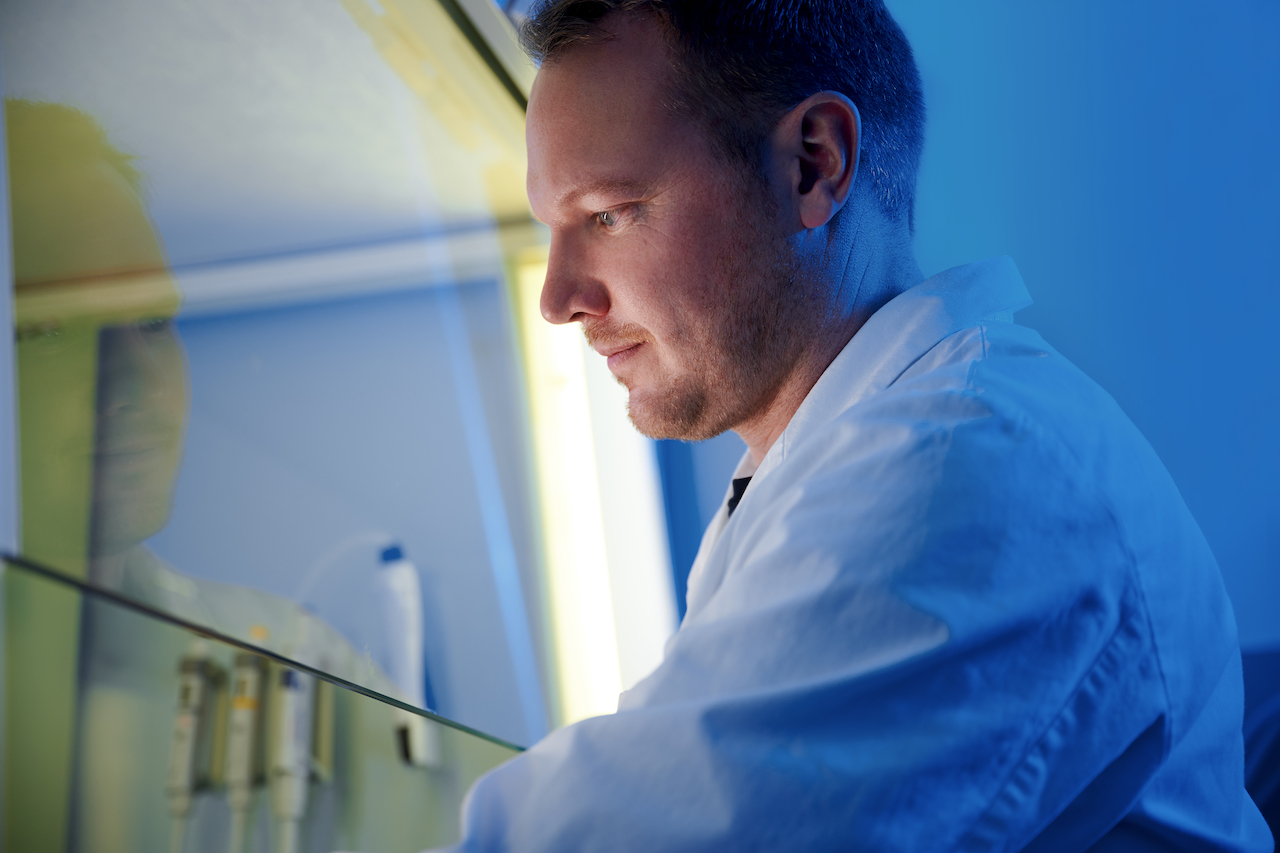
Bluu Biotechnologies co-founder Sebastian Rakers. Image Credit: Bluu Biosciences

During his research Rakers cultivated 80 different cell cultures for more than 20 different species of fish. What’s more, he was able to make these cell lines immortal.

Before envisioning an endless, ever-producing mass of fish cells that could overwhelm the world, it might be worth explaining what immortal cell lines mean… Actually… the endless, ever-producing mass of self-reproducing fish cells comes pretty close.

Most cell lines tend to die off after reprodcuing a certain number of times, which means that to manufacture meat at scale can require several biopsies of the same animal to cultivate multiple cell lines at a time. Rakers said that Bluu could avoid that step, thanks to the work that had already been done to develop these “immortal” salmon, trout, and carp cell cultivars.

“It’s such a strong competitive advantage,” said Fabich. “If you have normal cells that are not immortalized you can only proliferate 20 to 25 times and then you need to start again from another biopsy. With immortalized cells you can grow up to 100,000 times and we can double it every day.” 

With this technology in hand, Rakers said he was thinking about what could come next in his own career and met up with Gary Lin, an impact investor and the founder of Purple Orange Ventures.

Lin connected Rakers with Fabich and the two men set off to commercialize Rakers’ research as Bluu. And even though there are several companies that have a head start in the market (and in funding), Rakers said that there are certain advantages to coming in late.

Five years ago there was hardly any company looking into media development, hardly any companies focused on bioreactor technologies at a very large scale and there was no company looking for scaffolding alternatives for cell-based meat,” he said. Now there are. 

The company is picking up speed quickly thanks to those other technology providers that are coming to market and will look to have a prototype product out by the end of 2022.

The company is also pushing for regulation, which both Fabich and Rakers said were one of the last remaining obstacles to commercialization. Ultimately, the company has its eye firmly on the Asian market. “That’s the one that moves the needle,” in terms of sustainability, Fabich said. “We can have the biggest impact if we change production behavior there.”

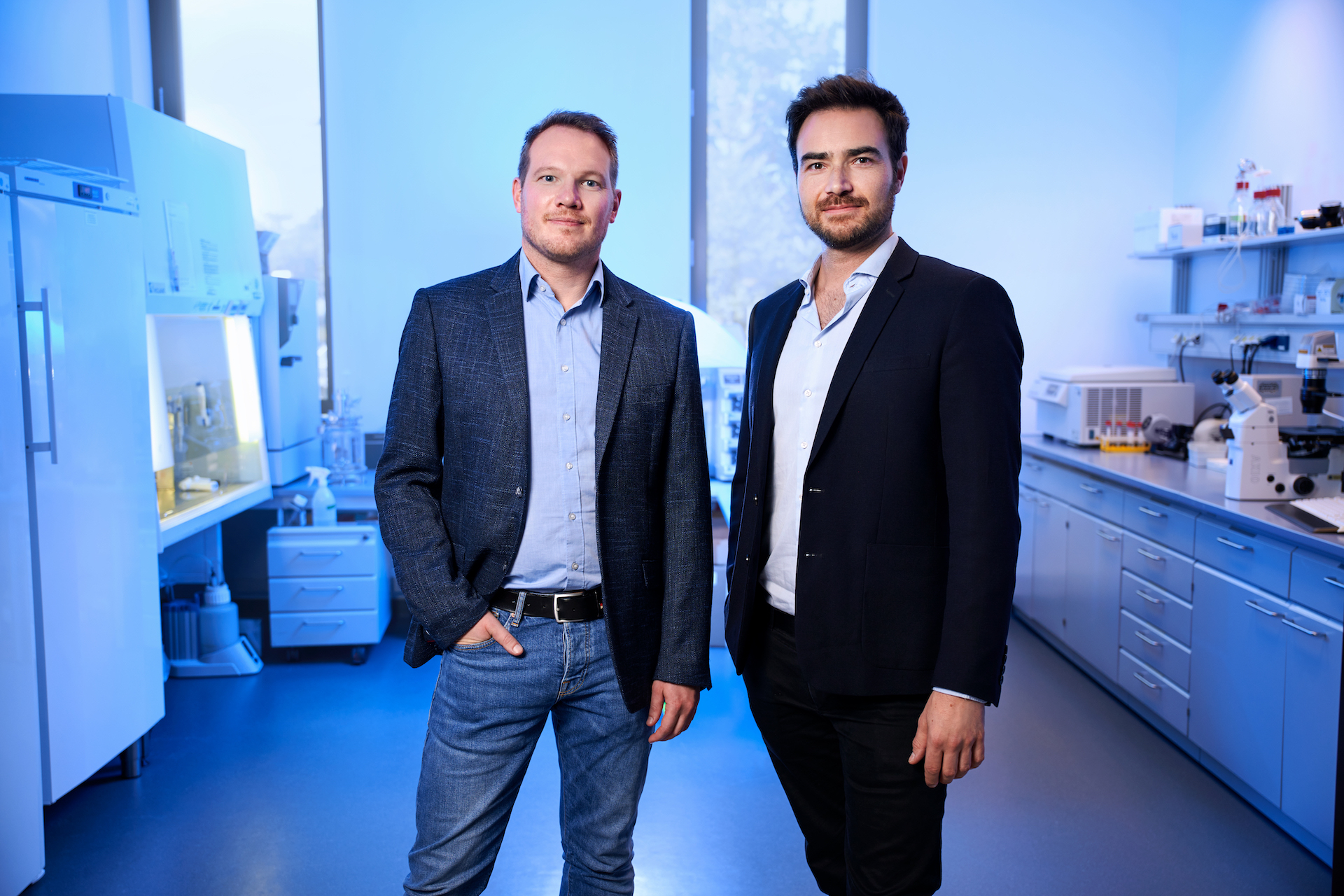
Bluu Biosciences co-founders Sebastian Rakers and Simon Fabich. Image Credit: Bluu Biosciences


25 Mar 2021

Bluu Biosciences raises cash to become Europe’s first purveyor of lab grown salmon, trout, and carp

A startup from Europe is joining the race to become the first big provider of lab grown fish.

Bluu Biosciences has raised €7 million in a round of financing from investors including Manta Ray Ventures, Norrsken VC, Be8, CPT Capital and Lever VC to compete with a host of startups like BluNalu, Wild Type, and Shiok Meats in a bid to market with a lab-grown fish replacement.

The market for sustainable fish is huge and growing. Already, concerns over the effects of overfishing and industrial fish farming are mounting as demand for fish increases. It’s the same problem that other animal-based sources of protein face. The amount of demand for high quality sources of protein from the Earth’s several billion people cannot sustainably keep up with the available supply.

That’s why a number of cellular meat companies are focusing on fish instead of other meats like beef, pork, or chicken.

There is a lot of talent in Europe and very little companies built in this space. If you compare it t0 the mammalian space there are a lot fewer companies,” said Simon Fabich, co-founder and managing director of Bluu.  

At Berlin-based Bluu, the focus is on salmon, trout, and carp (the most popular fish in China). Other companies are tackling tuna, salmon, and shrimp, but Bluu sees carp as an especially attractive target, given its popularity in one of the world’s most populous companies.

One advantage for Bluu, its founders argue, is the deep experience that co-founder Sebastian Rakers has in the wild world of cultivated fish cells.

A marine and cell biologist who was working for several years at the Munich-based Fraunhofer Institute, one of Europe’s most celebrated research institutes, Rakers led a task force that looked at potential commercial viability of cell-based meat, after conducting research on the viability of using fish cells as a component for viral production for the pharmaceutical industry.

Bluu Biotechnologies co-founder Sebastian Rakers. Image Credit: Bluu Biosciences

During his research Rakers cultivated 80 different cell cultures for more than 20 different species of fish. What’s more, he was able to make these cell lines immortal.

Before envisioning an endless, ever-producing mass of fish cells that could overwhelm the world, it might be worth explaining what immortal cell lines mean… Actually… the endless, ever-producing mass of self-reproducing fish cells comes pretty close.

Most cell lines tend to die off after reprodcuing a certain number of times, which means that to manufacture meat at scale can require several biopsies of the same animal to cultivate multiple cell lines at a time. Rakers said that Bluu could avoid that step, thanks to the work that had already been done to develop these “immortal” salmon, trout, and carp cell cultivars.

“It’s such a strong competitive advantage,” said Fabich. “If you have normal cells that are not immortalized you can only proliferate 20 to 25 times and then you need to start again from another biopsy. With immortalized cells you can grow up to 100,000 times and we can double it every day.” 

With this technology in hand, Rakers said he was thinking about what could come next in his own career and met up with Gary Lin, an impact investor and the founder of Purple Orange Ventures.

Lin connected Rakers with Fabich and the two men set off to commercialize Rakers’ research as Bluu. And even though there are several companies that have a head start in the market (and in funding), Rakers said that there are certain advantages to coming in late.

Five years ago there was hardly any company looking into media development, hardly any companies focused on bioreactor technologies at a very large scale and there was no company looking for scaffolding alternatives for cell-based meat,” he said. Now there are. 

The company is picking up speed quickly thanks to those other technology providers that are coming to market and will look to have a prototype product out by the end of 2022.

The company is also pushing for regulation, which both Fabich and Rakers said were one of the last remaining obstacles to commercialization. Ultimately, the company has its eye firmly on the Asian market. “That’s the one that moves the needle,” in terms of sustainability, Fabich said. “We can have the biggest impact if we change production behavior there.”

Bluu Biosciences co-founders Sebastian Rakers and Simon Fabich. Image Credit: Bluu Biosciences