For years, there was a debate as to whether WeWork was a tech company or more of a real estate play. At first, most people viewed WeWork as a real estate startup disguised as a tech startup.
And as it kept scooping up more and more property, the lines continued to blur. Then we all watched as the company’s valuation plummeted and its IPO plans went up in smoke. Today, WeWork is rumored to be going public via a SPAC at a $10 valuation, down significantly from the $47 billion it was valued at after raising $1 billion in its SoftBank-led Series H round in January 2019.
Co-founder and then-CEO Adam Neumann notoriously stepped down later that year amid allegations of a toxic combination of arrogance and poor management. WeWork has since been very publicly trying to redeem itself and turn around investor — and public — perception.
Chairman Marcelo Claure kicked off a strategic, five-year turnaround plan in earnest in February 2020. That same month, the beleaguered company named a real estate — not tech — exec as its new CEO, a move that set tongues wagging.
WeWork then also set a target of becoming free cash flow positive by a year to 2022 as part of its plan, which was aimed at both boosting valuation and winning back investor trust.
It likely saw the demise of competitor Knotel, which ended up filing for bankruptcy and selling assets to an investor, and realized it needed to learn from some of that company’s mistakes.
The question now is: Has WeWork legitimately turned a corner?
Since the implementation of its turnaround plan, the company says it has exited out of over 100 pre-open or underperforming locations. (It still has over 800 locations globally, according to its website.) WeWork has also narrowed its net loss to $517 million in Q3 2020 from $1.2 billion in the third quarter of 2019.
Meanwhile, revenue has taken a hit, presumably due to the impact of the coronavirus. Revenue slumped to $811 million the 2020 third quarter, compared with $934 million in Q3 2019.
The pandemic presented WeWork with challenges, but also — some might say — opportunity.
With so many people being forced to work from home and avoiding others during the work day, the office space in general struggled. WeWork either had to adapt, or potentially deal with a bigger blow to its valuation and bottom line.
WeWork’s dilemma is similar to those of real estate companies around the world. With so many companies shifting to remote work not just temporarily, but also permanently, landlords everywhere have had to adjust.
For example, as McKinsey recently pointed out, all landlords have been forced to be more flexible and restructure tenant leases. So in effect, anyone operating commercial real estate space has had to become more flexible, just as WeWork has.
For its part, WeWork has taken a few steps to adapt. For one, it realized its membership-only plan was not going to work anymore, and a dip in membership was evidence of that. So, it worked to open its buildings to more people through new On Demand and All Access options. The goal was to give people who were weary of working out of their own homes a place to go, say one day a week, to work. WeWork also saw an opportunity to work with companies to offer up its office space as a perk via an All Access offering, as well as with universities that wanted to give their students an alternative place to study.
For example, Georgetown did a pretty unique partnership with WeWork to have one of its locations serve as “their replacement library and common space.” And, companies like Brandwatch have recently shifted from leveraging WeWork’s traditional spaces to instead offer employees access to WeWork locations around the globe via All Access passes.
WeWork has also launched new product features. At the beginning of the year, the company launched the ability to book space on the weekend and outside of business hours.
I talked with Prabhdeep Singh, WeWork’s global head of marketplace, who is overseeing the new products and also spearheading WeWork’s shift online, to learn more about the company’s new strategy.
“What we’ve essentially done is unbundle our space,” he said. “It used to be that the only way to enjoy our spaces was via a bundled subscription product and monthly memberships. But we realized with COVID, the world was shifting, and to open up our platform to a broader group of people and make it as flexible as humanly possible. So they can now book a room for a half hour or get a day pass, for example. The use cases are so wide.”
Since On Demand launched as a pilot in New York City in August 2020, demand has steadily been climbing, according to Singh. So far, reservations are up by 65% — and revenue up by 70% — over the 2020 fourth quarter. But of course, it’s still early and they were starting from a small base. Nearly two-thirds of On Demand reservations are made by repeat customers, he added.
“Over the last year and a half, we’ve been really figuring out what things we want to focus on what things we don’t,” Singh said. “As a flexible space provider, we are looking at where the world is going. And while we’re a small part of the whole commercial office space industry, we are working to use technology to enable a flexible workspace experience via a great app and the digitization of our spaces.”
For now, things seem to be looking up some. In February, WeWork says it had nearly twice as many active users compared to January. Also, people apparently like having the option to come in at off hours. Weekend bookings now account for an estimated 14.5% of total bookings.
Nearly double as many existing members purchased All Access passes in February 2020 compared to January to complement their existing private office space during COVID, the company said.
In the beginning of the COVID-19, WeWork saw ahigher departure of small and medium sized businesses (SMBs) than of its enterprise members, partially due to the nature of their businesses and the need to more immediately manage cash flow, the company said. But in the third quarter of 2020, SMB desk sales were up 50% over the second quarter.
Interestingly, throughout the pandemic, WeWork has seen its enterprise segment grow at nearly double the rate of its SMBs, now making up over half of the company’s total membership base.
While it’s slowing down investing in new real estate assets in certain markets, it is still working to “right-size” its portfolio via exits.
And, when it comes to its finances, as of March 2, WeWork said its bonds were trading at the highest point since the summer of 2019, when the company failed to go public. That’s way up from a 52-week low of about 28%.
“At ~92% for a ~10% yield, the creditor sentiment is clearly positive and a testament to the overall market’s belief that WeWork’s flexible workspace product has a viable future in the future of real estate,” a spokesperson told TechCrunch.
Just last March, WeWork’s bonds were trading at 43 cents on the dollar and S&P Global had lowered WeWork’s credit rating further into junk territory and put the company on watch for further downgrades, reported Forbes.
Still, the company is not done adapting. Singh told TechCrunch that to make WeWork’s value proposition even stronger, it’s working to offer a “business in a box.” Late last year, WeWork partnered with a number of companies to offer SMBs and startups, for example, services such as payroll, healthcare and business insurance.
“A lot of people that come to WeWork are growing businesses,” Singh said. “So while we’ve stuck with our core business services, we’re working to offer more, as in a real suite of HR services that might be complex and expensive for a small business to manage on their own.”
It’s also working to be able to offer its On Demand product globally so that people can opt to work out of a WeWork space from any of its locations around the world.
“Right now, we are in the largest work from home experiment,” Singh said. “I think we’re about to shift to the largest return to work experiment ever. We are just going to be very well positioned.”
The company appears to be trying to become a more sophisticated real estate company that may not be as flashy as the one of the Adam Neumann era, but more stable and more in demand. But is it trying to do too much, too fast?
Early Stage is the premier ‘how-to’ event for startup entrepreneurs and investors. You’ll hear first-hand how some of the most successful founders and VCs build their businesses, raise money and manage their portfolios. We’ll cover every aspect of company-building: Fundraising, recruiting, sales, product market fit, PR, marketing and brand building. Each session also has audience participation built-in – there’s ample time included for audience questions and discussion. Use code “TCARTICLE at checkout to get 20 percent off tickets right here.
Facebook will soon label all posts discussing the coronavirus vaccination with a pointer to official information about COVID-19, it said today.
It also revealed it has implemented some new “temporary” measures aimed at limiting the spread of vaccine misinformation/combating vaccine hesitancy — saying it’s reducing the distribution of content from users that have violated its policies on COVID-19 and vaccine misinformation; or “that have repeatedly shared content debunked as False or Altered by our third-party fact-checking partners”.
It’s also reducing distribution of any COVID-19 or vaccine content that fact-checking partners have rated as “Missing Context”, per the blog post.
While admins for groups with admins or members who have violated its COVID-19 policies will also be required to temporarily approve all posts within their group, it said. (It’s not clear what happens if a group only has one admin and they have violated its policies.)
Facebook will also “further elevate information from authoritative sources when people seek information about COVID-19 or vaccines”, it added.
It’s not clear why users who repeatedly violate Facebook’s COVID-19 policies do not face at least a period of suspension. (We’ve asked the company for clarity on its policies.)
“We’re continuing to expand our efforts to address COVID-19 vaccine misinformation by adding labels to Facebook and Instagram posts that discuss the vaccines,” Facebook said in the Newsroom post today.
“These labels contain credible information about the safety of COVID-19 vaccines from the World Health Organization. For example, we’re adding a label on posts that discuss the safety of COVID-19 vaccines that notes COVID-19 vaccines go through tests for safety and effectiveness before they’re approved.”
The incoming COVID-19 information labels are rolling out globally in English, Spanish, Indonesian, Portuguese, Arabic and French (with additional languages touted “in the coming weeks”), per Facebook.
As well as soon rolling out labels “on all posts generally about COVID-19 vaccines” — pointing users to its COVID-19 Information Center — Facebook said it would add additional “targeted” labels about “COVID-19 vaccine subtopics”. So it sounds like it may respond directly to specific anti-vaxxer misinformation it’s seeing spreading on its platform.
“We will also add an additional screen when someone goes to share a post on Facebook and Instagram with an informational COVID-19 vaccine label. It will provide more information so people have the context they need to make informed decisions about what to share,” Facebook added.
The moves follow revelations that an internal Facebook study of vaccine hesitancy — which was reported on by the Washington Post yesterday after it obtained documents on the large-scale internal research effort — found a small number of US users are responsible for driving most of the content that’s hesitant about getting vaccinated.
“Just 10 out of the 638 population segments [Facebook’s study divided US users into] contained 50 percent of all vaccine hesitancy content on the platform,” the Post reported. “And in the population segment with the most vaccine hesitancy, just 111 users contributed half of all vaccine hesitant content.”
Last week the MIT Technology Review also published a deep-dive article probing Facebook’s approach to interrogating, via an internal ‘Responsible AI’ team, the impacts of AI-fuelled content distribution — which accused the company of prioritizing growth and engagement and neglecting the issue of toxic misinformation (and the individual and societal harms that can flow from algorithmic content choices which amplify lies and hate speech).
In the case of COVID-19, lies being spread about vaccination safety or efficacy present a clear and present danger to public health. And Facebook’s PR machine does appear to have, tardily, recognized the extent of the reputational risk it’s facing if it’s platform is associated with driving vaccine hesitancy.
To wit: Also today it’s announced the launch of a global COVID-19 education drive that it says it hopes will bring 50M people “closer to getting vaccinated”.
“By working closely with national and global health authorities and using our scale to reach people quickly, we’re doing our part to help people get credible information, get vaccinated and come back together safely,” Facebook writes in the Newsroom post that links directly to a Facebook post by founder Mark Zuckerberg also trailing the new measures, including the launch of a tool that will show U.S. Facebook users where they can get vaccinated and provide them with a link to make an appointment.
Facebook said it plans to expand the tool to other countries as global vaccine availability steps up.
Facebook’s vaccine appointment finder tool (Image credits: Facebook)
Facebook has further announced that the COVID-19 information portal it launched in the Facebook app in March last year which points users to “the latest information about the virus from local health ministries and the World Health Organization” is finally being brought to Instagram.
It’s not clear why Facebook hadn’t already launched the portal on Instagram. But it’s decided to double down on fighting bad speech (related to vaccines) with better speech — saying Instagram users will get new stickers they can add to their Instagram Stories “so people can inspire others to get vaccinated when it becomes available to them”.
In other moves being trailed in Facebook’s crisis PR blitz today it has touted “new data and insights” on vaccine attitudes being made available to public officials via COVID-19 dashboards and maps it was already offering (the data is collected by Facebook’s Data for Good partners for the effort at Carnegie Mellon University and University of Maryland as part of the COVID-19 Symptom Survey).
Albeit, it doesn’t specify what new information is being added there (or why now).
Also today it said it’s “making it easy to track how COVID-19 vaccine information is being spread on social media through CrowdTangle’s COVID-19 Live Displays“.
“Publishers, global aid organizations, journalists and others can access real-time, global streams of vaccine-related posts on Facebook, Instagram and Reddit in 34 languages. CrowdTangle also offers Live Displays for 104 countries and all 50 states in the US to help aid organizations and journalists track posts and trends at a regional level as well,” Facebook added, again without offering any context on why it hadn’t made it easier to use this tool to track vaccine information spread before.
Its blog post also touts “new” partnerships with health authorities and governments on vaccine registration — while trumpeting the ~3BN messages it says have already been sent “by governments, nonprofits and international organizations to citizens through official WhatsApp chatbots on COVID-19”. (As WhatsApp is end-to-end encrypted there is no simple way to quantify how many vaccine misinformation messages have been sent via the same platform.)
Per Facebook, it’s now “working directly with health authorities and governments to get people registered for vaccinations” (such as in the city and province of Buenos Aires, Argentina, which is using WhatsApp as the official channel to send notifications to citizens when it’s their turn to receive the vaccine).
“Since the beginning of the COVID-19 pandemic, we have partnered with ministries of health and health-focused organizations in more than 170 countries by providing free ads, enabling partners to share their own public health guidance on COVID-19 and information about the COVID-19 vaccine,” Facebook’s PR adds in a section of the post which it’s titled “amplifying credible health information and resources from experts”.
On the heels of reports that Stripe was raising yet more money, the payments giant has now confirmed the details. The company has closed in on another $600 million, at a valuation of $95 billion.
Stripe said it will use the funding to expand its business in Europe, with a focus on its European HQ, and also to beef up its global payments and treasury network.
“We’re investing a ton more in Europe this year, particularly in Ireland,” said John Collison, President and co-founder of Stripe, in a statement. “Whether in fintech, mobility, retail or SaaS, the growth opportunity for the European digital economy is immense.”
Stripe said the financing included backing from two major insurance players. Allianz, via its Allianz X fund, and Axa are in the round, along with Baillie Gifford, Fidelity Management & Research Company, Sequoia Capital, and an investor from the founders’ home country, Ireland’s National Treasury Management Agency (NTMA).
The insurance angle may point to which direction the company is looking to go next. After all, fintech and insurance are closely aligned.
“Stripe is an accelerator of global economic growth and a leader in sustainable finance. We are convinced that, despite making great progress over the last 10 years, most of Stripe’s success is yet to come” said Conor O’Kelly, CEO of NTMA in a statement. “We’re delighted to back Ireland’s and Europe’s most prominent success story, and, in doing so, to help millions of other ambitious companies become more competitive in the global economy.”
The big round, rising valuation, and growing cap table will inevitably lead to questions around where the company is standing with regards to its next steps, and whether that will include a public listing. Stripe has long kept its cards to its chest when it comes to user numbers, revenues, and profit and those details, once again, are not being disclosed with the news today, and nor has it made any comments on IPO plans.
Notably, the confirmation of the news today is at a lower valuation than the valuation Stripe was reportedly trading at on the secondary market, which was $115 billion; and the round that closed at a $95 billion valuation was also rumored to be coming in at a higher number, over $100 billion.
It’s not clear whether those numbers were never accurate, or if Covid had an impact on pricing, or if European investors simply drove a hard bargain.
The focus on growing in Europe also puts the hiring of Peter Barron — the former EMEA VP of communications for Google and a former journalist — into some context.
Founded in 2010 by John and his brother Patrick Collison (the CEO), Stripe is one of a wave of commerce startups that saw the value of building a simple way for developers to integrate payments into any app or site by way of a few lines of code, at a time when digital and specifically online payments were starting to take off.
Behind that code, the company had done all the hard work of integrating all the different and complex pieces needed to make payments work both in countries and across borders.Over the years, the company has built out a bigger platform around that, a suite of services to position itself as a one-stop shop not just for helping businesses run all of the commercial aspects of their operations, including incorporation, managing fraud, managing cashflow and more.
Within that, Stripe has built out a decent footprint in Europe, with the region accounting for 31 of the 42 countries where it has customers today. While Stripe may have had its start and early traction providing payments infrastructure for startups (and especially small, new startups), today that list includes a lot of big names, too. In Europe, customers include Axel Springer, Jaguar Land Rover, Maersk, Metro, Mountain Warehouse and Waitrose, alongside Deliveroo (UK), Doctolib (France), Glofox (Ireland), Klarna (Sweden), ManoMano (France), N26 (Germany), UiPath (Romania) and Vinted (Lithuania).
Even with heavy competition in payments and adjacent services, there is a huge opportunity for more growth. Stripe says that in the wake of Covid and the rise of people shopping considerably more across the web and apps rather than in person, currently some 14% of commerce happens online, a big shift considering that just a year ago it was about 10%.
Last week, I talked a bit about NFTs and their impact on artists. If you’re inundated with NFT talk just take one quick look at this story I wrote this week about the $69 million sale of Beeple’s photo collage. This hype cycle is probably all the result of crypto folks talking each other up and buying each other’s stuff, but that doesn’t mean there won’t be lasting impacts. That said, I would imagine we’re pretty close to the peak of this wave, with a larger one down the road after things cool off a bit. I’ve been wrong before though…
This week, I’m interested in a quick look at what your kids have been talking about all these years. Yes, Roblox.
If you’re reading this on the TechCrunch site, you can get this in your inbox from the newsletter page, and follow my tweets @lucasmtny.
(Photo by Ian Tuttle/Getty Images for Roblox)
The big thing
Roblox went public on the New York Stock Exchange this week, scoring a $38 billion market cap after its first couple days of trading.
Investors rallied around the idea that Roblox is one of the most valuable gaming companies in existence. More than Unity, Zynga, Take-Two, even gaming giant Electronic Arts. It’s still got a ways to go to take down Microsoft, Sony or Apple though… The now-public company is so freaking huge because investors believe the company has tapped into something that none of the others have, a true interconnected creative marketplace where gamers can evolve alongside an evolving library of experiences that all share the same DNA (and in-game currency).
The gaming industry has entered a very democratic stride as cross-play tears down some of the walls of gaming’s platform dynamics. Each hardware platform that operates an app store of their own still has the keys to a kingdom, but it’s a shifting world with uncertainty ahead. While massive publishers have tapped cloud gaming as the trend that will string their blockbuster franchises together, they all wish they were in Roblox’s position. The gaming industry has seen plenty of Goliath’s in its day, but for every major MMO to strike it rich, it’s still just another winner in a field of disparate hits with no connective tissue.
Roblox is different, and while many of us still have the aged vision of the image above: a bunch of rudimentary Minecraft/Playmobile-looking mini-games, Roblox’s game creation tools are advancing quickly and developers are building photorealistic games that are wider in ambition and scope than before. As the company levels-up the age range it appeals to — both by holding its grasp on aging gamers on its platform and using souped-up titles to appeal to a new-generation — there’s a wholly unique platform opportunity here: the chance to have the longevity of an app store but with the social base layer that today’s cacophony of titles have never shared.
Whether or not Roblox is the “metaverse” that folks in the gaming world have been hyping, it certainly looks more like it than any other modern gaming company does.
SHENYANG, CHINA – MARCH 08: Customers try out iPhone 12 smartphones at an Apple store on March 8, 2021 in Shenyang, Liaoning Province of China. (Photo by VCG/VCG via Getty Images)
Other things
Apple releases some important security patches It was honestly a pretty low-key week of tech news, I’ll admit, but folks in the security world might not totally buy that characterization. This week, Apple released some critical updates for its devices, fixing a Safari vulnerability that could allow attackers to run malicious code on a user’s unpatched devices. Update your stuff, y’all.
TikTok gets proactive on online bullying New social media platforms have had the benefit of seeing the easy L’s that Facebook teed itself up for. For TikTok, its China connection means that there’s less room for error when it comes to easily avoidable losses. The team announced some new anti-bullying features aimed at cutting down on toxicity in comment feeds.
Dropbox buys DocSend
Cloud storage giants are probably in need of a little reinvention, the enterprise software boom of the pandemic has seemed to create mind-blowing amounts of value for every SaaS company except these players. This week, Dropbox made a relatively big bet on document sharing startup DocSend. It’s seemingly a pretty natural fit for them, but can they turn in into a bigger opportunity?
Epic Games buys photogrammetry studio
As graphics cards and consoles have hit new levels of power, games have had to satisfy desired for more details and complexity. It takes a wild amount of time to create 3D assets with that complexity so plenty of game developers have leaned on photogrammetry which turns a series of photos or scans of a real world object or environment into a 3D model. This week, Epic Games bought one of the better known software makers in this space, called Capturing Reality, with the aim of integrating the tech into future versions of their game engine.
Twitter Spaces launches publicly next month
I’ve spent some more time with Twitter Spaces this week and am growing convinced that it has a substantial chance to kneecap Clubhouse’s growth. Twitter is notoriously slow to roll out products, but it seems they’ve been hitting the gas on Spaces, announcing this week that it will be available widely by next month.
Seth Rogen starts a weed company
There’s a lot of money in startups, there’s really never been a better time to get capital for a project… if you know the right people and have the right kind of expertise. Seth Rogen and weed are a pretty solid mental combo and him starting a weed company shouldn’t be a big shock.
SeongJoon Cho/Bloomberg via Getty Images
Extra things
Some of my favorite reads from our Extra Crunch subscription service this week:
Coupang follows Roblox to a strong first day of trading
“Another day brings another public debut of a multibillion-dollar company that performed well out of the gate.This time it’s Coupang, whose shares are currently up just over 46% to more than $51 after pricing at $35, $1 above the South Korean e-commerce giant’s IPO price range. Raising one’s range and then pricing above it only to see the public markets take the new equity higher is somewhat par for the course when it comes to the most successful recent debuts, to which we can add Coupang.” More
How nontechnical talent can break into deep tech
“Startup hiring processes can be opaque, and breaking into the deep tech world as a nontechnical person seems daunting. As someone with no initial research background wanting to work in biotech, I felt this challenge personally. In the past year, I landed several opportunities working for and with deep tech companies.“More
Does your VC have an investment thesis or a hypothesis?
“Venture capitalists love to talk investment theses: on Twitter, Medium, Clubhouse, at conferences. And yet, when you take a closer look, theses are often meaningless and/or misleading…” More
Once more, if you liked reading this, you can get it in your inbox from the newsletter page, and follow my tweets @lucasmtny.
Last week, I talked a bit about NFTs and their impact on artists. If you’re inundated with NFT talk just take one quick look at this story I wrote this week about the $69 million sale of Beeple’s photo collage. This hype cycle is probably all the result of crypto folks talking each other up and buying each other’s stuff, but that doesn’t mean there won’t be lasting impacts. That said, I would imagine we’re pretty close to the peak of this wave, with a larger one down the road after things cool off a bit. I’ve been wrong before though…
This week, I’m interested in a quick look at what your kids have been talking about all these years. Yes, Roblox.
If you’re reading this on the TechCrunch site, you can get this in your inbox from the newsletter page, and follow my tweets @lucasmtny.
(Photo by Ian Tuttle/Getty Images for Roblox)
The big thing
Roblox went public on the New York Stock Exchange this week, scoring a $38 billion market cap after its first couple days of trading.
Investors rallied around the idea that Roblox is one of the most valuable gaming companies in existence. More than Unity, Zynga, Take-Two, even gaming giant Electronic Arts. It’s still got a ways to go to take down Microsoft, Sony or Apple though… The now-public company is so freaking huge because investors believe the company has tapped into something that none of the others have, a true interconnected creative marketplace where gamers can evolve alongside an evolving library of experiences that all share the same DNA (and in-game currency).
The gaming industry has entered a very democratic stride as cross-play tears down some of the walls of gaming’s platform dynamics. Each hardware platform that operates an app store of their own still has the keys to a kingdom, but it’s a shifting world with uncertainty ahead. While massive publishers have tapped cloud gaming as the trend that will string their blockbuster franchises together, they all wish they were in Roblox’s position. The gaming industry has seen plenty of Goliath’s in its day, but for every major MMO to strike it rich, it’s still just another winner in a field of disparate hits with no connective tissue.
Roblox is different, and while many of us still have the aged vision of the image above: a bunch of rudimentary Minecraft/Playmobile-looking mini-games, Roblox’s game creation tools are advancing quickly and developers are building photorealistic games that are wider in ambition and scope than before. As the company levels-up the age range it appeals to — both by holding its grasp on aging gamers on its platform and using souped-up titles to appeal to a new-generation — there’s a wholly unique platform opportunity here: the chance to have the longevity of an app store but with the social base layer that today’s cacophony of titles have never shared.
Whether or not Roblox is the “metaverse” that folks in the gaming world have been hyping, it certainly looks more like it than any other modern gaming company does.
SHENYANG, CHINA – MARCH 08: Customers try out iPhone 12 smartphones at an Apple store on March 8, 2021 in Shenyang, Liaoning Province of China. (Photo by VCG/VCG via Getty Images)
Other things
Apple releases some important security patches It was honestly a pretty low-key week of tech news, I’ll admit, but folks in the security world might not totally buy that characterization. This week, Apple released some critical updates for its devices, fixing a Safari vulnerability that could allow attackers to run malicious code on a user’s unpatched devices. Update your stuff, y’all.
TikTok gets proactive on online bullying New social media platforms have had the benefit of seeing the easy L’s that Facebook teed itself up for. For TikTok, its China connection means that there’s less room for error when it comes to easily avoidable losses. The team announced some new anti-bullying features aimed at cutting down on toxicity in comment feeds.
Dropbox buys DocSend
Cloud storage giants are probably in need of a little reinvention, the enterprise software boom of the pandemic has seemed to create mind-blowing amounts of value for every SaaS company except these players. This week, Dropbox made a relatively big bet on document sharing startup DocSend. It’s seemingly a pretty natural fit for them, but can they turn in into a bigger opportunity?
Epic Games buys photogrammetry studio
As graphics cards and consoles have hit new levels of power, games have had to satisfy desired for more details and complexity. It takes a wild amount of time to create 3D assets with that complexity so plenty of game developers have leaned on photogrammetry which turns a series of photos or scans of a real world object or environment into a 3D model. This week, Epic Games bought one of the better known software makers in this space, called Capturing Reality, with the aim of integrating the tech into future versions of their game engine.
Twitter Spaces launches publicly next month
I’ve spent some more time with Twitter Spaces this week and am growing convinced that it has a substantial chance to kneecap Clubhouse’s growth. Twitter is notoriously slow to roll out products, but it seems they’ve been hitting the gas on Spaces, announcing this week that it will be available widely by next month.
Seth Rogen starts a weed company
There’s a lot of money in startups, there’s really never been a better time to get capital for a project… if you know the right people and have the right kind of expertise. Seth Rogen and weed are a pretty solid mental combo and him starting a weed company shouldn’t be a big shock.
SeongJoon Cho/Bloomberg via Getty Images
Extra things
Some of my favorite reads from our Extra Crunch subscription service this week:
Coupang follows Roblox to a strong first day of trading
“Another day brings another public debut of a multibillion-dollar company that performed well out of the gate.This time it’s Coupang, whose shares are currently up just over 46% to more than $51 after pricing at $35, $1 above the South Korean e-commerce giant’s IPO price range. Raising one’s range and then pricing above it only to see the public markets take the new equity higher is somewhat par for the course when it comes to the most successful recent debuts, to which we can add Coupang.” More
How nontechnical talent can break into deep tech
“Startup hiring processes can be opaque, and breaking into the deep tech world as a nontechnical person seems daunting. As someone with no initial research background wanting to work in biotech, I felt this challenge personally. In the past year, I landed several opportunities working for and with deep tech companies.“More
Does your VC have an investment thesis or a hypothesis?
“Venture capitalists love to talk investment theses: on Twitter, Medium, Clubhouse, at conferences. And yet, when you take a closer look, theses are often meaningless and/or misleading…” More
Once more, if you liked reading this, you can get it in your inbox from the newsletter page, and follow my tweets @lucasmtny.
SpaceX has delivered another 60 Starlink satellites to orbit — meaning it has sent 180 in total to join its 1,000+ strong constellation in the past two weeks alone. Today’s launch also set a record for SpaceX for its Falcon 9 rocket reusability program, since it was the ninth flight and ninth landing for this particular first-stage booster.
The booster was used previously on a variety of missions, including five prior Starlink launches, as well as the Demo-1 mission for the company’s Crew Dragon capsule, which was the uncrewed test flight that proved it would work as intended from launch all the way to docking with the International Space Station and then returning back to Earth.
SpaceX set its prior reusability record in January this year – another Starlink launch – using this very same refurbished first stage, which had just flown in December of last year before that. SpaceX not only wants to continue to show that it can re-fly these boosters more and more times, but also that it can turn them around quickly for their next mission, since both speed and volume will have a significant impact on launch costs.
Rocket reuse is of particular importance when it comes to these Starlink missions, which are happening with increasing frequency as SpaceX pushes to expand the availability of its Starlink broadband internet service globally. As mentioned, this is the third launch of 60 satellites for the constellation in just 10 days — the most recent launch happened just Thursday, and the first of this trio took place the Thursday before that.
From here, expect SpaceX to just continue to launch at roughly this pace for the next little while, since it has two more planned Starlink launches before March is over, including one tentatively set for next Sunday. As the company is its own customer for these missions, it’s eating the cost of the launches (at least until Starlink starts operating beyond its current beta and bringing in more revenue) so re-flying boosters is a good way to help mitigate the overall spend.
Welcome back to The TechCrunch Exchange, a weekly startups-and-markets newsletter. It’s broadly based on the daily column that appears on Extra Crunch, but free, and made for your weekend reading. Want it in your inbox every Saturday morning? Sign up here.
Ready? Let’s talk money, startups and spicy IPO rumors.
Every quarter we dig into the venture capital market’s global, national, and sector-based results to get a feel for what the temperature of the private market is at that point in time. These imperfect snapshots are useful. But sometimes, it’s better to focus on a single story to show what’s really going on.
Enter AgentSync. I covered AgentSync for the first time last August, when the API-focused insurtech player raised a $4.4 million seed round. It’s a neat company, helping others track the eligibility of individual brokers in the market. It’s a big space, and the startup was showing rapid initial traction in the form of $1.9 million in annual recurring revenue (ARR).
But then AgentSync raised again in December, sharing at the time of its $6.4 million round that the valuation cap had grown by 4x since its last round. And that it had seen 4x revenue growth since the start of the pandemic.
All that must sound pretty pedestrian; a quickly-growing software company raising two rounds? Quelle surprise.
But then AgentSync raised again this week, with another grip of datapoints. Becca Szkutak and Alex Konrad’s Midas Touch newsletter reported the sheaf of data, and The Exchange confirmed the numbers with AgentSync CEO Niji Sabharwal. They are as follows:
Present-day revenues of less than $10 million, but with ARR growing by 6x in 2020 after 10x expansion in 2019.
No customer churn to date.
Its $25 million Series A valued the company at $220 million, which Konrad and Szkutak describe as “exactly 10x AgentSync’s valuation from eight months ago.”
That means AgentSync was worth $22 million when it raised $4.4 million, and the December round was raised at a cap of around $80 million. Fun.
Back to our original point, the big datasets can provide useful you-are-here guidance for the sector, but it’s stories like AgentSync that I think better show what the market is really like today for hot startups. It’s bonkers fast and, even more, often backed up by material growth.
Sabharwal also told The Exchange that his company has closed another $1 million in ARR since the term sheet. So its multiples are contracting even before it shared its news.
2021, there you have it.
Meet Conscience.vc
Also this week I got to meet Ariana Thacker, who is building a venture capital fund. Her route to her own venture shop included stops at Rhapsody Venture Partners, and some time at Predictive VC. Now she’s working on Conscience.vc, or perhaps just Conscience.
Her new fund will invest in companies worth less than $15 million, have some form of consumer-facing business model (B2B and B2B2C are both fine, she said), and something to do with science, be it a patentable technology or other sort of IP. Why the science focus? It’s Thacker’s background, thanks to her background in chemical engineering and time as a facilities engineer for a joint Exxon-Shell project.
All that’s neat and interesting, but as we cover zero new-fund announcements on The Exchange and almost never mini-profile VCs, why break out of the pattern? Because unlike nearly everyone in her profession, Thacker was super upfront with data and metrics.
Heck, in her first email she included a list of her investments across different capital vehicles with actual information about the deals. And then she shared more material on different investments and the like. Imagine if more VCs shared more of their stuff? That would rock.
Conscience had its first close in mid-January, though more capital might land before she wraps up the fundraising process. She’s reached $4 million to $5 million in commits, with a cap of $10 million on the fund. And, she told The Exchange, she didn’t know a single LP before last summer and only secured an anchor investor last October.
Let’s see what Thacker gets done. But at a minimum I think she’ll be willing to be somewhat transparent as she invests from her first fund. That alone will command more attention from these pages than most micro-funds could ever manage.
A whole bunch of other important shit
The week was super busy, so I missed a host of things that I would have otherwise liked to have written about. Here they are in no particular order:
FalconX, a startup that powers crypto-trading on other platforms, raised $50 million this week. The round comes after the company raised $17 million last May. I wrote about that here. Tiger Global led the round, natch, as it has led nearly every round in the last month.
The FalconX round matters as the company grew from what we presume was a modest trading and revenue base into something much larger. Per the company, in “less than a year” the company’s “trading volume” grew by 12x and its “net revenue” grew 46x. That’s a lot.
Privacera also raised $50 million this week. Insight Partners led the round. The deal caught my eye as it promised a “cloud-based data governance and security solution.” That reminded me of Skyflow, a quickly-growing startup that I thought might have a similar product. Privacera CEO Balaji Ganesan politely corrected my confusion in an email saying that “Skyflow is like a vault for customer data. They replace customer data with tokens. Our focus is on data governance, so it is broader. We don’t store customer data within our solution.” Fair enough. It’s still an interesting space.
And then there’s Woflow, which VentureBeat actually got to before I could. I chatted with the company this week, but sadly have more notes than open word count today. So let it suffice to say that the company’s model of selling structured merchant data is super cool. And the fact that it has linked up with customers in its first vertical (restaurants) like DoorDash is impressive.
Its round was led by Craft Ventures, a firm that has been pretty damn active in the API-powered startup landscape in recent months. More to come on Woflow.
Various and Sundry
Closing, I learned a lot about software valuations here, got to noodle on the epic Roblox direct listing here, dug into fintech’s venture successes and weaknesses, and checked out the Global-e IPO filing. Oh, and M1 Finance raised again, while Clara and Arist raised small, but fun rounds.
Spending millions for a digital work of art that could be screenshotted feels similar to traipsing around a strip of concrete as a tourist activity. The optics don’t make immediate sense — there’s hardly any appeal in something as accessible as a Google image or street.
That’s my best bet at explaining at least some of the confusion around the explosive rise of NFTs, or nonfungible tokens. The token, minted on the blockchain, can give digital assets a unique signifier. In other words, anyone could screenshot a piece of art, but only one of us will own the true, original piece of art. This context is part of the reason why Beeple, a digital artist, had his artwork sold for $69 million just a few days ago.
The reason this topic is coming up in a Startups Weekly newsletter is because of the impact it could have on the cryptocurrency movement, of which there is a growing tide of early-stage and late-stage startups. The popularization of NFTs, as I argued in Equity this week, could be what makes cryptocurrency finally palpable to the average human — beside the average bitcoin hoarder. Platforms that sell NFTs usually need you to use cryptocurrency (usually Ethereum) to purchase anything. Mix that with the fact that humans have an innate desire to own, protect and immortalize their assets, and you might have the perfect storm. Beeple, a digital artist, made $69 million for his work, and this isn’t just a big financing event, it’s a signal that crypto enthusiasts and crypto assets are getting to an inescapable spot in public dialogue.
Ownership as a way for a decentralized network to become mainstream is its own meta conversation, and I’ll be clear that the blockchain and NFTs have a long way to go before they are truly equitable, accessible and hit their stride. But, it’s hard to not to let your mind wander about the opportunities here.
It’s more than a screenshot, it’s about the potential of pixels having more meaning than they ever did before. And it’s more than a strip of concrete, it’s the Hollywood Walk of Fame. Finding exclusive aspects of accessible things in our lives is compelling to a consumer and could be great for creators.
In the rest of this newsletter, we’ll discuss Coupang’s competitive industrial edge, a startup hoping to be the Nasdaq for revenue and Google’s brains fighting Google itself. As always, you can follow me on Twitter @nmasc_ for my thoughts throughout the week and tech news.
The Amazon of South Korea goes public
Coupang, which some describe as the Amazon of South Korea, priced and started trading this week on the public markets. At one point on Thursday, the company was valued at $92 billion.
Here’s what to know: When Coupang first launched, it found that South Korea had an absence of third-party logistics companies similar to UPS or FedEx in the United States. Now, it wasn’t without competition, but it did have an opportunity to build an end-to-end logistics company that is now worth a boatload of money.
Pipe has a compelling narrative: It’s anti-VC, doesn’t like naming its rounds and says its goal is to be the Nasdaq for revenue. The goal since it started was to give SaaS companies a way to get their revenue upfront by connecting them to investors that would pay a rate for the annual value of those contracts. It turns monthly recurring revenue into annual recurring revenue.
Here’s what to know: The startup raised $50 million in a financing event this week. In the first quarter of 2021, tens of millions of dollars were traded through its platform, reports TechCrunch’s Mary Ann Azevedo.
(By the way, if you want a huge discount for Extra Crunch, just use our code, EQUITY, when you sign up to access great articles like this one and most of our analytical work).
Here’s what to know: Neeva, built by a team of ex-Googlers including the guy who built Google’s advertising engine, is one startup to watch. There’s a lot to chew and we do it best during the episode, so take a listen and figure out if you’re team Natasha and Danny, or team Alex.
And finally, follow Drew Olanoff, who leads Community for TC, because he’s constantly churning out cool stuff like discount codes, chances to hang and surveys so we serve y’all better.
When Mike Morrison left his hometown of Fredericton, New Brunswick, for Calgary, Alberta, he assumed he’d never go back except to visit.
Morrison was following a well-trodden path of Atlantic Canadians heading west to find work rom which few returned. During the mid-aughts, Alberta was booming thanks to the high price of oil. To Morrison, migrating west seemed an easy choice. “If I stayed, my options were to be a supply teacher or work in a call center.”
When he arrived in Alberta, Morrison worked three jobs. During his free time, he started a blog to tell his friends back home about his life out west, and also to recommend TV shows. Slowly, Mike’s Bloggity Blog became one of Canada’s premier entertainment sites, and Morrison found himself with a local newspaper column as well as regular television and radio appearances. He then started Social West, a Calgary-based digital marketing conference that, before long, expanded to three cities. His identity and public persona were intertwined with his adopted city.
“For a while, I would tell people that I was being paid to be a professional Calgarian.” Then, in 2021, Morrison left Calgary for Halifax, Nova Scotia, back east.
Morrison and his partner are part of a wave of skilled young people reversing Canada’s natural current of internal migration. In doing so, they’re participating in an economic revival that could change the destiny of the depressed Atlantic region.
When they return, young people like Morrison are finding that Atlantic Canadians have quietly built a robust startup ecosystem that has resulted in a dozen acquisitions to companies like IBM and Salesforce, the sum of which likely surpasses $5 million in cash and stock.
The Atlantic Canada story may provide a blueprint for other rural regions looking to take advantage of the decentralizing impact of COVID-19 to swap resource-based economies for the knowledge economy.
If you’ve never thought of Atlantic Canada before, you’re not alone. Indeed, many Canadians refer to Toronto as “east”’ despite there being 1,900 miles between Drake and The Weeknd’s hometown and St. John’s, Newfoundland and Labrador, the easternmost point of Canada and North America. The four provinces that make up Atlantic Canada (New Brunswick, Nova Scotia, Prince Edward Island, Newfoundland and Labrador) are easy to overlook for their remoteness. Known within Canada for its sleepy seaside towns, kitchen parties, trouble-making red-headed orphans and lobster galore, Atlantic Canada has had a rough few decades.
After the collapse of the cod fishing industry in the 1990s followed by the migration of shipbuilding to Asia, Atlantic Canada defined itself as the have-not region of America’s rational northern neighbor. Despite booming from the war years onward due to its abundant natural resources, since the ’90s Atlantic Canada has watched its young people migrate west to the oil fields of Alberta for blue-collar work and to Toronto and Montreal for white-collar work.
Soon, the region’s hard-luck narrative stuck. Stephen Harper, the country’s prime minister from 2006 to 2015, famously quipped that the region suffered from “a culture of defeatism.” The narrative of the death of the coastal region became a self-fulfilling prophecy.
Then, during the pandemic, the narrative drastically changed. In September 2020, Halifax-based fitness data management company Kinduct was acquired by mCube. In November 2020, Newfoundland-based Verafin was acquired by Nasdaq for $2.75 billion in cash. In January 2021, Prince Edward Island-based ScreenScape Networks was acquired by Spectrio for an undisclosed fee, then Halifax-based storytelling platform Wattpad was acquired by Naver in a deal worth $600 million. Atlantic Canada had four major tech acquisitions in a five-month period.
Outsiders were surprised by the sudden upsurge in exits, but momentum had been building for some time. Business writer Gordon Pitts pinpoints 2011 as the game-changing year for the Atlantic startup scene. In his book “Unicorn in the Woods: How East Coast Geeks and Dreamers are Changing the Game,” Pitts recounts how in March 2011 Salesforce purchased New Brunswick-based social media monitoring company Radian6 for approximately $300 million. Then, in November of the same year, IBM purchased another New Brunswick-based startup, cybersecurity company Q1 labs, for a reported $600 million. If anyone considered the Radian6 acquisition a one-off chance event, the subsequent success of Q1 labs demonstrated there was a there there.
Under normal circumstances, one might expect the founders of Radian6 and Q1 labs to disappear into the suburbs of Cambridge or Marin Country, but that never happened. Rather than uproot their newly acquired companies, both Salesforce and IBM opened engineering offices in Fredericton. Verafin would appear to be following suit: in the press release announcing the acquisition, Nasdaq committed to keeping the company’s headquarters in Newfoundland, investing in the local university and contributing to the development of the local ecosystem.
Once lone rangers, Q1 Labs and Radian6 are now surrounded by thriving copycats in a self-sustaining ecosystem. According to Peter Moreira, founder of Entrevestor, a publication that has tracked the Atlantic Canadian startup scene since 2011, the ecosystem has attracted over a billion dollars in investment spread among 700 companies, creating more than 6,000 direct jobs. About 100 companies are created every year in fields as diverse as life sciences, cleantech and ocean tech.
VC firms have taken notice: notable investors in Atlantic Canadian startups include Breakthrough Energy Ventures, a fund supported by Bill Gates, Jeff Bezos and Richard Branson. Indeed, what’s remarkable about the string of recent exits is their diversity across industries and their inside-baseball inclinations, spanning everything from fraudulent credit card transactions to fitness data and video technology.
Sandy Bird is one of the protagonists of the Atlantic Canada tech-driven economic revival. Sandy co-founded Q1 Labs and then, after the acquisition, became the CTO of IBM’s security division. In 2017, Bird and the former CEO of Q1 Labs founded a new cybersecurity company, this one focused on public clouds, called Sonrai Security, which has since raised nearly $40 million in venture capital. Bird takes great pride in having lived his entire life within a 30-minute radius and showing the world that his prior exit was not a one-off event.
According to Bird, IBM was happy to keep an engineering division in New Brunswick because the quality of the engineers is high and employee attrition, one of the obstacles for any fast-growing company operating in the competitive labor market of the San Francisco Bay Area, is low. Atlantic Canada is a place where the idea of the “company man/woman” is still alive and thriving.
Bird noted that “thanks to our high retention, we’re able to build a company culture that makes up for any of the disadvantages of a smaller labor market.” Bird also pointed out that the Atlantic time zones are ideal, enabling effective communications with Europe as well as the rest of North America.
Bird is also honest about the region’s shortcomings. For example, airline connections to Atlantic Canada can be tricky. Getting to places like Denver can take a day and multiple connections. Sonrai Security, for example, has its core engineering team in Fredericton while sales and marketing are in New York, with regional salespeople spread out around North America.
In terms of starting a company, the local ecosystem can provide those first checks to get a company up and running, but growth from Series B onward requires tapping into U.S. venture capital. Another challenge is hiring fast enough to meet the demands of a thriving tech company. Though companies like his can recruit recent graduates and exiled Atlantic Canadians eager to return, Bird mentioned that Q1 Labs opened a parallel engineering office in Belfast, Ireland, to scale-up hiring.
So what is the playbook for other rural regions hoping to copy the Atlantic Canada model of generating tech jobs? Speaking to insiders, all cite the low cost of living and high quality of life as enabling startups to both attract and retain talent. Second, a welcoming attitude toward immigration helps. Even prior to COVID-19, Canada cheekily took advantage of anxiety around U.S. immigration policies to launch a startup visa program to attract entrepreneurs and H1-B visa holders away from the United States, and many cite that program as acting as a strategic advantage for the coastal provinces.
Atlantic Canada’s recent success is owed in part to proactive government. After years of failed top-down economic development initiatives, both the provincial and the federal governments have found formulas to kickstart new companies through grants as well as repayable and non-repayable non-dilutive funding.
Entrepreneurs cite IRAP, the National Research Council of Canada’s Industrial Research Assistance Program, as key to obtaining funds that subsidize wages for staff and contractors. Another federal government agency, the Atlantic Canada Opportunities Agency (ACOA), awards funding between CA$500,000 and CA$3 million (roughly $400,000 USD to $2.4 million USD) through its Atlantic Innovation Fund (AIF). Each of the four provincial governments has its own incentive programs, which include grants and wage subsidies as well as incentives for private investors.
Despite these government programs, local entrepreneurs stress that the region’s modest success is primarily driven by the private sector. Each province tends to have a godfather/cheerleader who has championed local startups through investment, advice and connections. Notable also is the accessibility of the success stories of the region’s protagonists. In a place where ostentatious displays of wealth are avoided, successful founders are easy to get a hold of and happy to provide advice, contacts and in some cases capital. Also notable is the region’s mix of 16 public-private universities that produce graduates with varied skill sets across STEM and humanities programs.
Even with these advances, obstacles abound, and it remains to be seen whether politicians and policy-makers can match entrepreneurs with bold initiatives. While countries like Ireland and Estonia have rewritten their corporate tax codes to encourage tech companies to set up in their previously disadvantaged jurisdictions, Atlantic Canada continues to have tax rates above neighboring provinces and U.S. states. Past innovation hubs have relied on physical proximity in order to build networks of human and social capital. Atlantic Canada as a region spans 500,000 square kilometers (193,256 square miles), much of which is hard to get to and poorly connected to the rest of the world.
Having done the hard work of providing the region with a new narrative, and a newfound sense of self-belief, many entrepreneurs hope to finally transition away from a declining resource-based economic model. They want to create a world where ambitious Atlantic Canadians don’t need to choose between staying close to home and pursuing exciting careers.
There are reasons to be hopeful: With every exit, future entrepreneurs are provided the success stories that, like supernovas, explode and act as the base material for new ventures. With every VC investment, the region’s network of startups builds the social capital that can enable the next round of funding. With every innovation, the region’s breadth of knowledge deepens through newfound expertise.
And with Atlantic Canada’s traditional migratory patterns seeming to reverse themselves as workers return to seek a lower cost of living and higher quality of life in small towns with coastal views, the pool of talent has only increased.
In the post-COVID world, talent can go anywhere, proving that constant proximity is not a prerequisite to building high-performing companies. To replicate the Atlantic Canada model, however, rural areas will need to offer more than a lower cost of living, as housing prices quickly catch up to demand.
Atlantic Canada’s modest success can be summarized as the result of fomenting a highly collaborative ecosystem that includes companies, universities, investors and government to ensure that the human capital, social capital and financial capital are available to propel new companies forward. Only by building an ecosystem can we create economic models where instead of talent chasing opportunity, opportunity chases talent.
Welcome back to This Week in Apps, the weekly TechCrunch series that recaps the latest in mobile OS news, mobile applications and the overall app economy.
The app industry is as hot as ever, with a record 218 billion downloads and $143 billion in global consumer spend in 2020.
Consumers last year also spent 3.5 trillion minutes using apps on Android devices alone. And in the U.S., app usage surged ahead of the time spent watching live TV. Currently, the average American watches 3.7 hours of live TV per day, but now spends four hours per day on their mobile devices.
Apps aren’t just a way to pass idle hours — they’re also a big business. In 2019, mobile-first companies had a combined $544 billion valuation, 6.5x higher than those without a mobile focus. In 2020, investors poured $73 billion in capital into mobile companies — a figure that’s up 27% year-over-year.
This week, we’re taking a look at some of the buzzier stories from the world of apps, including the latest around Parler’s attempted return to the App Store, a review of Walmart’s second livestream shopping event, and Instagram Lite’s global rollout. We also have new Clubhouse data on its total installs and its global footprint and info about Disney’s new service that could replace your MagicBand, among other things.
Top Stories
Parler tries and fails to re-enter App Store
The right-wing social app was booted from the App Store, Google Play and Amazon AWS following the U.S. Capitol riot, for violations of community guidelines. Apple had specifically asked Parler to change its moderation policies, which had been fairly hands-off prior to its removal from the App Store. Though Apple has a number of rules about what apps can and cannot do, Parler’s own policies were guided by the First Amendment’s approach to free speech — basically, users could say almost anything without consequence.
According to documents obtained by Bloomberg, Parler again tried to gain entry into the App Store after the original ban, and was again denied. Following the new review, Apple reportedly told Parler’s chief policy officer on Feb. 25, there was no place for “hateful, racist, discriminatory content” on the App Store. The review had also included several offensive images, including profile pictures with swastikas and other white nationalist imagery, as well as misogynistic, homophobic and racist usernames and posts.
Parler last month had said negotiations with Apple were underway, and it expected to get back in the App Store. But with this new rejection, Parler cut its three remaining iOS developers from its team, out of a total of seven who were let go, Bloomberg reported.
The controversy around Parler is reflective of a larger conversation underway in the U.S. over tech’s responsibility to moderate the content on its platforms, as users’ posts and comments are increasingly leading to real-world violence. The U.S. government has not yet regulated these platforms, leaving decisions like this up to tech itself. Parler, in a statement, said it had added filters and human review to address threats of violence, as well as optional tools that let users filter and block certain kinds of hate speech. But this didn’t go far enough to address Apple’s claims about hate symbols and offensive speech still present on the network.
Weekly News
Platforms: Apple
Apple released important security patches across all platforms. The patches fix a vulnerability — a memory corruption bug in WebKit, the engine that powers Apple’s Safari browser. An attacker can exploit the vulnerability via a malicious web page.
E-commerce
Image Credits: Walmart
Walmart again teamed up with TikTok to host a new livestream shopping event on Thursday night. The event, co-hosted by Gabby Morrison and Nabela Noor, focused on beauty products, offering demos and tutorials where viewers could buy the products through an integrated shopping cart. The content itself was engaging, feeling very much like the makeup tutorials and “get ready with me” vlogs users already watch across social media platforms. Gabby, who demoed all the products, was adept at balancing the more casual makeup try-on portions of the live event with the QVC-like call-to-action to actually buy the item being shown.
At times, there were as many as 8,000+ concurrent viewers participating in the live event, we noticed during our viewing. (We joined about 20 mins. after its start). During the event, we saw high engagement in the stream’s comments, including a number of positive comments — like jokes from users who lamented they were buying everything, shout-outs from those who just added an item to their cart, or compliments directed at the hosts. But there were also some trolling remarks that should have violated TikTok’s guidelines over cyberbullying, which were not moderated out — an issue TikTok will need to address as these events grow larger and more common.
Image Credits: screenshot of Walmart’s account on TikTok
Walmart last year had run an apparel-focused live shopping holiday event — the first pilot of TikTok’s live shopping feature in the U.S. The retailer has not commented on sales from its first event, but says they hit Walmart’s projections. Walmart also said the event drove a 25% increase in TikTok follower growth, and 7x more views than anticipated.
Social
Facebook is targeting emerging markets with launch of Instagram Lite, a lightweight Android version of the app that takes up just 2MB of space. The app was made available across 170 countries this week, offering the ability to view and share photos and videos, Stories, IGTV, discover content through Explore, and more. However, the app lacks the ability to film Reels — Instagram’s TikTok rival — users can only view them.
Image Credits: Facebook
The app is not Facebook’s first attempt to develop a lightweight version of Instagram. The company previously released an Progressive Web App, which was pulled in 2020. A new app was then launched in December in India in a limited test, ahead of this broader release.
Clubhouse has now reached 12 million worldwide downloads, an increase of 600K since March 1, according to new data from App Annie. The largest market for the app is still the U.S. which accounts for 3.1 million downloads. But the app has a strong global footprint, with 1.8m downloads in Japan, 710K in Germany, 600K in Brazil, 505K in Russia, 420K in Italy, 375K in the U.K., 370K in South Korea, 350K in Turkey, and 107K in France, the firm said. Clubhouse was said to have 8 million global downloads just in February, so this is notable growth.
Facebook expands creator monetization options with the addition of ads for short-form video content — including videos as short as 1 minute, instead of previous minimum of 3 minutes. Those ads will now play 30 seconds after the start of a shorter video. It also opened its in-stream ads program for Live videos out of invite-only mode. The move could encourage creators to make content for Facebook instead of rival platforms like TikTok, by wooing them with more money-making opportunities.
TikTok rolled out new commenting features aimed at preventing bullying. Creators will now be able to control which comments can be posted on their content, before those comments go live. Another new addition, aimed at users who are commenting, will pop up a box that prompts the user to reconsider posting a comment that may be inappropriate or unkind.
Image Credits: TikTok
Pakistan again bans TikTok over “immoral and objectionable” videos. The app, which has around 33 million users in the country, was blocked by the Pakistan Telecom Authority after Peshawar High Court’s Chief Justice Qaiser Rashid Khan said some TikTok videos were “unacceptable for Pakistani society,” and were “peddling vulgarity.”
A new app called Limit App is offering an Instagram-like service but only for those ages 18 to 25. Reviewed by Geekwire, the app’s creator said it’s not about ageism, but rather about giving young people a place to be themselves. The app uses a secure ID and age verification process to onboard users and, when they turn 26, they’re giving 30 days to download their content before being booted out. Begone, boomers.
Pinterest saw over 193M downloads worldwide in 2020,according to App Annie — a 50% YoY increase, driven by consumers using the platform for product discovery, design ideas, and shopping.
Instagram can now automatically add captions to Stories for better accessibility. Captions are already a commonly used feature on Instagram rival, TikTok, not only for accessibility but also because many people now prefer to have captions on when watching video content.
Facebook tests a feature in India that will share Instagram Reels on the Facebook News Feed. The move is an indication of how seriously Facebook is taking the TikTok threat — it’s now leveraging not just one, but two of the world’s largest social networks to fight back.
TikTok in the U.K. launched a new “music hub” that highlights trending artists and tracks. The company has already been driving music streams and sales through the social app, and the hub will now offer a dedicated section to keep up with what’s currently trending.
Twitter’s head of consumer product, Kayvon Beykpour, defended Apple’s App Store commission rates in recent interview. The exec said the commission isn’t a “highway tax,” but reflects the cost and effort that goes into accepting online payments, including issues with fraud and risk, and the customer service flow around refunds.
India’s government threatened to jail Facebook, WhatsApp and Twitter employees if they don’t comply with data and takedown requests related to the protests by Indian farmers over agricultural law changes.
Photos
Image Credits: Twitter
Twitter began a test to make photos look better on its platform. The company is trying out a new way to display images which offer sa more accurate preview of what the photo looks like, instead of automatically cropping the image as before. The change, in part, is also meant to address issues around the baked-in racial bias in Twitter’s algorithm that decided which part of the image to focus on when cropping.
Messaging and Communications
Google will link Android phones with Chromebooks through a new Phone Hub feature, allowing Chrome OS users to respond to texts, check their battery life, enable a Wi-Fi hotspot and locate a misplaced device, among other things.
Dating Apps
Bumble launched “Night In,” a new feature in the U.S. and Canada that lets online daters play games together from the app. At launch, users can play trivia games but the company says it plans more virtual experiences in the future. The timing of the launch is interesting — it comes a year into the pandemic which has forced people to stay home and social distance. But as “Night In” arrives, vaccinations are ramping up and, likely, so will real-world, in-person dating. That Bumble still invested in virtual dating experiences indicates the company sees the feature as something with longer-term potential, rather than a temporary stand-in for that first drink or coffee date.
Bumble also filed its first quarterly report since its Feb. 2021 IPO, topping Wall St. estimates with $165.6 million in revenue and 2.7 million paid users (up 32.5% YoY) in the fourth quarter.
Streaming & Entertainment
Amazon adds a merch store to its streaming music app. The company’s Amazon Music app is now offering in-app product sales from Billie Eilish, Selena Gomez, and other artists via a Merchbar integration. (Just wait until it actually remembers it has a whole retail website it could connect.)
YES Network debuts an app that will live stream New York Yankees, Brooklyn Nets, NYFC, and New York Liberty games via a TV Everywhere integration. This is the first live streaming app from the network. Sure, we need another one.
Apple Podcasts is replacing the “subscribe” button with a “follow” button for keeping up with favorite podcasts. The change, first reported by Podnews, came about because people increasingly think of subscribe as referring to a paid option. I’m sure they didn’t get that idea from…THE APP STORE.
Spotify this week updated its app with support for 36 new languages, as promised during last month’s “Stream On” event, including: Afrikaans, Amharic, Azerbaijani, Bengali, Bhojpuri, Bulgarian, Simplified Chinese, Croatian, Danish, Estonian, Filipino, Gujarati, Hindi, Icelandic, Kannada, Latvian, Lithuanian, Malayalam, Marathi, Nepali, Norwegian, Odia, Persian, Portuguese for Portugal, Eastern Punjabi, Western Punjabi, Romanian, Serbian, Slovak, Slovenian, Swahili, Tamil, Telugu, Ukrainian, Urdu, and Zulu. The app is now available in 62 languages in total, and is expanding to over 80 global markets.
New streaming service Paramount+ saw its app downloaded 277K+ times in the first 5 days,reports Apptopia. The app launched similarly to how HBO Max did — it took an existing app and transitioned it to a new one. In its case, the CBS All Access app transitioned to Paramount+. This impacts the number of early downloads, as many users are just upgraded. Thanks to a pre-launch sale, the app also saw $86.7K in IAP revenue on March 2, the highest single-day revenue to date.
Image Credits: Apptopia
Gaming
Epic Games takes its app store legal fight to Australia with a new anti-competitive claim against Google, over the 30% commissions on in-app purchases. The company is fighting Apple and Google in many markets now, including the U.S., E.U., and U.K.
The average size of the U.S. App Store’s top games has grown 76% in the past 5 years, says Sensor Tower. The average game file size in 2016 was approximately 264 megabytes across the top 100 revenue generating games on the U.S. App Store. This has grown to 465 MB in 2020. Top games driving the file size growth include DoubleDown, Fortnite, Clash of Clans, Roblox and Homescapes.
Image Credits: Sensor Tower
Food & Drink
Data from App Annie indicates app sessions in food and drink apps grew 105% YoY in 2020, as the pandemic led to a surge of adoption for food delivery apps. Deliveroo in particular had a standout year in 2020, as the No. 2 “breakout” food & drink app in France and No. 3 in the U.K. — a metric App Annie uses to track growth in total sessions. App sessions grew from their lowest point of 1.81 billion on March 22, 2020 to 3.02 billion by the end of Dec. 2020, the firm said.
Digital Passes
Disney is bringing the service that powers its existing MagicBands to Apple devices with the launch of Disney MagicMobile. The service, which will launch in phases starting later this year, will allow guests to create a mobile pass using the My Disney Experience app, then add it to their smart device’s digital wallet. Users can then hold up their smart device, including their Apple iPhone or Watch, to check into rides at the access points.
Image Credits: Disney
This doesn’t necessarily mean the end for MagicBands, though. The bands still make sense for kids without devices or for anyone who doesn’t want to worry about pulling out their phone for every ride (or who doesn’t own an Apple Watch). Plus, some Disney fans like collecting MagicBands in new styles. Disney said it will soon release a new set with favorite characters.
Fintech
India’s Paytm will turn Android phones into POS terminals by introducing a card acceptance feature in the NFC-enabled Paytm Business app. Once activated, merchants will be able to process transactions by tapping a payment card to their smartphone.
The new Google Pay app exited beta this week, to replace the older version that will close down on April 5 in the U.S. The updated version include NFC tap-to-pay functionality and p2p payments, but an Ars Technica review slams the app as being less convenient and laden with more fees, among other things.
Chinese beauty app Meitu bought $40 million worth of cryptocurrency, including 15,000 units of Ether and 379.1214267 units of Bitcoin — worth around $22.1 million and $17.9 million, respectively. Meitu chairman Cai Wensheng has been bullish on cryptocurrency and believes in diversifying beyond holding just cash.
Security & Privacy
Apple must face a consumer lawsuit over FaceTime and iMessage privacy in court, not through private arbitration. The case, Ohanian v Apple Inc. focuses on an iOS bug coupled with T-Mobile’s approach to recycling phone numbers that gave third-parties access to users’ communications, despite Apple’s marketing of iMessage and FaceTime as secure features.
Apple is also now facing a privacy complaint in Europe from startup lobby group, France Digitale. The complaint focuses on the IDFA changes, which will required third-party apps to have to ask to track users, while Apple’s own apps are able to track user activity and run personalized ads by default without a similar opt-in pop-up, giving it an unfair advantage.
Funding and M&A
Social networking app Wefarm, aimed at independent farmers in Africa, raised $11 million in an extension of its 2019 Series A led by Octopus Ventures. The London-based company now has 2.5 million users and has hosted over 37 million conversations via SMS.
Gaming platform Roblox made its stock market debut on Wednesday under the ticker symbol RBLX. The stock closed the day at $69.50 per share, giving the business a market cap of $38.26 billion. The cross-platform gaming service works across a range of devices, including mobile.
Chatbot startup Heyday raised $5.1 million from existing investors Innovobot and Desjardins Capital for its system that lets businesses respond to customers’ messages across apps like Facebook Messenger, WhatsApp, Google Business Messages or even email.
Songclip raised $11 million in new funding to bring music to more social media apps. The company is working to popularize the short audio clip media format, and make it accessible across a range of services.
Real estate software and data firm VTS acquired Chicago-based Rise Buildings, the makers of a property tech mobile app used in over 130 million sq ft of office space.
Japan’s SoftBank Group announced this week it will invest $4.7 billion into Tokyo-based messaging app Line, owned by Naver. The investment aims to help develop Line into a “super app,” similar to China’s WeChat, by integrating online news and entertainment from Yahoo Japan (which it owns) as well as financial services from SoftBanks’s mobile payments app PayPay, and more.
Mobile payments service PayPal to acquire cryptocurrency security startup Curv in a deal valued at less than $200 million. PayPal has recently partnered with Paxos to allow U.S. users to buy, hold and sell cryptocurrencies in its app.
TikTok competitor Triller bought livestream music competition Verzuz, created by Timbaland and Swizz Beatz. To date, the competition has hosted 43 artists including RZA, Nelly, Ludacris, 2 Chainz, DMX, and Gucci Mane. The program will continue to air on IG Live in addition to now, Triller.
Detail raised $2 million in pre-seed funding led by Connect Ventures for its app that that will turn your iPhone into a software-optimized camera for live video.
Krafton, the developer of PUBG Mobile, invested $22.4 million into the Indian esports firm Nodwin Gaming, a subsidiary of gaming giant Nazara and one of the largest esports firms in India.
Eco, a startup building a personal finance app for saving and spending money, raised $26 million led by a16z Crypto. Uber co-founder Garrett Camp came up with the idea and now advises Eco as a board member. His startup studio, Expa, is also an investor, Fortune reported.
Runway gets YC backing for its service aimed at streamlining mobile app releases. The app was built by the first iOS team for Rent the Runway, and focuses on automating many common pain points that can stop an app release’s progress.
Downloads
Fer.al
Image Credits: WildWorks
A new game, Fer.al, has entered the market to compete for Gen Z’s time and attention which is currently spent in virtual worlds like Roblox, Minecraft and Fortnite. The game was developed by WildWorks, the makers of what’s often kids’ first virtual world game, Animal Jam. It also continues the animal-as-avatar metaphor, but this time with fantasy creatures you customize yourself, and a storyline about a animal-themed reality show, dueling queens, factions, and adventures. The game is available across platforms including Mac, PC, iOS and Android.
Wombo
Last week, “deep nostalgia” was going viral as people animated their long-lost relatives or even closer family members using apps like MyHeritage or TokkingHeads. But this week, everyone’s trying out Wombo — an AI-powered deepfake app that can animate any face to lip sync to songs like “Thriller” or “I Will Survive,” as well as many meme songs, like “Never Gonna Give You Up” or “Numa Numa.” The results are…ugh, cringe. But the attention sent a surge of downloads to the app, moving it up to (as of the time of writing) No. 30 Overall on the App Store. Since its Feb. 2020 launch, the app has been downloaded 2M+ times across iOS and Android.








 Parler tries and fails to re-enter App Store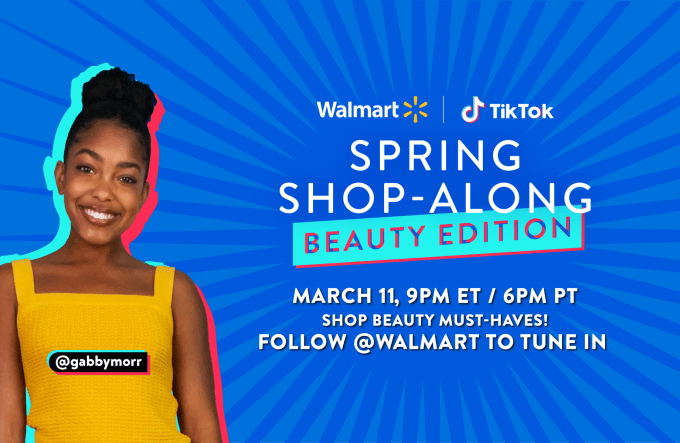



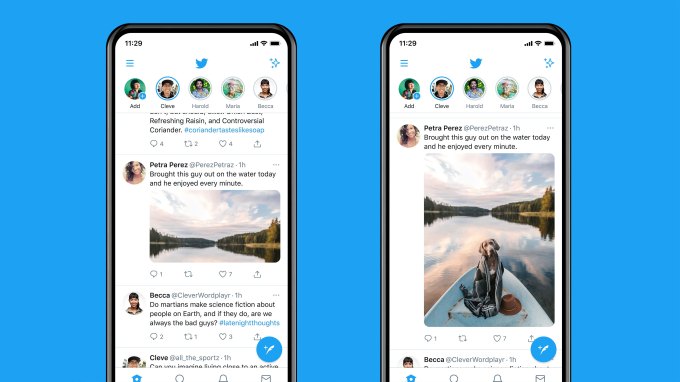
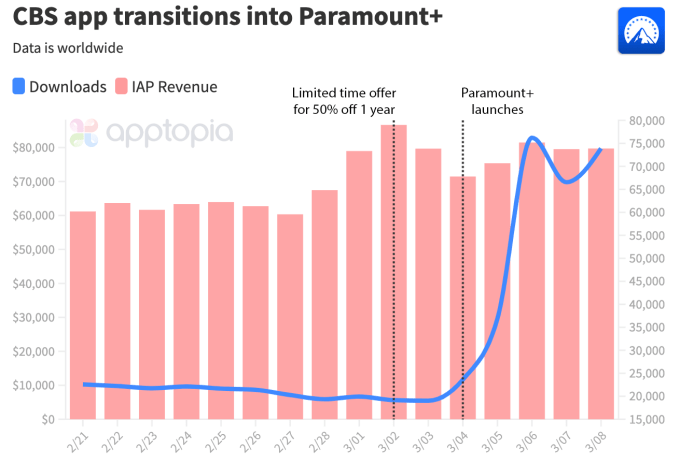
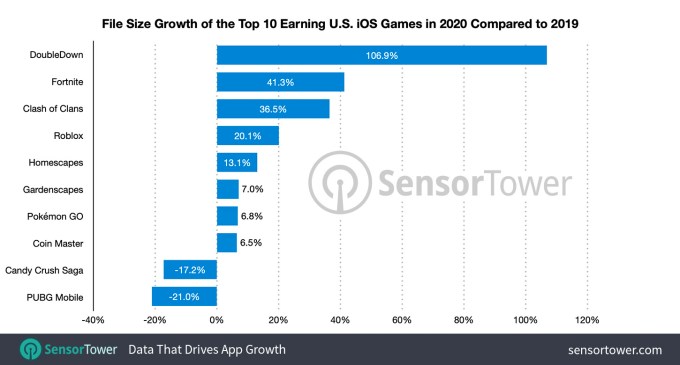

 Social networking app Wefarm, aimed at independent farmers in Africa,
  Gaming platform Roblox made its stock market debut on Wednesday under the ticker symbol RBLX. The stock
  Real estate software and data firm VTS