Month: March 2021

09 Mar 2021

Taipei-based Influenxio gets $2M from DCM Ventures for its “microinfluencer” marketing platform

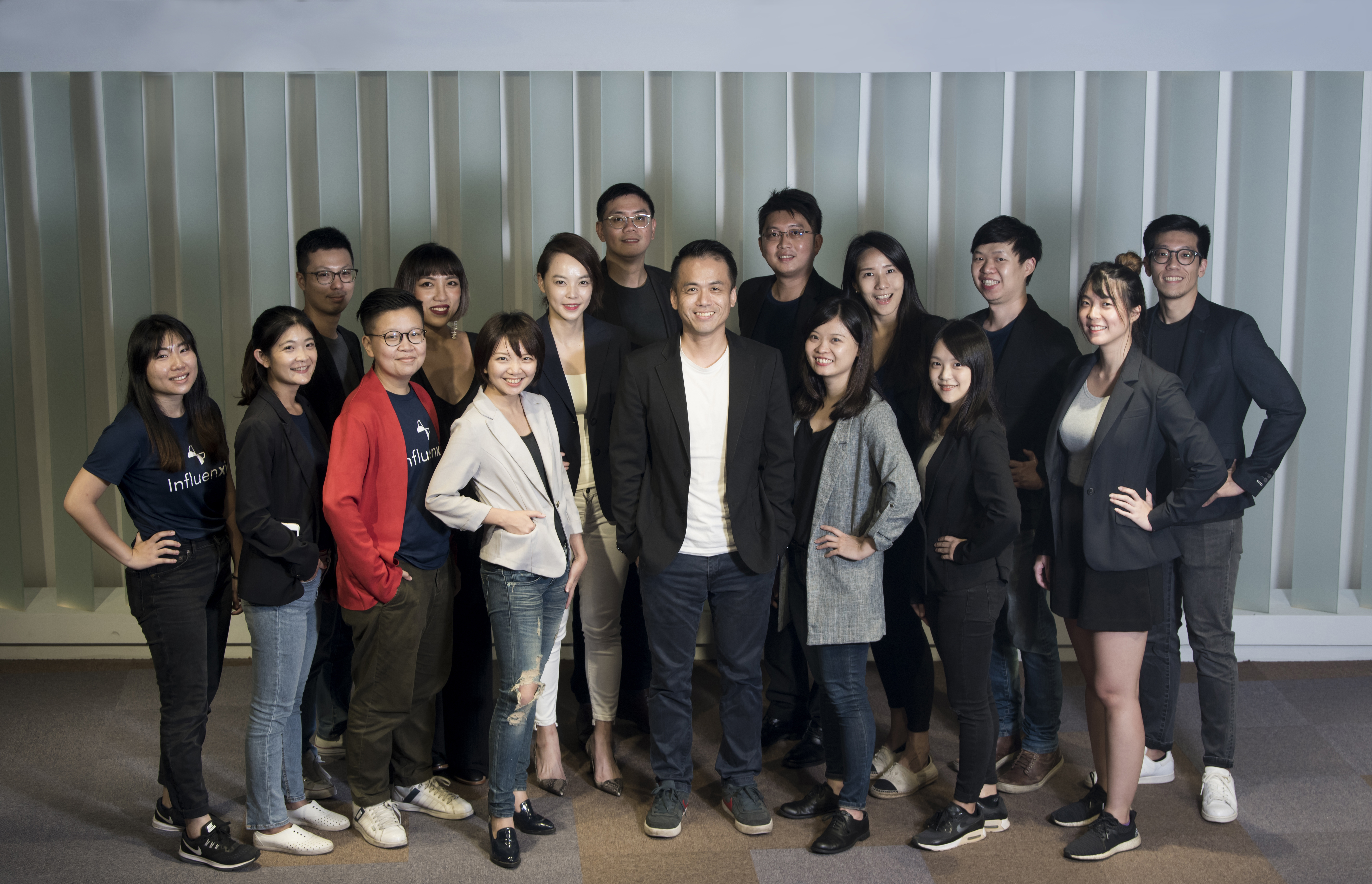
Influencer marketing startup Influenxio's team, with founder and CEO Allan Ko in the center

Influenxio’s team, with founder and chief executive officer Allan Ko in the center

“Microinfluencers” are gaining clout among marketers. Though they may have as little as a thousand followers, microinfluencers tend to focus on specific content and be seen as more engaging and trustworthy by their audience, said Allan Ko, founder and chief executive officer of Influenxio. The Taipei-based startup, which connects brands with Instagram microinfluencers through its online platform, announced today that it has closed $2 million in pre-Series A funding led by DCM Ventures, and is launching a new subscription plan.

Founded in 2018, Influenxio has now raised over $3 million in total. It currently operates in Taiwan and Japan, where it has databases of 100,000 and 250,000 Instagram creators, respectively. So far, over 6,000 brands have registered on Influenxio’s platform, and it has been used to run over 1,000 campaigns.

Influenxio plans to use its new funding for hiring and product development. Influenxio’s new subscription plan is a relatively novel model for the field, so one of the startup’s goals is to prove that it works, Ko told TechCrunch. The company also plans to build out its Japanese platform and expand into more countries.

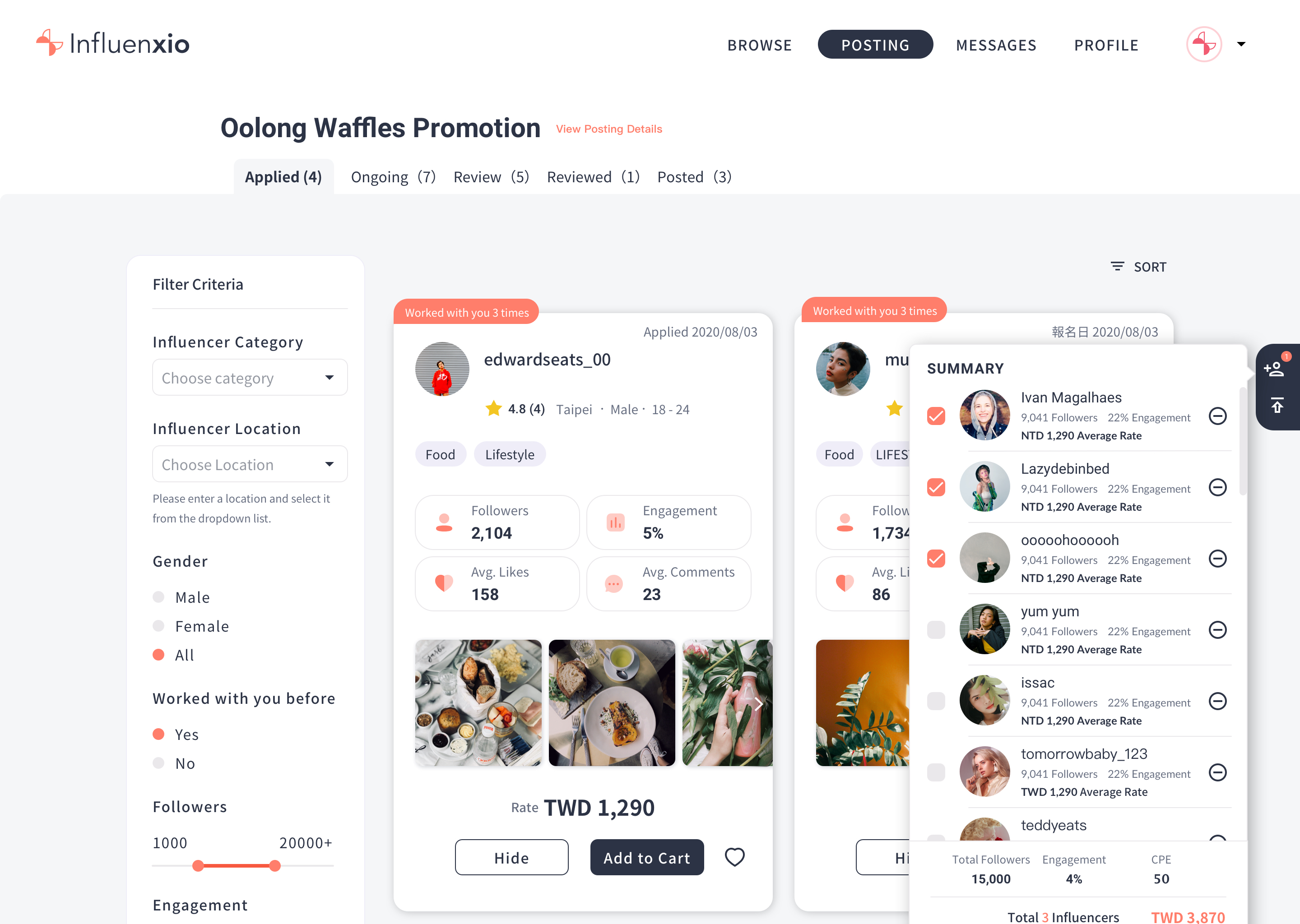
A screenshot of Influenxio's platform

A screenshot of Influenxio’s platform

Influenxio analyzes past campaigns, performance data and client reviews to improve its algorithms. Since the entire campaign creation process–from finding influencers to paying them–is performed through Influenxio, this allows it to gather a wide range of data to refine its technology, Ko told TechCrunch.

Influencers typically make about $35 to $40 USD for each campaign they participate in, and most of the brands the company works with focus on food (like restaurants), fashion, beauty or lifestyle services.

Before launching Influenxio, Ko spent 15 years working in the digital marketing field, serving as an account manager at Yahoo! and Microsoft, and then head of Hong Kong and Taiwan for Google’s online partnerships group. He wanted to create a startup that would combine what he had learned about digital marketing and make accessible to more businesses.

Large brands have used Influenxio to quickly generate marketing campaigns for special occasions like Mother’s Day or Christmas. For example, one advertiser in Taiwan used Influenxio to hire almost 200 influencers in one week, who were asked to test and post about their products, and some of Influenxio’s highest profile clients include Shiseido, Shopee, iHerb and KKBox.

But the majority of Influenxio’s clients (about 80% to 90%) are small- to medium-sized businesses, and Ko said they usually create multiple campaigns to build brand awareness over time, working with a few influencers a month.

Influenxio’s new subscription plan, which costs less than $100 USD a month and is launching first in Taiwan before rolling out to other markets, was created for them. “The first year we launched the platform, we found small businesses want experts and advice,” said Ko. Many don’t have marketing managers, so Influenxio’s subscription plan automatically matches them with new influencers each month and provides them with analytics so they can see how well campaigns are performing.

Influenxio is among a growing number of startups that are tapping into the “microinfluencer economy,” with others including AspireIQ, Upfluence and Grin.

Ko said Influenxio’s biggest difference is its focus on small businesses, and serving as a one-stop marketplace for influencer campaigns. “The important thing for our platform is that it needs to be very easy and simple,” he added. “We spent a lot of time on the execution and details to make it smoother on the advertiser side. For the influencer side, we try to make it more convenient. For example, the way they receive money, our goal is to also make it easy.”

09 Mar 2021

Kia’s electric vehicle plans take shape with EV6 teaser, new naming strategy

Kia started the year by dropping “motor company” from its corporate name and revealing a new logo and slogan as part of Plan S, a strategy to shift its business away from internal combustion engines and towards EVs, mobility services and autonomous vehicle technology.

Now, the South Korean automaker is starting to share more details of the first vehicle that will come out of Plan S. Kia released Tuesday several teaser images of the EV6, its first dedicated battery-electric vehicle built on its new Electric-Global Modular Platform, or E-GMP platform. This platform is shared with Hyundai and is the underlying foundation of the new Hyundai Ioniq 5 compact crossover.

These are teasers and so the vehicle isn’t shown in full. But even with the limited view enough design features are visible to begin to understand what Kia’s design language means for the EV6 and its other future electric vehicles.

The EV6 is a four-door crossover, which isn’t a surprise considering the popularity of such vehicles in the U.S. The low front end moves up into a roofline that is reminiscent of a coupe. The LED headlights have a segmented pattern and the traditional grille found on internal combustion engine vehicles is gone.

Kia teases EV6

Image credits: Kia

The company also revealed a new naming scheme to help consumers easily identify the EVs in its lineup. Kia said its new dedicated battery electric vehicles will all start with the “EV” prefix. A number will follow “EV” to indicate the vehicle’s position the line-up. That puts the EV6 somewhere in the middle of its upcoming lineup.

Kia said the EV6 will make its world premiere during the first quarter of 2021.

“Our aim is to design the physical experience of our brand and to create bold, original and inventive electric vehicles,” Karim Habib, senior vice president and head of Kia Global Design Center, said in a statement.

Kia’s strategy is more ambitious though than creating bold, original and inventive electric vehicles. The company said last year that it wanted to become a pioneer in the age of EVs, a brand beloved by the millennial generation and Z generation and a symbol of challenge and innovation. Kia has placed sales and product goals behind those aspirational objectives, including the launch of 11 EVs by 2025 that will give it a 6.6% global EV market share, selling 500,000 electric vehicles annually by 2026, and offering customized purpose-built electric vehicles for corporate customers.

Image credits: Kia

It’s also putting some capital behind the effort, to the tune of 29 trillion won (US $25 billion) by the end of 2025.  Kia said its targeting a 6% operating profit margin and 10.6% return on equity (ROE) ratio during this time period.

The EV6 is the first product of Plan S, a vehicle that will show investors and consumers if Kia’s grand plans are achievable. In other words, the EV6 is important for Kia.

09 Mar 2021

PUBG Mobile-developer invests $22.4 million in India’s Nodwin Gaming

Krafton, the developer of popular gaming title PUBG Mobile, has invested $22.4 million in Indian esports firm Nodwin Gaming, the two firms said Tuesday as the South Korean firm looks to maintain some presence in what was once its key overseas market.

Nodwin Gaming, backed by local gaming giant Nazara, has established itself as one of the largest esports firms in India.

The Gurgaon-headquartered firm today works with several firms including Blizzard Entertainment, Valve, Riot Games, ESL to help them host events, provide commentary, produce and license content, and amass brands and sponsors.

Nodwin, which recently expanded to Africa, will deploy the fresh capital to accelerate its growth in international markets, it said.

Krafton and Nodwin have been engaging with one another for some time. The two firms last week announced that they will be collaborating to hold two PUBG Mobile events in Asia.

India banned PUBG Mobile and hundreds of other apps with affiliation to China last year citing cybersecurity concerns. Krafton has been attempting to bring PUBG Mobile back in India, but hasn’t had any luck yet.

To assuage New Delhi’s concerns about users’ security, Krafton said it had cut ties with Chinese publisher Tencent. (It also inked a global cloud deal with Microsoft.) Sean Hyunil Sohn, the head of Corporate Development at Krafton, said earlier this month at a gaming conference that the firm “will work hard” to bring PUBG Mobile back in India, but didn’t elaborate.

“Krafton is excited to partner with Nodwin Gaming to help foster the promising esports ecosystem and engage with our fans and players in India,” said Changhan Kim, chief executive of Krafton in a statement.

“Taking the momentum from this partnership, we will explore additional investment opportunities in the region to uphold our commitment and dedication in cultivating the local video game, esports, entertainment, and tech industries.”

08 Mar 2021

Apple releases important iPhone, iPad, Mac, and Watch security patches

Apple has released a set of security updates for iPhones, iPads, and Macs, and Watches. There are no new features — but these are updates you will still want to install.

As part of these security fixes, iPhones and iPads will update to iOS and iPadOS 14.4.1, watchOS users will update to 7.3.2, and macOS Big Sur will update to 11.2.3. Those on older versions of macOS can install the latest version of Safari, bumping the version to 14.0.3.

Apple says these are “important” security updates and are “recommended for all users.”

These patches fix the same vulnerability — a memory corruption bug in WebKit, the engine that powers Apple’s Safari browser. The bug can be triggered by visiting a malicious web page containing code that can exploit the vulnerability. Once exploited, an attacker can run malicious code on the affected Apple device.

The bugs were reported by Google and Microsoft, but are not believed to be actively exploited by malicious hackers unlike recent security flaws.

Last month, Apple pushed out iOS 14.4 to fix three WebKit vulnerabilities that were being “actively exploited.” The vulnerabilities were chained together to break into the underlying iPhone software.

If you haven’t already, update today.

08 Mar 2021

Max Q: Starship’s good landing (and less good post-landing)

Max Q is a weekly newsletter from TechCrunch all about space. Sign up here to receive it weekly on Mondays in your inbox.

Sometimes even the biggest successes look like failures on video. That’s the theme of this week, because the biggest news by far was SpaceX’s test launch of its latest Starship prototype in South Texas.

It looked fake – but the fireball proved it wasn’t

SpaceX’s test flight was a launch of the 10th Starship prototype to a height of around 32,000 feet, at which point it used its Raptor engines to flip into a flop maneuver and then fall back to Earth in a roughly horizontal orientation, before re-lighting its engines very near the ground and flipping back vertical for a soft landing. All of which actually happened as described, for the first time, causing many TC readers to suggest it was an elaborate CG fake.

It wasn’t – after SpaceX cameras cut away, but while others were luckily still filming, the SN10 prototype met the same fiery end as the last two SpaceX rockets to do the high-flying act. The explosion that totally destroyed the rocket happened a few minutes after it sat stationary post-landing, and while it maybe didn’t provide the best optics, the real takeaway is that SpaceX proved the crazy landing maneuver Starship will use for reusability actually works in real-world conditions.

Starlink’s UT antenna for residential customers.

SpaceX kinda needs the Starship to start working more and more often, because the big new rocket has a lot of work to do. As the space company continues to launch its Starlink satellites, including 60 more this past week, it really wants to be launching up to 400 at a time using Starship’s generous cargo compartment. And there are humans waiting in the wings for a Starship ride, too: Japanese billionaire Yusaku Maezawa, who bought out an entire Starship mission for a trip around the Moon and back in 2023 has opened applications for 8 other passengers who will join him – at his expense.

The SPAC man closes out his personal stake

Chamath Palihapitiya, the Chairman of Virgin Galactic, has sold his entire personal stake in the company after ushering it into the public markets last year via a SPAC merger with his Social Capital Hedosophia. Palihapitiya still retains a 6.2% ownership stake via that vehicle, in partnership with Ian Osborne, but his own independent holdings are now at zero.

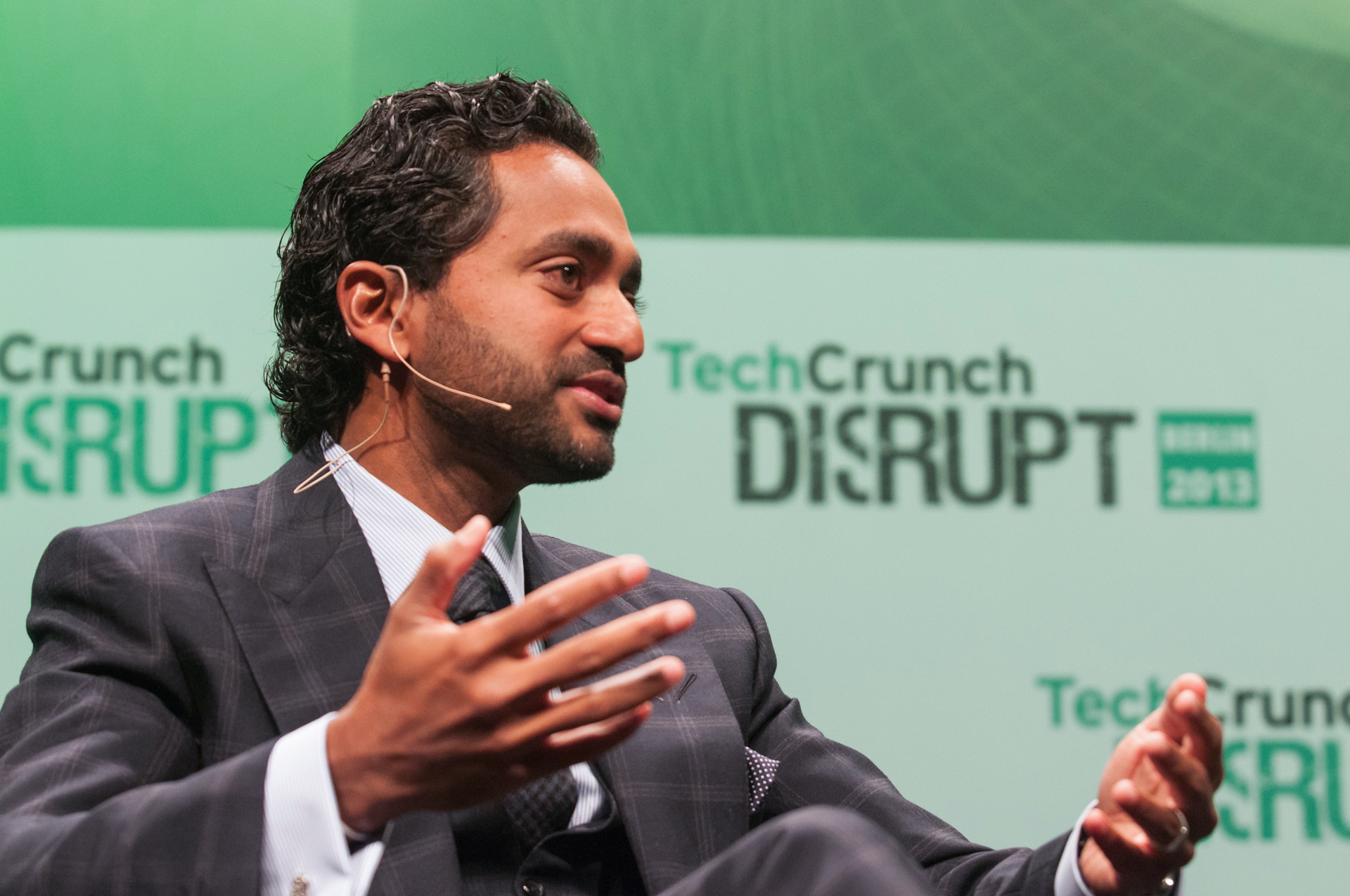
Chamath Palihapitiya

Image Credits: TechCrunch

Palihapitiya says he “remains as dedicated as ever to Virgin Galactic’s team, mission and prospects,” and that the only reason he liquidated his position was to provide funds for a climate-focused investment he’ll be taking the lid off soon. Public market investors seem not to have retained the same confidence, however, with price down consistently since news of the Chairman’s sale came out last week.

Early Stage

Early Stage is the premier “how-to” event for startup entrepreneurs and investors. You’ll hear firsthand how some of the most successful founders and VCs build their businesses, raise money and manage their portfolios. We’ll cover every aspect of company building: Fundraising, recruiting, sales, product-market fit, PR, marketing and brand building. Each session also has audience participation built-in — there’s ample time included for audience questions and discussion.

08 Mar 2021

Daily Crunch: PayPal acquires Curv

PayPal acquires a cryptocurrency startup, Apple discontinues the iMac Pro and McAfee sells its enterprise business. This is your Daily Crunch for March 8, 2021.

The big story: PayPal acquires Curv

This deal will grow PayPal’s cryptocurrency team by bringing on Curv, a startup working with exchanges, brokers and over-the-counter desks to help their users store crypto assets securely and access their wallets without requiring additional hardware.

The larger company already supports the buying and selling of cryptocurrencies, and it says it plans to launch new crypto-related products in other countries and in Venmo. Calcalist was the first to report the acquisition, and it said that the deal price was between $200 and $300 million, while another source tells TechCrunch that the price was less than $200 million.

The tech giants

The iMac Pro is being discontinued — Apple will stop selling the all-in-one once the current stock is depleted.

McAfee sells enterprise biz to Symphony Technology Group for $4B — McAfee President and Chief Executive Officer Peter Leav said the company has decided to direct its resources to the consumer side of the business.

Google unveils $25M in grants aimed at empowering women and girls — Google.org’s new Impact Challenge, unveiled on International Women’s Day, is aimed at addressing systemic barriers and inequities.

Startups, funding and venture capital

UK challenger bank Starling raises $376M, now valued at $1.9B — Starling, which competes against incumbent banks, as well as other challengers like Monzo and Revolut, says it’s already profitable.

Cosi raises €20M for its ‘full-stack’ approach to short-term rentals — The company signs long-term leases with property owners, then furnishes those apartments itself to “control” the interior design experience.

Swiss maker of meat alternatives Planted will expand and diversify with $18M Series A — With new kebabs and pulled-style faux meats available and steak-like cuts in the (literal) pipeline, Planted has begun to set its sights outside central Europe.

Advice and analysis from Extra Crunch

From electric charging to supply chain management, InMotion Ventures preps Jaguar for a sustainable future — A look at InMotion Ventures, the independent investment and incubation initiative set up by Jaguar Land Rover.

Olo’s IPO could value the company north of $3B as Toast waits in the wings — Olo, the New York-based fintech startup that provides order processing software to restaurants, shared its initial IPO price range this morning.

White-label voice assistants will win the battle for podcast discovery — Listeners have never had so many choices for smart and compelling podcast content, with new exciting shows emerging daily.

(Extra Crunch is our membership program, which helps founders and startup teams get ahead. You can sign up here.)

Everything else

Announcing the agenda for TC Early Stage — Operations & Fundraising — You’ve got questions. TechCrunch Early Stage will have answers for you on April 1 and 2.

A glimpse inside the minds of tech’s DEI leaders — We spoke with Uber Chief Diversity Officer Bo Young Lee and Netflix VP of Inclusion Strategy for Product Wade Davis about the work that still needs to be done.

The Daily Crunch is TechCrunch’s roundup of our biggest and most important stories. If you’d like to get this delivered to your inbox every day at around 3pm Pacific, you can subscribe here.

08 Mar 2021

Zapier buys no-code-focused Makerpad in its first acquisition

Zapier, a well-known no-code automation tool, has purchased Makerpad, a no-code education service and community. Terms of the deal were not disclosed.

TechCrunch has covered Zapier often during its life, including its first, and only fundraising event, a $1.2 million round back in 2012 that tapped Bessemer, DFJ, and others. Since then company has added more expensive tiers to its service, built out team-focused features, and recently talked to Extra Crunch about how it scaled its remote-only team.

In an interview Monday with Zapier CEO Wade Foster told TechCrunch that his company now has 400 workers, and crossed the $100 million ARR mark last summer.

The Makerpad deal is its first acquisition. TechCrunch asked Makerpad founder Ben Tossell about the structure of the deal, who said via email that his company will operate as a “stand-alone” entity from its new parent company.

The deal doesn’t seem prepped to upend what the smaller startup was working on before it was signed. “Ultimately,” Tossell wrote, “Makerpad’s vision is to educate as many people as possible on the possibilities of building without writing code.”

Foster seems content with that focus, describing to TechCrunch how he intends to let Makerpad operate largely independently, albeit inside a set of editorial guidelines.

TechCrunch asked the Makerpad founder why this was the right time to sell his business. He said that the pairing would help his team take the no-code world further than it could alone, also noting that the deal was a “no-brainer” over “alternative routes such as VC funding.”

The acquisition was partially driven by a single tweet. This one, in fact. According to Tossell, the CEO of Zapier reached out after reading it, leading to conversations and a deal. Foster expanded on the story during a call, saying that he had long followed Tossell’s work and that the two had met previously at dinners. The tweet wound up in his Slack, he said, so he reached out to the Makerpad founder, and from there it was a pretty quick ramp to a deal.

The two companies have seen rapid growth in recent quarters. Foster detailed to TechCrunch how small businesses have become increasingly reliant on his company’s service in the post-COVID world, with Zapier seeing strong SMB adoption after the pandemic hit. Given the digital transformation’s acceleration, that’s a trend that likely won’t slow soon. And Tossell told TechCrunch that no-code has already “grown bigger than [he] had imagined it could,” with his company seeing users expanding 4x in just under the last year.

Zapier, perhaps one of the largest success stories in the broad swath of technology products that we might call the no-code world, now has an attached community that could help directly add users to its service, and perhaps indirectly by making the aggregate pool of no-coders larger over time.

The no-code space has been active in recent months, as has its sibling niche, the low-code market. The latter has seen recent rounds in the nine-figures, as some corporations turn to low-code tools to help the more quickly build internal software. The no-code world has its own successes, like Zapier’s nine-figure revenues.

Foster was neutral on more acquisitions, neither closing the door on them when TechCrunch asked, but not opening it any wider at the same time. On the SPAC question, however, the CEO was a bit clearer. That’s a no.

After having spoken to a grip of no-code, and low-code founders and investors in recent months, it seems clear that the broader business market is coming around to low-code services, and that smaller companies have been quick adopters of no-code tooling. As low-code tools become increasingly abstracted from coding, and no-code tools add functionality, perhaps we’ll see the two related categories merge.

08 Mar 2021

Zapier buys no-code-focused Makerpad in its first acquisition

Zapier, a well-known no-code automation tool, has purchased Makerpad, a no-code education service and community. Terms of the deal were not disclosed.

TechCrunch has covered Zapier often during its life, including its first, and only fundraising event, a $1.2 million round back in 2012 that tapped Bessemer, DFJ, and others. Since then company has added more expensive tiers to its service, built out team-focused features, and recently talked to Extra Crunch about how it scaled its remote-only team.

In an interview Monday with Zapier CEO Wade Foster told TechCrunch that his company now has 400 workers, and crossed the $100 million ARR mark last summer.

The Makerpad deal is its first acquisition. TechCrunch asked Makerpad founder Ben Tossell about the structure of the deal, who said via email that his company will operate as a “stand-alone” entity from its new parent company.

The deal doesn’t seem prepped to upend what the smaller startup was working on before it was signed. “Ultimately,” Tossell wrote, “Makerpad’s vision is to educate as many people as possible on the possibilities of building without writing code.”

Foster seems content with that focus, describing to TechCrunch how he intends to let Makerpad operate largely independently, albeit inside a set of editorial guidelines.

TechCrunch asked the Makerpad founder why this was the right time to sell his business. He said that the pairing would help his team take the no-code world further than it could alone, also noting that the deal was a “no-brainer” over “alternative routes such as VC funding.”

The acquisition was partially driven by a single tweet. This one, in fact. According to Tossell, the CEO of Zapier reached out after reading it, leading to conversations and a deal. Foster expanded on the story during a call, saying that he had long followed Tossell’s work and that the two had met previously at dinners. The tweet wound up in his Slack, he said, so he reached out to the Makerpad founder, and from there it was a pretty quick ramp to a deal.

The two companies have seen rapid growth in recent quarters. Foster detailed to TechCrunch how small businesses have become increasingly reliant on his company’s service in the post-COVID world, with Zapier seeing strong SMB adoption after the pandemic hit. Given the digital transformation’s acceleration, that’s a trend that likely won’t slow soon. And Tossell told TechCrunch that no-code has already “grown bigger than [he] had imagined it could,” with his company seeing users expanding 4x in just under the last year.

Zapier, perhaps one of the largest success stories in the broad swath of technology products that we might call the no-code world, now has an attached community that could help directly add users to its service, and perhaps indirectly by making the aggregate pool of no-coders larger over time.

The no-code space has been active in recent months, as has its sibling niche, the low-code market. The latter has seen recent rounds in the nine-figures, as some corporations turn to low-code tools to help the more quickly build internal software. The no-code world has its own successes, like Zapier’s nine-figure revenues.

Foster was neutral on more acquisitions, neither closing the door on them when TechCrunch asked, but not opening it any wider at the same time. On the SPAC question, however, the CEO was a bit clearer. That’s a no.

After having spoken to a grip of no-code, and low-code founders and investors in recent months, it seems clear that the broader business market is coming around to low-code services, and that smaller companies have been quick adopters of no-code tooling. As low-code tools become increasingly abstracted from coding, and no-code tools add functionality, perhaps we’ll see the two related categories merge.

08 Mar 2021

White-label voice assistants will win the battle for podcast discovery

Americans are bored, housebound and screened out. This has created a golden opportunity for audio as consumers turn to podcasts, voice assistants and smart speakers – often at the same time.

Roughly 128 million Americans use a voice assistant at least once a month. Smartphones account for most voice assistants, but there are also nearly 160 million smart speakers in American homes.

One of the hottest forms of audio content is, of course, podcasts. Listeners have never had so many choices for smart and compelling podcast content, with new exciting shows emerging daily. On the consumption side, monthly podcast listeners topped 100 million for the first time in 2020, a 40% increase in just two years.

Listeners get their podcasts from dedicated podcast apps (such as Stitcher), publisher apps (like NPR’s), music apps (such as Spotify), or their default phone app or voice assistant. With more than 1.7 million podcasts being produced today, even the most dedicated podcast listeners can’t listen to every episode in their queue.

This is where voice assistants come in.

The major voice assistants – Amazon, Apple, Google, Microsoft and Samsung – dominate, but they face increasing competition for users from white-label voice assistants. This has become a battle that will be decided by whichever company can provide the best quality of service.

That’s why the voice assistant that can personalize podcasts and help listeners search, sample and discover content through shareable bite-sized pieces will win the voice wars.

A familiar battle over users

Early consumer electronics battles for users were waged over the operating system – Windows vs. Mac. Voice is another form of operating system, and the battle over voice is no less fierce.

Apple’s Siri was the first modern virtual assistant to reach the masses. Amazon and Google have also heavily invested – often at a loss – to own voice activation for users, grab market share and protect their turf (e-commerce for Amazon and search for Google).

Amazon took 24% of the virtual assistant market in 2018, followed by Apple (22%), Google (20%), Microsoft’s Cortana (10%) (largely confined to desktop), and Samsung’s Bixby (6%).

These five major brands were early pioneers, but the next phase of the voice wars will be white-labeled, with voice assistants incorporated into all devices and brands.

The rise of white-label voice assistants

Unable to develop their own voice assistants, hundreds of device manufacturers must resort to Google or Alexa if they want to add voice functionality to their products. But in a way, this is a Trojan horse: Adding Google or Alexa voice enhances products but undermines user relationships.

08 Mar 2021

Announcing the agenda for TC Early Stage – Operations & Fundraising

As an early-stage founder, how do you identify the right investors? Or know how to hire the best possible team to set up your company for growth? Should you bootstrap, and if so, how do you do it successfully? How do you nail virtual pitch meetings? What about product market fit? Board construction and good governance? How do you make sound financial decisions both for your company and yourself?

You’ve got questions. TechCrunch Early Stage will have answers for you on April 1 & 2.

At the virtual event, we’re bringing together some of the most seasoned operators in the fields of legal, recruiting, product, data security, and sales to help you find your way through a tactical quagmire to the bright light of success at the end of the tunnel.

Of course, the show will cover more than operational challenges. We also have many, many sessions around fundraising, from how to think about raising your Series A to how to get an investors attention.
If you’re in the midst of building a company, this show is worth making time for. Plus, audience members will be able to ask their own questions to our expert speakers in each and every breakout session.

Finding Your Product Market Fit with Sean Lane (Olive AI)

Olive AI founder and CEO is no stranger to the pivot. Hear how he practiced patience in the search for product market fit, how he knew it when he finally found it, and tactics he used to build on it.

Sponsored by Perkins Coie: Creating and Protecting IP Value in Connection with VC Financings

How do venture capital investors value formal Intellectual Property (IP) rights in connection with a decision to fund a technology or life sciences start-up? How do they conduct IP due diligence? How do investors and founders, post-funding, ensure their start-ups are pursuing an IP strategy that optimizes exit valuation for all? Perkins Coie partners Michael Glenn (Patent Prosecution) and Matt Oshinsky (Emerging Companies Venture Capital) will be joined alongside a seasoned venture capitalist to discuss these and other questions regarding safeguarding IP rights and maximizing the value of all technology development activities.

How to Get an Investor’s Attention with Marlon Nichols (MacVenture Partners)

Marlon Nichols is an expert in early-stage investments, having invested in countless successful ventures such as Gimlet Media, MongoDB, Thrive Market, PlayVS, Fair, Wonderschool and Finesse. Right now, there is more seed stage fundraising than ever before, and Marlon will speak on how to get noticed by investors, how to grow your business and how to survive in the crowded, competitive space of tech startups. He will provide insights on how to network, craft a great pitch and target the best investors for your success.

Sponsored by Mayfield: Scientist Entrepreneurs – Scaling Breakout Engineering Biology Companies

Biology as technology will re-invent trillion dollar industries and enhance human and planetary evolution. In this session, two early-stage investors and company builders, Arvind Gupta and Ursheet Parikh, will be in conversation with a leading author and seed investor Po Bronson, Managing Director of IndieBio. They will share their playbook on scaling start-ups touching upon three seminal areas which influence trajectory – fundraising, hiring, and product design. Their insights will draw on their experience with companies including ingredients-as-service leader Geltor which raised a $91 million Series B in 2020, CRISPR platform Mammoth Biosciences whose dream team includes co-founder Nobel Laureate Jennifer Doudna, and Endpoint Health, started by the founding team of GeneWEAVE (acquired by Roche) and former YC Bio Partner Diego Rey, which is designing a new class of therapeutic products that focus on hospital conditions that kill as many people as cancer.

How to Nail Your Virtual Pitch Meeting with Melissa Bradley (Ureeka)

The rules of the pitch meeting have changed. Instead of traveling across the country, wasting time in planes, trains and automobiles, founders can take upwards of 30 meetings in a day from the comfort of their home. Entrepreneur and VC Melissa Bradley will outline how to make the most of that half hour on Zoom and lock in the next one.

Sponsored by Merus Capital: An M&A Playbook for Startup Founders: Lessons from Google and Microsoft

One of the most important decisions a founding team can make is when to consider selling the company to a strategic buyer. In this session, learn the tactics for approaching acquirors, avoiding common pitfalls and maximizing the likelihood of achieving an eye-popping valuation. Hear from Sean Dempsey, founding partner of Merus Capital who spent 10 years leading acquisitions for Google and Microsoft, and Dave Sobota, VP of Corporate Development at Instacart and former M&A leader at Google.

10 Things NOT To Do When You Are Starting a Company with Leah Solivan (Fuel Capital)

With voices across the internet giving their two-cents on how to run a great business. Fuel Capital’s Leah Solivan, who was CEO at TaskRabbit for 8 years, will share a list of things that a founder should NOT do. Avoid the pitfalls that could break your momentum, or worst case, your company and ask Solivan your own questions.

Sponsored by Dell for Entrepreneurs: Why Founders should adopt OKRs now?

Execution is key to a start-up’s survival and growth especially when it comes to fast-moving software and technology products. Being in the tricky intersection of investors, customers and employees, a founder needs to balance priorities, align teams and create a visionary product that works. Moreover, in this age of hyper feedback loops and changing business models, the founder has to be agile enough to absorb and quickly react to changes in the product roadmap and consumer needs. OKRs – a toolkit used majorly by engineering and product teams is more than relevant now for founders of all kinds to embrace. Join the session to learn the history of OKRs, what they are about, and witness case studies of successful real-life adoption.

How To Get Into An Accelerator with Neal Sales-Griffin (Techstars)

Accelerators provide an incredible launch pad for early stage startups, offering a built-in network, accessible advisors, and of course, capital. But first, you’ve got to be accepted. Hear Techstars Neal Sales-Griffin outline how to get into an accelerator and make the most of the experience.

Sponsored by Brainbase: Naming & Protecting Your Company’s Intellectual Property with Brainbase

You have an idea for a game-changing product or service – what do you call it? Once you’ve picked a name, how do you make sure nobody else is using it? Is the domain and Twitter handle available? Brainbase makes it easy for anyone to file a trademark without a lawyer, and instantly own your brand across all channels. In this session, Brainbase co-founder and CEO Nate Cavanaugh will explain the importance of owning your company’s trademark, both for brand protection and for fundraising due diligence.

4 Things To Think About Before Raising a Series A with Bucky Moore (Kleiner Perkins)

Founders looking to raise Series A capital know that it’s an entirely different ball game than seed stage funding. Hear Kleiner Perkins partner Bucky Moore outline the most important ways to mentally prepare for heading into Series A fundraising.

Sponsored by B Capital Group: Nailing the little things: How startups can achieve operational excellence from “Day one”

The early days of launching a company can be a whirlwind for founding teams as unexpected challenges and opportunities require flexibility, agility and speed. But implementing a few key operating best practices and processes early can be a crucial part of a startup’s success or failure when it prepares for rapid growth. Join partners from B Capital Group, a multi-stage global investor, to learn about the most important things you can do to set your startup up for success early in your journey, and what will be most important to investors as you raise your Seed, A and B funding rounds. Speakers include Howard Morgan, Chairman of B Capital Group and co-founder of First Round Capital, and Partners Karen Page (formerly of Box) and Gabe Greenbaum (formerly of Pritzker Group).

How to Build Your Early Team for Future Growth with Sarah Smith (Bain Capital Ventures)

More than your investors, or even you as a founder, your early employees will have a tremendous influence on the trajectory of your company. You hire them, and often times, they hire everyone else. Hear Bain Capital Ventures partner Sarah Smith talk through how to recruit a top-notch early team that sets your startup up for future growth.

Contracts, Cap Tables and other Legal Questions with Dawn Belt (Fenwick)

No matter the industry, your startup requires legal help. Whether it’s building out the cap table, writing up contracts, understanding the laws around hiring or simply feeling secure with a TOS. Whatever the question, Fenwick & West partner Dawn Belt has the answer.

Finance for Founders with Alexa von Tobel (Inspired Capital)

As a founder, you not only have to master your company’s finances, you also have to tackle your own personal finances. Managing your money as a founder comes with a unique set of questions (see: QSBS). Leveraging her expertise from LearnVest and as a Certified Financial Planner™, Alexa will share financial planning best practices so founders can remove this layer of stress from the pressure of building a business.

Leadership Culture and Good Governance with David Easton (Generation Investment Management)

David Easton is a growth-stage partner at Generation Investment Management with portfolio companies that include Asana, Andela, Gusto, and Docusign, among others. Easton will talk through how to choose your board and foster a leadership culture that keeps sustainable, good governance top of mind.

Building and Leading a Sales Team with Ryan Azus (Zoom)

Contrary to popular opinion, even the very best products don’t sell themselves. Salespeople do. Hear from Zoom’s Chief Revenue Officer, at the helm of the company’s sales team during the biggest period of growth of any software company ever, lay out how to build a stellar sales team.

The All-22 View with Eghosa Omoigui (EchoVC Partners)

Improving line of sight and dynamic field of play aperture is rarely discussed but hugely important. Great founders, operators and investors have an understanding of playbooks on both sides of the ball. We’ll talk through learnings and some ideas on how to build muscle memory and skillsets so that founders never lose perspective when it’s time to make a big decision.

And we’ll also have some great sessions from our partners too!

Creating and Protecting IP Value in Connection with VC Financings brought to you by Perkins Coie

How do venture capital investors value formal Intellectual Property (IP) rights in connection with a decision to fund a technology or life sciences start-up? How do they conduct IP due diligence? How do investors and founders, post-funding, ensure their start-ups are pursuing an IP strategy that optimizes exit valuation for all? Perkins Coie partners Michael Glenn (Patent Prosecution) and Matt Oshinsky (Emerging Companies Venture Capital) will be joined alongside a seasoned venture capitalist to discuss these and other questions regarding safeguarding IP rights and maximizing the value of all technology development activities.

Scientist Entrepreneurs – Scaling Breakout Engineering Biology Companies brought to you by Mayfield

Biology as technology will re-invent trillion dollar industries and enhance human and planetary evolution. In this session, two early-stage investors and company builders, Arvind Gupta and Ursheet Parikh, will be in conversation with a leading author and seed investor Po Bronson, Managing Director of IndieBio. They will share their playbook on scaling start-ups touching upon three seminal areas which influence trajectory – fundraising, hiring, and product design. Their insights will draw on their experience with companies including ingredients-as-service leader Geltor which raised a $91 million Series B in 2020, CRISPR platform Mammoth Biosciences whose dream team includes co-founder Nobel Laureate Jennifer Doudna, and Endpoint Health, started by the founding team of GeneWEAVE (acquired by Roche) and former YC Bio Partner Diego Rey, which is designing a new class of therapeutic products that focus on hospital conditions that kill as many people as cancer.

Using Fast Feedback to Make Higher-Confidence Decisions and Accelerate the Dev Process brought to you by UserTesting

We’ll discuss how to use fast feedback methodologies to make high-confidence product decisions based on objective customer data in real time, without slowing the dev process. Quickly diagnose problems, settle disputes, reduce the risk of rework, and iterate faster. This session will include real-world case studies.

An M&A Playbook for Startup Founders: Lessons from Google and Microsoft brought to you by Merus Capital

One of the most important decisions a founding team can make is when to consider selling the company to a strategic buyer. In this session, learn the tactics for approaching acquirors, avoiding common pitfalls and maximizing the likelihood of achieving an eye-popping valuation. Hear from Sean Dempsey, founding partner of Merus Capital who spent 10 years leading acquisitions for Google and Microsoft, and Dave Sobota, VP of Corporate Development at Instacart and former M&A leader at Google.

Why Founders should adopt OKRs now? brought to you by Dell for Entrepreneurs

Execution is key to a start-up’s survival and growth especially when it comes to fast-moving software and technology products. Being in the tricky intersection of investors, customers and employees, a founder needs to balance priorities, align teams and create a visionary product that works. Moreover, in this age of hyper feedback loops and changing business models, the founder has to be agile enough to absorb and quickly react to changes in the product roadmap and consumer needs. OKRs – a toolkit used majorly by engineering and product teams is more than relevant now for founders of all kinds to embrace. Join the session to learn the history of OKRs, what they are about, and witness case studies of successful real-life adoption.

Naming & Protecting Your Company’s Intellectual Property brought to you by Brainbase

You have an idea for a game-changing product or service – what do you call it? Once you’ve picked a name, how do you make sure nobody else is using it? Is the domain and Twitter handle available? Brainbase makes it easy for anyone to file a trademark without a lawyer, and instantly own your brand across all channels. In this session, Brainbase co-founder and CEO Nate Cavanaugh will explain the importance of owning your company’s trademark, both for brand protection and for fundraising due diligence.

Nailing the little things: How startups can achieve operational excellence from “Day one” brought to you by B Capital Group

The early days of launching a company can be a whirlwind for founding teams as unexpected challenges and opportunities require flexibility, agility and speed. But implementing a few key operating best practices and processes early can be a crucial part of a startup’s success or failure when it prepares for rapid growth. Join partners from B Capital Group, a multi-stage global investor, to learn about the most important things you can do to set your startup up for success early in your journey, and what will be most important to investors as you raise your Seed, A and B funding rounds. Speakers include Howard Morgan, Chairman of B Capital Group and co-founder of First Round Capital, and Partners Karen Page (formerly of Box) and Gabe Greenbaum (formerly of Pritzker Group).

This year, we’ve added a pitch-off on day 2 of TC Early Stage, showcasing interesting startups from a variety of sectors. All-star judges will give their feedback live. You don’t want to miss it! And if you’re interested in pitching, you can still apply to pitch by tomorrow, March 9.

Of course, TC Early Stage dual event ticket holders will get access to both events (April 1-2 and July 8-9) and have access to 2x the content that comes out of the event live or on demand. Plus, you can take advantage of additional savings with Early Bird pricing on dual event tickets until March 26!

Mercenary CEOs know all too well that this is about the most bang you can get for your buck. Period. Grab get your ticket now and save up to $100!