Month: March 2021

06 Mar 2021

VC Lindy Fishburne on the sudden democratization of science — and deep tech investing

Deep science investor Lindy Fishburne cofounded the seed- and early-stage venture firm Breakout Ventures several years ago, after cofounding Breakout Labs within the Thiel Foundation back in 2011, and she has made a wide array of interesting bets in the process. Among her firm’s portfolio companies is Cortexyme, a company that aims to treat Alzheimer’s disease; the sustainable materials maker Modern Meadow; and Strateos, a company whose robotic cloud platform is remaking how lab work gets done.

We talked with Fishburne this week about where — based on what she is seeing — we are in the arc of this pandemic. We also talked about why more of her investments, which once seemed like long shots, suddenly seem like solid bets.

Parts of our chat, below, have been edited lightly for length and clarity.

TC: We want to be excited about the progress being made in vaccinating Americans. Based on the conversations you’re having, what’s your sense of things?

LF: The acceleration of the vaccines is like nothing we’ve ever seen before in science, and now we really are down to the unsexy part of of the logistics of rolling them out. That’s clearly our biggest challenge. Then the next piece we’re going to have to confront is what happens when the world is vaccinated [at] very unequal levels and how people feel about travel and exposure and equity along those issues. But I do think we see the end of the biggest threat to humanity and our hospital systems around COVID . . .we’ve probably got another odd year ahead of us.

TC: Science has been the big story of the last year. Are you hearing from investors and potential syndicate partners who weren’t reaching out previously?

LF: Yes. The pandemic has brought the importance of investing in science into sharp relief. For the first time, we’re really seeing a whole set of what you would think of as traditional tech investors who read about the mRNA vaccine that Moderna coded in a weekend and who are starting to believe that we’re able to engineer biology and that it doesn’t feel like a craft process anymore.

TC: You talk about coding a vaccine. Are laboratories becoming less important in that scientists are able to do much more in simulation and, if so, what does that mean for human testing? Are we getting to a point where we don’t have to rely on human testing as much as we did in the past?

LF: That’s where we hope to get on the human testing piece. We’re not there yet. You may have read and heard about organs on a chip and growing organoids, where you can have a very small piece of liver that you’re able to test toxicity on [and] we’re doing more of that. That said, we’re not ready to make that leap from completely doing it in silico to humans with a super-high level of confidence.The human body is such a complex system that we’re not able to model that fully yet.

I do think what you’re pointing toward to some degree is democratization in science and the access for more people to be able with lower skills to be able to work in drug discovery and drug development at a distance. So for example, we have a company that we’ve worked with called Strateos that has a full robotic lab that — instead of having technicians standing there — you have robots and a little train track that moves assays throughout the room so that scientists who were stuck at home this year were able to continue experiments regardless of their geography or safety in the lab or time constraints.

TC: You have another interesting portfolio company, Opus 12, which is transforming industrial carbon dioxide emissions into chemicals. Toward what end?

LF: So obviously, decarbonizing the world is a huge focus. And you’re seeing for the first time corporations like United Airlines making commitments as to what their carbon footprint will be, or going to zero carbon emissions. Opus 12 emerged from two PhDs and an MBA out of Stanford a few years ago and their breakthrough is a catalyst material that allows you to take for example, waste CO2 — the bad stuff — and run it through this catalyst material and produce useful CO. This year, for example, they produced green polycarbonate car parts in partnership with Daimler. The material is exactly the same, which makes it easy to slot into existing products, but it’s actually made by reusing carbon.

The shift in consumer awareness around carbon made materials is an enormous opportunity.

TC: Do companies get some sort of carbon credit for doing that?

LF: Yes, and in the past what we’ve seen is a lot of companies trying to green themselves by basically buying and trading carbon credits, and the shift that we’re going through right now is everyone saying, ‘Okay, to some degree, that was a bit of financial engineering; now we actually need to see these businesses making a change in their direct use of fossil fuels and their direct impact in the amount of carbon.’ [There’s growing awareness that] buying carbon offsets isn’t going to be enough. So you’re now for the first time really seeing commitments to change processes, supply chain and ultimately products.

TC: In recent years, biotech companies have been going public two and three years after being formed. Now, we’re seeing a much wider array of younger companies being transformed into public companies through a growing number of blank-check companies. Any thoughts about whether or not there are parallels here?

LF: On the therapeutic side, you tend to have a very clear playbook around what the potential exit is and who the acquirers are. We know that big pharma is cash rich and pipeline poor and so [these pharma giants] have to pick up the the assets that are working, and you see them do that regularly. And you’ve got comps, and you know what that looks like,  so in placing a wide range of bets on early-stage therapeutics, it’s clear that if one wins, you’re covered.

The SPAC world is going to be really interesting because most of these companies are not operating of traditional traditional playbooks, and it’s not clear whether they operate as public companies longer term. Are they really set up for acquisition?

[Another] difference here is these companies are going to have this enormous amount of funding, and yet they’re not going to be able to toil in obscurity, so the traditional metrics that we all want [in] public companies and looking at revenue and profits and those metrics, we’re going to have to look at these SPACs and their growth through a different lens, and I’m just not sure how receptive the public markets will be to that in the next 24 months. I think it’s unclear whether we’ll have a reckoning there or not.

You can hear the full conversation here

05 Mar 2021

A first look at Coursera’s S-1 filing

After TechCrunch broke the news yesterday that Coursera was planning to file its S-1 today, the edtech company officially dropped the document Friday evening.

Coursera was last valued at $2.4 billion by the private markets, when it most recently raised a Series F round in October 2020 that was worth $130 million.

Coursera’s S-1 filing offers a glimpse into the finances of how an edtech company, accelerated by the pandemic, performed over the past year. It paints a picture of growth, albeit one that came at steep expense.

Revenue

In 2020, Coursera saw $293.5 million in revenue. That’s a roughly 59% increase from the year prior when the company recorded $184.4 million in top line. During that same period, Coursera posted a net loss of nearly $67 million, up 46% from the previous year’s $46.7 million net deficit.

Notably the company had roughly the same non-cash, share-based compensation expenses in both years. And even if we allow the company to judge its profitability on an adjusted EBITDA basis, Coursera’s losses still rose from 2019 to 2020, expanding from $26.9 million to $39.8 million.

To understand the difference between net losses and adjusted losses it’s worth unpacking the EBITDA acronym. Standing for earnings before interest, taxes, depreciation, and amortization, EBITDA strips out some non-operating costs to give investors a possible better picture of the continuing health of a business, without getting caught up in accounting nuance. Adjusted EBITDA takes the concept one step further, also removing the non-cash cost of share-based compensation, and in an even more cheeky move, in this case also deducts “payroll tax expense related to stock-based activities” as well.

For our purposes, even when we grade Coursera’s profitability on a very polite curve it still winds up generating stiff losses. Indeed, the company’s adjusted EBITDA as a percentage of revenue — a way of determining profitability in contrast to revenue — barely improved from a 2019 result of -15% to -14% in 2020.

05 Mar 2021

Snowflake latest enterprise company to feel Wall Street’s wrath after good quarter

Snowflake reported earnings this week, and the results look strong with revenue more than doubling year-over-year.

However while the company’s fourth quarter revenue rose 117% to $190.5 million, it apparently wasn’t good enough for investors who have sent the company’s stock tumbling since it reported Wednesday after the bell.

It was similar to the reaction that Salesforce received from Wall Street last week after it announced a positive earnings report. Snowflake’s stock closed down today around 4% today, a recovery compared to its miday lows when it was off nearly 12%.

Why the declines? Wall Street’s reaction to earnings can lean more on what a company will do next more than its most recent results. But Snowflake’s guidance for its current quarter appeared strong as well, with a predicted $195 million to $200 million in revenue, numbers in line with analysts’ expectations.

Sounds good, right? Apparently being in line with analyst expectations isn’t good enough for investors for certain companies. You see, it didn’t exceed the stated expectations, so the results must be bad. I am not sure how meeting expectations is as good as a miss, but there you are.

It’s worth noting of course that tech stocks have taken a beating so far in 2021. And as my colleague Alex Wilhelm reported this morning, that trend only got worse this week. Consider that the tech heavy Nasdaq is down 11.4% from its 52 week high, so perhaps investors are flogging everyone and Snowflake is merely caught up in the punishment.

Snowflake CEO Frank Slootman pointed out in the earnings call this week that Snowflake is well positioned, something proven by the fact that his company has removed the data limitations of on-prem infrastructure. The beauty of the cloud is limitless resources, and that forces the company to help customers manage consumption instead of usage, an evolution that works in Snowflake’s favor.

“The big change in paradigm is that historically in on-premise data centers, people have to manage capacity. And now they don’t manage capacity anymore, but they need to manage consumption. And that’s a new thing for — not for everybody but for most people — and people that are in the public cloud. I have gotten used to the notion of consumption obviously because it applies equally to the infrastructure clouds,” Slootman said in the earnings call.

Snowflake has to manage expectations, something that translated into a dozen customers paying $5 million or more per month to Snowflake. That’s a nice chunk of change by any measure. It’s also clear that while there is a clear tilt toward the cloud, the amount of data that has been moved there is still a small percentage of overall enterprise workloads, meaning there is lots of growth opportunity for Snowflake.

What’s more, Snowflake executives pointed out that there is a significant ramp up time for customers as they shift data into the Snowflake data lake, but before they push the consumption button. That means that as long as customers continue to move data onto Snowflake’s platform, they will pay more over time, even if it will take time for new clients to get started.

So why is Snowflake’s quarterly percentage growth not expanding? Well, as a company gets to the size of Snowflake, it gets harder to maintain those gaudy percentage growth numbers as the law of large numbers begins to kick in.

I’m not here to tell Wall Street investors how to do their job, anymore than I would expect them to tell me how do mine. But when you look at the company’s overall financial picture, the amount of untapped cloud potential and the nature of Snowflake’s approach to billing, it’s hard not be to be positive about this company’s outlook, regardless of the reaction of investors in the short term.

05 Mar 2021

The owner of Anki’s assets plans to relaunch Cozmo and Vector this year

Good robots don’t die — they just have their assets sold off to the highest bidder. Digital Dream Labs was there to sweep up IP in the wake of Anki’s premature implosion, back in 2019. The Pittsburgh-based edtech company had initially planned to relaunch Vector and Cozmo at some point in 2020, launching a Kickstarter campaign in March of last year.

The company eventually raised $1.8 million on the crowdfunding site, and today announced plans to deliver on the overdue relaunch, courtesy of a new distributor.

“There is a tremendous demand for these robots,” CEO Jacob Hanchar said in a release. “This partnership will complement the work our teams are already doing to relaunch these products and will ensure that Cozmo and Vector are on shelves for the holidays.”

I don’t doubt that a lot of folks are looking to get their hands on the robots. Cozmo, in particular, was well-received, and sold reasonably well — but ultimately (and in spite of a lot of funding), the company couldn’t avoid the fate that’s befallen many a robotics startup.

It will be fascinating to see how these machines look when they’re reintroduced. Anki invested tremendous resources into bringing them to life, including the hiring of ex-Pixar and DreamWorks staff to make the robots more lifelike. A lot of thought went into giving the robots a distinct personality, whereas, for instance, Vector’s new owners are making the robot open-source. Cozmo, meanwhile, will have programmable functionality through the company’s app.

It could certainly be an interesting play for the STEM market that companies like Sphero are approaching. It has become a fairly crowded space, but at least Anki’s new owners are building on top of a solid foundation, with the fascinating and emotionally complex toy robots their predecessors created.

05 Mar 2021

Deep Science: AI adventures in arts and letters

There’s more AI news out there than anyone can possibly keep up with. But you can stay tolerably up to date on the most interesting developments with this column, which collects AI and machine learning advancements from around the world and explains why they might be important to tech, startups or civilization.

To begin on a lighthearted note: The ways researchers find to apply machine learning to the arts are always interesting — though not always practical. A team from the University of Washington wanted to see if a computer vision system could learn to tell what is being played on a piano just from an overhead view of the keys and the player’s hands.

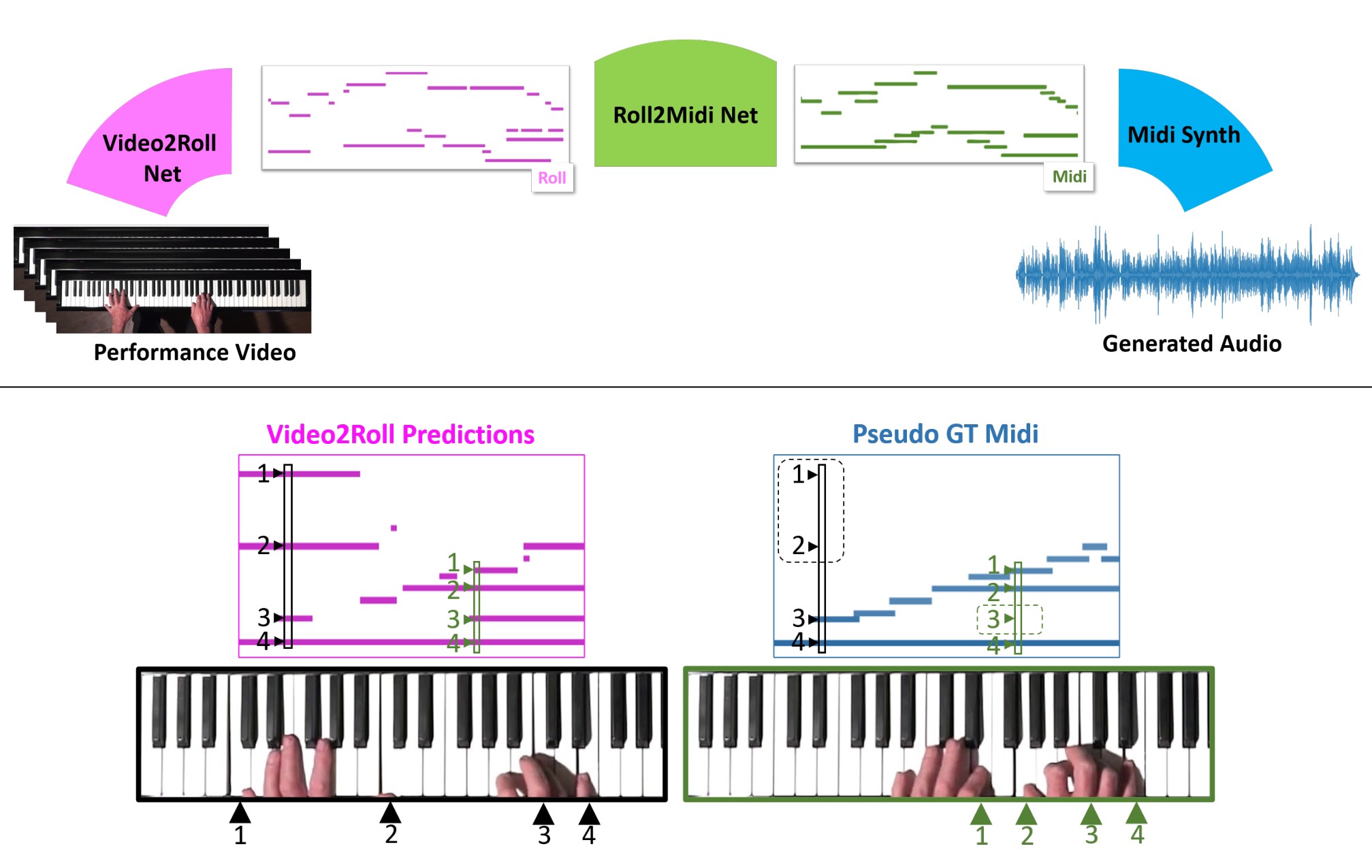
Audeo, the system trained by Eli Shlizerman, Kun Su and Xiulong Liu, watches video of piano playing and first extracts a piano-roll-like simple sequence of key presses. Then it adds expression in the form of length and strength of the presses, and lastly polishes it up for input into a MIDI synthesizer for output. The results are a little loose but definitely recognizable.

Diagram showing how video of a piano player's hands on the keys is turned into MIDI sequences.

Image Credits: Shlizerman, et. al

“To create music that sounds like it could be played in a musical performance was previously believed to be impossible,” said Shlizerman. “An algorithm needs to figure out the cues, or ‘features,’ in the video frames that are related to generating music, and it needs to ‘imagine’ the sound that’s happening in between the video frames. It requires a system that is both precise and imaginative. The fact that we achieved music that sounded pretty good was a surprise.”

Another from the field of arts and letters is this extremely fascinating research into computational unfolding of ancient letters too delicate to handle. The MIT team was looking at “locked” letters from the 17th century that are so intricately folded and sealed that to remove the letter and flatten it might permanently damage them. Their approach was to X-ray the letters and set a new, advanced algorithm to work deciphering the resulting imagery.

Diagram showing x-ray views of a letter and how it is analyzed to virtually unfold it.

Diagram showing X-ray views of a letter and how it is analyzed to virtually unfold it. Image Credits: MIT

“The algorithm ends up doing an impressive job at separating the layers of paper, despite their extreme thinness and tiny gaps between them, sometimes less than the resolution of the scan,” MIT’s Erik Demaine said. “We weren’t sure it would be possible.” The work may be applicable to many kinds of documents that are difficult for simple X-ray techniques to unravel. It’s a bit of a stretch to categorize this as “machine learning,” but it was too interesting not to include. Read the full paper at Nature Communications.

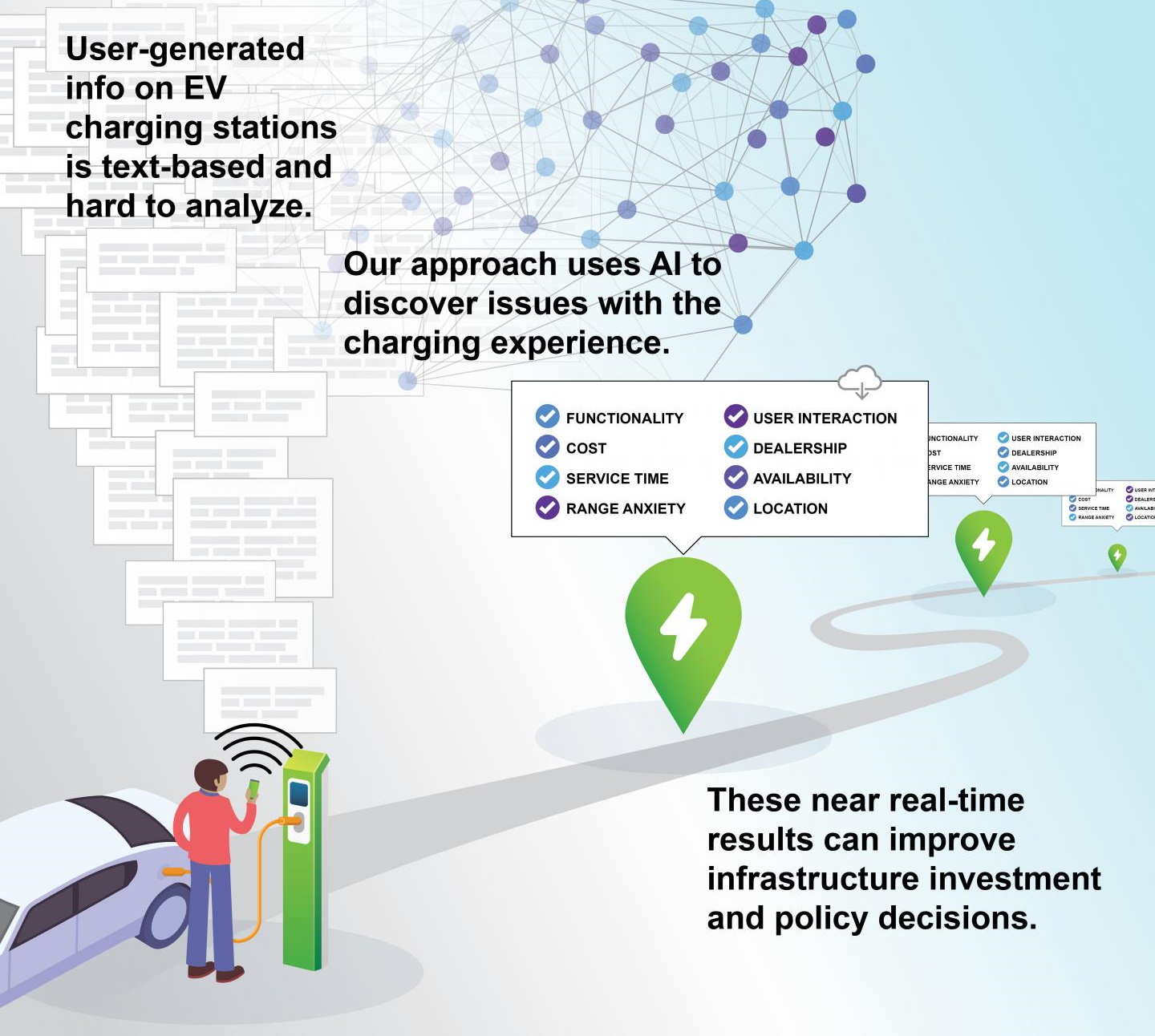
Diagram showing reviews of electric car charge points are analyzed and turned into useful data.

Image Credits: Asensio, et. al

You arrive at a charge point for your electric car and find it to be out of service. You might even leave a bad review online. In fact, thousands of such reviews exist and constitute a potentially very useful map for municipalities looking to expand electric vehicle infrastructure.

Georgia Tech’s Omar Asensio trained a natural language processing model on such reviews and it soon became an expert at parsing them by the thousands and squeezing out insights like where outages were common, comparative cost and other factors.

05 Mar 2021

Deep Science: AI adventures in arts and letters

There’s more AI news out there than anyone can possibly keep up with. But you can stay tolerably up to date on the most interesting developments with this column, which collects AI and machine learning advancements from around the world and explains why they might be important to tech, startups or civilization.

To begin on a lighthearted note: The ways researchers find to apply machine learning to the arts are always interesting — though not always practical. A team from the University of Washington wanted to see if a computer vision system could learn to tell what is being played on a piano just from an overhead view of the keys and the player’s hands.

Audeo, the system trained by Eli Shlizerman, Kun Su and Xiulong Liu, watches video of piano playing and first extracts a piano-roll-like simple sequence of key presses. Then it adds expression in the form of length and strength of the presses, and lastly polishes it up for input into a MIDI synthesizer for output. The results are a little loose but definitely recognizable.

Diagram showing how video of a piano player's hands on the keys is turned into MIDI sequences.

Image Credits: Shlizerman, et. al

“To create music that sounds like it could be played in a musical performance was previously believed to be impossible,” said Shlizerman. “An algorithm needs to figure out the cues, or ‘features,’ in the video frames that are related to generating music, and it needs to ‘imagine’ the sound that’s happening in between the video frames. It requires a system that is both precise and imaginative. The fact that we achieved music that sounded pretty good was a surprise.”

Another from the field of arts and letters is this extremely fascinating research into computational unfolding of ancient letters too delicate to handle. The MIT team was looking at “locked” letters from the 17th century that are so intricately folded and sealed that to remove the letter and flatten it might permanently damage them. Their approach was to X-ray the letters and set a new, advanced algorithm to work deciphering the resulting imagery.

Diagram showing x-ray views of a letter and how it is analyzed to virtually unfold it.

Diagram showing X-ray views of a letter and how it is analyzed to virtually unfold it. Image Credits: MIT

“The algorithm ends up doing an impressive job at separating the layers of paper, despite their extreme thinness and tiny gaps between them, sometimes less than the resolution of the scan,” MIT’s Erik Demaine said. “We weren’t sure it would be possible.” The work may be applicable to many kinds of documents that are difficult for simple X-ray techniques to unravel. It’s a bit of a stretch to categorize this as “machine learning,” but it was too interesting not to include. Read the full paper at Nature Communications.

Diagram showing reviews of electric car charge points are analyzed and turned into useful data.

Image Credits: Asensio, et. al

You arrive at a charge point for your electric car and find it to be out of service. You might even leave a bad review online. In fact, thousands of such reviews exist and constitute a potentially very useful map for municipalities looking to expand electric vehicle infrastructure.

Georgia Tech’s Omar Asensio trained a natural language processing model on such reviews and it soon became an expert at parsing them by the thousands and squeezing out insights like where outages were common, comparative cost and other factors.

05 Mar 2021

How the Biden administration is approaching crypto regulations

It’s hard to imagine a worse scenario than the one left behind by former Treasury Secretary Steven Mnuchin. 

The draconian regulatory proposals were Mnuchin’s own personal vendetta, according to Bitcoin veterans like Square Crypto developer Matt Corallo and Coin Center director Jerry Brito, and it’s too soon to say whether incoming Treasury Secretary Janet Yellen will approve the proposed know-your-customer standards or reject them. 

Given the chaos created by the Trump administration, bitcoin fans are anxiously optimistic about how regulators will approach the cryptocurrency space during President Joe Biden’s administration.   

Mnuchin at the very end had an alarmist view about the illicit use of cryptocurrency that wasn’t shared by law enforcement and intelligence agencies. It doesn’t seem that Janet Yellen has that same view,” Brito said. “Her view seems to be very standard.”

Namely, Yellen believes there are both positive and negative ways to use cryptocurrency. She’s expressed a desire to strengthen regulations that prevent illicit usage like terror financing. She may set the tone for government bodies like the Office of the Comptroller of the Currency (OCC), the Securities and Exchange Commission (SEC) and the Commodity Futures Trading Commission (CFTC). 

“The SEC, OCC and CFTC are choosing people that are very crypto knowledgeable,” Brito added. “That could tell you they are getting deep knowledge to regulate it heavily or, more likely, it’s now seen as an important part of the economy and finance.”

Although it’s still early in the transition, it appears the Biden administration will nominate former Ripple advisor and former U.S. Treasury Department official Michael Barr to head the OCC. In the short term, Trump’s SEC appointee, Commissioner Hester Pierce, will continue her notoriously crypto-friendly approach to the securities market. But the Biden administration is reportedly considering former CFTC chairman Gary Gensler to soon lead the SEC.

“The new SEC Chairman Gary Gensler has been pretty outspoken with his views on Facebook’s project Libra, as well as Ripple. It’s his opinion that those are securities and should be regulated by the SEC,” said attorney Hailey Lennon, a crypto-focused partner at Anderson Kill law firm. “In the next year or two, I hope some of the litigation we are seeing and new leadership in the SEC, will result in greater clarity so that down the road there are less enforcement actions. Clarity will help companies to know what to avoid.”

Meanwhile, Reuters reported the White House is expected to nominate Georgetown University professor Chris Brummer to lead the CFTC. Brummer was previously President Obama’s pick, but never got confirmed by the Senate due to political gridlocks. It’s still unclear who will be nominated in 2021 for key roles related to curbing terror financing, such as the Office of Foreign Assets Control (OFAC) and the Financial Crimes Enforcement Network (FinCEN). 

“I think we might start seeing more regulation coming from FinCEN and OFAC. There have been some settlements with crypto companies and OFAC has been adding wallet addresses to the SDN [sanctions] list,” Lennon said. “Even if we see more positive things coming from the OCC, SEC and CFTC, it will be balanced a bit with more regulations related to know-your-customer and anti-money laundering, more general supervision of the source of funds and sanctions screening.”

Sanctions are the hot topic of 2021. Throughout 2020, the Iranian government published statements indicating it intends to use cryptocurrency, including bitcoin but not limited to it, to circumnavigate banking sanctionsEmigres from Iran and other countries have used bitcoin to do exactly this.

So far, the Biden administration hasn’t offered any indication it might lift sanctions. To the contrary, on February 18, the Treasury published a statement that the payment processor BitPay was penalized for allowing users to transact with citizens in sanctions jurisdictions like Iran, Cuba and Ukraine. Regulators’ approach to cryptocurrency, which many Iranian-Americans also use both internationally and domestically, will reflect whether the White House prefers a hawkish or dovish approach to diplomacy in the Middle East. 

Perianne Boring, founder of an advocacy group called the Chamber of Digital Commerce, said “the new administration and leadership have signaled a critical perspective” of the broader cryptocurrency space. As such, Boring said she hopes industry leaders will continue to engage with lawmakers to “lay the foundation for America’s leadership role” in global crypto markets. 

She said American crypto startups are competing in global arenas, against startups based in nations with more progressive laws as nations strive to foster the “next Silicon Valley.” Other nations are encouraging crypto companies, especially domestic crypto mining industries. Many technologists believe it behooves American leaders to defend dollar dominance by cultivating innovation in this tech sector. After all, many of the leading stablecoins are still denominated in American dollars. 

“The Biden-Harris administration and Congress must make clear that addressing digital asset and blockchain policies are a priority,” Boring said. “The Biden-Harris administration should be focused now on growing the economy back to full employment and robust quarterly and annual economic growth.”

Brito said he’s especially curious to see new appointees for OFAC and FinCEN, since they’ll be Yellen’s right and left hand in her approach to sanctions and regulations. He agreed with Lennon and Boring, all of whom believe new legal norms are in the pipeline. However stringent, or pro-business, the coming verdicts may be, at least Biden has yet to rage tweet about hating bitcoin, the way Trump did. 

“It’s still that period where everyone is getting their sea legs and trying to understand what their priorities are,” Brito said of the Biden administration. “Once they start either putting forth policy or reacting to the things that happen, that’s when we’ll really know where they stand.”   

05 Mar 2021

How the Biden administration is approaching crypto regulations

It’s hard to imagine a worse scenario than the one left behind by former Treasury Secretary Steven Mnuchin. 

The draconian regulatory proposals were Mnuchin’s own personal vendetta, according to Bitcoin veterans like Square Crypto developer Matt Corallo and Coin Center director Jerry Brito, and it’s too soon to say whether incoming Treasury Secretary Janet Yellen will approve the proposed know-your-customer standards or reject them. 

Given the chaos created by the Trump administration, bitcoin fans are anxiously optimistic about how regulators will approach the cryptocurrency space during President Joe Biden’s administration.   

Mnuchin at the very end had an alarmist view about the illicit use of cryptocurrency that wasn’t shared by law enforcement and intelligence agencies. It doesn’t seem that Janet Yellen has that same view,” Brito said. “Her view seems to be very standard.”

Namely, Yellen believes there are both positive and negative ways to use cryptocurrency. She’s expressed a desire to strengthen regulations that prevent illicit usage like terror financing. She may set the tone for government bodies like the Office of the Comptroller of the Currency (OCC), the Securities and Exchange Commission (SEC) and the Commodity Futures Trading Commission (CFTC). 

“The SEC, OCC and CFTC are choosing people that are very crypto knowledgeable,” Brito added. “That could tell you they are getting deep knowledge to regulate it heavily or, more likely, it’s now seen as an important part of the economy and finance.”

Although it’s still early in the transition, it appears the Biden administration will nominate former Ripple advisor and former U.S. Treasury Department official Michael Barr to head the OCC. In the short term, Trump’s SEC appointee, Commissioner Hester Pierce, will continue her notoriously crypto-friendly approach to the securities market. But the Biden administration is reportedly considering former CFTC chairman Gary Gensler to soon lead the SEC.

“The new SEC Chairman Gary Gensler has been pretty outspoken with his views on Facebook’s project Libra, as well as Ripple. It’s his opinion that those are securities and should be regulated by the SEC,” said attorney Hailey Lennon, a crypto-focused partner at Anderson Kill law firm. “In the next year or two, I hope some of the litigation we are seeing and new leadership in the SEC, will result in greater clarity so that down the road there are less enforcement actions. Clarity will help companies to know what to avoid.”

Meanwhile, Reuters reported the White House is expected to nominate Georgetown University professor Chris Brummer to lead the CFTC. Brummer was previously President Obama’s pick, but never got confirmed by the Senate due to political gridlocks. It’s still unclear who will be nominated in 2021 for key roles related to curbing terror financing, such as the Office of Foreign Assets Control (OFAC) and the Financial Crimes Enforcement Network (FinCEN). 

“I think we might start seeing more regulation coming from FinCEN and OFAC. There have been some settlements with crypto companies and OFAC has been adding wallet addresses to the SDN [sanctions] list,” Lennon said. “Even if we see more positive things coming from the OCC, SEC and CFTC, it will be balanced a bit with more regulations related to know-your-customer and anti-money laundering, more general supervision of the source of funds and sanctions screening.”

Sanctions are the hot topic of 2021. Throughout 2020, the Iranian government published statements indicating it intends to use cryptocurrency, including bitcoin but not limited to it, to circumnavigate banking sanctionsEmigres from Iran and other countries have used bitcoin to do exactly this.

So far, the Biden administration hasn’t offered any indication it might lift sanctions. To the contrary, on February 18, the Treasury published a statement that the payment processor BitPay was penalized for allowing users to transact with citizens in sanctions jurisdictions like Iran, Cuba and Ukraine. Regulators’ approach to cryptocurrency, which many Iranian-Americans also use both internationally and domestically, will reflect whether the White House prefers a hawkish or dovish approach to diplomacy in the Middle East. 

Perianne Boring, founder of an advocacy group called the Chamber of Digital Commerce, said “the new administration and leadership have signaled a critical perspective” of the broader cryptocurrency space. As such, Boring said she hopes industry leaders will continue to engage with lawmakers to “lay the foundation for America’s leadership role” in global crypto markets. 

She said American crypto startups are competing in global arenas, against startups based in nations with more progressive laws as nations strive to foster the “next Silicon Valley.” Other nations are encouraging crypto companies, especially domestic crypto mining industries. Many technologists believe it behooves American leaders to defend dollar dominance by cultivating innovation in this tech sector. After all, many of the leading stablecoins are still denominated in American dollars. 

“The Biden-Harris administration and Congress must make clear that addressing digital asset and blockchain policies are a priority,” Boring said. “The Biden-Harris administration should be focused now on growing the economy back to full employment and robust quarterly and annual economic growth.”

Brito said he’s especially curious to see new appointees for OFAC and FinCEN, since they’ll be Yellen’s right and left hand in her approach to sanctions and regulations. He agreed with Lennon and Boring, all of whom believe new legal norms are in the pipeline. However stringent, or pro-business, the coming verdicts may be, at least Biden has yet to rage tweet about hating bitcoin, the way Trump did. 

“It’s still that period where everyone is getting their sea legs and trying to understand what their priorities are,” Brito said of the Biden administration. “Once they start either putting forth policy or reacting to the things that happen, that’s when we’ll really know where they stand.”   

05 Mar 2021

Tesla has closed its forums to launch a social platform and fans are not happy

Tesla plans to shut down the forums section on its website as it launches a new social platform called the Tesla Engagement Platform, a move that’s raised the ire of a community of its most ardent supporters.

Tesla first announced the new engagement platform with a notice at the top of its forums page that reads: “Starting March 15th, Tesla Forums will become read only. To continue the conversation with the Tesla community visit engage.tesla.com.” The Verge was the first to report the changes.

Rather than create posts and threads, the new site invites owners and fans of the brand to engage by commenting on Tesla’s public policy-related posts and campaigns that run the gamut, including calls to support the company’s disaster relief efforts in Texas and requests for Nebraskans to ask their state lawmakers to encourage the passing of a bill that would allow the direct sale of Teslas in certain districts.

In the replies of a March 2 Tesla forum post announcing the 13-day countdown until the platform’s demise, one commenter with supposed “inside info” alleged that the forums were closing because Tesla couldn’t afford to hire multiple full-time moderators to keep up with the barrage of spam and trolls that would frequent the threads.

Those trolls are likely to migrate to Twitter now, as the Tesla Engagement Platform will be moderated.

The forums, which will now be available as read-only archives, were a place for Tesla fans, investors and verified owners to ask and answer each other’s questions; however, the unmoderated nature of the forum led to an environment where its most active posters would, at times, attack people for raising concerns. The new microsite, which also helps people apply for membership to local owners’ clubs, promises a direct feedback loop with the company’s policy team and encourages visitors to get involved in Tesla advocacy.

“Engage Tesla is a new platform for both Tesla’s public policy team and Tesla Owner’s Clubs,” reads the first post on the new microsite. “Its goal is to create a digital home base for all of our work, and make it easier for Tesla community members to learn what’s top of mind for us, take meaningful action, and stay in the loop. We hope you’ll join us in getting involved.”

A quick skim through the comments section of the first post reveals a bevy of unhappy users who want the forums to stay, or at least remade into something similar — and moderated — on the new site. There are no shortage of Tesla and other EV-related forums on the internet. This one has been held up as a bastion of toxicity, while being lauded as a place for owners and potential buyers to share honest information on the good and bad parts of the company’s products.

“Please do not get rid of the Forums,” implored one commenter.”This is not a replacement. The forums (with exception of the trolls on it) brought about informed discussion to help fellow owners with issues.”

Indeed, the new platform doesn’t appear to be a replacement. It looks more like a blog that shares industry news, Tesla events and campaigns, an effort to gather the work already being done by its supporters in one place and encourage further advocacy on the company’s behalf. For example, the Tesla Owners club in Silicon Valley had already raised $10,000 to support the Del Valle, Texas community, which surrounds the area in which the company’s new factory is being built.

Not everyone is a critic. While many of the initial comments on the platform’s first post call for a moderated forum, some suggest improvements to the company’s customer service department and others request resources on how to advocate for public charging infrastructure. It’s still early days for the new engagement platform. We’ll see how engaging Tesla’s fans truly find it to be.

05 Mar 2021

California bill would require all self-driving vehicles to be zero emission by 2025

California might be the first state to give self-driving cars a deadline to electrify.

In mid-February, a bill was quietly introduced into the California State Legislature that would require all autonomous vehicles to also be zero emission by 2025. Proposed Bill SB 500, which was introduced by Senator Dave Min and sponsored by the Union of Concerned Scientists (UCS), would directly affect the nascent AV industry in applications like ride-hailing, delivery and trucking.

The amendment is in line with many of California’s goals to reduce emissions. It would add to the state’s vehicle code, which currently provides for programs to promote zero-emission vehicles, such as the Clean Vehicle Rebate Project and the Charge Ahead California Initiative.

Governor Gavin Newsom has said he wants all new vehicle sales to be zero emission by 2035, but that doesn’t apply to commercial fleets. Not unless this bill is passed. The proposed bill is in its infancy stages, so there are plenty of opportunities for it to be quashed. But it surfaces an issue for a burgeoning AV industry and the companies trying to develop and commercialize autonomous driving technology in California. It also has the potential to provide a boost to the companies that only use electric vehicles.

“California has set important standards to aggressively address our climate crisis,” Min told TechCrunch. “My SB 500 aligns with these ambitions and takes a critical first step in requiring autonomous vehicles to be zero emission before they are put to widespread use.”

Proponents of the bill don’t want to see future means of transportation married to the technology of the past, pointing out the potential for AVs to either help or hurt attempts to cut emissions. California has a reputation for leading the rest of the country in EV adoption and other emissions-related policies, so the success or failure of this bill could create ripple effects in states across the nation.

“It definitely seems like we’re going to start seeing AVs in these fleet applications, whether that’s ride-hailing or delivery, and that makes it even more important that these vehicles are electric,” said Elizabeth Irvin, senior transportation analyst at UCS. “The average person drives their car 11,000 to 13,000 miles per year, but a full-time Uber or Lyft driver drives 30,000 or more.”

The strategy

Close to half of California’s greenhouse gas emissions come from transportation. And while there’s nothing quite like a smoggy Los Angeles sunset, supporters say the danger of not placing requirements on the AV industry could lead to a world in which autonomous commercial vehicles are commonplace and powered by fossil fuels.

In a statement defending support of this bill, UCS points to research that shows how AVs could dramatically increase driving, and thus emissions, as people get used to living the luxurious life of a passenger. One study, which examined the potential effects of AVs on the Washington, D.C. metropolitan region transportation system in 2040, found that AVs would cause the total amount of driving to increase by as much as 66% relative to the 2040 baseline year.

Irvin told TechCrunch that UCS has been in talks with various stakeholders — such as Nuro, the SoftBank-backed autonomous delivery startup, and Cruise, General Motor’s self-driving subsidiary — regarding strategies for advancing policy that would require all AVs to be zero-emission in California before mainstream adoption.

“We are supportive of efforts to accelerate the industry’s transition to clean energy, which aligns with Nuro’s goals and values,” said a spokesperson from Nuro. “We are excited for autonomous vehicles to pave the way for the rest of the auto industry, which we believe will lead to a greener and healthier future.”

nuro av lineup

Image Credits: Nuro

The sentiment is mirrored by Cruise, which unveiled last year a driverless vehicle called Origin that’s designed for sharing and powered by an all-electric platform built by GM, the result of a multi-year partnership with Honda. Cruise is not testing autonomous Origin vehicles in San Francisco yet; the battery platform is still undergoing testing at GM’s proving grounds. Cruise does have aspirations to roll out a fleet of autonomous vehicles — initially using the all-electric Chevrolet Bolt — as part of a ride-hailing, and possibly a delivery, service in San Francisco.

“Because this industry is so new, everyone has a choice to be an EV or not,” Rob Grant, SVP government affairs at Cruise, told TechCrunch. “It’s not like you have to transform an existing fleet. You have a choice to do this in the beginning rather than going down this path and being forced to change it at some later date.”

Hybrids versus electric

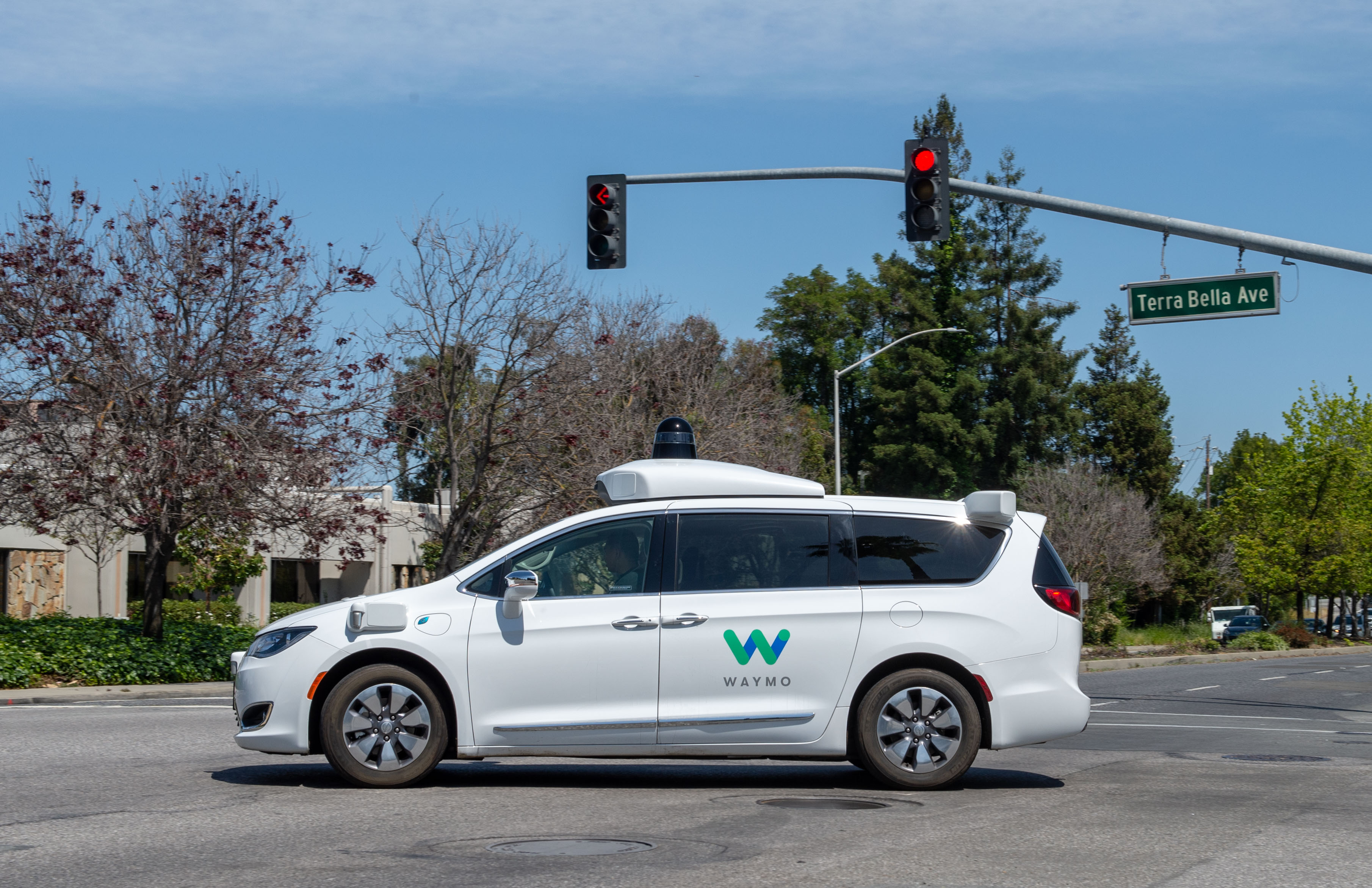
Not all AVs use electric vehicles. The Ford Fusion hybrid and Chrysler Pacifica Plug-in Hybrid minivans have been the go-to choices for AV developers, including Argo AI, Aurora, Waymo and Voyage.

Argo AI is a technology platform company that works with major automakers, like Volkswagen and Ford, to develop autonomous driving systems. While Volkswagen’s ID.Buzz will be the company’s first fully electric self-driving car, Ford still prefers to take a more measured approach by modifying the hybrid Ford Fusion.

“We all want to transition to BEVs eventually, but we also need to find the right balance that will help develop a profitable, viable business model,” John Davis, chief engineer at Ford Autonomous Vehicles said. “This means launching with hybrids first.”

Davis outlined various challenges in developing all-electric vehicles as AVs, including depletion of range from on-board tech, decreased use of the vehicle during charge times and degradation of the battery.

“Testing shows that upwards of 50% of BEV range will be used up due to the computing power of an AV system, plus the A/C and entertainment systems that are likely required during a ride-hailing service (for passenger comfort),” Davis said. “We continue to be encouraged as battery chemistry and cost continue to improve to address these issues.”

Image credits: Andrej Sokolow/dpa picture alliance via Getty Images

Waymo, which tested and then launched a robotaxi service in a limited and growing area in the Phoenix suburbs, intends to bring a commercial service to California. The Mountain View, California-based company regularly tests its vehicles, which includes the electric Jaguar I-Pace, in San Francisco and the surrounding area. The company said it supports Newsom’s recent executive order, but stopped short of endorsing the current language in Min’s bill.

“As the first company to commercially deploy our fully autonomous technology to the public, we strongly support the goals outlined in Governor Newsom’s recent Executive Order N-79-20 which takes a holistic approach to transition California towards a 100% EV future,” a Waymo spokesperson told TechCrunch. “Waymo has business lines and partnerships that span ride-hailing, trucking and local delivery, and we want to ensure that California’s EV policy reflects the myriad issues and industries affected. It’s early in the legislative process, and we look forward to working with Sen. Min in his efforts.”

Industry sources familiar with the bill have noted that the current language, which is fairly brief, is just a placeholder and unlikely to make much headway this session. Those same sources have criticized the sponsors and author for neglecting to specify a plan for charging infrastructure or making distinctions between light and heavy-duty vehicles. Trucks carrying freight are expected to be among the first vehicles with widespread autonomous use. Most self-driving truck development occurs outside of California in regulatory-light states like Arizona and Texas. And while there are some efforts to develop electric and autonomous semi trucks, most testing today involves diesel-powered vehicles. That could prompt companies hoping to deploy in California to lean on the senator’s office to include an exemption for heavy-duty vehicles.

“We’re still looking to fill out details as we move through the legislative process, but UCS’s intention is that this bill stay focused on the electrification requirement,” responded Irvin.