Month: August 2021

25 Aug 2021

Using AI to reboot brand-client relationships

Marketing automation has usually focused on driving sales, mainly using past purchase or late funnel behavior (e.g., paid search) as a predictor of an imminent purchase. While effective at boosting sales numbers, this widely implemented strategy can result in a disservice to brands and industries that adopt it, as it promotes the perpetual devaluation of goods or services. Narrowing a brand’s focus only to aspects linked to conversions risks stripping the customer experience of key components that lay the groundwork for long-term success.

We live in a world rich with data, and insights are growing more vibrant every day. With this in mind, companies and advertisers can strategically weave together all the data they collect during the customer experience. This enables them to understand every inference available during customer interactions and learn what benefits the customer most at a given time.

But focusing exclusively on data collected from customers, brands risk falling subject to the law of diminishing returns. Even companies with meaningful consumer interactions or rich service offerings struggle to gain impactful contextual insights. Only by harnessing a broader dataset can we understand how people become customers in the first place, what makes them more or less likely to purchase again and how developments in society impact the growth or struggle a brand will experience.

Here’s a look at how we can achieve a more complete picture of current and future customers.

A critical component in re-imagining customer experience as a relationship is recognizing that brands often don’t focus enough on consumers’ wider needs and concerns.

Leverage AI to unlock new perspectives

Over the past several years, almost every industry has capitalized on the opportunity data-driven marketing presents, inching closer to the “holy grail” of real-time, direct and personalized engagements. Yet, the evolving toolset encouraged brands to focus on end-of-the-funnel initiatives, jeopardizing what really impacts a business’ longevity: relationships.

While past purchase or late-funnel behavior data does provide value and is useful in identifying habit changes or actual needs, it is relatively surface level and doesn’t offer insight into consumers’ future behavior or what led them to a specific purchase in the first place.

By incorporating AI, brands can successfully engage with their audiences in a more holistic, helpful and genuine way. Technologies to discern not just the content of language (e.g., the keywords) but its meaning as well, open up possibilities to better infer consumer interest and intentions. In turn, brands can tune consumer interactions to generate satisfaction and delight, and ultimately accrue stronger insights for future use.

25 Aug 2021

Salad chain Sweetgreen buys kitchen robotics startup Spyce

Like so many other aspects of the robotics world, the pandemic has dramatically accelerated interest in the automated kitchen. After all, the food and restaurant industry was deemed essential amid global shutdowns, but finding kitchen staff proved a problem for many, especially early on when questions remained around COVID’s transmission.

This week, California-based fast casual salad chain Sweetgreen announced plans to go all in on automation with the acquisition of Spyce. Founded in 2015, the Boston-based startup started making waves a few years back as a spinout of MIT mechanical engineering students. First serving up food at the school’s dining hall, the team ultimately opened a pair of automated restaurants in the Boston area. The startup notes, “our Spyce restaurants will stay open at this time.”

Sweetgreen plans to eventually incorporate Spyce’s technology into its restaurants. It will likely take some time to scale up to the needs of the chain, which currently operates more than 120 locations across the U.S.

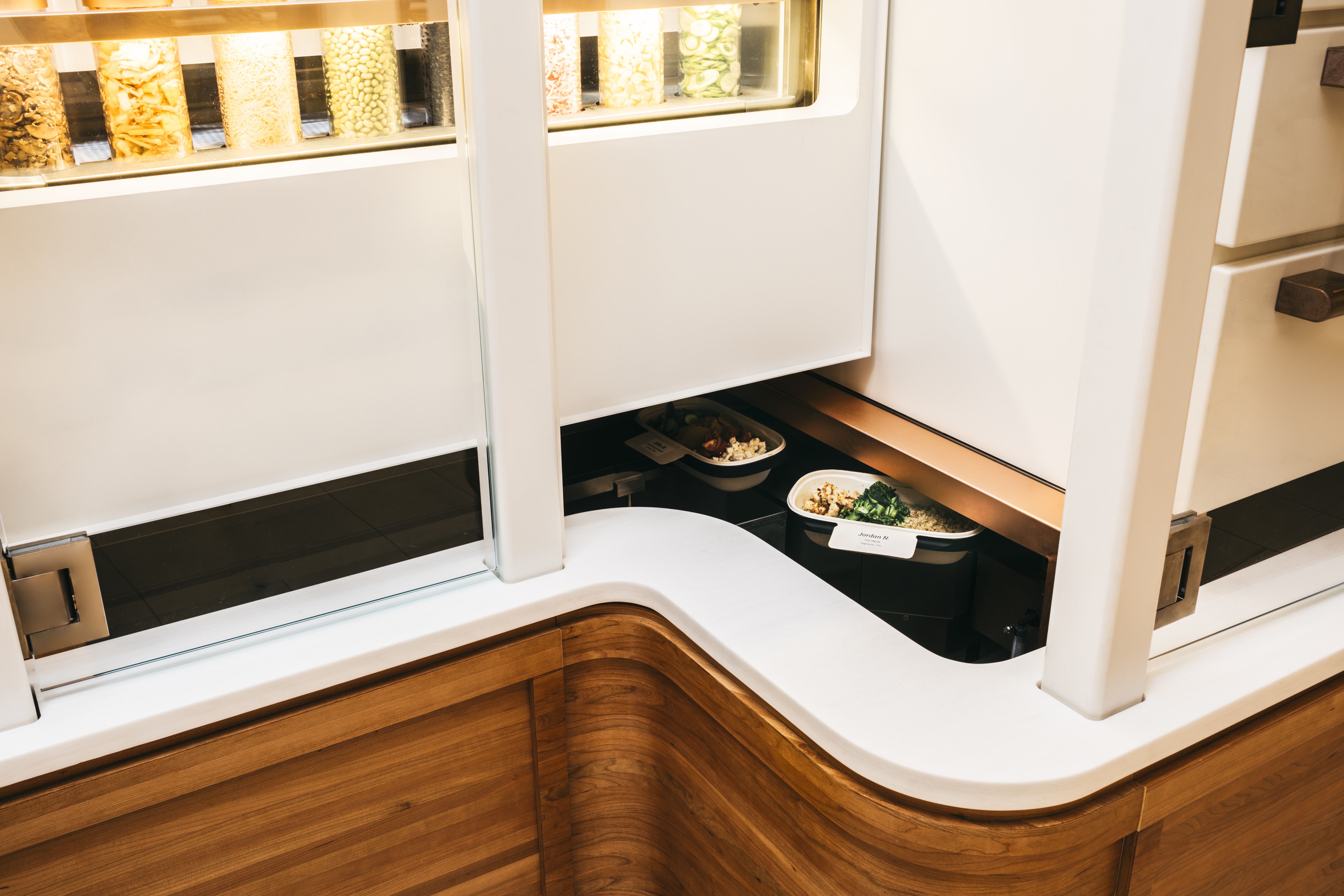
Image Credits: Spyce

“We built Sweetgreen to connect more people to real food and create healthy fast food at scale for the next generation, and Spyce has built state-of-the-art technology that perfectly aligns with that vision,” Sweetgreen CEO and co-founder Jonathan Neman said in a statement. “By joining forces with their best-in-class team, we will be able to elevate our team member experience, provide a more consistent customer experience and bring real food to more communities.”

Like pizza, salads are a clear target for early food automation. They’re both popular and relatively straightforward to automate — essentially mixing a bunch of ingredients from different chutes into a bowl.

Sweetgreen is quick to note that the plan isn’t to replace employees outright, however.

“[T]eam members will be able to focus more on preparation and hospitality moments, while having the opportunity to work with state-of-the-art technology,” the company writes. “Invest more in training and development to support team members to become Head Coaches. Interested team members will be able to develop technology-facing skills to operate and maintain Spyce technology.”

The deal is expected to close in Q3. Terms were not disclosed.

25 Aug 2021

Salad chain Sweetgreen buys kitchen robotics startup Spyce

Like so many other aspects of the robotics world, the pandemic has dramatically accelerated interest in the automated kitchen. After all, the food and restaurant industry was deemed essential amid global shutdowns, but finding kitchen staff proved a problem for many, especially early on when questions remained around COVID’s transmission.

This week, California-based fast casual salad chain Sweetgreen announced plans to go all in on automation with the acquisition of Spyce. Founded in 2015, the Boston-based startup started making waves a few years back as a spinout of MIT mechanical engineering students. First serving up food at the school’s dining hall, the team ultimately opened a pair of automated restaurants in the Boston area. The startup notes, “our Spyce restaurants will stay open at this time.”

Sweetgreen plans to eventually incorporate Spyce’s technology into its restaurants. It will likely take some time to scale up to the needs of the chain, which currently operates more than 120 locations across the U.S.

Image Credits: Spyce

“We built Sweetgreen to connect more people to real food and create healthy fast food at scale for the next generation, and Spyce has built state-of-the-art technology that perfectly aligns with that vision,” Sweetgreen CEO and co-founder Jonathan Neman said in a statement. “By joining forces with their best-in-class team, we will be able to elevate our team member experience, provide a more consistent customer experience and bring real food to more communities.”

Like pizza, salads are a clear target for early food automation. They’re both popular and relatively straightforward to automate — essentially mixing a bunch of ingredients from different chutes into a bowl.

Sweetgreen is quick to note that the plan isn’t to replace employees outright, however.

“[T]eam members will be able to focus more on preparation and hospitality moments, while having the opportunity to work with state-of-the-art technology,” the company writes. “Invest more in training and development to support team members to become Head Coaches. Interested team members will be able to develop technology-facing skills to operate and maintain Spyce technology.”

The deal is expected to close in Q3. Terms were not disclosed.

25 Aug 2021

Inspired by Airbnb, Hims & Hers offers 10,000 free medical visits to displaced Afghan refugees

Hims & Hers co-founder and CEO Andrew Dudum said Thursday that his company is in the process of distributing 10,000 primary care and mental health visits to displaced Afghan refugees.

Founded in 2017, San Francisco-based Hims & Hers has built out a multi-specialty telehealth platform that connects consumers to licensed healthcare professionals.

In a blog post, Dudum wrote that Hims & Hers felt a “moral responsibility to act — and fast.”

He added: “The eyes and hearts of the world are currently and understandably focused on Afghanistan and the refugees evacuating en masse. These people are looking for the most basic of needs.”

Dudum said that Hims & Hers plans to work with select NGOs, nonprofits and other relevant partners, including translators and the providers on its platform, “to make sure refugees are aware of these services and get the urgent support they need.” The visits are immediately available to refugees.

The CEO also said that Hims & Hers will be covering the cost of the medical visits but that they would be “delivered by the generous providers” through its platform.

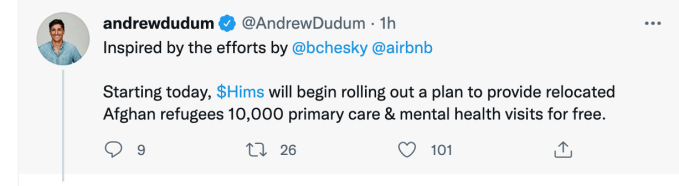
On Twitter, Dudum said the move was inspired by Airbnb CEO Brian Chesky’s recent announcement that his company planned to offer free temporary housing to 20,000 Afghan refugees around the world amid the Taliban’s rise to power in Afghanistan.

Image Credits: Twitter

The companies’ initiatives come at a time when tens of thousands of people are attempting to flee Afghanistan. Amid the crisis, companies and governments are facing increasing pressure to aid refugees fleeing the country. There are currently nearly 2.5 million registered refugees from Afghanistan, according to the United Nations High Commissioner for Refugees. As of earlier this week, countries had evacuated around 58,700 people from the country’s capital, Kabul, since mid-August.

While Hims & Hers has evolved into a telehealth platform, it also sells sexual wellness and other health products and services to millennials. The company began trading publicly in January on the NYSE after completing a reverse merger with the blank-check company Oaktree Acquisition Corp.

25 Aug 2021

Inspired by Airbnb, Hims & Hers offers 10,000 free medical visits to displaced Afghan refugees

Hims & Hers co-founder and CEO Andrew Dudum said Thursday that his company is in the process of distributing 10,000 primary care and mental health visits to displaced Afghan refugees.

Founded in 2017, San Francisco-based Hims & Hers has built out a multi-specialty telehealth platform that connects consumers to licensed healthcare professionals.

In a blog post, Dudum wrote that Hims & Hers felt a “moral responsibility to act — and fast.”

He added: “The eyes and hearts of the world are currently and understandably focused on Afghanistan and the refugees evacuating en masse. These people are looking for the most basic of needs.”

Dudum said that Hims & Hers plans to work with select NGOs, nonprofits and other relevant partners, including translators and the providers on its platform, “to make sure refugees are aware of these services and get the urgent support they need.” The visits are immediately available to refugees.

The CEO also said that Hims & Hers will be covering the cost of the medical visits but that they would be “delivered by the generous providers” through its platform.

On Twitter, Dudum said the move was inspired by Airbnb CEO Brian Chesky’s recent announcement that his company planned to offer free temporary housing to 20,000 Afghan refugees around the world amid the Taliban’s rise to power in Afghanistan.

Image Credits: Twitter

The companies’ initiatives come at a time when tens of thousands of people are attempting to flee Afghanistan. Amid the crisis, companies and governments are facing increasing pressure to aid refugees fleeing the country. There are currently nearly 2.5 million registered refugees from Afghanistan, according to the United Nations High Commissioner for Refugees. As of earlier this week, countries had evacuated around 58,700 people from the country’s capital, Kabul, since mid-August.

While Hims & Hers has evolved into a telehealth platform, it also sells sexual wellness and other health products and services to millennials. The company began trading publicly in January on the NYSE after completing a reverse merger with the blank-check company Oaktree Acquisition Corp.

25 Aug 2021

YouTube has removed 1 million videos for dangerous COVID-19 misinformation

YouTube has removed 1 million videos for dangerous COVID-19 misinformation since February 2020, according to YouTube’s Chief Product Officer Neal Mahon.

Mahon shared the statistic in a blog post outlining how the company approaches misinformation on its platform. “Misinformation has moved from the marginal to the mainstream,” he wrote. “No longer contained to the sealed-off worlds of Holocaust deniers or 9-11 truthers, it now stretches into every facet of society, sometimes tearing through communities with blistering speed.”

At the same time, the Youtube executive argued that “bad content” accounts for only a small percentage of YouTube content overall. “Bad content represents only a tiny percentage of the billions of videos on YouTube (about .16-.18% of total views turn out to be content that violates our policies),” Mahon wrote. He added that YouTube removes almost 10 million videos each quarter, “the majority of which don’t even reach 10 views.”

Facebook recently made a similar argument about content on its platform. The social network published a report last week that claimed that the most popular posts are memes and other non-political content. And, faced with criticism over its handling of COVID-19 and vaccine misinformation, the company has argued that vaccine misinformation isn’t representative of the kind of content most users see.

Both Facebook and YouTube have come under particular scrutiny for their policies around health misinformation during the pandemic. Both platforms have well over a billion users, which means that even a small fraction of content can have a far-reaching impact. And both platforms have so far declined to disclose details about how vaccine and health misinformation spreads or how many users are encountering it. Mahon also said that removing misinformation is only one aspect of the company’s approach. YouTube is also working on “ratcheting up information from trusted sources and reducing the spread of videos with harmful misinformation.”

Editor’s note: This post originally appeared on Engadget.

25 Aug 2021

Dear Sophie: Can I still get a green card through marriage if I’m divorcing?

Here’s another edition of “Dear Sophie,” the advice column that answers immigration-related questions about working at technology companies.

“Your questions are vital to the spread of knowledge that allows people all over the world to rise above borders and pursue their dreams,” says Sophie Alcorn, a Silicon Valley immigration attorney. “Whether you’re in people ops, a founder or seeking a job in Silicon Valley, I would love to answer your questions in my next column.”

Extra Crunch members receive access to weekly “Dear Sophie” columns; use promo code ALCORN to purchase a one- or two-year subscription for 50% off.


Dear Sophie,

I received a conditional green card after my wife and I got married in 2019. Recently, we have made the difficult decision to end our marriage. I want to continue living and working in the United States.

Is it still possible for me to complete my green card based on my marriage through the I-751 process or do I need to do something else, like ask my employer to sponsor me for a work visa?

— Better to Have Loved and Lost

Dear Better,

I’m sorry to hear your marriage didn’t work out. Rest assured, you can still proceed with getting a full-fledged green card even though you and your wife are divorcing. Listen to my recent podcast with Anita Koumriqian, my law partner, in which we discuss the removal of conditions on permanent residence for people who got two-year green cards through marriage.

As you know, since you were married for less than two years when you applied for your green card through marriage, you were issued a conditional green card that is only valid for two years rather than a 10-year green card. The purpose of the I-751 is to show that the couple entered into a genuine, good faith marriage. Usually, couples must file an I-751 petition together. However, an individual may file a petition without a spouse if any of the following apply:

  • If the marriage ended through annulment or divorce.
  • If the U.S. citizen spouse died.
  • If the conditional resident (and/or children) was battered or subjected to extreme cruelty.

If your divorce is not yet finalized and you don’t have a family law attorney yet, I do recommend that you work with a family law attorney, who is necessary to help streamline the process. I also recommend consulting an immigration attorney as soon as possible to prepare the I-751 filing since it can get tricky for an individual in divorce proceedings. Both need to work together and in parallel to ensure that everything goes smoothly for you with U.S. Citizenship and Immigration Services.

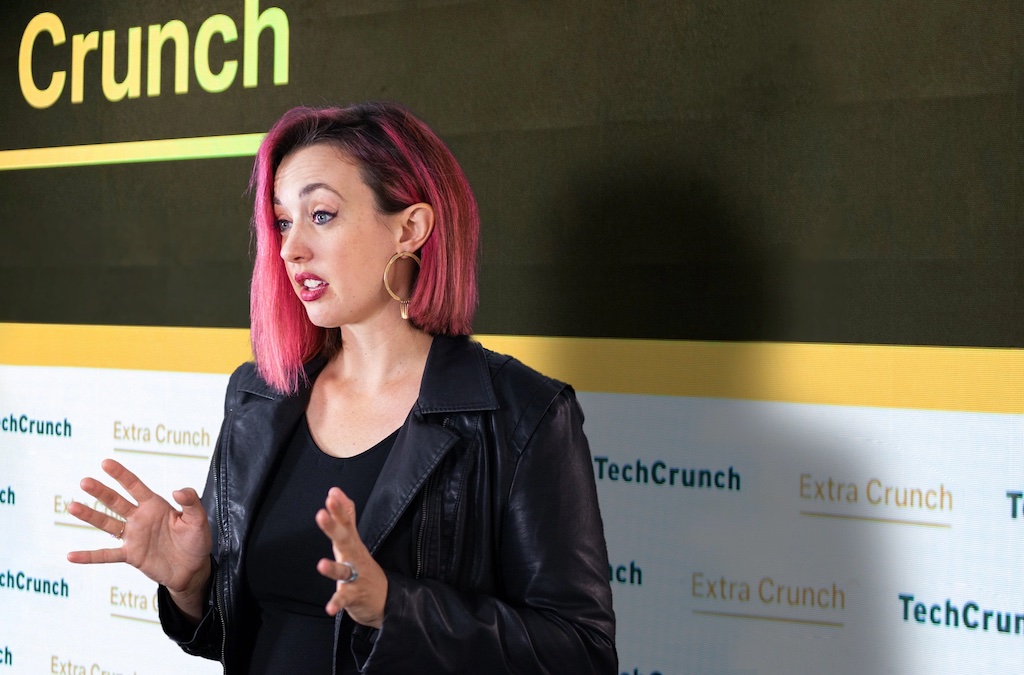
A composite image of immigration law attorney Sophie Alcorn in front of a background with a TechCrunch logo.

Image Credits: Joanna Buniak / Sophie Alcorn (opens in a new window)

When to file to remove conditions on permanent residence

The I-751 should be filed within the 90-day period before your conditional green card is set to expire. I recommend filing as soon as you can within that window. Keep in mind that, if you file your I-751 petition too early, it may be returned to you. And if you file it after your conditional green card expires, you not only face having to leave the U.S., but USCIS could also deny your petition if you fail to provide a compelling reason. If you are in this situation, definitely let your immigration attorney know.

25 Aug 2021

LOVE unveils a modern video messaging app with a business model that puts users in control

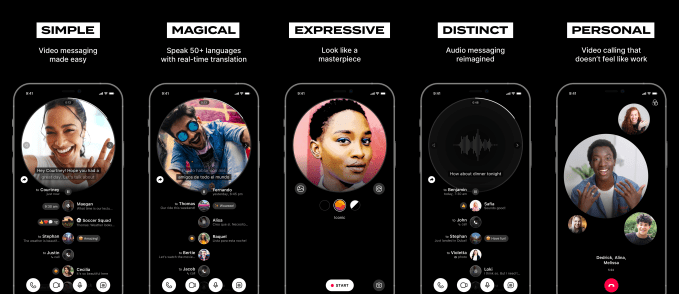
A London-headquartered startup called LOVE, valued at $17 million following its pre-seed funding, aims to redefine how people stay in touch with close family and friends. The company is launching a messaging app that offers a combination of video calling as well as asynchronous video and audio messaging, in an ad-free, privacy-focused experience with a number of bells and whistles, including artistic filters and real-time transcription and translation features.

But LOVE’s bigger differentiator may not be its product alone, but rather the company’s mission.

LOVE aims for its product direction to be guided by its user base in a democratic fashion as opposed to having the decisions made about its future determined by an elite few at the top of some corporate hierarchy. In addition, the company’s longer-term goal is ultimately to hand over ownership of the app and its governance to its users, the company says.

These concepts have emerged as part of bigger trends towards a sort of “web 3.0,” or next phase of internet development, where services are decentralized, user privacy is elevated, data is protected, and transactions take place on digital ledgers, like a blockchain, in a more distributed fashion.

LOVE’s founders are proponents of this new model, including serial entrepreneur Samantha Radocchia, who previously founded three companies and was an early advocate for the blockchain as the co-founder of Chronicled, an enterprise blockchain company focused on the pharmaceutical supply chain.

As someone who’s been interested in emerging technology since her days of writing her anthropology thesis on currency exchanges in “Second Life’s” virtual world, she’s now faculty at Singularity University, where she’s given talks about blockchain, A.I., Internet of Things, Future of Work, and other topics. She’s also authored an introductory guide to the blockchain with her book “Bitcoin Pizza.”

Co-founder Christopher Schlaeffer, meanwhile, held a number of roles at Deutsche Telekom, including Chief Product & Innovation Officer, Corporate Development Officer, and Chief Strategy Officer, where he along with Google execs introduced the first mobile phone to run Android. He was also Chief Digital Officer at the telecommunication services company VEON.

The two crossed paths after Schlaeffer had already begun the work of organizing a team to bring LOVE to the public, which includes co-founders Chief Technologist, Jim Reeves, also previously of VEON, and Chief Designer, Timm Kekeritz, previously an interaction designer at international design firm IDEO in San Francisco, design director at IXDS, and founder of design consultancy Raureif in Berlin, among other roles.
Explained Radocchia, what attracted her to join as CEO was the potential to create a new company that upholds more positive values than what’s often seen today —  in fact, the brand name “LOVE” is a reference to this aim. She was also interested in the potential to think through what she describes as “new business models that are not reliant on advertising or harvesting the data of our users,” she says.

To that end, LOVE plans to monetize without any advertising. While the company isn’t ready to explain its business model in full, it would involve users opting in to services through granular permissions and membership, we’re told.

“We believe our users will much rather be willing to pay for services they consciously use and grant permissions to in a given context than have their data used for an advertising model which is simply not transparent,” says Radocchia.

LOVE expects to share more about the model next year.

As for the LOVE app itself, it’s a fairly polished mobile messenger offering an interesting combination of features. Like any other video chat app, you can you video call with friends and family, either in one-on-one calls or in groups. Currently, LOVE supports up to 5 call participants, but expects to expand that as it scales. The app also supports video and audio messaging for asynchronous conversations. There are already tools that offer this sort of functionality on the market, of course — like WhatsApp, with its support for audio messages, or video messenger Marco Polo. But they don’t offer quite the same expanded feature set.
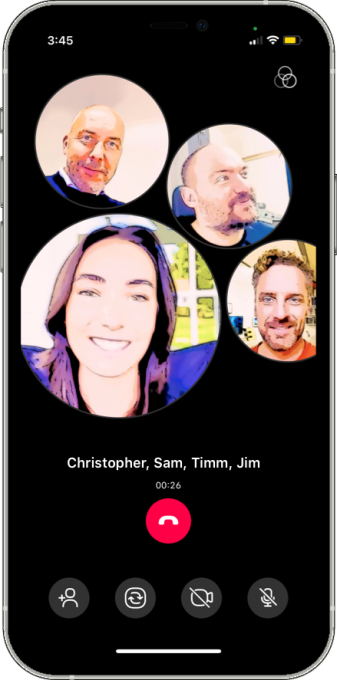
Image Credits: LOVE

For starters, LOVE limits its video messages to 60 seconds for brevity’s sake. (As anyone who’s used Marco Polo knows, videos can become a bit rambling, which makes it harder to catch up when you’re behind on group chats.) In addition, LOVE allows you to both watch the video content as well as read the real-time transcription of what’s being said — the latter which comes in handy not only for accessibility’s sake, but also for those times you want to hear someone’s messages but aren’t in a private place to listen or don’t have headphones. Conversations can also be translated into 50 different languages.

“A lot of the traditional communication or messenger products are coming from a paradigm that has always been text-based,” explains Radocchia. “We’re approaching it completely differently. So while other platforms have a lot of the features that we do, I think that…the perspective that we’ve approached it has completely flipped it on its head,” she continues. “As opposed to bolting video messages on to a primarily text-based interface, [LOVE is] actually doing it in the opposite way and adding text as a sort of a magically transcribed add-on — and something that you never, hopefully, need to be typing out on your keyboard again,” she adds.

The app’s user interface, meanwhile, has been designed to encourage eye-to-eye contact with the speaker to make conversations feel more natural. It does this by way of design elements where bubbles float around as you’re speaking and the bubble with the current speaker grows to pull your focus away from looking at yourself. The company is also working with the curator of Serpentine Gallery in London, Hans Ulrich-Obrist, to create new filters that aren’t about beautification or gimmicks, but are instead focused on introducing a new form of visual expression that makes people feel more comfortable on camera.

For the time being, this has resulted in a filter that slightly abstracts your appearance, almost in the style of animation or some other form of visual arts.

The app claims to use end-to-end encryption and the automatic deletion of its content after seven days — except for messages you yourself recorded, if you’ve chosen to save them as “memorable moments.”

“One of our commitments is to privacy and the right-to-forget,” says Radocchia. “We don’t want to be or need to be storing any of this information.”

LOVE has been soft-launched on the App Store where it’s been used with a number of testers and is working to organically grow its user base through an onboarding invite mechanism that asks users to invite at least three people to join you. This same onboarding process also carefully explains why LOVE asks for permissions — like using speech recognition to create subtitles, or

LOVE says its at valuation is around $17 million USD following pre-seed investments from a combination of traditional startup investors and strategic angel investors across a variety of industries, including tech, film, media, TV, and financial services. The company will raise a seed round this fall.

The app is currently available on iOS, but an Android version will arrive later in the year. (Note that LOVE does not currently support the iOS 15 beta software, where it has issues with speech transcription and in other areas. That should be resolved next week, following an app update now in the works.)


25 Aug 2021

Elastic acquisition spree continues as it acquires security startup CMD

Just days after Elastic announced the acquisition of build.security, the company is making yet another security acquisition. As part of its second-quarter earnings announcement this afternoon, Elastic disclosed that it is acquiring Vancouver, Canada based security vendor CMD. Financial terms of the deal are not being publicly disclosed.

CMD‘s technology provides runtime security for cloud infrastructure, helping organizations gain better visibility into processes that are running. The startup was founded in 2016 and has raised $21.6 million in funding to date. The company’s last round was a $15 million Series B that was announced in 2019, led by GV. 

Elastic CEO and co-founder Shay Banon told TechCrunch that his company will be welcoming the employees of CMD into his company, but did not disclose precisely how many would be coming over. CMD CEO and co-founder Santosh Krishan and his fellow co-founder Jake King will both be taking executive roles within Elastic.

Both build.security and CMD are set to become part of Elastic’s security organization. The two technologies will be integrated into the Elastic Stack platform that provides visibility into what an organization is running, as well as security insights to help limit risk. Elastic has been steadily growing its security capabilities in recent years, acquiring Endgame Security in 2019 for $234 million.

Banon explained that, as organizations increasingly move to the cloud and make use of Kubernetes, they are looking for more layers of introspection and protection for Linux. That’s where CMD’s technology comes in. CMD’s security service is built with an open source technology known as eBPF. With eBPF, it’s possible to hook into a Linux operating system for visibility and security control. Work is currently ongoing to extend eBPF for Windows workloads, as well.

CMD isn’t the only startup that has been building based on eBP. Isovalent, which announced a $29 million Series A round led by Andreessen Horowitz and Google in November 2020, is also active in the space. The Linux Foundation also recently announced the creation of an eBPF Foundation, with the participation of Facebook, Google, Microsoft, Netflix and Isovalent.

Fundamentally, Banon sees a clear alignment between what CMD was building and what Elastic aims to deliver for its users.

“We have a saying at Elastic – while you observe, why not protect?” Banon said. “With CMD if you look at everything that they do, they also have this deep passion and belief that it starts with observability. “

It will take time for Elastic to integrate the CMD technology into the Elastic Stack, though it won’t be too long. Banon noted that one of the benefits of acquiring a startup is that it’s often easier to integrate than a larger, more established vendor.

“With all of these acquisitions that we make we spend time integrating them into a single product line,” Banon said.

That means Elastic needs to take the technology that other companies have built and fold it into its stack and that sometimes can take time, Banon explained. He noted that it took two years to integrate the Endgame technology after that acquisition.

“Typically that lends itself to us joining forces with smaller companies with really innovative technology that can be more easily taken and integrated into our stack,” Banon said.

25 Aug 2021

Astroscale successfully demos in-space capture-and-release system to clear orbital debris

Astroscale hit a major milestone Wednesday, when its space junk removal demo satellite that’s currently in orbit successfully captured and released a client spacecraft using a magnetic system.

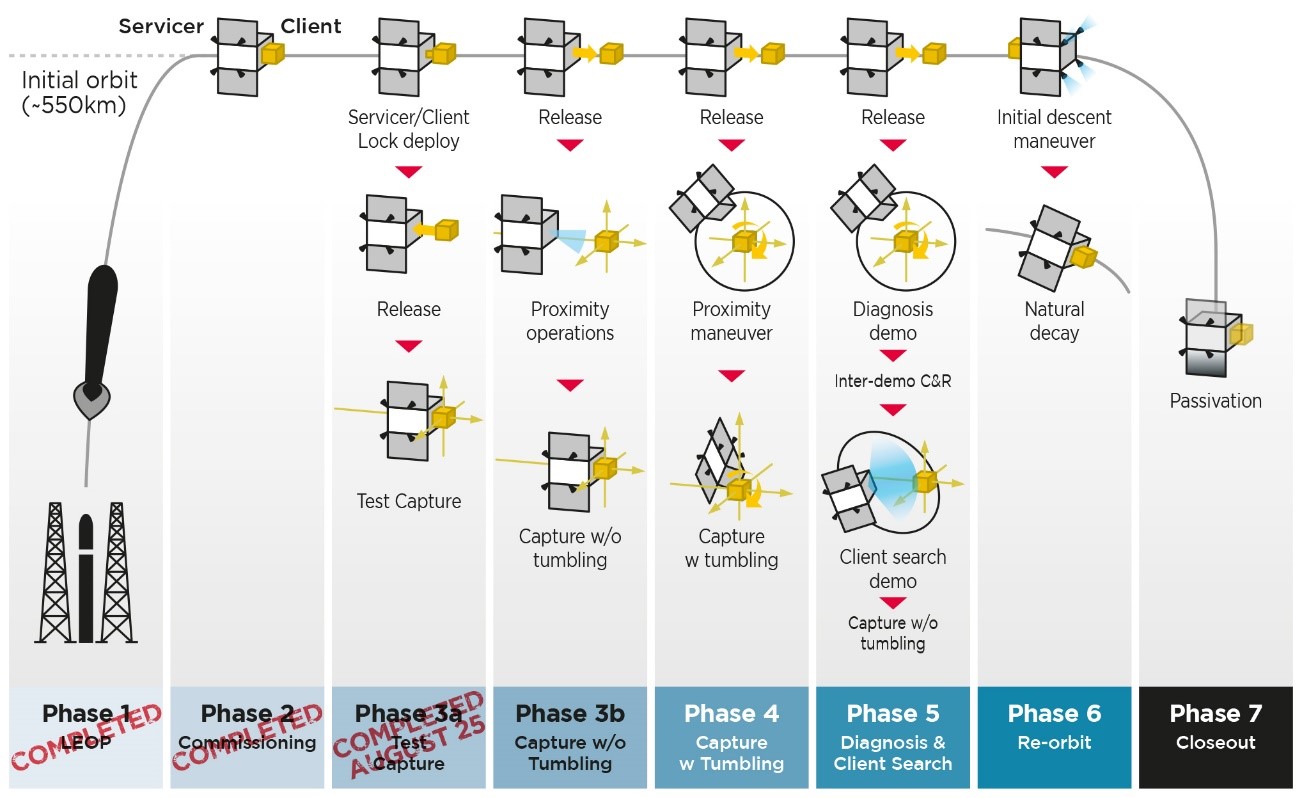
The End-of-Life Services by Astroscale-demonstration (ELSA-d) mission was launched in March, with the goal of validating the company’s orbital debris removal tech. The demonstrator package, which was sent up on a Soyuz rocket that launched from Kazakhstan, included two separate spacecraft: a “servicer” which was designed to remove space junk, and a “client” that poses as said space junk.

“A major challenge of debris removal, and on-orbit servicing in general, is docking with or capturing a client object; this test demonstration served as a successful validation of ELSA-d’s ability to dock with a client, such as a defunct satellite,” the company explained.

The demonstration today showed that the servicer – a model of Astroscale’s future product – can successfully magnetically capture and release other spacecraft.

But that’s not the end for the ELSA-d demonstration mission; the servicer and client still must hit three more capture-and-release milestones before Astroscale can call it a complete success. Next up, the servicer must safely release the client and re-capture it from a greater distance away. After that, Astroscale will attempt the same release-and-capture process, but this time with the client satellite simulating an uncontrolled, tumbling space object. The final capture demonstration the company is calling “diagnosis and client search,” in which the servicer will inspect the client from a close distance, move away, then approach and re-capture.

Image Credits: Astroscale

Astroscale is one of a suite of companies working on the problem of orbital debris, but it’s the first to send up a debris removal demonstration mission. According to NASA, over 27,000 pieces of orbital debris are tracked by the Department of Defense’s global Space Surveillance Network sensors. The amount of junk in space is only anticipated to grow as the cost of launching a spacecraft, and other expenses, continue to decline.

You can watch a video of the mission operations team explain the test demonstration here: