Month: August 2021

10 Aug 2021

FireHydrant announces $23M Series B to grow disaster management platform

No matter how carefully you set up your systems, sooner or later something fundamental breaks. How you react during those times and how quickly you respond to the crisis is what people remember after it’s over. FireHydrant, a startup that helps companies prepare for and manage such crises, announced a $23 million Series B investment today.

Harmony Partners led the round with participation from Salesforce Ventures and existing investors Menlo Ventures and Work-Bench. Today’s money brings the total raised to $32.5 million, according to the company.

The company focuses on helping customers navigate a crisis and a big part of that is run books, which act as playbooks for handling various crisis situations as they arise. As part of that, the company has added a directory of service owners to make it easier to find the people in charge of a given service should it be the cause or impacted by an ongoing event.

Company co-founder and CEO Robert Ross says that the company has grown customers 5x since the startup’s A round last year, and they are seeing customers get creative with how they use run books.

“The run books functionality is really the bread and butter of functionality of FireHydrant, and we’re seeing customers leverage them in ways we didn’t really imagine, and truly kind of outperforming a lot of the expectations of that functionality. So they’re getting really creative in using them to onboard people into incidents and using them for better incident communication. So that’s been a really nice thing to see,” Ross told TechCrunch.

Ross says that they are trying to position incident management as a business problem, rather than purely an engineering problem. That’s because if your site goes down for a sustained period of time, people on Twitter aren’t going to be talking about the company’s engineering failure, they are going to say the business is failing because it’s not up and running at full capacity or in some cases at all.

“Obviously I believe that site reliability in general is going to be something that has an impact on the business no matter what. If it’s something as simple as your app not working or just being glitchy, people are going to get upset,” Ross said.

The company has grown substantially since we spoke in May 2020 going from 10 employees to 54. As he continues to add new employees to the mix, Ross says that he trying to stay on top of all three aspects of diversity, equity and inclusion, but it all starts with the sources you use to hire new people. “Our philosophy is that diversity, equity and inclusion in the business starts at the top of your funnel, and we made sure to put a lot of effort into that,” he said.

As the pandemic ebbs and flows, Ross says that he has no intention of requiring folks to come into the office, and this is especially true since he has been hiring regardless of geography since the pandemic began. He has a small office in New York City, but nobody is required to go in. He is considering adding office hubs when the pandemic quiets down in Austin, Denver and San Diego.

10 Aug 2021

Tech-driven Butternut Box eats its own dog food — raises $55.4M to scale-up

Butternut Box, a London-based fresh dog food business with a tech-driven platform that delivers HelloFresh-style, catered dogfood, has raised $55.4 million (€47.2 million) in a funding round led by L Catterton, the consumer-focused private equity firm, and included participation from White Star Capital, Five Seasons Ventures and Passion Capital. We covered their early funding round back in 2017.

Founded in 2016, Butternut Box bills itself as a “human-grade, fresh dog food company” with a “personalized dietary offering” driven by its own tech platform.

Jean-Philippe Barade, Partner, L Catterton Europe, and head of the firm’s London office, commented; “We have long been impressed by how Butternut Box has established itself as the trusted brand of choice in the UK among a loyal base of pet owners… Butternut Box continues to leverage its innovative digital platform to raise the bar in the growing pet food market.”

Led by Goldman Sachs alumni Kevin Glynn and David Nolan, the company says its proprietary algorithm identifies how many calories each individual dog needs based on age, weight, breed, activity levels, and body condition and then pre-portions this amount into daily servings.

It also makes its own “natural” dog food, because studies show that dogs fed a natural diet have a longer life capacity than those fed on industrial canned products – up to 3 years, a long time in dog years. Since British dog owners spend over £200 million in vet’s fees, overfeeding, and unhealthy food is a key issue for owners.

However, Butternut Box is not alone, since they competing with Lily’s Kitchen, Tails.com and Natural Instinct for this lucrative new market.

10 Aug 2021

Twitter now in compliance with India’s new IT rules, government says

Twitter is now complying with India’s new IT rules, New Delhi told a court Tuesday, in a move that is expected to ease months-long tension between the American social media network and the government of world’s second largest internet market.

A lawyer representing the Indian government told the Delhi High Court that Twitter’s recent moves to appoint chief compliance officer, nodal contact person and resident grievance officer in the country have made the social network “prima facie” compliant with the new law.

A Twitter spokesperson in India didn’t immediately return a text.

India’s new IT rules, which were unveiled in February this year, mandated significant social media firms, among other things, to appoint officials to address on-ground concerns in the country.

Facebook and Google complied with this requirement in May, when the proposed rules went into effect in the South Asian market.

Twitter, which was facing heat from the Indian government for not blocking some tweets that the Indian government deemed objectionable, had requested additional few months to comply with the new rules and in the meantime vacated the required roles with temporary staff.

Tension has been brewing between the two for several months. Twitter labeled a tweet from Sambit Patra, the spokesperson of India’s ruling party BJP, in May as “manipulated media.” Days later, a special squad of Delhi police that investigates terrorism and other crimes made a surprise visit to two of Twitter’s offices in the country to seek information about Twitter’s rationale to term Patra’s tweets as manipulated.

Twitter at the time said it was “concerned by recent events regarding our employees in India and the potential threat to freedom of expression for the people we serve” and had sought additional three months to comply with the new rules.

The firm’s slow-efforts to comply with the new IT rules had cost the firm liability protection in the country last month, the Indian government said earlier. Internet services enjoy what is broadly referred to as “safe harbor” protection that say that tech platforms won’t be held liable for the things their users post or share online.

The new rules also require significant social media firms operating encrypted messaging services to devise a way to trace originator of messages for special cases. Several firms including Facebook’s WhatsApp and Signal have not complied with this requirement. WhatsApp has sued the Indian government over this requirement.

This is a developing story. More to follow…

10 Aug 2021

Omnibiz gets $3M to digitize Nigeria’s informal B2B supply chain

Despite the prevalence of shopping malls and the emergence of VC-backed e-commerce companies like Jumia, informal retail in Africa is still king.

A 2016 study by PwC states that 90% of sales in Africa’s major economies come through informal channels — markets and kiosks.

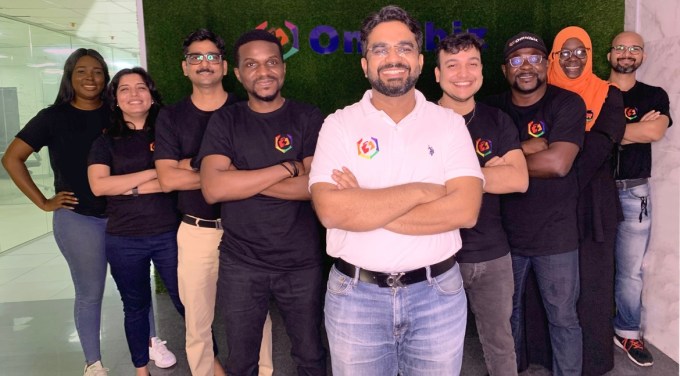
This presents a large market ripe for digitization, and over the past five years, African startups have risen to the challenge, raising millions of dollars in the process. Today, Omnibiz, a Lagos-based startup, joins the fray and has raised a seed round of $3 million to expand into new markets.

Omnibiz is a B2B e-commerce platform that connects fast-moving consumer goods (FMCGs) manufacturers to retailers by digitizing the supply chain stakeholders.

The platform offers a mobile app, WhatsApp channel and a phone number that retailers can use to stock their shops. Omnibiz says in a statement that retailers “can place orders at their convenience and have goods delivered to their doorstep at no cost.”

Omnibiz was launched in 2019 by Deepankar Rustagi. The Indian founder and CEO who has stayed in Nigeria for over two decades started his first startup, VConnect, in 2011 as an online marketplace and search engine to find local professionals for service needs.

The platform connected individuals with more than 100 services and over 500,000 listed businesses across the country before shutting down in 2017, Rustagi claims.

Post-VConnect, Rustagi consulted for multiple FMCG brands. He figured a need existed for manufacturers and retailers of goods to digitize their processes leading to the launch of Omnibiz in late 2019.

Omnibiz operates an asset-light retail distribution model. When a retailer makes an order on the Omnibiz platform, it is requested from partner distributors who store goods on behalf of manufacturers and are traditionally known to help out with warehousing and transportation.

With Omnibiz, these distributors can focus solely on warehousing and pass on the responsibility of transporting goods to Omnibiz’s third-party logistics providers. The drivers of these logistics providers use Omnibiz to efficiently distribute the orders to the retailers within 24 hours.

“We work with manufacturers to provide visibility. Then buy goods from them and keep them in partner hubs that act as warehouses and distributors. Then, use the services of drivers that work with third-party logistics drivers who get paid on every delivery made,” Rustagi told TechCrunch.
Omnibiz

Image Credits: Omnibiz

Digitizing this value chain helps retailers save working capital while Omnibiz connects them with more than 20 brands, including Coca-Cola, Nestlé, Kellogg’s, Unilever, Procter & Gamble and Kimberly-Clark.

The B2B e-commerce retail company is currently in four cities across Nigeria — Lagos, Abuja, Port Harcourt, and Kaduna. The company will add two more cities, Ibadan and Kano, before the end of August, Rustagi adds.

By Rustagi’s account, Omnibiz will feed off his experience at VConnect, his prior business that struggled to monetize and scale despite the huge traction it got as a popular local marketplace. 

“We knew about small businesses and what sort of technology they like. That was our specialization, but our business model didn’t work. But in this case [Omnibiz], the monetization happens on our platform, and there’s money to be made for the small business. We’ve been growing 30% month-on-month for the last 12 months,” he said.

The B2B informal e-commerce market has seen a resurgence in the last couple of years. Kenya’s Sokowatch and Twiga, Nigeria’s TradeDepot and Egypt’s MaxAB have longed vied for market-leader positions in their respective markets.

The pandemic spiked more interest in their activities as all the aforementioned startups have raised money this past year, including newcomers Kenya’s MarketForce and now Omnibiz.

Some operate asset-light models, while others take up the responsibility of managing the end-to-end digitization process. Rustagi believes the former is perfect for the company because it helps distributors expand their reach rather than eliminate them.

I think scaling in one city with assets is not that difficult. But if you have to scale in 20, 24 cities in a country like Nigeria or Ghana, or Ivory Coast or East Africa, the investment required will be very high.” Rustagi continued. “So we think without significant investment in assets, we will be able to scale much faster. And since we took the tech-first approach, we have good control over the business. I believe we’re in the right space and the right time with the right model.”

Omnibiz’s seed round was led by V&R Africa, Timon Capital and Tangerine Insurance. The round also included Lofty Inc., Musha Ventures, Sunu Capital, Launch Africa, and Rising Tide Africa. It takes the company’s total investment to $4 million. Rustagi also disclosed that the company also got funding from Seedstars and will participate in the accelerator’s growth program.

I think Omnibiz will be the role model for B2B retail in Africa and can scale well into other emerging markets. We are excited and happy to be supporting Omnibiz in all ways beyond just providing capital,” Raj Kulasingam and Vishal Agarwal of V&R Africa said in a statement. 

Over the next few months, Omnibiz will use the investment to expand in other West African cities outside Nigeria —  Abidjan, Takoradi, Kumasi and Accra. Food, non-alcoholic beverages, personal care, and baby care products are the top categories on the Omnibiz platform. The company is planning to expand into new categories like alcoholic beverages and OTC pharmaceutical products.

Omnibiz will also use the investment to create new tech products that will enhance value for the retailers. The company will work with partners to increase the working capital availability for the retailers and digital tools to manage their business more efficiently.

“One of the key things we intend to do is to bring on medium-scale manufacturers who find it difficult to get the last-mile delivery to reach customers. We want to scale them so they can reach a large number of retailers. That’s something we are rolling out so we can onboard more and more manufacturers,” said the CEO on Omnibiz’s next plans.


10 Aug 2021

Japan’s TechnoPro acquires Indian app development studio Robosoft for $108 million

Robosoft Technologies, an India-headquartered app development studio, said on Tuesday it has reached a definitive agreement to sell the business to Japan’s IT services firm TechnoPro for $108 million.

Founded in 1996 in Udupi, a small town in the Southwest Indian state of Karnataka, Robosoft Technologies started its journey as a software development firm.

It was one of the earliest firms globally to be certified as Mac OS developer by Apple and has been recognized by the iPhone-maker several times in the decades since.

“We knew mobile was going to be big with the launch of iPhone and the App Store ecosystem. We began building mobile apps for clients across the globe and there’s been no looking back,” the companies describes on its website.

Robosoft, which counts Ascent Capital and Kalaari Capital among its investors, has courted clients operating in several categories including games, news, sports, utilities and lifestyle and expanded its offerings to include product advisory, and tools for design, engineering and analytics.

The original app for the Indian news network NDTV, for instance, was developed by Robosoft. Some of its other clients include media giant Viacom and McDonald’s India. It has clients in the U.S. and Middle East as well.

In a statement on Tuesday, Robosoft said its current management team will continue to lead the firm. “Robosoft has had a phenomenal journey over the last two decades and has grown by leaps and bounds during this period. The partnership with Ascent Capital and Kalaari Capital heralded a strong growth era for us and I am very happy that we are handing over the reins of the Company to a global player like TechnoPro,” said Rohith Bhat, Founder and Managing Director of Robosoft.

“We look forward to a close collaboration with Robosoft in the company’s next phase of growth and see tremendous synergies between TechnoPro and Robosoft,” said Takeshi Yagi, President and Representative Director and CEO of Tokyo Stock Exchange-listed firm TechnoPro.

10 Aug 2021

FreshBooks reaches $1B+ valuation with $130.75M for its SMB-focused accounting platform

FreshBooks, a Toronto-based cloud accounting software company focused on SMBs, announced today it has secured $80.75 million in a Series E round of funding, as well as $50 million in debt financing.

Existing backer Accomplice led the equity financing, which the company described as “an inside round” that propelled FreshBooks to unicorn status with a valuation of “over $1 billion.” 

J.P. Morgan, Gaingels, BMO Technology & Innovation Banking Group and Manulife also participated in the equity investment, along with platform partner and new backer Barclays. With the new capital injection, FreshBooks has now raised a total of more than $200 million in funding over its lifetime.

FreshBooks has built a cloud-based accounting software platform designed to make things like invoicing, expenses, payments, payroll and financial reporting easier for small business owners and self-employed people (and their clients). The company, which says it has served more than 30 million people in over 160 countries, was bootstrapped for the first decade of its life.

As in the case of many startups, FreshBooks was started to solve a pain point for one of its founders. In 2003, FreshBooks’ co-founder Mike McDerment was running a small design agency. When it came to billing clients, he found Word and Excel frustrating to use and felt like they weren’t built to create professional-looking invoices. So he coded his own solution that became the foundation of what is now FreshBooks. The company was self-funded until 2014, when McDerment decided to bring on outside investors and raised $30 million from Oak Investment Partners, Accomplice and Georgian Partners.

In 2019, Don Epperson joined FreshBooks as executive director before transitioning to the role of CEO this year. McDerment, who previously held the position, remains as executive chair of the company.

FreshBooks has 500 employees in Canada, Croatia, Mexico, the Netherlands and the United States — hiring over 100 people in the past year. Also in the last year, the company entered the LatAm market after acquiring Mexico-based e-invoicing company Facturama in September 2020 in an effort to expand its audience in Spanish-speaking markets.

FreshBooks plans to use its new capital toward sales and marketing, research and development and additional strategic acquisitions. 

The company will also use its new funding toward investing in markets that are becoming more regulated and helping owners manage their finances through “simplistic workflows,” according to Epperson.

For example, he said, more business owners are working to become digitally enabled to meet local tax and invoice compliance systems. 

“The need for owners to manage their business digitally has accelerated, and this has changed how small business owners work with bookkeepers and accountants,” Epperson told TechCrunch. “The funding comes as an injection of confidence in our mission to digitally enable small businesses.”

Image Credits: FreshBooks

When it comes to growth metrics like year-over-year revenue percentage growth, the exec was tight-lipped, saying only that FreshBooks has “seen significant growth” in the number of new customers since last year, in part fueled by a pandemic-driven increase in new small businesses.

The pandemic also uncovered the need for us to understand how seismic events affect our customers, Epperson said. 

“After analyzing FreshBooks’ own proprietary data, we learned that businesses owned by women were taking three times longer to recover in the U.S. versus businesses owned by men,” Epperson said. “This stat laid the foundation for conducting more research into how the pandemic was affecting businesses across multiple industries and entering into data-sharing partnerships with local governments to help policymakers enact change in the support available to small business owners.”

Jeff Fagnan, founder and managing partner at Cambridge, Massachusetts-based Accomplice, is clearly bullish on FreshBooks’ potential, saying of his firm’s continued investments in the Canadian company over the past seven years: “With more people choosing self-employment, the FreshBooks team fundamentally believes in the growth of small businesses, and the importance of helping these businesses scale. As insiders, we have better context for how the company is scaling and how the market is growing, and this is why FreshBooks is our largest investment to date.”

FreshBooks is the latest in a growing number of Toronto-based unicorns. Late last month, 1Password raised $100 million in a Series B round of funding that doubled the company’s valuation to $2 billion. 1Password first became a unicorn in 2019.

10 Aug 2021

Latent AI, which says it can compress common AI models by 10x, lands some key backing

Roughly a year ago, Latent AI, a now three-year-old, Menlo Park, Ca.-based startup, pitched a handful of investors during TechCrunch’s Battlefield competition. It didn’t win that contest, but that hasn’t kept it from winning the interest of investors elsewhere. It just closed on $15 million in Series A funding in a round co-led by Future Ventures and Blackhorn Ventures, with participation from Booz Allen, Lockheed Martin, 40 North Ventures, and Autotech Ventures. The company has now raised $22.5 million altogether.

What are these backers funding exactly? The company says that its software tools allow AI models to run anywhere, irrespective of hardware constraints, and that includes on the inexpensive chips that are typically found in edge devices. It also says it can compress common AI models by ten times without a noticeable change in accuracy, partly through an “attention mechanism” that enables it to save power and run only what is needed, and partly because it can self-adjust its workload based on environment and operational context.

That means — theoretically at least — that Latent AI’s tools can help developers deliver AI models that are optimized for compute; that they can overcome memory and power constraints; and that there’s almost no latency (thus the company name).

Steve Jurvetson, the veteran investor and cofounder of Future Ventures, says to “think of face-detection algorithms running locally within security cameras or appliances, or Siri-like voice interfaces working instantly, even when there’s no network connectivity.”

Certainly, there’s a huge market for the kind of tech that Latent AI is developing. Indeed, though in an interview earlier today, cofounder and CEO Jags Kandasamy declined to delve into specifics, he suggested that the U.S. government is already a customer, thanks in part to strategic investors like Booz Allen. (In a press release last month about Booz Allen’s investment in Latent AI, Steve Escaravage, an SVP at the government services agency, noted that the “ability to collect, analyze and quickly act on data is at the core” of the U.S.’s national defense strategy.)

Another strategic investor, Lockheed Martin, is very focused on finding ways that AI technologies can help the U.S. military improve on situational awareness across land, sea, air, space, cyber and electromagnetic spectrum domains, so it’s easy to appreciate its attraction to the startup.

Kandasamy also talked this afternoon about an unnamed ski manufacturer that it is using Latent AI’s tech in its Google Glass-like augmented reality goggles,  and he suggested that Latent AI sees a world of opportunities in the commercial market, too.

Of course, given that the world is increasingly rife with data-collecting-devices and that there’s enormous need for machine learning to find patterns to make that data actionable without sending it back and forth to a distant cloud, there are many other companies and projects with the same objective as Latent AI, including open source tools like TensorFlow, hardware vendors like Xilinx, and rival startups like OctoML and Deeplite.

Kandasamy insists that all fall short in some way. Of TensorFlow, he says that developers have only community support when it comes to production deployment. Of the chipmakers of the world, they’re focused on their own hardware and not vertically integrated. And what of those rivals? They’re either focused on compression or compiling and not both, says Kandasamy.

Either way, Latent AI has the kind of backstory that investors like. After Kandasamy, a serial entrepreneur, sold his last startup to Analog Devices, he headed to SRI International in 2018 as an entrepreneur-in-residence. There, he was quickly wowed by tech being developed by Sek Chai, who was the research institution’s technical director for nearly a decade, and who specialized in low-power high performance computing, computer vision, and machine learning. Indeed, soon after, Kandasamy had Chai had formed Latent AI and begun smoothing out some of the kinks.

Now, with fresh funding and a small but growing customer base that pays Latent AI on a subscription basis to access to its tools (then deploy them on premise), the question is whether the 15-person outfit is coming along far enough, fast enough, to get ahead of its current and future rivals.

Jurvetson plainly thinks it’s well-positioned. He says he has been an advisory board member for SRI International for more than a decade and seen a good many technologies like Siri develop and then spin out of the organization.

“This is the only one I have invested in,” he says.

09 Aug 2021

5 ways AI can help mitigate the global shipping crisis

With the fourth quarter now upon us, every industry faces a challenge in managing a holiday production calendar that will deliver the goods. The key for startups looking to defend the quarter from disruptions is to adopt a proactive, data-driven approach to inventory management.

Here are five methods we’ve been counseling clients to adopt:

  • Use data and analytics to identify and map out the inventory being affected by the global shipping crisis. If you don’t have the data about what is on a ship transporting your materials, then use this crisis as an opportunity to justify prioritizing supply chain digital transformation with data, IoT and advanced analytics (e.g., machine learning and simulation). You need to know the location of your goods all times if you are going to successfully gauge what impact a shortage will have on your operation.
    Ultimately, AI will help startups understand how myriad disruptions affect their supply chain so they can better respond with a Plan B when the unthinkable happens.
  • If you don’t have the data readily available, then you need to partner with a vendor and use a secure environment to share second-party data to deliver AI-driven actionable insights on the business impact on all parties involved, from startup to retailer to the consumer.
  • Simulate and forecast the impact of these supply-side issues on the demand side. Conduct scenario planning exercises and inform critical business decisions. If this ability is not in place, an emergency like a pandemic, civil unrest or an uncontrollable rate hike will wreak havoc on your business plan. Use this situation as an opportunity to put a disaster management program in place to prepare for the potential risks.
09 Aug 2021

Daily Crunch: Bangalore-based UpGrad becomes India’s newest unicorn with $185M funding round

To get a roundup of TechCrunch’s biggest and most important stories delivered to your inbox every day at 3 p.m. PDT, subscribe here.

Hello and welcome to Daily Crunch for August 9, 2021. We are ever so glad that you are here. We have global startup news for you, rocket news, car-rental IPO news and more. And if you are a student, we even have Extra Crunch discounts for you. Call it a technology and money smorgasbord. All in one email. Let’s go! — Alex

The TechCrunch Top 3

  • Turo is taking its car rental business public: Turo, a well-known U.S. startup that allows folks to rent their car to other folks, has privately filed to go public. Oh boy are we curious what its numbers show. Not only because it’s an S-1 that we’ve wanted to read for some time, but also because we’re incredibly curious about how the company navigated the pandemic and the changing world of transit during the last 18 months or so. More when it files publicly, you know, to go public.
  • China’s tech crackdown continues: Another weekend, another set of regulatory actions from China’s government. Tencent and the larger gaming world could be in trouble next. The turbulence was enough for NetEase, a major gaming company in China, to delay the Hong Kong listing of its music business. Recall that Tencent Music is publicly listed.
  • SpaceX buys Swarm Technologies: After seeing a friend get hooked up to Starlink the other day, what SpaceX does in the connectivity space is now more real to your humble scribe than theoretical. So the news that the space launch company is buying Swarm Technologies caught my eye. What does Swarm do? Per TechCrunch, it “operates a constellation of 120 sandwich-sized satellites as well as a ground station network.” Precisely how that may or may not link up to current SpaceX efforts is unclear.

Startups/VC

Let’s start with a brace of unicorn stories and then delve into some earlier-stage startup news, yeah?

  • Indian edtech is still hot: Another day, another edtech unicorn. This time it’s UpGrad, a Bangalore-based startup that “specializes in higher education and upskilling courses.” It just raised $185 million at a $1.2 billion valuation. Temasek led the round. Notably, it was a two-part affair, with an earlier tranche worth $120 million first valuing UpGrad at a price of around $600 million.
  • Turkey’s first $10B startup: $1 billion isn’t cool. You know what is? $10 billion. I suppose that that means that Turkish e-commerce platform Trendyol is cool? At least General Atlantic and SoftBank Vision Fund 2 think that it is cool enough to be worth $16.5 billion. Per our reporting, the company serves around 30 million shoppers who generate around 1 million packages per day. That’s a lot of shipping.

Now, let’s talk about some younger startups:

  • RentCheck wants you to get your dang deposit back: And it has raised $2.6 million to power its efforts. Everyone knows what the problem space is here, so we care a bit more about how the company intends to tilt the rental market more toward renters themselves. Per TechCrunch, the company’s software “works by providing a way for property managers to facilitate and conduct remote, guided property inspections.” So long as more of us get our dang money back, cool.
  • Canopy raises $15M for loan-servicing software: Sure, the back end of the financial world isn’t super fun to think about, but it is huge and potentially lucrative. Canopy Servicing is attacking the fintech market with a focus on building software that will help companies better offer and service loans. Credit is a massive problem space, and with $15 million new dollars, it will be interesting to see how quickly this API-delivered startup can grow.
  • Meta app search, hell yeah: Today CommandBar left its beta period and announced that it has raised $4.8 million. The company’s tech is a search layer that sits atop web apps, making them easier to, well, search. Frankly, this kicks butt. Why? Because finding what you need inside of web apps can be an enormous hassle if you are in a hurry and not fluent in the application you are presented with. Which happens to everyone. Every day.
  • LawVu is building Salesforce for legal teams: Back to the topic of things that are important, if not entirely Super Very Cool, let’s talk about software aimed at helping legal teams. LawVu is working in the space, and just raised $17 million NZD to back its efforts. It’s building a digital space for legal teams to share documents, communicate and more.
  • Moove wants to provide car financing to African drivers: After noting that African car ownership rates lagged other continents, the founders of Moove decided to tackle the issue. The startup is starting with working to provide asset-backed financing to folks who make money with their cars and just raised $23 million.

Early-stage brands should also unlock the power of influencers

Before you hire a marketing consultant who doesn’t understand your products or commit to a CMO who has several years of experience — but none in your sector — consider influencer marketing.

If the phrase evokes images of celebrities hawking hard seltzer, think again: An influencer can be as humble as an enthusiastic Reddit user who manages your Telegram channel.

According to Uber growth marketing manager Jonathan Martinez:

“ … You don’t need to find influencers with millions of followers. Instead, lean toward microinfluencers for testing, which will bring cost efficiency and the ability to sponsor a diverse range of people.”

(Extra Crunch is our membership program, which helps founders and startup teams get ahead. You can sign up here.)

Big Tech Inc.

  • There will now be ads in your Instagram e-commerce experience: Call it a feature or not, Instagram is bolstering its ads business by building advertising slots that include “both single images and [an] option for an image carousel.” You are welcome, Instagram users.
  • How one tech company is building an antiracist culture: TechCrunch’s Ron Miller spoke to several Twilio execs about how their company is working to be a bit more than diversity-friendly. They want Twilio to be opposed to racism. Good. Let’s hope more companies follow suit.
  • Facebook under fire for cutting off research access: After Big Blue decided “to close accounts connected to a misinformation research project last week,” Congress got mad. Now a cadre of senators are pressing the company on its decision to cut off access to the researchers, which puts Facebook in the position of managing to have engendered a negative press cycle and more congressional oversight in a single move. You have to give the company points for efficiency.

TechCrunch Experts: Growth Marketing

Intellect illustration

Image Credits: Getty Images

Are you all caught up on last week’s coverage of growth marketing? If not, read it here.

TechCrunch wants you to recommend growth marketers who have expertise in SEO, social, content writing and more! If you’re a growth marketer, pass this survey along to your clients; we’d like to hear about why they loved working with you.

Community

Image Credits: Apress

Join TechCrunch Managing Editor Danny Crichton for a Twitter Spaces event tomorrow, August 10, at 3 p.m. PDT/6 p.m. EDT. Danny will be joined by Noah Giansiracusa, the author of “How Algorithms Create and Prevent Fake News: Exploring the Impacts of Social Media, Deepfakes, GPT-3, and More.” They’ll discuss Giansiracusa’s book and invite the audience to ask questions.

09 Aug 2021

Fortnite’s Ariana Grande concert offers a taste of music in the metaverse

Ariana Grande strutted and soared around a candy-colored series of Fortnite sets in Epic’s latest major in-game live music event. The multi-day “tour” offered gamers and Grande fans alike plenty to enjoy while showcasing Epic’s impressively smooth and visually inventive vision for live events that millions of people can enjoy simultaneously.

Fortnite players have known an Ariana Grande event was in the works for a while, and the concert followed previous in-game events featuring rapper Travis Scott and Marshmello. Scott’s in-game performance saw 12.3 million live viewers, a number that the Ariana Grande event is likely to top given that it ran over multiple days.

Epic put up a video of the concert that’s well worth checking out, if only to marvel at the kind of stuff that’s possible in gaming worlds these days. Experiencing the event live in the game is obviously ideal, but the video captures the experience pretty well, minus the sense of presence from having an avatar zooming around the space with grande Grande.

This time around, the show featured a handful of mini-games that gave players more to do than just flying around while a gigantic virtual pop star does her thing. The sequence kicked off with players surfing a rainbow racetrack, hitting power ups in a cross between Mario Kart and Splatoon to “Come & Go” by Juice WRLD and Marshmello. The racetrack sequence was followed by bouncing players through a Dr. Seuss style landscape with candy-pink trees and giant floating eyeballs before dropping them into a mini-game shooting down the game’s Storm King boss to Wolfmother’s “Victorious.”

Grande made her Fortnite debut a few songs in to the 2019 hit “7 Rings,” streaking across the sky and materializing on top of a planet suspended in a sea of stars. Later she soared through the clouds with angelic wings as players followed, suspended in rainbow bubbles. In the coolest portion, a skyscraper-high Grande ascended a series of Escher-esque staircases with a giant diamond mallet before slinging it to shatter the sky, shotput-style.

Fortnite’s latest event didn’t have any huge surprises, but that’s only because Epic sets the bar so high. Getting dressed up in your favorite skin to sail around a skyscraper-tall pop star along with millions of people around the world might not be everyone’s vision for the metaverse, but Fortnite’s wildly imaginative live events are a taste of the future that here’s right now.