Year: 2021

01 Sep 2021

Skit raises $23M Series B round led by WestBridge Capital to accelerate its growth

“Traditional voice-based call center service is difficult and costly. This is where artificial intelligence and voice technology have presented an opportunity for enterprises to overcome the challenges of scale and engagement at their customer contact centers,” co-founder and CEO Skit Sourabh Gupta told TechCrunch.

The Covid-19 pandemic led to an unprecedented increase in call volumes at bank call centers as customers tried to manage their portfolios amid the chaos of work from home policy and financial instability, Gupta said. And that presented an opportunity for companies like Skit.

“Customers have a natural tendency to prefer voice call support over other self-service channels and this has led to the increase in pressure on the traditional interactive voice responses (IVR) systems and support agents to respond to all incoming queries,” he said.

Bengaluru-based artificial intelligence SaaS voice automation company Skit, formerly known as Vernacular.ai, developed its AI-based voice automation platform VIVA, short for Vernacular Intelligent Voice Assistant, which enables corporations to automate 90% of their call center operations powered by Natural Language Understanding (NLU) technology.  Its product VIVA covers more than 16 languages and 160 dialects.

Skit announced today it has closed $23 million Series B round to accelerate its growth in domestic and global markets including the US and South East Asia and enhance its voice automation platform.

The company was founded in 2016 by two co-founders, Indian Institute of Technology alumni, Roorkee alumnus, Sourabh Gupta and Akshay Deshraj.

The latest funding was led by WestBridge Capital along with existing investors Kalaari Capital and Exfinity Ventures, IAN Fund, LetsVenture and Sense AI. Angel investors including Prophetic Ventures’ Aaryaman Vir Shah also participated the round. The Series B round brings Skit’s total funding to $30 million.

Skit will use the fresh funding for sales, marketing, further R&D to strengthen its personalized solutions and voice products, as well as its global expansion.

“We want to double down and scale operations in both Indian and global markets. We are also planning on increasing our employee headcount. Through our new headquarters in New York, we want to build a strong customer base in North America by our product available to US enterprises,” Gupta told TechCrunch.

The company said it has quadrupled its amount of revenue and numbers of customers in 2020-2021 since its previous fundraising, $5.1 million Series A, in May 2020. Its average order book has also been growing in CAGR 200-300% every year, Gupta added. It currently has 150 employees.

Skit recently expanded into the US and South East Asia market.

“We noticed that there (South East Asia) is a high potential market for the adoption of conversational AI. Most importantly, these markets are home to a multitude of languages and dialects,” Gupta said in an exclusive interview with TechCrunch.

Given that language and hyper-personalization are Skit’s strongest suit, the company is witnessing increase adoption in South East Asia market, where is easier for the company to expand with similar demographics and business challenges as in India, Gupta explained.

It also opened headquarters in NYC, “It is a mature market, ahead in technology adoption with a level-playing for strong competition,” he said.

Venture advisor at WestBridge Capital Sashi Reddi said in a statement: “Skit’s success in helping India’s largest companies, positions them well to enter the US market where there is a massive need for voice AI solutions.”

The global contact center market size is expected to increase steadily and reach $496 billion by 2027. Skit will potentially address the $300 billion voice customer service market with its voice AI platform VIVA, Gupta said.

Its B2B and B2C clients are in diverse industries including banking, insurance, finance, securities, non-banking finance companies, travels, logistics, food & beverage, e-commerce. It has more than 25 B2B clients including Axis Bank, Hathway, Porter and Barbeque Nation, according to Gupta.

Call centers are traditionally places where there are high costs and high attrition rates, and for the end-users the traditional interactive voice responses (IVRs) and the wait times are irritating. There were longer than usual wait-times, call drops and going through extensive IVR menus and frequent agent transfers which increase customer frustration.

With over 10 million hour of training data, Skit’s VIVA replicates human-like conversation and understands speaker’s intent and can translate other unique speech characteristics that enable more efficient query resolutions, Gupta said.

Skit has been listed in Forbes 30 Under 30 Asia start-ups 2021.

01 Sep 2021

Vista Equity takes majority stake in SaaS startup Drift, taking it to unicorn status

Private equity firm Vista Equity Partners announced today that it is taking a majority stake in Drift, a company which aims to be the Amazon of businesses, with a “growth investment” that propels the venture-backed startup to unicorn status.

Unfortunately, neither party would disclose the amount of the investment, or Drift’s new valuation. But co-founder and CEO David Cancel did say the SaaS company saw 70% growth in its annual recurring revenue (ARR) in 2020 compared to the year prior and is on target for a similar metric this year. It is not yet profitable, as it is focused on growth, he added.

Prior to this financing, Boston-based Drift had raised $107 million in funding from the likes of Sequoia Capital, CRV and General Catalyst since its 2015 inception.

So just what does the company do exactly? The startup says it is out to ”reimagine the B2B buying experience,” according to Cancel. By using its software, Drift’s 50,000 customers are able to bring together sales and marketing teams on one platform to “deliver personalized conversations” that the company says build trust and accelerate revenue. 

Its customers include ServiceNow, Okta, Grubhub, Mindbody, Adobe, Ellie May and Snowflake, among others. Today 75% of Drift’s customers are mid-market enterprise, according to Cancel. 

Over the past five years, Drift has worked to create and define something it describes as “Conversational Marketing” with the goal of helping marketers “harness the digital experience for lead generation.” Or to put it more simply, Drift subscribers can use chatbots to help turn web visits into sales.

The company says it is out to remove the friction between buyers and sellers so they can not only get more leads, but also close more sales. This led Drift to expand its focus to build a platform that includes conversational sales, which integrates chat, email, video and artificial intelligence to power conversations, not just on a customer’s website, but for the sales team too. 

Cancel said that Vista’s strategic growth investment will help the company move even faster, expand globally and launch a new B2B category called “Conversation Commerce,” an interactive approach to conversations that Drift believes has the potential to “transform the entire B2B revenue function.”

Basically, the company is trying to make the B2B buying/selling experience similar to that of a B2C one. At least 80% of B2B buyers are not only looking for, but expect, a buying experience similar to that of a B2C customer, according to Cancel.

So far in 2021, Drift’s customers generated $5 billion in pipeline value by making the customer side of the buying process easier, he said.

For Cancel, a serial entrepreneur who previously founded and sold four other companies, the notion of owning a company with a unicorn valuation was not something he and co-founder and CTO Elias Torres were overly consumed with.

But what did appeal to the pair was the opportunity to add to the too-short list of U.S.-based unicorns with Latin founders and serve as an inspiration for other entrepreneurs of Latin descent. Cancel’s parents emigrated from Puerto Rico and Cuba while Torres emigrated from Nicaragua in his teens.

“I didn’t really care about that [unicorn] status except for one reason and the reason was that we are both Latino and if we hit this milestone, then we would be part of the less than 1% of Latinos that had ever done that,” Cancel told TechCrunch. “And that was important to us because we believe that we have the responsibility to pay it forward and to help people and to inspire other people who are like us and are often marginalized. We want to show that they can do this too.”

Torres agreed, saying that he and Cancel were “proud to be one of the only Latino-founded companies to ever achieve over $1 billion valuation – a rare, Latino-founded unicorn.”

“We want to see more of us do the same and we will pave the way for other Latino founders and leaders to achieve success,” he added.

By having a majority owner in Vista, which focuses exclusively on backing enterprise software, data and technology-enabled businesses, Cancel believes that Drift can “get more efficient in some areas.” He also thinks that the firm can help it ramp up its acquisitions pace. (So far it has made three.)

The nearly 600-person company still has its sights on going public, according to Cancel, and believes that by working with Vista, it will have a “clearer path” to do so.

“It’s something we think about a lot,” he told TechCrunch. “It’s still in our future.”

Monti Saroya, co-head of the Flagship Fund and senior managing director at Vista, thinks that Drift represents a “compelling” opportunity for Vista.

“Drift is a company that is experiencing hypergrowth at scale, we and we believe the conversational marketing and sales tools it offers will continue to be in high demand as companies race to modernize their B2B commerce strategies,” he told TechCrunch.

Earlier this year, Vista — which has over $77 billion in assets under management — invested $242 million to acquire a minority stake in Vena, a Canadian company focused on the Corporate Performance Management (CPM) software space.

Meanwhile, Vista’s acquisition of Drift is expected to close in the fourth quarter of 2021.

01 Sep 2021

General Catalyst, Abstract back Wanderlog’s $1.5M round for collaborative travel

Twin brothers Harry and Peter Yu grew up traveling all over, an aspect of their lives that continued even into their careers. What they didn’t enjoy was figuring out all the logistics, which has become more difficult during the pandemic: vacations that could be taken quickly now require more planning and even reservations.

“People travel differently, but the common denominator is that everyone uses some kind of document to plan and share their trip information,” Harry Yu told TechCrunch. “We saw a need for something that is better than spreadsheets and ‘copy-and paste.’ ”

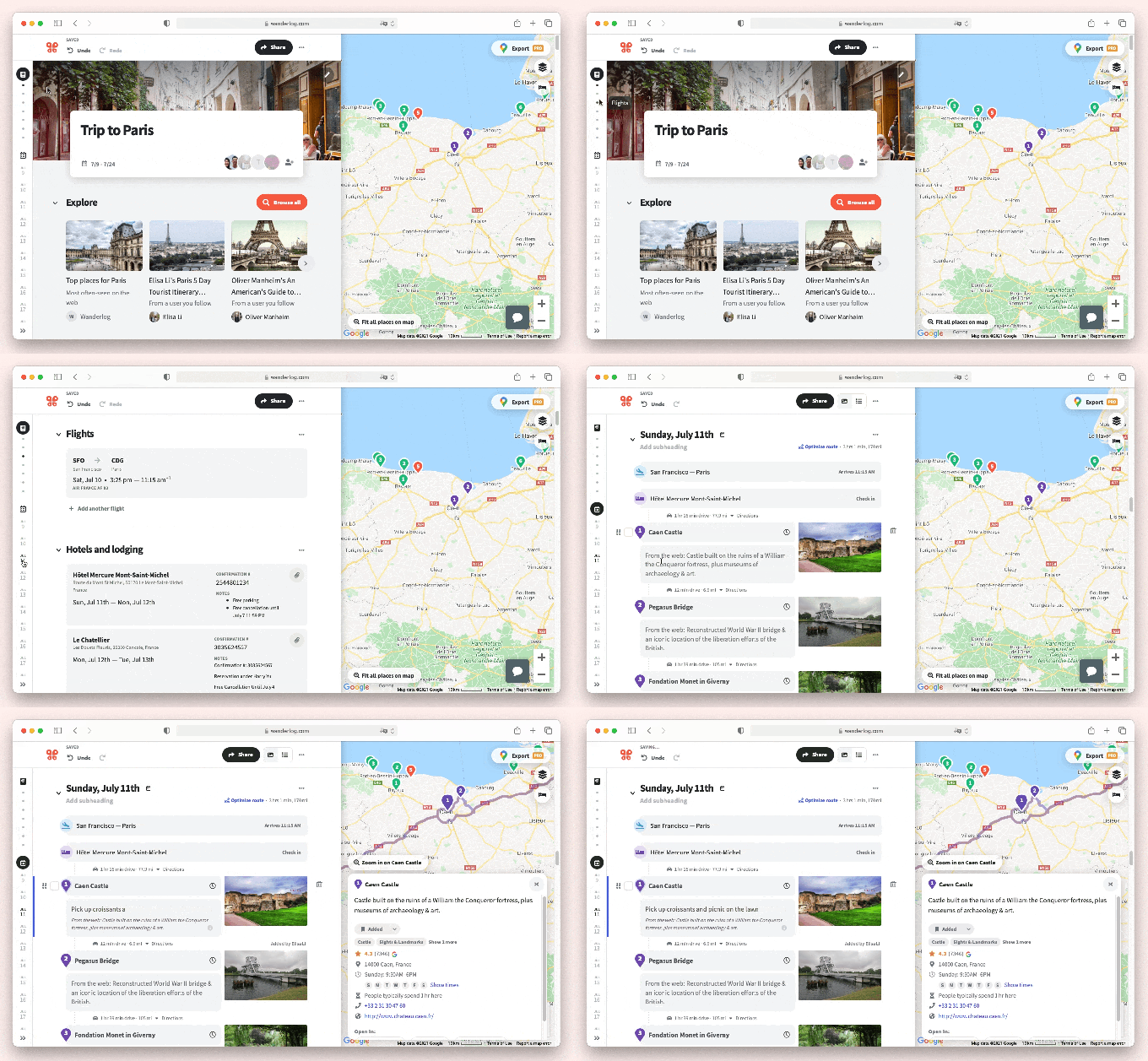
So they launched Bay Area-based Wanderlog in 2019 to enable users to gather and record their travel plans. The free itinerary maker and road trip planner takes the best parts of Google Docs and Maps and enables users to import the information and map out the trip. You can even add lists of places you’d like to visit, and Wanderlog will recommend the best way to get there. Reservations can also be added, Peter Yu said.

Wanderlog demo. Image Credits: Wanderlog

The company announced Wednesday it raised $1.5 million in seed funding from General Catalyst and Abstract Ventures.

“Wanderlog has built a product that has a unique understanding of how users plan trips and share their experiences — it’s no surprise that people love using it,” General Catalyst’s Niko Bonatsos said via email. “General Catalyst is proud to invest in Wanderlog as they change the way we travel together, and we’re excited by the growth Peter, Harry and the entire Wanderlog team have achieved.”

The company, which was part of Y Combinator’s 2019 cohort, plans to use the new funding to expand its web and mobile app features, including offering restaurant recommendations, based on Google and Yelp reviews, for those who don’t want to do a bunch of searching and reading reviews.

The founders declined to share growth metrics, but said the platform is already facilitating thousands of trips per week. Customers are already sharing with the founders that the app is good for communication among a large group, where everyone can see what the plans are and discuss them, Harry Yu said. In addition, they just launched a subscription service and are seeing good early metrics.

Wanderlog is among a number of travel startups attracting venture capital dollars as travel restrictions have begun to ease amid the pandemic. For example, just over the past month companies like Thatch raised $3 million for its platform aimed at travel creators, travel tech company Hopper brought in $175 million, Wheel the World grabbed $2 million for its disability-friendly vacation planner and Elude raised $2.1 million to bring spontaneous travel back to a hard-hit industry.


01 Sep 2021

Carbon Robotics secures $27M for its autonomous field weeders

Agricultural robotics firm Carbon Robotics (not to be confused with our former Battlefield contestant) announced this week that it has secured $27 million in funding. The round — which features Anthos Capital, Ignition Capital, Fuse Venture Partners and Voyager Capital — follows an $8.4 million Series A raised back in 2019. The company’s total funding is now at around $36 million.

“Weeding is one of the biggest challenges farmers face, especially with the rise of herbicide-resistant weeds and increasing interest in organic and regenerative methods,” founder and CEO Paul Mikesell said in a release. “This round of investment will enable us to scale our operations to meet the increasing demand for this technology. Additionally, this funding will allow our team to continue to innovate new products and identify revolutionary ways to apply technology to agriculture.”

The Seattle-based startup’s primary offering is an autonomous robot that uses lasers to zap weeds. The round follows the April announcement of Carbon’s latest-generation Autonomous Weeder, which it says is capable of eradicating around 100,000 weeds per hour. The pandemic has continued to accelerate interest in many agricultural robotics companies, as labor shortages continue to mount.

Carbon notes some international bans on various pesticides have left many farmers searching for an alternative solution. A system that works without the need for harmful chemicals that also reduces human labor in an industry often suffering from shortages in headcount has clear appeal.

The company says it has already sold out of its 2021 and 2022 stock, so one assumes scaling up production and headcount will be key investments from this round.

ockquote>

01 Sep 2021

“Knowledge-as-a-service” platform Lynk lands funding from UBS’ Investment Bank

Lynk, the “knowledge-as-a-service” platform with more than 840,000 experts, announced today it has added $5 million raised from UBS’ Investment Bank division to its previously announced Series B. This brings the round’s new total to $29 million.

The strategic investment marks the first time UBS has invested private equity in Lynk. The startup, which has now raised $35 million in funding, added UBS as a client in May, giving the banking giant’s research analysts and institutional investor clients access to Lynk’s database and tools.

Founded in 2015 by chief executive officer Peggy Choi, Lynk uses machine learning algorithms to match users with experts on its platform. Its goal is to connect its clients, including financial institutions and government organizations, with people they might not usually find online or at traditional consultancy. The company has offices in New York, Hong Kong, Singapore, Mumbai, Shanghai and Toronto.

As part of the funding, Lynk will broaden its collaboration with UBS Group. UBS Investment Bank’s Global Markets team was already offering Lynk to its institutional investor clients. Lynk has also brought some of UBS Global Research’s top-ranked analysts onto its platform as experts, including in areas like Environmental, Social and Governance (ESG), valuation and accounting, and industry trends in China.

01 Sep 2021

Cake launches the Makka, a $3,500 electric moped for city riding

Swedish electric motorcycle manufacturer Cake has released its newest vehicle, the Makka, a super lightweight e-moped that’s built for urban convenience. The bike starts at $3,500 and is now available for pre-order in the U.S. and Europe.

The Makka is a step outside the norm for Cake, which is best-known for off-road motorbikes like its flagship high-performance Kalk and its utility machine Ösa. This third platform will be Cake’s first motorbike specifically made for city riding like short-haul commercial transportation and commuting needs. 

“These new electric mopeds further define Cake’s ambition of making two-wheeled electric vehicles accessible to everyone, while constantly pushing the envelope of performance, durability and relevancy in line with the company’s mission to inspire towards a zero-emission lifestyle,” the company said in a statement.

The Makka weighs about 132 pounds and comes standard with a rear cargo rack. Mounts and other accessories like saddlebags, a child seat or even a passenger seat can be attached to the rack.

The e-moped comes in white or gray and is street legal. In the U.S., it’s classified as a motor-driven cycle, meaning it produces 5-brake horsepower or less, and requires a car or motorcycle license. In the EU, the Makka has an L1e-b classification, which means the motor does not exceed 45 kilometers per hour (28 miles per hour), and requires a moped or car license.

[gallery ids="2196758,2196759,2196760"]

Cake’s newest moped comes in two forms. The Makka Range, which is available only in Europe, has a lower maximum speed of 15 miles per hour and a range of up to 35 miles. The Makka Flex, which is available in Europe and the U.S., costs $3,800 and can hit top speeds of 28 miles per hour,. The range of this vehicle is slightly less at 30 miles.

Both bikes feature a foot board and aluminum step-through frame, which rides on top of two 14 by 3 inch motorcycle tires. The Makka range comes with a touchscreen display that shows information like battery, speedometer, odometer, ride mode (for extended range or balanced performance) and brake mode selection.

The Makka’s drivetrain has 3.6 kW of power and a battery capacity of 1.5 kWh. It takes about two hours to charge the battery up to 80%, which can be done by removing the battery or plugging the bike in. It takes three hours to charge the battery to 100%. The electronic motorcycle braking system with hand levers for both front and rear braking regenerates braking power into the battery to increase range.

Cake isn’t the only manufacturer to see the utility in repurposing off-road bikes for urban use. Ubco, a New Zealand electric utility bike brand, has recently raised $10 million to expand sales of its moped, which has a similar look and feel to the Makka, internationally to the U.S. Cake’s last funding round was a $14 million Series A in 2019.

01 Sep 2021

Web building platform Duda snaps up e-commerce cart tool Snipcart

Duda announced Wednesday that it acquired Canada-based Snipcart, a startup that enables businesses to add a shopping cart to their websites.

The acquisition is Palo Alto-based Duda’s first deal, and follows the website development platform’s $50 million Series D round in June that brings its total funding to $100 million to date. Duda co-founder and CEO Itai Sadan declined to comment on the acquisition amount.

Duda, which works with digital agencies and SaaS companies, has approximately 1 million published paying sites, and the acquisition was driven by the company seeing a boost in e-commerce websites as a result of the global pandemic, he told TechCrunch.

This was not just about a technology acquisition for Duda, but also a talented team, Sadan said. The entire Snipcart team of 12 is staying on, including CEO Francois Lanthier Nadeau; the companies will be fully integrated by 2022 and the first collaborative versions will come out.

When he met the Snipcart team, Sadan thought they were “super experienced and held the same values.”

“We share many of the same types of customers, many of which are API-first,” he added. “If our customers need more headless commerce, they can build their own front end using Snipcart. Their customers will benefit from us growing the team — we plan to double it in the next year and roll out more features at a faster pace.”

The global retail e-commerce market is estimated to grow by 50% to $6.3 trillion by 2024, according to Statista. Duda itself has experienced a year over year increase of 265% in e-commerce sites being built on its platform, which Sadan said was what made Snipcart an attractive acquisition to further accelerate and manage its growth that includes over 17,000 customers.

Together, the companies will offer new capabilities, like payment and membership tools inside of the Duda platform. Many of Duda’s customers come with inventory and don’t want to manage it on another e-commerce platform, so Snipcart will be that component for taking their inventory and making it shoppable on the web.

“Everyone is thinking about how to introduce transactions into their websites and web experiences, and that is what we were looking for in an e-commerce platform,” Sadan said.


01 Sep 2021

Apple secures first states to support digital driver’s licenses, but privacy questions linger

Apple’s plan to digitize your wallet is slowly taking shape. What started with boarding passes and venue tickets later became credit cards, subway tickets, and student IDs. Next on Apple’s list to digitize are driver’s licenses and state IDs, which it plans to support in its iOS 15 update expected out later this year.

But to get there it needs help from state governments, since it’s the states that issue driver’s licenses and other forms of state identification, and every state issues IDs differently. Apple said today it has so far secured two states, Arizona and Georgia, to bring digital driver’s license and state IDs.

Connecticut, Iowa, Kentucky, Maryland, Oklahoma, and Utah are expected to follow, but a timeline for rolling out wasn’t given.

Apple said in June that it would begin supporting digital licenses and IDs, and that the TSA would be the first agency to begin accepting a digital license from an iPhone at several airports, since only a state ID is required for traveling by air domestically within the United States. The TSA will allow you to present your digital wallet by tapping it on an identity reader. Apple says the feature is secure and doesn’t require handing over or unlocking your phone.

The digital license and ID data is stored on your iPhone but a driver’s license must be verified by the participating state. That has to happen at scale and speed to support millions of drivers and travelers while preventing fake IDs from making it through.

The goal of digitizing licenses and IDs is convenience, rather than fixing a problem. But the move hasn’t exactly drawn confidence from privacy experts, who bemoan Apple’s lack of transparency about how it built this technology and what it ultimately gets out of it.

Apple still has not said much about how the digital ID technology works, or what data the state obtains as part of the process to enroll a digital license. Apple is working on a new security verification feature that takes selfies to validate the user. It’s not to say these systems aren’t inherently problematic, but there are privacy questions that Apple will have to address down the line.

But the fragmented picture of digital licenses and IDs across the U.S. isn’t likely to get less murky overnight, even after Apple enters the picture. A recent public records request by MuckRock showed Apple was in contact with some states as early as 2019 about bringing digital licenses and IDs to iPhones, including California and Illinois, yet neither state has been announced by Apple today.

Wisconsin, South Carolina, and Rhode Island are likely further behind, after finding out about Apple’s digital license plan the very day it was announced at WWDC.

01 Sep 2021

TikTok adds educational resources for parents as part of its Family Pairing feature

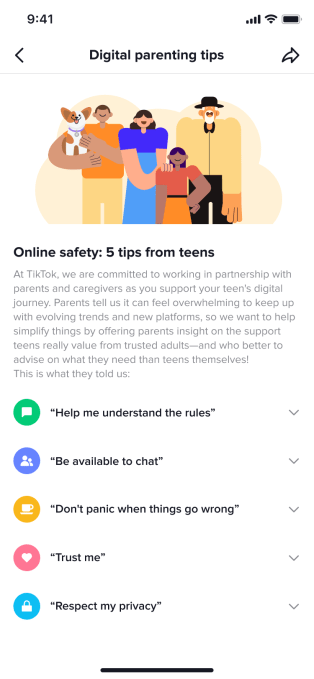
TikTok is expanding its in-app parental controls feature, Family Pairing, with educational resources designed to help parents better support their teenage users, the company announced morning. The pairing feature, which launched to global users last year, allows parents of teens aged 13 and older to connect their accounts with the child’s so the parent can set controls related to screen time use, who the teen can direct message, and more. But the company heard from teens that they also want their voices to be heard when it comes to parents’ involvement in their digital life.

To create the new educational content, TikTok partnered with the online safety nonprofit, Internet Matters. The organization developed a set of resources in collaboration with teens that aim to offer parents tips about navigating the TikTok landscape and teenage social media usage in general.

Teens said they want parents to understand the rules they’re setting when they use features like Family Pairing and they want them to be open to having discussions about the time teens spend online. And while teens don’t mind when parents set boundaries, they also want to feel they’ve earned some level of trust from the adults in their life.

The older teens get, the more autonomy they want to have on their own device and social networks, as well. They may even tell mom or dad that they don’t want them to follow them on a given platform.

This doesn’t necessarily mean the teen is up to no good, the new resources explain to parents. The teens just want to feel like they can hang out with their friends online without being so closely monitored. This has become an important part of the online experience today, in the pandemic era, where many younger people are spending more time at home instead of socializing with friends in real-life or participating in other in-person group activities.

Image Credits: TikTok

Teens said they also want to be able to come to parents when something goes wrong, without fearing that they’ll be harshly punished or that the parent will panic about the situation. The teens know they’ll be consequences if they break the rules, but they want parents to work through other tough situations with them and devise solutions together, not just react in anger.

All this sounds like straightforward, common sense advice, but parents on TikTok often have varying degrees of comfort with their teens’ digital life and use of social networks. Some basic guidelines that explain what teens want and feel makes sense to include. That said, the parents who are technically savvy enough to enable a parental control feature like Family Pairing may already be clued into best practices.

Image Credits: TikTok

In addition, this sort of teen-focused privacy and safety content is also designed to help TikTok better establish itself as a platform working to protect its younger users — an increasingly necessary stance in light of the potential regulation which big tech has been trying to ahead of, as of late. TikTok, for instance, announced in August it would roll out more privacy protections for younger teens aimed to make the app safer. Facebook, Google and YouTube also did the same.

TikTok says parents or guardians who have currently linked their account to a teen’s account via the Family Pairing feature will receive a notification that prompts them to find out more about the teens’ suggestions and how to approach those conversations about digital literacy and online safety. Parents who sign up and enable Family Pairing for the first time, will also be guided to the resources.

01 Sep 2021

LastPad is a reusable menstrual pad that does away with disposable towels

Direct to consumer online sales have helped a number of female-focused startups get products to market in recent years — often pitching better designed and generally more thoughtful feminine hygiene products than mainstream staples.

The lack of innovation in the mainstream market for feminine hygiene has certainly created a gap for startups to address. Examples in recent years include companies like Thinx (absorbent panties for menstruation) and Flex (a disc-shaped tampon alternative for wearing during sex). Or Daye — which makes CBD tampons for simultaneously treating period cramps.

Even so, there still hasn’t been a critical mass of product innovation in the category — to the point where alternatives can trickle down (no pun intended) and influence the trajectory of the mainstream market. The core products on shelves are, all too often, depressingly familiar — disposable pads and tampons — even if they may (sometimes) now be made of organic cotton or have some other mild design tweaks.

The most notable change to the available product mix is probably period pants — which have recently started to appear on mainstream shop shelves and seem to be selling well in markets like the UK, as the Guardian reported recently.

In the average drug store, the other non-disposable alternative you’ll most likely see is the menstrual cup. Which is not at all new — but has finally got traction beyond its original (very) niche community of users, which is another signal that consumers are more open to trying different solutions to deal with their monthly bleeding vs the same old throwaway wadding.

While free bleeding — an old movement which has also seen a bit of wider pick up in recent years — can also be seen, at least in part, as a protest against the poor quality of mainstream products for periods.

All of which makes this forthcoming product launch rather interesting: Meet LastPad, a reusable (rather than disposable) sanitary towel.
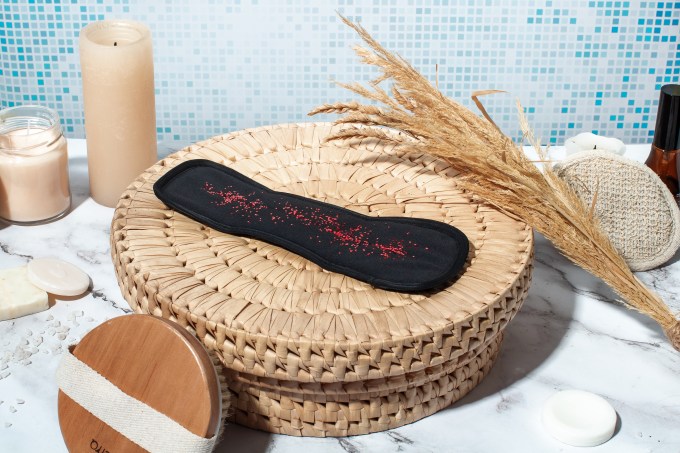
Image credits: LastPad

The first thing you’ll likely notice is that the pad is black in color — which certainly rings the changes vs the usual white stick-on fodder. The company behind LastPad says it worked with an unnamed “luxury lingerie manufacture” on look and feel — and, well, judging by the product shots alone it shows.

The bigger behind-the-scenes change is that it’s been designed for sustained, repeat usage. So each LastPad comes with its own fabric pouch (in a range of colors) for folding up and storing after use (and until you get a chance to pop it in the wash). The pad can also stay in its pouch for washing so there’s no need for additional handling until you’re getting it out of the washing machine to dry.

LastPad is the brainchild of Danish designer and entrepreneur Isabel Aagaard whose company, LastObject, has — for the past three years — been taking aim at the wastefulness of single use hygiene and beauty products, designing reusable alternatives for what are unlovely but practical items — like Q-Tips and tissues*.

In total, LastObject has sold around 1.5M products so far — across its existing range of beauty, hygiene and travel-focused items. But LastPad marks its first push into a really female-focused product category.

A reusable (washable) sanitary pad is clearly a big step up on the design challenge front vs making reusable (silicone) Q-Tips or (cotton) tissues or makeup rounds — because of the complexity involved with designing a wearable, intimate hygiene product that can handle the variable and often messy nature of periods, and keep doing so, use after use.

It needs to be both comfortable and reliable — as so many disposable pads actually aren’t.

So it’s not too surprising that, per Aagaard, the company has been working on designing and prototyping LastPad for two years. Now they’re finally ready to bring it to market — launching the LastPad on Kickstarter today — with a goal of shipping to early backers next February.

“We’re seeing amazing conversions [for the LastPad pre-campaign],” she says, discussing how much demand they’re expecting. “This is our sixth [crowdfunder] campaign — and it’s looking really good. So I think the demand is bigger than I actually imagined. Because this is also the first product that is only women. And we were very much in doubt that we should put it on Kickstarter because it’s a very male-dominated platform but it’s looking really positive.”

“We already started working on this two years ago so it’s really been a process. And also because we wanted it to be really innovative. Because right now you can see on the market there’ll be pads that are more like home sewn or do it yourself — and we wanted to really make an exclusive, very, very innovative version of that — that has a lot of the benefits that the single use version has.”
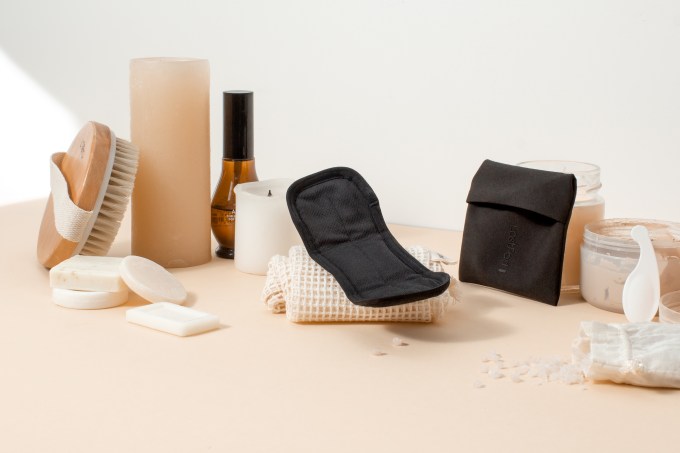
Image credits: LastPad

Each LastPad is made up of three layers: A woven top to help keep the pad feeling dry against the skin by quickly funnelling menstrual fluids down into — layer two — a central absorbent section (made of bamboo) — which sits above a TPU base to ensure no risk of leaks.

“The first layer is a woven material that is really, really fine — it has a little bit of silver in it so that the odours will disappear. It’s also woven with small funnels so that the blood disappears very quickly into the middle layer — because it’s so important that you’re not like wet. Because that’s awful. So it dries quite quickly when you’re wearing it,” explains Aagaard. “And then the middle layer is 100% bamboo — it’s absorbent like crazy; 40% more absorbent than, for example, cotton. And it also has anti-bacterial properties. And then the bottom layer is a TPU [Thermoplastic Polyurethane] — which is just a leak proof cover; it’s comfortable, it’s not like a plastic bag but it does make sure that you cannot bleed through it.”

While disposable sanitary towels rely on an adhesive layer to enable the consumer fix the pad to their panties, LastPad has to do that a bit differently too given it’ll be going through the wash. So the pads have wings — which wrap around the gusset of the panties and fix together underneath with a (soft) velcro fastening.

That’s not all: There’s a (sticky) silicone strip running around the back side of the pad which helps prevent it from moving around — and, per Aagaard, will happily survive repeat washing (in fact if it’s not used for a time, she says dust may temporarily reduce the stickiness — but says that immediately resolves just by wetting it again).

“Where I felt that we really made a huge difference is that on the back side of the pad — it has wings [with] a velcro [fastener] that’s completely soft and you don’t feel it; even if you’re biking — that was like the big test — and then it has a silicone strip in the back and at the bottom, like a sticky silicone… so it doesn’t move around in your pants.”

Practically speaking, it won’t be possible for a LastPad user to use just one LastPad to see them through their period — given the need to wash and dry them between uses. So a pack of several reusable pads will be necessary to entirely replace disposable pads and ensure there’s always a clean towel available to swap out the used pad.

But LastObject’s idea is, much like you own several pairs of socks and briefs, you’ll have a set of LastPads to see you through until after laundry day.

The product comes in three different sizes and thicknesses to cater to different flow levels, too. So the consumer may end up owning a range of reusable LastPads — from a panty liner option to a day flow and heavier duty night pads.
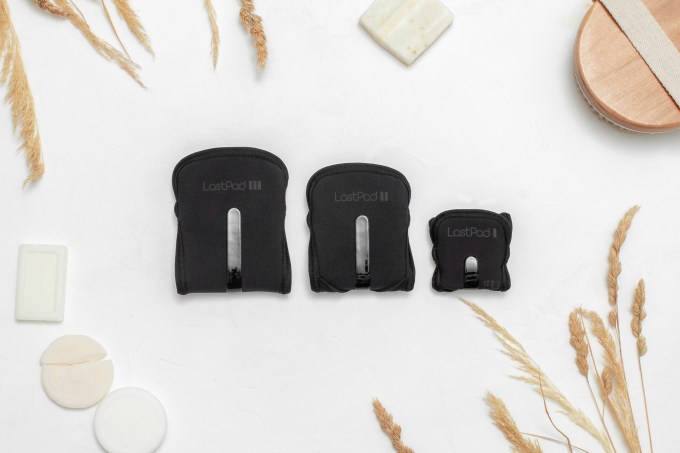
Image credits: LastPad

“It wasn’t as simple as I thought it was going to be — but that’s also because you have to understand the viscoses of blood, for example, compared to water,” Aagaard tells TechCrunch. “And also a flow — it’s not just blood. There’s a lot of other stuff that come out. So it’s taking all of these things into consideration.”

“We’ve been testing it for so long,” she goes on. “That was our main thing with this product. A lot of the other [LastObject products] were very much about printing it, looking at it. Using it of course — but it took us long before we had it in actually a silicone form. Because that is also expensive. Whereas [LastPad] we could sew quite quickly just here at the office and [test it]… So we’ve just been testing it constantly — how’s the feeling? Getting it out to a lot of different women that wear different panties that have different cycles. So it’s really been about testing.”

Pricing for LastPad will be around $60 for three pads — so around $20 per pad. Which is obviously a lot more expensive than the per unit cost of disposable towels. But LastObject says it will offer packs so if a consumer buys more pads it should shrink the per pad cost a little.

Aagaard says the product has been tested to withstand at least 240 washes — which she suggests will mean it’s able to last at least a couple of years, saving likely hundreds of disposable pads from being consumed in its stead.

Although it’s maybe less likely to save consumers money — depending on which disposable pads you’d buy and how many you’d used per cycle (basic disposable pads can cost as little as ~20c each) — as LastObject recommends owning nine of its LastPads which could cost around $80 or more). But the target user is evidently someone with enough disposable income to be able to pay a premium for an eco alternative.

Given the price-point, it does also look more expensive than the menstrual cup — an existing and highly practical alternative to disposable menstrual products — which can cost around $30 (for one reusable cup; and you can get away with owning just one) and, typically, a cup will also last for years as it’s made of silicone.

However the menstrual cup won’t suit every woman — and does require access to clean water to rinse and sanitize — so having more non-disposable alternatives for periods is great.

Aagaard says she’s a fan of the menstrual cup but suggests LastPad can still be useful for its users as a back-up to catch any leaks and/or provide an added layer of reassurance.

While, with period pants, she says the issue she finds unpleasant is the feeling of wetness when wearing them.

On LastPad’s environmental credentials, the washing process required to keep reusing the pad does obviously require some resources (water, soap etc) but — as is the case with other LastObject products — the company’s claim is that it’s still substantially greener to wash and reuse its non-disposable products vs consuming and binning single use items that have to be continually produced and shipped out (generating ongoing CO2). Such products can also pollute the environment after they’ve been thrown away — and plastic waste is of course a huge global problem (including from thrown away sanitary products).

LastObject will be publishing a third party LCA (lifecycle assessment) for LastPad to back up its eco claims for the reusable product — comparing it to using disposable sanitary pads. But Aagaard is confident it will be substantially better when compared against most disposable alternatives.

“You’ll be putting a wash on anyway; [LastPads] don’t take up that much space; you’re not going to wash them just them; it is with your other laundry; and if you wash them at a cold wash I think that the LCA report will look really good,” she suggests when we ask about the eco credentials.

“We’re doing this with all our products where we’re taking them through a third party who’s testing everything and putting them up against [alternatives] and having these considerations with CO2, with water, with chemicals — with the whole pack… So we’ll be doing that more specifically; right now… the alternative of a [disposable] pad — they are so differently produced. It’s crazy. So I could say the worst [for comparative purposes] or I could say the best — and ours is about 12x better than that.”

“When we got the LCA report for the LastTissue and LastSwab they were so much better than I have imagined,” she adds.

From this year the European Union has started banning the sale of some single use plastic items (such as Q-tips and disposable cutlery) as reducing plastic waste is one of the goals for regional lawmakers. And — globally — regulators are increasingly looking for quick wins to shrink the environmental impact of the fast moving consumer goods market’s long standing love affair with plastic.

But some disposable product categories are simply more essential than others — which makes it hard for lawmakers to just ban plenty of wasteful, polluting products. So developing innovative, reusable alternatives is one way to help lighten the usage load.

“The most sustainable pad that you can ever have is actually the one that you don’t produce but that would just be free bleeding — and I think that 99% of women are not ready for that,” adds Aagaard. “So can we make some solutions on some of the things that we actually have to take care of?”

While LastObject is sticking with Kickstarter to get LastPad to market, Aagaard confirms that once they see how much early adopter demand it’s getting they plan to produce enough to also sell via some of the other outlets where they currently sell their products — such as ecommerce sites like Amazon and of course their own web shop.

So far, the US has been the main market for LastObject’s reusable wares, per Aagaard — which she attributes to mostly using Kickstarter to build a community of users. But she adds that the company is starting to see more traction in Europe as it’s increased the number of regional distributors it works with.

So what’s next for the company after LastPad? The product direction they’ll take is an active discussion, she says.

“We can keep going the beauty way, we can go more personal care but we have to also [not] go in too many directions. I personally have a lot of fun things I want to do in the bathroom still, because I feel like it’s a space where not a lot of designers have actually really been investigating some of the products that we’re using. Both in beauty but also in personal care. Like in the floss and toothbrush but also in diapers and wipes and all of that. So I think that there’s some innovation that could be really fun. But… this one took two years and I’m so happy about the result and I couldn’t have spent two months less on it. Then we wouldn’t have had the solutions that we’ve gotten to. So that feels very important.”
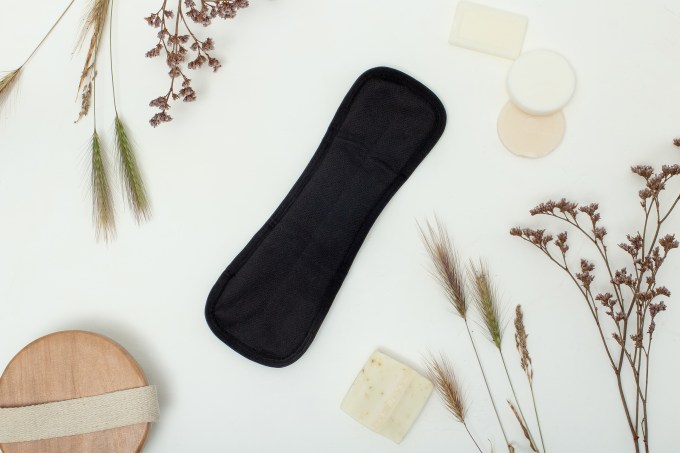
Image credits: LastPad

*Washable tissues are also of course not new. Indeed, Wikipedia credits the invention of pocket squares to wipe the nose to King Richard II of England who reigned in the 14th century. But the traditional (fabric) handkerchief — which was used, laundered and reused — became yet another casualty of the switch to single-use, disposable, cheap consumer goods that’s since been shown to have such high environmental costs. So perhaps reversing this damaging default will bring more ‘historical product innovation’ back into fashion as societies look to apply a modern ‘circular economy’ lens