Year: 2021

01 Sep 2021

What Amplitude’s choice to direct list says about its products, growth and value

Amplitude is going public in a direct listing that will see its shares trade on the Nasdaq under the ticker symbol “AMPL.” The company first announced its intention to direct list in July and filed its S-1 document in August.

The San Francisco-based startup lists major shareholders Battery, Benchmark, IVP, Sequoia and Jasmine Ventures in its S-1 filing. Each of those investors owns at least 5% of the company.


The Exchange explores startups, markets and money.

Read it every morning on Extra Crunch or get The Exchange newsletter every Saturday.


Following our digs through recent IPO filings from Freshworks and Toast, this morning we’re taking a spade to Amplitude’s document.

We’re curious why the company is direct listing instead of raising capital in its debut. We also want to understand how the company sees the future, because its product thesis is essentially a roadmap to its long-term growth; how investors value the company will in part hinge on whether Wall Street agrees with where Amplitude sees technology heading.

And we’ll do our usual work to understand the company’s revenue mix and quality, wrapping with some noodling on what it may be worth. Sound fun? Good. Let’s get into it.

Amplitude’s core product thesis

Most S-1 filings are full of corporate babble that I don’t drag you through. After all, we don’t really need to chat about how a particular vertical SaaS company thinks that its chosen niche is a great market. You already know what the debuting concern thinks. But with Amplitude, I want to do a bit more.

Amplitude sells what it calls “digital optimization” software. In practice, that means its software helps other companies design better software.

The company thinks that the way that digital products are built has changed. Gone are the days, in its view, of trusting intuition when it comes to digital design choices. Instead, Amplitude expects that companies with digital products will instead lean on data-driven decision-making. Or as it phrased it in its filing, digital product design is leaving the “Mad Men” phase for a more “Moneyball” era.

Data is at the core of how Amplitude sees companies designing future products. But in its view, many companies currently rely on a collection of disparate software tools to collect data on their digital footprint. Amplitude thinks it has a better method of collecting digital user data — and learning from it.

01 Sep 2021

What Amplitude’s choice to direct list says about its products, growth and value

Amplitude is going public in a direct listing that will see its shares trade on the Nasdaq under the ticker symbol “AMPL.” The company first announced its intention to direct list in July and filed its S-1 document in August.

The San Francisco-based startup lists major shareholders Battery, Benchmark, IVP, Sequoia and Jasmine Ventures in its S-1 filing. Each of those investors owns at least 5% of the company.


The Exchange explores startups, markets and money.

Read it every morning on Extra Crunch or get The Exchange newsletter every Saturday.


Following our digs through recent IPO filings from Freshworks and Toast, this morning we’re taking a spade to Amplitude’s document.

We’re curious why the company is direct listing instead of raising capital in its debut. We also want to understand how the company sees the future, because its product thesis is essentially a roadmap to its long-term growth; how investors value the company will in part hinge on whether Wall Street agrees with where Amplitude sees technology heading.

And we’ll do our usual work to understand the company’s revenue mix and quality, wrapping with some noodling on what it may be worth. Sound fun? Good. Let’s get into it.

Amplitude’s core product thesis

Most S-1 filings are full of corporate babble that I don’t drag you through. After all, we don’t really need to chat about how a particular vertical SaaS company thinks that its chosen niche is a great market. You already know what the debuting concern thinks. But with Amplitude, I want to do a bit more.

Amplitude sells what it calls “digital optimization” software. In practice, that means its software helps other companies design better software.

The company thinks that the way that digital products are built has changed. Gone are the days, in its view, of trusting intuition when it comes to digital design choices. Instead, Amplitude expects that companies with digital products will instead lean on data-driven decision-making. Or as it phrased it in its filing, digital product design is leaving the “Mad Men” phase for a more “Moneyball” era.

Data is at the core of how Amplitude sees companies designing future products. But in its view, many companies currently rely on a collection of disparate software tools to collect data on their digital footprint. Amplitude thinks it has a better method of collecting digital user data — and learning from it.

01 Sep 2021

Insurify, a ‘virtual insurance agent,’ raises $100M Series B

How many of us have not switched insurance carriers because we don’t want to deal with the hassle of comparison shopping?

A lot, I’d bet.

Today, Insurify, a startup that wants to help people make it easier to get better rates on home, auto and life insurance, announced that it has closed $100 million in an “oversubscribed” Series B funding round led by Motive Partners.

Existing backers Viola FinTech, MassMutual Ventures, Nationwide, Hearst Ventures and Moneta VC also put money in the round, as well as new investors Viola Growth and Fort Ross Ventures. With the new financing, Cambridge, Massachusetts-based Insurify has now raised a total of $128 million since its 2013 inception. The company declined to disclose the valuation at which the money was raised.

Since we last covered Insurify, the startup has seen some impressive growth. For example, it has seen its new and recurring revenue increase by “6x” since it closed its Series A funding in the 2019 fourth quarter. Over the last three years, Insurify has achieved a CAGR (compound annual growth rate) of 151%, according to co-founder and CEO Snejina Zacharia. It has also seen consistent “2.5x” year-over-year revenue growth, she said.

Insurify has built a machine learning-based virtual insurance agent that integrates with more than 100 carriers to digitize — and personalize — the insurance shopping experience. There are others in the insurtech space, but none that we know of currently tackling home, auto and life insurance. For example, Jerry, which has raised capital twice this year, is focused mostly on auto insurance, although it does have a home product. The Zebra, which became a unicorn this year, started out as a site for people looking for auto insurance via its real-time quote comparison tool. Over time, it has also evolved to offer homeowners insurance with the goal of eventually branching out into renters and life insurance. But it too is mostly focused on auto.

Zacharia said that since Insurify’s Series A funding, it has expanded its home insurance marketplace, deepened its carrier integrations to provide users an “instant” purchase experience and launched its first two embedded insurance products through partnerships with Toyota Insurance Management Solutions and Nationwide (the latter of which also participated in the Series B funding round).

Image Credits: Insurify

Last year, when ShyScanner had to lay off staff, Insurify scooped up much of its engineering team and established an office in Sofia, Bulgaria.

Zacharia, a former Gartner executive, was inspired to start the company after she was involved in a minor car accident while getting her MBA at MIT. The accident led to a spike in her insurance premium and Zacharia was frustrated by the “complex and cumbersome” experience of car insurance shopping. She teamed up with CTO Tod Kiryazov to build Insurify, which the pair describe as a virtual insurance agent that offers real-time quotes.

“We decided to build the most trusted virtual insurance agent in the industry that allows for customers to easily search, compare and buy fully digitally — directly from their mobile phone, or desktop, and really get a very smart, personalized experience based on their unique preferences,” Zacharia told TechCrunch. “We leverage artificial intelligence to be able to make recommendations on both coverage as well as carrier selection.”

Notably, Insurify is also a fully licensed agent that takes over the fulfillment and servicing of the policies. Since the company is mostly working as an insurance agent, it gets paid new and renewed commission. So while it’s not a SaaS business, its embedded insurance offerings have SaaS-like monetization.

“Our goal is to provide an experience for the end consumer that allows them to service and manage all of their policies in one place, digitally,” Zacharia said. “We think that the data recommendations that the platform provides can really remove most of the friction that currently exists in the shopping experience.”

Insurify plans to use its fresh capital to continue to expand its operations and accelerate its growth plans. It also, naturally, wants to add to its 125-person team.

“We want to build into our API integrations so customers can receive real-time direct quotes with better personalization and a more tailored experience,” Kiryazov said. “We also want to identify more embedded insurance opportunities and expand the product functionality.”

The company also down the line wants to expand into other verticals such as pet insurance, for example.

Insurify intends to use the money in part to build brand awareness, potentially through TV advertising.

“Almost half of our revenue comes from self-directed traffic,” Zacharia said. “So we want to explore more inorganic growth.”

James “Jim” O’Neill, founding partner at Motive Partners and partner Andy Rear point out that online purchasing now accounts for almost all of the growth in U.S. auto insurance. 

“The lesson from other markets which have been through this transition is that customers prefer choice, presented as a simple menu of products and prices from different insurers, and a straightforward online purchasing process,” they wrote via email. “The U.S. auto market is huge: even a slow transition to online means a massive opportunity for Insurify.”

In conducting their due diligence, the pair said they were impressed with how the startup is building a business model “that works for customers, insurers and white-label partners.”

Harel Beit-On, founder and general partner at Viola Growth, believes that the quantum leap in e-commerce due to COVID-19 will completely transform the buying experience in almost every sector, including insurance.

“It is time to bring the frictionless purchasing experience that customers expect to the insurance space as well,” she said. “Following our fintech fund’s recent investment in the company, we watched Insurify’s immense growth, excellent execution with customer acquisition and building a brand consumers trust.”


01 Sep 2021

Cox Automotive acquires battery health company Spiers as ‘EVs take center stage’

Cox Automotive is getting into the electric vehicle battery lifecycle business.

The company said Wednesday it acquired Oklahoma City-based Spiers New Technologies (SNT), a business that provides repair, remanufacturing, refurbishing and repurposing services for EV battery packs.

The two companies did not disclose the terms of the deal. Cox said the acquisition will help it establish its battery servicing offerings, particularly as “EVs take center stage.” It added that electric vehicles have completely difference service profiles than their internal combustion engine vehicle counterparts, and much of that comes down to the battery. EV battery support is particularly critical as the battery pack itself can comprise as much as 40% of the vehicle’s cost.

Even as federal investment in electric vehicles grow, and more automakers announce billions to build out their EV businesses, public skepticism remains. Eight out of 10 people not considering purchasing an EV are skeptical about the value of the battery and its useful life, according to research conducted by Cox.

This is not Cox’s only foray into EV battery management; the company also build a battery health diagnostic tool with SNT that uses Spiers’ software platform, Alfred. Cox said it would use the diagnostic tool to push greater confidence in electric vehicles, likening it to the way that Kelley Blue Book has provided greater transparency about ICE vehicles’ condition for consumers.

The acquisition will also give Cox a stake in the battery repurposing business. Spiers is one of a few companies that specializes giving EV batteries a “second life” after they are no longer fit in a vehicle. Around 80% to 90% of the batteries SNT receives are from OEMs, with the rest from auto dismantlers, the company told TechCrunch in an interview earlier this year. It’s a business segment that is likely only to grow as more EVs come off the roads, so the transaction is likely giving Cox a stake in end-of-life purposes as well.

01 Sep 2021

Flat.mx raises $20M from VCs, proptech unicorn founders to fix Mexico’s ‘broken’ real estate market

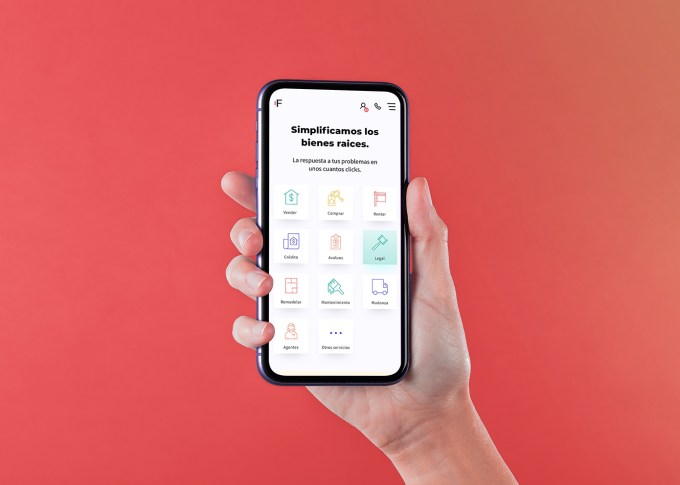
Flat.mx, which wants to build a real estate “super app” for Latin America, has closed on a $20 million Series A round of funding.

Anthemis and 500 Startups co-led the investment, which included participation from ALLVP and Expa. Previously, Flat.mx had raised a total $10 million in equity and $25 million in debt. Other backers include Opendoor CEO and CEO and co-founder Eric Wu, Flyhomes’ co-founder and CEO Tushar Garg and Divvy Homes’ co-founder Brian Ma.

Founded in July 2019, Mexico City-based Flat.mx started out with a model similar to that of Opendoor, buying properties, renovating them and then reselling them. That September, the proptech startup had raised one of Mexico’s largest pre-seed rounds to take the Opendoor real estate marketplace model across the Rio Grande.

“The real estate market in Mexico is broken,” said co-founder Bernardo Cordero. “One of the biggest problems is that it takes sellers anywhere from 6 months to 2 years to sell. So we launched the most radical solution we could find to this problem: an instant offer. This product allows homeowners to sell in days instead of months, a fast and convenient experience they can’t find anywhere else.”

Building an instant buyer (ibuyer) in Mexico — and Latin America in general — is a complex endeavor. Unlike in the U.S., Mexico doesn’t have a Multiple Listing Service (MLS). As such, pricing data is not readily available. On top of that, agents are not required to be certified so the whole process of buying and selling a home can be informal.

And since mortgage penetration in Mexico is also low, it can be difficult for buyers to have access to reasonable financing options.

“To build an iBuyer, we had to solve the transaction end-to-end,” said co-founder Victor Noguera. “We had to build the MLS, a third-party marketplace, a contractor marketplace, financial products, broker technology, and a home maintenance provider, along with other services. In other words, we have been building the real estate Superapp for Latam.”

Flat.mx says its certified remodeled properties have gone through a 200+ point inspection and “a full legal review.” 

Flat.mx is growing sales by 70% quarter-over-quarter, and has increased its inventory by 10x over the last year, according to its founders. It has also nearly tripled its headcount from 30 at the middle of last year to over 85 today. So far, Flat.mx has conducted thousands of home valuations and over 100 transactions.

The pandemic only helped boost interest.

“Our low touch digital solution was key for having a strong business during the pandemic. We were able to create quick liquidity for sellers at a time in Mexico where it was complicated to sell,” said Cordero. “Our model allows sellers to sell with one visit instead of having to receive over 40 potential buyers at a time where they wanted to sell but also wanted to avoid contact with many buyers.”

The company plans to use its new capital to continue to develop what it describes as a “one-stop shop where homeowners and buyers will be able to get all the services they need in one place.”

The founders believe that rather than just try to tackle one aspect of the homebuying process, it makes more sense in emerging markets to address them all.

“We believe that each one of our products makes the others stronger and creating this ecosystem of products will continue to give us an important advantage in the market,” said Noguera. The startup plans to also use the capital from the round to expand its presence in Mexico for iBuying, and to invest in data and financial products.

Image Credits: Flat.mx

Naturally, Flat.mx’s investors are bullish.

Archie Cochrane, principal investor at Anthemis Group, said his firm views Flat.mx as an integral part of its embedded finance thesis in the context of the Mexican property sector. 

“The iBuyer model itself is well understood and developed in many parts of the world, but it is also a complex model with many variables that requires a seasoned and astute team to execute the strategy,” Cochrane wrote via email. “When we met Victor and Bernardo, it was clear that their clarity of vision and deep understanding of the broader opportunity set would allow them to succeed over the long term.

Tim Chae, managing partner at 500 Startups, said he envisions that Flat.mx will become “the go-to route” for buyers, sellers, agents and lenders in Mexican real estate. 

“There are nuances and specific problems that are unique to Mexico that Flat.mx has done a great job identifying and solving,” he said. 

ALLVP Partner Fernando Lelo de Larrea said that essentially after years of “unkept promises,” software is finally transforming the real estate industry in Mexico. 

“Most models replicate successful models from the more mature U.S. proptech space,” he said. “Since we started investing in proptech, we’ve never seen such an innovative approach to seizing a trillion dollar opportunity.”

01 Sep 2021

Humane, a stealthy hardware and software startup co-founded by an ex-Apple designer and engineer, raises $100M

A stealthy startup co-founded by a former senior designer from Apple and one of its ex-senior software engineers has picked up a significant round funding to build out its business. Humane, which has ambitions to build a new class of consumer devices and technologies that stem from “a genuine collaboration of design and engineering” that will represent “the next shift between humans and computing”, has raised $100 million.

This is a Series B, and it’s coming from some very high profile backers. Tiger Global Management is leading the round, with SoftBank Group, BOND, Forerunner Ventures and Qualcomm Ventures also participating. Other investors in this Series B include Sam Altman, Lachy Groom, Kindred Ventures, Marc Benioff’s TIME Ventures, Valia Ventures, NEXT VENTŪRES, Plexo Capital and the legal firm Wilson Sonsini Goodrich & Rosati.

Humane has been around actually since 2017, but it closed/filed its Series A only last year: $30 million in September 2020 at a $150 million valuation, according to PitchBook. Previous to that, it had raised just under $12 million, with many of the investors in this current round backing Humane in those earlier fundraises, too.

Valuation with this Series B is not being disclosed, the company confirmed to me.

Given that Humane has not yet released any products, nor has said much at all about what it has up its sleeve; and given that hardware in general presents a lot of unique challenges and therefore is often seen as a risky bet (that old “hardware is hard” chestnut), you might be wondering how Humane, still in stealth, has attracted these backers.

Some of that attention possibly stems from the fact that the two co-founders, husband-and-wife team Imran Chaudhri and Bethany Bongiorno, are something of icons in their own right. Bongiorno, who is Humane’s CEO, had been the software engineering director at Apple. Chaudhri, who is Humane’s chairman and president, is Apple’s former director of design, where he worked for 20 years on some of its most seminal products — the iPhone, the iPad and the Mac. Both have dozens of patents credited to them from their time there, and they have picked up a few since then, too.

Those latest patents — plus the very extensive list of job openings listed on Humane’s otherwise quite sparse site — might be the closest clues we have for what the pair and their startup might be building next.

One patent is for a “Wearable multimedia device and cloud computing platform with laser projection system”; another is for a “System and apparatus for fertility and hormonal cycle awareness.”

Meanwhile, the company currently has nearly 50 job openings listed, including engineers with camera and computer vision experience, hardware engineers, designers, and security experts, among many others. (One sign of where all that funding will be going.) There is already an impressive team of about 60 people the company, which is another detail that attracted investors.

“The caliber of individuals working at Humane is incredibly impressive,” said Chase Coleman, Partner, Tiger Global, in a statement. “These are people who have built and shipped transformative products to billions of people around the world. What they are building is groundbreaking with the potential to become a standard for computing going forward.”

I’ve asked for more details on the company’s product roadmap and ethos behind the company, and who it’s customers might potentially be: other firms for whom it designs products, or end users directly? For now, Bongiorno and Chaudhri seem to hint that part of what has motivated them to start this business was to reimagine what role technology might play in the next wave of innovation. It’s a question that many ask, but not many try to actually invest in finding the answer. For that alone, it’s worth watching Humane (if Humane lets us, that is: it’s still very much in stealth) to see what it does next.

“Humane is a place where people can truly innovate through a genuine collaboration of design and engineering,” Humane co-founders Imran Chaudhri and Bethany Bongiorno said in a joint statement. “We are an experience company that creates products for the benefit of people, crafting technology that puts people first — a more personal technology that goes beyond what we know today. We’re all waiting for something new, something that goes beyond the information age that we have all been living with. At Humane, we’re building the devices and the platform for what we call the intelligence age. We are committed to building a different type of company, founded on our values of trust, truth and joy. With the support of our partners, we will continue to scale the team with individuals who not only share our passion for revolutionizing the way we interact with computing, but also for how we build.”

01 Sep 2021

Dear Sophie: How can I present a strong O-1A or EB-1A application?

Here’s another edition of “Dear Sophie,” the advice column that answers immigration-related questions about working at technology companies.

“Your questions are vital to the spread of knowledge that allows people all over the world to rise above borders and pursue their dreams,” says Sophie Alcorn, a Silicon Valley immigration attorney. “Whether you’re in people ops, a founder or seeking a job in Silicon Valley, I would love to answer your questions in my next column.”

Extra Crunch members receive access to weekly “Dear Sophie” columns; use promo code ALCORN to purchase a one- or two-year subscription for 50% off.


Dear Sophie,

A few years ago, I moved my startup’s headquarters to New York from Estonia on an E-2 investor visa.

I’ve taken on a few investors since then, but if I take on more, I run the risk of no longer qualifying for an E-2 because my equity is diluting. I’m considering either having my startup sponsor me for an O-1A visa or self-petitioning an EB-1A green card.

Any advice or insights on how to present a strong case for an O-1A or EB-1A? Thanks!

— Savvy Startup Founder

Dear Savvy,

Congrats on your success so far! Yes, we have many best practices to pass along for filing for an O-1A extraordinary ability visa or an EB-1A extraordinary ability green card.

Nadia Zaidi, an associate attorney at Alcorn Immigration Law and an expert in immigration law services for startups and creatives, and I recently did a podcast reviewing what to keep in mind when filing for an O-1A visa, EB-1A green card or EB-2 NIW (National Interest Waiver) green card. Take a listen! I would also recommend you consult an experienced immigration attorney who can help you determine the best approach based on your timing and goals.

Keep in mind that if you pursue an O-1A visa, you will need to show that your startup and you have an employer-employee relationship, or you will need an agent to file on your behalf. If demonstrating an employer-employee relationship, that usually involves showing that your startup’s board of directors oversees your work and can fire you.

A composite image of immigration law attorney Sophie Alcorn in front of a background with a TechCrunch logo.

Image Credits: Joanna Buniak / Sophie Alcorn (opens in a new window)

You might also want to consider filing for International Entrepreneur Parole (IEP). My firm has filed several IEP petitions on behalf of clients. Based on our experience, it takes less time to prepare an IEP petition than an O-1A petition because it’s not as document-intensive. Moreover, if you’re married and you’re granted IEP status, your spouse will be eligible to apply for a work permit. The spouse of an O-1A visa holder is not eligible for a work permit.

Getting back to answering your question, here are some best practices for filing for either an O-1A or an EB-1A:

Field of expertise

Spend some time homing in on your area of expertise. Because both the O-1A and EB-1A are for individuals of extraordinary ability or accomplishments who are at the top of their field, the more narrowly defined your field of expertise is, the easier it will be to demonstrate that you are at the top of it. For example, instead of listing tech entrepreneurship as your area of expertise, narrow it to something like entrepreneurship focused on developing machine learning software for the healthcare industry. Work with an experienced immigration attorney to craft your field for the petition.

Qualification criteria

Familiarize yourself with the qualification criteria for the O-1A and EB-1A, which are similar, and determine which of your skills and achievements best meet the criteria. As a startup founder, the critical and essential role you play at your startup should be easy to demonstrate. Remember, this is not the time to be humble.

Under your leadership, how much funding has your startup raised? Have you received any significant awards? What is your startup’s annual recurring revenue, and how many jobs have you created in the U.S.? Were you invited to judge a pitch competition, speak on a panel or mentor others based on your background, experience or skill set? Were you invited to become a member of an exclusive organization that has a rigorous selection process? Are you a thought leader in your field?

You will need to gather recommendation letters — more on those in a moment — and documentary evidence to demonstrate your achievements, such as a scan or photo of an award, email correspondences, copies or screenshots of articles written either about you or by you, or screenshots of a conference agenda or presentation on YouTube that generated a significant number of views. You should know that U.S. Citizenship and Immigration Services (USCIS) does not consider awards or prizes given out at the university level to be significant accomplishments. Some investments through competitions can qualify as awards, and some investments might not.

Recommendation letters

We typically recommend obtaining five to eight letters from experts in your field who can discuss your abilities and accomplishments and the significance of their impact on your field or beyond. Typically, the more details and examples provided in the recommendation letter — discussed in easy-to-understand terms — the more compelling the letter. You should keep in mind that the immigration official who is evaluating your case will likely not be an expert in your field.

It’s often valuable to submit letters from a variety of individuals, such as those who have worked directly with you and those who only know of you based on your work within your field, academic and professional experts, and individuals from both inside and outside the United States.

Make sure to ask prospective recommenders if they’re willing to submit a letter to USCIS on your behalf. While most recommenders are time-constrained individuals who prefer that you write a draft letter that they can edit, some recommenders prefer to write their own letters, which is good to know from the get-go. Make sure that those individuals who are doing so are willing to edit and make changes to any drafts, such as eliminating jargon or adding more detail.

The process of finalizing recommendation letters and getting them signed along with gathering documentary evidence for a case usually takes longer than most people anticipate. That said, get started!

All the best in the next phase of growing your startup!

Sophie


Have a question for Sophie? Ask it here. We reserve the right to edit your submission for clarity and/or space.

The information provided in “Dear Sophie” is general information and not legal advice. For more information on the limitations of “Dear Sophie,” please view our full disclaimer. You can contact Sophie directly at Alcorn Immigration Law.

Sophie’s podcast, Immigration Law for Tech Startups, is available on all major platforms. If you’d like to be a guest, she’s accepting applications!

01 Sep 2021

Google appeals ‘disproportionate’ French copyright talks fine

Google is appealing the more than half a billion dollar fine it got slapped with by France’s competition authority in July.

The penalty relates to the adtech giant’s approach toward paying news publishers for content reuse.

In a statement today, Sebastien Missoffe, a Google France VP and country manager, characterized the fine as “disproportionate” — claiming that the $592M penalty is not justified in light of Google’s “efforts” to cut a deal with news publishers and comply with updated copyright rules. Which reads like fairly weak sauce, as defence statements go.

“We are appealing the French Competition Authority’s decision which relates to our negotiations between April and August 2020. We disagree with a number of legal elements, and believe that the fine is disproportionate to our efforts to reach an agreement and comply with the new law,” wrote Missoffe, adding: “Irrespective of this, we recognize neighboring rights and we continue to work hard to resolve this case and put deals in place. This includes expanding offers to 1,200 publishers, clarifying aspects of our contracts, and we are sharing more data as requested by the French Competition Authority in their July Decision.”

Back in 2019, the European Union agreed on an update to digital copyright rules which extended cover to the ledes of news stories — snippets of which aggregators such as Google News had for years routinely scraped and displayed.

Individual EU Member States then needed to transpose the updated pan-EU reforms into their national laws — with France leading the pack to do so.

The country’s competition watchdog has also been leading the charge in enforcing updated rules against Google — ordering the tech giant to negotiate with publishers last year and following that up with a whopping fine when publishers complained to it about how Google was treating those talks.

Announcing the penalty this summer, the Autorité de la Concurrence accused the tech giant of attempting to unilaterally impose a global news licensing product it operates upon local publishers in a bid to avoid having to put a separate financial value on neighbouring rights remuneration — where there is a legal requirement (under EU and French law) upon it to negotiate with said publishers…

The watchdog’s full list of grievances against Google’s modus operandi was very long — check out our earlier report here — so it’s not clear how much of a placeholder action this appeal by Google is.

Per Reuters, the Autorité has said the appeal will not hold up the penalty nor impede the timeline of the order it already issued — which, in mid July, gave Google a two month timeframe to revise its offer and provide publishers with all the required info, with the threat of daily fines (of €900,000) if it failed to meet all its requirements by then. So there is now only a couple of weeks to go before that deadline.

Google may thus be hoping that by announcing an appeal now it will help ‘concentrate’ publishers’ minds — and encourage them to accept — whatever tweaked offer it comes up with, hence its statement noting an ‘expanded’ offer (now covering 1,200 publishers), and talk of “clarifying aspects of our contracts” and “sharing more data”, all of which were areas where Google got roundly spanked by the Autorité. 

01 Sep 2021

Facebook enters the fantasy gaming market

Facebook is getting into fantasy sports and other types of fantasy games. The company this morning announced the launch of Facebook Fantasy Games in the U.S. and Canada on the Facebook app for iOS and Android. Some games are described as “simpler” versions of the traditional fantasy sports games already on the market, while others allow users to make predictions associated with popular TV series, like “Survivor” or “The Bachelorette.”

The first game to launch is Pick & Play Sports, in partnership with Whistle Sports, where fans get points for correctly predicting the winner of a big game, the points scored by a top player, or other events that unfold during the match. Players can also earn bonus points for building a streak of correct predictions over several days. This game is arriving today.

Image Credits: Facebook

In the months ahead, it will be followed by other games in sports, TV, and pop culture, including Fantasy Survivor, where players choose a set of Castaways from the popular CBS TV show to join their fantasy team and Fantasy “The Bachelorette,” where fans will pick a group of men from the suitors vying for the Bachelorette’s heart and get points based on their actions and events that take place during the show. Other upcoming sports-focused games include MLB Home Run Picks, where players pick the team that they think will hit the most home runs, and LaLiga Winning Streak, where fans predict the team that will win that day.

In addition to top players being featured on leaderboards, games have a social component for those who want to play with friends.

Image Credits: Facebook

Players can create their own fantasy league with friends to compete with one another or against other fans, either publicly or privately. League members can compare scores with each other and will have a place where they can share picks, reactions and comments. This league area resembles a private group on Facebook, as it offers its own compose box for posting only to members and its own dedicated feed. However, the page is designed to support groups with specific buttons to “play” or view the “leaderboard,” among others.

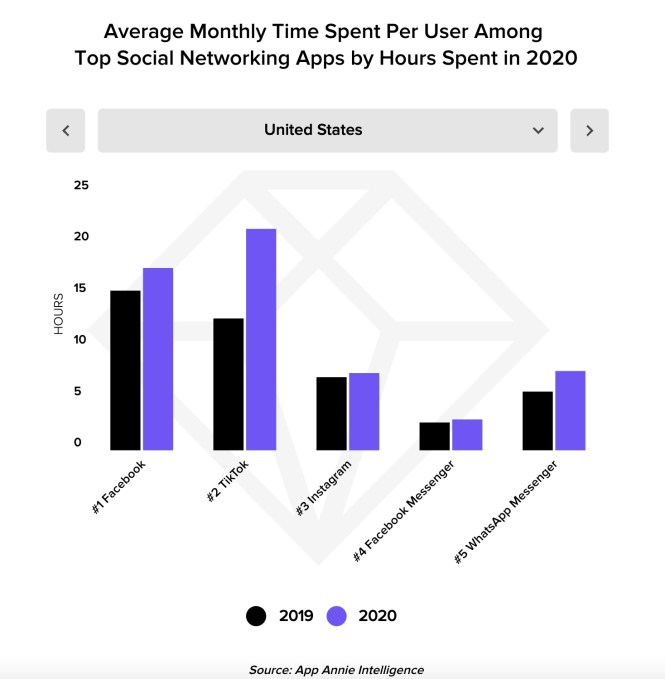
The addition of fantasy games could help Facebook increase the time users spent on its app at a time when the company is facing significant competition in social, namely from TikTok. According to App Annie, the average monthly time spent per user in TikTok grew faster than other top social apps in 2020, including by 70% in the U.S., surpassing Facebook.

Facebook had dabbled in the idea of becoming a second screen companion for live events in the past, but in a different way than fantasy sports and games. Instead, its R&D division tested Venue, which worked as a way for fans to comment on live events which were hosted in the app by well-known personalities.

The new league games will be available from the bookmark menu on the mobile app and in News Feed through notifications.

01 Sep 2021

Anima, a no-code tool that turns designs into code, raises $10 million Series A

Anima, the YC-backed platform that turns designs into code, has today announced the close of a $10 million Series A financing. The round was led by MizMaa Ventures with participation from INcapital and Hetz Ventures.

We’ve been following Anima, which was bootstrapped until last year, for a while now.

The startup indexes on several trending ingredients right now, including a bottoms-up distribution approach, and the popularity of low/no code.

Here’s how it works.

Most developers spend a tremendous amount of time turning design elements into code. Unfortunately, this piece of their job isn’t nearly as exciting as writing the code that actually makes the app, website, platform, etc. work.

With Anima, designers can upload their element or design from Figma and it will be automatically transformed into high-quality code, with support for React, Vue.js, HTML, CSS and Sass. Designers can also create prototypes of their work right within Anima, so that the system can process not only how something looks statically but how the flow should feel.

Cofounders Avishay and Michal Cohen and Or Arbel (a name you may recognize from the glory days of Yo!) have a clear vision on how to use the funding. Alongside tripling the size of the team, they plan to build integrations with platforms like Figma, Sketch, etc. and Github so that Anima itself can effectively get out of the way, allowing designers and developers to hand off these elements in the platforms where they already live.

In terms of distribution, Anima is making the most of their bottoms-up approach. Any designer can sign up for free to use Anima, and right now there are more than 600,000 users registered with the platform. That’s compared with roughly 300,000 users in October of 2020. Avishay Cohen clarified that active users are growing, too, with 80,000 monthly active users on the platform now compared with 10,000 a year ago.

The Cohens went on to explain that more than 5 percent of free users convert into paying users, and that 15 percent of paying accounts expand into teams organically within the first one to two months of becoming a paid user. The startup is already getting requests for enterprise accounts, which the cofounders describe as the next phase of the business on the back of this new funding.

Arbel told TechCrunch that the greatest challenge during this time has been hiring in a remote world, and that the answer to that, for Anima, has been looking at talent on a global scale. The Cohens added that with that hyperscaling, growing the team from four to 30 in the year and continuing to hire, it is challenging to maintain and foster company culture.