Year: 2021

26 Aug 2021

Virtual clinic Hey Jane raises $2.2M to solve for state anti-abortion legislation

As more states pass some type of abortion ban, Hey Jane, a virtual clinic startup offering telemedicine abortion care, announced Thursday that it raised $2.2 million in an oversubscribed round from a group of investors, including Koa Lab, Gaingels and Foursight Capital Partners.

The idea for the remote-first company stemmed from a conversation in 2019 that founder and CEO Kiki Freedman had with some friends regarding Missouri being one of six states that has one abortion clinic left. Freedman, who goes by a nickname to avoid violence against abortion providers, explained that, in fact, the clinic was slated for closure that summer, which would have meant Missouri was the first state to not have any abortion care. The clinic was ultimately able to stay open.

“Many of the digital health clinics I saw were focused on men’s wellness and didn’t talk about women’s health,” Freedman told TechCrunch. “I thought this virtual model could be used for safe and discreet abortion care.”

One of Hey Jane’s investors, who wished to remain publicly anonymous, “was excited to invest in Freedman and Hey Jane” because he agreed — women’s health was an underserved category. Unlike men’s healthcare, abortion care is segregated from women’s health care. This stemmed from Reagan’s mandates separating abortion care from hospitals.

One in four women will have an abortion by age 45, according to Planned Parenthood. However, just in 2021, over 90 abortion restrictions were enacted in the United States, and there are 1,320 restrictions in total, according to The Guttmacher Institute, a nonprofit research and policy organization committed to advancing sexual and reproductive health and rights. Currently, Arkansas and Oklahoma have near-total abortion bans except when a patient’s life is endangered. Meanwhile, Idaho, South Carolina and Texas ban abortion at either six weeks or with very limited exceptions.

In July 2020, a federal judge granted approval for women to obtain abortion medication without having to see a doctor, which opened the door for companies, like Hey Jane and others, to begin offering “no touch” services for people who were less than 10 weeks pregnant.

The $249 treatment includes screening by a medical doctor, FDA-approved medication prescribed and shipped overnight to the person’s house, follow-up virtual visits and the ability to chat with a doctor during the entire process. The Hey Jane team also checks in frequently with the patient via text message.

The company said removing financial barriers is “a huge priority for us.” Though the company does not accept insurance yet, it is offering financial assistance through a nonprofit abortion fund partner, Reprocare. This organization subsidizes up to $110 of the $249 treatment so that patients can pay as little as $139 for treatment.

The new funding will enable Hey Jane to expand into new states and add to its team of seven to build out the product and automated process and for legal research so the company can stay abreast of telemedicine laws and telemedicine abortion laws for each state.

There are several regulatory requirements Hey Jane must follow in each state, including ensuring that clinicians only provide care to patients in states in which they’re licensed. For this reason, the company has clinicians licensed in each state in which it operates who are ready to prescribe medication when appropriate. It also has on-demand experts for emotional relief.

Hey Jane just launched across California this week and is also in New York and Washington. This means that Hey Jane’s service areas now cover up to 34% of all abortions performed annually in the United States, Freedman said. Those states were chosen first because California and New York have the highest number of abortions performed annually, she added.

“Although people in those states may have easier access to clinics, they could still strongly benefit from treatment with Hey Jane since it’s as safe and effective and half the price of in-clinic care,” Freedman said. “It doesn’t require costs, or time for travel or child care, ensures privacy and discretion and provides additional layers of emotional support.”

At the time of press, the company was in the process of going live in Connecticut, and Freedman expects to be in 10 states by the end of the year.

Freedman plans to be able to offer treatment in all 50 states in coming years. However, there are regulatory barriers limiting access to telemedicine abortion in 19 states. Hey Jane is partnering with the Advancing New Standards in Reproductive Health research group out of the University of California at San Francisco to gather information to this end.

“We are working with leading researchers to expand the ample existing evidence that this modality of care is safe, effective and preferred by patients,” she added. “We hope this research can further advance discussions in more restrictive states, ultimately leading to much needed, patient-centric updates to outdated regulations. Existing data on the safety and effectiveness of telemedicine abortion paints a very clear picture that this is the future of abortion care.”

The company is currently seeing 250% quarterly growth in the number of patients using the service. As it has grown, it is focusing more on additional tools for coordinated care and new products.

Abortions are often kept secret due to worries of judgment and discrimination, and Hey Jane will provide a much-needed outlet for patients to discreetly share their experiences and emotion, Freedman said.

“We are focusing on convenience and privacy,” she added. “Two-thirds of women don’t want to talk about their experience, so we want to provide a space for them.”

Matters of women’s health are highly personal. If you or someone you know is struggling with a private women’s health concern, please contact your primary care physician or secular community health clinic for more information.


26 Aug 2021

Sugar raises $2.5M in seed funding to connect apartment residents

Sugar, a startup that aims to turn apartment buildings into “interactive communities,” has closed on $2.5 million in seed funding. 

A slew of investors participated in the financing, including MetaProp, Agya Ventures, Concrete Rose, Debut Capital, The Community Fund, Consonance Capital, Lightspeed Scout Fund and Jason Calacanis’ LAUNCH syndicate. Also participating were angel investors such as SquareFoot CEO Jonathan Wasserstrum, Ben Zises, Diran Otegbade, Oleksiy Ignatyev and Zillow board member Claire Cormier Thielke, also of Sequoia Scout Fund. 

Mali-born Fatima Dicko founded Los Angeles-based Sugar in March 2020. As people began quarantining due to the COVID-19 pandemic, Dicko saw an opportunity to help make it easier for people living in apartments and residential communities to “engage with one another in a safe and efficient way.” So she partnered with real estate investment groups and property management companies to build an app for residents of apartments and those communities who might be feeling isolated and disconnected from their neighbors.

“Most residential apps are clunky, outdated and a pain to use. Tasks as simple as paying rent, communicating with your property manager or unlocking doors are cumbersome and tedious,” Dicko said.

Image Credits: CEO and founder Fatima Dicko / Sugar

On top of that, feeling isolated and disconnected from neighbors can also contribute to resident turnover, negative online reviews and, ultimately, decreased revenue for building owners. 

So Dicko set about creating an app that not only gives residents a way to interact with other residents, but also do things like unlock doors without keys, submit maintenance requests and pay their rent. The platform has since grown beyond a pandemic-related use case. Today, the startup has clients globally, including residential communities of varying sizes, real estate investment groups, Airbnb rentals, hotels and other types of residential properties.

Sugar’s product has two components. One is a mobile app for residents and the other is a web-based dashboard for building owners and managers. The mobile app is sold directly to building owners and/or managers. Property managers also have access to the management dashboard to monitor resident engagement metrics and track online ratings and reviews of properties within their portfolios.

Prior to closing the seed round, Sugar achieved “consistent” month-over-month growth resulting in six-figure ARR (annual recurring revenue) just four months after launch, according to Dicko. As of now, Sugar has begun rollout to certain properties within the portfolios of early customers, such as Equilibrium Real Estate Investment Group, CGI Investment group and Apartment Management Consultants (AMC). Combined, the firms manage over 655 properties and 150,000 active doors in 22 states.

Sugar has also secured 90-day pilots with major property management companies such as Bozzuto, which manages over 78,000 residences and is seeking to boost resident engagement, Dicko said.

Its ability to integrate keyless entry hardware products into a community engagement dashboard is a point of differentiation for Sugar, according to Dicko. 

“Our consumer app is sticky, which benefits users and owners. Sugar believes that access control is the most important feature in order to increase usage of the platform,” she said. “Because the product can plug into hardware and enable users to unlock doors and share digital keys from inside the app, this will enable increased product adoption leading to more engagement inside the community portal.”

She said another big differentiator is the ability to integrate into a building’s current hardware or software stack. Prior to attending Stanford Business School, Dicko spent several years as a senior product engineer at Procter & Gamble. It was there that she says she got excited about the idea of creating new solutions to solve old problems.

Sugar currently has nine full-time employees compared to two employees last year. It plans to make key hires in both engineering and sales with its new capital.

Kunal Lunawat of Agya Ventures said his firm was impressed with Dicko’s “tenacity, drive and ability to attract and assess good talent.”

“Everyone talks about community in residential buildings but no one is building a product that specifically solves for it,” he said. “The focus on community rests central to Sugar’s ethos, and that is why several of the world’s leading property managers are flocking to their software.” 

26 Aug 2021

Celebrity chef Michael Chernow whips up new lifestyle brand, Kreatures of Habit, raises $2.2M

Michael Chernow is already known as a restaurateur, chef, television host and entrepreneur, but now he can also add lifestyle and wellness guru to that list.

Chernow raised $2.2 million to launch Kreatures of Habit, a lifestyle and wellness brand, with the goal of helping people establish healthy habits.

Seasoned entrepreneur and investor Gary Vaynerchuk led the funding round and was joined by a group of entrepreneurs, media executives and professional sports figures, including Sports 1 Marketing co-founder David Meltzer, Elevator Studio founder Dan Fleyshman, author Dean Graziosi, angel investor Josh Bezoni, author Joel Marion, “Entrepreneurs on Fire” host John Lee Dumas, LA Dodgers player Justin Turner, Philadelphia Eagles general manager Howie Roseman and Evan Yurman.

The idea for Kreatures of Habit stemmed from Chernow’s own life, celebrating 17 years of sobriety. He said he adopted positive habits that enabled him to replace alcohol with nutrition and fitness.

It is the latest venture for Chermow, who also founded The Meatball Shop and Seamore’s in New York. The brand originally started out as a café concept, but Chermow pivoted to the consumer goods space when the global pandemic hit.

“I had put a plan together in 2019, was away for a few weeks when the news of COVID hit,” he told TechCrunch. “I called up my investors and said ‘I am not going to invest in this and neither should you. I’m going to reassess and get back to you.’ However, through my journey of scaling restaurants, I didn’t love doing it because I went from being a culture entrepreneur to a project manager. It was a far cry from connecting to human beings around a brand.”

He started with breakfast — his favorite meal of the day — and began looking at his sustenance of choice: oatmeal, protein and vitamins. Now he is targeting the $3.3 billion pre-packed oats market with his first product, a direct-to-consumer instant oatmeal called The PrOATagonist.

Kreatures of Habit oatmeal. Image Credits: Kreatures of Habit

It is a plant-based, gluten and allergen-free meal that has his three favorite breakfast go-tos — oats, protein and vitamins, plus minerals and Omega-3 fatty acids. Chernow spent over a year testing the formula, which comes in three flavors, including chocolate, blueberry-banana and vanilla.

To help Chernow tap into the industry, he brought on former RX Bar chief marketing officer Victor Lee to lead the brand’s go-to-market strategy. The PrOATagonist comes in a box of seven for $34, and can be obtained via a monthly subscription of $33.

He is also working with one of his investors, Elevator Studios’ Fleyshman, who Chernow referred to as “the best marketer today.”

Fleyshman said he was eager to invest after getting off of a Zoom call with Vaynerchuk.

“The combination of Michael’s resume and passion to build a business with Gary’s passion for building a brand had its advantages as did the cool factor of making a brand with a physical product,” he added. “Gary got 30 people together on the call and almost half had committed within the week.”

In addition to funneling much of the new funding into marketing, it will also be used on product development.

“We have a pipeline of products that will live in the beginning of the day and snack space, several that are in development right now,” Chernow added. “We will always have a capsule collection drop three times a year, a seasonal line and full suite of SKUs over the next three to five years.”

26 Aug 2021

Workstream’s text-based recruitment tool gets a $48M bet from BOND and beyond

It isn’t only tech giants that are struggling to fill open roles with talented individuals, it’s your local Jamba Juice, too.

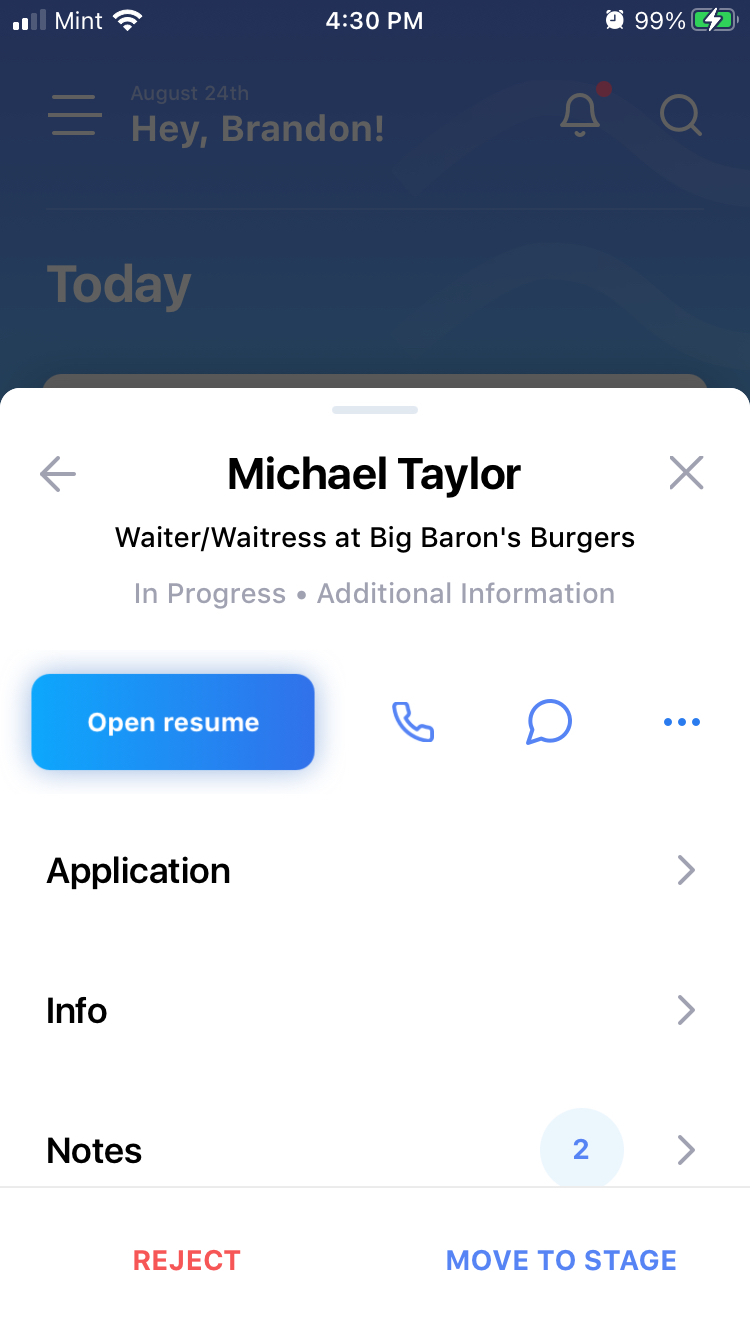
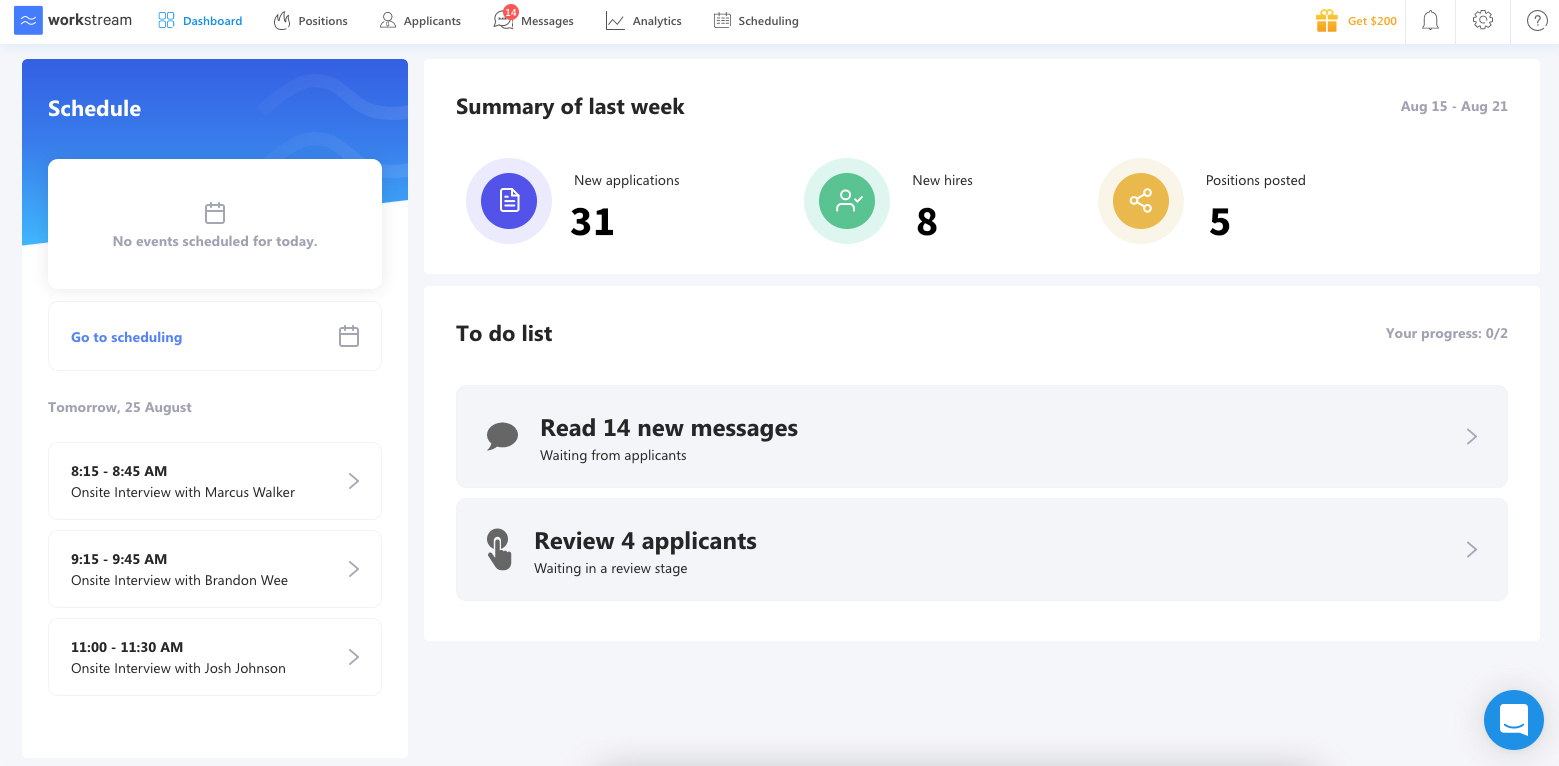
Since 2017, San Francisco-based Workstream has been working on an answer to recruitment for the hourly worker. The subset of employees are in high demand right now by employers managing high turnover, as the labor market evolves amid the pandemic. These tailwinds in mind, Workstream announced today that it has landed a new round of financing to scale its recruitment efforts.

Workstream has raised $48 million in a Series B round co-led by Mary Meeker’s BOND and Coatue, with notable investors including Zoom CEO Eric Yuan and DoorDash CEO Tony Xu. Jay Simons, a GP at BOND and former president of Atlassian, joined Workstream’s board of directors. The raise comes a little over one year since Workstream raised $10 million in a Series A led by Founders Fund.

Per CEO and co-founder Desmond Lim, Workstream landed 12 term sheets in 9 days. He chalked up the interest to investors appreciating his startup’s differentiation among the flurries of other recruiting tools out there.

Even in the crowded world of recruitment software, Workstream has been able to carve out some attention for itself by focusing on text-based recruiting. Front-line and deskless workers are often the most disconnected members of the global job force due to a lack of access to company-issued e-mail addresses. Thus, by Workstream communicating with candidates over text, it is able to give workers on the go some real-time updates. This differentiation of mobile-based recruitment has helped bring down the time to hire for employers too, by bringing candidates in by going to where they already are.

Lim, who grew up in Singapore with parents who both spent their days as hourly workers, sees this strategy working. In July, his company filled more than 18,000 jobs. Down the road, Workstream wants to serve hourly workers in healthcare and retail.

“There’s a football field [of software] for hiring software engineers,” Lim said. “But if you think about hiring for this space, there’s very few of us – and I think that has really helped us to go far from a team point of view, client sales, and even trying to raise funding.

While Workstream didn’t disclose specifics on revenue, it said that it has experienced “10X” ARR in the past year. One signal that it’s doing ok? The company has 1,500 customers across 10,000 different stores, which include the likes of McDonalds, Subway, and of course, Jamba Juice. Lim claims that Workstream has 20% market share in the top 20 brands.

Workstream views itself as an end-to-end recruitment tool for the hourly worker, but its distribution is still tied to the some 25,000 job boards that it partners with to post listings. Lim said that his company is more focused on the “recruitment and engagement” bit of hiring, “helping to push people through the funnel very fast” versus trying to get them in the funnel in the first place.

26 Aug 2021

Atheneum nabs $150M to build out its “research as a service” platform for virtual surveys and interviews

Data is the new oil, as the saying goes, and today a startup that is helping companies mine for it is announcing a major funding round to expand its business on the back of strong growth.

Atheneum, which provides a platform for companies to conduct and analyze research sourced through virtual interviews and surveys with stakeholders (that is, research solutions that include qualitative expert consultations, quantitative surveys, and big data products to parse the results), has closed $150 million in funding.

CEO Mathias Wengeler said it plans to use the funds to continue expanding geographically, hiring more people for its teams, and building out its technology. Today Atheneum is used by some 500 large enterprises — with customers spanning verticals like life sciences, strategic consulting firms, investment services, and telecoms, media and tech firms — covering a network of some 680,000 experts and so-called opinion leaders and hundreds of thousands of surveys and interviews.

The startup was founded in Berlin a little over a decade ago and now has a second base in New York, and notably, it is already profitable. This funding — led by Guidepost Growth Equity with participation from unnamed limited partners; existing investors Crosslantic Capital Management, Michael Brehm, Vogel Communications Group; and Atheneum’s founding management team — thus is coming opportunistically to jump on what has been strong growth for the startup, especially in the last year: in 2020 the company grew nearly 50%, Wengeler said, and this year growth has bumped up to 80%.

Atheneum’s growth is coming on the back of two trends in the world of enterprise.

The first is a bigger shift to digital transformation that we’ve been witnessing, spurred by the enforced remote working practices that came out of Covid-19. Specifically, companies need tools to let them continue carrying out work in more virtualised formats, and Atheneum has created a framework for those that have typically sourced data through live interactions to keep doing that using tools like Zoom, online surveys, and cloud-based analytics to “read” and better understand all the resulting data.

The second trend is that companies making strategic decisions based on data and feedback from the field are increasingly wanting to tap into innovations in data science and technology overall to increase their access to more data and insights.

This second trend has been growing for years and predates the pandemic, which is also one of the reasons investors have been knocking: these are trends that go beyond circumstantial ones that might evolve when/if we return back to our more traditional work patterns). Wengeler and his co-founders Ammad Ahmad and Marta Margolis (pictured above) all previously worked in management consulting, and Wengeler said that he was moved to start Atheneum to more directly address that opportunity.

“Primary and raw data were out there already,” he said, “but their importance is increasing. What a doctor sees [firsthand] has a major impact on how a pharmaceutical company plans its strategy for commercialization and more, and that is different in every country. I felt that the world was getting more internationalized and we needed more raw data, we needed more market research. We see Atheneum as a platform for knowledge, based on being a one-stop-shop for primary research.”

Roshen Menon, who led the investment for Guidepost, also notes that is also a reflection of how companies themselves have evolved to build more specialized products.

“I think the fundamental shift has been from a reliance on secondary to primary research,” he said. “Companies want to do their research directly. The second shift in the broader research tech space has the long and broad research approach. Things have gotten more specialized. ‘Let’s take a survey and understand this specific problem.’

“In life sciences, we have seen a shift from blockbuster drugs to specialized research and medicine and treatments for so-called orphan diseases. And there is much more of that across all industries. Services like Atheneum’s really allow customers to get access and insights from a sea of data.”

On top of this, presenting this platform as a SaaS-style cloud service, which combines both technology and human interaction to better tailor it to the needs of the clients as needed — and of course alongside the humans who are providing the raw data in the first place — fits in with how a lot of businesses want to engage with technology and IT services these days.

That will mean an increasing number of competitors to Atheneum that will be looking to leverage their own reach and tools to dive deeper into the ‘research as a service’ space. That could include more activity from survey and direct marketing companies like SurveyMonkey or MailChimp, or even companies like Saleforce or Microsoft’s LinkedIn that want to build an ever-bigger set of tools to help people do business more efficiently.

Or even companies like Google, which up to now have focused surveys more on consumer responses that are sold as advertising units (you may have come across these on sites like YouTube), but obviously have a big opportunity to build more cloud-based services to cater to their growing roster of business customers that might better leverage their in-house big data and AI capabilities. Wengeler said that up to now, LinkedIn has been one of the more active and interesting players in building new tools that might most directly compete with what it builds.

It is nonetheless a big opportunity: Atheneum cites figures from Deloitte that estimate the data and intelligence market is worth some $22 billion currently.

Atheneum, partly as a result of raising relatively little money previously and partly a result of focusing just on its growth and client business, has been somewhat under the radar until now. To that end, it is not disclosing its valuation today. But as an indicator of where it might be, Wengeler confirmed that the startup had raised less than $20 million previously, and that this latest investment gives new backers a minority stake with the founders remaining the biggest shareholders in the company.

Menon, who is taking a board seat with this round, added in an interview that Atheneum is making “well north” of $50 million in revenue annually.

26 Aug 2021

Point Pickup acquires e-commerce platform GrocerKey for $42M to allow for same-day delivery

Point Pickup Technologies, a last-mile delivery service, has acquired white label e-commerce platform GrocerKey for $42 million, according to the company. With the acquisition, Point Pickup now allows retailers to offer same-day delivery, from purchase to fulfillment to delivery, under their own brand name, rather than under third parties like Instacart.

Instacart made a killing delivering groceries and goods for retailers during the coronavirus pandemic, with a generated revenue of $1.5 billion in 2020 and $35 billion worth of sales. The company has an estimated 9.6 million active users and over 500,000 “shoppers” who pick up and deliver goods. 

New entrants to the same-day delivery space are cropping up, which aligns with the expected growth of the industry to $20.36 billion by 2027, according to Allied Market Research. But companies like Amazon and Instacart that perform this service and host a delivery marketplace get far more than sales revenues – they also get all the customer data. 

Tom Fiorita, founder and CEO of Point Pickup, says retailers should have a right to own that data themselves. The acquisition of GrocerKey, which brings on board the company’s front-end consumer-facing sales engine and predictive analytics, puts the data and brand recognition back in the retailer’s hands. 

“If you are a customer of Instacart, you pay them a subscription, they own your buying habits, your credit cards, your data,” Fiorita told TechCrunch. “Instacart was a big thing during COVID because no one had delivery. So now retailers woke up and said, ‘Oh my god, I can’t just have an Instacart-like marketplace be selling my goods. I don’t know who my customers are, I don’t have their credit cards or data.’ And you know data runs the world now.”

Another recent, if not smaller, entrant to the space is Canadian startup Tyltgo, which operates under a similar model to what Point Pickup is now offering via GrocerKey’s technology. In both cases, the buyer goes directly onto the merchant’s platform and places the order through them, so it feels like they’re interacting with the brand they purchased from. And on Tuesday, Walmart also announced a new white-label delivery service that would allow other merchants to tap into its own delivery platform to get orders to their customers.

Fiorita founded Point Pickup in 2015 as a reaction to Amazon’s increased omnipotence with the noble, if not naive, mission to “save local America.” Walmart and Kroger, two of the largest grocery retailers in the U.S., are Point Pickup’s top customers, alongside other nationwide retailers like Albertsons, Giant Eagle and more. But Fiorita believes the service his company is offering will be even more impactful when it starts to work its way down to the mid-sized and small- to medium-sized businesses. 

“We built this not only to survive against Amazon or Instacart, but because these small businesses need this for their survival,” Fiorita said. “These companies will no longer survive if they continue to allow other companies to sell their merchandise and to own their customer, including the data, the advertising, the CPG dollars and everything.”

Point Pickup offers deliveries of everything from grocery to general merchandise, pharmacy and oversized delivery. It has a network of 350,000 gig economy drivers across 25,000 ZIP codes in all 50 states. 

Since the company’s network of drivers, who often pick and pack the products for the customer as well as deliver the goods, comprises all gig workers with their own vehicles, Point Pickup doesn’t have a clear picture of the percentage of its fleet that’s electric or hybrid. Fiorita speculates it’s probably on par with nationwide rates, if not higher. A recent Pew Research report found that 7% of Americans say they own an EV or hybrid. 

Fiorita said that the type of car drivers own is taken into account during recruitment and that the company is looking for ways to incentivize drivers to buy less polluting vehicles. He also said Point Pickup is a vehicle-agnostic platform, meaning it’s piloting other delivery vessels like drones and autonomous robots.

To compete with the big dogs in the space like Amazon and Walmart, both of which are either testing or already have in place electric delivery vans, Point Pickup will have to also make efforts to beef up its strategy in the carbon emissions space.

26 Aug 2021

Watch Blue Origin launch a test of NASA’s future Moon landing tech live

Blue Origin’s last launch was its landmark first human flight, carrying Jeff Bezos, his brother, Wally Funk and Oliver Daemen to suborbital space. Today, it’s flying New Shepard again — without any people on board, this time, but with a key payload from NASA that will test technologies the agency is using to develop a human landing system for future missions to the Moon.

The NS-17 launch (which stands for New Shepard 17, since it’s the 17th time Blue Origin’s fully reusable suborbital rocket will be taking off) is set to take place at 9:35 AM EDT (6:35 AM PDT) from the company’s launch site in West Texas. The NASA payload on board will test technologies including a Doppler Lidar sensor array that should help future lunar landing craft get a very detailed picture of the details of the landing zone they’re targeting, and a Descent Landing Computer that handles processing of the sensor data. Blue Origin flew elements of this system once before, last October, and improvements have already been made based on that test that are integrated into this version.

The Blue Origin capsule also carries a number of other experiments, both form NASA and from academic institutions including the University of Florida. The launch plan includes a take-off, separation of the capsule, a controlled return powered landing for the booster, and a parachute-assisted landing for the capsule after a few minutes spent in suborbital space.

You can watch the livestream above, kicking off around 30 minutes prior to the target lift-off time.

26 Aug 2021

UK names John Edwards as its choice for next data protection chief as gov’t eyes watering down privacy standards

The UK government has named the person it wants to take over as its chief data protection watchdog, with sitting commissioner Elizabeth Denham overdue to vacate the post: The Department of Digital, Culture, Media and Sport (DCMS) today said its preferred replacement is New Zealand’s privacy commissioner, John Edwards.

Edwards, who has a legal background, has spent more than seven years heading up the Office of the Privacy Commissioner In New Zealand — in addition to other roles with public bodies in his home country.

He is perhaps best known to the wider world for his verbose Twitter presence and for taking a public dislike to Facebook: In the wake of the 2018 Cambridge Analytica data misuse scandal Edwards publicly announced that he was deleting his account with the social media — accusing Facebook of not complying with the country’s privacy laws.

An anti-‘Big Tech’ stance aligns with the UK government’s agenda to tame the tech giants as it works to bring in safety-focused legislation for digital platforms and reforms of competition rules that take account of platform power.

If confirmed in the role — the DCMS committee has to approve Edwards’ appointment; plus there’s a ceremonial nod needed from the Queen — he will be joining the regulatory body at a crucial moment as digital minister Oliver Dowden has signalled the beginnings of a planned divergence from the European Union’s data protection regime, post-Brexit, by Boris Johnson’s government.

Dial back the clock five years and prior digital minister, Matt Hancock, was defending the EU’s General Data Protection Regulation (GDPR) as a “decent piece of legislation” — and suggesting to parliament that there would be little room for the UK to diverge in data protection post-Brexit.

But Hancock is now out of government (aptly enough after a data leak showed him breaching social distancing rules by kissing his aide inside a government building), and the government mood music around data has changed key to something far more brash — with sitting digital minister Dowden framing unfettered (i.e. deregulated) data-mining as “a great opportunity” for the post-Brexit UK.

For months, now, ministers have been eyeing how to rework the UK’s current (legascy) EU-based data protection framework — to, essentially, reduce user rights in favor of soundbites heavy on claims of slashing ‘red tape’ and turbocharging data-driven ‘innovation’. Of course the government isn’t saying the quiet part out loud; its press releases talk about using “the power of data to drive growth and create jobs while keeping high data protection standards”. But those standards are being reframed as a fig leaf to enable a new era of data capture and sharing by default.

Dowden has said that the emergency data-sharing which was waived through during the pandemic — when the government used the pressing public health emergency to justify handing NHS data to a raft of tech giantsshould be the ‘new normal’ for a post-Brexit UK. So, tl;dr, get used to living in a regulatory crisis.

A special taskforce, which was commissioned by the prime minister to investigate how the UK could reshape its data policies outside the EU, also issued a report this summer — in which it recommended scrapping some elements of the UK’s GDPR altogether — branding the regime “prescriptive and inflexible”; and advocating for changes to “free up data for innovation and in the public interest”, as it put it, including pushing for revisions related to AI and “growth sectors”.

The government is now preparing to reveal how it intends to act on its appetite to ‘reform’ (read: reduce) domestic privacy standards — with proposals for overhauling the data protection regime incoming next month.

Speaking to the Telegraph for a paywalled article published yesterday, Dowden trailed one change that he said he wants to make which appears to target consent requirements — with the minister suggesting the government will remove the legal requirement to gain consent to, for example, track and profile website visitors — all the while framing it as a pro-consumer move; a way to do away with “endless” cookie banners.

Only cookies that pose a ‘high risk’ to privacy would still require consent notices, per the report — whatever that means.

“There’s an awful lot of needless bureaucracy and box ticking and actually we should be looking at how we can focus on protecting people’s privacy but in as light a touch way as possible,” the digital minister also told the Telegraph.

The draft of this Great British ‘light touch’ data protection framework will emerge next month, so all the detail is still to be set out. But the overarching point is that the government intends to redefine UK citizens’ privacy rights, using meaningless soundbites — with Dowden touting a plan for “common sense” privacy rules — to cover up the fact that it intends to reduce the UK’s currently world class privacy standards and replace them with worse protections for data.

If you live in the UK, how much privacy and data protection you get will depend upon how much ‘innovation’ ministers want to ‘turbocharge’ today — so, yes, be afraid.

It will then fall to Edwards — once/if approved in post as head of the ICO — to nod any deregulation through in his capacity as the post-Brexit information commissioner.

We can speculate that the government hopes to slip through the devilish detail of how it will torch citizens’ privacy rights behind flashy, distraction rhetoric about ‘taking action against Big Tech’. But time will tell.

Data protection experts are already warning of a regulatory stooge.

While the Telegraph suggests Edwards is seen by government as an ideal candidate to ensure the ICO takes a “more open and transparent and collaborative approach” in its future dealings with business.

In a particularly eyebrow raising detail, the newspaper goes on to report that government is exploring the idea of requiring the ICO to carry out “economic impact assessments” — to, in the words of Dowden, ensure that “it understands what the cost is on business” before introducing new guidance or codes of practice.

All too soon, UK citizens may find that — in the ‘sunny post-Brexit uplands’ — they are afforded exactly as much privacy as the market deems acceptable to give them. And that Brexit actually means watching your fundamental rights being traded away.

In a statement responding to Edwards’ nomination, Denham, the outgoing information commissioner, appeared to offer some lightly coded words of warning for government, writing [emphasis ours]: “Data driven innovation stands to bring enormous benefits to the UK economy and to our society, but the digital opportunity before us today will only be realised where people continue to trust their data will be used fairly and transparently, both here in the UK and when shared overseas.”

The lurking iceberg for government is of course that if wades in and rips up a carefully balanced, gold standard privacy regime on a soundbite-centric whim — replacing a pan-European standard with ‘anything goes’ rules of its/the market’s choosing — it’s setting the UK up for a post-Brexit future of domestic data misuse scandals.

You only have to look at the dire parade of data breaches over in the US to glimpse what’s coming down the pipe if data protection standards are allowed to slip. The government publicly bashing the private sector for adhering to lax standards it deregulated could soon be the new ‘get popcorn’ moment for UK policy watchers…

UK citizens will surely soon learn of unfair and unethical uses of their data under the ‘light touch’ data protection regime — i.e. when they read about it in the newspaper.

Such an approach will indeed be setting the country on a path where mistrust of digital services becomes the new normal. And that of course will be horrible for digital business over the longer run. But Dowden appears to lack even a surface understanding of Internet basics.

The UK is also of course setting itself on a direct collision course with the EU if it goes ahead and lowers data protection standards.

This is because its current data adequacy deal with the bloc — which allows for EU citizens’ data to continue flowing freely to the UK — was granted only on the basis that the UK was, at the time it was inked, still aligned with the GDPR. So Dowden’s rush to rip up protections for people’s data presents a clear risk to the “significant safeguards” needed to maintain EU adequacy. Meaning the deal could topple.

Back in June, when the Commission signed off on the UK’s adequacy deal, it clearly warned that “if anything changes on the UK side, we will intervene”.

Add to that, the adequacy deal is also the first with a baked in sunset clause — meaning it will automatically expire in four years. So even if the Commission avoids taking proactive action over slipping privacy standards in the UK there is a hard deadline — in 2025 — when the EU’s executive will be bound to look again in detail at exactly what Dowden & Co. have wrought. And it probably won’t be pretty.

The longer term UK ‘plan’ (if we can put it that way) appears to be to replace domestic economic reliance on EU data flows — by seeking out other jurisdictions that may be friendly to a privacy-light regime governing what can be done with people’s information.

Hence — also today — DCMS trumpeted an intention to secure what it billed as “new multi-billion pound global data partnerships” — saying it will prioritize striking ‘data adequacy’ “partnerships” with the US, Australia, the Republic of Korea, Singapore, and the Dubai International Finance Centre and Colombia.

Future partnerships with India, Brazil, Kenya and Indonesia will also be prioritized, it added — with the government department cheerfully glossing over the fact it’s UK citizens’ own privacy that is being deprioritized here.

“Estimates suggest there is as much as £11 billion worth of trade that goes unrealised around the world due to barriers associated with data transfers,” DCMS writes in an ebullient press release.

As it stands, the EU is of course the UK’s largest trading partner. And statistics from the House of Commons library on the UK’s trade with the EU — which you won’t find cited in the DCMS release — underline quite how tiny this potential Brexit ‘data bonanza’ is, given that UK exports to the EU stood at £294 billion in 2019 (43% of all UK exports).

So even the government’s ‘economic’ case to water down citizens’ privacy rights looks to be puffed up with the same kind of misleadingly vacuous nonsense as ministers’ reframing of a post-Brexit UK as ‘Global Britain’.

Everyone hates cookies banners, sure, but that’s a case for strengthening not weakening people’s privacy — for making non-tracking the default setting online and outlawing manipulative dark patterns so that Internet users don’t constantly have to affirm they want their information protected. Instead the UK may be poised to get rid of annoying cookie consent ‘friction’ by allowing a free for all on people’s data.


26 Aug 2021

PawaPay raises $9M seed backed by MSA, 88mph and Mr Eazi’s Zagadat Capital

When companies create digital payments-facing solutions for African countries outside Nigeria and South Africa, building around mobile money is key. It’s literally a no-brainer.

The concept is ubiquitous in East Africa, but since mobile money is a telecom operators-led initiative, there are technical complexities in creating a unified infrastructure for businesses that need it.

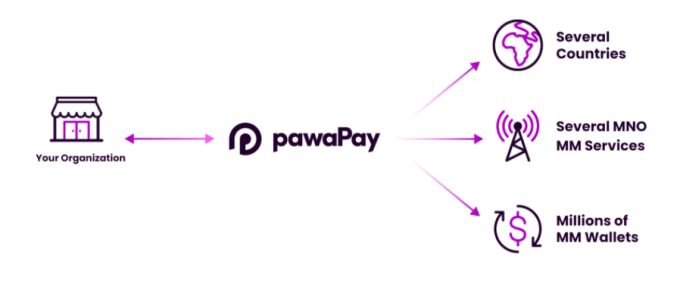
PawaPay, a U.K.-based and Africa-focused payments company, is one of the few tackling these complexities. The company takes the technical integrations from telecom operators like AirtelTigo, Econet, MTN, Safaricom, Orange and Vodafone and collapses them into one API for businesses.

Today, the company is announcing that it has closed $9 million in seed funding to scale its operational presence, recruit talent and expand into new markets.

U.K.-based fund 88mph co-led the round with China-based MSA Capital, with participation from Zagadat Capital, Kepple Ventures and Vunani Capital.

PawaPay spun off last year from online sports betting company betPawa. The company is led by CEO Nikolai Barnwell, betPawa’s former head of New Markets, Africa. He also sits on the board of 88mph.

According to him, starting pawaPay was to help people send and receive money internationally using mobile money.

An interesting instance would be freelancers in Ivory Coast trying to receive payment for services on a global payments platform. Typically, they would be required to use a bank account or card. But in places like Ivory Coast, where mobile money is prevalent, that becomes an issue.

How big is mobile money in Africa?

From the World Bank’s 2015 figures, there are over 350 million unbanked individuals in sub-Saharan Africa. Various inadequacies are responsible for this stat, but from banks’ perspectives, no incentive drives them to actually bank these people.

Most unbanked people rarely earn minimum wage in their respective countries, so it’s difficult for banks to make money off these individuals. Also, opening a bank account involves many KYC (Know Your Customer) processes for this population subset.

But one thing is for sure: The unbanked have mobile phones, and there are over 850 million mobile connections in Africa.

(Photo by Jekesai NJIKIZANA / AFP) (Photo by JEKESAI NJIKIZANA/AFP via Getty Images)

This huge market is why mobile money is prevalent across the continent. Telecom operators using proxies bypassed the banks and created their own systems to allow people to transfer money securely using mobile phones for low or no transfer fees.

So, individuals with phone numbers can have basic financial services such as savings and transfers. 

Presently, up to $500 billion flows through the mobile money market in sub-Saharan Africa yearly via the accounts of nearly 300 million active monthly users. This alternative financial infrastructure is one of the largest globally.

But it’s also one of the most underdeveloped because each telecom operator having its own unique mobile money product has created a fragmented infrastructure. For merchants, fragmentation means that it can be exorbitantly expensive to use at scale. 

Mobile money and card payment gateways

PawaPay wants to position itself as a market leader in high-volume mobile money payments while delivering reliability and transparency for merchants. Its API allows these merchants to access telecom operators’ mobile money systems to receive and send payments to millions of mobile money accounts

“We’re making a very heavy bet on the rise of mobile money and all the complexities that arise out of mobile money and all the infrastructure that needs to be built around payments with mobile money at its core,” Barnwell told TechCrunch.

“And the way we’re looking at the continent, we’re looking at adoption rates for mobile money growing at an insane speed. It has become quite obvious that this is a very significant financial infrastructure and there’s a lot of it that’s been missing if you want to work serious volume and businesses on mobile money.”

Image Credits: PawaPay

PawaPay handles local operations, compliance, regulatory cover and bank accounts, making it simple to receive payments in a new market.

The company claims to be handling over 10 million transactions on its rails per week, with beta operations in 10 African countries — Cameroon, DRC, Ghana, Kenya, Mozambique, Nigeria, Rwanda, Tanzania, Uganda, and Zambia.

Barnwell tells TechCrunch that although these transaction volumes look impressive, pawaPay would have done more if not for regulatory hurdles and licensing approaches in each market

“In each country, we’ve had to start from scratch with the right data to understand how they look at the space, at the licensing sheets, what kind of companies they want to license, what kind of requirements they’re looking for, how we can work quite closely with them to make sure that they’re comfortable with us,” he said.

However, the CEO states that while regulation slows down processes, it’s important for pawaPay because many unregulated companies operate without licenses and unstable technologies, some with the intention to commit fraud.

“We’ve gone in and decided we want to be completely regulated. We want to be completely covered in all the markets, with full licensing and be a very stable reliable premium product in these markets,” he added.

There are various payment gateways facilitating payments for businesses in Africa, like Flutterwave, DPO Group, Yoco, MFS Africa and Paystack. But in terms of pure mobile money play, MFS Africa is a clear competitor to pawaPay. Both platforms are largely focused on addressing the unique challenges accompanying mobile money, while the others drive innovation around bank and card payments.

PawaPay

Image Credits: PawaPay

MFS Africa connects over 300 million mobile money wallets enabling a range of banks, telcos, money transfer operators and other financial institutions interoperability at scale in Africa through a single integration point.

PawaPay isn’t far off. Barnwell says the company connects to nearly the same number of wallets and hopes to go live across 30 to 40 telco integrations soon.

While East Africa (buoyed by Kenya’s M-Pesa) has largely been the critical market for mobile money, West Africa is catching up nicely. Last year, West Africa recorded 198 million mobile money accounts compared to East Africa’s 293 million.

The West African region also grew the most in terms of transaction value by 46%, to over $178 billion, and countries like Ghana, Senegal and Ivory Coast are leading the charge, which presents a vast opportunity for these payment gateway providers, unlike the card payments market where two countries are prominent. 

“Although most of the attention is on card payments, the big giant in payments in Africa really is mobile money,” the CEO said.

PawaPay’s mobile money focus was a key reason Kresten Buch, founder of 88mph and chairman of pawaPay, led the round. He said that when 88mph actively invested in Africa a decade ago, “one of the key drivers was that mobile money was a superior payment method to credit and debit cards when used for online payment.” 

For Zagadat Capital, here’s what founder Oluwatosin Ajibade (also known as Mr Eazi, a singer-songwriter and entrepreneur popular in Africa’s music scene), who also sits on pawaPay’s board, had to say about the investment:

Being investors hugely focused on Africa and very familiar with the landscape, we believe that mobile money-focused fintech is not just one of the most exciting places to invest but also one of the most important bridges to ensuring financial inclusion of the billions of people across the continent. The kicker for us was that we believe in the clear mission, vision and strategy and we are confident that the pawaPay team is the best team to achieve it.

26 Aug 2021

‘No code’ process automation platform, Leapwork, fires up with $62M Series B

Copenhagen-based process automation platform Leapwork has snagged Denmark’s largest ever Series B funding round, announcing a $62 million raise co-led by KKR and Salesforce Ventures, with existing investors DN Capital and Headline also participating.

Also today it’s disclosing that its post-money valuation now stands at $312M. 

The ‘no code’ 2015-founded startup last raised back in 2019, when it snagged a $10M Series A. The business was bootstrapped through earlier years — with the founders putting in their own money, garnered from prior successful exits. Their follow on bet on ‘no code’ already looks to have paid off in spades: Since launching the platform in 2017, Leapwork has seen its customer base more than double year on year and it now has a roster of 300+ customers around the world paying it to speed up their routine business processes.

Software testing is a particular focus for the tools, which Leapwork pitches at enterprises’ quality assurance and test teams.

It claims that by using its ‘no code’ tech — a label for the trend which refers to software that’s designed to be accessible to non-technical staff, greatly increasing its utility and applicability — businesses can achieve a 10x faster time to market, 97% productivity gains, and a 90% reduction in application errors. So the wider pitch is that it can support enterprises to achieve faster digital transformations with only their existing mix of in-house skills. 

Customers include the likes of PayPal, Mercedes-Benz and BNP Paribas.

Leapwork’s own business, meanwhile, has grown to a team of 170 people — working across nine offices throughout Europe, North America and Asia.

The Series B funding will be used to accelerate its global expansion, with the startup telling us it plans to expand the size of its local teams in key markets and open a series of tech hubs to support further product development.

Expanding in North America is a big priority now, with Leapwork noting it recently opened a New York office — where it plans to “significantly” increase headcount.

“In terms of our global presence, we want to ensure we are as close to our customers as possible, by continuing to build up local teams and expertise across each of our key markets, especially Europe and North America,” CEO and co-founder Christian Brink Frederiksen tells TechCrunch. “For example, we will build up more expertise and plan to really scale up the size of the team based out of our New York office over the next 12 months.

“Equally we have opened new offices across Europe, so we want to ensure our teams have the scope to work closely with customers. We also plan to invest heavily in the product and the technology that underpins it. For example, we’ll be doubling the size of our tech hubs in Copenhagen and India over the next 12 months.”

Product development set to be accelerated with the chunky Series B will focus on enhancements and functionality aimed at “breaking down the language barrier between humans and computers”, as Brink Frederiksen puts it

“Europe and the US are our two main markets. Half of our customers are US companies,” he also tells us, adding: “We are extremely popular among enterprise customers, especially those with complex compliance set-ups — 40% of our customers come from enterprises banking, insurance and financial services.

“Having said that, because our solution is no-code, it is heavily used across industries, including healthcare and life sciences, logistics and transportation, retail, manufacturing and more.”

Asked about competitors — given that the no code space has become a seething hotbed of activity over a number of years — Leapwork’s initial response is coy, trying the line that its business is a ‘truly special snowflake’. (“We truly believe we are the only solution that allows non-technical everyday business users to automate repetitive computer processes, without needing to understand how to code. Our no-code, visual language is what really sets us apart,” is how Brink Frederiksen actually phrases that.)

But on being pressed Leapwork names a raft of what it calls “legacy players” — such as Tricentis, Smartbear, Ranorex, MicroFocus, Eggplant Software, Mabl and Selenium — as (also) having “great products”, while continuing to claim they “speak to a different audience than we do”.

Certainly Leapwork’s Series B raise speaks loudly of how much value investors are seeing here.

Commenting in a statement, Patrick Devine, director at KKR, said: “Test automation has historically been very challenging at scale, and it has become a growing pain point as the pace of software development continues to accelerate. Leapwork’s primary mission since its founding has been to solve this problem, and it has impressively done so with its powerful no-code automation platform.”

“The team at Leapwork has done a fantastic job building a best-in-class corporate culture which has allowed them to continuously innovate, execute and push the boundaries of their automation platform,” added Stephen Shanley, managing director at KKR, in another statement.

In a third supporting statement, Nowi Kallen, principal at Salesforce Ventures, added: “Leapwork has tapped into a significant market opportunity with its no-code test automation software. With Christian and Claus [Rosenkrantz Topholt] at the helm and increased acceleration to digital adoption, we look forward to seeing Leapwork grow in the coming years and a successful partnership.”

The proof of the no code ‘pudding’ is in adoption and usage — getting non-developers to take to and stick with a new way of interfacing with and manipulating information. And so far, for Leapwork, the signs are looking good.