Year: 2021

18 Aug 2021

One banks $40M to offer ‘all-in-one’ financial services to the middle class

One, a startup that aims to bring “all-in-one banking” to the middle class, announced today that it has raised $40 million in a Series B round of funding.

Progressive Investment Company (the insurance giant’s investment arm) led the round, which included participation from Obvious Ventures, Foundation Capital, Core Innovation Capital and others. The financing brings One’s total raised since its 2019 inception to $66 million.

Since making its product generally available in September of 2020, Northern California-based One has grown to have “hundreds of thousands” of customers, according to CEO and co-founder Brian Hamilton, who previously co-founded PushPoint (which was acquired by Capital One).

“Stretched middle-income households and working families deal with financial stress on a daily basis and are largely unsupported by current offerings,” Hamilton said. “This can be viewed as a kind of a noisy market, and so this funding has been a good validation of the vision and kind of the products, in that we have been able to stand out in that market.”

Over the past 11 months, the startup has worked to enhance its core product offering, launching overdraft protection, an auto-save feature that rewards automatic savings contributions at 3.00% APY, cash flow-based credit lines and a credit builder product to help its customers build financial health. One claims that it has helped its users automatically save over $2 million collectively since its launch, a number that grows daily, according to Hamilton.

The company is also trying to change up how people share financial goals and responsibilities with individually configurable “Pockets” that it says can be “easily” shared with others and accessed via virtual and physical cards. 

“What we’re doing really is to re-integrate and unify what is otherwise a pretty splintered financial life for middle income households and families that are attempting to manage finances on a daily, weekly and monthly basis,” Hamilton told TechCrunch.

Over the past few years, he said, there have been a number of different fintech and bank products that people use to run their life “and they’re all starting to converge.”

The company was founded on the premise that traditional banking exists “on a system of fractured accounts and billions of dollars in hidden fees that leave customers living paycheck to paycheck despite steady incomes.” One says it is built on a “proprietary” technology core that aims to deliver saving, spending, sharing, budgeting and borrowing in a single account.

“Everybody’s trying to do a piece of everything, but they all started doing one thing,” Hamilton said. “But it’s really hard to back into the others or to bolt them on afterwards if you didn’t begin with the end in mind, kind of on an integrated basis. So that is essentially what we set out to build with One, with the idea to reunify credit and debit and savings and reintegrate the sharing of money with other people so it didn’t have to be done on a one-off transactional basis through Venmo or PayPal or Zelle.”

One’s banking services are provided by Coastal Community Bank, Member FDIC. The startup emphasizes that it’s a financial technology company, and “not a bank.”

It plans to use the new funding toward “fueling” customer growth, hiring and expanding its product offerings.

Charles Moldow, Foundation Capital general partner and One investor, said that challenger banks such as Chime and Aspiration focus on a debit card offering to subprime customers who are looking for lower bank fees and access to paychecks sooner.  

“These customers are generally treated poorly by banks and charged a lot of fees because they don’t generate much revenue for banks outside of interchange fees on debit purchases with little disposable income,” he said.

The real money made by banks, according to Moldow, is against mid-prime customers for both debit and lending.  

“These customers are harder to acquire because banks hate to lose them due to their large lifetime values,” he said. “One differs from the challenger banks in the market in that they have created a superior mobile banking experience for the 80% of the market that is not super prime or subprime. They have both a debit and credit offering and a vastly better user experience.”

The fintech is able to offer a user experience that is “materially” different from standard large bank offerings in that their back end infrastructure is a “modern” core and One is able to handle core checking, lending, money transfer and savings all on the same back end.

This means One can fully integrate those experiences (the aforementioned integrated offering “Pockets”).

“This differs from traditional banks which have each of these systems on top of different tech stacks which prevents them from providing integrated offerings,” he said. 

Also, by not having brick and mortar branches, the company is able to offer lower fees, more points and rewards and higher savings rates, Moldow added.


18 Aug 2021

Crypto world shows signs of being rather bullish

Welcome back to The Exchange. Today we’re doing something fun with crypto.

Sure, we could write more about how insurtech valuations are under fresh pressure after Hippo’s Q2 earnings report — we spoke to the company’s president yesterday; more to come — or the latest stock market movements in China. There are big rounds worth considering as well. Roblox reported earnings this week. And Monday.com’s earnings pushed its shares sharply higher yesterday. There’s lots of interesting news to chew on.

But instead of all that, we’re digging back into crypto. Why? Because there are some rather bullish trends that indicate the world of blockchain is maturing and creating a raft of winning players


The Exchange explores startups, markets and money.

Read it every morning on Extra Crunch or get The Exchange newsletter every Saturday.


Writing about crypto is always a little risky. Cybersecurity folks will complain that we’re abusing the phrase crypto, despite the fact that language always evolves. And Bitcoin maximalists aren’t going to find much below that underscores their core thesis that every coin not mentioned in Satoshi’s whitepaper is, in fact, a scam. Save your tweets, please.

But if you care more generally about the larger global cryptoeconomy, it’s time to imbibe some good news. Our goal is to highlight a few recent trends and then talk a little about what we might see coming from startups.

Sound good? Let’s get busy.

Encouraging news from your local distributed ledger

The Exchange finds rising NFT volumes bullish, and we have a new thesis for what the value proposition is for such digital assets. The rising tide of mega-rounds for crypto exchanges belies not only the worldwide demand for access to crypto, but also sets the stage for a global cohort of stable, well-funded and trustworthy on-ramps to the crypto world — and, of course, more exchanges imply lower fees over time.

Non-exchange crypto fees are also bullish. And then there’s a wrinkle to the stablecoin game and what sort of economics things like USDC may command in time. We have notes from an interview with Circle to help us there.

NFTs and the concept of joy

I don’t think anyone actually understands what the metaverse is. But the possibility that, in time, unique assets on particular chains — NFTs — will have a part to play in larger digital worlds seems like a reasonable conjecture. One can easily imagine life, as we all become Increasingly Online, leaning on human desires for scarcity as a method of showing status. NFTs will help meet that demand in certain digital ecosystems. Games, probably, though what we consider a game will also evolve as VR becomes more mainstream.

But that future is not here yet. So, what value are NFTs providing today that makes them potentially worthwhile? Joy.

18 Aug 2021

Holoride’s in-car VR gaming system leaves the track for the real world

Holoride’s VR gaming system for passengers caught our attention a few years back at CES when we were given a ride in an Audi on a track and had the game react to the movement of the vehicle while we played. Well, the company is back and this time they demoed two games and threw off the shackles of the track for the real world.

We took a ride in an Audi with the Holoride system and again enjoyed video games while someone else drove. The company is currently courting developers to build games via their recently announced SDK and are partnering with automakers to make sure that the data they need from the car to make their games a reality is available. Watch the video above for the full story.

Editor’s note: This post originally appeared on Engadget.

18 Aug 2021

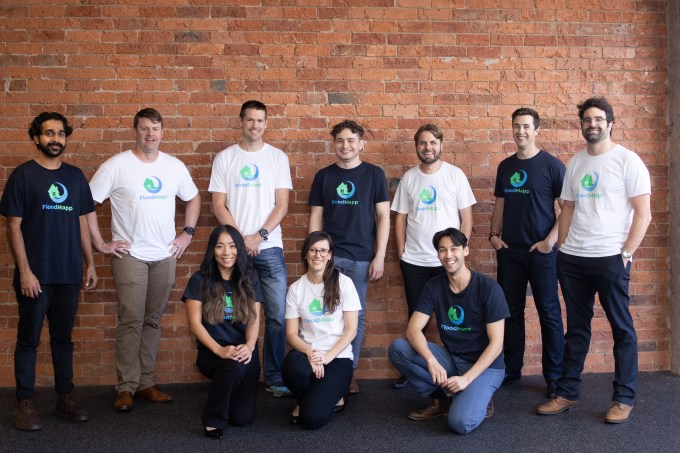
FloodMapp wants to predict where water goes before it washes away your home

Floods are devastating. They rip asunder communities, wipe out neighborhoods, force the evacuation of thousands of people every year, and recovering them can take years — assuming recovery is possible at all. The U.S. government estimates that floods in recent decades (exclusive of hurricanes and tropical storms) have caused an estimated $160 billion in damage and killed hundreds of people.

One would think that we should have a real-time model for where water is and where it is going around the world, what with all of those sensors on the ground and satellites in orbit. But we mostly don’t, instead relying on antiquated models that fail to take into account the possibilities of big data and big compute.

FloodMapp, a Brisbane, Australia-based startup, is aiming to wash out the old approaches to hydrology and predictive analytics and put in place a much more modern approach to help emergency managers and citizens know when the floods are coming — and what to do.

CEO and co-founder Juliette Murphy has spent a lifetime in the water resources engineering field, and saw first hand the heavy destruction that water can cause. In 2011, she watched as her friend’s home was submerged in the midst of terrible flooding. The “water went right over the peak of her house,” she said. Two years later in Calgary, she saw the same situation again: floods and fear as friends tried to determine whether and how to evacuate.

Those memories and her own professional career led her to think more about how to build better tools for disaster managers. She ultimately synced up with CTO and co-founder Ryan Prosser to build FloodMapp in 2018, raising $1.3 million AUD along with a matching grant.

The company’s premise is simple: we have the tools to build real-time flooding models today, but we just have chosen not to take advantage of them. Water follows gravity, which means that if you know the topology of a place, you can predict where the water will flow to. The challenge has been that calculating second-order differential equations at high resolution remains computationally expensive.

Murphy and Prosser decided to eschew the traditional physics-based approach that has been popular in hydrology for decades for a completely data-based approach that takes advantage of widely available techniques in machine learning to make those calculations much more palatable. “We do top down what used to be bottoms up,” Murphy said. “We have really sort of broken the speed barrier.” That work led to the creation of DASH, the startup’s real-time flood model.

FloodMapp’s modeling of the river flooding in Brisbane. Image Credits: FloodMapp

Unlike typical tech startups though, FloodMapp isn’t looking to be its own independent platform. Instead, it interoperates with existing geographic information systems (GIS) like ESRI’s ArcGIS by offering a data layer that can be combined with other data streams to provide situational awareness to emergency response and recovery personnel. Customers pay a subscription fee for access to FloodMapp’s data layer, and so far, the company is working with the Queensland Fire and Emergency Services in Australia as well as the cities of Norfolk and Virginia Beach in Virginia.

But it’s not just emergency services the startup is ultimately hoping to attract. Any company with physical assets, from telcos and power companies to banks and retail chains with physical stores could potentially be a customer of the product. In fact, FloodMapp is betting that the SEC will mandate further climate change financial disclosures, which could lead to a … flood of new business (I get one flood pun, okay, I get one).

FloodMapp’s team has expanded from its original two founders to a whole crop of engineering and sales personnel. Image Credits: FloodMapp

Murphy notes that “we are still in our early stages” and that the company is likely to raise further financing early next year as it gets through this year’s flood season and onboards several new customers. She hopes that ultimately, FloodMapp will “not only help people, but help our country change and adapt in the face of a changing climate.”

18 Aug 2021

Spotify expands its radio DJ-like format, Music + Talk, to global creators

Last fall, Spotify introduced a new format that combined spoken word commentary with music, allowing creators to reproduce the  radio-like experience of listening to a DJ or music journalist who shared their perspective on the tracks they would then play. Today, the company is making the format, which it calls “Music + Talk,” available to global creators through its podcasting software Anchor.

Creators who want to offer this sort of blended audio experience can now do so by using the new “Music” tool in Anchor, which provides access to Spotify’s full catalog of 70 million tracks that they can insert into their spoken-word audio programs. Spotify has said this new type of show will continue to compensate the artist when the track is streamed, the same as it would elsewhere on Spotify’s platform. In addition, users can also interact with the music content within the shows as they would otherwise — by liking the song, viewing more information about the track, saving the song, or sharing it, for example.

The shows themselves, meanwhile, will be available to both free and Premium Spotify listeners. Paying subscribers will hear the full tracks when listening to these shows, but free users will only hear a 30-second preview of the songs, due to licensing rights.

The format is somewhat reminiscent of Pandora’s Stories, which was also a combination of music and podcasting, introduced in 2019. However, in Pandora’s case, the focus had been on allowing artists to add their own commentary to music — like talking about the inspiration for a song — while Spotify is making it possible for anyone to annotate their favorite playlists with audio commentary.

Since launching last year, the product has been tweaked somewhat in response to user feedback, Spotify says. The shows now offer clearer visual distinction between the music and talk segments during an episode, and they include music previews on episode pages.

The ability to create Music + Talk shows was previously available in select markets ahead of this global rollout, including in the U.S., Canada, the U.K., Ireland, Australia, and New Zealand.

With the expansion, creators in a number of other major markets are now gaining access, including Japan, India, the Philippines, Indonesia, France, Germany, Spain, Italy, the Netherlands, Sweden, Mexico, Brazil, Chile, Argentina, and Colombia. Alongside the expansion, Spotify’s catalog of Music + Talk original programs will also grow today, as new shows from Argentina, Brazil, Colombia, Chile, India, Japan, and the Philippines will be added.

Spotify will also begin to more heavily market the feature with the launch of its own Spotify Original called “Music + Talk: Unlocked,” which will offer tips and ideas for creators interested in trying out the format.

18 Aug 2021

Blumira raises $10.3M Series A to bring cloud-based SIEM to mid-market companies

Blumira today announced it raised a $10.3 million Series A financing round. The Ann Arbor-based cybersecurity company says the capital will be used to expand its product offering, double its headcount to 80 employees, and grow its partnership program with managed service providers.

The company, founded in 2018, seeks to provide enterprise-level security to medium-sized businesses through turn-key, cloud-based solutions. Blumira’s solution upends the traditional security information and event management market with a powerful suite of tools designed specifically for mid-market companies that’s relatively more affordable. According to Blumira, its product deploys quickly and gives these companies the security and threat monitoring ability of tools used by giant corporations.

With the new funding, the firm has raised $12.9 million since its founding in 2018. New investor Mercury led Blumira’s Series A with Managing Director Aziz Gilani joining Blumira’s board as a director. The Series A also included participation from Ten Eleven Ventures, enterprise angles, and existing investors of M25, Array Ventures, and Duo
Security co-founder and angel investor Jon Oberheide.

“Having additional capital behind us accelerates our velocity and ability to execute our vision of democratizing the detection and response market,” said Steve Fuller, co-founder and CEO at Blumira. “We’ve built incredible momentum in just a few short years, and we’re thrilled to have the support of world-class investors as we work to make security operations simple, automated, affordable and accessible to organizations of all sizes.”

18 Aug 2021

Enable bags $45M for B2B rebate management platform

Enable, a startup developing a cloud-based software tool for business-to-business rebate management, announced Wednesday a $45 million Series B funding round.

The round is led by Norwest Venture Partners with participation from existing investors Menlo Ventures and Sierra Ventures, and a group of angel investors. Including the new round, the company has raised a total of $62 million, which includes a $13 million Series A raised in 2020.

The company, which started in the U.K. and moved to San Francisco in 2020, was co-founded by Andrew Butt and Denys Shortt in 2015 but launched fully in 2016. Its technology automates how distributors and manufacturers create, execute and track rebates. These types of trading programs are a common industry practice and are relied on by distributors as a way to turn a profit.

Since raising its Series A last year, Butt, chief executive officer, moved to the Bay Area, grew its North American operations to 60 people, tripled revenue and more than tripled its customer base, he told TechCrunch. The new funding will be used for product innovation and building sales and go-to-market teams.

“The Series A was proving traction in the U.S. and Canada and gave us the ability to hire a U.S. leadership team,” he added. “When we saw that momentum, the market size was large and the opportunity was now getting bigger and bigger, we started scaling up the business.”

As customer needs changed and incentives were growing in terms of revenue and profitability, Enable saw that they were more critical to manage; the incentives needed to be more dynamic and easy to make targeted and personalized. In a sense, incentives have “gone from being blunt instruments to very sharp in size and volume,” Butt said.

Reaching the year over year revenue doubling was a milestone for the company, and his immediate next steps are to get a fully ramped team so Enable can continue on that growth trajectory. The market for incentives is big, but “there is no credible competition,” so the company is also working to build that distribution and sales team now, he added.

It was also over the past year that Butt met Sean Jacobsohn, partner at Norwest Venture Partners, who, as part of the investment, joined Enable’s board of directors.

Jacobsohn had noticed Enable and asked for an introduction to the company when it hired Jerry Brooner as its president of global field operations. Jacobsohn was tracking Brooner’s next moves after leaving Scout, a Workday company, and the hire got his attention.

Enable checks all of the boxes Jacobsohn said he looks for in a company: strong CEO, a good team and good customer feedback — many of them were dissatisfied with the legacy software, he said.

“I also love companies going after a big market where there is no credible competition,” Jacobsohn added. “There is a lot of greenfield space here. What’s great about a player like that is they can come in, create a category and be the new generation cloud player. This isn’t something someone can wake up and start. You need deep domain expertise.”


18 Aug 2021

Rapid Robotics raises another $36.7M

Rapid Robotics announced a $12 million Series A all the way back in April 2021. Four months later, the Bay Area-based robotic manufacturing firm is back with a $36.7 million Series B, led by Kleiner Perkins and Tiger Global. The round, which also features existing investors NEA, Greycroft, Bee Partners and 468 Capital, brings the company’s total funding up to $54.2 million.

The funding values the startup at $192.5 million — an impressive figure for a firm that was raising its seed in 2020. The Series B is Rapid’s third (!) in less than a year, no doubt spurred on by the immense interest in robotics and automation being fueled by a seemingly endless global pandemic.

As companies look for alternatives to “non-essential” workers, investments in these technologies have only accelerated. Manufacturing bottlenecks throughout the pandemic have also brought into sharp focus the need for flexible and global production.

Rapid’s value prop is a Rapid Machine Operator (RMO) robot that can be deployed in a manufacturing setting in a matter of hours, without the need for programming and other robotics knowledge. The system is available under the RaaS (robotics as a service) model for $25,000 a year. The system is flexible and can be assigned various tasks — a nice feature for companies that can’t afford devoted systems.

“We hear a lot about the semiconductor shortage, but that’s just the tip of the iceberg. Contract manufacturers can’t produce gaskets, vials, labels — you name it,” CEO Jordan Kretchmer said in a release tied to the news. “I’ve seen cases where the inability to produce a single piece of U-shaped black plastic brought an entire auto line to a halt.”

Automotive is a target for Rapid, though the company notes that Bay Area-based health company TruePill is now employing its systems to fill and label prescription bottles.

18 Aug 2021

Stacker raises $20M Series A to help business units build software without coding

No code platforms have developed into a hot market, and Stacker, a London-based no-code platform is attempting to bring the concept to a new level. Not only can you create a web application from a spreadsheet, you can pull data from a variety of sources to create a sophisticated business application automatically (although some tweaking may be required).

Today the company announced a $20 million Series A led by Andreessen Horowitz with participation from existing investors Initialized Capital, Y Combinator and Pentech. Today’s investment brings the total raised to $23 million, according to Crunchbase data.

Michael Skelly, CEO and co-founder at Stacker, says that the idea is to take key business data and turn it into a useful app to help someone do their job more efficiently. “[We enable] people in business to create apps to help them in their working life — so things like customer portals, internal tools and things that take the data they’re already using, often to run a process, and turn that into an app,” Skelly explained.

“We really think that in order to actually be useful for business, you need to be hooked into the data that a business cares about. And so we let people bring their spreadsheets, SQL databases, Salesforce data, bring all the data that they use to run their business, and automatically turn it into an app,” he said.

Once the company pulls that data in and creates an app, the user can begin to tweak how things look, but Stacker gives them a big head start toward creating something usable from the get-go, Skelly said.

Jennifer Li,  a partner at lead investor Andreessen Horowitz likes the startup’s approach to no code. “We’ve been watching the no-code space for a while, and Stacker stands apart from the rest because of its thoughtful product approach, allowing business operators to instantly generate a functional app that perfectly fits existing business processes,” she said in a blog post announcing the funding round.

The company currently has 19 employees with plans to put the new capital to work to reach 30-40 by the end of the year. Skelly sees building a diverse company as a key goal and is proactive and thoughtful about finding ways to achieve that. In fact, he has identified three ways to approach diversity.

“Firstly is just making sure that we get a diverse pipeline of people. I really think that the ratio of the people you talk to is probably going to be the biggest indicator of the people you hire. Secondly we try to find ways we can hire people who are maybe further down their career profile, but [looking] to grow,” he said.

Thirdly, and I think this is something that is not talked about enough, there are plenty of people who would like to get into programming roles, and who are under represented, and so we have members of our team who are converting from various non-technical roles to DevOps — and I think it’s just like a really great route to add to the overall pool [of diverse candidates],” he said.

The company is remote first with Skelly in London and his co-founder based in Geneva and they intend to stay that way. They founded the company in 2017 and originally created a different product that was much more complex and required a lot of hand holding before eventually concluding that making it simple was the way to go, They released the first version of the current product at the end of 2019.

The company has a big vision to be the software development tool for business units. “We really think that in the future just like everyone’s got email, a chat tool, a spreadsheet and a video conferencing tool nowadays, they will also have a software tool, where they write and run the custom software that they run their business on,” he said.

18 Aug 2021

T-Mobile says at least 47M current and former customers affected by data breach

T-Mobile has confirmed that millions of current and former customers had their information stolen in a data breach, following reports of a hack over the weekend.

In a statement, T-Mobile, which has more than 100 million customers, said its preliminary analysis shows 7.8 million current postpaid T-Mobile customers had information taken in the data breach. The carrier said that some personal data on current and former postpaid was also taken, including customer names, dates of birth, Social Security numbers, and driver’s license information for a “subset” of current and former postpay customers and prospective T-Mobile customers.

The company also said that 40 million records of former and prospective customers was taken, but that “no phone numbers, account numbers, PINs, passwords, or financial information were compromised.”

But the company warned that approximately 850,000 active T-Mobile customer names, phone numbers, and account PINs were in fact compromised, and that customer names, phone numbers and account PINs were exposed. T-Mobile said it’s reset those customer PINs. T-Mobile said it was “recommending all postpaid customers” to proactively change their account PIN, which protects their accounts from SIM-swapping attacks.

Vice reported this weekend that T-Mobile was investigating a possible hack after a seller on a known criminal forum claimed to be in possession of millions of records. The seller told Vice that they had 100 million records on T-Mobile customers, which included customer account names, phone numbers, and the IMEI numbers of phones on the account.

T-Mobile warned that there could be more fallout to come, noting that it confirmed there was “some additional information from inactive prepaid accounts accessed through prepaid billing files,” but did not say what, only that it was not financial information.

This is the fifth time that T-Mobile was hacked in recent years, following incidents as recently as January and other incidents dating back to 2018.