Year: 2021

18 Aug 2021

Evervault’s ‘encryption as a service’ is now open access

Dublin-based Evervault, a developer-focused security startup which sells encryption vis API and is backed by a raft of big name investors including the likes of Sequoia, Kleiner Perkins and Index Ventures, is coming out of closed beta today — announcing open access to its encryption engine.

The startup says some 3,000 developers are on its waitlist to kick the tyres of its encryption engine, which it calls E3.

Among “dozens” of companies in its closed preview are drone delivery firm Manna, fintech startup Okra, and healthtech company Vital. Evervault says it’s targeting its tools at developers at companies with a core business need to collect and process four types of data: Identity & contact data; Financial & transaction data; Health & medical data; and Intellectual property.

The first suite of products it offers on E3 are called Relay and Cages; the former providing a new way for developers to encrypt and decrypt data as it passes in and out of apps; the latter offering a secure method — using trusted execution environments running on AWS — to process encrypted data by isolating the code that processes plaintext data from the rest of the developer stack.

Evervault is the first company to get a product deployed on Amazon Web Services’ Nitro Enclaves, per founder Shane Curran.

“Nitro Enclaves are basically environments where you can run code and prove that the code that’s running in the data itself is the code that you’re meant to be running,” he tells TechCrunch. “We were the first production deployment of a product on AWS Nitro Enclaves — so in terms of the people actually taking that approach we’re the only ones.”

It shouldn’t be news to anyone to say that data breaches continue to be a serious problem online. And unfortunately it’s sloppy security practices by app makers — or even a total lack of attention to securing user data — that’s frequently to blame when plaintext data leaks or is improperly accessed.

Evervault’s fix for this unfortunate ‘feature’ of the app ecosystem is to make it super simple for developers to bake in encryption via an API — taking the strain of tasks like managing encryption keys. (“Integrate Evervault in 5 minutes by changing a DNS record and including our SDK,” is the developer-enticing pitch on its website.)

“At the high level what we’re doing… is we’re really focusing on getting companies from [a position of] not approaching security and privacy from any perspective at all — up and running with encryption so that they can actually, at the very least, start to implement the controls,” says Curran.

“One of the biggest problems that companies have these days is they basically collect data and the data sort of gets sprawled across both their implementation and their test sets as well. The benefit of encryption is that  you know exactly when data was accessed and how it was accessed. So it just gives people a platform to see what’s happening with the data and start implementing those controls themselves.”

With C-Suite executives paying increasing mind to the need to properly secure data — thanks to years of horrific data breach scandals (and breach déjà vu), and also because of updated data protection laws like Europe’s General Data Protection Regulation (GDPR) which has beefed up penalties for lax security and data misuse — a growing number of startups are now pitching services that promise to deliver ‘data privacy’, touting tools they claim will protect data while still enabling developers to extract useful intel.

Evervault’s website also deploys the term “data privacy” — which it tells us it defines to mean that “no unauthorized party has access to plaintext user/customer data; users/customers and authorized developers have full control over who has access to data (including when and for what purpose); and, plaintext data breaches are ended”. (So encrypted data could, in theory, still leak — but the point is the information would remain protected as a result of still being robustly encrypted.)

Among a number of techniques being commercialized by startups in this space is homomorphic encryption — a process that allows for analysis of encrypted data without the need to decrypt the data.

Evervault’s first offering doesn’t go that far — although its ‘encryption manifesto‘ notes that it’s keeping a close eye on the technique. And Curran confirms it is likely to incorporate the approach in time. But he says its first focus has been to get E3 up and running with an offering that can help a broad swathe of developers.

“Fully homomorphic [encryption] is great. The biggest challenge if you’re targeting software developers who are building normal services it’s very hard to build general purpose applications on top of it. So we take another approach — which is basically using trusted execution environments. And we worked with the Amazon Web Services team on being their first production deployment of their new product called Nitro Enclaves,” he tells TechCrunch.

“The bigger focus for us is less about the underlying technology itself and it’s more about taking what the best security practices are for companies that are already investing heavily in this and just making them accessible to average developers who don’t even know how encryption works,” Curran continues. “That’s where we get the biggest nuance of Evervault vs some of these others privacy and security companies — we build for developers who don’t normally think about security when they’re building things and try to build a great experience around that… so it’s really just about bridging the gap between ‘the start of art’ and bringing it to average developers.”

“Over time fully homomorphic encryption is probably a no-brainer for us but both in terms of performance and flexibility for your average developer to get up and running it didn’t really make sense for us to build on it in its current form. But it’s something we’re looking into. We’re really looking at what’s coming out of academia — and if we can fit it in there. But in the meantime it’s all this trusted execution environment,” he adds.

Curran suggests Evervault’s main competitor at this point is open source encryption libraries — so basically developers opting to ‘do’ the encryption piece themselves. Hence it’s zeroing in on the service aspect of its offering; taking on encryption management tasks so developers don’t have to, while also reducing their security risk by ensuring they don’t have to touch data in the clear.

“When we’re looking at those sort of developers — who’re already starting to think about doing it themselves — the biggest differentiator with Evervault is, firstly the speed of integration, but more importantly it’s the management of encrypted data itself,” Curran suggests. “With Evervault we manage the keys but we don’t store any data and our customers store encrypted data but they don’t store keys. So it means that even if they want to encrypt something with Evervault they never have all the data themselves in plaintext — whereas with open source encryption they’ll have to have it at some point before they do the encryption. So that’s really the base competitor that we see.”

“Obviously there are some other projects out there — like Tim Berners-Lee’s Solid project and so on. But it’s not clear that there’s anybody else taking the developer-experience focused approach to encryption specifically. Obviously there’s a bunch of API security companies… but encryption through an API is something we haven’t really come across in the past with customers,” he adds.

While Evervault’s current approach sees app makers’ data hosted in dedicated trusted execution environments running on AWS, the information still exists there as plaintext — for now. But as encryption continues to evolves it’s possible to envisage a future where apps aren’t just encrypted by default (Evervault’s stated mission is to “encrypt the web”) but where user data, once ingested and encrypted, never needs to be decrypted — as all processing can be carried out on ciphertext.

Homomorphic encryption has unsurprisingly been called the ‘holy grail’ of security and privacy — and startups like Duality are busy chasing it. But the reality on the ground, online and in app stores, remains a whole lot more rudimentary. So Evervault sees plenty of value in getting on with trying to raise the encryption bar more generally.

Curran also points out that plenty of developers aren’t actually doing much processing of the data they gather — arguing therefore that caging plaintext data inside a trusted execution environment can thus abstract away a large part of the risk related to these sort of data flows anyway. “The reality is most developers who are building software these days aren’t necessarily processing data themselves,” he suggests. “They’re actually just sort of collecting it from their users and then sharing it with third party APIs.

“If you look at a startup building something with Stripe — the credit card flows through their systems but it always ends up being passed on somewhere else. I think that’s generally the direction that most startups are going these days. So you can trust the execution — depending on the security of the silicon in an Amazon data center kind of makes the most sense.”

On the regulatory side, the data protection story is a little more nuanced than the typical security startup spin.

While Europe’s GDPR certainly bakes security requirements into law, the flagship data protection regime also provides citizens with a suite of access rights attached to their personal data — a key element that’s often overlooked in developer-first discussions of ‘data privacy’.

Evervault concedes that data access rights haven’t been front of mind yet, with the team’s initial focus being squarely on encryption. But Curran tells us it plans — “over time” — to roll out products that will “simplify access rights as well”.

“In the future, Evervault will provide the following functionality: Encrypted data tagging (to, for example, time-lock data usage); programmatic role-based access (to, for example, prevent an employee seeing data in plaintext in a UI); and, programmatic compliance (e.g. data localization),” he further notes on that.
 

18 Aug 2021

API platform Postman valued at $5.6 billion in $225 million fundraise

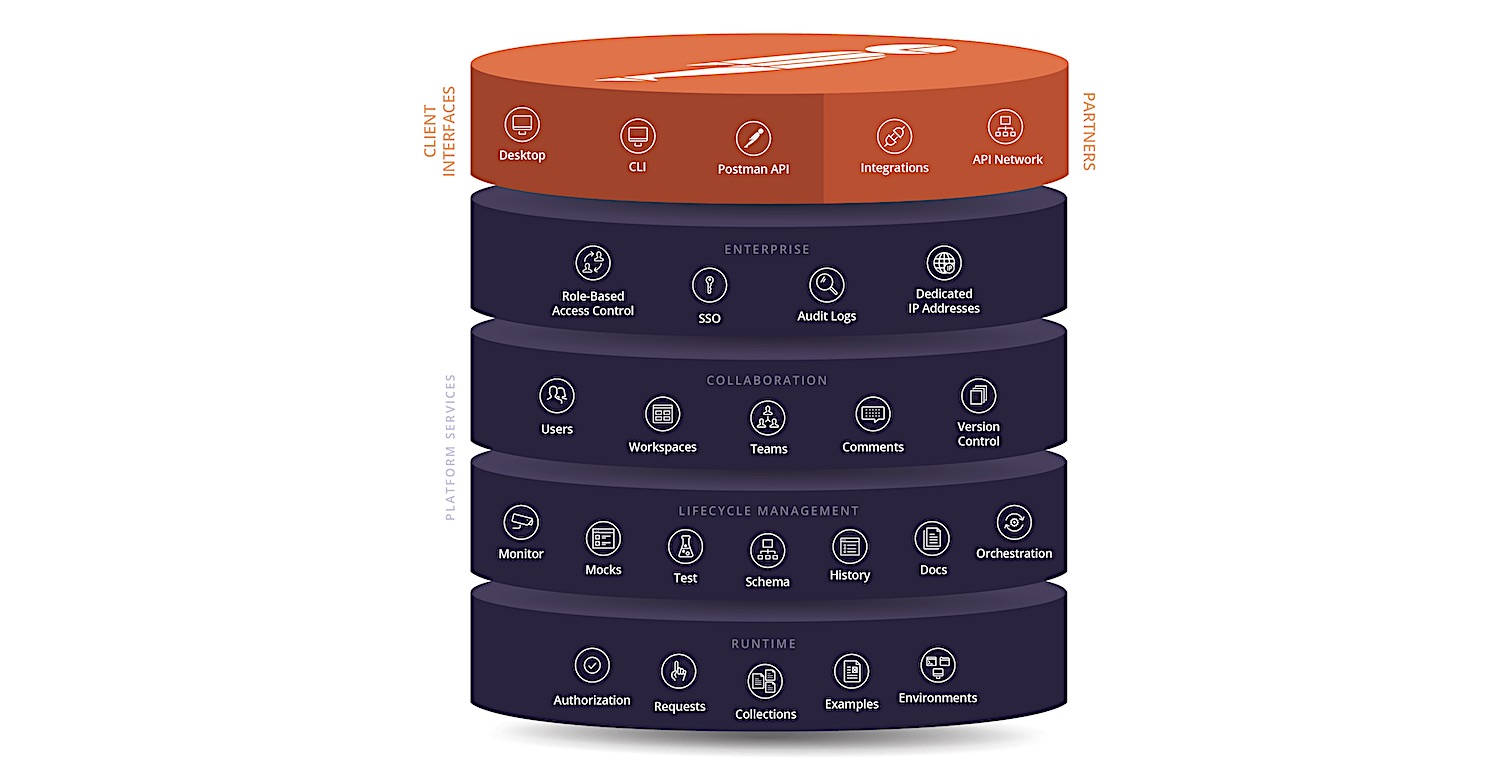
San Francisco-based Postman, which operates a collaborative platform for developers to help them build, design, test and iterate their APIs, said on Wednesday it has raised $225 million in a new financing round that values it at $5.6 billion, up from $2 billion a year ago.

The startup’s new financing round — a Series D — was led by existing investor New York-headquartered Insight Partners. New investors including Coatue, Battery Ventures, and BOND also participated in the new round, which brings total raise across rounds to over $430 million. Existing investors Nexus Venture Partners and CRV also participated in the new round.

APIs provide a way for developers to connect their applications to other internal and external applications. But it’s a space that until the past decade not many firms have attempted to streamline. (Developers relied on — and many continue to do so — open source CLI tools such as curl and HTTPie. That said, Postman now has a number of competitors including Stoplight, and A16z and Tiger Global-backed Kong.)

Abhinav Asthana, a former intern at Yahoo, faced this frustration first hand and built a Chrome extension for himself and friends.

Little did he know just how many developers and firms needed it, too.

The six-year-old startup’s product, which began its journey in India, is today used by over 17 million developers and over 500,000 organizations including Microsoft, Salesforce, Stripe, Shopify, Cisco, and PayPal.

The list is big: Postman co-founder and chief executive Asthana told TechCrunch that 98% of the Fortune 500 companies are customers of Postman.

“We are solving a fundamental problem for the technology landscape. Big companies tend to be slower as they have many other things on their plate,” he told me two years ago.

Postman API Platform’s offerings

“Every company in every industry in the world today uses APIs and needs an API platform. This trend is only growing with the move to cloud and digital experiences,” he said in an interview with TechCrunch Tuesday.

The startup today leads the market and doesn’t compete with many players. Which would explain the investors’ excitement. The startup, which declined to share its revenue, raised the new round at over 100 multiple of its revenue, according to an investor with knowledge of the matter.

Postman’s platform is crucial for developers, but it was only recently that the startup expanded to create a public marketplace for developers and firms to find ready-made APIs to use.

“The Postman Public API Network connects millions of developers around the world and provides them with a space dedicated to discovering, exploring, and sharing of APIs. This was ultimately driven by our creation of public workspaces, which allows users to connect across different organizations,” Asthana said.

“With the emergence of APIs, we believe that this will usher in the next generation of no-code and ‘citizen developers.’ We encourage a world filled with innovation for everyone with different backgrounds and varying levels of technical experience. More and more, we’re seeing people in sales, marketing, and finance become more comfortable with APIs and become the champions of this technology,” he said.

The startup, which employs over 425 people, plans to deploy the fresh funding to hire more employees across sales, marketing, product, and engineering divisions.

Postman will also “heavily” invest in broadening its product roadmap. “We are expanding the Postman platform across areas that technical users need along with supporting the needs of business users. At a high level, we are investing in supporting workflows for all kinds of APIs — whether they are private APIs, partner APIs, or public APIs,” he said.

Some upcoming items on the roadmap include a new version of the Postman API, support for protocols like gRPC, ProtoBuf, and more extensive capabilities for GraphQL. “We are also focusing heavily on integrations with other vendors in the software development lifecycle like AWS, Git hosting providers like GitHub and GitLab. We are also releasing our Flow Runner tool, a no-code API composition tool to enable anyone to build API driven programs.”

The startup also plans to invest in supporting students through API literacy programs and contribute toward open source projects.

“APIs have quickly become the fundamental building blocks of software used by developers in every industry, in every country across the globe—and Postman has firmly established itself as the preferred platform for developers,” said Insight Partners Managing Director Jeff Horing in a statement.

“Postman has the opportunity to become a key pillar of how enterprises build, deliver products, and seamlessly enable partnerships across the ecosystem. Their continued, rapid expansion and strong management team point to a future for Postman with virtually unlimited possibilities.”

18 Aug 2021

MobileCoin closes on $66 million in equity in Series B round

MobileCoin, a cryptocurrency business that counts founder Moxie Marlinspike of the encrypting messaging app Signal as its earliest technical advisor, has raised $66 million in Series B funding from a long list of investors, including Alameda Research, Berggruen Holdings, BlockTower Capital, Coinbase Ventures, Marc Benioff’s TIME Ventures, Vy Capital, and earlier backers General Catalyst and Future Ventures.

The all-equity round brings the four-year-old, San Francisco-based company’s total funding to $107 million altogether, including a $30 million round led by Binance Labs back in 2018. According to founder and CEO Joshua Goldbard, the newest round values the outfit at $1.066 billion.

As we reported earlier this year, MobileCoin is focused on enabling privacy-protecting payments made through “near instantaneous transactions” over one’s phone. Indeed, a month after we published that piece, Signal rolled out support for MobileCoin as a payment feature that its users (only in the UK for now) can use to pay for a service or product while enjoying greater privacy than might be possible otherwise.

Marlinspike told Wired back in April that because MobileCoin is a so-called privacy coin designed to protect users’ identities and the details of their payments on a blockchain, that it’s an ideal fit for Signal. “There’s a palpable difference in the feeling of what it’s like to communicate over Signal, knowing you’re not being watched or listened to, versus other communication platforms. I would like to get to a world where not only can you feel that when you talk to your therapist over Signal, but also when you pay your therapist for the session over Signal.”

According to Goldbard, MobileCoin is also being used to transact by users of Mixin Messenger, is a China-based open-source private messenger based on Signal Protocol that enables individuals to send cryptocurrencies to their phone contacts.

MobileCoin’s actual digital coins have fluctuated wildly in value since they began trading in December of last year on the cryptocurrency exchange, FTX, run by entrepreneur Sam Bankman-Fried, who also founded the quantitative crypto trading firm Alameda Research (which just invested in MobileCoin).

It is also available to buy and sell on the non-U.S. crypto trading platforms Bitfinex, BigOne, and HotBit. Goldbard says there’s no reason that U.S. exchanges couldn’t also list the coin for trade, though that’s not the case currently.

“It’s entirely up to [them] when they list assets, and no one knows ahead of time when your asset will be listed,” Goldbard offers, dismissing questions about U.S. regulators who’ve cracked down on similar efforts and pointing instead to MobileCoin’s relatively newness as its biggest challenge right now. “Most coins take a long time to list, to be honest.”

As for whether Goldbard or his early team members have sold some of company’s coins — they spiked in price this past spring — he says that “management has not sold any coins.” Asked whether the same is true of Marlinspike, Goldbard says that he “can’t speak for Moxie.” (Marlinspike told Wired in April that neither he nor Signal owned any MobileCoins at the time. We’ve since asked the company whether Marlinspike has ever owned any MobileCoins and also whether he owns or previously owned shares in MobileCoin as an early advisor to the company and have yet to hear back.)

Even assuming that MobileCoin is more secure than other options, it is still not foolproof. Among the risks involved in storing cryptocurrency on a phone are potentially losing it if the phone is left unlocked or the radio on the phone is hacked or if, say, iOS itself is hacked. 

It does offer another advantage, though, argues Goldbard. He says MobileCoin is more environmentally friendly than  cryptocurrencies like Bitcoin that rely on ‘proof of work,’ where individuals on a network compete with computing power to solve cryptographic puzzles and consume large amounts of electricity along the way.

MobileCoin instead relies on a mechanism called a “federated byzantine agreement,” wherein different validators —  people who agree to store data, process transactions, and add new blocks to the blockchain to earn more cryptocurrency — decide which other validators they trust, and when enough circles of trusted validators overlap, consensus is reached. The algorithm requires fewer people and less energy while remaining decentralized, says Goldbard.

MobileCoin currently has 40 employees and is “hiring as fast as possible,” says Goldbard. Tragically, the company’s head of engineering, Toby Segaran, who was previously an engineer with both Google and Reddit, passed away unexpectedly last week. Meanwhile, MobileCoin brought aboard is first head of compliance, David Ackerman, last month.

18 Aug 2021

Felicis Ventures grows along with its returns, gathering up $900 million across two new funds

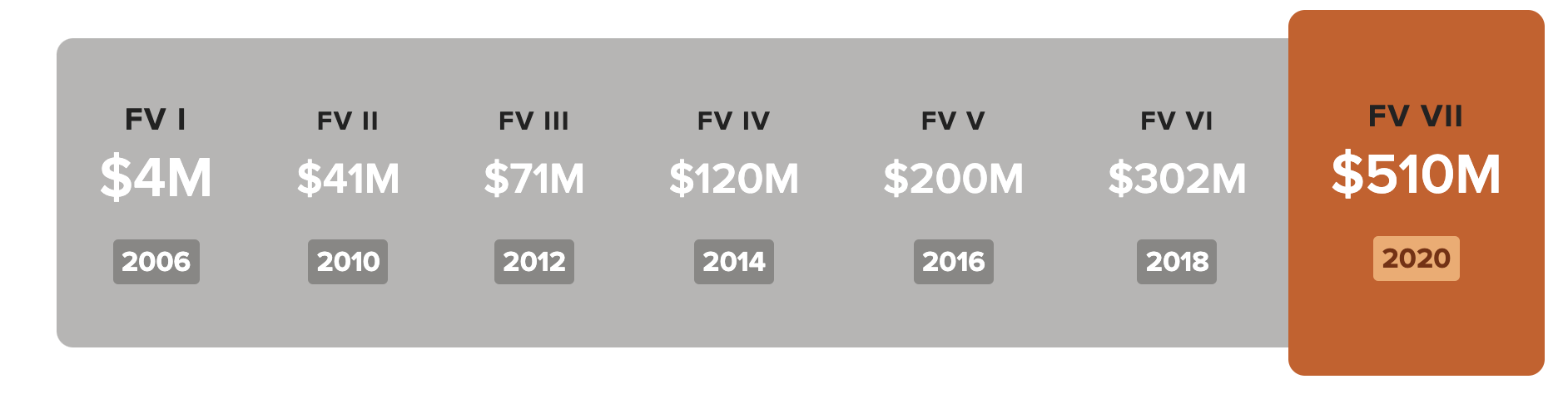
Fifteen years ago, Aydin Senkut, a former Google exec, was an outsider in venture circles that didn’t take seriously his ambitions to become a top VC. Now, his firm, Felicis Ventures, is announcing $900 million in capital commitments across two new funds — a $600 million early stage fund and a $300 million opportunities-type fund to back its fastest-growing winners — and its limited partners wanted the firm to invest even more.

Yes, a part of that is the current go-go market. Much more, however, ties to Felicis’s performance, which has been strong from nearly its outset and goes a long way in explaining how a firm that initially launched with $4 million from Senkut’s own pocket has, in recent years, has been roughly doubling how much it invests with every new fund. (Its seventh and last flagship fund closed with $510 million in March of last year. According to Felicis, across all funds, including losses, it has now produced 6x cash-on-cash returns for its investors.)

It’s hard to pinpoint how Felicis has managed to be right about so many of its investments, which include early bets on Shopify in Canada, Canva in Australia, and Ayden in Amsterdam.

Shopify, which went public in 2015, is now a $185 billion company. Canva’s private market valuation hit $15 billion this spring. Ayden, which went public in 2018, currently boasts a market cap of $85 billion.

While the firm has long been willing to invest in far-flung places — a differentiator that more firms have begun to copy — it has also chosen well in the U.S., with bets on Plaid (valued at roughly $14 billion right now); publicly traded Guardant Health; Credit Karma (acquired by Intuit for roughly $7 billion); and newly public Recursion Pharmaceuticals (among others).

Asked about its approach, Senkut — who runs the firm with fellow general partners Wesley Chan, Sundeep Peechu, Victoria Treyger, Niki Pezeshki, and an incoming general partner, Viviana Faga — says the firm basically makes both safe and more ambitious bets, writing bigger checks to surer things so it can gamble on new ideas, like a company that makes a sugar substitute.

The partners also stress the importance to the firm of maintaining a high net promoter score. They treat founders well, and founders treat them well, in turn, is the gist, including giving the firm a glowing reference in a competitive situation.

Says Senkut, “We want founders to say, ‘This person has helped me so much, I would almost do anything to take money from this person or to put them on my board,’ versus the traditional method [wherein the VC says], ‘We’re writing a $50 million check and because we invested that money, we’ll dictate who’s on the board and what to do.'”

Not last, says Peechu, who joined Felicis roughly 11 years ago, Felicis often jumps in when the water is still cold. “The fund strategy is not always to make the most amount of money,” he says. “Sometimes, we’re investing to 2% or 3% of a company because that 3% could potentially give us an incredible learning that might help us invest the next $30 million to $50 million in that category.”

Peechu points, for example, to an early bet on video game developer Tapulous that led to a bigger bet on game maker Rovio. “A lot of a lot of people will wait until the first big company is created in a category and they give that company a pool of money,” he notes. “But by that time, 10 years might have passed and you’ve lost a lot of economic opportunity.”

Felicis tends to “risk adjust” instead, he adds. “We say, ‘Hey, I think this interesting category might be emerging,’ Then we go in. Maybe we invest a bit earlier and own a little less, but we pay attention to what’s happening,” he says. “It’s the only way you can understand what’s happening on the field.”

Now, it has far more capital to deploy toward that end. Indeed, its new funds will see Felicis double its investment range from checks that range from $1 million to $25 million to now upwards of $50 million in one slug.

18 Aug 2021

Apeel bites into another $250M funding round, at a $2B valuation, to accelerate fresh food supply chains

Apeel Sciences, a food system innovation company, is out to prevent food produced globally from ending up in the landfill, especially as pressures from the global pandemic affect the food supply chain.

The company just added $250 million in Series E funding, giving it a valuation of $2 billion, to speed up the availability of its longer-lasting produce in the U.S. (where approximately 40% of food is wasted), the U.K. and Europe.

Existing investor Temasek led the round and was joined by a group of new and existing investors, including Mirae Asset Global Investments, GIC, Viking Global Investors, Disruptive, Andreessen Horowitz, Tenere Capital, Sweetwater Private Equity, Tao Capital Partners, K3 Ventures, David Barber of Almanac Insights, Michael Ovitz of Creative Artists Agency, Anne Wojcicki of 23andMe, Susan Wojcicki of YouTube and Katy Perry.

With the new funding, Apeel has now raised over $635 million since the company was founded in 2012. Prior to this round, the company brought in $250 million in Series D funding in May 2020.

Santa Barbara-based Apeel developed a plant-based layer for the surface of fruits and vegetables that is tasteless and odorless and that keeps moisture in while letting oxygen out. It is those two factors in particular that lead to grocery produce lasting twice as long, James Rogers, CEO of Apeel, told TechCrunch.

Apeel installs its application at the supplier facilities where the produce is packed into boxes. In addition to that technology, the company acquired ImpactVision earlier this year to add another layer of quality by integrating imaging systems on individual pieces as they move through the supply chain to optimize routing so more produce that is grown is eaten.

“One in nine people are going hungry, and if three in nine pieces of produce are being thrown away, we can be better stewards of the food we are throwing away,” Rogers said. “This is a solvable problem, we just have to get the pieces to the right place at the right time.”

The company is not alone in tackling food waste. For example, Shelf Engine, Imperfect Foods, Mori and Phood Solutions are all working to improve the food supply chain and have attracted venture dollars to go after that mission.

Prior to the pandemic, the amount of food people were eating was growing each year, but that trend is reversed, Rogers explained. Consumers are more aware of the food they eat, they are shopping less frequently, buying more per visit and more online. At the same time, grocery stores are trying to sort through all of that.

“We can’t create these supply networks alone, we do it in concert with supply and retail partners,” he said. “Grocery stores are looking at the way shoppers want to buy things, while we look at how to partner to empower the supply chain. What started with longer-lasting fruits and vegetables, is becoming how we provide information to empower them to do it without adding to food waste.”

Since 2019, Apeel has prevented 42 million pieces of fruit from going to waste at retail locations; that includes up to 50% reduction in avocado food waste with corresponding sales growth. Those 42 million pieces of saved fruit also helped conserve nearly 4.7 billion liters of water, Rogers said.

Meanwhile, over the past year, Apeel has amassed a presence in eight countries, operating 30 supply networks and  distributing produce to 40 retail partners, which then goes out to tens of thousands of stores around the world.

The new funding will accelerate the rollout of those systems, as well as co-create another 10 supply networks with retail and supply partnerships by the end of the year. Rogers also expects to use the funding to advance Apeel’s data and insights offerings and future acquisitions.

Thomas Park, president and head of alternative investments at Mirae Asset Global Investments, said his firm has been investing in environmental, social and governance-related companies for awhile, targeting companies that “make a huge impact globally and in a way that is easy for us to understand.”

The firm, which is part of Mirae Asset Financial Group, often partners with other investors on venture rounds, and in Apeel’s case with Temasek. It also invested with Temasek in Impossible Foods, leading its Series F round last year.

“When we saw them double-down on their investment, it gave us confidence to invest in Apeel and an opportunity to do so,” Park said. “Food waste is a global problem, and after listening to James, we definitely feel like Apeel is the next wave of how to attack these huge problems in an impactful way.”


18 Aug 2021

Canada Drives raises $79.4 million to expand online car purchasing and delivery platform

Canada Drives, an online car shopping and delivery platform, announced $79.4 million ($100 million CAD) in Series B funding that it will use to expand its service across Canada. 

It was founded in 2010 as a car financing company but launched an e-commerce platform for new and used vehicles last year. Canada Drives currently operates in British Columbia and Ontario, two provinces that together comprise about half of Canada’s entire population, according to Canada’s 2016 census. With the new funds, Canada Drives hopes to expand to Alberta in the next month, according to co-CEO Cody Green.

The pandemic boosted online shopping in every industry, and car buying is no exception. And now that companies like Canada Drives are beginning to provide a platform to shop and buy, as well as next-day delivery, this market will only continue to grow.

Nobody likes going to the car dealership anyway, and the data support that: A recent study by consumer intelligence company J.D. Power found people are taking to digital car sales because they want to avoid face-to-face interactions and haggling with salespeople, and they like doing paperwork and financing at home. They’re also more likely to buy add-ons when they can shop at their leisure rather than experiencing the pressure of a commission-hungry dealer breathing down their necks.

While there are many online car shopping platforms in the U.S. that have grown in popularity over the past couple of years, like Carvana and Vroom, Canada hasn’t seen the same sort of growth. But with companies like Canada Drives and Clutch, another online car marketplace that recently raised $20 million CAD in seed funding, Canadian entrepreneurs are wising up to the model that’s already been proven across the border. The global chip shortage is also causing a growing market for used vehicles as it becomes more expensive and difficult to purchase new cars.

In order to meet those needs for Canadian consumers, Canada Drives is going to use its recent funding to keep enhancing the product, grow its inventory in existing and new markets, and hire around 200 people over the next year, particularly in product development, Green told TechCrunch.

The company owns its entire inventory of vehicles. It certifies, inspects and reconditions the used cars that come its way, stores them throughout its operating zones and delivers them to the customer’s door when they purchase. Customers get a seven-day trial with their vehicle, and if it’s not to their standard, they can have it picked up and returned with no questions asked.

Green said he expects to see an increasing amount of hybrid or electric vehicles on the platform, and a spokesperson for the company told TechCrunch that Teslas and Nissan Leafs are already quite popular. Canada has a goal to ban the sales of internal combustion engine vehicles by 2035, so it’s a roll of the dice whether the marketplace will be littered with used ICE or flush with used electric vehicles over the next couple of decades. Currently, around 5% of Canada Drives’ inventory is hybrid or electric, said Green.

“Our mission is to be the easiest place to buy or sell your car in Canada, and as consumer preferences change and as countries adopt forward-thinking policies with electric and hybrid, our platform is going to be able to evolve with that,” Green told TechCrunch. “As there’s more and more new electric vehicles, more will become used vehicles, and I think already that is a market that we’re over-indexed on versus the average dealer in Canada.”

This latest funding round brings Canada Drives’ total funding to about $159 million ($200 million CAD) after a $100 million CAD Series A raised in 2019. The Series B round announced Wednesday was led by Jeffrey Housenbold’s Honor Ventures with participation from KAR Global and other strategic investors. 

18 Aug 2021

Amazon backs Indian wealth management service Smallcase in $40 million funding

Amazon has entered the financial services and insurance markets of India in recent years. Now it is paving the way to foray into the wealth management category.

The American e-commerce giant has backed Bangalore-based startup Smallcase in a $40 million Series C financing round.

The round was led by Faering Capital and Premji Invest as well as existing investors Sequoia Capital, Blume Ventures, Beenext, DSP Group, Arkam Ventures, WEH Ventures and HDFC Bank also participated in the new round, which brings its total to-date raise to over $65 million.

Founded by three IIT Kharagpur graduates in July 2015, Smallcase offers a platform to help introduce a new generation of investors to the Indian equity markets.

The startup offers an in-house team of licensed professionals who offer over 100 portfolios of stocks and exchange traded funds as well as provides its users access to independent investment managers, brokerages and wealth platforms.

The startup supports a dozen leading stock brokers in India including Tiger Global-backed Upstox, and Zerodha’s Kite.

Smallcase has amassed over 3 million users, who are transacting about $2.5 billion each year. It says a user can start making their investments in just two clicks after signing up for the service.

“We have created a new, fast-growing category of investment products by developing an ecosystem of 250+ businesses in the capital markets space including India’s largest and fastest growing brokerages, advisors, investment managers and digital wealth platforms,” said Vasanth Kamath, co-founder and chief executive of Smallcase.

“It has been both humbling and inspiring to see smallcases become the primary gateway to stocks & ETFs for millions of new investors. This financing increases our responsibility to continue building simple, transparent and delightful experiences and platforms, while delivering more value to our users and partners. Our true success will lie in developing the core building blocks for every investor’s portfolio and becoming a key part of their toolkit,” he added.

The startup, which employs 200 people, said it plans to deploy the fund to broaden its technology platform and win more customers.

This isn’t the first time Amazon has backed an Indian startup. The e-commerce firm, which has deployed over $6.5 billion in its India business, has invested in ride-hailing firm Shuttl, invoice discounting marketplace exchange for MSMEs M1xchange, and direct-to-customer beauty brand MyGlamm.

Earlier this year, Amazon also unveiled a $250 million venture fund to invest in Indian startups and entrepreneurs focused on digitizing small and medium-sized businesses in the South Asian market.

An Amazon spokesperson said the company invested in Smallcase through its $250 million venture fund. “As part of this Fund, we are excited to partner with smallcase in their journey to offer innovative consumer investment products. By increasing product selection and convenience, this will provide an additional channel for consumers to participate in the equity markets,” the spokesperson added.

18 Aug 2021

Brazil’s Kovi closes $104M Series B to make car ownership ‘more inclusive’ in LatAm

We sometimes take for granted that most anyone who wishes to become say, an Uber driver, can do so. But that assumption is a narrow view considering there are many people who would love to earn income in that way but can’t because of lack of car ownership (and all that goes with it) — especially in countries outside of the United States.

In an attempt to remedy that problem, São Paulo-based Kovi was founded in 2018 to give those people access to those opportunities. 

Kovi today is announcing it has raised $104 million in a Series B round of funding co-led by Valor Capital Group and Prosus Ventures. Quona, GFC, Monashees, UVC Investimentos and Globo Ventures also participated in the financing, in addition to Tinder co-founder Justin Mateen and PayPal co-founder Peter Thiel through his family office. The round takes Kovi’s total equity raised since inception to about $145 million. The company also recently closed on a $20 million debt facility. It is not yet a unicorn, according to execs, who declined to reveal valuation.

Two former 99 (Brazil’s first tech unicorn, and also known as Didi) executives, Adhemar Milani Neto and João Costa, started the company, which rents vehicles to on-demand drivers who work for ride-hailing companies such as Uber, Didi and Lyft. It then expanded from on-demand drivers to food delivery workers.

Kovi operates its “all inclusive” car subscription model under the premise that more people in Latin America would work for these companies if they could afford to operate the necessary vehicle. In fact, an estimated 75% of Latin Americans cannot own a vehicle because of the high cost of acquisition and maintenance. Cars are significantly more expensive in countries like Brazil than in the U.S. and the difference is even greater when it comes to the average income of the population. Also, financing is often difficult and expensive to obtain, as credit is difficult to access in most Latin American countries. When applying for loans, 60% of applications are denied by traditional banking institutions, according to Kovi co-founder and CEO Adhemar Milani Neto. And even when approved, customers pay high interest rates that are up to 30% per year.

Kovi gives drivers who don’t necessarily want, or cannot afford, to own a vehicle “quick access to quality cars” at what it says is “a fair price.” It operates an asset-light model, in that it does not buy vehicles but instead has inked rental agreements with OEMs such as Toyota and Volkswagen to offer vehicles to gig workers, including insurance and maintenance.

“Our mission is to promote a revolution in this market, making car ownership affordable, less complicated and accessible to an underserved population,” Neto said. “We want to offer a range of options to create a platform for urban mobility and create more possibilities for our customers.”

Image Credits: Kovi

In 2020, the startup saw its number of customers grow by more than 70%, and it now has more than 11,000 users in Brazil and Mexico. The company has 12,000 cars in its fleet and aims to add another 20,000 cars by the end of 2021. The company says its ARR (annual recurring revenue) is now roughly around $45 million, and that it is growing by at least 15% month over month. Kovi is “very close” to breaking even and plans to this year, according to Neto.

“Our mission is to make car ownership more inclusive, human and efficient using technology and financial innovation,” he said.

What sets Kovi apart from competitors is that its cars are connected, so it uses data science and analytics to be able to offer “a better user experience and competitive prices,” believes Kovi co-founder João Costa.

The company also over time has shifted from offering insurance through third parties to offering insurance.

“We basically built an insurance company from scratch,” Neto said.

When the pandemic hit in 2020, Kovi — as did many other companies — at first saw its business slow. So the company quickly pivoted by changing its model to a pay-per-mile model so that it could act as a “Root Insurance for car owners,” Neto said.

The model has worked very well for drivers, he added. The company also enhanced its B2C offering so that drivers can access a car, with “everything included,” from insurance to 24-hour road support and preventive maintenance through Kovi.

“Once things got more back to normal, the on-demand economy scaled really fast,” Neto said.

Kovi also in the past year broadened its scope from a short-term car subscription to include a long-term option. That has proven successful so far, with that segment of its business growing to 35% of Kovi’s revenue already since launching in October of last year.

This also creates more profit for the OEMs Kovi is partnered with, Neto added.

“We provide a much better profitability model for them rather than just to sell to rental companies or end consumers. They make recurring revenue for 12-24 months and then resell used cars through their dealerships,” he said. “We’re now taking Kovi to the broader OEM market. We see this as a global business model that extends not only in Brazil and Mexico but across LatAm and to other developing countries.”

Indeed, Kovi will use its new capital to expand its service to new cities in Latin America and double down on existing operations in Brazil and Mexico. The money will also go toward technology development, specifically data management and the company’s pay-per-mile capabilities (which its founders say is unprecedented in Latin America). It also, naturally, plans to add to its 700-person team — including hiring developers, software engineers and data scientists. And, finally, Kovi plans to use some of its fresh capital to launch new financial services and products. 

For example, the company began the buildout for some of those products earlier this year, launching its aforementioned auto insurance offering, dubbed Kovi Seguro — a tracked insurance for app drivers. It also plans to launch “to a rent to own” option, Neto said. So that drivers who want to own a vehicle will have a way to work toward that.

Prosus’ Banafsheh Fathieh says that ultimately, Kovi is a financial services company that can offer consumers that may not qualify for credit under traditional models to incrementally work toward owning a car through a subscription plan.

“Because Kovi owns and manages their fleet during the rental period — and therefore can control the fleet remotely — it is able to cater to a severely financially underserved population that’s typically considered higher risk by creditors,” Fathieh told TechCrunch.

Valor co-founder and managing partner Scott Sobel believes that Kovi is “well positioned” to capture three major tailwinds that have the potential to disrupt the multibillion-dollar car ownership market of Latin America. 

The first of those tailwinds is ride-hailing.

“Only in Latin America there are approximately 1.5 million on-demand drivers, and this number is expected to grow by ~2-3x this decade,” he said. “Take Uber as an example: three of its biggest markets are São Paulo, Mexico City and Rio de Janeiro.”

The second tailwind is car subscription. Less than 0.5% of Brazilian cars are under subscription offerings, and that number is expected to reach ~10-20% in the next five years due to consumer behavioral changes.

“Being one of the first movers in LatAm gives Kovi an edge,” Sobel told TechCrunch.

The third tailwind is auto insurance, which he thinks will be disrupted by more flexible (such as pay as you go, pay per mile, unbundled policies) customer-centric and tech-driven models. 

“These global trends will provide greater access to millions of drivers in the region,” Sobel said. For example, as of now less than 30% of Latin American drivers have an active car insurance policy.

Valor, he added, was impressed with Kovi’s traction and the “strong competitive moats” the company has built, including verticalized maintenance centers designed to reduce idle time and costs, a driver’s wallet, IoT systems integrating the entire fleet and “all the data.”

“Kovi is a very smart company, obsessed with metrics, tech and product innovation,” Sobel added.

18 Aug 2021

Pakistan’s Airlift raises $85 million for its quick commerce startup, eyes international expansion

A one-year-old startup that is attempting to build the railroads for e-commerce in Pakistan has just secured a mega round in a major boost to the South Asia nation’s nascent startup ecosystem.

Airlift operates a quick commerce service in eight cities in Pakistan. Users can order groceries, other essential items including medicines and electronic products from Airlift website or app and have it delivered to them in 30 minutes.

The startup said on Wednesday that it has raised $85 million in its Series B financing round at a valuation of $275 million. Harry Stebbings of 20VC and Josh Buckley of Buckley Ventures co-led the financing round, by far the largest for a Pakistani startup.

Sam Altman, former president of Y Combinator, Biz Stone, co-founder of Twitter and Medium, Steve Pagliuca, co-chairman of Bain Capital, Jeffrey Katzenberg, ex-chief executive of Disney and Quibi, and Taavet Hinrikus, founder and chief executive of TransferWise also participated in the new round, which brings the startup’s to-date raise to $110 million.

Stanley Tang, co-founder of DoorDash, Simon Borrero, founder and chief executive of Rappi, Baastian Lehman, founder and chief executive of Postmates, Quiet Capital and Indus Valley Capital also participated in the new round.

Airlift started as a transit business, building a service similar to Uber for buses in Pakistan. The startup was already clocking over 35,000 rides a day before the pandemic arrived, disrupting all mobility in the country.

That’s when Usman Gul, the founder and chief executive of Airlift, took the call to pivot to quick commerce, he told TechCrunch in an interview.

“This entire space of quick commerce is on the brink of global transformation. Airlift is in the forefront for leading that transformation in Asia and Africa,” he said. Gul said he plans to expand the service to many international markets in the next few months.

Gul left his job at DoorDash and moved back to Pakistan to start Airlift. “The idea was to create impact at the base of the pyramid and solve problems that would enrich millions of lives — for whom change is desperately needed. That drove my transition frankly,” he said.

This is a developing story. More to follow…

18 Aug 2021

RaRa Delivery gets $3.25M for its ambitious on-demand delivery plans in Indonesia

RaRa Delivery’s ambitious goal is to offer same-day deliveries in Indonesia without burning cash like many on-demand logistics providers. The company announced today it has raised $3.25 million in seed funding led by Sequoia Capital India’s Surge program and East Ventures. Other participants included 500 Startups, Angel Central, GK Plug and Play and angel investors Royston Tay and Yang Bin Kwok.

Launched in 2019, RaRa Delivery relies on a proprietary engine that batches orders and optimizes delivery routes based on data like real-time traffic information. It currently operates in Greater Jakarta and is getting ready to expand into five other Indonesian cities this year.

RaRa Delivery’s goal is to integrate with all major marketplaces in Indonesia, so sellers can offer it as a delivery option to customers. It also partners with brands, small e-commerce businesses and seller aggregators. Some notable clients include e-commerce platform Blibli, coffee delivery startup Kopi Kenangan, Grab Merchant, healthcare platform Alodokter and grocery store Sayurbox. RaRa Delivery says its daily order volume has grown 15 times over the past year, due in part to increased demand for grocery and medical supply deliveries during the pandemic.

Before launching RaRa Delivery, co-founder and chief executive officer Karan Bhardwaj worked at Unilever, managing its e-commerce supply chain in Southeast Asia and Australasia. During that time, he dealt with many kinds of distribution channels, including marketplaces, e-commerce aggregators and last-mile delivery providers.

Over the past few years, Bhardwaj watched customer expectations for deliveries change. Many are no longer satisfied with even next-day delivery. They want their orders delivered the same day, often within a few hours.

“A good experience over time becomes a need rather than a luxury,” said Bhardwaj. The United States has Amazon Prime, China has courier service SF Express and South Korea has Coupang, but “same-day delivery adoption has not reached its true potential in Indonesia because of the lack of the right supply solution, and that’s exactly what we are trying to crack.”

Bhardwaj added that people are willing to pay two to three times more for same-day delivery versus next day delivery, and even higher fees for deliveries within an hour.

But many traditional logistics players, with their hub-and-spoke distribution models, are not designed for on-demand deliveries, while on-demand providers have high operational costs because their drivers fulfill one order per trip.

“If a business has 10 orders, they are going to send 10 drivers and everyone is going to pick up one order,” said Bhardwaj. “They can do a three-hour delivery service, but there is no consolidation, no optimization, the cost per order is very high, there distance limits, weight limits and they don’t offer cash on delivery.”

RaRa Delivery’s real-time batching engine was created as a more scalable and sustainable alternative. The company’s driver fleet fulfills orders for many different types of businesses—food and beverage, grocery, healthcare and e-commerce—which all have different time requirements for their deliveries. For example, a restaurant needs deliveries to happen within an hour, but for grocery stores that timeframe can be three hours, and for e-commerce stores, up to eight hours.

Once orders are made, RaRa Delivery’s system groups them into batches, optimizing capacity, distance, time slots and driving routes based on real-time traffic data. A batch can have between two to 15 orders, and their composition is flexible. For example, some batches might entail a series of pick-ups followed by deliveries, while others might have pick-ups interspersed with deliveries, depending on what creates the most efficient route.

Bhardwaj said this increases how much RaRa Delivery’s drivers can earn because they perform multiple deliveries per trip, and reduce their downtime. Each RaRa Delivery batch takes about two to six hours to complete.

“In a normal on-demand scenario, a driver takes an order, finishes that order and waits for another order. That waiting time is what reduces the potential earnings of a driver,” he said.

RaRa Delivery also enables cash on delivery. Typically, when a delivery service offers COD, that means drivers need to go back to a hub to drop off the money. RaRa Delivery’s reconciliation product shows drivers how much cash to collect for each order. Once they are done, it generates a code that the driver can use a convenience store to deposit the cash, instead of a hub.

The startup’s plans for its seed funding include expanding its product ecosystem, which currently includes the batching engine, a seller portal, real-time order tracking, a chatbot for customers and the COD reconciliation.

It’s focused on Tier 1 cities in Indonesia for its initial rollout, before expanding into smaller cities and covering all of Indonesia within a couple of years. Then RaRa Delivery plans to expand into other countries. Bhardwaj said its batching engine is geography-agnostic, so it requires minimal localization for new markets.