Year: 2021

11 Aug 2021

Daily Crunch: FEMA tests national emergency alert system for first time since pandemic began

To get a roundup of TechCrunch’s biggest and most important stories delivered to your inbox every day at 3 p.m. PDT, subscribe here.

Hello and welcome to Daily Crunch for August 11, 2021. If you are a Twitter user, today has proven to be a divisive day, thanks to some design changes. We also have hardware news, mobility news, a few very neat funding rounds and even some startup media news. It’s a great day for a roundup. Also, if you are in the United States, you may have noticed a missive from FEMA today. FEMA is the U.S. Federal Emergency Management Agency, and it just ran a test of its emergency alert system, or EAS. Given that the world appears to be constantly on fire, sick or underwater, it’s a good time for such an endeavor.

Before we go on, Disrupt is hosting some of the most interesting founders in health tech, and we’ll have some pretty darn cool breakout sessions to boot. Disrupt is going to rock. — Alex

The TechCrunch Top 3

  • Twitter’s redesign turns heads: That Twitter is in the midst of something akin to a product renaissance is well known, with the social media provider working on a host of projects at once. Hell, Twitter is even working on TweetDeck. Today, however, Twitter stirred the pot with a web and mobile redesign that included a new font. Quelle horreur ! No, but really, people are mad.
  • Here’s everything that Samsung announced today: As expected, Samsung held a hardware event today. What did the hardware giant show off? The Galaxy Watch 4, the Galaxy Z Fold 3 (the folding smartphone affair), the Galaxy Z Flip 2 (a smaller folding smartphone) and new headphones. If you are not into the iOS ecosystem, this is for you.
  • China’s regulatory shakeup not harming venture investment. Yet. After the Chinese government started a wide-ranging crackdown on a host of domestic industries that it either found too powerful, too unregulated or too monopolistic, what impact the changes would have on startups and venture capital have been open questions. Early Q3 data indicates that things haven’t changed too much, yet. But with SoftBank potentially pausing Chinese deals, larger startup investment could suffer.

Startups/VC

Before we get into our usual digest of the latest and greatest funding rounds from the worlds of venture capital and high-growth startups, two product-related notes.

First, Airtable just bought something! Yes, Airtable, the roughly $5.8 billion spreadsheet of the future is making deals. Well, one. The company bought Bayes, what TechCrunch called an “early-stage visualization startup” that also features a no-code focus. If you love Airtable, this could be good news.

Second, Medium is shaking up its business model yet again. Again. Yes, one more time. This time, the company is changing its partner program. Now writers on Medium can drive their own subscriptions, snagging half the long-term revenue net of fees. This feels a little Substack-y, but not in a bad way. Despite Medium’s inability to decide what it is, I remain modestly hopeful for the company thanks to my profession of getting paid to make words appear on the internet.

Now, some funding rounds for your enjoyment!

  • $40M for construction-focused computer vision: That’s the headline from Doxel’s latest round, led by Insight Partners. The Series B brings the company’s total raised capital to just over $56 million. Doxel uses computer vision to track the progress of construction sites. It’s a neat model, and, per the company, it still has its full Series A in the bank thanks to “growth and bookings traction” of sufficient size that it has been “cash flow neutral” since its last raise. Why would Doxel raise if it didn’t need money? Because it could pad its accounts at a new, higher price implying minimal dilution. And you always want to raise when you don’t need to. It’s far cheaper than waiting for a cash crunch.
  • Cart.com raises $98 million: Does the name Cart.com sound familiar? It might. Why? Because the Houston-based e-commerce tooling company has now raised three times this year. So you may recall it from the other two times it put capital onto its balance sheet in 2021. The company has now raised $143 million in total.
  • Everstage raises $1.7M for sales commissions software: The old startup adage of build software to replace manual spreadsheet processes is alive and well, it turns out. Everstage wants to take sales commissions, today “calculated on spreadsheets by finance teams” that provide limited visibility to salespeople, and turn them into highly limpid software. Salespeople will dig this, given how complex commissions can be and how critical they are to sales comp totals.
  • Finally, Pave raises $16M to help companies “benchmark, plan and communicate compensation to their employees.” Akin to how sales commissions can be Gordian in their heft, employee comp is a knotty issue. Pave wants to provide more data to companies so that they can make better — and, we hope, more equitable — compensation decisions and generally improve employee lives. We dig this.

The gray revolution: Fundraising within the older adult space

Although older adults are one of the fastest-growing demographics, they’re quite underserved when it comes to consumer tech.

The global population of people older than 65 will reach 1.5 billion by 2050, and members of this cohort — who are leading longer, active lives — have money to spend.

Still, most startups persist in releasing products aimed at serving younger users, says Lawrence Kosick, co-founder of GetSetUp, an edtech company that targets 50+ learners.

“If you can provide a valuable, scalable service for the older adult market, there’s a lot of opportunity to drive growth through partnerships.”

(Extra Crunch is our membership program, which helps founders and startup teams get ahead. You can sign up here.)

Big Tech Inc.

All right, listen, public tech companies were more than busy today. So, we’re going to be brief so that we can cram as much news in here as we can:

TechCrunch Experts: Growth Marketing

Illustration montage based on education and knowledge in blue

Image Credits: SEAN GLADWELL (opens in a new window) / Getty Images

TechCrunch wants you to recommend growth marketers who have expertise in SEO, social, content writing and more! If you’re a growth marketer, pass this survey along to your clients; we’d like to hear about why they loved working with you.

If you’re curious about how these surveys are shaping our coverage, check out this interview Eric Eldon did with Julian Shapiro, “The art of startup storytelling with Julian Shapiro.”
11 Aug 2021

Lordstown will deliver its Endurance truck to “select early customers” early next year

The beleaguered EV startup Lordstown Motors is on track to begin production of its flagship electric truck Endurance, but only select customers will begin to receive vehicles early next year, executives said during a second quarter earnings call.

Executives struck a cautious tone in the second-quarter earnings call as they tried to assuage shareholder concerns and address the near-term realities of bringing its first vehicle to market without any revenue to offset its costs. Lordstown’s approach, at least this quarter, was to try and reduce operating costs from the previous quarter, helping it offset its increase in capital expenditures.

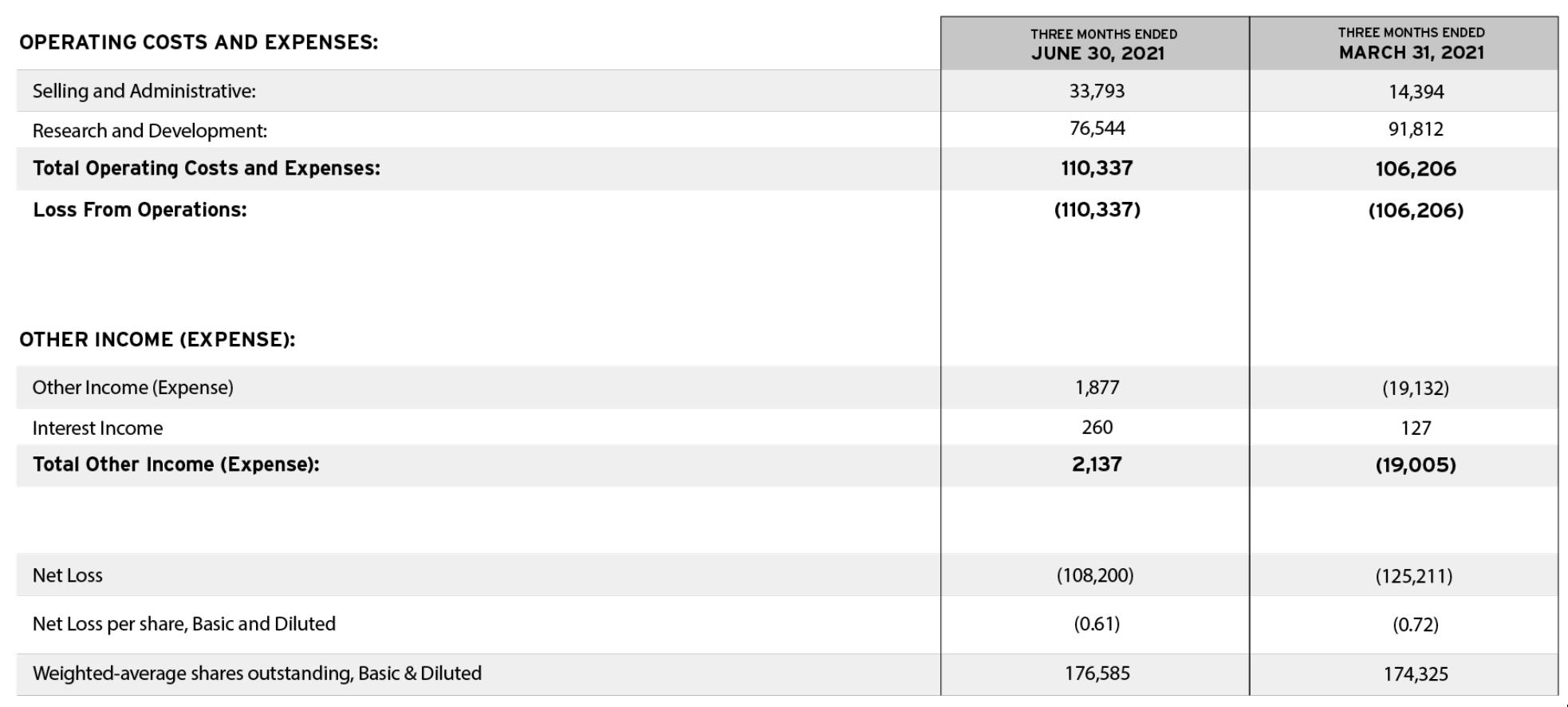
Lordstown reported a net loss of $108 million, a 13.7% improvement from the first quarter loss of $125 million. Its net losses are more than tenfold higher than the -$7.9 million it reported in the same period last year.

Lordstown cut research and development spending by 17% from the previous quarter to $76.5 million.

Meanwhile, it increased its capital expenditures to $121 million from $53 million in the first quarter. Lordstown also increased its capital expenditure guidance for the year, from $250 million to $275 million to a $375 million to $400 million range, a spike related to its need to prepay for equipment.

The decline in R&D expenses was due to declines in purchases of vehicle components, as many of those were acquired in prior quarters, Lordstown interim CFO Becky Long said during an investor call. However, legal expenses were $9 million higher than last quarter, due to costs related to a special committee and a Securities and Exchange Commission investigation over whether Lordstown exaggerated pre-sales. (The fun doesn’t stop there — the company is also under investigation by the U.S. Attorney’s Office for the Southern District of New York.)

Lordstown was thrown a life vest earlier this summer, when investment firm Yorkville Advisors agreed to purchase up to $400 million of Lordstown’s shares. The company is “now exploring a variety of other financing options, including non-dilutive private strategic investments and debt,” interim CEO Angela Strand said during an investor call. The company is also still pursuing a loan with the U.S. Department of Energy, Long said during the call.

Although the company said it was still on track to begin production of the Endurance at the end of September, only “select early customers” will begin to receive vehicles in the first quarter of 2022, followed by commercial deliveries in the second quarter. Strand said this deployment plan is to allow fleet customers time to build out charging infrastructure and to manage supply chain challenges.

One thing that distinguishes the company from some of its competitors is its manufacturing plant — a 6.2 million square foot former General Motors plant in Lordstown, Ohio. It’s now looking like the company is exploring different ways to turn a profit off this asset. Strand said “serious discussions” were underway with potential partners to use Lordstown’s facility to manufacture their products, suggesting the company is eager to find additional sources of revenue to offset its mounting expenses. “This is a critical strategic pivot for us, a decision that we believe will lead to significant new revenue opportunities for Lordstown,” she said.

“We are exploring multiple partnership constructs,” she added. “That includes contract manufacturing, that includes licensing, in addition to producing our own vehicles,” she added.

The Lordstown executive team has not had a smooth summer. The company announced in June the resignations of both CEO Steve Burns and CFO Julio Rodriguez, who were replaced in an interim capacity by Strand and Roof respectively. Lordstown was founded as an offshoot of Burns’ company Workhorse Group — the same company that said it had sold 11.9 million shares, or nearly three-quarters of its stake, since the beginning of July. The company is actively searching for a CEO and CFO, Strand said.

Lordstown was riding high in late 2020, when it announced its SPAC merger with a value of $1.6 billion. Its shares soared to $31.80 apiece at their 52-week highs. They’ve since plummeted to $5.94.

“We still plan to be first to market, particularly in the commercial fleet space,” Strand said.

11 Aug 2021

Desktop Metal is acquiring industrial 3D printing company ExOne

As part of its earnings call this week, Desktop Metal announced plans to acquire ExOne. The Pennsylvania-based firm creates a variety of different industrial 3D printers for industries like aerospace, automotive, medical and defense. More recently, we wrote about the company’s portable 3D printing factories, which are effectively mobile additive manufacturing stations built inside of shipping containers.

We wrote about ExOne back in February, when the company was granted $1.6 million from the DoD, in hopes of taking the systems out into the field. Each unit contains a 3D scanning station with computer and a variety of different ruggedized industrial machines, including a metal and ceramic printer, curing oven, fiber-reinforced plastic printer and a compression modeling station.

“Over the last two years, we’ve really focused on providing our technology into government-type applications: DoD, NASA, DoE,” ExOne’s CEO John Hartner told TechCrunch when that news broke. “Sometimes people talk about disrupting the supply chain and getting decentralized manufacturing. This is decentralized and forward-deployed, if you will. Be it an emergency, humanitarian mission or frontlines for a war fighter.”

Today’s transaction, which is valued at $575 million, finds Desktop Metal purchasing all of ExOne’s common stock.

“We are thrilled to bring ExOne into the DM family to create the leading additive manufacturing portfolio for mass production,” Desktop Metal CEO Ric Fulop said in a release. “We believe this acquisition will provide customers with more choice as we leverage our complementary technologies and go-to-market efforts to drive continued growth. This transaction is a big step in delivering on our vision of accelerating the adoption of additive manufacturing 2.0.”

Desktop Metal has been actively pursuing acquisitions to grow out its 3D printing portfolio since it announced plans to go public via SPAC last August. In January, it acquired EnvisionTEC for $300 million.

“We are excited to join forces with Desktop Metal to deliver a more sustainable future through our shared vision of additive manufacturing at high production volumes,” Hartner said of today’s announcement. “We believe our complementary platforms will better serve customers, accelerate adoption of green technologies, and drive increased shareholder value. Most importantly, our technologies will help drive important innovations at meaningful production volumes that can improve the world.”


11 Aug 2021

Dear Sophie: Can I hire an engineer whose green card is being sponsored by another company?

Here’s another edition of “Dear Sophie,” the advice column that answers immigration-related questions about working at technology companies.

“Your questions are vital to the spread of knowledge that allows people all over the world to rise above borders and pursue their dreams,” says Sophie Alcorn, a Silicon Valley immigration attorney. “Whether you’re in people ops, a founder or seeking a job in Silicon Valley, I would love to answer your questions in my next column.”

Extra Crunch members receive access to weekly “Dear Sophie” columns; use promo code ALCORN to purchase a one- or two-year subscription for 50% off.


Dear Sophie,

I want to extend an offer to an engineer who has been working in the U.S. on an H-1B for almost five years. Her current employer is sponsoring her for an EB-2 green card, and our startup wants to hire her as a senior engineer.

What happens to her green card process? Can we take it over?

— Recruiting in Richmond

Dear Recruiting,

Congrats on finding the right candidate for your role. Your startup’s ability to take over the EB-2 green card process for this candidate — or whether you have to start the green card process from the beginning — depends on where she is in the green card process and whether the position you are offering is similar to her current role.

Take a listen to my podcast in which my colleague, Gilberto Orozco Jr., an associate attorney at my firm, and I discuss the American Competitiveness in the 21st Century Act — or AC21 — including “green card portability.”

Enacted in 2000, AC21 gives international talent in certain situations the flexibility to change jobs during the green card process and the ability to extend an H-1B visa beyond the six-year limit to avoid having to leave the United States while waiting for a green card. I recommend discussing your situation and goals with an experienced immigration attorney to determine your options.

A composite image of immigration law attorney Sophie Alcorn in front of a background with a TechCrunch logo.

Image Credits: Joanna Buniak / Sophie Alcorn (opens in a new window)

The process for EB-2 green cards

As I mentioned earlier, what happens to the green card process if your candidate changes jobs depends on where she is in the EB-2 green card process. There are two types of EB-2 green cards that have slightly different processes:

The EB-2 green card requires an employer sponsor and has a three-step process:

  1. Getting PERM (Program Electronic Review Management) labor certification from the U.S. Department of Labor.
  2. Submitting a green card petition (Form I-140) to U.S. Citizenship and Immigration Services (USCIS) for approval.
  3. Getting USCIS approval after filing an adjustment of status to permanent residence application (Form I-485), which can be filed along with Form I-140 depending on whether an EB-2 green card number is available based on the candidate’s country of birth, and being interviewed by a USCIS officer or obtaining a green card abroad through consular processing and the State Department.

11 Aug 2021

Archer Aviation is seeking $1B in damages from Wisk Aero as legal dispute escalates

Archer Aviation is seeking $1 billion in damages from Wisk Aero, according to court filings Tuesday, significantly escalating the ongoing legal battle between the two air taxi rivals.

Wisk “deployed a knowingly false extra-judicial smear campaign that projected stand-alone defamatory statements about Archer to the world,” the filing says. On this basis, Archer claims that this “smear campaign” has negatively impacted its ability to access capital and has impaired business relationships, resulting in damages “likely to exceed $1 billion.”

The two companies have been locked in a heated legal battle for much of this year. The dispute started in April, when Wisk filed a suit with the U.S. District Court for the Northern District of California claiming that Archer had misappropriated its trade secrets related to Wisk’s debut eVTOL aircraft, Cora. Wisk further alleged that a former employee, Jing Xue, downloaded thousands of proprietary files from his work computer prior to joining Archer.

This is not the first time that Archer has hit back against the accusations in court. First it filed a motion to dismiss the suit in early June, and later that month alleged in a separate court document that Archer’s design was well-established prior to Wisk’s having filed any patents with the U.S. Patent and Trademark Office.

Archer unveiled a prototype of its Maker aircraft in February, the same month that it announced (to much fanfare) it was going public via a merger with blank-check firm Atlas Crest Investment Corp. for a pro-forma enterprise value of $2.7 billion. Late last month Archer slashed its valuation by $1 billion in a “strategic reset” of the transaction terms with the SPAC. While this is the same amount Archer is seeking in damages, a company spokesperson told TechCrunch that is just coincidental.

In addition, the spokesperson added that the planned merger remains on track. Speaking to the suit, they said, “We have no plans to drop our counter-claim regardless of any moves Wisk may make.”

A Wisk spokesperson said “Archer’s counterclaim is ludicrous and its troubles are purely self-inflicted,” and characterized the filing as “full of distortions and distractions from the serious patent and trade secret misappropriation claims it faces.” The spokesperson added that Wisk intends to continue its case against Archer.

11 Aug 2021

Ford F-150 hybrid: The 2021 rumble before the Lightning EV strikes

Full-size pickup trucks are the meat of the U.S. automotive business; it’s a red-hot category with the Ford F-150 leading the pack in sales and the Chevrolet Silverado and Ram pickups fast followers.

But the air is thin at the top. What’s often lost in truck coverage is how fiercely automakers compete to woo discerning customers with packaged bundles of optional and standard features. And now, more than ever, those packaged bundles rely heavily on in-car tech.

Ford, as the top seller, must add bells and whistles without alienating its most discerning clientele. The 2021 F-150 — as I was reminded during a recent test drive — epitomizes this effort and hints at what is to come with the upcoming all-electric Lightning pickup truck.

I tested the 2021 4×4 SuperCrew Lariat equipped with a 3.5-liter V6 PowerBoost Full Hybrid engine in its native suburban Detroit, 20 miles from where it was developed and manufactured.

Getting the details right on pickup trucks is an art of custom packaging for car companies. It’s one of the reasons that options packages are dizzying; the F-150 I tested was no exception. The F-150 offers six different powertrains, three bed lengths and three cab options, and then there’s eight trim levels, two-wheel drive and four-wheel drive options.

This options-heavy strategy has paid off for automakers like Ford. However, as these companies add more tech and software, there is a risk of causing confusion among its most loyal customers.

Screensavers

2021 Ford F-150 interior

2021 Ford F-150 interior. Image Credits: Ford Motor Company

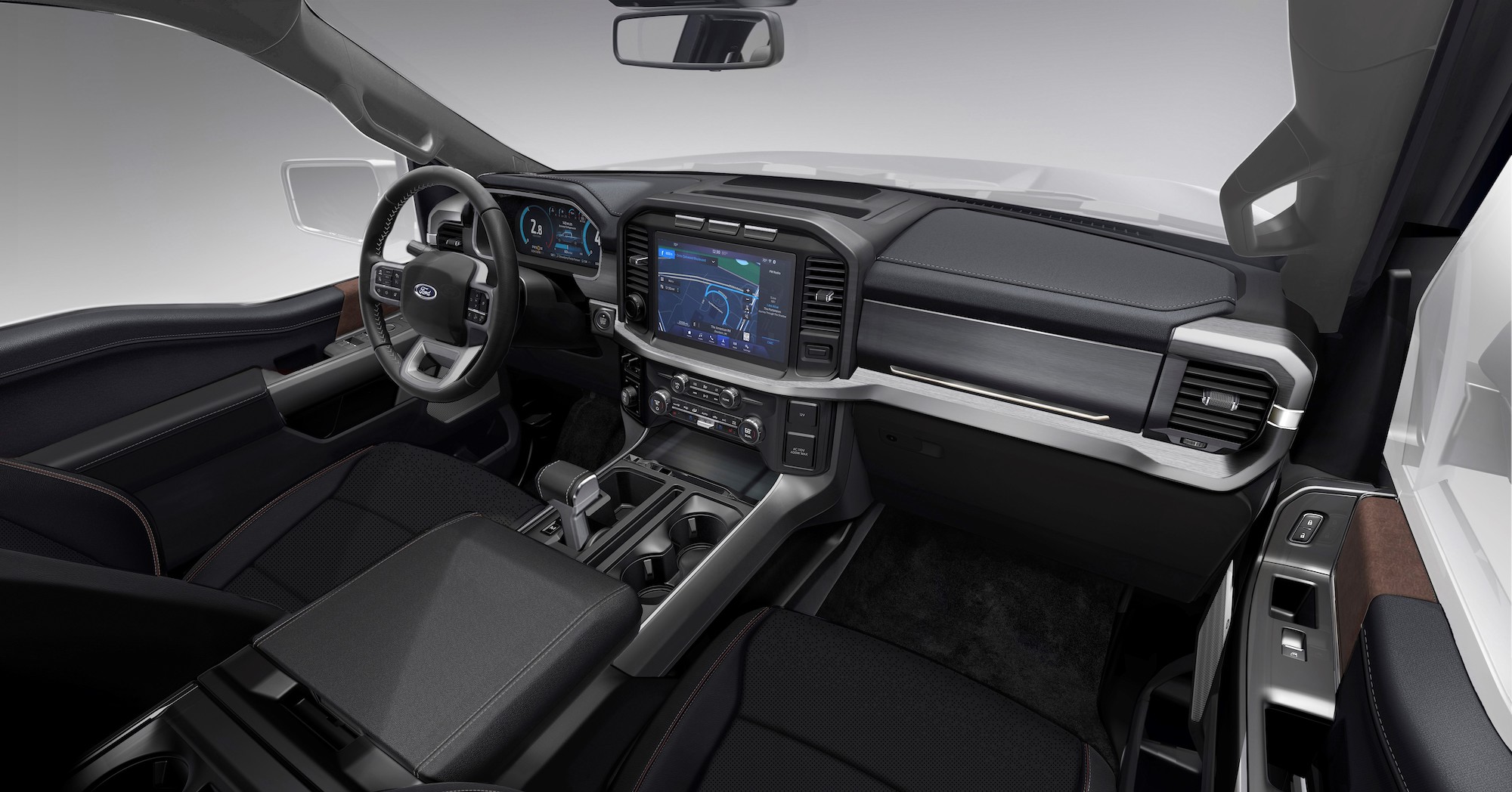
What sets the F-150 apart from other vehicles in its lineup is how much functional tech matters to its core customers. On the new model I tested, a 12-inch display that houses the standard Sync4 infotainment system is the center of the dashboard — and the customer experience.

Sync4 was introduced on the Mustang Mach-E and on the new Ford Bronco. Sync has been steadily improving for a simpler user experience since its 2007 introduction. Sync4 doubles computational power and introduced over-the-air software updates.

The system sources data from INRIX on traffic, construction (always in a Michigan summer), weather and parking space availability from data in 20,000 cities and 150 countries.

Natural language processing used in the system provided more accurate responses to my voice-based queries and incoming SMS messages. One caveat worth noting: It was difficult to judge the machine learning algorithm because my test vehicle had been used by multiple drivers in recent weeks.

For infotainment, I generally defer to Apple CarPlay, which along with Android Auto, is easy to call up, because it connects wirelessly in the F-150 and minimizes distracted driving. Ever since they debuted in production vehicles — 2014 for CarPlay and 2015 for Android Auto — it seemed inevitable that Apple and Google were going to dominate the middleware infotainment system game.

Sync also tees up supported apps Waze and Ford+Alexa.

Driving tech

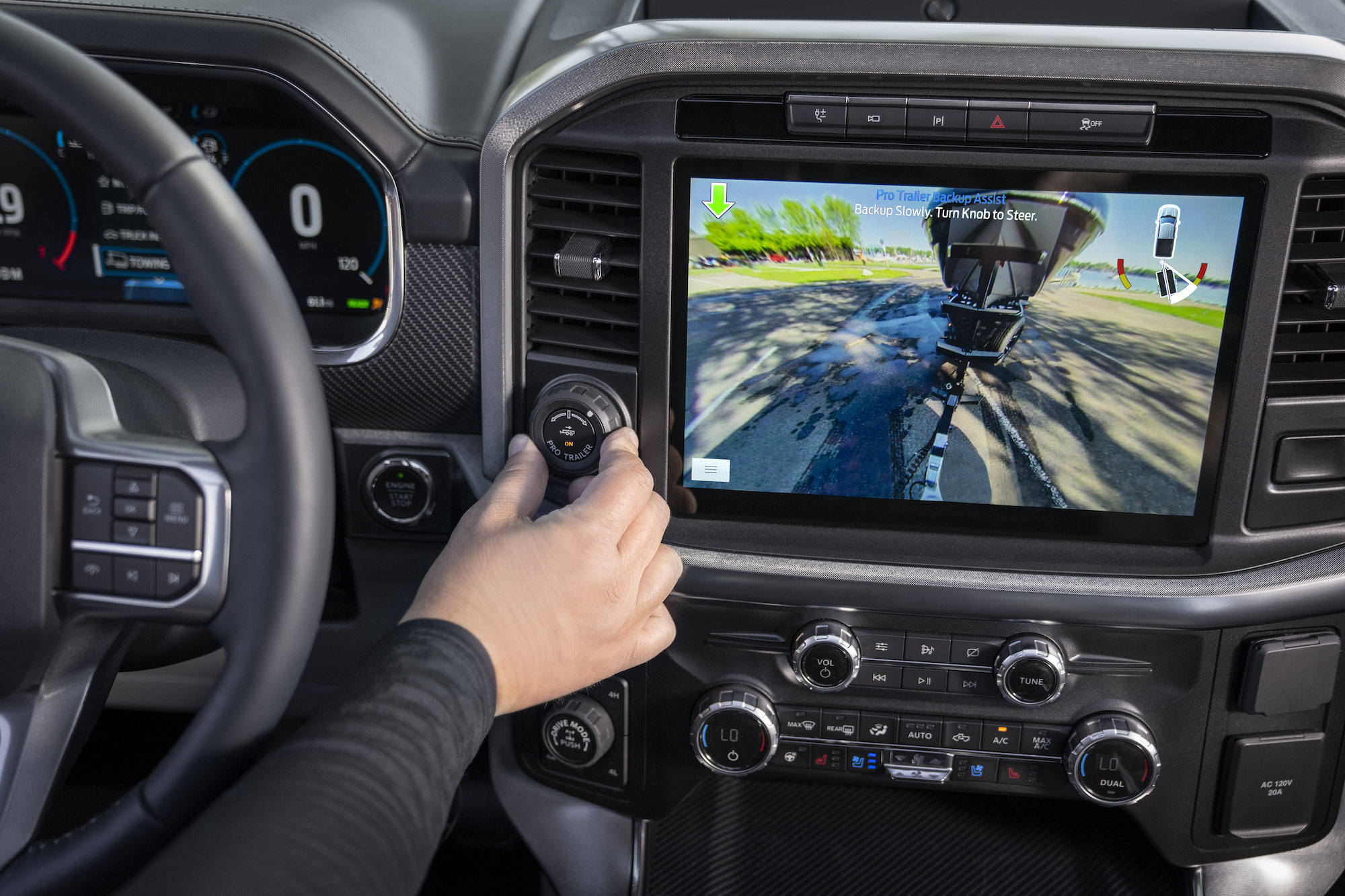
Driving a full-size truck for the first time can be intimidating, and Ford uses camera tech to make the big rig easier to maneuver. The split screen helps a timid driver feel confident navigating through tight spaces.

Five onboard cameras act as guides that assist with steering and parking. The vivid graphics incorporated into the 360-degree view from above helps to establish bearings where mirrors won’t suffice.

Behind the steering wheel is a 12-inch digital cluster. There’s part of me that misses the old-fashioned gauges of a classic pickup, but that’s not the direction Ford is heading. Ford is striving for future-forward vibes, encapsulated by Mustang Mach-E’s Apple-design-inspired aesthetic.

Through its in-car design, Ford is trying to make the case it’s a tech company first, and a 120-year-old automaker second. These earnest aesthetic cues may be a bit too on the nose as products age over time.

Ford is due to introduce Blue Cruise, an advanced driver assistance system it once called Active Drive Assist, on vehicles later this year by an automatic software update, which was not yet active on the model I drove in June, though the hardware was included.

The company claims the system allows for hands-free driving in zones that span 100,000 miles of North American road and will be standard on the F-150 Limited vehicles in the Ford Co-Pilot360 Active 2.0 Prep Package. It will be sold as an option on Lariat, King Ranch and Platinum models. The system uses a driver-facing camera to track eye gaze and head position to monitor concentration as an answer to GM’s Super Cruise.

The doodads that matter most

2021 Ford F-150

2021 Ford F-150’s interior work surface. Image Credits: Ford Motor Company

Under the foot-long screen are the old-school knobs and switches that show Ford knows its customers still favor a manual cue here and there. Below that is a shift lever that folds down and flat into a 15-inch workstation, which I used for some in-car laptop time.

There are ample charging stations and wireless charging throughout the cabin. While the F-150 interior is spacious, every inch of real estate is carefully thought through. Seats fold to 180-degrees for proper roadside naps or to add extra cargo space.

The dark grey leather seats felt more utilitarian than luxurious, especially for a fully loaded vehicle. (Crosstown competitor Ram tends to outdo Ford on driving joy and interior design aesthetics.) The exterior and interior design emphasizes functionality, pure and simple. I hauled two kayaks in the back and found thoughtful hooks to connect to my bungee cords in the truck bed.

A bevy of 240-volt outlets are in the rear of the truck bed and two more are onboard in the cabin. The truck bed also has a convenient ruler built in on the tailgate with both metric and imperial calculations. A 2.4 kilowatt generator is standard on the hybrid model, while the optional 7.2 kW generator functions for 32 hours on a full tank of gas.

I didn’t test out the F-150’s towing capacity, but for truck folks these numbers are essential. It has a payload of 2,120 pounds and can tow up 12,700 pounds (those numbers vary a bit depending on bed length and drivetrain). It also offers a backup towing assist function, which helps align the connection to a trailer. The model I drove was priced at $68,095, a significant leap from the $50,980 base price. In contrast, Ford produces an even higher-end F-150 trim called the Limited, which starts at $73,000.

Function in form

Before it goes all electric, the hybrid powertrain gives Ford a much needed boost to compete with Ram and Chevrolet, which already sell hybrid variants. The hybrid option is a logical compromise for customers who aren’t ready for the full Lightning EV that will go on sale in 2022, a launch that’s already generated buzz and 120,000 pre-orders. I clocked about 24 miles per gallon, an improvement over all-gasoline and best in its class for non-diesel. It’s still not enough to get Ford anywhere close to a stellar emissions report card, which is why the Lightning matters so much.

In order to court new EV customers, Ford must appease its current buyers who buy all those trucks we see on the road today. There’s two kinds of pickup truck customers: Those who rely on the functionality for their daily vocation or the weekend warriors and those who seek out the capability in case they might need it in a disaster scenario. The truck that I drove does the job of appealing to both.

The F-150 has always been suited to buyers who use it for home improvement projects, outdoorsy hobbies and towing. Pickup trucks also support laborers that require a rugged, functional vehicle. When Ford introduces anything new to this model, it creates hype and high stakes on how these customers feel about tweaks.

2021 F-150 Lariat interior in black. Image Credits: Ford Motor Company

The buyer who seeks security came to mind while I had the F-150 on loan in late June, which is why I’ve saved the part about how it drives for last. My test drive period coincided with a summer storm that pummeled Michigan and shut down major highways and left vehicles stranded for days.

Before the storm, I zoomed around town, adjusting to the big loose steering and wide turns and the rhythm of stillness that occurs as the hybrid engine regenerates.

Once the storm came, I eased off the throttle and into a steady and sure pace, hands at 10 and two. Passenger cars and lesser capable crossover SUVs floated by me in two feet of water on the Lodge Freeway. The F-150 plowed through the muck, unbothered. I didn’t experience any skidding or stalling, in contrast to one friend who was forced to walk home because her Uber driver got stuck. The F-150 feels like a test case for a survivalist in an environmental catastrophe. The backup generator is the added security blanket.

Full-size trucks have an innate quality to make a driver feel invincible, which at the end of day is why people love their F-150s, and why the company has gotten so much mileage off that “Ford tough” tagline. It’s a delicate balance, keeping an unfussy truck at a price point that delivers power, substance and peace of mind.

11 Aug 2021

Regulations can define the best places to build and invest

Market timing  —  how relevant an idea is to the current state and direction of a market  —  is the most important factor in determining the durability of that idea.

Several inputs inform market timing: The skew of consumer preferences in response to a pandemic. The price of goods for a resource that is finite and becoming scarce. The creation of a novel algorithmic or genetic technique that enlarges the potential of what can be streamlined, repaired and built.

But market timing is also defined by a less discussed area that is born not in capital markets but in the public sector  —  the regulatory landscape  —  namely, the decisions of government, the broader legal system and its combined level of scrutiny toward a particular subject.

We can understand the successes and challenges of several valuable companies today based on their combustion with the regulatory landscape.

We can understand the successes and challenges of several valuable companies today based on their combustion with the regulatory landscape, and perhaps also use it as an optic to see what areas represent unique opportunities for new companies to start and scale.

Looking back: The value in regulatory gray areas

“The tech comes in and moves faster than regulatory regimes do, or can control it,” Uber co-founder and former CEO Travis Kalanick said at The Aspen Institute in 2013.

The brash statement downplayed that the regulatory landscape had, in fact, driven a number of pivotal outcomes for the company up to that event. It changed its name from UberCab to Uber after receiving a cease-and-desist order in its first market, California. Several early employees left because of the startup’s regulatory challenges and iconoclastic ethos. It shut down its taxi service in New York after just a month of operations, and then in early 2013 received its lifeline in the city after being approved through a pilot program.

Fast forward to the present, and Uber has a market cap of about $82 billion, with the ousted Kalanick having a personal net worth in the neighborhood of $2.8 billion.

Still, even at its scale, many of its most important questions on growth centered around how favorably the regulatory landscape would treat its category. Most recently, this came with the U.K. Supreme Court ruling that Uber drivers could not be classified as independent contractors.

The regulatory fabric has had similar leverage over other sharing-economy companies. In October 2014, for example, Airbnb’s business model became viable in San Francisco when Mayor Ed Lee legalized short-term rentals. In November 2015, Proposition F in the city aimed to restrict short-term rentals like Airbnb, and the startup spent millions in advertisements to mobilize voters in opposition.

Airbnb’s current market cap stands at $92 billion, and its CEO, Brian Chesky, has an estimated net worth over $11 billion. Like Uber, its regulatory tribulations continue, most recently being fined and judged to owe $9.6 million to the city of Paris.

The stories of these two companies and others in the sharing economy space demonstrate the value that the regulatory fabric can add or subtract from a company’s wealth, but also underscore the value  —  for founding teams, early employees, investors and customers  —  of navigating the gray areas.

Looking around: The data economy

The present regulatory fabric has precipitated market timing for ideas in a number of categories. Solutions that enable data privacy, like BigID, and ones that embed data privacy into larger customer value propositions, like Blotout, are on streamlined growth tailwinds from the GDPR in Europe and their inspired analogs in the U.S.

11 Aug 2021

Regulations can define the best places to build and invest

Market timing  —  how relevant an idea is to the current state and direction of a market  —  is the most important factor in determining the durability of that idea.

Several inputs inform market timing: The skew of consumer preferences in response to a pandemic. The price of goods for a resource that is finite and becoming scarce. The creation of a novel algorithmic or genetic technique that enlarges the potential of what can be streamlined, repaired and built.

But market timing is also defined by a less discussed area that is born not in capital markets but in the public sector  —  the regulatory landscape  —  namely, the decisions of government, the broader legal system and its combined level of scrutiny toward a particular subject.

We can understand the successes and challenges of several valuable companies today based on their combustion with the regulatory landscape.

We can understand the successes and challenges of several valuable companies today based on their combustion with the regulatory landscape, and perhaps also use it as an optic to see what areas represent unique opportunities for new companies to start and scale.

Looking back: The value in regulatory gray areas

“The tech comes in and moves faster than regulatory regimes do, or can control it,” Uber co-founder and former CEO Travis Kalanick said at The Aspen Institute in 2013.

The brash statement downplayed that the regulatory landscape had, in fact, driven a number of pivotal outcomes for the company up to that event. It changed its name from UberCab to Uber after receiving a cease-and-desist order in its first market, California. Several early employees left because of the startup’s regulatory challenges and iconoclastic ethos. It shut down its taxi service in New York after just a month of operations, and then in early 2013 received its lifeline in the city after being approved through a pilot program.

Fast forward to the present, and Uber has a market cap of about $82 billion, with the ousted Kalanick having a personal net worth in the neighborhood of $2.8 billion.

Still, even at its scale, many of its most important questions on growth centered around how favorably the regulatory landscape would treat its category. Most recently, this came with the U.K. Supreme Court ruling that Uber drivers could not be classified as independent contractors.

The regulatory fabric has had similar leverage over other sharing-economy companies. In October 2014, for example, Airbnb’s business model became viable in San Francisco when Mayor Ed Lee legalized short-term rentals. In November 2015, Proposition F in the city aimed to restrict short-term rentals like Airbnb, and the startup spent millions in advertisements to mobilize voters in opposition.

Airbnb’s current market cap stands at $92 billion, and its CEO, Brian Chesky, has an estimated net worth over $11 billion. Like Uber, its regulatory tribulations continue, most recently being fined and judged to owe $9.6 million to the city of Paris.

The stories of these two companies and others in the sharing economy space demonstrate the value that the regulatory fabric can add or subtract from a company’s wealth, but also underscore the value  —  for founding teams, early employees, investors and customers  —  of navigating the gray areas.

Looking around: The data economy

The present regulatory fabric has precipitated market timing for ideas in a number of categories. Solutions that enable data privacy, like BigID, and ones that embed data privacy into larger customer value propositions, like Blotout, are on streamlined growth tailwinds from the GDPR in Europe and their inspired analogs in the U.S.

11 Aug 2021

Medium revamps its Partner Program, launching new eligibility requirements and referral bonuses

Amid a year of editorial pivots and employee exits, Medium announced today that it will make significant changes to its Medium Partner Program, which allows writers on the platform to monetize their content.

Founded in 2011, Medium launched its Partner Program in 2017. Since then, the platform has paid out $28 million to over 200,000 contributors. Initially, it offered payouts based on how much time Medium members spent reading a writer’s content. For $5 per month or $50 per year, Medium members could read all posts on the platform without hitting a paywall. Plus, part of each member’s subscription was split among the writers they read; so, if a Medium member spent 10% of their time reading one writer’s work, for example, that writer would get 10% of the subscriber’s revenue share.

Medium said that earnings based on read time will remain the same. But now, Medium will offer a new way to make money with the launch of a referral program.

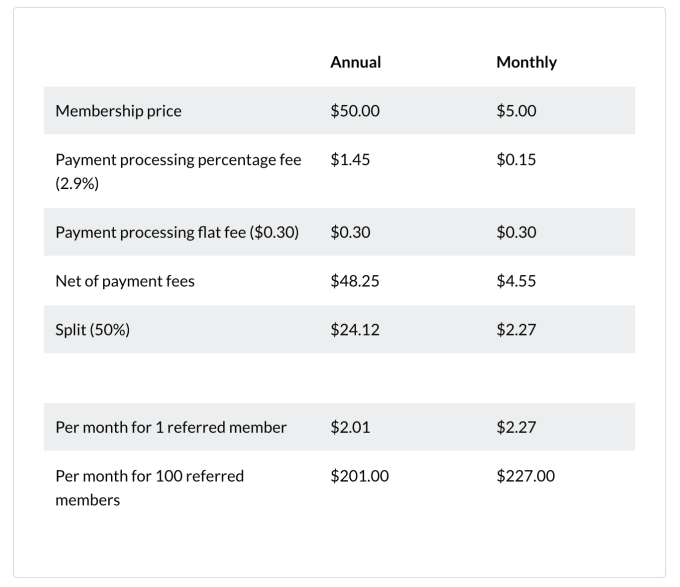
Previously, if a reader converted to a paying member within 30 days of reading a writer’s story, that writer would get credit for the amount of time the reader spent reading their work. Under the new model, Partner Program writers will now have a personalized referral landing page — for any reader who purchases a Medium subscription via their page, the writer will get half of that member’s subscription fee for as long as they remain a paying member, minus the standard 2.9% + $0.30 in payment processing fees. So, if a writer got 100 readers to sign up for a monthly Medium membership through their referral, that would net the writer $227 per month.

However, now it’s more difficult for a writer to join the Partner Program — writers must have 100 subscribers, at least one published Medium story, and they must live within specific geographic regions. Even if a Partner meets the new eligibility requirements, they might lose their status if they don’t publish anything new in a six month period. Still, under the previous structure, just becoming a Partner didn’t guarantee financial rewards — some Partners with smaller followings would make pennies each month. Existing Partners will retain their status through the end of 2021, and if they haven’t reached 100 subscribers by then, they will be removed.

Also, Medium will soon institute a minimum payout threshold of $10, meaning that if a writer makes less than $10 in a month, that pay will roll over to the next month until they amass at least $10.

Medium has been reticent about its subscriber numbers in the past, but CEO Ev Williams told TechCrunch in November that its subscriber numbers were in the “high hundreds of thousands.” In March 2021, Medium had 725,000 subscribers per Axios, but Digiday previously reported that Medium had hoped to reach 1 million subscribers by 2020. As of September, its competitor Substack, founded in 2017, had 250,000 paid subscribers and raised a $65 million series B round two months later. Medium last raised venture funding in 2016 with a $50M series C round.

Platforms like Substack and the newer Ghost pay writers based on how many paying subscribers they have. Medium’s new revenue sharing model similarly incentivizes writers to corral readers to the platform, but Medium takes about 50%. For direct subscriptions to a writer’s individual newsletter, Substack takes 10%, and Ghost takes $9 per month. While Substack or Ghost readers might subscribe to multiple individual newsletters, Medium subscribers pay just one $5 monthly or $50 yearly fee to access all of the website’s content.

The newsletter business is competitive — in June, Facebook launched a newsletter platform called Bulletin with hand-picked contributors, and Twitter acquired Revue earlier this year. Then, last week, Quora unveiled a monetization platform called Quora+, which costs the same as a Medium membership. Similar to Medium, Quora+ subscribers get access to all content any writer chooses to put behind a paywall, and writers are paid based on engagement with their content. But writers can also write paywalled posts on Spaces, which are like user-created publications on Quora — Quora takes a 5% cut of those payments.

11 Aug 2021

Space manufacturing startup Varda inks deal with Rocket Lab for three spacecraft

Orbital manufacturing startup Varda Space Industries is moving fast. Only a few weeks after announcing a $42 million Series A, Varda has signed a deal with launch company Rocket Lab for three Photon spacecraft to support the startup’s initial missions.

The first spacecraft will be delivered in the first quarter of 2023, with the second to follow later that year and the third in 2024. It’s an aggressive schedule for the eight-month-old Varda and would mark the company’s first three manufacturing missions to space. The contract includes an option for Varda to purchase a fourth Photon.

Partnering with a more established company makes sense – especially considering the Photon’s bona fides, which includes a NASA-funded mission to the moon at the end of the year. Rocket Lab was also awarded a subcontract a subcontract by the University of California Berkeley Space Sciences Laboratory to design two Photon spacecraft for a 1-year mission to Mars.

Varda, which was founded by SpaceX veteran Will Bruey and Founders Fund principal Delian Asparouhov, is banking big on a manufacturing condition that you can only find in space: microgravity. They think that the potential market for bioprinted organs, specialized semiconductors, fiber-optic cables or pharmaceuticals – products that you can’t make in Earthbound-conditions – is high enough to make the costs of building a spacecraft and launching to space more than worth it.

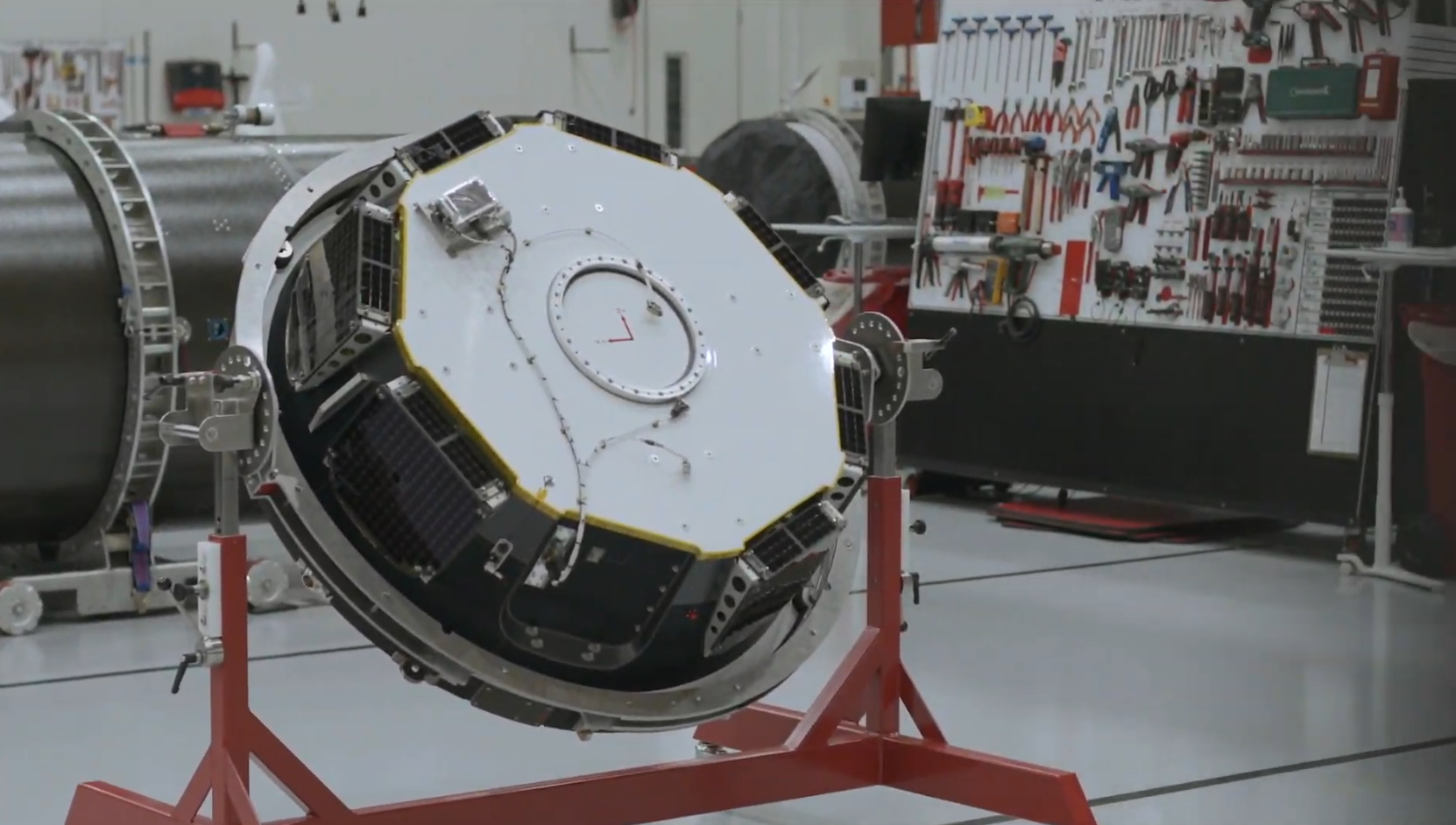
Under this most recent deal, each Photon will be outfitted with two Varda-made modules: the first will be a microgravity manufacturing module, where the space production will actually take place, and the second will be a reentry capsule designed to bring those finished products back to Earth. Asparouhov told TechCrunch that their designing the reentry modules to bring back “on the order of 40-60 kilograms of materials” for the first couple of missions, with the aim of quickly scaling up for subsequent launches.

Varda says this approach is low-risk and incremental. “That’s why we’re seeing so much interest from the investment community, [the Department of Defense], NASA, et cetera, it’s this very pragmatic, one-step-at-a-time approach,” Asparouhov said. “We’ll prove this first space factory. And yes, as we start to scale it allows us to send a larger space factory and then eventually, yes, we might have something the size of the [International Space Station], 10 times the size of the ISS. But that’s not what we’re starting with. We’re starting with a very small, near-term pragmatic approach.”

Each mission will last roughly three months from launch to landing, Rocket Lab said in a statement.