Year: 2021

05 Aug 2021

Warehouse drones take flight

Drones are neat and fun and all that good stuff (I should probably add the caveat here that I’m obviously not referring to the big, terrible military variety), but when it comes to quadcopters, there’s always been the looming question of general usefulness. The consumer-facing variety are pretty much the exclusive realm of hobbyists and imaging.

We’ve seen a number of interesting applications for things like agricultural surveillance, real estate and the like, all of which are effectively extensions of that imaging capability. But a lot can be done with a camera and the right processing. One of the more interesting applications I’ve seen cropping up here and there is the warehouse drone — something perhaps a bit counterintuitive, as you likely (and understandably) associate drones with the outdoors.

Looking back, it seems we’ve actually had two separate warehouse drone companies compete in Disrupt Battlefield. There was IFM (Intelligent Flying Machines) in 2016 and Vtrus two years later. That’s really the tip of the iceberg for a big list of startups effectively pushing to bring drones to warehouses and factory floors.

The list now also includes Corvus Robotics, a YC-backed startup presumably named for the genus of birds that includes surprisingly intelligent species like crows and ravens (though, presumably, these ones don’t also travel together in murders). The company calls its offering “the world’s first unmanned warehouse inventory drones,” which is potentially disputable.

But the offering is interesting, nonetheless, effectively flying around to scan pallets for inventory purposes. According to a piece from IEEE Spectrum, the level-four autonomous drone network is capable of scanning 200 to 400 pallets an hour, including the downtime spent recharging (flying is hard work).
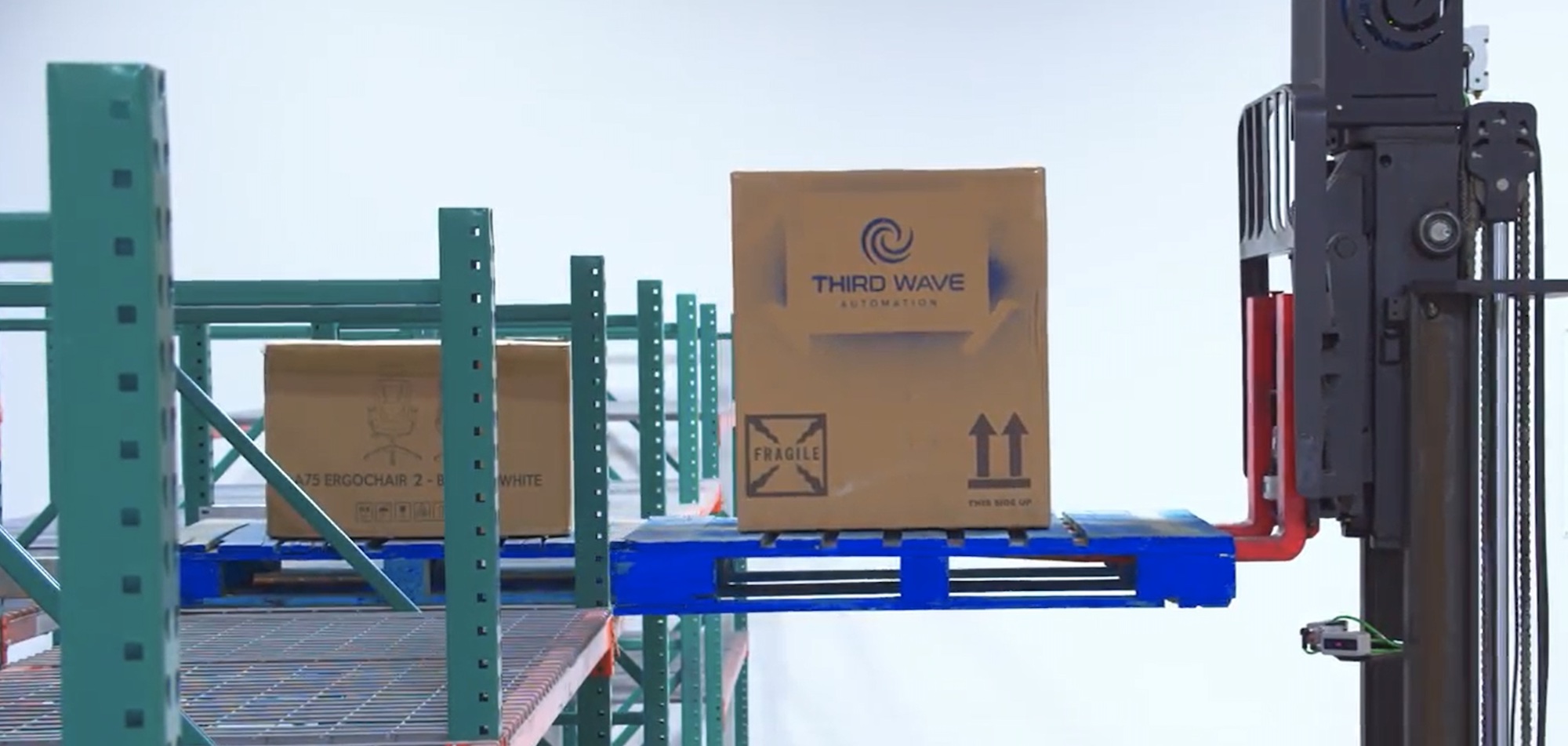
third wave automation

Image Credits: Third Wave Automation

Speaking of that industry holy grail of full warehouse automation, Third Wave Automation just announced a $40 million Series B, led by Norwest Venture Partners and featuring Innovation Endeavors, Eclipse and Toyota Ventures. The latter has been working with the Bay Area-based startup to develop an autonomous forklift — because, among other things, forklift accidents hurt a lot of people every year.

Here’s CEO Arshan Poursohi:

We’ve covered just about every kind of robot there is. But all of these robots that we built ended up, you know, sitting in a closet somewhere because ultimately, Google or, in my case, Sun Microsystems, would decide it’s not worth scaling it out because it’s not the core business, or some other reason.

The company plans to have 100 units out in the world by the end of next year.
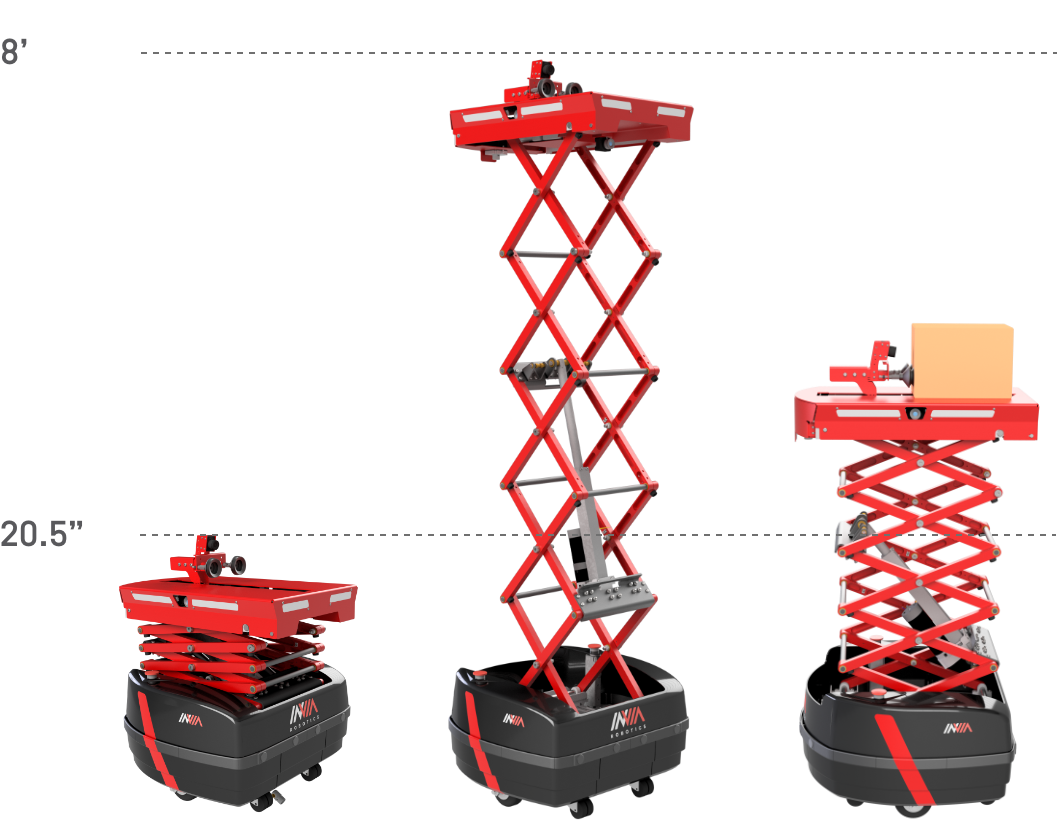
Image Credits: InVia Robotics

Fellow warehouse automator inVia Robotics, meanwhile, announced a $30 million Series C at the tail end of last month. Tech giants Microsoft (M12) and Qualcomm (Qualcomm Ventures LLC) led the round, which brings the California firm’s total funding up to $59 million to date. Hitachi Ventures also joined for the round. The company says it was able to grow pandemic-fueled growth to a 600% revenue increase in 2020.

And just because we couldn’t do all warehouse news this week (as tempting and easy as that might be), here’s a robot from General Electric named ATVer. The sundry tech conglomerate has been field testing the autonomous ‘bot with the U.S. Army. Military funding, mind, continues to be a pretty massive driver in robotics, for better and worse.

“Our project and partnership with the US Army has really enabled us to make some important advances in autonomous systems,” GE’s senior robotics Shiraj Sen says in a release. “We believe the advances made on this project will not only help accelerate the deployment of future driver-less vehicle technologies; they will help encourage more autonomous solutions in other industry sectors like energy, aviation and healthcare that people depend on every day.”

Image Credits: Sarcos

In just under the wire, Sarcos this morning announced a partnership with T-Mobile that will bring 5G teleoperation to the company’s  Guardian XT robot. Robotics are, of course, one of those things that frequently get tossed around when discussing the potential benefits of 5G’s low-latency connection. Honestly, it’s the sort of thing that gets rolled out on stage during press events (cough Verizon), because robots are surefire crowd pleasers. So, it’s nice seeing it applied to some actual systems here.

From the release,

The T-Mobile and Sarcos collaboration begins with the integration of 5G to develop a remote viewing system powered by T-Mobile’s high bandwidth, low latency 5G network. This enables workers, supervisors, outside experts, and others, whether they are based locally or remote, to watch tasks being performed by the robot as it is controlled by an operator in the field. The second phase of development is expected to include full T-Mobile 5G wireless network integration, allowing teleoperation of the Guardian XT robot over 5G, giving operators greater flexibility and increasing their safety by enabling them to perform tasks from a distance.
05 Aug 2021

Tomorrow’s the final day for early bird passes to TC Disrupt 2021

Great news for budget-conscious startuppers of every stripe. The early-bird price extension on passes to TechCrunch Disrupt 2021 remains in play for one more day. Buy an early-bird pass — Innovator, Founder or Investor — and you’ll revel in three full days of Disruption for less than $100.

This is what you call a “buy now or pay more later” situation, people — the deal disappears for good tomorrow, August 5 at 11:59 pm (PT).

Pro Tips: We also offer deep discounts on tickets for students, non-profits and government employees. Just want to explore the companies exhibiting in Startup Alley? Grab an Expo Pass for less than $50. Want to register more than five people? Email events@techcrunch.com for a group rate quote.

No matter where you and your business fall on the startup spectrum, you’ll find plenty of information, inspiration and opportunity at Disrupt 2021. Here’s why three of your contemporaries think going to Disrupt is an essential part of the startup experience.

I love Disrupt because it features incredible companies. My work exposes me to lots of companies all over the world but, inevitably, I run across startups at Disrupt I haven’t heard of yet. It’s always fascinating to explore opportunities and find ways to work together. — Rachael Wilcox, creative producer, Volvo Cars.

When you’re building a startup, you’re in the weeds. It’s hard to get a 30,000-foot view, see where your company is and where it can go. Going to Disrupt and seeing what other startups are doing gives you that important perspective. It’s a huge benefit. — Jessica McLean, Director of Marketing and Communications, Infinite-Compute.

As a cross-border VC fund manager, I’m always looking to identify new tech trends and how we can bring them to Latin America. Disrupt provides terrific insight on trends in different industries like e-grocery, AI and big data. — Daniel Lloreda, general partner at H20 Capital Innovation.

The Disrupt experience also includes watching the world-renown Startup Battlefield pitch competition. A field of 20 off-the-hook startups will take the stage and vie for $100,000 in equity-free prize money. Plenty of household tech names — like Vurb, Yammer, Dropbox and Mint — launched their company during Startup Battlefield. Watch the future giants of tech launch here.

Whether you consider networking an art, a science or a full-on contact sport, Disrupt offers exceptional opportunities to connect and collaborate with like-minded people who can help build your business. CrunchMatch, our free, AI-powered platform, makes finding those folks — out of 10,000+ global attendees — quick and painless.

And of course, we have a packed agenda, world-class speakers, vital trends, actionable tips and advice, pitch deck teardowns and breakout sessions. Plus, hundreds of innovative startups exhibiting in the Startup Alley expo area.

It all goes down on September 21 -23 at TechCrunch Disrupt 2021. And it’s all available to you for less than $99 — if you buy your pass before tomorrow, August 5 at 11:59 pm (PT). What the heck are you waiting for?

Is your company interested in sponsoring or exhibiting at Disrupt 2021? Contact our sponsorship sales team by filling out this form.

05 Aug 2021

Avoid these common financial mistakes so your startup doesn’t die on the vine

The startup world can be a rollercoaster. While investment continues to pour in — with both founders and investors looking for the next unicorn — the reality is that 90% of startups fail, with over half of those going under in the first three years.

I’ve founded two companies that I grew and sold (Mezi and Dhingana). I encountered many of the issues that new founders face, learned on the job, and thankfully persevered. Using the knowledge that I acquired in my previous companies, I’ve founded a third — Zeni — to try and help founders make more informed, sustainable financial decisions.

For many founders, a transformative idea and initial outside investment doesn’t translate into understanding the underlying financial complexities of running a business.

Whether you’re just wrapping your seed round, or on to Series B, avoiding these common issues is the best way to ensure that you’re set on solid ground and free to focus on your vision.

Why most startups fail

Startups go under for a variety of reasons. Some fail to achieve product-market fit in a scalable way. Many others simply run out of money. While the above two reasons are often cited as the two primary reasons for startup failure, they’re also related. If you don’t solve a market problem and don’t generate customers, you’re eventually going to run out of money.

Unfortunately, many of the startups that fail shouldn’t. They’re led by bright entrepreneurs with a great idea. But for many founders, a transformative idea and initial outside investment doesn’t translate into understanding the underlying financial complexities of running a business.

When you break down the various complexities founders face in understanding business finances, there are three primary hurdles they face:

  1. Fragmentation of financial systems.
  2. Time-consuming manual tasks.
  3. Lack of real-time financial insights.

All of the above issues put increased workload and strain on founders, which can lead to burnout. Owners, on average, spend around 40% of their working hours on tasks like hiring, HR and payroll. While hiring is integral to a founders’ day-to-day role, other administrative tasks related to finance, HR and payroll distract founders from focusing on their overall vision and goals.

The good news is that by being aware of the above issues, you can solve them and eliminate the consequences of burnout, distraction and, ultimately, failure. Let’s talk about how.

Consolidate fragmentation

The financial decision-making and tasks of most startups start and stop with the founder. This means that bookkeeping, bill paying, invoicing, financial projections, employee payments and taxes all run into a bottleneck. Even worse, each of these functions requires another employee, vendor or third-party expert — finance firms, admins, CFOs, CPA firms — each using its own software and applications to accomplish their goals.

Each of these parties is reporting back up to the founder, who is then in charge of making sense of it all and disseminating the information to the entities that need it. This means that not only is everything slower, but often things fall through the cracks, as communication can become a serious issue.

Worse still, this creates cash flow problems, as bills go unpaid, invoices go unsent, and important financial documents are delayed. I’ve seen revenue go unreported and invoices unsent and uncollectable due to the fragmentation-bottleneck system most founders experience.

05 Aug 2021

With DoubleDash, DoorDash users can tack on multiple orders without additional fees

During the thick of the pandemic last year, online food delivery company DoorDash expanded its offerings to include convenience store delivery. Now, DoorDash customers in the U.S. and Canada can shop across multiple stores and categories in a single order.

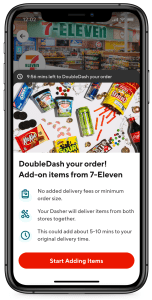
With DoubleDash, as the program is called, customers can now tack onto your order of a pad Thai dinner, some tampons and ice cream from the local 7-Eleven. In most cases, it’ll all be brought to them by the same delivery person in one bundle, allowing customers to forgo any additional service or delivery fees.

The goal for customers is to increase convenience while preserving price expectations. For local businesses, there’s a possibility that some light prodding of the customer while they’re hungry and uninterested in leaving their homes will lead to more business. And for DoorDash, this move is another step towards making the app the ever-coveted “one-stop-shop” for all things delivery.

Image Credits: DoorDash

“Ever since we began offering convenience as a category on DoorDash over a year ago, we’ve observed that many customers organically order their restaurant meal and then place another order for convenience items within a 30 minute window,” Fuad Hannon, DoorDash’s head of new verticals, told TechCrunch. “We are always thinking about ways to improve our platform to serve our customers’ needs and after observing this consumer behavior, we wanted to make this process easier and more affordable for consumers.”

With DoubleDash, after a customer place their original order, a pop up on the app will entice them with additional items from nearby stores. Customers can also look for the DoubleDash option on the in-app map to search for nearby stores. Depending on the customer’s location and proximity to the merchant, anywhere from one to five merchants will show up on the map. Customers can add on as much or as little as they want for the second order, as there’s no minimum order size.

Delivery workers, or “Dashers,” will be able to collect tip on both the first restaurant order and the second merchant order, according to the company. Dashers can use DoorDash’s logistics platform to accept both orders at once and deliver them together without deviating from the primary route, thus potentially increasing earnings without going too far out of their way.

This new feature is available with 7-Eleven, Walgreens, Wawa, QuickCheck, the Ice Cream Shop and DashMart, a DoorDash-owned convenience and grocery store. DoorDash is also piloting the ability to partner local restaurants with DoubleDash in several markets like Los Angeles, Denver and Portland, so if you want to start with sushi and end with a chocolate torte, it’ll be just a little bit cheaper and easier to do so.

“We are excited to be a part of DoorDash’s newest endeavor, DoubleDash, and for the opportunity to reach new customers and drive additional sales for our business,” said Benjamin D. Arreola, owner of Señor G’s Fresh & Healthy Mexican Food in Playa Del Rey, California, in a statement.

05 Aug 2021

European refurbished electronics marketplace Refurbed raises $54M Series B

Refurbed, a European marketplace for refurbished electronics which raised a $17 million Series A round of funding last year has now raised a $54 million Series B funding led by Evli Growth Partners and Almaz Capital.

They are joined by existing investors such as Speedinvest, Bonsai Partners and All Iron Ventures, as well as a group of new backers — Hermes GPE, C4 Ventures, SevenVentures, Alpha Associates, Monkfish Equity (Trivago Founders), Kreos, Expon Capital, Isomer Capital and Creas Impact Fund.

Refurbed is an online marketplace for refurbished electronics that are tested and renewed. These then tend to be 40% cheaper than new, and come with a 12-month warranty included. The company claims that in 2020, it grew by 3x and reached more than €100M in GMV.

Operating in Germany, Austria, Ireland, France, Italy and Poland, the startup plans three other countries by the end of 2021.

Riku Asikainen at Evli Growth Partners said: “We see the huge potential behind the way refurbed contributes to a sustainable, circular economy.”

Peter Windischhofer, co-founder of refurbed, told me: “We are cheaper and have a wider product range, with an emphasis on quality. We focus on selling products that look new, so we end up with happy customers who then recommend us to others. It makes people proud to buy refurbished products.”

The startup has 130 refurbishers selling through its marketplace.

Other Players in this space include Back Market (raised €48M), Swappa (US) and Amazon Renew. Refurbed also competes with Rebuy in Germany, Swapbee in Finland.

05 Aug 2021

Astra targets first commercial orbital launch for August 27

Astra’s last test launch went better than expected, nearly achieving orbit — kind of a stretch goal for that specific mission. The company at the time said that it would only need to tweak software to reach an orbital destination, and now we know when it’s going to get the chance to prove it: Astra revealed a launch window today of August 27 for its first ever commercial orbital launch, a demonstration mission for the U.S. Space Force.

The contract Astra has with the Space Force also includes a second launch, set for sometime later this year, with the exact schedule for that launch yet to be finalized.

The payload that Astra’s rocket will carry for the Space Force will be a test spacecraft flown for the agency’s Space Test Program. The launch will take place from Astra’s spaceport in Kodiak, Alaska, which is where it has flown its test missions previously.

While the launch window officially opens at 1 PM PT on August 27, it will remain open all the way through Saturday, September 11, and Astra could easily shift the launch within that window based on weather conditions and other factors.

Astra, which become a publicly traded company at the start of July through a SPAC merger, builds it own launch vehicles at its factory in Alameda, California. The launch provider is targeting cheap, high-volume, low mass launches as its milieu, offering more flexible services relative to SpaceX, and a cost advantage when compared to Rocket Lab.

ockquote>

05 Aug 2021

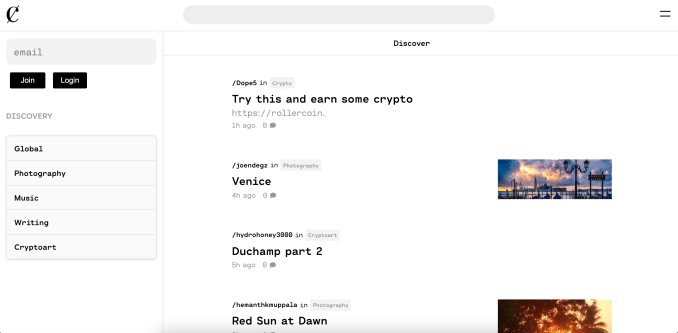
Cent, the platform that Jack Dorsey used to sell his first tweet as an NFT, raises $3M

Cent was founded in 2017 as an ad-free creator network that allows users to offer each other crypto rewards for good posts and comments — it’s like gifting awards on Reddit, but with Ethereum. But in late 2020, Cent’s small, San Fransisco-based team created Valuables, an NFT market for tweets, and by March, the small blockchain startup was thrown a serendipitous curveball.

“We just wrapped up for the day, and I was about to go eat dinner, and all these people started texting me,” remembers CEO Cameron Hejazi. Then, he realized that Twitter CEO Jack Dorsey had minted Twitter’s first ever Tweet through Cent’s Valuables application. “I was basically like, mildly shivering for the rest of the night. The whole team, we were like, ‘Okay, battle stations, prepare to get hacked!'”

Dorsey ended up selling his NFT for $2.9 million, and he donated the proceeds to Give Directly’s Africa Response fund for COVID-19 relief. But for Cent, it was as if the small company had just been handed a free marketing campaign. Now, about five months later, Cent is announcing a $3 million round of seed funding with investors like Galaxy Interactive, former Disney chairman Jeffrey Katzenberg, Will.I.Am, and Zynga founder Mark Pincus.

On Valuables, anyone on the internet can place an offer on any tweet, which then makes it possible for someone else to make a counter-offer. If the author of the tweet accepts an offer (logging into Valuables requires you to validate your Twitter account), then Cent will mint the tweet on the blockchain and create a 1-of-1 NFT.

The NFT itself contains the text of the tweet, the username of the creator, the time it was minted, and the creator’s digital signature. The NFT also includes a link to the tweet, though the linked content lives outside the blockchain.

There’s nothing proprietary about minting tweets as NFTs — another company could do the same thing that Cent is doing. Even Twitter itself has recently dabbled in giving away free NFT art, though it hasn’t tried to sell actual tweets as NFTs like Cent. Still, Hejazi sees Dorsey’s use of Cent like an endorsement — he thinks it would be difficult for Twitter to shut them down, since Dorsey made $2.9 million on the platform himself. After all, Dorsey chose Cent instead of taking a screenshot of his first tweet, minting the .JPG as an NFT, and posting it on a larger NFT platform, like OpenSea.

“We’ve spoken with people at Twitter. I’m positive that we have a healthy relationship going,” Hejazi said (Twitter declined to comment on or confirm whether that’s true). “We thought about applying this approach to other social platforms, like Instagram and TikTok, but we hypothesized that this is particularly suited for Twitter, because it’s a conversation platform, and it’s where all of the crypto people are actually living.”

With Cent’s seed funding Hejazi hopes to continue building the platform. The company’s goal is to enable anyone creative to make an income through the use of NFTs — that means developing tools to make it simpler for its users to mint NFTs, but also, building out its existing creator-focused social network. The content people post on Cent is usually creative work, like art and writing, rather than short posts — it’s closer to DeviantArt than it is to Reddit. These are lofty goals for a $3 million seed funding round, but there are aspects of Cent’s Beta platform that make it promising.

“There’s already value in what we post on social media. It’s just being proxied through ad dollars, and it doesn’t have to be the case that there’s so much wealth concentration in a single entity. We can work toward a system that decentralizes that wealth,” said Hejazi. “These networks as they exist have monopolies on distribution — you can’t take your Twitter audience, download it as a .CSV, and send them all an email.”

A screenshot of Cent’s social platform.

In addition to independent distribution lists, Hejazi wants to move away from the ad-supported internet. He references Substack as an example of a company where the creator has control of their list, and at the same time, the platform can remain ad-free, since the money that propels it comes from the users who pay to subscribe to newsletters (and also, venture capital helps).

But Cent does something different by allowing users to essentially invest in creators who they think have the potential to take off on their platform.

Users can “seed” a post, which is how you subscribe to a creator participating on the creatives side of Cent’s platform. As the seeder, you pay a set fee of at least one dollar per month. There’s an incentive to support up-and-coming creators on the platform, because seeders get a portion of the creators’ future profit — it’s like making a bet on them that they will continue to make great content in the future. Five percent of profits go toward Cent, but the remaining 95% is split 50/50 between the creator and all of their past seeders. Participating on this platform would allow creators to network and show support for one another, but doesn’t prevent them from more directly monetizing their work on other creator platforms, like Patreon.

In addition to seeding posts, users can also “spot” other people’s posts — Cent’s version of a “like” button. Each “spot” is the equivalent of one cent from the user’s crypto wallet. Cent’s argument is that getting 1,000 likes on a post on other platforms yields nothing but a vague sensation of social clout. But on Cent, if a user gets 1,000 “spots,” that’s $10. Still, a project like this can only work if enough people use the platform.

“When we started Cent, we chose cryptocurrencies because we loved the idea of someone being able to earn money with nothing more than their creativity and a crypto address,” Hejazi said. “Over time, we’ve found it to be limiting as a payment type — very few people actually own it and have it ready to spend. We’re working on ways to make payments to creators using Cent easier, and are exploring both crypto-native and non-crypto options.”

This mindset echoes other NFT startups like Yat, which allows payments via credit card as part of its “progressive decentralization” model. So much of these companies’ success depends on public buy-in toward an eventual decentralized, blockchain-based internet. But until then, companies like Cent will continue to experiment in reimagining how creatives can get paid online.

05 Aug 2021

Bluecore lands $125M Series E on $1B valuation as e-commerce personalization grows

During the pandemic, especially when we were in lock down, just about every retailer had to build its online presence and do it quickly. As people move to shop online in larger numbers, being able to personalize that experience has become more crucial. That made the pandemic a pivotal moment for Bluecore, an e-commerce personalization platform, and today the company announced a $125 million Series E on a $1 billion valuation.

Existing investor Georgian led the round with participation from other existing investors FirstMark and Norwest along with new investor Silver Lake Waterman. Today’s investment brings the total raised to $225 million, according to the company.

Up until fairly recently, Bluecore CEO and co-founder Fayez Mohamood says that retail outreach was mostly about driving traffic to brick and mortar stores or to the company website, but as more business gets conducted online, it has changed how brands have to interact with their customers.

“We believe in that shift, and Bluecore is a retail-specific, multi-channel personalization platform, and we combine basically three types of data. First is customer identity. Second is shopper behavior. And then thirdly and most importantly, the product catalog of a retailer, and using that we drive personalized experiences on various channels,” Mohamood explained.

The company was founded in 2013, and has been able to evolve the notion of personalization since then in a significant way. Mohamood says the pandemic really pushed things into the digital realm where his company’s strength lies and that’s one of the primary reasons they are taking on this funding.

“Personalization has always been important, but I think the value retailers can derive from it has dramatically accelerated as digital became a bigger and bigger portion of everybody’s revenue stream. And over the last year, that became even more critical,” he said.

As the company’s growth has accelerated so has the hiring. In May 2020 Bluecore had 236 employees, today it has over 300 and it’s shooting to be over 400 by the end of the year. He says that as he grows the company, diversity and inclusion is a crucial component to have the employee base reflect the diversity of the customers they serve.

“It starts with the executive team, so I’m extremely proud of the fact that on our executive team close to half our team is female. We have a committee that is represented by the core employees that is a diversity, equity and inclusion committee where we have thoughts and ideas and most most importantly actions on how we can build a better diverse, inclusive workplace. And that translates it into OKRs,” he said.

As a Series E company with a billion dollar valuation, Mohamood can see becoming a public company at some point, but it is not an immediate goal as he pursues growth over profitability. “The way we think about it is we have this brand that’s going to help us invest in our product capabilities, our leadership capabilities, and our go-to-market capabilities to build something that has the ability to [be a public company some day]. Having said that, we’re pursuing growth and if that’s the goal, we find that staying private helps us do that,” he said. And with $125 million of runway, the company plenty of freedom to take its time.

05 Aug 2021

Elude raises $2.1M to show spontaneous travelers the best destinations for their budgets

As more people dust off their luggage and passports after stowing them away during the global pandemic, Elude aims to show travelers a new way to take spontaneous trips.

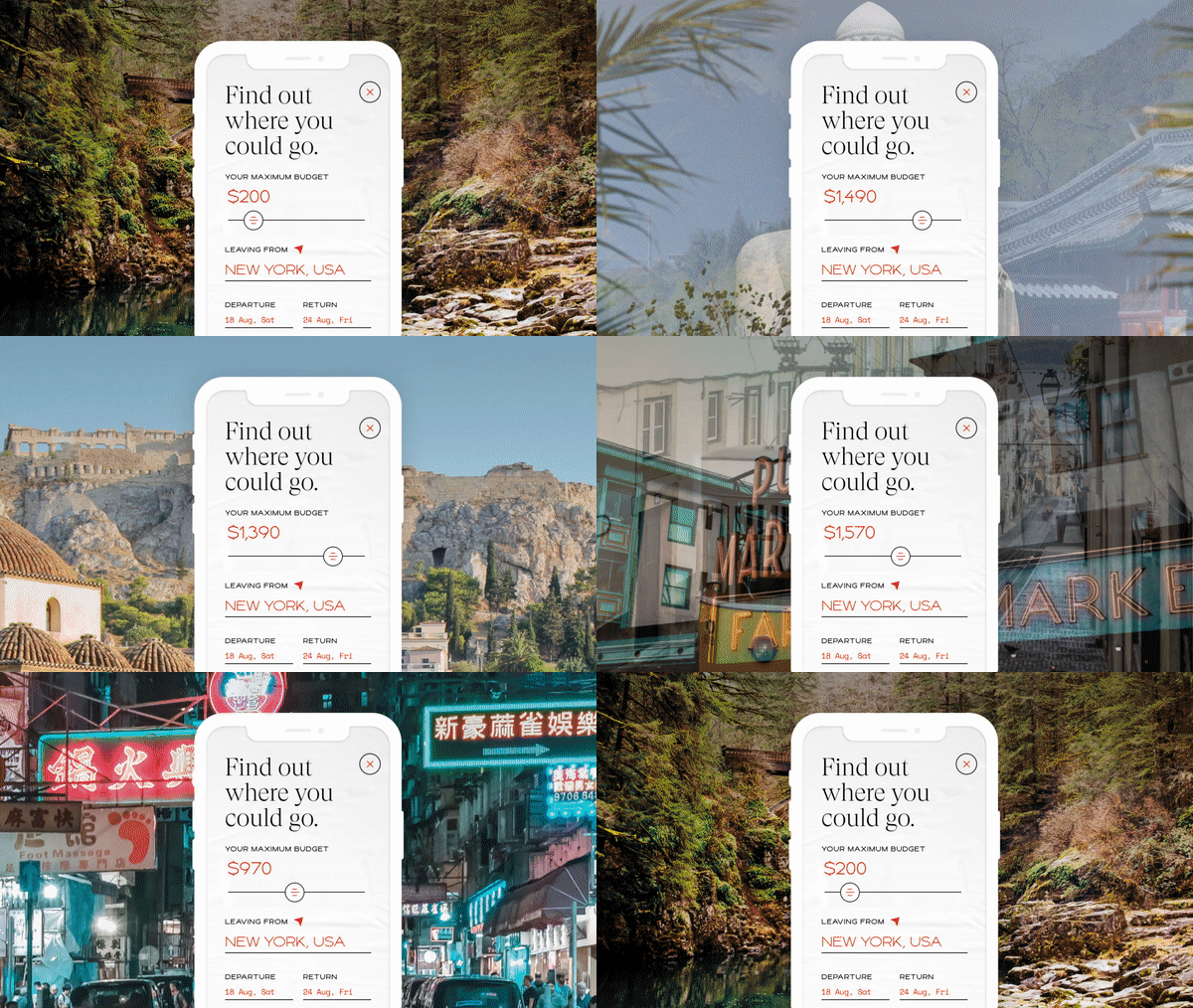
The Los Angeles-based startup launched its travel discovery mobile app Thursday, a budget-first search engine that shows people how far their money will take them. The platform’s personalized onboarding experience customizes trip packages and offers future travel suggestions based on those preferences.

The idea for the company came three years ago from Alex Simon, CEO, and Frankie Scerbo, CMO, who met in college and bonded over their love of traveling and would do so together any time they had a long weekend. One New Year’s they tried planning a trip, but everything was too expensive. Not being able to find something on their budget, they came up with the idea for Elude.

Rather than searching by destination, Elude gathers information like budget, time frame and trip preferences (think beach versus mountains), then presents users with flight and hotel results for destinations they may never have thought existed or could be traveled to on their budgets.

The company taps into the same flight and hotel databases that all online travel companies use that store hundreds of thousands of flights and hotels and only suggests hotels with 3.5 stars and above.

Elude app

The co-founders have now raised $2.1 million in seed funding led by a group of investors including Mucker Capital, Unicorn Ventures, Upfront Scout Fund, StartupO, Grayson Capital and Flight VC.

When Erik Rannala, co-founder and managing partner at Mucker Capital, initially invested in Elude, it was before the global pandemic. However, he sees travel getting back to normal, though with flights now more expensive than before, more people are looking for travel deals, something that wasn’t being addressed until Elude came along.

Travel is “a massive category,” with most people in either “look mode” or “book mode,” with the money only being made in book mode, Rannala said. By taking a budget-first approach, Elude is bridging people from look mode to book mode more quickly.

“The way they have done it is to help people discover something new based on their budget that is available to book right now,” he added. “It’s a unique way to solve the problem and to give people a good deal.”

With millenials spending over $200 billion annually on travel, Elude’s goal is to reduce the hours of scrolling in search of a trip and more time actively booking vacations. Whereas competitors may show flights only or hotels only, Elude produces flight and hotel packages.

“In just a few clicks, we can show you, for example, that you could go to Barcelona for the same price as Miami,” Scerbo told TechCrunch. “If you knew that kind of information, you would take a better trip. This opens doors to taking a trip every few months instead of the one or two trips a year most people take.”

Prior to today, Elude was in private beta mode where the company had amassed some 40,000 people on the waitlist. Simon said.

Elude plans to use the funding to advance technology, marketing function, operations and customer support.


05 Aug 2021

Google’s Nest Cams and Doorbell get a refresh

Yesterday’s leak didn’t leave much to the imagination. And today’s big Nest reveal confirms pretty much everything we saw — which is precisely what happens when Google’s the one doing the leaking. Still, this morning’s announcement marks one of the biggest refreshes to Google’s home security line in recent memory, with updates to various configurations of Nest’s security cam and doorbell.

Depending on how you count, Google’s announcing up to four devices today. The list includes: the Google Nest Cam battery, Google Nest Doorbell ($180, each), the $280 Google Nest Cam with floodlight and the $100 Google Nest Cam.

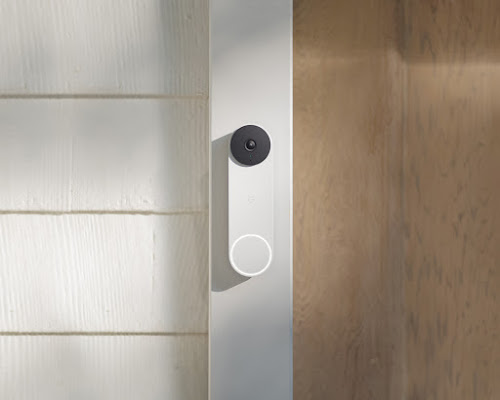
Image Credits: Google

The Nest Cams feature a design that looks a bit like they stepped out of some Pixar movie. The $100 basic Nest Cam is a second-gen wired device, designed for indoor-use only. The $180 model, meanwhile, adds battery power and waterproofing, making it suitable for either indoor or outdoor use.

The company says it should get around three months of battery life on a charge, assuming your home has an average of nine to 12 recorded “events” a day. The numbers obviously fluctuate a fair bit, depending on how much action your house sees on a typical day. The AI/ML is trained to record specific activities, triggered by things like people, animals or package deliveries, depending on the setting.

Image Credits: Google

“Building a camera that uses ML to recognize objects requires showing the ML model millions of images first,” Google writes in a blog post. “Our new Nest Cameras and Doorbells have been trained on 40 million images to accommodate lots of different environments and lighting conditions. Thanks to a cutting edge TPU chip, our new cameras run an ML model up to 7.5 times per second, so reliability and accuracy are even better. 3. Works in any home: Nest Cam and Doorbell’s wire-free design.”

Image Credits: Google

I quite like the new streamlined design for the doorbell. Being battery powered means you can install it without having to futz with wiring. Without direct access to a hardwired chime, you can configure to ring through connected Google devices like Nest speakers and smart displays. Unlike the wired Nest Hello (which Google is keeping on the market), the new doorbell doesn’t offer continuous recording, owing to battery constraints. It should give you around three months of use, on average.

The new nest devices are up for preorder today in 18 countries and will go on sale August 24.