Year: 2021

29 Jul 2021

4 key areas SaaS startups must address to scale infrastructure for the enterprise

Startups and SMBs are usually the first to adopt many SaaS products. But as these customers grow in size and complexity — and as you rope in larger organizations — scaling your infrastructure for the enterprise becomes critical for success.

Below are four tips on how to advance your company’s infrastructure to support and grow with your largest customers.

Address your customers’ security and reliability needs

If you’re building SaaS, odds are you’re holding very important customer data. Regardless of what you build, that makes you a threat vector for attacks on your customers. While security is important for all customers, the stakes certainly get higher the larger they grow.

Given the stakes, it’s paramount to build infrastructure, products and processes that address your customers’ growing security and reliability needs. That includes the ethical and moral obligation you have to make sure your systems and practices meet and exceed any claim you make about security and reliability to your customers.

Here are security and reliability requirements large customers typically ask for:

Formal SLAs around uptime: If you’re building SaaS, customers expect it to be available all the time. Large customers using your software for mission-critical applications will expect to see formal SLAs in contracts committing to 99.9% uptime or higher. As you build infrastructure and product layers, you need to be confident in your uptime and be able to measure uptime on a per customer basis so you know if you’re meeting your contractual obligations.

While it’s hard to prioritize asks from your largest customers, you’ll find that their collective feedback will pull your product roadmap in a specific direction.

Real-time status of your platform: Most larger customers will expect to see your platform’s historical uptime and have real-time visibility into events and incidents as they happen. As you mature and specialize, creating this visibility for customers also drives more collaboration between your customer operations and infrastructure teams. This collaboration is valuable to invest in, as it provides insights into how customers are experiencing a particular degradation in your service and allows for you to communicate back what you found so far and what your ETA is.

Backups: As your customers grow, be prepared for expectations around backups — not just in terms of how long it takes to recover the whole application, but also around backup periodicity, location of your backups and data retention (e.g., are you holding on to the data too long?). If you’re building your backup strategy, thinking about future flexibility around backup management will help you stay ahead of these asks.

29 Jul 2021

4 key areas SaaS startups must address to scale infrastructure for the enterprise

Startups and SMBs are usually the first to adopt many SaaS products. But as these customers grow in size and complexity — and as you rope in larger organizations — scaling your infrastructure for the enterprise becomes critical for success.

Below are four tips on how to advance your company’s infrastructure to support and grow with your largest customers.

Address your customers’ security and reliability needs

If you’re building SaaS, odds are you’re holding very important customer data. Regardless of what you build, that makes you a threat vector for attacks on your customers. While security is important for all customers, the stakes certainly get higher the larger they grow.

Given the stakes, it’s paramount to build infrastructure, products and processes that address your customers’ growing security and reliability needs. That includes the ethical and moral obligation you have to make sure your systems and practices meet and exceed any claim you make about security and reliability to your customers.

Here are security and reliability requirements large customers typically ask for:

Formal SLAs around uptime: If you’re building SaaS, customers expect it to be available all the time. Large customers using your software for mission-critical applications will expect to see formal SLAs in contracts committing to 99.9% uptime or higher. As you build infrastructure and product layers, you need to be confident in your uptime and be able to measure uptime on a per customer basis so you know if you’re meeting your contractual obligations.

While it’s hard to prioritize asks from your largest customers, you’ll find that their collective feedback will pull your product roadmap in a specific direction.

Real-time status of your platform: Most larger customers will expect to see your platform’s historical uptime and have real-time visibility into events and incidents as they happen. As you mature and specialize, creating this visibility for customers also drives more collaboration between your customer operations and infrastructure teams. This collaboration is valuable to invest in, as it provides insights into how customers are experiencing a particular degradation in your service and allows for you to communicate back what you found so far and what your ETA is.

Backups: As your customers grow, be prepared for expectations around backups — not just in terms of how long it takes to recover the whole application, but also around backup periodicity, location of your backups and data retention (e.g., are you holding on to the data too long?). If you’re building your backup strategy, thinking about future flexibility around backup management will help you stay ahead of these asks.

29 Jul 2021

Pinterest shares drop as company misses on user growth…again

Pinterest’s shares had popped last week when Snap posted its best quarter in four years, as investors were betting Pinterest’s image-based social app would also see a return in advertiser spending. Those expectations now appear to be correct, as Pinterest beat on earnings with second-quarter revenue of $613.2 million and earnings per share of 25 cents, above analysts’ estimates. However, Pinterest’s stock still tanked as the company reported monthly active user growth of just 9% to reach 454 million, when analysts were expecting 482 million.

Ahead of Pinterest’s announcement, Wall St. had forecast revenue of $562.3 million and earnings of $0.133 per share, up from a loss of $0.70 per share from the same quarter last year.

But while Pinterest delivered on financials, the company’s struggles with user growth sent the stock tumbling.

The image pinboard and shopping inspiration site had initially benefitted from increased engagement and user growth during the early days of the pandemic, but both slowed in the first quarter of 2021 due the easing of Covid-19 restrictions, which had then sent the stock down by more than 10% after its first quarter earnings were posted.

Today, the stock was down more than 12% in after-hours trading, shortly after earnings were announced.

Pinterest addressed the issues around user growth upfront on the earnings call, again blaming the COVID pandemic for declines in usage.

“The pandemic was an unprecedented and unique global event,” explained Pinterest CEO Ben Silbermann. “In past earnings calls, we talked about how stay-at-home orders significantly increased usage of Pinterest. And for the past year, we’ve highlighted how people came to Pinterest for inspiration to reinvent their lives during such a difficult time,” he continued. “Now, as the world opens up, we’re seeing the similar effect in the opposite direction that impacted our growth — particularly because some of the core use cases we see on our platform are less common in 2021 than they were a year ago. That shifting behavior in Q2 impacts engagement,” Silbermann said.

The company also noted that, as of July 27, 2021, its monthly active users in the U.S. had declined by approximately 7%, while global monthly active users gained approximately 5% year-over-year.

Pinterest said its web users tend to be less engaged and generate less revenue than those who come from mobile apps. In the second quarter, its monthly active users on mobile apps grew in U.S. and internationally, year-over-year, by more than 20%.

The company’s issues with user growth and engagement indicate just how critical Pinterest’s plan to cater to the creator industry is the company’s future. Recently, the company launched video-first Idea Pins that allow creators to showcase their crafts, recipes, fashion, beauty tutorials, projects or anything else. This week, Pinterest introduced new features that will now allow creators to make money from those pins.

Despite user growth issues, the return of ad spending led to year-over-year revenue growth of 78% in the first quarter, and the company predicted it would see even higher 105% year-over-year revenue growth in Q2. Today, it reported 125% revenue growth — above with the 116% Snap reported in its record second quarter — a figure Pinterest attributed to advertisers’ return.

29 Jul 2021

Robinhood’s stock drops 8% in its first day’s trading

Robinhood priced its public offering at $38 per share last night, the low end of its IPO range. The company was worth around $32 billion at that price.

But once the U.S. consumer investing and trading app began to allow investors to trade its shares, they went down sharply, off more than 10% in the first hours of its life as a floating stock. Robinhood recovered some in later trading, but closed the day worth $34.82 per share, off 8.37%, per Yahoo Finance.

The company sold 55,000,000 shares in its IPO, generating gross proceeds of $2.1 billion, though that figure may rise if its underwriting banks purchase their available options. Regardless, the company is now well-capitalized to chart its future according to its own wishes.

So, why did the stock go down? Given the hungry furor we’ve seen around many big-brand, consumer-facing tech companies in the last year, you might be surprised that Robinhood didn’t close the day up 80%, or something similar. After all, DoorDash and Airbnb had huge debuts.

Thinking out loud, a few things could be at play:

  • Robinhood made a big chunk of its IPO available to its own users. Or, in practice, Robinhood curtailed early retail demand by offering its investors and traders shares at the same price and level of access that big investors were given. It’s a neat idea. But by doing so, Robinhood may have lowered unserved retail interest in its shares, perhaps reshaping its early supply/demand curve.
  • Or maybe the company’s warnings that its trading volumes could decline in Q2 2021 scared off some bulls.

Regardless, in the stonk and meme-stock era, Robinhood’s somewhat downward debut is a bit of a puzzler. More as the company’s stock finds its footing and we dig more deeply into investor sentiment regarding its future performance.

We have more coming on the company’s debut, including notes from an interview with the company’s CFO about its IPO coming tomorrow morning on Extra Crunch

29 Jul 2021

Horizon Blockchain Games raises $4.5M for its NFT trading card game and wallet

Horizon Blockchain Games is — as the name implies — a company building games on the blockchain, along with tools to help others do the same.

The company announced today that it has raised another $4.5M, bringing its total raised to a little over $13M.

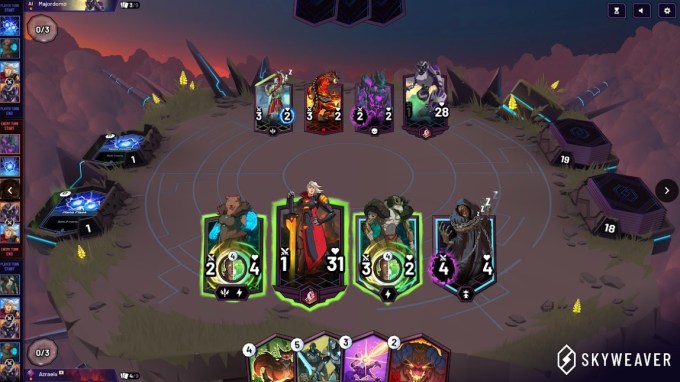
Horizon’s first game is Skyweaver, a competitive digital trading card game which taps the blockchain to give players more realistic ownership of their virtual cards. Once earned through competition with other players, cards can be sold, traded, or taken out of the system and put in storage.

As I previously wrote about Horizon here:

Horizon is working down two paths in parallel here: On one path, they’re building an Ethereum-powered platform called Arcadeum for handling in-game items — establishing who owns any specific instance of an item, and allowing that item to be verifiably traded, sold or given from player to player. Once an item is in a player’s possession, it’s theirs to use, trade or sell as they please; Horizon can’t just take it away. In time, they’ll open up this platform for other developers to build upon.

On the other path, the company is building out its own game — a digital trading card game called SkyWeaver — meant to thrive in its own right while simultaneously showcasing the platform.

“Arcadeum” mentioned above has now been rebranded as “Sequence“, an easy-to-integrate wallet system that aims to hand-wave away the complexities of the blockchain. They want to let users buy and store their digital goods on the blockchain without either the user or an app’s developer really having to think about the blockchain. Horizon co-founder Michael Sanders tells me the rebranding comes with an overall broadening of its focus; the ‘Arcade’ in ‘Arcadeum’ suggested it was all about gaming, whereas the aim is to help manage all kinds of digital items, from virtual gaming goods to NFT art and beyond.

The Horizon team often mentions being built to support “Web3”, a term I’ve been hearing more and more lately. In short (or, at least, as best I understand it), Web3 is a category of online-but-decentralized apps, services, and games built around the blockchain (Ethereum, in this case) to give individual users more control of their data. The Ethereum foundation has a breakdown of the concept here.

A match in Skyweaver Image Credits: Horizon Blockchain Games

Horizon originally intended to open Skyweaver up more broadly in 2020; as of this morning it’s still in private beta, with plans to open widely later this year. Sanders tells me they’ve let in over 66,000 players so far.

The company says that investors in this round (a “pre-Series A round SAFE”) include CMT Digital, The Xchange Company, BITKRAFT Ventures, Khaled Verjee, and Zyshan Kaba.

29 Jul 2021

Biofourmis receives FDA breakthrough device designation for heart failure “digital therapy”

Kuldeep Singh Rajput, the founder of Boston-based Biofourmis, is imagining a future where heart failure patients go home with a prescription, a wearable sensor and an app. Today, a new FDA designation gets the company one step closer to that goal. 

Founded in 2015, Biofourmis is a digital therapeutics company that develops software to “augment” patient care. So far, the company has raised about $145 million in funding, and has around 350 employees, Rajput estimates. 

On Thursday, Biofourmis BiovitalsHF, a platform designed for heart failure medication monitoring received an FDA breakthrough device designation. Breakthrough device designation doesn’t signal FDA clearance, but it does allow for an expedited review process, and gives the company access to expertise from the federal agency during development. 

Biofourmis has two major focus areas, says Rajput. The first is on developing digital therapies in conjunction with drug companies (apps for dosage delivery, for instance, or sensors that can monitor health). The second is on providing followup care for patients with acute conditions at home. 

BiovialsHF is an example of the company’s forays into that first area of focus. So far, the company has developed digital therapies for a “pipeline” of conditions, like coronary artery disease or atrial fibrillation, and has digital therapies in the works for patients managing chemotherapy, or people dealing with chronic pain. The BiovitalsHF system, though, is the first to receive FDA breakthrough designation, and Rajput calls it the company’s “lead digital therapy.”

The BiovitalsHF product is a software platform designed manage medication for patients with heart failure. The idea is patients may initially get a certain prescription, but once they go home, they might need to adjust the levels of certain medication they’re taking. 

Doctors do often treat heart failure with multiple medications, and doses may need to be changed over time. Particularly in the case of two types of medication, ACE inhibitors or beta-blockers, medication may need to be titrated – a process where a patient begins treatment on a low dose, and slowly up the dosage over time to achieve the optimal “target” dose.

However, titration is hard to achieve in real life – one 2020 study suggests that less than 25 percent of heart failure patients are on their optimal dosages (other studies suggest it’s less than one percent). Another 2017 commentary in Cardiac Failure Review estimates that just 29 percent of patients were on target doses of ACEs and 18 percent on their target beta blocker dose. 

By contrast, in clinical trials, many to 50-60 percent of patients manage to obtain their optimal dosages, suggesting that there is a gap between how people take medicine in studies and how they do so in the real world. 

BiovitalsHF is supposed to streamline the titration process once patients leave hospitals by collecting and analyzing data from a wearable device. That data, in theory, could be used to titrate the medication depending on a patient’s health status. 

The software tweaks medication dosage using information from the patient, a wearable, and outside lab results. The wearable device would collect data like heart rate, respiration rate, stroke volume or cardiac output. Meanwhile, a patient might report their own symptoms into an app, and a physician might input lab results. 

“Based on the data collected from the patients using sensors, and the mobile platform, we are able to automatically up titrate or down titrate and switch medication, so that patients are on the right, optimal dose,” says Rajput. 

Patients would then receive a notification to let them know medications were going to be tweaked. 

The BiovitalsHF program has only been tested in one proof-of-concept study (more on that later), but the Biovitals patient monitoring platform has been tested on other diseases as well. 

For example, the Biovitals system was adapted to monitor 34 mild COVID-19 patients from the Queen Mary Hospital in Hong Kong who wore a biosensor 23 hours per day. A paper published in Scientific Reports suggested that the platform was able to predict whether a patient would deteriorate with 93 percent accuracy, and predict length of hospital stay with 78 percent accuracy. 

The BiovitalsHF system is slightly different. While the system does aim to monitor patients, Rajput aspires to have the technology itself be administered as a treatment program. 

In essence, a doctor might “prescribe” you three months of BiovitalsHF program in which the software itself might monitor patient outcomes and help determine dosage on its own. 

The aim is to be able to market Biovials HF not just as a decision support software, but as a treatment regimen. The distinction is subtle, but it means that the company is trying to be more than a delivery device, and more like a drug in itself. 

 “The label of the product for digital therapy will have actual treatment claims as compared to just a monitoring tool for clinical decision support,” says Rajput. 

Naturally, you need robust results to make these claims. The company has already done some early testing of the concept in a proof-of-concept clinical trial that concluded in March 2021, but will need to perform more rounds of testing in the future to prove efficacy. 

The study monitored 282 patients for 90 days, and compared people using BiovitalsHF to those using regular standard of care. The goal of the trial was to determine whether the platform could optimize medication dosage – which, in this case, means getting them within 50 percent of optimal dose. 

Results have yet to be posted publicly from that study. However, Rajput notes that the study did meet that endpoint, and seemed to be linked with other improvements in patients’ life quality and heart health. 

“Patients had, within three months, significant increases in quality of life, cardiac function, as well as reduction in a blood biomarker NT-proBNP [a marker of heart failure]. Based on this, we submitted the data to the FDA and received the breakthrough designation,” he says. 

The company has submitted the data for publication in a peer-reviewed journal. 

With the breakthrough designation in hand, we might expect progress on BiovitalsHF to proceed quickly – though it’s still a long way from true FDA approval, or even a premarket approval at the moment.

“We will be kicking off our pivotal trial, you know, anytime now. And we expect to make a formal submission to the FDA sometime in June [or] July next year,” Rajput says. 

29 Jul 2021

Zūm wins $150M from San Francisco schools to modernize and electrify student transport

The San Francisco Unified School District (SFUSD) has awarded Zūm, a startup that wants to upgrade student transportation, a five-year $150 million contract to modernize its transport service throughout the district. 

Zūm, which already operates its rideshare-meets-bus service in Oakland, much of Southern California, Seattle, Chicago and Dallas, will be responsible for handling day-to-day operations, transporting 3,500 students across 150 school campuses starting this fall semester. The startup’s fleet of 206 buses, vans and cars is distributed based on specific use cases, placing students who live on busier routes on school buses and sending out cars and vans for others to increase efficiency. Zūm will also facilitate over 2,000 field trips per year for the school district.

Aside from Zūm’s five-year $53 million contract with Oakland Unified School District, which began in 2020, the SFUSD contract is the largest the startup has ever won. The company intends to use the funds to lease vehicles, hire drivers – a mix of salaried employees and gig economy workers – improve customer and operational support, and research and develop product enhancements to support the contract, a spokesperson for Zūm told TechCrunch.

Zūm’s transportation solution for SFUSD is expected to save the district $3 million per year on average, based on the cost of the incumbent’s solution. 

“These savings are driven by our tech driven route optimization and operations,” a spokesperson told TechCrunch. “Zūm has absorbed all the drivers who were previously serving SFUSD. The buses previously used were old and owned by the incumbent and have been moved out of the city. Zūm has deployed a new fleet of connected school buses and other vehicles, which will be converted to electric by 2025.”

Along with its fleet, Zūm offers school districts a cloud-based dashboard that allows them to manage operations, track movements, plan budget use and analyze performance and service data – the kind of tech that makes sense for schools to have but still seems radical given how slowly the public sector moves.

“A major challenge we experienced in the past was gaining visibility into the location of students and buses across the district,” said Orla O’Keefe, chief of policy and operations at SFUSD, in a statement. “We hope and expect that our families will benefit from Zūm’s student-centered technology. Families will be able to track their child’s bus in real-time and to easily communicate with the driver regarding their child or any unique circumstances that may arise.”

Included in the contract is Zūm’s goal to help SFUSD electrify its entire fleet by 2025. Last year, the SF District Board of Education adopted a resolution to modernize its transportation in a way that would create more efficiencies, help the district meet sustainability goals and increase transparency across the system. Zūm says this contract will mark the first time SFUSD has updated its transportation solution in 40 years. 

Earlier this month, Zūm announced a partnership with AutoGrid, an energy management and distribution software company, to transform the company’s fleet of electric buses in San Francisco and Oakland into one of the world’s largest virtual power plants. 

“These contracts are building blocks to Zūm and Autogrid’s vision of creating 1 gigawatt Virtual Power Plant in the next 4 years,” said a Zūm spokesperson. “Oakland Unified and San Francisco Unified are the first two districts in the U.S. to commit to 100% conversion to an emission-free EV fleet. Between these two contracts, Zūm will be carrying around 60,000 KwH charge on its EV fleet battery. To put this in perspective, during a power outage this much storage energy can power around 47,000 households per hour.”

29 Jul 2021

Microsoft in talks to back India’s Oyo

Indian budget hotel chain Oyo may have lost a lot of business amid the pandemic, but it is inching closer to finding a new investor: Microsoft.

Microsoft is in advanced stages of talks to invest in Oyo, according to two people with knowledge of the matter. The size of the investment and the valuation are unclear.

Oyo was valued at about $10 billion in 2019, though as of earlier this year SoftBank, a major investor in Oyo, had slashed the Indian startup’s valuation to $3 billion.

Microsoft and Oyo founder and chief executive Ritesh Agarwal declined to comment Thursday evening.

The Indian startup, which laid off thousands of employees globally earlier this year as nations across the world enforced lockdowns, still has about $780 to $800 million in its bank, Agarwal said at a recent virtual conference.

29 Jul 2021

Livestream e-commerce: Why companies and brands need to tune in

What comes to mind when you think of livestreaming? In the U.S., most people would name their favorite celebrity leading a Q&A on Instagram or a gamer doing a speedrun on Twitch.

In China, it’s shopping, streamed live.

Livestream e-commerce has taken off in China in the last few years and is expected to yield more than $60 billion this year. In 2019, 37% of online shoppers in China (a cool 265 million people) made purchases on livestreams — and that was well before quarantine. In 2020, it’s estimated to have reached around 560 million people.

During Taobao’s annual Single’s Day Global Shopping Festival in 2020 (China’s Black Friday), livestreams accounted for $6 billion in sales — nearly doubled from a year earlier.

Starting to see a trend? The big U.S. companies have noticed, and they’re jumping on the bandwagon faster than you can say, “Swipe up to buy now!”

Last December, Walmart livestreamed shopping events on TikTok. Amazon released a live platform where influencers promote items and chat with customers. Instagram launched a Shop feature that encourages users to browse and buy within the app. Facebook also kicked off Live Shopping Fridays for the beauty and fashion categories.

“It’s an entertaining way for shops to tell the story behind their products. It brings buyers closer than ever to their favorite creators and allows them to have a voice in the conversation.”

Startups are growing fast to keep up with the heavy hitters — PopShop.Live raised $20 million to let people buy everything from books and toys to jewelry from sellers who livestream their offerings, and Whatnot raised a $50 million Series B, largely to expand its livestream commerce infrastructure. There’s also a burgeoning category of SaaS tools such as Bambuser, which is working with brands like Klarna to test native livestream shopping directly within branded apps.

At this pace, retailers will all welcome livestream commerce teams like they have influencer partnerships in recent years. It’ll just be part of the digital equation to stay competitive and relevant in the future of marketplaces and e-commerce.

From B.C. to 5G: The evolution of shopping

What is old is new again. Your grandparents spent years watching QVC because it balanced the experience of speaking with an associate with the convenience of their retirement community’s TV room. Livestream is today’s version of “shoptainment,” where hosts showcase products dynamically, interact with their audiences and build urgency with short-term offers, giveaways and limited-edition items.

Now, with livestream commerce, hosts can form deeper customer connections and answer questions in real time. It’s a new standard of communication that holds a longstanding truth from Istanbul’s Grand Bazaar to smartphones: People shop to kill time and are more likely to buy when they feel connected with a salesperson.

29 Jul 2021

Scarlett Johansson files suit over Disney+ ‘Black Widow’ release

With Scarlett Johansson’s time as an Avenger seemingly in the rearview, the “Black Widow” star has filed a breach of contract suit against Marvel-owner Disney. The lawsuit, filed in Los Angeles Superior Court this week, alleges that the studio breached its agreement with the star when it released the film on Disney+ alongside its theatrical debut.

“As Ms. Johansson, Disney, Marvel, and most everyone else in Hollywood knows, a ‘theatrical release’ is a release that is exclusive to movie theatres,” the filing writes, matter of factly. “Disney was well aware of this promise, but nonetheless directed Marvel to violate its pledge and instead release the Picture on the Disney+ streaming service the very same day it was released in movie theatres.”

The pandemic has fundamentally transformed the way first-run movies are delivered and consumed — at least in the short term. In 2020, Disney and other studios opted to release films straight to streaming, rather than suffer perpetual delays and poor box office numbers as restrictions closed the non-essential business of movie theaters. More recently they’ve split the difference as movie theaters have reopened, offering same day streaming.

According to a copy of the suit obtained by TechCrunch, Johansson’s concerns about streaming services pre-date the pandemic. When Disney launched the streaming service Disney+, the suit claims, Johansson’s representatives sought assurances from Disney/Marvel that the Black Widow solo film would still get a theatrical release, in spite of the company’s bids to boost subscription numbers.

It cites an email with Marvel’s chief counsel from May of that year:

We totally understand that Scarlett’s willingness to do the film and her whole deal is based on the premise that the film would be widely theatrically released like our other pictures. We understand that should the plan change, we would need to discuss this with you and come to an understanding as the deal is based on a series of (very large) box office bonuses.

“It’s no secret that Disney is releasing films like “Black Widow” directly onto Disney+ to increase subscribers and thereby boost the company’s stock price — and that it’s hiding behind COVID-19 as a pretext to do so,” the actress’s attorney John Berlinski said in a statement provided to TechCrunch. “But ignoring the contracts of the artists responsible for the success of its films in furtherance of this short-sighted strategy violates their rights and we look forward to proving as much in court. This will surely not be the last case where Hollywood talent stands up to Disney and makes it clear that, whatever the company may pretend, it has a legal obligation to honor its contracts.”

The statement accuses Disney of “hiding behind COVID-19,” though certainly the studio wasn’t alone in rethinking its release strategy over the past year. The question remains whether the pandemic will serve as sufficient extenuating circumstances for its release decisions. The outcome of the trial, meanwhile, could well have a profound effect on how studios release blockbusters post-pandemic.

We’ve reached out to Disney for comment and will update accordingly.