Year: 2021

21 Jul 2021

Okendo raises $5.3M to help D2C brands ween themselves off of Big Tech customer data

While direct-to-consumer growth has exploded in the past year, some brands are finding there’s still plenty of room to forge ahead in building a more direct relationships with their customers.

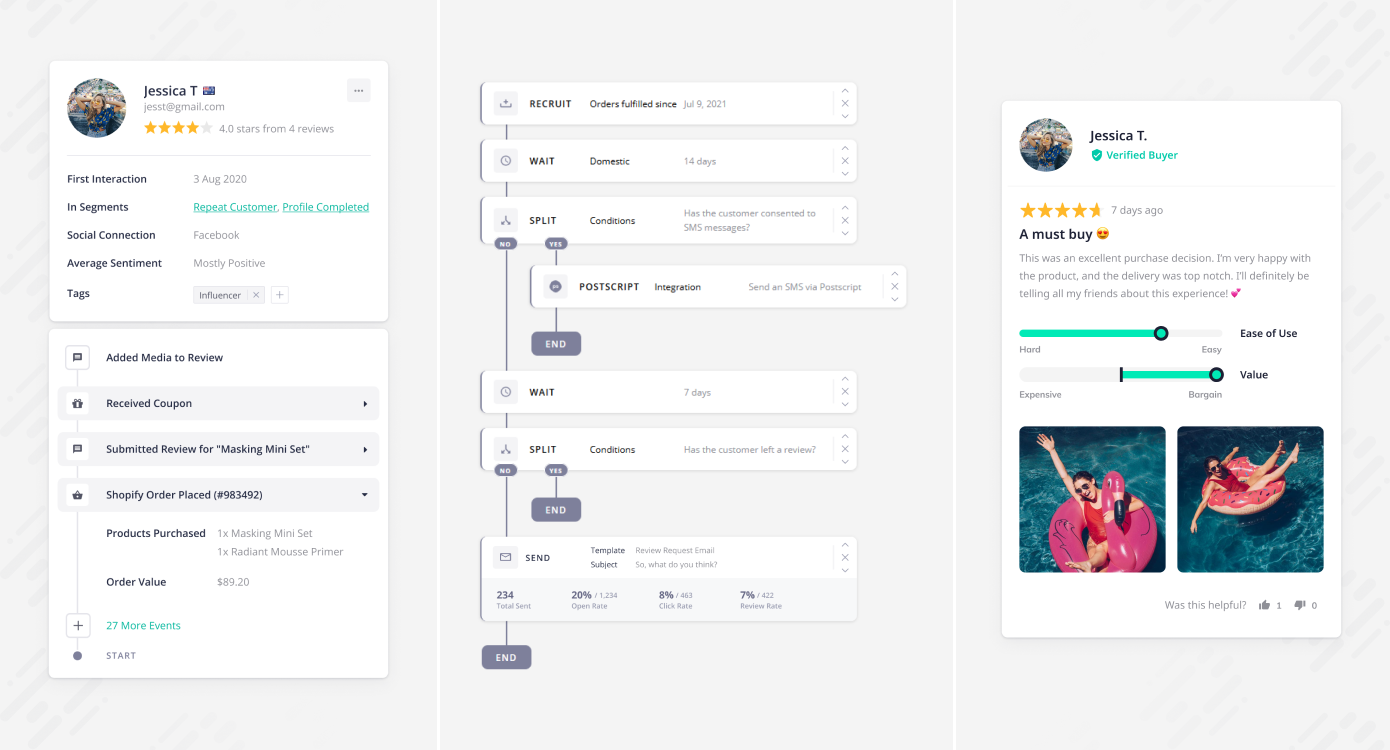
Sydney-based Okendo has made a splash in this world by building out a popular customer reviews systems for Shopify sellers, but it’s aiming to expand its ambitions and tackle a much bigger problem with its first outside funding — helping brands scale the quality of their first-party data and loosen their reliance on tech advertising kingpins for customer acquisition and engagement.

“Most D2C brands are still very dependent on big tech,” CEO Matthew Goodman tells TechCrunch.

Gathering more customer reviews data directly from consumers has been the first part of the puzzle with its product that helps brands manage and showcase customer ratings, reviews, user-generated media and product questions. Moving forward Okendo is looking to help firms manage more of the web of cross-channel customer data they have, standardizing it and allowing them to give customers a more personalized experience when they shop with them.

via Okendo

“Merchants have goals and want to better understand their customers,” Goodman says. “As soon as a brand reaches a certain level of scale they’re dealing with unwieldy data.”

Goodman says that Apple’s App Tracking Transparency feature and Google’s pledge to end third-party cookie tracking has pushed some brands to get more serious about scaling their own data sets to insulate themselves from any sudden movements.

The company needs more coin in its coffers to take on the challenge, raising their first bout of funding since launching back in 2018. They’ve raised $5.3 million in seed funding led by Index Ventures. 2020 was a big growth year for the startup as e-commerce spending surged and sellers looked more thoughtfully at how they were scaling. The company tripled its ARR during the year and doubled its headcount. The bootstrapped company was profitable at the time of the raise, Goodman says.

Today, the company boasts more than 3,500 D2C brands in the Shopify network as customers, including heavyweights like Netflix, Lego, Skims, Fanjoy and Crunchyroll. The startup is tight-lipped on what their next product launches will look like, but plans to jump into two new areas in the next 12 months, Goodman says.

21 Jul 2021

Dear Sophie: Should we look to Canada to retain international talent?

Here’s another edition of “Dear Sophie,” the advice column that answers immigration-related questions about working at technology companies.

“Your questions are vital to the spread of knowledge that allows people all over the world to rise above borders and pursue their dreams,” says Sophie Alcorn, a Silicon Valley immigration attorney. “Whether you’re in people ops, a founder or seeking a job in Silicon Valley, I would love to answer your questions in my next column.”

Extra Crunch members receive access to weekly “Dear Sophie” columns; use promo code ALCORN to purchase a one- or two-year subscription for 50% off.


Dear Sophie,

I handle people ops as a consultant at several different tech startups. Many have employees on OPT or STEM OPT who didn’t get selected in this year’s H-1B lottery.

The companies want to retain these individuals, but they’re running out of options. Some companies will try again in next year’s H-1B lottery, even though they face long odds, particularly if the H-1B lottery becomes a wage-based selection process next year.

Others are looking into O-1A visas, but find that many employees don’t yet have the experience to meet the qualifications. Should we look at Canada?

— Specialist in Silicon Valley

Dear Specialist,

That’s what we’re all about — finding creative immigration solutions to help U.S. employers attract and retain international talent and help international talent reach their dreams of living and working in the United States.

I’ve written a lot on how U.S. tech startups can keep their international team members in the United States. One strategy is to help the startup employees become qualified for O-1As. Another is to obtain unlimited H-1B visas without the lottery through nonprofit programs affiliated with universities. Sometimes candidates return to school for master’s degrees that offer a work option called CPT, or curricular practical training.

A composite image of immigration law attorney Sophie Alcorn in front of a background with a TechCrunch logo.

Image Credits: Joanna Buniak / Sophie Alcorn (opens in a new window)

But sometimes, companies end up deciding to move some of their international talent to Canada to work remotely. Recently, Marc Pavlopoulos and I discussed how to help U.S. employers and international talent on my podcast. Through his two companies, Syndesus and Path to Canada, Pavlopoulos helps both U.S. tech employers and international tech talent when their employees or they themselves run out of immigration options in the United States. He most often assists U.S. tech employers when their current or prospective employees are not selected in the H-1B lottery.

Through Syndesus, a Canada-based remote employer — also known as a professional employment organization (PEO) — Pavlopoulos helps U.S. employers retain international tech workers who either no longer have visa or green card options that will enable them to remain in the United States or those who were born in India and are fed up by the decades-long wait for a U.S. green card. U.S. employers that don’t have an office in Canada can relocate these workers to Canada with the help of Syndesus, which employs these tech workers on behalf of the U.S. company, sponsoring them for a Canadian Global Talent Stream work visa.

Syndesus also helps U.S. tech startups without a presence in Canada find Canadian tech workers and employ them on the startup’s behalf. As an employer of record, Syndesus handles payroll, HR, healthcare, stock options and any issues related to Canadian employment law.

Pavlopoulos’ other company, Path to Canada, currently focuses on connecting international engineers and other tech talent working in the U.S. — including those whose OPT or STEM OPT has run out — who cannot remain in the U.S. find employment in Canada, either at a Canadian company or at the Canadian office of a U.S. company. These employees get a Global Talent Stream work visa and eventually permanent residence in Canada. Pavlopoulos intends to expand Path to Canada to help tech talent from around the world live and work in Canada.

21 Jul 2021

Clubhouse is now out of beta and open to everyone

One year later, Clubhouse is finally out of beta. The company announced Wednesday that it would end its waitlist and invite system, opening up to everybody. Now, anybody can follow Clubhouse links, hop into a creator’s community or join any public event.

Clubhouse is also introducing a real logo that will look familiar — it’s basically a slightly altered version of the waving emoji the company already used. Clubhouse will still hold onto its app portraits, introducing a new featured icon from the Atlanta music scene to ring in the changes.

“The invite system has been an important part of our early history,” Clubhouse founders Paul Davison and Rohan Seth wrote in a blog announcement. They note that adding users in waves and integrating new users into the app’s community through Town Halls and orientation sessions, helped Clubhouse grow at a healthy rate without breaking “but we’ve always wanted Clubhouse to be open.”

Clubhouse’s trajectory has been wild, even for a hot new social app. The then invite-only platform took off during the pandemic and inspired a wave of voice-based social networking that probably still isn’t anywhere near cresting. Facebook, Twitter, Spotify, Discord and everybody else eventually followed suit, splicing voice chat rooms and voice events into their existing platforms.

Clubhouse’s rise is Interest in Clubhouse reached a fever-pitch early this year, and the app’s rise is inextricable from the pandemic-imposed social isolation that saw people around the globe desperate for ways to feel connected as the months dragged on.

The world is slowly, unevenly opening up and Clubhouse is gradually changing along with it. After a long iOS-only stretch, the company introduced an Android app in May. Now, Clubhouse says they’ve reached 10 million Clubhouse downloads in the Android app’s first two months. And earlier this month, Clubhouse introduced a text-based chat feature called Backchannel that broadened the singularly voice-centric app’s focus for the first time.

Clubhouse’s success is a double-edged sword. The app’s meteoric rise came as a surprise to the team, as meteoric rises often do. The social app is still a wild success by normal metrics in a landscape completely dominated by a handful of large, entrenched platforms, but it’s difficult to maintain momentum – or at least the perception of momentum. Opening the app up to everybody should certainly help.

21 Jul 2021

The real ROI of making your products more accessible

New predictions indicate that tech companies committing to accessibility will reap a total of $10 billion to $16 billion in annual design spending across the U.S. and Canada. The surge in funds reinforces accessibility as not only an ethical priority, but a financial one, too.

Accessibility isn’t, like many believe, kryptonite for profits. It is a moneymaker. One, because making your product accessible adds an additional multitude of people to your potential market. Two, because it actually optimizes your workflow by accounting for more issues beforehand. Three, because it will come back to bite you on the ass with hefty lawsuits and public exposure (read: profit and customer loss) if you ignore it. If anything, remember this: The cost of noncompliance is about three times higher than that of complying.

Today, we’re seeing something similar to what happened with diversity and inclusion: While many businesses used to consider D&I a headache, we’ve since woken up to the fact that having a diversity of genders, ages and ethnicities has a direct effect on the bottom lines of companies. The same realization will come with accessibility.

At its core, accessibility means making your product as usable as possible to the greatest number of people. The appeal and efficiency that entails correlates to higher revenue. So here’s why all businesses can achieve a high ROI from paying attention to accessibility, and how to optimize those returns.

Start by making your teams aware of what they’re missing

Having a training strategy in your business can drive your profits up by nearly 50%. When educating your team about accessibility, you’re not just giving them new skills to raise productivity, you’re optimizing their workflow for the long run and fostering a healthier team culture.

Making your product accessible adds an additional multitude of people to your potential market and optimizes your workflow by accounting for more issues beforehand.

What many teams aren’t understanding today is that accessibility simply opens a product to more users. If we don’t make our employees aware of this, they’ll continue to shy away from the word “accessibility” because they think it means being walled in by some unintelligible regulations. But when we make that process easy to digest for the whole team and create a shared language on accessibility, we make it easier to understand the ultimate goal: smarter design and development.

There are simple ways for businesses to get their heads around accessibility, from IBM’s Equal Access Toolkit to Microsoft’s inclusive design page to the A11Y Project. However, there has been a concerning lack of access to free accessibility resources, which is a key issue that our wider community is trying to change.

Let’s get into the specifics: Through awareness and training, you will start convincing your team about the importance of accessibility so they can commit to it wholeheartedly, not only for the sake of users but because it will improve their own work experience. Working with accessibility in mind makes employees’ work processes more efficient and reduces the cost of errors happening down the line. Moreover, managers will expend fewer resources supervising work to make sure it’s compliant or reworking designs that don’t meet the mark.

Employees will understand the needs of customers far more if they’re made aware of the varied ways different people interact with a product. We’re not talking about a statistically insignificant group: People with disabilities are the largest minority in the United States. One in four U.S. adults suffer from a disability, and globally, we’re talking about 1 billion people — but far more when you account for the many individuals who can’t or won’t go to the doctor or aren’t diagnosed at all. You’ve probably experienced this, too. Temporary disabilities — like having your arm in a cast for a couple of months or recovering from a serious operation — will affect your ability to use certain products if they haven’t been made with you in mind.

Finally, providing this conscious training lets your staff know you are open to having conversations on how to improve work conditions and culture. A happy team is a more resilient team that will stick with you on your product journey, avoiding the costs of recruiting new hires.

Better testing, better efficiency

As your product grows, it becomes less and less malleable. It’s harder to fix the first row of bricks on a new house if you’re already building the second and third stories.

That’s why we need to rethink testing. Continuously trying out your product will tell you what needs tweaking as you advance. The problem is, people with disabilities are being excluded from the testing process. And even when they do appear in data sets, their data are often treated as anomalies because they don’t follow the patterns we’re used to seeing from able-bodied people.

Fixing this starts with how we envision our target market. Do you have people with disabilities — and that includes the invisible ones — in your target user base? As part of your personality profiles? In other words, are you reaching out to and including them, or are they more of a bycatch you don’t expect to see using your product?

Then test for qualitative as well as quantitative input. Get diverse users into the “office,” ask them how they feel about navigating your product. Did it take them time to learn how a certain feature worked? Was something a complete roadblock? We need to understand how they interact with your software as much as the data coming in on retention and time spent per visit.

This has a direct impact on your bottom line. Compliance issues cause a world of pain further on in your journey, when you’re paying hefty fines and rebuilding core elements of your product. Lawsuits against allegedly inaccessible websites are rising, and last year over 2,500 were filed.

With more accurate testing, your processes will become more efficient because you’re understanding where and when in your product lifecycle you need to insert tools and make changes. Essentially, you’ll optimize your workflow. You’ll advance in a straight line as you iterate, rather than having to pause production to go back and make adaptations as and when you realize they’re needed. You’ll launch and get your product into consumers’ hands faster.

Ideally, you’ll be testing within a diverse community that is personally invested in your product’s success — that will give you quicker and more detailed feedback loops.

Create an internal accessibility team

It’s everyone’s job to understand accessibility. However, there will always be people who are specifically focused on ensuring product design, development and marketing initiatives are met.

This group of people should be responsible for upskilling others about accessibility and being the go-to for inclusive design. A company of a few hundred people could assign the task to about 10 people. But at an early-stage startup, it is not enough to just put one or two people on the job. Making accessibility a core part of design and development needs to be baked into the wider culture for everyone involved.

Your long-term returns on assigning a few people to carry out the process accurately will always be higher than the initial expense. Those people will ensure each team is working optimally for all of its users and in sync with one another, rather than wasting valuable time working to lower standards.

It’s better to keep this special team in-house not only to save money but because these are people who already eat, sleep and breathe your product. When bringing in outsiders, whether or not they’re experts, there will always be something of a gap between what they need to know to help and how much you can give as a company. That means any issues that in-house team members aren’t yet aware of, or can’t yet conceptualize, will probably remain unaddressed.

Be smart about how you allocate your budget

You can’t think in the short term when you decide where to put your money. Today’s businesses are designed to steer budgets toward the most tangible and immediate returns. Yet pouring cash into growing fast and furiously, selling quick and cashing in, simply isn’t that simple. Companies won’t buy a product that’s flawed. Brands don’t hold up when there’s little thought going into the product and who’s using it. Consumers won’t fall in love with you.

Strong business leaders will see that there is a time horizon to any investment. Inclusive design is both a cost-saving model and a profit builder, but you won’t see that from one day to the next. You’ll see that when users come to you that you wouldn’t have reached otherwise, and when you avoid the pitfalls that can not only cost, but take down, a company.

So allocate an accessibility budget alongside the product roadmap, from start to finish, taking into account purchasing specialized tools, educating your team and spending time designing your testing strategy, among other things. Set deadlines for accomplishing each goal, and allocate separate resources and timelines per process — it’s better to start with quick wins on newer projects so your team can see and feel the reward, then repeat. You may be spending more at the start as you educate your team, design your testing strategy or purchase specialized tools.

What you don’t want to see in your company is the accessibility conversation, budget and action plan concentrated toward the end of your product development journey. By then, it will be more about fixing what’s wrong than getting it right, at greater cost to you.


21 Jul 2021

Amazon aims to inject new life into Alexa with huge release of developer tools and features

Amazon is giving its Alexa voice platform a shot in the arm after seeing further declines in skill growth over the past year, indicating lagging interest from third-party voice app developers. At the company’s Alexa Live developer event today, the company announced a slew of new features and tools for the developer community — its largest release of new tools to date, in fact. Among the new releases are those to encourage Alexa device owners to discover and engage with Alexa skills, new tools for making money from skills, and other updates that will push customers to again make Alexa more a part of their daily routines.

The retailer’s hopes for Alexa as voice shopping platform may have not panned out as it had hoped, as only a sliver of Alexa customers actually made Amazon.com purchases through the smart speakers. However, the larger Alexa footprint and developer community remains fairly sizable, Amazon said today, noting there are “millions” of Alexa devices used “billions of times” every week, and over 900,000 registered developers who have published over 130,000 Alexa skills.

However, Amazon hasn’t yet solved the challenge of helping customers find and discover skills they want to use — something that’s been historically difficult on voice-only devices. That’s improved somewhat with the launch of Alexa devices with screens, like the Alexa Show, which offers a visual component.

On this front, Amazon says it will introduce a way for developers to create Widgets for their skills which customers can then add to their Echo Show or other Alexa device with a screen sometime later this year. Developers will also be able to build Featured Skill Cards to promote their skills in the home screen rotation.

For voice-only devices, developers will now be able to have their skill suggested when Alexa responds to common requests, like “Alexa, tell me a story,” “Alexa, let’s play a game,” or “Alexa, I need a workout,” among others. Alexa will begin to offer personalized skill suggestions based on customers’ use of similar skills, while new “contextual discovery” mechanisms that will allow customers to use natural language and phrases to accomplish tasks across skills.

Amazon also said it’s expanding the ways developers can get paid for their skills.

Already, it offers tools like consumables, paid subscriptions and in-skill purchases. Now, it will add support for Paid Skills, a new in-skill purchase that allows customers to pay a one-time fee to access the content a skill provides. It will also now expand in-skill purchases to India and Canada.

Amazon will attempt to leverage the developer community to drive sales on its retail site, too. With new Shopping Actions, developers can sell Amazon products in their skill. For example, a role-playing game could suggest customers buy the tabletop version, as sci-fi game Starfinder does. Developers can also earn affiliate revenue on their product referrals.

Music and media skill developers will be able to use new tools for more entertaining experiences, like a Song Request Skill that DJs can use to take song requests via Alexa, which iHeartRadio will adopt. Others will shorten the time it takes for Radio, Podcast and Music providers to launch interactive experiences.

Other new features aim to make skills more practical and useful.

For example, restaurants will gain access to a Food Skill API that will allow them to create pickup and delivery order experiences. A new “Send to Phone” feature will allow developers to connect their skill with mobile devices, and new event-based triggers and proactive suggestions will enable new experiences — like a skill that reminds users to lock their home when they are leaving. Amazon-owned Whole Foods will use these features for a curbside pickup experience arriving later this year, the company says.

Alexa replenishment support, which allows customers to reorder common household items like laundry detergent or batteries, will also expand to replacement parts to better tie in with other sorts of household and smart home devices. Thermostat makers Carrier and Resideo will use this to replenish air filters and Bissell will use this with its vacuum cleaners.

Menahile, safety device makers — like smoke, carbon-monoxide, and water leak detectors — will be able to tie into Alexa’s security system, Alexa Guard to send notifications to mobile devices.

Amazon is also introducing a set of new tools that make creating skills easier for developers, including the ability to use Alexa Entities, which is basically Amazon’s own set of general, Wikipedia-like knowledge. They’ll also gain access to new tools to aid with custom pronunciations plus the previously U.S.-only Alexa Conversations nature language feature (now in beta in Germany, developer preview in Japan, and live all English locales). A longer list of tools, detailed on Amazon’s announcement, focus on regional expansions of existing toolkits (i.e. AVS, ACK), and others that enable better interoperability with smart home devices — like those that allow for unique wake words, among others.

21 Jul 2021

Upgrade launches a credit card with bitcoin rewards

Fintech startup Upgrade is launching a new credit card today. The Upgrade Bitcoin Rewards Card is a classic Visa credit card that works across the Visa network. But you get 1.5% in bitcoin rewards when you make payments.

Upgrade isn’t the first company to announce a credit card with bitcoin rewards — but it’s the first one that is generally available. If your application is approved, you can start using the virtual card immediately.

BlockFi announced its own credit card with bitcoin rewards in December 2020. Gemini followed suit quickly after. But those cards are still not generally available. A couple of weeks ago, BlockFi started inviting people on its waitlist. So a general rollout should come sooner rather than later.

As for the Upgrade Bitcoin Rewards Card, the company offers credit lines from $500 to $25,000 depending on your credit score. It works with Apple Pay and Google Pay. Like other Upgrade credit cards, there are no monthly fees, late fees or returned payment fees.

Image Credits: Upgrade

Essentially, this new card works pretty much like Upgrade’s existing credit card. But instead of getting 1.5% cash back on all purchases, you get 1.5% back in bitcoin — there’s no specific category, no
partner retailer, no point system. It’s a straightforward, uncapped cash back program.

While you get rates that range between 8.99% and 29.99%, Upgrade encourages you to combine monthly charges into installment plans that you can pay back over 24 to 60 months. Once you’ve done that, you pay equal monthly payments at a fixed rate.

"Upgrade Card is already delivering over $3 billion in annualized credit to consumers," co-founder and CEO Renaud Laplanche said in a statement. "Starting today, anyone can apply for an Upgrade Bitcoin Rewards Card and enjoy the same affordable and responsible credit as with any Upgrade Card, plus the potential upside and fun of owning bitcoin."

The company has partnered with NYDIG for the bitcoin rewards. Right now, you can’t do much with your bitcoins. You can choose to hold them or sell them. There’s no way to transfer your bitcoins to another wallet for instance. If you choose to sell your rewards, there’s a 1.5% transaction fee.

It’s also worth noting that this card isn’t available in all 50 states. Customers in Hawaii, Indiana, Iowa, Louisiana, Nebraska, Nevada, New Hampshire, North Carolina, Washington, West Virginia, Wisconsin and the District of Columbia can’t order a Upgrade Bitcoin Rewards Card at the moment.

Once again, Upgrade is diversifying its portfolio of products as a top-of-the-funnel strategy. By diversifying its credit card offering, it’ll lead to more personal loans down the road.

To be fair, Upgrade encourages you to pay down your debt as you receive your rewards when you make your monthly balance payments. But Upgrade wants to own the customer relationship so that you’ll think about them whenever you need a personal loan.

21 Jul 2021

WhenThen’s no-code payments platform attracts $6M from European VCs Stride and Cavalry

The payments space – amazingly – remains up for grabs for startups. Yes dear reader, despite the success of Stripe, there seems to be a new payments startup virtually every other day. It’s a mess out there! The accelerated growth of e-commerce due to the pandemic means payments are now a booming space. And here comes another one, with a twist.

WhenThen has built a no-code payment operations platform that, they claim, streamlines the payment processes “of merchants of any kind”.  It says its platform can autonomously orchestrate, monitor, improve and manage all customer payments and payments ops.

The startup’s opportunity has arisen because service providers across different verticals increasingly want to get into open banking and provide their own payment solutions and financial services.

Founded 6 months ago, WhenThen has now raised $6 million, backed by European VCs Stride and Cavalry.

The founders, Kirk Donohoe, Eamon Doyle and Dave Brown  are three former Mastercard Payment veterans.

Based “out of Dublin, CEO Donohoe told me: “We see traditional businesses embracing e-comm, and e-comm merchants now operating multiple business models such as trade supply, marketplace, subscription, and more. There is no platform that makes it easy for such businesses to create and operate multiple payment flows to support multiple business models in one place – that’s where we step in.”

He added: “WhenThen is helping ecommerce digital platforms build advanced payment flows and payment automation, in minutes as opposed to months. When you start to integrate different payment methods, different payment gateways, how you want the payment to move from collection through to payout gets very, very complex. I’ve been doing this for over a decade now, as an entrepreneur building different businesses that had to accept collect and pay payments.”

He said his founding team “had to build very complex payment flows for large merchants, airlines, hotels, issuers, and we just found it was ridiculous that you have to continue to do the same thing over and over again. So we decided to come up with WhenThen as a better way to be able to help you build those flows in minutes.”

Claude Ritter, managing partner at Cavalry said: “Basic payment orchestration platforms have been around for some time, focusing mostly on maximizing payment acceptance by optimizing routing. WhenThen provides the first end-to-end payment flow platform to equip businesses with the opportunity to control every stage of the payment flow from payment intent to payout.”

WhenThen supports a wide range of popular payment providers such as Stripe, Braintree, Adyen, Authorize.net, Checkout.com, etc., and a variety of alternative and locally preferred payment methods such as Klarna Affirm, PayPal, BitPay.

“For brave merchants considering global reach and operating multiple business models concurrently, I believe choosing the right payment ops platform will become as important as choosing the right e-commerce platform. Building your entire ecomm experience tightly coupled to a single payment processor is a hard correction to make down the line – you need a payment flow platform like WhenThen,” added Fred Destin, founder of Stride.VC.

21 Jul 2021

Outplay gets $7.3M from Sequoia Capital India to help outbound sales team scale their campaigns

Outbound sales managers typically rely on high volumes of inquiries to find customers, but this means that their revenue is often in proportion to the size of their team. Outplay helps them scale more easily with tools that automate campaigns, identifies the likeliest prospects and uses data to decide the right time to send pitches. The company announced today it has raised $7.3 million in seed funding from Sequoia Capital India.

The new capital will be used for tech development and hiring, and brings Outplay’s total raised so far to $9.3 million. Its previous funding was a $2 million raise from Sequoia Capital India’s Surge announced in March after Outplay took part in the program’s fourth cohort.

Since its seed round, Outplay says it has grown its revenue four times and now has customers in more than 50 countries, serving primarily B2B software companies.

Outplay was founded in 2019 by brothers Ram and Lax Papineni. The two previously launched AppVirality, a referral marketing tool for app developers.

Outplay was designed for sales team who contact prospects through multiple channels, like phone calls, emails, SMS, LinkedIn and Twitter. It integrates the channels into one interface, so salespeople don’t have to switch between apps. Outplay also automates sequences, or marketing campaigns that include an initial pitch sent through various channels and automatic follow-up messages if a reply isn’t received within a pre-set time.

The platform is meant to replace the process of cold-calling potential customers, which is time-consuming and difficult to scale, and enable salespeople to focus on the best prospects, helping them decide what channel to use and when to contact them.

Since its seed funding, Outplay has launched several new tools and features, including a Chrome extension that lets salespeople add prospects from LinkedIn and Gmail, send emails, make calls and perform other tasks without having to visit Outplay’s dashboard. It also added integrations with sales tools like Gong, Dynamics CRM and Zapier (Outplay was already integrated with customer relationship management platforms Pipedrive, Salesforce and Hubspot).

One major new feature is Magic Outbound Chat, a web chat box that is launched when a prospective customer clicks on an email link. Salespeople are notified and provided with context about the prospect. Laxman told TechCrunch that most chat boxes are designed for inbound sales teams, and Magic Outbound Chat has helped some of its teams grow their sales pipeline by 300%.

Laxman said that the onboarding process for Outplay takes just a few days and sales managers are provided with a playbook of successful sequences to help them get started.

Outplay’s competitors include unicorns Outbound and SalesLoft. Laxman said that in the mid-2000s, inbound sales processes and tech began rapidly evolving as SaaS adoption increased, but outbound sales teams still relied on the same high-volume tactics they had been using for years.

“The previous outbound sales tech disruption happened in 2011 when Outreach and Salesloft were founded. We really respect what they have done to the industry, but the approach is not scalable and the revenue eventually becomes a function of the size of the outbound sales team,” he said, adding that Outplay is changing the process by using data-driven signals to help sales representatives engage with the likeliest prospects at the right time in the right channel.

For example, Outplay’s Dynamic Sequencing automatically moves prospects from one sequence to another one that has a higher chance of success. In one scenario, Outplay can be configured to move a prospective who opens a sales representative’s email more than four times to another sequence that focuses on people who appear interested in a product. Laxman said some of its customers have seen open rates as high as 80% in the second sequence with Dynamic Sequencing.

In a statement, Sequoia India principal Harshjit Sethi said, “Outbound sales needs are evolving rapidly and reps now need personalized, automated and contextual tools to drive sales which Outplay is successfully enabling. Sales reps spend an average of four hours per day on Outplay, demonstrating the effectiveness of the product which has category-leading customer reviews.”

21 Jul 2021

LiveControl raises $30M to help venues livestream events

One thing seems certain: The past year-and-a-half has fundamentally transformed the world of live events. The pandemic left plenty of venues scrambling for alternative revenue streams and, in many cases, shutting down for good.

On the flip side, it’s been a massive driver for those companies working to expand the reach of in-person events. Take LiveControl, which just raised a $30 million Series A led by Coatue and featuring existing investors First Round Capital, Box Group, Susa Ventures and TriplePoint. The round brings the So Cal company’s total funding to $33 million, on the heels of a $3.2 million seed led by FRC last August.

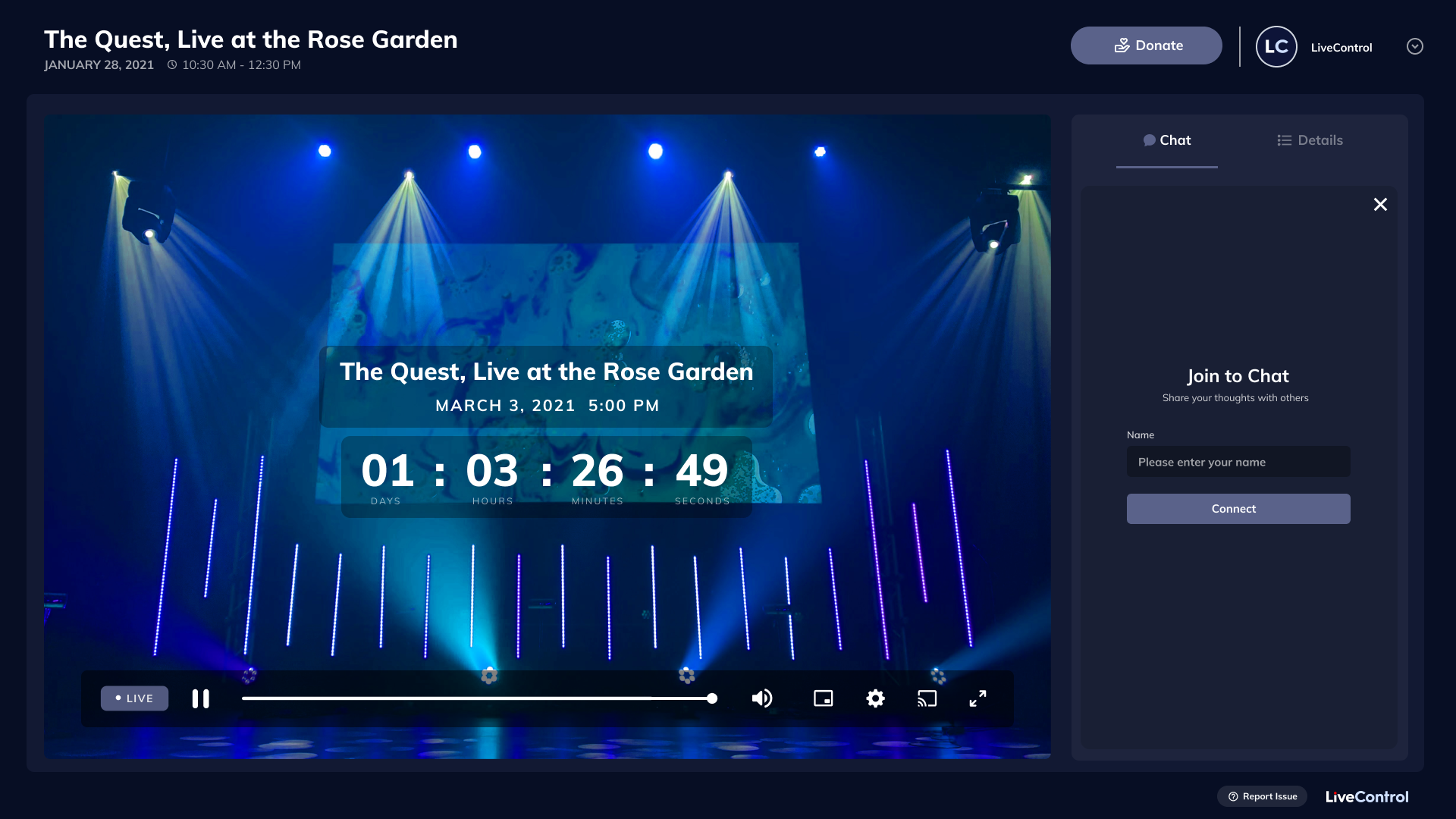
The company offers a production suite that’s a sort of plug and play solution for venues. “What if you could snap your fingers and an entire video product crew would appear, for just $150?” CEO Patrick Coyne asked, extremely rhetorically in a comment offered to TechCrunch.

Image Credits: LiveControl

LiveControl says its technology has been deployed in “hundreds” of spots in the U.S., everywhere from music venues and comedy clubs to Broadway theaters and religious institutions. With its device agnostic software and support, the company also provides third-party camera hardware as part of a package, for a more out-of-the-box solution.

The latest funding round will go toward accelerating its technology and expanding employee headcount from 40 people to 120 over the next year and a half. LiveControl and its investors are clearly bullish on the possibilities here. But there remain broader questions around how much audience members’ interest in remote viewing regresses to the mean once venues reopen across the country and world.

“Video is now table stakes for most organizations, venues and creators,” says Coyne. “We’re only seeing it accelerate, and everyone is forward leaning to make bigger investments to improve their video quality.”


21 Jul 2021

The Extreme Tech Challenge Global Finals 2021 starts tomorrow

Get ready for a startup throwdown of global proportions (literally). We’re the proud hosts of the Extreme Tech Challenge (XTC) Global Finals, and the pitch competition action starts tomorrow, July 22 at 9:00 am (PT).

Pro housekeeping tip: Attending this virtual pitch fest is 100 percent free, but you need to register here first.

Not familiar with XTC? It’s the world’s largest pitch competition focused on solving humanity’s most vexing challenges. You gotta love a competition that serves the greater good — and a startup ecosystem for purpose-driven companies determined to build a more sustainable, equitable, healthy, inclusive and prosperous world.

The road to the XTC finals was crowded to say the least. More than 3,700 startups from 92 countries applied to compete in one of these categories: Agtech, Food & Water, Cleantech & Energy, Edtech, Enabling Tech, Fintech, Healthtech and Mobility & Smart Cities.

Talk about a daunting endeavor. Team XTC, which consisted of deeply experienced investors, entrepreneurs and executives, winnowed down that field to these seven competing finalists: Wasteless, Mining and Process Solutions, Testmaster, Dot Inc., Hillridge Technology, Genetika+ and Fotokite.

Tomorrow’s competition takes place in two rounds, and each startup team will have to bring its best if they hope to impress this panel of judges — all leaders in sustainability and social-impact.

Young Sohn, co-founder, XTC and chairman at Harmann International; Bill Tai, co-founder, XTC and Partner Emeritus, Charles River Ventures; Regina Dugan, president and CEO of Wellcome Leap; Jerry Yang, founder/partner of AME Cloud Ventures and co-founder of Yahoo!; Lars Reger, CTO and EVP at NXP Semiconductors; and Michael Zeisser, managing partner at FMZ Ventures.

In a classic, “but wait, there’s more” moment, the day also features several presentations from some of the leading voices in sustainability. Take a look at the two examples below, and check out the complete XTC finals agenda and the roster of speakers.

The Keynote Address: Tune in as Beth Bechdol, the deputy director-general at the Food and Agriculture Organization (FAO) of the United Nations, provides an update on the latest from her agency.

Waste Matters: According to the EPA, the U.S. alone produces 292.4 million tons of waste a year. Can technology help this massive – and growing – issue? Leon Farrant (Green Li-Ion), Matanya Horowitz (AMP Robotics), and Elizabeth Gilligan (Material Evolution) will discuss their companies’ unique approaches to dealing with the problem.

The Extreme Tech Challenge Global Finals starts tomorrow, July 22. Join us and thousands of people around the world for this free, virtual pitch competition. Register here for your free ticket.