Year: 2021

16 Jul 2021

Traditional VCs turn to emerging managers for deal flow and, in some cases, new partners

Nasir Qadree, a Washington-based investor who just raised $62.1 million for his debut venture fund, recently told us that as his fundraising gained momentum, he was approached by established firms that are looking to absorb new talent.

He opted to go it alone, but he’s hardly alone in attracting interest. Anecdotally, bringing emerging managers into the fold is among the newer ways that powerful venture firms stay powerful. Early last year, for example, crypto investor Arianna Simpson — who founded and was managing her own crypto-focused hedge fund — was lured into the heavyweight firm Andreessen Horowitz as a deal partner.

Andy Chen, a one-time CIA weapons analyst who spent more than seven years with Kleiner Perkins, was in the process of raising his own fund in 2018 when another prominent firm, the hedge fund Coatue, came knocking. Today he helps lead the firm’s early-stage investing practice.

It’s easy to understand the appeal of such firms, which manage enormous funds and wield tremendous power with founders. Still, as older firms look to recruit from a widening pool of new managers, they might have to wait on the most talented of the bunch; in some cases, as with Qadree, they might be out of luck entirely.

There is, of course, a long list of reasons that so many people are deciding to raise funds these days, from the glut of capital looking to make its way into startups, to tools like Angelist’s Rolling Funds and revised regulations around crowdfunding in the U.S.

Emerging managers also seem adept at capitalizing on the venture industry’s blind spots. One is the excessive wealth of more veteran VCs. An investor’s experience counts for a lot, but there’s a lot to be said for up-and-comers who are still establishing their reputation, who aren’t sitting on more than a dozen boards, and whose future will be closely aligned with their founders.

Yet there are other trends the establishment has long overlooked for too long. Many firms probably regret not taking crypto more seriously sooner. Many male-heavy teams have also ignored for too long the soaring economic power of women, which new managers are driving home to their own investors.

Not last, many have stubbornly resisted racially diversifying their ranks, creating an opening for investors of color who are acutely aware of changing demographics. According to census projections, white Americans will represent a minority of the U.S. population within 20 years, meaning today’s racial minorities are becoming the primary engine of the country’s growth.

That new managers have shaken up the industry is arguably a good thing. The question some are beginning to wonder is whether they can maintain their independence, and that answer isn’t yet clear.

Like the startups they fund, many of these new managers are right now operating in the shadows of the firms that came before them. It’s a seemingly copacetic arrangement, too. Venture is an industry where collaboration between business competitors is inescapable after all, and it’s easy to stay on the good side of giant firms when you’re investing a non-threatening amount into nascent companies you’ll later introduce to the bigger players.

Ensuring that things remain harmonious — and that deal flow keeps coming — a growing number of venture firms now plays the role of limited partner, committing capital to new managers. Foundry Group was among the first to do this in an institutionalized way five years ago, setting aside 25% of a new fund to pour into smaller venture funds. But it’s happening routinely across the industry. Jake Paul’s new influencer-focused fund? Backed by Marc Andreessen and Chris Dixon of Andreessen Horowitz. Katie Stanton’s Moxxie Ventures? Backed by Bain Capital Ventures.

The running joke is that big firms have raised so much money they don’t know where to plug all of it, but they’re also safeguarding what they’ve built. It’s why in 2015, a then-beleaguered Kleiner Perkins tried acquiring Social Capital, the venture firm founded by Chamath Palihapitiya. (The deal reportedly fell apart over who would ultimately run the show. Kleiner subsequent underwent a nearly complete management change to regain its footing, while numerous members of Social Capital left to start Tribe Capital.)

It’s also why we might see more venture firms begin to gauge the interest of new fund managers who they think could add value to their brand.

Likely, some will say yes for the sheen and economics of a big firm and because teaming up can be far easier than going it alone. Early-stage investor Semil Shah — who has built up his own firm while also working as a venture partner with different, established outfits (including, currently, Lightspeed Venture Partners) — thinks it’s “natural to assume that lots of new rolling funds” in particular will either “burn out, stay small, or try to scale and realize how hard it is, and perhaps go to a bigger firm once they have established a track record.”

If true, it’s not a scenario that’s as widely embraced as some might imagine. Eric Bahn, who cofounded the Bay Area-based seed-stage firm Hustle Fund in 2017, predicted last week on Twitter< that “establishment VC funds will acquire emerging VC funds, who are building differentiated networks/brands.” While in a different era, that might be seen as a cushy landing, Bahn added: “Not sure how I feel about this. ?

He also later tweeted that “to be unequivocal, Hustle Fund is not for sale.”

For his part, Bahn says he’s “nervous about industry consolidation.” There have been “systemic issues with VCs being exclusionary in the past when it comes to women and other underrepresented groups.” He adds that even more recently he has “met LPs who — wink wink — really like men who come from Stanford and have computer science degrees,” leading him to fret that even a team with “good intentions can revert back to the mean.”

An industry friend of Bahn, Lolita Taub of The Community Fund —  a $5 million early-stage fund that is focused on community-themed startups and backed by the Boston-based seed-stage venture firm Flybridge — is more sanguine about emerging managers’ ability to remain independent. Rather than gobble up smaller funds, she foresees more established players begin to fund — and nurture — emerging funds that have overlapping areas of interest.

Taub suggests that it’s the next step beyond VCs who’ve worked with so-called scouts to find undiscovered gems. “I think older players are looking to expand their reach beyond what they know.”

Both may be right. Either way, the industry is changing shape and some form of consolidation, though not imminent, seems inevitable once the checks inevitably stop flying. Some firms will break out, while others team up. Some managers will find themselves at top firms, while others close up shop.

Almost the only certainty right now is that a larger fund “buying” a smaller fund is “not that complicated,” according to fund administration expert Bob Raynard of Standish Management in San Francisco.

Asked about the mechanics of such tie-ups, he shares that it “generally involves changing or adding members at the GP entity level [leading to a] change in control of the funds.”

Maybe, too, he says, there is a rebranding.

The real challenge, suggests Raynard, is just “getting two VCs to agree on a value.” And that depends entirely on their other options.

16 Jul 2021

Paytm files for $2.2 billion IPO

Paytm, one of India’s most valuable startups, plans to raise up to $2.2 billion in an initial public offering, it said in draft papers submitted to the country’s market regulator on Friday.

The Noida-headquartered firm — backed by Alibaba, Berkshire Hathaway, and SoftBank among others — said it will issue new shares worth $1.1 billion and offer sale worth of $1.1 billion.

The startup, which competes with PhonePe and Google Pay, plans to use the fresh capital of $577 million to broaden its payments services offering and about $269 million to enter into new initiatives and explore acquisition opportunities, it said.

This is a developing story. More to follow…

16 Jul 2021

India’s Delhivery bags $100 million from FedEx

FedEx Express, a subsidiary of delivery services giant FedEx, is investing $100 million in Indian startup Delhivery as the global firm looks to expand its presence in the South Asian country.

Friday’s investment comes less than two months after the Gurgaon-headquartered startup, which is valued at $3 billion, secured $277 million ahead of an initial public offering in the coming quarters.

As part of the deal, the companies will enter into a long-term commercial agreement. FedEx Express will focus on international export and import services to and from India, and Delhivery will, in addition to FedEx, sell FedEx Express international products and services in the India market and provide pick-up and delivery services across India. FedEx will transfer certain assets pertaining to its domestic business in India to Delhivery.

“Our aim is to bring new products and opportunities to Indian and global businesses and consumers through unique access to our networks, and our technology and engineering capabilities,” said Delhivery co-founder Sahil Barua said of Friday’s investment.

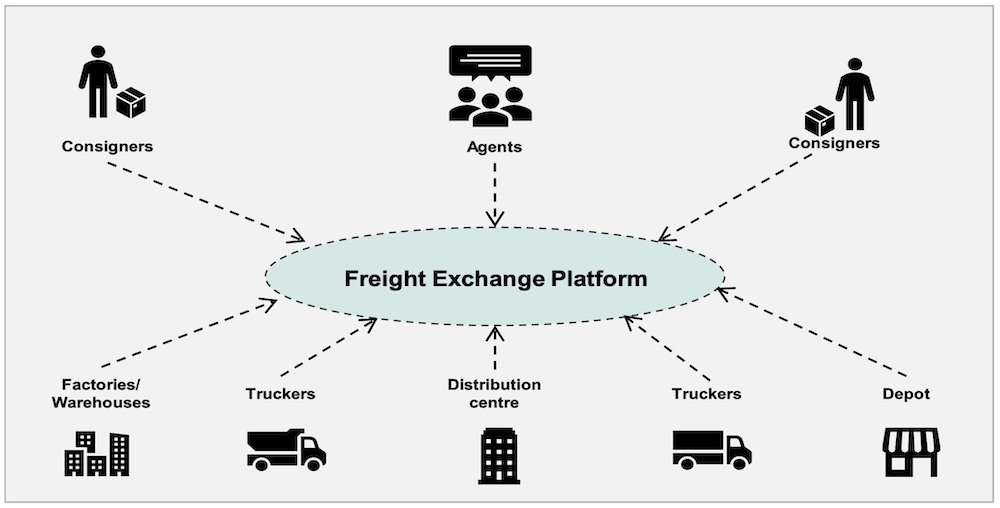
Delhivery began its life as a food delivery firm, but has since shifted to a full suite of logistics services in over 2,300 Indian cities and more than 17,500 zip codes. It is among a handful of startups attempting to digitize the demand and supply system of the logistics market through a freight exchange platform.

Image: Bernstein

Its platform connects consigners, agents and truckers offering road transport solutions. The startup says the platform reduces the role of brokers, makes some of its assets such as trucking — the most popular transportation mode for Delhivery — more efficient, and ensures round the clock operations.

This digitization is crucial to address the inefficiencies in the Indian logistics industry that has long stunted the national economy. Poor planning and forecasting of demand and supply increases the carrying costs, theft, damages, and delays, analysts at Bernstein wrote in a report last month about India’s logistics market.

Delhivery, which says it has delivered over 1 billion orders, works with “all of India’s largest e-commerce companies and leading enterprises,” according to its website, where it also says the startup has worked with over 10,000 customers. For the last leg of the delivery, its couriers are assigned an area that never exceeds 2 sq km, allowing them to make several delivery runs a day to save time.

Indian logistics market’s TAM (total addressable market) is over $200 billion, Bernstein analysts said. The startup said late last year that it was planning to invest over $40 million within two years to expand and increase its fleet size to meet the growing demand of orders as more people shop online amid the pandemic.

15 Jul 2021

Daily Crunch: Gap year student secures last open seat for Blue Origin’s first human spaceflight

To get a roundup of TechCrunch’s biggest and most important stories delivered to your inbox every day at 3 p.m. PDT, subscribe here.

Hello and welcome to Daily Crunch for July 15, 2021. Good news from the TechCrunch front: The agenda is out for our big Disrupt conference coming this September. It’s going to be flat-out amazing, frankly, so take a peek. Also, the latest EC-1 just dropped. So if you want to get the inside scoop on CockroachDB, well, we have just the compendium for you. — Alex

The TechCrunch Top 3

  • Revolut is now worth $33B: U.K.-based neobank Revolut has put together an $800 million round that values the company at $33 billion. The company’s fresh valuation is a multiple of what it was worth in early 2020. Why is it worth so much today? TechCrunch did a little exploring on the matter.
  • Valve is making gaming hardware: Yes, the folks behind the Steam gaming store are getting into the hand-held gaming market. Their device, the Steam Deck, will cost $399 and will contain “a quad-core Zen 2 CPU, coupled with AMD RDNA 2 graphics and 16 GB of RAM,” per our own Brian Heater. If you want more storage, get ready to shell out up to $649 for the hand-held computer.
  • Autonomous vehicle unicorn Aurora is going public: As TechCrunch previously scooped, autonomous vehicle unicorn Aurora is going public via a SPAC. The company expects to sport a $13 billion valuation when it begins to trade. Recall that Aurora previously absorbed Uber’s self-driving vehicle unit at a roughly $10 billion valuation.

Startups/VC

The venture capital market has been on fire lately, leading to rapid-fire deal-making and more rounds than journalists can dream of covering. But if you are still in the market to raise capital, then you might want to listen to Norwest’s Lisa Wu, who has a few tips that might prove useful. Chief among them? Think like a VC when you head out to raise.

  • AmEx dips its toes into financial planning: Today news broke that credit giant American Express invested in BodesWell last year via its venture arm. Now the credit card company has “launched a pilot of its first self-service digital financial planning tool” in conjunction with the startup. Talk about an early customer for BodesWell.
  • Prefab construction tries again: That’s the word from a new $20 million round for Abodu — what we presume is a portmanteau of “abode” and “you.” Sure, prefab construction unicorn Katerra is kaput, but Abodu is taking a consumer-focused spin on the model. Norwest led the round, with participation from Initialized Capital.
  • Lightyear raises $13.1M for online network procurement: From the geekier side of tech today was news from Lightyear, a startup that its CEO says is the “the first tool for buying your telecom infrastructure on the web.” Ron Miller notes that everything is heading online, so why not network buying?
  • $20M for financial data extraction: Daloopa has closed an eight-figure Series A led by Credit Suisse Asset Management’s NEXT Investors to help financial types avoid “repetitive data extraction in order to gather insights for analysis and forecasts,” TechCrunch reports. The deal stood out to us given its obvious corporate venture capital (CVC) angle; CVCs have been more active than ever in recent quarters.

The CockroachDB EC-1

Ants and camels are famously resilient animals, but when it was time to select a name for a startup that offers open-source, cloud-based distributed database architecture, you can imagine why “Cockroach Labs” was the final candidate.

Database technology is fundamental infrastructure, which partially explains why it’s so resistant to innovation: Oracle Database was released in 1979, and MySQL didn’t reach the market until 1995.

Since hitting the market, CockroachDB has become “a next-generation, $2-billion-valued database contender,” writes enterprise reporter Bob Reselman, who interviewed the company’s founders to write a four-part series:

Part 1: Origin story: From the creation of the popular open-source image editor GIMP to some of Google’s most well-known infrastructure products.

Part 2: Technical design: Analyzes the key differentiation that CockroachDB offers, particularly its focus on geography and data storage.

Part 3: Developer relations and business: How CockroachDB engages with developers while pivoting to the cloud at a key inflection point.

Part 4: Competitive landscape and future: A look at the fierce competition, and what possible exit routes might look like.

(Extra Crunch is our membership program, which helps founders and startup teams get ahead. You can sign up here.)

Big Tech Inc.

  • Apple hearts fintech: News this week that Apple is considering jumping into the buy now, pay later sector rocked the share price of Affirm and Afterpay. But what about startups in the space? TechCrunch did a little noodling on the question.
  • Xiaomi snags Apple’s No. 2 handset mark: Apple’s handset shipments grew in the second quarter, but a huge 83% gain at Xiaomi put the Chinese hardware company above Cupertino and its iPhone line, per Canalys data. Samsung remains the world’s largest smartphone company by unit volume.
  • Be jealous of this 18-year-old: After the winning bidder for a space flight on Jeff Bezos’s Blue Origin sold for $28 million to someone who couldn’t be bothered to make the first flight, an 18-year-old “high school graduate bound for the University of Utrecht” will go instead. Oliver Daemen, enjoy the trip, we’re jealous. (Yes, Daemen’s parents are rich.)

TechCrunch Experts: Growth Marketing

Illustration montage based on education and knowledge in blue

Image Credits: SEAN GLADWELL (opens in a new window) / Getty Images

TechCrunch wants you to recommend growth marketers who have expertise in SEO, social, content writing and more! If you’re a growth marketer, pass this survey along to your clients; we’d like to hear about why they loved working with you.

If you’re curious about how these surveys are shaping our coverage, check out this guest column on Extra Crunch by Mark Spera, “5 advanced-ish SEO tactics in 2021.”

15 Jul 2021

Hear Startup Alley companies pitch expert VC judges in upcoming episodes of Extra Crunch Live

We know how much you love a good startup pitch-off. Who doesn’t? It combines the thrill of live, high-stakes entertainment with learning about the hottest new thing. Plus, you get to hear feedback from some of the smartest folks in the industry, thus learning how to absolutely crush it at your next pitch meeting with a VC.

With all that in mind, we’re introducing a special summer edition of Extra Crunch Live that’s all pitch-off, all the time.

On July 21 and July 28, Extra Crunch Live will feature startups exhibiting in the Startup Alley at TechCrunch Disrupt 2021 in September. Those startups will pitch their products/businesses to a pair of expert VC judges, who will then give their live feedback.

Extra Crunch Live is usually a combination of an interview with a founder/investor duo and an audience pitch-off. But as it’s summer, and Disrupt is right around the corner, we thought it would be fun to bring you even more pitches and even more feedback.

On July 21, our expert VC judges will be Alexa von Tobel of Inspired Capital and Anis Uzzaman from Pegasus Tech Ventures. As a special thank you, all attendees of this episode of Extra Crunch Live will be entered into a random drawing for a chance to win one of three free tickets to TechCrunch Disrupt 2021. Following the event, we’ll randomly select 3 winners and send details on how to redeem their passes. Do you need to submit any additional information to enter the drawing? Nope. All you need to do is register for Extra Crunch Live by clicking the link below and attend the event on July 21st.

REGISTER HERE FOR INSPIRED CAPITAL AND PEGASUS TECH VENTURES

REGISTER HERE FOR INSPIRED CAPITAL AND PEGASUS TECH VENTURES

Alexa von Tobel founded LearnVest, which sold for hundreds of millions of dollars. She then went on to found and serve as general partner at Inspired Capital. She’s been to plenty of TechCrunch events, and has even been a guest on Extra Crunch Live earlier this year. Long story short: She’s a smarty pants and an all-around fun person to hang out with.

Anis Uzzaman is founder and partner at Pegasus Tech Ventures, whose portfolio includes SpaceX, 23andme, Airbnb, Sofi, Coinbase, Robinhood, DoorDash and many more. Before Pegasus, he was at IBM and Cadence, where he drove strategic investments in software development, microelectronics and e-commerce. And if that weren’t enough, he’s founded several companies.

On July 28, our VC judges include Nicole Johnson from Forerunner and Mor Assia from iAngels.

REGISTER HERE FOR FORERUNNER VENTURES AND iANGELS

REGISTER HERE FOR FORERUNNER VENTURES AND iANGELS

Nicole Johnson has a background in psychology and brings that experience into the world of consumer tech, focusing on the consumer psyche to both evaluate and help grow startups in which she is investing. Her portfolio includes Calibrate, Neighborhood Goods, Nécessaire, Heroes, Thingtesting, Prose, Stadium Goods and others.

Mor Assia is founding partner and co-CEO of iAngels. Hailing from Israel, and part of the IDF’s elite intelligence unit 8200, Assia leads the iAngel’s investment committee, deal screening, due diligence and portfolio management. She has a background with SAP, IBM and Amdocs, and specializes in the areas of fintech, AI and automotive technology.

These upcoming episodes are sure to be as exciting as they are informative, and we’ll be hitting you with more special edition Startup Alley pitch-off episodes of ECL throughout the rest of the summer.

Also, buy a ticket to Disrupt. Trust me. The agenda is lit. Along with the heavy hitters on the Disrupt Stage, you can get your founder how-to knowledge at sessions on the Extra Crunch Stage, breakout sessions and intimate roundtable discussions. You’ll be able to find and engage with people from all around the world through world-class networking on CrunchMatch and our virtual platform — all for under $100 for a limited time with even deeper discounts for nonprofit/government agencies, students and up-and-coming founders!

15 Jul 2021

The new Anthony Bourdain documentary ‘Roadrunner’ leans partly on deepfaked audio

On July 16th, Roadrunner: A Film About Anthony Bourdain will open in US theatres. Like many documentaries, the film pieces together archival footage, including interviews and show outtakes, to attempt to tell the story of its subject in their own words. It also includes words Bourdain never spoke to a camera before his death by suicide in 2018, and yet you’ll hear his voice saying them.

In an interview with The New Yorker, the film’s director, Morgan Neville, said there were three quotes he wanted Bourdain to narrate where there were no recordings, and so he recreated them with software instead. “I created an AI model of his voice,” he told the magazine.

It appears that was no easy feat either. In a separate interview with GQ, Neville said he contacted four different companies about the project before deciding on the best one. That company fed about a dozen hours of audio to an AI model. A lot of the work involved deciding the exact tone of Bourdain’s voice Neville wanted the software to replicate since the way the author and travel host narrated his writing changed so much over the years he was on TV.

Compared to some of the other ways we’ve seen AI and deepfakes used to trick people, this isn’t the worst example, but the ethics of it are still questionable. The film, as far as we’re aware, doesn’t include a disclosure that AI was used to replicate Bourdain’s voice. “If you watch the film, other than that line you mentioned, you probably don’t know what the other lines are that were spoken by the AI, and you’re not going to know,” Neville told The New Yorker. “We can have a documentary-ethics panel about it later.” In his interview with GQ, he said Bourdain’s family told him “Tony would have been cool with that,” adding, “I was just trying to make [the quotes] come alive.”

Editor’s note: This story originally appeared on Engadget

15 Jul 2021

How we got 75% more e-commerce orders in a single A/B test for this major brand

The Conversion Wizards, a conversion rate optimization (CRO) consultancy, was entrusted with boosting the conversion rates of a multibillion dollar company.

We used research to optimize the page and ran an A/B test. The winning version, labeled “radical,” resulted in a 75% increase in sales.

The original and double-control pages are actually identical. And to ensure that our judgment is sound, we always include a double-control.

Screenshot from the winning, optimized treatment (above the fold, desktop)

Screenshot from the winning, optimized treatment (above the fold, desktop). Image Credits: Conversion Wizards

Here’s a screenshot of the original page (above the fold, desktop). Image credits: Conversion Wizards

Here’s a screenshot of the original page (above the fold, desktop). Image Credits: Conversion Wizards

We took the average of those two identical pages as the baseline to determine the lift, and it revealed a 75% increase at 99% statistical significance.

Here are the Google optimize screenshots:

Google optimize

Image Credits: Conversion Wizards

Google Optimize

Image Credits: Conversion Wizards

Here’s a link to the full image of the original page.

Here’s a link to the full image of the winning page.

A look under the hood

Before I discuss the changes that produced the lift, it is important that I quickly go over the research that informed those changes. Why? Because it is a critical aspect of the process and too many CRO practitioners do not devote enough attention to figuring out why more site visitors aren’t converting.

Help TechCrunch find the best growth marketers for startups.

Provide a recommendation in this quick survey and we’ll share the results with everybody.

We surveyed both bouncing visitors and subscribers to the Subscribe & Save program. One of the important questions we asked the bouncing visitors was: “If you did not purchase today, what was your reason?”

15 Jul 2021

Xiaomi global shipments push past Apple for No. 2 spot

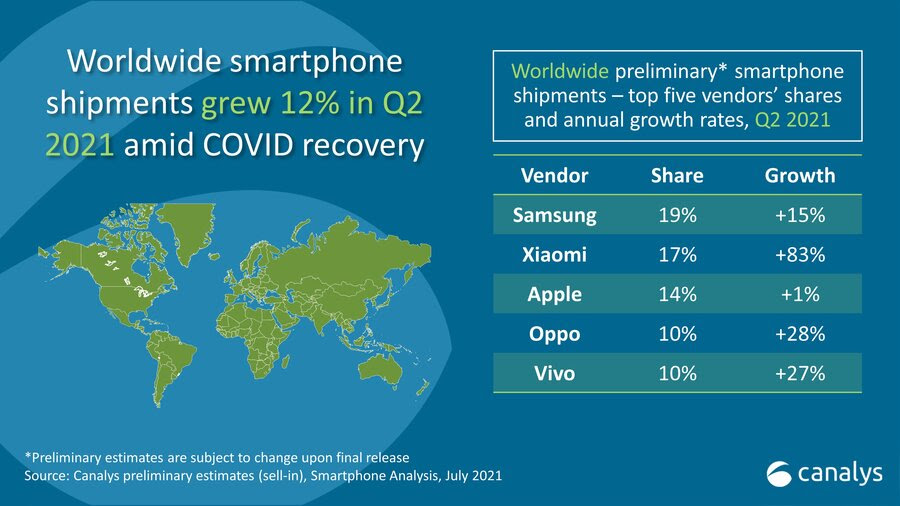
A banner quarter for Xiaomi helped the Chinese mobile company snag the No. 2 spot in global smartphone shipments, according to newly posted Q2 numbers from research firm Canalys. It’s pretty stunning growth for the company, up 83% year-over-year for the quarter and capturing 17% of the global market.

The surge puts Xiaomi at No. 2, globally, behind only Samsung’s 19% by a relatively small margin. Apple is at third with 14% (after its own solid growth has slowed), while fellow Chinese manufacturers Oppo and Vivo round out the top five at 10% a piece.

Huawei, of course, is nowhere to be seen among the top companies. It’s a pretty massive drop, due in no small part to blacklisting that has both barred the company from certain markets (namely, the U.S.) and cut off access to U.S. mobile products, including Google’s Android and various apps.

Image Credits: Canalys

Canalys cites aggressive pricing as a big factor in Xiaomi’s success — particularly contrasted with premium priced offerings from Samsung and Apple.

“It is now transforming its business model from challenger to incumbent, with initiatives such as channel partner consolidation and more careful management of older stock in the open market,” the analyst firm’s Research Manager Ben Stanton said in a release. “It is still largely skewed toward the mass market, however, and compared with Samsung and Apple, its average selling price is around 40% and 75% cheaper respectively. So a major priority for Xiaomi this year is to grow sales of its high-end devices, such as the Mi 11 Ultra.”

The company certainly isn’t a household name in the States (the company has dealt with its own issues here), but of late it has found particular success in Latin America, Africa and Western Europe. It seems that there are still plenty of markets available to continue its expansion as it looks to take on Samsung, even as Oppo and Vivo hope to continue their own respective rapid global growth.

15 Jul 2021

Announcing the agenda for the Disrupt Stage this September

Disrupt 2021 stands to be the best Disrupt yet. We have an incredible lineup of speakers both on the Disrupt Stage and the Extra Crunch Stage. And, of course, we can’t forget the Startup Battlefield, which has been a launch pad for some of the biggest tech companies in the world today, including Dropbox, Mint, and Cloudflare.

Today, we’re excited to give you a closer look at the Disrupt Stage, where the biggest names in tech talk about their companies, their plans, and what’s next for the greater tech ecosystem.

And this is just the tip of the proverbial iceberg when it comes to the three jam-packed days we’re planning for you at Disrupt. Along with these heavy hitters on the Disrupt Stage, you can get your founder how-to knowledge at sessions on the Extra Crunch Stage, breakout sessions and intimate roundtable discussions. You’ll be able to find and engage with people from all around the world through world-class networking on CrunchMatch and our virtual platform — all for under $100 for a limited time with even deeper discounts for non-profit/government agencies, students and up-and-coming founders!

So without any further ado, check out the current agenda for the Disrupt Stage:

HEALTH/BIOTECH

Saving the World with Ugur Sahin (BioNTech) and Ursheet Parikh (Mayfield Fund)

COVID-19 changed everything. It not only threatened our individual health and well being, but shook industries and economies across the globe. But the same could be said about the COVID-19 vaccines. Hear from BioNTech cofounder and CEO Ugur Sahin on the process of rapidly developing the world’s most sought after vaccine, alongside Pfizer, and the long-term potential of mRNA-based therapies. Sahin will be joined by Ursheet Parikh of Mayfield Fund to discuss what’s next for startups in this rapidly evolving industry.

Democratizing Healthcare with Toyin Ajay (Cityblock Health), Adrian Aoun (Forward), and Eren Bali (Carbon Health) 

It’s no secret that the current healthcare system in America is broken. Technology stands to make a huge difference, especially in the backdrop of eased regulations due to COVID-19. Hear how startup founders from Forward, Carbon Health and Cityblock Health decided to tackle the behemoth, backward industry of healthcare, as well as talk through their plans to democratize access and digitize the industry.

Pot, Pottery and Beyond with Seth Rogan (Houseplant), Haneen Davies (Houseplant), and Michael Mohr (Houseplant)

Somehow we live in world where alcohol is sold in grocery stores and weed is considered a gateway drug. But that is rapidly changing. The legalized cannabis industry is estimated to be worth more than $13 billion in 2021, and major players from big food, pharma, etc. all want a slice of the pie. Hear from actor and comedian Seth Rogan on his well-known passion for pot, and how it led him to start Houseplant. Rogan will also be joined by Houseplant chief commercial officer Haneen Davies and cofounder and CEO Michael Mohr.

The Disrupt Desk

Industry experts and TechCrunch editors break down the panels you missed with analysis, insight, and likely a laugh or two.

Startup Battlefield Competition – Session 1

TechCrunch’s iconic startup competition is back, as entrepreneurs from around the world pitch expert judges and vie for the Startup Battlefield Cup and $100,000

IMPACT

From ABC’s to IPO with Luis Von Ahn (Duolingo)

Language learning company Duolingo was founded in 2011 and has raised more than $167 million in private capital, and recently filed to go public. Despite avoiding monetization for years, the startup saw revenue growth of 120+ percent in 2020, with no signs of slowing. CEO and cofounder Luis Von Ahn will join us on the Disrupt stage to talk about gamifying education, prepping for a public offering, and how he and the team built the anti-Rosetta Stone with an owl as a mascot.

The Disrupt Desk

Industry experts and TechCrunch editors break down the panels you missed with analysis, insight, and likely a laugh or two.

Startup Battlefield Competition – Session 2

TechCrunch’s iconic startup competition is back, as entrepreneurs from around the world pitch expert judges and vie for the Startup Battlefield Cup and $100,000

FINTECH

Collecting Crypto Opportunities with Roham Gharegozlou (Dapper Labs)

Dapper Labs launched the digital collectible craze into the mainstream earlier this year with its smash hit NBA Top Shot, but even amid sinking NFT sales, CEO Roham Gharagozlou has big ambitions for the space. His startup most recently hit a $7.5 billion valuation and has aims to own the NFT ecosystem with their Flow blockchain product.

Breaking the Bank with Brian Armstrong (Coinbase)

Coinbase’s massive direct listing earlier this year couldn’t have come at a better time as peaking crypto enthusiasm reached market exuberance, but now amid a major market correction, CEO Brian Armstrong is once again tasked with building for the future and navigating volatility while fending off global competitors knocking at their door.

The Disrupt Desk

Industry experts and TechCrunch editors break down the panels you missed with analysis, insight, and likely a laugh or two.

ENTERPRISE/SAAS & SECURITY

Staying a Step Ahead with Rinki Sethi (Twitter)

In 2020, in the midst of an already-frantic year, Twitter was breached in a very public way. Behind the scenes, Twitter spends a tremendous amount of time, money, and energy on user protection and platform integrity. A big part of that is through information security. CISO Rinki Sethi will join us at Disrupt to talk through how Twitter tries to stay ahead of malicious actors, and how tech companies large and small can do the same.

From Bootstrapped to Billions with Tope Awotona (Calendly)

Dozens have tried to reinvent the calendar, and dozens have failed. Tope Awotona built Calendly not as a way to reinvent the wheel, but to add a layer of simplicity to the chaos of human communication and time management. And boy did it work! The once-bootstrapped company is now worth more than $3 billion, serving individuals and enterprises alike. Hear from the founder and CEO on how he got Calendly off the ground, why he decided to finally take institutional investment, and how the company has changed as it grows.

Startup Battlefield Competition – Session 3

TechCrunch’s iconic startup competition is back, as entrepreneurs from around the world pitch expert judges and vie for the Startup Battlefield Cup and $100,000

An Unstoppable Force and an Immovable Object with Stewart Butterfield (Slack) and Bret Taylor (Salesforce)

Slack and Salesforce are two of the biggest names in all of tech. The communication tool (born from one of the odder pivots in tech history) is commonplace across organizations from almost every industry. It’s an unstoppable force. The sales CRM behemoth is used all over the world by sales teams small and large. An immovable object. In December of 2020, the pair announced a $27.7 billion merger. Hear from Slack founder and CEO Stewart Butterfield and Salesforce President and COO Bret Taylor about the future of the combined entity, why the deal made sense, and what it’s like to write down that many 0’s.

Dogmatic Design with Melanie Perkins (Canva)

The rapid evolution of the design industry can’t be understated. From better collaboration among designers and other departments, to collaboration among designers themselves, to the democratization of design across an organization, the landscape is changing. Canva has led the charge in this evolution, building one of the simplest (and yet full-featured) tools on the market. Hear cofounder and CEO Melanie Perkins talk about scaling the business to now be worth upwards of $15 billion, and expanding the business from B2C to B2B, all while continuing to iterate the product.

The Disrupt Desk

Industry experts and TechCrunch editors break down the panels you missed with analysis, insight, and likely a laugh or two.

Startup Battlefield Competition – Session 4

TechCrunch’s iconic startup competition is back, as entrepreneurs from around the world pitch expert judges and vie for the Startup Battlefield Cup and $100,000

HARDWARE

Reflecting on Success with Brynn Putnam (MIRROR)

Mirror cofounder and CEO Brynn Putnam first hit the Disrupt Stage years ago to launch her idea for a better, more beautiful, fitness product. This year, she’s returning to our stage to talk through the ups and downs of building a hardware product, how she manages the variety of moving pieces of this business (from the instructor network, to the content and subscription business, to sales and marketing, etc.) and walk us through the company’s $500 million acquisition by Lululemon.

A Fictional Future Built with Real AI with Kai-Fu Lee (Sinovation Ventures) and Chen Quifan (World Chinese Science Fiction Association)

A leading mind in AI research and investment and a bold new voice in science fiction collaborate in “AI 2041,” a remarkable new collection of stories imagining a future shaped by technology being built today. Hear Sinovation Ventures Chairman and CEO Kai-Fu Lee and author Chen Quifan (AKA Stanley Chan) discuss the tech that inspired their book and the changes they expect over the next two decades.

Drones, Self-driving Cars, and Everything in Between with Secretary of Transportation Pete Buttigieg (U.S. Department of Transportation)

Pete Buttigieg first came on the scene as a small town Mayor in Indiana. He launched onto the national stage as a presidential candidate for the Democratic party in 2020. He now serves as Secretary of Transportation under the Biden administration, and oversees everything from public transport to autonomous vehicle regulation. Hear Secretary Buttigieg’s take on micromobility, the future of cities, drone delivery, autonomous vehicles and more in this fireside chat.

Crafting a Lunar Trajectory in Newspace with Peter Beck (RocketLab)

Rocket Lab has upgraded its ambitions from building a global launch empire to designing its own spacecraft and visiting the Moon and beyond. Founder and CEO Peter Beck will speak to the challenges and opportunities lying ahead for his fast-growing space and tech outfit.

The Disrupt Desk

Industry experts and TechCrunch editors break down the panels you missed with analysis, insight, and likely a laugh or two.

VENTURE CAPITAL

Bankrolling Web 3.0 with Katie Haun (Andreessen Horowitz)

At $2.2 billion, Andreessen Horowitz’s third crypto-centric fund is their largest vertical-specific bet ever and a signal of just how crucial blockchain tech and decentralized finance is to the firm’s future. General Partner Katie Haun co-leads the crypto team tasked with tracking down the firm’s next Coinbase, which returned billions for the firm.

Checking In with Chris Sacca (Lowercarbon Capital)

Chris Sacca has been a judge on “Shark Tank” and appeared on the show “Billions.” But he’s best known for sharing his opinions on Twitter, a company in which he invested early and often, and for placing a wide range of other hugely successful bets, including Uber, Instagram and Twilio. Now, at his newest firm, Lowercarbon Capital, Sacca is focusing his attention and dollars on finding and funding solutions to climate crisis, and we’re excited to talk with him about where he’s seeing the most opportunity bubbling up in this fireside chat.

Speaking SPAC with Chamath Palihapitiya (Social Capital)

Chamath Palihapitiya, founder and CEO of Social Capital, is one of the world’s most well-regarded and respected investors, and has been at the forefront of the recent SPAC craze. Hear Palihapitiya’s thoughts on the future of SPACs, what tech sectors are primed for a boom, and what excites him most in terms of future investments.

The Disrupt Desk

Industry experts and TechCrunch editors break down the panels you missed with analysis, insight, and likely a laugh or two.

Startup Battlefield Competition – Final Round

TechCrunch’s iconic startup competition is back, as entrepreneurs from around the world pitch expert judges and vie for the Startup Battlefield Cup and $100,000

MEDIA & ENTERTAINMENT

Esports Everywhere with Nicole LaPoint Jameson (Evil Geniuses)

The pandemic not only spurred the growth of gaming as a hobby, but gave an extra boost to the world of esports. Hear Evil Geniuses’ CEO Nicole LaPoint Jameson outline where esports is headed, how data and technology are driving the players, teams, leagues and beyond, and what opportunities lie in this ever-growing industry.

15 Jul 2021

Valve launches Steam Deck, a $400 PC gaming portable

A new challenger has emerged in the gaming hardware category. Game distribution giant Valve today announced the launch of Steam Deck, a $399 gaming portable designed to take PC games on the go.

The handheld (which has echoes of several portable gaming rigs of years past) features a seven-inch screen and runs on a quad-core Zen 2 CPU, coupled with AMD RDNA 2 graphics and 16GB of RAM. Storage runs 64GB to 512GB, the latter of which bumps the price up to $649. The built-in storage can be augmented via microSD.

Image Credits: Valve

Naturally, the thing is custom built for Valve’s wildly popular Steam platform (it’s right there in the name, after all). Users log into their Steam account and their library — and friends list — are right there, ready to go. There’s even a dedicated Steam button.

The system has been rumored for some time now, but it enters the world during a rapidly evolving era for gaming. Essentially the company is hoping to outperform the admitted graphical limitations of Nintendo’s Switch (OLED or no), while filling in the gap as cloud-based gaming from companies like Microsoft are still working on a foothold as they deal with latency and other technical limitations. There’s also the Nvidia Shield Portable — though we’ve not heard much from that project, of late.

Image Credits: Valve

Flanking the 1280 x 800 touchscreen are a pair of trackpads and thumb sticks. A built-in gyroscope also uses movement to control the gaming experience. There’s a single USB-C port for charging, peripherals and connecting to a big screen, while a 40Wh battery promises between 7-8 hours of gameplay, by Valve’s numbers.


Image Credits: Valve

The system is up for preorder now and starts shipping this December, in time for the holidays.