Year: 2021

12 Jul 2021

MSCHF drops tiny action figures of your favorite failed startup hardware

Hardware is hard. You can browse the archives of this site and come up with dozens of bold attempts to make new consumer electronics gadgets work — some of them very close to home. But, like all startups, most hardware companies run into the hard core grind of turning atoms into something worth buying. 

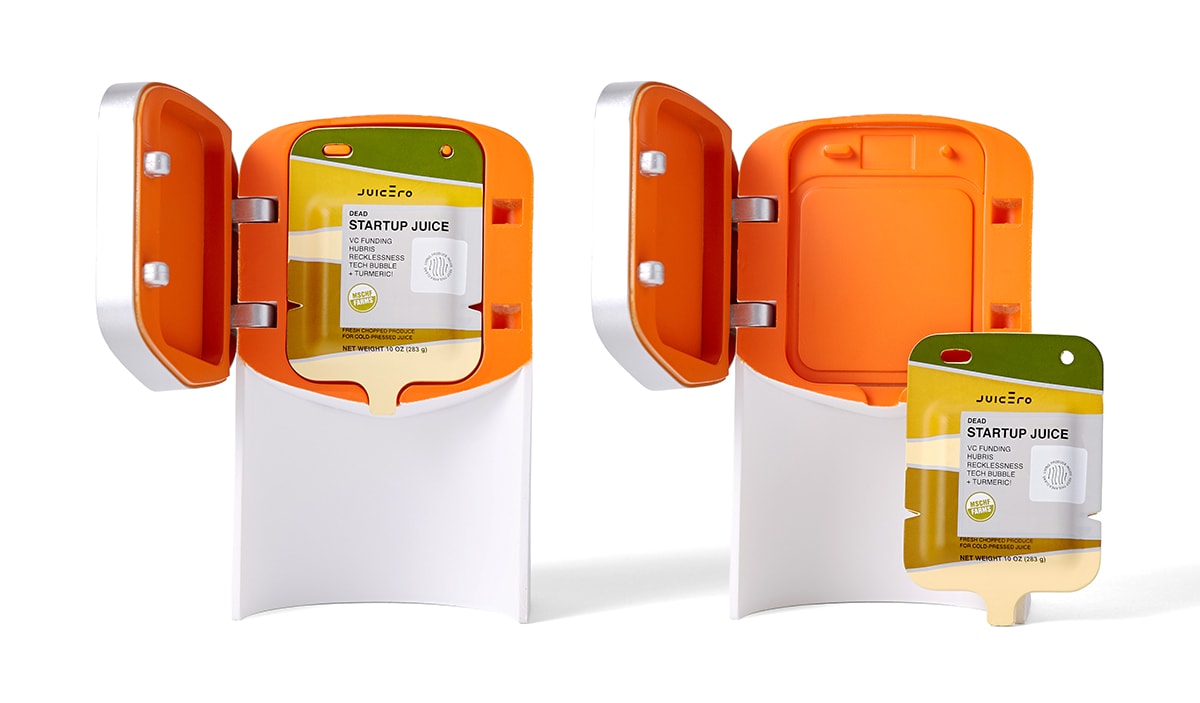
To commemorate the hardness of hardware, idea factory/art house MSCHF is releasing a set of 5 Dead Startup Toys as vinyl figurines that you can buy for $39.99 each or $159.99 for the set. It bills these as ‘iconic failed startups’ and the sales site offers a brief history of the rise and fall of each endeavor. They range from products that never really existed like the Theranos minilab to poorly timed early movers like Jibo to exercises in over-engineering like Juicero. 

Given that I have spent much of my career absorbing and trying to understand the difficult and complicated process of bringing consumer hardware to market, I love these things. There could be a lens of malice here, but I choose not to see it that way. Fraud is fraud and the people behind Theranos and debacles like the Coolest Cooler have or will see the business end of the legal system. 

But big visions and hardware dreams are not always so clearly pocketed into the hole of ‘failure’. Sometimes the hardware works but the supply chain doesn’t. Sometimes the vision is sound but the product is just too early. There are any number of reasons products fail — but (in as much as they were actually real) you often have to give it up for the teams of people and visionaries that wanted a thing to exist in the universe and dragged it kicking and screaming to that point. And off the cliffs.

The figures themselves are really well done, with crisp stamping and accurate detailing with readable text and nicely printed logos. Some of them are articulated as well, and accessorized. The Coolest Cooler gets its infamous blender and the Juicero has a removable (proprietary of course) ‘fresh veg’ pouch. The quality on these is quite high overall, I’d rank them up with some of the better novelty toys I’ve bought over the years — it’s not phoned in, much like the Cooler’s feature set.

The packaging, too, is quite impressive, each gets a customized box and the big set of all of them comes in a bigger rack box. Each one also comes with a ’cause of death’ on the back that tells you why each venture went under. MSCHF went the lengths to make this a pretty premium ‘toy’ drop, which is only fitting given that it’s a monument to physical products. 

As with much of MSCHF’s work, there’s an element of ‘wait, is this legal’ as well, because there are likely a bunch of holes that the IP connected to these products fell into but some of those holes could still have legal entities attached. But that element of danger is what has made many of its projects resonate so far so I don’t think they’re worried. 

After all, none of these products have the sign of the beast on them. Physically, anyway.

[gallery ids="2176106,2176121,2176107,2176105,2176096,2176086,2176090,2176099,2176072,2176079,2176066,2176068,2176071,2176053,2176051,2176058"]

12 Jul 2021

Beyond Pride: The fight against tech’s brogrammer culture

I was 4 years old when I started playing what I’ve come to think of as “the game.” It was dressing-up time at school, and, as I ran over to a costume box, my teacher grabbed me by the shoulders. Right up in my face, she admonished: “That’s the girls’ box — the boys’ stuff is over there.”

I was taken aback; I didn’t understand what I’d done wrong. But I remember thinking: “Oh! There are rules to how we live together in the world.” Right then and there, I started conforming to the parameter of the game that so many of us operate by: the game that gives us unwritten codes on what is acceptable and how to behave — at school, in work or in society at large.

This game meant I spent years dialing down my “gayness,” even after I came out in my 20s, and the impulse was particularly acute at the early stage of my career. With each new meeting or business deal, I was constantly preempting what parts of me were “OK”’ or what might put people off. Just how much gay was too much?

In some ways, then, the endemic “brogrammer” culture in tech — the industry I call home — is no great surprise to me. When everyone is busy filtering their core identity, sanding down the edges to fit the collective mold, it’s inevitable that minority voices will be pushed out. Follow this picture to its natural conclusion and Silicon Valley — the home of bold disruptors, the armada of innovation — is reduced to a narrow few.

With Pride Month drawn to a close, it’s my greatest hope that we can use its particular kind of open-minded energy to activate deeper change.

In many ways, Pride Month and the celebrations we’ve just seen are the antidote to this hegemony. Pride, with its rainbow symbolism, is a cornucopia of all that is free, true and uninhibited. With Pride Month drawn to a close, it’s my greatest hope that we can use its particular kind of open-minded energy to activate deeper change.

Show up for your team first

I truly love Pride and the meaningful action that goes with it, but it can’t be denied that some brands are venturing into the territory of window dressing. “Performative activism,” whereby companies mobilize the Pride flag for marketing purposes without necessarily making tangible changes in their own backyards, is on the rise. So too are the businesses that pay lip service to Pride from one side of their mouth while covertly supporting politicians behind anti-transgender legislation on the other.

If you are a leader who’s really committed to diversity in the workplace, it stands to reason that you look within to help your own team first. How can you create a culture where employees can be present in the fullness of themselves — regardless of gender, race, sexuality or even incidental things like taste in clothes or music?

According to a 2019 study by the Yale School of Public Health, an estimated 83% of those who identify as lesbian, gay or bisexual keep their sexuality hidden from all or most of the people in their lives.

This inhibition is magnified in the workplace, where it is woven into the fabric of myriad discriminatory behaviors that are particularly prominent in tech. Almost 40% of LGBTQ tech employees polled by anonymous workplace chat app Blind say they’ve witnessed homophobic discrimination and harassment at work.

Annual diversity reports show that Big Tech companies employ far fewer women and underrepresented minorities than other industries, too. This is a sector that routinely labels people from nonmajority culture groups as “diversity hires,” doling out discrimination in everything from pay to promotions — as reported by thousands of personal experiences shared under the hashtag #SiliconValleySoWhite. The same industry is also hardwired to marginalize women, says Emily Chang, the Bloomberg Technology anchor whose book, “Brotopia,” lifts the lid on Silicon Valley’s culture of machismo.

These aren’t easy issues to solve, but I believe authenticity has an important part in the solution. It’s about calling time on that game that I used to play. When I finally learned that I could show up as I pleased at work and not worry about how people judge me, the freedom was so sweet I could practically taste it. After years of faking it without fully realizing it — in a draining, relentless loop — I was able to be the person and CEO I wanted to be. The more familiar I became with California’s tech scene, and the farther up the ladder I progressed, the more confident I became to be me.

You shouldn’t have to wait until you run a company for the permission to express your full self, however. As the research shows, the price paid for not doing so reaches far beyond personal freedom alone. Though we’ve made steps with important conversations around diversity in recent years, the world we work in is still, overwhelmingly, one-dimensional. It’s full of people not able or willing to reveal the genuine, hi-def version of who they are.

The power of listening and shared vulnerability

If we, as tech leaders, are unable to roll our sleeves up and dig deep on the issue of authenticity, we have little hope of chipping away at the “brogrammer” attitude that seems all too pervasive in our industry.

Not only does this kind of climate engender unsaid fear, fatigue and anxiety, it also affects the bottom line. Research is clear on the fact that happy employees are more productive, while companies with more diverse management teams have greater profitability, creativity and problem-solving abilities. Having the freedom to be your authentic self at work is a conduit to success and fulfillment.

So, how can tech CEOs and management get to this place? In my mind, a dual-sided approach is called for. First, efforts to harness authentic expression have to be enacted as policies. Leaders must give their teams direct responsibility for helping employees to bring their full selves to work. Help make your people accountable for an inside effort allowing all voices in your organization to be heard.

In GumGum’s case, this includes the formation of a STRIDE (Seeking Talent Representation Inclusion Diversity & Equity) Council. Made up of employees from all divisions, locations and levels of seniority across the company, council members make tangible recommendations to improve diversity and inclusivity in the company as part of their paid daily roles.

Unconscious bias training is also vital for empowering authentic expression in the workplace. If I walked down the street in glitter shorts and a crop top, everyone around me would have some kind of reaction to my chosen outfit — regardless of whether they’d admit it. Building awareness of subconscious judgments like this is the first step to reining them in, and creates understanding of how bias inevitably impacts decision-making at work.

Second, the quest for business authenticity lies with CEOs and senior management and their ability to lead by example. I think today’s cancel culture has made leaders hypersensitive about the need to keep it together, to toe the line with their behavior, to be professional and not make mistakes.

Professionalism has its time and a place, of course, but I’ve always made it a point to be as open as possible as a CEO — to shine a light over every element of my personality, even the aspects that other people may judge or find less desirable. My determination to do this comes directly from the hidden identity that I used to struggle with. The fear I felt over being gay is now my fuel to showing my true self. By doing so, I aim to give those around me permission to do the same.

No one really wants their tech company to breed a bro culture where only one type of person can thrive. But it’s not enough to simply say that. You have to start by showing that it’s OK to be different, to turn up in every shade of gray. I have a penchant for flamboyant fashion, for example, so I don’t think twice about attending a Zoom meeting in a baby blue fedora. That’s just how I express myself as a CEO.

Showing up like this involves an element of fear, and I think it’s important to be open about that, too. As CEOs, we should share our vulnerabilities, our struggles with identity, the secret parts of ourselves that we’re tempted to keep masked away. This includes owning up to failures — CEOs are only human, and that humanity should be put on a pedestal if authenticity is the goal.

People need to feel that their vulnerabilities are heard without judgment. Whether they’re in an interview or taking on a new project, one of my favorite questions to ask employees is simply, “What are you afraid of?”

We all have fears, and by answering that question, you get to access someone’s vulnerable side. They might be scared of failing, making the wrong decision or upsetting the apple cart in some way. Tapping into that emotion is a great way of giving people permission to be their full selves.

A turning point for tech

Pride Month is part of a wider narrative around acceptance and freedom of being. Companies that jump on the rainbow bandwagon without fully living those values aren’t only hypocritical — they’re also doing themselves a disservice. Pride isn’t a revenue opportunity, and even if it was, those brands that attach messaging to it without substance are missing a trick.

Beneath the LGBTQ+ Pride gift wrap lies a thousand work environments in urgent need of the values that the Pride movement espouses. Making those values a living, breathing part of everyday work life is no mean feat. But allowing people to untether from who they “should” be at work is a vital starting point for a change that is long overdue.

I know the shame of hiding my true self away, which is why I make every effort for others to avoid that experience. Nowadays, I show up at work as more myself than I’d ever dared in my younger years. In this one small act, I challenge my co-workers to follow suit. It’s only when, together, we embark on that exploration of what authenticity in business looks like that the endless game-playing can stop — and the real work gets underway.

12 Jul 2021

Eat the rich, but let them build rockets in the meantime

Richard Branson’s Virgin Galactic went to space (or the vicinity of space) in a PR-suffused event over the weekend. It was all rather twee, packed with maudlin riffs about childhood dreams and riddled with hero worship. And the stream kept stuttering while some of the planned vehicle-to-Earth communications failed.


The Exchange is continuing its look into Q2 venture capital results this week. If you’re a VC with a hot take on the numbers, we’re collecting comments and observations at alex.wilhelm@techcrunch.com. Use subject line “hot dang look at all this money.” Thanks! — Alex and Anna


But the launch accomplished what it set out to do: A few folks made it to into zero gravity after launching their rocket-powered space plane from a larger aircraft, flipping it around at the top of its arc so that its passengers could get a good view of our home while floating. Then it came back to the surface and, we’re sure, much champagne was consumed.

In the aftermath of the event, lots of folks are pissed. Complaints have rolled in, dissing the event and generally mocking the expense involved when there are other issues to manage. A sampling follows. Note that these are merely illustrative examples of a general vibe. I have precisely zero beef with anyone in the following tweets or articles:

And from the media side of things, this stood out today from the Tribune:

I disagree.

Sure, it’s maddening that Jeff Bezos’ new yacht will require a second boat so that he can have a mobile heliport on the go — his new boat has sails, so you can’t chopper to it — while the company that built his fortune churns through workers with abandon and squeezes its drivers so much that they have to piss in bottles due to scheduling constraints.

And, yes, Branson is annoying quite a lot of the time. He also owns an island and likes himself too much.

12 Jul 2021

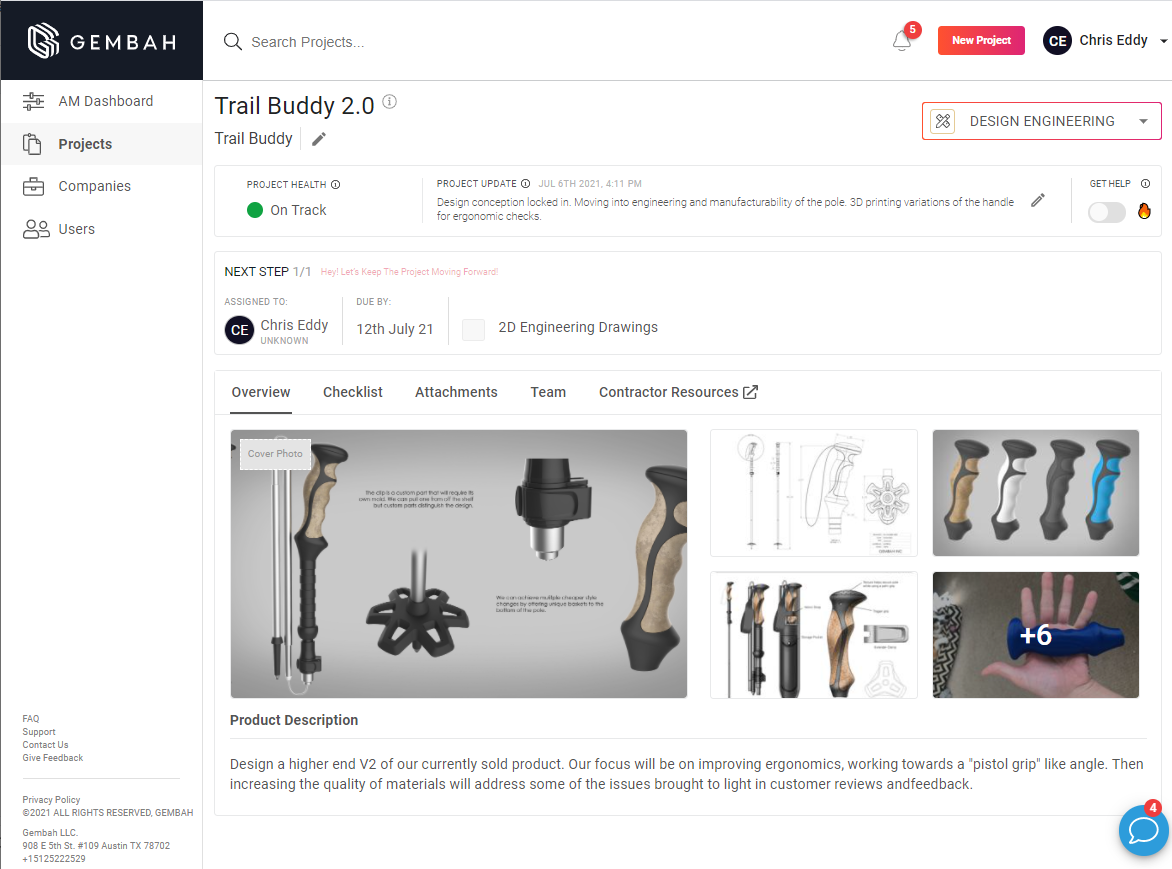
Gembah raises $11M to ‘democratize product innovation’

Gembah’s mission statement is a deceptively simple one. The Austin-based company says it’s looking to “democratize product innovation by drastically lowering barriers to entry for creation of new products.” In that respect, at least, it’s not so dissimilar from various startup initiatives that have arrived over the past decade and change, from crowdfunding to additive manufacturing.

The company’s product is a platform/marketplace designed to guide users through the product-creation process, promising results in “as little as 90 days.” The forum connects smaller business connect to factories, supply chain experts, designers, engineers, etc. to help speed up the process. Just ask anyone who has attempted to launch a hardware startup — these things can be massive difficult to navigate.

To help accelerate its own vision, Gembah has raised an $11 million Series A, led by local firm ATX Venture Partners along with Silverton, Flexport, Brett Hurt, Jim Curry and Dan Graham.

Image Credits: Gembah

It follows a $3.28 million seed led by Silverton announced in April of last year, bringing its total funding up to $14.75 million.

The company says the pandemic has actually been something of a boon for its business model, as hardware startups are looking toward a more online model – and something a bit closer to home than the traditional sales channels. The company says its revenue grew 500% in 2020 and is on track to triple revenues this year. It’s impressive growth in the face of some major supply chain issues that have impacted the industry during the past year and a half.

It currently has 300 active customers, though it was yet to achieve profitability — hence the new round. “Since most of our customers are e-commerce companies we benefited from the accelerated growth of e-commerce,” CEO and co-founder Henrik Johansson tells TechCrunch. “Supply chains have been impacted to some degree, but as the global supply chain gets more complex and many companies want to diversify outside of China, they need help to navigate that change, and Gembah can help with that transition.”

The funding will go toward increasing the company’s engineering team. At present, Gembah has 55 employees in the U.S, and 19 in other locations, including Asia and Mexico. The new headcount will be focused on growing the marketplace, supply chain workflow and machine-learning capabilities. Gembah will also look to grow its global network and make additional hires in marketing and UI/UX.

“Gembah is a true innovator poised to help businesses capitalize on the growth of global eCommerce,” ATX Venture Partners’ Chris Shonksaid in a statement. “The Gembah marketplace promises to unlock virtually unlimited entrepreneurial equity by enabling a whole new breed of creators to enter the market.”

12 Jul 2021

Indian financial services firm MobiKwik looks to raise $255 million in IPO

Gurgaon-based mobile wallet service firm MobiKwik plans to raise up to $255 million in an initial public offering, becoming the latest Indian startup to explore the public markets.

The 12-year-old firm, which counts Sequoia Capital India and Abu Dhabi Investment Authority among its investors and has raised about $250 million to date, is targeting a valuation of about $1 billion in the IPO, according to two people familiar with the matter.

MobiKwik said its total income for the year that ended in March 2021 was about $40.5 million, down 18%, while its loss also shrank 12% to $14.9 million during the period.

MobiKwik’s move comes as a handful of Indian startups including Zomato and Paytm are working to list on stock exchanges.

This is a developing story. More to follow…

12 Jul 2021

Equity Monday: Cybersecurity startups see deluge of capital as Microsoft looks to buy RiskIQ

Hello and welcome back to Equity, TechCrunch’s venture capital-focused podcast where we unpack the numbers behind the headlines.

This is Equity Monday, our weekly kickoff that tracks the latest private market news, talks about the coming week, digs into some recent funding rounds and mulls over a larger theme or narrative from the private markets. You can follow the show on Twitter here and myself here.

It was a busy weekend for everyone, regardless of whether you were watching the technology, what Branson was up to, or the footie. I won’t take sides on the match, but I will say that it was gripping unto the very end and a great example of sport. Now, the news:

And don’t forget that earnings season is just around the corner. It’s a pretty important cycle. Why? Because startup valuations are hot, and could take a hit if earnings come up short. And the IPO market is pretty freaking active; poor earnings from major tech companies could crimp exit-prices for mature startups.

Ok! Talk to you on Wednesday!

Equity drops every Monday at 7:00 a.m. PST, Wednesday, and Friday at 6:00 a.m. PST, so subscribe to us on Apple PodcastsOvercastSpotify and all the casts!

12 Jul 2021

VU raises $12M to remove cybersecurity friction from digital experiences

Pretty soon, people won’t have to provide a fingerprint or a driver’s license to prove their identity — if VU has its way.

The Argentina-based fraud and identity protection company announced $12 million in Series B funding Monday from backers including software developer, Globant, as well as Agrega Partners, NXTP Ventures, Bridge One, the IDB Lab and Telefónica. The new funding gives the company total venture-backed investments of $20 million, CEO Sebastián Stranieri told TechCrunch.

Stranieri, who has worked in the cybersecurity industry for the past 20 years, got the idea for VU in 2007 after spending hours helping his grandmother verify her identity with the Argentinian government in what turned out to be a two-minute process.

“It pushed me to create a company to help create digital experiences without the friction,” he told TechCrunch.

VU’s technology takes a person’s “online persona” and uses geolocation, biometrics and user behavior analysis to provide identity verification for users and enable a continuous authentication process that sees and connects the users’ online and offline personas. Simply put, it works mainly with government entities in countries like Argentina and Ecuador, providing them a way to confirm if people are who they say they are.

VU is one of several startups applying technology to fraud and identity within a global digital identity market expected to reach over $33 billion by 2025, according to Adroit Market Research. Companies recently capturing investment dollars for similar technology include Sift, which raised $50 million in April for a valuation of over $1 billion, and Socure, which announced $100 million in Series D funding at a $1.3 billion valuation.

In the past three years, VU has grown to more than 150 employees and is operating across Latin America and Europe, catering to big name customers  like Santander, Prisma, and governments in Latin America. The company also opened its first office in New York, where Stranieri expects to grow headcount five-times in the next year.

The company is averaging 85 percent year over year of revenue growth, and he expects that to continue in 2021 with 100 percent growth forecasted for 2022. In addition to New York, VU opened an office in Madrid and will open offices in Italy and France, and in the United Kingdom.

As such, he intends to use the new funding to hire developers across Europe and in the U.S.

Globant’s investment into VU also serves as a partnership. Globant provides software development to the likes of Google, Disney and Apple. Together, they will package VU’s digital experience so that companies can purchase the basic software and then customize it. Currently, VU’s technology is suited for banks and to provide a one-click e-commerce checkout where a retailer’s system will recognize and confirm the buyer.

“Globant is changing the digital experience, so having their backing is a great message to our customers and partners that we are performing well,” Stranieri said. “Their backup and those of all of our investors provides an opportunity to take a risk and help us grow faster.”


12 Jul 2021

The Station: Rimac-Bugatti is born, Tesla releases FSD beta v9 and Ola raises $500M

Hello and welcome to The Station, your central hub for all past, present and future means of moving people and packages from Point A to Point B.

I’m back from my road trip and swimming in emails. If you sent me a message on Twitter, email or pigeon post, please give me a few days to dig out of the pile that awaits me.

You might recall that I mentioned I was off to do some backpacking and climbing in Grand Teton National Park and then eventually would make it to Yellowstone National Park. Yes, the crowds were real, especially for those who stuck to the traditional schedule of sightseeing between 9 a.m. and 5 p.m. I took the early morning and late evening approach and never encountered the infamous parking lot traffic jams.

It’s that tactic that allowed me to take a ride in an empty T.E.D.D.Y., the autonomous vehicle that is being piloted in Yellowstone this summer. Beep, in partnership with Local Motors, is operating the autonomous shuttle called T.E.D.D.Y., which stands for The Electric Driverless Demonstration in Yellowstone. The company plans to operate two routes, seven days a week. Information collected during the pilot will be used to inform future deployments in national parks across the country.

Here’s what I discovered. The two shuttles, which always have a human operator who can take manual control if needed, are currently shuttling folks around the busy Canyons section of the park, specifically between the lodging area and main shopping area, where there is a general store, post office and eateries. The folks operating the shuttle told me about 1,240 people a week are riding the TEDDY vehicles and that riders were both curious and more knowledgeable about the tech than they expected.

My ride was on eventful, as it should have been. The vehicle did pause unnecessarily because the self-driving system thought it needed to. The human safety operator warned me that this pause would likely occur, as it had been happening regularly over the past few days.

One final item. The Autonocast, the podcast I co-host with Alex Roy and Ed Niedermeyer, is teaming up with SAE for a zoom call to have a wide-ranging discussion on the future of transportation and how the discourse about autonomous vehicle technology that occurs online — yes, Twitter I’m looking at you — impacts public perception. Specifically, we’re going to dig into a term coined by Liza Dixon called “autonowashing.

SAE MidCal, in conjunction with SAE SoCal, is hosting the meeting, which you can register for here. Please join us and post your questions in advance to get the conversation started.

As always, you can email me at kirsten.korosec@techcrunch.com to share thoughts, criticisms, offer up opinions or tips. You can also send a direct message to me at Twitter — @kirstenkorosec.

Micromobbin’

With many people blissfully still on holiday after the fourth of July weekend, it was a slow week in the micromobilty universe. One thing that did catch my eye though was an announcement from Stockholm-based e-scooter operator Voi that it launched the “world’s first large scale pilot of computer vision on e-scooters” using Irish computer vision startup Luna’s technology.

Now, I’m not quite sure what Voi means by “at scale” since the press release had no mention of how many of these scooters the company would be bringing to its pilot beginning this month in Northampton, U.K. However, the release did make reference to Luna’s AI models getting more accurate by using data captured from 100 cameras on e-scooters in the English city, so that’s at least 100 scooters. The problem is, Voi is by no means the first. Spin beat them to the punch.

Last month, Ford-owned Spin launched its Spin Insight Level 2 — its bundle of sensors, cameras and on-board computing power to detect sidewalk- and bike-lane riding and validate parking from its partner Drover AI — with 100 e-scooters in Milwaukee. Spin also has some computer vision-enabled scooters in Santa Monica, where it just launched, and will be bringing them to Seattle and Miami in the coming months.

BMW is finally producing its electric scooter

BMW’s new electric scooter is very cool-looking, with a retro-futuristic vibe and a low to the ground ride. But it ain’t cheap. At $12,000, is anyone gonna buy this thing? I guess we’ll find out. The first scooter actually produced from the Motorrad Concept Link series will be part of BMW’s 2022 lineup.

More electric scooter news …

Indian ride hailing company Ola has announced its giant e-scooter facility is ready and will soon begin production, with an expected launch this month. Late last year, the company invested $327 million to set it up, so we’ll potentially see the fruits of that investment. Apparently, Ola Electric has 3,000 robots building a scooter every two minutes, and the factory has 10 production lines, bringing total production capacity to about 10 million e-scooters.

According to a new report by Acute Market Reports, electric kick scooters are expected to reach a market volume of 1.4 million units by 2028. The analysis found kick scooters are getting more popular as more people try to avoid public transportation, and that there’s a growing demand for longer range scooters for heavy usage. The report identified some of the key manufacturers of electric kick scooters to be Razor USA LLC, GOTRAX, Xiaomi, Segway, Inc., ZERO Electric Scooters, MINIMOTORS Co., Ltd., Kaabo Electric Scooter, Titan Group, Glion, and SWAGTRON.

Helbiz, micromobility operator that recently went SPAC by merging with GreenVision Acquisition Corp, has announced a partnership with IrenGo and Telepass to deploy 50 MiMoto electric mopeds throughout the Italian cities of Portofino, Santa Margherita Ligure, Rapallo, Paraggi and Punta Pedale. Hellbiz is the first and only operator in this region.

What’s a newsletter without a hint of Lime

Lime’s e-bikes are officially in downtown Cleveland after the city issued permits allowing the bikes this year. The company started with 50 but will add more soon. Lime’s bikes will also be accompanied by more from Spin and Bird.

— Rebecca Bellan

Deal of the week

money the station

The deal I’ve been waiting for is finally done. Rimac Automobili, the Porsche-backed Croatian company that makes electric hypercars and components for automakers, is taking over Bugatti. Rimac will own a controlling 55% share in the new company, Bugatti-Rimac, with VW’s Porsche owning the remaining 45%.

A few nuts and bolts on the deal: Rimac is going to separate the development, production and supply of battery systems, drivetrains and other EV components into a new entity owned by Rimac Group called Rimac Technology, which will work independently with other global car manufacturers.

Founder Mate Rimac will continue to hold his 37% share in Rimac Group, with Hyundai Motor Group holding the same 12% and other investors at 27%. Porsche recently upped its stake in Rimac from 15% to 24%, but its total ownership doesn’t give It a controlling interest in the new EV company. Mate Rimac will lead Bugatti-Rimac, which will be headquartered in Zagreb, Croatia. Bugatti’s manufacturing will remain in Molsheim, France.

Mate Rimac was on our virtual stage in June and talked about the company’s future plans, including confirming that they were in talks with Bugatti. Extra Crunch members can watch the entire interview or read a recap here.

Other deals that caught my eye as I emerge from vacation mode …

Kurly, a South Korea startup that provides next-day grocery delivery services across the country, raised $200 million in funding in a Series F valuing the company at $2.2 billion. The company’s valuation has more than doubled in the last year. Last April, Kurly closed a Series E of $150 million at a $780 million valuation.

Lacuna Technologies, a startup that helps cities create and enforce transportation policies by building and managing open-source digital tools, has raised $16 million in a Series A round, bringing the company’s total investment to $33.5 million. The round was led by Xplorer Capital Management, and includes Playground Global, the company’s founding investor. Participating investors include JetBlue Technology Ventures and Lauder Partners. Along with the funding news Lacuna is announcing the addition of Keith Nilsson, MP and co-founder of Xplorer, to the company’s board.

MaxAB, an Egyptian startup based out of Cairo that serves a network of traditional food and grocery retailers across Egypt, has raised $40 million in Series A financing.

Ola, the Indian ride-hailing giant, is flush with $500 million in new capital thanks to investments from Temasek and an affiliate of Warburg Pincus .Ola co-founder and chief executive Bhavish Aggarwal is also participating in the new investment, the startup said. Ola said in a statement that the investment comes “ahead of IPO” — but didn’t elaborate.

Stellantis, the global automaker born out of a merger between Fiat Chrysler Automobiles and French automaker Groupe PSA, will invest €30 billion ($35.5 billion) in electric vehicles and new software over the next four years as part of a major push to transition away from internal combustion engines. Stellantis shared a few of its plans, including manufacturing an electric Dodge muscle car and an electric Ram pickup truck by 2024. Stellantis also said it would offer an electric or plug-in model in every vehicle segment under its Jeep brand by 2025.

Volvo Group, Daimler Truck and Volkswagen’s AG heavy-truck business the Traton Group plan to invest €500 million (~$593 million USD) to install and operate 1,700 charging points in strategic locations and close to highways for electric heavy-duty long-haul trucks and buses around Europe. The automakers intend to finalize the agreement by the end of this year and start operations next year, with the hopes of increasing the number of charge points significantly as the companies seek additional partners for the future joint venture.

Zomato, a food delivery startup in India that competes with Swiggy, has boosted its plan to raise $1.3 billion in its initial public offering, which opens on July 14 and closes July 16. Zomato said it will price its shares in the range of 72 Indian rupees (96 cents) to 76 ($1) and is targeting an upper limit valuation of $8.56 billion. It plans to list on Indian stock exchanges.

Policy corner

the-station-delivery

Welcome back to Policy Corner! The big news this week comes from across the Atlantic, where European lawmakers are planning to introduce a ban on the sale of new internal combustion engine vehicles by 2035.

Yep — less than 15 years from now. The ban would be phased in; countries would first be required to drop emissions from new vehicles by 65% by 2030, according to a document from the European Commission that was viewed by Bloomberg. The ruling would accompany a larger set of procedures for lowering greenhouse gas emissions across sectors, with the overall aim of reaching net-zero emissions on the continent by 2050.

News of a 2035 ban has been floating around for a while, but it seems that we’re now approaching the introduction of the proposal on July 14. Nor will it likely shock automakers, many of whom have been announcing their own ambitious zero-emissions targets. Fiat and Volvo have both set their own ICE phase outs in the continent by the end of the decade, for example. Volvo, along with Uber, also signed a letter in support of the ban in April.

If the ban is included in the final proposal, it would still need to be approved by European Commissioners before going into effect. We’ll be keeping our eyes out for that final proposal — I’m especially interested to see if it will include any mandates for installing EV chargers or other rulings to help spur the transition toward electric mobility. While many EU countries have already set electrification targets separate from the proposed mandate, auto-making remains a cornerstone of the economy in countries like France and Germany. Whatever ends up happening, it’ll likely be expensive.

— Aria Alamalhodaei

Notable reads and other tidbits

A short week + vacation means this won’t be as long as usual. (At least for me.) Let’s dig in.

Autonomous vehicles

Yandex Self-Driving Group, a unit of the publicly-traded Russian tech giant, is partnering with food delivery service GrubHub to be its multi-year robotic delivery provider across American college campuses. Yandex hopes to reach over 250 campuses over the course of this partnership, beginning with dozens of robots in the fall, according to Yandex Self-Driving CEO Dmitry Polishchuk.

Electric vehicles

Bentley Motors revealed its newest hybrid model that is part of the company’s Beyond100 plan to become a carbon-neutral organization with an entirely electrified range by 2023 and a totally electric lineup by 2030. As Rebecca Bellan noted, that’s a tall order given the fact that the British company’s first all-electric vehicle isn’t expected to come to market until 2025. So far, Bentley only has this hybrid and another, the Bentayga SUV.

Tesla has started the long-promised updates for its “Full Self-Driving” Beta v9 software. This is not full self-driving, which is why this item is housed under “electric vehicles.” Instead, this is an advanced driver assist system. But it’s important because this is the first “feature complete” version of the so-called FSD. This version also only relies on cameras and doesn’t include radar, a sensor that was previously used by Tesla’s advanced driver assistance system.

There are already a bunch of videos popping up on the beta V9 FSD. And while many folks are excited to have early access, what struck me was the numerous disengagements I viewed during these videoed drives. Check out this one on unprotected left hand turns.

Other stuff

The European Union issued fines of $1 billion (€875 million) to Volkswagen and BMW  for their involvement in an emissions cartel. According to the EU, Volkswagen, Audi, Porsche, BMW and Mercedes-Benz parent company Daimler have been illegally colluding to restrict competition in emission cleaning for new diesel passenger cars, essentially slowing the deployment of cleaner emissions tech.

Halo, the Las Vegas-based startup, is launching a remotely operated electric car service powered by 5G. This is starting as a pilot with just five vehicles. Halo users can order a vehicles via an app. Once a vehicle is ordered, a remote operator will drive it to the waiting customer. The user takes delivery and then manually operates the vehicle until they’re done. When the trip is complete, the remote operator takes back over and drives it to the next waiting customer. The pilot is being conducted in partnership with T-Mobile.


 

12 Jul 2021

Controversial WhatsApp policy change hit with consumer law complaint in Europe

Facebook has been accused of multiple breaches of European Union consumer protection law as a result of its attempts to force WhatsApp users to accept controversial changes to the messaging platforms’ terms of use — such as threatening users that the app would stop working if they did not accept the updated policies by May 15.

The consumer protection association umbrella group, the Beuc, said today that together with eight of its member organizations it’s filed a complaint with the European Commission and with the European network of consumer authorities.

“The complaint is first due to the persistent, recurrent and intrusive notifications pushing users to accept WhatsApp’s policy updates,” it wrote in a press release.

“The content of these notifications, their nature, timing and recurrence put an undue pressure on users and impair their freedom of choice. As such, they are a breach of the EU Directive on Unfair Commercial Practices.”

After earlier telling users that notifications about the need to accept the new policy would become persistent, interfering with their ability to use the service, WhatsApp later rowed back from its own draconian deadline.

However the app continues to bug users to accept the update — with no option not to do so (users can close the policy prompt but are unable to decline the new terms or stop the app continuing to pop-up a screen asking them to accept the update).

“In addition, the complaint highlights the opacity of the new terms and the fact that WhatsApp has failed to explain in plain and intelligible language the nature of the changes,” the Beuc went on. “It is basically impossible for consumers to get a clear understanding of what consequences WhatsApp’s changes entail for their privacy, particularly in relation to the transfer of their personal data to Facebook and other third parties. This ambiguity amounts to a breach of EU consumer law which obliges companies to use clear and transparent contract terms and commercial communications.”

The organization pointed out that WhatsApp’s policy updates remain under scrutiny by privacy regulations in Europe — which it argues is another factor that makes Facebook’s aggressive attempts to push the policy on users highly inappropriate.

And while this consumer-law focused complaint is separate to the privacy issues the Beuc also flags — which are being investigated by EU data protection authorities (DPAs) — it has called on those regulators to speed up their investigations, adding: “We urge the European network of consumer authorities and the network of data protection authorities to work in close cooperation on these issues.”

The Beuc has produced a report setting out its concerns about the WhatsApp ToS change in more detail — where it hits out at the “opacity” of the new policies, further asserting:

“WhatsApp remains very vague about the sections it has removed and the ones it has added. It is up to users to seek out this information by themselves. Ultimately, it is almost impossible for users to clearly understand what is new and what has been amended. The opacity of the new policies is in breach of Article 5 of the UCTD [Unfair Contract Terms Directive] and is also a misleading and unfair practice prohibited under Article 5 and 6 of the UCPD [Unfair Commercial Practices Directive].”

Reached for comment on the consumer complaint, a WhatsApp spokesperson told us:

“Beuc’s action is based on a misunderstanding of the purpose and effect of the update to our terms of service. Our recent update explains the options people have to message a business on WhatsApp and provides further transparency about how we collect and use data. The update does not expand our ability to share data with Facebook, and does not impact the privacy of your messages with friends or family, wherever they are in the world. We would welcome an opportunity to explain the update to Beuc and to clarify what it means for people.”

The Commission was also contacted for comment on the Beuc’s complaint — we’ll update this report if we get a response.

The complaint is just the latest pushback in Europe over the controversial terms change by Facebook-owned WhatsApp — which triggered a privacy warning from Italy back in January, followed by an urgency procedure in Germany in May when Hamburg’s DPA banned the company from processing additional WhatsApp user data.

Although, earlier this year, Facebook’s lead data regulator in the EU, Ireland’s Data Protection Commission, appeared to accept Facebook’s reassurances that the ToS changes do not affect users in the region.

German DPAs were less happy, though. And Hamburg invoked emergency powers allowed for in the General Data Protection Regulation (GDPR) in a bid to circumvent a mechanism in the regulation that (otherwise) funnels cross-border complaints and concerns via a lead regulator — typically where a data controller has their regional base (in Facebook/WhatsApp’s case that’s Ireland).

Such emergency procedures are time-limited to three months. But the European Data Protection Board (EDPB) confirmed today that its plenary meeting will discuss the Hamburg DPA’s request for it to make an urgent binding decision — which could see the Hamburg DPA’s intervention set on a more lasting footing, depending upon what the EDPB decides.

In the meanwhile, calls for Europe’s regulators to work together to better tackle the challenges posed by platform power are growing, with a number of regional competition authorities and privacy regulators actively taking steps to dial up their joint working — in a bid to ensure that expertise across distinct areas of law doesn’t stay siloed and, thereby, risk disjointed enforcement, with conflicting and contradictory outcomes for Internet users.

There seems to be a growing understanding on both sides of the Atlantic for a joined up approach to regulating platform power and ensuring powerful platforms don’t simply get let off the hook.


12 Jul 2021

Ex-SafeBoda executive Babajide Duroshola joins M-KOPA to lead expansion into Nigeria

On June 18, Babajide Duroshola, ex-Country Head, SafeBoda Nigeria, stepped down from his role two years after taking the job post-Andela.

Less than a month later, the executive has found a new role as General Manager in another Kenyan company, M-KOPA. His appointment coincides with M-KOPA’s broader expansion strategy, which includes a move to Nigeria.

In 2019 when SafeBoda hired Duroshola, the Kenyan ride-hailing company was in the news for its imminent expansion to Nigeria. To the company and most of the public, Lagos was the obvious option. But Duroshola and his team chose to stay away from the most viable tech ecosystem in West Africa and launch in neighbouring city Ibadan.

Although it was considered a huge risk, the gamble looks to have paid off. While major ride-hailing platforms in Lagos like ORide, MAX.ng, and Gokada completely halted their operations in the state after a ride-hailing ban, SafeBoda thrived in Ibadan. By the time Duroshola left the company, it had onboarded 5,000 drivers and completed more than 1.5 million rides in a full year of operation.

SafeBoda runs an asset-financing model when offering smartphones to its riders. M-KOPA has used this concept since its inception and it played a major role in Duroshola’s decision to join the company.

“Part of the things that excite me asides from ride-hailing is the credit space. I like asking questions on how to extend credits to people and help them build their digital footprints. That was why M-KOPA seemed attractive,” Duroshola said to TechCrunch. 

M-KOPA launched in Kenya ten years ago. The company is known to have kickstarted the wider pay-as-you-go (PAYG) solar market in the country. Over the years, M-KOPA has expanded its offerings to include televisions, fridges, other electronic appliances, and financial services to customers in Kenya and Uganda. Through its pay-as-you-go financing model, customers can build ownership over time by paying an initial deposit followed by flexible and affordable micro-payments.

So far, M-KOPA has sold over 1 million PAYG solar systems and provided $400 million in financing to millions of customers while raising over $180 million in equity and debt. Last year, the company added smartphone financing to its offerings in Kenya by partnering with Safaricom and Samsung.

Per a GSMA report, mobile technologies and services generated 9% of sub-Saharan Africa’s GDP in 2019, representing about $155 billion in economic value. And when you think about it, smartphones are used in people’s everyday lives more than solar systems, so it isn’t surprising that M-KOPA has already sold 500,000 smartphones, half the units solar systems have managed in a ten-year period.

Early this year, M-KOPA ran a pilot test in the Nigerian market by providing customers with its solar systems and smartphone financing options. Smartphone financing had a higher uptake as M-KOPA sold over 20,000 devices in Lagos, its first market. The company considered this a success, and the appointment of Duroshola is seen as a prerequisite for scaling the offering rapidly in Nigeria.

“We’ve been deliberate about finding the right person with a strong track record and in-depth knowledge of the Nigerian tech community to lead our team as we scale up our country operations. And the milestone coincided with Babajide’s appointment as we look to grow and expand into new regions,” Mayur Patel, M-KOPA’s CCO, said to TechCrunch in an email.

M-KOPA is now present in both Lagos and Oyo after expanding to the latter last month. Just as in Kenya, M-KOPA partnered with Samsung, but a different mobile network operator in Airtel, to make its smartphone financing accessible to Nigerian customers. 

According to Patel, both Nokia and Samsung provide entry- and mid-tier handsets at different prices to their customers. He argues that a top priority for MNOs on the continent is converting 2G/3G network users to 4G. To him, M-KOPA has a shot at tackling the challenge of 4G device affordability in Nigeria because 75% of its total customers are first time 4G smartphone owners.

“Our partnership with both these OEMs has allowed M-KOPA to offer affordable ownership of quality 4G smartphones for underbanked customers, who are otherwise excluded because they lack credit histories or salaried incomes,” he said.

In Nigeria, M-KOPA deals with various products in the Samsung A series (A02, A12, A22, A32) ranging from $80-$250 (~₦40,000 to ₦125,000). The company plans to include more devices and handset manufacturers, but the COO doesn’t say when. In Kenya and Uganda, however, M-KOPA sells Nokia phones in addition to the aforementioned Samsung products.

Although M-KOPA is focused on smartphone financing in the West African country, Duroshola wants to mirror what Kenyan M-KOPA’s customers enjoy (where other products asides from smartphones are sold) in Nigeria. He reckons it will help build their credit history and worthiness over time.  

The Kenyan company is currently recruiting for engineering roles in Nigeria and globally as part of its expansion plans. Duroshola will lead the charge in Nigeria in what can be described as his third stint of scaling African startups in the country. He seems to have a knack for it. Judging from our conversation, there’s an optimistic feel about the general manager in his ability to take on a market where PAYG models outside solar systems have had relatively low success.

“My vision as a person and what really typically drives me on a normal day is to help African startups scale and being that person that would help build, set up, get to the point where they’re able to think about their business strategy and how they can plug into the Nigerian space. What I’m looking to build with M-KOPA is a full credit machine. I want it to become a household name within the Nigerian market space where when people are thinking about pay-as-you-go financing for everyday use cases, M-KOPA is what comes to their mind.”