Obviously AI founders Nirman Dave and Tapojit Debnath
Nirman Dave’s two startups are very different, but both have a DIY spirit. The first, called CircuiTricks and founded during his gap year after high school, created kits to teach students about electronics and physics. Now Dave is chief executive officer of Obviously AI, a no code AI/ML platform that enables people without technical backgrounds to build and train machine learning models. The Berkeley-based company has raised a seed extension that brings the round’s total to $4.7 million, up from the $3.6 million it announced two months ago. The extension was led by the University of Tokyo Edge Capital Partners (UTEC), a deep tech investment firm, with participation from Trail Mix Ventures and B-Capital.
UTEC principal Kiran Mysore told TechCrunch that he found Obviously AI on Product Hunt while helping a friend without an AI/ML or coding background build machine learning models. After using Obviously AI and benchmarking it against other AutoML products, Mysore was so impressed that he reached out to the startup and led the investment round.
No code/low code startups have gained a lot of attention—and funding—over the past year. Some notable examples are Noogata and Abacus. Dave says Obviously AI’s niche is mid-market businesses that don’t have a data science team, or have people who know data analytics but are not programmers.
Obviously AI uses proprietary technology called “Edge-Sharp AutoML” to build and train machine learning models that are customized to their clients’ needs, and can be integrated into their existing cloud services and databases. It focuses on marketing, software, direct-to-consumer, fintech and insurance companies, and currently has more than 3,000 clients, who have used more than 82,000 predictive models hosted on Obviously AI’s model.
Its new seed funding will be used to expand in Asian markets including Japan, where it will partner with client Dai Nippon Printing (DNP), one of the country’s largest printing companies, on its go-to-market strategy.
In an email to TechCrunch, Takeya Shimomura, research and development manager at Dai Nippon Printing, said, “At DNP, cutting edge predictive analytics for marketing and sales is very important to us. However, the tools today are very complicated and take months to get results. With Obviously AI, we were able to onboard several of our analysts seamlessly and got up and running in just a few hours.”
Dave met Obviously AI’s co-founder and chief technology officer Tapojit Debnath while both were international students at Hampshire College. After graduating, they started internships at startups in the Bay Area. Dave was a data science intern at Streamlabs, the live-streaming software platform.
Originally hired to work on video encoding algorithms, Dave also spent a lot of time building machine learning models for the company’s marketing and sales team. Debnath, who was a machine learning intern at retail software startup B8ta, had a similar experience.
The two realized there is a talent shortage of machine learning engineers, and many companies rely on “citizen data analysts,” or people who understand data science, but don’t have coding experience.
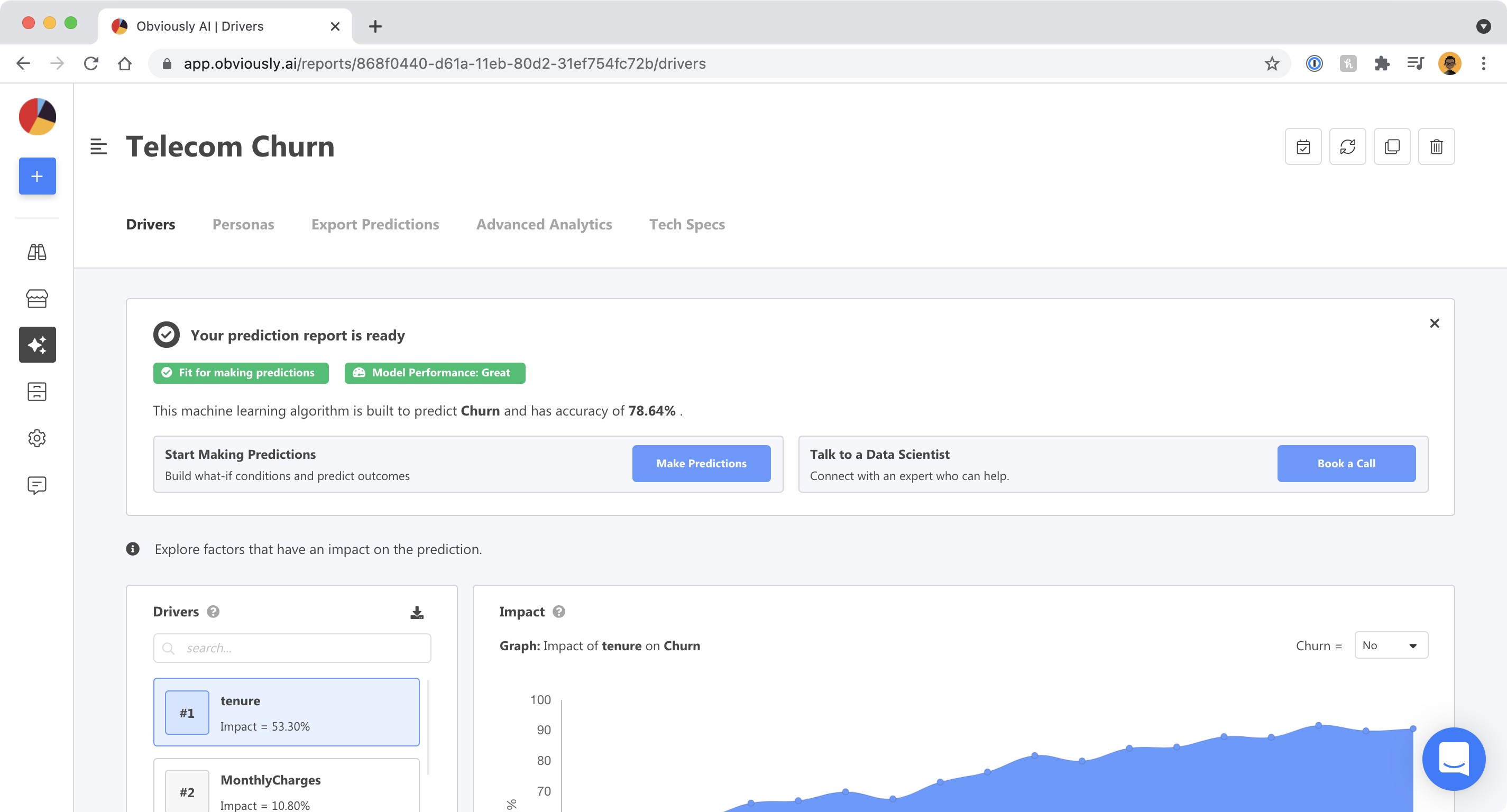
Obviously AI’s machine learning model report user interface
“These are people that work with a lot of data but they’re not programmers themselves, and these are the kind of folks we designed these tools for. The goal is that you understand the data, and you can take that data and use the software to build a model really fast, without waiting for hours or days,” said Dave.
He and Debnath quit their jobs in 2018 to start working on the startup, doing chores for their Airbnb host in exchange for rent while learning how to pitch to investors, before joining U.C. Berkeley’s SkyDeck accelerator program.
Dave said that many auto AI/ML software platforms “brute forces a bunch of different algorithms on a data set, and picks one that performs the best.” For example, they might run 100 different algorithms before picking the one that performs the best, which means the time spent automatically building the other algorithms is wasted.
What Obviously AI’s Edge-Sharp AutoML does differently is look at a specific group of machine learning models that can be used on a data set before automatically shortlisting the top five models for a client’s needs, automatically tuning their hyperparameters and returning prediction results.
Obviously AI’s pricing plans start at $75 a month. Its typical clients are mid-sized businesses or small teams in larger businesses that don’t have a data science team, or whose data scientists are preoccupied with other work.
For example, a small microlending company in India with a team of about 15 people was manually deciding which applicants to give loans to when they decided to switch to AI models. They started using Obviously AI to automatically predict the chances of an applicant defaulting and how much they should be loaned. Now the company uses Obviously AI end-to-end in their app, which means customers can see the size of a loan they are likely to get immediately after applying.
Another use case is a German mobile gaming company that wanted to use a dynamic pricing model and needed to figure out how much individual users would be willing to pay for products like in-game tokens. They use Obviously AI to make that prediction based on a player’s interaction with a game.
Part of Obviously AI’s seed funding will be used on machine learning research and development to serve more use cases. Dave said that Obviously AI focuses on supervised learning use cases, where clients have data and know what to predict. Unsupervised use cases are where they have a data set, but don’t know exactly what they want, and use machine learning models to tell them if there are any interesting patterns in it. Unsupervised learning algorithms can be used for things like automatic categorization or recommendation engines on e-commerce platforms.
As firework volleys launched out of New York City harbor last night, a very different celebration was likely taking place just a few blocks down the street at Verizon’s official headquarters in Midtown.
The telco, which owns TechCrunch for hopefully just a few more weeks pending the close of the Apollo acquisition of our parent company Verizon Media, announced overnight that it had signed an agreement with Z Holdings, a division of Japan’s SoftBank Group, to sell trademarks within the Japan market around the Yahoo brand and related tech infrastructure for approximately $1.6 billion.
The extremely descriptive Z Holdings owns SoftBank’s internet businesses in Japan, most notably Yahoo Japan, whose web portal remains the country’s most trafficked news website. Under its most current agreement with Verizon Media (formerly Oath, formerly AOL + Yahoo), Yahoo Japan paid a regular royalty for the rights to use the Yahoo brand name in Japan and associated technologies. Those royalties will now stop in lieu of a one-time upfront payment.
The resolution of the agreement was one of the key nuances left to figure out in Apollo’s $5 billion buyout of Verizon Media. The deal will give Verizon significant additional consideration as it works to pare down its debt load acquired from a spending spree on wireless spectrum auctions, such as its $52.9 billion acquisition of C-band spectrum earlier this year.
In a press statement from Z Holdings, the company said that “Although the Yahoo Japan License Agreement will be terminated, Yahoo Japan and Verizon Media will retain their cooperative business and technology relationship. Yahoo Japan will continue to deliver more convenient and innovative services under the ‘Yahoo! JAPAN’ brand, based on its mission statement: ‘UPDATE JAPAN.’” Expect further patches to Japan to be delivered shortly, I guess.
Happy 4th of July! For those of you who are actually checking your emails today while getting some sun at an overcrowded beach or diligently grilling hot dogs, welcome back to The Station, a weekly newsletter dedicated to all the ways people and packages move (today and in the future) from Point A to Point B.
Kirsten Korosec, your usual host, is off enjoying the great American outdoors, so please enjoy this takeover all the way from Auckland, New Zealand! Despite the winter chill down under and my singularity as an American on this island, I’m feeling particularly patriotic today. It was on this day 245 years ago that the 13 colonies declared themselves free and independent states, with all the power to establish commerce and pursue happiness and what not.
As I sit here, a journalist, with a front row seat to the history of technological advancement, I can’t help but notice that the spirit of the Declaration of Independence, one that rebuffs authority for freedom to act as one chooses, is alive and well in the startup world. Technology, even in the transportation space, soars ever upward, unshackled in many cases by corresponding rules and regulations, and the government hastens to catch up.
Don’t know what I mean? I had a conversation today with Lacuna CEO Hugh Martin, and he mentioned something that stayed with me and found its way into this rant. Venture capital is pouring into startups creating technology like eVTOL, air taxis, rockets and drones, but consider this: What is the ratio of startups building such futuristic tech compared to departments of transportation with aviation departments? Public private partnerships need to step up, and fast.
Ok, rant over. Enjoy your firecrackers.
Email me at rebecca.techcrunch@gmail.com to share thoughts, criticisms, offer up opinions or tips. You can also follow me on Twitter, but please don’t DM me. — @rebeccabellan.
Micromobbin’
Bird is having a tough week, pulling operations in San Francisco and Santa Monica, as well as Zaragoza in Spain. Both California cities had new scooter permits beginning on July 1, but there hasn’t been a Bird in sight since June 30.
In San Francisco, Bird goes by Scoot, the company it acquired in June 2019 that has been in SF for around a decade. Bird previously operated in the city, but was kicked out in 2018, along with Lime, so this was an off-hand way of making it back into the Golden City. This time around, the SFMTA is asking Bird to halt its operations, even as the 2021 permit program begins without it, and is also levying fines to the tune of $105,600 against the company. Apparently, Bird got caught implementing its fleet manager program with unauthorized subcontractors. The permit does allow for scooter companies to use subcontractors, but they need prior approval and proof of insurance, which Bird did not provide for at least three subcontractors. The SFMTA is currently deferring its decision on letting Bird back in until it has conducted an investigation into the matter.
“Scoot is proud to have partnered with the city for nearly a decade providing shared micro electric vehicles for San Francisco,” a Bird spokesperson told TechCrunch. “We are cooperating fully with the SFMTA to swiftly resolve the clerical error that occurred while urgently providing existing local businesses an alternative source of revenue during the pandemic. We apologize for the inconvenience to our riders during this evaluation period and are eager to once again serve San Francisco residents and visitors as soon as possible.”
Lime and Spin, on the other hand, have been asked to stay in San Francisco, so congrats to them. They’ll also be operating in Santa Monica, where Bird was again not chosen for the 2021 scooter program in large part because the city found Bird’s service to be lacking in safety and rider features, affordability and customer service, according to the Santa Monica selection committee scorecard shared with TechCrunch. The company filed an appeal and threatened litigation back in May, but was denied this week and basically told it didn’t have a legal basis for suing, according to letters between Bird’s attorneys and the City of Santa Monica shared with TechCrunch.
Electric micromobility dealership Ridepanda is making it easier for the average consumer to purchase a sick light duty electric vehicle like a scooter, bike or moped. Its e-commerce platform displays vehicles that are vetted by the team to ensure high quality with replaceable parts. Once you order a vehicle that’s been curated for you and your needs, it’ll get shipped to your door (optional assembly person included). The startup just raised $3.75 million, an extension from last year’s seed round, from lead investors like Yamaha Motor Company, Porsche Ventures and Proeza Ventures.
Have you ever felt like the electric micromobility space hasn’t been badass enough? Well, Evolve Skateboards has the solution for you! Its new Hadean Series skateboard can zoom up to 31 mph, and its battery can go up to 42 miles on a single charge. Rather than a wooden board, this gnarly ride’s frame is made with forged carbon composite making it strong enough to handle increased speeds and next level ollies. The cost is in the $2,500 to $3,000 range, so it’s certainly a toy for the dedicated thrill seeker.
— Rebecca Bellan
Deal of the week
Drone delivery startup Zipline, a company that got its start delivering medical supplies across Africa, has raised $250 million in new funding. This latest round has vaulted the company’s valuation to $2.75 billion and will fuel further expansion of its logistics networks in Africa and the United States.
Big bets are being made in the instant logistics space. While Zipline is pretty focused on delivering health supplies at the moment, it’s open to expanding into other industries as time goes on. Either way, it’s doing very well with partnerships like UPS in Rwanda, the Toyota Group in Japan and Novant Health and Walmart in the U.S.
Microsoft and Sompo Holdings have committed a combined $25 million as part of a partnership with connected vehicle data startup Wejo that will help the company collect, store and analyze data from millions of connected vehicles around the world. This follows Wejo’s SPAC merger with Virtuoso Acquisition Corp., which should close later this year. The company’s total PIPE financing is $125 million.
Turntide Technologies, a sustainable technology developer that’s created a smart electric motor system, has announced $225 million in convertible note financing that it says will help fund projects to reduce carbon emissions in the commercial buildings, agriculture and transportation industries.The money comes from the Canadian Pension Plan Investment Board, Monashee Capital, JLL Spark, Breakthrough Energy Ventures and Suvretta Capital Management, bringing Turntide’s total funding to $400 million
Autonomous driving system developer Ghost Locomotion has raised a $100 million in Series D funding in a round led by Sutter Hill Ventures. Returning investor Founders Fund also participated in the round, along with Coatue. The money will be used toward R&D as the company continues to develop its highway self-driving and crash prevention technology.
Australian rocket launch startup Gilmour Space Technologies has raised $46 million in a Series C that it will use to take its small launch vehicle, Eris, to space next year. The round was led by Fine Structure Ventures and included contributions from Australian VCs Blackbird and Main Sequence, and Australian pension funds HESTA, Hostplus and NGS Super.
You probably don’t remember, but a little while back we covered Onto, an electric vehicle subscription service in the U.K. Well, this model appears to be catching. A similar business going by imove in Norway has just raised around $19 million in a Series A led by pan-European online car market AutoScout24, venture capital player Norselab, and the Norwegian state climate investment company Nysnø.
Ghanaian-based software company Jetstream just raised $3 million in seed funding. The company aims to enable African businesses to see and control their own cross-border supply chains. It aggregates private sector logistics providers at African ports and borders, and brings them online.Local and international investors participated in the round, including Alitheia IDF, Golden Palm Investments, 4DX Ventures, Lightspeed Venture Partners, Asia Pacific Land, Breyer Labs and MSA Capital.
Electric propulsion and powertrain developer Enedymraised $15 million from a round led by P&A Paletta Giving Inc., TRIO Capital Group Inc., Napino Group, KWG Capital Inc., Pathfinder Asset Management Limited and others. The Canadian company will use the funds to accelerate its patented motor development tech and get into more of the electric motor market, including automotive, micromobility, windfarms and industrial markets.
Policy corner
Hi folks, welcome back to Policy Corner. Let’s dive in.
Mayors from nine American cities, including Los Angeles and Denver, sent a letter on June 30 urging federal lawmakers to include funds for planning grants for advanced air mobility (AAM) in the massive infrastructure legislation currently being debated in Congress. The letter, shared with TechCrunch by a source familiar with the matter, argues that federal grant funding for planning studies would help cities better understand and prepare for AAM technology.
The brief letter is fuzzy on the details. The mayors request a “modest” amount of funding. The source told TechCrunch that it would likely be in the low tens of millions, with the assumption that a one-year planning study in a large metropolitan city would cost around $1 million. So the total funds would cover around 15-20 cities. The idea is that this information could inform future rule-makings or even the Federal Aviation Administration’s reauthorization bill that’s coming up in 2023.
One thing that’s notable about the letter is a line that starts, “When this new transportation technology launches in 2024 and beyond … ”. While 2024 has been publicly set as a launch target for eVTOL developer like Archer Aviation and Joby Aviation, timelines are a tricky thing for emerging technologies.
In any case, I’ll be keeping track of these developments. It’s hard to imagine Congressional Republicans agreeing to funding for AAM when they could hardly agree on electric vehicles, but we’ll see — the low tens of millions may be a blip on the budget line of such a large funding package.
The National Highway Traffic Safety Administration on June 29 issued an order requiring OEMS and drivers of vehicles equipped with autonomous driving systems to report crashes within one day of learning about them. The order specifically relates to SAE Level 2 advanced driver assistance systems or SAE Levels 3-5 automated driving systems. Any incident that involves an injury that had to be treated at a hospital, a death, a vehicle tow-away, air bag deployment, or a pedestrian or bicyclist must be reported, the order says.
NHTSA says the data collected from this order will help identify safety issues or defects in the technology. “By mandating crash reporting, the agency will have access to critical data that will help quickly identify safety issues that could emerge in these automated systems,” said Dr. Steven Cliff, NHTSA’s acting administrator. “In fact, gathering data will help instill public confidence that the federal government is closely overseeing the safety of automated vehicles.”
— Aria Alamalhodaei
Notable reads and other tidbits
Extra Crunchy
Alex Wilhelm explored some financials about Uber and its Chinese rivalDidi, which is looking to list in the U.S. The company’s IPO filing was big news, but it appears to be valued several tens of billions of dollars lower than Uber, despite the fact that it’s larger and more profitable.
Renaissance Capital calculates Didi’s midpoint valuation using a fully diluted share count at $67.5 billion, and Yahoo Finance pegged Uber at $95.2 billion. Why the large difference? Wilhelm speculates it could have something to do with Uber’s more expanded reach and different revenue streams, like its delivery business, as Didi is mostly concentrated on its Chinese mobility business.
We actually bootstrapped a car company. We had revenue from day one, not because we wanted to, but because there was no alternative and there was absolutely no other way for us. So most of the years in business, we are actually profitable. And that’s pretty tough.
You have these big electric car startups that have received billions of funding and so on. Hats off to them, great job. But we had to survive from the very beginning by the stuff that we were doing and making for other car companies.
Chinese EV maker NIO released its June delivery results. It delivered 8,083 units of smart electric vehicles which it says is a YOY increase of 116%. In Q2 in total it delivered nearly 22,000 vehicles, and in the first half of 2021, it delivered nearly 42,000 vehicles. Ok, NIO, we see you.
Honda will be selling its first electric SUV in North America in early 2024. The new car’s name, Prologue, is meant to signify the beginning of what the company called its “new electrified era.”
Revel, the company that started with electric moped shares and now has its hands in a lot of electric mobility pies, has officially launched its Superhub in Brooklyn. With 25 chargers all in one place and easily accessible, it’s the largest universal charging station in North America, the company says.
This week Volvo Cars detailed its strategy for electrifying its entire car lineup by 2030. It plans to work with partners like Northvolt, Google and Luminar to build out its future vehicles lineup. It also unveiled the first images of “Concept Recharge,” a concept EV that has flat floors, two interior screens and rear “suicide doors” that open from the middle of the vehicle.
Autonomous vehicles
Pittsburgh-based autonomous trucking company Locomotion is pitching a convoy system in which a lead driver pilots a truck and another truck, with a human passenger/backup operator, follows it autonomously. The company told TechCrunch it thinks using such a human-guided system will be the fastest and smoothest route to commercialization.
Aurora’s CEO Chris Urmson shared some thoughts on the progress the company has made on commercializing the Aurora Driver and delivering it at scale.
Data is power
Kruze Consulting, a startup CFO/accounting firm with access to the books of over 450 venture-funded startups, has shared some data with TechCrunch that shows ride-share spend is rebounding in the startup world, with Uber expanding its lead against Lyft. The study also found cost per ride is higher than 2020 averages, likely due to a scarcity of drivers.
Autonomous delivery company Nuro announced the appointment of James Owens as the company’s new head of Regulatory.
Anthony Gregory, former VP of ground operations at Southwest, has joined GM-owned Cruise as the new VP of market development.
Other tidbits
Columbus, Ohio won the U.S. Department of Transportation’s Smart City Challenge in 2015. Smart City Columbus ran from 2016 until mid-June 2021, using all kinds of new tech to improve its transportation system and general mobility. What did Columbus do with its $50 million in grant money? Check out all the tech that went into the Smart City.
BMW i Ventures, the venture capital arm of BMW Group, has announced a new $300 million fund to further its investment in technologies that make transportation, manufacturing and supply chains more sustainable. This isn’t about core car tech. It’s about everything that goes into making the cars, from sustainable materials for car seats to decarbonizing metal.
Ford is partnering with insurance company State Farm to share vehicle data to better understand how safety features impact claims. A statement from Ford reads: “Ford’s new Vehicle Build Data product provides State Farm a comprehensive view of a vehicle’s feature content and a better understanding of how advanced driver assistance systems (ADAS) impact the frequency and severity of auto claims. State Farm is also sharing claims data with Ford to help inform them on how specific vehicle features impact auto claims.”
Last mile logistics management software company Onfleet has announced its 100 millionth delivery and significant company growth.
General Motors has announced the creation of a new $25 million Climate Equity Fundfor equitable climate action. This is intended as a complement to the automaker’s recently announced $35 billion investment into EV and AV technologies globally through 2025.
Min Wanli had a career path much coveted by those pursuing a career in computer science. A prodigy, Min was accepted to a top research university in China at the age of 14. He subsequently obtained Ph.D. degrees in physics and statistics from the University of Chicago before spending nearly a combined decade at IBM and Google.
Like many young, aspiring Chinese scientists working in the United States, Min returned to China when the country’s internet boom was underway in the early 2010s. He joined Alibaba’s fledgling cloud arm and was at the forefront of applying its tech to industrial scenarios, like using visual identification to mitigate highway traffic and computing power to improve factory efficiency.
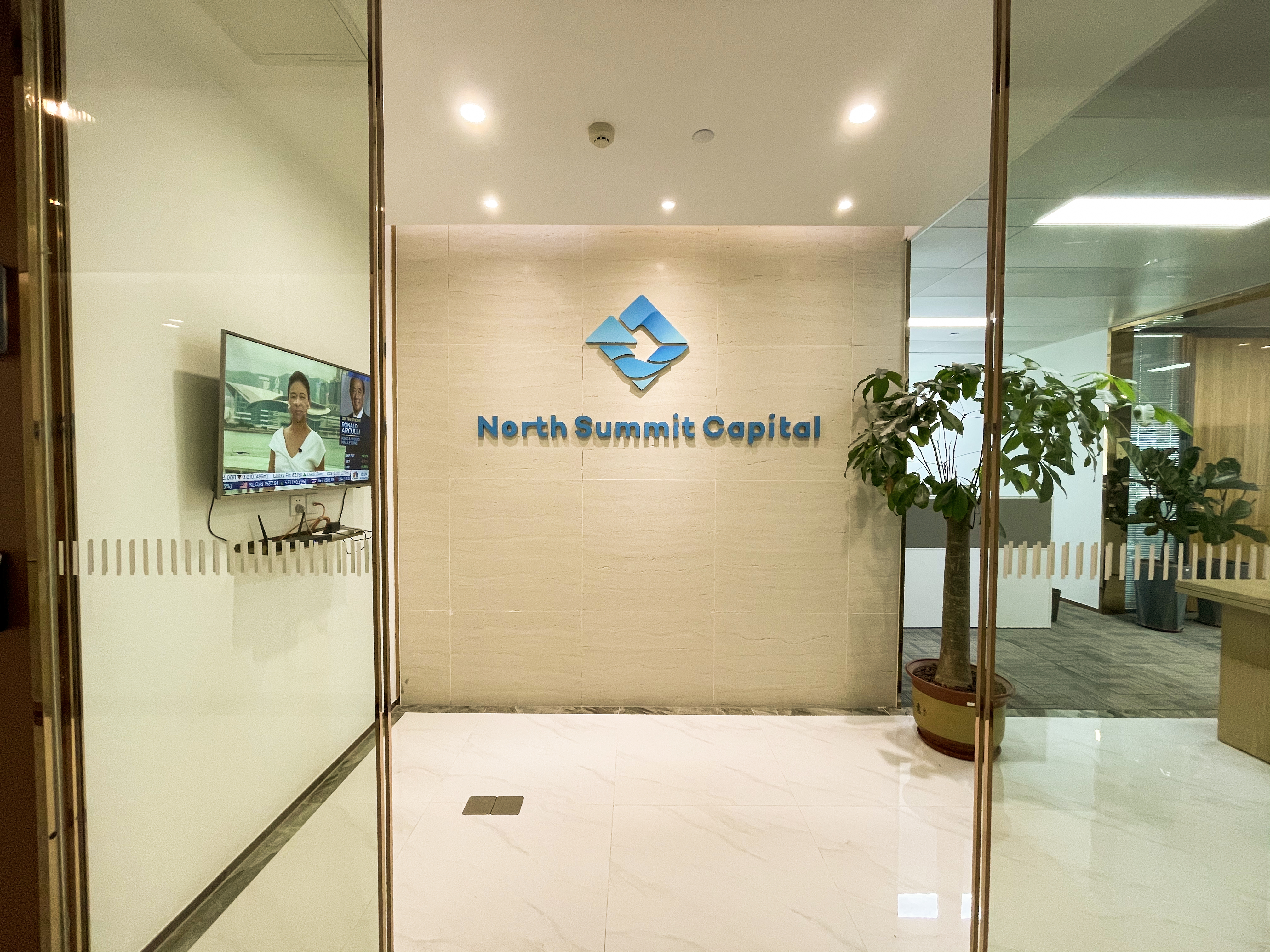
Then in July 2019, Min took a leap. He resigned from Alibaba Cloud, which had become a major growth driver for the e-commerce goliath and at the time China’s largest public cloud infrastructure provider (it still is). With no experience in investment, he started a new venture capital firm called North Summit Capital.
“A lot of enterprises were quite skeptical of ‘digital transformation’ around 2016 and 2017. But by 2019, after they had seen success cases [from Alibaba Cloud], they no longer questioned its viability,” said Min in his office overlooking a cluster of urban villages and highrise offices in Shenzhen. Clad in a well-ironed light blue shirt, he talked with a childlike, earnest smile.
“Suddenly, everyone wanted to go digital. But how am I supposed to meet their needs with a team of just 400-500 people?”
Min’s solution was not to serve the old-school factories and corporations himself but to finance and support a raft of companies to do so. Soon he closed the first fund for North Summit with “several hundreds of millions of dollars” from an undisclosed high-net-worth individual from the United Arab Emirates, whom Min had met when he represented Alibaba at a Duhai tech conference in 2018.
“Venture capital is like a magnifier through which I can connect with a lot of tech companies and share my lessons from the past, so they can quickly and effectively work with their clients from traditional industries,” Min said.
“For example, I’d discuss with my portfolio firms whether they should focus on selling hardware pieces or software first, or give them equal weight.”
Min strives to be deeply involved in the companies he backs. North Summit invests early, with check sizes so far ranging from roughly $5 million to $25 million. Min also started a technology service company called Quadtalent to provide post-investment support to his portfolio.
Photo: North Summit Capital’s office in Shenzhen
The notion of digital transformation is both buzzy and daunting for many investors due to the highly complex and segmented nature of traditional industries. But Min has a list of criteria to help narrow down his targets.
First, an investable area should be data-intensive. Subway tracks, for example, could benefit from implementing large amounts of sensors that monitor the rail system’s stauts. Second, an area’s manufacturing or business process should be capital-intensive, such as production lines that use exorbitant equipment. And lastly, the industry should be highly dependent on repetitive human experience, like police directing traffic.
Solving industrial problems require not just founders’ computing ingenuity but more critically, their experience in a traditional sector. As such, Min goes beyond the “Ivory Tower” of computer science wizards when he looks for entrepreneurs.
“What we need today is a type of inter-disciplinary talent who can do ‘compound algorithms.’ That means understanding sensor signals, business rationales, manufacturing, as well as computer algorithms. Applying neural network through an algorithmic black box without the other factors is simply futile.”
Min faces ample competition as investors hunt down the next ABB, Schneider, or Siemens of China. The country is driving towards technological independence in all facets of the economy and the national mandate takes on new urgency as COVID-19 disrupts global supply chains. The result is skyrocketing valuations for startups touting “industrial upgrade” solutions, Min noted.
But factory bosses don’t care whether their automation solution providers are unerdogs or startup unicorns. “At the end of the day, the factory CFO will only ask, ‘how much more money does this piece of software or equipment help us save or make?'”
The investor is cautious about deploying his maiden fund. Two years into operation, North Summit has closed four deals: TopScore, a 17-year-old footwear manufacturer embracing automation; Lingumi, a London-based English learning app targeting Chinese pre-school kids; Aerodyne, a Malaysian drone service provider; and Extreme Vision, a marketplace connecting small-and-medium enterprises to affordable AI vision solutions.
This year, North Summit aims to invest close to $100 million in companies inside and outside China. Optical storage and robotic process automation (RPA) are just two areas that have been on Min’s radar in recent days.
E-commerce is booming in Southeast Asia, but in many markets, the fragmented logistics industry is struggling to catch up. This means sellers run into roadblocks when shipping to buyers, especially outside of major metropolitan areas, and managing their supply chains. Locad, a startup that wants to help with what it describes as an “end-to-end solution” for cross-border e-commerce companies, announced today it has raised a $4.5 million seed round.
The funding was led by Sequoia Capital India’s Surge (Locad is currently a part of the program’s fifth cohort), with participation from firms like Antler, Febe Ventures, Foxmont, GFC and Hustle Fund. It also included angel investors Alessandro Duri, Alexander Friedhoff, Christian Weiss, Henry Ko, Huey Lin, Markus Bruderer, Dr. Markus Erken, Max Moldenhauer, Oliver Mickler, Paulo Campos, Stefan Mader, Thibaud Lecuyer, Tim Marbach and Tim Seithe.
Locad was founded in Singapore and Manila by Constantin Robertz, former Zalora director of operations Jannis Dargel and Shrey Jain, previously Grab’s lead product manager of maps. It now also has offices in Australia, Hong Kong and India. The startup’s goal is to close the gap between first-mile and last-mile delivery services, enabling e-commerce companies to offer lower shipping rates and faster deliveries while freeing up more time for other parts of their operations, such as marketing and sales conversions.
Since its founding in October 2020, Locad has been used by more than 30 brands and processed almost 600,000 items. Its clients range from startups to international brands, and include Mango, Vans, Payless Shoes, Toshiba and Landmark, a department store chain in the Philippines.
Locad is among a growing roster of other Southeast Asia-based logistics startups that have recently raised funding, including Kargo, SiCepat, Advotics and Logisly. Locad wants to differentiate by providing a flexible solution that can work with any sales channel and is integrated with a wide range of shipping providers.
Robertz told TechCrunch that Locad is able to keep an asset-light business model by partnering with warehouse operators and facility managers. What the startup brings to the mix is a cloud software platform that serves as a “control tower,” letting users get real-time information about inventory and orders across Locad’s network. The company currently has seven fulfillment centers, with four of its warehouses in the Philippines and the other three in Singapore, New South Wales, Australia and Hong Kong. Part of its funding will be used to expand into more Asia-Pacific markets, focusing on Southeast Asia and Australia.
Locad’s seed round will also used to add integrations to more couriers and sales channels (it can already be used with platforms like Shopify, WooCommerce, Amazon, Shopee, Lazada and Zalora), and develop new features for its cloud platform, including more data analytics.
Meet Tinybird, a new startup that helps developers build data products at scale without having to worry about infrastructure, query time and all those annoying issues that come up once you deal with huge data sets. The company ingests data at scale, lets you transform it using SQL and then exposes that data through API endpoints.
Over the past few years, analytics and business intelligence products have really changed the way we interact with data. Now, many big companies store data in a data warehouse or a data lake. They try to get insights from those data sets.
And yet, extracting and manipulating data can be costly and slow. It works great if you want to make a PowerPoint presentation for your quarterly results. But it doesn’t let you build modern web products and data products in general.
“What we do at Tinybird is we help developers build data products at any scale. And we’re really focused on the realtime aspect,” co-founder and CEO Jorge Gómez Sancha told me.
The team of co-founders originally met at Carto. They were already working on complex data issues. “Every year people would come with an order of magnitude more data,” Gómez Sancha said. That’s how they came up with the idea behind Tinybird.
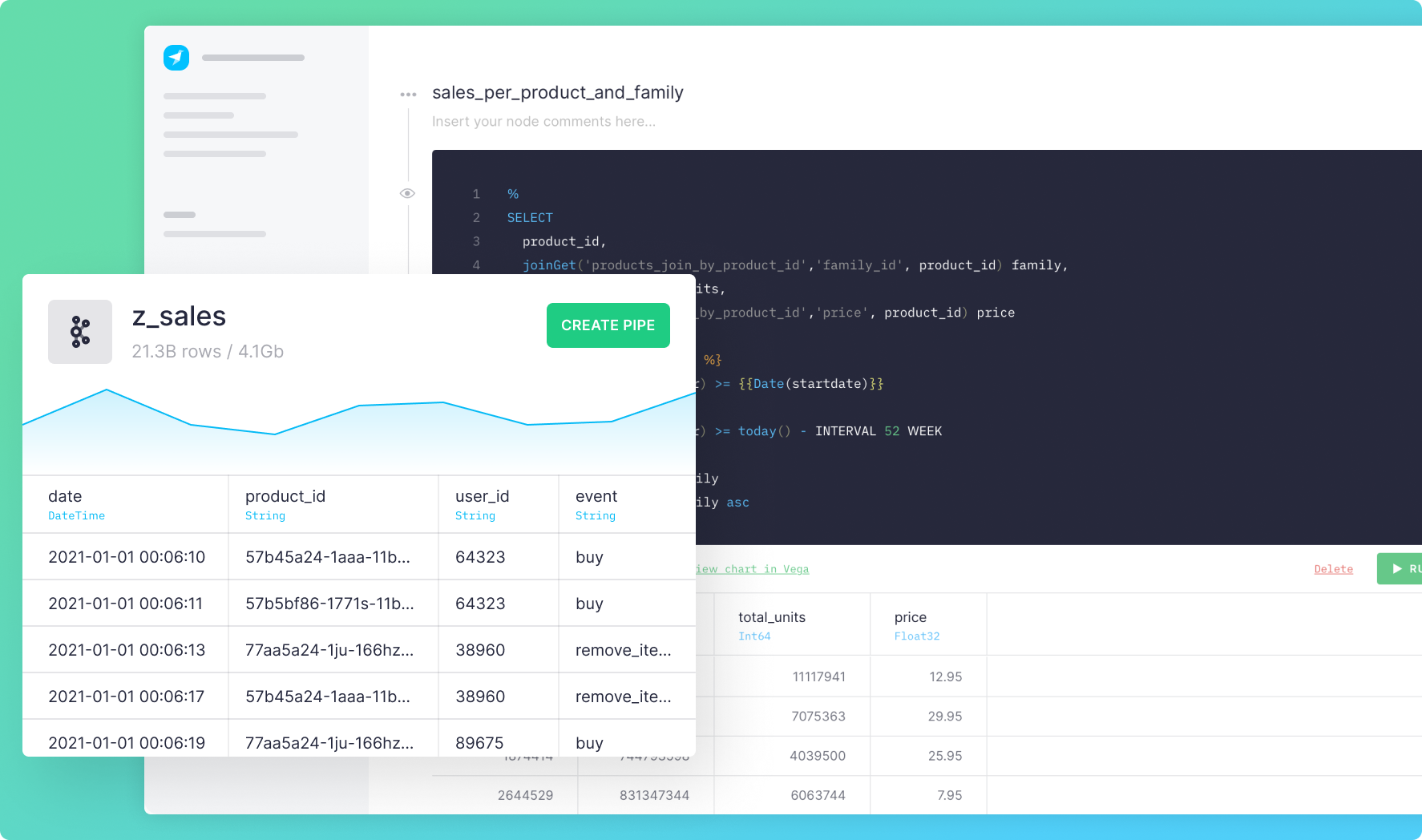
Image Credits: Tinybird
The product can be divided into three parts. First, you connect your Tinybird account with your data sources. The company will then ingest data constantly from those data sources.
Second, you can transform that data through SQL queries. In addition to the command-line interface, you can also enter your SQL queries in a web interface, divide then into multiple steps and document everything. Every time you write a query, you can see your data filtered and sorted according to your query.
Third, you can create API endpoints based on those queries. After that, it works like a standard JSON-based API. You can use it to fetch data in your own application.
What makes Tinybird special is that it’s so fast that it feels like you’re querying your data in realtime. "Several of our customers are reading over 1.5 trillion rows on average per day via Tinybird and ingesting around 5 billion rows per day, others are making an average of 250 requests per second to our APIs querying several billion row datasets," Gómez Sancha wrote in an email.
Behind the scene, the startup uses ClickHouse. But you don’t have to worry about that as Tinybird manages all the infrastructure for you.
Right now, Tinybird has identified three promising use cases. Customers can use it to provide in-product analytics. For instance, if you operate a web hosting service and wants to give some analytics to your customers or if you manage online stores and want to surface purchasing data to your customers, Tinybird works well for that.
Some customers also use the product for operational intelligence, such as realtime dashboards that you can share internally within a company. Your teams can react more quickly and always know if everything is running fine.
You can also use Tinybird as the basis for some automation or complex event processing. For instance, you can leverage Tinybird to build a web application firewall that scans your traffic and reacts in realtime.
Tinybird has raised a $3 million seed round led by Crane.vc with several business angels also participating, such as Nat Friedman (GitHub CEO), Nicholas Dessaigne (Algolia co-founder), Guillermo Rauch (Vercel CEO), Jason Warner (GitHub CTO), Adam Gross (former Heroku CEO), Stijn Christiaens (co-founder and CTO of Collibra), Matias Woloski (co-founder and CTO of Auth0) and Carsten Thoma (Hybris co-founder).
Globally, food and grocery delivery startups have been raising mega-rounds of late, especially those in Europe as the pandemic has given rise to more people ordering online more than ever. This growth has translated to an increase in volume across e-commerce platforms all over the world.
While there has relatively been no action in Africa in terms of raising investments, startups in MENA continue to garner interest, mainly in B2B e-commerce. Today, the latest of these is coming out of Egypt.
MaxAB, a startup based out of Cairo that serves a network of traditional food and grocery retailers across Egypt, has raised $40 million in Series A financing.
The company, which claims to have launched in a new city every month this year, will be expanding its physical footprint across the Middle East and North Africa. In addition, MaxAB plans on hiring more talent and scaling its recently launched business verticals, including new supply chains and embedded finance solutions.
Founded in November 2018 by Belal El-Megharbel and Mohamed Ben Halim, MaxAB’s platform manages procurement and grocery delivery to shops in Egypt. Store owners can use the platform to purchase goods, request delivery or logistics to move the goods, and access a customer support team.
“It’s not just the technology platform; we operate our own warehouses, we operate our own fleet. And the idea was quite simple.” CEO El-Megharbel said to TechCrunch. According to him, small merchants in Egypt, representing a large chunk of the nation’s GDP, find it hard to procure their inventory. On the other hand, manufacturers also have to suffer immensely and incur so many costs to serve a market like Egypt, where over 400,000 small mom-and-pop shops sell 90% of groceries in the country.
“We saw that there is a massive role in optimizing this supply chain using technology so that we can have the right amount of products at the right place at the right time,” explained El-Megharbel, the chief executive who left Careem in 2018 to start MaxAB.
He calls MaxAB the Amazon for retail in the Middle East. There’s a slight comparison. In emerging markets, it can be challenging to find third-party e-commerce delivery companies to work with. Those available are either expensive or inefficient. This is why MaxAB has its own infrastructure. The company doesn’t build warehouses from scratch. Instead, it buys them outrightly and revamps them to fit its needs. After that, MaxAB uses internal technology tools to better manage inventory flow in, within, and out of the warehouse.
El-Megharbel noted that up until last year, MaxAB was focused on offering a single type of supply chain in one city. That was before and after completing its $6.2 million seed round with 9,000 merchants on its app. But with this new round, MaxAB solidifies both infrastructure and technology into a multi-supply chain and multi-city business.
The new development is accompanying a period of growth the company experienced in the last two years where it now services more than 55,000 merchants and delivers over 2,000 unique products. In terms of staff size, the company has grown more than 5x to 1,600 people and is looking to add to that number.
Image Credits: MaxAB
Talking about the embedded finance solutions, the plan for MaxAB is to offer financial services to its merchants. First of all, given the company’s database of merchants, MaxAB can predict their financial status. Then orking with banking and non-banking partners, MaxAB will offer credit facilities and capital financing to these merchants.
MaxAB’s Series A investment is one of the largest in this financing round across the MENA region. Impact investor RMBV led the round with participation from theIFC,Flourish Ventures,Crystal Stream Capital,Rise Capital, andEndeavour Catalyst. Exiting investors,Beco Capital and4DX Ventures also took part. This round brings the company’s total investment to date to $46.2 million.
“The COVID-19 pandemic has highlighted the unique structure of Egypt’s economy, with hundreds of thousands of shopkeepers and small businesses becoming the lifeline of our country at the time of crisis,” said managing partner at RMBV Ahmed Badreldin in a statement. “We are delighted to be backing visionary entrepreneurs that have created a transformative business with impressive growth that is a catalyst for financial inclusion and job creation. We look forward to supporting MaxAB in its next phase of development as they continue delivering on growth and innovation.”
The pandemic has significantly increased technology adoption and enhanced the company’s unit economics. As a market leader, MaxAB has taken advantage to consolidate its position and scale sustainably amidst competition.
“There is competitiveness in the Middle East. Most of them are marketplace models but do not manage their supply chain per se. And this is what makes our model more unique is that we own the end-to-end cycle. It’s painful, but we believe that this is what this industry, the food and groceries B2B e-commerce space, needs,” the CEO said.
After expanding across MENA, does the company see any opportunity southward into sub-Saharan Africa where it might face competition from the likes of Sokowatch? “Not in the near future,” answered El-Megharbel. “I think this market [the Middle East and North Africa] is almost $200 billion per year. So we have a long way to go there before we go to sub-Saharan Africa.”
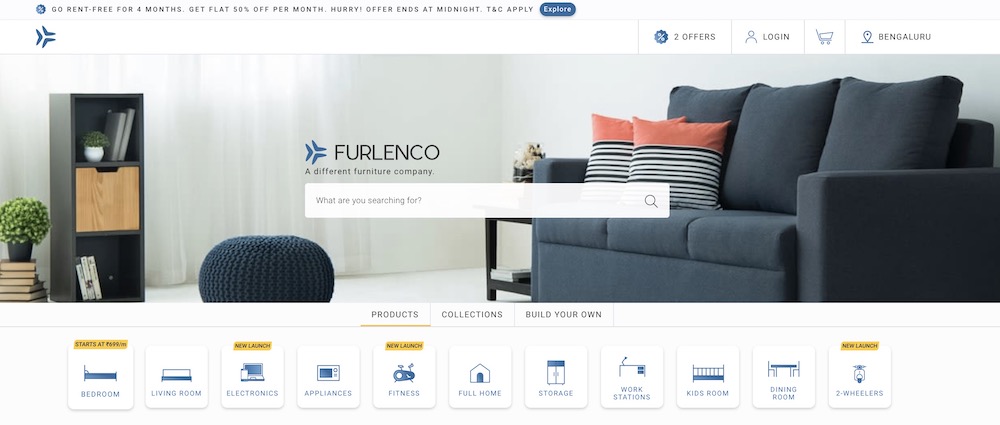
Furlenco, a Bangalore-based startup that operates an eponymous furniture and appliance rental service, said today it has raised $140 million in a financing round as it looks to scale its operations in the South Asian market and explore international market expansion.
The new $140 million financing round, a Series D, comprises $120 million debt raise and rest in equity, the seven-year-old Indian startup told TechCrunch. The new financing round was led by Zinnia Global Fund. CE-Ventures and Lightbox Ventures also participated in this round, which brings its to-date debt and equity raise to over $240 million, according to data insight platform Tracxn.
Furlenco, which operates in more than a dozen Indian cities, allows customers to rent a range of furniture items. In recent quarters, it has expanded to other categories including fitness equipments, appliances, electronic products, as well as two-wheeler vehicles.
A queen size bed on the platform, for instance, starts at as low as $9 a month, while a laptop can be rented for as low as a monthly plan of $40. The startup has attracted customers in part because of its three-day delivery commitment, and deep cleaning of items at no additional cost. It also maintains a partnership with NoBroker, a General Atlantic-backed Indian startup that helps customers avoid brokers when finding new apartments.
The expansion into newer categories helped the startup recover and preserve 95% of its revenue in the financial year that ended in March this year, it said. Lightbox Ventures said Furlenco may explore expansion into Middle East and other international markets.
The startup, which competes with Rentomojo, said it will deploy the fresh capital to fuel its growth and also invest in design and also work to generate an annual revenue of $300 million in the next five years.
“Lifestyles have evolved and so have the needs of the urban Indian when it comes to how they do up their home. However, the furniture industry has some catching up to do in providing the right kind of solutions. We know there is immense strength and scope of innovation in the B2C commerce space and the sectors we operate in. We are tapping into that potential and will definitely disrupt the market with what we are planning,” said Ajith Mohan Karimpana, founder and chief executive of Furlenco, in a statement.
Rent platforms, like many others, saw a major dip last year when the coronavirus hit the country. But the market it’s going after remains a big opportunity. According to industry estimates, the rental furniture and appliance industry is currently worth over $4.5 billion.
“We are excited to partner with Furlenco, which is rapidly transforming Furniture subscription services for India’s lifestyle aspirants. As an industry leader with a strong management team, Furlenco is poised for continued strong growth,” said Ritesh Abbi, Zinnia Global Fund.
China has ordered app-store operators to remove the app of Didi from their stores, the latest as tension escalates between the nation’s largest ride-hailing giant and local regulators. The app has disappeared from several stores including Apple’s App Store in China, TechCrunch can confirm.
The nation’s cyberspace administration, which unveiled the order on Sunday, said Didi was illegally collecting users’ personal data.
The ride-hailing giant, which counts Apple, SoftBank, and Tencent and Uber among its investors and filed for an IPO late last month, has been ordered to make changes to comply with Chinese data protection rules.
The move comes after the Chinese internet watchdog announced a probe into Didi over “national security” concerns earlier this week. Didi raised at least $4 billion this week after the New York Stock Exchange debut in one of the largest U.S. IPOs.
In a statement, Didi said it had removed its app from various app stores and begun the “corrections.” For existing users, the Didi app is operational at least for iOS users.
It’s very rare for an app of this scale to be pulled from the app stores. For the 12 months ended March, Didi served 493 million annual active users and saw 41 million transactions on a daily basis, it revealed recently.
The app had 156 million monthly users in Q1, well above Uber’s 98 million in the period.China’s official data showed the country had 365 million ride-hailing users as of December, which suggests Didi commands a substantial market share.
Welcome back to This Week in Apps, the weekly TechCrunch series that recaps the latest in mobile OS news, mobile applications and the overall app economy.
The app industry continues to grow, with a record 218 billion downloads and $143 billion in global consumer spend in 2020. Consumers last year also spent 3.5 trillion minutes using apps on Android devices alone. And in the U.S., app usage surged ahead of the time spent watching live TV. Currently, the average American watches 3.7 hours of live TV per day, but now spends four hours per day on their mobile devices.
Apps aren’t just a way to pass idle hours — they’re also a big business. In 2019, mobile-first companies had a combined $544 billion valuation, 6.5x higher than those without a mobile focus. In 2020, investors poured $73 billion in capital into mobile companies — a figure that’s up 27% year-over-year
This week Google announced it will require new apps to be published using the Android App Bundle as of August 2021. The company first launched the Android App Bundle standard, which replaces the APK, in May 2018 as part of its modern development push. Since then, the majority of the top 1,000 apps and games have switched over to AABs including those from companies like Adobe, Duolingo. Gameloft, Netflix, reBus, Rainy, and Twitter. Today, there are over 1 million apps using AAB in production.
AABs solve some problems with the aging APK standard, particularly around larger apps and games. With AABs, developers don’t have to create an APK that contains everything for every type of Android device. They offer a way to quickly and more efficiently download the assets needed for a particular device, and they do so in a way that focuses on getting the user or player to the app or game’s content as fast as possible.
But not everyone agrees the change is for the better. Those who utilize APK Hosting sites like APKMirror or APKPure to download and share apps worry that the shift to AAB is a way to force users to use the Play Store instead of alternatives. Meanwhile, Epic Games founder and CEO Tim Sweeney — who is taking on tech giants over their alleged app store monopolies with both lawsuits and lobbying — pointed out that the move away from the more open APK standard is about locking users into Google Play.
This is one of the many reasons we mustn’t accept the argument: “If you don’t like iPhone’s restrictions, buy an Android phone”.
Both companies have run amok, trampling the rights of users and developers alike. The distinction is just that Apple’s several steps ahead. https://t.co/m2ZIv7PnbK
Consumer Spending on apps hits record $64.9B in the first half of the year
Consumer spending in mobile apps hit a record $64.9 billion during the first half of 2021, according to preliminary data from app store intelligence firm Sensor Tower. This figure represents a 24.8% increase in spending seen across both the App Store and Google Play, compared with the year-ago period. But while industry experts believe the accelerated shift to mobile fueled by the pandemic is a trend that will continue, it’s worth noting that — despite the new record — the growth rate for consumer spending has slightly slowed, and the download growth slowed more dramatically.
From the first half of 2019 to the first half of 2020, consumer spending on mobile apps grew 28.4% from $40.5 billion to $52 billion, for comparison — slower than the 24.8% seen in the current period.
Apple launched the public betas of iOS 15, iPadOS 15 and watchOS 8. Although developers already had access to early builds, this week was the first time the public could get their hands on Apple’s latest software before its official launch this fall. One of the biggest changes in iOS 15 is the addition of “Focus” modes that give users more control over when and who can bother them with calls, texts and notifications during different contexts — like work, driving, sleeping, and more. Users will also gain access to SharePlay interactivity on FaceTime, iMessage improvements, the ability to FaceTime with Android friends via web links, spatial audio, Live Text (which unlocks info from your photos), app privacy reports, and upgrades to most of Apple’s core apps, and more.
Google is implementing stronger security measures on Google Play developer accounts in an attempt to crack down on spam and other malicious apps. Previously, the company required only an email and phone number to create a Google Play developer account. Now it will require an account type (personal or organization), a contact name and physical address, and it will require developers to verify their email and phone number. Google says the changes will allow it to better communicate with developers and will help to “make sure that every account is created by a real person with real contact details.” It’s also now mandating that users of Google Play Console sign in using Google’s 2-Step Verification.
Samsung and Google previewed their wearable platform ahead of the next Galaxy Watch launch. The two companies agreed to partner on wearables in order to better compete against Apple Watch. At Mobile World Congress, Samsung showed off the first device to feature the One UI Watch user experience and the new unified platform built in partnership with Google.
E-commerce
Instagram adds a new feature that will allow businesses in the U.S. to designate themselves as being Black-owned businesses using badges that appear on their profiles and on their product shopping pages. It may also be highlighted in places like the Shop tab, to help more potential customers discover the business.
Walmart partnered with mobile couponing app Ibotta on a multi-year deal that will offer cash-back rewards to Walmart customers that will be applied directly to customers’ Walmart accounts, where they can be used for future purchases. The offers will be made available on Walmart.com and inside the Walmart mobile app.
Following Apple and Google’s lead, Shopify dropped App Store commissions. However, it’s dropping its cut to 0% for the first million, and then will only take a 15% commission on “marginal” revenue above that $1 million. The change could increase pressure on other app stores to make further adjustments to their models in the future.
Augmented Reality
Rakuten Viber has partnered with Snap to bring augmented reality Lenses from Snapchat to its own Viber calling and messaging app. The over 30 Lenses will be built using Snap’s creative tools, including Bitmoji, Camera Kit, and Creative Kit and will offer AR-enabled messaging and photos to Viber’s users. The deal is another example of how Snap is growing its licensing business for its AR and creative tools alongside the development of its own social app.
Google’s Arts & Culture app created a new feature called Art Filter that allows everyone to learn about significant pieces of art from around the world and put themselves inside famous paintings using AR. Google talked this week about its work with MediaPipe to utilize their face mesh and 3D face transform tech to create custom effects for each of the artifacts chosen.
Fintech
Venmo introduced a new feature that allows users to add a “good and services” tag to payments sent to personal accounts to differentiate them from personal transactions. The system is meant to protect buyers and sellers, Venmo says. Buyers on these transactions will be eligible for Venmo’s Purchase Protection Program, but sellers are unable with the new fees associated with the change as Venmo will now deduct 1.9% of the transaction plus 10 cents from the money sent to the seller.
Intuit-owned finance and budgeting app Mint added the ability to track cryptocurrency investments across a number of supported exchanges, including Binance, BlockFi, Coinbase/Coinbase Pro, Gemini, Kraken, PayPal, and Robinhood. As a result, the app shot to No. 12 overall on the U.S. App Store on Wednesday and became the No. 1 app in the Finance category, though it has since dropped in ranking.
Social
TikTok is expanding its max video length to 3 minutes, up from 60 seconds, after testing this feature publicly for many months with a select group of creators. The feature will allow for more long-form video content, potentially making TikTok even more of a threat to YouTube.
Pinterest bans weight loss ads on its platform, becoming the first major social platform to take this sort of action. The company says social media plays a role in promoting harmful beauty standards, and ads that glorify weight loss contribute to a rise in disordered eating behaviors rather than healthy habits.
Instagram is developing its own version of Twitter’s Super Follow with “Exclusive Stories.” Instagram confirmed that the screenshots of an “Exclusive Stories” feature recently circulated across social media are from an internal prototype that’s now in development, but not yet being publicly tested. The feature would allow creators to offer Stories that only members (likely paying subscribers) would be able to see. These would appear on their profile in different colors and would display a message that their Story was only for members when others tried to view them. They could also be saved as Highlights, and can’t be screenshot, according to the leaks.
TikTok’s latest transparency report revealed the company removed 11,149,514 accounts in Q1 2021 for violating community guidelines or terms of service, which is fewer than 1% of total accounts. Of those removals, 7,263,952 were accounts belonging to children under 13.
Trump and Parler reportedly discussed a deal that would move the bulk of Trump’s social media presence to the right-wing Twitter alternative, according to New York Magazine. The deal would have seen Trump taking 40% of Parler’s revenues had it gone through. Parler was okay with the rev share, but wouldn’t ban Trump’s critics from the app, which scuttled the deal, the report said.
Instagram is testing a feature that would allow anyone to be able to share a link directly in their Stories through a linking sticker, which would work the same way the swipe-up links currently do. The company said the test is looking to understand how many people would use links, if available.
Twitter offered users a chance to receive one of seven free NFTs this week, which were minted on Rarible in editions of 20, making for 140 NFTs (get it?) in total. The NFTs were offered to those who replied to a post from the company’s main Twitter account, and could signal Twitter’s plans to invest in making NFTs more a part of its platform in the future.
AT&T joined T-Mobile in switching its customers to use the Android Messages app as their default mobile messages app for both SMS and RCS services, making Verizon the only U.S. carrier that has not made a partnership deal with Google. RCS has a lot of advantages over SMS, including no character limits, the ability to send larger files, typing indicators, better group chat, Wi-Fi support and end-to-end encryption for one-on-one group chats. This makes it a more compelling alternative to Apple’s iMessage, but it requires carrier adoption.
Audio chat comes to the workplace as Slack this week released a new audio tool called Slack Huddles that allows users to have real-time conversations with colleagues in Slack’s app instead of typing. The company also offered more details about an upcoming feature that allows users to leave video messages and it showed off an upgraded employee directory. The video messages tool is being piloted while the directory is currently available to a limited number of Business + and Enterprise Grid customers.
The U.K. issued guidance to messaging apps operating in the country to not use end-to-end encryption on children’s accounts, asking companies to consider the risks that e2e poses to younger users, as it makes it more difficult to identify illegal and harmful content that takes place on private channels. A government spokesperson stressed that there’s a way to implement strong encryption in a way that’s consistent with public safety. Privacy activists disagree with this stance.
Telegram rolled out group video calls to its mobile and desktop apps after initially promising the feature was coming back in April 2020. The company says group video calls are limited to up to 30 people but it plans to increase that limit in the future.
WhatsApp is testing a redesigned voice message feature that will show short waveforms when the user is recording the message. After recording, the user can stop and listen to their message before sending it, too.
Dating
Dating app Bumble is planning to open its first cafe in New York later this month. The launch was originally planned for 2019, but was delayed due to the pandemic. The new venue, Bumble Brew, is being enabled by a partnership between the dating app maker and Italian restaurant Pasquale Jones. Decked out in Bumble’s yellow, the new cafe will open next to the restaurant, to offer a place for daters to meet for either coffee, cocktails or a meal.
Streaming & Entertainment
Netflix users on Android devices will now be able to start streaming titles that have only partially downloaded, which could help in the scenario where you’ve forgotten to download your favorite shows before boarding a plane. Before, until the download completed, you couldn’t watch any portion of the video at all.
Chinese TikTok rival Kuaishou and Tencent acquired the short-form rights to the upcoming Tokyo and 2022 Beijing Winter Olympics from state broadcaster CCTV. This makes the app the first short-form and livestreaming platform globally to become an official broadcaster of the Olympics.
Amazon Music Unlimited is giving subscribers up to six months of Disney+ for free (or three for existing subscribers). Disney’s isn’t the first to bundle a streaming deal with music. Hulu and Spotify had once done the same.
Spotify launched its Spotify Audience Network ad marketplace to advertisers and Megaphone publishers in Australia, Canada and the U.K., following its U.S. launch in February. The marketplace lets advertisers buy audio ads on and off the Spotify platform.
Gaming
Microsoft’s Xbox division announced the expansion of its Designed for Xbox mobile gaming accessories to iOS alongside the launch of the Xbox Cloud Gaming beta becoming available to Xbox Game Pass Ultimate members on Windows 10 PCs and Apple phones and tablets via the web browser at xbox.com/play.
As part of the accessories program expansion, the Backbone mobile controller joined the Designed for Xbox family with the Backbone One for Xbox, which supports all iPhones running iOS 13 or later. It also added OtterBox Power Swap Controller Batteries, a battery pack compatible with Xbox consoles, Android and iPhone devices.
Google announced this week an update to its Passes API which will allow developers to build functionality into their websites and apps to export COVID-19 test and vaccination records to a digital format that can be saved either in the Google Pay app or directly on the users homescreen as a shortcut. The API will only be open to developers at healthcare organizations, government agencies, and other organizations authorized by public health authorities, initially in the U.S.
Travel
App Annie spots signs of a pandemic recovery in its Q2 2021 report, noting in particular a rebound in travel apps. The firm found that monthly hours spent in Travel and Navigations apps are on an upward trend in markets like the U.S. and the U.K., where the rollout of vaccinations has been strong. South Korea is seeing an even better recovery, as time spent in travel apps has surpassed pre-pandemic levels. Travel apps in Brazil, France and India, however, have not yet reached pre-pandemic levels.
Drones
Alphabet’s Wing launched a free app in the U.S. called OpenSky aimed at both commercial and recreational drone pilots. The app shows pilots where it’s okay to fly using color-coded maps with greens, yellows and reds. It also allows pilots to submit requests to fly in controlled airspaces and receive near real-time authorizations. This feature works in hundreds of airspaces. The app had previously been available in Australia only.
Education
Facebook is launching an educational app called Sabee in Nigeria, which is the first of the company’s new efforts to more directly target the country, and eventually, the African continent, with new mobile products. The app is being published by the company’s NPE Team, an internal R&D incubator, which had focused on new social experiences until now.
Twitter users now have the option to use security keys as their only form of two-factor authentication (2FA), which the company notes is the most effective way to keep your Twitter account secure. Twitter has offered the option to use security keys as one of its 2FA options since 2018. However, this initial support only worked for Twitter.com, not the mobile app, and required users to have another form of 2FA enabled, too.
Funding and M&A (and IPOs!)
Tapcart, a “Shopify for mobile apps,” raises $50 million Series B led by Left Lane Capital. The company offers a drag-and-drop builder that allows anyone to create a mobile app for their existing Shopify store and communicate with customers via push. Shopify was among the participating investors.
BreezoMeter, an iPhone app that measures air quality, raises a $30 million Series C led by Fortissimo Capital, bringing its total raise to date to $45 million. The company uses AI and machine learning to gather and understand data from multiple sources, including more than 47,000 sensors worldwide.
Istanbul-based Dream Games raised $155 million Series at a $1 billion valuation in a round co-led by Index Ventures and Makers Fund. The mobile puzzle game developer is best known for Royal Match, which has 6M MAUs and $20M/month in revenue.
Apple and Snap partner Jigspace, “the Canva for 3D,” raised $4.7 million Series A in a round led by Rampersand. The free JigSpace app lets anyone combine presets and templates of 3D-modeled objects to create their own “Jigs” (models). The app has over 4 million users on the App Store.
South Korea edtech app maker Mathpresso raised $50 million in Series C funding from GGV Capital, Yellowdog, Goodwater Capital, and KDB. The service is used by over 9.8M users
Robinhood files for its IPO. Earlier in the week, Robinhood agreed to pay $70 million in fines and restitution as part of its settlement with the Financial Industry Regulatory Authority over providing customers with “false or misleading information. The SEC, however, is still investigating the trading halt related to GameStop and other meme stocks. Robinhood has 18M accounts and $80B in assets. It will trade under “HOOD” on the Nasdaq.
Women’s social networking app Peanut launches a microfund called StartHER to begin investing in early, pre-seed stage startups led by women or other historically excluded groups.
Social media app LYKA, focused on Southeast Asia, inked a deal with music-streaming technology company Tuned Global to integrate an immersive music-streaming service directly inside its app. The partnership will allow LYKA to provide on-demand streaming of music, video, and podcasts to the app’s users.
Chinese m-commerce app Dingdong made a small gain during this week’s IPO, with shares that closed at $23.52, up 2 cents from its offer price, on its first day of trading. The app allows customers to buy fresh produce, meat, seafood and other daily necessities.
Vietnamese investment app Infina raised $2 million in seed funding for its Robinhood-like app launched in January 2021, which now has some 500,000 trading accounts.
Gaming chat app Discord acquired AR startup Ubiquity6, which had raised $37.5 million in funding from top investors including Benchmark, First Round, Kleiner Perkins and Google’s Gradient Ventures. The startup had recently abandoned some of its projects, indicating it may have been struggling to find traction. Deal terms weren’t disclosed.
Edtech unicorn Duolingo filed to go public following 129% revenue growth in 2020. The 400-person company had $161.7 million in revenue in 2020 and had recently turned profitable.
Family app Life360 announced a $2.1 million investment round from celebs and influencers who will now help to advise the company on new features and help with product marketing. The round was led by Bryant Stibel, the firm co-founded by the late Kobe Bryant and business partner Jeff Stibel. Other investors included Vanessa Bryant, Joanna and Chip Gaines, Tony Hawk, Chris and Jada Paul, TikTok influencer Billy Perry, and Nicole and Michael Phelps. Life360 currently trades on the ASX.
Age of Learning, the creator of childhood education app ABCmouse, raised $300 million in a new round of funding led by TPG. The new investment more than doubled the company’s valuation to $3 billion. The company says it will use the funds to accelerate international expansion and the development of its next generation of apps.
Exercise and corporate wellness app Gympass raised $220 million in Series E funding. The Brazil-based app saw a record 4 million monthly check-ins across its network of more than 50,000 global partners in May.
Digital greeting card app Givingli raised $3 million in seed funding in a round led by Reddit co-founder Alexis Ohanian’s Seven Seven Six. The app aims to modernize the digital greeting card business for Gen Z users and monetizes through a $3.99 per month premium subscription and gift card sales. Snap also invested in the round after earlier partnering with the startup on a Snap Mini app.
Buzzer, a live sports app, raised $20 million in Series A funding from a number of sports and entertainment backers, including Michael Jordan, Naomi Osaka, Patrick Mahomes and others.
Downloads
Brickit
Image Credits: Brickit
The new Brickit mobile app is a Lego fan’s dream and an impressive use of computer vision technology. The app is able to quickly analyze a pile of Legos to identify which bricks you have in your collection. It then serves up some projects where you have all, or at least most of, the bricks you need to build. The process is very fast, too — the app makes sense of hundreds of bricks in your pile within just seconds. Brickit doesn’t come from Lego directly, however, which limits some of its capabilities in terms of integrating with Lego’s larger library of instructions. But, in time, it will likely generate some data on the Lego collections users have at home which could make it an interesting acquisition target for Lego, in addition to the tech itself.
It really is quite incredible that ~30 days after a major iOS release 70% of users have updated. Apple’s multi-year push to get most users on auto-update and then tightly managing the rollout is such a fantastic thing for the platform. (chart by @alexdbauer) pic.twitter.com/OKrgjZjH8m







 Apple launched the public betas of iOS 15, iPadOS 15 and
  Tapcart, a “Shopify for mobile apps,”
  Robinhood
  Social media app LYKA, focused on Southeast Asia,