Year: 2021

01 Jul 2021

Singularity 6 raises $30M to fund upcoming fantasy ‘community simulation’ MMO

LA-based game studio Singularity 6 has banked more funding as it scales itself up and readies for the launch of its debut title.

The startup tells TechCrunch, they’ve raised $30 million in a Series B bout of funding led by FunPlus Ventures with additional participation from Andreessen Horowitz (a16z), LVP, Transcend, Anthos Capital and Mitch Lasky. The studio has now disclosed some $49 million in funding, a sizable sum, but one that showcases how much investors are looking to rally around gaming platform plays in the wake of Roblox’s monster IPO.

In 2019, Singularity 6 raised a $16.5 million Series A led by Andreessen Horowitz. At the time, the studio was mum on details about its upcoming debut title, but we’ve learned more about it since.

The title, Palia, is a community simulation game that seems to be more focused on Animal Crossing-like community mechanics in an MMO environment, rather than endless battles. Last month, the studio showcased a launch trailer of the title which hinted at a good deal of the gameplay. Palia looks to be a medieval Zelda-like environment where users can move between towns in an open world environment while farming and collecting resources to build structures in a shared world.

The company has said in marketing materials that the title is “designed to create community, friendships and a real sense of belonging.” In a statement, a16z partner Jonathan Lai called the upcoming title, “warm and dynamic.”

There are still quite a bit of unanswered questions about the title, which is currently taking sign-ups on its website to be alerted to pre-alpha access. We do know that plenty of VCs are betting millions on the prospect that this multi-player title could be big.

01 Jul 2021

macOS Monterey’s public beta is live

Yesterday Apple unleashed a whole bunch of new public betas on the world: iOS 15, iPadOS 15 and watchOS 8. Today the company is back with another big software puzzle piece announced at WWDC in June.

Following three weeks of developer beta, the public beta version of macOS 12.0 Monterey is now live for download (i.e. has begun a rollout that often takes a little time to make its way to everyone).

Any beta version of an operating system comes with the usual caveats/caution against downloading it on your primary machine, but at very least, this ought to be sufficiently more stable than what first rolled out to developers in June. Listen, I’m not going to tell you how to live your life.

Image Credits: Brian Heater

I don’t always open these sorts of writeups with system compatibility, but it probably ought to be singled out for Monterey. After all, this is the first full new OS release since the company made the first Apple silicon Macs available last year. Naturally, it will be available for all of the systems sporting a first-party Apple processor.

Intel Macs are more of a grab bag, though support goes back for several years, in most cases.  A nod to Macrumors, who compiled the following list,

  • iMac‌ – Late 2015 and later
  • ‌iMac‌ Pro – 2017 and later
  • ‌MacBook Air‌ – Early 2015 and later
  • MacBook Pro – Early 2015 and later
  • Mac Pro – Late 2013 and later
  • Mac mini – Late 2014 and later
  • MacBook – Early 2016 and later

The dates are shifted up by a year or so from the Big Sur compatibility break down, which makes some sense.

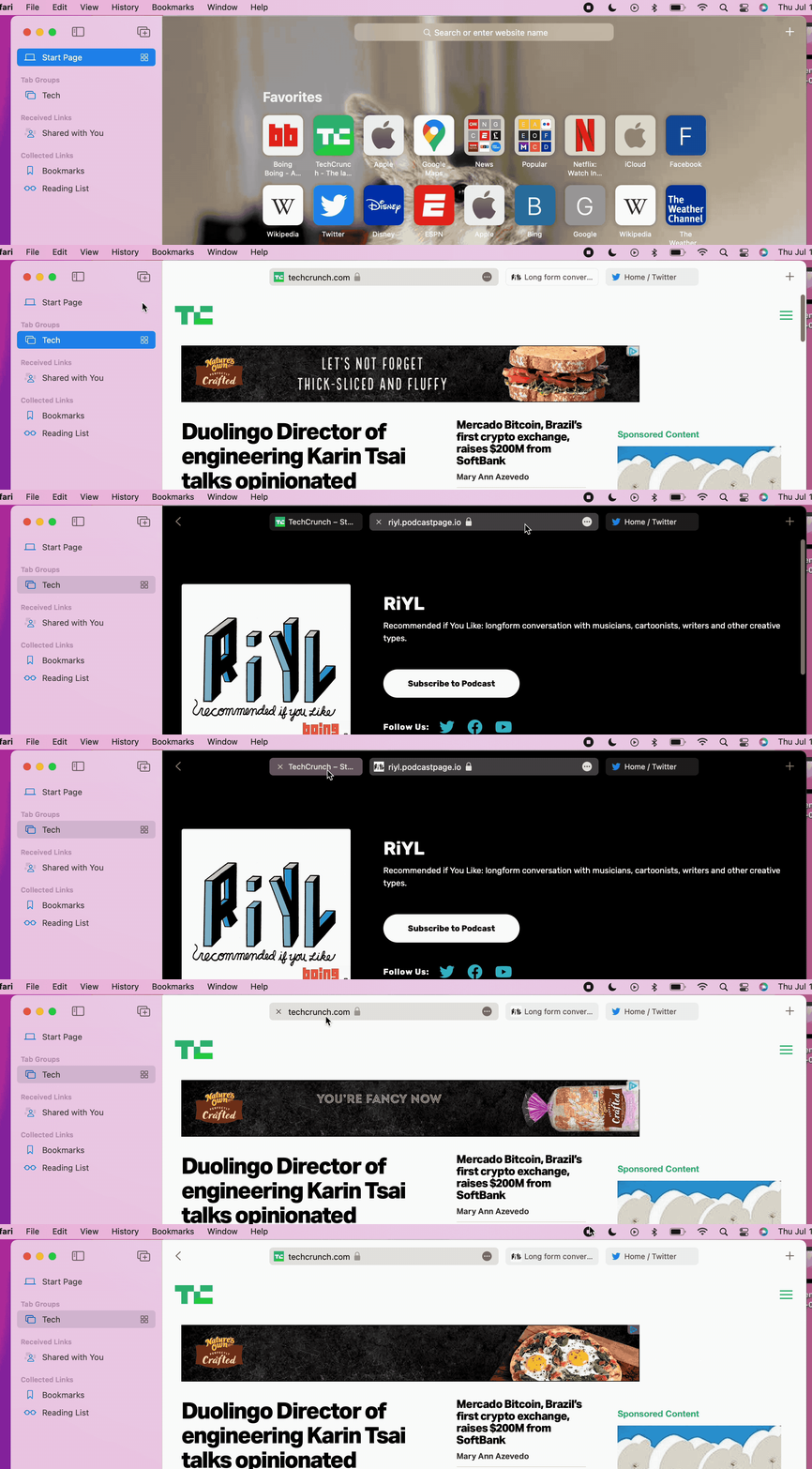
Okay, so what do you get if you bite the bullet and download today? The biggest changes come to Safari, FaceTime, along with the addition of the Universal Control feature that unifies peripherals across devices and Shortcuts, an iOS feature that will replace macOS mainstay, Automater.

Image Credits: Brian Heater

Some initial thoughts — Let’s start with Safari. The browser gets some key updates with every major macOS refresh, but this is one of the largest in recent memory. There was some concern following the keynote that the updates would only introduce confusion for many users. And certainly it’s true that people hate disruptions to their workflow – this is likely one of a handful of reasons I’ve never seriously concerned switching to Safari as a default every day browser. Change is hard, friends. Of course, change is also a necessary part of evolving. In either case, I haven’t been using Monterey intimately enough to offer something more definitive on the Safari experience.

Developing…


01 Jul 2021

Exclusive: Hepsiburada CEO sets out her vision, as it becomes first ever Turkish Nasdaq IPO

Hepsiburada — Turkey’s giant online shopping platform considered the Amazon of its country — floats on the Nasdaq today, for a valuation likely to exceed $3.9 billion on current projections, especially with shares being marked up to $14 apiece (up from the previously predicted $12 pricing). Bu this isn’t the end of the journey for this break-out Turkish tech and e-commerce company, for long-time founder and chairwoman Hanzade Doğan Boyner – who started the business in 1998 no less, and still has overall control of the company – considers this closer to a growth round of funding, enabling her ambitious plans to mine Turkey’s fast-developing market even further, as well as expand into Central and Eastern Europe. Doğan Boyner, a scion of the powerful Doğan family in Turkey, continues to hold three-quarters of the voting power in the company, according to the prospectus filed to the SEC.

Hepsiburada’s IPO comes after it more than doubled its revenue during the pandemic, as Turkey’s largely offline population was forced to switch to online shopping in what might well be characterized as a sort of enforced ‘Great Leap Forward’ for the country. 

Hepsiburada (which translates as “everything is here”) is also making history as the first-ever Turkish, NASDAQ IPO.

With a massive logistics platform spread across Turkey, the company now offers 2hr deliveries, with around 43 million products available on the platform, available from a more Chinese-like ‘super-app’ which can offer everything from groceries to flights, to payment services, via is ‘Alipay-like’ service called Hepsipay. And in Turkey, many people prefer to buy things on installments, a service Hepsiburada has pre-built into its platform.

Turkish people have also enjoyed its frictionless returns, where goods can be returned for free, involving a super-efficient logistics network.

After growing at about 50% year on year for the last five years, the company says it doubled in size last year, taking advantage of the exponential growth in Turkey’s e-commerce penetration into its 82 million-strong population.

The IPO comes after a mere $100m was invested in the platform over the last 20 years, and a profit-making period until 2018 when Doğan Boyner started investing more in the platform, prior to this moment.

TC: What brought you to this moment in time in terms of the IPO?

Doğan Boyner: “Almost 20 years ago I started with e-commerce and from day one we built it with new features, new services, and today we manage a fully integrated ecosystem, from last-mile delivery to payment to groceries. Hepsiburada is the super app that makes our customer’s lives easier. They can get their groceries or their toys for next-day delivery or flight tickets. Why are we listing now? Because the Turkish e-commerce market is at 10% penetration, and we believe that its penetration will double by 2025. It’s an inflection point. It’s a large market, and as Hepsiburada we are a pioneering platform reaching maturity towards becoming a public company. With the funds raised through the IPO, we will accelerate our growth and continue to execute our vision.”

TC: “Are you satisfied with the $3.9 billion valuation?”

Doğan Boyner: “Today’s valuation is not very important for me. It’s not where you start, it’s where you go. I’m not selling any shares, and this is primarily for growth funding. This is just the beginning. You know, the market is still low penetration, and we have an exciting journey ahead of us. I want the stock to perform well for my investors, but what the value today is irrelevant for me.”

TC: “You’re going to use some of this funding to add on new products onto the platform like booking flights or money transfers and other kinds of new products, what are some of the other kinds of expansion plans you have?”

Doğan Boyner: “One is to continue building our infrastructure, such as frictionless returns, which gives such peace of mind to our consumers. The second is Hepsi Express. It’s still only at 4% penetration. This will change the consumer’s grocery shopping habit because we have such a strong model where we partner with a lot of national chains, regional chains, Mom-and-Pop shops, so we turn those stores into our ‘dark stores’. Plus we sometimes do our own picking from the stores or sometimes the retailer does the picking. So the customer offering is very strong. You can get something in half an hour, or you can schedule it for next day, whenever you want. You can do the weekly shopping, or just get something for that night. Express is an area that we will scale. Payment is another focus. We are the only platform with a payments license. Soon it will be an open wallet and our Fintech capabilities will increase post IPO.”

TC: Are you following a sort of Alibaba / Alipay strategy?

Doğan Boyner: “We will leverage our current customers and marketplace, and we will turn them into our wallet customers. Super apps don’t really exist in Europe or the US. So it’s our vision to digitalize commerce. We are in our customer’s pocket. We want to make life easier for them.”

TC: “How did you shift operations during the pandemic?”

Doğan Boyner: “We almost became a lifeline, not just for consumers but for our merchants as well. So we rose to the occasion to not only scale operationally. We had to onboard 1000s of drivers and employees, very, very fast, but we also had to secure the well-being of our employees. While all of us were isolating we had to ask our employees to work, which, which I think we’ve done a very, very good job of, in terms of providing PPE, and providing health coverage. It was a chance to live up to our values. Our consumers experimented with us as new consumers, and they’re happy with the service so they will stay with us and our merchants appreciated us as well, because in a time when their shops were closed, they could generate revenues through us.”

TC: You’ve been a big advocate of women in your company and also in your country, you’ve created many programs for women and girls and engaged in a great deal of advocacy. Where do you feel you are on that journey?

Doğan Boyner: “Half far our workforce is female, 33% of our management is female – which should be 50%! Our woman entrepreneur program has been very impactful. We tell women entrepreneurs to come, we will teach you ecommerce, we will onboard your products, we will give you free shipping, we will prioritize your products or listing pages, we will give you real estate on our home page. Some 19,000 women have benefitted from this. Women have sent me their inspiring stories. They start small and hire two people, and then they create their own brands. Having said that, when I look at where we are in terms of gender equality globally, the needle doesn’t move much. You look at the number of CEOs in the FTSE 500, the number doesn’t change. So, I will keep doing whatever I can, because every ‘small drop’ counts. And hopefully, it will. I also think there should be a new conversation, a global conversation about gender equality in general. The 19,000 women who benefited from our program became economically more empowered. They gained skills and tools and confidence to trade on a platform like Hepsiburada, which is very meaningful.”

TC: Are you concerned that perhaps your success may attract the attention of government regulation in Turkey, in the future?

Doğan Boyner: “We are considered a national champion. Turkey has different dynamics. I think it’s an inspiration that national champions can come out and be successful.”

TC: You’ve been very hugely successful, you’re a big advocate for women in your country, do you have any political aspirations?

Doğan Boyner: “No.”

01 Jul 2021

Common mistakes Indian startups make when relocating to the US

When considering a move to the United States, Indian startup founders first need to make a mental pivot to face the market they want to sell into and ask themselves how much risk they are willing to own.

In the SaaS space, there are (broadly) two types of companies you can build. The first option is to create a better product than what is currently available on the market — like better accounting software or a CRM, or a better marketing automation tool, especially for the mid-market companies. This path is well-worn — Indian companies Zoho and Freshworks are leading examples.

The first mistake Indian entrepreneurs make when coming to America is to assume that a large market and a customer base open to novel products means your first step should be buying a plane ticket.

The second — and riskier — option is to build something in an entirely new category, which is what we’re doing at Talview, where we’re building a video AI platform for digitized talent processes for companies making hiring decisions. Creating a new market is a high-risk scenario lined with pitfalls disguised as opportunities, but the rewards are potentially immense.

The first type of company never has to leave India. You can start your company there, hire local talent and begin selling your high-quality remote services to midmarket businesses across the globe. The second option works best if you’re willing to target more advanced SaaS software markets in the U.S.

No game plan, just a product

The U.S. is the largest software market and where customers are more likely to try something new. However, the first mistake Indian entrepreneurs make when coming to America is to assume that a large market and a customer base open to novel products means your first step should be buying a plane ticket.

First: Which city will you choose? When entering a new market, founders are also the salesperson, so you need to be prepared to meet customers or investors and get that early traction before you decide to move your operations to the U.S. full time.

01 Jul 2021

Barracuda acquires Skout Cybersecurity to enter the XDR market

Barracuda Networks has purchased Skout Cybersecurity, a New York-based channel-only provider of extended detection and response (XDR) services. 

The deal, the terms of which were not disclosed, will see the California-based cybersecurity vendor enter the fast-growing XDR market. 

As a result of the ever-increasing attack surface as businesses shift to the cloud and embrace hybrid working, 80% of security professionals now say XDR solutions — which automatically collect and correlate data from multiple security layers to improve threat detection — should be a top priority for their organization, and 68% of enterprises plan to implement XDR in 2021 and 2022, according to recent research. 

By adopting Skout’s XDR platform, along with the company’s security team, Barracuda says it will be able to offer real-time continuous security monitoring to managed service providers, or MSPs, enabling them to address threats more efficiently. Skout, an early-stage cyber-as-a-service startup that had amassed a total of $25 million in funding from RSE Ventures and ClearSky, also offers AI-powered endpoint protection, email protection services, and Office 365 monitoring through its XDR platform. 

The acquisition also continues Barracuda’s strategic M&A momentum, which includes the recent acquisition of zero trust access provider Fyde.  

“MSPs must be able to protect their customers’ end users, their devices, and the data they are accessing with these devices against increasingly sophisticated threats. To achieve this level of protection for their customers, and themselves, MSPs are transforming their businesses into “security-centric” operations,” said Brian Babineau, SVP and general manager at Barracuda MSP.

“The addition of Skout enables Barracuda’s MSP partners to deploy security solutions across their environments, connecting their data feeds into a unified, 24×7 operation for swift analysis and response.” 

The acquisition is expected to close later this month, subject to obtaining required regulatory and third-party consents, and satisfaction of other customary closing conditions. 

Previously a public company, Barracuda was taken private by private equity firm Thoma Bravo who acquired the company for $1.6 billion in November 2017. The company, which competes with Palo Alto Networks and Symantec, provides security for cloud-connected networks and applications and counts the likes of Delta Airlines, Hootsuite, and Samsung among its 200,000+ customers. 

Read more:

01 Jul 2021

A bank for the creator economy, Karat Financial raises $26M in Series A funding

The creator economy is changing the way that people earn a living, whether you’re an Instagram influencer or a freelance graphic designer. But traditional banks haven’t caught up.

Take Alexandra Botez for example. The Stanford graduate earns six figures playing chess on Twitch, where she has 877,000 followers. But when she tried to apply for a business credit card, she was rejected twice. Meanwhile, when the creator behind TierZoo, a YouTube channel with 2.7 million subscribers, tried to rent an apartment, he was rejected because his landlord didn’t see his business as legitimate.

Eric Wei noticed this disconnect while he was a Product Manager at Instagram, where he helped build Instagram Live. With co-founder Will Kim, a previous investor with seed fund Lucky Capital, Wei launched Karat Financial, a better banking system for digital creators. Today, Karat Financial announced a $26 million Series A round led by Union Square Ventures with participation from GGV Capital and SignalFire.

“Banks need to understand you in order to trust you, and it’s only when they trust you that they’re willing to give you credit, process your payments, and hold your money,” Wei told TechCrunch. “If Alexandra Botez has 800,000 followers, and let’s say a tenth of them are paying a monthly subscription fee on Twitch, you can actually back into what these creators’ income streams are, and develop a better underwriting model than what the banks have today.”

But Karat isn’t solving a problem exclusive to the 1% of digital creators. Even for someone like a self-employed small business owner or a gig worker, it can be challenging to find a landlord that will rent an apartment without a proof of employment letter and regular paystubs. But the creator economy remains a fast-growing sector — more than two million creators make over $100,000 per year, and according to VC firm SignalFire, over 46.7 million people have enough of a following to monetize their content part-time.

“This whole industry exploded,” said Kim. “If it’s a flash in the pan, it’s a fifteen-year-old flash.”

Wei and Kim founded Karat in 2019, then earned a spot in Y Combinator’s Winter 2020 accelerator. By June 2020, Karat launched its first product, the Karat Black Card, a credit card for creators, and earned $4.6 million in seed funding from investors like Twitch co-founder Kevin Lin.

Image Credits: Karat

“Our vetting process is we try to evaluate creators as the businesses they are,” Wei said. The Karat Black Card doesn’t charge interest or fees, and only turns a marginal profit off of bank interchange fees. Karat will also advance credit for sponsorship payments at no cost to the creator. So if you’re an influencer and get paid $1,000 to make a video sponsored by a clothing company, it could take months to get paid. Karat will give you that $1,000 now, so long as you pay them back once the clothing company pays you.

Karat proved its concept with 50% growth from month to month and eight figures in transactions since launch last year. More than 30 creators have invested in Karat, including Jared Leto, 3LAU, Nas Daily, and Josh Richards — that’s all without any spending on influencer marketing.

“It turns out that when you do a good job for creators, they share you around with other people,” Wei said.

Since then, their portfolio of investors has grown to include YouTube co-founder Steven Chen, Twitter co-founder Biz Stone, Former TikTok CEO Kevin Mayer, and Former Wealthfront CEO Adam Nash, among others.

But Karat’s ultimate ambition isn’t to give creators a line of credit. They started out with the credit card to prove their concept, but in the long term, they hope to create a financial infrastructure for creators. That means helping them launch merchandise lines, incorporate their business, get a mortgage, take out business loans, and file their taxes. Wei says that would come after the company’s Series B, opening a more lucrative income stream than collecting bank interchange fees.

“We decided to roll Karat out with the same tried and true fintech playbook,” Wei said. “Start out with something simple before wedging and scaling into those other products. So for us, the card is just a means to an end. Our whole model is, we use the cards to develop our underwriting model and gain trust from creators, and eventually, we can build to be Square for creators.”

Already, Wei and Kim are getting texts from their internet celebrity clients, asking them to be their de-facto financial advisors.

“We’re just like, oh my gosh, we love you, but we’re not building those products yet,” Wei said. “We’ll do that when we hit our Series B, and yes, we’ll charge you fees, because we’re going to provide you with better service than what’s out there now.”

With the newly announced Series A round, Karat plans to double its staff with new hires and begin looking toward new product development.

01 Jul 2021

Months later, we’re still making sense of the Supreme Court’s API copyright ruling

APIs, or application programming interfaces, make the digital world go round. Working behind the scenes to define the parameters by which software applications communicate with each other, APIs underpin every kind of app — social media, news and weather, financial, maps, video conferencing, you name it. They are critically important to virtually every enterprise organization and industry worldwide.

Given APIs’ ubiquity and importance, it’s understandable that all industry eyes were on the U.S. Supreme Court’s April 5 ruling in Google LLC v. Oracle America Inc., an 11-year-old case that addressed two core questions: Whether copyright protection extends to an API, and whether use of an API in the context of creating a new computer program constitutes fair use. Google lawyers had called it “the copyright case of the decade.”

I was one of 83 computer scientists — including five Turing Award winners and four National Medal of Technology honorees — who signed a Supreme Court amicus brief stating their opposition to the assertion that APIs are copyrightable, while also supporting Google’s right to fair use under the current legal definition.

We explained that the freedom to re-implement and extend existing APIs has been critical to technological innovation by ensuring competitors could challenge established players and advance the state of the art. “Excluding APIs from copyright protection has been essential to the development of modern computers and the Internet,” the brief said.

The Supreme Court ruling was a mixed bag that many observers are still parsing. In a 6-2 decision, justices sided with Google and its argument that the company’s copying of 11,500 lines of code from Oracle’s Java in the Android operating system was fair use. Great! At the same time, though, the court appeared to be operating under the assumption that APIs are copyrightable.

“Given the rapidly changing technological, economic and business-related circumstances, we believe we should not answer more than is necessary to resolve the parties’ dispute,” Justice Stephen Breyer wrote for the majority. “We shall assume, but purely for argument’s sake, that (the code) “falls within the definition of that which can be copyrighted.”

While it may take years to fully understand the ruling’s impact, it’s important to keep dissecting the issue now, as APIs only continue to become more essential as the pipes behind every internet-connected device and application.

The legal saga began when Google used Java APIs in developing Android. Google wrote its own implementation of the Java APIs, but in order to allow developers to write their own programs for Android, Google’s implementation used the same names, organization, and functionality as the Java APIs.

Oracle sued Google in U.S. District Court for the Northern District of California in August 2010, seven months after it closed its acquisition of Java creator Sun Microsystems, contending that Google had infringed Oracle’s copyright.

In May 2012, Judge William Alsup ruled that APIs are not subject to copyright because that would hamper innovation. Oracle appealed the ruling to the U.S. Court of Appeals, which reversed Judge Alsup in May 2014, finding that the Java APIs are copyrightable. However, he also sent the case back to the trial court to determine whether Google has a fair use defense.

A new District Court trial began in May 2016 on the fair use question. A jury found that Google’s implementation of the Java API was fair use. Oracle appealed, and the U.S. Court of Appeals in March 2018 again reversed the lower court. Google filed a petition with the Supreme Court in January 2019, receiving a hearing date in early 2020. However, lengthening the case’s torturous path through the courts even further, COVID-19 forced oral arguments to be postponed to last October. Finally, on April 5, the Supreme Court settled the matter.

Or did it?

“Supreme Court Leaves as Many Questions as It Answers in Google v. Oracle,” read a headline on law.com. The National Law Review said: “The Supreme Court sidestepped the fundamental IP issue — whether or not Oracle’s software code at the heart of the case is copyrightable.”

On one hand, I’m disappointed that the court’s ruling left even a hint of ambiguity about whether APIs are copyrightable. To be clear: APIs should be free of copyright, no ifs, ands or buts.

APIs provide structure, sequence, and organization for digital resources in the same way that a restaurant menu does for food. Imagine if Restaurant A, which serves burgers, fries, and shakes, couldn’t use the same words, as well as the ordering and organization of the words, on their menu as Restaurant B. A menu doesn’t represent a novel expression; rather, it is the ingredients, processes, and service that define a restaurant. Both burger places benefit from the shared concept of a menu and the shared knowledge among their consumers of what burgers, fries and shakes are. It is the execution of the menu that ultimately will set one restaurant apart from another.

Likewise, APIs are not intellectual property; they are the simply operational elements that are common, reusable, remixable, and able to be put into use in as many applications by as many developers as possible.

This pattern plays out over and over across many different sectors of our economy where APIs are being used, reused, and remixed to generate new kinds of applications, integrations or entirely new companies and products or services. Immense value is generated by the free, collective, collaborative and open evolution of APIs.

On the other hand, I’m pleased by the part of the Supreme Court ruling that widens the definition of fair use. I think that provides the scope needed to take the industry into its API future without too much friction.

I also believe the case will chill future attempts by other companies to engage in litigation over API copyright. In the end, the decade-long Google vs. Oracle case negatively affected Oracle’s image when it comes to the fast-growing API sector, and I suspect other companies will think twice before going to court.

Nevertheless, companies may want to be extra cautious about licensing their APIs using the widest possible license, applying a Creative Commons CC0 or CCY-BY to APIs built with tolls and specifications, such as Swagger, OpenAPI, and AsyncAPI.

Now that Google vs. Oracle is finally history, I feel that the API sector will remain as vibrant as ever. That’s excellent news for everybody.

01 Jul 2021

Pausing Pepper, packing meat and picking berries

We’re fresh off of our big Pittsburgh event, and I’ll have more thoughts on that for you next week, once we’ve crawled through all of the interviews, published profiles and all of that fun stuff. t  I admit that I’m also partly putting that off because there’s just a ton of investment news to get through in the meantime. Though I do want to note that the Pittsburgh Robotics Network held its own big event the same day as ours — honestly, there’s just a ton of activity in the city this week, including visits from some national politicians.

Per the PRN press release,

The alliance brings together leaders from top robotics companies, research institutions and universities in the Pittsburgh area, including Carnegie Mellon University (CMU), Argo AI, Aurora, the University of Pittsburgh, Kaarta, RE2 Robotics, Neya Systems, Carnegie Robotics, HEBI Robotics, Near Earth Autonomy, BirdBrain Technologies, Omnicell and Advanced Construction Robotics. The Richard King Mellon Foundation commemorated this membership milestone with a grant of $125,000 to support the continued growth of the PRN.

I hinted the other week that there would be a uptick in funding announcements, and we’ve certainly seen that come to fruition. Once upon a time, we used to have this thing called the summer doldrums. Maybe it’s the pandemic, but formerly slow season no longer really applies here. VCs are still super bullish on robotics and keep pumping money in across the category.

Before we get started, however, a bit of a somber note to say goodbye to Pepper – for now, at least. A rep for SoftBank Robotics confirmed with TechCrunch that the company will be hitting pause on the production of affable robotic greeter. Reuters was first to report a “retrenchment” in SoftBank’s robotics, including the elimination of 330 roles in France. The company noted in a press release, “Since 2012 SoftBank Robotics Group, a subsidiary of SoftBank, has invested in Humanoid Robotics and intends to keep Pepper & NAO robots business moving forward.”

NAO Robot

Source: Aldebaran Robotics under a CC-BY-3.0 license

As a refresher, the investment giant’s 2021 acquisition of French robotics startup Aldebaran Robotics gave rise to both SoftBank Robotics and Pepper. The latter evolved from Nao, a research robot that had pretty wide scale adoption in that world. To this day, you’ll still see the ‘bot at universities and research institutes all over.

Pepper was an attempt to bring some of that underlying technology to a broader commercial audience. The robot was made life-size and designed to hold a tablet and greet people. And, honestly, that was kind of it. Technology in search of a problem, as the saying goes – sophisticated robotics that can greet you at an Applebee’s or offer you some information at the airport.

Precisely why Pepper didn’t work out – and how much issues from the past year played into that – is something better saved for a deeper dive, but I’ve always been skeptical of how useful the robot really was. You’d be hard-pressed to find a compelling argument that this was something that required advanced robotics. Of course, a far more compelling argument can be made that specializing in building research robotics is, at best, a loss leader.

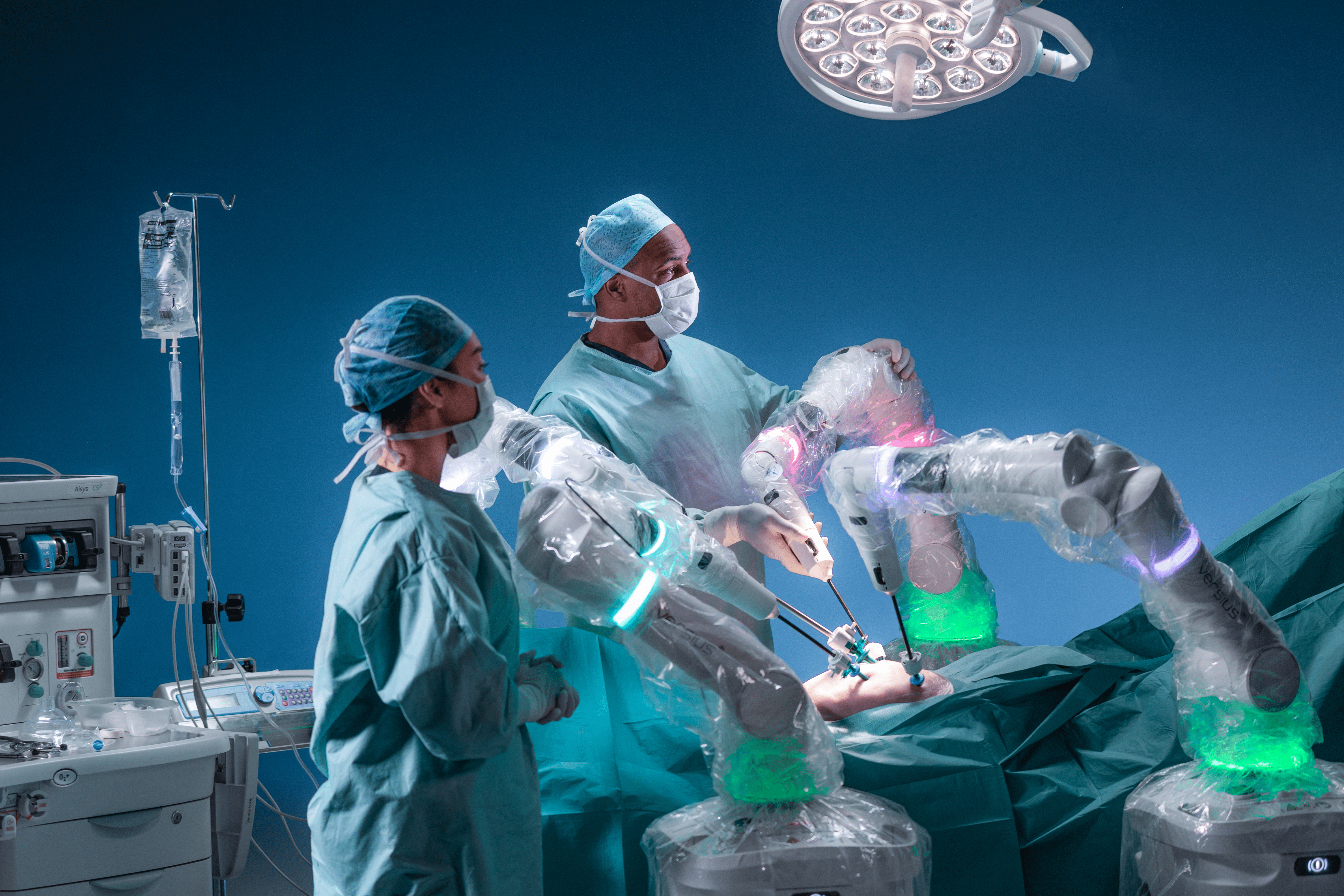
Image Credits: CMR Surgical

That said, there’s still plenty to get excited about on the robotics investment front. And while SoftBank Robotics may be scaling down, the company’s investment arm appears very bullish on robotics that go beyond just holding up signage. The Vision Fund 2 led a massive $600 million Series D for CMR Surgical. The U.K.-based surgical robotics firm is now a unicorn three-times over, with a $3 billion valuation for its keyhole surgery tech.

What I find most appealing about the category is its promise of effectively leveling the playing field for highly specialized procedures. That accessibility could prove huge for developing nations and other markets where premium healthcare is more difficult to come by.

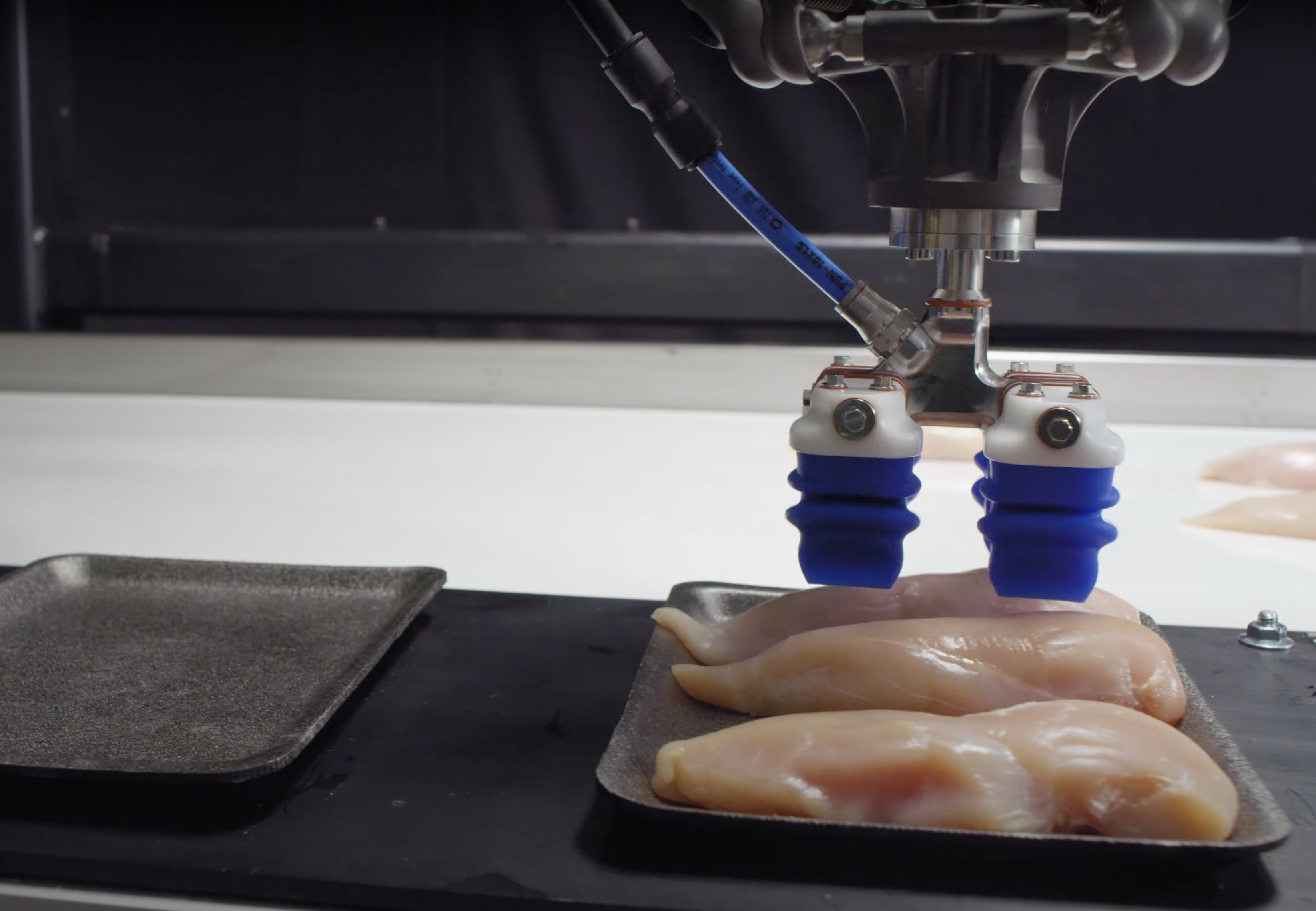
Image Credits: Soft Robotics

Soft Robotics (like SoftBank Robotics, but with less “bank”), meanwhile, specifically cited pandemic demand in the $10 million extension of its $23 million Series B. Not to go all Upton Sinclair on you, but the meat processing industry sounded utterly hellish through much of the pandemic (as a non-meat eater myself, I’ll save you from some of my more personal reflections on the matter). Soft Robotics has long been among the more compelling startups in the robotic picking space, courtesy of its pneumatic powered grippers that are capable of moving around easily damaged food stuffs.

Image Credits: Traptic

Speaking of moving around fragile foods, we exclusively reported this morning that 2019 Startup Battlefield finalist Traptic has begun commercial deployment for its strawberry-picking robot. That follows a previously unannounced $5 million Series A, bringing its full funding to $8.4 million to date. Like so many other industries, field work suffered a massive headcount shortage during the pandemic.

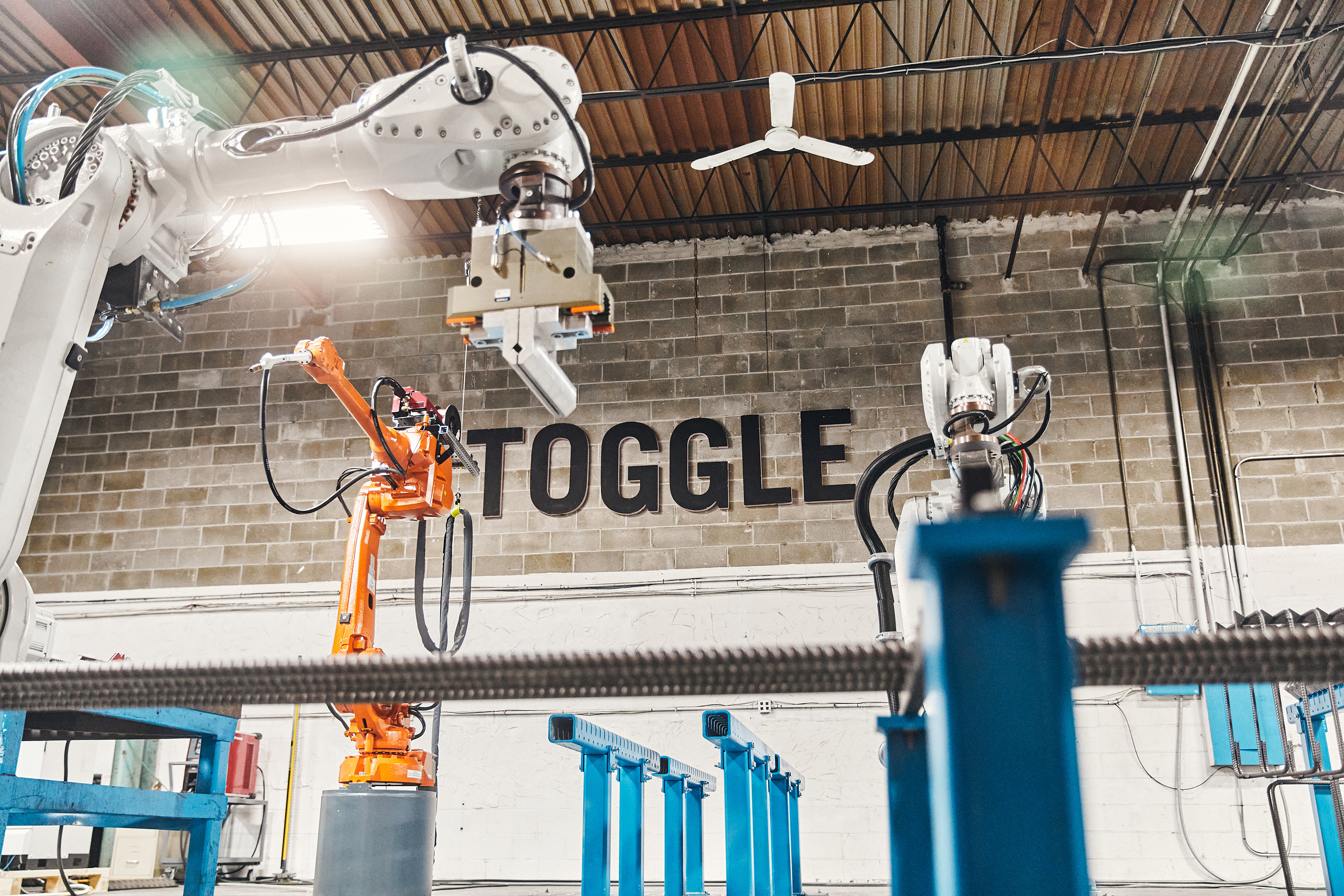
Image Credits: Toggle

Botrista also announce a Series A this week, for its drink-mixing robotic kiosk. The company raised $10 million for further deployment of its system, which is capable of mixing up to eight ingredients in around 20 seconds. Toggle’s Series A, meanwhile, netted the New York-based construction robotics company $8 million.

Image Credits: TechCrunch

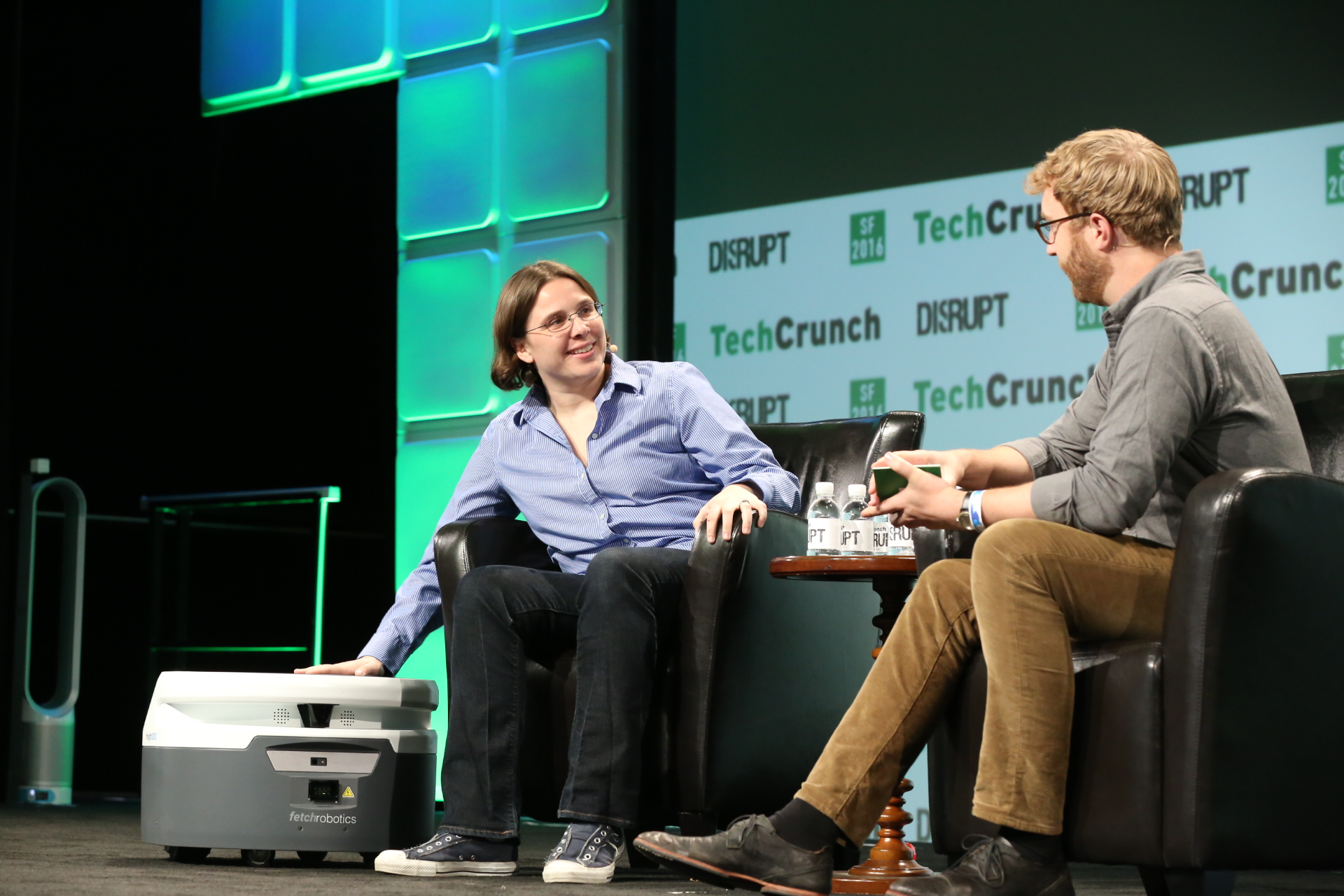
Never a dull moment. Here’s the fun of writing a large roundup on Wednesday for Thursday. Sometimes big news breaks in the morning (to all you running robotics startups, if you could hold off on announcing big news on Thursdays, that would be great help to me. Thanks in advance), like Zebra’s intention to acquire Fetch for $290 million. I’ve got some more thoughts on this in piece and will be sharing some later, but meantime, a quote from Fetch CEO Melonee Wise,

The Fetch team is excited to join Zebra and accelerate the adoption of flexible automation through AMRs and our cloud-based robotics platform. Together we have the right team with the right technology to provide end-to-end solutions that solve real customer problems. By helping customers dynamically optimize and holistically orchestrate their fulfillment, distribution, and manufacturing operations, together we help enable their ability to stay ahead of growing demand, minimize delivery times and address shrinking labor pools.

*Picking berries not to be confused with picking…anything else. We’re rooting for you, Biz.

01 Jul 2021

Google update will allow digital Covid-19 vaccination cards and test results to be stored on Android devices

Google is making it possible to store digital versions of either Covid-19 test results or vaccination cards on users’ Android devices. The company on Wednesday announced it’s updating its Passes API, which will give developers at healthcare organizations, government agencies, and other organizations authorized by public health authorities the ability to create digital versions of tests and vaccination cards which can then be saved directly to the user’s device. The Passes API is typically used to store things like boarding passes, loyalty cards, gift cards, tickets and more to users’ Google Pay wallet. However, the Google Pay app in this case will not be required, Google says.

Instead, users without the Google Pay app will have the option to store the digital version of the Covid Card directly their device, where it’s accessible from a homescreen shortcut. Because Google is not retaining a copy of the card, anyone who needs to store the Covid Card on multiple devices will need to download it individually on each one from the healthcare provider or other organization’s app.

The cards themselves show the healthcare provider or organization’s logo and branding at the top, followed by the person’s name, date of birth, and other relevant information, like the vaccine manufacturer or date of shot or test. According to a support document, healthcare providers or organizations could alert users to the ability to download their card via email, text, or through a mobile website or app.

In an example photo, Google showed the Covid-19 Vaccination Card from Healthvana, a company that serves L.A. County, However, it didn’t provide any other information about which healthcare providers are interested in or planning to adopt the new technology.

The Passes API update doesn’t mean Android users can immediately create digital versions of their Covid vaccination cards — something people have been taking pictures of as a means of backup or, unfortunately in some cases, laminating it. (That’s not advised, however, as the card is meant to be used again for recording booster shots.)

Rather, the update is about giving developers the ability to begin building tools to export the data they have in their own systems about people’s Covid tests and vaccinations to a local digital card on Android devices. To what extent these digital cards will become broadly available to end users will depend on developer adoption.

For the feature to work, the Android device needs to run Android 5 or later and it will need to be Play Protect certified, which is a licensing program that ensures the device is running real Google apps. Users will also need to set a lock screen on their device for additional security.

Google says the update will initially roll out in the U.S., followed by other countries.

The U.S. is behind other markets in making digital version of vaccination cards possible. Today, the EU’s Covid certificate, which shows an individual’s vaccination status, test results or recovery status from Covid-19, went live. The certificate (EUDCC) will be recognized by all EU members, and will aid with cross-border travel. Israel released a vaccine passport earlier this year that allows vaccinated people to show their “green pass” at places that require vaccinations. Japan aims to have vaccination passports ready by the end of July for international travel.

In the U.S., only a few states have active vaccine certification apps. Many others have either outright banned vaccine passports — which has become a politically loaded term — or are considering doing so.

Given this context, Google’s digital vaccination card is just that — a digital copy of a paper card. It’s not tied to any other government initiatives nor is it a “vaccine passport.”

01 Jul 2021

Nowports raises $16M to build the OS for LatAm’s shipping industry

Nowports, an automated digital freight forwarder in Latin America, has raised $16 million in Series A funding.

Mouro Capital — a venture capital fund focused on fintechs and adjacent businesses that is backed by Banco Santanderled the round for the Monterrey, Mexico-based startup. Foundation Capital also participated in the financing, which included participation from existing backers Broadhaven Ventures, InvestoVC, Monashees, Base10 Partners and Y Combinator.

A number of angels also put money in the round, including Justo.mx founder Ricardo Weder, Luuna’s Carlos Salinas from Luuna and Tinder co-founder Justin Mateen. The investment brings Nowports’ total raised since its 2018 inception to over $24 million.

Nowports raised its initial seed round in 2019 after graduating from Y Combinator’s Winter 2019 batch with a mission to innovate the freight forwarding industry by helping companies improve the import process. Its software and services track freight shipments from ports to destinations across Latin America. Over time, it has expanded its offerings and now also automates insurance policies for, and provides financing, to its clients. 

“In this way, we allow our clients to import and export more, which helps them grow their businesses and improves the foreign trade conditions of the region,” said Nowports CEO and co-founder Alfonso de los Rios.

2020 was a good year for Nowports, which saw its revenue climb by 605% compared to 2019.

“Our 2021 goal is 400% to 600%,” de los Rios told TechCrunch.

The company currently has offices in Mexico, Chile, Colombia, and Uruguay. Nowports plans to use its new capital in part to expand its 160-person team to China, according to de los Rios. It also plans to expand its logistics and financial services and to “solidify its most important routes.”

Image Credits: CEO and co-founder Alfonso de los Rios / Nowports

“With platforms, algorithms with AI and integrations, our platform allows companies to take control of their shipments and plan and predict the best timing to move the freight based on the needs of their own company,” he said at the time of the company’s seed raise. “Our goal with the series A is to position ourselves as the biggest digital freight forwarder in the region and expand our venture financing solution.”

Tens of millions of containers are imported and exported from Latin America each year, and nearly half of them are either delayed or lost due to mismanagement. And, an estimated 50% of shipping containers suffer delays due to disorganized processes or errors during transport, which ends up costing companies billions per year. It’s a big opportunity. And, Nowports pledges to shippers that its digital management software will keep track of each container. 

“Slow, inefficient, and manual processes in international logistics are disassociated from today’s technological world”, said Nowports co-founder and COO Maximiliano Casal. “Customers are looking for solutions that can improve their logistics processes adapted to current challenges of international trade.”

The two co-founders of Nowports met at a program at Stanford University, with de los Rios hailing from a family with deep ties to the shipping industry. He and Casal linked up and the two began plotting a way to make the deeply inefficient industry more modern and transparent. To familiarize himself with the market for which he’d be developing a technology, Casal worked with a freight forwarder in Kansas City that had been operating for more than 30 years.

Michael Sidgemore, co-founder and partner of seed round lead investor Broadhaven Ventures, described the team as “visionaries in the freight forwarding industry who see the ability to build the operating system for the shipping industry, much like Carta has done for equity ownership.”

The need to track and digitize the supply chain process was never more apparent than with the recent blockage of the Suez Canal by the Ever Given, which became a meme that represented the impacts of inefficiencies in the supply chain, Sidgemore said. 

“Nowports has created industry leading technology to help its customers know when to turn starboard or port side,” he added.

Chris Gottschalk, senior advisor of Mouro Capital, said the Nowports platform brings both “transparency and technology” to a global client base.