Year: 2021

29 Jun 2021

SpaceX is losing money on its Starlink terminals, but sees lower costs ahead

It may be a little while longer until Starlink hits profitability. The SpaceX project, which aims to deliver global high-speed broadband via a satellite network, sells its beta kits to customers for around $500 dollars despite it costing much more to produce them, CEO Elon Musk said in an interview Tuesday.

The kit includes a user terminal, a kind of dish, that connects the customer to the satellites and enables broadband access. “To be totally frank, we are losing money on that terminal right now,” he said. That terminal costs us more than $1,000, so obviously I’m subsidizing the cost of the terminal.” He went on to add that SpaceX is working on a next-gen terminal capable of providing the same capability, but at a lower cost to make.

SpaceX’s overall investment in the project could be between $5-10 billion initially and as much as $30 billion over time, as the company continues to provide improvements and stay competitive against improvements in cellular technology, he said.

Musk, who made these comments during a virtual keynote at the Mobile World Congress event in Barcelona on Tuesday, also provided other details about the current status of Starlink. The project is on track to have over half a million users within the next twelve months, he said, and is operational in around 12 countries with more “being added every month.”

SpaceX is also getting close to launching satellite version 1.5, which will have laser inter-satellite links to provide continuous connectivity over high-latitude and polar regions. Next year the company will launch version 2, “which will be significantly more capable,” Musk noted.

Starlink satellites streak through a telescope’s observations.

The project has entered into two partnerships with major country telecommunications companies, though Musk declined to specify their names.

It is hard to imagine Starlink without the breakthrough in rocket reusability achieved by SpaceX. “But we still need to take this to another level with [. . .] the Starship development,” Musk said. That rocket will be designed for rapid reusability – so the ability to relaunch with little to no time on the ground between flights, similar to an airplane’s capabilities today.

Starship is key to Musk’s vision to build a base on the Moon or a city on Mars. He said the company is hoping to make the first orbital launch attempt with Starship in the next few months. SpaceX filed a request for approval with the Federal Communications Commission (FCC) to fly Starlink terminals on the new spacecraft in order to “demonstrate high data rate communications” between Starship’s launch system and the ground throughout the mission.
29 Jun 2021

Forum Brands raises $27M as crowded Amazon roll-up space continues to heat up

The number of startups acquiring e-commerce businesses, especially those operating on Amazon, to grow and scale is increasing as more people than ever are shopping online.

The latest such startup to raise capital is Forum Brands, which today announced it has raised $27 million in equity funding for its technology-driven e-commerce acquisition platform. 

Norwest Venture Partners led the round, which also included participation from existing backers NFX and Concrete Rose.

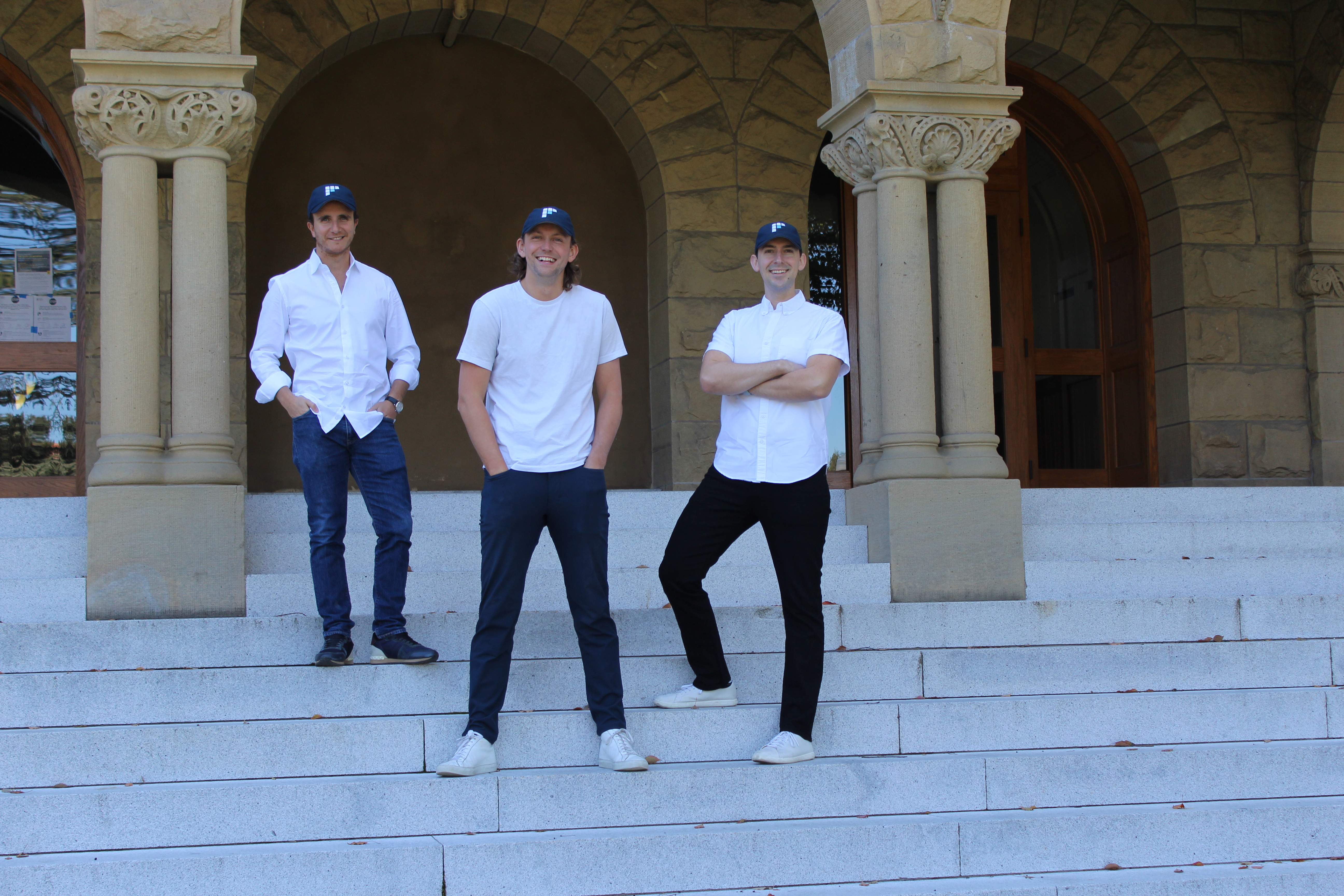
Brenton Howland, Ruben Amar and Alex Kopco founded New York-based Forum Brands last summer during the height of the COVID-19 pandemic. Its self-proclaimed goal was to use data to innovate through acquisition.

“We’re buying what we think are A+ high-growth e-commerce businesses that sell predominantly on Amazon and are looking to build a portfolio of standalone businesses that are category leaders, on and off Amazon,” Howland said. “A source of inspiration for us is that we saw how consumer goods and services changed fundamentally for what we think is going to be for decades and decades to come, accelerating the shift toward digital.”

Forum Brands founding team. Image Credits: Forum Brands

Forum’s technology employs “advanced” algorithms and over 60 million data points to populate brand information into a central platform in real time, instantly scoring brands and generating accurate financial metrics.

The M&A team also uses data to contact brand owners “in just three clicks.” But Forum says it already knows which brands meet its acquisition criteria before ever making contact with brand owners.

“The decision to acquire comes within 48 hours and once terms are agreed upon, entrepreneurs get paid in 30 days or less for their brand, with additional income benefits through post-acquisition partnerships,” according to the company.

Its apps leverage analytics to push recommendations to drive growth and financial performance for brands. Then, its multichannel approaches aimed at positioning the brands for “long-term category leadership.”

“We are using a lot of data science and machine learning techniques to build technology that allows us to eventually operate efficiently a large portfolio of digital brands at scale,” Kopco said.

The company is undeterred by the increasingly crowded space based on the belief that the market opportunity is so huge, there’s plenty of room for multiple players.

“We are very much in the day zero consolidation of the e-commerce space, and the market is very, very large,” Amar told TechCrunch. “And based on our data, 98% or 99% of all sellers are still operating independently. So, this is not a winner-takes-all market. There will be multiple winners, and we’ve built a strategy to be one of these winners.” 

Norwest Venture Partners’ Stew Campbell believes that the number of sellers who reach a point where they have trouble scaling either due to the lack of resources or time is only going to grow. And Forum Brands intends to capitalize on that.

There’s a continued need for more liquidity options for the entrepreneurs behind many Amazon-first brands. Forum helps entrepreneurs recognize value, which can be significant too many,” he said. ”After acquisition, the Forum team drives operational efficiencies and scale to create better customer experiences for shoppers on Amazon.”

Campbell emphasizes that his firm was drawn to Forum Brands’ team, which the company also touts as a differentiator.

Co-founder and COO Kopco worked in a variety of product roles for several years at Amazon and John Derkits, Forum’s VP of brand growth, is also ex-Amazon. Overall, three-fourths of its operating team are former Amazonians. Co-CEO and co-founder Howland was an investor for two years at Cove Hill Partners and is a former McKinsey consultant.

Campbell says his firm has seen many other models in this market, “but the Forum team blends long-term mindsets and focus on technology, while bringing operational and M&A expertise.”

If this all sounds familiar, it’s because TechCrunch also recently covered the raise of Acquco, which has a similar business model to that of Forum Brands and also involves former Amazon employees. In May, that startup raised $160 million in debt and equity to scale its business. Thrasio is another high-profile player in the space, and has raised $850 million in funding this year. Other startups that have recently attracted venture capital include Branded, which recently launched its own roll-up business on $150 million in funding, as well as Berlin Brands Group, SellerX, Heyday, Heroes and Perch. And, Valoreo, a Mexico City-based acquirer of e-commerce businesses, raised $50 million of equity and debt financing in a seed funding round announced in February.

Also, earlier this month, Moonshot Brands announced a $160 million debt and equity raise to “acquire high-performing Amazon third-party sellers and direct-to-consumer businesses on Shopify and WooCommerce with established brand equity.” That company says that since its founding in 2020, it has achieved a $30 million revenue run rate. Among its investors are Y Combinator, Joe Montana’s Liquid 2 Ventures and the founders of Hippo, Lambda School and Shift. 

29 Jun 2021

GitHub previews new AI tool that makes coding suggestions

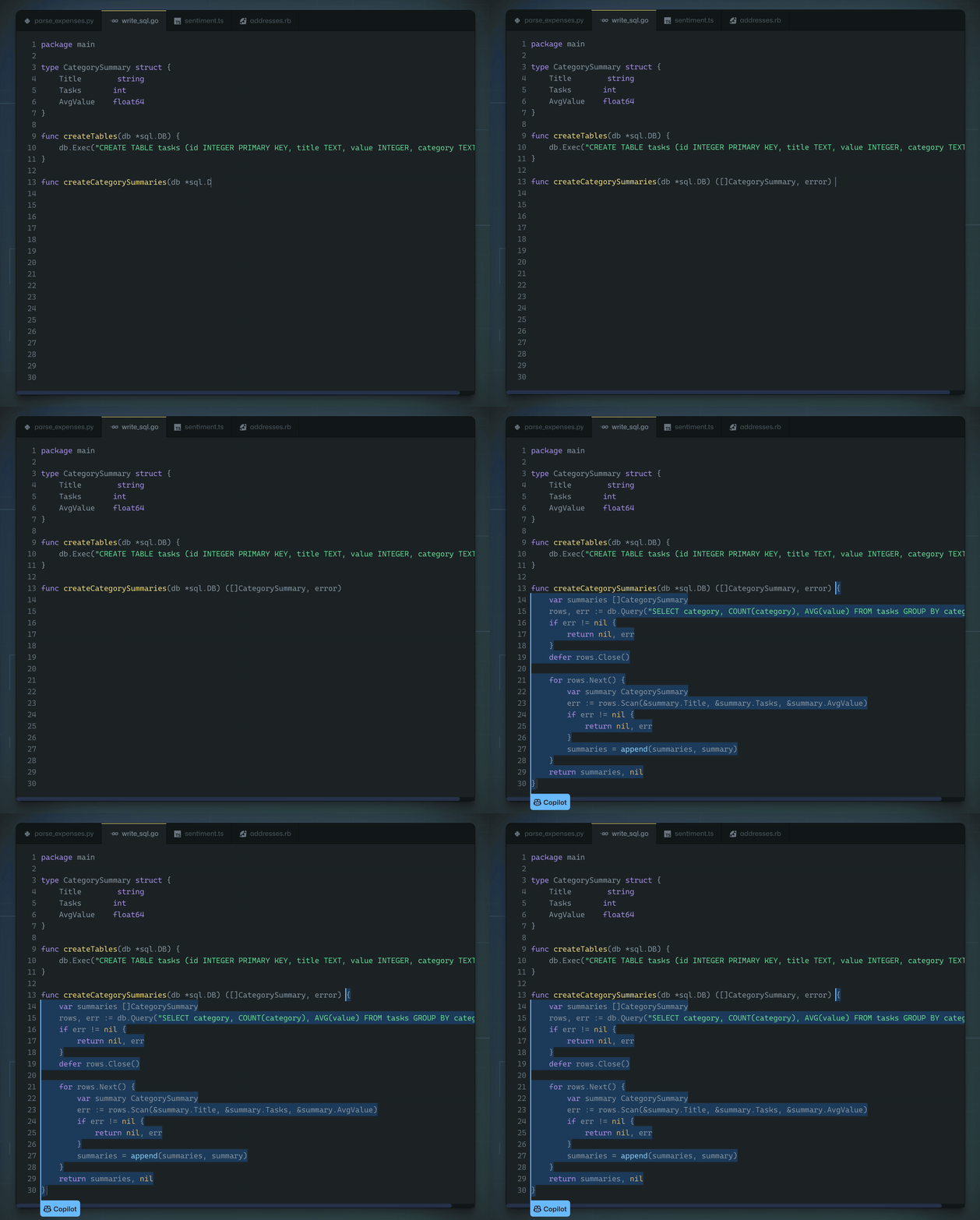
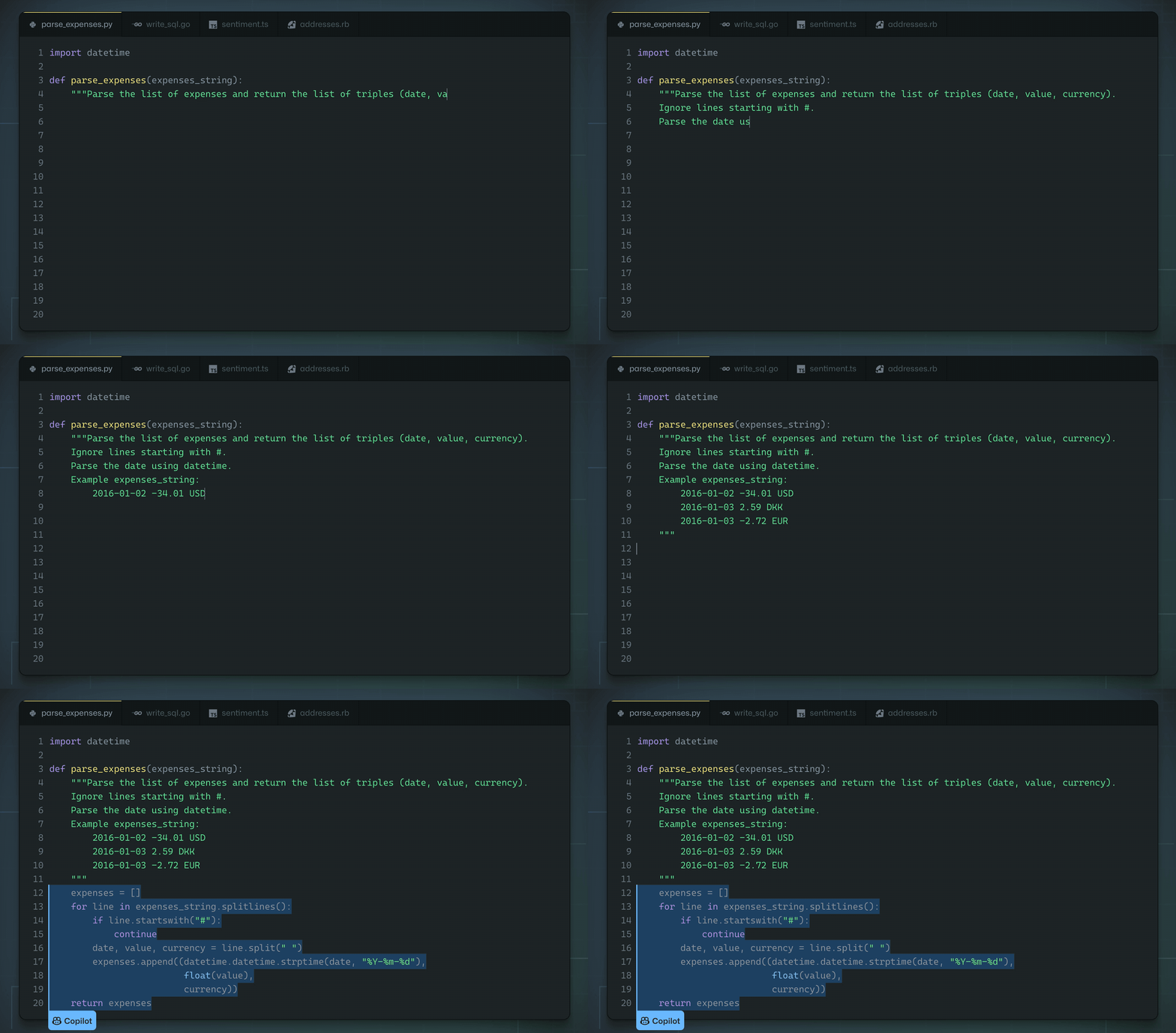
GitHub has unveiled a new product that leverages artificial intelligence to help you write code more efficiently. Named GitHub Copilot, today’s new product can suggest lines of code and even sometimes entire functions.

GitHub has partnered with OpenAI to develop this tool. It doesn’t replace developers, it’s just a tool that should improve productivity and make it easier to learn how to code. GitHub frames this new tool as an AI pair programmer.

The model behind GitHub Copilot has been trained on billions of lines of code — many of them are hosted and available publicly on GitHub itself. When you’re writing code, GitHub Copilot suggests code as you type. You can cycle through suggestions, accept or reject them.

In order to figure out what you’re currently coding, GitHub Copilot tries to parse the meaning of a comment, the name of the function you are writing, or the past couple of lines. The company shows a few demos on its website.

In particular, you can describe a function in plain English in a comment and then convert it to actual code. If you’re getting started with a new language or you’ve been using no-code or low-code tools in the past, that feature could be useful.

If you’re writing code every day, GitHub Copilot can be used to work with a new framework or library. You don’t have to read the documentation from start to finish as GitHub Copilot already knows the specific functions and features of the framework you’re working with. It could also replace many Stack Overflow queries.

GitHub Copilot integrates directly with Visual Studio Code. You can install it as an extension or use it in the cloud with GitHub Codespaces. Over time, the service should improve based on how you interact with GitHub Copilot. As you accept and reject suggestions, those suggestions should get better.

Currently available as a technical preview, GitHub plans to launch a commercial product based on GitHub Copilot. It currently works best with Python, JavaScript, TypeScript, Ruby and Go.

29 Jun 2021

Zoom to acquire German startup to bring real-time translation to meetings

As companies expand worldwide, and meet online in tools like Zoom, the language barrier can be a real impediment to getting work done. Zoom announced that it intends to acquire German startup Karlsruhe Information Technology Solutions or Kites for short, to bring real-time machine learning-based translation to the platform.

The companies did not share the terms of the deal, but with Kites, the company gets a team of top researchers, who can help enhance the machine learning translation knowledge at the company. “Kites’ talented team of 12 research scientists will help Zoom’s engineering team advance the field of [machine translation] to improve meeting productivity and efficiency by providing multi-language translation capabilities for Zoom users,” the company said in a statement.

The deal appears to be an acquihire as the company adds those 12 researchers to the Zoom engineering group. It intends to leave the team in place in Germany with plans to build a machine learning translation R&D center with additional hires over time as the company puts more resources into this area.

While the Kites website reveals little about it other than an address, the company About page on LinkedIn indicates that the startup was founded in 2015 by two researchers who taught at Carnegie Mellon and Karlsruhe Institute of Technology with the goal of building machine learning translation tooling.

“The Kites mission is to break down language barriers and make seamless cross language interaction a reality of everyday life,” the LinkedIn overview stated. It claims to be among a handful of companies, that include Google and Microsoft, to have developed “leading speech recognition and translation technologies,” which would suggest that Zoom has acquired some key technologies.

It does not appear the company had a commercial product, but the site does indicate that there is a machine learning translation platform that is in use in academia and government. Regardless, the fruits of the company’s research will now belong to Zoom.

29 Jun 2021

Training platform Virti raises $10M Series A led by IQ Capital to teach soft skills in VR

As the pandemic took hold, training staff had to ‘go virtual’. Typically, that would have meant falling back on existing corporate training solutions, which we all know and “love”. Could there be another way?

In 2018, trauma surgeon Dr. Alex Young took the training required for high-stress scenarios like surgery and applied it to a virtual reality environment, ending up with, he says, a radical and effective approach to training.

His digital training platform Virti has now raised $10 million in a Series A round led by IQ Capital, which was joined by Cedars-Sinai Medical Center and a new, UK-based learning technology VC fund, Descenture Capital. In additional news, Kurt Kratchman and Mark Ashworth join Virti from Oracle as CRO and CFO/COO respectively.

Founded in Bristol, UK, the Virti platform works across mobile or desktop devices, or VR/AR headsets and captures data across all three to analyze, measure, and give feedback on employee performance, turning a lot of subjectively assessed skills into more objective and measurable data. It’s even managed to have been named one of TIME’s Best Inventions of 2020.

Virti claims its deep learning technology is improving training outcomes by up to 230% and the startups says it has increased revenues by 978%. It also has a cloud-based, no-code simulation creation suite allowing organizations to build their own bespoke training modules.

Dr Alexander Young, CEO and founder of Virti, commented: “At Virti, our goal is to maximize human performance by making experiential learning affordable and accessible for everyone. In-person training has always been expensive with e-learning often unengaging – and research shows that employees forget upwards of 80% of episodic training.”

Max Bautin, managing Partner at IQ Capital, said: “E-learning has seen strong growth over the last 5 years, and COVID-driven shift to remote work has increased demand many times over. Virti’s deeptech experiential learning platform is by far the best in the world.”

Virti competes with normal desktop-based training solutions. But on the VR side, more so with StriVR which has raised $51 million, and Mursiun which has raised $35.1 million.

Speaking to me over a call Young told me: “Our system, which we’ve patented in terms of the analytics, can actually track what people are looking at if they’re in a virtual reality headset. So we can really pull out some deep engagement metrics, a bit like heat map data you might see on marketing platforms. Combined with how people are interacting and doing things like making decisions in these environments, we can then predict how they may perform better in real-world environments and share that on a reporting dashboard. The other aspect is if you’re not practicing things you forget about 80% of what you can learn. Our system allows people to jump back in and reminds them and because it’s accessible on mobile as well as VR, AR headsets, they get that hit of updates and learning to keep them up-skilled and remembering information for longer.”

29 Jun 2021

Max Q: Licensed to space

Max Q is a weekly newsletter from TechCrunch all about space. Sign up here to receive it weekly on Mondays in your inbox.

Space this week was all about preparatory steps — and it’s looking more and more like we’re setting up for an out-of-this-world July, with just a few days left before the month kicks off.

Starship headed to orbit?

Starship SN15 in flight

Image Credits: SpaceX

SpaceX President Gwynne Shotwell told virtual conference attendees on Friday that the company is hoping to fly its Starship rocket to orbit for the first time as early as next month. Starship has completed quite a few test flights to date, including one that went as well as could be expected right from launch to landing.

The first orbital test of Starship is a significant milestone for the spacecraft’s development program, and if it does indeed happen in July that’s an impressive turnaround for the launch company, which has been working on both Starship and its Super Heavy booster in south Texas.

Getting to orbit with Starship won’t mean that SpaceX is ready to use the vehicle for commercial missions, however; this first attempt, which if the history of rocket testing is any indication, might not go so well, will just be about seeing how the prototype handles space. SpaceX will use later tests to refine other key components of Starship, including its controlled re-entry and landing burn.

Before Starship can attempt to leave Earth’s atmospheric confines, it needs to get clearance from the FAA to even do so, and that’s still pending. SpaceX and the FAA seem to have a somewhat fraught relationship, however, especially as regards Starship testing.

Virgin Galactic gets green light for ‘spaceline’ operations

MOJAVE, UNITED STATES – OCTOBER 10: (EDITORIAL USE ONLY, NO SUBJECT SPECIFIC TV BROADCAST DOCUMENTARIES OR BOOK USE) Virgin Galactic vehicle SpaceShipTwo completes it’s successful first glide flight at Mojave on October 10, 2010 over Mojave in California. (Photo by Mark Greenberg/Virgin Galactic/Getty Images)

Virgin Galactic is gearing up for a final series of crewed test flights before it begins taking its paying passengers up to space. It also just received approval from the FAA for its ‘spaceline’ operator’s license, which is like an airline but with space.

This is an adaptation of its existing commercial spaceflight license that now allows it to also begin transporting paying passengers, including space tourists and researchers, to low Earth orbit using its SpaceShipTwo vehicle. That’s a key ingredient, but the company will still be doing its series of three test flights, the first ever with a full crew on board, before it actually does begin operating in that capacity. Richard Branson is set to be a passenger on the second of those three test flights, according to the current plan.

Orbion raises $20M for space thrusters

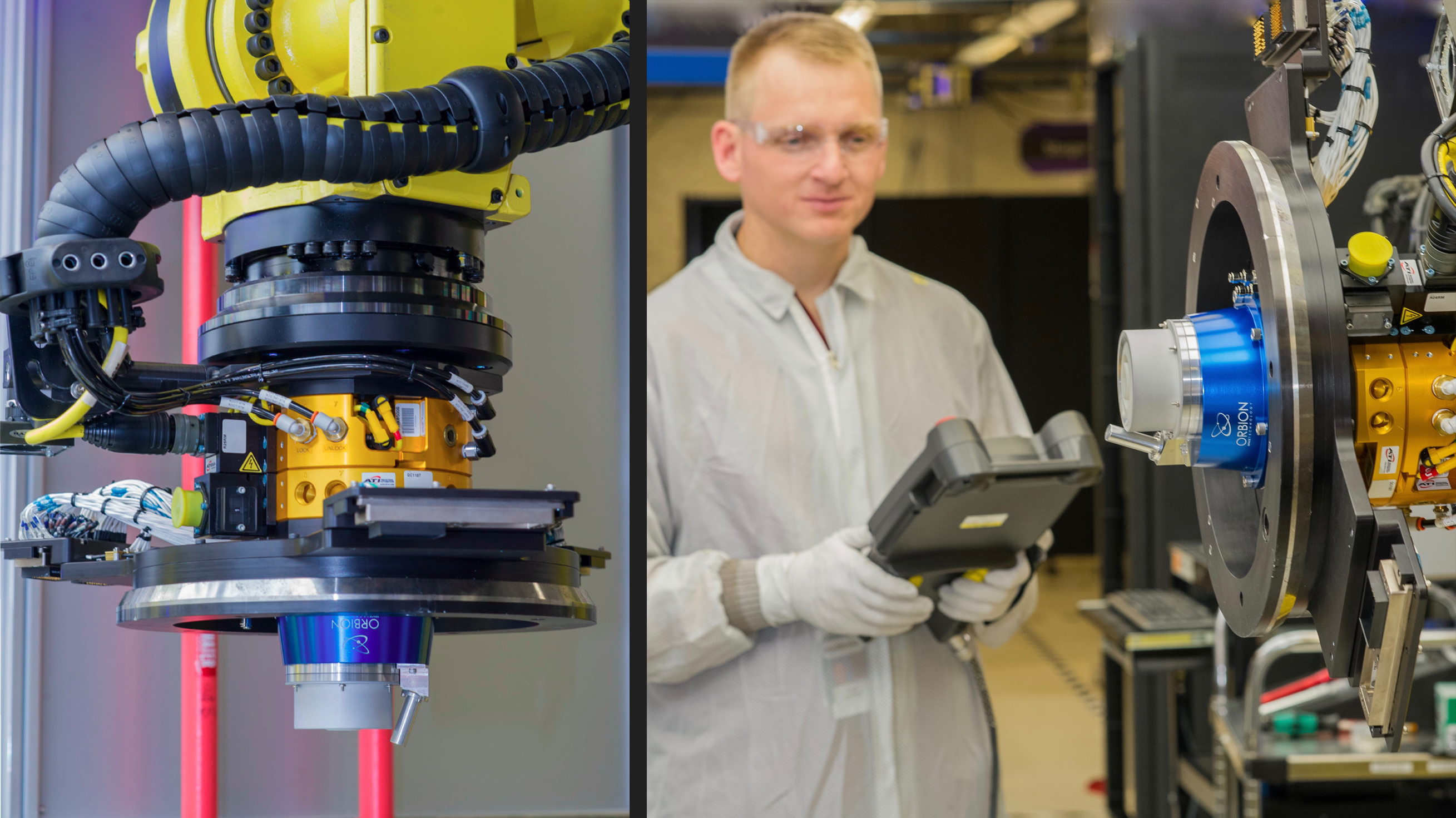
orbion factorytartup Orbion has raised a $20 million Series B for its plasma thruster technology. Plasma thrusters are a key means of in-space propulsion, and that’s a booming sector in light of the emergence of more and more small spacecraft operators as low Earth orbit becomes a high-traffic zone.

Orbion’s approach reduces the cost of production and, by extension, the cost to its clients, which puts the technology more within reach for resource-constrained satellite startups.

Join us at TC Sessions: Space in December

Last year we held our first dedicated space event, and it went so well that we decided to host it again in 2021. This year, it’s happening December 14 and 15, and it’s once again going to be an entirely virtual conference, so people from all over the world will be able to join — and you can, too.

29 Jun 2021

Late-stage capital is having a ‘cascading effect’ on European VC activity

Capping off our dig into the early-stage venture capital market, we’re taking a quick look at Europe this morning. Previously, The Exchange tucked into the United States’ early-stage market for startup capital, uncovering startups using abundant seed capital to get more done before raising a Series A, while others were using pedigree, team and market size to accelerate their first lettered raise.

For both cohorts, it appeared that a rapid-fire Series B could be in the offing, with VCs looking to get capital into winners early.


The Exchange explores startups, markets and money. Read it every morning on Extra Crunch or get The Exchange newsletter every Saturday.


The Latin American venture capital market for early-stage startups had a number of similar hallmarks. That shouldn’t have been surprising. According to Seth Pierrepont, a partner at London-based Accel, “fundraising dynamics are now no longer U.S.- or European-specific — they’re global.” Fundraising over videoconferencing services like Zoom has done more than make geographical distances less impactful inside of countries — it’s even made national borders and even oceans less meaningful.

Is the European startup market similar to what we’ve seen in Latin America and the United States — a cognate for the North American venture capital scene, given its outsized global weight by round count and amount invested?

Largely, yes, a trend that appears to be shaking up prices and the talent wars. This morning, we’re taking a final look at the early-stage venture capital market, this time through a European lens, with an assist from a few investors from the continent.

An influx of late-stage capital

Broadly, early-stage venture capital rounds in Europe are happening “earlier and are larger in size,” according to Draper Esprit’s Vinoth Jayakumar, an investor based in London. The correlate of larger rounds being raised while startups are younger is valuation expansion, according to Jayakumar, who said that prices are going up “because larger rounds are very dilutive to founders if done at normal — or in this case too low — valuations.”

29 Jun 2021

Digital greeting card startup Givingli wraps $3 million seed round

While the digital revolution has transformed nearly every social interaction and communication type in the past couple decades, the humble birthday card has shown surprising resiliency.

Givingli, a small LA-based startup with an app aiming to challenge how Gen Z sends digital greeting cards, is picking up some seed funding from investors betting on their philosophy around modern gifting. The startup has raised a $3 million seed round led by Reddit co-founder Alexis Ohanian’s Seven Seven Six, while Snap’s Yellow Accelerator also participated in the raise.

The wife and husband co-founding team stumbled into the world of digital greetings and gifts after abandoning physical invitations for their wedding and exploring how the digital greetings space had and hadn’t evolved. They’ve taken a mobile-first approach to tackling greetings for special events and moments where users just want to let someone know they’re thinking of them.

Image via Givingli

“Initially, we thought it would mainly be birthdays and categories like weddings, graduation, etc., and I think we just threw in some ‘just because’ cards, but then that became the most popular category, by far,” CEO Nicole Emrani Green tells TechCrunch. “I think that it’s what kicked off our virality, because obviously with every Givingli sent you’re pulling someone else in and then the conversation continues.”

The app monetizes through a $3.99 monthly premium subscription which gives users access to a greater variety of digital greeting designs from the more than 40 artists that the startup has licensed work from. Alongside paying for premium subscriptions, users can also shop for digital gift cards to send along with their greetings. Givingli’s gift card storefront has more than 150 brands available including Amazon, Spotify, Nike and DoorDash.

A big sell for Givingli’s offering has been its customization. Although users are pushed to select from the hundreds of available greeting cards, they can also spice them up by adding photos or videos in addition to writing text. The aim is to create a moment that rivals messages that can be shared via email, text or on social media services.

“For a generation of digitally native users, it’s not surprising that the ability to like, swipe, upvote or shoot a quick text from our phones have become the predominant ways we connect with others,” said Ohanian in a press release announcing the seed round. “What first attracted me to Givingli is that Nicole and Ben acutely understood this evolution and built a platform that provides the creative tools needed to elevate those interactions and deepen connections. Whether it’s sending a digital birthday gift, or a note just because – it’s clear that Givingli has put snail mail on notice.”

One of the team’s big challenges has been highlighting the visibility of their native app which users download to send greetings. Last fall, the Givingli team debuted a partnership with Snap that brought their gifting service inside Snapchat via a bite-sized Snap Mini app integration. The rollout followed the startup’s participation in Snap’s Yellow Accelerator program.

Emrani Green says that partnership has helped bring more users to their platform, and that more than 5 million people have used Givingli to send greetings since the app launched in 2019.


29 Jun 2021

Doug Landis, Emerge Capital growth partner, will talk startup storytelling at TC Early Stage in July

How psyched are you about our TC Early Stage: Marketing & Fundraising event? Still need some convincing? Here’s another great session we’ve got planned for the show, which will span July 8 and 9.

Emerge Capital Growth Partner Doug Landis will be joining us to discuss how early stage companies can build out the proper story for pitching VCs. It’s an important, but underdiscussed aspect of helping set your company apart from countless other startups vying for the same venture funding.

Landis knows a thing or two about storytelling. Before joining Emergence as a growth partner, it was actually part of his job title, serving as the chief storyteller and VP of sales productivity and enablement at Box. Before that, he served as a skills training manager at Google and senior director of corporate sales productivity at Salesforce.

These days, Landis drives sales and go-to-market strategies for Emergence Capital’s portfolio companies, working to help develop the next major player in the SaaS world.

Landis is joining a stacked lineup for our TC Early Stage: Marketing & Fundraising event. The list includes Sequoia’s Mike Vernal (Product Market Fit Is All About Tempo), Coatue’s Caryn Marooney (formerly Facebook’s head of comms) and Superhuman’s Rahul Vohra (Growth Hacking) and Designer Fund’s Scott Tong (IFTTT co-founder and former head of product design at Pinterest). Grab your ticket now to attend Landis’s session plus 20 others (including a pitch off)!

29 Jun 2021

Doug Landis, Emerge Capital growth partner, will talk startup storytelling at TC Early Stage in July

How psyched are you about our TC Early Stage: Marketing & Fundraising event? Still need some convincing? Here’s another great session we’ve got planned for the show, which will span July 8 and 9.

Emerge Capital Growth Partner Doug Landis will be joining us to discuss how early stage companies can build out the proper story for pitching VCs. It’s an important, but underdiscussed aspect of helping set your company apart from countless other startups vying for the same venture funding.

Landis knows a thing or two about storytelling. Before joining Emergence as a growth partner, it was actually part of his job title, serving as the chief storyteller and VP of sales productivity and enablement at Box. Before that, he served as a skills training manager at Google and senior director of corporate sales productivity at Salesforce.

These days, Landis drives sales and go-to-market strategies for Emergence Capital’s portfolio companies, working to help develop the next major player in the SaaS world.

Landis is joining a stacked lineup for our TC Early Stage: Marketing & Fundraising event. The list includes Sequoia’s Mike Vernal (Product Market Fit Is All About Tempo), Coatue’s Caryn Marooney (formerly Facebook’s head of comms) and Superhuman’s Rahul Vohra (Growth Hacking) and Designer Fund’s Scott Tong (IFTTT co-founder and former head of product design at Pinterest). Grab your ticket now to attend Landis’s session plus 20 others (including a pitch off)!