Year: 2021

28 Jun 2021

UK gets data flows deal from EU — for now

The UK’s digital businesses can breathe a sign of relief today as the European Commission has officially signed off on data adequacy for the (now) third country, post-Brexit.

It’s a big deal for UK businesses as it means the country will be treated by Brussels as having essentially equivalent data protection rules as markets within the bloc, despite no longer being a member itself — enabling personal data to continue to flow freely from the EU to the UK, and avoiding any new legal barriers.

The granting of adequacy status has been all but assured in recent weeks, after European Union Member States signed off on a draft adequacy arrangement. But the Commission’s adoption of the decision marks the final step in the process — at least for now.

It’s notable that the Commission’s PR includes a clear warning that if the UK seeks to weaken protections afforded to people’s data under the current regime it “will intervene”.

In a statement, Věra Jourová, Commission VP for values and transparency, said:

The UK has left the EU but today its legal regime of protecting personal data is as it was. Because of this, we are adopting these adequacy decisions today. At the same time, we have listened very carefully to the concerns expressed by the Parliament, the Members States and the European Data Protection Board, in particular on the possibility of future divergence from our standards in the UK’s privacy framework. We are talking here about a fundamental right of EU citizens that we have a duty to protect. This is why we have significant safeguards and if anything changes on the UK side, we will intervene.”

The UK adequacy decision comes with a Sword of Damocles baked in: A sunset clause of four years. It’s a first — so, er, congratulations to the UK government for projecting a perception of itself as untrustworthy over the short run.

This clause means the UK’s regime will face full scrutiny again in 2025, with no automatic continuation if its standards are deemed to have slipped (as many fear they will).

The Commission also emphasizes that its decision does not mean the UK has four ‘guaranteed’ years in the clear. On the contrary, it says it will “continue to monitor the legal situation in the UK and could intervene at any point, if the UK deviates from the level of protection currently in place”.

Third countries without an adequacy agreement — such as the US, which has adequacy twice struck down by Europe’s top court (after it found US surveillance law incompatible with EU fundamental rights) — do not enjoy ‘seamless’ legal certainty around personal data flows; and must instead take steps to assess each of these transfers individually to determine whether (and how) they can move data legally.

Last week, the European Data Protection Board (EDPB) put out its final bit of guidance for third countries wanting to transfer personal data outside the bloc. And the advice makes it clear that some types of transfers are unlikely to be possible.

For other types of transfers, the advice discusses a number of of supplementary measures (including technical steps like robust encryption) that may be possible for a data controller to use in order to, through their own technical, contractual and organizational effort, ramp up the level of protection to achieve the required standard.

It is, in short, a lot of work. And without today’s adequacy decision UK businesses would have had to get intimately acquainted with the EDPB’s guidance. For now, though, they’ve dodged that bullet.

The qualifier is still very necessary, though, because the UK government has signalled that it intends to rethink data protection.

How exactly it goes about that — and to what extent it changes the current ‘essentially equivalent’ regime — may make all the difference. For example, Digital minister Oliver Dowden has talked about data being “a great opportunity” for the UK, post-Brexit.

And writing in the FT back in February he suggested there will be room for the UK to rewrite its national data protection rules without diverging so much that it puts adequacy at risk. “We fully intend to maintain those world-class standards. But to do so, we do not need to copy and paste the EU’s rule book, the General Data Protection Regulation, word-for-word,” he suggested then, adding that: “Countries as diverse as Israel and Uruguay have successfully secured adequacy with Brussels despite having their own data regimes. Not all of those were identical to GDPR, but equal doesn’t have to mean the same. The EU doesn’t hold the monopoly on data protection.”

The devil will, as they say, be in the detail. But some early signals are concerning — and the UK’s startup ecosystem would be well advised to take an active role in impressing upon government the importance to stay aligned with European data standards.

Moreover, there’s also the prospect of a legal challenge to the adequacy decision — even as is, i.e. based on current UK standards (which find plenty of critics). Certainly it can’t be ruled out — and the CJEU hasn’t shied away from quashing other adequacy arrangements it judged to be invalid…

Today, though, the Department for Digital, Media, Culture and Sport (DCMS) has seized the chance to celebrate a PR win, writing that the Commission’s decision “rightly recognises the country’s high data protection standards”.

The department also reiterated the UK government’s intention to “promote the free flow of personal data globally and across borders”, including through what it bills as “ambitious new trade deals and through new data adequacy agreements with some of the fastest growing economies” — simultaneously claiming it would do so “while ensuring people’s data continues to be protected to a high standard”. Pinky promise.

“All future decisions will be based on what maximises innovation and keeps up with evolving tech,” the DCMS added in a press release. “As such, the government’s approach will seek to minimise burdens on organisations seeking to use data to tackle some of the most pressing global issues, including climate change and the prevention of disease.”

In a statement, Dowden also made a point of combining both streams, saying: “We will now focus on unlocking the power of data to drive innovation and boost the economy while making sure we protect people’s safety and privacy.”

UK business and tech associations were just as quick to welcome the Commission’s adequacy decision. The alternative would of course have been very costly disruption.

In a statement, John Foster, director of policy for the Confederation of British Industry, said: “This breakthrough in the EU-UK adequacy decision will be welcomed by businesses across the country. The free flow of data is the bedrock of the modern economy and essential for firms across all sectors– from automotive to logistics — playing an important role in everyday trade of goods and services. This positive step will help us move forward as we develop a new trading relationship with the EU.”

In another supporting statement, Julian David, CEO of techUK, added: “Securing an EU-UK adequacy decision has been a top priority for techUK and the wider tech industry since the day after the 2016 referendum. The decision that the UK’s data protection regime offers an equivalent level of protection to the EU GDPR is a vote of confidence in the UK’s high data protection standards and is of vital importance to UK-EU trade as the free flow of data is essential to all business sectors.

“The data adequacy decision also provides a basis for the UK and EU to work together on global routes for the free flow of data with trust, building on the G7 Digital and Technology declaration and possibly unlocking €2TR of growth. The UK must also now move to complete the development of its own international data transfer regime in order to allow companies in the UK not just to exchange data with the EU but also to be able to access opportunities across the world.”

The Commission has actually adopted two UK adequacy decisions today — one under the General Data Protection Regulation (GDPR) and another for the Law Enforcement Directive.

Discussing key elements in its decision to grant the UK adequacy, EU lawmakers highlighted the fact the UK’s (current) system is based upon transposed European rules; that access to personal data by public authorities in the UK (such as for national security reasons) is done under a framework that has what it dubbed as “strong safeguards” (such as intercepts being subject to prior authorisation by an independent judicial body; measures needing to be necessary and proportionate; and redress mechanisms for those who believe they are subject to unlawful surveillance).

The Commission also noted that the UK is subject to the jurisdiction of the European Court of Human Rights; must adhere to the European Convention of Human Rights; and the Council of Europe Convention for the Protection of Individuals with regard to Automatic Processing of Personal Data — aka “the only binding international treaty in the area of data protection”.

“These international commitments are an essential elements of the legal framework assessed in the two adequacy decisions,” the Commission notes. 

Data transfers for the purposes of UK immigration control have been excluded from the scope of the adequacy decision adopted under the GDPR — with the Commission saying that’s “in order to reflect a recent judgment of the England and Wales Court of Appeal on the validity and interpretation of certain restrictions of data protection rights in this area”.

“The Commission will reassess the need for this exclusion once the situation has been remedied under UK law,” it added.

So, again, there’s another caveat right there.

28 Jun 2021

UK gets data flows deal from EU — for now

The UK’s digital businesses can breathe a sign of relief today as the European Commission has officially signed off on data adequacy for the (now) third country, post-Brexit.

It’s a big deal for UK businesses as it means the country will be treated by Brussels as having essentially equivalent data protection rules as markets within the bloc, despite no longer being a member itself — enabling personal data to continue to flow freely from the EU to the UK, and avoiding any new legal barriers.

The granting of adequacy status has been all but assured in recent weeks, after European Union Member States signed off on a draft adequacy arrangement. But the Commission’s adoption of the decision marks the final step in the process — at least for now.

It’s notable that the Commission’s PR includes a clear warning that if the UK seeks to weaken protections afforded to people’s data under the current regime it “will intervene”.

In a statement, Věra Jourová, Commission VP for values and transparency, said:

The UK has left the EU but today its legal regime of protecting personal data is as it was. Because of this, we are adopting these adequacy decisions today. At the same time, we have listened very carefully to the concerns expressed by the Parliament, the Members States and the European Data Protection Board, in particular on the possibility of future divergence from our standards in the UK’s privacy framework. We are talking here about a fundamental right of EU citizens that we have a duty to protect. This is why we have significant safeguards and if anything changes on the UK side, we will intervene.”

The UK adequacy decision comes with a Sword of Damocles baked in: A sunset clause of four years. It’s a first — so, er, congratulations to the UK government for projecting a perception of itself as untrustworthy over the short run.

This clause means the UK’s regime will face full scrutiny again in 2025, with no automatic continuation if its standards are deemed to have slipped (as many fear they will).

The Commission also emphasizes that its decision does not mean the UK has four ‘guaranteed’ years in the clear. On the contrary, it says it will “continue to monitor the legal situation in the UK and could intervene at any point, if the UK deviates from the level of protection currently in place”.

Third countries without an adequacy agreement — such as the US, which has adequacy twice struck down by Europe’s top court (after it found US surveillance law incompatible with EU fundamental rights) — do not enjoy ‘seamless’ legal certainty around personal data flows; and must instead take steps to assess each of these transfers individually to determine whether (and how) they can move data legally.

Last week, the European Data Protection Board (EDPB) put out its final bit of guidance for third countries wanting to transfer personal data outside the bloc. And the advice makes it clear that some types of transfers are unlikely to be possible.

For other types of transfers, the advice discusses a number of of supplementary measures (including technical steps like robust encryption) that may be possible for a data controller to use in order to, through their own technical, contractual and organizational effort, ramp up the level of protection to achieve the required standard.

It is, in short, a lot of work. And without today’s adequacy decision UK businesses would have had to get intimately acquainted with the EDPB’s guidance. For now, though, they’ve dodged that bullet.

The qualifier is still very necessary, though, because the UK government has signalled that it intends to rethink data protection.

How exactly it goes about that — and to what extent it changes the current ‘essentially equivalent’ regime — may make all the difference. For example, Digital minister Oliver Dowden has talked about data being “a great opportunity” for the UK, post-Brexit.

And writing in the FT back in February he suggested there will be room for the UK to rewrite its national data protection rules without diverging so much that it puts adequacy at risk. “We fully intend to maintain those world-class standards. But to do so, we do not need to copy and paste the EU’s rule book, the General Data Protection Regulation, word-for-word,” he suggested then, adding that: “Countries as diverse as Israel and Uruguay have successfully secured adequacy with Brussels despite having their own data regimes. Not all of those were identical to GDPR, but equal doesn’t have to mean the same. The EU doesn’t hold the monopoly on data protection.”

The devil will, as they say, be in the detail. But some early signals are concerning — and the UK’s startup ecosystem would be well advised to take an active role in impressing upon government the importance to stay aligned with European data standards.

Moreover, there’s also the prospect of a legal challenge to the adequacy decision — even as is, i.e. based on current UK standards (which find plenty of critics). Certainly it can’t be ruled out — and the CJEU hasn’t shied away from quashing other adequacy arrangements it judged to be invalid…

Today, though, the Department for Digital, Media, Culture and Sport (DCMS) has seized the chance to celebrate a PR win, writing that the Commission’s decision “rightly recognises the country’s high data protection standards”.

The department also reiterated the UK government’s intention to “promote the free flow of personal data globally and across borders”, including through what it bills as “ambitious new trade deals and through new data adequacy agreements with some of the fastest growing economies” — simultaneously claiming it would do so “while ensuring people’s data continues to be protected to a high standard”. Pinky promise.

“All future decisions will be based on what maximises innovation and keeps up with evolving tech,” the DCMS added in a press release. “As such, the government’s approach will seek to minimise burdens on organisations seeking to use data to tackle some of the most pressing global issues, including climate change and the prevention of disease.”

In a statement, Dowden also made a point of combining both streams, saying: “We will now focus on unlocking the power of data to drive innovation and boost the economy while making sure we protect people’s safety and privacy.”

UK business and tech associations were just as quick to welcome the Commission’s adequacy decision. The alternative would of course have been very costly disruption.

In a statement, John Foster, director of policy for the Confederation of British Industry, said: “This breakthrough in the EU-UK adequacy decision will be welcomed by businesses across the country. The free flow of data is the bedrock of the modern economy and essential for firms across all sectors– from automotive to logistics — playing an important role in everyday trade of goods and services. This positive step will help us move forward as we develop a new trading relationship with the EU.”

In another supporting statement, Julian David, CEO of techUK, added: “Securing an EU-UK adequacy decision has been a top priority for techUK and the wider tech industry since the day after the 2016 referendum. The decision that the UK’s data protection regime offers an equivalent level of protection to the EU GDPR is a vote of confidence in the UK’s high data protection standards and is of vital importance to UK-EU trade as the free flow of data is essential to all business sectors.

“The data adequacy decision also provides a basis for the UK and EU to work together on global routes for the free flow of data with trust, building on the G7 Digital and Technology declaration and possibly unlocking €2TR of growth. The UK must also now move to complete the development of its own international data transfer regime in order to allow companies in the UK not just to exchange data with the EU but also to be able to access opportunities across the world.”

The Commission has actually adopted two UK adequacy decisions today — one under the General Data Protection Regulation (GDPR) and another for the Law Enforcement Directive.

Discussing key elements in its decision to grant the UK adequacy, EU lawmakers highlighted the fact the UK’s (current) system is based upon transposed European rules; that access to personal data by public authorities in the UK (such as for national security reasons) is done under a framework that has what it dubbed as “strong safeguards” (such as intercepts being subject to prior authorisation by an independent judicial body; measures needing to be necessary and proportionate; and redress mechanisms for those who believe they are subject to unlawful surveillance).

The Commission also noted that the UK is subject to the jurisdiction of the European Court of Human Rights; must adhere to the European Convention of Human Rights; and the Council of Europe Convention for the Protection of Individuals with regard to Automatic Processing of Personal Data — aka “the only binding international treaty in the area of data protection”.

“These international commitments are an essential elements of the legal framework assessed in the two adequacy decisions,” the Commission notes. 

Data transfers for the purposes of UK immigration control have been excluded from the scope of the adequacy decision adopted under the GDPR — with the Commission saying that’s “in order to reflect a recent judgment of the England and Wales Court of Appeal on the validity and interpretation of certain restrictions of data protection rights in this area”.

“The Commission will reassess the need for this exclusion once the situation has been remedied under UK law,” it added.

So, again, there’s another caveat right there.

28 Jun 2021

BreezoMeter, the iPhone tool that measures air quality, raises a $30M Series C

Ran Korber and his asthmatic and pregnant wife were looking to buy a house in Israel. As an environmental engineer, he knows that air pollution is the leading environmental cause of premature death, can cause premature birth, and can account for other respiratory diseases. Korber started looking for the city with the least amount of pollution in Israel only to realize that this information didn’t exist. His frustration led him to create what today is BreezoMeter, a tool that forecasts 40 pollutants within the categories of pollen, air pollution, wildfires and weather.

Today the company announced a $30 million Series C led by Fortissimo Capital, bringing its total raised to date to $45 million. The company is based in Israel and launched in June of 2014, about two years after Korber was house-hunting with his wife.

“In many countries, people don’t have a clue about the air around them,” Korber, now CEO and co-founder of BreezoMeter, told TechCrunch.

BreezoMeter uses AI and machine learning to gather and understand data from multiple sources, including more than 47,000 sensors worldwide. The result is street-level air quality resolution (within 16.5 ft) and pollen, pollutants, and fire data, in more than 100 countries. 

You probably didn’t know this, but if you have an Apple Watch or an iPhone, they both have BreezoMeter built into the Apple weather app. Scroll down on the weather of any city, and the air quality measure is presented by BreezoMeter. In the U.S., the Air Quality Index (AQI) uses a scale from 0-500, 0 being the cleanest. Here in Miami, the air quality was 36 (good) yesterday, and 51 (moderate) today. In comparison, New York City’s air is 34 (good) today, better than Miami’s.

BreezoMeter is not only able to measure current air quality, but it can forecast it, too, allowing people to better prepare depending on their sensitivities. 

“We are able to forecast when the conditions for pollen season will start, and then [we] can forecast how pollen may move between two different locations,” said Korber.

If you’re not sure of your sensitivities, knowing the air quality of where you are, you can at least keep a lookout for symptoms.

“Depending on the type of pollutant in the air, BreezoMeter can also tell you the possible symptoms you may start feeling if exposed,” Korber said. 

The challenge isn’t just the pollution itself, but also a large information gap regarding air quality. According to the Environmental Protection Agency (EPA), about 120 million people in the U.S. live in areas where there is no pollution monitoring.

“Before BreezoMeter, everyone used the data from the same sensors, and now we collect data from those sensors plus others including traffic data, wildfires, satellites, local sensors and we also take into account land use for pollen,” said Korber.

A time when sensors can easily get destroyed is during a wildfire. “The sensors can burn, literally,” Korber said. To circumvent this problem, BreezoMeter relies on its other multitude of sensors for the data, including those from satellites.

“Every day, more than 300 million people use our platform to make informed decisions on how to avoid environmental hazards,” said Korber, and not everyone is using just the weather app.

For people living with chronic obstructive pulmonary disease (COPD) and asthma, they may be benefiting from BreezoMeter from within Propeller by Resmed. Propeller is a device that, depending on the air quality, tells a patient what to do to improve their health, such as close a window or use an inhaler, for example.

According to BreezoMeter, since Propeller incorporated BreezoMeter into its product, Propeller’s patients have experienced about 50% fewer asthma attacks and reduced ER visits.

BreezoMeter plans to use the money from the current raise to develop more product categories and triple its team to about 120 people.


28 Jun 2021

The Station: Quanergy and Embark to go public via SPAC, Spin and Bird announce fresh launches

The Station is a weekly newsletter dedicated to all things transportation. Sign up here — just click The Station — to receive it every weekend in your inbox.

Hello and welcome back to The Station, a weekly newsletter dedicated to all the ways people and packages move (today and in the future) from Point A to Point B.

As you are reading this, I’ll be preparing to head out for an adventure, joining thousands of others who plan to jump in their cars, trucks, SUVs, and of course, vans and RVs for the great American road trip. While much of my time will be spent hiking in more remote wilderness, I will end up in Yellowstone National Park, which promises to be a busy affair. For those of you who are shaking your heads wondering why I would subject myself to the masses, I say consider this fun tidbit: According to one local guidebook, 98% of visitors to Yellowstone can be found within one mile of any trailhead. My previous anecdotal experiences supports this stat; I’ve found that most stick to their cars, paved paths, overlooks and boardwalks. I will not be.

I will, however, make one exception while I’m in the park. I plan to check out the autonomous shuttle that will be piloted in the park. Beep, in partnership with Local Motors, will be operating the autonomous shuttle called T.E.D.D.Y., which stands for The Electric Driverless Demonstration in Yellowstone. T.E.D.D.Y. is meant to give homage to former President Theodore Roosevelt.

The company plans to operate two routes, seven days a week. Information collected during the pilot will be used to inform future deployments in national parks across the country.

Happy trails.

Email me at kirsten.korosec@techcrunch.com to share thoughts, criticisms, offer up opinions or tips. You can also send a direct message to me at Twitter — @kirstenkorosec.

Micromobbin’

It’s been a week of funding announcements and new vehicles in the micromobility world. Two of the e-scooter giants, Spin and Bird, have announced some fresh launches. Spin’s got its first in-house designed and built electric scooter, which it’s calling the S-100T. The T is for “tough,” which is how Spin is positioning this scooter. It can get beat up on the streets, and in testing, and still last up to three years, maybe even more. Spin will start rolling out its scooter when it launches in Sacramento in July.

Bird is launching some e-bikes to its fleet of e-scooters, which will start in Cleveland, Ohio later this year. Bird’s choice to become multi-modal happens at a time when its biggest competitor, Lime, has already had bikes and is now working with e-mopeds. Bird is also launching a ‘Smart Bikeshare’ platform, wherein local shared e-bike and e-moped (but NOT e-scooter) operators can put their vehicles on the Bird app, thus making it seem like Bird has more of a multi-modal fleet than it does, and giving the local operators some more clout and attention. 

Following the money

Speaking of local operators, micromobility software provider Joyride believes more small shared e-scooter and e-bike businesses are cropping up, especially in areas where Bird and Lime pulled out during the pandemic. To help those companies get a fleet, launch it and manage it is Joyride. The company has been around since 2014, but just raised a $3.7 million seed round so that it can expand its services and help reach more local operators

And while we’re on the subject of funding, New Zealand-based electric utility bike startup Ubco has just raised $10 million to fund its global expansion, with a focus on the U.S. market, and scale up its commercial subscription business. Full disclosure, I’m currently in Auckland testing one of these things out and it’s “smooth as,” as the Kiwis say, so keep your eyes out for a review of the bike. 

The Ubco 2X2 vehicle, which looks like a dirt bike and rides like a moped, started as a way to get farmers around the pasture, but the founders soon saw the utility vehicle’s utility beyond the farm. Now, the company supplies bikes to enterprise fleets, mail services, logistics and more. Ubco is working on a subscription model to make it easier for customers to rent a vehicle with no commitment, and easier for the company to own vehicle end-of-life in a sustainable way. 

Safety first

Tier Mobility, the Berlin-based e-scooter company that recently won one of the London permits and signed on some $60 million worth of debt from Goldman Sachs, has published an e-scooter safety report. The company formed a group called the Tier UK Safety Board in conjunction with charities and transport experts, Tier says. The group is calling for higher safety standards across the sector to protect pedestrians and improve rider safety, particularly for those who are blind or partially sighted.

Might this report just be a ploy for Tier to flex its safety records? Probably, but are the safety suggestions this group is likely trying to make into law also stuff that Tier already does? Also, yes, probably. Here are the things: 

By the way, over at Extra Crunch, I interviewed Veo CEO Candice Xie. I think you’ll find it’s worth checking out.

— Rebecca Bellan

Deal of the weekmoney the station

It’s been a SPAC-tacular week. Yes, I went there.

SPACs, or special purpose acquisition companies, have received a lot of attention in this newsletter. And that’s because the financial instrument, which allows a faster but more expensive path to an IPO, has inundated the transportation sector. Some 22 mobility SPACs occurred in 2020 with the majority of them involving electric vehicle manufacturers like the troubled Nikola Motors and Lordstown Motors, as well as Canoo, which has had its own drama, and Fisker.

In 2021, we’ve seen aviation-related companies take the SPAC plunge along with lidar companies and autonomous vehicle startups. This week, we had solid state lidar company Quanergy and self-driving trucks startup Embark make SPAC deals.

Other deals that got my attention this week …

BMW’s Silicon Valley-based venture capital arm is investing in Kodiak Robotics, a company that develops autonomous trucking technology. While the terms of the deal were not disclosed, Kodiak told TechCrunch that BMW’s investment was financial, not strategic, meaning there’s no technical partnership between the two companies.

Clean Mobility Options Voucher Pilot Program awarded vouchers for mobility projects worth $18 million to eligible under-resourced communities and $2 million set aside and awarded specifically to Native American tribal governments. The funds will be used to support projects that includes on-demand shuttles and microtransit, electric vehicle car sharing, bike and scooter-sharing, carpooling and vanpooling and ride-on-demand services.

Electra Vehicles, which develops software to optimize EV battery system performance, raised $3.6 million in seed funding. The round was led by BlackBerry Limited and the Italian investment group LIFTT S.p.A, with further participation from Club degli Investitori, Massachusetts Clean Energy Center, Hyperplane Venture Capital, Prithvi Ventures, Launchpad Venture Group and TiE Boston Angels.

Holy Grail, a two-year-old startup based in Mountain View, California that is taking a micro approach to solving the outsized problem of capturing carbon, raised $2.7 million in seed funding from LowerCarbon Capital, Goat Capital, Stripe founder Patrick Collison, Charlie Songhurst, Cruise co-founder Kyle Vogt, Songkick co-founder Ian Hogarth, Starlight Ventures and 35 Ventures. Existing investors Deep Science Ventures, Y Combinator and Oliver Cameron, who co-founded Voyage, the autonomous vehicle acquired by Cruise, also participated.

IoTecha, an electric vehicle charging company, has raised $13.2 million in a round led by BP Ventures. The venture firm invested $7 million into the fund. IoTecha connects EV chargers with the electricity grid through its software platform. Their product allows private and fleet vehicles from any manufacturer to communicate with charging stations to signal when they need recharging. It works by gathering information over time, identifying patterns and the energy requirements of each user across all forms of EV charging. IoTecha said that it will use the investment to scale its technology throughout BP’s electrification network.

Lendbuzz, an auto finance platform, has raised $360 million in capital and debt. The $60 million in funding was led by Wellington Management joined by Goldman Sachs & Co and MUFG Innovation Partners. The $300 million in debt financing was led by Goldman Sachs Bank USA. The company, which sells its loan origination and servicing software to dealerships, said it will use the funds to continue its expansion in the United States.

Nikola Corporation is investing $50 million in cash and stock in exchange for a 20% equity in a clean hydrogen project being developed by Wabash Valley Resources LLC. The project will use solid-waste and biomass to produce hydrogen for transportation fuel and electricity generation. Pablo Koziner, Nikola’s President of Energy and Commercial, said in a press release that the project should support future truck sales and the rollout of hydrogen stations throughout the Midwest.

Sendle, a shipping carrier that uses carbon offsetting to run carbon neutral operations for small businesses, has raised a $35 million Series C. The round was led by AP Ventures, with participation from existing investors including Federation, Full Circle and NRMA. Sendle said it would use the funds to expand its operations in the U.S.

Uber reached a deal to become the sole owner of Latin American delivery startup Cornershop, one year after acquiring a majority stake in the company. Uber is acquiring the remaining 47% interest in Cornershop in exchange for 29 million shares. The transaction, which will make Cornershop a wholly owned subsidiary of Uber, is expected to close in July.

Policy corner

the-station-delivery

Hi folks, welcome back to Policy Corner. We’ve got a short one this week but I promise the piece of news is a big one.

President Joe Biden and a group of Senators have struck a deal on a massive infrastructure bill after months of debate. The $1.2 trillion agreement touches nearly all traditional forms of infrastructure, such as roads, bridges and railways – but it also includes some funds for electric transportation.

Unsurprisingly, this was one of the major sources of disagreement among lawmakers, so the funds for these initiatives is far, far less than what Biden originally proposed when he introduced the bill in March. He originally included new rebates for EV purchases, a proposal that’s been wiped from the new bill.

However, the bill does earmark $7.5 billion for electric buses and $7.5 billion to build out EV charging stations. While this is perhaps less than what advocates had been hoping for (and truthfully just a sliver of the original proposal), it’s still a big improvement from last year’s spending on such initiatives.

— Aria Alamalhodaei

Notable reads and other tidbits

the station electric vehicles1

As per ushe, there is a lot of news. Let’s get to it.

Autonomous vehicles

Aurora‘s Board of Directors gained a new member: Sonos’ chief financial officer Brittany Bagley. The company said in a blog post that she brings “a keen understanding of how to ship industry-defining products and a strong sense of fiscal stewardship.”

Plus has hired Lynn Miller as General Counsel. Miller was formerly the Deputy General Counsel at Tesla, where she led Tesla’s privacy program, handled government inquiries and investigations, and led its litigation strategy. Prior to working at Tesla, Miller was part of Apple’s litigation team. 

Pony.ai is considering going public, company CEO James Peng told Reuters on Friday. The company also announced that Lawrence Steyn, vice chairman of investment banking at JPMorgan Chase, would join as chief financial officer. The autonomous tech unicorn has operated robotaxis with human safety drivers in Irvine, California as well as China.

Volvo’s flagship electric SUV, which will debut in 2022, will be outfitted with Luminar’s autonomous driving stack as standard. When the two companies announced the partnership last year, the arrangement was that customers would have to pay extra for Luminar’s system. No longer! But customers will have to pay to access the Highway Pilot functionality, which takes drivers ‘out of the loop’ on highway roads once conditions are verified as safe.

Electric vehicles

Electric Last Mile Solutions, a company that manufactures and sells electric vans and trucks to fleet customers, is heading to the Nasdaq on Monday. ELMS is merging with special purpose acquisition company Forum Merger III Corporation in a SPAC deal valued at $1.4 billion. The SPAC transaction, which was announced last December, will give ELMS $379 million in gross cash proceeds, including $155 million in private investment in public equity (PIPE) funding from private investors BNP Paribas Asset Management and Jennison Associates. The company will be listed on the NYSE under the ticker symbol “ELMS.”

Panasonic divested the entirety of its Tesla stock last fiscal year for around $3.61 billion, Nikkei Asia reported. Panasonic is Tesla’s electric-vehicle battery supplier for its Nevada Gigafactory, and the two companies have had a partnership going back over a decade. An executive for the Japanese company told Nikkei that that relationship “will not change going forward.”

Toyota has entered into an intended partnership VivoPower to use its electrical vehicle convertor kits in Toyota LandCruisers. Through the deal, VivoPower will have exclusivity for the electrification of LandCruisers for five years. This is the first time Toyota has approved an external drive train supplier since Tesla in 2011. The conversion kits will be designed and manufactured by VivoPower subsidiary Tembo e-LV B.V. 

Ride-hailing

Revel’s plans to deploy a fleet of ride-hailing Teslas may have hit a major block after New York City’s Taxi and Limousine Commission voted against issuing new for-hire vehicle licenses to EVs. The Verge’s Andrew Hawkins said the vote was seen as a snub toward the startup. Revel was planning on launching a ride-hailing service using a fleet of Tesla Model Ys.

Other bits

Ryder System, a company that offers heavy-duty truck rentals to commercial fleet customers, was hacked last December. In a letter posted to Vermont’s Attorney General website, the Miami-based company said it was notifying 3,563 individuals of the “unauthorized intrusion.” Customers’ driver’s license numbers, social security numbers (which I’m told by TechCrunch writer Zack Whittaker is highly unusual), and other identifying information was potentially involved in the data breach. 

Porsche is going into the battery business. The automaker announced a new joint venture with Customcells to open a 100 megawatt-hours battery manufacturing plant in Germany. For reference, that’s enough batteries for around 1,000 vehicles. The batteries will be manufactured for Porsche’s line of racing and high-performance vehicles.

28 Jun 2021

Robotic beverage maker Botrista raises $10M

Drink making probably isn’t at the top of your list of jobs most likely to be fully automated. The past year-and-a-half have, however, brought into stark relief how large a role robotics could play in the food service industry. I’ve said it time and again on these pages, but the appeal is clear: Robots don’t get sick and they don’t spread diseases the way we human Petri dishes tend to.

There’s been no shortage of investments in the category, and today Botrista (robotic barista, get it?) joins the list with a $10 million Series A. The round was co-led by Purestone Capital and La Kaffa and featured the Sony Innovation Fund, Middleby Corporation and PIDC. It follows a $4 million seed round, bringing the startup’s funding to date to around $16 million.

The company’s premier product is the simply named Drinkbot (Botrista, it seems, is enough pun name to go around). The latest version of the robotic drink mixing system features a refrigerated base with up to eight ingredients, a touchscreen control panel and 14 separate nozzles for dispensing the mixed beverages. The entire process runs around 20 seconds.

Founded by former Tesla engineer Sean Hsu, the company will be using the funding to expand the robot’s footprint across the U.S. on the heels of some pandemic-related transformations to the food service industry.

“In 2020, fountain drink sales were down considerably as consumers rapidly switched their drink preferences and were less likely to order fountain drinks during take-out or delivery,” Hsu said in a press release tied to the round.

Miso Robotics, notably, announced their own plans to release a fountain drink-based robotic system last week.


28 Jun 2021

Thursday snags $3.5M for a dating app that’s live once a week

Thursday, a dating app that wants to solve problems created by, well, too much time spent using dating apps, had raised a £2.5 million (~$3.5M) seed investment — a few months after launching (in May) its single-matching service in London and New York (and racking up over 52k downloads).

Last Thursday (June 17) it says that 110,000 likes were sent, resulting in 7,500 matches in a single day. How many actual dates occurred isn’t something it’s able to report, though.

The seed is double their initial target, with financing coming from Ascension Ventures, Best Nights VC (previously M-Venture) the investment arm of Jägermeister, Connect Ventures, plus early backers of CityMapper, TypeForm and FIIT (processed via SeedLegals).

Notable angels backing the dating platform include Tom Blomfield, founder of Monzo; Matt Robinson, founder of GoCardless and Nested; Ian Hogarth, founder of Songkick; Eldar Tuvey, founder of Wandera and Henry de Zoute, founder of LookAfterMyBills.

So what’s Thursday’s twist in a highly competitive space? The clue is in the name: This dating app is only live for one day per week.

Specifically the app opens for usage at 00.01 each Thursday morning so swiping is compressed into a few hours. All matches and conversations vanish at midnight. Hence users are pushed to act quickly — and “be a bit spontaneous”, as it puts it — if they want to get a date that night.

Profiles are thus fairly basic. Users can upload five photos (either from social media apps like Facebook or their phone’s camera roll) — and share some “topline information” about themselves.

The app also prompts them to answer a few questions — to give a flavor of their personality. And there’s a ‘Stories’ style feature to further show off who they are (again that content deletes after 24 hours).

Matches are based on what Thursday says is a “rough location” — so users being matched are able to figure out a convenient place to meet up. (The app specifies that users’ exact location is never shared.)

Thursday users are encouraged to only log on in the morning if they are free that evening to go out on a date.

Matches are also limited to x10 people a day — to avoid users just trying to maximize their chances by swiping to match with every user they see.

By putting some hard (time) limits on usage, Thursday’s pitch is that service scarcity can fix some of the problematic issues of overuse which can plague dating apps — leading to dating indecision and swipe fatigue. And, well, just waste a lot of people’s time.

It also reckons that by giving users a limited — one day per week — chance to book a date it can put some of the excitement back into digital dating. Which can otherwise, at times, feel pretty transactional.

Commenting in a statement, co-founder George Rawlings said: “Just four weeks into launching and we’re delighted to have a number of notable investors on board who really believe in our vision and back this app. We’ve got big plans with a clear mission, to change a culture of how people date. This is just the start and we will deliver. Dating apps just got exciting again.”

Flush with 2x the amount of seed funding they had initially planned to raise, Thursday’s team intends to step on the gas — and, well, there’s no way to patent this kind of idea so they will need to move quickly to stay ahead of any fast-follows.

No surprise then that the plan for the seed funding includes hiring a head of growth and a head of marketing, in addition to other senior roles and a number of tech hires — and coming up with what they dub as a “six figure marketing strategy”.

Expanding the app to other cosmopolitan cities elsewhere is also on the roadmap. But for now Thursday is only available for singles in London and New York.

Dating apps are already a diverse bunch — catering to all sorts of priorities, communities and kinks, including by applying various creative twists in the name of helping users find a match (such as by limiting who can send the first message; or hiding selfies until a few messages have been exchanged to push beyond superficial swiping).

Time limits on usage is another interesting idea. Albeit, how this type of ‘demand manipulation’ might affect the resulting dating power dynamics remains to be seen. And it seems noteworthy that the founders are both male.

“This is the first version of Thursday and it’s definitely not perfect so in the short term we are going to use this time to tighten up the app, introduce some new features and continue to develop our matching algorithm to make it the most efficient and intuitive matching system on the market,” added co-founder Matt McNeill Love in another statement. “We’re also going to be introducing a not been done before, revolutionary feature, which will really assist with matches resulting in dates.”

Given the accelerated usage timeframe and the vanishing messages Thursday clearly needs to pay careful attention to user security.

On this front it says all users are verified before they join — either by uploading their passport or driving license. It also says it takes abusive messages “extremely seriously” and does not tolerate hate speech, such as racism, body shaming or misogyny.

The pledge is that any such abusive users will be blocked and unable to return.

While the USP of the app is a ‘one day a week’ limit there is, of course, an option to pay to get a little more access.

Thursday says there are “a limited number” of VIP memberships available.

Users who choose to shell out a monthly fee will get their profiles boosted all day (“x60 increased visibility”); be able to send unlimited likes; and be able to unlock Saturday usage… albeit on the bonus day they are presumably limited to the pool of other VIP users as non-paying users are locked out til Thursday.


28 Jun 2021

Jiji acquires Cars45 as it looks to build a future outside classifieds

Once heralded as disruptive marketplaces, classifieds are giving way to transactional marketplaces. Yet, some classifieds in the West like eBay have evolved with time, acquiring competition operating both models.

In Africa, this occurrence is happening in part, at least for the classifieds businesses that haven’t fizzled out. Jiji, one of the largest marketplaces for classifieds in Africa, is an example. Today, the company is announcing the acquisition of transactional car marketplace Cars45 for an undisclosed amount.

This news is important for many reasons. But before we get to that, Cars45 has been under different ownership within the past three years that people might have lost track of how many times the company was sold. So it’s important to clear that up.

In 2017, Cars45 raised $5 million from Frontier Car Group (FCG), the Berlin-based company that builds used-car marketplaces focusing on emerging markets. This made FCG the largest shareholder and parent company in the Nigerian car business. Two years later, FCG received $400 million from OLX Group (a division of Prosus, the Netherlands-based separate tech holdings of South African tech giant Naspers). The investment valued FCG at $700 million, with OLX Group taking a controlling stake. In 2020, OLX Group, via its OLX Autos brand, acquired Cars45 from FCG.

OLX Autos shut down FCG’s operations in Berlin this March but still kept control of Cars45 and two other brands: CarFirst in Pakistan and WeBuyAnyCar in the U.S. However, the announcement stated that OLX Autos’ new focus was on Asia and Latin America, which indicated plans to sell Cars45. With today’s news, it seems OLX Group might have washed its hands of most of its businesses in African markets, except South Africa. OLX Group did not immediately respond to a TechCrunch request for comment. 

That said, this is not the first time Jiji and OLX have done business. In 2019, the Naspers-owned online marketplace sold its assets in Nigeria, Ghana, Kenya, Tanzania and Uganda to the seven-year-old classifieds player. As a result, Jiji now commands 10 million unique monthly visits and three million active listings, according to the company stats.

Now, let’s get to why the acquisition is important.

In a call with TechCrunch, co-founder and board member Vladimir Mnogoletniy noted that vehicles listing is the second most popular category on Jiji. He claims the category has over $3 billion worth of listings out of the platform’s total listing exceeding $10 billion (real estate commands almost $7 billion). “We have leading positions in all markets we’re present in and are definitely the classifieds leader in the region. Also, we are probably the largest e-commerce company in Africa by GMV,” he continued.

Jiji

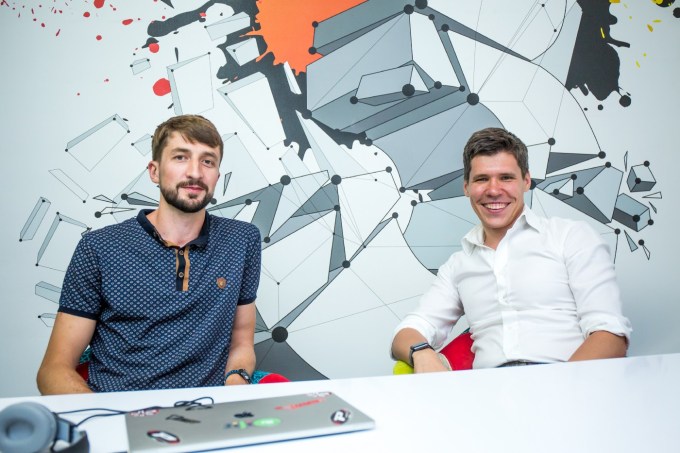
L-R: Anton Volyansky and Vladimir Mnogoletniy (co-founders of Jiji)

Therefore, the acquisition will see Cars45 grow the vehicles category. Furthermore, cars45 will merge its operations in Nigeria (primary market), Ghana and Kenya with Jiji as the classifieds marketplace wants to consolidate its position in the space. In addition, the acquisition of Cars45 will help mitigate problematic trust and safety concerns that have sometimes plagued Jiji and offer a different car buying and selling experience via its transactional marketplace model. In turn,  Cars45 users will benefit from Jiji’s dominance in online classifieds. 

“We will integrate this into one company because this acquisition has a lot of benefits for both. It’s a very common practice when marketplace and transactional business models work together as one project,” co-founder and CEO Anton Volyansky said regarding the integration of both platforms. “For instance, a seller of a car, it’s convenient to sell both ways via a marketplace or auction model. So, it would be like a seamless process for selling the car.”

According to Jiji CFO David Ojo, Cars45’s key value is its network of inspection centres where cars are inspected by more than 200 parameters. Unlike a classifieds marketplace where checks are inadequately carried out, transactional models employed by platforms like Cars45 ensure quality checks and detailed reports on a car’s condition with various databases.

Since its inception in 2014, Jiji is for the first time exploring a business outside its usual classifieds model, which has brought it profitability according to the company. Volyansky calls it a bold step and an important foundation “for building the future of the company.” But of course, the future isn’t void of competition. In fact, it gets more intricate as time goes on. Right now, Jiji has regional competitors in Swiss-owned ROAM and Jumia Deals, and horizontally, Autochek. Yet, Volyansky believes the acquisition of Cars45 might be the first of many transactional marketplace acquisitions to set Jiji apart from other players.

In terms of classifieds, we’re looking at opportunities, but we are already a leader in Africa, so I think there’s very limited space for whom to acquire. However, we’re primarily interested in deals like Cars45, where we bring our leadership positions from classifieds and acquire very close business models that give us exposure to the transactional marketplace. So for us, a major interest will be to acquire adjacent business models,” he explained.  

Soumobroto Ganguly, CEO of Cars45, commented: “We are proud to have built a trusted buying and selling experience in autos. It makes sense to combine online and offline expertise. Merging with Jiji is aimed at creating a new kind of automotive retail experience for users in Africa. We are confident of jointly building an African Champion in the O2O Automotive Sector. Together we look forward to making transactions transparent and convenient for our customers, dealers and franchisees across all our current and future markets.”

28 Jun 2021

PayMaya owner Voyager Innovation raises $167M from KKR, Tencent and IFC, to launch digital bank in the Philippines

Voyager Innovations, the Manila-based owner of PayMaya, one of the Philippines’ most popular payment and financial services apps, announced today it has raised $167 million in new funding to launch more financial services, including a digital bank.

The raise includes $121 million in new funding, and $46 million from previously committed funds. Voyager announced in April 2020 that it had secured up to $120 million in investment commitments from PLDT, KKR, Tencent, the International Finance Group (IFC) and the IFC Emerging Asia Fund.

The latest capital came from existing shareholders PLDT, one of the country’s largest telecoms, KKR and Tencent, and new investors including IFC Financial Institutions Growth Fund, managed by IFC AMC, a member of the World bank Group (another one of Voyager’s investors).

Voyager’s total raised since 2018 now stands at $452 million.

Along with competitors GCash and Coins, PayMaya is one of the most popular financial “super apps” in the Philippines. Its services include a digital wallet, online remittances, bill payments, bank transfers, prepaid cards and an e-commerce feature called PayMaya Mall that connects consumers to 350 merchants.

In its funding announcement today, Voyager said it has applied for a digital bank license with Bangko Sentral ng Pilipinas (BSP), the Philippines’ central bank. A representative for the Voyager said the neobank will launch about six months after Voyager secures its license.

PayMaya has more than 250,000 digital-finance access touchpoints, like convenience stores, where users can top-up their accounts. Voyager says this is seven times the number of ATM and bank branches in the Philippines, making PayMaya more accessible than traditional banks, especially in remote or rural areas.

According to the BSP, about 71% of Filipinos were unbanked as of 2019. The BSP has set financial inclusion goals it wants to achieve by 2023, including onboarding 70% of Filipino adults to payment or transaction accounts, and converting 50% of total retail payments into digital form.

PayMaya and Smart Padala by PayMaya, its remittance service, claim its total registered users doubled over 18 months to 38 million as of June 2021. This year, Voyager also began expanding PayMaya’s services with working capital loans for micro- to mid-sized businesses through PayMaya Lending Corp, and PayMaya Protect insurance policies for health coverage and devices.

28 Jun 2021

Vietnamese investment app Infina lands $2M seed round

The pandemic has spurred interest in saving and investment apps around the world, especially ones geared toward newer investors. In Southeast Asia, startups in this space that have raised funding over the past few months include Ajaib, Bibit and Stashaway—and that’s just a (very) partial list. Now Infina, which calls itself the “Robinhood of Vietnam,” is announcing an oversubscribed $2 million seed round.

The seed funding, which was made in two closes, included participation from Saison Capital, Venturra Discovery, 1982 Ventures, 500 Startups, Nextrans, and angel investors like executives at Google and Netflix.

Infina launched its app in January 2021. Most of its users are between the ages of 25 to 40 and looking for alternatives to investing in long-term asset classes like real estate. The app requires a minimum contribution of about $25 USD and lets investors pick from assets including savings accounts, term deposits, fractionalized real estate and mutual funds, which founder and chief executive officer James Vuong told TechCrunch is currently the most popular asset class among Infina’s users. Infina works with financial partners like Dragon Capital, ACB Capital, Mirae Asset Fund Management and Viet Capital Asset Management.

The company notes that only about 3.2% of people in Vietnam have invested in stocks. But according to the Vietnams Securities Depository, about 500,000 trading accounts were opened during the first five months of 2021, a 20% increase from all of 2020. This, along with Vietnam’s high internet penetration rate (about 70% as of January 2020) and the fact that more than 3/4 of of internet users have used online financial services before, lays the groundwork for apps like Infina to take traction.

In statement about its investment, Saison Capital partner Chris Sirise said, “Retail investing in Vietnam is at an inflection point and we have seen multiple other emerging markets reach this break-out point. With an experienced team that is passionate about financial literacy and education, Infina is well-positioned to ride this wave of growth.”

Before founding Infina, Vuong was an engineer in Silicon Valley before returning to Vietnam to serve as vice president of investment and a Kauffman Fellow at IDG Ventures. He also founded a startup called Lana Group that was acquired by Line Group. Vuong told TechCrunch he believes Vietnam is entering a “‘golden decade’ of hyper uninterrupted growth as other Asian Tigers have had in the past,” and created Infina to gives retail investors a chance to partake in Vietnam’s financial trajectory.

While at home during various stages of lockdown in Vietnam, Vuong said many internet users began switching to digital services, including for investments. He added that a series of interest rate cuts by Vietnam’s Central Bank to help businesses during COVID-19 prompted many retail investors to look for alternatives with higher returns than term deposits.

“A majority of our users are new investors,” said Vuong. “Although they are familiar with savings, fixed income or mutual fund investing are relatively new to them.” The app’s interface and content is geared toward them.

When users register, Infina surveys their risk and return profile, then recommends an asset to begin with. As they continue investing, Infina’s users see information about the risk and return profile of each asset category and the issuer’s profile, investment strategy and historical performance. Like other investment apps with many newer investors, Infina also creates its own educational content, like blog posts, daily newsletters and videos.

“We are very transparent in communications on risk and returns, profits and fees, and that’s our advantage compared to other platforms,” said Vuong. He added that part of the new funding will be used to hire people with technical and investment backgrounds to further develop Infina’s KYC (know your customer) system to better analyze their risk appetite, as well as its system for evaluating each asset class.

Other investment apps in Vietnam include Finhay and Tikop. When asked how Infina differentiates from its competitors, Vuong noted its wide range of asset classes, low minimum and transparency about different types of investments. He added that Infina is not majority owned or tied to a particular issuer, “which allows us to be neutral and work with all of the country’s high-quality fund managers.”

28 Jun 2021

Slice raises $20 million to go after the credit card industry in India

Slice, an Indian fintech startup that has built a “super card” for millennials in India, said on Monday it has raised $20 million in a new financing round and is adding new features to change how people engage with their credit cards.

Existing investors Gunosy, Blume Ventures and others financed the new round in the Bangalore-headquartered startup, it said.

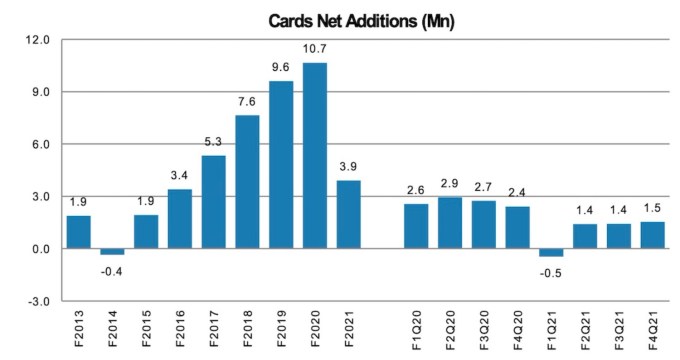
Even as hundreds of millions of Indians today have a bank account, only about 30 million have a credit card. Most people in the South Asian market are not eligible to get a credit card, and even many of those who are don’t bother to get one because the experience of signing up is too clumsy, time consuming, and the rewards don’t make up for it.

Slice has made it easier for far more people — even those without a traditional full-time job — to get a card, and the signup process doesn’t take forever.

New credit card additions in India. Data: Reserve Bank of India, Morgan Stanley. Image: Morgan Stanley

Rajan Bajaj, founder and chief executive of Slice, said in an interview with TechCrunch that the startup, which has already amassed over 3 million users, is now bringing rewards to its app as it attempts to turn the plastic card into a larger financial instrument.

“You use your card more often than you use Uber, Ola, Swiggy and Zomato combined. But the payment experience on the card leaves a lot to be desired. Eventually, if customers don’t see a value, they will abandon the card and move elsewhere,” he said.

“Banks treat credit cards like a loan product instead of a high frequency payment instrument and make money through late charges and interest rates. You see a random charge on your credit card statement, you don’t recognize it so now you have to deal with a customer representative. More than half such users give up and just accept those charges,” he said.

“We are upfront about all of this. There’s no such thing as a joining fee or annual fee for Slice members and there’s no minimum amount they are required to pay each month,” he said, adding that the startup is also profitable. “As we were building our platform, we recognized that there were many things that a credit card firm engages in that didn’t make sense for the customers, so we didn’t include those,” he said.

Slice’s eponymous app shows hyperlocal deals from restaurants and also gives back up to 2% cashback on each transaction that is instantly redeemable to cash, he said.

One of the ideas behind the rewards, said Bajaj, is to have people engage with the app more often so that they know how much money they are spending. Customers can also use the app to make several purchases (for instance, by scanning a QR code).

“We see the card as a payment product, and we are solving it as a consumer experience problem with a customer first approach in mind,” he said. Within six months of joining Slice, more than 65% member’s credit score climbs to 730, he said.

To make it easier for members to pay their bills and not worry about any additional charges, Slice now offers them the ability to split their bill and make the payment in a duration of up to three months — the longest in the industry — at no interest.

Slice has also become a formidable rival to established credit card firms in recent years. Bajaj said about 50% of new customers who are joining Slice today hold a credit card from a competing firm, he said. More than half of these customers switch to Slice as their primary card, he added.

“With the new features, which are very competitive, we expect to switch more than 80% of customers who own other cards to use Slice as their primary card in the next six to eight months,” he said, adding that the startup is able to offer better rewards than most credit cards because it spends just a fraction of its rivals in acquiring new customers.

“Our existing customers tell their friends about Slice. We don’t have to stand in malls and airports to advertise our product,” he said.

The coronavirus pandemic has significantly shrunk people’s spending habits and hence hurt several fintech startups. But the Bangalore-based startup said not only has it recovered but it’s also growing. Slice said the month of May was its best month since inception, and June has shown 25% growth.

The startup, which provides users credit limit through its own balance sheet, said it will deploy the fresh funding into developing more features for customers.

“Slice’s biggest advantage is how well they understand millennials and gen z. Their approach to solving their issues has been truly refreshing and building something simple and hassle-free has been a part of their DNA since inception. The Slice super card has the potential to fundamentally change the way the next generation thinks about the concept of credit cards altogether and we, at Gunosy, are glad to be a part of their growth story,” said Shinji Kimura, chairman and chief executive of Gunosy, in a statement.