As we become more and more aware of the kind of impact we are having on this planet we call our home, just about everything is having its CO2 impact measured. Who knew, until recently, that streaming Netflix might have a measurable impact on the environment, for instance. But given vast swathes of the Internet are populated by Web sites, as well as streaming services, then they too must have some sort of impact.
It transpires that a new service has identified how to gauge that, and now it’s raised Venture capital to scale.
Ryte raised €8.5 million ($10M) in a previously undisclosed round led by Bayern Kapital out of Munich and Octopus Investments out of London earlier this year for its Website User Experience Platform.
It has now launched the ‘Ryte Website Carbon KPI’, which claims to be able to help make 5% of all websites carbon neutral by 2023.
Ryte says it worked with data scientists and environmental experts to develop the ability to accurately measure the carbon impact of client’s websites. According to carbon transition thinktank, the Shift Project, the carbon footprint of our gadgets, the internet, and the systems supporting them accounts for about 3.7% of global greenhouse emissions. And this trend is rising rapidly as the world digitizes itself, especially post-pandemic.
Ryte has now engaged its Data Scientist, Katharina Meraner, who has a PhD in climate science and global warming, and input from Climate Partner, to launch this new service.
Andy Bruckschloegl, CEO of Ryte said: “There are currently 189 million active websites. Our goal is to make 5% of all active websites, or 9.5 million websites, climate neutral by the end of 2023 with the help of our platform, strong partners, social media activities, and much more. Time is ticking and making websites carbon neutral is really easy compared to other industries and processes.”
Ryte says it is also collaborating with a reforestation project in San Jose, Nicaragua, to allow its customers to offset their remaining emissions through the purchase of climate certificates.
Using a proprietary algorithm, Ryte says it measures the code of the entire website, average page size, as well as monthly traffic by channel then produces a calculation of the amount of CO2 it uses up.
Admittedly there are similar services but these are ad-hoc and not connected to a platform. A simple Google search will bring us sites like Websitecarbon, Ecosistant, and academic papers. But as far as I can tell, a startup like this hasn’t put this kind of service into their platform yet.
“Teaming up with Ryte will help raise awareness on how information technology contributes to climate change – while at the same time providing tools to make a difference. Ryte’s industry-leading carbon calculator enables thousands of website owners to understand their carbon footprint, to offset unavoidable carbon emissions and thus lay a basis for a comprehensive climate action strategy,” commented Tristan A. Foerster, Co-CEO ClimatePartner.
Chuck Phillips is the co-founder of MeetWell, an application that enables teams to achieve a better work-life balance while saving companies money by reducing the amount of bad meetings they attend.
Bad meetings are the fast food of the knowledge worker; it’s so deliciously quick and easy to throw a 60-minute default meeting on everyone’s schedule, but the long-term costs are extremely unhealthy.
Busy meeting organizers drive-thru schedule meetings because they think they don’t have time to plan. They expect good outcomes to come from little preparation, which doesn’t happen. The meetings are being held and progress is stilted.
One way to save everyone significant time (and win lots of friends) would be to just get rid of all meetings, but a well-prepared and well-run session can expedite communication and get a team closer to its goals. Unfortunately, most meetings are lazily planned and poorly run, imprisoning attendees and halting productivity.
So how can you separate the good meetings from the bad?
Measure your meeting waistline
No one measures the impact of their meetings. So the first step is to start keeping meeting metrics so that you can identify the bad meetings on your teams’ calendars.
Every time a recurring meeting is added to a calendar, a kitten dies.
My company has created a calendar assistant that automatically measures and stops bad meetings before they occur, but if you can’t automate the prevention of bad meetings, survey and learn from attendees after the meeting to record and measure them.
Create taxonomies and quantify the types of meetings that are being held — for example: “information sharing,” “brainstorming,” “1:1,” “decision-making,” etc.
After several months (ideally a year) of collecting metrics, you can grade the quality and look for patterns. You will probably find something along these lines:
Very few employees decline meetings, even when it’s obvious that the meeting is going to be a doozy.
What are the most important factors when you’re pitching your startup for fundraising? What questions come to the minds of the VCs you’re pitching? How do you get the deal across the finish line? Or choose the right investors for your company to begin with?
In July, we have more top-notch speakers on the roster, including big-name founders and seasoned investors. What’s more, these speakers are ready to hear about your startup. ECL features the Extra Crunch Live Pitch-off, where founders in the audience can pitch their products to speakers and get live feedback.
So without any further ado, here is a look at the amazing speakers we have joining us in July.
Jordan Nof (Tusk Venture Partners) + Michelle Davey (Wheel)
July 14 – 12pm PT/3pm ET
Jordan Nof, co-founder and general partner at Tusk Venture Partners, led early investments in companies like Lemonade, Bird and Sunday. He also invested in Wheel, co-founded by Michelle Davey, an infrastructure company focused on virtual care. Join in a conversation with them on Extra Crunch Live about what it takes to raise funding and use it to the greatest effect.
Stephanie Zhan (Sequoia Capital) + Nick Fajt (Rec Room)
July 28 – 12pm PT/3pm ET
Sequoia Capital is one of the biggest names in VC. On this episode of ECL, Sequoia partner Sephanie Zhan and Rec Room CEO Nick Fajt talk about how the two came together for the startup’s seed round, why Zhan also led the Series A, and how it’s gone on to raise nearly $150 million in funding.
As a reminder, Extra Crunch Live is accessible to anyone and everyone who wants to come hang out. However, only Extra Crunch members get access to the content on-demand. If you’re not already an Extra Crunch member, what are you waiting for?
Having read more SPAC investor decks in the last twelve months than I’d like to admit to, I thought I was over being irked by their bullishness. Call me conservative, but public companies shouldn’t be full of shit, and companies going public should probably aim for a similar target.
That’s why S-1 filings for traditional IPOs are great. When it comes to numbers, they are honest. The filings don’t include forecasts for the next year, let alone the next half decade. Sure, companies will make a pitch for their model and methods, but S-1 filings are pretty good from an honesty perspective. Mostly.
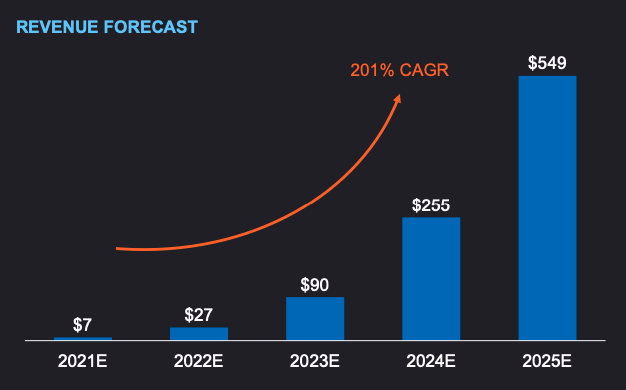
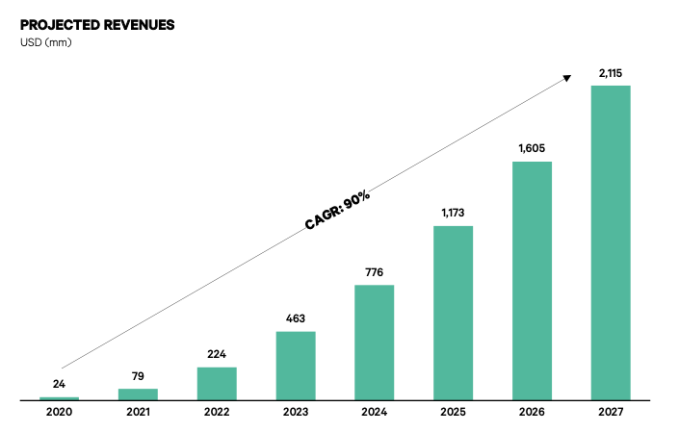
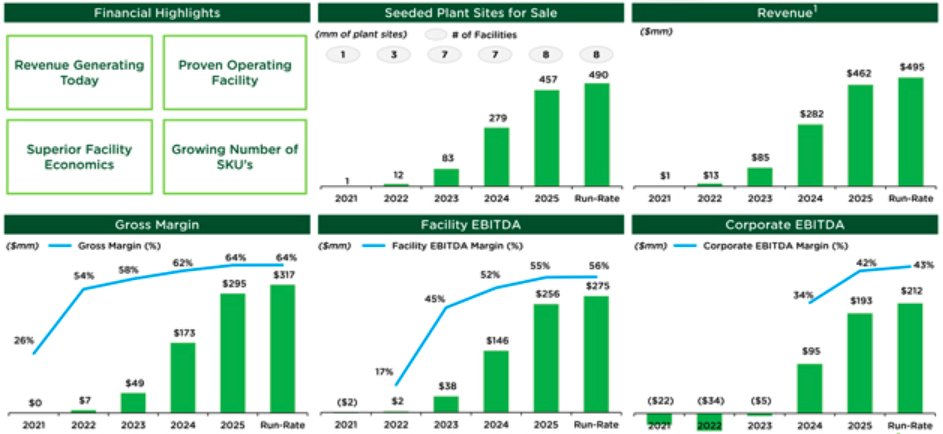
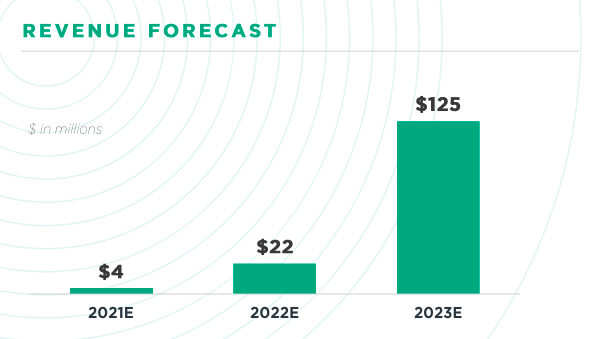
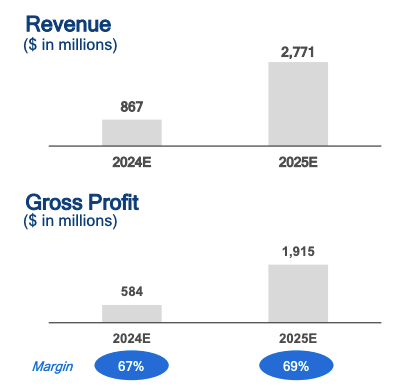
SPAC investor decks are the opposite. I mean, look at this chart:
Historical revenue? Who needs it! Look at the growth that could maybe, possibly, theoretically happen! 201% CAGR!
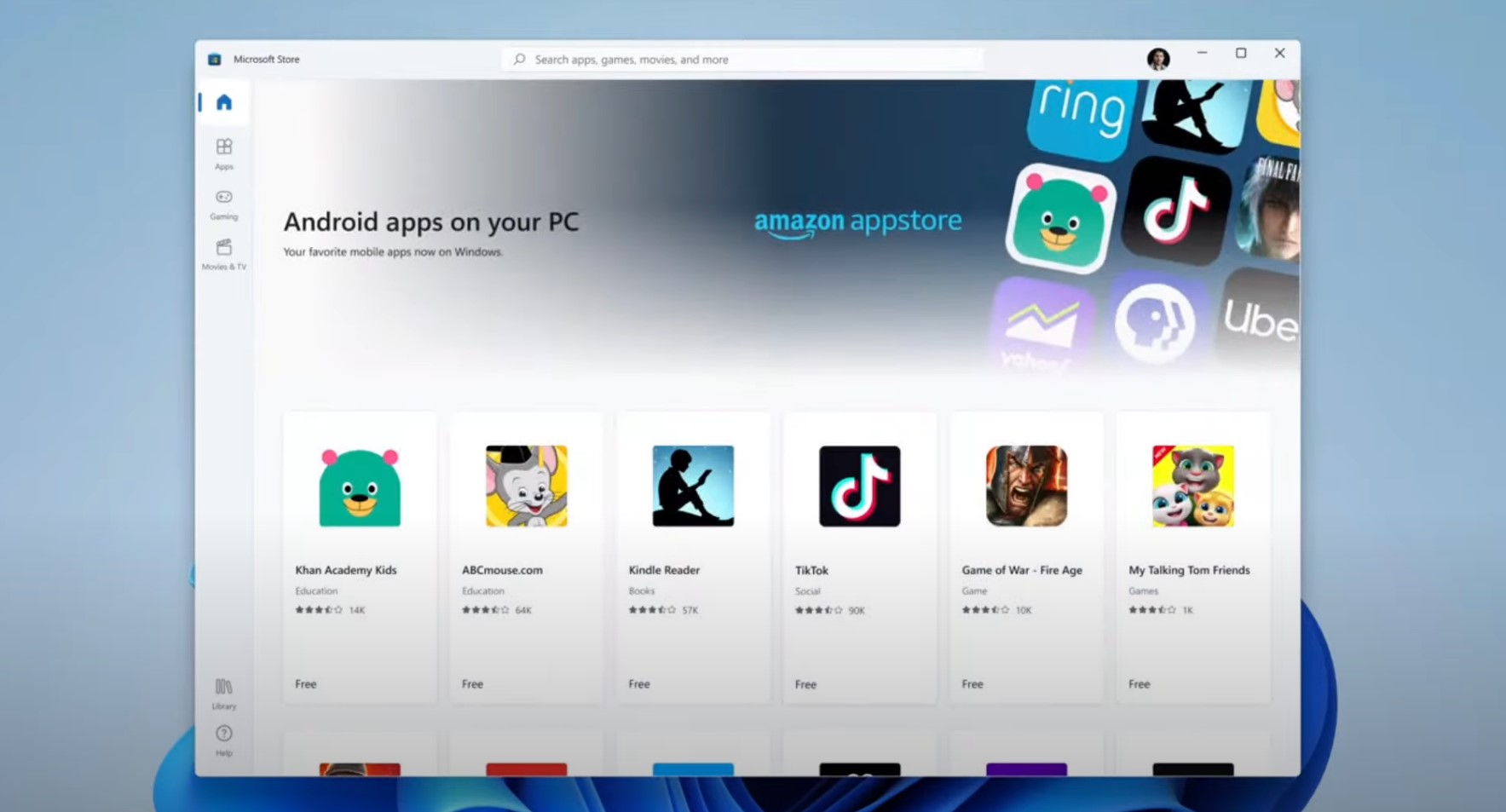
Ecosystems make strange bedfellows. Here’s one of the stranger in recent memory – and one of the most unexpected bits of news from today’s Windows 11 event. Microsoft announced today that it will be making Android apps available on the next major version of its operating system.
Chief Product Officer Panos Panay called the addition, “just one more small surprise,” noting that the mobile apps can be integrated into the Start menu and taskbar. They’ll also tile or “window” as part of the OS’s new application placement UI.
Image Credits: Microsoft
The apps will be available through the Microsoft Store by way of the Amazon Appstore. The company highlighted TikTok running on a demo of the operating system. The app is presented in a vertical, portrait orientation, as you would expect from an mobile-first design.
With 1.85 million Android apps, it’s currently a way to flood the Microsoft app store with a whole bunch of new content – and make sure the latest popular mobile apps are suddenly available on the platform. Though time will tell how good the experience (built on top of Intel Bridge) ultimately is.
The other week at TC Sessions: Mobility, I spoke to a trio of executives at top automotive companies about why they’re all so bullish about robotics. There are the obvious implications, of course. Automakers have long employed robotics for manufacturing – they were really ahead of the curve on those concerns about automating job loss. And then there’s the fact that self-driving cars are effectively robots.
Beyond that, however, it’s clear that car companies see robotics as a key investment in their future. What really struck me about the conversation, is how differently the three companies – Hyundai, Ford and Toyota – are approaching the space. If nothing else, it’s a sign that there’s plenty of opportunity here.
We wrote quite a bit about Ford’s ambitions in the category several roundups ago, including an interview with Mario Santillo, who joined us for the recent panel. As evidenced by the company’s recent investment in University of Michigan, Ford’s approach is largely research-based. The company wants to be in on the ground floor both in terms of technology and talent. Though when I pressed Santillo about acquisitions, however, (specifically as it pertains to Digit-maker, Agility), he told me, “that’s always something we’re looking at.” So don’t rule it of, especially as other car companies begin to lockdown big names in the category.
Hyundai, of course, made one of the biggest robotics acquisitions in recent memory, picking up Boston Dynamics after its short stint in the Softbank portfolio (the investment firm remains a shareholder). Of course, that post-Google time has been important for the company, seeing the commercialization of Spot and the upcoming sale of Stretch. Hyundai’s Ernestine Fu shed some more light for us on the deal, which officially closed this week,
With New Horizon Studios, the mandate is reimagining what you can do when you combine robotics with traditional wheeled locomotion, like walking robots and walking vehicles. Obviously the technology that [Boston Dynamics] has put together plays a key role in enabling those sorts of concepts to come to life.
Image Credits: Screenshot/Hyundai
As we discussed, the driving force in the Toyota Research Institute’s interest in the category Japan’s aging population. Eldercare forms the basis of much of what the company does in robotics, including some home robotics research that it showed off this week – specifically how its imaging can handle reflective and transparent surfaces. Both have traditionally been tricky for robotic systems.
As TRI’s Max Bajracharya told me,
[I]n Japan, in 20-30 years, the number of people who are over 65 will roughly be the same as the number of people who are under 65. That’s going to have a really interesting socioeconomic impact, in terms of the workforce. It’s probably going to be much older and we at Toyota are looking at how these people can keep doing their jobs, so they can get the fulfillment from doing their jobs or staying at home longer. We don’t want to just replace the people. We really think about how we stay human-centered and amplify people.
Image Credits: NVIDIA
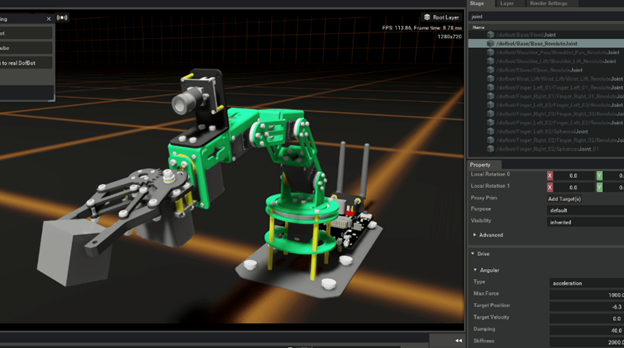
We’ve been following NVIDIA’s Isaac software for a while now, and the robotic simulation software is available as an open beta. Built on top of Omniverse, the software is designed to test a wide range of different camera and sensor capabilities for robotics. It’s a fascinate project and potentially a big deal for early-stage robotics startups.
Quick follow up to some funding last week from a robots landscaping company, I asked iRobot what’s going on with their Terra mower, which was delayed amid pandemic-related cuts. The company tells me there’s still no clear timeline for the indefinitely delayed robot.
Image Credits:
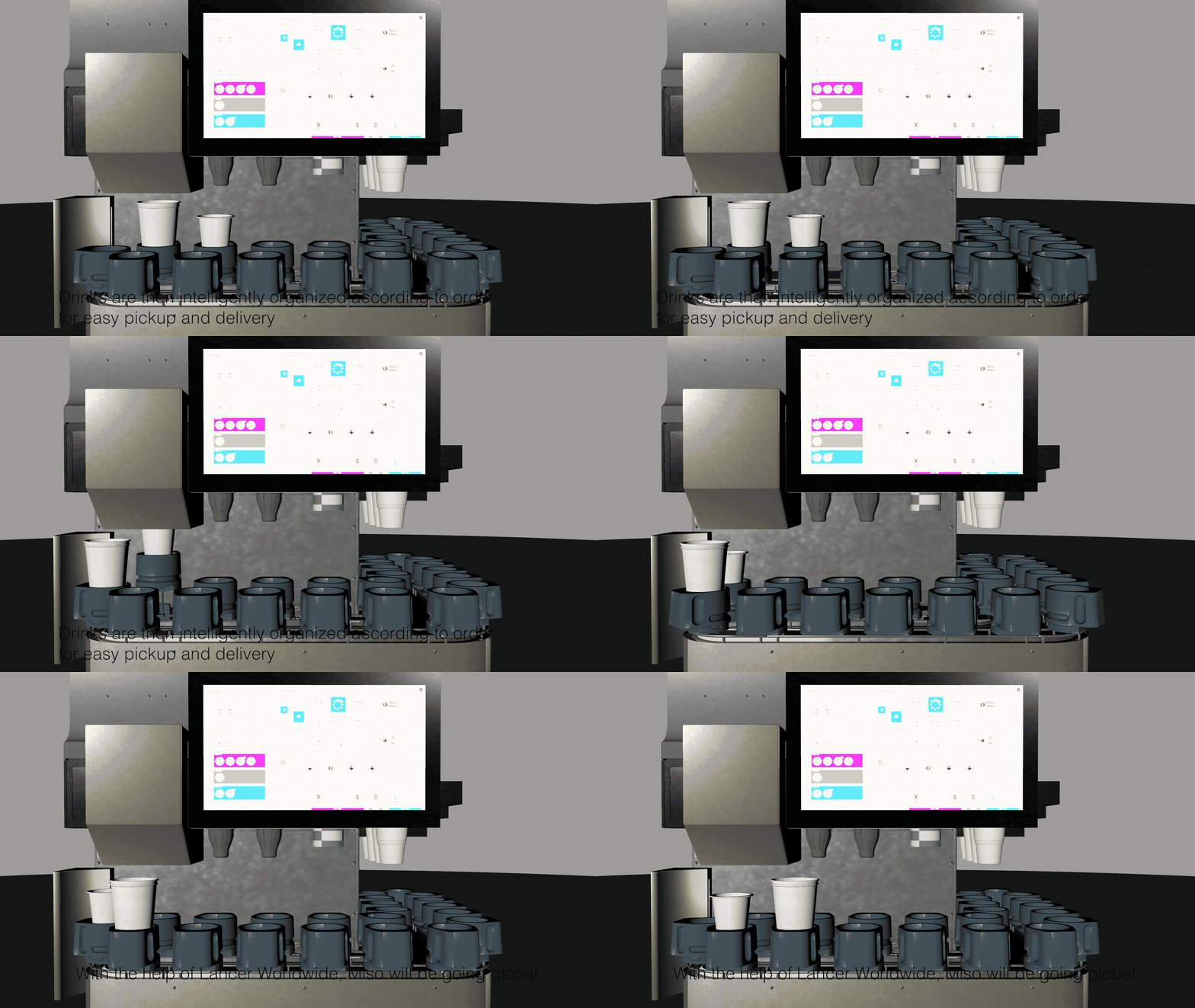
Miso Robotics, meanwhile, continues to build out from Flippy, the hamburger-flipping robot with an automated beverage dispenser. The machine, created with beverage dispenser manufacturer Lancer, fully automates the process, right down to adding the cap on the cup. No clear timeline on the product yet, however, but it’s fun to see some of these companies branch out in a given sector.
Image Credits: Berkshire Grey
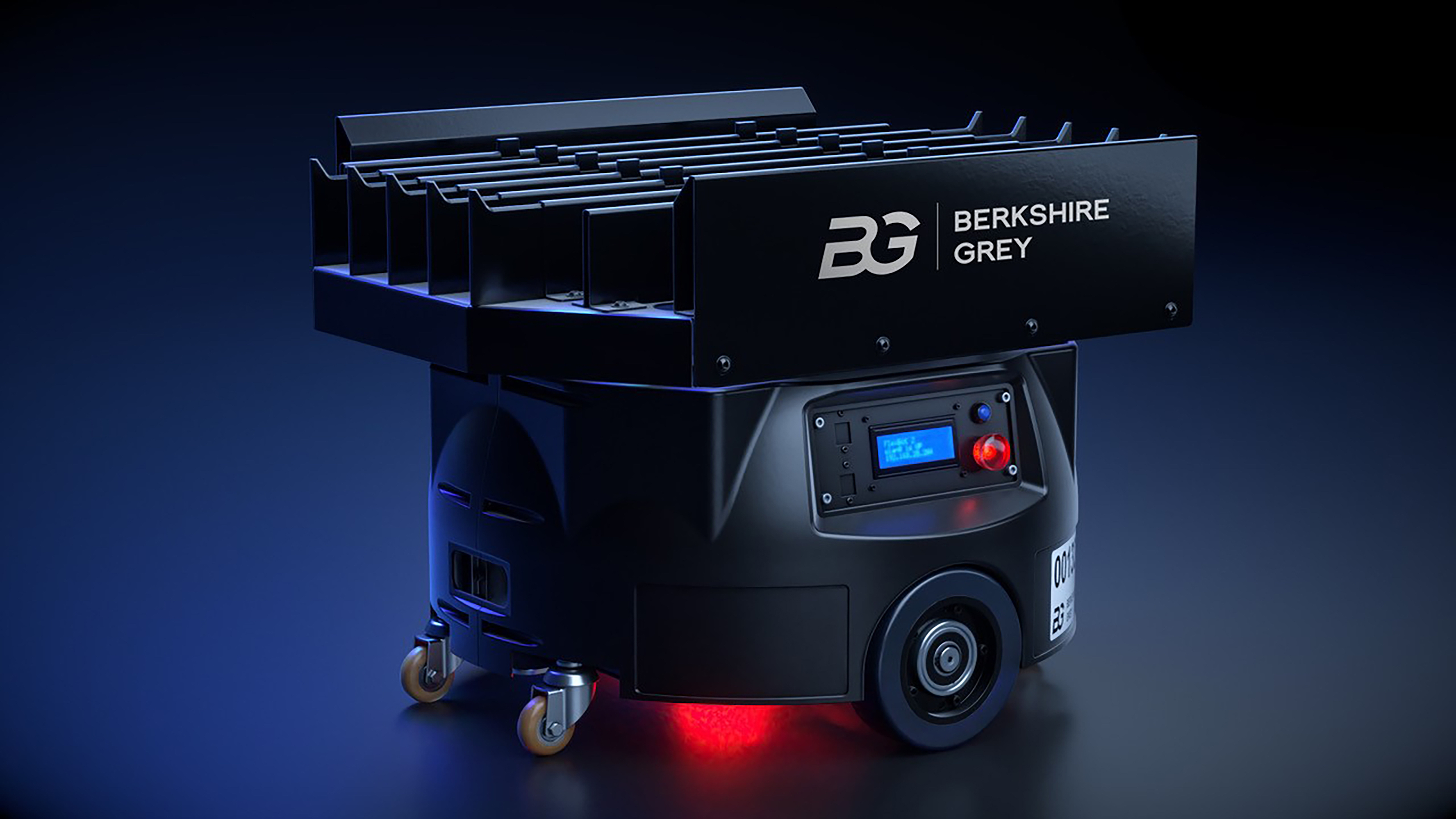
A pair of warehouse automation stories worth highlighting here. Berkshire Grey has unveiled a bunch of new fulfillment robots. Per the company,
This new generation of mobile robots offers increased fulfillment throughput at a lower cost point to enable shorter delivery times and support a larger number of SKUs. Unlike fixed conveyor belts and early generation mobile robots, Berkshire Grey’s intelligent fleets harness the power of AI to orchestrate tens to thousands of mobile robots to pick, organize, and deliver items for a wide variety of customer and store orders.
The company will tell you the same thing as every robotics maker: it’s all about helping retailers compete with the behemoth that is Amazon. Fittingly, the ecommerce giant also showed off some new robots this week. Amazon says it’s utilized 350,000 mobile drive units since the company acquired Kiva Systems, which formed the foundation for its Amazon Robotics wing. The post has caused some to wonder whether, in spite of a head start and some massive funding, whether the company is beginning to fall behind a number of aggressive warehouse robotics startups.
Not a ton of funding news this week, but that should change soon. Hot bot summer is nearly upon us. I feel it in the air. Meantime, please enjoy this submersible drone designed to track a wide range of creators in the mesopelagic “twilight” zone. Developed by the Woods Hole Oceanographic Institution, Mesobot is designed to observe zooplankton, gelatinous animals and more, without disturbing their habitat. Here’s Senior Scientist Dana Yoerger,
We expect that Mesobot will emerge as a vital tool for observing midwater organisms for extended periods, as well as rapidly identifying species observed from vessel biosonars. Because Mesobot can survey, track, and record compelling imagery, we hope to reveal previously unknown behaviors, species interactions, morphological structures, and the use of bioluminescence.
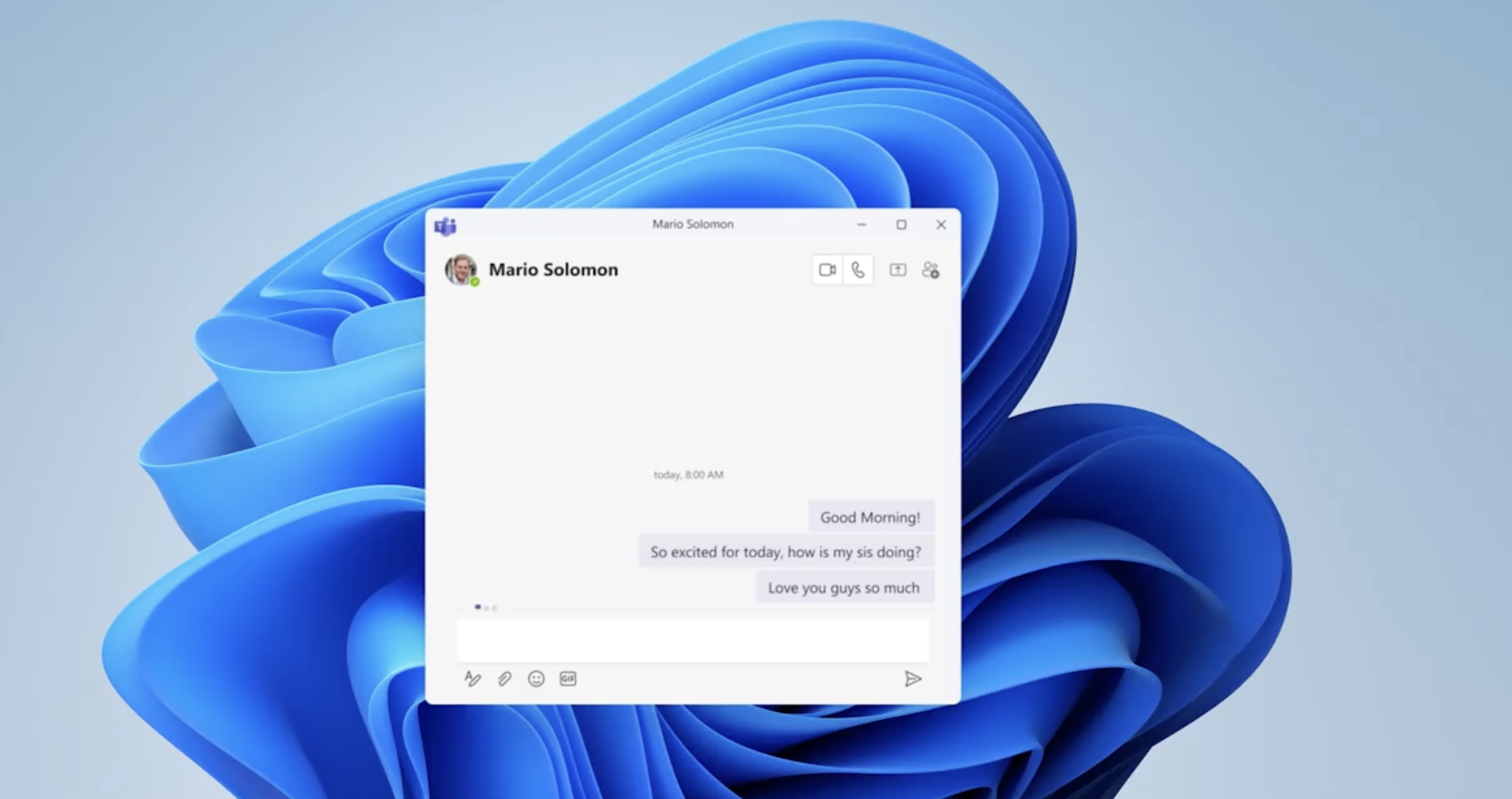
Happy Windows 11 day. Microsoft is giving us our best look yet at its upcoming operating system, which is due out over the holidays. Following a year when the vast majority of our interpersonal communications arrived through computer and phone screens, the company is putting its communication software front and center.
Windows 11 will have Microsoft Teams built in, in a bid to compete more directly with communication platforms like Apple’s FaceTime. And like FaceTime, the key here is cross-device integration, making the service more hardware agnostic as people move from desktop to mobile and back again.
Image Credits: Microsoft
In an era when we’ve got more video chat platforms than we know what to do with, it’s hard to shake the feeling that we might be seeing the final nail in the coffin for the once-mighty Skype, which the company bought way back in 2011 for $8.5 billion. As it tried to do with Skype, Microsoft is looking to blur the line between consumers and professionals with the platform.
All versions of the new operating system will have Teams baked directly into the Start menu.
After weeks of leaks and hype, Microsoft today officially announced Windows 11, the next version of its desktop operating system. While the company may have once said that Windows 10 was the last version of Windows, forgoing major point launches for a regular cadence of bi-annual upgrades, but it clearly believes that the changes — and especially the redesigned user interface — in this update warrant a new version number.
If you followed along with the development and eventual demise of Windows 10X, Microsoft’s operating system with a simplified user interface for dual- and (eventually) single-screen laptops, a lot of what you’re seeing here will feel familiar, down to the redesigned Start menu. Indeed, if somebody showed you screenshots of Windows 11 and early previews of Windows 10X, you’d have a hard time telling them apart.
Image Credits: Microsoft
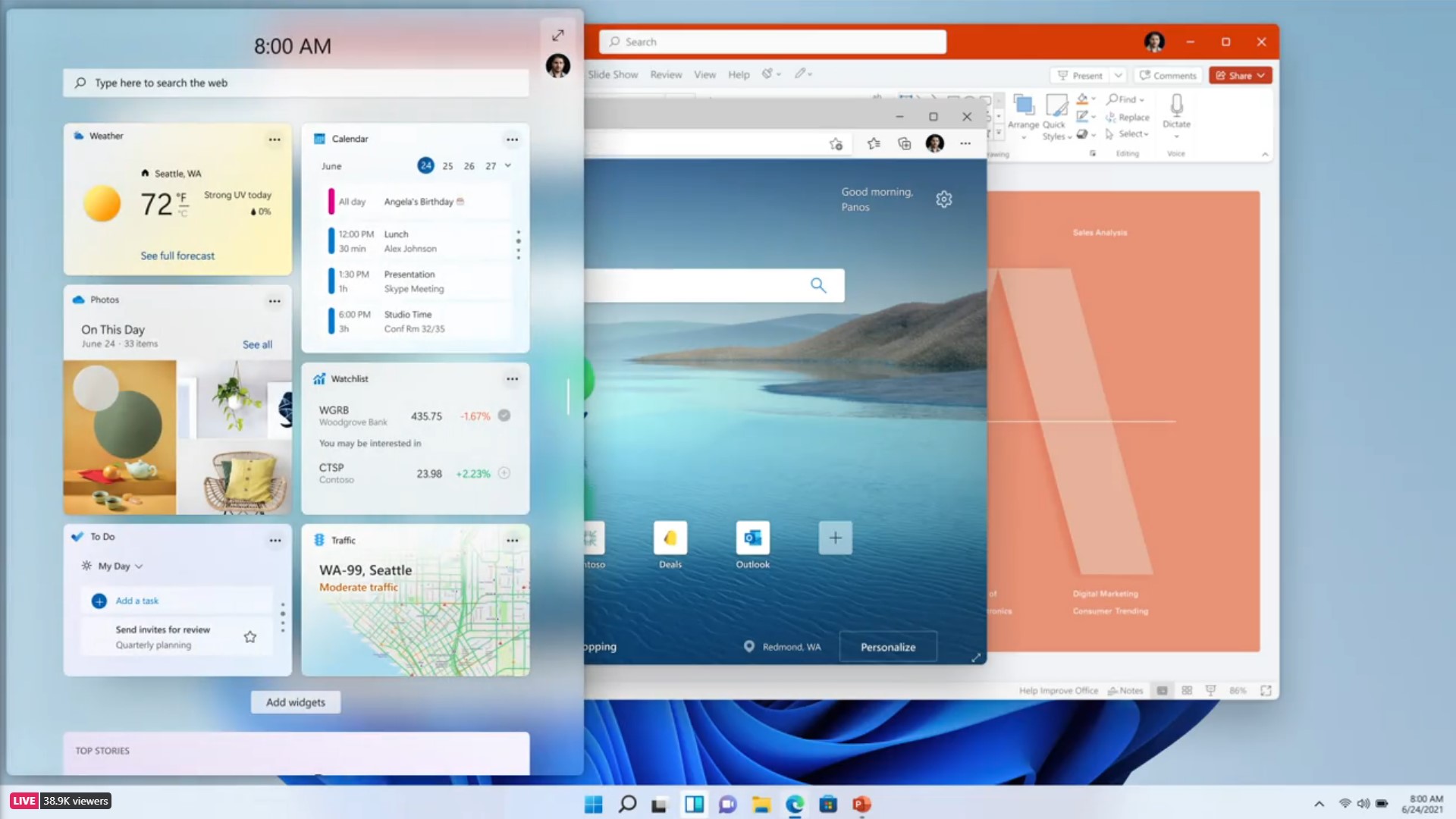
As Microsoft Chief Product Officer Panos Panay noted in today’s announcement, the overall idea behind the design is to make you feel “an incredible sense of calm,” but at the same time, the Windows team has also worked to make it a lot faster. Windows Updates, for example, are supposed to be 40 percent faster, but Panay also noted that starting up your machine and even browsing should feel much faster.
Besides the new user interface, which makes copious use of translucency and shadows, one of the core new UI features is what Microsoft calls Snap Layouts, which pops up a small widget when you hover over the icon that maximizes your window to allow you to move the window to any corner, something that previously involved dragging your window to the corner of your screen (which was often hard when you used multiple screens).
Happs, an app that lets creators stream live video simultaneously across social platforms, has raised $4.7 million in a post-seed round. The product originally began as a platform for independent journalists, but expanded its mission last year to offer tools to all online creators while connecting them through a new social network.
The funding was led by Bullpen Capital and Crosslink, Goodwater, Corazon, Rob Hayes of First Round Capital and Bangaly Kaba, previously at Instagram and Sequoia, also participated.
What sets Happs apart from some established competitors in the space is the team’s desire to not only build tools that help video creators produce professional-looking online streams, but to cultivate a kind of meta-community that brings people together from across other social media sites.
“We kind of view this as the essence of what the creator economy is all about,” Happs CEO Mark Goldman told TechCrunch. “The idea of locking creators into an individual platform is a very traditional way of thinking about content creation.”
Like Goldman, the other co-founders, David Neuman and Drew Shepard, come from the media world. Goldman was the founding COO of Current TV, an experimental TV channel that dabbled in user-generated content and eventually sold to Al Jazeera in 2013.
“The whole idea was to democratize media and open it up,” Goldman said of his time working on Current TV, which he connects directly to his interest in building Happs. “[We] loved the creativity unleashed by that.”
Online creators tend to be siloed within the app where they’ve built the biggest community, but Happs wants to empower them to reach as many followers as possible in a platform-agnostic way. For creators, the appeal with multistreaming is maximizing reach while making content efficiently. There’s a risk of alienating YouTube followers at the expense of your Twitch community if you don’t play your cards right, but some savvy content creators have turned toward the model to grow their audiences.
Happs connects people across platforms in a few ways. For one, Happs users can broadcast live to Facebook, YouTube, Twitter and Twitch simultaneously. The app also collects live comments from all supported social media sites and beams them into its own interface where they appear in a continuous cross-platform stream.
The integrated comment feature is nice built-in option for anyone who’s straddled comments across multiple devices simultaneously while livestreaming, which is no easy feat. When you’re streaming live you can feature a comment so that followers can see it on the screen no matter what platform they’re watching on.
Other companies in the space like OBS,Streamlabs and Restream are focused on the tools part of the equation, offering power users a useful backend for pushing out multi-streamed live video. Streamyard also offers multistreaming to Facebook, YouTube, Twitter and other platforms through a simple browser interface.
Unlike those services, Happs feels more like a social network, with familiar features like user profile photos, follower counts and a feed next to a “go live” button. Anyone can use the multi-streaming platform through its iOS or Android apps or a web interface, whether they’re a creator signing up for the tools or a fan looking to support the content they love.
Happs lacks some of its competitors’ bells and whistles, stuff like fancy customized graphics and lower-thirds, but has a few interesting tricks of its own. While streaming live on Happs, you can invite someone else on the app to join your feed for a real-time collaboration. The social networking elements are meant to encourage cross-platform creativity, so a YouTuber and a Twitch personality could hang out together and boost both of their reaches, all while streaming to a bunch of other apps.
Happs also offers users monetization tools from the get-go, with no requirements before they can start making money. That speaks to the app’s appeal for creators who might be less established or just starting out. Happs could be a much harder sell for a popular creator deeply invested in a platform like Twitch, which has rules against multi-streaming for most accounts that are allowed to monetize.
There are a few different ways to monetize. One lets anyone on Happs sponsor a broadcaster through regular monthly payments. The other is a one-off option that lets you chip in an award for any livestream, or to the VOD (video on demand) after the fact. The in-app currency is a virtual coin that users can buy or earn through doing stuff on the app. There are no plans for ads (yet, anyway).
The company will take 30% cut of subscription earnings, though according to Goldman they’ll be waiving those fees for an unspecified period of time to attract people to the platform.
“We raised this round to really build up product and tech team [and] to make the platform much more stable and reliable,” Goldman said. The company is looking forward to leveraging the new resources to “really go out now and get in front of creators so they know Happs exists.”
Few spaces have grown hotter in the past year than the creator economy has, but for all of the new tools available to those starting a podcast, newsletter or storefront, most players have been more focused on building out their own platform opportunity rather than selling full independence to creators.
Spore wants to transform the creator web experience into a Shopify-like basket of tools that users tap into to connect with their audience across a variety of mediums. Spore CEO Austin Hallock is looking to compete with other creator giants for the “link in bio” real estate on social media sites with a white-label option that uses a creator’s own URL, selling an easy-to-build hub focused solely on connecting personalities with their fans.
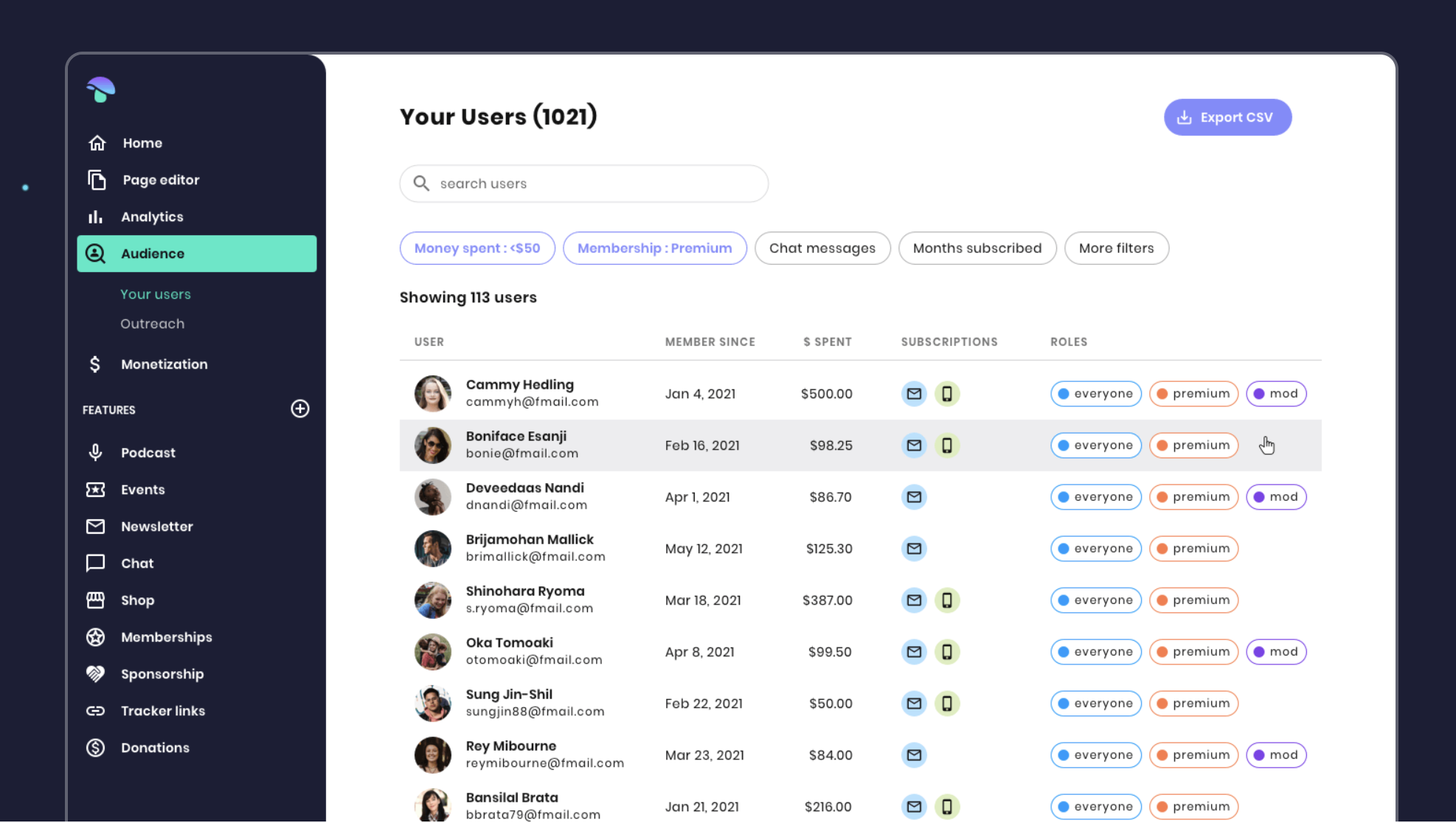
With Spore, users can manage their audience, communicate with them and analyze what is and isn’t working.
The platform allows for blasting out newsletter updates, podcasts or texts while embedding functionality like storefronts or Discord-like chat feeds into their sites to keep the interactions going 24/7. Creators can also use the tool to convert free subscribers to paying ones, managing the payments flow while also building flows to allow creators to send certain content to their paying fans.
The small startup has raised a $1 million pre-seed round led by SignalFire with additional participation from Justin Kan & Robin Chan’s GOAT, Canaan, Lenny Rachitsky, Nathan Baschez, Justin Waldron and Dave Nemetz, among others.
Spore’s creator platform backend
It’s the first lead investment for former TechCrunch editor Josh Constine in his role at SignalFire (full disclosure: I used to work closely with Josh). Constine started using Spore to build out a site for his regular show on Clubhouse, fellow investor Justin Kan also grew familiar with the team by building out a website for his podcast and YouTube channel.
“I chose Spore as my first lead investment as a VC because it solves creators’ biggest problems by giving them their own white-labeled website they control, and combining all the best content, communication, analytics, and payment tools so creators can spend their time making art instead of being web developers,” Constine tells TechCrunch.
Spore is certainly a small-scale operation at the moment with 4 full-time employees, though they’re hoping to grow their team with this raise. All of these features are in their early MVP stages, but Hallock wants his company to continue building out its utility to creators so that they can build a direct connection with their fans, one that isn’t obfuscated by algorithms..
“We definitely want to give creators ownership,” Hallock tells TechCrunch. “Today, you’re promoting your Linktree page or Patreon rather than just promoting your own brand… We don’t want it to be about Spore.”