
Year: 2021

17 Jun 2021

Transform launches with $24.5M in funding for a tool to query and build metrics out of data troves

The biggest tech companies have put a lot of time and money into building tools and platforms for their data science teams and those who work with them to glean insights and metrics out of the masses of data that their companies produce: how a company is performing, how a new feature is working, when something is broken, or when something might be selling well (and why) are all things you can figure out if you know how to read the data.

Now, three alums that worked with data in the world of big tech have founded a startup that aims to build a “metrics store” so that the rest of the enterprise world — much of which lacks the resources to build tools like this from scratch — can easily use metrics to figure things out like this, too.

Transform, as the startup is called, is coming out of stealth today, and it’s doing so with an impressive amount of early backing — a sign not just of investor confidence in these particular founders, but also the recognition that there is a gap in the market for, as the company describes it, a “single source of truth for business data” that could be usefully filled.

The company is announcing that it has closed, while in stealth, a Series A of $20 million, and an earlier seed round of $4.5 million — both led by Index Ventures and Redpoint Ventures. The seed, the company said, also had dozens of angel investors, with the list including Elad Gil of Color Genomics, Lenny Rachitsky of Airbnb and Cristina Cordova of Notion.

The big breakthrough that Transform has made is that it’s built a metrics engine that a company can apply to its structured data — a tool similar to what big tech companies have built for their own use, but that hasn’t really been created (at least until now) for others who are not those big tech companies to use, too.

Transform can work with vast troves of data from the warehouse, or data that is being tracked in real time, to generate insights and analytics about different actions around a company’s products. Transform can be used and queried by non-technical people who still have to deal with data, Handel said.

The impetus for building the product came to Nick Handel, James Mayfield and Paul Yang — respectively Transform’s CEO, COO and software engineer — when they all worked together at Airbnb (previously Mayfield and Yang were also at Facebook together) in a mix of roles that included product management and engineering.

There, they could see first-hand both the promise that data held for helping make decisions around a product, or for measuring how something is used, or to plan future features, but also the demands of harnessing it to work, and getting everyone on the same page to do so.

“There is a growing trend among tech companies to test every single feature, every single iteration of whatever. And so as a part of that, we built this tool [at Airbnb] that basically allowed you to define the various metrics that you wanted to track to understand your experiment,” Handel recalled in an interview. “But you also want to understand so many other things like, how many people are searching for listings in certain areas? How many people are instantly booking those listings? Are they contacting customer service, are they having trust and safety issues?” The tool Airbnb built was Minerva, optimised specifically for the kinds of questions Airbnb might typically have for its own data.

“By locking down all of the definitions for the metrics, you could basically have a data engineering team, a centralized data infrastructure team, do all the calculation for these metrics, and then serve those to the data scientists to then go in and do kind of deeper, more interesting work, because they weren’t bogged down in calculating those metrics over and over,” he continued. This platform evolved within Airbnb. “We were we were really inspired by some of the early work that we saw happen on this tool.”

The issue is that not every company is built to, well, build tools like these tailored to whatever their own business interests might be.

“There’s a handful of companies who do similar things in the metrics space,” Mayfield said, “really top flight companies like LinkedIn, Airbnb and Uber. They have really started to invest in metrics. But it’s only those companies that can devote teams of eight or 10, engineers, designers who can build those things in house. And I think that was probably, you know, a big part of the impetus for wanting to start this company was to say, not every organization is going to be able to devote eight or 10 engineers to building this metrics tool.”

And the other issue is that metrics have become an increasingly important — maybe the most important — lever for decision making in the world of product design and wider business strategy for a tech (and maybe by default, any) company.

We have moved away from “move fast and break things.” Instead, we now embrace — as Mayfield put it — “If you can’t measure it, you can’t move it.”
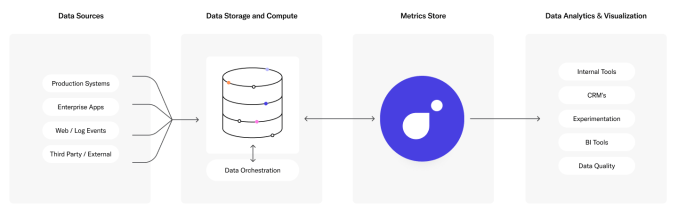
Transform is built around three basic priorities, Handel said.

The first of these has to do with collective ownership of metrics: by building a single framework for measuring these and identifying them, their theory is that it’s easier for a company to all get on the same page with using them. The second of these is to use Transform to simply make the work of the data team more efficient and easier, by turning the most repetitive parts of extracting insights into automated scripts that can be used and reused, giving the data team the ability to spend more time analyzing the data rather than just building datasets. And third of all, to provide customers with APIs that they can use to embed the metric-extracting tools into other applications, whether in business intelligence or elsewhere.

The three products it’s introducing today, called Metrics Framework, Metrics Catalog and Metrics API follow from these principles.

Transform is only really launching publicly today, but Handel said that it’s already working with a small handful of customers (unnamed) in a small beta, enough to be confident that what it’s built works as it was intended. The funding will be used to continue building out the product as well as bring on more talent and hopefully onboard more businesses to using it.

Hopefully might be less a tenuous word than its investors would use, convinced that it’s filling a strong need in the market.

“Transform is filling a critical gap within the industry. Just as we invested in Looker early on for its innovative approach to business intelligence, Transform takes it one step further by providing a powerful yet streamlined single source of truth for metrics,” said Tomasz Tungis, MD, Redpoint Ventures, in a statement.

“We’ve seen companies across the globe struggle to make sense of endless data sources or turn them into actionable, trusted metrics. We invested in Transform because they’ve developed an elegant solution to this problem that will change how companies think about their data,” added Shardul Shah, a partner at Index Ventures.

17 Jun 2021

Anduril raises $450M as the defense tech company’s valuation soars to $4.6B

The AI-powered defense company founded by tech iconoclast Palmer Luckey has landed a $450 million round of investment that values the startup at $4.6 billion just four years in.

In April, reports suggested that the company was on the hunt for fresh investment and headed for a valuation between four and five billion, up from $1.9 billion in July 2020.

The new Series D round was led by angel investor and serial entrepreneur Elad Gil, a former Twitter VP and Googler with a track record of investments in companies with exponential growth. Andreessen Horowitz, Founders Fund, 8VC, General Catalyst, Lux Capital, Valor Equity Partners and D1 Capital Partners also participated in the round.

“Just as old incumbent institutions with little to no organizational renewal impacted our ability to respond to COVID, the defense industry has undergone significant consolidation over the last 30 years,” Gil wrote in a blog post on the investment. “There has not been a new defense technology company of any scale to directly challenge these incumbents in many decades…”

Anduril launched quietly in 2017 but grew quickly, picking up contracts with Customs and Border Protection and the Marine Corps during the Trump administration. Luckey, the young high-flying founder who sold Oculus to Facebook before being booted from the company, emerged as one of President Trump’s most prominent boosters in the generally Trump-averse tech industry.

The company makes defense hardware, including long-flying drones and surveillance towers that connect to a shared software platform it calls Lattice. The technology can be used to secure military bases, monitor borders and even knock enemy drones out of the sky, in the case of Anduril’s counter-UAS tech known as “Anvil.”

Anduril co-founder and CEO Brian Schimpf describes the company’s mission as one of “transformation,” pairing relatively affordable hardware with sensor fusion and machine learning technologies through a contract partner more nimble than established giants in the defense sector.

“This new round of funding reflects our confidence that the Department of Defense sees the same problems we do, and is serious about deploying emerging technologies at scale across land, sea, air, and space domains,” Schimpf said.

The company set its sights on work with the Department of Defense from its earliest days and last year was one of 50 vendors tapped by the DoD to test tech for the Air Force’s own piece of the Joint All-Domain Command & Control (JADC2) project, which seeks to build a smart warfare platform to connect all service members, devices and vehicles that power the U.S. military.

The company’s work with U.S. Customs and Border Protection also matured from a pilot into a program of record last year. Anduril supplies the agency with connected surveillance towers capable of autonomously monitoring stretches of the U.S. border.

In April, Anduril acquired Area-I, a company known for small drones that can be launched from a larger aircraft. Area-I counted the U.S. Army, Air Force, Navy and NASA among its customers, relationships that likely sweetened the deal.

17 Jun 2021

Hit game PUBG Mobile returns to India with scores of questions

Krafton, which filed for an IPO earlier this week, has built a gigantic gaming empire. If the firm is able to raise the target $5 billion from the IPO it will be the largest public offering in its home country, South Korea. The firm has something to celebrate elsewhere in the world, too.

On Thursday, it pulled off another feat that no other firm has been able to achieve: Its sleeper hit title, PUBG Mobile, has made a return to India, which banned the title more than nine months ago.

The world’s second-largest internet market banned over 200 apps last year citing national security concerns. All the apps New Delhi blocked in the nation had links to China. The move was seen by many as retaliation as tension between the two nuclear-armed neighboring nations escalated last year.

Every other app that has been banned by India — and pulled by Google and Apple from their respective app stores in the country in compliance with local government orders — remains in that state. ByteDance, whose TikTok app identified India as its largest market, has significantly downsized its team in the country. (ByteDance runs several businesses in India and many remain operational. Employees have been instructed to stay off the radar.)

Which is what makes PUBG Mobile’s return to India all the more interesting. The game, which has been rebranded to Battlegrounds Mobile India in the South Asia market, is available to download from the Play Store for any user in the country — provided they sign up for an early access before the imminent launch.

Even as PUBG Mobile is now using a different moniker, the game follows the same plot, and the identical home screen greets users with the familiar ecstatic background score.

Moreover, users are offered a quick and straightforward option to migrate their PUBG Mobile accounts to the new app.

Rishi Alwani, the quintessential gaming reporter in India who edits IGN India, told TechCrunch that the new game is “essentially PUBG Mobile with data compliance, green blood, and a constant reminder that you’re in a ‘virtual world’ with such messaging present as you start a game and when you’re in menus.”

The changes are likely Krafton’s attempt to assuage previous concerns from the local authorities, some of whom had expressed concerns about the game’s affect on youngsters.

Image Credits: TechCrunch / screen capture

But these on-the-surface changes raise a set of bigger questions that have been a topic of discussion among several startup founders and policy executives in India in recent months:

  • Did the government of India approve the new game?
  • If not, why has Google permitted the app on the Play Store?
  • Assuming the Indian government has approved the new game, what steps did Krafton take that adequately addressed the Indian government’s concerns?
  • Why has no other app been able to make a return to India so far?

Neither the Indian government nor Krafton have publicly said anything on this subject. Krafton, on its part, has taken steps to assuage India’s concerns. For instance, last year the South Korean firm cut ties with its publishing partner Tencent, the only visible Chinese affiliation — if the Indian government was indeed banning just Chinese apps. Krafton also publicly announced that it will be investing $100 million in India’s gaming ecosystem.

The Indian government’s order and the communication and compliance mechanism for concerned entities have been so opaque on this subject that it is unclear on what grounds Krafton has been able to bring the game back.

One explanation — albeit admittedly full of speculation — is that it’s a new app in the sense that it has a new app ID. In this instance, it happens to have a new developer account, too. Remember, India banned apps, and not the firms themselves. Several Tencent and Alibaba apps, for instance, remain available in India.

This would also explain how BIGO has been able to launch a new app — Tiki Video — under a new developer account and plenty of effort to conceal its connection. That app, which was launched in late February, has amassed over 16 million monthly active users, according to mobile insight firm App Annie. The app’s existence and affiliation with BIGO have not been previously reported.

But the question remains, are these simple workarounds enough to escape the ban? To be sure, some apps, including Battlegrounds Mobile India, are also hosting their data in the country now, and have agreed for periodic audits. So is that enough? And if it is, why aren’t most — if not all — apps making a return to India?

Regardless, the return of PUBG Mobile India is a welcome move for tens of millions of users in the country, many of whom — about 38 million last month, according to App Annie — were using workarounds themselves to continue to play the game.

17 Jun 2021

Hit game PUBG Mobile returns to India with scores of questions

Krafton, which filed for an IPO earlier this week, has built a gigantic gaming empire. If the firm is able to raise the target $5 billion from the IPO it will be the largest public offering in its home country, South Korea. The firm has something to celebrate elsewhere in the world, too.

On Thursday, it pulled off another feat that no other firm has been able to achieve: Its sleeper hit title, PUBG Mobile, has made a return to India, which banned the title more than nine months ago.

The world’s second-largest internet market banned over 200 apps last year citing national security concerns. All the apps New Delhi blocked in the nation had links to China. The move was seen by many as retaliation as tension between the two nuclear-armed neighboring nations escalated last year.

Every other app that has been banned by India — and pulled by Google and Apple from their respective app stores in the country in compliance with local government orders — remains in that state. ByteDance, whose TikTok app identified India as its largest market, has significantly downsized its team in the country. (ByteDance runs several businesses in India and many remain operational. Employees have been instructed to stay off the radar.)

Which is what makes PUBG Mobile’s return to India all the more interesting. The game, which has been rebranded to Battlegrounds Mobile India in the South Asia market, is available to download from the Play Store for any user in the country — provided they sign up for an early access before the imminent launch.

Even as PUBG Mobile is now using a different moniker, the game follows the same plot, and the identical home screen greets users with the familiar ecstatic background score.

Moreover, users are offered a quick and straightforward option to migrate their PUBG Mobile accounts to the new app.

Rishi Alwani, the quintessential gaming reporter in India who edits IGN India, told TechCrunch that the new game is “essentially PUBG Mobile with data compliance, green blood, and a constant reminder that you’re in a ‘virtual world’ with such messaging present as you start a game and when you’re in menus.”

The changes are likely Krafton’s attempt to assuage previous concerns from the local authorities, some of whom had expressed concerns about the game’s affect on youngsters.

Image Credits: TechCrunch / screen capture

But these on-the-surface changes raise a set of bigger questions that have been a topic of discussion among several startup founders and policy executives in India in recent months:

  • Did the government of India approve the new game?
  • If not, why has Google permitted the app on the Play Store?
  • Assuming the Indian government has approved the new game, what steps did Krafton take that adequately addressed the Indian government’s concerns?
  • Why has no other app been able to make a return to India so far?

Neither the Indian government nor Krafton have publicly said anything on this subject. Krafton, on its part, has taken steps to assuage India’s concerns. For instance, last year the South Korean firm cut ties with its publishing partner Tencent, the only visible Chinese affiliation — if the Indian government was indeed banning just Chinese apps. Krafton also publicly announced that it will be investing $100 million in India’s gaming ecosystem.

The Indian government’s order and the communication and compliance mechanism for concerned entities have been so opaque on this subject that it is unclear on what grounds Krafton has been able to bring the game back.

One explanation — albeit admittedly full of speculation — is that it’s a new app in the sense that it has a new app ID. In this instance, it happens to have a new developer account, too. Remember, India banned apps, and not the firms themselves. Several Tencent and Alibaba apps, for instance, remain available in India.

This would also explain how BIGO has been able to launch a new app — Tiki Video — under a new developer account and plenty of effort to conceal its connection. That app, which was launched in late February, has amassed over 16 million monthly active users, according to mobile insight firm App Annie. The app’s existence and affiliation with BIGO have not been previously reported.

But the question remains, are these simple workarounds enough to escape the ban? To be sure, some apps, including Battlegrounds Mobile India, are also hosting their data in the country now, and have agreed for periodic audits. So is that enough? And if it is, why aren’t most — if not all — apps making a return to India?

Regardless, the return of PUBG Mobile India is a welcome move for tens of millions of users in the country, many of whom — about 38 million last month, according to App Annie — were using workarounds themselves to continue to play the game.

17 Jun 2021

Mobility startups can be equitable, accessible and profitable

Mobility should be a right, but too often it’s a privilege. Can startups provide the technology and the systems necessary to help correct this injustice? Shared micromobility, in particular, offers an opportunity for more equitable and accessible mobility within cities, but only if done intentionally. Building equity and accessibility into the business model is not always top of mind for startups looking to pay back investors and make money, and it’s a time-consuming task. Is it still possible to achieve those goals while remaining profitable?

At our TC Sessions: Mobility 2021 event, I sat down with Revel CEO and co-founder Frank Reig, Remix CEO and co-founder Tiffany Chu, and community organizer, transportation consultant and lawyer Tamika L. Butler to discuss how mobility companies should think about equity, why incorporating it from the get-go will save money in the long run, and how they can partner with cities to expand accessible and sustainable mobility.

What does equity mean?

Shared mobility services have often directly appealed to the young, able-bodied and affluent, especially when they first dropped into cities around the world. Older populations and communities of color have been less likely to either have access to or to use shared mobility services, but that’s beginning to change. As mobility startups consider how to weigh providing equitable service while maintaining a profit, Butler outlined the importance of thinking about those who are most vulnerable.

Who isn’t this helping? And it doesn’t matter if that’s a small amount of people, right? So you might say something like, people with disabilities might be proportionally a smaller number of people, Black people might be proportionally a smaller number of people. But if you make things better for folks with a disability, say, by adding curb cuts into sidewalks, that actually makes things better for a ton of people. And so you may be thinking of it … only helping a small group of people. And I think we really have to shift the way we think about equity. It’s not just numbers, who is this going to help the most, it’s … who is often intentionally neglected or pushed aside because their numbers aren’t big enough? (Timestamp: 19:10)

Build equity into the business model from the start

Many startups are just trying to keep their idea alive and start a business at the beginning. They want to solve an essential problem, like lack of socially distanced mobility options, and prove their unit economics so they don’t come back to their investors empty handed. Some companies might even be of the mindset that building equity and accessibility into their business model isn’t their concern. But delivering on those core values will just be the price of doing business in the future, so it certainly should be their concern, Butler said.

I think for companies, I would say that people like to say it takes too much time or costs too much money to do things equitably. But whether or not you’re retrofitting a house or whether or not you’re retrofitting your company, whenever you retrofit something, it costs more money. And so if you think about equity as something you just build in from the beginning, it will actually save you money and take less time than if you try to do it later because someone tells you to do it or you’ve had some controversy or you all of a sudden feel bad. (Timestamp: 4:50)

Reig chimed in to talk about Revel’s access program, which gives 50% off to riders who are on any form of public assistance.

So the access program, for instance, was something from day one. That wasn’t something we added in a year or two later after venture funding … that was still when we were bootstraped, you know, a company in North Brooklyn with 70 mopeds. From day one, I’ve never used the gig economy, customer service agent mechanic battery swapper, from day one, every single person on the team is a regular employee. And I think that’s just a cultural ethos I’ve always wanted in the company. (Timestamp: 6:04)

Micromobility’s potential to alleviate transit deserts

17 Jun 2021

Mobility startups can be equitable, accessible and profitable

Mobility should be a right, but too often it’s a privilege. Can startups provide the technology and the systems necessary to help correct this injustice? Shared micromobility, in particular, offers an opportunity for more equitable and accessible mobility within cities, but only if done intentionally. Building equity and accessibility into the business model is not always top of mind for startups looking to pay back investors and make money, and it’s a time-consuming task. Is it still possible to achieve those goals while remaining profitable?

At our TC Sessions: Mobility 2021 event, I sat down with Revel CEO and co-founder Frank Reig, Remix CEO and co-founder Tiffany Chu, and community organizer, transportation consultant and lawyer Tamika L. Butler to discuss how mobility companies should think about equity, why incorporating it from the get-go will save money in the long run, and how they can partner with cities to expand accessible and sustainable mobility.

What does equity mean?

Shared mobility services have often directly appealed to the young, able-bodied and affluent, especially when they first dropped into cities around the world. Older populations and communities of color have been less likely to either have access to or to use shared mobility services, but that’s beginning to change. As mobility startups consider how to weigh providing equitable service while maintaining a profit, Butler outlined the importance of thinking about those who are most vulnerable.

Who isn’t this helping? And it doesn’t matter if that’s a small amount of people, right? So you might say something like, people with disabilities might be proportionally a smaller number of people, Black people might be proportionally a smaller number of people. But if you make things better for folks with a disability, say, by adding curb cuts into sidewalks, that actually makes things better for a ton of people. And so you may be thinking of it … only helping a small group of people. And I think we really have to shift the way we think about equity. It’s not just numbers, who is this going to help the most, it’s … who is often intentionally neglected or pushed aside because their numbers aren’t big enough? (Timestamp: 19:10)

Build equity into the business model from the start

Many startups are just trying to keep their idea alive and start a business at the beginning. They want to solve an essential problem, like lack of socially distanced mobility options, and prove their unit economics so they don’t come back to their investors empty handed. Some companies might even be of the mindset that building equity and accessibility into their business model isn’t their concern. But delivering on those core values will just be the price of doing business in the future, so it certainly should be their concern, Butler said.

I think for companies, I would say that people like to say it takes too much time or costs too much money to do things equitably. But whether or not you’re retrofitting a house or whether or not you’re retrofitting your company, whenever you retrofit something, it costs more money. And so if you think about equity as something you just build in from the beginning, it will actually save you money and take less time than if you try to do it later because someone tells you to do it or you’ve had some controversy or you all of a sudden feel bad. (Timestamp: 4:50)

Reig chimed in to talk about Revel’s access program, which gives 50% off to riders who are on any form of public assistance.

So the access program, for instance, was something from day one. That wasn’t something we added in a year or two later after venture funding … that was still when we were bootstraped, you know, a company in North Brooklyn with 70 mopeds. From day one, I’ve never used the gig economy, customer service agent mechanic battery swapper, from day one, every single person on the team is a regular employee. And I think that’s just a cultural ethos I’ve always wanted in the company. (Timestamp: 6:04)

Micromobility’s potential to alleviate transit deserts

17 Jun 2021

Canoo to build its first electric vehicle factory in Oklahoma

Canoo, the electric vehicle startup that recently became a publicly traded company through a merger with a SPAC, plans to build a factory in Oklahoma that will employ up to 2,000 workers, newly appointed CEO Tony Aquila said Thursday during the company’s investor day presentation.

The factory will be located on a 400-acre site in the MidAmerica Industrial Park in Pryor, Oklahoma about 45 minutes from Tulsa. The facility, which the company describes as a “mega microfactory” will include a paint, body shop and general assembly plant and is expected to open in 2023. The site is near a number of manufacturing and logistics businesses, Aquila noted.

“It’s a hub that we think is going to grow like crazy,” Aquila said. “In addition to that, it puts you dead center for logistics and movement across North America, so you can get anywhere, same day and back is pretty important.”

Canoo, which has said it will deliver its first EV in the fourth quarter of 2022, also announced it is partnering with Netherlands-based contract manufacturer VDL Nedcar to handle initial production while the factory is being built.

Canoo’s announcement comes nearly a year after Oklahoma lost its bid to convince Tesla to build its next factory in the state. Tesla ultimately picked a site near Austin for the factory, which it has said will produce the Cybertruck, the Tesla Semi and the Model Y and Model 3 for sales to customers on the East Coast.

“We’re super pumped — we think we are the flavor of the month and we are the right place for manufacturing,” Gov. Kevin Stitt said, noting that the state has the lowest electricity costs in the entire country. Those lower rates have helped attract companies like Google, which operates a data center in Pryor.

Canoo’s investor day featured a variety of engineers, designers and executives all of whom focused on certain aspects of the company’s vision. Canoo is focused on products for consumers and commercial customers. All of Canoo’s EVs will share the same skateboard and use different cabins or “top hats” that can be paired on top to create unique vehicles. The company has unveiled several vehicles, including an electric microbus, a pickup and one designed for business-to-business applications.

It was also the first public event with Aquila steering the company that has had a bumpy ride in the past year.

Canoo started as Evelozcity in 2017, founded by former Faraday Future executives Stefan Krause and Ulrich Kranz. The company rebranded as Canoo in spring 2019 and debuted its first vehicle several months later. The unique-looking vehicle and Canoo’s initial plan to offer it only as a subscription helped the company gain the attention of investors and the media. Canoo even landed a partnership with Hyundai to co-develop EVs, but that deal fell apart earlier this year after the company changed its business model and decided to not offer engineering services to other automakers, according to comments made in March by Aquila.

Canoo also lost its cofounders, first Krause, and more recently Kranz. And in May, the company disclosed that is being investigated by the U.S. Securities and Exchange Commission. The investigation is broad and covers the special purpose acquisition company Hennessy Capital Acquisition Corp.’s initial public offering and merger with Canoo, the company’s operations, business model, revenues, revenue strategy, customer agreements, earnings and other related topics, along with the recent departures of certain of the company’s officers, according to a quarterly earnings report posted May 17.


17 Jun 2021

Vitosha Venture Partners launches $30M fund to back Bulgarian-related early-stage startups

Vitosha Venture Partners is a brand new venture fund launching out of Bulgaria, and backed by the Bulgarian government. The 26 million euro ($30M) fund aims to invest in approximately 100 companies, starting from low ticket sizes all the way up to a million, in early-stage and growth-stage companies that are based in or related to Bulgaria.

Vitosha will be co-financed by the European Structural and Investment Funds under the Operational Programme for Innovation and Competitiveness 2014-2020, managed by the Fund of Funds in Bulgaria. Beyond standard VC conventions, it will also back companies that matter for the growth, sustainability, and development of the local economy in Bulgaria and the Central European region.

Speaking to me over a call, co-founder Max Gurvits said: “Bulgaria and this whole region of South-eastern Europe is a very early ecosystem. The cool thing that’s happening here and that’s something we’re excited about and proud of is that because Bulgaria started a little earlier in tech than the neighboring countries, it’s still very early, but there are 1000s of people now in startups.”

He added: “I do think that in Bulgaria, something like the emergence of a unicorn-like UIPath might happen in the next two or three years. So we’re slowly but surely catching up.”

“There’s a lot of FoodTech / AgTech here, there there’s a lot of connected hardware manufacturing like electric bicycles. While those companies might not be groundbreaking or world-changing they are actually quite solid fast-growing businesses that have a pretty high probability of exiting for 2x 3x 4x 5x or more.”

Vitosha Accelerate also run an acceleration program.

The team consists of:
Erik Anderson- Managing Partner (ex WiseGuys)
Max Gurvits – Managing partner
Marin Iliev- Managing partner
Maris Prii – Managing Partner
Nikola Stojanow – Managing Partner
Paul Weinberger- Managing partner
Kamen Bankovski – Principal
Stoyan Nedin – Venture Partner

Portfolio – 17 companies up to date
Investments between EUR 150k and EUR 800k
Hobo – https://hobo.bg
Quendoo – https://www.quendoo.com
Econic One – https://econicone.com
Eirene Studio- https://eirenestudio.com
Tokwise- https://www.tokwise.com
Omnio-https://omniotech.net
Petmall- https://petmall.bg
Assen Aero- http://assen.aero
MeatMe Bar- https://www.meatmebar.com/bg
PelletBox- Stealth

Vitosha ACCELERATE startups (tickets up to EUR 50k)
Gridmetrics – https://www.gridmetrics.co
Trace the Taste- Stealth
FidU Trade-https://fidutrade.com
Augment- https://augment.gg
NulaBG-https://nula.bg
Bye Bye Stuttering- https://www.byebyestuttering.com
Ecopolitech- Stealth

The companies that became part of Vitosha’s portfolio in April are:
Tokwise- €150K
Omnio-€200K
Petmall- €800K
Assen Aero- €600K
MeatMe Bar- €400K
PelletBox- €200K
Gridmetrics-€50K
Trace the Taste-€50K
FidU Trade-€75K
Augment-€50K
NulaBG-€50K
Bye Bye Stuttering-€50K
EcoPolytech-€50K

17 Jun 2021

Apple AirTags UX teardown: The trade-off between privacy and user experience

Apple’s location devices — called AirTags — have been out for more than a month now. The initial impressions were good, but as we concluded back in April: “It will be interesting to see these play out once AirTags are out getting lost in the wild.”

That’s exactly what our resident UX analyst, Peter Ramsey, has been doing for the last month — intentionally losing AirTags to test their user experience at the limits.

This Extra Crunch exclusive is a simplified conversation around this Built for Mars article, which helps bridge the gap between Apple’s mistakes and how you can make meaningful changes to your product’s UX.

For an industry that’s often soured by privacy concerns, Apple has an unusually strong stance on keeping your data private.

AirTag not reachable

There are two primary purposes of an error message:

  1. To notify the user what has gone wrong (and how it affects them).
  2. To help the user resolve the issue.

Most businesses do a decent job at the first one, but it’s rare that a product will proactively obsess over the second.

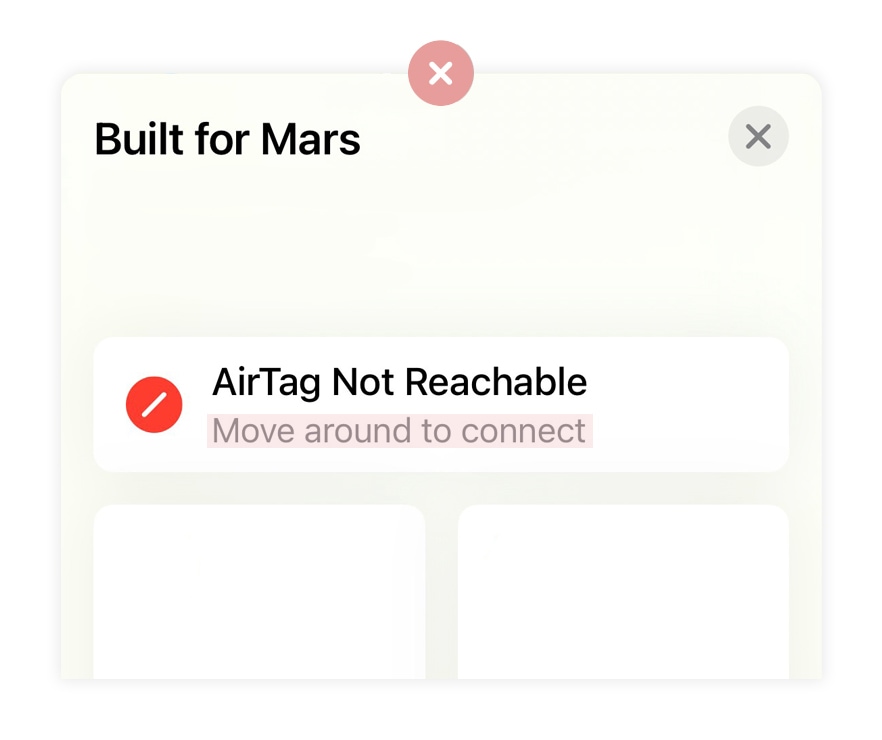
Typically, Apple is one of the few examples that do — it’s indisputably one of the leaders in intuitive design. Which is why I was surprised to see Apple’s error message when an AirTag is not reachable:

Image Credits: Built for Mars screenshot

There’s a huge amount of ambiguity in the statement “move around to connect,” and it fails to mention that this error could be because the AirTag’s batteries have been removed.

Instead, Apple should make this message clickable, which opens a modal to learn more about this issue.

17 Jun 2021

Wise announces plans to go public via direct listing

Wise, the fintech company formerly known as TransferWise, has announced that it wants to become a public company on the London Stock Exchange. Instead of following the traditional IPO route, Wise plans to go public via a direct listing. This is going to be the biggest direct listing on the London Stock Exchange.

If you’re not familiar with Wise, the company specializes in cross-border money transfers. If you want to send money to someone living in another country, traditional retail banks charge a lot in foreign exchange fees, foreign transaction fees, etc.

Of course, there are some well-known alternative options, such as Western Union and MoneyGram. While those companies provide some convenient on-ramp and off-ramp methods, they’re still more expensive than Wise.

With Wise, users first upload money to their Wise account using a bank transfer or a debit card. They can then send money in another currency to a recipient’s bank account. The company tries to be as transparent and upfront as possible when it comes to fixed and variable fees.

Originally founded in 2011, Wise has grown quite a lot as its revenue grew from $422 million to $586 million in its most recent financial year (from £303 million to £421 million respectively). It represents $57 million (£41 million) in profit before tax — the company says it has been profitable since 2017.

Overall, Wise has 10 million customers who process around $7 billion (£5 billion) in cross-border transactions every month. More recently, the company diversified its revenue by adding new products.

For instance, customers can hold money in 56 currencies in their Wise accounts. They get account numbers in 10 different currencies as well as a debit card. This feature is particularly useful for freelancers who want to accept payments in another country or people moving abroad for a year or two.

The company has also expanded beyond B2C with Wise Business. Those accounts work a bit like regular Wise accounts, but with multiple users and additional features. Wise also powers cross-border transactions in third-party services, such as Monzo and N26.

Opting for a direct listing is an interesting move. A few companies have chosen direct listings in the U.S., such as Spotify, Coinbase and Slack. It means that you’re confident there’ll be enough interests from investors as banks aren’t helping you with your introduction.

It also means that Wise doesn’t need more money as a direct listing doesn’t let you raise additional capital.

Like many tech companies, Wise plans to introduce a dual-class share structure, which means that all of Wise’s existing shareholders will get more votes per share for a while. This is going to be an important listing for the European fintech scene and also for the British tech ecosystem. Now, let’s see how investors feel about Wise.