
Year: 2021

16 Jun 2021

Ukrainian police arrest multiple Clop ransomware gang suspects

Multiple suspects believed to be linked to the Clop ransomware gang have been detained in Ukraine after a joint operation from law enforcement agencies in Ukraine, South Korea, and the United States.

The Cyber Police Department of the National Police of Ukraine confirmed that six arrests were made after searches at 21 residences in  the capital Kyiv and nearby regions. While it’s unclear whether the defendants are affiliates or core developers of the ransomware operation, they are accused of running a “double extortion” scheme, in which victims who refuse to pay the ransom are threatened with the leak of data stolen from their networks prior to their files being encrypted.

“It was established that six defendants carried out attacks of malicious software such as ‘ransomware’ on the servers of American and [South] Korean companies,” alleged Ukraine’s national police force in a statement.

The police also seized equipment from the alleged Clop ransomware gang,  said to behind total financial damages of about $500 million. This includes computer equipment, several cars — including a Tesla and Mercedes, and 5 million Ukrainian Hryvnia (around $185,000) in cash. The authorities also claim to have successfully shut down the server infrastructure used by the gang members to launch previous attacks.

“Together, law enforcement has managed to shut down the infrastructure from which the virus spreads and block channels for legalizing criminally acquired cryptocurrencies,” the statement added.

These attacks first began in February 2019, when the group attacked four Korean companies and encrypted 810 internal services and personal computers. Since, Clop — often styled as “Cl0p” — has been linked to a number of high-profile ransomware attacks. These include the breach of U.S. pharmaceutical giant ExecuPharm in April 2020 and the attack on South Korean e-commerce giant E-Land in November that forced the retailer to close almost half of its stores.

Clop is also linked to the ransomware attack and data breach at Accellion, which saw hackers exploit flaws in the IT provider’s File Transfer Appliance (FTA) software to steal data from dozens of its customers. Victims of this breach include Singaporean telecom Singtel, law firm Jones Day, grocery store chain Kroger, and cybersecurity firm Qualys.

At the time of writing, the dark web portal that Clop uses to share stolen data is still up and running, although it hasn’t been updated for several weeks. However, law enforcement typically replaces the targets’ website with their own logo in the event of a successful takedown, which suggests that members of the gang could still be active.

“The Cl0p operation has been used to disrupt and extort organizations globally in a variety of sectors including telecommunications, pharmaceuticals, oil and gas, aerospace, and technology,” said John Hultquist, vice president of analysis at Mandiant’s threat intelligence unit. “The actor FIN11 has been strongly associated with this operation, which has included both ransomware and extortion, but it is unclear if the arrests included FIN11 actors or others who may also be associated with the operation.”

Hultquist said the efforts of the Ukrainian police “are a reminder that the country is a strong partner for the U.S. in the fight against cybercrime and authorities there are making the effort to deny criminals a safe harbor.”

The alleged perpetrators face up to eight years in prison on charges of unauthorized interference in the work of computers, automated systems, computer networks, or telecommunications networks and laundering property obtained by criminal means.

News of the arrests comes as international law enforcement turns up the heat on ransomware gangs. Last week, the U.S. Department of Justice announced that it had seized most of the ransom paid to members of DarkSide by Colonial Pipeline.
16 Jun 2021

Companies should utilize real-time compensation data to ensure equal pay

Diversity, equity and inclusion (DEI) initiatives are often thought to be an issue that can be solved by intuition by some segment of the HR team. However, in reality, it needs to come from a data-driven approach that encompasses the entire workforce.

The primary aspect that companies usually look to, in terms of treating employees fairly, is remuneration. However, having the conversation and agreeing on the need for equality doesn’t mean it will be achieved on an organizational scale.

Particular attention should be paid to addressing inequities in the areas of attracting and hiring candidates, integration, performance assessment, compensation and promotion.

In a recent survey from Mercer that included data from more than 1,000 companies in 54 countries, 81% agreed that it was important to have a plan for advancing gender equality, but just 42% actually had one in place. This points toward a tokenism attitude indicating companies are happy to talk around the issue without addressing it directly.

Despite the fact that women make up roughly half of all college-educated workers in the United States, they are underrepresented in positions of power — just 8% of Fortune 500 companies are led by women, and, incredibly, just 1% by women of color. Furthermore, the last U.S. census revealed that women who are employed full time are paid on average 17% less than men.

While there have been steps to ensure equal pay, such as Canada’s Pay Equity Act, which states that men and women in the public sector should be paid equally, it does not cover the private sector. Given that the Institute for Women’s Policy Research estimates that equal pay will not be reached until 2059, there is still plenty of work to be done.

Particular attention should be paid to addressing inequities in the areas of attracting and hiring candidates, integration, performance assessment, compensation and promotion. Companies need to think about initiatives that are supported by objective tools to drive progress, identify problems and strategize solutions. This is where data can be a great tool to provide insight into DEI: by highlighting shortcomings and areas where there is bias.

Start with data collection

The first step is to create a data set so that tangible metrics can be utilized and turned into actionable decisions. To do this, diversity and inclusion officers need to be given the opportunity to weed out bias.

Obviously, the data would drive decisions on areas such as compensation. But far too often, director-level discussions don’t involve the talent acquisition team. To eradicate the pay gap and ensure compensation is equalized on individual merit, this needs to change. Line managers and talent acquisition teams have the best knowledge of their staff and are well placed to procure the right information to help senior managers make equitable decisions.

16 Jun 2021

GM increases EV and AV investments to $35B through 2025

General Motors Co. has yet again upped the amount it says it will spend on electric and autonomous vehicle investments, saying Wednesday that it would spend $35 billion through 2025 – an $8 billion increase from its previous plan announced in November 2020.

The company has set a target to bring 30 new EVs to the global market 30 by 2025 and to transition to all-zero-emission by 2035. With the new investment, GM said it will add new electric commercial trucks to its North American plan, as well as build additional U.S. assembly capacity for electric SUVs.

Beyond building out a large portfolio of new electric models, the automaker has taken a multi-pronged approach in its quest to lead the EV revolution: it is also investing in two new battery cell plants under its joint venture with LG Chem, dubbed Ultium Cells LLC; and it’s poured funding into Cruise, its autonomous driving arm that it purchased for majority-ownership in 2016.

The news was announced one day after Cruise said it had tapped a $5 billion line of credit from the OEM’s financial arm as it prepares for commercialization of its Origin electric and autonomous vehicle. Commercial production of the Origin is anticipated to begin in 2023.

GM also manufactures hydrogen fuel cells under its HYDROTEC joint initiative with Honda. It confirmed Wednesday that it will launch the third-generation HYDROTEC cells by mid-decade. The automaker has partnership agreements with heavy truck developer Navistar and Liebherr-Aerospace, which is developing hydrogen fuel cell power systems for aircraft.

The company also said yesterday it would supply fuel cells and EV batteries to Wabtec Corportation, a Pittsburgh-based company developing the world’s first battery locomotive.

“GM is targeting annual global EV sales of more than 1 million by 2025, and we are increasing our investment to scale faster because we see momentum building in the United States for electrification, along with customer demand for our product portfolio,” CEO Mary Barra said in a statement Wednesday.

Ford announced a similar increase in EV investment last month, when it said it would invest $30 billion by 2025, up from $22 billion by 2023.

16 Jun 2021

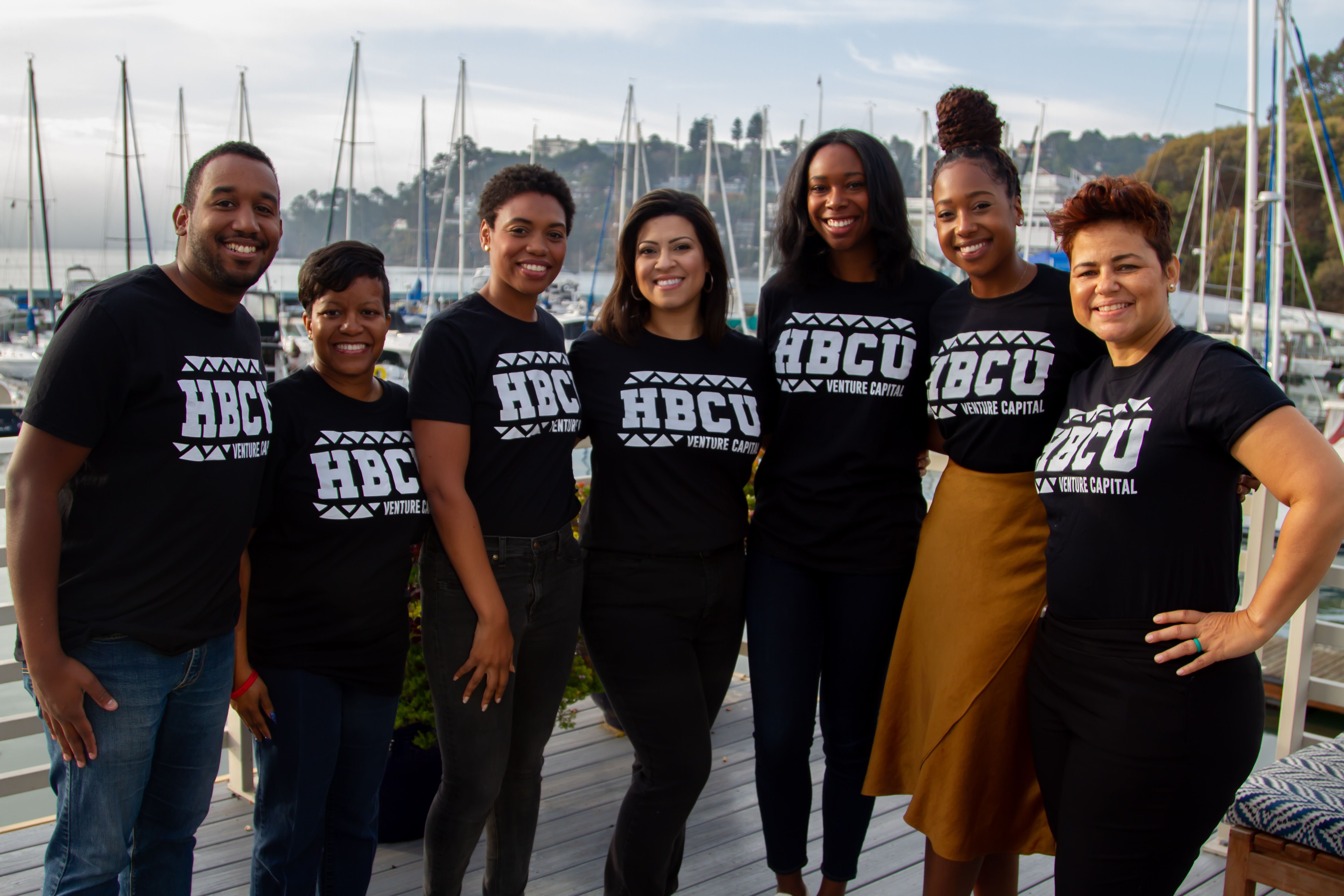
HBCUvc’s new million-dollar fund wants to give overlooked investors a track record

HBCUvc, a non-profit organization that wants to diversify the world of venture by rooting itself in historically Black colleges and universities, nearly shut down last year. Founder Hadiyah Mujhid met with her team, an entirely Black and Latinx staff, and warned them that they only had two months left before she would have to shut down the three-year operation.

One week after that conversation, George Floyd, a 46-year old Black man, was unjustly murdered by police in Minneapolis. His death prompted global Black Lives Matter protests and a nationwide reckoning with racism. In tech, it led to a rush of venture firms publicly pledging to back more Black founders, trying to make up for a history of inequality in allocation of dollars.

The wave of support resulted in HBCUvc landing its biggest one-day unsolicited donation that it ever saw, $40,000. In the year since, the non-profit was able to double its budget and team, and tripled its impact by launching programs in Baltimore, Alabama, and Chicago

And now, HBCUvc has raised a debut capital arm that will invest non-dilutive capital in Black, Indigenous, and Latinx early-stage entrepreneurs. The $1 million fund was raised from a group of philanthropic investors including the Mark Cuban Foundation, the John D. and Catherine T. MacArthur Foundation and Google for Startups.

“It’s a very weird feeling to know that all of this, and the impetus for all this was because off unjustly murder,” Mujhid says, about one year later. “It sounds cold, but [my advisors] say that sometimes it takes a tragedy to spark a shift in how we think and do things. And so [I’m] recognizing this as an extra opportunity to shift the industry.”

HBCUvc staff.

Teaching capital

The investment vehicle, dubbed the Venture Capital Lab Fund, is different from a traditional venture capital fund. Because it offers non-dilutive financing, HBCUvc does not take equity from a startup that it invests in. The checks aren’t donations either, Mujhid said, because the funding goes to for-profit entrepreneurs and the non-profit does not get a tax-write off for it.

Instead, Mujhid thinks the best way to describe the Venture Capital Lab Fund is “teaching capital.” Similar to how teaching hospitals give aspiring doctors a way to practice and learn their craft before formally entering the field, the fund wants to do that for aspiring investors.

The fund will give HBCUvcs some 230 venture fellows, all from underrepresented bbackgrounds, check-writing experience. Fellows are invited to identify an entrepreneur, write an investment memo, and submit to the HBCUvc investment committee, a board of partners as well as alumni community members.

“This is an opportunity to give as many of our fellows who go through our program, an opportunity to work to develop a track record right now,” she said.

While the fund has no specific number of checks that it plans to write, around half the capital will be allocated to founders who are tied to historically Black colleges and universities.

“Entrepreneurs that we see within our community are kind of eager to accept funding and sometimes they’re going into deals too early, and sometimes they’re taking funding and giving up equity way too soon,” Mujhid said. “This could be an opportunity to take funding, without giving away equity.”

The checks are meant to replace the “angel round” with an average size of $5,000 for student founders, and $10,000 for non-student founders.

A wave of new investment vehicles for Black, and underrepresented founders, has been growing in recent weeks. Google for Startups announced today that it is launching a $5 million Black Founders fund that will offer $100,000 in non-dilutive funding to 50 Black founders from within its program and community. Last week, Screendoor launched as a $50 million fund-of-funds to back underrepresented, emerging investors. And last month, Collab Capital closed its $50 million debut fund that will be invested solely in Black founders.

“There are a lot of organizations right now that are starting funds [with] the primary goal of supporting founders,” Mujhid said. “And that’s a goal of ours, but we’re hoping to have a ripple effect of training and really providing onramps for the next best in-class investors…and in order to do that, they have to have a training vehicle.”

One unexpected challenge to that progress, she says, is the return to in-person work as the pandemic fades away.

In-person is out 

“When we were working with partners pre-COVID, investors would say that [they] need someone who’s based in San Francisco,” she said. “And we’d say, good luck because most of our demographic isn’t really here.” In contrast, going online opened up programming for the non-profit because it removed geographic barriers. It recently onboarded its largest intern class to date: 45 interns working at 40 venture capital firms across America.

Now, as firms open back up, she’s worried about the recreation of geographic barriers, and if they will negatively affect opportunities for underrepresented folks who want to get experience in the industry. The non-profit has begun advocacy work on educating tech professionals on how racial barriers intertwine with geographic barriers. Part of HBCUvc’s push will be around asking companies to rethink their policies as they open up, specifically by holding true to their commitment of diversity.

Despite this, remote work came with its own equity issues. Funding for female founders dropped to 2017 levels as many check-writers turned to existent, largely male and white, networks while investing remotely. According to Crunchbase data, U.S companies raised nearly $150 billion in venture capital, and of that, only 1%, or $1 billion, of that total went to African-American or Black startup founders.

And the pledges that investors made? While HBCUvc was able to “shift the trajectory of its programming” thanks to an outpour of support, Mujhid thinks that a lot of the initial buzz around backing Black founders was “unfortunately, a knee jerk reaction.”

“I was seeing our name everywhere,” she said, describing the series of memos and tweets that firms began putting out to show their commitment to diversity. Half the mentions came from people that HBCUvc had never talked to before. “You are riding this tragedy out and you are trading on our name unethically,” she said. Some of the interest turned into partnerships, some of it didn’t.

As they built out new programs based on an increased budget, a concern of Mujhid’s, then and now, was what it looks like if people shift priorities, or fall off their commitments. But for now, she feels like they are riding a fortunate wave, one that has the potential to make Black founders and investors a sturdy part of tech’s dollars and deals.

16 Jun 2021

Yasmin Razavi of Spark Capital will sit in judgment at TechCrunch Disrupt 2021’s Startup Battlefield

Joining us on stage as a judge for TechCrunch Disrupt 2021‘s Startup Battlefield will be Yasmin Razavi, general partner at Spark Capital. Her engineering background and fintech chops should make for incisive questions for the founders presenting.

Razavi invests in growth-stage enterprise, fintech and developer companies, but her background is until fairly recently an engineering-focused one. She grew up in Tehran, studied engineering at the University of Toronto and got her MBA at Harvard Business School.

A stint at McKinsey eventually led to being a product manager at Snap, where she built the tech behind the app’s monetization stack. In 2017 she joined Spark, and since then has led investments in Marqueta, Deel, Rapyd, Niantic, Capitolis and Earnin.

We recently had Razavi at Disrupt as a panelist, and of course if you’re an Extra Crunch subscriber you can watch the whole thing here.

“Ultimately anyone who wants to be a shareholder or investor in your business wants to understand the unit economics of your business,” she said during the  panel. “For me, there’s all sorts of fancy metrics being thrown around; ultimately they all come down to what is the unit economics, and what is the payback I can expect when I invest in growth?”

Razavi’s philosophy is go to market and out-execute the competition, then capitalize on that success. Why anyone would want to do the opposite is hard to say, but the point is to move quickly and decisively as early as possible so that making money later is a natural consequence rather than a scramble.

Catch her on the Disrupt stage and grab your ticket to Disrupt 2021 now!

16 Jun 2021

No, NFTs aren’t copyrights

For contemporary artists, attaching work to the blockchain in the form of a non-fungible token (NFT) may seem like a secure and verifiable way to sell art online.

In some ways, it is. Blockchain inherently records time-stamped data on all transactions, with a permanent indication of ownership across a distributed ledger. A look inside a blockchain’s transactions will provide all the information needed about when an NFT was traded, who was involved in the transaction and how much was spent.

But the reality of NFT ownership is much more complicated than one might imagine. As a new crypto asset class, NFTs appear to exist almost unbound by current regulatory systems. But when combined with art, there are overlaps to consider. Understanding the legal pitfalls of the contemporary NFT ecosystem is the first step in unlocking its potential.

Does copyright exist on the blockchain?

High hopes abound for the potential of NFTs to serve as copyright alternatives, with many believing them to be copyrights themselves. When viewed at face value, it’s easy to understand the confusion.

The NFT purchaser owns nothing more than a unique hash on the blockchain with a transactional record and a hyperlink to the file of the artwork.

The truth is, NFTs are just tokens that represent an asset, completely separate from the assets themselves. Because every NFT represents a unique asset, a single NFT can’t be duplicated while maintaining the same value as the original. Many equate this exclusive form of ownership with ownership of the work itself, but the distinction must be emphasized.

This misconception goes further. The range of possibilities for what can be an NFT coincides surprisingly well with works eligible for copyright. While every jurisdiction defines “works” in different ways, none stray too far from the essentials. In Canada, for example, copyright protection extends to literary, artistic, dramatic or musical works in addition to performances, recordings and other related works. Creators need not apply for these protections — the state provides them inherently upon the creation of the work.

Naturally, this protection is guaranteed for the original work that an NFT represents. When artwork is created and auctioned on an NFT marketplace, the copyright functions almost exactly as it would in an in-person scenario, with the copyright retained by the artist. But a lack of copyright trading infrastructure that complies with international law makes the exchange of NFT copyrights impossible on current platforms.

So unless an external agreement is made between the artist and the buyer, the bundle of copyrights to an NFT still belong to the original artist. The NFT purchaser owns nothing more than a unique hash on the blockchain with a transactional record and a hyperlink to the file of the artwork.

Without legal parameters, fraud is inevitable

The issue of NFT copyright tracking gets even trickier when considering the potential for theft and fraud. In order to be added to the blockchain, NFTs must be “signed” by the uploader in a process known as “minting.” Similar to a painter’s signature on their painting, this feature is intended to link the NFT to its creator. Things can go wrong when minters lie about their identity, which is not uncommon across many NFT platforms.

The issue stems from the lack of a strong legal framework in the NFT market. One can mint a tweet, art piece or even a gif of Nyan Cat without being the actual creator on some platforms. As a result, many artists have reported seeing their art being stolen and sold in NFT form without their consent in what would clearly be a copyright violation in the traditional art marketplace.

This issue is particularly pervasive among NFT tweet exchanges. A Twitter bot known as @tokenizedtweets went on a minting spree earlier this year, sending shockwaves throughout Twitter and the NFT community. Its policy of creating NFTs from viral tweets without the author’s consent or even notification caused an outcry from several actors, artists and other creators, provoking responses from names as big as William Shatner, who expressed concern about “these @tokenizedtweets stealing content, images I upload and my tweets which are all under my copyright being tokenized and sold without permission.”

Theft and fraud are natural results of platforms that lack a strong legal infrastructure. The actions of @tokenizedtweets, now banned from Twitter, demonstrates this issue well.

What’s missing? International compliance

So far, no NFT platforms have ventured into internationally compliant territory for the copyright of art that an NFT sale represents. Doing so would be a tremendous leap for the NFT ecosystem. In addition to minimizing fraud through stronger copyright enforcement, international compliance would allow for tokenized copyright exchange within the blockchain itself.

The groundwork has already been laid thanks to the 1886 Berne Convention, an international agreement that guarantees standardized copyright protection at the moment a work is created in any of its 179 signatory countries. The treaty was tested in 2014, for example, when Tom Petty sued Sam Smith for copyright infringement over Smith’s hit song, “Stay With Me,” which is almost melodically identical to Petty’s “I Won’t Back Down.” The suit and settlement, which includes royalties to Petty’s estate, demonstrated the continuing functionality of the Berne Convention.

The 1996 WIPO Copyright Treaty formally brought Berne principles into the digital art realm, but many Berne Convention signatories didn’t sign it. With no new treaties on the horizon, the private sector may have to pick up the slack left behind by world governments.

The NFT world still fails to comply with the diversity of copyright law around the world despite the uniformity imposed by international treaties. To move the industry away from speculation and into global functionality, international copyright compliance must be incorporated into this emerging ecosystem.

16 Jun 2021

Dear Sophie: Is it possible to expand our startup in the US?

Here’s another edition of “Dear Sophie,” the advice column that answers immigration-related questions about working at technology companies.

“Your questions are vital to the spread of knowledge that allows people all over the world to rise above borders and pursue their dreams,” says Sophie Alcorn, a Silicon Valley immigration attorney. “Whether you’re in people ops, a founder or seeking a job in Silicon Valley, I would love to answer your questions in my next column.”

Extra Crunch members receive access to weekly “Dear Sophie” columns; use promo code ALCORN to purchase a one- or two-year subscription for 50% off.


Dear Sophie,

My co-founders and I launched a software startup in Iran a few years ago, and I’m happy to say it’s now thriving. We’d like to expand our company in California.

Now that President Joe Biden has eliminated the Muslim ban, is it possible to do that? Is the pandemic still standing in the way? Do you have any suggestions?

— Talented in Tehran

Dear Talented,

Yes, it’s possible! Unfortunately, yes, the COVID-19 pandemic is still making the immigration process a bit challenging, but remember, where there’s a will, there’s most often, in immigration law, a way.

On his first day in office in January, Biden rescinded the ban on visas for many majority-Muslim countries, including Iran. The ban had been in place since 2017 and nearly 42,000 visa applications were denied, according to the U.S. Department of State.

Biden also allowed the bans on the issuance of H-1B, L-1, and J-1 visas and green cards at U.S. embassies and consulates that the previous administration put in place last year to lapse.

That means international startup founders like you and other international talent living outside the United States can start thinking about obtaining these visas and green cards without necessarily requiring exceptions to do so. In a recent podcast episode, I talked about these and other immigration-related changes, as well as those promised by the Biden administration. Take a listen to find out more!

As you probably know, most travelers from Iran are currently not allowed entry into the U.S. because of the COVID-19 travel ban, and most U.S. embassies and consulates are not open for routine visa and green card application processing. Because the United States has not had an embassy or consulate in Iran since the Iran hostage crisis of 1979, you and your co-founders should find out which U.S. embassies or consulates are currently processing routine visa and green card applications — and are in countries that are not on the suspended entry list — and apply there. We’re still waiting for detailed information from the State Department on the equivalent of reparations for individuals who were affected by the Muslim ban.

In addition, I recommend that you consult with an experienced immigration attorney who can help you devise an immigration strategy for yourself, your co-founders and your families based on your personal and professional goals. Now, here are a few options for you to consider.

L-1A visa to open a U.S. office for your startup

16 Jun 2021

On a growth tear, DuckDuckGo reveals it picked up $100M in secondary investment last year

Privacy tech continues cooking on gas. To wit: Non-tracking search engine DuckDuckGo has just revealed that it beefed up its balance sheet at the back end of last year with $100 million+ in “mainly secondary investment” — from a mix of existing and new investors.

Its blog post name-checks Omers Ventures, Thrive, GP Bullhound, Impact America Fund, and also WhatsApp founder Brian Acton; inventor of the world wide web Tim Berners-Lee; VC and diversity activist Freada Kapor Klein; and entrepreneur Mitch Kapor as being among the participating investors. So quite the line up.

DuckDuckGo said the secondary investment allowed some of its early employees and investors to cash out a chunk of their equity while bolstering its financial position.

Although it also says its business — which has been profitable since 2014 — is “thriving”, reporting that revenues are now running at $100M+ a year. Hence it not needing to keep dipping into an external investor pot.

Its last VC raise was in 2018 when it took in $10M after being actively pursued by Omers Ventures — who convinced it to take the money to help support growth objectives (especially internationally).

DDG has a few other metrics to throw around now: Over the last 12 months it said its apps were downloaded over 50M times — more than in all prior years combined.

It’s also revealed that its monthly search traffic increased 55% and says marketshare trackers indicate that it grabbed the #2 spot for search engine on mobile in a number of countries, including the U.S., Canada, Australia, and the Netherlands. (StatCounter/Wikipedia).

“We don’t track our users so we can’t say for sure how many we have, but based on market share estimates, download numbers, and national surveys, we believe there are between 70-100 million DuckDuckGo users,” it added.

A looming shift to Google’s Android choice screen in Europe, where regulators have forced the company to present users of mobile devices that run its OS with rival options when they’re setting a default search engine, looks likely to further boost DuckDuckGo’s regional fortunes.

Google will be ditching the current paid auction model — so rivals which have a valuable alternative proposition for users (like privacy) combined with strong brand awareness (and, well, everyone likes ducks… ) have the best chance yet to take slices out of Google’s marketshare.

DuckDuckGo’s blog post confirms it’ll be dialling up its marketing in Europe and other regions.

“Our thriving business also gives us the resources to tell more people there is a simple solution for online privacy they can use right now. Over the last month, we’ve rolled out billboard, radio, and TV ads in 175 metro areas across the U.S., with additional efforts planned for Europe and other countries around the world,” it notes.

So it look like a good chunk of DDG’s secondary funding will be spent on growth marketing — as it seeks to capitalize on rising public attention to online privacy, tracking and creepy ads, itself fuelled by years of data scandals.

Awareness is also now being actively driven by Apple’s recent switch to inform iOS users of third party app tracking and give people a simple way to say no — which includes slick, Cupertino-funded ad campaigns (such as the one below) which are clearly intended to turn and engage mainstream heads…

It’s fair to say it’s probably never been easier to craft a simple and compelling marketing message around privacy — and that’s also a testament to how far privacy tech has come in terms of usability and accessibility.

So, yes, DuckDuckGo’s business sure looks like it’s sitting pretty at this juncture of the web’s evolution. And its blog post talks about “becoming a household name for simple privacy protection”. So the scale of its ambition is clear.

“Privacy skeptics have dominated the discussion about online privacy for too long. “Sure people care about privacy, but they’ll never do anything about it.” It’s time to lay this bad take to rest,” it adds.

More products are also on the slate from the 13-year veteran privacy player.

It already bolted on tracker-blocking back in 2018 but is looking to go further — saying that it will be rolling out additional privacy features to what it bills as its “all-in-one privacy bundle”, including an email protection tool that will be launched in beta “in a few weeks” and which it says will “give users more privacy without having to get a new inbox”.

“Later this summer, app tracker blocking will be available in beta for Android devices, allowing users to block app trackers and providing more transparency on what’s happening behind the scenes on their device. And Before the end of the year, we also plan to release a brand-new desktop version of our existing mobile app which people can use as a primary browser,” it goes on, adding: “By continuing to expand our simple and seamless privacy bundle, we continue to make our product vision, ‘Privacy, simplified.’ a reality.”

That’s another trend we’re seeing in privacy tech: Innovators who have carefully and credibly built up a solid reputation around one type of tech tool (such as search or email) find themselves — as usage grows — perfectly positioned to branch out into offering a whole bundle or suite of apps they can wrap in the same protective promise.

Another player, ProtonMail, for example, has morphed into Proton, a privacy-centric company which offers freemium tools for not just end-to-end encrypted email but also cloud storage, calendar and a VPN — all neatly positioned under its pro-privacy umbrella.

Expect more development momentum as privacy tech continues to accelerate into the mainstream.


16 Jun 2021

Introhive raises $100M for AI-powered sales tools to help companies build “relationship graphs”

By its nature, sales one of the most social faces of a business, so it’s no surprise that there are tools being built for sales teams that are tapping into some of the most interesting dynamics of the world of social networking, and that the startups that are doing this most successfully are making a killing.

In the latest example, a startup out of Canada called Introhive — which has built an AI engine that ingests huge amounts of data from across disparate applications to help companies (and specifically anyone in their organization that is selling someone) to build better “relationship graphs” for target organizations — is announcing $100 million in funding.

Growth equity firm PSG is leading the round, with The Business Development Bank of Canada (BDC), Evergreen Capital and Mavan Capital Partners also participating.

The company is not disclosing valuation but CEO and co-founder Jody Glidden tells me the company is doing well. It has raised about $150 million to date and is doubling revenues every year for the last several with a platform used by large enterprises — PwC, Colliers International, Wilson Sonsini Goodrich & Rosati, Plante Moran and Clark Nexsen few of them. Typical deployments range between 10,000 and 100,000 seats — it’s not just people with “sales” in their job titles using Introhive — and customer retention is currently at 95%.

The idea for Introhive came as many do to enterprise startup founders: they identify something that doesn’t quite work as they want it to, and then start a new company to try to fix it. In the calse of Glidden, he and Stewart Walchli were at RIM (the old parent of BlackBerry), which had acquired a previous startup of theirs called Chalk Media.

Although they had just joined a much bigger company (it was 2008, and BlackBerry was still far from being completely killed off by Google and Apple) Glidden said he was surprised to see how hard it was to tap its vast troves of information to find prospective sales leads.

“We realized there were a whole lot of problems with sales people at RIM not able to hit their revenue numbers,” he recalled, and so they started asking themselves some questions. “Are they bringing in right lead data? Are they able to be as intelligent as they can be?” It took some years — four, exactly — and perhaps the rise of Facebook and its focus on the “social graph,” for them to land on how to articulate the problem. They needed to “unlock relationship graph in CRM,” Glidden said.

And Introhive was the company that they formed in 2012 to address that. The company not only provides a way to better leverage CRM-related data to find the best targets for particular products or services, but it also provides analytics to the team to measure how people are doing, and over time also helps predict “winnability”.

But that was not immediate: it took several years to build out its AI platform, Glidden said, with a lot of trial and error to ensure that the data that Introhive ingested was structured correctly to match up with other information to yield productive information.

“We ran into a big problems in the first years because there were so many potential systems to tap into, homegrown or otherwise, for certain info. We effectively spent a lot of time building our own version of Mulesoft to fix that,” he said with a laugh. “But since it’s also something we use for our customers we ended up employing hundreds of engineers to build this underpinning layer to understand it all.”

As a result, it took between four and five years for Introhive to make its own first sale, and in the process the whole company almost went under, he recalled. “It took a long time to get that engine running because if you are automating data that is wrong 35% of the time, you won’t keep your customers.”

The machine is more well-oiled today, of course, and is on a roll to bring in more functions to work off the data trove that it has built.

There is something about the service that reminds me a bit of LinkedIn or ZoomInfo — which you may use in your own work, or come across when Googling someone online for some reason (hey – I’m not asking why here) — for providing some kind of data base/org chart of people connected to a business. But to be very clear, the data that Introhive builds for a customer stays with that customer, and doesn’t go anywhere else.

Glidden says that there are no plans to build any kind of “freemium” version of the service, or one that anyone can tap as a SaaS, but rather to remain focused on helping larger enterprises make better sense of their data and how it can better inform the wider concept of sales.

That in itself raises an interesting point about Introhive and business in general. When you consider a company like PwC, there are likely many people who specifically might hold a job title with the word “sales” in it, but just as many whose jobs are predicated on closing deals, consultants and partners for example, who do not, but might just as easily benefit from having better visibility of a “relationship graph” of people connected to buying products at a business they are working with, or want to work with. Sales is more than just about salespeople for many organizations.

And for that reason, you can guess that one interesting aspect of Introhive is if it might evolve these tools over time to tackle other parts of an organization and how it works. Similar to the social graphs of social media, which map out how people can be connected to one another, relationship graphs in the workplace potentially resonate well beyond signing a deal, too. Business intelligence and marketing automation are already in the mix for the company.

“Introhive is on the forefront of helping grow sales and customers through its visionary, AI-powered revenue acceleration platform built for companies of all sizes and complexity. It seamlessly improves business operations across multiple departments by helping teams reduce time on manual inputs and giving them advanced insights on where they can generate more revenue, build more relationships and easily identify what great sales reps are doing that average reps aren’t,” said PSG Managing Director, Rick Essex. “The team’s acumen and highly capital-efficient model has set the company on a clear path for growth, and we’re proud to partner with them on this journey.”

16 Jun 2021

Self-driving trucks startup Kodiak Robotics snags investment, partnership from Bridgestone

Tire-making giant Bridgestone has taken a minority stake in Kodiak Robotics, the Silicon Valley-based startup developing autonomous trucks, as part of a broader partnership to test and develop smart tire technology.

While the terms of the deal weren’t disclosed, Kodiak Robotics co-founder and CEO Don Burnette told TechCrunch that this is a direct financial investment. Bridgestone CTO Nizar Trigui has also joined the Kodiak board as an observer.

The deal involves more than capital. The two companies have also formed a strategic partnership focused on advancing Bridgestone’s tire tech and fleet management system. Kodiak will use Bridgestone’s sensor-laden tires and fleet management system on its self-driving trucks, which are used to carry freight between Dallas and Houston as part of its testing program. The company recently said it is expanding its freight carrying pilots to San Antonio. Kodiak also tests its self-driving trucks — always with a safety operator behind the wheel — in and around Mountain View, California.

Semi-trucks travel 100,000 to 150,000 miles a year, Burnette said, adding that tire integrity and tire monitoring are integral to the safety of trucking, whether they’re driven by a human or computer.

“Safety of an autonomy system ultimately comes down to our ability to manipulate the tires that touch the road when you are accelerating or braking or steering,” Burnette said. “You need to be able to rely on your tires to actually perform the way they are expected to perform otherwise your safety envelope is not necessarily guaranteed.”

Kodiak will use these smart tires to monitor pressure, temperature and even measure the loads on the wheels, which plays a role in vehicle dynamics and maneuverability. Kodiak will share the data it collects with Bridgestone, which the company can use to improve the chemistry of its tires.

Tire companies like Bridgestone already collect basic information from telematics providers that helps determine where trucks are driven, what types of roads they use as well as tire pressure and temperature. Predictive models are then developed based on that data.  Autonomous vehicle companies bring an added value to tire companies, Burnette noted. Kodiak’s self-driving trucks are loaded with sensors of their own, which allows the company to collect massive amounts of driving data that can help Bridgestone understand exactly how its tires are being used.

“Autonomy providers like Kodiak have all of the raw data specifically on how the trucks are being driven,” he said. “We know what the forces are, we know what the steering is, we know what the braking pressures that were being commanded in real time. And so we can gather a wealth of data that has never been previously possible to collect for companies like Bridgestone.”

This allows Bridgestone to build predictive models that will more accurately be able to predict the eventual lifetime and also possibly give warnings to when tires may fail out of field. “And that’s ultimately what Kodiak  is really interested in,” Burnette added.

The news follows Kodiak’s announcement in May that it was partnering with South Korean conglomerate SK to explore the possibility of deploying its autonomous vehicle technology in Asia. The ultimate aim of the SK partnership is to sell and distribute Kodiak’s self-driving technology in the region. Kodiak will examine how it can use SK’s products, components and technology for its autonomous system, including artificial intelligence microprocessors and advanced emergency braking systems. Both companies have also agreed to work together to provide fleet management services for customers in Asia.