Year: 2021

15 Jun 2021

Android announces six new features, emphasizing safety and accessibility

Android shared information today about six features that will roll out this summer. Some of these are just quality of life upgrades, like starring text messages to easily find them later, or getting contextual Emoji Kitchen suggestions depending on what you’re typing. But other aspects of this update emphasize security, safety, and accessibility.

Last summer, Google added a feature on Android that basically uses your phone as a seismometer to create “the world’s largest earthquake detection network.” The system is free, and since testing in California, it’s also launched in New Zealand and Greece. Now, Google will introduce this feature in Turkey, the Philippines, Kazakhstan, Kyrgyz Republic, Tajikistan, Turkmenistan and Uzbekistan. The company says that they’ll continue expanding the feature this year, prioritizing countries with the highest earthquake risk.

Image Credits: Google

Google is also expanding on another feature released last year, which made Google Assistant compatible with Android apps. In the initial update, apps were supported like Spotify, Snapchat, Twitter, Walmart, Discord, Etsy, MyFitnessPal, Mint, Nike Adapt, Nike Run Club, eBay, Kroger, Postmates, and Wayfair. Today’s update mentioned apps like eBay, Yahoo! Finance, Strava, and Capital One. These features are comparable to Apple’s support of Siri with iOS apps, which includes the ability to open apps, perform tasks, and record a custom command.

When it comes to accessibility, Google is ramping up its gaze detection feature, which is now in beta. Gaze detection allows people to ask Voice Access to only respond when they’re looking at their screen, allowing people to naturally move between talking with friends and using their phone. Now, Voice Access will also have enhanced password input — when it detects a password field, it will allow you to input letters, numbers, and symbols by saying “capital P” or “dollar sign,” for example, making it easier for users to more quickly enter this sensitive information. In October, Google Assistant became available on gaze-powered accessible devices, and in the same month, Google researchers debuted a demo that made it so people using sign language could be identified as the “active speaker” in video calls. Apple doesn’t have a comparable gaze detection feature yet that’s widely available, though they acquired SensoMotoric Instruments (SMI), an eye-tracking firm, in 2017. So, hopefully similar accessibility features will be in the works at Apple, especially as Google continues to build out theirs.

Today’s Android update also lets Android Auto users customize more of their experience. Now, you can set your launcher screen from your phone, set dark mode manually, and more easily browse content on media apps with an A-Z scroll bar and “back to top” button. Messaging apps like WhatsApp and Messages will now be compatible on the launch screen – proceed with caution and don’t drive distracted – and EV charging, parking, and navigation apps will now be available for use.

15 Jun 2021

Refraction AI’s Matthew Johnson-Roberson on finding the middle path to robotic delivery

Refraction AI calls itself the Goldilocks of robotic delivery. The Ann Arbor-based company, which recently raised a $4.2-million seed round and expanded operations to Austin, was founded by a two University of Michigan professors who think delivery via full-size autonomous vehicles (AV) is not nearly as close as many promise, and sidewalk delivery comes with too many hassles and not enough payoff. Their ‘just right’ solution? Find a middle path, or rather, a bike path.

The company’s REV-1 robot, which co-founder and CTO Matthew Johnson-Roberson debuted on the TechCrunch Sessions: Mobility stage in 2019, was built on a foundation of a bicycle. At about 4 feet tall and 32 inches wide, the three-wheeled vehicle can travel at up to 15 miles per hour, which means it can stop quickly to avoid obstacles while still being faster than a human.

The intermediate speed also means that the REV-1 doesn’t need to see as far ahead as a full-size AV, which allows it to function well on radars, sensors and cameras instead of requiring expensive lidar, according to the company.

Johnson-Roberson has spent nearly 20 years in academic robotics. Universities are home to many of the advances in field robotics, but the average person doesn’t see many such applications everyday when they look out their window. This desire to make something that is useful to the general public has been a huge motivator for the academic-turned-founder.

The following interview, part of an onoing series with founders who are building transportation companies, has been edited for length and clarity. 

TechCrunch: You unveiled Refraction AI on the TechCrunch stage two years ago. How has it evolved since?

Matthew Johnson-Roberson: It’s been a really exciting ride. At that time, we had one vehicle — the one that we rolled out on stage — and now we have 25 vehicles in Ann Arbor and Austin, which we just announced. So things have changed quite a bit in the intervening years. We had already predicted a lot of changes around food delivery, specifically, and lots of those were accelerated by the pandemic.

15 Jun 2021

Elisity raises $26M Series A to scale its AI cybersecurity platform

Elisity, a self-styled innovator that provides behavior-based enterprise cybersecurity, has raised $26 million in Series A funding.

The funding round was co-led by Two Bear Capital and AllegisCyber Capital, the latter of which has invested in a number of cybersecurity startups including Panaseer, with previous seed investor Atlantic Bridge also participating.

Elisity, which is led by industry veterans from Cisco, Qualys, and Viptela, says the funding will help it meet growing enterprise demand for its cloud-delivered Cognitive Trust platform, which it claims is the only platform intelligent enough to understand how assets and people connect beyond corporate perimeters.

The platform looks to help organizations transition from legacy access approaches to zero trust, a security model based on maintaining strict access controls and not trusting anyone — even employees — by default, across their entire digital footprint. This enables organizations to adopt a ‘work-from-anywhere’ model, according to the company, which notes that most companies today continue to rely on security and policies based on physical location or low-level networking constructs, such as VLAN, IP and MAC addresses, and VPNs.

Cognitive Trust, the company claims, can analyze the uniquely identify and context of people, apps and devices, including Internet of Things (IoT) and operational technology (OT), wherever they’re working. The company says its AI-driven behavioral intelligence, the platform can also continuously assess risk and instantly optimize access, connectivity and protection policies.

“CISOs are facing ever increasing attack surfaces caused by the shift to remote work, reliance on cloud-based services (and often multi-cloud), and the convergence of IT/OT networks,” said Mike Goguen, founder and managing partner at Two Bear Capital. “Elisity addresses all of these problems by not only enacting a zero trust model, but by doing so at the edge and within the behavioral context of each interaction. We are excited to partner with the CEO, James Winebrenner, and his team as they expand the reach of their revolutionary approach to enterprise security.”

Founded in 2018, Elisity — whose competitors include the likes of Vectra AI and Lastline closed a $7.5 million seed round in August that same year, led by Atlantic Bridge. With its seed round, Elisity began scaling its engineering, sales and marketing teams to ramp up ahead of the platform’s launch. 

Now it’s looking to scale in order to meet growing enterprise demand, which comes as many organizations move to a hybrid working model and seek the tools to help them secure distributed workforces. 

“When the security perimeter is no longer the network, we see an incredible opportunity to evolve the way enterprises connect and protect their people and their assets, moving away from strict network constructs to identity and context as the basis for secure access,” said Winebrenner. 

“With Elisity, customers can dispense with the complexity, cost and protracted timeline enterprises usually encounter. We can onboard a new customer in as little as 45 minutes, rather than months or years, moving them to an identity-based access policy, and expanding to their cloud and on-prem[ise] footprints over time without having to rip and replace existing identity providers and network infrastructure investments. We do this without making tradeoffs between productivity for employees and the network security posture.”

Elisity, which is based in California, currently employs around 30 staff. However, it currently has no women in its leadership team, nor on its board of directors. 

15 Jun 2021

Meet Nickson, the furniture-as-a-service startup that Barack Obama’s ex-financial adviser just backed

Ever toured an apartment and fall in love with the model unit?

You’re not alone. Harvard Business School grad Cameron Johnson is a former institutional real estate investor and Greystar exec turned startup founder that realized that very often, “renters would try to rent the model apartment.”

This got him thinking. People would love to rent a model apartment in a building, and no one likes to move. This spelled opportunity in Johnson’s mind.

So in 2017, he came up with the idea of Nickson, a Dallas-based startup that fully furnishes apartments on demand.

Image Credits: CEO and founder Cameron Johnson / Nickson

“I thought ‘What if you gave people the ability to simply rent the model, or the ability to add everything in their space needs with a few clicks, similar to how a cable modem comes to your house ’ ” CEO Johnson said. “I wondered, ‘Why can’t we do that for everything else?’ ”

But Nickson doesn’t just provide furniture such as beds and sofas, it delivers all the essentials too — from extension cords to pots and pans to silverware to curtain rods. By partnering with a variety of retailers, the startup claims that it allows users “to make their new spaces move-in ready in as little as 3 hours.” 

Users take a style quiz and share apartment layout details. Nickson’s designers create an initial layout based on the dimensions of an apartment, desired functions (such as work from home) and the volume of furnishings based on a person’s lifestyle. Once the layout is complete, Nickson creates a custom design, including all furnishings and home goods. 

Upon signing up, users pay a one-time installation fee for the furniture-as-a-service offering, and then a monthly subscription charge for the duration of a lease — starting at $199 a month for a studio to $500 a month for a 3 bedroom apartment. The startup also offers concierge services such as a household supply starter kit and maid service, as an add-on to its flat monthly subscription.

Nickson is currently only live in the Dallas market, but plans to expand into other cities over the next 12 months, including expanding its beta tests in Austin and Houston. And it’s just raised a $12 million Series A to help it advance on that goal. 

A fund managed by Pendulum Opportunities LLC, a wholly owned subsidiary of Pendulum Holdings LLC, led the Series A round, which also included participation from Motley Fool Ventures, Revolution’s Rise of the Rest and Backstage Capital. 

The COVID-19 pandemic has disrupted the global supply chain, leading to delivery delays for consumers. Nickson has purchased items over time that it stores as local inventory, making it even more attractive to renters who don’t want to deal with delays and hunting down furniture and essentials, Johnson said. The convenience Nickson offers led to its user base growing 700% in 2020 compared to the year prior, he added.

Robbie Robinson, co-founder and CEO of Pendulum, said his firm was drawn to invest in Nickson due to a combination of Johnson’s “vision, secular shifts toward renting and subscription consumption and the company’s disruptive business model.” (Robinson is President Barack Obama’s former financial adviser, and recently founded Pendulum to invest $250 million in founding startups of color).

Kabir Ahmed, vice president at Pendulum, added that he believes Nickson’s model is superior to the concept of renting one-off furniture pieces in that it offers an “end-to-end, turnkey solution.”

This seamless experience is highly differentiated and offers a compelling value proposition for the consumer,” he said.

Of course, Nickson is not the only company attempting to turn the stodgy furniture rental industry on its head. Other startups offering similar services as Nickson include Oliver Space, Fernish and The Landing.

But Nickson claims that it stands out from the competition in that it “takes care of everything” beyond furniture (including artwork and toilet wand brushes) and that it can curate space and bring it all in before a renter even shows up.

“No other competitor in this space offers this level of service, detail or turnaround,” Johnson says. “You can literally arrive at your new home with a suitcase and toothbrush, and it’s ready to ‘live in.'”

15 Jun 2021

Apple Watch accessory maker Wristcam raises $25M

Last week word got out that Facebook was taking another big step into first-party hardware with the planned launch of its own smartwatch. The most intriguing part of the report was the inclusion of not one but two watches. Other wearable makers have flirted with video and images on wrist-worn devices, but the feature is far from mainstream.

Industry leader Apple certainly doesn’t seem to be rushing into the idea, so Wristcam went and did it for them with the launch of a band sporting its own camera capable of shooting 4K images and 1080p. The product launched late last year, following a successful crowdfunding campaign.

Now its makers are going a more traditional funding route, announcing a $25 million raise led by Marker LLC. “We will use the funding to scale our team, Wristcam production, go to market, and R&D of our computer vision engine for wearables,” CEO Ari Roisman told TechCrunch.

Part of that funding involves effectively doubling the company’s headcount by early next year and helping deliver updates to some of the demands and concerns that have arisen since the product’s “public beta” launch in December.

Among the forthcoming features are live video. The company says it has sold “thousands” of units, which currently retail for $299 through the Wristcam site — so $20 more than a Watch SE. The company says it ran into COVID-19 supply chain issues earlier this year, but has pushed through and is now fulfilling orders daily.

In spite of Facebook’s apparent interest in wrist-base imaging, Roisman says he’s not concerned about possible Sherlock from Apple.

“I see camera continuing to be a core part of the iPhone strategy, with DSLR quality equivalence, including Pro offerings priced north of $1,000,” the exec says. “Meanwhile, I see continued Apple Watch focus on quantified health and wellness, as opposed to power, data and real estate intensive functionality that could conflict with the iPhone strategy.”

15 Jun 2021

As the economy reopens, startups are uniquely positioned to recruit talent

We are amidst a sprawling renegotiation between employers and employees as to the very nature of work, and no one has more leverage than skilled technologists — many of whom feel unmoored from their current jobs.

Our 2021 Technologist Sentiment Report — which in the second quarter polled technology professionals who mostly work at bigger organizations — shows 48% tech professionals expressed an interest in changing companies this year, up from 40% in the fourth quarter of 2020, and a big jump from 32% in the second quarter last year.

It’s a unique moment, one that creates an unusual opportunity for startup founders on the hunt for talent.

Fast growing upstarts have a lot of advantages. Bigger companies may be more likely to attempt to recreate the office environment of the past — especially if they have leased space and a built environment that will be difficult to unwind. Startups are often non-traditional and may be able to react to create the hybrid work environments many technologists crave as the economy reopens.

While all startups are certainly not focused on being disruptive, they often rely on cutting-edge technology and processes to give their customers something truly new. Many are trying to change the pattern in their particular industry. So, by definition, they generally have a really interesting mission or purpose that may be more appealing to tech professionals.

A migration of tech talent just as the economy is revving up would be disruptive and could also play to startup strengths. The market for tech talent is already strong: tech hiring has increased every month since November, according to our last tech jobs report released in May. Great data engineers, developers, business analysts and the like are in red-hot demand, and unemployment in tech is just above 2.4% percent, versus 5.5.% percent in the economy overall.

15 Jun 2021

Apple Podcasts Subscriptions go live worldwide

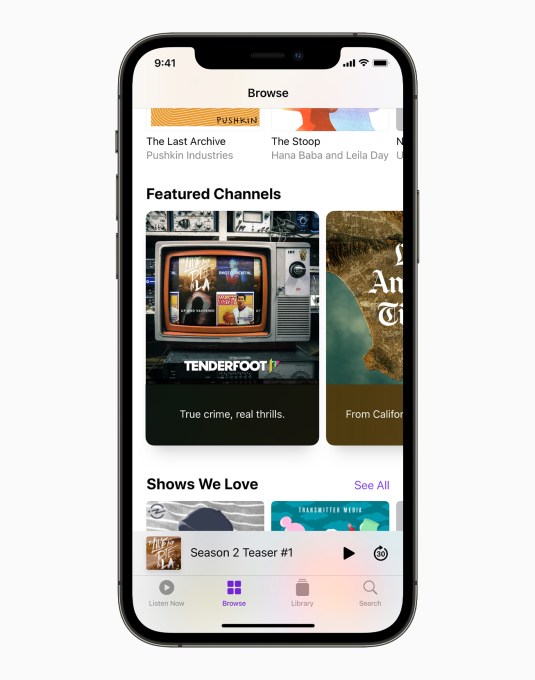
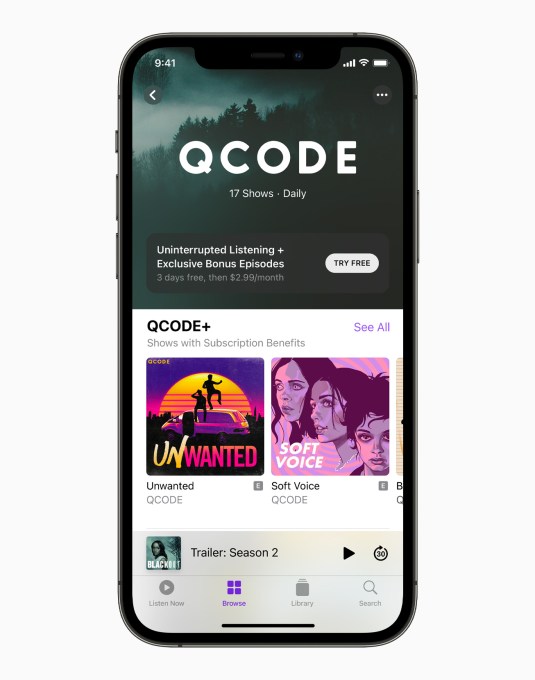
Apple Podcasts Subscriptions are now live across more than 170 countries and regions, Apple announced this morning. First unveiled this spring, subscriptions allow listeners to unlock additional benefits for their favorite podcasts, including things like ad-free listening, early access to new episodes, bonus material, exclusives, or whatever else the podcast creator believes will be something their fans will pay for. Channels allow podcasters to group their shows however they like — for instance, to highlight a set of shows with a shared theme, or to offer different mixes of free and paid content.

The new subscription features were initially set to arrive in May, but Apple later emailed creators that the launch was being pushed to June. This was likely due to a series of backend issues impacting the service, including things like delayed episodes and malfunctioning analytics, among other things.

At launch, Apple says there are thousands of subscriptions and channels available, with more expected to arrive on a weekly basis.

When listeners purchase a subscription to a show, they’ll automatically follow the show in the redesigned Apple Podcasts app. The show’s page will also be updated with a Subscriber Edition label, so they’ll be able to more easily tell if they have access to the premium experience.

The app’s Listen Now tab will expand with new rows that provide access to paid subscriptions, including their available channels.

In the app, users can discover channels from show pages and through Search, browse through recommendations from the Listen Now and Browse tabs, and share channels with friends through Messages, Mail and other apps.

Apple’s delay to invest in the Podcasts market has given its rivals a head start on growing their own audience for podcasts. At the time of the spring announcement of subscriptions, for example, an industry report suggested that Spotify’s podcast listeners would top Apple’s for the first time in 2021.

Despite the competition, Apple is betting its massive install base will bring in creators. Those creators agree to pay Apple a 30% cut of their subscription revenue in year one, just like subscription-based iOS apps. That cut drops to 15% in year two.

Based on the debut lineup, it seems many creators and studios have agreed to that revenue share.

Early adopters of subscriptions include notable names like Lemonada Media, Luminary, Realm, and Wondery; media and entertainment brands, including CNN, NPR, The Washington Post, and Sony Music Entertainment.

Other studio participants include Audio Up, Betches Media, Blue Wire, Campside Media, Imperative Entertainment, Lantigua Williams & Co., Magnificent Noise, The Moth, Neon Hum Media, Three Uncanny Four, and Wondery, Audacy’s Cadence13 and Ramble, Barstool Sports, Jake Brennan’s Double Elvis, Headgum, iHeartMedia’s The Black Effect, Big Money Players, Grim & Mild, Seneca Women, Shondaland, Relay FM, Tenderfoot TV, Radiotopia from PRX, Pushkin Industries, QCODE, and others,

Image Credits: Apple

In the news category, there’s also The Athletic, Fox News, Los Angeles Times, Bloomberg Media, Politico, and Vox Media, plus channels from other newspapers, magazines, broadcasters, radio stations, and digital publishers, including ABC News, Axios, Billboard, Bravo, CNBC, CNN, Crooked Media, Dateline, Entertainment Weekly, Futuro Media, The Hollywood Reporter, LAist Studios, National Geographic, MSNBC, NBC News, NBC Sports, New York Magazine, The New York Times, SiriusXM, SB Nation, Southern Living, The Verge, TODAY, VICE, Vogue, Vox, and WBUR.

Kids’ podcasts are also available, including those from GBH, Gen-Z Media, Pinna, Wonkybot Studios, TRAX from PRX, and others.

Apple also highlighted independent creators offering subscriptions like “Birthful” with Adriana Lozada, “Pantsuit Politics” with Beth Silvers and Sarah Stewart Holland, “Snap Judgment” with Glynn Washington, and “You Had Me At Black” with Martina Abrams Ilunga.

Image Credits: Apple

Meanwhile, international subscriptions and channels are being offered from ABC, LiSTNR, and SBS from Australia; Abrace Podcasts from Brazil; CANADALAND and Frequency Podcast Network from Canada; GoLittle from Denmark; Europe 1, Louie Media, and Radio France from France; Der Spiegel, Podimo, and ZEIT ONLINE from Germany; Il Sole 24 Ore and Storielibere.fm from Italy; J-WAVE from Japan; Brainrich from Korea; libo/libo from Russia; Finyal Media from the UAE; and Broccoli Productions, The Bugle, Content Is Queen, the Guardian, Immediate Media, and Somethin’ Else from the UK.

Subscriptions start at $0.49 U.S. per month and go up, with some popular shows priced at $2.99 per month and some channels, like Luminary, at $4.99 per month, to give you an idea of pricing. Apple Card users get a 3% cash back on their subscriptions, which can be viewed in Apple Wallet.

Once subscribed, you can listen across Apple devices, including iPhone, iPad, Mac, Apple Watch, Apple TV, CarPlay, HomePod and HomePod mini.

15 Jun 2021

Mayor Bill Peduto will be speaking at TechCrunch City Spotlight: Pittsburgh on June 29

Last week we announced that Carnegie Mellon University President Farnam Jahanian will be speaking at our upcoming City Spotlight: Pittsburgh event. Today, we’re excited to announce another big guest: Mayor Bill Peduto.

The event will be held on June 29. You can register here for free to listen to our conversations with Mayor Peduto and Jahanian, among others.

An alumni of both Carnegie Mellon University and Pennsylvania State University, Peduto served on Pittsburgh’s City Council for a dozen years before being elected mayor in 2014. I’ve spoken with the mayor on numerous occasions, and aside from being one of the city’s biggest cheerleaders, he’s also a staunch proponent of the startup scene bolstered by local universities like CMU.

“Having two world-class research universities allows us to draw the companies here in order to be able to utilize that talent. At the same time, that talent is building out the startup community,” Peduto told me in a recent conversation. “The other components of the startup community are now, for the first time, being properly invested in. I think what you’re seeing change over the past five years in Pittsburgh is West Coast VCs aren’t looking to move startups to California. They’re looking to invest in Pittsburgh.”

Having resources like those universities has been instrumental in building out Pittsburgh’s startup community. But the city — which long bore the scars of rustbelt depression — has traditionally had difficulty retaining much of its talent, losing out to better-known startup ecosystems in places like New York and San Francisco.

But that’s changing — and the city is changing along with it. Pittsburgh currently has one of the world’s most vibrant robotic startup ecosystems, is at the center of much of the world’s autonomous vehicle research and has birthed successful companies like Duolingo.

Event organizer Matt Burns will be speaking to Mayor Peduto about the challenges and successes in building up such an ecosystem.

We’re still looking for startups to participate in the event. It’s free to register and participate in networking and watch the event (click here to register). It’s also free to apply to pitch your startup at the event (click here to apply). We’re looking for early-stage companies from the greater Pittsburgh area that can give a two-minute pitch to a panel of local venture capitalists in exchange for feedback.

15 Jun 2021

Construction robotics firm Dusty raises $16.5M

It certainly follows then that some leading construction robotics companies are able to strike while the iron is hot with some healthy raises. Today, Bay Area-based Dusty Robotics announced a $16.5 million Series A. Led by Canaan Partners and featuring NextGen Venture Partners, Baseline Ventures, Root Ventures and Cantos Ventures, the round brings the startup’s full funding up to $23.7 million.

“We have an enormous amount of demand from customers across the U.S., and around the world,” founder and CEO Tessa Lau told TechCrunch. “In addition to growing our team, we will be expanding our fleet of robots and building more robots to service this demand.”

Canaan partner Rich Boyle adds that the pandemic has helped accelerate some of the already existing demand.

“Both markets are incredibly active and evolving quickly, I believe mostly due to longer-term trends. Those include things like continued improvements in AI and labor shortages in key industries, as well as the decreasing price of robotic hardware. That said, COVID has driven changes in how people are thinking about the design, construction and ongoing utilization of real estate assets, and it’s driven substantial changes in behavior — how we work, how we live, how we shop, and some of those changes that were accelerated by COVID we think are here to stay.”

The Dusty team is still fairly lean at about 17 employees, largely located in Mountain View. The startup’s first product is the Field Printer, a robot that prints out plans on the floor of construction sites. The company likens the maps to “Ikea Instructions.” The autonomous bot has been used by Swinerton, DPR Construction, Build Group and Pankow Builders, among others.

“We just released our third-generation hardware platform, which was designed from the ground up by our team in Mountain View to be purpose-built for producing accurate and speedy layout on construction sites,” says Lau. “We’ve been working on this product since fall of 2018 and have incorporated lessons learned from completing over 1 million square feet of production layout into this third-generation design.”


15 Jun 2021

Autonomous delivery startup Nuro moves into logistics with FedEx

Nuro, the autonomous delivery startup founded in 2016 by former Google engineers Dave Ferguson and Jiajun Zhu, is expanding into parcel logistics through a partnership with FedEx.

The multi-year, multi-phased strategic partnership announced Tuesday aims to test and ultimately deploy Nuro’s second-generation R2 autonomous delivery vehicle within FedEx operations. Unlike others in the autonomous vehicle industry, Nuro has always focused its efforts on designing a low-speed electric self-driving vehicle that transports packages, not people. But those “packages” have been more centered on the delivery of groceries, food and even medical supplies. Nuro has partnered with CVS, Dominoes and Krogers, for instance.

The deal with FedEx marks its first foray into parcels logistics. The pilot program has already started in Houston. This multi-year commitment will allow Nuro to bring its technology to more people in new ways, and eventually reach large-scale deployment, according to Cosimo Leipold, Nuro’s head of partnerships.

FedEx has been working on internally on its own autonomous vehicle technology, notably a sidewalk delivery bot. The SameDay Bot, which was named Roxo, was developed in collaboration with DEKA Development & Research Corp. and its founder Dean Kamen who invented the Segway and iBot wheelchair. FedEx first unveiled its SameDay Bot in February 2019. The FedEx bot is equipped with sensing technology such as LiDAR and multiple cameras, which when combined with machine learning algorithms should allow the device to detect and avoid obstacles and plot a safe path, all while following the rules of the road (or sidewalk).

The company said at the time it planned to work with AutoZone, Lowe’s, Pizza Hut, Target, Walgreens and Walmart to figure out how autonomous robots might fit into its delivery business. The idea was for FedEx to provide a way for retailers to accept orders from nearby customers and deliver them by bot directly to customers’ homes or businesses the same day. The company has tested the bots in Memphis, Tennessee as well as Plano and Frisco, Texas and Manchester, New Hampshire, according to a spokesperson.

The partnership with Nuro moves away from the sidewalk and onto the road. Nuro’s R2 is bigger and designed to operate on public roads, allowing it to travel farther distances and carry heavier loads.

FedEx said it has made a long-term commitment to use Nuro’s autonomous bots for last-mile delivery at large scale.

“FedEx was built on innovation, and it continues to be an integral part of our culture and business strategy,” said Rebecca Yeung, vice president, advanced technology and innovation, FedEx Corporation.