Year: 2021

14 Jun 2021

Yana’s mental health tool for Spanish speakers nears 5 million users

Andrea Campos has struggled with depression since she was 8 years old. Over the years, she’s tried all sorts of therapies — from behavioral to pharmacotherapy.

In 2017, when Campos was in her early 20s, she learned to program and created a system to help manage her mental health. It started as a personal project but as she talked to more people, Campos realized that many others might benefit from the system as well.

So, she then built an application to provide access to mental health tools to Spanish-speaking people and began testing it with a small group of people. At first, Campos herself was her own chatbot, texting with users who were tired of dealing with depression.

“During the month, I was pretending I was an app, and would send these people a list of activities they had to complete during the day, such as writing in a gratitude journal, and then asking them how those activities made them feel,” Campos recalls.

Her thinking was that sometimes with depression and anxiety comes “a lot of avoidance,” where people resist potential treatment out of fear.

The results from her small experiment were encouraging. So, Campos set out to conduct a bigger sample of experiments, and raised about $10,000 via crowdfunding campaign. With that money, she hired a developer to build a chatbot for her app, which was mostly being used via Facebook Messenger.

Then an earthquake hit Mexico City and that developer lost everything — including his home and computer — and had to relocate.

“I was left with nothing,” Campos says. But that developer introduced her to another, who disappeared with his payment, and again, left Campos, “with nothing.”

“I realized at the beginning of 2019, I was going to have to do this by myself,” Campos said. So she used a site that she described as a “Wix for chatbots,” and created one herself.

After experimenting with the app with a sample of 700 people, Campos was even more encouraged and raised an angel round of funding for Yana, the startup behind her app. (Yana is an acronym for “You Are Not Alone.”) By early 2020, with just three months of runway left, she pivoted to create an app with chatbot integration that wasn’t just limited to use via Facebook Messenger.

Campos ended up launching the app more broadly during the same week that her city in Mexico went into quarantine.
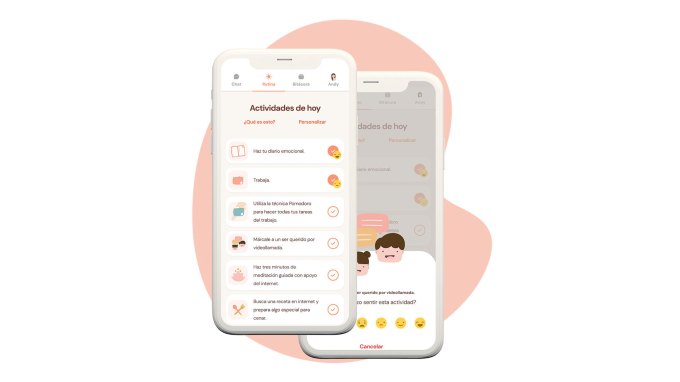
Image Credits: Yana

At first, she said, she saw “normal, steady growth.” But then on Oct. 10, 2020, Apple’s App Store highlighted Yana for International Mental Health Day, and the response was overwhelming.

“It was also my birthday so I was at a spa in a nearby town, relaxing, when I started hearing my cell phone go crazy,” Campos recalls. “Everything went nuts. I had to go back to Mexico City because our servers were exploding since they were not used to having that kind of volume.”

As a result of that exposure, Yana went from having around 80,000 users to reaching 1 million users two weeks later. Soon after that, Google highlighted the app as one of best for personal growth in 2020, and that too led to another spike in users. Today, Yana is about to hit the 5 million-user mark and is also announcing it has raised $1.5 million in funding led by Mexico’s ALLVP, which has also invested in the likes of Cornershop, Flink and Nuvocargo.

When the pandemic hit last year, six of Yana’s 9-person team decided to quarantine together in a “startup house” in Cancun to focus on building the company. Earlier this year, the company had raised $315,000 from investors such as 500 Startups, Magma and Hustle Fund. The company had pitched ALLVP, who was intrigued but wanted to wait until it could write a bigger check. 

That time is now, and Yana is now among the top three downloaded apps in Mexico and 12 countries including Spain, Chile, Ecuador and Venezuela.

With its new capital, Yana is planning to “move away from the depression/anxiety narrative,” according to Campos.

“We want to compete in the wellness space,” she told TechCrunch. “A lot of people were looking for us to deal with crises such as a breakup or a loss but then they didn’t always see a necessity to keep using Yana for longer than the crisis lasted.”

Some of those people would download the app again months later when hit with another crisis.

“We don’t want to be that app anymore,” Campos said. “We want to focus on whole wellness and mental health and transmit something that needs to be built every single day, just like we do with exercise.”

Moving forward, Yana aims to help people with their mental health not just during a crisis but with activities they can do on a daily basis, including a gratitude journal, a mood tracker and meditation — “things that prevent depression and anxiety,” Campos said.

“We want to be a vitamin for our soul, and keeping people mentally healthy on an ongoing basis,” she said. “We also want to include a community inside our application.”

ALLVP’s Federico Antoni is enthusiastic about the startup’s potential. He first met Campos when she was participating in an accelerator program in 2017 and then again recently.

The firm led Yana’s latest round because it “wanted to be on her team.”

“She [Campos] has turned into an amazing leader, and we realized her potential and strength,” he said. “Plus, Yana is an amazing product. When you download it, it’s almost like you can see a soul in there.”

14 Jun 2021

The Nubank EC-1

Brazil is a country riven with economic contradictions. It has one of the largest and most profitable banking industries in Latin America, and is among the world’s most developed financial markets. Financial transactions that would take days to process in the United States through ACH happen instantaneously in Brazil. This sophistication, however, masks a backward state of affairs plagued by appalling customer service, exorbitant fees and lack of banking access for many.

The country’s financial system is volatile and often leaves its citizens with few or no alternatives. According to an HBS case study, “in December 2018 the interest rate in Brazil for corporate loans was 52.3%, for consumer loans it was 120.0% and for credit card indebtedness it was 272.42%.” Those rates are many multiples higher compared to figures in neighboring countries.

Brazil’s banking system is a massive market, and one ill-served by incumbents. If someone could thread the needle of product development, strategy and political horse trading required to build a bank in a country where it is nearly impossible for foreigners to own or invest in a bank, it would be one of the great startup and economic success stories of this century.

Nubank is on its way to realizing that objective. Its story is one of unmitigated success, even by the standards of our EC-1 series on high-flying companies and their hard-learned lessons. Just last week, this Brazilian credit card and banking fintech raised a $750 million round led by Berkshire Hathaway at a $30 billion valuation, becoming one of the most valuable startups in the world. It has 40 million users across Brazil, as well as Mexico and Colombia.

Yet, it’s a startup with a CEO and co-founder who isn’t Brazilian, didn’t speak the local language of Portuguese, hadn’t started a company before, and didn’t really know a lot about banking to begin with. This is a story of how raw execution, a “faster, faster” mentality and a fanaticism for making customer experience as enjoyable as a trip to Disney World can completely change the history of an industry — and country — forever.

Our lead writer for this EC-1 is Marcella McCarthy. McCarthy, who spent significant time in Brazil growing up and is trilingual in English, Spanish and Portuguese, has been covering the LatAm and Miami ecosystems for TechCrunch with an eye to the disruption underway in these interconnected regions. The lead editor for this package was Danny Crichton, the assistant editor was Ram Iyer, the copy editor was Richard Dal Porto, and illustrations were drawn by Nigel Sussman.

Nubank had no say in the content of this analysis and did not get advance access to it. McCarthy has no financial ties to Nubank or other conflicts of interest to disclose.

The Nubank EC-1 comprises four main articles numbering 9,200 words and a reading time of 37 minutes. Here’s what’s in the bank:

We’re always iterating on the EC-1 format. If you have questions, comments or ideas, please send an email to TechCrunch Managing Editor Danny Crichton at danny@techcrunch.com.

14 Jun 2021

How contrarian hires and a pitch deck started Nubank’s $30 billion fintech empire

For most startups, the hardest early challenge is identifying a market and a product to serve it. That wasn’t the case for Nubank CEO David Velez, who understood the massive potential for success if he could break into Latin America’s most valuable economy with even a moderately modern banking offering.

Instead, the challenge was how to rebuild the concept of a bank in a country where banking is widely hated, all while the incumbents heavily entrenched with the state worked to block every move.

Nubank knew its market and geography, and through tenacious fundraising, inventive marketing and product development, and a series of contrarian hires, Velez and his team stripped bare the morass of Brazilian banking to build one of the world’s great fintech companies.

The challenge was how to rebuild the concept of a bank in a country where banking is widely hated, all while the incumbents heavily entrenched with the state worked to block every move.

In the first part of this EC-1, I’ll look at how Velez brought his skills and experience to bear on this market, how Nubank was founded in 2013, and how the team brought a Californian rather than Brazilian vibe to their first office on — no joke — California Street, in a neighborhood called Brooklin in the city of São Paulo.

The makings of an entrepreneur

The idea of being his own boss was ingrained in Velez from his earliest days in Colombia, where he grew up in an entrepreneurial family, with a father who owned a button factory. “I heard from my dad over and over again that you need to start your own company,” Velez said.

But years would pass and Velez still had no idea what he wanted to do. To “kill time,” and also to surround himself with entrepreneurial energy, Velez attended Stanford University — partially financed by the sale of some livestock — and then worked as an analyst at Goldman Sachs and Morgan Stanley before switching to venture capital at General Atlantic and Sequoia.

14 Jun 2021

One woman’s drive to make a neobank as magical as Disney

As we mentioned in part 1 of this EC-1, David Velez had two key co-founding roles he needed to fill to get started building Nubank. For one, he needed a CTO to lead the engineering side of the business, as Velez didn’t have an engineering background.

Edward Wible, an American computer science graduate who spent most of his career in private equity, would take that responsibility. He didn’t bring years of coding experience, but he had qualities that Velez considered more important: A strong belief in the potential of the product and an equally intense commitment to working on it.

Given the occasionally hostile reaction of most incumbent banks to their customers in Brazil, Nubank’s starkly contrasting openness and transparency has garnered a huge following.

That left an even more important role to fill — one that was much harder to define. This other co-founder would need to blend knowledge of the Brazilian market and local savvy with expertise in banking, all while embodying a Silicon Valley ethos of focusing on customers. This person would also have to work in São Paulo for minimal wages out of a small office with just one bathroom, all in the belief that their equity (both stock and sweat) would one day be worth it.

Velez would eventually stumble upon Cristina Junqueira, who was qualified to do all this, and much, much more.

“Once someone said I was the glue of the operation, and that someone else was the brains. And I said, ‘No, I’m the glue and the brains, and I bet my brain is even better than his,”’ Junqueira said.

Junqueira didn’t just lead Nubank’s drive into the Brazilian market, she also upended age-old notions of what it means to be a 21st-century bank. Her inspiration was nothing short of Disney, and her mission was to create a bank as popular as the magical kingdom itself.

A bank. As popular as Disney. Sounds like a fairy tale, frankly.

Raised to be a doer

Unlike her co-founders Velez and Wible, Junqueira grew up in Nubank’s home market of Brazil. The eldest of four sisters, she remembers her parents — both dentists — always assiduously working to maintain their practice.

Their work ethic trickled down, but so did responsibility. As the oldest at home, she was forced to grow up quickly and take on responsibilities from an early age. “I remember being 11 years old and doing grocery shopping for the month,” she said. “I did everything very young.”

14 Jun 2021

How Nubank’s CX strategy made it one of the most loved digital banks

As we saw in parts 1 and 2 of this EC-1, by mid-2013, Nubank CEO David Velez had most of what he needed to get started. He’d brought on two co-founders, assembled ambitious engineering and operations teams, raised $2 million in seed funding from Sequoia and Kaszek, rented a tiny office in São Paulo, and was armed with a mission to deliver the kind of banking services that customers in a market as large and lucrative as Brazil’s should expect.

Despite being named Nubank, however, the startup couldn’t actually be a bank: Brazil’s laws made it illegal at the time for a foreigner-run company to operate a bank. That restriction required the team to develop an inventive product strategy to find a foothold in the market while they waited for a license directly from the country’s president.

Nubank was so adamant about differentiating itself from other banks that it chose Barney purple for its brand color and first credit card.

Nubank therefore pursued a credit card as its first offering, but it had to race against a clock counting quickly down to zero. At the time, Brazil didn’t have ownership restrictions on this product segment like it did with banking, but new rules were coming into force in just a few months in May 2014 that would block a company like Nubank from launching.

The company needed to execute rapidly over the next eight months if it wanted to be grandfathered into the existing regulations. The speed of operations was frantic to say the least, and the company would go on to work even faster, ultimately propelling itself into the stratosphere of fintech startups.

Full faith in credit

It’s easy to assume that the name Nubank refers to “new bank,” but that’s not really what the founders were going for. The word “nu” in Portuguese means “naked,” and Velez and his team wanted the name to reflect their vision: To build a 21st-Century bank without any of the shackles imposed by the traditional banks in Brazil.

The team wanted to offer services to as many people as possible, as there is a huge wealth gap in Brazil, where the minimum wage is around $200 a month.

Launching with just a credit card was both a strategic and practical business decision. Credit cards were widely used in the country, and everyone understood how they worked. Additionally, you could only use credit cards to shop online in Brazil, because debit cards weren’t accepted.

14 Jun 2021

Which Nubank will own the financial revolution?

Nubank’s first office, on California Street in the Brooklin neighborhood of São Paulo, makes for a great beginning to the company’s story. It wasn’t a Silicon Valley garage, but this tiny, one-bathroom rented house, where 30 people worked insane hours to push out the company’s debut credit card, lends just as well to an image of entrepreneurial spirit and drive.

As Nubank continues to make international waves, more and more VC investors are taking a look at the Brazilian ecosystem and could potentially fund other upstarts in the years to come.

But as Nubank’s story continued, the team eventually had to move out of that early office, and the next several offices, too. Eventually Nubank had to relocate to an eight-story building in São Paulo, which houses a large part of the company’s now 3,000-person team.

The startup reached decacorn status in far less than a decade, and it is growing faster than ever. When I interviewed CEO David Velez back in January to discuss Nubank’s $400 million Series G, he said, “We’ve gone from 12 million customers in 2019 to 34 million solely based on word of mouth.” By September last year, the company was onboarding 41,000 new customers per day.

In the five months since our interview, Nubank has managed to rope in a whopping 6 million customers to reach 40 million. It’s now valued at $30 billion.

Nubank’s present day headquarters in São Paulo, Brazil. Image Credits: NELSON ALMEIDA/AFP / Getty Images

Getting there hasn’t been easy. The company’s three co-founders, Velez, Edward Wible and Cristina Junqueira, had to make key strategic decisions about how to scale themselves to retain the company’s lead in the neobanking market. That lead is getting tougher to sustain every day. Nubank’s proliferating offerings and broader geographical remit has painted a massive target on its back, and a wide number of competitors have cropped up to run on the paths it pioneered.

Like most Disney films, a fairy-tale ending seems in order, but it’ll take a few more rotations of the film wheel to get to the ending.

Early mistakes and ingredients for success

For the co-founding trio, it became increasingly clear that Nubank’s growing scale demanded critical strategic decisions on how to bring order to the company.

By 2018, the company had thousands of employees, millions of customers, and they still didn’t have a head of HR. Growth until then had been somewhat unstructured. According to Junqueira, waiting so long to hire a head of HR was one of their early mistakes, because it stunted their ability to grow. “[Good] people continue to be our biggest bottleneck,” she says.

14 Jun 2021

Beats Studio Buds offer a compact design, noise-canceling and Android/iOS fast pairing at $150

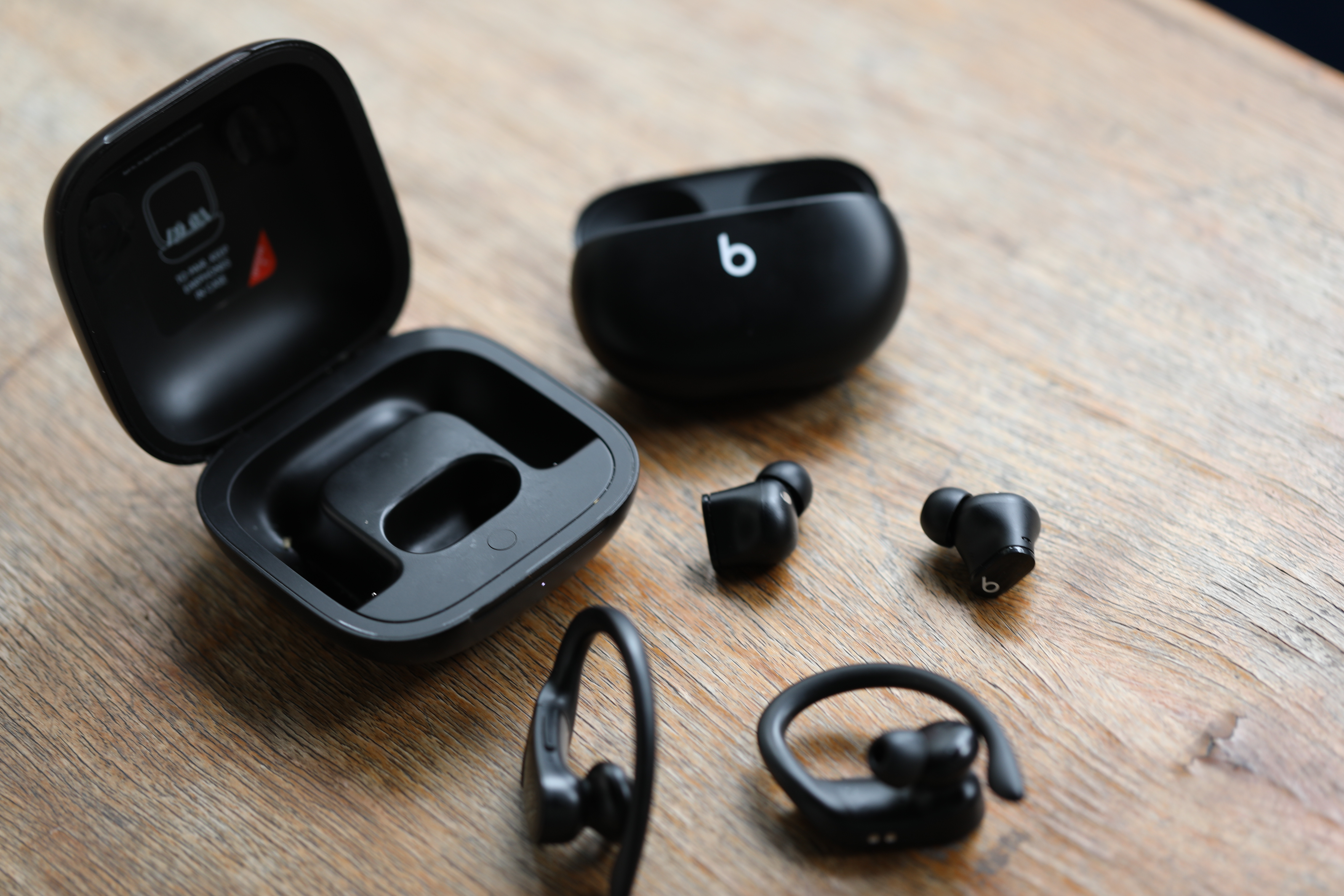
When they were released in 2019, Powerbeats Pro were standouts. Two-plus years later, they remain one of the more well-rounded wireless earbuds on the market. There are things I would change, of course. Even in 2019, that charging case was ridiculously large. In 2021, the original case is all the more absurd. And, of course, noise-canceling has become nearly standardized among mid-tier buds.

After weeks of rumors and leaks (including a very public cameo on the ears of one of the world’s most famous athletes), Beats’ latest take on the space is finally official. Meet the Beats Studio Pro. They are not, as the company will be quick to tell you, a Powerbeats Pro replacement. Those are sticking around (which isn’t to say they won’t be getting their own upgrade).

Beats may be Apple-owned, but in most respects, the brand operates as it has. It was a wildly successful brand well before Apple got its hands on it, after all. So the company’s opted not to fix what’s clearly not broken. And while technology is clearly shared between the two camps (the H1 chip on the Powerbeats, example), it maintains a line between its self-branded audio offerings (AirPods, et al.) and the Beats line. There’s a reason Beats never really shows up at Apple events, in spite of having a big announcement the following week.

Image Credits: Brian Heater

Compared to AirPods, the Beats lines can get a bit convoluted. Effectively the new Studio Beats are a fully wireless earbud line from the company, borrowing a name from its premium over-ear line. But the new buds are actually significantly more compact than Powerbeats Pro, both in terms of the case and the buds themselves. Also notable — and frankly a bit surprising — is the pricing.

At $150, the Studio Buds are a fair bit cheaper than the two-year-old Powerbeats Pro, which currently go for between $160 and $200 online. Keep in mind, that’s down from a launch price of $250. That’s also $50 less than the AirPods and $20 less than the Galaxy Buds. It’s a nice price for what you’re getting here — though maybe my standards have shifted a bit, just coming off of a review of the $280 Sony WF-1000XM4.

Those Sonys are in a class of their own, of course. It’s much fairer for all parties concerned to pit them against other midrange headphones. And by that metric, they perform pretty well. The biggest addition here is active noise canceling — keep in mind, it was far from standard when the Powerbeats Pro were announced. These days, however, it feels like a glaring omission at this price range (Google, I’m looking at you).

Image Credits: Brian Heater

Another interesting top-level feature is fast pairing for both iOS and Android, making the Studio Beats one of the first products to walk that line. Funny that it comes from an Apple product, but again, the company seems be afforded at least a little bit of freedom on that front. It’s a small thing — after all, many people will only use the iOS/Android one-touch pairing once, but there’s a lot to be said for making the product as accessible to as many potential customers as possible.

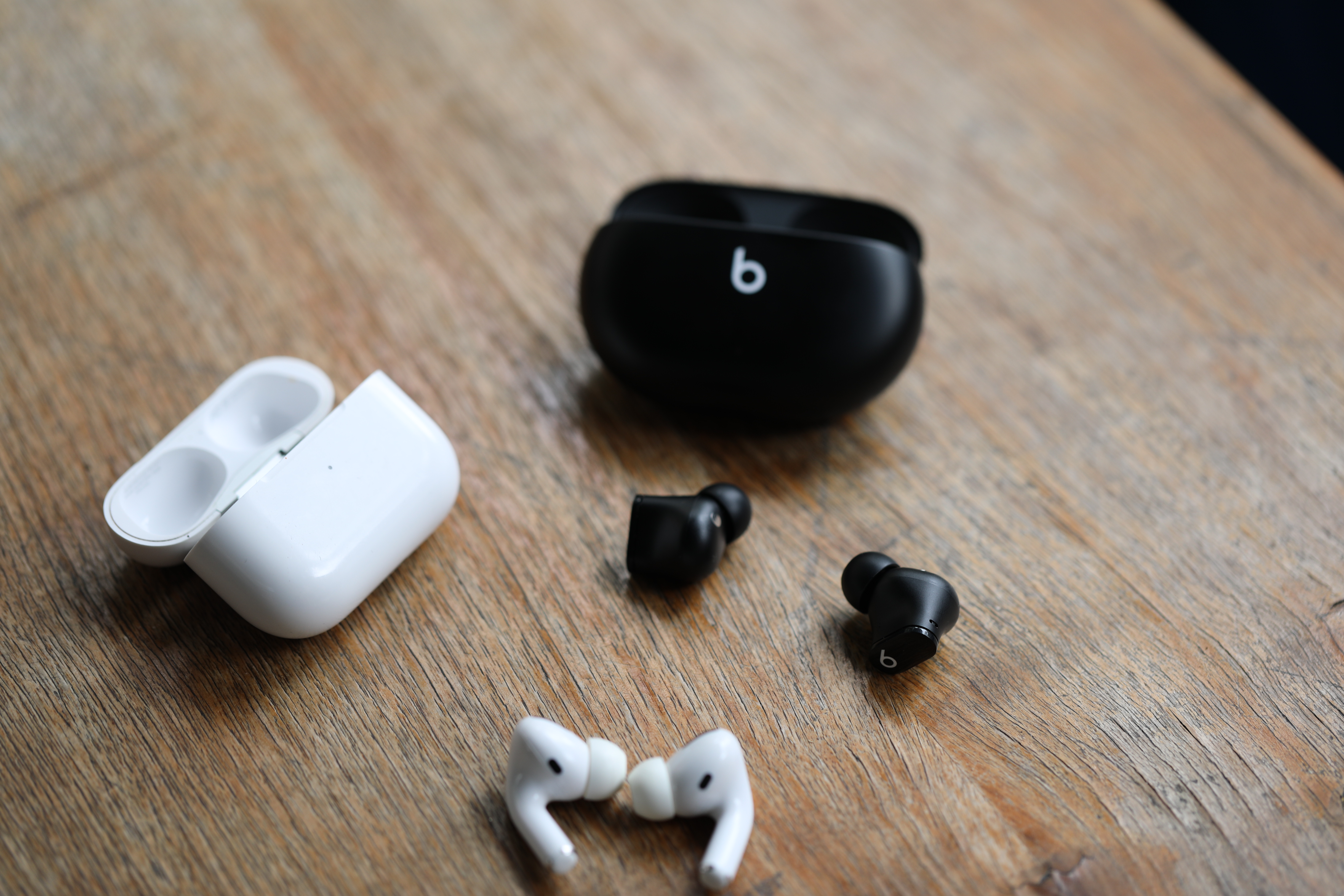
I like the new streamlined design of the buds. As mentioned above, the new case is a fraction of the size of the Powerbeats. Still, the Studio Buds have the same stated battery life, with eight hours on the headphones and 24 total, when you factor in the case. That’s a healthy bit of life, which is quickly becoming the standard these days. There’s a USB-C port on the bottom (a move away from the Apple-only Lightning), which will give you an hour of playback time on a five-minute charge.

Image Credits: Brian Heater

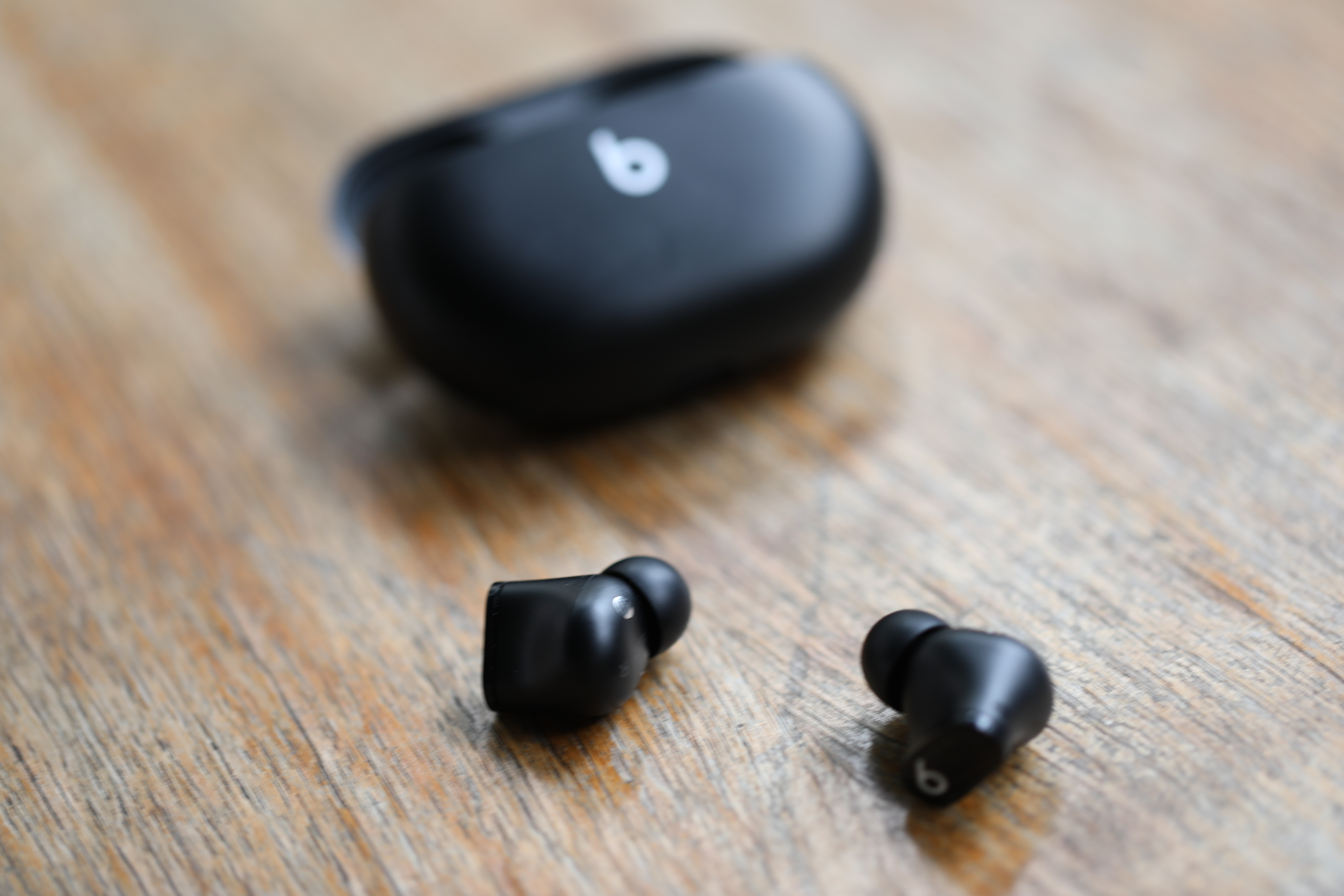
The case is wider and a bit thicker than the AirPods Pro, but is still easily pocketed. It has a bit of a cheap plasticky feel to it, but the matte finish is a nice touch. The branding is the standard Beats level of loud, with a big, bold white “b” set against the black. The buds, too, sport the logo, which can pass for a “9” or a “6” depending on positioning. The lid has a snap to it, and the magnets on the buds snap nicely in place — though, as with the Powerbeats, it can take a little finagling to get them into the proper position.

The buds are fairly compact, as well. The earhooks are gone. That’s something of a mixed bag, honestly. I didn’t think I would love the Powerbeats Pros earhooks, but as someone who experiences some ear pain with a lot of different bud designs, I’ve found them to be among the most comfortable options, transferring the load bearing to the top of the ear.

The Studio Buds are fairly comfortable, and I was able to work out in them (IPX4 rating FTW), though I did have some trouble keeping them in place on occasion. That’s certainly never been a problem with the Powerbeats. If you really don’t want them to move, I recommend applying a bit of pressure to really corkscrew them in place.

One of the design choices I really appreciate that Beats brought back is the physical button. Powerbeats had them and they’re back here on the end of the Studio Buds. It’s got a nice little click to it that I prefer to purely touch-based buttons. A single click will Play/Pause and a long click will turn ANC on and off.

Image Credits: Brian Heater

The ANC is a nice addition, of course. It does a decent job with ambient noise, but can’t really touch what you’ll find on higher-end systems. The sound quality, too, has come a ways in the last couple of years. Beats has refined things with a pair of 8.2mm drivers that offer solid sound at their price point. These aren’t sitting-around-and-enjoy-the-finer-points-of-classical-sonata-or-experimental-jazz-record buds; they are, however, solid, listen-to-music-or-a-podcast-while-going-about-your-life headphones.

There’s a lot to like about the buds, and with little question, they’re a much better deal in 2021 than the Powerbeats Pro, even if they don’t feel as groundbreaking as their predecessors did at launch.

The new Beats Studio Buds are up for preorder today and start shipping June 24.

14 Jun 2021

The demise of browser cookies could create a Golden Age of digital marketing

Depending on whom you ask, the digital advertising industry is either counting down the minutes to doomsday or entering an exciting new era for engaging with consumers. Apple’s iOS 14.5 update — which effectively ends automatic opt-ins to online tracking and data collection — is finally at hand, and Google aims to phase out third-party cookies next year.

The future could see a wave of innovations that help consumers opt out of data collection. So it’s up to the advertising industry to find ways to get these educated, empowered consumers to opt back in.

Whether these changes set digital advertisers back 15 years or pave the way to more fruitful interactions with customers remains to be seen. But one thing is clear: This is big. Allowing users to decide what browsing data can be collected, by whom and under what circumstances is a move that will change the direction of the advertising industry.

But the new direction does not have to lead digital marketers to oblivion, failure or poverty. In fact, it’s quite the opposite.

With a few changes to short-term strategy — and a longer-term plan that takes into account the fact that people are awakening to the value of their online data — advertisers can form a new type of relationship with consumers. It can be built upon trust and open exchange of value.

It’s up to advertisers to grasp, accept and reap the benefits of the upcoming changes. Because with iOS 14.5, cookie deprecation, and regulations like GDPR and CCPA, one era is ending and a new one is beginning. There’s a new seat at the table in the great bargaining session between advertisers and technology giants. It’s occupied — for the first time — by the user.

The short-term strategy

Advertisers can weather big changes in the short term by implementing several steps.

For starters, developers should update their application SDKs to support Apple’s new SKAdNetwork solution and then verify attribution across each channel. For example, after SDK updates, verify that the number of installs reported from your Facebook Ads matches up to the number of installs you’re seeing reported in the App Store developer console or your preferred analytics provider.


Have you worked with a talented individual or agency who helped you find and keep more users?
Respond to our survey and help us find the best startup growth marketers!


This can become more complicated the more channels you’re on, but it is important to verify all of your advertising channels’ reporting. Also important is setting your conversion value, because this is the key to getting granular information on your ad campaigns and ensuring the right entity controls the flow of information.

14 Jun 2021

What does Uber and birth control have in common?

Hello and welcome back to Equity, TechCrunch’s venture capital-focused podcast where we unpack the numbers behind the headlines.

This is Equity Monday, our morning coffee chat with you that is all about the weekend, what to expect this week, and some funding rounds you may have missed. I’m subbing in for Alex Wilhelm today, who is deservedly out on vacation. You can find me on Twitter @nmasc_, and Equity on Twitter (turn on those notifications!) @equitypod. 

Biden and world leaders are congregating at the NATO summit, which kicks off this week. Also, the Dublin Tech Summit is happening on Thursday with yours truly, other TC folks, and many entrepreneurs making a virtual appearance.

Now, onto the news!

  •  The weekend: The seat next to Jeff Bezos as he launches into space just got filled for $28 million. Also, Elon Musk tweeted about how Tesla might start accepting Bitcoin as a payment once at least half of it can be mined using clean energy. The comment sent Bitcoin up more than a few percentage points, hovering at $39,173 at the time of the recording.
  • This morning: The FT reports that Flagship Pioneering, which is responsible for incubating and launching Moderna, has raised a new venture capital fund at $3.4 billion. Flagship isn’t your traditional VC. It forms teams around problem areas and brainstorms solutions, incubates the most promising ones, and then eventually spins out and finances those companies.
  •  Funding rounds: Byju’s got a check from UBS and Zoom founder Eric Yuan, making it the most valuable startup in India. The company is now valued at $16.5 billion post-money. Plus, The Pill Club has raised an extension Series B round with former Uber exec Liz Meyerdirk newly at the helm of the company.
  • Finally, please take the Equity Listener Survey. We want to make the show better for you, so spending a few seconds filling out our survey and we will be very grateful.

And that’s all. Be kind with yourself this week, and take more than a 5-minute lunch because true glamour is being present and chewing slowly.

Equity drops every Monday at 7:00 a.m. PST, Wednesday, and Friday at 6:00 AM PST, so subscribe to us on Apple PodcastsOvercastSpotify and all the casts!

14 Jun 2021

Lordstown Motors CEO and CFO resign amidst production woes

Beleaguered electric vehicle startup Lordstown Motors’ stock shares have taken another hit after the company said Monday that CEO Steve Burns and CFO Julio Rodriguez have resigned, just a few weeks after Burns was reassuring investors of the company’s bright future.

Lordstown Motors’ Lead Independent Director Angela Strand was appointed executive chairwoman to oversee the transition until a permanent CEO is found. Becky Roof will service as Interim CFO. Roof has acted as interim CFO at a number of other companies, including Saks Fifth Avenue and Eastman Kodak.

The company, which was founded as an offshoot of former CEO Burns’ other company, Workhorse Group, announced less than stellar first quarter results in May, including news that production volumes would likely be half – from around 2,200 vehicles to just 1,000 – should the company not identify more funding.

The EV startup is one of a growing suite of companies in the transportation space that have gone public via a merger with a special purpose acquisition company (SPAC). The deal, announced last August, gave Lordstown around $675 million in gross proceeds and a market value of $1.6 billion.

Yet, less than a year after the deal was announced, Lordstown told the SEC in a filing that it does not have enough capital to manufacture and deliver the electric pickup, dubbed – note the irony – ‘Endurance.’ “The Company believes that its current level of cash and cash equivalents are not sufficient to fund commercial scale production and the launch of sale of such vehicles,” the filing said. “These conditions raise substantial doubt regarding our ability to continue as a going concern for a period of at least one year from the date of issuance of these unaudited condensed consolidated financial statements.”

While Burns and Rodriguez are the most prominent corporate figures in the shakeup, Lordstown also announced other changes to its executive team Monday. Jane Ritson-Parsons, who was acting as Lordstown Motors interim chief brand officer, was promoted to Chief Operating Officer; and former head of investor relations Carter Driscoll was promoted to Vice President, Corporate Development, Capital Markets and Investor Relations.

Lordstown on Monday also released the results of a report conducted by a special internal committee accusations that the company was faking preorders of its debut electric pickup, in a report by short seller firm Hindenburg Research. Lordstowns’ independent inquiry is separate to an ongoing investigation from the U.S. Securities and Exchange Commission over the allegations.

While the report is “is, in significant respects, false and misleading,” the committee said that the investigation did identify some inaccuracies regarding some statements about the pre-orders. In particular, some entities that made a large number of pre-orders made commitments that were not firm enough to be included in the pre-order disclosures. Overall, the special committees’ findings overwhelmingly reject Hindenburgs’ accusations against the company.