Year: 2021

11 Jun 2021

5 questions startups should consider before making their first marketing hire

“Who should my first marketing hire be?”

This is (by far) the most common question I’ve received since starting as Fuel’s CMO, and for good reason. Your first marketer will have an outsized impact on team dynamics as well as the overall strategic direction of the brand, product and company.

The reality is that anyone who excels across all marketing functions is a unicorn and nearly impossible to find.

The nature of the marketing function has expanded significantly over the past two decades. So much so that when founders ask this question, it immediately prompts multiple new ones: Should I hire a brand or growth marketer? An offline or an online marketer? A scientific or a creative marketer?

Once upon a time, the number of marketing channels was fairly limited, which meant the function itself fit into a neater, tighter box. The number of ways to reach customers has since grown exponentially, as has the scope of the marketing role. Today’s startups require at least four broad functions under the umbrella of “marketing,” each with its own array of subfunctions.

Here’s a sample of the marketing functions at a typical early-stage startup:

Brand marketing: Brand strategy, positioning, naming, messaging, visual identity, experiential, events, community.

Product marketing: UX copy, website, email marketing, customer research and segmentation, pricing.

Communications: PR and media relations, content marketing, social media, thought leadership, influencer.

Growth marketing: Direct response paid acquisition, funnel optimization, retention, lifecycle, engagement, reporting and attribution, word of mouth, referral, SEO, partnerships.


Have you worked with a talented individual or agency who helped you find and keep more users?
Respond to our survey and help us find the best startup growth marketers!


As you can imagine, that’s a lot for one person to manage, let alone be an expert in. What’s more, the skill set and experience required to excel in growth marketing is quite different from the skill set required to succeed in brand marketing. The reality is that anyone who excels across all marketing functions is a unicorn and nearly impossible to find.

So who do you hire first?

Unless you’re lucky enough to nab that unicorn, your first hire should be a generalist who can tend to the full stack of the marketing function, learn what they don’t know, and roll up their sleeves to get things done. Someone smart, savvy and super scrappy who understands how to experiment across marketing channels until they find the right mix.

11 Jun 2021

Why Mate Rimac is working on electric robotaxis

Mate Rimac, the founder and CEO of Croatian electric hypercar and components developer Rimac Automobili, started a separate company nearly three years ago to work on electric robotaxis.

Little is known about the company, which still operates in stealth. Rimac told TechCrunch this week at TC Sessions: Mobility 2021 he hopes to keep this separate company under wraps until the team is ready to showcase what it has been working on.

Rimac did provide some details on what he described as an electric robotaxi company. He said the company has offices in Croatia and the U.K. and could expand to other locations. Rimac also said the company intends to be a global operator and he expects to reveal what the team has been working on early next year.

“Why stealth mode?,” Rimac asked during the interview. “Because there’s so much hot air in this industry, and so many PowerPoint companies, you know, announcing big things and not delivering and so on. We didn’t want to be that company, we wanted to do a lot of stuff — and like under-promise, over-deliver.”

Few even knew of the company’s existence until last month when local media discovered a Croatia Ministry of Transport filing that described a proposed project involving an urban mobility ecosystem that used electric autonomous vehicles. While Rimac noted that was an unfortunate discovery, he wants to reveal their work properly.

“People see us as the hypercar company,” Rimac said, noting the company is viewed as one focused on ultra-high net worth individuals. (Indeed, Rimac Automobili unveiled a production version of its Concept 2 vehicle. The renamed Nevera has a $2.44 million price tag.) “We have many other things cooking and have a longer-term outlook. I think that the new mobility will be really a shift in society. Just like phones didn’t just change the phone industry. Apple didn’t just disrupt Nokia, but changed our lives. I think the next big change that we’ll have is mobility.”

Rimac didn’t get into details about the autonomous driving system, sensors or design of the vehicle.

“We think that a lot of people are missing the bigger picture and focusing on some of the building blocks, like the autonomous driving system itself,” he said. “We believe maybe that’s not the differentiator itself, that there are some other differentiating factors within the ecosystem of autonomous mobility.”

Rimac later added that the user experience of the robotaxi is one area that he is focused on and believes it can be different than what others are developing.

11 Jun 2021

NASA seeking proposals for two new private astronaut missions to ISS

NASA said Friday it was seeking proposals from commercial companies for two new private crewed missions to the International Space Station. The first mission would likely take place between fall of 2022 and mid-2023. The second one would follow sometime between mid-2023 and the end of 2023.

Private astronaut missions are a relatively recent initiative from NASA, part of its Commercial low-Earth Orbit (LEO) Development program. For most of humanity’s history in space, trips to the ISS were reserved for astronauts from countries’ respective space agencies.

Houston-based startup Axiom Space was awarded the first private astronaut mission, to take place in January 2022. That mission will carry four private astronauts for an eight-day mission from the Kennedy Space Center in Florida. NASA will pay Axiom $1.69 million for services associated with the mission.

Each of the new missions can be up to 14 days and proposals are due by July 9. The agency specified that the missions must be brokered by a U.S. company and use approved U.S. transportation spacecraft. (Axiom’s private mission will use a SpaceX Crew Dragon.)

NASA said that enabling private manned missions such as this one may help “develop a robust low-Earth orbit economy where NASA is one of many customers, and the private sector leads the way.” Thanks to the significantly decreased launch costs – due in large part to innovations in rocket reusability, led by SpaceX – as well as a whole new ecosystem of ‘new space’ companies that have sprung up over the last five years, space has become busier than ever.

The agency also said LEO could eventually be used as a “training and proving ground” for the planned Artemis program – humanity’s long-awaited return to the moon – and missions even deeper into the solar system.

11 Jun 2021

Shopify acquires augmented reality home design app Primer

In Friday acquisition news, Shopify shared today that they’ve acquired augmented reality startup Primer, which makes an app that lets users visualize what tile, wallpaper or paint will look like on surfaces inside their home.

In a blog post, co-founders Adam Debreczeni and Russ Maschmeyer write that Primer’s app and services will be shutting down next month as part of the deal. Debreczeni tells TechCrunch that Primer’s team of eight employees will all be joining Shopify following the acquisition.

Primer had partnered with dozens of tile and textile design brands to allow users to directly visualize what their designs would look like using their iPhone and iPad and Apple’s augmented reality platform ARKit. The app has been highlighted by Apple several times including this nice write-up by the App Store’s internal editorial team.

Terms of the deal weren’t disclosed. Primer’s backers included Slow Ventures, Abstract Ventures, Foundation Capital and Expa.

There’s been a lot of big talk about how augmented reality will impact online shopping, but aside from some of the integrations made in home design, there hasn’t been an awful lot that’s found its way into real consumer use. Shopify has worked on some of their own integrations — allowing sellers to embed 3D models into their storefronts that users can drop into physical space — but it’s clear that there’s much more room left to experiment.

11 Jun 2021

Despite flat growth, ride-hailing colossus Didi’s US IPO could reach $70B

Didi filed to go public in the United States last night, providing a look into the Chinese ride-hailing company’s business. This morning, we’re extending our earlier reporting on the company to dive into its numerical performance, economic health and possible valuation.

Didi is approaching the American public markets at a fortuitous moment. While the late-2020 IPO fervor, which sent offerings from DoorDash and others skyrocketing after their debuts, has cooled, valuations for public companies remain high compared to historical norms. And Uber and Lyft, two American ride-hailing companies, have been posting numbers that point to at least a modest recovery in the ride-hailing industry as COVID-19 abates in many parts of the world.

As further grounding, recall that Didi has raised tens of billions worth of private capital from venture capitalists, private equity firms, corporations and other sources. The size of the bet riding on Didi is simply massive. As we explore the company’s finances, then, we’re more than vetting a single company’s performance; we’re examining what sort of returns an ocean of capital may be able to derive from its exit.

In that vein, we’ll consider GMV results, revenue growth, historical profitability, present-day profitability, and what Didi may be worth on the American markets, given current comps. Sound good? Into the breach!

Inside Didi’s IPO filing

Starting at the highest level, how quickly has gross transaction volume (GTV) scaled at the company?

GTV

Didi is historically a business that operates in China but has operations today in more than a dozen countries. The impact and recovery of China’s bout with COVID-19 is therefore not the whole picture of the company’s GTV results.

COVID-19 began to affect the company starting in the first quarter of 2020. From the Didi F-1 filing:

Core Platform GTV fell by 32.8% in the first quarter of 2020 as compared to the first quarter of 2019, and then by 16.0% in the second quarter of 2020 as compared to the second quarter of 2019.

The dips were short-lived, however, with Didi quickly returning to growth in the second half of the year:

Our businesses resumed growth in the second half of 2020, which moderated the impact on a year-on-year basis. Our Core Platform GTV for the full year 2020 decreased by 4.8% as compared to the full year 2019. Both our China Mobility and International segments were impacted, but whereas the GTV for our China Mobility segment decreased by 6.6% from 2019 to 2020, the GTV for our International segment increased by 11.4% from 2019 to 2020.

Holding to just the Chinese market, we can see how rapidly Didi managed to pick itself up over the last year. Chinese GTV at Didi grew from 25.7 billion RMB to 54.6 billion RMB from the first quarter of 2020 to the first quarter of 2021; naturally, we’re comparing a more pandemic-impacted quarter at the company to a less-affected period, but the comparison is still useful for showing how the company recovered from early-2020 lows.

The number of transactions that Didi recorded in China during the first quarter of this year was also up more than 2x year over year.

On a whole-company basis, Didi’s “core platform GTV,” or the “sum of GTV for our China Mobility and International segments,” posted numbers that are less impressive in growth terms:

Image Credits: Didi F-1 filing

You can see how quickly and painfully COVID-19 blunted Didi’s global operations. But seeing the company settle back to late-2019 GTV numbers in 2021 is not super bullish.

Takeaway: While Didi managed an impressive GTV recovery in China, its aggregate numbers are flatter, and recent quarterly trends are not incredibly attractive.

Revenue growth

11 Jun 2021

Lydia partners with Cashbee to add savings accounts

French startup Lydia is better known as the dominant app for peer-to-peer payments. But the company has been adding more features, such as a debit card, account aggregation, donations, money pots and more. This week, the company is adding savings accounts thanks to a partnership with French fintech startup Cashbee.

If you aren’t familiar with Cashbee, the company lets you open savings accounts through a mobile app. After connecting your bank account with Cashbee, you can transfer money back and forth between your bank account and a savings account.

Right now, Cashbee partners with My Money Bank for the savings accounts. Cashbee doesn’t keep your money, it just acts as a middle person between your bank account and My Money Bank. With those savings accounts, users can expect an interest rate of 0.6% after an introductory rate of 2% for a few months.

Lydia basically offers the same terms and conditions with a few differences. Instead of earning 2% interest for the first three months, Lydia users only earn more interests during the first two months.

The other big difference is that Lydia asks you to put at least €1,000 on your savings account when you open it. If you go through Cashbee’s app, you only have to put €10 or more. But users can do whatever they want after that when it comes to putting some money aside and withdrawing money from the savings account.

But the fact that Cashbee is seamlessly integrated in Lydia is interesting. It’s going to expose Cashbee to a lot more users as Lydia has more than 5 million users. It’s also an important features if Lydia wants to become a financial super app.

This savings feature competes with Livret A, the most prevailing savings account in France. Everybody can open a Livret A in a retail bank. You get an interest rate of 0.5% net of taxes. On paper, 0.6% is better than 0.5%. But Cashbee’s savings accounts aren’t net of taxes.

If you’re a student and don’t pay any taxes, that’s a better deal. But many people pay 30% in taxes on accrued interests, which means that you end up earning 0.42% in interests net of taxes with a Cashbee account.

But it’s hard to beat the simplicity of Lydia’s solution here. For instance, you can save up to €1,000,000 on your savings account while the Livret A is limited to €22,950. In other words, if you’re already using Lydia to send, receive and spend money, you might want to check out those savings accounts.

11 Jun 2021

Last day to save $100 on passes to TC Early Stage 2021: Marketing & Fundraising

Now that we have your attention, know this: prices go up tonight on passes to TC Early Stage 2021: Marketing & Fundraising. If you’re an early-stage founder (pre-seed through Series A), don’t miss this chance to save $100 on our two-day virtual event dedicated to helping you build a stronger startup. It’s one of the best investments you’ll ever make.

It’s Now O’clock: Buy your pass here before the sale expires tonight at 11:59 p.m. (PT).

Why should you attend TC Early Stage 2021? Chloe Leaaetoa, the founder of Socicraft and an Early Stage 2020 attendee, explains.

What you learn at Early Stage is so much better than the random information you find on YouTube. You get to interact with industry experts and ask them specific questions. It’s like a mini bootcamp, and you’re going to walk away with a lot of knowledge.

What can you expect at Early Stage 2021? The first day is packed with presentations designed to help you learn (or deepen your knowledge of) essential startup skills — product fit, growth marketing, fundraising and a whole bunch more. We’ve tapped some of the best startup ecosystem experts who will not only impart their wisdom, but they’ll also take and answer your questions.

Check out the event agenda and our roster of speakers.

We’re talking an interactive experience — from which you’ll take away tips and advice that you can implement in your business now when you need it most. Case in point, again from Chloe Leaaetoa:

Sequoia Capital’s session, Start with Your Customer, looked at the benefits of storytelling and creating customer personas. I took the idea to my team, and we identified seven different user types for our product, and we’ve implemented storytelling to help onboard new customers. That one session alone has transformed my business.

Day two is all about the TC Early-Stage Pitch-Off. Tune in and watch as 10 early-stage founders bring the heat. Each team will deliver a five-minute pitch front of TC editors, global investors, press and hundreds of attendees. After each team pitches, they’ll engage in a five-minute Q&A with our panel of top VC judges.

You’ll learn so much by watching those pitches and hearing the VC’s questions. It’s a great way to improve your own pitch deck. And if notetaking is not your forte, don’t stress. All sessions, including the pitch-off, will be available courtesy of video-on-demand.

TC Early Stage 2021: Marketing & Fundraising takes place July 8-9, but you have just hours left before the early bird flies south and the prices head north. It’s now o’clock — beat the deadline and register here before 11:59 p.m. (PT) tonight.

Is your company interested in sponsoring or exhibiting at Early Stage 2021 – Marketing & Fundraising? Contact our sponsorship sales team by filling out this form.

11 Jun 2021

Insurtech is hot on both sides of the Atlantic

The U.S. insurance technology market is hot, and has been for years now. Back in early 2020, to pick an example, TechCrunch reported on a wave of funding events among domestic insurtech marketplaces. Those companies have since gone on to raise hundreds of millions of dollars more.

And after a long period of incubation, we’ve seen neo-insurance players from the U.S. like Root and MetroMile go public. Hippo is working to join the cohort.


The Exchange explores startups, markets and money. 

Read it every morning on Extra Crunch or get The Exchange newsletter every Saturday.


So from the perspective of venture capital activity, startup growth, and exits, insurtech is proving itself in the States. Even if growth remains the name of the game in insurance tech and profits are often scarce.

What about other markets? The recent Wefox round caught The Exchange’s eye. A $650 million insurtech round would have commanded our attention regardless of its location. But to see a European insurance technology startup raise that amount of cash made us wonder if there’s as much money present for the EU market’s insurtech startups as we’ve seen here in the U.S.

After all, with business-focused neo-insurance provider Embroker raising a big round this week in the United States, to pick an example, it seems that attacking the massive and antiquated insurance market is good startup sport. Why wouldn’t that concept apply to Europe?

To find out more, we got in touch with a number of VCs from Europe to hear their perspectives on what’s happening on the ground, including folks from Accel, Astorya.vc and Insurtech Gateway. To ground us, we collated the biggest recent rounds from the EU insurance technology market. Let’s go!

A quick note on insurtech exits

Venture capitalists and startup founders get paid when they generate an exit. Lately, exits in the space have featured a number of IPOs.

The older a startup gets, the more it has to deal with public-market investors. Crossover funds and the like make their appearance before unicorns go public. And then former startups have to pitch not the venture capital market, but the public markets. It’s a different game.

That’s the impression that The Exchange got chatting with the CEO of Root, Alex Timm, this earnings cycle. He noted that public tech-focused investors don’t always grok the insurance elements of his business, while insurance investors don’t always grok the tech side of Root.

11 Jun 2021

Sony sets a new standard with the WF-1000XM4 earbuds

It’s been just under two years since I reviewed the WF-1000XM3, and in that time, Sony’s earbuds never stopped being the reference point for high-end earbuds. Seriously, I reviewed a new pair like a month ago and still made the customary reference.

That’s a rarity in these days of the yearly upgrade cycle. And that goes double for the wireless earbud space. It already felt crowded when Sony entered it in earnest in mid-2019, and things have only gotten worse on that front. But the M3s were a breath of fresh air. With so many companies competing for the middle and low end of the spectrum, Sony dropped something truly premium.

Six months before the AirPods Pro arrived, the M3 hit the market with excellent sound and noise canceling. The latter has, of course, become standardized across the category, but when Sony brought it, it was nearly unheard of. In spite of the headphones’ warm reception, however, the company’s waited two years to deliver a proper follow-up. Understandable, I suppose. Improving on very good is difficult.
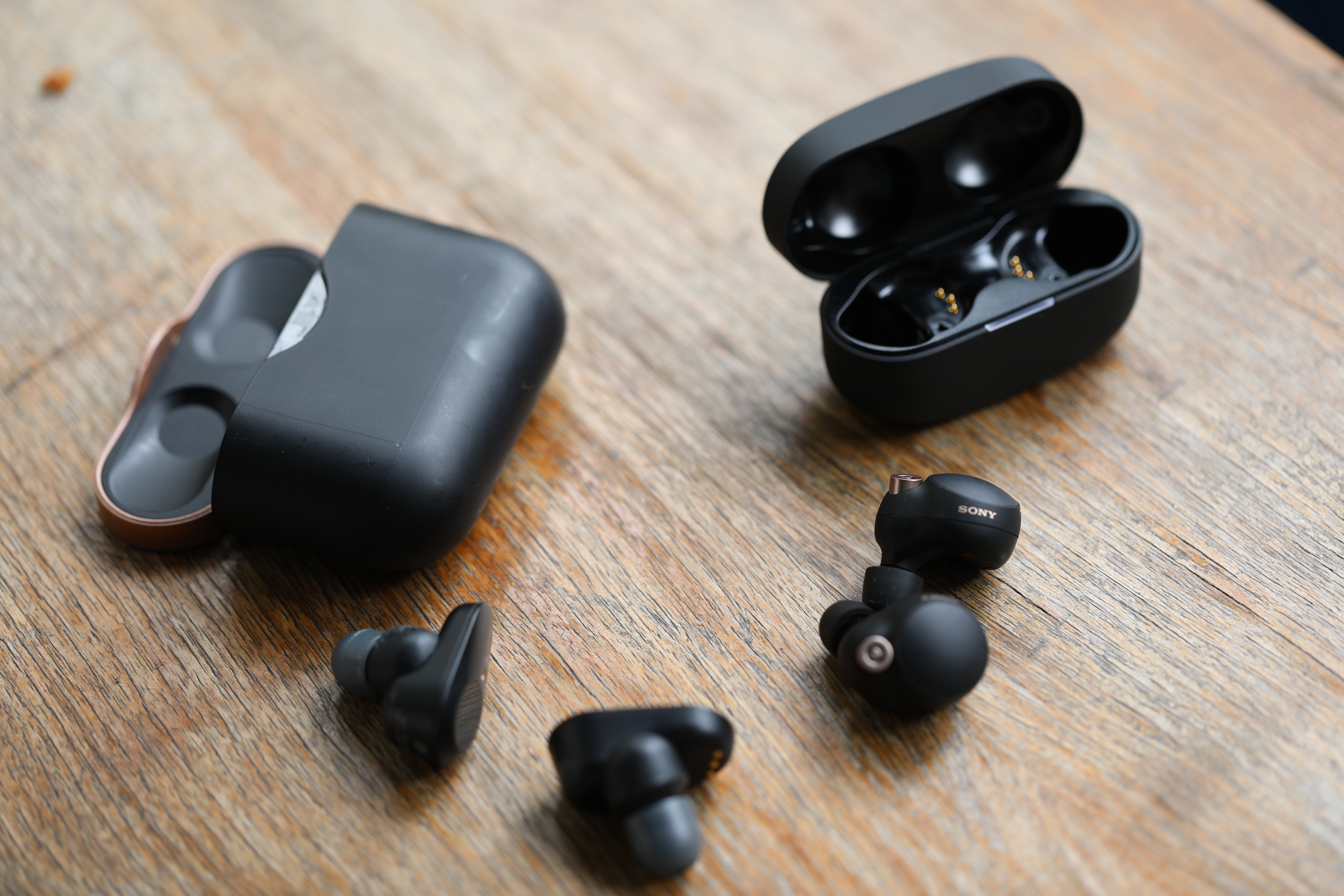
Image Credits: Brian Heater

I’m happy to report that the WF-1000XM4 is worth the wait. Sony’s great at high-end headphones, and these are no exception. The new buds represent an improvement over their predecessors in a number of ways. Unfortunately, they’re priced to match. If you thought the M3’s were steep at $230, I’ve got some bad news for you, friend. The new ones run an additional $50.

The upshot is that new headphones means a price drop on the older units. A quick search shows them for around $178 from a number of places, putting them more in line with standard earbud pricing. At $30 more than the AirPods Pro, Sony’s really leaning into the premium end of the spectrum. If anyone has the resources and scale to keeping pricing down, it’s Sony.

Are the WF-1000XM4s worth the price? It’s a fairly subjective question, of course. What I can definitely say is that they’re among the best-sounding pairs of earbuds you can buy. I’m still not convinced that anyone can truly duplicate the over-ear headphone experience in a pair of buds — the form factor is just too limited for now. But there are definitely advantages to going with buds — namely portability and on these unspeakably hot summer days, a chance to let your ears breathe.
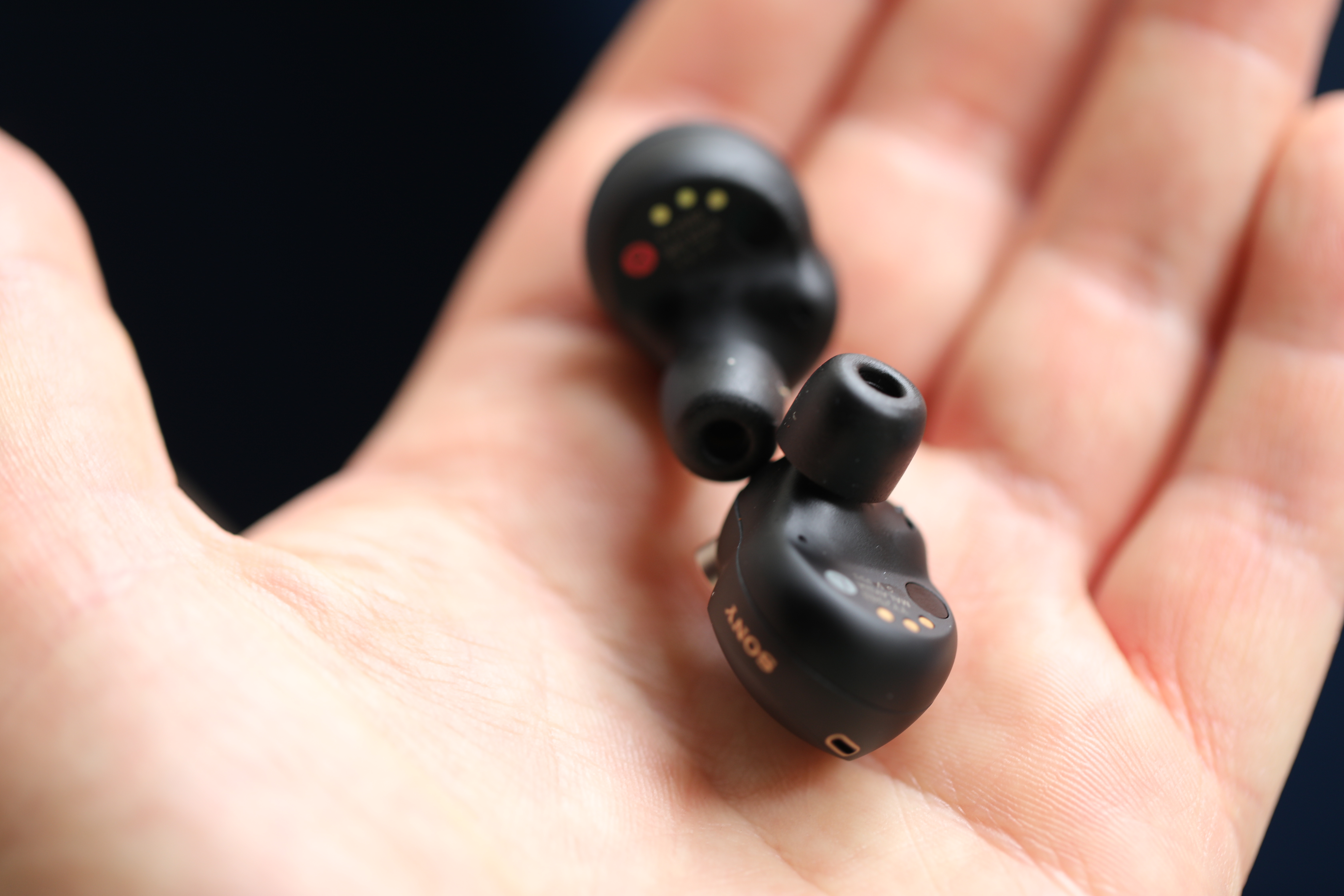
Image Credits: Brian Heater

Buds are, of course, better suited to fitness, as well. Though if you’re specifically looking for a pair to work out in, these probably shouldn’t be your first choice. I mean, they’re IPX4 water resistant, which is plenty good for sweat, but these are more of a long plane ride or sitting at your desk and really enjoying the hell out of a jazz record kind of earbuds.

In part, because they’re big. Granted, they’re a fair bit smaller than their predecessors, and moving from a paddle design to placing the components above the ear canal is a net benefit, but they’re still a bit too large for a long run. And while this is one of those things that vary dramatically from person to person, I found that the buds tended to cause ear pain after wearing them for extended stretches. I found the pressure relieved a bit when I swapped the medium foam tips for a small (I’m a medium in virtually all variety of earbud tips), though the small were much worse at forming a seal in my ears — a necessity to really take advantage of the active noise canceling. And even still, the eventual dull pain was not non-existent.
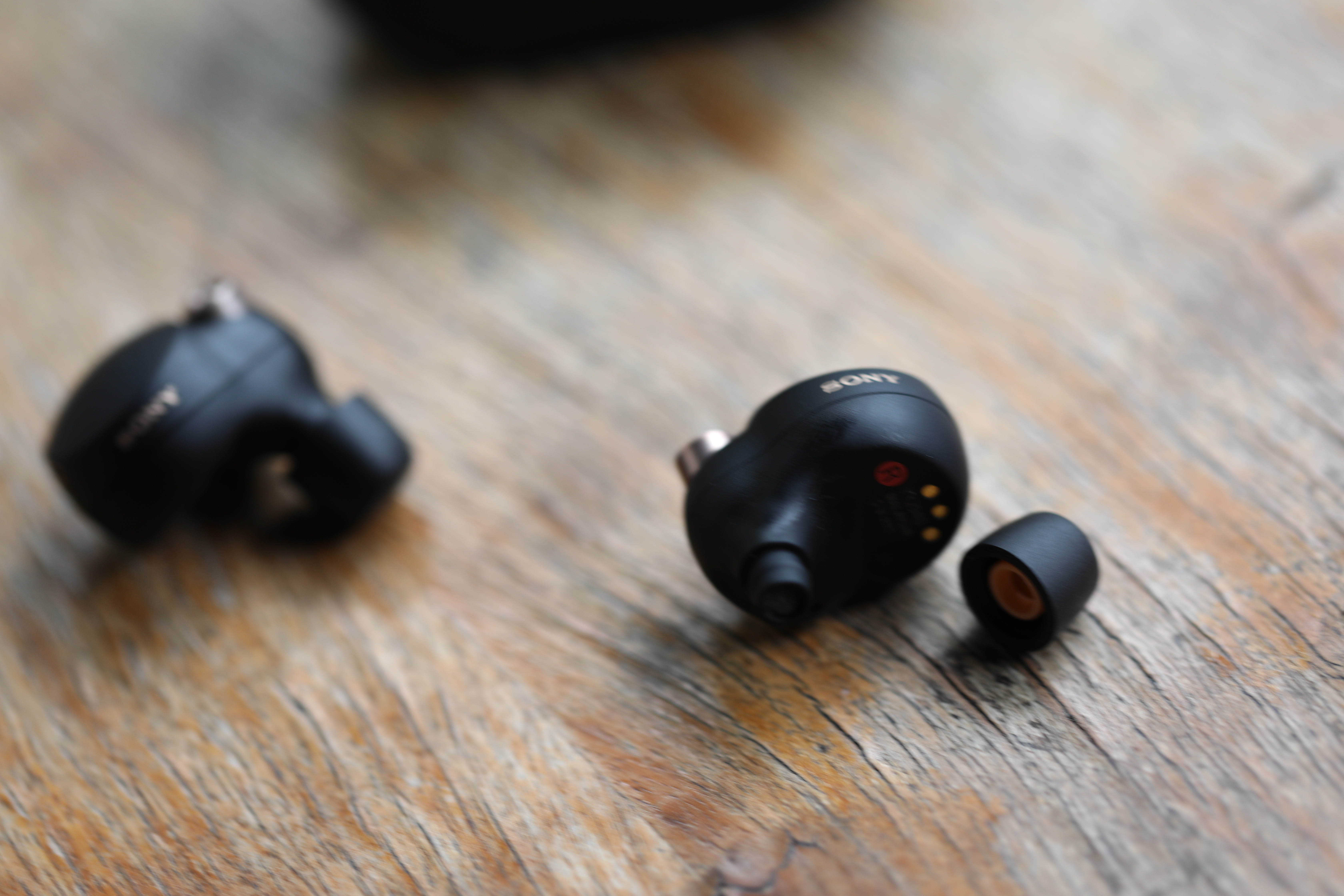
Image Credits: Brian Heater

It is also worth noting that I’ve had less than spectacular experiences with foam tips. They tend to be more prone to wear and tear than silicone and have a habit of getting a bit gnarly in the earwax department (look, this job isn’t always pretty). Though I understand why high-end manufacturers go this route, from a comfort perspective.

Also, hey, kudos to Sony for going with sustainable paper packaging. It’s not much to look at, but how often do you really look at the package your electronics came in? Anything that’s even slightly better for the planet is a net positive in my book. And besides, the charging case looks great.

It’s significantly smaller than the W3’s. These are a helluva lot more pocketable. It’s an understated matte black, albeit with a pretty loud white Sony logo on top. The magnets are strong and the buds snap into the case with authority — they’ll also attach to each other. A thin LED strip directly below the lid glows green or red, depending on charge. The case is wide enough to sit upright, so the USB-C port is located around the back — or you can charge it up wirelessly with a Qi pad.

Image Credits: Brian Heater

Interestingly, the stated charging time is the same as the M3s, though the numbers have been shifted around. With the originals, you got six hours on the buds and another 18 from the case. Here it’s eight hours on the buds and 16 on the case. So, a full day, either way, but I certainly prefer the two added hours on the actual earbuds.

The buds themselves are a bit flashier than the case. The design features two intersecting circles, the upper most of which is designed to lie flush with the ear. The outside is accented with a metal microphone, with a second, flush microphone up top.
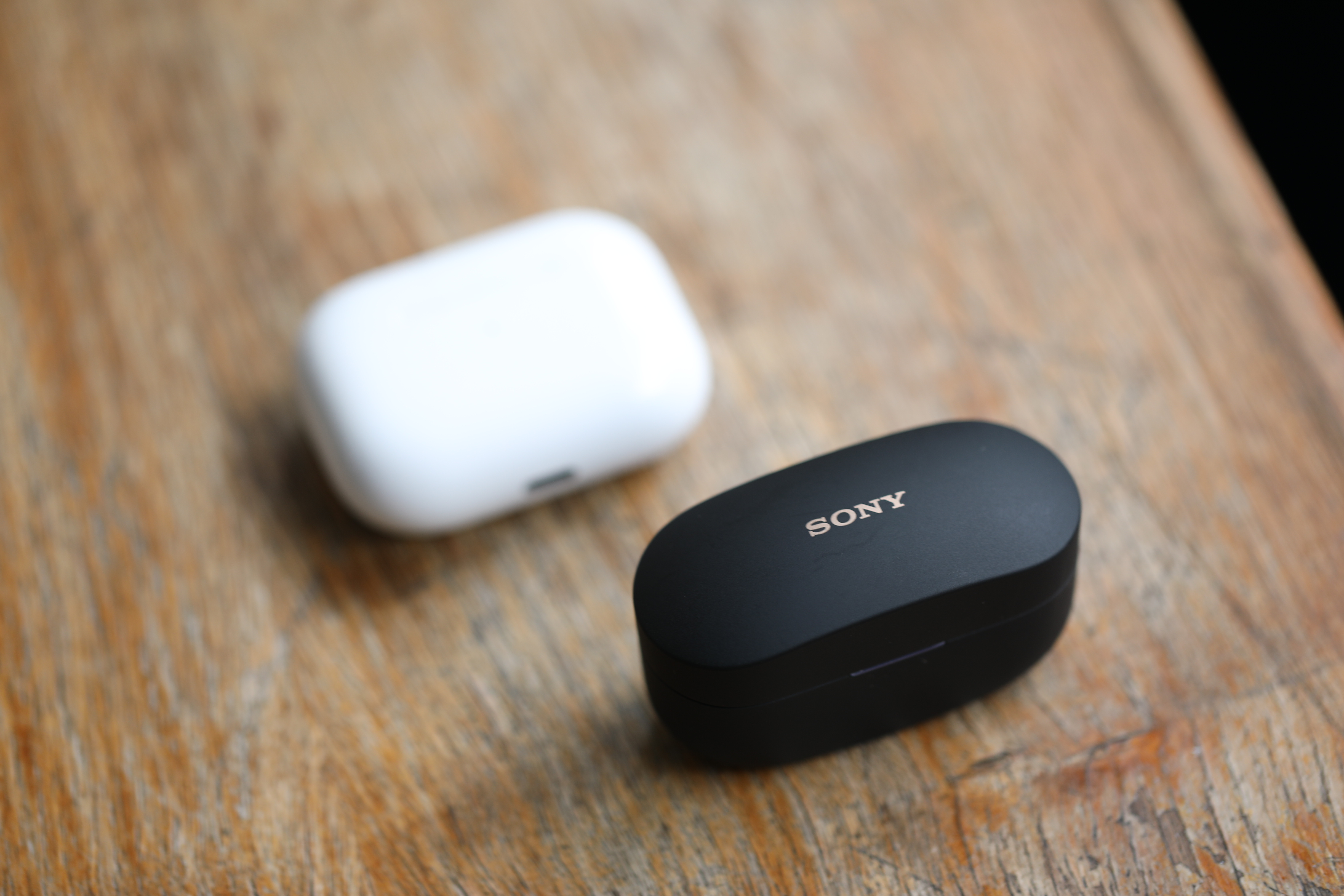
Image Credits: Brian Heater

The sound of the buds is really excellent. It’s got the kind of instrument separation that opens up new details on familiar songs you missed with inferior buds. The default balance is terrific, as well. Sony doesn’t lean to heavily into the bass because it doesn’t have to. The headphones sound terrific across a wide range of music varieties, as well as podcasts.

The noise-canceling is, once again, industry leading. A simple tap on the left earbud cycles between ANC and ambient noise, and the difference is like night and day. I was really impressed by the sounds it was capable of blocking, including my extremely loud vegetable juicer. I was also impressed by the buds’ Bluetooth range.

With earbuds, it’s true that you often get what you pay for. That’s certainly the case here. Sony’s once again managed to set the bar for high-end buds with the WF-1000XM4.


 

11 Jun 2021

Tech companies are looking at more flexible work models when offices reopen

Last week, Apple announced it wanted employees to return to the Cupertino campus starting in September for three days a week. Some employees who had grown used to the flexibility of working at home pushed back.

Prior to the pandemic with few exceptions, most employees went into an office most days, but when COVID hit in March 2020 and workers were forced home, employers quickly learned that their staff could be productive even when they weren’t sitting in the same building. Now it seems it will be difficult to put the genie back in the bottle.

Finding that right balance between fully remote and however a given company defines hybrid — like Apple some days in the office and some days at home — is never going to be easy and there will never be a one size fits all answer. In fact, it’s probably going to be fluid moving forward.

Just to show how different companies are approaching this, we asked five other large technology companies besides Apple to see how they were treating the return to the office, and each was looking at some form of hybrid work:

  • Google is taking at a similar approach to Apple with three days in the office and two days at home. “We’ll move to a hybrid work week where most Googlers spend approximately three days in the office and two days wherever they work best. Since in-office time will be focused on collaboration, your product areas and functions will help decide which days teams will come together in the office. There will also be roles that may need to be on site more than three days a week due to the nature of the work,” Sundar Pichai, CEO of Google and Alphabet wrote in a recent blog post.
  • Salesforce is giving employees a broad set of choices depending on their role. Most employees can work at home most of the time, and can come into the office 1-3 days a week to collaborate with colleagues, meet with customers or for presentations. Others who don’t live near an office can be fully remote and those who choose, or whose job to require will be office-based, coming in 4-5 days a week.
  • Facebook is expanding remote work telling employees, “As of June 15, Facebook will open up remote work to all levels across the company, and anyone whose role can be done remotely can request remote work,” the company wrote to employees.
  • Microsoft is leaving it up to managers, but most roles are going to be remote at least part of the time. As they told employees in an announcement recently, “We recognize that some employees are required to be onsite and some roles and businesses are better suited for working away from the worksite than others. However, for most roles, we view working from home part of the time (less than 50%) as now standard – assuming manager and team alignment.”
  • Amazon originally was looking at a policy of mostly in-office, but it announced this week that it had decided to offer employees a more flexible work schedule. “Our new baseline will be three days a week in the office (with the specific days being determined by your leadership team), leaving you flexibility to work remotely up to two days a week,” the company wrote in a message to employees.

The larger tech companies are offering most employees some level of flexibility to decide when to come into the office, but how do startups look at work as we move toward post-pandemic? Most startups I speak to don’t foresee an office-centric approach with many taking a remote-first approach. Andreessen Horowitz recently surveyed 226 startups in its portfolio and found that two-thirds of portfolio companies are looking at a similar hybrid approach as their larger counterparts. In fact, 87 were thinking about 1-2 days a week with 64 looking at no office at all, only gathering for company offsites. By contrast just 18 said that they wouldn’t allow any work from home.

Dion Hinchcliffe, an analyst at Constellation Research, who has been studying distributed work for many years says that tech companies will be more likely to embrace flexible work models now that they have seen how it works during the pandemic.

“Most tech companies will maintain some degree of flexibility when returning to the office, especially since it is popular with many of their workers. Plus the worries about productivity loss have turned out to be largely unfounded,” he said. But he emphasized that this would not be true for every company.

“Certain companies, especially ones that believe they have a lot of IP to protect or operate in other sensitive types of work will be more reluctant to allow work to continue from home,” he said. This in spite of the fact that many of these companies have been doing just that for the last 15 months. Going hybrid as Apple has only muddles that argument further.

“It definitely includes Apple, which has long been well known for discouraging work from home. Their new policy of three days a week in-office probably makes them feel a bit more secure, but does not really accomplish it,” Hinchcliffe said.

Of course companies can set policies, but it doesn’t mean they won’t run into employee objections. Apple certainly learned that. Workers appear to want to be the ones choosing where to work, not their employers, and it could very well be a competitive advantage to offer work from home options, especially in a tight labor market where the power appears to be shifting to employees.

It should be interesting to see where this all goes, and how much power employees have to push their companies to their more flexible working ideal. For now, most companies will have a far larger degree of flexibility than existed pre-pandemic, but certainly not everyone wants people working from home all the time forever, and companies will need to decide what works best for them and their employees.