Year: 2021

09 Jun 2021

German eVTOL maker Lilium partners with Honeywell for flight control and avionics systems

German electric air mobility company Lilium has partnered with aerospace manufacturer Honeywell to develop the electronics and mechanical systems for the 7-seater Lilium Jet, the company’s debut eVTOL.

Honeywell will supply its compact fly-by-wire system, a flight control component that will be responsible for controlling all of the Jet’s moving parts, and the aircraft’s avionics system. eVTOL company Vertical Aerospace is also using Honeywell’s compact fly-by-wire system in its aircraft, but the avionics system for the version Lilium will be using was designed to suit the specific technical requirements of the Lilium Jet.

Honeywell is a giant in the aerospace manufacturing industry, and one of the first to create a dedicated Urban Air Mobility team. The company has also become an investor in Lilium by participating in the common stock private investment in public equity (PIPE) offering announced in connection with Lilium’s SPAC merger with Qell Acquisiton Corp.

The two companies have been in discussion and collaboration since February 2019, Lilium’s chief program officer Yves Yemsi told TechCrunch. He said Lilium identified core competencies it wanted to keep in-house – the design and assembly of the propulsion and battery systems and the final aircraft assembly, for example – and will partner with experienced suppliers for other parts of the aircraft.

“Collaborating with experts, aerospace partners, is a deliberate choice for us,” he said. “It will help us to reduce our time to market and still be safe.”

A key advantage of the partnership is how it will help the certification process, Yemsi explained. Some of Honeywell’s components have achieved a Technical Standard Order (TSO), which is a minimum performance standard recognized by the FAA. Using TSO authorized components could help save time in the certification process.

Lilium already has teams of people working on getting Design Production Approval and Production Organization Approval, two types of approvals issued by the European Union Aviation Safety Agency (EASA) that essentially verify the company is able to bring a product to market. These approvals complement the type certification that Lilium aircraft (and all other eVTOL) must achieve with both the U.S. Federal Aviation Administration and the EASA before the company can start commercial operations.

The partnership with Honeywell, an established aerospace manufacturer, marks a major point of progress for Lilium. The next step after Honeywell starts delivering components is to develop and test the aircraft in a system integration laboratory, which tests on the ground that the avionics and electronic systems, Yemsi said.

“Now the hard work begins,” he said.

09 Jun 2021

Mythical Games raises $75M to build an NFT game engine

Even as NFT sales dip below their most speculative highs, startups aiming to tap into their potential are still scoring big funding rounds from investors who believe there’s much more to crypto collectibles than the past few months of hype.

Mythical Games, an NFT games startup based out of Los Angeles, has banked a $75 million raise from new and existing investors betting on the startup’s aim to expand the ambitions of their first title and locate a substantial platform opportunity amid helping developers build blockchain-based gaming experiences.

The round was led by WestCap. Existing investors were joined by 01 Advisors, Bilibili, Gary Vaynerchuk, the Glazer family, Moore Capital, and Redbird Capital in the Series B funding. The startup has raised a whopping $120 million to date.

The company has been building a title called Blankos Block Party that seems to be Fall Guys meets Roblox meets Funko Pop. The PC game capitalizes on a number of big social gaming trends around user-created content, while adding in a marketplace where users can buy avatar figures and accessories crafted by a variety of artists and designers that Mythical has partnered with. Users can buy or sell the limited run or open edition items through their marketplace. Unlike some other NFT platforms, the goods live on a private blockchain so they can’t be re-sold on public marketplace platforms like OpenSea.

Mythical Games is part of a growing movement to bring blockchain-based game mechanics mainstream while leaving behind elements of crypto platforms that are seen as less ready for primetime. Users can purchase avatars on the platform with cryptocurrency through BitPay but they can also pay with a credit card. Users don’t need to walk through the mechanics of setting up a wallet or writing down a seed phrase either.

While the company has big hopes for Blankos as it onboards more users, the bigger investor opportunity is likely in the game engine that the team is building. The startup’s “Mythical Economic Engine” is being designed to help budding game builders create NFT-based marketplaces that won’t get them in any regulatory trouble, marrying compliance across geographies and tools that help creators comply with anti-money laundering laws and know-your-customer frameworks.

“With any new market like [NFTs], it goes through all these different cycles,” Mythical Games CEO John Linden tells TechCrunch. “We think this will actually change gaming for the long haul. The more we talk to game studios, we’re finding more and more potential use cases.”

09 Jun 2021

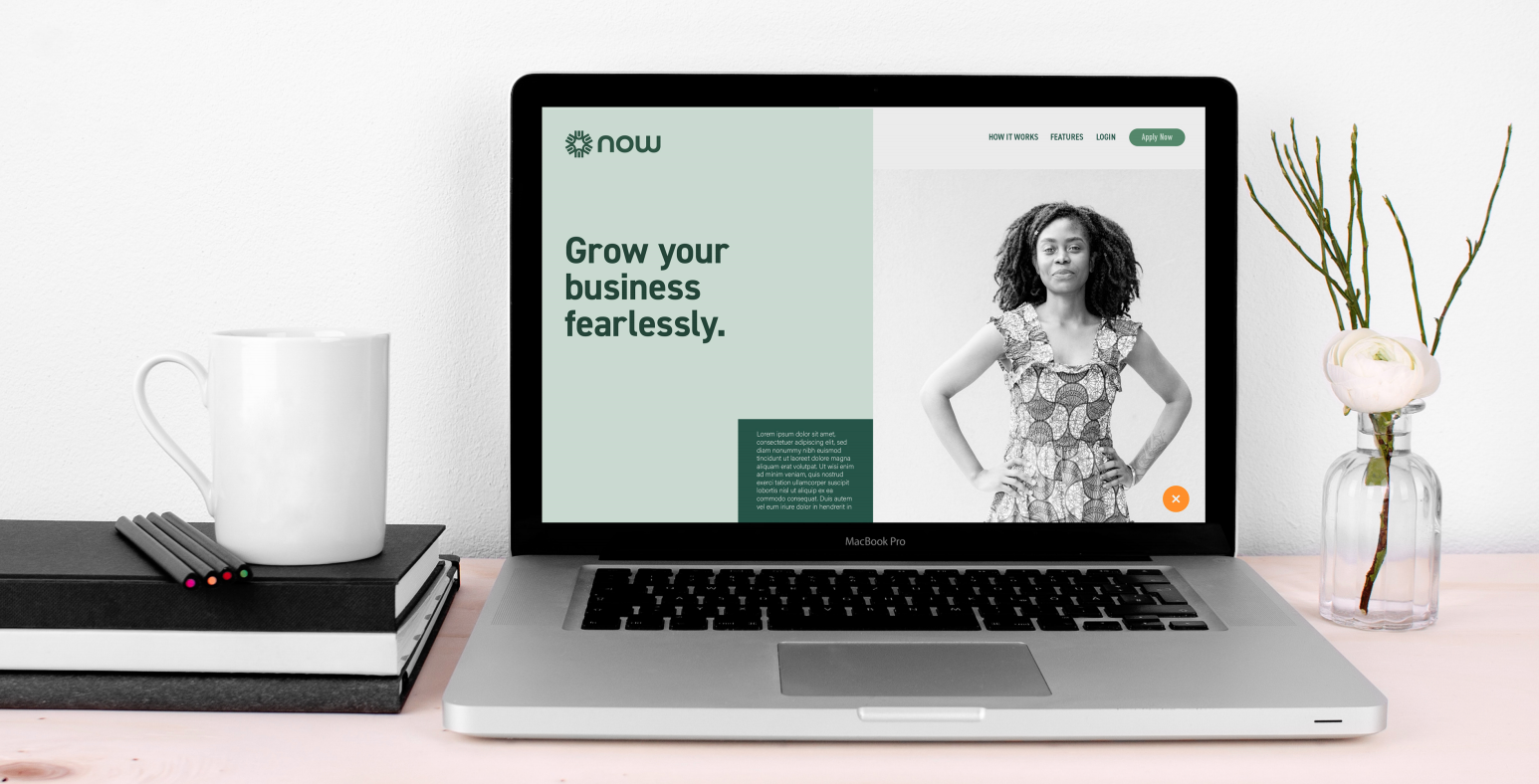
Stacey Abrams co-founded fintech company Now raises $9.5M

After co-founding Insomnia Consulting, Stacey Abrams and Lara O’Connor Hodgson started Nourish to address a personal problem.

“We were at a meeting, I think for one of my campaigns,” explains Abrams, the Georgia-based lawyer and politician whose voting rights work became a focal point for the country in 2020. “[O’Connor Hodgson] needed to put together a baby bottle and had to trust the waiter to take the bottle back and wash it. She said, ‘I just wish there was a Dasani for babies.’ ”

Ultimately, however, Nourish ran into an issue. The company was a victim of its own successes, to hear Abrams describe it — or, more accurately, a victim of a system that didn’t provide it the right tools to grow. A problem with invoicing ultimately stopped the childcare in its tracks. But it was precisely those failings that planted the seed for their next company, the simply named Now.

“We started looking for a loan. All we needed was the money to meet the order. This was during the credit crunch, and we could not get it,” Abrams tells TechCrunch. “We went from bank to credit union to factoring, and every time we got near the end, the credit model changed and we got kicked out of the program. Finally, unfortunately, we had to let our business die. We grew to death. We got too big to meet the needs and didn’t have a solution.”

Abrams and O’Connor Hodgson founded Now in 2010 to provide small businesses a quicker method for getting invoices paid. When a business submits an invoice through NowAccount, the service pays 100% of the invoice, minus a 3% merchant fee.

Image Credits: Now

“We sell bonds in the capital market, just like American Express does,” O’Connor Hodgson explains. “We have very low-cost capital that we’re able to give that small business their revenue immediately. And then we’ve built a system that allows us to manage the cost and risk of that, because we’re going to then wait 30+ days to get paid.”

Today the Georgia-based company announced that it has raised $9.5 million in Series A funding. The round, led by Virgo Investment Group and featuring Cresset Capital Partners, will be used to help scale Now’s offerings. It comes as the pandemic has put even more of a strain on invoices for many companies. O’Connor Hodgson says the average wait time for invoice payment expanded from around 50 days to between 70-80.

“We have served over 1,000 small businesses and we have processed over $700 million in transactions,” says O’Connor Hodgson. “So that’s $700 million of their capital that they have received sooner.”

Thus far, Now’s growth has largely been a product of word of mouth. The new influx of funding will go, in part, to market and advertising to get the product in front of more small businesses.

“When you’re a small business and someone tells you we have a solution to a problem that no one has been willing to solve, we sound like magic,” says Abrams. “And what we want people to understand and a big part of our scaling challenge has been, you have to experience it to believe it. And getting companies to understand that this actually does work the way we say that it does actually benefit you in the way we imagine, and that it works.”

09 Jun 2021

Join Accel’s Arun Mathew at TechCrunch Disrupt in our debate around alt-financing

TechCrunch Disrupt has a long history of bringing leading venture capitalists to the stage to yammer about their industry. Our impending TC Disrupt conference happening on September 21-23 is no different. This time around one of our investor guests is Arun Mathew of Accel, a venture capitalist that you might recall from his recent participation in Webflow’s huge $140 million Series B.

But we aren’t merely asking Mathew out to the event to chat low-code, or SaaS, or simply current intra-venture capital investing dynamics. Instead, he’ll be taking part in our panel on alternative financing (alt-finance) with a few folks that aren’t venture capitalists, but still deploy capital into startups.

Having an Accel partner take part in the panel makes good sense, as the venture firm has an interesting way of approaching bootstrapped companies. Namely that it is willing to show up to pretty large companies and write huge checks. That’s how Accel got into Qualtrics, for example, a deal that worked out pretty well.

But Accel invests from seed through super-late stage, making Mathew the perfect person to bring the venture perspective to the conversation.

The chat should hit on revenue-based financing, other more exotic forms of alt-finance and where the venture world may see capital partnerships, and funding rivalries. Our goal won’t be to incite an argument, but instead to unfold the private capital markets in a manner that helps fans of traditional VC — if there is still such a thing in today’s Tiger Global-led world — and believers in newer methods of capital deployment learn from each other. And so that founders can carve the most reasonable path for themselves as they seek to grow their businesses.

All told it should be a bop and I will see you there!

09 Jun 2021

Virgin Orbit’s next launch at the end of June will be streamed live on YouTube

Virgin Orbit is getting great to launch its next mission to space, with a target window at the end of this month. This will be the first time Virgin Orbit is flying after its first successful orbital launch in January, and it’s carrying seven small satellites on behalf of clients including the U.S. Department of Defense, and the Royal Netherlands Air Force. It’s also going to be the first time everyone can watch along live as Virgin Galactic makes the trip to space, since the company is streaming the mission via YouTube.

Previously, Virgin Orbit has opted not to provide live video of its flights, choosing instead to provide a feed of text updates via its social media channels. The YouTube stream should provide unprecedented views of the Virgin launch process, which includes transporting its small Launcher One rocket on to a high altitude for a mid-air launch from the wing of a modified Boeing 747 carrier aircraft.

Live streaming launches is pretty much de rigueur in the space industry at this point, especially among the crop of so-called ‘new space’ companies that includes SpaceX, Rocket Lab and Blue Origin. SpaceX has even been doing it throughout its Starship development process, which is unusual because it’s broadcast a number of failures on top of its successes.

Virgin Orbit’s novel aircraft-assisted launch process should mean its streams provide some unique perspective vs. the vertical take-off group, so it’s probably worth keeping an eye on this one.

09 Jun 2021

AI startup investment is on pace for a record year

The startup investing market is crowded, expensive and rapid-fire today as venture capitalists work to preempt one another, hoping to deploy funds into hot companies before their competitors. The AI startup market may be even hotter than the average technology niche.

This should not surprise.

In the wake of the Microsoft-Nuance deal, The Exchange reported that it would be reasonable to anticipate an even more active and competitive market for AI-powered startups. Our thesis was that after Redmond dropped nearly $20 billion for the AI company, investors would have a fresh incentive to invest in upstarts with an AI focus or strong AI component; exits, especially large transactions, have a way of spurring investor interest in related companies.

That expectation is coming true. Investors The Exchange reached out to in recent days reported a fierce market for AI startups.


The Exchange explores startups, markets and money. 

Read it every morning on Extra Crunch or get The Exchange newsletter every Saturday.


But don’t presume that investors are simply falling over one another to fund companies betting on a future that may or may not arrive. Per a Signal AI survey of 1,000 C-level executives, nearly 92% thought that companies should lean on AI to improve their decision-making processes. And 79% of respondents said that companies are already doing so.

The gap between the two numbers implies that there is space in the market for more corporations to learn to lean on AI-powered software solutions, while the first metric belies a huge total addressable market for startups constructing software built on a foundation of artificial intelligence.

Now deep in the second quarter, we’re diving back into the AI startup market this morning, leaning on notes from Blumberg Capital’s David Blumberg, Glasswing Ventures’ Rudina Seseri, Atomico’s Ben Blume, and Jocelyn Goldfein of Zetta Venture Partners. We’ll start by looking at recent venture capital data regarding AI startups and dig into what VCs are seeing in both the U.S. and European markets before chatting about applied AI vs. “core” AI — and in which context VCs might still care about the latter.

Hot, expensive, crowded

The exit market for AI startups is more than just the big Microsoft-Nuance deal. CB Insights reports that four of the largest five American tech companies have bought a dozen or more AI-focused startups to date, with Apple leading the pack with 29 such transactions.

09 Jun 2021

Instagram adds affiliate and shop features for creators

As Apple hosts their annual Worldwide Developers Conference, Instagram and Facebook chose this moment to pilot their first-ever Creator Week. This three-day event is geared toward aspiring and emerging digital creators, complete with 9:45 AM virtual DJ sets and panels on “Algorithm Mythbusting” and raising “zillions for a nonprofit you care about.”

During the first day of the event, Mark Zuckerberg made an announcement introducing new ways for creators to make money. In the coming months, Instagram will start testing a native affiliate tool, which allows creators to recommend products available on checkout, share them with followers, and earn commissions for sales their posts drive. When creators make these posts, the text “eligible for commission” will appear beneath their username in the same way that sponsored content labels appear.

Available immediately, creators will be able to link their shops to their personal profiles, not just business ones. By the end of the year, eligible creators in the U.S. will be able to partner with one of Instagram’s merchandise partners (Bravado/UMG, Fanjoy, Represent, and Spring) to drop exclusive product launches on the app.

During live Instagram videos, viewers can tip creators by sending them a Badge, which costs between $0.99 and $4.99. Facebook Gaming has a similar feature called Stars, in which one Star is valued at $0.01. Starting this week, creators can earn bonuses for accomplishing certain challenges, like going live with another account. In a promotional image, for example, Facebook offers a bonus of $150 for creators who earn 5000 Stars, the equivalent of $50.

“To help more creators make a living on our platforms, we’re going to keep paid online events, fan subscriptions, badges, and our upcoming independent news products free for creators until 2023,” Zuckerberg wrote in a Facebook post. “And when we do introduce a revenue share, it will be less than the 30% that Apple and others take.”

Image Credits: Instagram

These updates mark the latest push by Instagram toward affiliate marketing and in-app shopping, like its redesigned Instagram Shop and Shopping in Reels, which debuted within the last year.

“Our goal is to be the best platform for creators like you to make a living. And if you have an idea that you want to share with the world, you should be able to create it and get it out there easily and simply – across Facebook and Instagram – and then earn money for your work,” Zuckerberg added during Creator Week.

Creators may be drawn to experiment with these affiliate and shop features, since for now, they won’t lose a cut of their profits to Instagram. But platforms like TikTok and YouTube offer monetization strategies that extend beyond ecommerce.

Last July, TikTok announced its $200M TikTok Creator Fund, which allows popular posters to earn money from their videos. It’s unclear exactly how TikTok determines how much money to dole out, but it depends on the number of views, engaged views, and other factors. In August 2020, the YouTuber-turned-TikToker Hank Green estimated that he would bring home about $700 from 20,000,000 TikTok views in one month, averaging to about 3.5 cents per 1000 views.

Meanwhile, YouTube announced a $100M fund last month for top creators on YouTube Shorts, its TikTok competitor. The platform pointed out that over the last three years, it has paid $30 billion to content creators. Snapchat has been paying $1 million per day to creators on their own TikTok competitor, Spotlight.

For users who don’t have millions of followers, these creator funds might not pay the rent. Still, it offers an income stream based on views, outside of ecommerce or viewer tips. For now, Instagram can’t say the same.

09 Jun 2021

Segment launches customer journey tool to build fine-grained personal experiences

Twilio Segment announced a tool, which is available starting today, to help marketers create fine-grained customer journeys. Up until now the company has enabled marketers to build buyer personas and broader audiences, but this enables users to have much greater control of their interactions with a customer.

Company co-founder and CEO Peter Reinhardt says that marketers have been craving the ability to build more customized customer journeys and this tool gives them that. “It’s basically taking the power that existed in personas and audiences and actually putting it fully in marketers’ hands to build their dream journeys across every channel with the best data,” he said.

This enables marketers to stitch together a whole sequence of audiences. “Say when someone comes to the top of the funnel, they want to do X, then if they want to branch it and use X or Y, then do two different things, and you can keep branching and personalizing via this whole journey to cover the whole lifecycle.”

He says this capability has existed in some tools, but the Twilio Segment offering enables it to be used in more than 300 tools in the Segment ecosystem. “This is the first time that we’re going to be able to really do that and orchestrate this way, not just for a limited subset of channels, but across all of the channels,” he said.

Marketers can build branching by dragging and dropping journey components to send people on different paths depending on things like if they are a regular customer or a first-time customer or just about anything you can think of. Reinhardt says that flexibility is a key attribute of the new feature.

While it’s competing with some major players like Adobe and Salesforce in this space, Reinhardt believes this capability really gives Twilio a leg up over the competitors. “I think if you look at more of the legacy journey builders, [their products] are not built on real time data, meaning that they’re actually missing basically all of the interesting behavioral data that marketers actually build on,” he said.

Segment was acquired by Twilio last year for $3.2 billion, and part of the reason for that was to increase its customer engagement capabilities. Segment gives Twilio a customer data platform to build on top of its other communications tooling, and today’s announcement expands on that capability.

09 Jun 2021

Swedish company Northvolt raises $2.75B to accelerate European battery production

Swedish battery developer and manufacturer Northvolt AB has raised $2.75 billion in capital as it prepares to ramp up to an annual production capacity of 150 GWh in Europe by 2030.

The funding round – Northvolt’s largest thus far – was co-led by existing investors Goldman Sachs and Volkswagen, and new investors including the Swedish pension funds AP1-4, and OMERS, one of Canada’s largest pension plans. AMF, ATP, Baillie Gifford, Baron Capital Group, Bridford Investments Limited, Compagnia di San Paolo through Fondaco Growth, Cristina Stenbeck, Daniel Ek, IMAS Foundation, EIT InnoEnergy, Norrsken VC, PCS Holding, Scania and Stena Metall Finans also participated in the raise.

Volkswagen’s investment came to €500 million ($620 million), the OEM said Wednesday, maintaining its 20% stake in the battery manufacturer.

CNBC reported that Northvolt’s valuation now stands at $11.75 billion. The company declined to comment on the specific valuation figure to TechCrunch.

Northvolt has already scored major deals with automakers like Volkswagen and BMW. In July 2020, the company inked a $2.3 billion contract with BMW for batteries; more recently in March, Volkswagen put in a $14 billion order over a ten-year period. The two deals bring Northvolt’s total contracts to $27 billion. Other notable customers include Swedish heavy duty truck manufacturer Scania and energy storage company Fluence.

This brings Northvolt’s total raised to more than $6.5 billion since the company was founded in 2016. The manufacturer’s first gigafactory in Skellefteå, Sweden, will be expanded from 40 GWh to 60 GWh, in part due to increased demand from the Volkswagon order, the company said in a statement. That facility will commence production later in 2021.

Northvolt’s overarching plan is to ramp up to at least 150 GWh of annual battery production across Europe by 2030. To meet this massive target, the company is considering at least two additional gigafactories, including one in Germany.

Northvolt is one of Europe’s largest battery manufacturers. Company shareholder EIT InnoEnergy said in a statement Wednesday that the funding is key to Europe achieving its Green Deal objectives, which includes creating a European battery value chain.

The Swedish company aims to distinguish itself from other battery manufacturers by producing batteries using renewable energy for the manufacturing process. Northvolt says its batteries have an 80% lower carbon footprint than those made with coal power. It also recycles batteries in-house and reuses the raw materials in its production process.

09 Jun 2021

Biden revokes and replaces Trump actions targeting TikTok and WeChat

President Joe Biden signed an executive order on Wednesday revoking actions targeting TikTok and WeChat signed by former President Donald Trump, according to a report from The Wall Street Journal on Wednesday.

President Biden signed a new order instead requiring the Commerce Department to review apps with ties to “jurisdiction of foreign adversaries” that may pose national security risks.

The U.S. Department of Commerce, Tencent and ByteDance could not be immediately reached for comment.

This is a developing story.