Year: 2021

08 Jun 2021

Ring won’t say how many users had footage obtained by police

Ring gets a lot of criticism, not just for its massive surveillance network of home video doorbells and its problematic privacy and security practices, but also for giving that doorbell footage to law enforcement. While Ring is making moves towards transparency, the company refuses to disclose how many users had their data given to police.

The video doorbell maker, acquired by Amazon in 2018, has partnerships with at least 1,800 U.S. police departments (and growing) that can request camera footage from Ring doorbells. Prior to a change this week, any police department that Ring partnered with could privately request doorbell camera footage from Ring customers for an active investigation. Ring will now let its police partners publicly request video footage from users through its Neighbors app.

The change ostensibly gives Ring users more control when police can access their doorbell footage, but ignores privacy concerns that police can access users’ footage without a warrant.

Civil liberties advocates and lawmakers have long warned that police can obtain camera footage from Ring users through a legal back door because Ring’s sprawling network of doorbell cameras are owned by private users. Police can still serve Ring with a legal demand, such as a subpoena for basic user information, or a search warrant or court order for video content, assuming there is evidence of a crime.

Ring received over 1,800 legal demands during 2020, more than double from the year earlier, according to a transparency report that Ring published quietly in January. Ring does not disclose sales figures but says it has “millions” of customers. But the report leaves out context that most transparency reports include: how many users or accounts had footage given to police when Ring was served with a legal demand?

When reached, Ring declined to say how many users had footage obtained by police.

That number of users or accounts subject to searches is not inherently secret, but an obscure side effect of how companies decide — if at all — to disclose when the government demands user data. Though they are not obligated to, most tech companies publish transparency reports once or twice a year to show how often user data is obtained by the government.

Transparency reports were a way for companies subject to data requests to push back against damning allegations of intrusive bulk government surveillance by showing that only a fraction of a company’s users are subject to government demands.

But context is everything. Facebook, Apple, Microsoft, Google, and Twitter all reveal how many legal demands they receive, but also specify how many users or accounts had data given. In some cases, the number of users or accounts affected can be twice or more than threefold the number of demands they received.

Ring’s parent, Amazon, is a rare exception among the big tech giants, which does not break out the specific number of users whose information was turned over to law enforcement.

“Ring is ostensibly a security camera company that makes devices you can put on your own homes, but it is increasingly also a tool of the state to conduct criminal investigations and surveillance,” Matthew Guariglia, policy analyst at the Electronic Frontier Foundation, told TechCrunch.

Guariglia added that Ring could release the numbers of users subject to legal demands, but also how many users have previously responded to police requests through the app.

Ring users can opt out of receiving requests from police, but this option would not stop law enforcement from obtaining a legal order from a judge for your data. Users can also switch on end-to-end encryption to prevent anyone other than the user, including Ring, from accessing their videos.
08 Jun 2021

Osma’s high-tech instant cold brew could change summertime coffee forever

It’s rare that a truly new way to make coffee is invented, and nearly all of them have one thing in common: heat. After all, it’s hot water that quickly extracts flavor and body from grounds. But Osma, a new device using an entirely novel coffeemaking technique, makes a rich, strong espresso-like drink at any temperature, including icy cold — and it might be the next big thing in the industry.

Osma is the latest project from designer Joey Roth, who evolved from high-concept speaker tech to tea and coffee tech, and now has found a way to integrate these two disparate pursuits with a unique vibratory method of extraction. And although Roth has had several successes over the years, this could be his most valuable yet.

To see why, it helps to understand the way coffee is ordinarily made, which generally comes down to one of two things: soaking the grounds in hot water, or forcing it through the grounds under pressure.

In the first case, which includes drip and pourover, French press, and others, the heat of the water passively frees the oils and volatiles from the ground beans and then the solids, drained of flavor, are left behind through filtering.

The second case is espresso, in which the desired chemicals are extracted not just through heat but by the process of microcavitation. This is where the heat and pressure free CO2 from the grounds, forming tiny bubbles that quickly collapse, a process that leads to the flavor and aroma compounds being forced out as well.

Cold water can be used in the first method, with the advantage is that certain substances that would be destroyed by heat are retained, giving a different flavor profile. Unfortunately it can take hours or even days to brew to one’s preferred strength, and other desirable compounds degrade over that duration. And cold water can’t be used in the espresso process because steam is necessary to accomplish extraction.

Yet despite the inconvenience inherent to cold coffee, anyone who’s visited a café in the last decade can tell you it is enormously popular, year-round but especially in the summer. There’s endless appetite for the drink, even if all it amounts to is pouring hot coffee or espresso over ice. What if strong, delicious coffee could be made without heating it up, watering it down, or waiting for days? That’s the Osma proposition.

Image Credits: Osma

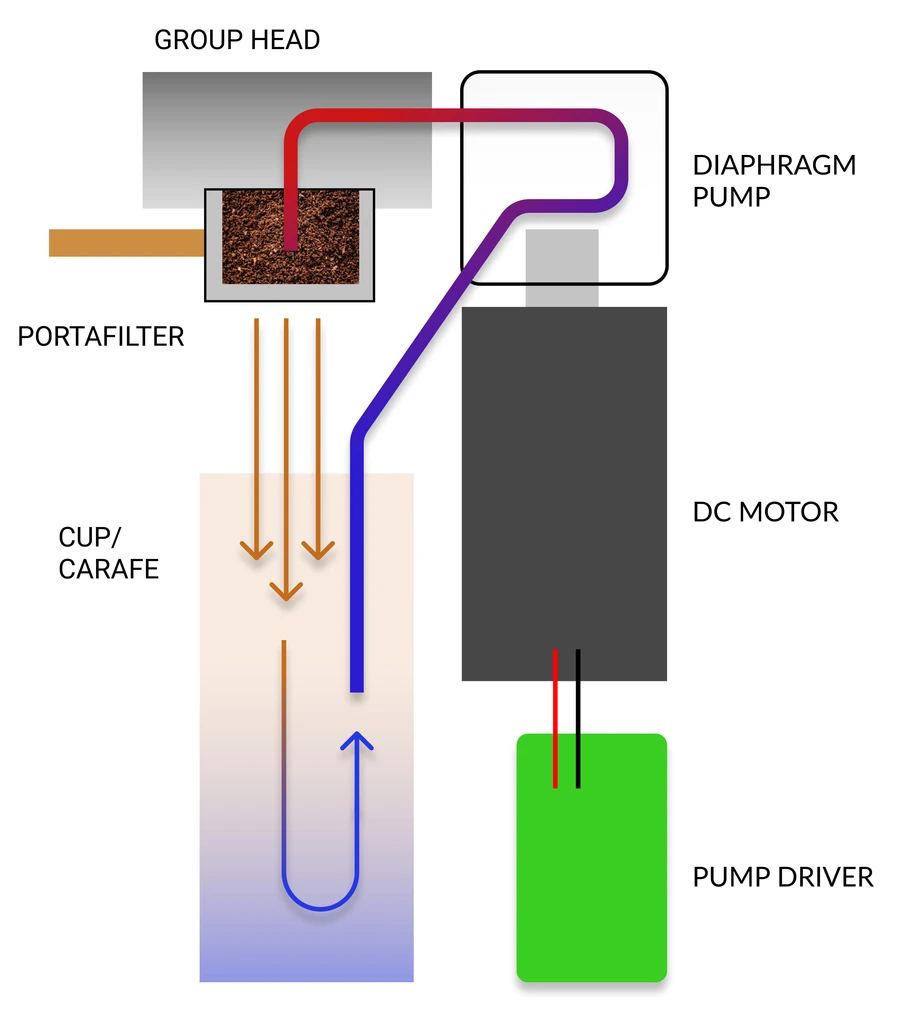
The Osma system is to my knowledge unlike any other brewing method. Essentially what it does is circulate water through the grounds continuously, while agitating them with a sort of standing pressure wave. It produces 8-12 ounces of a coffee that’s less concentrated than espresso, but not as mild as coldbrew, in about two minutes.

Diagram showing how coffee and water move through the Osma system.

Image Credits: Osma

This is a fundamentally new expression of coffee that needs to be experienced,” said Roth when I asked him to characterize the flavor profile. He’d compared it to Kyoto-style slow drip with the added creamy mouthfeel and brighter flavors of espresso, but decided the analogy was imperfect.

His reservation is justified, as the method really is completely different. In addition to using cold water instead of hot and an acoustic wave instead of high pressure to create cavitation, the Osma Pro is unique in that it uses a circulatory process instead of one-way.

Almost all forms of coffee making are unidirectional: water goes in, meets up with the grounds, and coffee comes out — with the exception of percolators, which aren’t exactly the aficionado’s first choice. The Osma method, on the other hand, sucks up the water, passes it through the grounds and agitates it, then puts it back in the same vessel, where it is sucked up and passed through again.

This circular process can be stopped earlier or later, giving a lighter or heavier brew, but there’s a sweet spot at about two minutes that Roth thinks produces the best cup for most purposes.

Creating the system was equal parts serendipity and ingenuity. Roth recalled boiling water at room temperature in a commercial vacuum chamber with his co-founder Dan Yue, which sort of worked but not really, and at any rate wasn’t the type of equipment you could resell to a consumer. Yue speculated that it was the microcavitation process that allowed this extraction without significant heat.

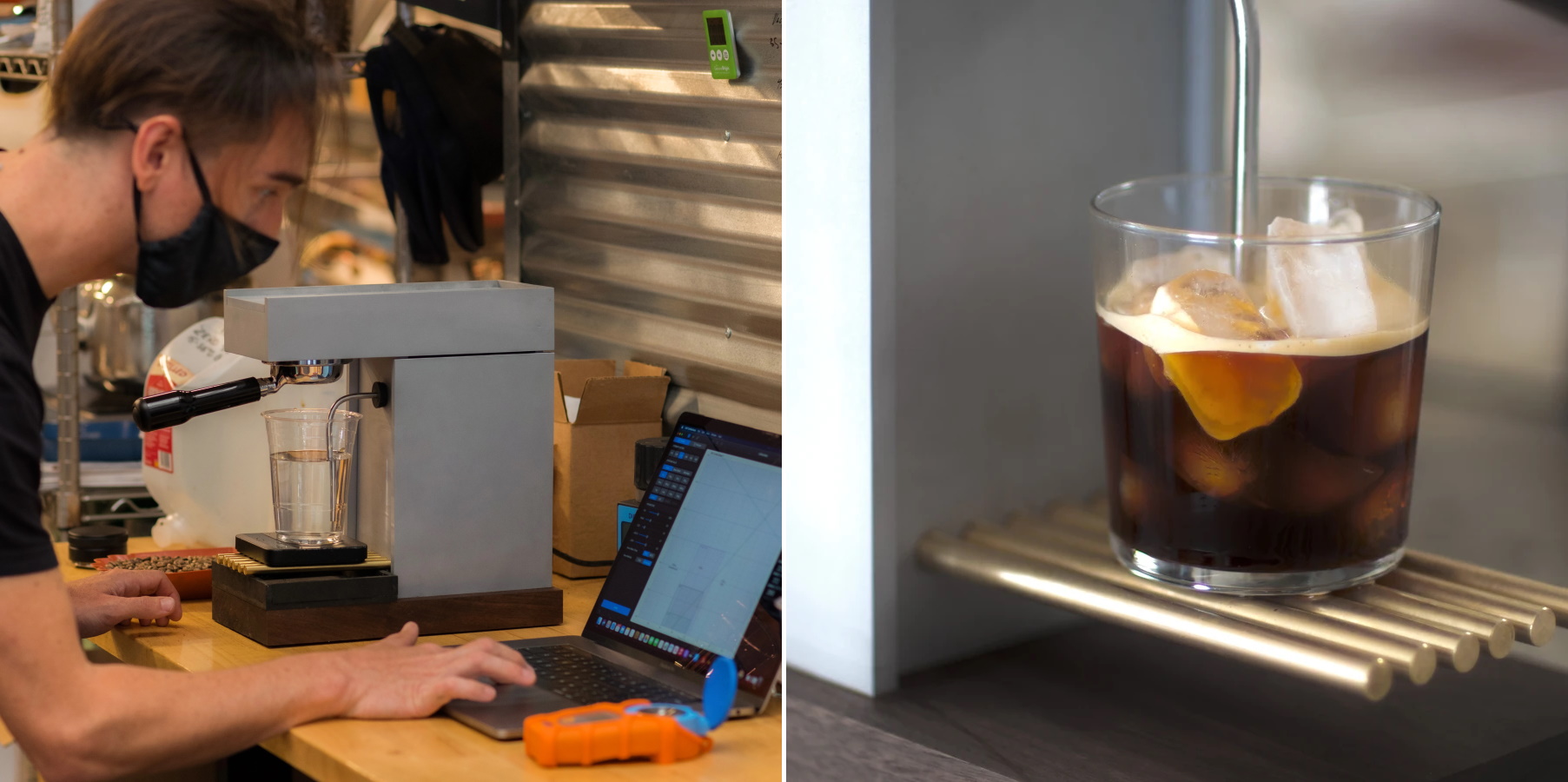
An iced coffee drink made with Osma Pro.

Looks good, right? Image Credits: Osma

“We verified this with a number of other experiments and confirmed that microcavitation was indeed the magic switch,” Roth said. “From there we spent about two years developing what’s basically a mechanism to efficiently facilitate cavitation using acoustics in a tightly packed basket of ground coffee. With the help and insight of our partners James and Hiver (co-founders of Chromatic Coffee in San Jose) we developed this into the Osma Pro.”

Being able to pull a strong, cold coffee drink with espresso-like and cold brew-like aspects on demand could be a game-changer for coffee shops. At present they have to anticipate demand, making cold brew a day or longer before, risking shortages if demand outstrips supply, or otherwise offer hot coffee poured over ice, an accepted but rather incoherent approach.

At $695 the Osma Pro is a bit expensive for home use, but quite in line with the type of equipment used by most cafés. Like Roth’s other work, the industrial design is simple and beautiful. When you factor in its small footprint (about the size of a standing grinder) and the fact that it frees up valuable fridge space that would otherwise be filled with gallons of coldbrew, it starts to make a whole lot of sense.

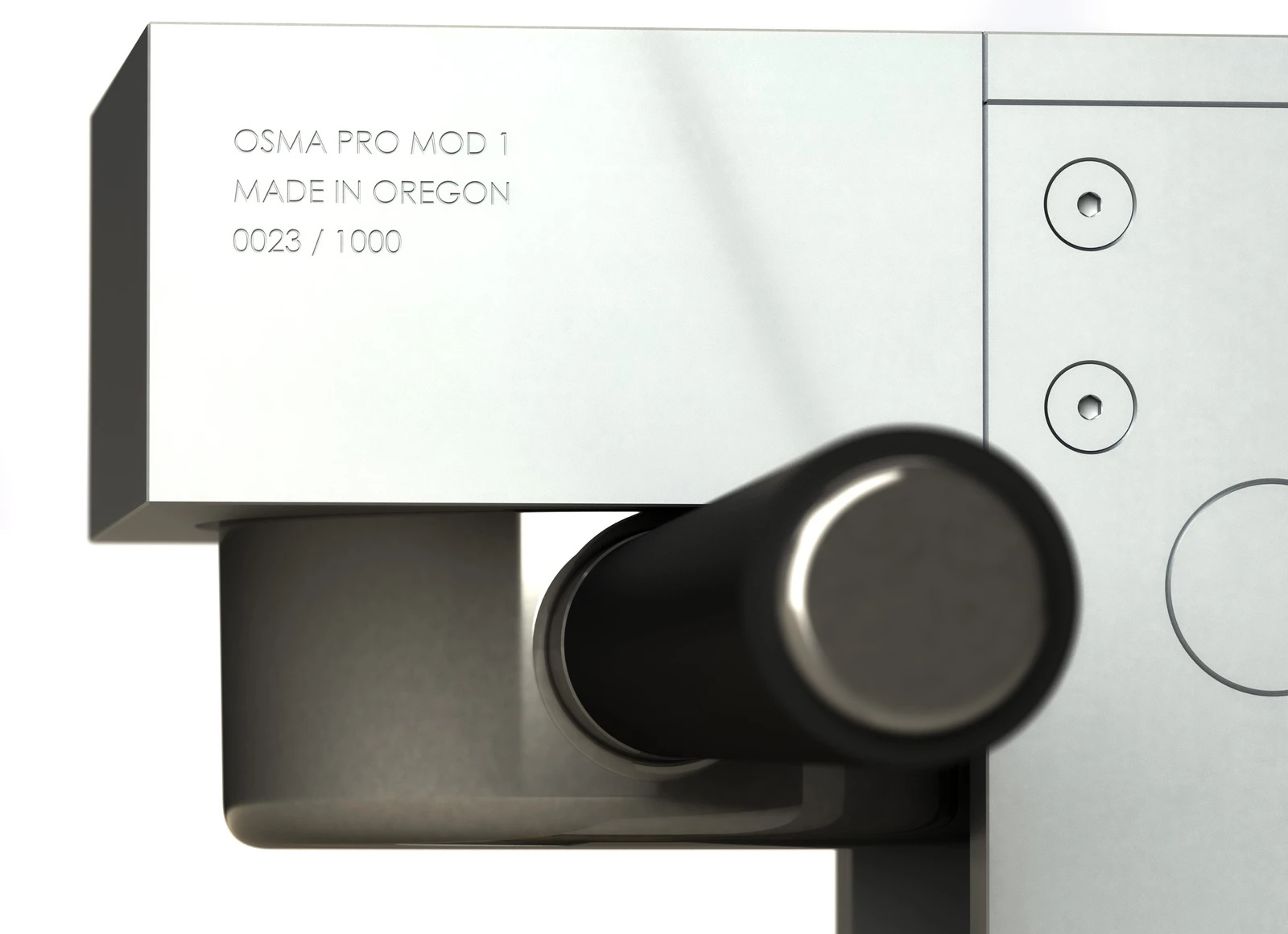
Close-up of the side of the Osma machine, with etched limited number.

A limited run of a thousand… for now. Image Credits: Osma

Perhaps that’s why an unnamed but apparently major coffee company has indicated interest in partnering with Roth on the machine, as he coyly explained. Selling a couple hundred to boutique coffee shops is nice, and Roth did say that pre-orders are beyond expectations, but a big time partner that could move units in the thousands? That’s the start of a global business empire.

Incidentally the whole thing started with a device that may now sadly be defunct. The first Osma brew I encountered was a portable, battery-powered device Roth sent me in beta form to test out that used biodegradable coffee pods and a scaled-down version of the acoustic agitation process. But this ended up being a sort of development dead end — while an interesting tech demo and pretty good at making coffee, it quickly became clear that the countertop version, which was improving rapidly, was the future of the company.

The only real question now is what to call the drink. I suggested coldpresso (icepresso is more euphonious but too close to the original), Roth thought cold flash but admitted everything he thought up was corny. Whatever it’s called, you can probably expect to start seeing it at your local “serious” coffee spot. If you run one of those or drink enough cold coffee to justify a major purchase, you can get in line to pick up a machine at the Osma website.

08 Jun 2021

Osma’s high-tech instant cold brew could change summertime coffee forever

It’s rare that a truly new way to make coffee is invented, and nearly all of them have one thing in common: heat. After all, it’s hot water that quickly extracts flavor and body from grounds. But Osma, a new device using an entirely novel coffeemaking technique, makes a rich, strong espresso-like drink at any temperature, including icy cold — and it might be the next big thing in the industry.

Osma is the latest project from designer Joey Roth, who evolved from high-concept speaker tech to tea and coffee tech, and now has found a way to integrate these two disparate pursuits with a unique vibratory method of extraction. And although Roth has had several successes over the years, this could be his most valuable yet.

To see why, it helps to understand the way coffee is ordinarily made, which generally comes down to one of two things: soaking the grounds in hot water, or forcing it through the grounds under pressure.

In the first case, which includes drip and pourover, French press, and others, the heat of the water passively frees the oils and volatiles from the ground beans and then the solids, drained of flavor, are left behind through filtering.

The second case is espresso, in which the desired chemicals are extracted not just through heat but by the process of microcavitation. This is where the heat and pressure free CO2 from the grounds, forming tiny bubbles that quickly collapse, a process that leads to the flavor and aroma compounds being forced out as well.

Cold water can be used in the first method, with the advantage is that certain substances that would be destroyed by heat are retained, giving a different flavor profile. Unfortunately it can take hours or even days to brew to one’s preferred strength, and other desirable compounds degrade over that duration. And cold water can’t be used in the espresso process because steam is necessary to accomplish extraction.

Yet despite the inconvenience inherent to cold coffee, anyone who’s visited a café in the last decade can tell you it is enormously popular, year-round but especially in the summer. There’s endless appetite for the drink, even if all it amounts to is pouring hot coffee or espresso over ice. What if strong, delicious coffee could be made without heating it up, watering it down, or waiting for days? That’s the Osma proposition.

Image Credits: Osma

The Osma system is to my knowledge unlike any other brewing method. Essentially what it does is circulate water through the grounds continuously, while agitating them with a sort of standing pressure wave. It produces 8-12 ounces of a coffee that’s less concentrated than espresso, but not as mild as coldbrew, in about two minutes.

Diagram showing how coffee and water move through the Osma system.

Image Credits: Osma

This is a fundamentally new expression of coffee that needs to be experienced,” said Roth when I asked him to characterize the flavor profile. He’d compared it to Kyoto-style slow drip with the added creamy mouthfeel and brighter flavors of espresso, but decided the analogy was imperfect.

His reservation is justified, as the method really is completely different. In addition to using cold water instead of hot and an acoustic wave instead of high pressure to create cavitation, the Osma Pro is unique in that it uses a circulatory process instead of one-way.

Almost all forms of coffee making are unidirectional: water goes in, meets up with the grounds, and coffee comes out — with the exception of percolators, which aren’t exactly the aficionado’s first choice. The Osma method, on the other hand, sucks up the water, passes it through the grounds and agitates it, then puts it back in the same vessel, where it is sucked up and passed through again.

This circular process can be stopped earlier or later, giving a lighter or heavier brew, but there’s a sweet spot at about two minutes that Roth thinks produces the best cup for most purposes.

Creating the system was equal parts serendipity and ingenuity. Roth recalled boiling water at room temperature in a commercial vacuum chamber with his co-founder Dan Yue, which sort of worked but not really, and at any rate wasn’t the type of equipment you could resell to a consumer. Yue speculated that it was the microcavitation process that allowed this extraction without significant heat.

An iced coffee drink made with Osma Pro.

Looks good, right? Image Credits: Osma

“We verified this with a number of other experiments and confirmed that microcavitation was indeed the magic switch,” Roth said. “From there we spent about two years developing what’s basically a mechanism to efficiently facilitate cavitation using acoustics in a tightly packed basket of ground coffee. With the help and insight of our partners James and Hiver (co-founders of Chromatic Coffee in San Jose) we developed this into the Osma Pro.”

Being able to pull a strong, cold coffee drink with espresso-like and cold brew-like aspects on demand could be a game-changer for coffee shops. At present they have to anticipate demand, making cold brew a day or longer before, risking shortages if demand outstrips supply, or otherwise offer hot coffee poured over ice, an accepted but rather incoherent approach.

At $695 the Osma Pro is a bit expensive for home use, but quite in line with the type of equipment used by most cafés. Like Roth’s other work, the industrial design is simple and beautiful. When you factor in its small footprint (about the size of a standing grinder) and the fact that it frees up valuable fridge space that would otherwise be filled with gallons of coldbrew, it starts to make a whole lot of sense.

Close-up of the side of the Osma machine, with etched limited number.

A limited run of a thousand… for now. Image Credits: Osma

Perhaps that’s why an unnamed but apparently major coffee company has indicated interest in partnering with Roth on the machine, as he coyly explained. Selling a couple hundred to boutique coffee shops is nice, and Roth did say that pre-orders are beyond expectations, but a big time partner that could move units in the thousands? That’s the start of a global business empire.

Incidentally the whole thing started with a device that may now sadly be defunct. The first Osma brew I encountered was a portable, battery-powered device Roth sent me in beta form to test out that used biodegradable coffee pods and a scaled-down version of the acoustic agitation process. But this ended up being a sort of development dead end — while an interesting tech demo and pretty good at making coffee, it quickly became clear that the countertop version, which was improving rapidly, was the future of the company.

The only real question now is what to call the drink. I suggested coldpresso (icepresso is more euphonious but too close to the original), Roth thought cold flash but admitted everything he thought up was corny. Whatever it’s called, you can probably expect to start seeing it at your local “serious” coffee spot. If you run one of those or drink enough cold coffee to justify a major purchase, you can get in line to pick up a machine at the Osma website.

08 Jun 2021

EV startup Fisker sets moonshot goal of making a climate neutral EV by 2027

Electric vehicle startup Fisker Inc. has set a moonshot goal of creating its first climate neutral car by 2027.

Fisker has yet to bring a vehicle to market — climate neutral or not — making this an ambitious target. The all-electric Fisker Ocean SUV, which is still on track to go into production in November 2022, will not be climate neutral, according to CEO Henrik Fisker who laid out the target as part of a broader update Tuesday to investors. Instead, this will be another yet to be announced vehicle.

Henrik Fisker, a serial entrepreneur who rose to fame as the designer behind iconic vehicles like Aston Martin V8 Vantage, the production launch design of the Aston Martin DB9 and BMW Z8 roadster, also provided a few other updates during the investor call. He said the Ocean will have an anticipated range of up to 350 miles, beyond the previously estimated 300 miles. The company has received more than 14,000 reservations for the Ocean as of March, according to an annual report distributed to shareholders.

Fisker, which went public via a merger with special purpose acquisition company Apollo Global Management Inc. in October at a valuation of $2.9 billion, aims to have four vehicles to market by 2025. One of those, Fisker hinted at Tuesday, could be a luxury vehicle which he called the “UFO” that will use the company’s FM29 platform architecture.

Fisker’s carbon neutral plan

Other companies across industries have made promises to hit that carbon neutral goal before. Henrik Fisker emphasized to investors that the company will not purchase carbon offsets to accomplish that climate neutrality goal. Carbon offsets are credits that companies can purchase to “claim” a reduction in CO2 toward their project or product. Instead, Fisker said they will work with suppliers to develop climate neutral materials and manufacturing processes.

The company lays out some of its proposed strategies on its website, where it splits the vehicle lifecycle into five phases: upstream sourcing, manufacturing and assembly, logistics, the use phase, and end-of-life. For each phase, the company lists a few bullet points, such as localizing manufacturing. Even with these plans, achieving climate neutrality in vehicle production will be extremely difficult. Vehicles use materials and components such as steel that are notoriously hard to decarbonize, for example.

Fisker said that the company’s manufacturing partners have climate neutral goals of their own, which is true for automotive contract manufacturer Magna Steyr. The company inked a deal with Fisker to exclusively manufacturer the Fisker Ocean in Europe. Magna set a target of climate neutrality for its European operations by 2025 and globally by 2030. Foxconn, Fisker’s other major partner for its second, lower-price vehicle dubbed Project PEAR, also has a net-zero emissions goal, but it is set for the middle of the century.

Moonshot goals such as this one could help push innovation in manufacturing processes and encourage other automakers and suppliers to reach for the same targets. Other automakers such as Polestar and Porsche have all made carbon neutral promises with deadlines of 2030, while Mercedes has said it will hit that target in 2039.

Fisker does seem to have a plan for how it might be able to recycle or reuse some of its EV batteries once they’re no longer useful in the vehicle. The company plans to extend its leasing program across the entire estimated 15-year lifespan of the vehicle, which would theoretically ensure that Fisker will be in possession of a number of its vehicles when they reach end-of-life.

08 Jun 2021

Apple’s new ShazamKit brings audio recognition to apps, including those on Android

Apple in 2018 closed its $400 million acquisition of music recognition app Shazam. Now, it’s bringing Shazam’s audio recognition capabilities to app developers in the form of the new ShazamKit. The new framework will allow app developers — including those on both Apple platforms and Android — to build apps that can identify music from Shazam’s huge database of songs, or even from their own custom catalog of pre-recorded audio.

Many consumers are already familiar with the mobile app Shazam, which lets you push a button to identify what song you’re hearing, and then take other actions — like viewing the lyrics, adding the song to a playlist, exploring music trends, and more. Having first launched in 2008, Shazam was already one of the oldest apps on the App Store when Apple snatched it up.

Now the company is putting Shazam to better use than being just a music identification utility. With the new ShazamKit, developers will now be able to leverage Shazam’s audio recognition capabilities to create their own app experiences.

There are three parts to the new framework: Shazam catalog recognition, which lets developers add song recognition to their apps; custom catalog recognition, which performs on-device matching against arbitrary audio; and library management.

Shazam catalog recognition is what you probably think of when you think of the Shazam experience today. The technology can recognize the song that’s playing in the environment and then fetch the song’s metadata, like the title and artist. The ShazamKit API will also be able to return other metadata like genre or album art, for example. And it can identify where in the audio the match occurred.

When matching music, Shazam doesn’t actually match the audio itself, to be clear. Instead, it creates a lossy representation of it, called a signature, and matches against that. This method greatly reduces the amount of data that needs to be sent over the network. Signatures also cannot be used to reconstruct the original audio, which protects user privacy.

The Shazam catalog comprises millions of songs and is hosted in cloud and maintained by Apple. It’s regularly updated with new tracks as they become available.

When a customer uses a developer’s third-party app for music recognition via ShazamKit, they may want to save the song in their Shazam library. This is found in the Shazam app, if the user has it installed, or it can be accessed by long pressing on the music recognition Control Center module. The library is also synced across devices.

Apple suggests that apps make their users aware that recognized songs will be saved to this library, as there’s no special permission required to write to the library.

Image Credits: Apple

ShazamKit’s custom catalog recognition feature, meanwhile, could be used to create synced activities or other second-screen experiences in apps by recognizing the developer’s audio, not that from the Shazam music catalog.

This could allow for educational apps where students follow along with a video lesson, where some portion of the lesson’s audio could prompt an activity to begin in the student’s companion app. It could also be used to enable mobile shopping experiences that popped up as you watched a favorite TV show.

ShazamKit is current in beta on iOS 15.0+, macOS 12.0+, Mac Catalyst 15.0+, tvOS 15.0+, and watchOS 8.0+. On Android, ShazamKit comes in the form of an Android Archive (AAR) file and supports music and custom audio, as well.

read more about Apple's WWDC 2021 on TechCrunch

08 Jun 2021

Tiny handheld Playdate ships next month for $179, with 24 charming monochrome games to start

Playdate, app and game designer Panic’s first shot at hardware, finally has a firm price and ship date, as well as a bunch of surprise features cooked up since its announcement in 2019. The tiny handheld gaming console will cost $179, ship next month, and come with a 24-game “season” doled out over 12 weeks. But now it also has a cute speaker dock and low-code game creation platform.

We first heard about Playdate more than two years ago, were charmed by its clean look, funky crank control, and black and white display, and have been waiting for news ever since. Panic’s impeccable design credentials combined with Teenage Engineering’s creative hardware chops? It’s bound to be a joy to use, but there wasn’t much more than that to go on.

Now the company has revealed all the important details we were hoping for, and many more to boot.

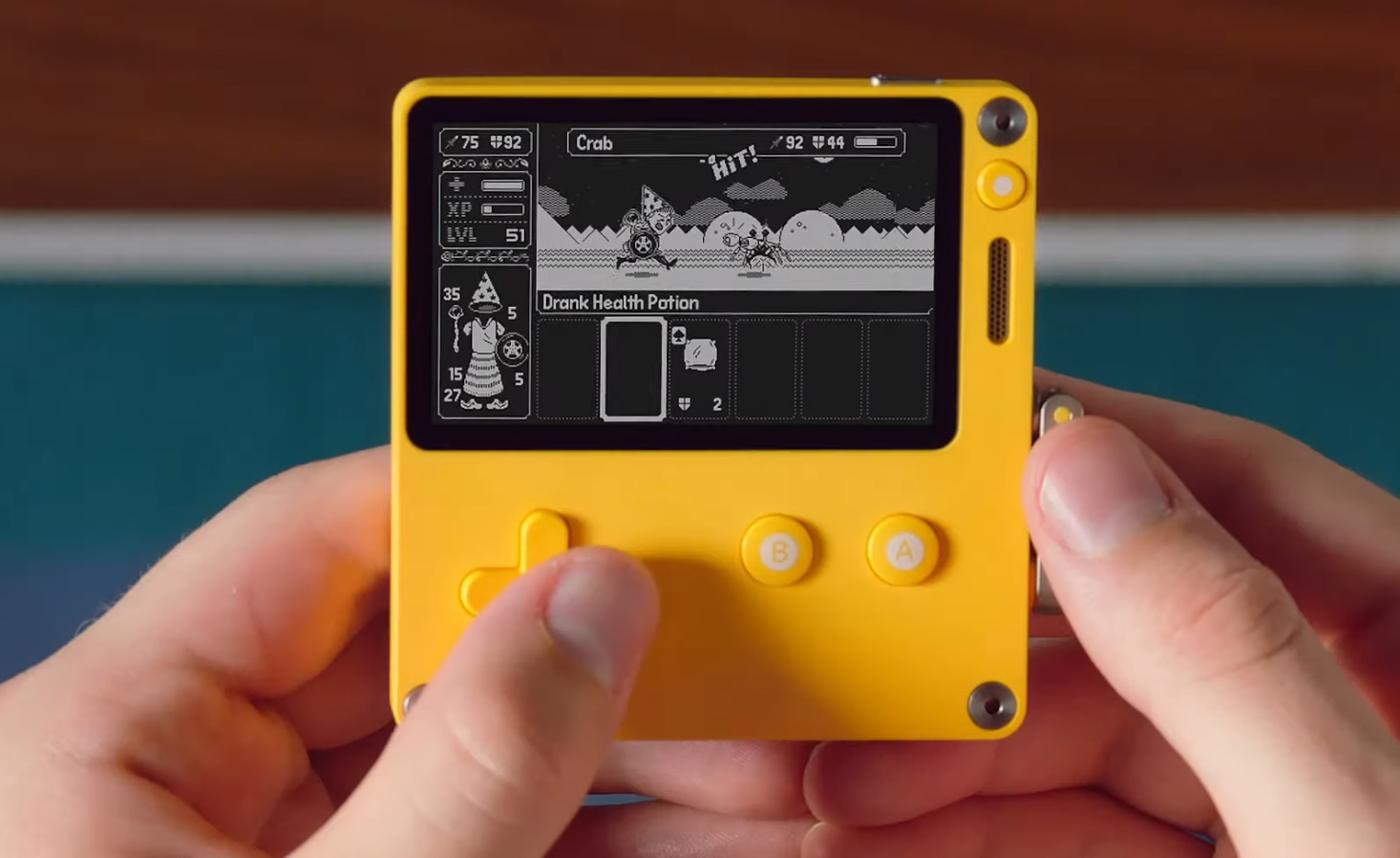
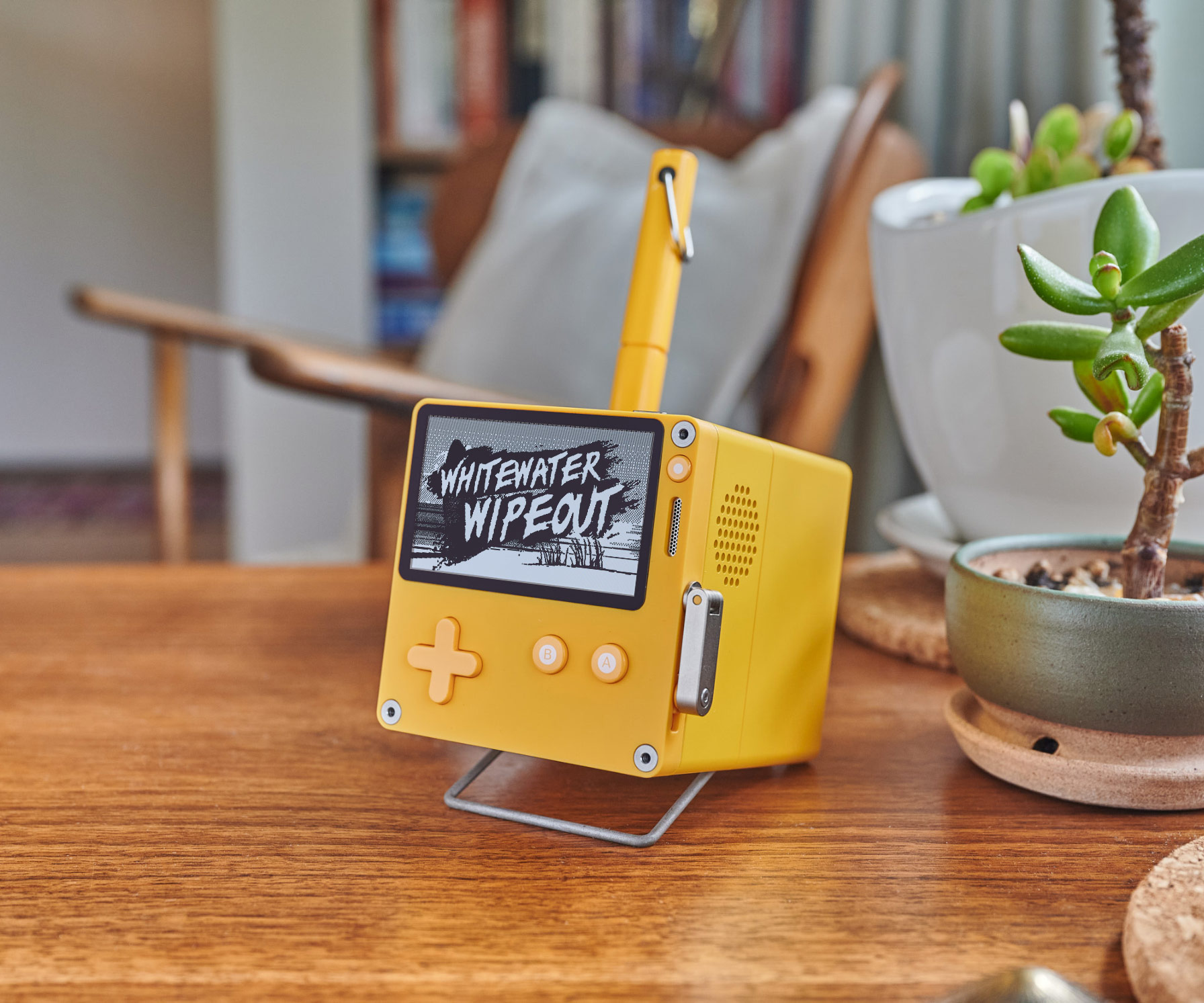
The Playdate handheld with a person playing a game on it.

Image Credits: Panic

Originally we were expecting 12 games to be delivered over 12 weeks, but in the intervening period it seems they’ve collected more titles than planned, and that initial “season” of games has expanded to 24. No one knows exactly what to expect from these games except that they’re exclusive to the Playdate and many use the crank mechanic in what appear to be fun and interesting ways: turning a turntable, opening a little door, doing tricks as a surfer, and so on.

The team hasn’t decided how future games will be distributed, though they seem to have some ideas. Another season? One-off releases? Certainly the presence of a new game by one-man indie hit parade Lucas Pope would sell like hotcakes.

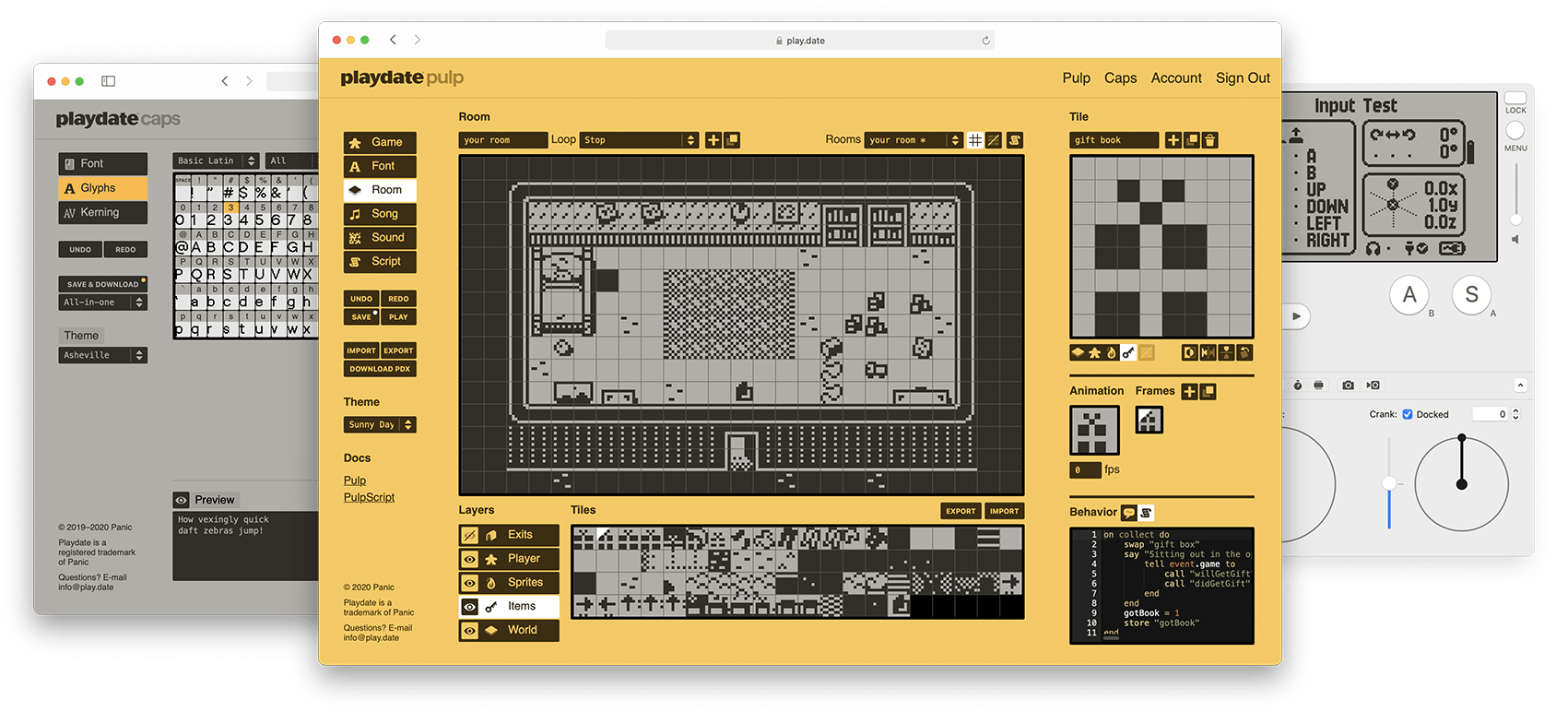
Screenshots of the Pulp game creation tool.

Image Credits: Panic

But the debut of a new lo-fi game development platform called Pulp suggests a future where self-publishing may also be an option. This lovely little web-based tool lets anyone put together a game using presets for things like controls and actions, and may prove to be a sort of tiny Twine in time.

A dock accessory was announced as well, something to keep your Playdate front and center on your desk. The speaker-equipped dock, also a lemony yellow, acts as a magnetic charging cradle for the console, activating a sort of stationary mode with a clock and music player (Poolsuite.fm, apparently, with original relaxing tunes). It even has two holes in which to put your pens (and Panic made a special yellow pen just for the purpose as well).

Playdate attached to its little cubical dock.

Image Credits: Panic

The $179 price may cause some to balk — after all, it’s considerably more than a Nintendo 3DS and with the dock probably approaches the price of a Switch. But this isn’t meant to be a competitor with mainstream gaming — instead, it’s a sort of anti-establishment system that embraces weirdness and provides something equally unfamiliar and undeniably fun.

The team says that there will be a week’s warning before orders can be placed, and that they don’t plan to shut orders down if inventory runs out, but simply allow people to preorder and cancel at will until they receive their unit. We hope to get one ourselves to test and review, but since part of the charm of the whole thing is the timed release and social aspect of discovery and sharing, it’s more than likely we’ll be experiencing it along with everyone else.

08 Jun 2021

Tiny handheld Playdate ships next month for $179, with 24 charming monochrome games to start

Playdate, app and game designer Panic’s first shot at hardware, finally has a firm price and ship date, as well as a bunch of surprise features cooked up since its announcement in 2019. The tiny handheld gaming console will cost $179, ship next month, and come with a 24-game “season” doled out over 12 weeks. But now it also has a cute speaker dock and low-code game creation platform.

We first heard about Playdate more than two years ago, were charmed by its clean look, funky crank control, and black and white display, and have been waiting for news ever since. Panic’s impeccable design credentials combined with Teenage Engineering’s creative hardware chops? It’s bound to be a joy to use, but there wasn’t much more than that to go on.

Now the company has revealed all the important details we were hoping for, and many more to boot.

The Playdate handheld with a person playing a game on it.

Image Credits: Panic

Originally we were expecting 12 games to be delivered over 12 weeks, but in the intervening period it seems they’ve collected more titles than planned, and that initial “season” of games has expanded to 24. No one knows exactly what to expect from these games except that they’re exclusive to the Playdate and many use the crank mechanic in what appear to be fun and interesting ways: turning a turntable, opening a little door, doing tricks as a surfer, and so on.

The team hasn’t decided how future games will be distributed, though they seem to have some ideas. Another season? One-off releases? Certainly the presence of a new game by one-man indie hit parade Lucas Pope would sell like hotcakes.

Screenshots of the Pulp game creation tool.

Image Credits: Panic

But the debut of a new lo-fi game development platform called Pulp suggests a future where self-publishing may also be an option. This lovely little web-based tool lets anyone put together a game using presets for things like controls and actions, and may prove to be a sort of tiny Twine in time.

A dock accessory was announced as well, something to keep your Playdate front and center on your desk. The speaker-equipped dock, also a lemony yellow, acts as a magnetic charging cradle for the console, activating a sort of stationary mode with a clock and music player (Poolsuite.fm, apparently, with original relaxing tunes). It even has two holes in which to put your pens (and Panic made a special yellow pen just for the purpose as well).

Playdate attached to its little cubical dock.

Image Credits: Panic

The $179 price may cause some to balk — after all, it’s considerably more than a Nintendo 3DS and with the dock probably approaches the price of a Switch. But this isn’t meant to be a competitor with mainstream gaming — instead, it’s a sort of anti-establishment system that embraces weirdness and provides something equally unfamiliar and undeniably fun.

The team says that there will be a week’s warning before orders can be placed, and that they don’t plan to shut orders down if inventory runs out, but simply allow people to preorder and cancel at will until they receive their unit. We hope to get one ourselves to test and review, but since part of the charm of the whole thing is the timed release and social aspect of discovery and sharing, it’s more than likely we’ll be experiencing it along with everyone else.

08 Jun 2021

Toast’s Aman Narang and BVP’s Kent Bennett on how customer obsession is everything

Toast has raised more than $900 billion and is reportedly valued at over $5 billion. But back in 2011, no one knew this startup would see such meteoric success. It had a few things going for it, of course — founder Aman Narang hailed from Endeca, where he was a software engineer and product lead with a reputation for being able to ship a lot of software quickly.

But the ambitions behind Toast were big and complicated, and enough to give pause to any investor. Kent Bennett was one such VC, and while he had conviction in the founding team, he wasn’t convinced that they could tackle such a big problem.

Toast is a restaurant POS system that acts as a sort of operating system for an establishment, managing everything from online orders, deliveries and marketing to payroll and team management as well as the actual point of sale. Being able to do all that requires building a number of complex products, such as payments.

Early on, Bennett had told Narang not to build a restaurant POS. To him, it was too complicated and nuanced, which is why the systems from the ’90s were still deeply entrenched 20 years later. However, he did offer space in the Bessemer office for the Toast team to work on their product.

“I caught up with Aman and he told me that they did this interesting thing after hearing that a lot of their customers were frustrated by payments platforms, which are separate from the POS,” said Bennett. “Aman said they built their own payments platform. Once again, I was like, ‘You did what? You’re not allowed to build payments.’ But he told me that they built it and it improves their products, and that, by the way, they make a margin on it.”

Bennett said that when they added up the margins from the payments and the POS, it was impactful.

“It hit me like a ton of bricks,” said Bennett. “This is a really good business.”

From there, it became his obsession. And though it took a few more quarters to close the deal, they eventually got there. Bessemer led the company’s Series B financing in 2016.

We spoke to Bennett and Narang recently on an episode of Extra Crunch Live to explore the story of how they came together for the deal, what makes the difference for both founders and investors when fundraising, and the biggest lessons they’ve learned so far. The episode also featured the Extra Crunch Live Pitch-Off, where audience members pitched their products to Bennett and Narang and received live feedback.

Extra Crunch Live is open to everyone each Wednesday at 3 p.m. EDT/noon PDT, but only Extra Crunch members are able to stream these sessions afterward and watch previous shows on-demand in our episode library.

Despite the complexity of the Toast system, or maybe because of it, Narang says the fundamentals are the most important part of communicating the business, especially when fundraising.

08 Jun 2021

U.S. PC shipments soar 73% in the first quarter as Apple falls from top spot

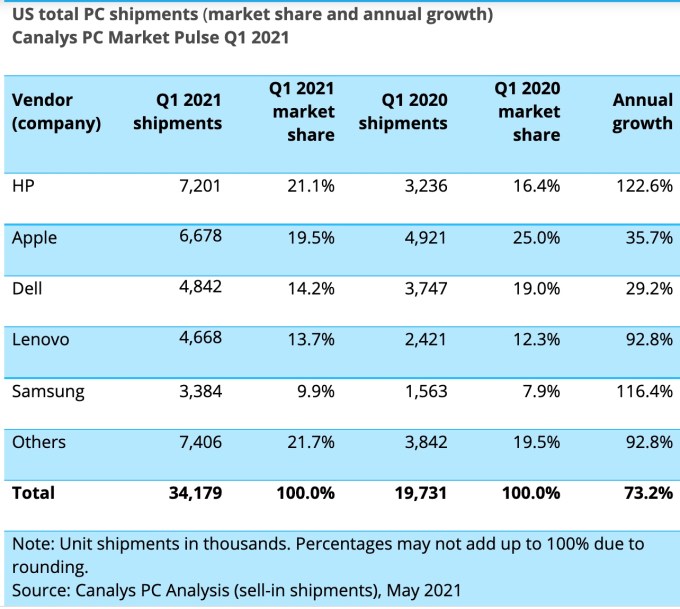
With pent up demand from the pandemic, Canalys reports that U.S. PC shipments were up 73% over the same period last year. That added up to a total of 34 million units sold. While Apple had a good quarter with sales up 36%, it was surpassed by HP, which sold 11 million units in total with annual growth up an astonishing 122.6%.

As Canalys pointed out, the first quarter tends to be a weaker one for Apple hardware following the holiday season, but it’s a big move for HP nonetheless. Other companies boasting big growth numbers include Samsung at 116% and Lenovo at 92.8%. Dell was up 29.2%, fairly modest compared with the rest of the group.

Overall though it was a stunning quarter as units flew off the shelves. Canalys Research Analyst Brian Lynch says some of this can be attributed to pent up demand from 2020 as people moved to work and school from home and needed new machines to get their work done, but regardless the growth was unrivaled historically. “… Q1 2021 still rates as one of the best first quarters the industry has ever seen. Vendors have prioritized fulfilling US backlogs before supply issues are addressed in other parts of the world,” Lynch said in a statement.

Canalys Q1 2021 PC sales by vendor.

Image Credits: Canalys

Perhaps not surprisingly, low-cost Chromebooks were the most popular item as people looking to refresh their devices, especially for education purposes, turned to the lower end of the PC market, which likely had a negative impact on higher priced Apple products, as well contributing to its drop from the top spot.

That’s where Samsung and other Chromebook vendors really shined. The firm reports that over the last year Chromebook sales shot up 548% with Samsung leading that growth with an astonishing 1,963% growth rate. Asus, HP and Lenovo all reported Chromebook sales rates up over 900%.

Those numbers include desktops, notebooks, tablets and workstations, but it was the notebook and tablets that get the bulk of the action here with notebooks up a whopping 131% YoY. While tablets didn’t grow at the same rate, sales were still up 51% with 11 million units sold in the quarter.

The company does not expect the market to slow significantly in the coming quarters with continued demand in the education market. While parts shortages, particularly in the chip market, continue to dog the industry, this will only continue to feed demand in the coming quarters, according to the firm.

08 Jun 2021

Amid controversy, Dispo confirms Series A funding, high-profile advisors, and investors

It’s only been nine months since Dispo rebranded from David’s Disposables. But the vintage-inspired photo sharing app has experienced a whiplash of ups and downs, mostly due to the brand’s original namesake, YouTuber David Dobrik.

Like Clubhouse, Dispo was one of this year’s most hyped up new social apps, requiring an invite from an existing member to join. On March 9, when the company said “goodbye waitlist” and opened the app up to any iOS user, Dispo looked poised to be a worthy competitor to photo-sharing behemoths like Instagram. But, just one week later, Business Insider reported on sexual assault allegations regarding a member of Vlog Squad, a YouTube prank ensemble headed by Dispo co-founder David Dobrik. Dobrik had posted a now-deleted vlog about the night of the alleged assault, joking, “we’re all going to jail” at the end of the video.

It was only after venture capital firm Spark Capital decided to “sever all ties” with Dispo that Dobrik stepped down from the company board. In a statement made to TechCrunch at the time, Dispo said, “Dispo’s team, product, and most importantly — our community — stand for building a diverse, inclusive and empowering world.”

Dispo capitalizes on Gen Z and young millennial nostalgia for a time before digital photography, when we couldn’t take thirty selfies before choosing which one to post. On Dispo, when you take a photo, you have to wait until 9 AM the following day for the image to “develop,” and only then can you view and share it.

In both February and March of this year, the app hit the top ten of the Photo & Video category in the U.S. App Store. Despite the backlash against Dobrik, which resulted in the app’s product page being bombarded with negative comments, the app still hit the top ten in Germany, Japan, and Brazil, according to their press release. Dispo reportedly has not yet expended any international marketing resources.

Now, early investors in Dispo like Spark Capital, Seven Seven Six, and Unshackled have committed to donate any potential profits from their investment in the app to organizations working with survivors of sexual assault. Though Axios reported the app’s $20M Series A funding news in February, Dispo put out a press release this morning confirming the financing event. Though Seven Seven Six and Unshackled Ventures intend to donate profits from the app, they remain listed as investors, while Spark Capital is not. Other notable names involved in the project include high-profile photographers like Annie Leibovitz and Raven B. Varona, who has worked with artists like Beyoncé and Jay-Z. Actresses Cara Delevingne and Sofía Vergara, as well as NBA superstars Kevin Durant and Andre Iguodala, are also involved with the app as investors or advisors.

Dobrik’s role in the company was largely as a marketer – CEO Daniel Liss co-founded the app with Dobrik and has been leading the team since the beginning. After Dobrik’s departure, the Dispo team – which remains under twenty members strong – took a break from communications and product updates on the app. It’s expected that after today’s funding confirmation, the app will continue to roll out updates.

Dispo is quick to shift focus to the work of their team, which they call “some of the most talented, diverse leaders in consumer tech.” With the capital from this funding round, they hope to hire more staff to become more competitive with major social media apps with expansive teams, like Instagram and TikTok, and to experiment with machine learning. They will also likely have some serious marketing to do, now that their attempt at influencer marketing has failed massively.

Now more than ever, Dispo is promoting the app as a mental health benefit, hoping to shift the tide away from manufactured perfectionism toward more authentic social media experiences.

“A new era of start ups must emerge to end the scourge of big tech’s destruction of our political fabric and willful ignorance of its impact on body dysmorphia and mental health,” CEO Daniel Liss writes in a Substack post titled Dispo 2.0. “Imagine a world where Dispo is the social network of choice for every teen and college student in the world. How different a world would that be?”

But, for an app that propelled to success off the fame of a YouTuber with a history of less than savory behavior, that messaging might fall flat.

According to Sensor Tower, the highest Dispo has ever ranked in the Photo & Video category on the U.S. App Store was in January 2020, when it was still called David’s Disposables. The app ranked No. 1 in that category from January 7 to January 9, and on January 8, it reached No. 1 among all free iPhone apps.