Year: 2021

24 May 2021

Tesla faces $163M payout to drivers in Norway following court decision

A Norwegian conciliation council has ordered Tesla to pay thousands of dollars each to Model S owners after it found that a software update led to longer charging times, the Norwegian newspaper Nettavisen reported Monday. Drivers eligible for compensation under the ruling will receive 136,000 kroner ($16,000) each.

Thirty Tesla drivers brought a complaint to the conciliation council in December 2020, citing that charging times slowed down after a software update the previous year. The poorer performance affected Tesla Model S vehicles manufactured between 2013 and 2015.

Tesla sold about 10,000 Model S vehicles during that timeframe in Norway. That means Tesla faces an overall payout of up to 1.36 kroner ($163 million), Nettavisen said.

Tesla did not respond to the complaint prior to the judgement being issued and it has until May 30 to pay the fine. The company has the opportunity to appeal the ruling to the Oslo Conciliation Board by June 17.

This is not the first time Tesla has faced complaints on charging speeds in court. A Tesla owner in 2019 filed a lawsuit against the EV manufacturer in the Northern California federal court alleging fraud and decreased battery range following a software update.

Norway leads Europe in the number of EVs on the road, with battery electric vehicles accounting for 54% of all new vehicle sales in 2020, according to the Norweigan Road Federation. Audi e-trons were the most popular vehicle sold, followed by the Model 3.

24 May 2021

Airbnb doubles down on flexible search, improves the host flow in preparation for summer 2021

As we head into the summer of vaccination, travel is bound to start bouncing back from the lows of 2020, and Airbnb is betting it will look very different than it did in the pre-COVID era.

The home-sharing platform has introduced some big changes, across a wide variety of feature sets, that focus on flexibility for the guests and simplicity for the hosts. The end goal, according to Airbnb Head of Guest Experience Sam Shank, is to increase both the volume and diversity of the supply side of the operation.

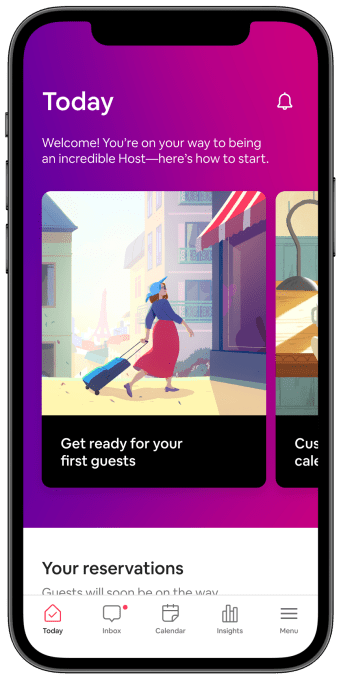
To start, Airbnb has streamlined the process of becoming a host, minimizing the amount of steps it takes to get a listing up. Machine learning algorithms can also now automatically arrange photos based on guest appeal, and hosts are provided suggestions from Airbnb about the best titles and descriptions for their listing.

Image Credits: Airbnb

The company is also adding new layers of data to the system, integrating with publicly available real estate data, so that hosts can simply enter their address and have information like number of bedrooms and bathrooms automatically filled in.

Other improvements to the hosting experience include a redesigned ‘Welcome to Hosting’ hub, and a new Today tab that helps hosts keep track of new messages, tasks, etc.

On the guests side, Airbnb is doubling down on features around flexibility.

In February, for example, the company introduced flexible date search, letting people search for listings based on the type of trip, rather than the dates. Users can now search for a long weekend, a week-long trip, or a month-long trip.

Today, Airbnb announced that it is making its search product even more supple with “Flexible Matching” and “Flexible Destinations.”

Flexible Matching essentially adds wiggle room to a more specific search. For example, if a user searches for listings under $250/night, it might show listings that fit all other criteria but are priced slightly outside of that range. Or, if a user searches for a certain set of amenities, it might show a listing that’s only missing one.

Flexible Destinations allow a user to search for a certain type of listing regardless of the location. Think treehouses or beach side properties.

Combined, this type of flexible search will expose guests to a much more diverse pool of listings, and the updated hosts flow is expected to increase supply in some of these less explored destinations.

“Brian [Chesky] said we have the right amount of hosts for this summer, but also that we have the capacity to add millions of hosts,” said Shank, explaining that changing how people find places expands their search to more diverse supply.

“If you were boiling down one big theme, it’s really around helping us get more diverse, unique supply and helping more people become very successful at being hosts, and recognizing the benefits of that,” said Shank. “There are financial benefits and also the chance to meet people from around the world.”

Alongside flexible search updates and the improved host flow, Airbnb is also making upgrades to its community support department, doubling the number of support agents available on the phone this summer and expanding support coverage from 11 to 42 languages. The company has also redesigned the Help Center, with easier navigation, for both hosts and guests.

All told, this release includes more than 100 updates to the product.

Much of it was informed by Airbnb’s 2021 trend report, which showed that families both drove and diversified travel through the summer of 2020, with family travel growing from 27 percent of nights booked to 33 percent in the summer of 2021 globally. Of family travel, 42 percent of the nights booked were in rural destinations, which is up 10 percentage points from the summer of 2019.

The company’s work to expand its listing supply is not surprising given that it is now a public company, giving it a slightly less-forgiving investor pool to impress on a quarterly basis. Airbnb survived the COVID-19 pandemic better than some expected, thanks in part to users booking long stays while they quarantined. But now Airbnb needs to lead its industry into the post-COVID world if it wants to not only defend its market position, but also the very growth rates that helped it become the well-known brand that it remains today.

Of course, onboarding more hosts with more automated tooling opens to the door to quality risks. We’ll see how users respond to both more supply, and more computer-aided supply generation.

24 May 2021

Airbnb doubles down on flexible search, improves the host flow in preparation for summer 2021

As we head into the summer of vaccination, travel is bound to start bouncing back from the lows of 2020, and Airbnb is betting it will look very different than it did in the pre-COVID era.

The home-sharing platform has introduced some big changes, across a wide variety of feature sets, that focus on flexibility for the guests and simplicity for the hosts. The end goal, according to Airbnb Head of Guest Experience Sam Shank, is to increase both the volume and diversity of the supply side of the operation.

To start, Airbnb has streamlined the process of becoming a host, minimizing the amount of steps it takes to get a listing up. Machine learning algorithms can also now automatically arrange photos based on guest appeal, and hosts are provided suggestions from Airbnb about the best titles and descriptions for their listing.

Image Credits: Airbnb

The company is also adding new layers of data to the system, integrating with publicly available real estate data, so that hosts can simply enter their address and have information like number of bedrooms and bathrooms automatically filled in.

Other improvements to the hosting experience include a redesigned ‘Welcome to Hosting’ hub, and a new Today tab that helps hosts keep track of new messages, tasks, etc.

On the guests side, Airbnb is doubling down on features around flexibility.

In February, for example, the company introduced flexible date search, letting people search for listings based on the type of trip, rather than the dates. Users can now search for a long weekend, a week-long trip, or a month-long trip.

Today, Airbnb announced that it is making its search product even more supple with “Flexible Matching” and “Flexible Destinations.”

Flexible Matching essentially adds wiggle room to a more specific search. For example, if a user searches for listings under $250/night, it might show listings that fit all other criteria but are priced slightly outside of that range. Or, if a user searches for a certain set of amenities, it might show a listing that’s only missing one.

Flexible Destinations allow a user to search for a certain type of listing regardless of the location. Think treehouses or beach side properties.

Combined, this type of flexible search will expose guests to a much more diverse pool of listings, and the updated hosts flow is expected to increase supply in some of these less explored destinations.

“Brian [Chesky] said we have the right amount of hosts for this summer, but also that we have the capacity to add millions of hosts,” said Shank, explaining that changing how people find places expands their search to more diverse supply.

“If you were boiling down one big theme, it’s really around helping us get more diverse, unique supply and helping more people become very successful at being hosts, and recognizing the benefits of that,” said Shank. “There are financial benefits and also the chance to meet people from around the world.”

Alongside flexible search updates and the improved host flow, Airbnb is also making upgrades to its community support department, doubling the number of support agents available on the phone this summer and expanding support coverage from 11 to 42 languages. The company has also redesigned the Help Center, with easier navigation, for both hosts and guests.

All told, this release includes more than 100 updates to the product.

Much of it was informed by Airbnb’s 2021 trend report, which showed that families both drove and diversified travel through the summer of 2020, with family travel growing from 27 percent of nights booked to 33 percent in the summer of 2021 globally. Of family travel, 42 percent of the nights booked were in rural destinations, which is up 10 percentage points from the summer of 2019.

The company’s work to expand its listing supply is not surprising given that it is now a public company, giving it a slightly less-forgiving investor pool to impress on a quarterly basis. Airbnb survived the COVID-19 pandemic better than some expected, thanks in part to users booking long stays while they quarantined. But now Airbnb needs to lead its industry into the post-COVID world if it wants to not only defend its market position, but also the very growth rates that helped it become the well-known brand that it remains today.

Of course, onboarding more hosts with more automated tooling opens to the door to quality risks. We’ll see how users respond to both more supply, and more computer-aided supply generation.

24 May 2021

TC: Sessions Space is returning in December

Last year, we held our first dedicated space startup event, TC Sessions: Space, featuring some of the industry’s top founders and leaders, including Rocket Lab’s Peter Beck, Lockheed Martin’s Lisa Callahan, Amazon’s Dave Limp, NASA’s Kathy Leuders and many more. This year, we’re excited to announce we’re doing it again with TC Sessions: Space 2021, happening virtually December 14-15.

Even in just the few short months between when we held TC Sessions: Space in 2020 and now, there’s been a lot of major activity in the industry, including many launches and the addition of plenty more in-space infrastructure. NASA is signalling more strongly than ever that it wants to encourage the private sector to replace the International Space Station at the end of its useful life, and working with more startups than ever in it pursuit of ever-great public-private collaboration.

This year is also set to be one of the busiest yet in terms of new commercial launch companies coming online, with planned debut commercial or test orbital flights from companies including Astra, Relativity Space and Firefly Aerospace. And with more constellations in operation, built out of satellites equipped with sensors capable of providing new and more detailed data for commercial use back on Earth, the timing is right for startups everywhere to leverage a new data gold rush to build businesses based on in-space resources that just weren’t available before.

We’ll be diving into this much-expanded launch market, and in the many opportunities available in taking the exploding wealth of data from space-based sources and making those readily available for use in Earth at TC Sessions: Space this year. We’re also looking forward to hearing more about what’s next in human space exploration, and in securing the stars for the safety and continued access of all. Get a jump start and save $100 when you grab your early bird tickets now!


24 May 2021

Fireflies.ai raises $14M for its meeting transcription and automation service

The Fireflies.ai project is a good reminder that not every startup project goes from idea to unicorn-status in 48 minutes. Instead, the startup’s CEO Krish Ramineni told TechCrunch about how a period of interest in natural language processing (NLP), tinkering with a friend, a stint at Microsoft, and even working on Slack bots led him to helping found Fireflies.ai (Fireflies), a company that today announced a $14 million raise led by Khosla.

Fireflies is a two-part service. Its first point of business is recording and transcribing voice conversations. Things like video meetings, for example. Next, Fireflies wants to plug your voice data into other applications, helping its customers automate data entry, task creation and more.

Before today’s round, the startup had raised around $5 million, including some micro-rounds, a stint in the Acceleprise accelerator, and a $4.9 million seed round raised in late 2019. That investment included participation from Canaan Partners and well-known angel April Underwood.

That Fireflies has raised more capital is not surprising, given how quickly it has accreted users. According to an interview with Ramineni, more than 10,000 teams use Fireflies today. In individual usage terms, some 35,000 organizations are represented amongst its user base.

As the company launched its product in early 2020, those results sound pretty good.

But TechCrunch was curious if revenue tracked with usage at Fireflies, as is sometimes the case. It does, Ramineni said, adding that his company grew its revenues 300% in the last six or seven months.

How did it manage such rapid growth while only having raised $5 million before, and with a team that is around 90% in its product and engineering teams? By pursuing everyone’s favorite: the bottoms-up sales model. In short, you can use Fireflies for free, but if you run out of meeting credits, other usage-based blockers or the need for different, paywalled functionality, you have to cough up for the product.

Folks are, it appears.

Fireflies is in fact an interesting hybrid of SaaS and usage-based pricing. The higher the paid tier that a user selects, the more minutes of transcription they are apportioned per month. But there are caps, limits that users can buy their way out of. TechCrunch asked Ramineni about it, with the CEO explaining that some customers want to ingest years of saved meetings. Our read is that despite work done by the startup to keep its infrastructure costs low, building pricing guardrails around product usage just makes sense for the startup.

The company will sport SaaS-like gross margins, Ramineni confirmed to TechCrunch.

Looking ahead, Fireflies wants to plug into more and more meeting platforms, and external software. You can currently link your Fireflies account to services like Zapier, Slack and your CRM. Over time, it’s not hard to see how the startup could take more direct commands from meetings, and help users better distribute, file and recall meeting information.

As someone with too many meetings, and too many notes documents spread out across the wasteland that is my Google Drive account, I get why people are using Fireflies today. But if the startup can build a no-code automation platform on top of my note taking? Then I will probably have to buy its service.

Speaking of which, as a final note, working for a Major American Corporation can have its downsides. For example, Ramineni provided TechCrunch with a recording of our interview inside of Fireflies. This was nice, as I prefer to write from both my notes and transcripts to ensure that I am not missing things, or making mistakes. Fireflies kept asking me to log in. I tried with my corporate Google account. Which blocks such log-ins. So I kept getting the same prompt again and again.

Annoying? Sure. Lethal? No.

More when we can squeeze more growth data out of the startup.

24 May 2021

SiriusXM partners with TikTok on a new music channel, Pandora Playlists, and more

SiriusXM is leaning into TikTok. The satellite radio company and Pandora parent today announced a partnership with the social video platform to power several new initiatives, including a TikTok channel on SiriusXM, hosted TikTok playlists on Pandora, and re-airings of Pandora LIVE events on TikTok.

The hosted playlists on Pandora are the first of the new initiatives to launch.

Starting today, popular TikTok creators will curate, host and promote their own Pandora playlists to their fans on TikTok, starting with Bella Poarch. The TikTok influencer, who now has 69.6 million followers, is best-known for her viral lip-sync video to “M to the B,” which blew up to become the most-liked video on TikTok. She also makes videos featuring singing, dancing, and gaming content, among other things, and this month released her first single, “Build a B*tch,” which has broken into Spotify’s U.S. and Global Top 50 charts.

As of the time of writing, Poarch’s TikTok announcing her playlists, launched 4 hours ago, has 187.6K likes and 1 million views.

Image Credits: SiriusXM

Other “TikTok Tastemakers,” as SiriusXM has dubbed them, will release their own playlists in the months to come, including Christian Shelton and Nick Tangorra.

In addition, Pandora users will be able to tune into the TikTok Hits Playlist at any time, which features popular and trending songs from TikTok.

Pandora is not the first music streamer to tap into TikTok’s influence for its own ends. Today, TikTok’s trends are driving songs up the Billboard charts and delivering Spotify streams as younger users look for their favorite TikTok songs on their preferred streaming music app. Spotify is now curating TikTok hits across editorial playlists like Viral Hits, big on the internet, Teen Beats, and others. Apple Music also got in on the TikTok action when it introduced 10 new playlists last year aimed at younger, Gen Z users. This included its own Viral Hits playlist, which pulls in top tracks from TikTok and other social media channels.

Among the other SiriusXM initiatives is the soon-to-launch TikTok Radio, a full-time music channel featuring tracks trending on TikTok which will be presented by TikTok creators, influencers and D.J.s. The channel will debut later this summer, and will stream across SiriusXM, including in vehicles as well as in the SiriusXM app for desktop, mobile and connected devices.

TikTok fans will also later be able to watch selected re-airings of Pandora’s original events series, Pandora LIVE — a continuation of Pandora’s live events that went virtual during the pandemic. Pandora LIVE events feature artists from across genres, including country, rock, pop, R&B and more, and have typically been re-aired, in part, the day after on SiriusXM.

Recently, Pandora LIVE celebrated Women’s History Month with a virtual event that included performances by Gwen Stefani and Jazmine Sullivan, which was re-aired on TikTok.

More Pandora LIVE events will soon do the same. SiriusXM says it will announce which events will re-air on TikTok throughout the year.

“We are excited to collaborate with TikTok to create new content that brings the vibrancy of the leading social networking service to life on live radio and our streaming platforms,” said Scott Greenstein, SiriusXM President and Chief Content Officer, in a statement. “The effect TikTok has on music, and pop culture in general, is undeniable. Our platforms will provide a unique opportunity for TikTok creators to engage with our listeners with content experiences that have never been done before in audio,” he added.

@bellapoarch✨ Excited to help launch ##TikTokTastemakers on @pandora ✨ Listen exclusively on ##PandoraMusic

♬ Build a B*tch – Bella Poarch

SiriusXM’s move to partner more closely with TikTok could help it to attract a younger set of listeners and subscribers, who may follow their favorite fans over to Pandora to tune into their playlist content. However, it’s unable to benefit from the full impact that working with TikTok could bring as the integrations are split across its two services, instead of being focused on just one.

Plus, SiriusXM, like others, still faces the looming threat of Resso, TikTok owner ByteDance’s own music streaming app that could one day make its way to the U.S., as part of its global expansion efforts. It has the potential to more closely tie TikTok’s music discovery features with streaming, impacting demand for rival services.

For the time being, however, TikTok sees the potential in partnering with a U.S. music streamer.

“We are excited to work with SiriusXM on TikTok Radio and to bring TikTok creators to Pandora to make the trends, music, and creative influences that are playing such a defining role in modern culture even more accessible,” said TikTok’s Global Head of Music, Ole Obermann, in a statement. “We’re really excited to see this come to life and thank the SiriusXM team for being such an innovative and visionary collaborator,” he said.


24 May 2021

Microsoft’s Surface Duo gets dual-screen gaming support

In December, Microsoft wrote a blog post highlighting “The year ahead for Surface Duo.” The news highlighted the dual-screen device’s upcoming availability outside the U.S. (including Canada, the U.K., France and Germany this year), as well as a smattering of features. It’s been pretty well acknowledged from most everyone who reviewed the device (us included), that it’s very much a work in progress.

After making the feature available in beta, Microsoft today is issuing at update to Xbox Cloud Gaming for Android that will unlock some of the product’s entertainment potential. It’s something the company has discussed, and even previewed, but until now, it has remained one of a handful of blind spots.

The app works as you’d expect on the Duo — displaying the game on the top screen and transforming the bottom into a virtual version of an Xbox controller in the Compose Mode orientation. Obviously you can only go so far on that front with a touchscreen, but gaming is genuinely an application where having a second screen can really come in handy.

As Engadget notes, there are now more than 50 titles that support Xbox Touch Controls. Those will be available to users with an Xbox Game Pass Ultimate subscription.

A much-hyped — and eagerly anticipated — alternative to the foldable form factor, the Duo was a disappointment on launch. The company has since dropped the product’s price from $1,500 to $1,000 — not exactly a sign that it was selling well — but continued software support like this is, perhaps, an indication that the company is going to support the line going forward, in spite of early stumbles.


24 May 2021

Microsoft’s Surface Duo gets dual-screen gaming support

In December, Microsoft wrote a blog post highlighting “The year ahead for Surface Duo.” The news highlighted the dual-screen device’s upcoming availability outside the U.S. (including Canada, the U.K., France and Germany this year), as well as a smattering of features. It’s been pretty well acknowledged from most everyone who reviewed the device (us included), that it’s very much a work in progress.

After making the feature available in beta, Microsoft today is issuing at update to Xbox Cloud Gaming for Android that will unlock some of the product’s entertainment potential. It’s something the company has discussed, and even previewed, but until now, it has remained one of a handful of blind spots.

The app works as you’d expect on the Duo — displaying the game on the top screen and transforming the bottom into a virtual version of an Xbox controller in the Compose Mode orientation. Obviously you can only go so far on that front with a touchscreen, but gaming is genuinely an application where having a second screen can really come in handy.

As Engadget notes, there are now more than 50 titles that support Xbox Touch Controls. Those will be available to users with an Xbox Game Pass Ultimate subscription.

A much-hyped — and eagerly anticipated — alternative to the foldable form factor, the Duo was a disappointment on launch. The company has since dropped the product’s price from $1,500 to $1,000 — not exactly a sign that it was selling well — but continued software support like this is, perhaps, an indication that the company is going to support the line going forward, in spite of early stumbles.


24 May 2021

Delhi Police, run by India’s central government, raids Twitter offices over manipulated label

Delhi Police, controlled by India’s central government, on Monday evening raided offices of Twitter in Delhi and Gurgaon as it sought more information on why the social network tagged one of the tweets by ruling partly BJP spokesperson as “manipulated media.”

Delhi Police IT Cell team vacated both of Twitter’s offices because the offices were closed and there were no Twitter employee to engage, many local TV channels reported.

A Twitter spokesperson declined to comment.

New Delhi sent a notice to Twitter last week after the social network labeled a tweet from Sambit Patra, the spokesperson of India’s ruling party BJP, as “manipulated media.”

In the tweet, Patra had claimed that Congress, the leading opposition party in India, was using a so-called “toolkit” to derail the Indian government’s efforts against the coronavirus pandemic. Alt News, a leading fact-checking organization in India, debunked Patra’s claim.

“Delhi Police is enquiring into a complaint in which clarification is sought from the Twitter regarding the classification of a tweet by Shri Sambit Patra (BJP spokesman) as ‘manipulative’. It appears that Twitter has some information which is not known to us on the basis of which they have classified it as such,” Delhi Police said in statements to local TV channels and other journalists.

“This information is relevant to the enquiry. Special Cell which is conducting the enquiry wants to find out the truth. Twitter which has claimed to know the underlying truth should clarify,” it added.

Several policy executives and the like questioned Delhi Police’s motives.

This is a developing story. More to follow…

24 May 2021

Zeta Global’s IPO filing uncovers modest growth, strong adjusted profitability

Welcome back to the working week. Are you ready to get our hands a little dirty this morning?

Good. We have an IPO to catch up on, one I should have kept with in the past few weeks. Regardless, today we’re looking at Zeta Global’s latest IPO filing ahead of its eventual pricing.


The Exchange explores startups, markets and money. 

Read it every morning on Extra Crunch or get The Exchange newsletter every Saturday.


Zeta Global is not a firm that I am very familiar with, but because Crunchbase notes that the New York-based startup has raised north of $600 million in private capital in the form of both equity financing and debt, it’s a unicorn worth understanding.

The gist is that Zeta ingests and crunches lots of data, helping its users market to their customers on a targeted basis throughout their individual buying lifecycles. In simpler terms, Zeta helps companies pitch customers in varied manners depending on their own characteristics.

You can imagine that, as the digital economy has grown, the sort of work Zeta Global supports has only expanded. So, has Zeta itself grown quickly? And does it have an attractive business profile? We want to know. We’ll also poke around its final private valuation so that we can see how much that number matches up — or doesn’t — to its recent financial results.

Sound good? Let’s find out why Staley Capital, GCP Capital Partners, Franklin Square Group, GPI Capital and others backed the firm.

Zeta Global’s business in brief

It can be useful to dissect a company’s marketing materials not just to see how well they describe themselves, but also to grok how they want to be perceived in the marketplace. Zeta is one such case.

Via its S-1 filings, here’s how it wants you to understand its business:

Zeta is a leading omnichannel data-driven cloud platform that provides enterprises with consumer intelligence and marketing automation software. We empower our customers to target, connect and engage consumers through software that delivers personalized marketing across all addressable channels, including email, social media, web, chat, connected TV (“CTV”) and video, among others.

If that didn’t make a lot of sense, it’s OK.