Year: 2021

14 May 2021

California Gov. Newsom proposes $3.2B in EV investment as part of economic recovery package

California Governor Gavin Newsom, a vocal proponent of electric vehicles, on Friday debuted a new proposal that would earmark $3.2 billion to boost EV infrastructure and adoption in the state.

“This is a big deal,” Newsom said at a press conference Friday. “The Biden Administration’s been talking a lot about this, they’re hoping to do something with the Senate, but we’re doing it. We’re not waiting around.”

Over half of the $3.2 billion budget would go toward replacing 1,150 trucks, 1,000 transit buses, and 1,000 school buses with electric models. Another $800 million would be put toward the state’s Clean Cars 4 All program, which aims to help lower-income drivers upgrade to a zero- or near-zero car, as well as further rebates or clean vehicles. The proposal earmarks $500 million towards infrastructure and $250 million would go toward manufacturing grants. Newsom did not specify what type of infrastructure programs would qualify; it’s likely those funds would go toward charging.

“Hyundai, we hope you are listening,” Newsom said, referring to the automaker’s announcement Thursday that it would invest $7.4 billion in the United States to manufacture EVs through 2025.

“Let’s start to wake up to the opportunities not to be reliant on foreign adversaries or interventions from those looking to extract resources through cyberattacks and/or other foreign governments that can abuse their privileges and rights as it relates to security and availability of fossil fuels,” he said. His comments were likely in reference to the recent cyberattack on the Colonial Pipeline, which has led to gas shortages in swathes of the eastern United States.

The funds are a small sliver of his proposed $100 billion economic recovery package, dubbed “California Roars Back.” If it’s approved by the state legislature, it would be the largest recovery plan in the state’s history. Other proposals included in the package are nearly $1 billion to improve the state electric grid and invest in energy storage, green hydrogen and offshore wind development.

Last September, Newsom signed an executive order to phase out internal combustion engine passenger vehicles from being sold in the state by 2035. Transportation accounts for over half of all carbon emissions in the state.

14 May 2021

As M&A accelerates, deal-makers are leveraging AI and ML to keep pace

The global pandemic has changed the way we work, including how and where we work. For those involved in the mergers and acquisitions (M&A) industry, a notoriously relationship-driven business, this has meant in-person boardroom handshakes have been replaced by video conference calls, remote collaboration and potentially less travel in the future.

Research shows that AI will transform the M&A process by decreasing the time it takes to perform due diligence to less than a month in 2025 from three to six months in 2020.

The pandemic has also accelerated digital transformation, and deal-makers have embraced digital tools, sometimes even drones, to help them execute effectively. Even legal M&A professionals, often among the major holdouts to embrace remote work and technologies, are increasingly using technology to automate common time-consuming tasks, such as redaction and contract analysis. And with a vast majority of them reporting permanent remote or hybrid work arrangements, further technology adoption is expected.

The quickening pace of digital transformation is no longer about ensuring a competitive edge. Today, it’s also about business resilience. But what’s on the horizon, and how else will technology evolve to meet the needs of companies and deal-makers?

There are still many inefficiencies in managing M&A, but technologies such as artificial intelligence, especially machine learning, are helping to make the process faster and easier.

AI helping sell-side prepare deals and conduct diligence

Typical deals require the analysis of huge amounts of data in a relatively short period of time. So, when time is money, tools that speed up the M&A process are critical. That’s why AI-powered tools that help deal-makers automate tasks, reduce human error and ensure greater regulatory compliance are gaining interest.

For example, when it comes to selling a business or asset, one of the most challenging parts of the M&A process is organizing and preparing the files needed for review by potential investors or purchasers. Investment banking analysts often spend weeks reviewing thousands of files to figure out how to organize them and prepare them for a transaction.

Using statistical methods that allow a system to learn from data, and then make decisions, AI and machine learning leverage an algorithm to sift through those large volumes of data and content. Such a tool can then enable the upload of hundreds or thousands of files and their review by an AI engine, which reads the files and suggests categories, as well as appropriate folder locations, for the files. AI and machine learning streamline the process in a matter of minutes, not weeks, freeing up deal-makers to focus on higher-value activities.

14 May 2021

Opportunity knocks: Exhibit at TC Sessions: Mobility 2021

No matter what slice of the mobility market you’ve claimed as your own — AVs, EVs, data mining, AI, dockless scooters, robotics or the batteries that will charge and change the world — you won’t find a better place to showcase your extraordinary tech and talent than TC Sessions: Mobility 2021.

Buy a Startup Exhibitor Package and virtually plant your early-stage mobility startup in front of a global audience that’s focused exclusively on one of the most complex, rapidly evolving industries. TC Sessions: Mobility, which takes place on June 9, features the top minds and makers, draws thousands of attendees, fosters collaborative community and creates a networking environment ripe with opportunities.

Pro tip: This package is for pre-Series A, early-stage startups only.

The Startup Exhibitor Package costs $380, and it comes with four all-access passes to the event. But wait (insert infomercial voice here), there’s more!

Your virtual expo booth features lead-generation capabilities. You can highlight your pitch deck, run a video loop and/or host live demos. Network with CrunchMatch, our AI-powered platform, to find and connect with the people who can help move your business forward. CrunchMatch lets you host private video meetings — pitch investors, recruit new talent or grow your customer base.

You’ll have access to all the presentations, panel discussions and breakout sessions, too. And video-on-demand means you won’t miss out.

Here’s a peek at just some of the agenda’s great programming you and, thanks to those extra passes, your team can attend — or catch later with VOD:

  • EV Founders in Focus: We sit down with the founders poised to take advantage of the rise in electric vehicle sales. This time, we will chat with Kameale Terry, co-founder and CEO of ChargerHelp! a startup that enables on-demand repair of electric vehicle charging stations.
  • Will Venture Capital Drive the Future of Mobility? Clara Brenner, Quin Garcia and Rachel Holt will discuss how the pandemic changed their investment strategies, the hottest sectors within the mobility industry, the rise of SPACs as a financial instrument and where they plan to put their capital in 2021 and beyond.
  • Driving Innovation at General Motors: GM is in the midst of sweeping changes that will eventually turn it into an EV-only producer of cars, trucks and SUVs. But the auto giant’s push to electrify passenger vehicles is just one of many efforts to be a leader in innovation and the future of transportation. We’ll talk with Pam Fletcher, vice president of innovation at GM, one of the key people behind the 113-year-old automaker’s push to become a nimble, tech-centric company.

TC Sessions: Mobility 2021 takes place June 9. Buy a Startup Exhibitor Package and set yourself up for global exposure and networking success. Show us your extraordinary tech and talent!

Is your company interested in sponsoring or exhibiting at TC Sessions: Mobility 2021? Contact our sponsorship sales team by filling out this form.

14 May 2021

Every early-stage startup must identify and evaluate a strategic advantage

Whether you’re building a company or thinking about investing, it’s important to understand your strategic advantage. In order to determine one, you should ask fundamental questions like: What’s the long-term, sustainable reason that the company will stay in business?

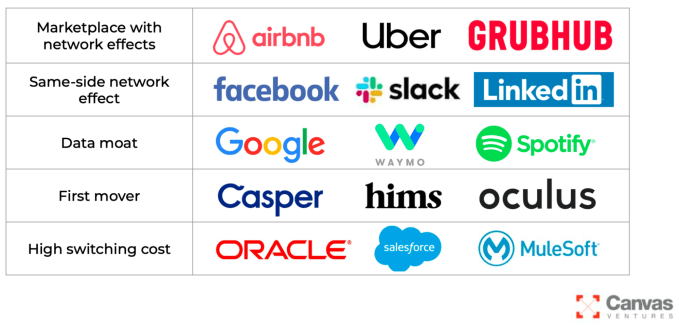
The most important elements for founders to consider when figuring out their strategic advantage(s) include one-sided or “direct” network effects (e.g. with social media sites like Facebook), marketplace network effects (e.g. with two-sided marketplaces like Uber), data moats, first mover and switching costs.

Let’s take a quick look at an example of one-sided network effects. At the very earliest stages of Facebook’s existence, it was just Mark Zuckerberg, a few friends, and their basic profiles. The nascent social media platform wasn’t useful beyond a few dorm rooms. They needed a strategic advantage or the company would not make it beyond the edge of campus.

A successful startup without a strategic advantage is just a validated business model vulnerable to copycat companies looking for a market entry point.

In fact, Facebook only truly became a useful platform — and accelerated as a business — when more users came into the fold and more types of email addresses were accepted. Add to that the introduction of an ad marketplace revenue model and you have a clear strategic advantage — based on one-sided network effects — that gave Facebook a strategic edge over other early social media sites like MySpace.

These one-sided network effects are different from two-sided network effects.

A strategic advantage is paramount to maintaining market share

Image Credits: Canvas Ventures

Two-sided network effects are most common in marketplace business models. In a two-sided network, supply and demand are matched, like Uber riders (demand) being matched with Uber drivers (supply). The Uber product is not necessarily more valuable just because more users (riders) join, the way Facebook is more valuable when more users join.

In fact, when more users (riders) join the demand side of the Uber network, it might actually be worse for the user experience — it’s harder to find a driver and wait times get longer. The demand side (riders) gets value from more supply (drivers) joining the platform and vice-versa. That’s why it’s called a two-sided network, or a marketplace.

Regardless of industry, a successful startup without a strategic advantage is just a validated business model vulnerable to copycat companies looking for a market entry point. Copycats can range in size from startups with similar grit to large companies like Facebook or Google that have limitless resources to drive competition into the market, and potentially run the startup with the original idea out of business. This vulnerability can prove fatal unless a startup’s founding team explores and embraces one or more strategic advantages.

14 May 2021

What to expect from Google’s all-virtual I/O

While Apple, Microsoft and the like were scrambling to bring their respective developer conferences online, Google made the executive design to just scrap I/O outright last year. It was a bit of an odd one, but the show went on through news-related blog posts.

While we’re going to have to wait another year to darken the doors of Mountain View’s Shoreline Amphitheater, the company has opted to go virtual for the 2021 version of the show. Understandably so. Google apparently has a lot up its sleeves this time.

Last month, Alphabet CEO Sundar Pichai teased some big news on the tech giant’s investor call, noting, “Our product releases are returning to a regular cadence. Particularly excited that our developer event — Google I/O — is back this year, all virtual, and free for everyone on May 18th-20th. We’ll have significant product updates and announcements, and I invite you all to tune in.”

From the sound of it, next week’s event will find Google returning to form following what was a rough year for just about everyone. So, what can we expect from the developer-focused event?

Forest Row, East Sussex, UK – July 30th 2013: Android figure shot in home studio on white. Image Credits: juniorbeep / Getty Images

Android 12 is the biggie, of course. From a software development standpoint, it’s a lynchpin to Google’s ecosystem, and for good reason has pretty much always taken centerstage at the event.

The developer version of Google’s mobile operating system has been kicking for a while now, but it has offered surprisingly little insight into what features might be coming. That’s either because it’s going to be a relatively minor upgrade as far as these things go or because the company it choosing to leave something to the imagination ahead of an official unveiling.

What we do know so far is that the operating system is getting a design upgrade. Beyond that, however, there are still a lot of question marks.

Google Assistant is likely to get some serious stage time, as well, coupled with some updates to the company’s ever-growing Home/Nest offerings. Whether that will mean, say, new smart displays on Nest speakers is uncertain. Keep in mind, hardware is anything but a given. The big Pixel event, after all, generally comes in the fall. That said, June is an ideal mid-marker during the year to refresh some other lines.

Google Pixel buds

Image Credits: Google

The likeliest candidate for new hardware (if there is any) is a new version of the company’s fully wireless earbuds — which the company has accidentally leaked out once or twice. The Pixel Buds A are said to sport faster pairing, and if their name is any indication, will be a budget entry.

Speaking of which… earlier this year, Google made the rather unorthodox announcement confirming that the Pixel 5a 5G is on the way. Denying rumors that have been swirling around the Pixel line generally, the company told TechCrunch in a statement, “Pixel 5a 5G is not cancelled. It will be available later this year in the U.S. and Japan and announced in line with when last year’s a-series phone was introduced.” Given that the 4a arrived in August, we could well be jumping the gun here. Taken as a broader summer time frame, however, it’s not entirely out of the realm of possibility here.

NEW YORK, NY – SEPTEMBER 13: Michael Kors and Google Celebrate new MICHAEL KORS ACCESS Smartwatches at ArtBeam on September 13, 2017 in New York City. (Photo by Dimitrios Kambouris/Getty Images for Michael Kors)

Wear OS has felt like an also-ran basically for forever. Rebrands, revamps and endless hardware partners have done little to change that fact. But keep in mind, this is going to be Google’s first major event since closing the Fitbit acquisition, so it seems like a no-brainer that the company’s going to want to come on strong with its wearable/fitness play. And hey, just this week, rumor broke that Samsung might be embracing the operating system after years of customizing Tizen.

Things kick off Tuesday morning May 18 at 10 a.m. PT, 1 p.m. ET with a big keynote.

14 May 2021

Stripe acquires Bouncer, will integrate its card authentication into the Radar fraud detection tool

On the heels of a $600 million fundraise earlier this year, payments giant Stripe has been on an acquisition march to continue building out its business. In the latest development, the company has acquired Bouncer, a startup based in Oakland that has built a platform to automatically run card authentications and detect fraud in card-based online transactions. Its technology is tailored for mobile transactions and includes a flow to help users authenticate themselves if they are mistakenly flagged, to come back into an app legitimately (hence the name).

Terms of the deal are not being disclosed, but Stripe is acquiring both Bouncer’s technology and the team, which will be integrated into Stripe Radar. Started in 2018, Radar is Stripe’s AI-based anti-fraud technology toolset, and most of the tech — which is focused around preventing fraudulent transactions on the Stripe platform — has been built in-house up to now. Stripe says that Radar already prevents “hundreds of millions of dollars of fraud for businesses” each year.

“Bouncer is a great tool for modern internet businesses. It allows them to quickly identify stolen cards, while also ensuring legitimate customers can transact without being blocked,” said Simon Arscott, business lead for Stripe Radar, in a statement. “We’re thrilled to welcome the Bouncer team, and their years of experience building payment authentication software for businesses, to Stripe and to enable their technology for Radar users. With the addition of advanced card scanning capabilities, Stripe Radar will be able block more fraud and further increase revenue for millions of businesses around the world who rely on Stripe.”

The deal comes a couple of weeks after Stripe announced the acquisition of TaxJar to bring cloud-based sales tax calculating tools into its payments platform.

Like Stripe itself, Bouncer was incubated at Y Combinator, in its case as part of its Summer 2019 cohort. In addition to YC, it had raised funding from Commerce Ventures and the Pioneer Fund, but had never disclosed how much it had raised in total.

Not to be confused with the Polish marketing technology startup Bouncer, which provides bulk email verification, Oakland Bouncer was co-founded by Will Megson (CEO) and Sam King (chief scientist), who between them have an interesting pedigree when it comes to identity verification, from academia to working at fast-scaling companies in categories that have been some of the biggest adopters of verification technology.

Both previously worked for years at on-demand transportation service Lyft in fraud, identity and payment management. Before that, Megson was at Groupon; and King, in addition to holding a position as an associate professor of computer science at UC Davis, worked at Twitter on account security, founding the fake accounts team.

Groupon is among the customers that Bouncer currently works with, alongside OfferUp, ibotta and Dealerware. Bouncer will keep its current service and customers up post-deal.

Radar is currently sold in a number of tiers ranging from free to 6p per screened transaction, depending on how it is being used (there is a more basic machine learning tier, and an enhanced tier for fraud teams, and the price varies also depending on whether customers are using Stripe’s standard pricing fees or something else). Stripe also offers a chargeback protection service priced at 0.4% per transaction, as well as analytics tools for Radar customers to get an overview of what is going on.

Stripe says that Radar has blocked more than $1 billion in fraudulent transactions since it was launched.

Bouncer is also currently priced at different tiers, ranging from free to $.15/scan for its basic solution, or a custom price for its more tailored services.

Integrating Bouncer’s card scanning and risk technology into the Radar stack will both sweeten the deal for people to buy those services from Stripe, but also make the tools more effective.

As Stripe describes it, when Radar flags a transaction, Bouncer’s card screening and verification technology will kick in as a “dynamic intervention” to confirm whether or not a customer had a legitimate card at the time of the transaction. This is done to help reduce false positives, which are more frequent in high risk transactions (such as those for big-ticket items, or if a person has been making several transactions in quick succession, or other payment activity that just comes up as unusual in systems).

We’ve been in a wave of new authentication technology that includes things like biometrics and other innovations, but Bouncer takes an approach that is less high-tech at the point of ingestion — needing only a phone’s camera and the card that the customer is using. When a transaction is flagged up and sent to Bouncer for verification, Bouncer works by requesting a picture of the payment card (which can be based on any payment card type and can be a low-light picture).

It then runs that through its PCI- and GDPR-compliant system to see if it’s stolen or real. If it’s real, the transaction continues; stolen and the transaction is cancelled. The whole process can take less than a second (not including the time it takes you to take a picture, of course).

For Bouncer, the idea is that Stripe’s machine learning engine will in turn help Bouncer become more effective.

“I’m excited that we’ll be able to scale our advanced card-verification technology across the Stripe network to help businesses grow their revenue while further reducing fraud behind the scenes,” said Will Megson, CEO of Bouncer, in a statement. “The same signals that Radar learns from will make Bouncer more effective, and Bouncer will, in turn, make Radar more effective. We couldn’t be more excited to join the Radar team.”

Stripe has made a number of acquisitions over the years to bring in key pieces of technology, and in one case — when it acquired PayStack in Lagos (another YC alum) — to help Stripe enter and serve merchants in Africa and more emerging markets overall.

At least two of these have been made in aid of bringing on technologists and technology to build out its compliance and authentication tools. In 2016 Stripe quietly acquired Teapot, a Silicon Valley startup that had been working on APIs for identity verification, trust, credit and other tools needed in financial transactions. Its co-founders spent some years at the company before moving on to other things.

In 2019, Stripe acquired a startup out of Ireland called Touchtech to bring in technology to prepare for Strong Customer Authentication regulations in Europe.

The need for better, more sophisticated tools to ensure online transactions are legit is not going anywhere fast. Malicious hacking — and the consequences that has for obtaining personal data that can be used in consumer fraud — continues to be a persistent threat. And in the meantime, e-commerce continues to become an ever-more mainstream activity, widening the pool of consumers and the chances of things going wrong.


14 May 2021

5 ways to raise your startup’s PR game

There’s a lot of noise out there. The ability to effectively communicate can make or break your launch. It will play a role in determining who wins a new space — you or a competitor.

Most people get that. I get emails every week from companies coming out of stealth mode, wanting to make a splash. Or from a Series B company that’s been around for a while and hopes to improve their branding/messaging/positioning so that a new upstart doesn’t eat their lunch.

You have to stop thinking that what you are up to is interesting.

How do you make a splash? How do you stay relevant?

Worth noting is that my area of expertise is in the DevOps space and that slant may crop up occasionally. But these five specific tips should be applicable to virtually any startup.

Leverage your founders

This is especially important if you are a small startup that not many people know about. Journalists don’t want to hear opinions from your head of marketing or product — they want to hear from the founders. What problems are they solving? What unique opinions do they have about the market? These are insights that mean the most coming from the people that started the company. So if you don’t have at least one founder that can dedicate time to being the face, then PR is going to be an uphill battle.

That doesn’t mean there isn’t plenty to do to support these efforts. Create a list of all the journalists that have written about your competitors. Read those articles. How can your founder add value to these conversations? Where should you be contributing thought leadership? What are the most interesting perspectives you can offer to those audiences?

This is legwork and research you can do before looping founders into the conversation. Getting your PR going can be like trying to push a broken-down car up the road: If the founders see you exerting effort to get things moving on your own, they’re more likely to get beside you and help.

Here’s an example: It may be unreasonable to ask a founder to sit down and write a 1,000-word thought leadership piece by the end of the week, but they very likely have 20 minutes to chat, especially if you make it clear that the contents of the conversation will make for great thought leadership pieces, social media posts, etc.

The flow looks like:

  1. You come up with topic ideas based on research.
  2. The founder picks their favorite.
  3. You and the founder schedule a 20-minute chat to get their thoughts on paper.
  4. You write up the content based on those thoughts.
14 May 2021

Facebook loses last ditch attempt to derail DPC decision on its EU-US data flows

Facebook has failed in its bid to prevent its lead EU data protection regulator from pushing ahead with a decision on whether to order suspension of its EU-US data flows.

The Irish High Court has just issued a ruling dismissing the company’s challenge to the Irish Data Protection Commission’s (DPC) procedures.

The case has huge potential operational significance for Facebook which may be forced to store European users’ data locally if it’s ordered to stop taking their information to the U.S. for processing.

Last September Irish data watchdog made a preliminary order warning Facebook it may have to suspend EU-US data flows. Facebook responding by filing for a judicial review and obtaining a stay on the DPC’s procedure. That block is now being unblocked.

We understand the involved parties have been given a few days to read the High Court judgement ahead of another hearing on Thursday — when the court is expected to formally lift Facebook’s stay on the DPC’s investigation (and settle the matter of case costs).

The DPC declined to comment on today’s ruling in any detail — or on the timeline for making a decision on Facebook’s EU-US data flows — but deputy commissioner Graham Doyle told us it “welcomes today’s judgment”.

Its preliminary suspension order last fall followed a landmark judgement by Europe’s top court in the summer — when the CJEU struck down a flagship transatlantic agreement on data flows, on the grounds that US mass surveillance is incompatible with the EU’s data protection regime.

The fall-out from the CJEU’s invalidation of Privacy Shield (as well as an earlier ruling striking down its predecessor Safe Harbor) has been ongoing for years — as companies that rely on shifting EU users’ data to the US for processing have had to scramble to find valid legal alternatives.

While the CJEU did not outright ban data transfers out of the EU, it made it crystal clear that data protection agencies must step in and suspend international data flows if they suspect EU data is at risk. And EU to US data flows were signalled as at clear risk given the court simultaneously struck down Privacy Shield.

The problem for some businesses is that there may simply not be a valid legal alternative. And that’s where things look particularly sticky for Facebook, since its service falls under NSA surveillance via Section 702 of the FISA (which is used to authorize mass surveillance programs like Prism).

So what happens now for Facebook, following the Irish High Court ruling?

As ever in this complex legal saga — which has been going on in various forms since an original 2013 complaint made by European privacy campaigner Max Schrems — there’s still some track left to run.

After this unblocking the DPC will have two enquiries in train: Both the original one, related to Schrems’ complaint, and an own volition enquiry it decided to open last year — when it said it was pausing investigation of Schrems’ original complaint.

Schrems, via his privacy not-for-profit noyb, filed for his own judicial review of the DPC’s proceedings. And the DPC quickly agreed to settle — agreeing in January that it would ‘swiftly’ finalize Schrems’ original complaint. So things were already moving.

The tl;dr of all that is this: The last of the bungs which have been used to delay regulatory action in Ireland over Facebook’s EU-US data flows are finally being extracted — and the DPC must decide on the complaint.

Or, to put it another way, the clock is ticking for Facebook’s EU-US data flows. So expect another wordy blog post from Nick Clegg very soon.

Schrems previously told TechCrunch he expects the DPC to issue a suspension order against Facebook within months — perhaps as soon as this summer (and failing that by fall).

In a statement reacting to the Court ruling today he reiterated that position, saying: “After eight years, the DPC is now required to stop Facebook’s EU-US data transfers, likely before summer. Now we simply have two procedures instead of one.”

When Ireland (finally) decides it won’t mark the end of the regulatory procedures, though.

A decision by the DPC on Facebook’s transfers would need to go to the other EU DPAs for review — and if there’s disagreement there (as seems highly likely, given what’s happened with draft DPC GDPR decisions) it will trigger a further delay (weeks to months) as the European Data Protection Board seeks consensus.

If a majority of EU DPAs can’t agree the Board may itself have to cast a deciding vote. So that could extend the timeline around any suspension order. But an end to the process is, at long last, in sight.

And, well, if a critical mass of domestic pressure is ever going to build for pro-privacy reform of U.S. surveillance laws now looks like a really good time…

“We now expect the DPC to issue a decision to stop Facebook’s data transfers before summer,” added Schrems. “This would require Facebook to store most data from Europe locally, to ensure that Facebook USA does not have access to European data. The other option would be for the US to change its surveillance laws.”

Facebook has been contacted for comment on the Irish High Court ruling. Update: It has now sent this statement:

“Today’s ruling was about the process the IDPC followed. The larger issue of how data can move around the world remains of significant importance to thousands of European and American businesses that connect customers, friends, family and employees across the Atlantic. Like other companies, we have followed European rules and rely on Standard Contractual Clauses, and appropriate data safeguards, to provide a global service and connect people, businesses and charities. We look forward to defending our compliance to the IDPC, as their preliminary decision could be damaging not only to Facebook, but also to users and other businesses.”

14 May 2021

Deadline extended: Apply to Startup Battlefield at TC Disrupt 2021

When you’re head-down and nose to the grindstone — I’m looking at all you hard-working early-stage startup founders — it’s easy to miss a deadline for an outstanding opportunity. Case in point: competing in Startup Battlefield at TechCrunch Disrupt 2021 in September.

We want every game-changing, innovative startup — from anywhere around the world — to have a shot at massive exposure to investors, media and other influential unicorn-makers. The $100,000 in equity-free prizemoney would be nice, too, right? That’s why we’re extending our application deadline for another full week.

It won’t cost you a thing to apply or to participate, so don’t let this trajectory-changing opportunity slip past you. Apply to Startup Battlefield here before May 27 at 11:59 pm (PT).

The TechCrunch editorial team will vet every application and ultimately choose roughly 20 startups to go head-to-head. Each team receives weeks of free, rigorous coaching from our seasoned Battlefield team. Your pitch, presentation skills and business model will reach new heights of excellence. You’ll also be ready to deftly handle all the questions you’ll receive from our expert VC judges.

Startup Battlefield plays out over several rounds, with the field progressively narrowing. Each time you make the cut, you’ll repeat your pitch-and-answer session to a new set of judges. All that training, prep and focus leads to a final showdown and one last grab for the brass ring. And then it’s up to the judges to decide which stand-out startup wins the championship and that huge check.

While only one startup wins the money and the title, every team that competes benefits from standing in a global spotlight. Sean Huang, co-founder of Matidor, competed in Startup Battlefield at Disrupt 2020. His team was one of the five finalists. Here’s what he said about his experience:

“Going through Startup Battlefield helped us simplify and improve our pitch. It helped us not only with brand messaging, but also to win other pitch competitions after Battlefield. By pitching in the finals, we booked a demo with one of the final panelists.

We received inbound investment interest from 12 Tier-1 investors, and eight potential key clients came to our website for a demo session. We also received an endorsement letter for our Y Combinator application from a fellow Battlefield participant, with whom we formed a great connection.”

You’re head down and focused — that’s why we’re giving you a one-week extension. So, stop, look up and grab this opportunity to take your startup to whole new levels. Get your nose off that grindstone and apply to Startup Battlefield here before May 27 at 11:59 pm (PT).

Is your company interested in sponsoring or exhibiting at Disrupt 2021? Contact our sponsorship sales team by filling out this form.

14 May 2021

The gaming industry needs more than just coders

While the COVID-19 pandemic has had a devastating impact on countless businesses across the globe, the $118 billion gaming industry not only survived, it thrived, with 55% of American consumers turning to gaming for entertainment, stress relief, relaxation and a connection to the outside world amid lockdowns.

This drove a 20% boost in gaming sales globally and created nearly 20,000 jobs in 2020 alone. And it’s not expected to stop any time soon: According to research company IBISWorld, the industry is set to grow again in 2021, adding to the year-over-year growth the industry has seen in the preceding half-decade.

This is great news for the growing gaming industry and especially those looking to score a job at a company developing the next blockbuster. The unemployment rate is already near zero for those with gaming development and design skills, which means there is an unprecedented opportunity to join the field.

The unemployment rate is already near zero for those with gaming development and design skills, which means there is an unprecedented opportunity to join the field.

Gamesmith, a digital community dedicated to the gaming industry, currently has more than 5,750 open jobs posted on its site, with roles in design, engineering and animation leading the way. In other words, if you never considered a career in the gaming industry — or thought that your skill set wouldn’t translate — this expanding job market needs employees from all types of backgrounds. Chances are one of your interests — besides gaming, of course — can act as a conduit into finding a career.

One career path for those with art skills — particularly with a talent for digital art tools like Autodesk Maya and Adobe Photoshop — is animation. An animator can do any number of jobs at a gaming company or studio, from building immersive landscapes and cities to modeling what a certain character will look like to designing user interfaces and navigational components. There is significant growth here, too: According to a recent study, most sectors of the animation industry are growing 2% to 3% year over year. According to Gamesmith, the average 30-year-old female artist or animator makes a salary of just under $90,000 a year.

If you’re a whiz with words and witty dialogue, then you might consider applying for a job as a writer at a studio. Writers are responsible for writing everything from the profanity-laced shouts heard in the background in the Grand Theft Auto series to the long speeches in epic adventures like The Legend of Zelda: Breath of the Wild. Employers are looking for writers with a flair for crafting stories and understanding characters, so even if you’re not a career writer, highlight the work you’ve done that fits in the mold of what game publishers are looking for.

One of the most important segments of the industry — and one of the fastest-growing — is developing and designing the gaming experiences themselves. The job market for these roles is predicted to grow by 9.3% between 2016 and 2026, according to the New England Institute of Technology, and the breadth of jobs in this wing of the industry range from level designers to lead designer and developers.

Gamesmith calculated that these jobs account for 16% of the available openings, but make up only 5% of all applications. While you will need at least a computer science degree and an understanding of the fundamentals of programming to land one of these jobs, the payoff for the time spent hitting the books is worth it. Gamesmith estimates that the average 28-year-old male engineer earns a salary north of $100,000.

Even if you don’t have any of these skills to help design a game from the ground up, there are still plenty of ways to break into the industry. No matter how good a game is, it will only be a success if people know about it, so the marketing and promotions teams at studios play a crucial role in making sure that consumers purchase the latest release and that it gets written about. If you have great communication skills and can work through people’s problems, companies always need customer service representatives.

Across all sectors of the gaming world, companies are looking to diversify their workforce and move away from an image as a job sector solely populated by white men in their early to mid-30s. Gamesmith research found that currently 74% of the industry’s workforce is male and 64% is white.

But that is changing. While in 2020, only 24% of studios invested moderate resources into diversity initiatives, out of those studios that did invest those resources, 96% reported at least moderately successful results and improvements to company culture. It may seem slow, but there does seem to be a recognition that the gaming industry needs a more diverse workforce as a way not just to bring more equity to their offices, but to make better games in the future and make the industry look more like the people who play games.

“Diversity isn’t a nicety; it’s a necessity if the industry is going to grow, thrive and truly reflect the tens of millions of people who play games every day in this country,” said Jo Twist, the CEO of the U.K.-based gaming trade association Ukie. “A diverse industry that draws on myriad cultures, lifestyles and experiences will lead to more creative and inclusive games that capture the imagination of players and drive our sector forward.”

Between the push to diversify the industry and a slew of new opportunities in the field, the key takeaway is that there are a wide range of possible careers in the industry and, even if you don’t think they do, your skills probably translate into one of the many roles that a gaming company needs to fill. Avid gamers know that you’re not going to beat a game the first time you turn on your console. So hone your skills, build up your experience and continue your quest to land a job in the industry of your dreams.