
Year: 2021

30 Apr 2021

Rapchat tunes into $2.3M as its music-making app hits 7M users

YouTube, Snapchat, Twitter, TikTok and Facebook’s Instagram have upended the film and TV industries, with a new wave of cinematographers, directors and actors leveraging innovations in technology to create new work and connect directly with billions of consumers to see it. Today, a startup is announcing some funding as it looks to make a similar impact in the world of music.

Rapchat, an app that lets people create music tracks — raps, as its names suggest, or something else — using a platform that crowdsources beats and lets people put vocals on top of them, has raised $2.3 million.

Co-led by Sony Music Entertainment and NYC VC firm Adjacent, this is an extension to Rapchat’s seed round of $1.7 million back in 2018, and CEO and co-founder Seth Miller tells me it’s coming as the startup is getting ready for a bigger Series A.

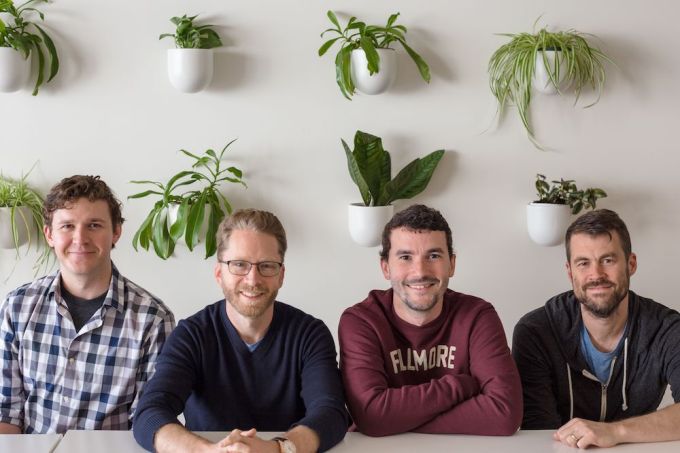
With no connection to Snapchat — not now at least, except that founders Seth Miller and Pat Gibson did think it was a funny pun at the time that they were first conceiving of the company as a side hustle while still in university in 2015 — Rapchat has already gone quite some way in scaling.

The company today has some 7 million registered users, and at the moment some 250,000 songs are being created around a catalog of about 100,000 beats by 500,000 active users on the platform each month. Engagement is hovering right now at 35 minutes per day on average, a mix not just of people making tunes, but through the beginnings of a social graph: people coming onto the app to discover and share those tracks.

Rapchat plans to use the funding to continue expanding the scope of what you can create on its platform, including growing the prize pools for Rapchat’s ‘Challenges’ competition series; expand to have more artists, producers, and industry executives on the platform for mentoring; and to extend that platform’s reach to integrate more deeply with the likes of TikTok, Snapchat, Spotify and Apple Music — platforms where creators are already making a lot of content, and where music is figuring strongly in that effort.

Rapchat’s growth not only speaks to how the startup has pulled off its ambition to make it easier to make music, but it also speaks to an appetite, an itch, in the creator economy: there is a big wide world of music-making out there, and more want to see if they can strike the right note.

Rapchat is definitely not the only, nor the first, company to think of how to address music creators within the bigger creator economy.

Another app called Voisey had conceived of a similar idea but focused primarily on letting people create and record shorter clips rather than full music tracks before sharing them to other platforms. It has not quite come a household name, but it did have some small success in bringing attention to new artists, and interestingly, it was quietly acquired by Snap last year (and for now Snap’s kept Voisey’s app up).

TikTok’s parent ByteDance has also made an acquisition of another music creation app, Jukedeck. As with Snap’s acquisition, so far we’re not fully clear on how and where that acquisition is going, but we’ve heard through the grapevine that TikTok is working on a new music service that sounds like it might let more content get plugged into TikTok’s music layer, so perhaps watch this space.

And in perhaps the most trend-endorsing act of all, Rapchat has been cloned — by Facebook, no less. NPE, the social networking behemoth’s in-house skunkworks team, in February rolled out BARS (all caps! stand out!) — which is, yes — an app on which you can create your own rap music.

Miller, at least for now, is about as laid back as you could be, considering all of the above, confident that at least for now, he is very happy with the engagement Rapchat is seeing, including around tests it has been running around offering new premium features — the app is free to use right now, but it has plans to offer creators more production tools and better ways of sharing their work and helping build a business out of it. Key to that will be never demanding licensing fees on music: creators keep the royalties, with Rapchat’s value lying in helping them make and track how that music gets used with the metadata that it holds on those tracks.

Some of the low-key approach might well come from the fact that Rapchat and its founders are somewhat outside of the startup fray. The idea for the app first came up in 2013, Miller said, when he and Gibson were students at Ohio University in Columbus.

“We were coming of age when everyone in college was using apps like Snapchat and Instagram,” he said. “We loved them for video, but saw there was nothing like them for creating music. So we pitched the idea during a Startup Weekend competition: snapping like Snapchat but for rap. Someone said, ‘Rapchat’ and we liked it.”

They went full-time on the idea in 2015 when they got into 500 Startups with the app, but even so it’s taken them years to build up the business, get attention from investors and raise money. Why? Partly because music is hard, and frankly the main game in town for years has been streaming services, rather than creation services.

Miller and Gibson persisted: “I knew that this market was huge. It just made so much sense to me,” he said. “The advent of the mobile devices the moment that apps like Instagram, VSCO and Snapchat have turned people into photographers and video makers, and Substack is turning people into writers.” And now Rapchat wants to tap the world for rappers.

“Rapchat has created a music studio that fits into your pocket,” said Nico Wittenborn, lead Investor at venture capital firm Adjacent, in a statement. “It decreases the friction of creativity by allowing anyone, anywhere in the world to record and publish music straight from their phones. This mobile-enabled democratization of technology is what Adjacent is all about, and I am super excited to support the team in building out this next-level music platform.”

30 Apr 2021

The health data transparency movement is birthing a new generation of startups

In the early 2000s, Jeff Bezos gave a seminal TED Talk titled “The Electricity Metaphor for the Web’s Future.” In it, he argued that the internet will enable innovation on the same scale that electricity did.

We are at a similar inflection point in healthcare, with the recent movement toward data transparency birthing a new generation of innovation and startups.

Those who follow the space closely may have noticed that there are twin struggles taking place: a push for more transparency on provider and payer data, including anonymous patient data, and another for strict privacy protection for personal patient data. What’s the main difference?

This sector is still somewhat nascent — we are in the first wave of innovation, with much more to come.

Anonymized data is much more freely available, while personal data is being locked even tighter (as it should be) due to regulations like GDPR, CCPA and their equivalents around the world.

The former trend is enabling a host of new vendors and services that will ultimately make healthcare better and more transparent for all of us.

These new companies could not have existed five years ago. The Affordable Care Act was the first step toward making anonymized data more available. It required healthcare institutions (such as hospitals and healthcare systems) to publish data on costs and outcomes. This included the release of detailed data on providers.

Later legislation required biotech and pharma companies to disclose monies paid to research partners. And every physician in the U.S. is now required to be in the National Practitioner Identifier (NPI), a comprehensive public database of providers.

All of this allowed the creation of new types of companies that give both patients and providers more control over their data. Here are some key examples of how.

Allowing patients to access all their own health data in one place

This is a key capability of patients’ newly found access to health data. Think of how often, as a patient, providers aren’t aware of treatment or a test you’ve had elsewhere. Often you end up repeating a test because a provider doesn’t have a record of a test conducted elsewhere.

30 Apr 2021

Roku removes YouTube TV from its channel store following failed negotiations

Earlier this week, Roku warned customers that the YouTube TV app may be removed from its streaming media players and TVs, and alleged that Google was leveraging its monopoly power during contract negotiations to ask for unfair terms. Today, Roku is announcing the deal has fallen through — meaning YouTube TV will no longer be available to new Roku subscribers. However, the company says it has taken steps to ensure existing subscribers can continue to use the YouTube TV app.

Roku had argued that as a part of its attempts to renew the carriage agreement for YouTube TV, Google was asking for special treatment, including a preferential ranking of YouTube content in search results, and even the permission to override Roku customer’s default settings when the YouTube app was open. That is, if a customer used the voice search button to ask for music, Google wanted YouTube Music to play the request — even if the customer had set another app, like Pandora, as their default.

The company also alleged that Google was asking for customer data that was “outside the realm” of industry standard practices and more than Roku offered other customers. And it said Google threatened to increase the hardware spec requirements for YouTube TV which would ensure Roku’s low-end and competitively priced players wouldn’t be able to access it.

Google, however, disputed the claims were as Roku said. It pointed the finger back at Roku for turning to customers to help sway the negotiations in its favor. The company also said it had been working in “good faith” to reach an agreement and all its requests were about providing a good user experience. Notably, Google also said it made “no requests to access user data or interfere with search results.”

Roku today offered a statement on the decision to pull YouTube TV, as the agreement has not been renewed. A Roku spokesperson said the following:

“We are disappointed that Google has allowed our agreement for the distribution of YouTube TV to expire. Roku has not asked for one dollar of additional financial consideration from Google to renew YouTube TV. ​

We have only asked Google for four simple commitments. First, not to manipulate consumer search results. Second, not to require access to data not available to anyone else. Third, not to leverage their YouTube monopoly to force Roku to accept hardware requirements that would increase consumer costs. Fourth, not to act in a discriminatory and anticompetitive manner against Roku. ​

​Because our contract has expired, we have removed YouTube TV from our channel store. To continue to provide our users with a great streaming experience, we are taking the extra step to continue to offer existing subscribers access to YouTube TV on the Roku platform unless Google takes actions that require the full removal of the channel. Because of Google’s conduct, new subscriptions will not be available going forward until an agreement is reached. ​

​It is well past time for Google to embrace the principles that have made streaming so popular for millions of users by giving consumers control of their streaming experience, by embracing fair competition and by ceasing anticompetitive practices. We believe consumers stand to benefit from Google and Roku reaching a fair agreement that preserves these principles and we remain committed to trying to achieve that goal.”

An email was also sent to customers informing them of these details. We’ve asked Google for comment.

30 Apr 2021

Developer-focused video platform Mux achieves unicorn status with $105M funding

Barely more than eight months after announcing a $37 million funding round, Mux has another $105 million.

The Series D was led by Coatue and values the company at more than $1 billion (Mux isn’t disclosing the specific valuation). Existing investors Accel, Andreessen Horowitz and Cobalt also participated, as did new investor Dragoneer.

Co-founder and CEO Jon Dahl told me that Mux didn’t need to raise more funding. But after last year’s Series C, the company’s leadership kept in touch with Coatue and other investors who’d expressed interest, and they ultimately decided that more money could help fuel faster growth during “this inflection moment in video.”

Building on the thesis popularized by A16Z co-founder Marc Andreessen, Dahl said, “I think video’s eating software, the same way software was eating the world 10 years ago.” In other words, where video was once something we watched at our desks and on our sofas, it’s now everywhere, whether we’re scrolling through our social media feeds or exercising on our Pelotons.

“We’re at the early days of a five- or 10-year major transition, where video is moving into being a first-class part of every software project,” he said.

Dahl argued that Mux is well-suited for this transition because it’s “a video platform for developers,” with an API-centric approach that results in faster publishing and reliable streaming for viewers. Its first product was a monitoring and analytics tool called Mux Data, followed by its streaming video product Mux Video.

“If you’re going to build a video platform and do it data-first, you need heavy data and monitoring and analytics,” Dahl explained. “We built the data layer [and then] we built the streaming platform.”

Customers include Robinhood, PBS, ViacomCBS, Equinox Media, and VSCO — Dahl said that while Mux works with digital media companies, “our core market is software.” He suggested that back when the company was founded in 2015, video was largely seen as a “niche,” or “something you needed if you were ESPN or Netflix.” But the last few years have illustrated that “video is a fundamental part of how we communicate” and that “every software company should have video as a core part of its products.”

Mux founders Adam Brown, Steven Heffernan, Matt McClure and Jon Dahl

Mux founders Adam Brown, Steven Heffernan, Matt McClure and Jon Dahl

Not surprisingly, demand increased dramatically during the pandemic. During the past year, on-demand streaming via the Mux platform growing by 300%, while live video streaming grew 3700% and revenue quadrupled.

“Which is a lot of work,” Dahl said with a laugh. “We definitely spent a lot of the last year ramping and scaling and investing in the platform.”

This new funding will allow Mux (which has now raised a total of $175 million) to continue that investment. Dahl said he plans to grow the team from 80 to 200 employees and to explore potential acquisitions.

“We were impressed by Mux’s laser focus on the developer community, and saw impressive customer retention and expansion indicative of the strong value their solutions provide,” said Coatue General Partner David Schneider in a statement. “This funding will enable Mux to continue to build on their customer-centric platform and we are proud to partner with Mux as it leads the way to this hybrid future.”

30 Apr 2021

As concerns rise over forest carbon offsets, Pachama’s verified offset marketplace gets $15 million

Restoring and preserving the world’s forests has long been considered one of the easiest, lowest cost, and simplest ways to reduce the amount of greenhouse gases in the atmosphere.

It’s by far the most popular method for corporations looking to take an easy first step on the long road to decarbonizing or offsetting their industrial operations. But in recent months the efficacy, validity, and reliability of a number of forest offsets have been called into question thanks to some blockbuster reporting from Bloomberg.

It’s against this uncertain backdrop that investors are coming in to shore up financing for Pachama, a company building a marketplace for forest carbon credits that it says is more transparent and verifiable thanks to its use of satellite imagery and machine learning technologies.

That pitch has brought in $15 million in new financing for the company, which co-founder and chief executive Diego Saez Gil said would be used for product development and the continued expansion of the company’s marketplace.

Launched only one year ago, Pachama has managed to land some impressive customers and backers. No less an authority on things environmental than Jeff Bezos (given how much of a negative impact Amazon operations have on the planet), gave the company a shoutout in his last letter to shareholders as Amazon’s outgoing chief executive. And the largest ecommerce company in Latin America, Mercado Libre, tapped the company to manage an $8 million offset project that’s part of a broader commitment to sustainability by the retailing giant.

Amazon’s Climate Pledge Fund is an investor in the latest round, which was led by Bill Gates’ investment firm Breakthrough Energy Ventures. Other investors included Lowercarbon Capital (the climate-focused fund from über-successful angel investor, Chris Sacca), former Über executive Ryan Graves’ Saltwater, the MCJ Collective, and new backers like Tim O’Reilly’s OATV, Ram Fhiram, Joe gebbia, Marcos Galperin, NBA All-star Manu Ginobilli, James Beshara, Fabrice Grinda, Sahil Lavignia, and Tomi Pierucci.

That’s not even the full list of the company’s backers. What’s made Pachama so successful, and given the company the ability to attract top talent from companies like Google, Facebook, SapceX, Tesla, OpenAI, Microsoft, Impossible Foods and Orbital Insights, is the combination of its climate mission applied to the well-understood forest offset market, said Saez Gil.

“Restoring nature is one of the most important solutions to climate change. Forests, oceans and other ecosystems not only sequester enormous amounts of CO2from the atmosphere, but they also provide critical habitat for biodiversity and are sources of livelihood for communities worldwide. We are building the technology stack required to be able to drive funding to the restoration and conservation of these ecosystems with integrity, transparency and efficiency” said Diego Saez Gil, Co-founder and CEO at Pachama. “We feel honored and excited to have the support of such an incredible group of investors who believe in our mission and are demonstrating their willingness to support our growth for the long term”. 

Customers outside of Latin America are also clamoring for access to Pachama’s offset marketplace. Microsoft, Shopify, and Softbank are also among the company’s paying buyers.

It’s another reason that investors like Y Combinator, Social Capital, Tobi Lutke, Serena Williams, Aglaé Ventures (LVMH’s tech investment arm), Paul Graham, AirAngels, Global Founders, ThirdKind Ventures, Sweet Capital, Xplorer Capital, Scott Belsky, Tim Schumacher, Gustaf Alstromer, Facundo Garreton, and Terrence Rohan, were able to commit to backing the company’s nearly $24 million haul since its 2020 launch. 

“Pachama is working on unlocking the full potential of nature to remove CO2 from the atmosphere,” said Carmichael Roberts from BEV, in a statement. “Their technology-based approach will have an enormous multiplier effect by using machine learning models for forest analysis to validate, monitor and measure impactful carbon neutrality initiatives. We are impressed by the progress that the team has made in a short period of time and look forward to working with them to scale their unique solution globally.” 


30 Apr 2021

Europe charges Apple with antitrust breach, citing Spotify App Store complaint

The European Commission has announced that it’s issued formal antitrust charges against Apple, saying today that its preliminary view is Apple’s app store rules distort competition in the market for music streaming services by raising the costs of competing music streaming app developers.

The Commission begun investigating competition concerns related to iOS App Store (and also Apple Pay) last summer.

“The Commission takes issue with the mandatory use of Apple’s own in-app purchase mechanism imposed on music streaming app developers to distribute their apps via Apple’s App Store,” it wrote today. “The Commission is also concerned that Apple applies certain restrictions on app developers preventing them from informing iPhone and iPad users of alternative, cheaper purchasing possibilities.”

The statement of objections focuses on two rules that Apple imposes in its agreements with music streaming app developers: Namely the mandatory requirement to use its proprietary in-app purchase system (IAP) to distribute paid digital content (with the Commission noting that it charges a 30% commission fee on all such subscriptions bought via IAP); and ‘anti-steering provisions’ which limit the ability of developers to inform users of alternative purchasing options.

“The Commission’s investigation showed that most streaming providers passed this fee [Apple’s 30% cut] on to end users by raising prices,” it wrote, adding: “While Apple allows users to use music subscriptions purchased elsewhere, its rules prevent developers from informing users about such purchasing possibilities, which are usually cheaper. The Commission is concerned that users of Apple devices pay significantly higher prices for their music subscription services or they are prevented from buying certain subscriptions directly in their apps.”

Commenting in a statement, EVP and competition chief Margrethe Vestager, added: “App stores play a central role in today’s digital economy. We can now do our shopping, access news, music or movies via apps instead of visiting websites. Our preliminary finding is that Apple is a gatekeeper to users of iPhones and iPads via the App Store. With Apple Music, Apple also competes with music streaming providers. By setting strict rules on the App store that disadvantage competing music streaming services, Apple deprives users of cheaper music streaming choices and distorts competition. This is done by charging high commission fees on each transaction in the App store for rivals and by forbidding them from informing their customers of alternative subscription options.”

Apple sent us this statement in response:

“Spotify has become the largest music subscription service in the world, and we’re proud for the role we played in that. Spotify does not pay Apple any commission on over 99% of their subscribers, and only pays a 15% commission on those remaining subscribers that they acquired through the App Store. At the core of this case is Spotify’s demand they should be able to advertise alternative deals on their iOS app, a practice that no store in the world allows. Once again, they want all the benefits of the App Store but don’t think they should have to pay anything for that. The Commission’s argument on Spotify’s behalf is the opposite of fair competition.”

Spotify’s founder, Daniel Ek, has also responded to the news of the Commission’s charges against Apple with a jubilant tweet — writing: “Today is a big day. Fairness is the key to competition… we are one step closer to creating a level playing field, which is so important for the entire ecosystem of European developers.”

Vestager is due to hold a press conference shortly — so stay tuned for updates.

This story is developing… 

A number of complaints against Apple’s practices have been lodged with the EU’s competition division in recent years — including by music streaming service Spotify; video games maker Epic Games; and messaging platform Telegram, to name a few of the complainants who have gone public (and been among the most vocal).

The main objection is over the (up to 30%) cut Apple takes on sales made through third parties’ apps — which critics rail against as an ‘Apple tax’ — as well as how it can mandate that developers do not inform users how to circumvent its in-app payment infrastructure, i.e. by signing up for subscriptions via their own website instead of through the App Store. Other complaints include that Apple does not allow third party app stores on iOS.

Apple, meanwhile, has argued that its App Store does not constitute a monopoly. iOS’ global market share of mobile devices is a little over 10% vs Google’s rival Android OS — which is running on the lion’s share of the world’s mobile hardware. But monopoly status depends on how a market is defined by regulators (and if you’re looking at the market for iOS apps then Apple has no competitors).

The iPhone maker also likes to point out that the vast majority of third party apps pay it no commission (as they don’t monetize via in-app payments). While it argues that restrictions on native apps are necessary to protect iOS users from threats to their security and privacy.

Last summer the European Commission said its App Store probe was focused on Apple’s mandatory requirement that app developers use its proprietary in-app purchase system, as well as restrictions applied on the ability of developers to inform iPhone and iPad users of alternative cheaper purchasing possibilities outside of apps.

It also said it was investigating Apple Pay: Looking at the T&Cs and other conditions Apple imposes for integrating its payment solution into others’ apps and websites on iPhones and iPads, and also on limitations it imposes on others’ access to the NFC (contactless payment) functionality on iPhones for payments in stores.

The EU’s antitrust regulator also said then that it was probing allegations of “refusals of access” to Apple Pay.

In March this year the UK also joined the Apple App Store antitrust investigation fray — announcing a formal investigation into whether it has a dominant position and if it imposes unfair or anti-competitive terms on developers using its app store.

US lawmakers have, meanwhile, also been dialling up attention on app stores, plural — and on competition in digital markets more generally — calling in both Apple and Google for questioning over how they operate their respective mobile app marketplaces in recent years.

Last month, for example, the two tech giants’ representatives were pressed on whether their app stores share data with their product development teams — with lawmakers digging into complaints against Apple especially that Cupertino frequently copies others’ apps, ‘sherlocking’ their businesses by releasing native copycats (as the practice has been nicknamed).

Back in July 2020 the House Antitrust Subcommittee took testimony from Apple CEO Tim Cook himself — and went on, in a hefty report on competition in digital markets, to accuse Apple of leveraging its control of iOS and the App Store to “create and enforce barriers to competition and discriminate against and exclude rivals while preferencing its own offerings”.

“Apple also uses its power to exploit app developers through misappropriation of competitively sensitive information and to charge app developers supra-competitive prices within the App Store,” the report went on. “Apple has maintained its dominance due to the presence of network effects, high barriers to entry, and high switching costs in the mobile operating system market.”

The report did not single Apple out — also blasting Google-owner Alphabet, Amazon and Facebook for abusing their market power. And the Justice Department went on to file suit against Google later the same month. So, over in the U.S., the stage is being set for further actions against big tech. Although what, if any, federal charges Apple could face remains to be seen.

At the same time, a number of state-level tech regulation efforts are brewing around big tech and antitrust — including a push in Arizona to relieve developers from Apple and Google’s hefty cut of app store profits.

While an antitrust bill introduced by Republican Josh Hawley earlier this month takes aim at acquisitions, proposing an outright block on big tech’s ability to carry out mergers and acquisitions.

Although that bill looks unlikely to succeed, a flurry of antitrust reform bills are set to introduced as U.S. lawmakers on both sides of the aisle grapple with how to cut big tech down to a competition-friendly size.

In Europe lawmakers are already putting down draft laws with the same overarching goal.

In the EU the Commission has proposed an ex ante regime to prevent big tech from abusing its market power, with the Digital Markets Act set to impose conditions on intermediating platforms who are considered ‘gatekeepers’ to others’ market access.

In the UK, which now sits outside the bloc, the government is also drafting new laws in response to tech giants’ market power — saying it will create a ‘pro-competition’ regime that will apply to platforms with so-called  ‘strategic market status’ — but instead of a set list of requirements it wants to target specific measures per platform.

30 Apr 2021

Eclipse Ventures has $500 million more to digitize old-line industries and bring them up to speed

Two years ago, we talked with Lior Susan, the founder of now six-year-old Eclipse Ventures in Palo Alto, Ca. At the time, the outfit believed that the next big thing wasn’t another social network but instead the remaking of old-line industries through full tech stacks — including hardware, software and data — capable of bring them into the 21st century.

Fast forward, and nothing has changed, not inside of Eclipse anyway. While the world has gone through a dramatic transformation owing to the coronavirus pandemic — never has the U.S.’s crumbling infrastructure been so apparent to so many – Eclipse is backing exactly the same kinds of companies that it always has and with the same size fund. Indeed, after closing its second and third funds with $500 million, the firm quietly closed its fourth vehicle earlier this month with $500 million in capital commitments from predominately endowments.

This morning, we talked with Susan about Eclipse’s focus on revitalizing old industries that remain largely untouched by tech, and why the pitch of Lior and the rest of Eclipse’s team has never been more powerful. Excerpts from that conversation follow, edited lightly for length and clarity.

TC: Because of where Eclipse focuses, you were long aware of the coming supply chain crises that the pandemic brought to the fore. Have your priorities changed at all as an investor? Did you have a to-do list going into 2020 and has that changed?

LS: Not really. We’ve been saying from inception that the infrastructure that we are living in is 50 to 60 years old across the board. We’ve been all of this time in those social software and fintech, new ideas and consumer trends. But we don’t live in the internet, we actually live in the physical world. And the physical world is not [receiving investment] at all. But much of that innovation can be applied to the world in which we are living, and what we want to do is bring that $65 trillion backstage economy into the digital age.

TC: In this go-go market, not a lot of funds are raising the same amounts as they have previously. Why did you choose to do so?

LS: We have a very specific strategy. We only lead early-stage investments in around 22 companies per fund, we [want] 20% to 25% with our initial check, and we double down on companies that we think are breaking out and try to lead two or three rounds in a row. And we know how to run the spreadsheets and we know how to make an assumption [about] what is the enterprise value we need to create in order to deliver alpha returns, and [that math leads us to] $500 million.

TC:  The last time we’d talked, Eclipse had also helped created and funded a company, Bright Machines, which primarily develops software for robotic systems inside of manufacturing companies. Have you launched any other companies in the last couple of years? I remember you don’t like the word ‘incubate.’

LS: We call it venture equity internally, but basically, we are very thesis oriented, so a lot of our investments start with us [circling around] an investment thesis and an area that we believe is getting really interesting. I’m right now working on a thesis around insurance in the manufacturing space [that will cover] working comp, facilities, assets . . . It [always] will start with a one-page thesis and we’ll talk inside the firm about it, and we’ll go hunt. But we don’t find what we like in a lot of cases. This is where we’re like, ‘Okay, we come from operating backgrounds. Why not roll up our sleeves and figure out how we can go and build these companies?’

You’re right that we did Bright Machines. We’ve also done Bright Insight (an IoT platform for biopharma and medtech that just raised $101 million in Series C funding led by General Catalyst), Chord (a commerce-as-a-service software for direct-to-consumer brands that just raised $18 million in Series A funding), and Metrolink (a new company that helps organizations design and manage their data flows). We’ve done [this model] a [few] times where we didn’t just invest in the company but we’re part of the founding team or we’re carving out assets. We’re trying to keep it very flexible.

TC: Interesting that you couldn’t find an insurance company focused on the manufacturing industry that you like.

LS: We have a lot of theses like that. We see a lot of horizontal business models and tech that [could work well] in the verticals where we’re playing and that we know need solutions. So, can you do a Slack for construction, or can you find the right people to build a Lemonade for manufacturing, or can you find the Shopify for industrial assets or spare parts?

TC: What size checks are you writing?

LS: I’d say $3 million to $4 million initial checks and up to $20 million or $25 million in a Series B, but you will find a lot of our companies where we invested $150 million plus over the lifetime of the company.

TC: Which company has attracted the most from Eclipse?

LS: I’d guess Cerebras [Systems, which reportedly makes the world’s largest computer chip].

TC: What do you make of what we’re hearing from the new administration in the U.S. on the infrastructure front. Do you think it’s talking about pouring money into the right verticals?

LS:  I was on a call with the manufacturing task force on Monday, and I will tell you — without getting into politics at all, because that’s above my pay grade — that the current administration is going to pour hundreds of billions of dollars, if not trillions of dollars, into upgrading the infrastructure of this country. And it’s going to be semiconductors, batteries, manufacturing, industrial infrastructure as a whole . . .

[I think last year’s ventilator shortage made clear] that we’d lost 100% of the manufacturing capabilities of this country and Western countries as a whole. And I think everyone now understands that you’re going to see a massive swing of investment in infrastructure and the only way to do it is through technology, because we actually don’t have a million people here that want to [work on an assembly line].  We actually need automation lines and software and computer vision and machine learning and everything that Silicon Valley is really good at.

TC: You have insight into what’s happening on the semiconductor front through Cerebras and other bets. There’s obviously a huge chip shortage that’s impacting everyone, including the auto industry. How long will it take for supply to catch up to demand?

LS: I think we’re going to see some big changes, but it’s  going to take many, many, many years. This is not software, we cannot bring everything up [to speed overnight] as you actually need fabs and cleaning rooms and assets. It’s pretty complicated.

It’s going to get worse in the next couple of quarters. It’s good for some of our companies that are working on the problem, but overall, as an economy, it’s pretty bad news.

30 Apr 2021

The era of the European insurtech IPO will soon be upon us

Once the uncool sibling of a flourishing fintech sector, insurtech is now one of the hottest areas of a buoyant venture market. Zego’s $150 million round at unicorn valuation in March, a rumored giant incoming round for WeFox, and a slew of IPOs and SPACs in the U.S. are all testament to this.

It’s not difficult to see why. The insurance market is enormous, but the sector has suffered from notoriously poor customer experience and major incumbents have been slow to adapt. Fintech has set a precedent for the explosive growth that can be achieved with superior customer experience underpinned by modern technology. And the pandemic has cast the spotlight on high-potential categories, including health, mobility and cybersecurity.

Fintech has set a precedent for the explosive growth that can be achieved with superior customer experience underpinned by modern technology.

This has begun to brew a perfect storm of conditions for big European insurtech exits. Here are four trends to look out for as the industry powers toward several European IPOs and a red-hot M&A market in the next few years.

Full-stack insurtech continues to conquer

Several early insurtech success stories started life as managing general agents (MGAs). Unlike brokers, MGAs manage claims and underwriting, but unlike a traditional insurer, pass risk off their balance sheet to third-party insurers or reinsurers. MGAs have provided a great way for new brands to acquire customers and underwrite policies without actually needing a fully fledged balance sheet. But it’s a business model with thin margins, so MGAs increasingly are trying to internalize risk exposure by verticalizing into a “full-stack” insurer in the hope of improving their unit economics.

This structure has been prevalent in the U.S., with some of the bigger recent U.S. insurtech IPO successes (Lemonade and Root), SPACs (Clover and MetroMile), and more upcoming listings (Hippo and Next) pointing to the prizes available to those who can successfully execute this expensive growth strategy.

30 Apr 2021

Lambda School lays off 65 employees amid restructuring

Nearly a year after its last layoff, online coding bootcamp Lambda School just announced more cuts amid a broader structuring. In a blog post, CEO and founder Austen Allred said that the startup, which raised a $74 million Series C in August, is laying off 65 employees. 

The roles that were cut span senior product, engineering, design, community management, or instructional staff. There is a Google form for companies to post job opportunities for new Lambda School alumni. 

“We have been working for years on making incentive-aligned education work,” Allred wrote in a tweet. “It’s harder than we initially thought; we’ve had to invent a lot from scratch simultaneously and we have to get a lot of things exactly right.”

Lambda School creates online bootcamps in the career and technical space — and it’s also a pioneer of the ISA, an income share agreement, touting it as a vital way to finance employment-ready education. ISAs essentially allow students to avoid paying upfront fees to attend a bootcamp, and then ultimately pay back class fees through a percent of their future income. A number of startups have taken the ‘Lambda School for X’ format, such as Henry and Microverse. Other companies also offer ISAs such as Pursuit, V School, Launch School, and the Grace Hopper Program, one analysis shows. 

The pandemic, and volatile economic circumstances, have made ISAs a harder route. Allred said that some startups pivoted from the model, but it appears that Lambda School will not. It’s still a hard thing to finance as a startup, since the company is essentially in a waiting game of debt until students pay. The company might be looking at a variety of ways to fund the ISA business, one of which got them in hot water years ago. 

 “We have a lot of interest in purchasing the income share agreements at the point of graduation, from investment funds and that kind of thing,” Allred said back in April 2020. 

We don’t know how exactly the restructuring will look from a strategy perspective, beyond the fact that Lambda School is pausing new enrollment in part-time programs. . Earlier this month, Lambda School announced a new partnership with Amazon: a back-end engineering program that will last for nine months. Since the program is full-time, it is likely not impacted by the restructuring. 

Today’s call by Lambda School illustrates how hard it is to build an edtech company that is truly doing something new. The company has a lot of stakeholders with different incentives to consider: students saving money, businesses making money, and venture capitalists who have given millions and millions to the company expecting some type of exit one day. 

“Despite these changes, our mission remains the same. As we move forward, we will continue to focus on unlocking opportunity, regardless of circumstance, for everyone willing to put in the work,” the blog post reads. Allred didn’t immediately respond to request for comment

29 Apr 2021

Daily Crunch: Biden’s labor secretary says gig workers should be reclassified

The Biden administration hints at gig economy changes, Blue Origin will be taking passengers and we interview Jim Belushi about weed. This is your Daily Crunch for April 29, 2021.

The big story: Biden’s labor secretary says gig workers should be reclassified

The Biden administration’s labor secretary Marty Walsh recently said in an interview with Reuters that he’s “looking at” the gig economy.

“In a lot of cases gig workers should be classified as employees,” Walsh said. “In some cases they are treated respectfully and in some cases they are not and I think it has to be consistent across the board.”

For now, this is just talk, but it suggests that new regulations and gig work reclassification could be a priority for the new administration.

The tech giants

Google Pay update adds grocery offers, transit expansions and spending insights — Through partnerships with Safeway and Target, Google Pay users will now be able to browse their store’s weekly circulars showcasing the latest deals.

Zynga and Rollic acquire the hyper-casual game studio behind High Heels — The company said High Heels (or, if you insist, High Heels!) has been downloaded more than 60 million times since it launched in January.

IBM is acquiring cloud app and network management firm Turbonomic for up to $2B — Turbonomic provides tools to manage application performance, along with Kubernetes and network performance.

Startups, funding and venture capital

Blue Origin will start selling tickets for New Shepard space tourism flights on May 5 — The “when and how much” are the two burning questions that remain around the Jeff Bezos-backed space company’s first commercial passenger flights.

TravelPerk raises $160M in equity and debt after a year of derailed business trips — TravelPerk lets users compare, book and invoice trains, cars, flights, hotels and apartments from a range of providers.

MoviePass co-founder’s PreShow Interactive raises $3M to expand into gaming — The startup will give PC and console gamers a new way to earn in-game currency in exchange for watching ads.

Advice and analysis from Extra Crunch

Healthcare is the next wave of data liberation — David Jegen and Carl Byers of F-Prime Capital argue that the winners of the healthcare data transformation will look different than they did with financial data.

Fintech startups set VC records as the 2021 fundraising market continues to impress — New data indicate Q1 2021 was the biggest fintech VC quarter ever.

How to fundraise over Zoom more effectively — A year ago, many of us probably thought that virtual fundraising would be impossible.

(Extra Crunch is our membership program, which helps founders and startup teams get ahead. You can sign up here.)

Everything else

Jim Belushi is chasing the magic in cannabis — We interviewed Belushi about his new greenhouses, supplied in part by GrowGeneration.

U.S. video game spending increased 30% in Q1 — Content was up 25% for the quarter, accessories jumped 42% and hardware went up 82%, according to NPD.

Sequoia’s Shaun Maguire and Vise’s Samir Vasavada will talk success in fintech on Extra Crunch Live — Join us on May 19 to discuss what brought the pair together, key tips for fundraising and how to be successful in the fintech space.

The Daily Crunch is TechCrunch’s roundup of our biggest and most important stories. If you’d like to get this delivered to your inbox every day at around 3pm Pacific, you can subscribe here.