Year: 2021

29 Apr 2021

What private tech companies should consider before going public via a SPAC

The red-hot market for special purpose acquisition companies, or SPACs, has “screeched to a halt,” according to CNN. As the SPAC market grew in the past six months, it seemed that everyone was getting into the game, with celebrities from Shaquille O’Neal to former House Speaker Paul Ryan leading their own SPACs.

But shareholder lawsuits, huge value fluctuations and warnings from the U.S. Securities and Exchange Commission have all thrown the brakes on the SPAC market, at least temporarily. So what do privately held tech companies that are considering going public need to know about the SPAC process and market?

Despite some warning signs, there are still hundreds of SPACs on the market looking to close deals, and this process can still have plenty of upsides.

SPAC perks

First, the upside of SPACs: They’re a much more efficient way for a private company to go public than a traditional IPO. By merging with a SPAC instead of launching an IPO, a private company can avoid the rigamarole of working with underwriters, hosting roadshows, preparing a prospectus and other complexities of the public filing process.

Furthermore, it can potentially be a fast track into an IPO with a seasoned partner who has experience navigating the process.

There are also big potential financial upsides. For example, stockholders of the private company will often roll over their stock and provide significant cash liquidity. SPACs also offer more certainty about a private company’s valuation than a traditional IPO, and some experts believe that a SPAC can add up to 20% to a company’s sale price compared to a typical private equity transaction.

And, especially when the SPAC market was hot, multiple SPACs could create a bidding war to increase value and generate more favorable terms for a transaction than through the traditional capital markets.

Lastly, partnering with an experienced management team and impressive industry insiders can help a private company accelerate its financial growth and create long-term value.

Warning signs

All these benefits led to a dramatic increase in SPAC transactions in late 2020 and early 2021. But the market cooled substantially in April, in part because of high-profile problems in the market and signs that the SEC will be scrutinizing the entities more closely in the future.

29 Apr 2021

Biden’s labor secretary thinks many gig workers should be reclassified as employees

Biden Labor Secretary Marty Walsh charged into the white hot issue of the gig economy Thursday, asserting that many people working without benefits in the gig economy should be classified as employees instead.

In an interview with Reuters, Walsh said that the Department of Labor is “looking at” the gig economy, hinting that worker reclassification could be a priority in the Biden administration.

“… In a lot of cases gig workers should be classified as employees,” Walsh said. “In some cases they are treated respectfully and in some cases they are not and I think it has to be consistent across the board.”

Walsh also said that the labor department would be talking to companies that benefit from gig workers to ensure that non-employees at those companies have the same benefits that an “average employee” in the U.S. would have.

“These companies are making profits and revenue and I’m not [going to] begrudge anyone for that because that’s what we are about in America… but we also want to make sure that success trickles down to the worker,” Walsh said.

Walsh’s comments aren’t backed by federal action, yet anyway, but they still made major waves among tech companies that leverage non-employee labor. Uber and Lyft stock dipped on the news Thursday, along with Doordash.

In the interview, Walsh also touched on pandemic-related concerns about gig workers who lack unemployment insurance and health care through their employers. The federal government has picked up the slack during the pandemic with two major bills granting gig workers some benefits, but otherwise they’re largely without a safety net.

Reforming labor laws has been a tenet of Biden’s platform for some time and the president has been very vocal about bolstering worker protections and supporting organized labor. One section of then President-elect Biden’s transition site was devoted to expanding worker protections, calling the misclassification of employees as contract workers an “epidemic.”

Biden echoed his previous support for labor unions during a joint address to Congress Wednesday night, touting the Protecting the Right to Organize Act — legislation that would protect workers looking to form or join unions. That bill would also expand federal whistleblower protections.

“The middle class built this country,” Biden said. “And unions build the middle class.”

29 Apr 2021

Spotify CEO says live audio content is the next ‘Stories’

Live audio experiences will be adopted by every major platform just like Stories have been, Spotify CEO Daniel Ek told investors on Wednesday’s earnings call. The streaming service recently acquired a live audio app, Locker Room, whose technology it expects to use to power a range of new live audio conversations centered around sports, culture and, of course music.

Investors were curious how exactly Locker Room would fit in with Spotify’s current offerings, given the streamer today is focused on delivering recorded content — music and podcasts — amd not some sort of live social networking experience.

Ek, mirroring what many in the industry have already been thinking, said he sees live audio as a new set of capabilities that will be broadly adopted by all. He basically dubbed it the next “Stories” — a feature popularized by Snapchat, but that eventually made its way to every platform.

“It’s really no different than how you think about Stories,” Ek said, explaining his thoughts on live audio. “Stories today exist on a format on a number of platforms, including Spotify, including, of course, Instagram, Snap and many others. So, I do look at [live audio] as a compelling feature set, and I think creators will engage in the places where they have the best sort of creator-to-fan affinity for the type of interactions that they’re looking for. And I think this is very similar to say how Stories played out historically.”

In other words, each platform may attract a certain kind of live audio creator, and Spotify sees its own potential in the realm of music and culture — the latter thanks to its existing and expansive investments in podcasts.

The interest in live audio emerged in the middle of a pandemic that trapped people at home and shut down traditional networking and large events, like conferences. But that doesn’t mean there’s no future for the format when the world opens back up.

Of course, Clubhouse gets credit for dring the interest in the live audio space as its exclusive invite-only status attracted a crowd of determined networkers (and clout-chasers) looking to participate in the next big thing. But as the app grew more popular, snagging big-name celeb guests — like Tesla founder Elon Musk, Facebook CEO Mark Zuckerberg, actor-turned-investor Ashton Kutcher, Drake, Oprah, and more — other tech companies began to take notice. Soon, everyone was building a Clubhouse clone.

Today, Facebook, Instagram, Reddit, Twitter, Discord, Telegram, and even LinkedIn have plans for live audio in various stages of development or availability.

Instead of starting from scratch, however, Spotify made an acquisition. Thanks to Locker Room, originally a place to discuss sports, Spotify said it would soon open up live audio to more professional athletes, writers, musicians, songwriters, podcasters, and “other global voices” who want to host real-time conversations.

In its first earnings call since the deal was announced, investors asked whether Spotify believed linear consumption of spoken word audio was more interesting than music streaming.

Ek explained how spoken word content may only be the beginning of what’s to come as the format evolves.

“As more people start engaging with a feature in a medium, you start seeing more and more professional creators jump on board. So I think it’s probably going to start out with spoken word content,” he said. “But specifically as it relates to Spotify, I think that there will be a lot of musicians that want to engage in everything from speaking to their fans to having listening parties and all other things because it’s so clear to them that on the Spotify platform, that engagement drives meaningful conversion to monetization opportunities just on the basis of our revenue model.”

Spotify said that the biggest request it gets from its over 8 million creators are to have more ways for them to connect with fans. Live audio, by its nature, would give them a very direct way to do just that, given Spotify’s reach  of over 350 million users.

In other words, live audio does not present some either/or scenario with regard to music streaming, as the investor’s question suggested. It’s more of a loop where one thing feeds the other. And “live,” apparently, could also mean music, not just chat.

For example, Ek hinted, when an artist has an album to promote, “you as the fan, may be able to experience that earlier than other consumers can.” Oh really?

Artists could also use live audio to talk about their thinking around writing a song, similar to what the Genius integration “Behind the Lyrics” today provides.

“I think it really comes down to the quality of the content,” said Ek. “And I think when I look at our 8 million creators, we have some of the world’s best storytellers on the platform, and that’s ultimately what people will tune into, and that’s what matters.”

Despite Ek’s optimism around live audio, Spotify’s stock tumbled after earnings as there were signs of slowing growth on the horizon, thanks to increased pressure from rivals, like Apple and Amazon. The company added 3 million paid subscribers in the quarter, but missed on expectations of monthly active users and lowered its full-year guidance. Revenues were up €2.1 billion ($2.6 billion) in the quarter, a 16% increase from the same period last year but down 1% from Q4 2020, raising concerns. But live audio could give fans a reason to tune back in more often in the future, if the Spotify can make the integration work.

29 Apr 2021

Healthcare is the next wave of data liberation

Why can we see all our bank, credit card and brokerage data on our phones instantaneously in one app, yet walk into a doctor’s office blind to our healthcare records, diagnoses and prescriptions? Our health status should be as accessible as our checking account balance.

The liberation of financial data enabled by startups like Plaid is beginning to happen with healthcare data, which will have an even more profound impact on society; it will save and extend lives. This accessibility is quickly approaching.

As early investors in Quovo and PatientPing, two pioneering companies in financial and healthcare data, respectively, it’s evident to us the winners of the healthcare data transformation will look different than they did with financial data, even as we head toward a similar end state.

For over a decade, government agencies and consumers have pushed for this liberation.

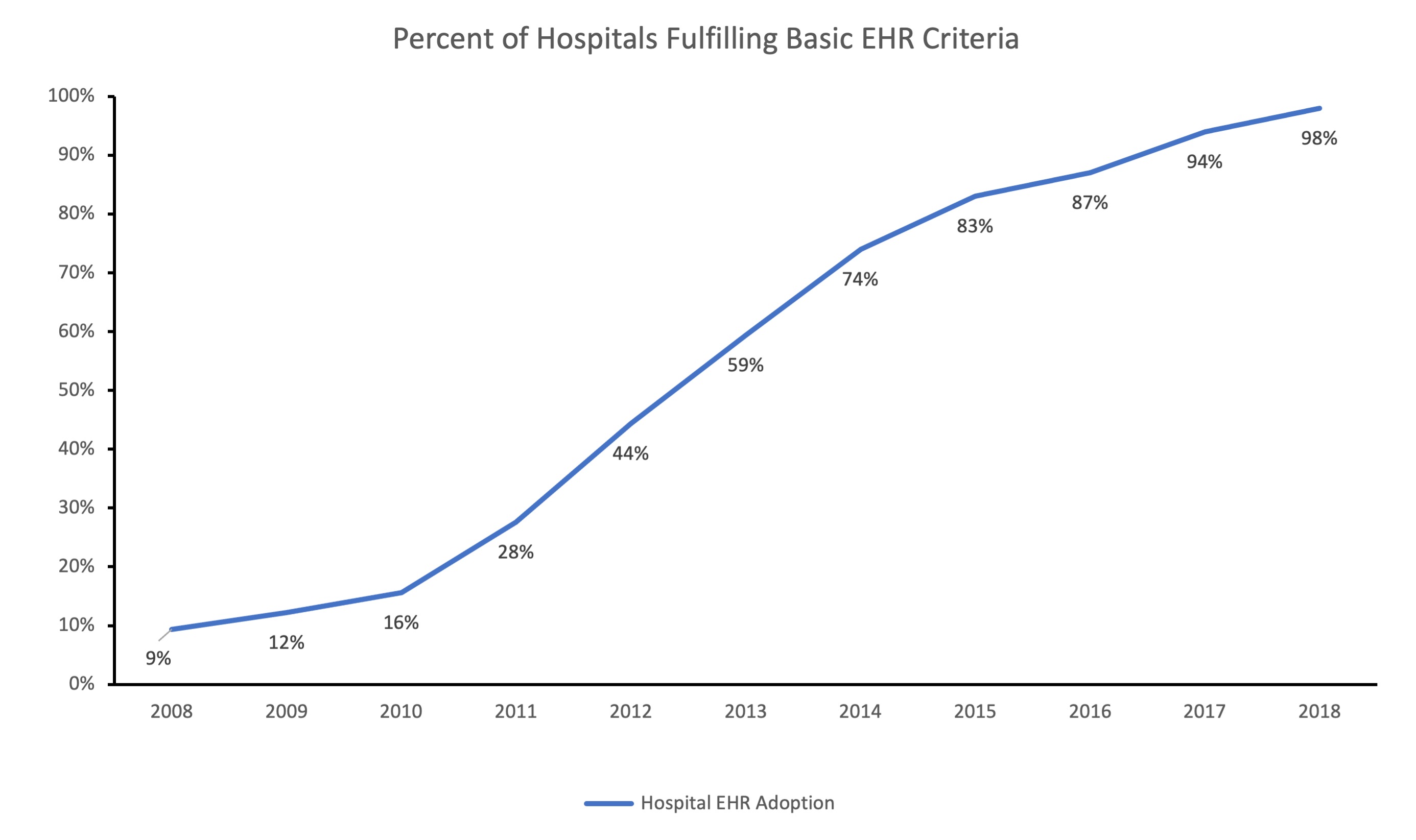
In 2009, the Health Information Technology for Economic and Clinical Health Act (HITECH) gave the first big industry push, catalyzing a wave of digitization through electronic health records (EHR). Today, over 98% of medical records are digitized. This market is dominated by multi‐billion‐dollar vendors like Epic, Cerner and Allscripts, which control 70% of patient records. However, these giant vendors have yet to make these records easily accessible.

A second wave of regulation has begun to address the problem of trapped data to make EHRs more interoperable and valuable. Agencies within the Department of Health and Human Services have mandated data sharing among payers and providers using a common standard, the Fast Healthcare Interoperability Resources (FHIR) protocol.

Image Credits: F-Prime Capital

This push for greater data liquidity coincides with demand from consumers for better information about cost and quality. Employers have been steadily shifting a greater share of healthcare expenses to consumers through high-deductible health plans – from 30% in 2012 to 51% in 2018. As consumers pay for more of the costs, they care more about the value of different health options, yet are unable to make those decisions without real-time access to cost and clinical data.

Image Credits: F-Prime Capital

Tech startups have an opportunity to ease the transmission of healthcare data and address the push of regulation and consumer demands. The lessons from fintech make it tempting to assume that a Plaid for healthcare data would be enough to address all of the challenges within healthcare, but it is not the right model. Plaid’s aggregator model benefited from a relatively high concentration of banks, a limited number of data types and low barriers to data access.

By contrast, healthcare data is scattered across tens of thousands of healthcare providers, stored in multiple data formats and systems per provider, and is rarely accessed by patients directly. Many people log into their bank apps frequently, but few log into their healthcare provider portals, if they even know one exists.

HIPPA regulations and strict patient consent requirements also meaningfully increase friction to data access and sharing. Financial data serves mostly one-to-one use cases, while healthcare data is a many-to-many problem. A single patient’s data is spread across many doctors and facilities and is needed by just as many for care coordination.

Because of this landscape, winning healthcare technology companies will need to build around four propositions:

29 Apr 2021

FAA authorizes SpaceX’s next three Starship test launches

SpaceX is continuing its Starship spacecraft testing and development program apace, and as of this afternoon it has authorization from the U.S. Federal Aviation Administration (FAA) to conduct its next three test flights from its launch site in Boca Chica, Texas. Approvals for prior launch tests have been one-offs, but the FAA said in a statement that it’s approving these in a batch because “SpaceX is making few changes to the launch vehicle and relied on the FAA’s approved methodology to calculate the risk to the public.”

SpaceX is set to launch its SN15 test Starship as early as this week, with the condition that an FAA inspector be present at the time of the launch at the facility in Boca Chica. The regulator says that has sent an inspector, who is expected to arrive today, which could pave the way for a potential launch attempt in the next couple of days.

The last test flight SpaceX attempted from Boca Chica was the launch of SN11, which occurred at the end of March. That ended badly, after a mostly successful initial climb to an altitude of around 30,000 feet and flip maneuver, with an explosion triggered by an error in one of the Raptor engines used to control the powered landing of the vehicle.

In its statement about the authorization of the next three attempts, the FAA noted that the investigation into what happened with SN11 and its unfortunate ending is still in progress, but added that even so, the agency has determined any public safety concerns related to what went wrong have been alleviated.

The three-launch approval license includes flights of SN16 and SN17 as well as SN15, but the FAA noted that after the first flight, the next two might require additional “corrective action” prior to actually taking off, pending any new “mishap” occurring with the SN15 launch.

SpaceX CEO Elon Musk has at time criticized the FAA for not being flexible or responsive enough to the rapid pace of iteration and testing that SpaceX is pursuing in Starship’s development. On the other side, members of Congress have suggested that the FAA has perhaps not been as thorough as necessary in independently investigating earlier Starship testing mishaps. The administration contends that the lack of any ultimate resulting impact to public safety is indicative of the success of its program thus far, however.

29 Apr 2021

Digital comics startup Madefire is shutting down

R.I.P. Madefire, a startup that recruited high-profile artists to reinvent comics for new formats and platforms.

An announcement on the Madefire website states the company entered into “an assignment of benefit for creditors” (explained as “a state-level insolvency proceeding similar to bankruptcy”) earlier this month, which was then reported this morning in The Beat. As a result, no new books will be published, users will not be able to purchase any additional books and they’re also encouraged to download all their purchased content before the end of the month.

This news affects other apps built with Madefire’s technology. The Archie comics app has shut down as well, with the publisher writing, “We realize this comes as a surprise and we are making every effort to do right by our loyal customer base,” specifically by offering readers a free one-month subscription to Comixology Unlimited. (Amazon acquired digital comics platform Comixology in 2014, launching an Unlimited subscription service two years later.)

Madefire first launched in 2012, back when publishers were experimenting with formats like motion comics. The company described its titles as “motion books,” combining the animation and effects of motion comics with a more traditional reading experience.

“Motion comics are a passive experience, a watching experience that is tantamount to bad animation – it’s like watching a movie,” co-founder and CEO Ben Wolstenholme said at the time. “Motion Books is a reading experience, actively controlled by the reader – it’s like reading a book. Our goal is to be the best reading experience developed for the iPad.”

Perhaps the most impressive thing about the company was the artists it had enlisted before launch, including Dave Gibbons and Bill Sienkiewicz.

More recently, Madefire announced partnerships with other tech platforms, including Snapchat and troubled augmented reality company Magic Leap.

According to Crunchbase, Madefire had raised $16.4 million in funding from investors including True Ventures, Plus Capital, Kevin Spacey (yes, that Kevin Spacey) and Drake, but The Beat reports that the total was “even more than that.”

29 Apr 2021

Digital comics startup Madefire is shutting down

R.I.P. Madefire, a startup that recruited high-profile artists to reinvent comics for new formats and platforms.

An announcement on the Madefire website states the company entered into “an assignment of benefit for creditors” (explained as “a state-level insolvency proceeding similar to bankruptcy”) earlier this month, which was then reported this morning in The Beat. As a result, no new books will be published, users will not be able to purchase any additional books and they’re also encouraged to download all their purchased content before the end of the month.

This news affects other apps built with Madefire’s technology. The Archie comics app has shut down as well, with the publisher writing, “We realize this comes as a surprise and we are making every effort to do right by our loyal customer base,” specifically by offering readers a free one-month subscription to Comixology Unlimited. (Amazon acquired digital comics platform Comixology in 2014, launching an Unlimited subscription service two years later.)

Madefire first launched in 2012, back when publishers were experimenting with formats like motion comics. The company described its titles as “motion books,” combining the animation and effects of motion comics with a more traditional reading experience.

“Motion comics are a passive experience, a watching experience that is tantamount to bad animation – it’s like watching a movie,” co-founder and CEO Ben Wolstenholme said at the time. “Motion Books is a reading experience, actively controlled by the reader – it’s like reading a book. Our goal is to be the best reading experience developed for the iPad.”

Perhaps the most impressive thing about the company was the artists it had enlisted before launch, including Dave Gibbons and Bill Sienkiewicz.

More recently, Madefire announced partnerships with other tech platforms, including Snapchat and troubled augmented reality company Magic Leap.

According to Crunchbase, Madefire had raised $16.4 million in funding from investors including True Ventures, Plus Capital, Kevin Spacey (yes, that Kevin Spacey) and Drake, but The Beat reports that the total was “even more than that.”

29 Apr 2021

PortalOne raises $15M from Atari and more for a new hybrid gaming/TV show app

Gaming and streamed video have been two of the biggest pastime winners during the last year+ of pandemic living. Today a startup that has created an app that brings those two entertainment formats together is announcing a notable seed round of funding as it prepares to come out of closed beta.

PortalOne, a hybrid gaming startup, is announcing a $15 million seed round of funding as it prepares to come out of closed beta with an app that lets people play on-demand games and also watch live shows in which users can play against a special guest.

The startup and its funding are notable in part because of who is doing the investing.

It includes Atari and camera maker ARRI, Founders Fund, TQ Ventures (the firm led by Scooter Braun and financiers Schuster Tanger and Andrew Marks), Coatue Management (specifically Arielle Zuckerberg), Rogue Capital Partners (Alice Lloyd George’s new fund), Signia Venture Partners (via Sunny Dhillon); Seedcamp, Talis Capital and SNÖ Ventures out of Europe.

Other investors included Kevin Lin, the co-founder of Twitch; Mike Morhaime, co-founder of Blizzard and Dreamhaven; Amy Morhaime, co-founder of Dreamhaven; Marc Merrill, co-founder of Riot Games; Xen Lategan, former CTO and executive advisor at various companies such as Hulu; and Eugene Wei, former Head of Video at Oculus and Head of Product at Hulu.

PortalOne is part tech startup, and part media company. On the one hand, it has spent the last three years building a full stack of hardware and software that can be used to build games, record live shows, and integrate the two into an experience that blends both on-demand and real-time gaming and entertainment.

“One of the benefits of building first is that what we are doing is extremely hard to do on a technical level,” said co-founder and CEO Bård Anders Kasin. “The way we do it is the key. It is our secret sauce.”

On the other, it is using that tech to create a gaming and live events platform and brand — providing a place for itself and third parties to build games and bigger live experiences around them. It believes that it’s managed to do something here that has eluded others for years.

“We come from the entertainment industry and have also been in games many years,” said Stig Olav Kasin, Bård’s brother, CXO, and the other co-founder. “We’ve talked to all the big companies and know that hybrid gaming combining games and TV is difficult,” not least because of the silos in companies where different groups “own” TV and gaming.

The Oslo-based company has so far been running a pared-down, early version of its service in the US and Norway — two games in so far, one called Blockbuster that, well, involves you throwing a massive ball and knocking over blocks, and another a reimagined version of Centipede — with corresponding talk shows set out of a living room that’s actually all computer-generated on a green screen.

Users can play and watch all this either through a VR headset or over a phone, and they win “prizes” for placing well in gaming competitions. Alongside that PortalOne will sell virtual goods much as companies like Fortnite do today.

The plan is to more widely launch the first iteration of its service — PortalOne Arcade, a selection of 80s-themed, old-school arcade games reimagined as multiplayer, immersive experiences combined with interactive talk shows — in the US and Norway later this year before extending to other markets.

Bård Anders Kasin — who previously built a VR company and worked as a technical director at Warner Brothers, making movies such as the Matrix trilogy — and Stig Olav Kasin — who worked with his brother on VR and before that was a media exec on shows like The Voice and Who Wants to Be a Millionaire — founded PortalOne back in 2018.

Between then and June 2020, when PortalOne launched its closed beta, the startup’s focus was on building out its technology and its content strategy and early partners.

From the sounds of it, it was no small task. Its tech stack incorporates virtual reality, computer vision, gaming technology, and software and hardware to capture and stream video that drastically reduces the resources required for both, among other IP. Some of it PortalOne built itself; other areas it worked with Arri, a major player in motion picture camera equipment, which built a new kind of 3D camera for PortalOne.

Part of the challenge that PortalOne has been tackling has been the very process of creating content for a hybrid platform like the one it envisioned.

Typically, recording immersive experiences is complex and expensive because of the volumetric equipment that is used, the set-up of studios necessary to capture the experiences, and more, which involve Hollywood-movie-studio size, staffing and costs.

PortalOne’s breakthrough has been to turn that process into something that can be produced more easily and at a much lower cost, necessary “since we have daily shows and we want to scale and mass produce more daily shows for each game,” said Bård.

In the PortalOne setup, in addition to the host — an affable Norwegian with a mostly American English accent called Markus Bailey — and his guest, there are only two other people involved, technician-producers triggering effects and controlling when the action switches from talk to game and back again.

From previously needing large sets and dozens of people, “now we can do all of this in a YouTube-sized studio,” said Bård.

On the content front, PortalOne is building its own games, but it is also tapping into an old-school gaming aesthetic, it said.

Atari is not only investing, but has inked a seven-year deal with PortalOne, giving the latter exclusive global distribution rights to some of its most popular arcade game franchises, which PortalOne is reimagining and rebuilding for its hybrid platform.

Bård said that the company wants to work with brands in music, sport, travel and education to build other games, too. (Braun’s reach here might not extend to Taylor Swift, but he’s pulled in Justin Bieber for the promo video, and possibly more.)

“Massive opportunities continue to emerge in the interactive entertainment space as distribution and business models evolve,” said Kirill Tasilov, a principal at Talis Capital, in a statement. “PortalOne is redefining mobile by unlocking new hybrid experiences at the intersection of games and video, and we are thrilled to be a part of their journey.”

Blurring the lines

In some ways, what PortalOne is doing is not completely new, since the lines between what is a game, what is interactive, and what is linear entertainment have been getting blurred for decades.

You could argue that even game shows, one of the earliest TV formats, was an early stage in hybrid interactivity, although more modern programs like the ones that Stig helped build out, with interactive voting from at-home audiences using phones, definitely pushed the concept in new ways.

The coronavirus pandemic and the fact that so many in-person live events were cancelled, meanwhile, definitely paved the way for content players to think outside the box when it came to building new kinds of “live” shows. With Marshmello getting a huge response to his Fortnite “show” in 2019, the game saw 12 million people flock to its Travis Scott concert last year; and Roblox said in December said its show with Lil Nas will pave the way for future events.

“When we see virtual concerts inside of TikTok, Roblox, and Fortnite, it’s great but PortalOne offers an evolution of interactive metaverse entertainment — true real-time, one-to-many interaction between gamers around the world, all in a mobile-native hybrid game format,” said Dhillon, a partner at Signia Venture Partners.

Yet if well-established platforms really pick up on this trend, that’s an endorsement of what PortalOne has built. But they could also feasibly build their own live game shows, too, and blow PortalOne out of the water just as it’s dipping its toes in.

This is also where its time spent building tech could prove either to be a boost or a bust. Gaming is a notoriously tough one to call when it comes to resonating and taking off with audiences, and so too will presumably the experiences that are built around those games.

“The next big social platform will likely be a convergence of media with gaming at its core – a truly new immersive interactive experience – and PortalOne is a major contender for becoming such a platform,” said Kevin Lin.

Indeed, if PortalOne finds an audience for what it’s making, it will have the tools to serve them more content efficiently and and cheaply. But if it doesn’t strike the right note, the question will be how and if that tech will otherwise be used.

For investors right now, it’s more about the opportunity.

“As PortalOne continues to grow, it is seamlessly integrating the gaming and entertainment worlds to create a single interactive experience and endless opportunities for content creation,” said Braun. “Creators and performers alike want new and innovative ways to bring their craft to life, and PortalOne is meeting that demand in a way that no other business has done. I’m excited to work with the entire team to realize their trailblazing vision. I have never seen anything like this before.”

Delian Asparouhov, a principal at Founders Fund — in the news today for another reason, his role in bringing a lot of attention to Miami as a new tech hot spot — also thinks that the building of infrastructure and tech combined with the media element will give the startup a lot of runway.

“We back companies that we believe have strong potential to become global category leaders,” he said in a statement. “PortalOne creates a new category and simultaneously the platform that is clearly set to dominate that new category. The market is ripe, the opportunity is clear, and the potential is unlimited. PortalOne is poised to create a before and after in the industry.”


29 Apr 2021

Biden proposes ARPA-H, a health research agency to ‘end cancer’ modeled after DARPA

In a joint address to Congress last night, President Biden updated the nation on vaccination efforts and outlined his administration’s ambitious goals.

Biden’s first 100 days have been characterized by sweeping legislative packages that could lift millions of Americans out of poverty and slow the clock on the climate crisis, but during his first joint address to Congress, the president highlighted another smaller plan that’s no less ambitious: to “end cancer as we know it.”

“I can think of no more worthy investment,” Biden said Wednesday night. “I know of nothing that is more bipartisan…. It’s within our power to do it.”

The comments weren’t out of the blue. Earlier this month, the White House released a budget request for $6.5 billion to launch a new government agency for breakthrough health research. The proposed health agency would be called ARPA-H and would live within the NIH. The initial focus would be on cancer, diabetes and Alzheimer’s but the agency would also pursue other “transformational innovation” that could remake health research.

The $6.5 billion investment is a piece of the full $51 billion NIH budget. But some critics believe that ARPA-H should sit under the Department of Health and Human Services rather than being nested under NIH. 

ARPA-H would be modeled after the Defense Advanced Research Projects Agency (DARPA), which develops moonshot-like tech for defense applications. DARPA’s goals often sound more like science fiction than science, but the agency contributed to or created a number of now ubiquitous technologies, including a predecessor to GPS and most famously ARPANET, the computer network that grew into the modern internet.

Unlike more conservative, incremental research teams, DARPA aggressively pursues major scientific advances in a way that shares more in common with Silicon Valley than it does with other governmental agencies. Biden believes that using the DARPA model on cutting edge health research would keep the U.S. from lagging behind in biotech.

“China and other countries are closing in fast,” Biden said during the address. “We have to develop and dominate the products and technologies of the future: advanced batteries, biotechnology, computer chips, and clean energy.”

29 Apr 2021

The TechCrunch Survey of Dutch tech hubs: Calling Delft, Eindhoven, Rotterdam, Utrecht

TechCrunch is embarking on a major new project to survey European founders and investors in cities outside the larger European capitals.

Over the next few weeks, we will ask entrepreneurs in these cities to talk about their ecosystems, in their own words.

This is your chance to put Delft, Eindhoven, Rotterdam, Utrecht on the Techcrunch Map!. We covered Amsterdam here.

If you are a tech startup founder or investor in one of these cities please fill out the survey form here.

We are particularly interested in hearing from women founders and investors.

This is the follow-up to the huge survey of investors (see also below) we’ve done over the last six or more months, largely in capital cities.

These formed part of a broader series of surveys we’re doing regularly for ExtraCrunch, our subscription service that unpacks key issues for startups and investors.

In the first wave of surveys, the cities we wrote about were largely capitals. You can see them listed here.

This time, we will be surveying founders and investors in Europe’s other cities to capture how European hubs are growing, from the perspective of the people on the ground.

We’d like to know how your city’s startup scene is evolving, how the tech sector is being impacted by COVID-19, and generally how your city will evolve.

We leave submissions mostly unedited and are generally looking for at least one or two paragraphs in answers to the questions.

So if you are a tech startup founder or investor in one of these cities please fill out our survey form here.

Thank you for participating. If you have questions you can email mike@techcrunch.com and/or reply on Twitter to @mikebutcher.