Year: 2021

29 Apr 2021

MoviePass co-founder’s PreShow Interactive raises $3M to expand into gaming

PreShow Interactive is giving gamers a new way to earn in-game currency in exchange for watching ads — a concept that’s become familiar in mobile games but hasn’t really made much headway on PCs or consoles.

The startup is led by MoviePass’ founding CEO Stacy Spikes. When I spoke to Spikes about PreShow two years ago, he was beta testing an app that provided users with free movie tickets in exchange for watching ads. But obviously, theatrical moviegoing has taken a big hit in the past year.

Spikes told me yesterday that he’d always hoped to bring the PreShow concept to four categories — theatrical movies, gaming, subscription streaming and video on demand — but the pandemic forced the startup to shift focus more quickly than expected and explore what a gaming experience might look like.

The current plans is to launch a new PreShow Interactive app this summer, where viewers can connect their in-game accounts and identify how much virtual currency they want to earn. Then they watch a package of ads and PreShow will automatically transfer the currency to their account — in other words, it’s buying the currency for them.

Users will have to download a separate app to watch the ads and get the benefits, but Spikes said this is actually better than trying to integrate advertising or branded content into the game itself, which can be a slow process for the developer and the advertiser, while also being distracting for the players. And this means PreShow Interactive should able to support 20,000 games at launch, across PCs, consoles and virtual reality.

PreShow Interactive

Image Credits: PreShow Interactive

“We just didn’t see the purpose of spending the time on integrations when it’s not really necessary,” he added. “Our deal is only with the consumer for their time. We’re saying, ‘This is your time. It has value.'”

One of the key elements to Preshow’s approach is technology that can detect when the viewer is actually looking at their phone screen — the ads will stop playing if you turn away. Critics have described this as “creepy surveillance tech,” but Spikes claimed that early PreShow users have embraced the approach. He also argued that it’s more transparent than the data collection and targeting currently driving online advertising.

“We used to think data was the new oil, but now our feeling is that permission and engagement and attention is the new oil,” he said.

In addition to revealing its new strategy, PreShow is announcing that it has raised $3 million in seed funding led by Harlem Capital, with participation Canaan Partners, Wavemaker Ventures, Front Row Fund, ROC Fund, BK Fulton and Monroe Harris.

And to be clear, Spikes said PreShow isn’t abandoning theatrical movies. He said that the PreShow app will eventually offer both movie and gaming deals “under one roof,” but brands aren’t currently eager to advertise to moviegoers.

“We’re ready to go when the marketplace is ready to go,” he said.
 

29 Apr 2021

Head, tail, knees and trees (knees and trees)

Some fun ones this week, so let’s get all of those pesky business transactions out of the way first, shall we? I mean, not that tens of millions of dollars changing hands for future robotics technology is boring, he said, tugging at his collar for comedic effect.

Image Credits: Plus One Robotics

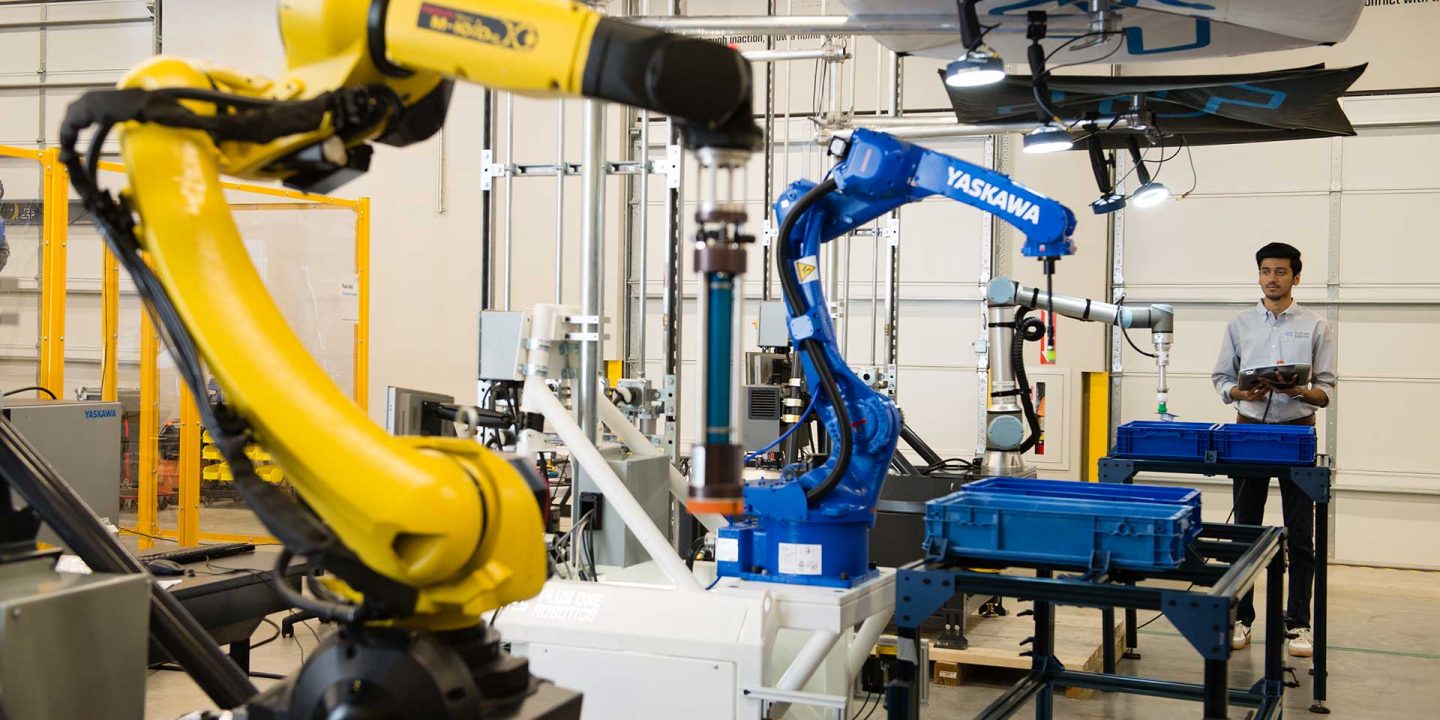
Big raise this week for Plus One Robotics. The San Antonio-based company raised a healthy $33 million Series B, bringing its total funding above $40 million. The company mostly traffics in the warehouse and logistics space — obviously a category with a lot of excitement around it after last year’s massive shut down. As many companies have told me, most clients are simply looking for a way to help their footing in the competition against Amazon.

In addition to its massive headcount and seemingly bottomless resources, the e-commerce giant has deployed a huge army of robots in its warehouse. Plus One, for its part, doesn’t make the robots, but rather the vision software that works with them. The company’s product is designed to work across a broad range of robotic arms and grippers, allowing workers to control up to 50 systems at once.

Image Credits: Roam Robotics

We’ve talked about exoskeletons quite a bit on these pages, but Roam offers an interesting alternative to a number of bigger, bulkier and harder products on the market. The company’s latest device I liken to a standard knee brace, with AI and robotic capabilities that assist with movement. Specifically it helps with things like walking up stairs and standing up from a seated position.

And here we have a tiny tree man. Project Kiwi is kind of like Pinocchio if he really leaned into the whole wooden thing in the process of becoming a real boy. Obviously Disney’s going for the (sometimes) littlest Guardian of the Galaxy, Groot, for its latest extremely impressive animatronic.

Matthew was extremely impressed seeing the beautiful little tree guy in action and, living vicariously through some YouTube videos, I definitely have to confirm.

A fun bit of research out of Carnegie Mellon this week. The latest bit of biomimicry is a bit surprising. Obviously Cheetah has been a big inspiration for a number of quadrupedal robots (MIT in particular has a whole lot going in the Cheetah department). Specifically, though, the CMU researchers are looking at the big cat’s tail. Per CMU:

The cheetah’s lightweight furry tail is known as an aerodynamic drag tail; that is, it acts sort of like a parachute. Most robotic tails have high inertia, but the cheetah manages to retain low inertia. Inertia is a physical quality that describes an object’s resistance to changes in motion — high tail inertia means the tail can apply high forces. Aerodynamic tails instead use a different principle — aerodynamic drag — to achieve high forces without a large inertia.

29 Apr 2021

ReleaseHub nabs $2.7M seed to give developers on-demand environments

Every developer relies on environments like testing, staging and production as they build software, but building them can be a time-consuming operation. ReleaseHub, an early stage startup that was part of the Y Combinator Winter 2020 cohort, wants to change that by providing a service to make environments available on demand.

Today, the company announced a $2.7 million seed, and also announced that service is generally available while they were at it. Sequoia led the round with participation from Y Combinator, Rogue VC, Liquid Capital and unnamed angel investors.

Company co-founder and CEO Tommy McClung says that every developer in the world has to use environments in their development workflow, but it remains for the most part a manual process.

“All of those environments are incredibly difficult to build. So the problem we’re solving is the ability to create those on demand. Instead of having to have a DevOps team that is responsible for managing, creating and maintaining them, the software does that and you can instantaneously create them,” McClung told me.

The service is integrated into GitHub and BitBucket, so you can build the environments on the fly as you need them based on templates for the various type. “The real value that we’re bringing to the table here is that we’re bringing that together in an almost virtualized way so that you can reproduce these environments on demand,” he said.

McClung who has been working in technology for over 20 years says this is a problem he’s seen over and over again at the various companies he’s worked at over the years. After running engineering at TrueCar, his most recent company, he decided to build a startup to solve the problem once and for all.

He notes that this is the second time he’s been a YC company and while the size and scope of the operation has changed since he last participated in 2009, the process remains much the same. For starters, there were 20 companies involved back then and over 200 this time around, but he says by breaking it down into smaller groups, it helped create the same feel.

The company launched at the beginning of last year, and spent last year building the product and working with design partners and beta customers ahead of today’s release. The plan is to offer a subscription service where companies pay by the number of environments they create.

ReleaseHub currently has 10 employees including the three founders with plans to add more, especially engineers to help continue building out the solution and adding more layers of functionality. As he does this, McClung says bringing in a diverse group of employees is a priority for the founding team.

“I mean I’ve been building companies for a long time and it has to be embedded into the DNA of the company at the very earliest stages, so making sure that you have diverse talent [from the start],” he said.

He says the plan is to stay 100% remote even after offices open again. “We were forced into being remote and actually we made it work really well for us. You know in a lot of ways it’s advantageous for work-life balance,” he said.

29 Apr 2021

Smartphone shipments jumped 27% globally in Q1

More good news from a smartphone market currently rebounding from the far reaching impacts of the pandemic. New numbers from Canalys put global shipments for Q1 2021 at 27% above where they were the same time last year.

The industry was hit early and hit hard by Covid-19. The first quarter saw company running into serious supply chain issues as the pandemic first hit China and parts of Asia where most manufacturing occurs. Following that, demand began to slow, as fewer people were interested in buying mobile devices, coupled with broader economic and job impacts.

Image Credits: Canalys

Samsung continued to lead the way globally, with 76.5 million, up from 59.6 million, representing a 28% jump, year-over-year. In all, the company controls around 22% of global shipments (same as a year prior).

In second place, Apple represented the biggest jump of the quarter, with a 41% increase from 37.1 million to 52.4 million. That no doubt owes substantially to the big upgrades that arrived toward to the end of last year. Huawei’s struggles, meanwhile, have knocked the company out of the top five.

“Xiaomi is in pole position to be the new Huawei,” said Canalys’ Ben Stanton said in a release. “Its competitors offer superior channel margin, but Xiaomi’s sheer volume actually gives distributors a better opportunity to make money than rival brands. But the race is not over. Oppo and Vivo are hot on its heels, and are positioning in the mid-range in many regions to box Xiaomi in at the low end.”

The study also notes that LG’s exit from the category should mix things up a bit, as well, particularly in the Americas region, which accounted for 80% of the company’s sales last year.

29 Apr 2021

Blue Origin will start selling tickets for New Shepard space tourism flights on May 5

Blue Origin seems very close to flying paying customers on its New Shepard sub-orbital rocket, having conducted a dress rehearsal of astronaut loading and unloading on its latest mission. Today, it also revealed that it will be selling the first ticket (tickets?) on board its inaugural commercial flight starting next week, on Wednesday, May 5.

The ‘when, and how much’ are the two burning questions that remain around the Jeff Bezos-backed space company’s first commercial passenger flights. Blue Origin has been in the process of testing, developing and flight-certifying its spacecraft for human use for the past few years, and in its most recent missions the focus has squarely been on what are essentially finishing touches, like the aforementioned dress rehearsal, and a test of cabin comfort, communication and control features on a flight before that earlier this year.

We’ve tried asking Blue Origin CEO Bob Smith about the cost of flights a number of times before, but he declined to provide specifics, beyond saying that it’ll be in the “hundreds of thousands” of dollars range. That’s not a surprising ticket price given the ride, which includes a trip to space in the reusable New Shepard capsule stage that allows passengers to spend multiple minutes totally weightless in zero gravity, with ample window real estate to take in the space-based perspective of Earth.

Blue Origin isn’t share much more right now about what we’ll see next week when it starts selling its first passenger capacity, but did say we can expect more details come Wednesday, so stay tuned.

29 Apr 2021

Erase All Kittens raises $1M Seed round for Mario-style game which teaches girls to code

Erase All Kittens (EAK) is an EdTech startup that created a ‘Mario-style’ web-based game designed for kids aged 8-12. However, the game has a twist: it places an emphasis on inspiring girls to code (since let’s face it, most coding tools are created by men). After reaching 160,000 players in over 100 countries, it’s now raised a $1M Seed funding led by Twinkl Educational Publishing, with participation from first investor Christian Reyntjens of the A Black Square family office, alongside angel investors, including one of the founders of Shazam.

While the existing EAK game is free, a new game launched in July will be paid for, further boosting the product’s business model.

EAK says its research shows that some 55% of its players are girls, and 95% want to learn more about coding after playing its game. EAK is currently being used in over 3,000 schools, mostly in the UK and US, and its traction increased by 500% during the lockdowns associated with the pandemic.

It’s Erase All Kittens’ contention that coding education tools for children have been largely built by men and so naturally appeal more to boys. With most teaching repetitive coding, in a very rigid, instructional way, it tends to appeal more to boys than girls, says EAK.

The female-founded team has a platform for changing the perception that kids, especially girls, have of coding. After R&D of two years, it came up with a game designed to teach kids and girls as young as 8 skills such as HTML, CSS, and Javascript in a highly gamified, story-driven gameplay. Kids get to chat with characters on their journey, for example, a serial entrepreneur unicorn mermaid called Tarquin Glitterquiff.

“Players edit the code that governs the game environment, building and fixing levels as they play in order to save kittens in a fantasy internet universe,” said cofounder Dee Saigal, co-founder, CEO and creative director. Saigal is joined by co-founder Leonie Van Der Linde; CTO Rex Van Der Spuy; Senior Games Developer Jeremy Keen; and 2D Games Artist Mikhail Malkin.

The existing game teaches HTML skills and how to create URLs, and the new game (released in July this year) will teach HTML, CSS, and Javascript skills – bridging the huge gap between kids learning the concepts and being able to create on the web like developers.

Said Saigal: “We’re designing a coding game that girls genuinely love – one that places a huge emphasis on creativity. Girls can see instant results as they code, there are different ways to progress through the game, and learning is seamlessly blended with storytelling.”

Saigal said: “When I was younger I wanted to be a games designer. I loved coming up with ideas for games but coding had always seemed like an impossible task. We weren’t taught coding at school, and I couldn’t see anyone who looked like me making games, so I didn’t think it was something I could do.”

“Whilst researching our target audience, we found that one of the biggest obstacles for girls still begins with gender stereotypes from an early age. By the time girls reach school, this snowballs into a lack of confidence in STEM skills and lower expectations from teachers, which in turn can lead to lower performance—a gap that only widens as girls get older.”

EAK’s competitors include Code Kingdoms, Swift Playgrounds and CodeCombat. But Saigal says these games tend to appeal far more to boys than to girls.

The new game (see below) will be sold to schools and parents, globally. EAK will also be carrying out a one-for-one scheme, where for every school account purchased, one will be donated to underserved schools via partnerships with tech companies, educational organizations, and NGOs.

Jonathan Seaton, Co-founder and CEO at Twinkl and Director of TwinklHive, said: “We’re really excited to partner with Erase All Kittens, as a digital company Twinkl recognizes the importance of preparing children to succeed in the digital age and we believe through this partnership we can really make a difference.”

“The team is particularly excited about helping further Erase All Kitten’s mission to empower girls and give them the same opportunities to learn to code and build their own digital creations. Ensuring that all children have equal access to opportunities to learn is at the heart of Twinkl’s vision and a key motivation in the development of this partnership for both organizations.”

Erase All Kittens

Erase All Kittens

Erase All Kittens says it is addressing the global skills gap, where the gender gap is increasingly widening. According to PWC, just 24% of the tech workforce is female and women make up just 12% of all engineers, while only 3% of female students in the UK list tech as their first career choice.

Research by Childwise found that 90% of girls give up on coding after first trying it, and if they lose interest in STEM subject by the age of 11, they never recover from that. This is a huge and growing problem for the tech industry and for investors.

29 Apr 2021

Lime launches 100 e-mopeds in New York City as Mayor de Blasio reveals plan to fully re-open by July 1

Weeks after Lime became one of the first companies to win the bid to operate e-scooters in New York City, the micromobility giant is bringing e-mopeds to the city’s streets. This will be the first company to host multiple modes of micromobility sharing in NYC.

On Friday, Lime will release 100 electric mopeds onto the streets of Brooklyn, with planned expansions in Queens and lower Manhattan in the coming weeks. NYC is often choked and heated by smog from car pollution, but if it wants to achieve carbon neutrality by 2050, it’ll have to get comfortable with seeing more electric micromobility crop up.

Lime will be directly competing with the only other existing dockless e-moped operator in the city, Revel, which just announced the launch of an all-EV rideshare service. Lime’s initial geographic zones of operation will more or less match Revel’s map, which includes much of north Brooklyn, from Williamsburg, to Greenpoint and Brooklyn Heights, but which will also extend southeast to the Flatlands, according to a Lime spokesperson.

Earlier this month, Lime also launched e-mopeds in Washington D.C. and Paris. With each launch, Lime has stressed its commitment to rider and road user safety with features like AI-enabled helmet detection and license verification and a liveness test, which asks the rider to make various facial expressions into the camera when signing up in order to prove they’re a real person, rather than using a static photo of someone else. A spokesperson said Lime can also use the liveness test to match the rider to their driver’s license to ensure it’s the same person.

Lime also requires a mandatory rider education curriculum designed in consultation with the Motorcycle Safety Foundation, and its service is covered by motor vehicle liability insurance, which provides financial protection if a rider were to harm someone else or their property while driving, but not for the rider or rider’s property.

Competitor Revel learned the hard way to include such safety features. Last summer, the company took its mopeds off the roads for a few weeks following several deaths and reports that riders weren’t wearing helmets, in order to come up with a safety plan that would assuage the city’s fears. Now Revel requires that users take a helmet selfie and requires all riders to take a 21-question safety training quiz and watch an instructional video before hopping on a moped for the first time. The app also has a community reporting tool that anyone can use to report bad behavior to Revel.

The steps Lime and Revel are taking to ensure rider safety are not dictated by the NYC Department of Transportation. Whereas the DOT engaged in a lengthy process to approve e-scooters to operate in the city, mopeds are not regulated by the city.

“We made an effort to work collaboratively with DOT, keep them informed of our plans, answer their questions and address any concerns,” a Lime spokesperson told TechCrunch.

Lime will also offer its Lime Aid program to give discounted rates to Pell Grant recipients, job seekers and recipients of subsidy programs, as well as free rides to frontline workers, teachers, non-profit employees, artists and hospitality workers — those who have been most affected by the pandemic.

As more New Yorkers get vaccinated and the city starts to open up (with a freshly-revealed plan to fully re-open the city by July 1) , Lime wants to entrench itself as a leading micromobility vessel, and they couldn’t ask for a better time than a post-pandemic summer.

“The pandemic has pushed New Yorkers to look for new ways to get around that are safe, sustainable and car-free,” said Lime CEO Wayne Ting in a statement. “Now, as New York emerges from a difficult year, we are eager to support an economic comeback driven not by cars, but by sustainable options that reduce congestion and allow for open-air, socially-distanced travel.”

29 Apr 2021

The gig is up on 21st-century exploitation

Today’s app-based or “gig” economy is frequently dressed up in talk about “modern innovation” and the “21st century of work.” This facade is a wolf in sheep’s clothing.

Precarious, contingent work is nothing new — we’ve always had jobs that are low-paying, insecure and dismissed as “unskilled.” Due to systemic racism and a historically exploitative economy, workers of color have always been, and continue to be, heavily concentrated in the most exploitative industries.

The only difference is that today, companies like Uber, DoorDash and Instacart claim they don’t have to play by the rules because they use digital apps to manage their workforce. Even as many of these tech giants remain unprofitable, they have been allowed for far too long to shirk responsibility for providing safe and just working conditions where workers can thrive on and off the job.

Even as many of these tech giants remain unprofitable, they have been allowed for far too long to shirk responsibility for providing safe and just working conditions where workers can thrive on and off the job.

Workers’ rights in the so-called gig economy are often positioned as a modern problem. But when we think about the problems faced by gig and app-based workers, who are predominantly people of color, we must learn from the past in order to move forward to a just economy.

The federal government has long failed to address widespread worker exploitation. Since the passage of the National Labor Relations Act, jobs like agricultural and domestic work, which were largely performed by workers of color, were carved out of labor rights and protections. The “independent contractors” of today, who are largely workers of color, fall into this same category of workers who have been excluded from labor laws. Combined, Black and Latinx workers make up less than 29% of the nation’s total workforce, but they comprise almost 42% of workers for app-based companies.

Gig companies argue that the drivers, delivery people, independent contractors and other workers who build their businesses, take direction from them and whose pay they set are millions of tiny businesses that do not need baseline benefits and protections. They do this in order to shield themselves from taking responsibility for their frontline workforce. Corporations then avoid paying basic costs like a minimum wage, healthcare, paid sick leave, compensation coverage and a litany of other essential benefits for their employees. For many workers, these conditions only serve to proliferate inequality nationwide and ultimately uphold a deeply flawed economy built upon worker exploitation and suffering.

App-based companies are the face of a larger, sinister trend. Over the last four decades, federal policies have greatly eroded the bargaining power of workers and concentrated more power in the hands of corporations and those who already have substantial wealth and power. This has perpetuated and worsened the racial wage and wealth gaps and contributed to the ever-increasing degradation of working conditions for too many.

It’s clear that, in order to build an economy that works for all people, “gig” and app-based companies cannot be allowed to exploit their workers under the guise of “innovation.” These companies claim their workers want to remain independent contractors, but what workers want is good pay, job security, flexibility and full rights under federal laws. This is a reasonable and just demand — and necessary to close generational gender and racial wealth gaps.

App-based companies are pouring significant resources into promoting government policies that prop up their worker exploitation model. Uber, Lyft, DoorDash Instacart and other app-based companies are loudly peddling misinformation in state legislatures, city councils and federal offices. Elected leaders at all levels need to recognize these policies for what they are — corporate efforts to rewrite the laws to benefit them — and reject the corporate interests behind the policies that carve out workers from universal protections.

Congress must also reject exclusions that lock people of color out of basic employment protections and pass legislation to extend protections to all workers, including app-based workers. The PRO Act is a great first step, which extends bargaining protections to workers who have been wrongly classified as “independent contractors” by their employers.

Across the country, app-based workers have organized to protect their health and safety and demand that their rights as workers be recognized and protected. Elected leaders cannot keep falling for corporate propaganda claiming a “21st-century” model. Work in the 21st century is still work; work that is organized on an app is still work.

We call on Congress to recognize the labor rights and protections of all workers and act boldly to ensure that app-based companies cannot block workers from equal rights in the name of “flexibility” and “innovation.”

29 Apr 2021

Wasabi scores $112M Series C on $700M valuation to take on cloud storage hyperscalers

Taking on Amazon S3 in the cloud storage game would seem to be a fool-hearty proposition, but Wasabi has found a way to build storage cheaply and pass the savings onto customers. Today the Boston-based startup announced a $112 million Series C investment on a $700 million valuation.

Fidelity Management & Research Company led the round with participation from previous investors. It reports that it has now raised $219 million in equity so far, along with additional debe financing, but it takes a lot of money to build a storage business.

CEO David Friend says that business is booming and he needed the money to keep it going. “The business has just been exploding. We achieved a roughly $700 million valuation on this round, so  you can imagine that business is doing well. We’ve tripled in each of the last three years and we’re ahead of plan for this year,” Friend told me.

He says that demand continues to grow and he’s been getting requests internationally. That was one of the primary reasons he went looking for more capital. What’s more, data sovereignty laws require that certain types of sensitive data like financial and healthcare be stored in-country, so the company needs to build more capacity where it’s needed.

He says they have nailed down the process of building storage, typically inside co-location facilities, and during the pandemic they actually became more efficient as they hired a firm to put together the hardware for them onsite. They also put channel partners like managed service providers (MSPs) and value added resellers (VARs) to work by incentivizing them to sell Wasabi to their customers.

Wasabi storage starts at $5.99 per terabyte per month. That’s a heck of a lot cheaper than Amazon S3, which starts at 0.23 per gigabyte for the first 50 terabytes or $23.00 a terabyte, considerably more than Wasabi’s offering.

But Friend admits that Wasabi still faces headwinds as a startup. No matter how cheap it is, companies want to be sure it’s going to be there for the long haul and a round this size from an investor with the pedigree of Fidelity will give the company more credibility with large enterprise buyers without the same demands of venture capital firms.

“Fidelity to me was the ideal investor. […] They don’t want a board seat. They don’t want to come in and tell us how to run the company. They are obviously looking toward an IPO or something like that, and they are just interested in being an investor in this business because cloud storage is a virtually unlimited market opportunity,” he said.

He sees his company as the typical kind of market irritant. He says that his company has run away from competitors in his part of the market and the hyperscalers are out there not paying attention because his business remains a fraction of theirs for the time being. While an IPO is far off, he took on an institutional investor this early because he believes it’s possible eventually.

“I think this is a big enough market we’re in, and we were lucky to get in at just the right time with the right kind of technology. There’s no doubt in my mind that Wasabi could grow to be a fairly substantial public company doing cloud infrastructure. I think we have a nice niche cut out for ourselves, and I don’t see any reason why we can’t continue to grow,” he said.

29 Apr 2021

Vectra AI picks up $130M at a $1.2B valuation for its network approach to threat detection and response

Cybersecurity nightmares like the SolarWinds hack highlight how malicious hackers continue to exploit vulnerabilities in software and apps to do their dirty work. Today a startup that’s built a platform to help organizations protect themselves from this by running threat detection and response at the network level is announcing a big round of funding to continue its growth.

Vectra AI, which provides a cloud-based service that uses artificial intelligence technology to monitor both on-premise and cloud-based networks for intrusions, has closed a round of $130 million at a post-money valuation of $1.2 billion.

The challenge that Vectra is looking to address is that applications — and the people who use them — will continue to be weak links in a company’s security set-up, not least because malicious hackers are continually finding new ways to piece together small movements within them to build, lay and finally use their traps. While there will continue to be an interesting, and mostly effective, game of cat-and-mouse around those applications, a service that works at the network layer is essential as an alternative line of defense, one that can find those traps before they are used.

“Think about where the cloud is. We are in the wild west,” Hitesh Sheth, Vectra’s CEO, said in an interview. “The attack surface is so broad and attacks happen at such a rapid rate that the security concerns have never been higher at the enterprise. That is driving a lot of what we are doing.”

Sheth said that the funding will be used in two areas. First, to continue expanding its technology to meet the demands of an ever-growing threat landscape — it also has a team of researchers who work across the business to detect new activity and build algorithms to respond to it. And second, for acquisitions to bring in new technology and potentially more customers.

(Indeed, there has been a proliferation of AI-based cybersecurity startups in recent years, in areas like digital forensics, application security and specific sectors like SMBs, all of which complement the platform that Vectra has built, so you could imagine a number of interesting targets.)

The funding is being led by funds managed by Blackstone Growth, with unnamed existing investors participating (past backers include Accel, Khosla and TCV, among other financial and strategic investors). Vectra today largely focuses on enterprises, highly demanding ones with lots at stake to lose. Blackstone was initially a customer of Vectra’s, using the company’s flagship Cognito platform, Viral Patel — the senior MD who led the investment for the firm — pointed out to me.

The company has built some specific products that have been very prescient in anticipating vulnerabilities in specific applications and services. While it said that sales of its Cognito platform grew 100% last year, Cognito Detect for Microsoft Office 365 (a separate product) sales grew over 700%. Coincidentally, Microsoft’s cloud apps have faced a wave of malicious threats. Sheth said that implementing Cognito (or indeed other network security protection) “could have prevented the SolarWinds hack” for those using it.

“Through our experience as a client of Vectra, we’ve been highly impressed by their world-class technology and exceptional team,” 
John Stecher, CTO at Blackstone, said in a statement. “They have exactly the types of tools that technology leaders need to separate the signal from the noise in defending their organizations from increasingly sophisticated cyber threats. We’re excited to back Vectra and Hitesh as a strategic partner in the years ahead supporting their continued growth.”

Looking ahead, Sheth said that endpoint security will not be a focus for the moment because “in cloud there is so much open territory”. Instead it partners with the likes of CrowdStrike, SentinelOne, Carbon Black and others.

In terms of what is emerging as a stronger entry point, social media is increasingly coming to the fore, he said. “Social media tends to be an effective vector to get in and will remain to be for some time,” he said, with people impersonating others and suggesting conversations over encrypted services like WhatsApp. “The moment you move to encryption and exchange any documents, it’s game over.”