Year: 2021

27 Apr 2021

Teen banking service Step raises $100M Series C, announces Steph Curry’s investment

Step, the digital banking service aimed at teens and endorsed by TikTok star Charli D’Amelio, announced this morning the close of a $100 million round of Series C funding after growing to over 1.5 million users just six months after launch. The new round, led by General Catalyst, comes shortly after Step’s $50 million Series B, announced at the end of last year after the startup hit half a million users in only two months post-launch.

The new round also includes participation from Step’s existing investors, Coatue, Stripe, Charli D’Amelio, The Chainsmokers, Will Smith and Jeffrey Katzenberg, and brings on newcomer Franklin Templeton, signaling a plan to move into investments is on the horizon. It also includes actor and musician Jared Leto. Step is also formally announcing NBA All-Star Stephen Curry as an investor, which had not previously been disclosed, as well as former Square executives, Sarah Friar, Jacqueline Reses and Gokul Rajaram.

As a result of the fundraise, Kyle Doherty of General Catalyst is joining Step’s board. To date, Step has raised over $175 million.

Image Credits: Step

According to CEO CJ MacDonald, Step hasn’t yet spent the money from its Series B yet, but believes the additional funds can help the startup to grow more quickly.

“We’ve signed up more than a million and a half accounts in the first six months. We’re signing up 10,000 accounts-plus a day, and there’s just a lot of things that we want to do to bring this to millions and millions of households to help educate the next generation be smarter with money,” he says. At the time of the Series B, for comparison, Step said it was adding round 7,000 to 10,000 accounts per day.

“Honestly we don’t need the capital,” MacDonald added. “It’s just we think speed to market is really key and we think we can accelerate our growth and invest in infrastructure.”

The company is also planning to hire across operations, engineering, product, and design, to double its now 65-person team over the next year.

Step today competes in a crowded market of mobile banking services aimed at a younger demographic, but it’s one of very few that targets teenagers ages 13 to 18. Through Step’s app, teens gain access to an FDIC-insured bank account without fees and a secured Visa card that helps them to establish credit before they turn 18. The app also offers Venmo-like functionality for sending money to friends.
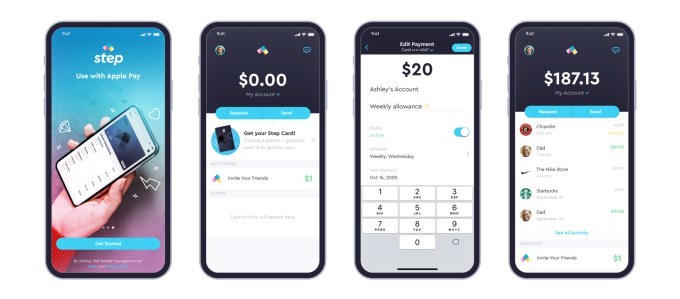
Image Credits: Step

Step’s growth so far has benefitted from a combination of factors including word-of-mouth, use of social media, and its popular referral program, which has paid out a few dollars per new sign-up. Step has also leveraged its partnerships with social media influencers like D’Amelio and Josh Richards as well as celebs like Step investor Justin Timberlake.

The company believes the Curry announcement may also help to raise awareness about the banking app. As a father of three, if Curry talks about introducing Step to his own children, people will take notice.

While the additional funds are focused on driving growth, Step is also thinking about its future as its existing users begin to age up. The company plans to enter into the credit and lending market, as well as introduce investments at some point in the future. The Franklin Templeton investment could be useful here, MacDonald notes.

“Franklin [Templeton is] obviously, one of the largest financial institutions in the world. And, as we start thinking about investments and the journey of the customer, to have a great brand like Franklin Templeton that’s invested in this round — I think it’s just a testament to where they see the world going,” he says.



27 Apr 2021

Amazon announces new Fire tablets and kids editions

There’s a bunch of tablet news coming from Amazon this morning. Leading the way is the release of two new 10-inch devices: the Fire HD 10 and Fire HD 10 Plus. The former features a 1080p display with a bump in brightness, an unnamed eight-core processor and 3GB of RAM — a 50% jump over the last version.

The device is thinner and lighter, with a stated 12 hours of battery life. As ever, the headliner here is the price. The system starts at $150, which includes 32GB of storage, which you can upgrade to 64GB. Adding $30 will upgrade you to the Plus, which bumps the RAM to 4GB, adds wireless Qi charging and upgrade’s the device’s finish.

There’s also a $220 bundle that includes a keyboard case and a year subscription to Microsoft 365 Personal. Or you can buy the magnetic case separately for $50.

The Fire 10 Kids tablet is getting an upgrade as well, featuring the same battery life, coupled with a 10.1-inch HD display. That’s encased in a kid-proof case that features a combo kickstand/handle. It runs $200 and is aimed at ages 3 to 7.

Image Credits: Amazon

Joining it is the Fire Kids Pro. We may have lost all meaning of the word “Pro” when it comes to consumer hardware. Here it means the device is aimed at slightly older and tech-savvy kids — namely ages 6 to 12. The device includes a digital store with restricted access, including some bigger apps like Disney+, Spotify, Minecraft and Zoom, which kids can request. That, along with much of the content, can be monitored via parental controls.

Image Credits: Amazon

The tablet has a browser (again with restricted access). The company notes that YouTube access is on by default, since the service has become an important part of remote learning, though again, parents can restrict access. There’s no YouTube app, however, as Google hasn’t made one for Fire tablet — perhaps owing to ongoing friction between the companies.

The Fire 7 Kids Pro is $100 and the Fire HD 8 Kids Pro is $140. The devices are up for preorder today and are set to ship May 26.

27 Apr 2021

Arm launches its latest chip design for HPC, data centers and the edge

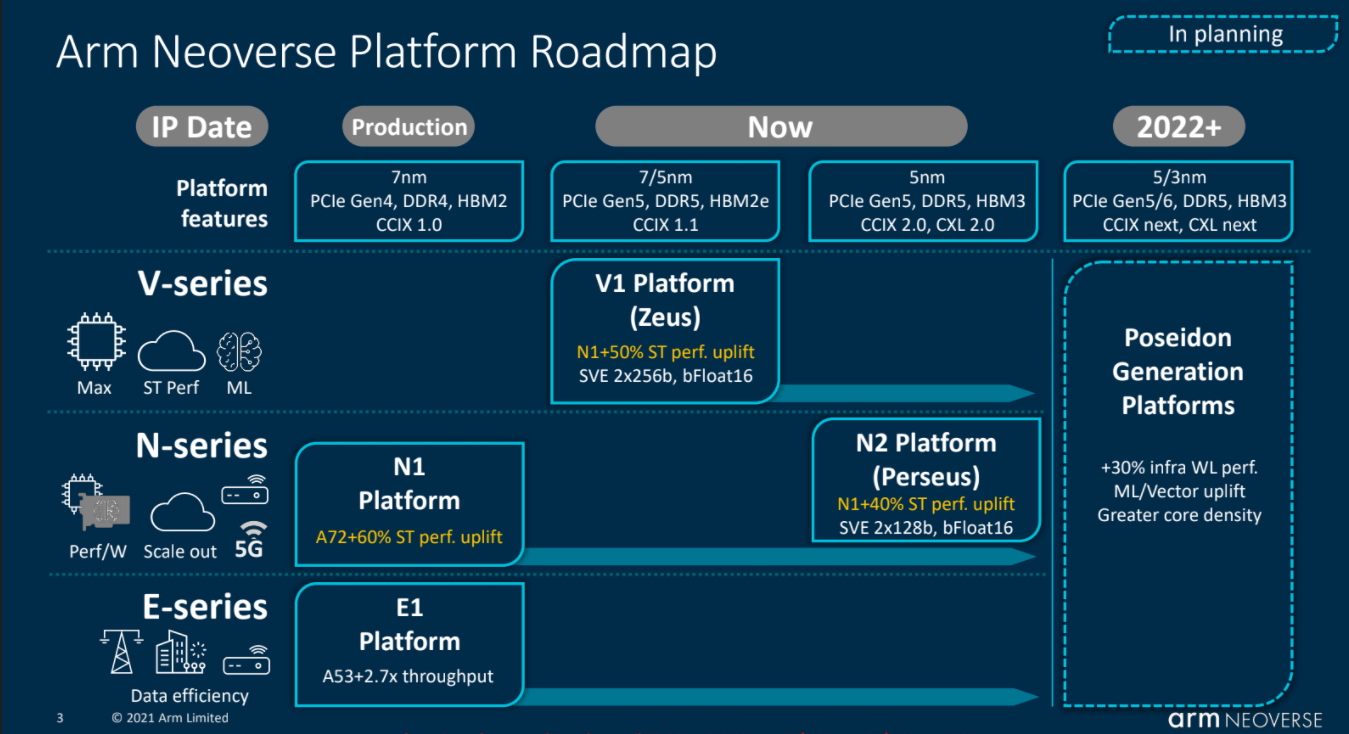
Arm today announced the launch of two new platforms, Arm Neoverse V1 and Neoverse N2, as well as a new mesh interconnect for them. As you can tell from the name, V1 is a completely new product and maybe the best example yet of Arm’s ambitions in the data center, high-performance computing and machine learning space. N2 is Arm’s next-generation general compute platform that is meant to span use cases from hyperscale clouds to SmartNICs and running edge workloads. It’s also the first design based on the company’s new Armv9 architecture.

Not too long ago, high-performance computing was dominated by a small number of players, but the Arm ecosystem has scored its fair share of wins here recently, with supercomputers in South Korea, India and France betting on it. The promise of V1 is that it will vastly outperform the older N1 platform, with a 2x gain in floating-point performance, for example, and a 4x gain in machine learning performance.

Image Credits: Arm

“The V1 is about how much performance can we bring — and that was the goal,” Chris Bergey, SVP and GM of Arm’s Infrastructure Line of Business, told me. He also noted that the V1 is Arm’s widest architecture yet. He noted that while V1 wasn’t specifically built for the HPC market, it was definitely a target market. And while the current Neoverse V1 platform isn’t based on the new Armv9 architecture yet, the next generation will be.

N2, on the other hand, is all about getting the most performance per watt, Bergey stressed. “This is really about staying in that same performance-per-watt-type envelope that we have within N1 but bringing more performance,” he said. In Arm’s testing, NGINX saw a 1.3x performance increase versus the previous generation, for example.

Image Credits: Arm

In many ways, today’s release is also a chance for Arm to highlight its recent customer wins. AWS Graviton2 is obviously doing quite well, but Oracle is also betting on Ampere’s Arm-based Altra CPUs for its cloud infrastructure.

“We believe Arm is going to be everywhere — from edge to the cloud. We are seeing N1-based processors deliver consistent performance, scalability and security that customers want from Cloud infrastructure,” said Bev Crair, senior VP, Oracle Cloud Infrastructure Compute. “Partnering with Ampere Computing and leading ISVs, Oracle is making Arm server-side development a first-class, easy and cost-effective solution.”

Meanwhile, Alibaba Cloud and Tencent are both investing in Arm-based hardware for their cloud services as well, while Marvell will use the Neoverse V2 architecture for its OCTEON networking solutions.

27 Apr 2021

ZenGo raises $20 million for its secure crypto wallet app

ZenGo, a mobile app to manage your cryptocurrencies, has raised a $20 million Series A funding round led by Insight Partners. ZenGo is a non-custodial wallet, which means that the company doesn’t manage your crypto assets for you — you remain in control.

Other investors include Distributed Global and Austin Rief Ventures. Existing investors Benson Oak, Samsung Next, Elron, Collider Ventures, FJ Labs and others also participated in today’s funding round.

What makes ZenGo different from other wallet apps is that the company is trying to build something that is more secure than your average crypto wallet while remaining simple to use and understand. It competes with other non-custodial wallets, such as Coinbase Wallet (not Coinbase.com), Argent, etc.

In particular, ZenGo is based on multiparty computation (MPC). When you first create your wallet, ZenGo generates multiple secrets that are stored and encrypted in different ways. It means that the company can’t access your tokens directly and you can recover your wallet if you lose your phone.

Other crypto companies focused on infrastructure and enterprise clients have also opted for MPC as their security model. Fireblocks, a company that has recently raised $133 million, is one example.

But ZenGo is building a consumer app. In 2020, the company has processed over $100 million in crypto transactions from 100,000 users. ZenGo has reached the same milestone in the first three months of 2021 and added another 100,000 users.

You can browse DeFi projects through ZenGo and access savings pools. The startup takes a cut on these investments.

With today’s funding round, ZenGo plans to expand with the same philosophy in mind. You can expect support for more chains and assets, more partnerships and options to buy cryptocurrencies and convert them to fiat money, etc.

The company recently announced plans to launch a debit card. This way, users will be able to convert their crypto assets and then spend them wherever Visa cards are accepted. In other words, ZenGo is building a crypto super app with a focus on security.

Image Credits: ZenGo

27 Apr 2021

Wingcopter debuts a triple-drop drone to create “logistical highways in the sky”

German startup Wingcopter has launched a new autonomous delivery drone designed to remove a technical bottleneck hindering the growth of drone transport services.

The Wingcopter 198, which was revealed Tuesday, is capable of making three separate deliveries per flight, the company said. Wingcopter has couched this multi-stop capability as a critical feature that will allow it to grow a cost-efficient — and hopefully profitable — drone delivery as a service business.

The company, which was founded in 2017, got its start manufacturing drones. It used the revenue to scale and now expand its business model to include drone-delivery-as-a-service. “That’s actually our next mission, to not just build drones, but to build networks,” CEO Tom Plümmer told TechCrunch. The company’s website is now promoting the delivery business, which aims to provide healthcare, e-commerce and grocery delivery among other services. It’s ultimate aim is to create “logistical highways in the sky,” according to a statement by Plümmer.

The key to this delivery nirvana, the company claims, is its patented tilt-rotor propellant mechanism that combines the advantages of two drone types — the multicopter, which gives drones their smooth vertical take-off and landing capabilities and the ability to hover precisely in the air, with the fixed wing, which provides fast flight times over long distances.

The new model Wingcopter 198 has a top speed of 93 miles an hour and can carry payloads up to 13 pounds for a distance of about 47 miles from a single battery charge. It can travel up to 68 miles when carrying lighter cargo, the company said.

Plümmer explained that the tilt-rotors can also automatically respond to gusts of wind and other inclement weather conditions. Its architecture includes eight motors for redundancy and safety reasons.

Image Credits: Wingcopter


The drones, which are equipped with sensors and software to avoid obstacles and drop parcels at designated sites, are all automated. This level of automation allows one human operator to monitor and control up to 10 of these new drones from a computer equipped with Wingcopter’s control station software anywhere in the world. Plümmer explained that running the drones is a simple as the operator pressing ‘start’ on the software program from anywhere in the world.

Plümmer also touted the scalability of the tilt-rotor system, noting that it could be applied (theoretically) to a larger aircraft to carry cargo, or even human passengers.

“It’s just a cost factor,” Plümmer said, noting that the company already employs people who have the experience in aviation and aerial engineering required to one day take the tilt-rotor aircraft to scale. “However, we thought, let’s start with the smaller version … get these 1000s of [flight] hours, 1000s of kilometers, and take these learnings into every next generation of Wingcopter so they will constantly get bigger, first for cargo, later for mobility.”

Plümmer said they’ve drawn a hard line at working with any company or government institution that would use their drones for military or surveillance purposes.

“It’s mainly moral,” he said of the objection. “We believe it would be really not fitting to our vision. Our vision is to save lives and improve life by using drone technology and drone solutions.”

Looking to the future, the company is currently pursuing a type certification from the Federal Aviation Administration, which would allow it to operate commercial flights in the United States. If they receive this certification, they will be one of only a handful of competitors operating in the space. They’ve also set their sights on another funding round, fresh of the heels of a $22 million Series A round in January. The company has around 120 employees but with an additional injection of capital in a Series B, it could hire people with expertise in AI, piloting and production.

27 Apr 2021

Mobile bank Current raises $220 million Series D, triples valuation to $2.2B

U.S.-based challenger bank Current, which has now grown to nearly 3 million users, announced this morning it has raised a $220 million round of Series D funding, led by new investor Andreessen Horowitz (a16z). The funding swiftly follows Current’s $131 million Series C at the end of last year, at which point the company had doubled its user base over just six months to over 2 million users.

As a result of the new roud, the fintech company has roughly tripled its valuation in five months’ time to $2.2 billion.

Other participants in the round include returning investors Tiger Global Management, TQ Ventures (the fund managed by media executive Scooter Braun), Avenir, Sapphire Ventures, Foundation Capital, Wellington Management and EXPA. David George, who led the round with a16z, will become a Current board member.

Current began its life as a teen debit card controlled by parents, but later expanded to offer personal checking accounts powered by the same underlying banking technology. Like a range of modern-day “neobanks,” or digital banks, the Current app offers a baseline of standard features like free overdrafts, no minimum balance requirements, faster direct deposits, instant spending notifications, banking insights, free ATMs, check deposits using your phone’s camera and more. It also last year launched a points rewards program in an effort to better differentiate its service from the growing number of competitors and became one of the first banks to transfer the early round of stimulus payments during the pandemic.

These days, Current is partnering with creators, like the recently announced MrBeast (aka Jimmy Donaldson), who said last week on his YouTube channel that he will personally send $1 to every 100,000 people who sign up using his Creator code. MrBeast is also an investor.

Like other fintechs in its same space, Current has benefitted from the younger generation’s adoption of mobile banking apps instead of larger, traditional banks, who they feel don’t serve their interests. With digital banks, companies can keep costs down by not having to pay for the overhead of brick-and-mortar locations, allowing them to roll out benefits like reduced or zero account fees and other consumer-friendly protections.

Current today continues to offer teen banking, in a challenger to mobile banking app Step, which has also leveraged social media influencers to get the word out with a younger demographic. But Step today is appealing to the 13 to 18-year old crowd directly, offering banking services and a secured card. Current, meanwhile, targets its service to the parents.

Current says the new funds will be used to grow the company and its member base as it expands it range of banking products. One key area of new investment will be cryptocurrency, it says.

“This new generation of customers doesn’t want to bank in physical branches,” said a16z’s David George, in a statement. “We believe there will be a shift in the next 10 years to mobile and consumer-focused banking services powered by innovation in technology, and with Current’s exceptional growth over the past year, they’ve clearly demonstrated they’re at the forefront of this trend. Their product is among the best in the market, and they have proven an ability to reach customers who previously were unserved or underserved by traditional banks,” he said.

27 Apr 2021

Location data analytics startup Placer.ai raises $50M Series B

It’s been a very tough year for Placer.ai’s core customer segments of retail and commercial real estate, to put it mildly. But the foot traffic and location analytics startup saw growth in new categories, including consumer packaged goods (CPG) and hedge funds that use its tech to perform due diligence. The Los Altos, California-based company announced today that has raised a $50 million Series B led by Josh Buckley, the chief executive officer of Product Hunt. Participants included Fifth Wall, Rahul Vohra and returning investors JBV Capital and Aleph VC.

The new capital will be used on research and development and expanding Placer.ai’s sales and marketing teams. Its last funding announcement was in January 2020 for a $12 million Series A.

Placer.ai collects geolocation and proximity data from devices that are enabled to share that information by their users, and creates anonymized and aggregated consumer profiles. Since its launch, the company’s key customers have been offline retail businesses, shopping centers, hotels and other brick-and-mortar businesses that use it to analyze foot traffic, the success of marketing campaigns and location performance. Placer.ai’s co-founder and chief executive officer Noam Ben-Zvi said he expected the COVID-19 pandemic to be challenging as people stayed away from stores and purchased online instead.

But adoption of Placer.ai’s tech increased among several new segments, including CPG and hedge funds, and it is continuing to expand in retail and commercial real estate as companies plan ahead.

The company’s CPG clients use its tools for market analysis, refining category management or promotion strategies and tracking product performance. Ben-Zvi expects its CPG customer base to continue growing as more brands, like direct-to-consumer labels, open their own stores.

Placer.ai’s hedge fund clients use it to research potential investments. “Because data is in near real-time, reliable and very granular, it allows investors to quickly identify signals that speak to the true offline health of any brand. But there is also a qualitative data element that allows strategic initiatives to be thoroughly analyzed,” Ben-Zvi said in an email.

“For example, we looked at CVS Health Hubs when they were in their pilot stage in a handful of locations. When the company announced that they would be rolling this out to over a thousand branches, investors had a strong sense of the potential,” he added. “The ability of the data to fuel both quantitative and qualitative analysis at a very high level is a powerful combination.”

For retail and commercial real estate users, “the situation ahead is going to be turbulent, and data is going to play a fundamental role in confidently navigating the changing environment and driving effective decision making,” said Ben-Zvi. Commercial real estate owners need to make sure the mix of tenants in their properties are compelling enough to draw in shoppers, and understand how they are faring against competitors. Some retailers are focused on expansion, while others are testing new concepts and formats.

In a press statement about his investment, Buckley said, “Placer allows businesses that operate offline to make data-driven decisions, fundamentally improving the way they operate. This is the same type of tooling that online businesses have used to grow, moving from hunches to definitive answers. I’m excited to be partnering with the company’s next phase of growth and product development.”


27 Apr 2021

Tellius announces $8M Series A to build ML-fueled business data query tool

Getting actionable business information into the hands of users who need it has always been a challenge. If you have to wait for experts to help you find the answers, chances are you’re going to be too late. Enter Tellius, an early stage startup building a solution to help business users find the information they need when they need it.

Today the company announced an $8 million Series A led by Sands Capital Ventures with participation from Grotech. Today’s investment brings the total raised to $17 million, according to the company.

CEO and founder Ajay Khanna says the company is attempting to marry two technologies that have traditionally lived in silos: business intelligence and artificial intelligence. He believes that bringing them together can lead to greater wisdom and help close the insight gap.

“Tellius is an AI-driven decision intelligence platform, and what we do is we combine machine learning — AI-driven automation — with a Google-like natural language interface, so combining the left brain and the right brain to enable business teams to get insights on the data,” Khanna told me.

The idea is to let the machine learning teams and the business analysts continue to do their thing, but provide an application where business users can put all of that to work. “We believe that to go from data to decisions, you need to know not only what happened, but why things change and how you can improve your company,” he said.

The product takes aim at three employee groups. The first is the business user, who can simply query the data with a natural language question to get results. The second is a data analyst, who can get more granular by choosing a specific model to base the query on, and finally a data scientist who can enhance the query with Python or Spark code.

It connects to various data sources including Salesforce and Google Analytics, data lakes like Snowflake, csv files to take advantage of Excel data or cloud storage tools like Amazon S3. It comes in two versions: one that the customer can connect to the cloud infrastructure provider of choice, and one which they run as a service and manage for the customers.

Khanna says that as companies struggled to change the way they do business in during the pandemic, they needed the kind of insights his company provides and business grew 300% last year as a result.

The startup launched in 2016 after Khanna sold a previous company, which allowed him to bootstrap while in stealth. They spent a couple of years building the product and brought the first version of Tellius to market in Q3 2018. That’s when they took a $7.5 million seed round.

27 Apr 2021

Spotify launches paid podcasts through new Anchor feature

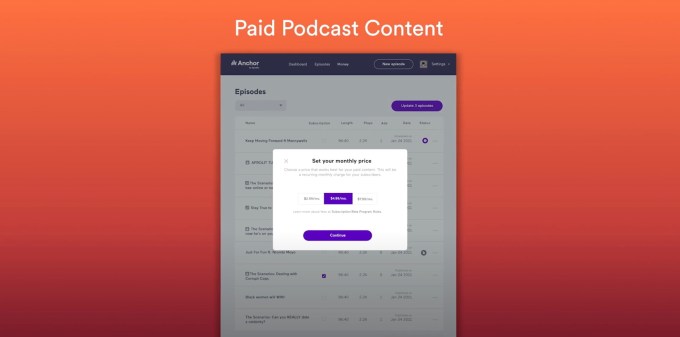
Spotify today is officially rolling out paid podcast subscriptions, after first unveiling its new subscription platform at the company’s “Stream On” event in February. Through Spotify’s podcast creation tool Anchor, podcasters will be able to mark select episodes as subscriber-only content, then publish them to Spotify and other platforms. The service was initially tested with a dozen independent creators, and is now expanding to creators who had previously registered for the waitlist.

For the time being, Spotify is only opening up paid subscriptions to creators in the U.S., but it aims to expand internationally in the months ahead, it says.

The launch comes at time when the market for podcasts, and paid podcasts in particular, is heating up. Last week, Apple announced its own plan for paid podcast subscriptions through its Apple Podcasts platform, still a top destination for podcasts today.

But one key difference between Spotify’s efforts and Apple’s plan is how subscription revenue is shared.

Apple said it’s taking a 30% cut of the podcast revenue in year one, dropping to 15% in year two — the same as its cut for streaming services on its App Store. Spotify, meanwhile, says its program will come at no cost to creators for the next two years, which means creators will keep 100% of revenues. Then, in Spring 2023, Spotify plans to introduce only a 5% fee for access to the tool.

Image Credits: Spotify

The first group of 12 creators will now begin publishing the paid, subscriber-only bonus episodes to their feeds, which will be discoverable and searchable just like any other podcast episode on the platform. These paid episodes will appear in the podcast’s main feed, where they’re marked with a lock icon on the Play button. Early adopters include Wild Thing; Tiny Leap, Big Changes; and The Mindful Minute.

The cost to subscribe is determined by the creator, but will be one of thee tiers: $2.99, $4.99, or $7.99 per month.

While Spotify will allow Anchor creators to mark entire feeds as paid, if they choose, it believes the lure of the free episodes to first attract listeners is a smarter idea. Then you can upsell them bonus content. However, larger podcasts may take a different approach.

For example, Spotify has inked a deal with NPR for paid subscriptions which involves entire paid feeds. NPR will publish five shows  — How I Built This with Guy Raz, Short Wave, It’s Been a Minute with Sam Sanders, Code Switch and Planet Money — that will be sponsor-free for paid subscribers starting on May 4. These shows will be branded as “Plus” (e.g. Planet Money Plus) and will live alongside the free feeds. In this case, listeners aren’t getting bonus material, but they’re supporting NPR. More NPR shows will roll out their own Plus versions the weeks ahead.

A Wall St. Journal article on Friday broke the news that Spotify’s paid subscriptions would arrive this week. And it noted that iOS users who wanted to subscribe would be routed to a website to process the transaction, avoiding Apple’s in-app purchase requirements. This could potentially be a tricky line for Spotify to toe. The company has been a chief Apple critic, testifying just last week before Congress about Apple’s anticompetitive behavior when it comes to the App Store.

Now it’s bypassing in-app purchases by directing users to go to a website and buy a subscription. The company, however, says it’s leaving the explanation up to the podcast creators.

“It’s basically up to every creator to educate their their listeners about how and where to subscribe to the podcast, and the actual subscription happens on an Anchor webpage — on the creator’s profile page on Anchor. But once you do that and you authenticate it and you come back to Spotify, it’ll be unlocked,” says Anchor co-founder Michael Mignano. He notes that the Spotify app will not actually open this webpage due to App Store rules. (Also, because Spotify isn’t take a cut of the subscription revenue for the time being, it would be protected via the carve-out for creator donations that Apple established a few years ago even if it had adopted in-app purchases.)

To use the paid podcasts feature, creators will mark their episodes within Anchor after first recording or uploading their episodes. For listeners who want to access the content on a different podcasting app, a private RSS feed will be provided after they subscribe.

Spotify is also announcing, for the first time, the Spotify Open Access Platform (OAP). This will allow creators who already have paid subscribers on other platforms — including competing services or private RSS feeds — to provide that content to current subscribers using their existing logins and billing solutions. Spotify says would help creators retain direct control over the relationship However, Spotify will re-host the content on its servers, which would give it insights into the broader paid podcasts market as a result.

The company isn’t yet ready to announce the complete details on this solution, but says it will have some news in the week ahead.

In addition to the roll out of paid podcasts, Spotify says it’s opening up its audio ads marketplace, the Spotify Audience Network (SPAN), to independent podcasters using Anchor. This is another area where Spotify is differentiated from Apple. On Apple Podcasts, creators are responsible for selling their own ads, so they keep 100% of the revenue.

Spotify, by comparison, has invested in ad technologies with the goal of serving the podcast audience. The company had previously unlocked Megaphone’s inventory (a 2020 acquisition) via the network, but is now making SPAN available to select Anchor creators, as well. The company says it will begin with a group of 50 creators on May 1, then expand over time.


27 Apr 2021

Canada’s newest unicorn: Clio raises $110M at a $1.6B valuation for legal tech

Clio, a software company that helps law practices run more efficiently with its cloud-based technology, announced Tuesday it has raised a $110 million Series E round co-led by T. Rowe Price Associates Inc. and OMERS Growth Equity.

The round propels the Vancouver, British Columbia-based company to unicorn status, valuing it at $1.6 billion. Clio last raised in September of 2019 when it brought in $250 million in a Series D financing. With the latest funding, Clio claims that it’s the “first legal practice management unicorn” globally. The investment also brings its total capital raised since its 2008 inception to $386 million.

Founder and CEO Jack Newton says he and Rian Gauvreau launched Clio during the 2008 recession after seeing the struggles solo lawyers and small firms faced when running a business. Historically, legal practice management software was limited to server-based solutions designed for enterprise businesses — not small law firms, Newton said. Clio was formed to change that.

Clio co-founders Jack Newton and Rian Gauvreau; Image courtesy of Clio

“Much like how Microsoft Windows defined the operating system for personal computers decades ago, Clio has developed a software platform for law firms and their clients that is cloud-based and client-centric by design,” Newton said.

The company’s platform aims to serve as “an operating system” for lawyers, offering cloud-based legal practice management, client intake and legal CRM software. Clio has more than 150,000 customers across 100 countries. Many of the lawyers using Clio are smaller and solo practitioners, but the company also serves larger firms such as Locks Law and King Law.

Newton said his vertical SaaS company helps legal professionals be more productive, grow their firms and “make legal services more accessible.” It also aims to help clients find lawyers more easily and vice versa.

Image Credits: Clio

Newton was tight-lipped about the company’s financials, saying only that since its 2019 raise, the company has seen “explosive” growth. That growth was only fueled by the COVID-19 pandemic and its push toward all things digital. He added that its current valuation was “fair,” and achieved through a “thorough” vetting process.

Clio has focused on building out its core technology to an industry that has historically relied on pen and paper in many cases. It has also aimed to make legal technology more affordable for lawyers to use.

While change has been gradual, COVID-19 forced lawyers to fundamentally reevaluate how they run their law firms and how they deliver legal services to their clients, Newton said.

“Many firms realized that storing client data at the office was no longer an option as teams became distributed during COVID-19,” he added. “Lawyers and legal professionals who had hesitated to adopt technology in the past were suddenly forced to rapidly adapt to this new reality. While this technological change is in response to the crisis, it’s an enduring change.”

In 2018, Clio made its first acquisition with its buy of Lexicata, a Los Angeles-based legal tech startup. The company plans to do more acquisitions with the capital, according to Newton. The company plans to use its new capital to continue investing in its platform as well as toward strategic partnerships. (Clio currently has partnered with over 150 apps.)

Clio also plans to, naturally, do some hiring. Specifically, it plans to boost its headcount by 40%, or 250 employees, with a focus on bolstering its product and engineering teams. (Clio currently has 600 employees.)

“Over the next few years we intend to completely redefine the way legal services are delivered and democratize access to legal aid by way of the cloud,” Newton told TechCrunch. “This investment allows us to expedite our plans and offer even more to our existing customers.”

Clio in particular is growing in the EMEA markets with a current focus on the United Kingdom and Ireland.

In a written statement, OMERS Growth Equity managing director Mark Shulgan said his firm has been following Clio for a number of years.

“We believe Clio has clearly established itself as a market-leading legal tech firm, and will deliver growth for decades to come,” he said.