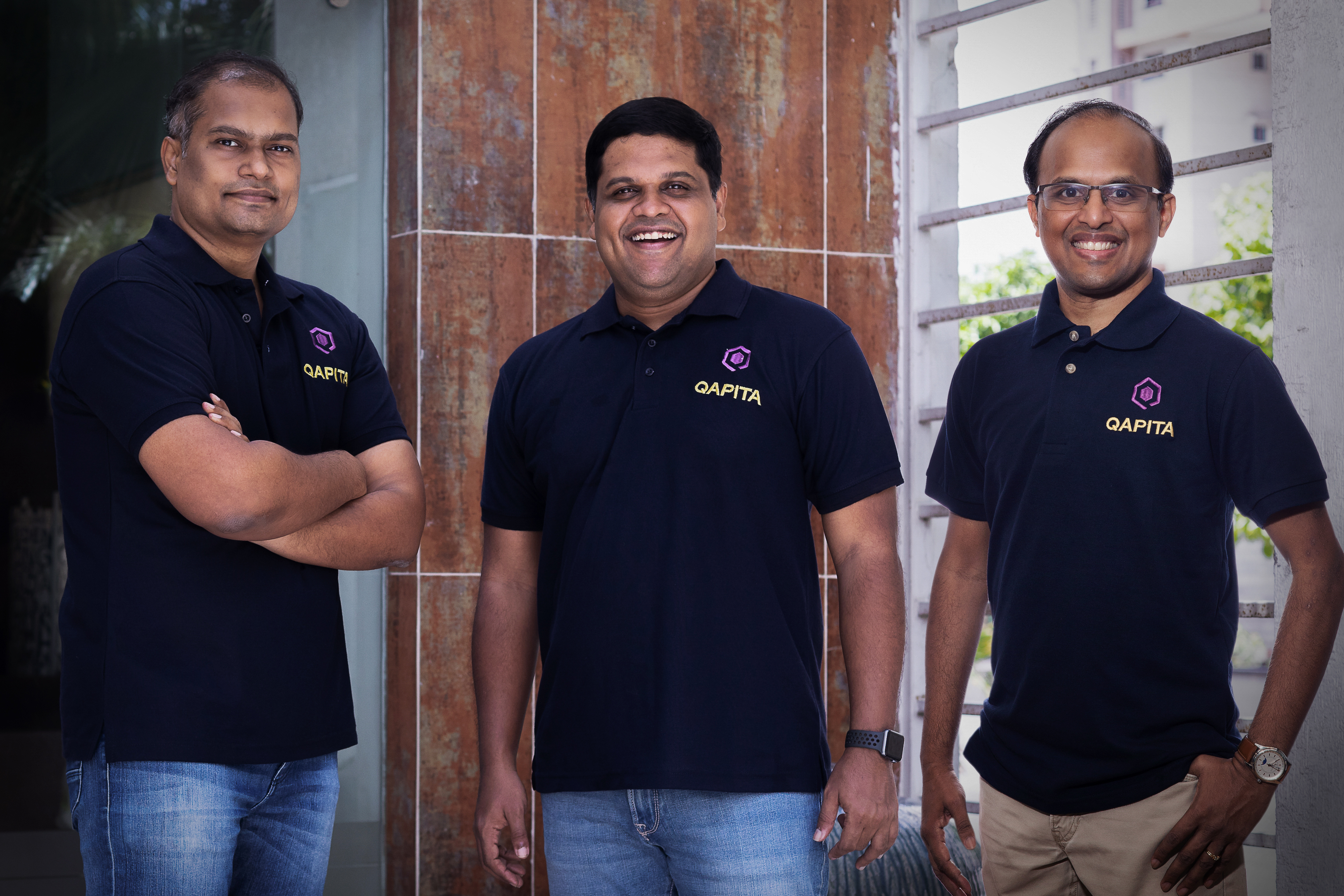
Qapita’s co-founders. Fom left to right: Vamsee Mohan, Ravi Ravulaparthi and Lakshman Gupta
Qapita, a Singapore-based fintech that provides capitalization table and employee stock ownership plans (ESOP) management software, has raised $5 million in pre-Series A funding. The round was led by MassMutual Ventures, with participation from Endiya Partners and angel investors including Avaana Capital founder Anjali Bansal and Udaan co-founder Sujeet Kumar.
Vulcan Capital and East Ventures, who led Qapita’s seed round in September 2020, also returned for this funding, along with most of its angel investors, including Koh Boon Hwee, Atin Kukreja, Alto Partners, Mission Holdings, Northstar Group Partners and K3 Ventures. East Ventures co-founder and managing partner Willson Cuaca will join Qapita’s board.
Qapita currently serves clients in Indonesia, Singapore and India, focusing on startups. Its software platform helps private companies digitize and manage cap tables, perform due diligence and issue equity to employees. Qapita was founded in 2019 by Ravi Ravulaparthi, Lakshman Gupta and Vamsee Mohan, and has since grown its team to 30 people.
Its goal is to create more liquidity and re-investment in the Indian and Southeast Asian startup ecosystems by making it easier to issue equity. Qapita currently serves more than 100 companies, and its new funding will be used to add more features and strike partnerships with service providers like legal, accounting and company secretarial firms.
In a press statement, MassMutual Ventures Anvesh Ramineni, said, “Globally, we are witnessing trends that indicate a convergence between public and private markets. Qapita is enabling this in the region through their solution – from cap table and stakeholder management to digital share issuances and liquidity solutions. We believe the team has the right combination of experience, understanding of regional markets and product expertise to deliver on their vision.”
One after another, Chinese tech giants have announced their plans for the auto space over the last few months. Some internet companies, like search engine provider Baidu, decided to recruit help from a traditional carmaker to produce cars. Xiaomi, which makes its own smartphones but has stressed for years it’s a light-asset firm making money from software services, also jumped on the automaking bandwagon. Industry observers are now speculating who will be the next. Huawei naturally comes to their minds.
Huawei seems well-suited for building cars — at least more qualified than some of the pure internet firms — thanks to its history in manufacturing and supply chain management, brand recognition, and vast retail network. But the telecom equipment and smartphone maker repeatedly denied reports claiming it was launching a car brand. Instead, it says its role is to be a Tier 1 supplier for automakers or OEMs (original equipment manufacturers).
Huawei is not a carmaker, the company’s rotating chairman Eric Xu reiterated recently at the firm’s annual analyst conference in Shenzhen.
“Since 2012, I have personally engaged with the chairmen and CEOs of all major car OEMs in China as well as executives of German and Japanese automakers. During this process, I found that the automotive industry needs Huawei. It doesn’t need the Huawei brand, but instead, it needs our ICT [information and communication technology] expertise to help build future-oriented vehicles,” said Xu, who said the strategy has not changed since it was incepted in 2018.
There are three major roles in auto production: branded vehicle manufacturers like Audi, Honda, Tesla, and soon Apple; Tier 1 companies that supply car parts and systems directly to carmakers, including established ones like Bosch and Continental, and now Huawei; and lastly, chip suppliers including Nvidia, Intel and NXP, whose role is increasingly crucial as industry players make strides toward highly automated vehicles. Huawei also makes in-house car chips.
“Huawei wants to be the next-generation Bosch,” an executive from a Chinese robotaxi startup told TechCrunch, asking not to be named.
Huawei makes its position as a Tier 1 supplier unequivocal. So far it has secured three major customers: BAIC, Chang’an Automobile, and Guangzhou Automobile Group.
“We won’t have too many of these types of in-depth collaboration,” Xu assured.
Arcfox, a new electric passenger car brand under state-owned carmaker BAIC, debuted its Alpha S model quipped with Huawei’s “HI” systems, short for Huawei Inside (not unlike “Powered by Intel”), during the annual Shanghai auto show on Saturday. The electric sedan, priced between 388,900 yuan and 429,900 yuan (about $60,000 and $66,000), comes with Huawei functions including an operating system driven by Huawei’s Kirin chip, a range of apps that run on HarmonyOS, automated driving, fast charging, and cloud computing.
Perhaps most eye-catching is that Alpha S has achieved Level 4 capabilities, which Huawei confirmed with TechCrunch.
That’s a bold statement, for it means that the car will not require human intervention in most scenarios, that is, drivers can take their hands off the wheels and nap.
There are some nuances to this claim, though. In a recent interview, Su Qing, general manager for autonomous driving at Huawei, said Alpha S is L4 in terms of “experience” but L2 according to “legal” responsibilities. China has only permitted a small number of companies to test autonomous vehicles without safety drivers in restricted areas and is far from letting consumer-grade driverless cars roam urban roads.
As it turned out, Huawei’s “L4” functions were shown during a demo, during which the Arcfox car traveled for 1,000 kilometers in a busy Chinese city without human intervention, though a safety driver was present in the driving seat. Automating the car is a stack of sensors, including three lidars, six millimeter-wave radars, 13 ultrasonic radars and 12 cameras, as well as Huawei’s own chipset for automated driving.
“This would be much better than Tesla,” Xu said of the car’s capabilities.
But some argue the Huawei-powered vehicle isn’t L4 by strict definition. The debate seems to be a matter of semantics.
“Our cars you see today are already L4, but I can assure you, I dare not let the driver leave the car,” Su said. “Before you achieve really big MPI [miles per intervention] numbers, don’t even mention L4. It’s all just demos.”
“It’s not L4 if you can’t remove the safety driver,” the executive from the robotaxi company argued. “A demo can be done easily, but removing the driver is very difficult.”
“This technology that Huawei claims is different from L4 autonomous driving,” said a director working for another Chinese autonomous vehicle startup. “The current challenge for L4 is not whether it can be driverless but how to be driverless at all times.”
L4 or not, Huawei is certainly willing to splurge on the future of driving. This year, the firm is on track to spend $1 billion on smart vehicle components and tech, Xu said at the analyst event.
A 5G future
Many believe 5G will play a key role in accelerating the development of driverless vehicles. Huawei, the world’s biggest telecom equipment maker, would have a lot to reap from 5G rollouts across the globe, but Xu argued the next-gen wireless technology isn’t a necessity for self-driving vehicles.
“To make autonomous driving a reality, the vehicles themselves have to be autonomous. That means a vehicle can drive autonomously without external support,” said the executive.
“Completely relying on 5G or 5.5G for autonomous driving will inevitably cause problems. What if a 5G site goes wrong? That would raise a very high bar for mobile network operators. They would have to ensure their networks cover every corner, don’t go wrong in any circumstances and have high levels of resilience. I think that’s simply an unrealistic expectation.”
Huawei may be happy enough as a Tier 1 supplier if it ends up taking over Bosch’s market. Many Chinese companies are shifting away from Western tech suppliers towards homegrown options in anticipation of future sanctions or simply to seek cheaper alternatives that are just as robust. Arcfox is just the beginning of Huawei’s car ambitions.
Dott has raised a new $85 million Series B funding round — this round is a mix of equity and asset-backed debt financing. Belgium-based investment company Sofina is leading the investment. Dott is a micromobility startup that is better known for its colorful electric scooters that you can find across several European cities.
The company operates a fleet of 30,000 electric scooters in five cities. Users can download a mobile app and unlock a scooter through the app. The company charges an unlocking fee as well as a per-minute price.
During its early days, Dott positioned itself as a capital-efficient, sustainable e-scooter company. It has raised a lot less money than Bird or Lime and it has taken a different approach when it comes to operations.
For instance, Dott has always had its own warehouses to charge and repair vehicles. The startup doesn’t work with third-party logistics providers. Dott has hired its own in-house team of logistics employees.
Similarly, Dott tries to repair, reuse and recycle scooters as much as possible. Thanks to swappable batteries and electric trucks, the company tries to keep its CO2 emissions as low as possible in the cities where it operates.
As a result, the company has won permits to operate in Paris and Lyon following tender processes. Overall, the company operates in a dozen cities in France, Italy, Belgium, Germany and Poland. Tier, a European competitor, has been expanding more aggressively and has raised $250 million in November 2020.
In addition to Sofina, new and existing investors include EQT Ventures, Prosus Ventures, Aberdeen Standard Investments, Estari, Expon Capital, Felix Capital, FJ Labs, Invest-NL, McRock Capital and Quadia.
With today’s funding round, the company plans to expand beyond e-scooters with a new bike-sharing service. Dott already shared images of its e-bike. It should be launching this summer.
Dott also plans to expand to other cities and countries, starting with Spain and the U.K. As you can see, Dott doesn’t want to launch a hundred cities at once. It is slowly rolling out its service in new cities. It is currently EBIT positive across all cities and Dott probably wants to keep it this way.
Singapore-based fintech Hashstacs Pte Ltd (STACS) announced today it has raised $3.6 million USD in pre-Series A funding. The company develops blockchain platforms that can work with financial institutions’ existing infrastructure, and its core technology is also used in GreenSTACS for environmental, social and governance (ESG) investments. The round was led by Wavemaker Partners, which focuses on enterprise and deep tech companies in Southeast Asia, with participation from the Tribe Accelerator, a program for blockchain startups backed by the Singaporean government. STACS participated in Tribe last year, along with Project Ubin, the Monetary Authority of Singapore’s blockchain-based multi-currency payments network initiative.
Founded in 2019, STACS has now raised a total of more than $6 million and is preparing to raise Series A funding later this year. The company’s goal is to fix fragmentation in the tech systems used by financial institutions that can result in capital being locked in international clearing systems, a build-up of transaction fees and fines for trades that fail to settle. Its core solution is a technology stack that is built around STACS blockchain. It allows clients to integrate payment platforms (including Ubin), trading platforms and external software like user management systems, while enabling smart contracts and digital ledgers.
STACS’ products include a real-time trade processing platform that is used by clients like Eastspring Investments and BNP Paribas Securities Service. Some of its other clients are Deutsche Bank, Bursa Malaysia, EFG Bank and Bluecell Intelligence. STACS co-founder and managing director Benjamin Soh told TechCrunch that STACS is targeting a network of more than 30 institutions by the end of this year.
GreenSTACS launched last month in a collaboration with Bluecell Intelligence to help companies certify and monitor green and sustainability-related loans and bonds.
Soh said in an email that STACS received many requests from financial institutions that needed to perform impact monitoring on ESG projects, but were not able to do so effectively because “information sources are asymmetric, there is no common data infrastructure and serving of ESG financing is typically too inefficient.”
STACS’ goal is to make GreenSTACS “the common infrastructure” for ESG financing and impact monitoring, he added. The platform enables loan and bond parameters to be programmed into security tokens and connects with data sources, like IoT devices or satellite images, to create real-time impact reports on a distributed ledger. This helps prevent “greenwashing,” a term that refers to making something seem more environmentally-friendly or sustainable than it really is.
“Essentially, this would boost investors’ and banks’ confidence with green financing by ensuring green money is strictly used in achieving pledged green goals and policies,” said Soh.
In a press statement, Wavemaker general partner Gavin Lee said, “There is an immense opportunity to help financial institutions process large volumes of trade more quickly, securely and accurately while reducing costs and illiquid capital. As an enterprise distributed ledger technology provider, STACS has productized a secure layer that can be deployed instantly above existing infrastructure. Enterprise sales is never easy for young companies, but Benjamin is a convincing and seasoned serial entrepreneur who has secured numerous leading financial institutions as key clients.”
A Zoom screenshot with CoLearn’s founding team: Marc Irawan, Abhay Saboo and Sandeep Devaram
Indonesian startup CoLearn started as a chain of physical tutoring centers and was in the process of shifting to a hybrid offline-online model when the COVID-19 pandemic hit. The team sensed that remote learning would permanently change how students want to be tutored and decided to focus completely on its app, which launched in August 2020. CoLearn has since been downloaded more than 3.5 million times and has about one million active users, mostly students in grades 7 to 12.
The company announced today it has raised $10 million in Series A funding co-led by Alpha Wave Incubation and edtech-focused GSV Ventures. This marks the first time both have made an investment in Indonesia. The round also included participation from returning investors Sequoia Capital India’s Surge and AC Ventures.
One of the Jakarta-based company’s goals is to improve educational standards in Indonesia. The country’s PISA (Programme for International Student Assessment, a global ranking system created by the Organisation for Economic Co-operation and Development) rankings are in the bottom 10% for math, science and reading. CoLearn’s goal is to help move up Indonesia’s PISA ratings to the top 50% over the next five years.
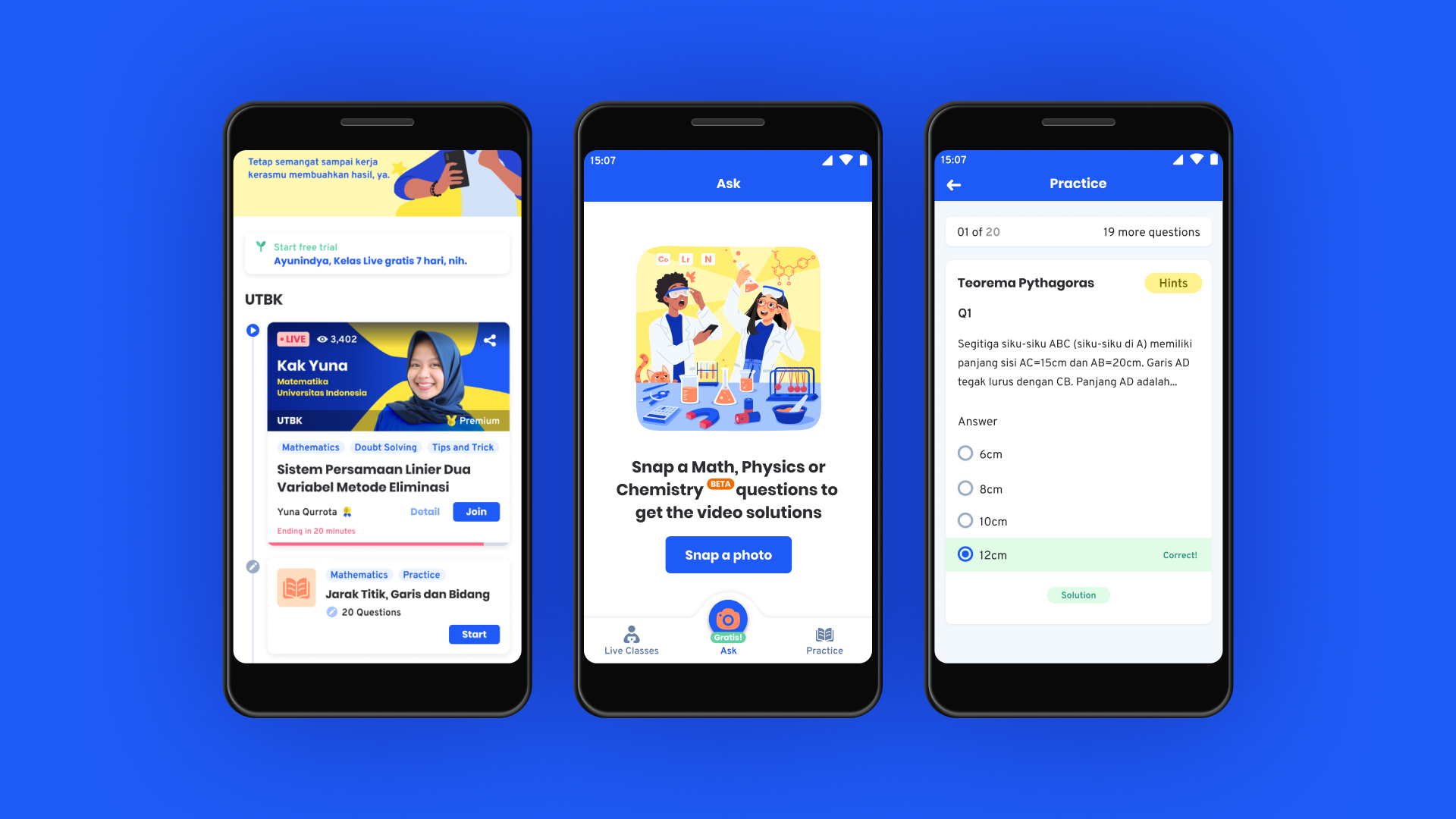
CoLearn’s app offers more than 250,000 pre-recorded videos with homework help. The videos serve as a hook to convince students (or their parents) to sign up for CoLearn’s live online classes.
CoLearn screenshots
The company’s co-founders are Abhay Saboo, Marc Irawan and BYJU product team alum Sandeep Devaram. Despite being the world’s fourth most populous country with 270 million people, Indonesia has not seen the same level of investment and innovation in its educational infrastructure as countries like China or India, Saboo told TechCrunch. “We’re trying to solve the problem of how do you change mindsets, how do you change motivation, how do you increase in confidence levels?”
CoLearn started its offline in business in 2018, before shifting to a hybrid model. Once the pandemic hit, the company decided to go fully online. Even after schools reopen, the team anticipates that most students will prefer the convenience of online afterschool learning because going to brick-and-mortar tutoring centers can eat up hours of their time each day, Saboo said.
CoLearn’s users ask about 5 million questions through the app each month. Its AI platform matches them with video tutorials, recorded by more than 400 tutors, that break down key concepts. Saboo said creating engaging videos instead of presenting solutions in a diagram is one of the ways CoLearn differentiates from competitors like SnapAsk, which raised $35 million last year to expand in Southeast Asia.
“What we realized is that kids are really craving a step-by-step explanation and this is the TikTok generation, so if a picture says a thousand words, then a video says a million,” he said. He added that students often hit pause on the video when they think they have the answer to a question, before skipping to the end to see if they got it right, indicating that they want to understand concepts instead of simply getting a solution.
CoLearn’s live online classes will be its main priority going forward and the startup hopes to replicate the success of companies like China’s Yuanfadao and Zuoyebang. As part of that goal, it runs teacher training programs and expects to train more than 200 teachers over the next two years, especially in STEM subjects. The company may eventually scale into other countries that have similar issues with their education systems, but Saboo said CoLearn’s plan is to focus on Indonesia for at last the next couple of years.
Other investors in CoLearn include Leo Capital, TNB Aura, S7V, January Capital, Alpha JWC, Taurus Ventures, Alter Global and Mahanusa Capital.
In press statement, GSV Ventures managing partner Deborah Quazzo said, “The opportunity to build efficacious learning solutions for the fourth largest country in the world is vast. The greatest businesses are created when entrepreneurs tackle large, important problems and CoLearn is doing that.”
Fintech startup Payhawk has raised a $20 million funding round. QED Investors is leading the round with existing investor Earlybird Digital East also participating. Payhawk is building a unified system to manage all the money that is going in and out.
Essentially, companies switching to Payhawk can replace several services they already use and that didn’t interact well with each other. Payhawk lets you issue corporate cards for your employees, manage invoices and track payments from a single interface.
After signing up, customers get their own banking details with a dedicated IBAN. You can connect with your existing bank account, load funds to your Payhawk account and start using it in multiple ways.
Compared to other companies working on similar products, Payhawk gives each customer their own IBAN, which means they can receive third-party payments.
One of the key features of Payhawk is that customers can issue virtual and physical cards for employees with different rules. You can set up a team budget, configure an approval workflow for large transactions and let Payhawk handle receipt collection from those card transactions.
You can upload invoices to manage them through Payhawk. The startup tries to automatically extract data from those invoices for easier reconciliation. Payhawk also lets you reimburse employees. The service acts as a single source of truth for your company’s spending. Finally, you can connect Payhawk with your existing ERP system.
As a software-as-a-service solution, you pay a monthly subscription fee that will vary depending on optional features and the number of active cards. Clients include LuxAir, Lotto24, Viking Life, ATU, Gtmhub, MacPaw and By Miles. Overall, the startup has 200 clients.
The company has been growing nicely as revenue doubled in Q1 2021. It currently accepts clients in the European Union and the U.K. but it already plans to expand beyond those markets. Up next, Payhawk plans to launch credit cards, more currencies and tighter integration with corporate bank accounts.
Facebook reveals its Clubhouse competitor, Parler will return to Apple’s App Store and a helicopter flies on Mars. This is your Daily Crunch for April 19, 2021.
The big story: Facebook announces new audio products
Yes, these products include new Clubhouse-style Live Audio Rooms, as well as the ability for podcasters to share long-form audio, some new Spotify integration and a shorter format called Soundbites. Facebook is starting off by testing Live Audio Rooms in Facebook Groups.
“When we launched video rooms earlier last year, groups and communities were one of the bigger areas where that took off,” CEO Mark Zuckerberg said in an interview with Platformer. “So, I think around audio, just given how much more accessible it is, that’ll be a pretty exciting area as well.”
The Klaviyo EC-1 — Klaviyo may not be a household name yet, but in many ways, this startup has become the standard by which email marketers are judged.
The Daily Crunch is TechCrunch’s roundup of our biggest and most important stories. If you’d like to get this delivered to your inbox every day at around 3pm Pacific, you can subscribe here.
Surprise! It’s another Apple Event. Gone are the days of getting a few weeks’ notice before these events now that they’re entirely virtual (at least until 2022, most likely). Instead, the company just dropped the news last week.
Thankfully, there have been plenty of rumors leading up to tomorrow’s big event — and perhaps even a few hints in the invite itself. After skipping last year’s spring event, due to cresting COVID-19 numbers in the U.S., the company has grown much more comfortable dropping semi-regular livestreamed events. As ever, we’ll be covering the event as it unfolds, starting at 10AM PT/1PM ET. But here’s what we expect to see, along with the customary high-production-value sweeping-drone transitions.
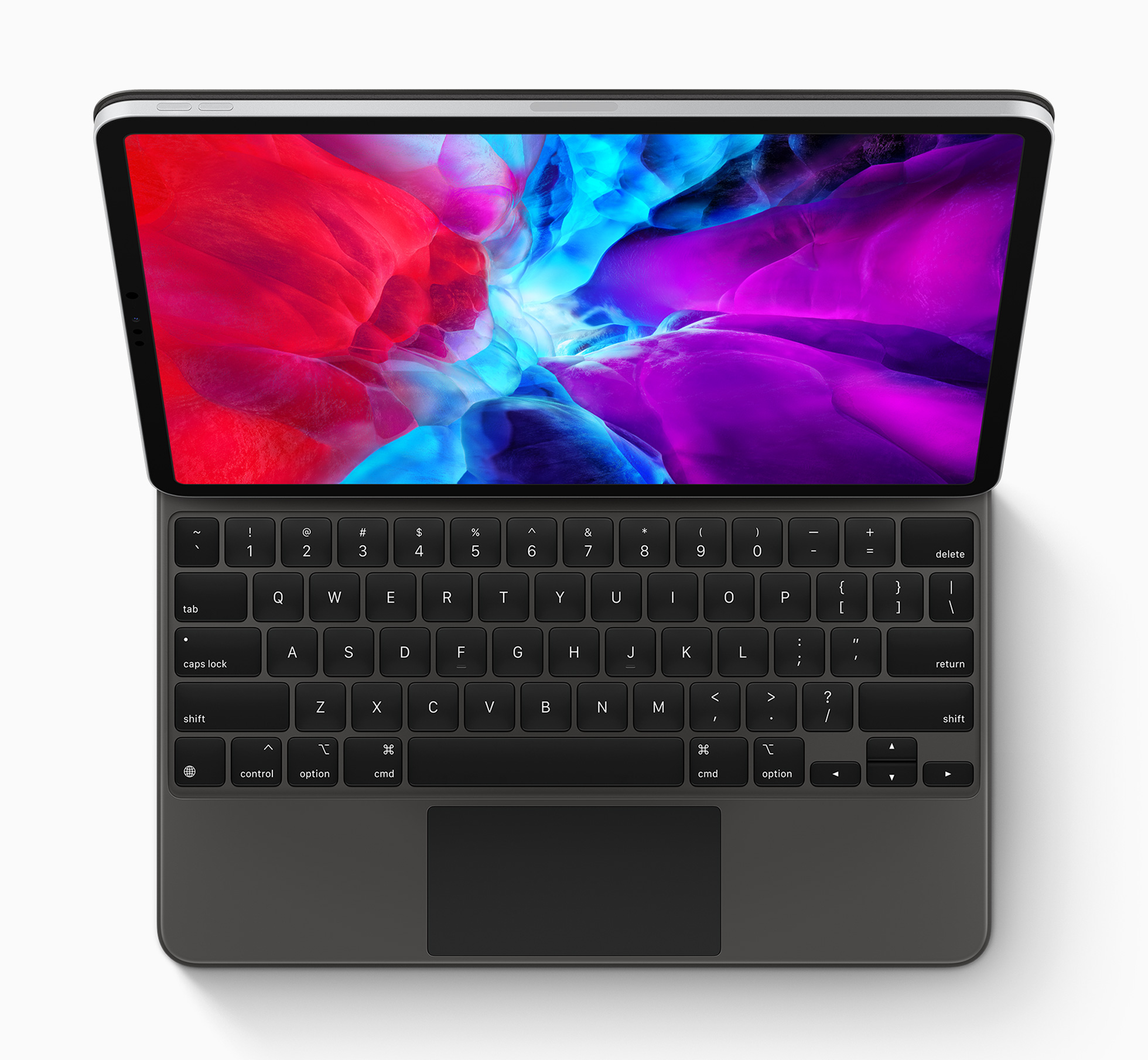
The closest thing we have to a surefire bet is the arrival of new iPads, keeping in line with what looks to be a finger-drawn image on the invite. Specifically, the iPad Pro is leading the way. The high-end tablet has been rumored to be getting a refresh at some point this season, so no time like the present.
The biggest news is likely to be the addition of a mini-LED display for the 12.9-inch model (a refresh to the 11-inch is coming sometime down the road). Benefits include increased brightness, better battery life and less potential for image burn-in. The tech would arrive in the place of the OLED currently found on iPhone models.
The improved screen technology is said to add a bit of thickness to the design, which otherwise is largely unchanged. Supply constraints could ultimately put a damper on availability, so there’s a possibility that the product could be announced tomorrow, but delayed for a later date.
There’s likely to be a processor update, as well. Rumor has it that the A14X will utilize the same technology that forms the foundation of the M1 chip found on recent Macs. That could, in turn, bring a real big performance bump.
At the other end of the spectrum is the iPad mini. The 8.4-inch tablet would be getting its first major boost in two years. The updates are said to be less pronounced than on the Pro. The classic iPad design language will remain, though the device is said to be getting a performance boost courtesy of new chips. A new Apple Pencil is rumored to be on the way, as well, though details are scarce.
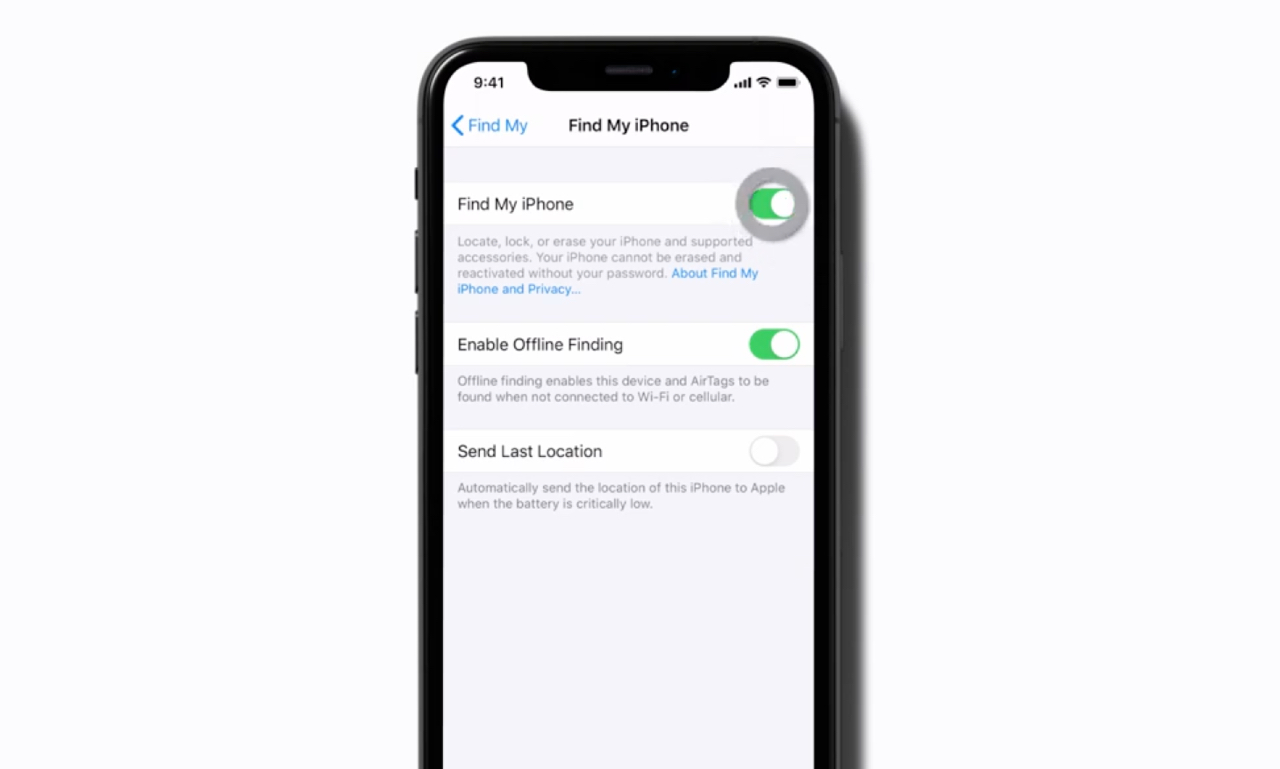
And could this be the event where Apple finally gives the world AirTags? All signs point to “definitely maybe.” After several delays, the company’s Tile competitor is said to finally be arriving. At the very least, the timing makes sense. After all, the company just opened up third-party “Find My” access, along with a bunch of compatible devices. That includes direct competitor, the Chipolo ONE Spot.
Also on the maybe pile is a new Apple TV featuring a Find My compatible remote. That seems like a slam dunk, as one of the most frequently lost products in history. With Apple on a two-year line-wide refresh, some new silicon Macs could be on the list. The most likely candidate? At the moment it seems to be a long-awaited refresh to the iMac line.
Druva, a software company that sells cloud data backup services, announced today that it has closed a $147 million round of capital. Caisse de dépôt et placement du Québec (CDPQ), a group that manages Quebec’s pension fund, led the round, which also saw participation from Neuberger Berman. Prior investors including Atreides Management and Viking Global Investors put capital into the deal, as well.
Druva last raised a $130 million round led by Viking in mid-2019 at around a $1 billion valuation. At the time TechCrunch commented that the company’s software-as-a-service (SaaS) backup service was tackling a large market. (TechCrunch also covered the company’s $51 million round back in 2016 and its $80 million raise from 2017.)
Since then SaaS has continued to grow at a rapid clip, including a strong 2020 spurred on by COVID-19 boosting digital transformation efforts at companies of all sizes. In that context, it’s not surprising to see Druva put together a new capital round.
A recent tie-up between Dell and Druva, first reported in January of this year, was formally announced earlier this month. The selection of Druva by Dell could help provide the unicorn with a customer base to sell into for some time. TechCrunch wrote about Druva earlier this year, during the reporting process the company said that it had “almost tripled its annual revenue in three years.”
Its new round did include some secondary shares, which Neuberger Berman managing director Raman Gambhir described as difficult to snag during a call with TechCrunch. He explained that some of the secondary sales were due to some prior funds reaching their end-of-life cycle. Druva CEO Jaspreet Singh stressed that his backers are working to do what’s best for the company instead of merely maximizing their returns during a joint interview.
Singh told TechCrunch that business at Druva is accelerating. Normally we’d note that that sounds like IPO fodder, especially as Druva passed the $100 million ARR threshold back in 2019. However, as the company has been making IPO noise for some time, it’s hard to predict when it might pull the trigger. Our coverage of the company’s 2016 round noted that the company could go public within a year. And our coverage of its 2019 investment included Singh telling TechCrunch that an IPO was 12 to 18 months away.
It probably is, now, but that’s beside the point. With refreshed accounts, a market moving in its direction, and some early-investor relieved in its latest investment the company has quarters worth of time to play with. Still, Singh did stress that its new financing round did select investors that he said is building a long-term position; that’s the sort of verbiage that CEOs break out when they are building a pre-IPO cap table.
Gambhir told TechCrunch that his firm has already requested shares in Druva’s eventual IPO. Perhaps we’ll see Fidelity show up with a $50 million check in a few months.
Every startup that raises capital tells the media that they are going to use the funds to expand their staff, double-down on their tech and, often, invest in their go-to-market (GTM) motion. Druva is no exception, but its CEO did tell TechCrunch that his company currently has over 200 open GTM positions. That’s quite a few. Presumably that spend will help the company keep its growth rate strong in percentage terms as it does, finally, look to list.
This is yet another growth round for a late-stage, enterprise-facing software company. But it’s also a round into a company that had to move its operations to the United States when it was founded, at the behest of its investors per Singh. And Druva has done some pretty neat cloud work, it told TechCrunch earlier this year, to ensure that it can defend software-like margins despite material storage loads.
It’s an S-1 that we’re looking forward to. Start the countdown.
Cat Noone is a product designer, co-founder and CEO of Stark — a startup with a mission to make the world’s software accessible. Her focus is on bringing to life products and technology that maximize access to the world’s latest innovations.
Data isn’t abstract — it has a direct impact on people’s lives.
In 2019, an AI-powered delivery robot momentarily blocked a wheelchair user from safely accessing the curb when crossing a busy road. Speaking about the incident, the person noted how “it’s important that the development of technologies [doesn’t put] disabled people on the line as collateral”.
Alongside other minority groups, people with disabilities have long been harmed by flawed data and data tools. Disabilities are diverse, nuanced, and dynamic; they don’t fit within the formulaic structure of AI, which is programmed to find patterns and form groups. Because AI treats any outlier data as ‘noise’ and disregards it, too often people with disabilities are excluded from its conclusions.
Take for example the case of Elaine Herzberg, who was struck and killed by a self-driving Uber SUV in 2018. At the time of the collision, Herzberg was pushing a bicycle, which meant Uber’s system struggled to categorize her and flitted between labeling her as a ‘vehicle,’ ‘bicycle,’ and ‘other.’ The tragedy raised many questions for people with disabilities: would a person in a wheelchair or a scooter be at risk of the same fatal misclassification?
We need a new way of collecting and processing data. ‘Data’ ranges from personal information, user feedback, resumes, multimedia, user metrics, and much more, and it’s constantly being used to optimize our software. However, it’s not done so with the understanding of the spectrum of nefarious ways that it can and is used in the wrong hands, or when principles are not applied to each touchpoint of building.
Our products are long overdue for a new, fairer data framework to ensure that data is managed with people with disabilities in mind. If it isn’t, people with disabilities will face more friction, and dangers, in a day-to-day life that is increasingly dependent on digital tools.
Misinformed data hampers the building of good tools
Products that lack accessibility might not stop people with disabilities from leaving their homes, but they can stop them from accessing pivot points of life like quality healthcare, education, and on-demand deliveries.
Our tools are a product of their environment. They reflect their creators’ world view and subjective lens. For too long, the same groups of people have been overseeing faulty data systems. It’s a closed loop, where underlying biases are perpetuated and groups that were already invisible remain unseen. But as data progresses, that loop becomes a snowball. We’re dealing with machine-learning models — if they’re taught long enough that ‘not being X’ (read: white, able-bodied, cisgendered) means not being ‘normal’, they will evolve by building on that foundation.
Data is interlinked in ways that are invisible to us. It’s not enough to say that your algorithm won’t exclude people with registered disabilities. Biases are present in other sets of data. For example, in the United States it’s illegal to refuse someone a mortgage loan because they’re Black. But by basing the process heavily on credit scores — which have inherent biases detrimental to people of color — banks indirectly exclude that segment of society.
For people with disabilities, indirectly biased data could potentially be: frequency of physical activity or number of hours commuted per week. Here’s a concrete example of how indirect bias translates to software: If a hiring algorithm studies candidates’ facial movements during a video interview, a person with a cognitive disability or mobility impairment will experience different barriers than a fully able-bodied applicant.
The problem also stems from people with disabilities not being viewed as part of businesses’ target market. When companies are in the early stage of brainstorming their ideal users, people’s disabilities often don’t figure, especially when they’re less noticeable — like mental health illness. That means the initial user data used to iterate products or services doesn’t come from these individuals. In fact, 56% of organizations still don’t routinely test their digital products among people with disabilities.
If tech companies proactively included individuals with disabilities on their teams, it’s far more likely that their target market would be more representative. In addition, all tech workers need to be aware of and factor in the visible and invisible exclusions in their data. It’s no simple task, and we need to collaborate on this. Ideally, we’ll have more frequent conversations, forums and knowledge-sharing on how to eliminate indirect bias from the data we use daily.
We need an ethical stress test for data
We test our products all the time — on usability, engagement, and even logo preferences. We know which colors perform better to convert paying customers, and the words that resonate most with people, so why aren’t we setting a bar for data ethics?
Ultimately, the responsibility of creating ethical tech does not just lie at the top. Those laying the brickwork for a product day after day are also liable. It was the Volkswagen engineer (not the company CEO) who was sent to jail for developing a device that enabled cars to evade US pollution rules.
Engineers, designers, product managers: we all have to acknowledge the data in front of us and think about why we collect it and how we collect it. That means dissecting the data we’re requesting and analyzing what our motivations are. Does it always make sense to ask about someone’s disabilities, sex or race? How does having this information benefit the end user?
At Stark, we’ve developed a five-point framework to run when designing and building any kind of software, service or tech. We have to address:
What data we’re collecting
Why we’re collecting it
How it will be used (and how it can be misused)
Simulate IFTTT: ‘if this, then that.’ Explain possible scenarios in which the data can be used nefariously, and alternate solutions. For instance, how users can be impacted by an at-scale data breach? What happens if this private information becomes public to their family and friends?
Ship or trash the idea
If we can only explain our data using vague terminology and unclear expectations, or by stretching the truth, we shouldn’t be allowed to have that data. The framework forces us to break down data in the most simple manner; and if we can’t, it’s because we’re not yet equipped to handle it responsibly.
Innovation has to include people with disabilities
Complex data technology is entering new sectors all the time, from vaccine development to robotaxis. Any bias against individuals with disabilities in these sectors stops them from accessing the most cutting-edge products and services. As we become more dependent on tech in every niche of our lives, there’s greater room for exclusion in how we carry out everyday activities.
This is all about forward thinking and baking inclusion into your product at the start. Money and/or experience aren’t limiting factors here — changing your thought process and development journey is free, it’s just a conscious pivot in a better direction. And while the upfront cost may be a heavy lift, the profits you’d lose from not tapping into these markets, or because you end up retrofitting your product down the line, far outweigh that initial expense. This is especially true for enterprise-level companies that won’t be able to access academia or governmental contracts without being compliant.
So early-stage companies, integrate accessibility principles into your product development and gather user data to constantly reinforce those principles. Sharing data across your onboarding, sales, and design teams will give you a more complete picture of where your users are experiencing difficulties. Later-stage companies should carry out a self-assessment to determine where those principles are lacking in their product, and harness historical data and new user feedback to generate a fix.
An overhaul of AI and data isn’t just about adapting businesses’ framework. We still need the people at the helm to be more diverse. The fields remain overwhelmingly male and white, and in tech, there are numerous first-hand accounts of exclusion and bias towards people with disabilities. Until the teams curating data tools are themselves more diverse, nations’ growth will continue to be stifled, and people with disabilities will be some of the hardest-hit casualties.