Year: 2021

21 Sep 2021

Sorare raises $680 million for its fantasy sports NFT game

French startup Sorare has announced that it has raised a significant funding round. SoftBank's Vision Fund 2 has led a $680 million Series B round, which values the company at $4.3 billion.

Sorare has built a fantasty football (soccer) platform based on NFTs, or non-fungible tokens. Each digital card is registered as a unique token on the Ethereum blockchain. Players can buy and sell cards from other players. Transactions are all recorded on the Ethereum blockchain.

What makes Sorare unique is that it has partnered with 180 football organizations, including some of the most famous clubs in Europe, such as Real Madrid, Liverpool and Juventus. It creates a barrier to entry for other companies in the space.

With today’s funding round, the company plans to expand to new sports, open an office in the U.S., hire more people and invest in marketing campaigns. You can expect more partnership announcements with professional sports organizations in the future.

In addition to SoftBank's Vision Fund team, Atomico, Bessemer Ventures, D1 Capital, Eurazeo, IVP and Liontree are also participating in the round. Some of the startup’s existing investors are also investing once again, such as Benchmark, Accel, Headline and various business angels.

Sorare generates revenue by issuing new cards on the platform. Players can then buy those new cards and add them to their collection. They can also manage a squad of players and earn points based on real-life performances.

Over time, the value of a card can go up or down. That’s why players often buy and sell cards from other players — there are even third-party websites that help you track auctions. $150 million worth of cards have been traded on the platform since January. Sorare doesn’t take a cut on player-to-player transactions right now.

While the volume of transaction is quite big, there is still a lot of potential for user growth. There are currently 600,000 registered users and 150,000 users who are buying a card or composing a team every month. Sales have grown by 51x between the second quarter of 2020 and the second quarter of 2021.

“We saw the immense potential that blockchain and NFTs brought to unlock a new way for football clubs, footballers, and their fans to experience a deeper connection with each other. We are thrilled by the success we have seen so far, but this is just the beginning. We believe this is a huge opportunity to create the next sports entertainment giant, bringing Sorare to more football fans and organisations, and to introduce the same proven model to other sports and sports fans worldwide,” Sorare co-founder and CEO Nicolas Julia said.

Sorare’s Series B is a huge funding round, especially for a French startup. Fantasy sports games are one of the best way to expose new people to the world of NFTs. That’s probably why NBA Top Shot is also incredibly popular for NBA fans.

And those platforms have become a great on-ramp to get started in cryptocurrencies. It’s going to be interesting to see whether it becomes more regulated in the future as more people start playing on Sorare.
21 Sep 2021

Netflix launches free plan in Kenya to boost growth

Netflix said on Monday it is launching a free mobile plan in Kenya as the global streaming giant looks to tap the East African nation that is home to over 20 million internet users.

The free plan, which will be rolled out to all users in Kenya in the coming weeks, won’t require them to provide any payment information during the sign-up, the company said. The new plan is available to any user aged 18 or above with an Android phone, the company said. It will also not include ads.

Netflix, available in over 190 countries, has experimented with a range of plans in recent years to lure customers in developing markets. For instance, it began testing a $3 mobile-only plan in India in 2018 — before expanding it to users in several other countries.

This is also not the first time Netflix is offering its service for free — or at little to no price. The company has previously supported free trials in many markets, offered a tiny portion of its original movies and shows to non-subscribers, and has run at least one campaign in India when the service was available at no charge over the course of a weekend.

But its latest offering in Kenya is still remarkable. The company told Reuters that it is making about one quarter of its movies and television shows catalog available to users in the free plan in the East African nation.

“If you’ve never watched Netflix before — and many people in Kenya haven’t — this is a great way to experience our service,” Cathy Conk, Director of Product Innovation at Netflix, wrote in a blog post.

“And if you like what you see, it’s easy to upgrade to one of our paid plans so you can enjoy our full catalog on your TV or laptop as well.”

The company didn’t disclose how long it plans to offer this free tier in Kenya — and whether it is considering expanding this offering to other markets.

On its past earnings calls, Netflix executives have insisted that they study each market and explore ways to make their service more compelling to all. The ability to sign up without a payment information lends credibility to such claims. Many individuals in developed countries don’t have a credit or debit card, rendering services requiring such payment instruments at the sign-up unattractive to them.

The new push to win customers comes as the company, which is also planning to add mobile games to its offering, added only 1.5 million net paying subscribers in the quarter that ended in June this year, lower than what it had forecast. Netflix, which has amassed over 209 million subscribers, as well as Amazon Prime Video and other streaming services are increasingly trying to win customers outside of the U.S. to maintain faster growth rates.

Earlier this year, Amazon introduced a free and ad-supported video streaming service within its shopping app in India to tap more customers.

21 Sep 2021

MIT study finds Tesla drivers become inattentive when Autopilot is activated

tesla autopilot

Image Credits: Bloomberg / Contributor under a license.

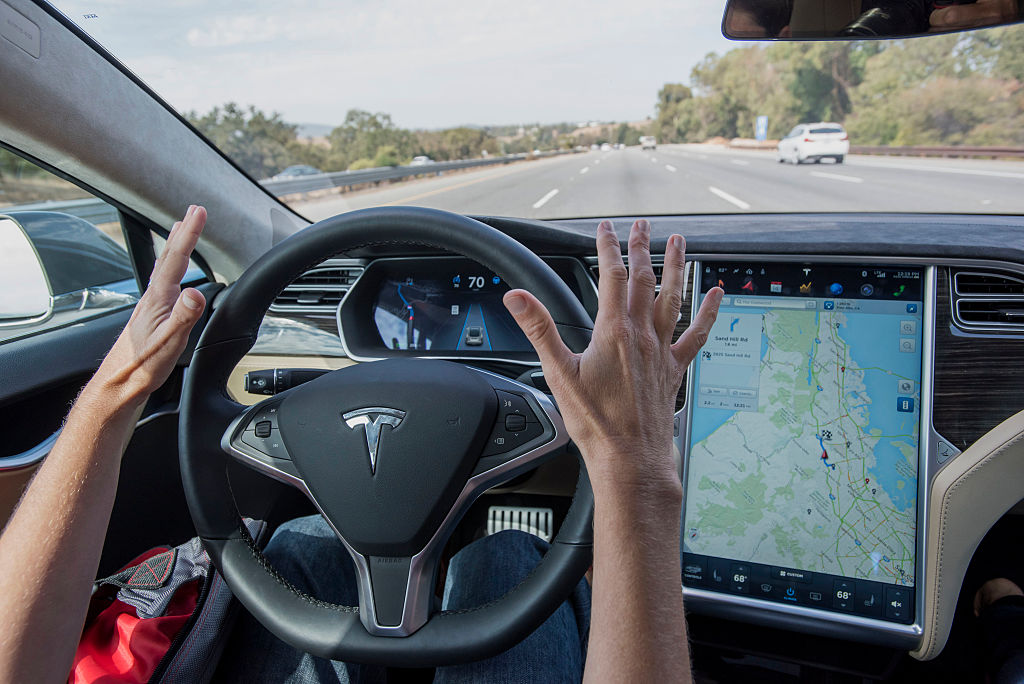
By the end of this week, potentially thousands of Tesla owners will be testing out the automaker’s newest version of its “Full Self-Driving” beta software, version 10.0.1, on public roads, even as regulators and federal officials investigate the safety of the system after a few high-profile crashes.

A new study from the Massachusetts Institute of Technology lends credence to the idea that the FSD system, which despite its name is not actually an autonomous system but rather an advanced driver assist system (ADAS), may not actually be that safe. Researchers studying glance data from 290 human-initiated Autopilot disengagement epochs found drivers may become inattentive when using partially automated driving systems.

“Visual behavior patterns change before and after [Autopilot] disengagement,” the study reads. “Before disengagement, drivers looked less on road and focused more on non-driving related areas compared to after the transition to manual driving. The higher proportion of off-road glances before disengagement to manual driving were not compensated by longer glances ahead.”

Tesla CEO Elon Musk has said that not everyone who has paid for the FSD software will be able to access the beta version, which promises more automated driving functions. First, Tesla will use telemetry data to capture personal driving metrics over a seven-day period in order to ensure drivers are still remaining attentive enough. The data may also be used to implement a new safety rating page that tracks the owner’s vehicle, which is linked to their insurance.

The MIT study provides evidence that drivers may not be using Tesla’s Autopilot (AP) as recommended. Because AP includes safety features like traffic-aware cruise control and autosteering, drivers become less attentive and take their hands off the wheel more. The researchers found this type of behavior may be the result of misunderstanding what the AP features can do and what its limitations are, which is reinforced when it performs well. Drivers whose tasks are automated for them may naturally become bored after attempting to sustain visual and physical alertness, which researchers say only creates further inattentiveness.

The report, titled “A model for naturalistic glance behavior around Tesla Autopilot disengagements,” has been following Tesla Model S and X owners during their daily routine for periods of a year or more throughout the greater Boston area. The vehicles were equipped with the Real-time Intelligent Driving Environment Recording data acquisition system1, which continuously collects data from the CAN bus, a GPS and three 720p video cameras. These sensors provide information like vehicle kinematics, driver interaction with the vehicle controllers, mileage, location and driver’s posture, face and the view in front of the vehicle. MIT collected nearly 500,000 miles’ worth of data. 

The point of this study is not to shame Tesla, but rather to advocate for driver attention management systems that can give drivers feedback in real time or adapt automation functionality to suit a driver’s level of attention. Currently, Autopilot uses a hands-on-wheel sensing system to monitor driver engagement, but it doesn’t monitor driver attention via eye or head-tracking.

The researchers behind the study have developed a model for glance behavior, “based on naturalistic data, that can help understand the characteristics of shifts in driver attention under automation and support the development of solutions to ensure that drivers remain sufficiently engaged in the driving tasks.” This would not only assist driver monitoring systems in addressing “atypical” glances, but it can also be used as a benchmark to study the safety effects of automation on a driver’s behavior.

Companies like Seeing Machines and Smart Eye already work with automakers like General Motors, Mercedes-Benz and reportedly Ford to bring camera-based driver monitoring systems to cars with ADAS, but also to address problems caused by drunk or impaired driving. The technology exists. The question is, will Tesla use it?

21 Sep 2021

VC Mark Suster: “The bet we’re making now is on founder skills,” not customers or products

MARK SESTER

Image Credits: Mark Suster / Upfront Ventures

We recently caught up with longtime VC Mark Suster of L.A.-based Upfront Ventures, which last raised both an early-stage fund and a growth stage fund several years ago and, according to regulatory filings, is in the market right now, though Suster couldn’t discuss either owing to SEC regulations.

We did talk about a wide range of things, from his firm’s big bet on the micro mobility business Bird (which could be publicly traded soon), to his views on decentralized finance, to his fitness regime (we had to ask, as Suster has shed 60 pounds since early last year). If you’re curious to hear that conversation, you can listen here. In the meantime, what follows are outtakes of his reflections on broader industry trends, including the feverish pace of deal-making.

On changing check seed-stage sizes, and how much time VCs have to write them right now:

It used to be 10 years ago that I could write a $3 million or $4 million or $5 million [check] and that was called an A round, and that company probably had raised a few hundred thousand dollars from angels and maybe some seed funds, and I could get a lot of data on how companies were doing. I could talk to customers. I could look at customer retention. I could look at a startup’s marginal cost structure. I could talk to references of the founders. I could take my time and be thoughtful…

Fast forward a decade, and $5 million is a seed round, and now there are pre seed rounds and “day zero” companies” and seed extensions and A rounds and “A prime,” there’s B . . . I’m not actually doing anything differently than I did 10 years ago, in terms of deploying capital, getting involved with founders very early, helping you build your executive team, set your strategy, work on pricing, [figure out] which market are you in, [figure out] the sequence of how you launch products and how to raise downstream capital. But the pressure on me is, I now need to make faster decisions. I need to be involved with your company earlier. So I’m taking a little more risk in terms of not being able to look at customers. You may not even have customers.

On why his firm is averse to today’s A and B rounds and leaning more heavily into growth rounds. (It just brought aboard a former Twitter exec to lead the charge here and has meanwhile plugged more than $50 million in to several of its portfolio companies, including Bird; Rally, an investing platform for buying shares in collectibles; and Apeel Sciences, which makes edible coatings for fruit.)

I would never rule out any round. But what I will tell you is that the new a round that I maybe have an aversion to is call it $20 million to $30 million. What does that imply? It implies that you’re paying a $50 million, $60 million, $70 million valuation. It implies that to really drive fund-level returns, you have to have $5 billion, $10 billion, or $15 billion outcomes or greater.

The world is producing more of those. There are maybe 11 companies in the United States that are pure startups that are worth more than $10 billion. I get it. But if you want to be writing $20 million A rounds where you’re taking that level of risk, you have to have a $700 million to an $800 million to a $1 billion fund. And I don’t want to be in that business, not because I think it’s bad, but it’s a different business that implies different skills. . .

We want to be super early, like the earliest capital, we’ll even take a risk on you want to leave your company and we’ve known you. Let’s say we knew you at Riot Games we knew you at Snapchat, we knew you at Facebook, we knew you when you were working at Stripe or PayPal. We will back you at formation — at day zero. We want to [then] skip the expensive rounds and come in later.

On whether Upfront invests in priced rounds as well as convertible notes, wherein an investor is entitled to invest at a discount to the next round:

I think there’s a lot of misnomers that rounds themselves aren’t priced. Almost every round is priced. People just think they’re not priced. So [maybe the question is]: are we willing to do convertible notes, are we willing to do SAFE notes, are we willing to do all this stuff, and the answer is yes. Now, most convertible notes, most SAFE notes, they don’t fix a price, but they have a cap. And the cap is the price. What I always try to tell founders is, what you have is a maximum price with no minimum price. If you were willing to just raise capital and set the price, you’d have a maximum and it’s better for you. But for whatever reason, a generation of founders has been convinced that it’s better not to set a price, which really what they’re doing is setting a max, not a [minimum], and I’m not going to have that argument again. People don’t understand it. [The short version is] we will do convertible notes; we would not fund something that had no maximum price.

Regarding how Upfront competes in a world where deals are happening within shorter time windows than ever before:

If you’re looking for [a firm that will invest after one call] you’re calling the wrong firm. We don’t have as much time to know if customers love your product. You may not even have customers. But please don’t mistake that. We spend as much time as we can getting to know the founders. We might know the founders for five years before they create a company. We might be the people egging them on to quit Disney and go create a company. So we really want to know the founder. The bet that we’re making is now more on the founder skills and vision than on customer adoption of a product. That’s really what’s changed for us.

I always tell founders: if someone is willing to fund you after a 30-minute meeting, that’s a really bad trade for you. If a fund is doing 35 investments or 50 investments or even 20 investments and they get it wrong because they didn’t do due diligence, okay, well, they have 19 or 30 other investments. If you get it wrong and you chose an investor who’s not helpful, not ethical, not leaning in, not supportive, not adding value, you live with that. There’s no divorce clause.

21 Sep 2021

VC Mark Suster: “The bet we’re making now is on founder skills,” not customers or products

We recently caught up with longtime VC Mark Suster of Upfront Ventures, which last raised both an early-stage fund and a growth stage fund several years ago and, according to regulatory filings, is in the market right now, though Suster couldn’t discuss either owing to SEC regulations.

We did talk about a wide range of things, from his firm’s big bet on the micro mobility business Bird (which could be publicly traded soon), to his views on decentralized finance, to his fitness regime (we had to ask, as Suster has shed 60 pounds since early last year). If you’re curious to hear that conversation, you can listen here. In the meantime, what follows are outtakes of his reflections on broader industry trends, including the feverish pace of deal-making.

On changing check seed-stage sizes, and how much time VCs have to write them right now:

It used to be 10 years ago that I could write a $3 million or $4 million or $5 million [check] and that was called an A round, and that company probably had raised a few hundred thousand dollars from angels and maybe some seed funds, and I could get a lot of data on how companies were doing. I could talk to customers. I could look at customer retention. I could look at a startup’s marginal cost structure. I could talk to references of the founders. I could take my time and be thoughtful . . .

Fast forward a decade, and $5 million is a seed round, and now there are pre seed rounds and “day zero” companies” and seed extensions and A rounds and “A prime,” there’s B . . . I’m not actually doing anything differently than I did 10 years ago, in terms of deploying capital, getting involved with founders very early, helping you build your executive team, set your strategy, work on pricing, [figure out] which market are you in, [figure out] the sequence of how you launch products and how to raise downstream capital. But the pressure on me is, I now need to make faster decisions. I need to be involved with your company earlier. So I’m taking a little more risk in terms of not being able to look at customers. You may not even have customers.

On why his firm is averse to today’s A and B rounds and leaning more heavily into growth rounds. (It just brought aboard a former Twitter exec to lead the charge here and has meanwhile plugged more than $50 million in to several of its portfolio companies, including Bird; Rally, an investing platform for buying shares in collectibles; and Apeel Sciences, which makes edible coatings for fruit.)

I would never rule out any round. But what I will tell you is that the new a round that I maybe have an aversion to is call it $20 million to $30 million. What does that imply? It implies that you’re paying a $50 million, $60 million, $70 million valuation. It implies that to really drive fund-level returns, you have to have $5 billion, $10 billion, or $15 billion outcomes or greater.

The world is producing more of those. There are maybe 11 companies in the United States that are pure startups that are worth more than $10 billion. I get it. But if you want to be writing $20 million A rounds where you’re taking that level of risk, you have to have a $700 million to an $800 million to a $1 billion fund. And I don’t want to be in that business, not because I think it’s bad, but it’s a different business that implies different skills. . .

We want to be super early, like the earliest capital, we’ll even take a risk on you want to leave your company and we’ve known you. Let’s say we knew you at Riot Games we knew you at Snapchat, we knew you at Facebook, we knew you when you were working at Stripe or PayPal. We will back you at formation — at day zero. We want to [then] skip the expensive rounds and come in later.

On whether Upfront invests in priced rounds as well as convertible notes, wherein an investor is entitled to invest at a discount to the next round:

I think there’s a lot of misnomers that rounds themselves aren’t priced. Almost every round is priced. People just think they’re not priced. So [maybe the question is] are willing to do convertible notes, are we willing to do SAFE notes, are we willing to do all this stuff, and the answer is yes. Now, most convertible notes, most SAFE notes, they don’t fix a price, but they have a cap. And the cap is the price. What I always try to tell founders is, what you have is a maximum price with no minimum price. If you were willing to just raise capital and set the price, you’d have a maximum and it’s better for you. But for whatever reason, a generation of founders has been convinced that it’s better not to set a price, which really what they’re doing is setting a max, not a [minimum], and I’m not going to have that argument again. People don’t understand it. [The short version is] we will do convertible notes; we would not fund something that had no maximum price.

Regarding how Upfront competes in a world where deals are happening within shorter time windows than ever before:

If you’re looking for [a firm that will invest after one call] you’re calling the wrong firm. We don’t have as much time to know if customers love your product. You may not even have customers. But please don’t mistake that. We spend as much time as we can getting to know the founders. We might know the founders for five years before they create a company. We might be the people egging them on to quit Disney and go create a company. So we really want to know the founder. The bet that we’re making is now more on the founder skills and vision than on customer adoption of a product. That’s really what’s changed for us.

I always tell founders: if someone is willing to fund you after a 30-minute meeting, that’s a really bad trade for you. If a fund is doing 35 investments or 50 investments or even 20 investments and they get it wrong because they didn’t do due diligence, okay, well, they have 19 or 30 other investments. If you get it wrong and you chose an investor who’s not helpful, not ethical, not leaning in, not supportive, not adding value, you live with that. There’s no divorce clause.

21 Sep 2021

VC Mark Suster: “The bet we’re making now is on founder skills,” not customers or products

We recently caught up with longtime VC Mark Suster of Upfront Ventures, which last raised both an early-stage fund and a growth stage fund several years ago and, according to regulatory filings, is in the market right now, though Suster couldn’t discuss either owing to SEC regulations.

We did talk about a wide range of things, from his firm’s big bet on the micro mobility business Bird (which could be publicly traded soon), to his views on decentralized finance, to his fitness regime (we had to ask, as Suster has shed 60 pounds since early last year). If you’re curious to hear that conversation, you can listen here. In the meantime, what follows are outtakes of his reflections on broader industry trends, including the feverish pace of deal-making.

On changing check seed-stage sizes, and how much time VCs have to write them right now:

It used to be 10 years ago that I could write a $3 million or $4 million or $5 million [check] and that was called an A round, and that company probably had raised a few hundred thousand dollars from angels and maybe some seed funds, and I could get a lot of data on how companies were doing. I could talk to customers. I could look at customer retention. I could look at a startup’s marginal cost structure. I could talk to references of the founders. I could take my time and be thoughtful . . .

Fast forward a decade, and $5 million is a seed round, and now there are pre seed rounds and “day zero” companies” and seed extensions and A rounds and “A prime,” there’s B . . . I’m not actually doing anything differently than I did 10 years ago, in terms of deploying capital, getting involved with founders very early, helping you build your executive team, set your strategy, work on pricing, [figure out] which market are you in, [figure out] the sequence of how you launch products and how to raise downstream capital. But the pressure on me is, I now need to make faster decisions. I need to be involved with your company earlier. So I’m taking a little more risk in terms of not being able to look at customers. You may not even have customers.

On why his firm is averse to today’s A and B rounds and leaning more heavily into growth rounds. (It just brought aboard a former Twitter exec to lead the charge here and has meanwhile plugged more than $50 million in to several of its portfolio companies, including Bird; Rally, an investing platform for buying shares in collectibles; and Apeel Sciences, which makes edible coatings for fruit.)

I would never rule out any round. But what I will tell you is that the new a round that I maybe have an aversion to is call it $20 million to $30 million. What does that imply? It implies that you’re paying a $50 million, $60 million, $70 million valuation. It implies that to really drive fund-level returns, you have to have $5 billion, $10 billion, or $15 billion outcomes or greater.

The world is producing more of those. There are maybe 11 companies in the United States that are pure startups that are worth more than $10 billion. I get it. But if you want to be writing $20 million A rounds where you’re taking that level of risk, you have to have a $700 million to an $800 million to a $1 billion fund. And I don’t want to be in that business, not because I think it’s bad, but it’s a different business that implies different skills. . .

We want to be super early, like the earliest capital, we’ll even take a risk on you want to leave your company and we’ve known you. Let’s say we knew you at Riot Games we knew you at Snapchat, we knew you at Facebook, we knew you when you were working at Stripe or PayPal. We will back you at formation — at day zero. We want to [then] skip the expensive rounds and come in later.

On whether Upfront invests in priced rounds as well as convertible notes, wherein an investor is entitled to invest at a discount to the next round:

I think there’s a lot of misnomers that rounds themselves aren’t priced. Almost every round is priced. People just think they’re not priced. So [maybe the question is] are willing to do convertible notes, are we willing to do SAFE notes, are we willing to do all this stuff, and the answer is yes. Now, most convertible notes, most SAFE notes, they don’t fix a price, but they have a cap. And the cap is the price. What I always try to tell founders is, what you have is a maximum price with no minimum price. If you were willing to just raise capital and set the price, you’d have a maximum and it’s better for you. But for whatever reason, a generation of founders has been convinced that it’s better not to set a price, which really what they’re doing is setting a max, not a [minimum], and I’m not going to have that argument again. People don’t understand it. [The short version is] we will do convertible notes; we would not fund something that had no maximum price.

Regarding how Upfront competes in a world where deals are happening within shorter time windows than ever before:

If you’re looking for [a firm that will invest after one call] you’re calling the wrong firm. We don’t have as much time to know if customers love your product. You may not even have customers. But please don’t mistake that. We spend as much time as we can getting to know the founders. We might know the founders for five years before they create a company. We might be the people egging them on to quit Disney and go create a company. So we really want to know the founder. The bet that we’re making is now more on the founder skills and vision than on customer adoption of a product. That’s really what’s changed for us.

I always tell founders: if someone is willing to fund you after a 30-minute meeting, that’s a really bad trade for you. If a fund is doing 35 investments or 50 investments or even 20 investments and they get it wrong because they didn’t do due diligence, okay, well, they have 19 or 30 other investments. If you get it wrong and you chose an investor who’s not helpful, not ethical, not leaning in, not supportive, not adding value, you live with that. There’s no divorce clause.

21 Sep 2021

MIT study finds Tesla drivers become inattentive when Autopilot is activated

By the end of this week, potentially thousands of Tesla owners will be testing out the automaker’s newest version of its “Full Self-Driving” beta software, version 10.0.1, on public roads, even as regulators and federal officials investigate the safety of the system after a few high-profile crashes.

A new study from the Massachusetts Institute of Technology lends credence to the idea that the FSD system, which despite its name is not actually an autonomous system but rather an advanced driver assist system (ADAS), may not actually be that safe. Researchers studying glance data from 290 human-initiated Autopilot disengagement epochs found drivers may become inattentive when using partially automated driving systems.

“Visual behavior patterns change before and after [Autopilot] disengagement,” the study reads. “Before disengagement, drivers looked less on road and focused more on non-driving related areas compared to after the transition to manual driving. The higher proportion of off-road glances before disengagement to manual driving were not compensated by longer glances ahead.”

Tesla CEO Elon Musk has said that not everyone who has paid for the FSD software will be able to access the beta version, which promises more automated driving functions. First, Tesla will use telemetry data to capture personal driving metrics over a seven-day period in order to ensure drivers are still remaining attentive enough. The data may also be used to implement a new safety rating page that tracks the owner’s vehicle, which is linked to their insurance.

The MIT study provides evidence that drivers may not be using Tesla’s Autopilot (AP) as recommended. Because AP includes safety features like traffic-aware cruise control and autosteering, drivers become less attentive and take their hands off the wheel more. The researchers found this type of behavior may be the result of misunderstanding what the AP features can do and what its limitations are, which is reinforced when it performs well. Drivers whose tasks are automated for them may naturally become bored after attempting to sustain visual and physical alertness, which researchers say only creates further inattentiveness.

The report, titled “A model for naturalistic glance behavior around Tesla Autopilot disengagements,” has been following Tesla Model S and X owners during their daily routine for periods of a year or more throughout the greater Boston area. The vehicles were equipped with the Real-time Intelligent Driving Environment Recording data acquisition system1, which continuously collects data from the CAN bus, a GPS and three 720p video cameras. These sensors provide information like vehicle kinematics, driver interaction with the vehicle controllers, mileage, location and driver’s posture, face and the view in front of the vehicle. MIT collected nearly 500,000 miles’ worth of data. 

The point of this study is not to shame Tesla, but rather to advocate for driver attention management systems that can give drivers feedback in real time or adapt automation functionality to suit a driver’s level of attention. Currently, Autopilot uses a hands-on-wheel sensing system to monitor driver engagement, but it doesn’t monitor driver attention via eye or head-tracking.

The researchers behind the study have developed a model for glance behavior, “based on naturalistic data, that can help understand the characteristics of shifts in driver attention under automation and support the development of solutions to ensure that drivers remain sufficiently engaged in the driving tasks.” This would not only assist driver monitoring systems in addressing “atypical” glances, but it can also be used as a benchmark to study the safety effects of automation on a driver’s behavior.

Companies like Seeing Machines and Smart Eye already work with automakers like General Motors, Mercedes-Benz and reportedly Ford to bring camera-based driver monitoring systems to cars with ADAS, but also to address problems caused by drunk or impaired driving. The technology exists. The question is, will Tesla use it?

21 Sep 2021

MIT study finds Tesla drivers become inattentive when Autopilot is activated

By the end of this week, potentially thousands of Tesla owners will be testing out the automaker’s newest version of its “Full Self-Driving” beta software, version 10.0.1, on public roads, even as regulators and federal officials investigate the safety of the system after a few high-profile crashes.

A new study from the Massachusetts Institute of Technology lends credence to the idea that the FSD system, which despite its name is not actually an autonomous system but rather an advanced driver assist system (ADAS), may not actually be that safe. Researchers studying glance data from 290 human-initiated Autopilot disengagement epochs found drivers may become inattentive when using partially automated driving systems.

“Visual behavior patterns change before and after [Autopilot] disengagement,” the study reads. “Before disengagement, drivers looked less on road and focused more on non-driving related areas compared to after the transition to manual driving. The higher proportion of off-road glances before disengagement to manual driving were not compensated by longer glances ahead.”

Tesla CEO Elon Musk has said that not everyone who has paid for the FSD software will be able to access the beta version, which promises more automated driving functions. First, Tesla will use telemetry data to capture personal driving metrics over a seven-day period in order to ensure drivers are still remaining attentive enough. The data may also be used to implement a new safety rating page that tracks the owner’s vehicle, which is linked to their insurance.

The MIT study provides evidence that drivers may not be using Tesla’s Autopilot (AP) as recommended. Because AP includes safety features like traffic-aware cruise control and autosteering, drivers become less attentive and take their hands off the wheel more. The researchers found this type of behavior may be the result of misunderstanding what the AP features can do and what its limitations are, which is reinforced when it performs well. Drivers whose tasks are automated for them may naturally become bored after attempting to sustain visual and physical alertness, which researchers say only creates further inattentiveness.

The report, titled “A model for naturalistic glance behavior around Tesla Autopilot disengagements,” has been following Tesla Model S and X owners during their daily routine for periods of a year or more throughout the greater Boston area. The vehicles were equipped with the Real-time Intelligent Driving Environment Recording data acquisition system1, which continuously collects data from the CAN bus, a GPS and three 720p video cameras. These sensors provide information like vehicle kinematics, driver interaction with the vehicle controllers, mileage, location and driver’s posture, face and the view in front of the vehicle. MIT collected nearly 500,000 miles’ worth of data. 

The point of this study is not to shame Tesla, but rather to advocate for driver attention management systems that can give drivers feedback in real time or adapt automation functionality to suit a driver’s level of attention. Currently, Autopilot uses a hands-on-wheel sensing system to monitor driver engagement, but it doesn’t monitor driver attention via eye or head-tracking.

The researchers behind the study have developed a model for glance behavior, “based on naturalistic data, that can help understand the characteristics of shifts in driver attention under automation and support the development of solutions to ensure that drivers remain sufficiently engaged in the driving tasks.” This would not only assist driver monitoring systems in addressing “atypical” glances, but it can also be used as a benchmark to study the safety effects of automation on a driver’s behavior.

Companies like Seeing Machines and Smart Eye already work with automakers like General Motors, Mercedes-Benz and reportedly Ford to bring camera-based driver monitoring systems to cars with ADAS, but also to address problems caused by drunk or impaired driving. The technology exists. The question is, will Tesla use it?

20 Sep 2021

TrueLayer nabs $130M at a $1B+ valuation as open banking rises as a viable option to card networks

technolovy banking data
Image Credits: ipopba / Getty Images

Open banking — a disruptive technology that seeks to bypass the dominance of card networks and other traditional financial rails by letting banks open their systems directly to developers (and new services) by way of APIs — continues to gain ground in the world of financial services. As a mark of that traction, a startup playing a central role in open banking applications is announcing a big round of funding with a milestone valuation.

TrueLayer, which provides technology for developers to enable a range of open-banking-based services — these currently include payments  payouts, user account information and user verification — has raised $130 million in a funding round that values the London-based startup at over $1 billion.

Tiger Global Management is leading the round, and notably, payments juggernaut Stripe is also participating.

Open Banking is a relatively new area in the world of fintech — the UK was an early adopter in 2018, Europe then signed on, and it looks like we are now seeing more movements that the U.S. may soon also join the party — and TrueLayer is considered a pioneer in the space.

The vast majority of transactions today are still made using card rails or more antiquated banking infrastructure, but the opportunity with open banking is to build a completely new infrastructure that works more efficiently, and might come with less (or no) fees for those using it, with the perennial API promise: all by way of few lines of code.

“We had a vision that finance should be opened up, and we are actively woking to remove the frictions that exist between intermediaries,” said CEO Francesco Simoneschi, who co-founded the company with Luca Martinetti (who is now the CTO), in an interview. “We want a financial system that works for everyone, but that hasn’t been the case up to now. The opportunity emerged five years ago, when open banking came into law in the UK and then elsewhere, to go after the most impressive oligopoly: the card networks and everything that revolves around them. Now, we can easily say that open banking is becoming a viable alternative to that.”

It seems that the world of finance and commerce is slowly catching on, and so the funding is coming on the heels of some strong growth for the company.

The startup says it now has “millions” of consumers making open banking transactions enabled by TrueLayer’s technology, and some 10,000 developers are building services based on open banking standards. TrueLayer so far this year has doubled its customer base, picking up some key customers like Cazoo to enable open-banking based payments for cars; and it has processed “billions” of dollars in payments, with payment volume growing 400%, and payment up 800%.

The plan is to use the funding to invest in building out that business further — specifically to extend its payments network to more regions (and more banks getting integrated into that network), as well as to bring on more customers using open banking services for more regular, recurring transactions.

“The shift to alternative payment methods is accelerating with the global growth of online commerce, and we believe TrueLayer will play a central role in making these payment methods more accessible,” said Alex Cook, partner, Tiger Global, in a statement. “We’re excited to partner with Francesco, Luca and the TrueLayer team as they help customers increase conversion and continue to grow the network.”

Notably, Stripe is not a strategic investor in TrueLayer at the moment, just a financial one. That is to say, it has yet to integrate open banking into its own payments infrastructure.

But you can imagine how it would be interested in it as part of the bigger mix of options for its customers, and potentially also to build its own standalone financial rails that well and truly compete with those provided by the card networks (which are such a close part of what Stripe does that its earliest web design was based on the physical card, and even its name is a reference to the stripe on the back of them.

There are other providers of open banking connectivity in the market today — Plaid out of the U.S. is one notable name — but Simoneschi believes that Stripe and TrueLayer on the same page as companies.

“We share a profound belief that progress comes through the eyes of developers so it’s about delivering the tools they need to use,” he he said. “We are in a very complementary space.”

20 Sep 2021

Evil Geniuses CEO Nicole LaPointe Jameson is coming to Disrupt

Nicole LaPointe Jameson Evil geniuses

Image Credits: Evil Geniuses

As the opportunities in the gaming world continue to expand aggressively as part of post-COVID shifts to the entertainment sector, esports has found its own opportunities in reaching new audiences. While competitive gaming is still in its early stages, the stakeholders of the industry are some of gaming’s most prominent publishers and organizations, and disrupting how business gets done can be a major challenge for rising leagues and platforms.

We’re excited to have Evil Geniuses CEO Nicole LaPointe Jameson join us at TechCrunch Disrupt this week to discuss the business of competitive gaming and how esports is faring in its quest to gain an even larger audience. We’ll talk to LaPointe Jameson about the various leagues and stakeholders in the industry and where the momentum is shifting.

Evil Geniuses is a two decade-old competitive gaming brand, but over the past few years, the esports company has seen a dramatic revamp, exiting leagues and joining new ones while bulking up its roster and looking to find new opportunities in a space that has matured dramatically this decade but is still chasing after mainstream audiences. The esports organization was formerly part of Amazon as a result of the Twitch acquisition, but in 2019 was acquired by Chicago-based Peak6 Investments.

LaPointe Jameson joined Evil Geniuses as CEO back in 2019. At the time, the 25-year-old investor had scant experience running a gaming organization, but since her appointment, the esports company has looked to shake up how companies in the esports world operate. Earlier this year, the company launched its own esports analytics platform, collecting and parsing professional and amateur gameplay data and giving the industry access to more streamlined tools to analyze players and recruit.

As one of very few Black women in charge of an esports organization, LaPointe Jameson has looked to build out a more diverse organization and find a more expansive audience outside traditional niches. The league has helped pioneer signing mixed-gender teams to compete at major competitions.

“To clarify for the people in the back that didn’t catch it the first time… I don’t care where you come from. Nor your creed, gender, religion, class, past industry, or sexual orientation. If you are the best of the best, you have a home here at [Evil Geniuses],” LaPointe Jameson tweeted earlier this year.

We look forward to chatting with LaPointe Jameson, alongside a whole host of amazing speakers at Disrupt, including Canva CEO Melanie Perkins, and actor-entrepreneur Ryan Reynolds.