Year: 2021

16 Sep 2021

Ford boosts spending to increase production capacity of its F-150 Lightning electric truck

Ford said Thursday it will invest another $250 million and add 450 positions to increase production capacity of its upcoming F-150 Lightning after receiving more than 150,000 pre-orders for the all-electric pickup truck.

The additional funds and jobs will be spread out across its new Rouge Electric Vehicle Center in Dearborn, Michigan, Van Dyke Electric Powertrain Center and Rawsonville Components Plant. The investment will allow Ford to boost annual production capacity to 80,000 trucks.

The announcement was made during an event at the Rouge Electric Vehicle Center, the expansion that was part of Ford’s $700 million investment in its Rouge Complex. Gas-powered F-Series trucks are also assembled at the Rouge Complex.

Ford also announced that has started pre-production of the Lightning trucks. These prototypes will be used for real-world testing. The truck will be to customers in spring 2022.

The all-electric pickup truck is a critical piece of the company’s $30 billion investment into electrification and one of a trifecta of Ford EV debuts and launches in the 18 months, including the Mustang Mach-E. The Lightning may be the most meaningful in terms of the bottom line. The Ford F-150 Lightning follows the introduction of the all-electric Mustang Mach-E and the E-Transit, a configurable all-electric cargo van focused on commercial customers.

The F-150 Lightning will be offered in four trims, which includes the base, XLT, Lariat and Platinum series, and two battery options. The truck, which has an aluminum alloy body, is powered by two in-board electric motors, comes standard with four-wheel drive and has an independent rear suspension. The base version will be priced at $39,974 before any federal or state tax credits, while the midseries XLT model will start at $52,974. All of these prices exclude the destination fees and taxes.

16 Sep 2021

Submit your pitch deck now for live feedback at TechCrunch Disrupt 2021 next week

The art of pitching is perhaps the most important art that a founder learns on their journey to unicorn status and beyond. And like any art, it helps to get some critical feedback along the way from the judges on the other side of the table.

That’s why every Disrupt, we host Pitch Deck Teardown, a panel of VCs who read and critique several pitch decks in a row to offer feedback on everything from the overarching narrative and story to the mundane details of format, typography and colors.

At TechCrunch Disrupt 2021 next week, I’m excited to be hosting Maren Bannon of January Ventures, Bling Capital’s Ben Ling and Vanessa Larco of NEA for our next iteration of this popular workshopping panel.

If you’re a founder and want to submit your deck for consideration, head on over to this trusty Google Form and upload a copy of your pitch deck in PDF format. Remember that this will be presented publicly, so make sure it’s appropriate for a live studio audience. We’ll be selecting roughly six of them for inclusion in the event, and we’ll notify the founders selected by email.

Come join us next week! And if you need tickets to Disrupt, we still have some available for all the virtual excitement across two stages and dozens of fireside chats and panels.

16 Sep 2021

Fiberplane nabs € 7.5M seed to bring Google Docs-like collaboration to incident response

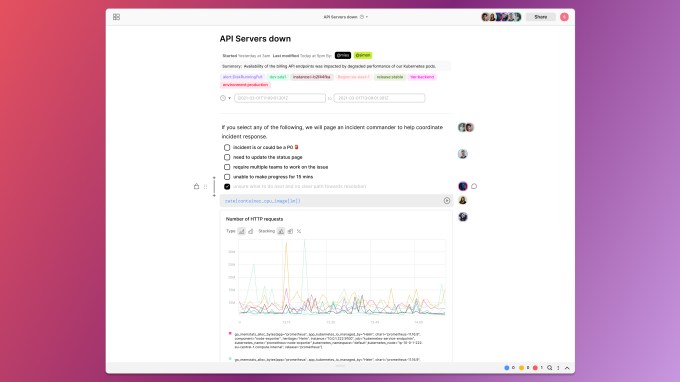
Fiberplane, an Amsterdam-based early stage startup that is building collaborative notebooks for SREs (site reliability engineers)  to collaborate around an incident in a similar manner to group editing in a Google Doc, announced a ​​€ 7.5M (approximately $8.8 million USD) seed round today.

The round was co-led by Crane Venture Partners and Notion Capital with participation from Northzone, System.One and Basecase Capital.

Micha Hernandez van Leuffen (known as Mies) is founder and CEO at Fiberplane. When his previous startup, Werker was sold to Oracle in 2017, Hernandez van Leuffen became part of a much larger company where he saw people struggling to deal with outages (which happen at every company).

“We were always going back and forth between metrics, logs and traces, what I always call this sort of treasure hunt, and figuring out what was the underlying root cause of an outage or downtime,” Hernandez van Leuffen told me.

He said that this experience led to a couple of key insights about incident response: First, you needed a centralized place to pull all the incident data together, and secondly that as a distributed team managing a distributed system you needed to collaborate in real time, often across different time zones.

When he left Oracle in August 2020, he began thinking about the idea of giving DevOps teams and SREs the same kind of group editing capabilities that other teams inside an organization have with tools like Google Docs or Notion and an idea for his new company began to take shape.

What he created with Fiberplane is a collaborative notebook for SRE’s to pull in the various data types and begin to work together to resolve the incident, while having a natural audit trail of what happened and how they resolved the issue. Different people can participate in this notebook, just as multiple people can edit a Google Doc, fulfilling that original vision.

Fiberplane incident response notebook with various types of data about the incident.

Fiberplane collaborative notebook example with multiple people involved. Image Credit: Fiberplane

He doesn’t plan to stop there though. The longer term vision is an operational platform for SREs and DevOps teams to deal with every aspect of an outage. “This is our starting point, but we are planning to expand from there as more I would say an SRE workbench, where you’re also able to command and control your infrastructure,” he said.

Today the company has 13 employees and is growing, and as they do, they are exploring ways to make sure they are building a diverse company, looking at concrete strategies to find more diverse candidates.

“To hire diversely, we’re re-examining our top of the funnel processes. Our efforts include posting our jobs in communities of underrepresented people, running our job descriptions through a gender decoder and facilitating a larger time frame for jobs to remain open,” Elena Boroda, marketing manager at Fiberplane said.

While Hernandez van Leuffen is based in Amsterdam, the company has been hiring people in the UK, Berlin, Copenhagen and the US, he said. The plan is to have Amsterdam as a central hub when offices reopen as the majority of employees are located there.

16 Sep 2021

Don’t miss the Startup Alley Crawls at Disrupt next week

It’s coming down to the wire folks. TechCrunch Disrupt 2021 — our flagship global event — takes over the internet on September 21-23. More than 10,000 people will attend to learn about the latest tech and investment trends from iconic leaders, founders and VCs. They’ll network and connect to build game-changing startups.

Time to get on board: It costs less than $100 to attend TechCrunch Disrupt until this Monday. Purchase your pass now to save yourself some money. You can check out the Disrupt agenda here and then go grab your ticket.

The heart of every Disrupt — even our virtual incarnations — is Startup Alley. It’s where hundreds of innovative startups exhibit their products, platforms and services. It’s where investors look for portfolio potential, founders find new customers, tech journalists hunt for stories, and everyone finds inspiration.

We’ve created a special series of events to focus on the wide range of talent in Startup Alley. It’s the Startup Alley Crawl — think pub crawl without the remorse. We group exhibitors in Startup Alley by business category, and each business category will have its own dedicated, hour-long crawl.

You might even see some of these exhibitors interviewed live during a Disrupt Desk segment. Sit back in the comfort of your secure, undisclosed location and tune in to learn more about what these companies have to offer.

All Startup Alley exhibitors have their own virtual booth where you can check out their pitch deck, strike up a conversation, schedule a product demo or connect with them via CrunchMatch to set up 1:1 video meetings.

Here’s what Jessica McLean, the director of marketing and communications for Infinite-Compute, a Startup Alley exhibitor at Disrupt 2020, had to say about networking during a virtual conference.

“The virtual platform made networking easy. We sent quick introductions, scheduled meetings with investors and other smart people who could add value to our company. A person we connected with at Disrupt is currently helping us with marketing, which is fantastic.”

TechCrunch Disrupt 2021 takes place on September 21-30. If you haven’t done so yet, buy your pass now. Pop some corn, pop a pint and join the Startup Alley Crawl — and check out all the other exhibitors, too. You never know what opportunities are waiting there just for you.

16 Sep 2021

Tyk raises $35M for its open-source, open-ended approach to enterprise API management

APIs are the grease turning the gears and wheels for many organizations’ IT systems today, but as APIs grow in number and use, tracking how they work (or don’t work) together can become complex and potentially critical if something goes awry. Now, a startup that has built an innovative way to help with this is announcing some funding after getting traction with big enterprises adopting its approach.

Tyk, which has built a way for users to access and manage multiple internal enterprise APIs through a universal interface by way of GraphQL, has picked up $35 million, an investment that it will be using both for hiring and to continue enhancing and expanding the tools that it provides to users. Tyk has coined a term describing its approach to managing APIs and the data they produce — “universal data graph” — and today its tools are being used to manage APIs by some 10,000 businesses, including large enterprises like Starbucks, Societe Generale, and Domino’s.

Scottish Equity Partners led the round, with participation also from MMC Ventures — its sole previous investor from a round in 2019 after boostrapping for its first five years. The startup is based out of London but works in a very distributed way — one of the co-founders is living in New Zealand currently — and it will be hiring and growing based on that principle, too. It has raised just over $40 million to date.

Tyk (pronounced like “tyke”, meaning small/lively child) got its start as an open source side project first for co-founder Martin Buhr, who is now the company’s CEO, while he was working elsewhere, as a “load testing thing,” in his words.

The shifts in IT towards service-oriented architectures, and building and using APIs to connect internal apps, led him to rethink the code and consider how it could be used to control APIs. Added to that was the fact that as far as Buhr could see, the API management platforms that were in the market at the time — some of the big names today include Kong, Apigee (now a part of Google), 3scale (now a part of RedHat and thus IBM), MuleSoft (now a part of Salesforce) — were not as flexible as his needs were. “So I built my own,” he said.

It was built as an open source tool, and some engineers at other companies started to use it. As it got more attention, some of the bigger companies interested in using it started to ask why he wasn’t charging for anything — a sure sign as any that there was probably a business to be built here, and more credibility to come if he charged for the it.

“So we made the gateway open source, and the management part went into a licensing model,” he said. And Tyk was born as a startup co-founded with James Hirst, who is now the COO, who worked with Buhr at a digital agency some years before.

The key motivation behind building Tyk has stayed as its unique selling point for customers working in increasingly complex environments.

“What sparked interest in Tyk was that companies were unhappy with API management as it exists today,” Buhr noted, citing architectures using multiple clouds and multiple containers, creating more complexity that needed better management. “It was just the right time when containerization, Kubernetes and microservices were on the rise… The way we approach the multi-data and multi-vendor cloud model is super flexible and resilient to partitions, in a way that others have not been able to do.”

“You engage developers and deliver real value and it’s up to them to make the choice,” added Hirst. “We are responding to a clear shift in the market.”

One of the next frontiers that Tyk will tackle will be what happens within the management layer, specifically when there are potential conflicts with APIs.

“When a team using a microservice makes a breaking change, we want to bring that up and report that to the system,” Buhr said. “The plan is to flag the issue and test against it, and be able to say that a schema won’t work, and to identify why.”

Even before that is rolled out, though, Tyk’s customer list and its grow speak to a business on the cusp of a lot more.

“Martin and James have built a world-class team and the addition of this new capital will enable Tyk to accelerate the growth of its API management platform, particularly around the GraphQL focused Universal Data Graph product that launched earlier this year,” said Martin Brennan, a director at SEP, in a statement. “We are pleased to be supporting the team to achieve their global ambitions.”

Keith Davidson, a partner at SEP, is joining the Tyk board as a non-executive director with this round.


16 Sep 2021

Tiger’s bullish robotic investments

On Tuesday, Tiger Global led not one but two big funding rounds, announcing its role in a $26 million Series A for Ambi and an additional $50 million for Locus Robotics. The firm has been so active in investing of late, that neither one of these companies cracked Alex’s coveted “Today’s Tiger round” in our daily newsletter (that honor went to a $150 million round for Indonesian fintech company Xendit).

It’s fair to say that Tiger is bullish about robotics as a category. Other rounds in recent months include $36.7 million for Rapid Robotics and $100 million for Path — both Series B. All of the rounds are head-turning in the robotics world, and they represent a broad scope under the larger robotics umbrella. Ambi and Locus both operate (though address different problems) in the logistics/fulfillment spaces, while Path and Rapid deal with construction and manufacturing, respectively.

Image Credits: Bryce Durbin/TechCrunch

Don’t forget to sign up to get the upcoming free newsletter version of Actuator delivered to your inbox.

Certainly that last bit speaks to how diversified interest has been in the category. All of the above industries no doubt saw enough impact during the pandemic to significantly accelerate interest in automation.

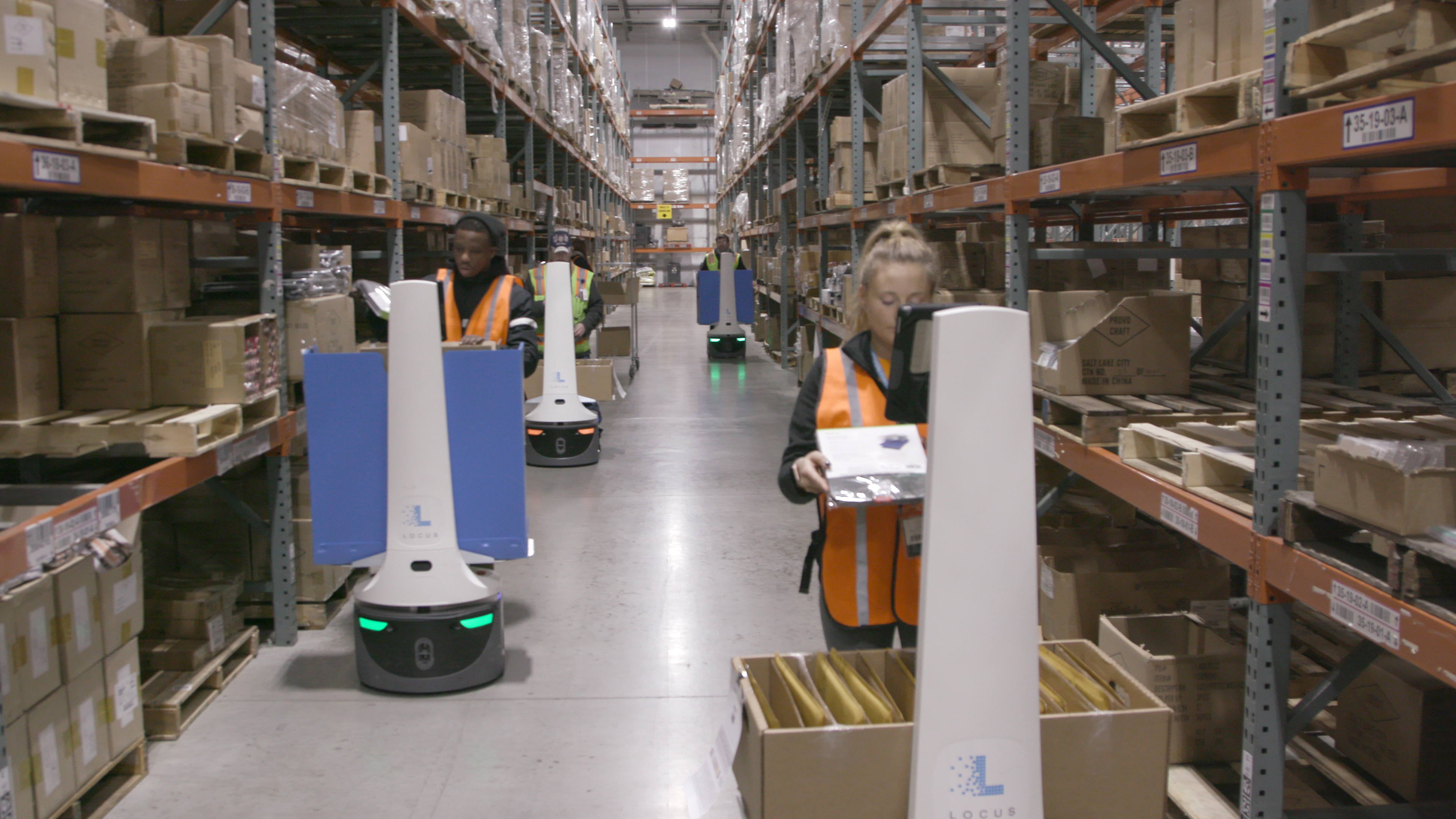
Image Credits: Locus Robotics

It’s also telling that the warehouse/fulfillment side of things gets a bit of extra love. In addition to the general strains of the pandemic, there’s the fact that everyone is looking for a way to compete with Amazon. The retailer already has a massive stranglehold on these categories and gave itself a big head start in terms of automation through a series of acquisitions. It’s an industry where any competitive advantage means a lot, and companies like Locus are hoping to crack that code.

In February, the company raised a hefty $150 million, with Tiger on as co-lead. And this week, the firm returned with another $50 million. Locus’ approach to the category offers more flexibility than those companies that require a kind of ground-up rebuild. It’s an appealing option in terms of pricing and time frame, and makes a lot more sense for organizations looking for seasonable robotic help — ditto for the company’s robotics-as-a-service pricing model.


Image Credits: Ambi Robotics

Ambi, which got its first TechCrunch mention in one of these columns several months back, specializes in pick and place/sorting robots. The company came out of stealth is April and is already seeing solid adoption.

“Ambi Robotics combines cutting-edge AI technology with engaging user interfaces to transform the role of ‘item handlers’ to ‘robot handlers,’ ” CEO Jim Liefer said in a release. “With our Series A funding, we will be able to empower more companies to help their associates work harmoniously alongside robots.”

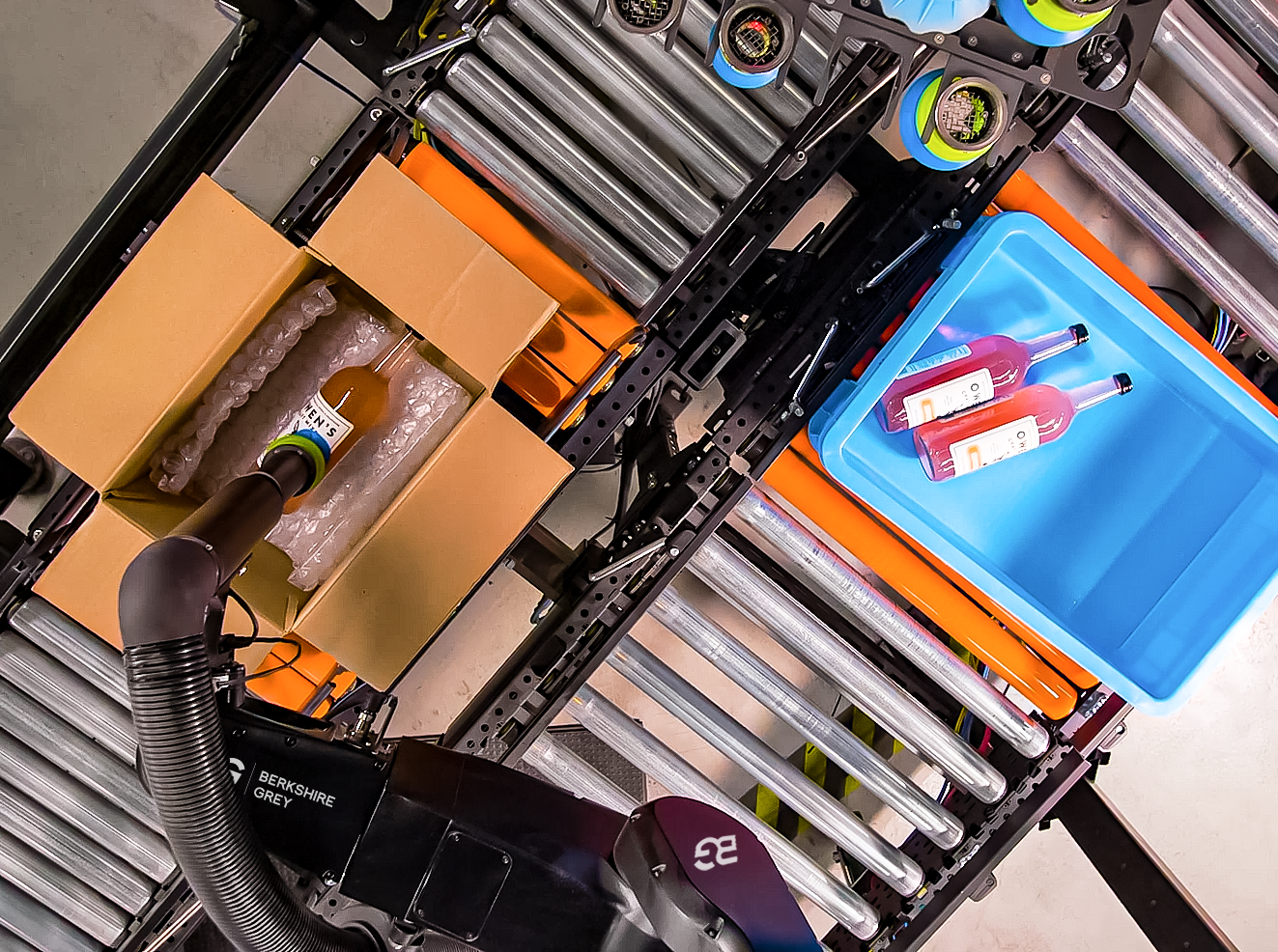
Image Credits: Berkshire Grey

On the aforementioned ground-up approach to warehouse automation, Berkshire Grey this week announced its own Robotic Pick and Pack (RPP) system, designed to pack goods into shipping packages. The system has already been deployed at SoftBank Logistics’ flagship location in Ichikawa, Japan.

Here’s COO Steve Johnson:

We believe our RPP system is the first robotic eCommerce fulfillment solution capable of completely automating the picking and packing process of direct-to-consumer orders for apparel, cosmetics, health and beauty, sporting equipment, food and general merchandise — it will transform the speed and efficiencies of warehouses and fulfillment centers around the globe. Berkshire Grey RPP excels in handling orders – the AI handles a wide range of SKUs and does so carefully – meeting even the exacting quality standards of Japanese consumers.

Image Credits: Boston Dynamics

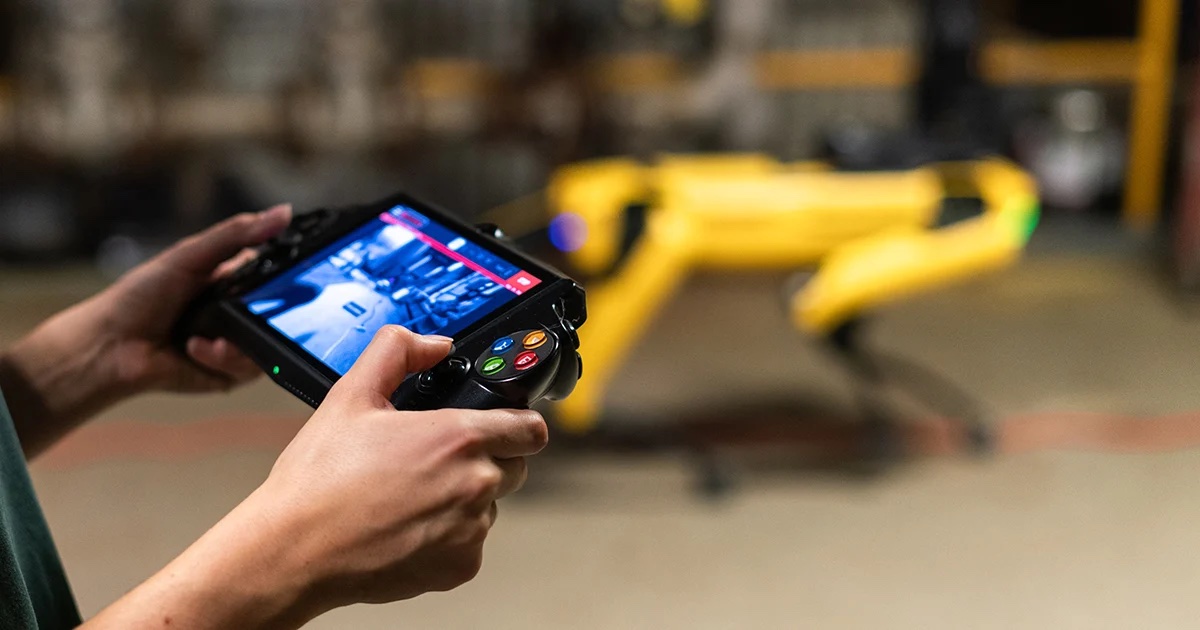
Boston Dynamics, meanwhile, announced an update for Spot that brings additional autonomous features to the four-legged robot. Specifically, the Spot Release 3.0 update is designed to improve the robot’s data collection capabilities. Per BD:

Schedule missions for Spot to collect photos, thermal images, point clouds, and other critical data; process that data into valuable signals at the edge with computer vision models; and create custom uploads to send those signals to your existing systems, so it’s easy to keep all of your data in one place for analysis and review. Spot Release 3.0 makes dynamic sensing available to everyone.

16 Sep 2021

As offices come back, ATMO launches air monitoring device claiming to give COVID-risk score

Way back in 2015 we covered the launch of the Atmotube, a small, innovative, portable air quality monitor which went on to receive a number of awards, post its CES debut.

Since rebranding as ATMO, the company, co-founded by Vera Kozyr, is now launching the Atmocube, an indoor air quality monitoring system for businesses and enterprises. This new product is positioned far more for the Post-COVID era, where air quality inside offices is going to be vital, and this time, instead of being small and portable (although that earlier product is still sold), the Atmocube will be prominent and visible in order to give office workers peace of mind that their air quality is good.

The key to this is measuring CO2 levels which the Atmocube displays on its screen along with other metrics.

The device has up to 14 sensors measuring various environmental parameters such as CO2, formaldehyde NO2, PM1 (small airborne particles), PM2.5, ozone, and others, and other environmental parameters such as relative humidity, temperature, atmospheric pressure, ambient noise, light levels, and color temperature.

The company says this new device also calculates the Airborne Virus Transmission Score — based on the levels of particulate matter, humidity, and CO2, and says it comes up with a “score” that estimates the probability of transferring virus diseases in closed spaces. Obviously, that’s probably something that would need independent testing to verify, but it is the case that the WHO advises that COVID-19 can be transmitted in poorly ventilated and/or crowded indoor settings.

Kozyr said: “Air pollution is dangerous because it can affect you and your health even if you don’t notice it. We aim to help people know what they’re breathing and make changes as a result. As businesses return to the office, they need a tool to make information about indoor air quality transparent and accessible to their employees. Most air quality monitors are designed to be hidden away, so we set out to create a device with a more transparent interface that would highlight HVAC performance safety and create trust between occupants and building owners”.

ATMO is by no means the only player in the space of course, as it’s joined by AirThings, Awair Omni and Kaiterra.

16 Sep 2021

As offices come back, ATMO launches air monitoring device claiming to give COVID-risk score

Way back in 2015 we covered the launch of the Atmotube, a small, innovative, portable air quality monitor which went on to receive a number of awards, post its CES debut.

Since rebranding as ATMO, the company, co-founded by Vera Kozyr, is now launching the Atmocube, an indoor air quality monitoring system for businesses and enterprises. This new product is positioned far more for the Post-COVID era, where air quality inside offices is going to be vital, and this time, instead of being small and portable (although that earlier product is still sold), the Atmocube will be prominent and visible in order to give office workers peace of mind that their air quality is good.

The key to this is measuring CO2 levels which the Atmocube displays on its screen along with other metrics.

The device has up to 14 sensors measuring various environmental parameters such as CO2, formaldehyde NO2, PM1 (small airborne particles), PM2.5, ozone, and others, and other environmental parameters such as relative humidity, temperature, atmospheric pressure, ambient noise, light levels, and color temperature.

The company says this new device also calculates the Airborne Virus Transmission Score — based on the levels of particulate matter, humidity, and CO2, and says it comes up with a “score” that estimates the probability of transferring virus diseases in closed spaces. Obviously, that’s probably something that would need independent testing to verify, but it is the case that the WHO advises that COVID-19 can be transmitted in poorly ventilated and/or crowded indoor settings.

Kozyr said: “Air pollution is dangerous because it can affect you and your health even if you don’t notice it. We aim to help people know what they’re breathing and make changes as a result. As businesses return to the office, they need a tool to make information about indoor air quality transparent and accessible to their employees. Most air quality monitors are designed to be hidden away, so we set out to create a device with a more transparent interface that would highlight HVAC performance safety and create trust between occupants and building owners”.

ATMO is by no means the only player in the space of course, as it’s joined by AirThings, Awair Omni and Kaiterra.

16 Sep 2021

As offices come back, ATMO launches air monitoring device claiming to give COVID-risk score

Way back in 2015 we covered the launch of the Atmotube, a small, innovative, portable air quality monitor which went on to receive a number of awards, post its CES debut.

Since rebranding as ATMO, the company, co-founded by Vera Kozyr, is now launching the Atmocube, an indoor air quality monitoring system for businesses and enterprises. This new product is positioned far more for the Post-COVID era, where air quality inside offices is going to be vital, and this time, instead of being small and portable (although that earlier product is still sold), the Atmocube will be prominent and visible in order to give office workers peace of mind that their air quality is good.

The key to this is measuring CO2 levels which the Atmocube displays on its screen along with other metrics.

The device has up to 14 sensors measuring various environmental parameters such as CO2, formaldehyde NO2, PM1 (small airborne particles), PM2.5, ozone, and others, and other environmental parameters such as relative humidity, temperature, atmospheric pressure, ambient noise, light levels, and color temperature.

The company says this new device also calculates the Airborne Virus Transmission Score — based on the levels of particulate matter, humidity, and CO2, and says it comes up with a “score” that estimates the probability of transferring virus diseases in closed spaces. Obviously, that’s probably something that would need independent testing to verify, but it is the case that the WHO advises that COVID-19 can be transmitted in poorly ventilated and/or crowded indoor settings.

Kozyr said: “Air pollution is dangerous because it can affect you and your health even if you don’t notice it. We aim to help people know what they’re breathing and make changes as a result. As businesses return to the office, they need a tool to make information about indoor air quality transparent and accessible to their employees. Most air quality monitors are designed to be hidden away, so we set out to create a device with a more transparent interface that would highlight HVAC performance safety and create trust between occupants and building owners”.

ATMO is by no means the only player in the space of course, as it’s joined by AirThings, Awair Omni and Kaiterra.

16 Sep 2021

DoorDash launches alcohol delivery in U.S., Canada and Australia

Food delivery service DoorDash will now deliver alcohol — a move that will allow it to better compete with rivals who already offer alcohol delivery in markets where permitted, like Uber Eats, Grubhub, Shipt, Instacart, and others. Initially, DoorDash will support delivery of beer, wine, and spirits across 20 U.S. states, the District of Columbia, and Canada, and Australia, reaching a potential 100 million-plus customers.

To find the feature, customers in supported markets will use the new “Alcohol” tab in the DoorDash app where they’ll be able to browse the selections of drinks offered by restaurants, or other alcohol offerings from grocery stores, local retailers, and convenience stores. In total, DoorDash’s alcohol catalog contains 30,000 SKUs — though the ones an individual user will see are only those available to their local market.

The company says it will verify customer IDs prior to checkout, and again by the delivery drivers before the order is complete. The system will respect user privacy by blurring out other information on the user ID besides the photo and DOB. For those who don’t imbibe, DoorDash will also offer an opt-out that will not only exclude customers from being able to order alcohol, but from direct marketing and communications related to alcohol delivery, as well.

The addition comes at a time when alcohol delivery has become one of the fastest-growing e-commerce verticals across all consumer packages goods, DoorDash notes, citing recent Nielsen data. In particular, the Covid-19 pandemic has played a role in the increased demand for online orders, as more customers stayed home under lockdowns and quarantine orders. For example, the number of off-premise buyers purchasing alcohol was up 27% year-over-year from the same time before Covid, according to data analyzed during a week in April 2020, compared with the prior year.

DoorDash noted, too, how data from the National Restaurant Association found that 56% of customers over the age of 21 said they would likely order alcoholic beverages along with their food delivery orders from restaurants if permitted. DoorDash expects the expansion to include alcohol could boost restaurants’ average order values by up to 30%. Another new feature called DoubleDash will allow customers to combine two shops into one order, which can now be used for bundling alcohol with other orders.

With the feature, the company is benefitting from the loosening of state laws over alcohol delivery, which were enacted due to the pandemic impacts to local businesses. Many of those temporary measures were extended as the pandemic wore on or even made into permanent laws in a number of U.S. states 

“Over the past year, many cities where we operate evolved their legislation in order to permit the delivery of alcohol to residents’ homes,” said Caitlin Macnamara, Director, Alcohol Strategy & Operations at DoorDash, in a statement about the launch. “Over that time, we worked tirelessly to build a trusted alcohol ordering and delivery experience for merchants, customers, and Dashers. We’re committed to providing new earning opportunities for merchants and Dashers, a safe, high-quality experience for customers, and being a responsible leader in compliant alcohol delivery,” she added.

The expansion follows DoorDash’s forecast of a potentially weaker Q3, citing the continued uncertainty around how consumer behavior related to the pandemic may continue impact its business.